Monday, November 24, 2025

AI Restores Voice To ALS Patient


November 24, 2025
By Eurasia Review


When the voice fades away, silence becomes heavy. It hides emotions, memories, and nuances that are part of each person. Fran Vivó, a resident of Benaguasil and affected by amyotrophic lateral sclerosis (ALS), knows this silence well. The disease, without warning, robbed him of the ability to speak with his own voice. Today, thanks to artificial intelligence, he has regained it.

The VertexLit research group, led by Jordi Linares, has presented a project that exemplifies the transformative power of artificial intelligence applied to people’s well-being. This project came to ValgrAI through documentary filmmaker Alex Badia and researcher Gema Piñero from the UPV institute iTEAM.

The researcher who volunteered to work on recovering Fran’s voice was Jordi Linares, a member of the Joint Research Unit of the Valencian Graduate School and Research Network of Artificial Intelligence (ValgrAI) and the Valencian Research Institute for Artificial Intelligence (VRAIN) at the Universitat Politècnica de València (UPV).

Audio messages

The team faced a major challenge: reconstructing Fran’s voice with just 20 minutes of audio in Spanish and Valencian, his native language. Using neural networks trained to work with limited corpora — especially in Valencian, where resources are scarce — the researchers analysed his vocal dynamics and incorporated emotional modulations. They created an adaptive model, all with the aim of offering a language rich in human traits and with the tones typical of the Benaguasil area, rather than a robotic voice.

The audio the team had to work with consisted of WhatsApp voice messages, but this was scarce material, as Fran had lost his ability to speak just as the audio system was being introduced in this messaging app.

The project developed for Fran Vivó transcends technology: the faithful recreation of Fran’s voice, using an AI-based cloning system that has successfully recovered his timbre, prosody, and identity. His unique way of speaking replaces the robotic voice of an eye-controlled communication app with his own voice.

The family has played a fundamental role in this process, helping to construct speech and enabling the emotional charge, intonation and message intent through an editor that preserves Fran’s vocal identity. In addition, the tool is editable allowing users to generate the text, provided they understand what he wants to say. The technology only provides the voice: the emotion is still his.

More dignified life

This project has not only allowed Fran to recover his identity, but also opens up a wide range of possibilities for ALS patients, helping them to regain who they are and maintain hope in life, as Fran himself acknowledges.

The VertexLit group, which has carried out this project in a totally altruistic manner, aims to show the humanising potential of AI, as it can restore lost abilities and dignify the lives of people living in extreme situations. This project does not seek to stand out for its technical complexity, but for its human impact.

Likewise, Jordi Linares, director of the VertexLit group, affirms that they seek to give visibility to people affected by ALS, since ALS continues to be an invisible disease in social and media discourse, despite the immense suffering it causes patients and families, so that ‘this voice is not only for Fran. It is for all of them,’ he assures.

As explained by Vicent Botti, director of VRAIN and general director of ValgrAI at the UPV, who opened the conference where this development was presented, “this project is neither an experiment nor a demonstration. It is an ethical promise: science and technology must serve those who need the most support, and just as Fran has spoken again, thousands of voices will also be heard”.

Presentation in Alcoy

The presentation of this pioneering project by the VertexLit research group took place within the framework of the 2nd Conference of the Valencian Institute for Research in Artificial Intelligence (VRAIN) at the Alcoy Higher Polytechnic School.

At the conference, researchers from different groups at the institute also presented advances in artificial intelligence in fields such as automatic subtitling, detection and extraction of web reviews, automated detection of microplastics, and security in interactions in virtual and hybrid environments.
AI And Citizens Detect Invasive Mosquito In Madagascar


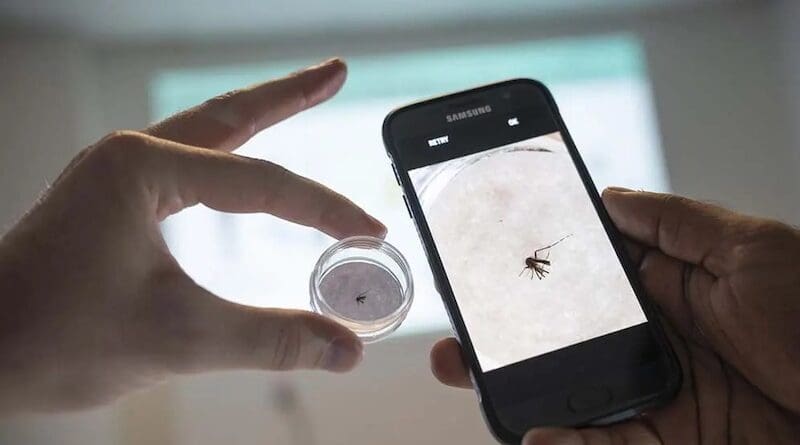
Using an AI tool in a smartphone to identify a disease-spreading mosquito. 
Photo via SciDev.net

November 24, 2025 
By Dann Okoth


Researchers say they have used Artificial Intelligence and citizen-submitted photos to identify what they believe was the first Anopheles stephensi detected in Madagascar, amid a rising threat from the malaria-transmitting mosquito across Africa.

The World Health Organization (WHO) has identified the spread of Anopheles stephensi as a significant threat to malaria control and elimination, particularly in Africa.

Researchers say the findings, published in the journal Insects, show how local communities and digital technology can be mobilised to fill gaps in the surveillance of this species, especially in hard to monitor urban areas.

The finding was made after a single smartphone photo was submitted by residents of Madagasar’s capital Antananarivo through the GLOBE Observer, a citizen science app developed by US space agency NASA.

The close-up photo showed a mosquito larva collected from a tyre in the city. It was taken in 2020 but only discovered two years later when scientists were reviewing historical data, amid concerns about the spread of Anopheles stephensi, says lead author Ryan Carney, associate professor of digital science at the University of South Florida, in the US.

After taking thousands of smartphone photos of verified Anopheles stephensi and other endemic species, and training AI image recognition algorithms, the team developed a citizen science tool for Anopheles stephensi detection.

This was able to confirm the species of the larva spotted five years ago, according to the researchers who say it shows the potential for citizen science and AI to help combat the invasive species.

Citizen-generated photos can provide early-warning data, helping authorities identify new or expanding populations more quickly than conventional trapping alone, according to Carney.

“Traditional mosquito surveillance such as trapping is expensive, requires expertise and time, and is not easily scalable, especially across jurisdictional boundaries,” he told SciDev.Net.

“Citizen science should thus be a priority for both local communities and international health bodies like the WHO to complement ongoing Anopheles stephensi surveillance measures in hard-to-reach and densely populated regions.”

Anopheles stephensi is particularly susceptible to the malaria parasite and highly resistant to pesticides.

It thrives in cities, breeding in artificial containers such as tyres and buckets, allowing it to sustain year-round malaria transmission in densely populated areas.

A previous study indicated its spread could put an additional 126 million people at risk of malaria across Africa.

The researchers point to three freely available apps—iNaturalist, Mosquito Alert and NASA’s GLOBE Observer—as effective tools for scaling mosquito monitoring in African countries. All are accessible globally and offer multiple language options, including Swahili and Arabic, which may support wider community engagement.

Citizen scientists equipped with a smartphone and a 60x magnifying clip-on lens can submit close-up photos of a mosquito or its larvae to the apps for verification.

Carney says local health ministries and mosquito control programmes can make use of the Global Mosquito Observations Dashboard, which aggregates mosquito photos and location data from around the world. This allows officials to identify areas that may require targeted surveillance or control efforts.

Andrianjafy Mbolatiana, an entomologist at the University of Antananarivo, says the technology has practical value in Madagascar.“We lack sufficient financial and human resources to monitor vector-borne diseases such as malaria,” he told SciDev.Net.

“This technology complements the standard surveillance method and will help us detect and prevent invasive and dangerous species, such as Anopheles stephensi.”

But he adds that many Malagasy people, indigenous to Madagascar, do not have smartphones or reliable internet, which may limit participation.

Researchers behind the study also acknowledge clear limitations.

“For these tools, one of the limitations is that people are simply unaware that the citizen science apps exist or that photos of mosquitoes are needed by scientists,” said Carney, whose team created the MosquitoesInAfrica.org campaign to boost participation.

The technical requirements could also be a barrier.

“The photos must be taken with that 60x clip-on lens for the AI results to be valid, since the AI algorithms were trained on only this type of photos,” said Carney.

To improve uptake, researchers recommend that public health agencies and malaria control programmes support citizen scientists in obtaining the correct lens and help raise awareness of the technology.

Mohga Kamal-Yanni, global health and access-to-medicines consultant at The People’s Medicines Alliance, believes placing tools directly in community hands is important for tackling malaria from the ground up, at a time when Africa is being hit hard by international aid cuts.

She told SciDev.Net: “For decades Africa has relied on foreign aid to tackle disease, including disease surveillance and control.

“But with cuts in international aid […it has] left a huge gap in the continent which needs to be filled through other means such as the citizen scientists approach.”

This piece was produced by SciDev.Net’s Sub-Saharan Africa English desk

Dann Okoth

Dann Okoth writes for SciDev.net
New Technology A ‘Game Changer’ For Stadiums


Project ARANA during trials at the MK Dons stadium. Credit: Weaver Labs


November 24, 2025
By Eurasia Review


Groundbreaking new technology is set to revolutionise match day and how fans experience sport following successful trials at a major stadium. The innovation, the first of its kind in the UK, could transform traditional sports venues into fully smart-enabled stadiums, offering fans unprecedented levels of interaction and connectivity.

The technology has been developed through Project ARANA, a collaboration between the University of Bristol’s Smart Internet Lab, AI experts Madevo, and other industry partners, led by network specialists Weaver Labs.

For years, fans have struggled to get a signal at a game. Thousands of people trying to get online at one time leaves everyone frustrated with large venues struggling to meet growing demand and absorb the high costs of telecoms infrastructure. A recent series of trials of the technology at the 30,400-seat MK Dons football stadium in Milton Keynes demonstrated how this challenge can be overcome.
For fans, this will mean:High-quality live video streaming from multiple camera angles, including exclusive behind-the-scenes views.
AI-driven team performance insights and historical data.
Live player statistics.
Interactive chatbots.
Immersive 3D stadium mapping.
Real-time queue navigation.
Food and beverage ordering directly from your seat.
Enhanced safety and security features.

For football clubs, this technology, powered by Weaver Labs’ Cell-Stack, could be a game changer. A collaboration between Madevo and Nokia will offer real-time insights during live matches. Using video analytics such as player coordinates generated by Nokia, teams will be able to gain valuable information on formations, tactics, and other critical aspects of the game.

During these trials, fans were able to stream four high-quality live video feeds, directly to their mobile devices, all at the tap of a screen. Meaning fans need never miss crucial match moments or struggle to access basic digital services during live games.

Beyond enhancing the fan experience, the technology also has the potential to address long-standing operational challenges for broadcasters and event organisers. This includes network congestion, cabling complexity, and unreliable 4G performance during high-attendance events.


ARANA project lead, Weaver Labs’ CEO, Maria Lema, said: “Project ARANA proves the transformative power of intelligent connectivity. By bringing computation and decision-making to the edge, we’re showing stadiums what future-ready infrastructure can deliver: real-time insight, seamless experiences, and the foundation for entirely new services. This is a glimpse of what the next generation of digital venues will look like.”

Dr Alex Mavromatis, Co-founder and CEO, UoB spin out company Madevo, which has developed cutting-edge AI models for the trials, said: “Many fans now choose the comfort of home to watch matches, enjoying high-quality streams, instant replays, multi-screens, and no queues. We recognised that the in-stadium experience was lagging behind what fans are able to enjoy at home.

“Today’s fans want the best of both worlds, the excitement of being there live, with the digital comfort and insights they’re used to at home. Our technology, built on research from Bristol’s Smart Internet Lab, bridges that gap, turning live viewing into a deeper, more connected experience. Whether it’s sharing clips in real time, ordering food from your seat, or diving into game stats, fans are now part of the action like never before.”

Professor Dimitra Simeonidou OBE, Director of the Smart Internet Lab at the University of Bristol, added: “We are thrilled to see this new platform technology in action. Thanks to 5G broadcast capabilities, the app offers a cost-effective alternative to traditional cellular solutions which is particularly important for large sporting venues where mobile connectivity is often unreliable during peak usage. We are excited to see how these technologies can dramatically reshape how we experience live events.

“This successful trial also marks a key milestone for Bristol’s Smart Internet Lab as we celebrate our 10th anniversary. It is also part of our broader mission to define the future of connectivity through the development of 5G, 6G and large-scale platforms such as JOINER, a UK-wide testbed for future networks research and innovation.”

For fans wanting to experience the technology for themselves, it will be available during additional trials at Stadium MK early next year, featuring more applications and even greater fan engagement.
Timor-Leste Risks Becoming Southeast Asia’s New Criminal Hub – Analysis


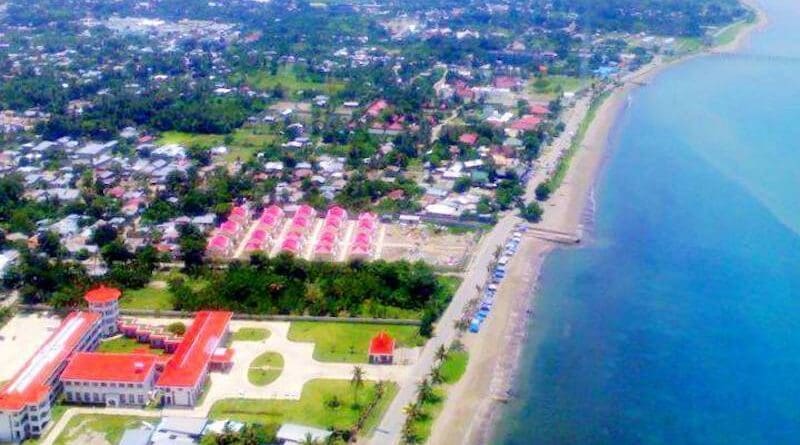
Dili, the capital of East Timor (Timor-Leste). Photo Credit: José Fernando Real, Wikipedia Commons

November 24, 2025 

By Geo Dzakwan Arshali and Ronan Timothy Asturias


Timor-Leste was officially welcomed as ASEAN’s 11th member on October 26, 2025, marking the bloc’s first expansion since Cambodia’s entry in 1999 and culminating a 14-year campaign by Asia’s youngest nation to join the Southeast Asian family. Though many applaud the country’s long-awaited inclusion, there is growing concern that its membership may add to the region’s already strained security agenda, and the bloc must prepare to confront these challenges collectively.


A Fragile Entry Amid Regional Instability

Timor-Leste gained independence in 2002 after decades of conflict, and from the start its leaders viewed ASEAN membership as critical for national security and development. Formally, the nation applied to join ASEAN in 2011, but faced years of delays as existing members questioned its readiness. Only in November 2022 did ASEAN agree “in principle” to admit Timor-Leste, granting it observer status pending preparations.

Dili enters ASEAN at a time when the bloc’s security agenda is already crowded and overstretched. Southeast Asia is beset by crises that have severely tested ASEAN’s bandwidth and unity, including the intractable violence of Myanmar’s junta, persistent tensions in the South China Sea, the renewed Cambodia-Thailand border flashpoint, and most notably the rapid spread of transnational criminal scam networks across the region.
The Criminal Pull Toward Timor-Leste

Crucially, Timor-Leste brings its own set of security vulnerabilities that differ from the traditional interstate conflicts ASEAN once focused on. On the positive side, the risk of inter-state conflict involving Dili is very low. Relations with its Southeast Asian neighbor Indonesia — which occupied the territory brutally from 1975 to 1999 — have normalized and are now largely cooperative, and its ties with Pacific neighbor Australia remain pragmatic.

Timor-Leste’s most significant security headwinds, however, lie in non‑traditional threats, with one urgent concern being its porous borders and maritime domain, since the young nation lacks the capacity to fully police its coastline and remote land borders. Global Organized Crime Index 2025 notes that the country has become a source, transit, and destination for smuggling, with organized syndicates increasingly active and corruption among border officials enabling illicit crossings.

Most worrying, furthermore, is evidence that transnational organized crime networks see Timor-Leste as a new frontier. As crackdowns elsewhere in Southeast Asia made headlines, criminals began casting an eye toward this small nation, betting that its weak regulations and hunger for investment make it easy prey.


In late 2024, Timor-Leste’s Special Administrative Region of Oecusse — a remote special economic zone surrounded by Indonesia — launched a free trade zone aimed at attracting foreign investors, and criminal groups moved in almost immediately. A police raid in August 2025 uncovered a large scam operation run by foreign nationals, with equipment identical to the fraud factories seen in Myanmar, Laos, and Cambodia.

Thereafter, UNODC reports that cybercriminals, offshore gambling groups, and triad-linked networks were backing shell companies in Timor-Leste to set up cyber-scam centers and illicit online casinos, a pattern that traps trafficked workers and mirrors the criminal model spreading across Southeast Asia.

Timor-Leste’s leaders have grown increasingly alarmed by these developments, specifically after a senior official Agio Pereira went public with an explosive warning in late September 2025 that foreign crime syndicates had funneled tens of millions of dollars into the country to bribe officials, secure fraudulent licenses, and carve out protected spaces for scams, gambling, and trafficking.
Why ASEAN Cannot Afford to Stand Back

Against this backdrop, it is unlikely that Dili can address such well-resourced networks on its own, given its underfunded police, weak regulatory oversight, and the sheer sophistication of the syndicates now operating on its soil. Without external assistance, the fear is that Timor-Leste could slip into becoming Southeast Asia’s next haven for organized crime.

ASEAN therefore cannot treat Timor-Leste’s problems as a domestic matter and must step in early to support its newest member in strengthening enforcement, closing regulatory gaps, and preventing the country from becoming another regional crime hub.

The concern, regardless, is whether ASEAN’s existing mechanisms for law enforcement cooperation are sufficient to meet this challenge The bloc does have frameworks in place — regular meetings of police chiefs (ASEANAPOL), periodic ministerial meetings and declarations on transnational crime, and even some joint operations or intelligence-sharing arrangements.

ASEAN member states, moreover, have a traditional Mutual Legal Assistance Treaty and newly signed Treaty on Extradition that, in theory, facilitate cooperation against cross-border crime. In practice, though, these mechanisms have often struggled to produce results against agile criminal syndicates. Coordination is often hampered by limited resources and the traditional ASEAN norm of non-interference, which can make authorities hesitant to intervene in a neighbor’s internal issues even when illicit networks cross borders.

ASEAN will need to rethink its approach if Timor-Leste’s entry is to strengthen rather than strain the region, starting with far tougher cross-border cooperation that treats scam networks and trafficking as shared security threats requiring joint investigations, swift intelligence-sharing, and real enforcement. Timor-Leste will also need major institutional investment, and ASEAN should make it the centerpiece of its integration programs by expanding police training and providing Dili with the administrative support it currently lacks.
A Defining Test and a Regional Opportunity

This is also a moment for ASEAN to update its norms, accept that non-interference cannot protect criminal sanctuaries, and allow Timor-Leste’s democratic voice to help push the bloc toward a more credible and collective security posture. Embracing Timor-Leste’s input and concerns will signal that ASEAN is serious about not leaving any member behind as a weak link in regional security.

While ASEAN recalibrates its strategy, Dili must also demonstrate it is serious about cleaning up criminal activity by shutting down scam operations, tightening oversight of investment in special zones, and prosecuting any officials found to be complicit, especially after its recent decision to ban online gambling. The nation must further strengthen security laws, but without repeating the regional pattern of using them to silence critics, because preserving its democratic character is central to its credibility in ASEAN and essential for mobilizing civil society against corruption and crime.

The coming year of 2026, with the Philippines as ASEAN chair — a country that has prioritized regional security and tackling transnational crime — offers a timely opportunity. Manila has the experience in combating organized crime and that the country should lead the bloc in pushing for deeper cooperation against scam networks.

Timor-Leste’s entry is indeed a defining test for ASEAN, which must show it can turn a fragile new member into a stable and contributing partner by tackling organized crime and strengthening institutions. Failure to do so, on the other hand, could see Timor-Leste drifting into the same category as the lawless scam enclaves in Cambodia, Myanmar, or Laos, which would be a regrettable outcome of ASEAN’s first expansion in over two decades.

About the authors:

Geo Dzakwan Arshali is Research Intern (Regional Security Architecture Programme) with Institute of Defence and Strategic Studies (IDSS) at S. Rajaratnam School of International Studies (RSIS). He is concurrently an Emerging Leaders Fellow at FACTS Asia and Senior Analyst & Program Manager at World Order Lab.

Ronan Timothy Asturias is Undergraduate Student in Asian Studies at Faculty of Arts and Letter, University of Santo Tomas Manila, and Analyst at World Order Lab. He currently serves as Co-Chair of the Asian Undergraduate Symposium (AUS) Fellows Society at the National University of Singapore.
Making Clean Energy Count: How Flexibility Can Power Europe’s Industrial Future


November 24, 2025 
Eurasia Review
By Massimiliano Saltori

As Europe’s clean energy capacity grows, a new wave of tech is coming into industrial practice, addressing grid volatility and emissions while keeping the EU’s industrial base competitive. The real test ahead: turning replication into good business.

The past five years have truly been a severe test for Europe’s green economy model. From the return of great-power rivalry in the East to contentious regulatory decisions—such as the rushed 2035 EU decision, later softened, to end sales of new CO₂-emitting cars—it’s easy to see why many now consider the Green Deal dead in the water. Yet that couldn’t be further from the truth.

Indeed, the last two decades have seen a steep rise in renewable energy production and consumption across the EU, largely thanks to dedicated policies and technological progress—much of which still comes from European firms. The 20% renewable energy target set by Brussels was surpassed with about 22% in 2020. And by 2023, renewable energy sources accounted for around 24.5% of the EU’s final energy use.

Solar panels now adorn rooftops in industrial areas and modern neighbourhoods, and wind turbines on the horizon are becoming a familiar feature of the countryside. Yet, across its overall energy mix, the EU still relies mainly on fossil fuels, suggesting that the energy transition is still very much a work in progress. Case in point: as the EU moves to decarbonise its grid, the real challenge for regulators and policymakers is increasingly how to maximise the efficient use of generated clean energy and optimise industrial processes.

In short, factories can’t schedule their production only when the sun shines or the wind blows. Nevertheless, this apparent volatility of the grid can be mitigated through energy flexibility, hopefully giving Europe’s industry a new competitive edge.

The Italian engineering firm STAM, a key technical partner in the EU initiative FLEXIndustries, has played a decisive role in this regard through the project: for them, monitoring, validating, and proving that flexibility is not merely a conference buzzword. Now that the project is entering its final year, and as pilots complete hardware installation, results are emerging from factories on integrating renewables, storage, and smart energy management systems.

We spoke with Matteo Bernabò, STAM’s representative in the FLEXIndustries project, to understand how innovation meets reality on the shop floor. This is where the energy transition stops being an aspiration and becomes a measurable result.

What’s STAM’s relation to FLEXIndustries?

The project’s goal is to develop replicable best practices for energy-intensive companies. STAM’s aim, more specifically, is to demonstrate the value of an integrated approach combining renewable energy systems, energy storage solutions, and, of course, the digital platform for energy optimisation developed within FLEXIndustries.

Ok, let’s first discuss the challenges in implementing these sustainable measures. Because energy costs, regulation, and technological gaps don’t exactly disappear, even if the price is offset by decarbonisation in the long run, right? What’s the advantage proposed here?

So, let’s first acknowledge the most crucial aspect of decarbonising the electricity grid. The issue is that investing in these solutions, however beneficial they may be for the environment, can be costly for businesses. And renewables pose a challenge due to their instability. That much is clear. What we are providing, in that regard, are the tools to make that transition smart and manageable. That can mean upgrading the monitoring infrastructure or deploying algorithms that forecast renewable production, energy market prices, and the facility’s own demand. When these capabilities are paired with on-site storage, the plant can minimise exposure to grid price volatility and optimise consumption hour by hour, instead of being at the mercy of the market. But that’s not beneficial only to the company; it also helps the grid itself.

How come?

If you maximise on-site self-consumption—meaning buying when prices are low and selling when it is convenient—you also reduce grid demand during peak hours.

And that’s not how things work today?

Not usually. Many energy-intensive businesses do not generate electricity for the grid and they rely on fixed-price contracts with energy providers. Their on-site renewable generation capacity is often limited, and energy storage systems are frequently absent. As a result, their agreements typically exclude the feeding of electricity into the grid, since their installations are designed primarily for self-consumption rather than for grid interaction.

Ok, let’s circle back to what FLEXIndustries and STAM are doing. The project should now be entering its final phase, correct?

Yes, we are now entering the final phase of the project. Most of the hardware solutions have been successfully integrated, and the monitoring phase is about to begin. This stage will allow us to quantify the effectiveness of both the installed technologies and the optimisation algorithms developed within the project. It should provide a comprehensive assessment of FLEXIndustries’ overall approach.

So, once you have all the data from the partners, how does implementation happen, and what comes “after the project”?

What really matters now is showing that these solutions can actually cut energy costs compared to where we started. If the delta is significant, that is the real proof of value for us. It basically makes the solution applicable beyond the project itself. The results will then be presented at conferences, on the project website, and in publications, as deemed appropriate. For our part, as STAM, we present the results and emphasise the key point: replicability is driven by economic evidence. So, if it pays off, it will spread. In any case, there isn’t a “proprietary technology” to showcase or sell. It’s the validation of a methodology, for the most part.

What strengths do you see in STAM that align with FLEXIndustries’ goals?

First of all, I believe deeply in the flexibility model. It is the direction Europe’s energy-intensive industry needs to go if it wants to remain resilient and competitive in a changing world. Methodologically, we also work extensively on circular economy approaches and product sustainability analysis, so we are always looking at the bigger picture of industrial transformation.

And at the company level, what sets STAM apart?

It’s definitely our commitment to research. Projects like FLEXIndustries are where new ideas become real, applicable tools, and where we can help ensure that Europe’s industry not only keeps up but leads the transition to a smarter, more sustainable future.

From Turbine Reliability To CO₂ Reduction: SUDOCO Redefines Offshore Wind Sustainability Metrics


November 24, 2025 
By Eurasia Review


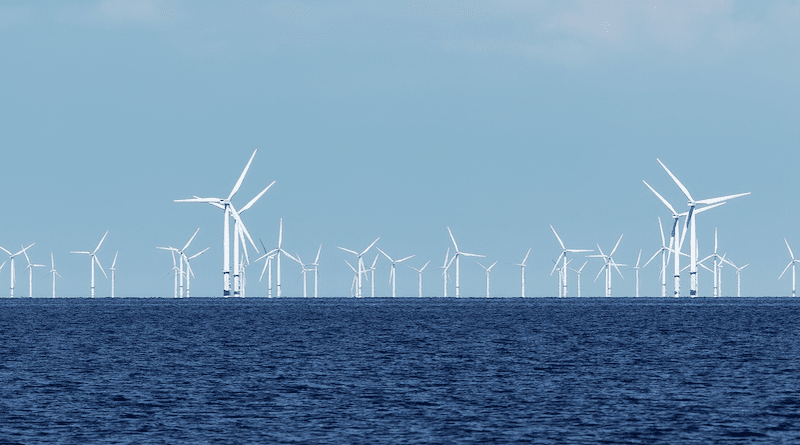
Two new scientific papers recently published within SUDOCO contribute to the project’s goal of developing a broader and more integrated approach to assessing the environmental and economic costs of offshore wind energy.

One paper introduces a new method for quantifying the reduction in greenhouse gas emissions within an energy system through wind power generation, while the other examines how the reliability and quality of turbine components affect operational costs and maintenance-related emissions.

The study “An initial study on the environmental value of wind farm control” (published in Journal of Physics: Conference Series and authored by S. Kainz, A. Scherzl, A. Guilloré, A. Anand, and C. L. Bottasso, all scholars from TU Munich) proposes a novel data-driven approach to measuring the environmental impact of wind energy. The study was conducted in collaboration with two other EU projects: MERIDIONAL and TWAIN. The work introduces the time-varying MarginalDisplacementFactor(MDF), an innovative indicator that expresses the environmental benefit of wind generation in kilograms of CO₂ equivalent per megawatt-hour (MWh). The MDF provides a new approach to quantify greenhouse gas reductions in relation to increased wind energy production within the energy system. Using the German power system and the Wikinger offshore wind farm as a case study to showcase the method, a strong positive contribution to grid emission reduction – through wind energy generation in general, and wind farm control in particular – is identified.

In “Impact of reliability parameters on O&M cost and greenhouse gas emissions of offshore wind farms”, authored by M. Gräfe, S. Kainz, A. Ludot, V. Pettas, A. Anand, and C. L. Bottasso, scholars from TU Munich and TU Delft and also published in the Journal of Physics: Conference Series, the authors highlight how turbine component quality and reliability strongly influence both operational costs and maintenance-related emissions. This study too resulted from a joint effort with TWAIN. As explained by Samuel Kainz, PhD candidate at TUM: “Improving reliability reduces failures, maintenance interventions, and vessel trips – yielding direct economic and environmental benefits. The study also emphasises the importance of including operation and maintenance processes in the overall greenhouse gas footprint assessment of wind farms, going beyond the production phase alone.”

Both studies add a new piece to the broader vision of SUDOCO, advancing the development of an integrated approach to wind farm flow control aimed at maximising not only energy production but also the overall value of wind energy in terms of efficiency, cost, and environmental impact.
Timely Documentary Explores World’s Critical Edges At Crossroads Of Megaprojects And Nature Conservation


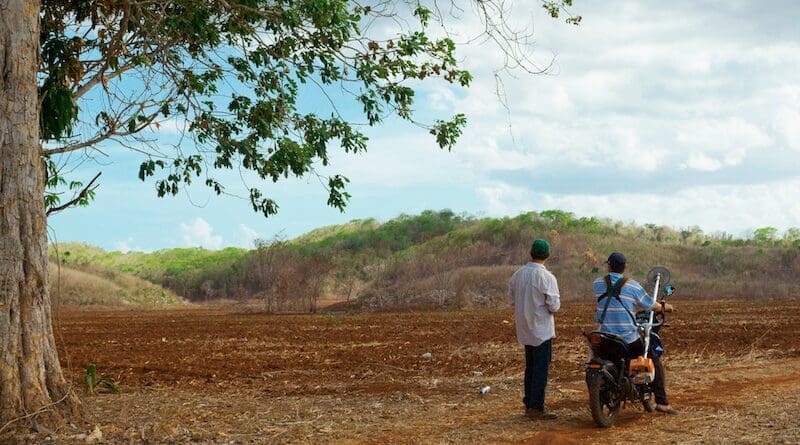
Sakbe Roads of Life in the Maya Forest. Photo credit: Kerttu Matinpuro


November 24, 2025 
By Eurasia Review


The Maya Forest on the Yucatán Peninsula in Mexico stands at the intersection of megaprojects and nature conservation. A new documentary film, SAKBE – Roads of Life in the Maya Forest, tells a story of biocultural diversity and about people, nature conservation and conflicts in an area where biodiversity is extraordinarily abundant. At the same time, the film offers a broader view of the future of the world’s supposedly remote regions.

Created by Senior Researcher Hanna Laako and Documentarist Kerttu Matinpuro as a science communication and dissemination initiative, the documentary draws on themes emerging from Laako’s research project, portraying the conflicts faced by people living in the Maya Forest through the film’s protagonists. The film challenges assumptions about the world’s critical edges by revealing how they are in fact central to global themes and politics, and thus deeply interconnected with the wider world.

“Whether to stay or to leave emerges as one of the film’s fundamental questions, explored by the protagonists through their own paths in life, that is, whether to stay or to leave in a situation where the Mexican government encourages new people to move into the area. The word Sakbe in the documentary film title is a Mayan word referring to a road, both literally and symbolically,” Laako says.

In recent decades, the Maya Forest has witnessed the implementation of numerous megaprojects. One example examined in the film is Tren Maya, a railway project launched in 2024 and intended to serve millions of tourists visiting the area annually, while also creating new livelihoods. According to Laako, however, the project also has a geopolitical dimension.

“For instance, biodiversity loss has emerged alongside climate change as one of humanity’s major challenges, and especially in the world’s critical edges, megaprojects increasingly intersect with themes relevant to nature conservation globally.”

The documentary was produced as part of the Political Forests – the Maya Forest project, funded by Kone Foundation and led by Laako. The project explores how nature conservation reshapes international relations and political geography in Mesoamerican borderlands, with a particular focus on biocultural diversity and biocultural conservation.

Hanna Laako is a scholar of political science and international relations, and a Senior Researcher at the University of Eastern Finland. She has lived more than a decade in southern Mexico, conducting research. She has studied the transboundary Maya Forest since 2019.

Kerttu Matinpuro is an independent documentarist, producer and journalist based in Joensuu, Finland. She works on multidisciplinary projects in collaboration with NGOs, academic initiatives and cultural institutions. Her professional interests include environmental issues, grassroots activism and cross-border cooperation between Finland and Russia.
Why Putin Is Not A Conservative: The Destruction Of Integrity – Analysis


November 24, 2025
By Ilya Ganpantsura


We have often heard Western right-wing politicians describe Russian President Vladimir Putin’s regime as “conservative.” They justify this by pointing to his proclaimed defense of traditional family values and his resistance to left-wing lesbian, gay, bisexual and transgender (LGBT) protests in Russia.

Yet, does Putin’s conservatism truly rest on any genuine philosophical foundation — the kind laid down and developed by serious political thinkers such as Sir Roger Scruton, the English philosopher and one of the leading theorists of modern conservatism? To examine whether Putin’s so-called conservatism is authentic, I will turn to one of Scruton’s most renowned works, How to Be a Conservative.
Biography and conservatism

One day in May 1968, Cambridge postgraduate Roger Scruton was staying in Paris when he looked out the window of his apartment and saw police dispersing a student demonstration. Watching as “spoiled members of the middle class” set fire to “cars earned by honest labor” and smashed shop windows in the name of the “proletariat,” he decided to become a conservative.

Against this backdrop, Scruton formed his conservatism as a defense of law and order — seeking to preserve rather than to overthrow — in contrast to the revolutionary suppression of authority. Thus, in his view, had those young activists of 1968 supported the positive laws of the state created for the public good, rather than dubious and supposedly “natural” human rights, society would have flourished over time.

However, Scruton’s ideas soon faced new trials after Margaret Thatcher became Prime Minister of the United Kingdom. Conservatism in Britain was increasingly associated with free-market policies and economic pragmatism. Scruton, by contrast, insisted that the true mission of conservatism lay not in economic gain but in preserving moral order and cultural continuity.

The new millennium proved even less favorable for Scruton’s conservatism. The right-wing program of UK Prime Minister John Major, in the eyes of some, lacked the “programmatic clarity” that Thatcher had possessed in abundance. In 1997, Labour candidate Tony Blair won a decisive electoral victory. As Scruton witnessed the decline of British conservatism, an obscure figure named Vladimir Putin in Russia was beginning his audacious ascent to power.


The goal above all


At the dawn of the new millennium, in his political debut, Putin pledged to ensure Russia’s economic and political stability — presenting himself as a pro-Western politician. Through what were described as “surprisingly liberal” market reforms, he nearly halved the unemployment rate and increased Russia’s gross domestic product by about 7% by 2008.

Yet, this period of prosperity proved short-lived: it was followed by economic recession and conflicts in Georgia and Ukraine. This interweaving of events and decisions was perceived by many in Russia as the beginning of a dictatorship.
The fragmentation of wholeness

“Society is a shared inheritance, for the preservation of which we learn to restrain our demands, to see our place in the world as a link in a continuous chain of giving and receiving and to recognize that the good we have inherited must not be spoiled.” — Sir Roger Scruton, How to Be a Conservative.

By destroying the common heritage of peoples, Putin violated the very conservative idea Scruton upheld — the duty to preserve what was created before us. With his invasion of Ukraine, Putin annihilated the shared heritage that once united the Ukrainian and Russian peoples — a heritage built upon common language, culture and history; upon social and familial bonds; upon financial and cooperative projects.

In its place, Ukraine experienced an accelerated rise in national self-awareness and the historical process of nation-building. Ukraine began to distance itself ever more sharply from the now-hostile post-Soviet cultural sphere dominated by Russia. The Ukrainian language displaced Russian, while social and professional connections were severed in the crucible of war.

This process of separation may rightly be called historical, for it is precisely what constitutes the birth of a nation, much like “growth for a child.” And although this brought about positive developments in Ukraine — the strengthening of national identity and territorial loyalty (which, in Scruton’s conservative view, are far more genuine foundations than faith in cosmopolitanism, partially present after the collapse of the Union of Soviet Socialist Republics [USSR]) — Ukraine simultaneously suffered a rapid rupture of its social, cultural and academic ties. This outcome certainly weakened its political tradition, rendering it more susceptible to the spread of multicultural ideologies.

Through the trauma of war, Ukraine continues to drift away from the Russian-speaking cultural sphere. Putin, in his attempt to “defend” Russian speakers in Ukraine and to preserve the region’s common heritage, instead alienated the second-largest Russian-speaking nation after Russia itself.

He stripped the concept of the Russkiy Mir (“Russian World”) of its meaning — a project once meant to unite Russian-speaking nations within a shared cultural space, preserving it as a civilizational achievement.

In Scruton’s view, common values should deepen mutual understanding and facilitate cooperation in solving problems. Yet Putin shattered this cultural connection and deprived the “Russian World” not only of its meaning, but also of its spirituality. He transformed it from a concept of cultural coexistence into one of military expansion — shifting its essence from creation and the pursuit of the good through shared values to the expansion of violence.

Its ontological core was inverted: coercive promotion of Russian political culture replaced the preservation of the living, shared heritage of the USSR. Was it worth it for Putin to tear apart the established order of the region, only to later hide behind the banner of “defending traditional values,” dancing to the tune of Europe’s right-wing populists?

For the world strives toward wholeness. And when Putin destroyed the unity among Slavic nations, that very wholeness was reconstituted at the national level in the states harmed by Russia, not only directly by war, but also on a metaphysical level, through the rupture of the unity and equality among Slavic peoples that had survived the fall of the Soviet Union.

“There is a line of obligation that binds us to those who passed on to us what we have and our care for the future is a continuation of that line. We care for the future of our society not through fictitious calculations of costs and benefits, but by inheriting the goods created by previous generations and passing them on in turn,” wrote Sir Roger Scruton. Instead of continuing that line of continuity Scruton described, Putin severed it — replacing genuine care for the future with war and propaganda


Philosophy in a cage


Putin seeks to expand the cultural concept of the “Russian World” by filling it with philosophical depth — turning it into a supposed civilizational project. The idea is presented as follows: the search for and realization of one’s “Russian essence” as a supra-national concept.

According to Putin, to be Russian is to possess a soul and consciousness that transcend nationality. In his speeches, one often hears phrases like “civilizational project” and “a special path.” Yet, what exactly has Putin prepared for the ordinary person in this philosophical project of his? And how did this concept ultimately become a tool that ensures his popular support against external threats, while simultaneously distancing Russians from genuine reflection?

National self-knowledge can pose questions that give the full spectrum of self-identification. Two of these are particularly important: Who are we in the face of our complete opposite? And who are we in relation to those who, in some respects, resemble us?

But Putin has created a situation in which the second question disappears entirely. Russia is already part of European civilization — and naturally, Russians feel this. Yet, Putin rejects even the premise of this fact, replacing the nation’s search for self-understanding with an abstract notion of a “special path” toward his “civilizational project.”

The essence of this idea, however, does not lie in genuine creation, but in antagonism — in opposition to the European idea of the national quest. In Putin’s Russia, a war has been declared on one of the fundamental principles of European civilization: the idea of national loyalty, which, according to conservatives, is the chief source of strength in European states.

Putin’s “special path” removes the second question of self-identification — the one that ultimately leads to the most intimate reflection: the awareness of oneself before oneself. The chain — I before the opposite, I before the friend, I before myself — is broken.

And even if Russians, freed from propaganda, manage to pass through this entire chain and reach the final question — Who am I before myself? — for them, the authorities destroy not only the chain but life itself. Putin’s contempt for freedom of speech and the existence of hundreds of political prisoners make the national idea impossible. Without self-determination and self-realization, individuals eventually vanish, and the nation loses its face, dissolving into an atomized mass.

In essence, Putin’s “special path” for the individual is a project of perpetual striving toward a goal, where only the goal has value. Meanwhile, the path itself — i.e., the life of ordinary Russians — plays little role. This repeats the story of the USSR and its race toward the cloudlike vision of communism. Extending Roger Scruton’s philosophy: when state control leads to a politics of goals, society loses the capacity for free associations — the associations it forms when it begins to ask questions about national self-identity:

When a civic association is destroyed in the name of progress, when some idea of the future becomes the judge of the present and the past, when a great goal is set and the state or the party leads all citizens toward it, then everything is reduced to mere means — and the true ends of human life retreat into darkness and the underground.

Theory of elites – an introduction

In a society free from resentment, power must rest upon intellectual elites while remaining attentive to the broader masses. Such a concept of democracy allows the rational voice of the elite to advance the most well-argued ideas and address the concerns of ordinary people. Here, elites are those who embody Russia’s spiritual wholeness and philosophy. Their purpose is to point the way toward a future in which as many citizens as possible can love and take pride in their country. The mission of the true elite is to strengthen love for the homeland — within themselves and in others.

By contrast, pseudo-elites pursue goals of personal enrichment, status-building and social dominance without regard for the intellectual and philosophical development of Russian society — or even hindering it through corruption and clan systems. The true elites are the creative minds of culture and science — individuals who, having reached great heights, attain a philosophical understanding of their role.

A fitting example can be found in the lectures of the Leningrad literary scholar, Pushkinist and semiotician, Yuri Lotman. Though a man of science — albeit in the humanities — his lectures, even those like “Conversations on Russian Culture” (1988), which at first glance appear to be mere historical accounts, reveal to the perceptive listener a deep philosophical undercurrent.

This depth was forged under Soviet isolation and pressure, imposed by representatives of the pseudo-elites. Yet Lotman’s creative philosophy endured, and it remains focused on the act of creation itself.

Ultimately, the weak-spirited — opportunists and conformists — learned to benefit from an old system built upon the deprivation of their country’s potential for growth. They are not conservatives but preservatives — suffocating rather than safeguarding.

And although pseudo-elites exist in every state and cannot be entirely eliminated, their paradoxical role — both harmful and beneficial — is that they create the difficult conditions from which the strongest representatives of the true elites emerge.

Yuri Lotman can rightfully be regarded as a representative of cultural conservatism, characterized by ethical integrity, skepticism toward utopian ideals and a profound view of social relations.

Putin and decaying love

At the start of the war, Putin — by means of repression and the threat of punishment for antiwar sentiment — forced hundreds of true elites to leave Russia. Putin is the antagonist of my concept of spiritual harmony, a harmony that democratic institutions can foster, where pseudo-elites create harsh conditions that, once overcome, give rise to genuine elites.

Putin interpreted this differently. For him, elites are not an intellectual support but a group with business interests whom he satisfies and who, in return, offer popular loyalty. Putin places the role of spiritual support on the broad masses.

Through propaganda and the influence of pseudo-elites, the people become atomized and no longer seek a conscious love of the homeland. The dominant quality of the masses becomes an unjustified pride, often fueled by military myths.

Russian historian Evgeny Ponasenkov demonstrates this in his magnum opus. Intimidated scholars — for example, during the years of Stalinist repressions — were compelled to write falsehoods on demand and to fabricate the myth of a “great victory,” abandoning genuine scholarly inquiry.

And when the system allowed a degree to be awarded in 2017 for a dissertation about Vlasov’s army (the Russian Liberation Army), only to have it later revoked, this merely confirmed its totalitarian character.

In place of the idea of preserving Russia’s real, grand history — which certainly exists — comes a resentful desire: to prove, to avenge, to repeat. Such masses can be rallied to war, but it is impossible to find with them a new path to the future that seeks genuine love for Russia.

Putin’s political culture


When asking whether Putin is a conservative, we must first recognize that we are speaking about a man devoid of creative or constructive consciousness. Putin is one of the few Western-style politicians who emerged from a closed system of service. He served in the security apparatus, later as an official under Yeltsin, and subsequently reinterpreted the very model of “service” as the foundation of his rule. He serves, but does not create.

Many with artistic backgrounds have noted the similarity between Putin’s psychology and that of author Julian Semyonov’s fictional, James Bond-esque character Max Otto von Stierlitz, whose spy storyarc supposedly inspired Putin to join the Soviet Union’s Komitet Gosudarstvennoy Bezopasnosti (KGB) security agency in 1975.

This ultra-masculine association may lend Putin a certain air of respectability as a politician, but it simultaneously reveals a lack of the lofty, poetic sensibility that has always been intrinsic to Russia.

One of the most prominent Russian-speaking philosophers of the 21st century, Andrii Baumeister, once called Putin a “sophist” during a broadcast, noting that his tactics are to draw others in and that his instruments are: “to persuade, to seduce — and only secondly, to threaten.”

Putin is non-creative on a personal level. Yet his attempt to construct an illusion of “persuasion and seduction” is itself a path of threats — threats disguised as strength and as a theatrical respect for “cooperation,” which in reality leads to the absorption of the opponent’s individual will.

Philosophical conclusion

Putin cannot be justified — for the moment we attempt to justify him, he strips our values of their meaning. He reshapes them within our own words: conservative, right-wing, fascist. Even the word Russia, which once carried a civilizational spirit, now signifies the rule of a dictator — one without ideology, yet with an overpowering personality.

The truth is that conservatism means the preservation of values and a pragmatic striving for peace — a peace that expands the possibilities for citizens to realize themselves. The attempt of dictators to “protect” traditional family relations through laws and prohibitions is, in fact, the path to suppressing both the future and love itself.

Conservatives preserve traditions and values not by freezing them under control. The true path lies in remaining modern — so that our ideas and values may live on in the future, unburdened by blind reverence for the past. Roger Scruton also wrote about this: “We must be modern while defending the past and creative while defending tradition.”


The views expressed in this article are the author’s own and do not necessarily reflect Fair Observer’s editorial policy, where this article was published.


Ilya Vladimirovich Ganpantsura was born in Ukraine, the city of Dnepropetrovsk in a Russian-speaking family. Since adolescence, he professed canonical Ukrainian Orthodoxy associated with the Russian church. And when, with the beginning of Russia's attack on Ukraine, the state began to ban his native language and church, Ilya spoke out for linguistic and religious rights in Ukraine. At the same time, he considers himself a patriot of his native country.

COP30 another failure

COP30 another failure
The UN COP30 climate summit was another failure as the crisis accelerates and not enough it being done to stop it. The key take away was talk turned from prevention to mitigation, an admission of defeat. / bne IntelliNews
By Ben Aris in Berlin November 24, 2025

The UN climate summit, COP30 in Brazil, ended in the same sort of failure to take the decisive action needed to avoid a planetary eco-crisis,  as the previous two summits. It was hijacked once again by energy lobbyists and marred by the total absence of the US, the second biggest polluter on the planet, just as the crisis becomes palpable.

The previous two meetings were similar abject failures. The UAE’s COP28 was a cop-out where the oil rich Arab state used the event to sign oil and gas deals on the sidelines, and Azerbaijan’s COP29 lukewarm attempt to get the major fossil fuel countries to even talk about the issues.

Time has almost run out. This summer was marked by the strongest hurricanes ever seen in the Caribbean that ripped through Jamaica. And if the urgency of action was not already blindingly obvious, as the event came to an end, the Iranian government announced Tehran must be evacuated and abandoned as it has run out of water and is no longer viable as a city for human life.

After temperatures last year were over 1.5°C above the pre-industrial benchmark in every month of the year, the Climate Crisis is already here. The United Nations’ Intergovernmental Panel on Climate Change (IPCC) says the effort to hold temperature increases to 1.5°C has already failed and the planet is on course to see temperatures increase to a catastrophic 2.7’C-3.1’C that lead to unpredictable results and positive feedback loops that could lead to runaway warming. At that point extreme temperature events will become routine and large parts of the world will become uninhabitable.

Poignantly, one of the big changes at COP30 was the switch in the discussion from prevention to adaptation, as the delegates conceded that the fight is already lost and going forward policy will be all about how humans can continue to live in an increasingly hostile climate.

Missing words

Two weeks of talks amongst 200 countries in the Brazilian rainforest city of Belém appear to have been a waste of time. The final eight-page communiqué on the Global Mutirão decision, as the Brazilian hosts term the needed collective action, avoided an explicit reference to the words “fossil fuels” which was the whole point of the meeting.

Deep fractures were revealed, particularly over which countries should pay for adaptation and how to get the world off fossil fuels. The rich countries are refusing to pay for the small ones and Island state nations are increasingly panicking as they face the now almost certain prospect of their countries disappearing under the waves.

The focal point of the summit was to draw up a road map to transition away from fossil fuels: oil, gas, and coal. More than 80 countries, including Colombia, the UK, Germany and Kenya backed the idea, so when the final communiqué failed to mention the plan at all delegates were outraged.

In a weak compromise, COP30 President André Corrêa do Lago promised to create a road map over the next year, but outside the framework of the formal COP summit process rather formally adopting it at this summit. The strong language to “phase out fossil fuels” adopted in Dubai in 2023 did not reappear.

China and US

As the self-styled “leader of the free world”, the US should have been leading the talks, but absented itself entirely after US President Donald Trump took America out of the Paris Accords for a second time after taking office in January. The White House sent no representatives at all.

China, as the emerging leader of the whole world, also played a muted role at the event despite emerging as the global green energy champion.

The outcome at best prevents a backslide on previous deals, and at worst highlights the global communities in ability to curb America’s “drill, baby, drill” policy of making things worse by upping the production of oil and gas production to record levels that has already resulted in all-time record levels of Green House Gases that continue to rise. All three of the most dangerous gases that do the most damage to the climate – CO₂, methane, and nitrous oxide – are already at all-time highs and continue to increase.

Adaption is the new goal

Probably the most significant change that also marks the beginning of the end, is the switch in focus from prevention to adaptation. The hallmark of the 2015 Paris summit was the adoption of a concrete plan to prevent temperatures from rising above 1.5°C above the pre-industrial benchmark. COP30 in effect was an admission that goal has failed and going forward the work will be all about mitigating the damage that is going to be caused. In effect the governments of the world are giving up on strictly enforcing the efforts to cut emissions that cause global warming.

Part of the reason is the change in rules of the game. The Climate Crisis is accelerating, and temperatures are rising faster than even the most pessimistic models set up by the IPCC. Paris assumed fossil fuel demand would decrease over time. When former German Chancellor Angela Merkel met Putin in Moscow in 2018 to negotiate energy deals, she told him that the EU will have completely phased out gas use by 2025. Amongst other things, the AI revolution has completely changed the energy calculus and demand for power is set to accelerate at an extraordinary rate.

Already worsening storms, floods, droughts and fires pose huge risks, especially on developing countries and small island states, and will only get worse. It’s only a matter of time before the first city-killing category six hurricanes appear and the collapse of the AMOC (Atlantic Meridional Overturning Circulation) now appears to be inevitable that could usher in a mini-ice age in Europe, to name two of the most visible problems.

To deal with these problems, COP30 called for a tripling of “adaptation finance” by 2035 – five years longer than what developing nations say is needed.

Critical minerals on the agenda

The agenda of COP30 was also broadened to take in some of the geopolitical themes du jour, specifically critical minerals and rare earth metals (REMs). Tackling the Climate Crisis requires coordinated global action. But the new economic paradigm ushered in by Trump has led to an aggressive transactional modus operandi where countries, especially in the Global North, are increasingly fighting trade wars – the antithesis of the cooperative spirit that is needed to deal with the climate global emergency.

That is less true in the Global South where China has grasped the bull by the horns and is already approaching, or has even passed, peak emissions. China as the world’s biggest emitter of GHGs could by itself materially impact the rate of global warming, but it cannot solve the problem on its own. Moreover, while Trump increasingly isolates America with his protectionist trade policies, the rest of the world is building Global Emerging Markets Institutions (GEMIs) to better integrate their interests and trade that should have a positive impact on the climate. That is bolstered by the fact that green energy is now the cheapest source of power on the planet, encouraging more and more developed markets to throw themselves into building out green generating capacity. For instance, Uzbekistan has become the green energy champion of Central Asia after a reluctant start a few years ago.

The minerals issue was manifest in China and Russia’s displeasure with the European Union’s Carbon Border Adjustment Mechanism (CBAM) that will impact the trade in these key elements, central to the tech sector. Both countries dominate the processing of these minerals, in large scale and extremely dirty production processes that will be hit by CBAM, and not only those products.

Those concerns made it to the final communiqué, which takes a swipe at unilateral trade actions, Bloomberg reports. The document says that measures taken to combat climate change “should not constitute a means of arbitrary or unjustifiable discrimination or a disguised restriction on international trade,” the newswire reports. References to lithium and cobalt were included in the COP30 discussions for the first time.

Deforestation

The event was held in the Amazon, the “lungs of the world.” However, extensive deforestation for agriculture and mining has seen vast swaths of the forest cut down and rising temperatures have also caused the worst drought on record.

Brazil announced it would work on two initiatives to combat deforestation and transition away from fossil fuels that will take shape over the next year and would report the results at the next COP31 to be hosted by Turkey.

The area of forest lost globally has continued to rise since the 2015 Paris Agreement, with Brazil and the Amazon basin at the epicentre of the decline and accounting for 60% of global forests. According to data from the World Resources Institute’s Global Forest Watch, the world lost over 26mn hectares of primary tropical forest between 2015 and 2023. Of this, more than one-third—approximately 9.3mn hectares—occurred in Brazil alone. Increased logging, mining, cattle ranching, and soy production is to blame.

Since taking office in January 2023, Brazilian President Luiz Inácio Lula da Silva has introduced measures to combat illegal deforestation. The Region is nearing a “tipping point” at which forest loss could become irreversible, according to a 2022 study published in Nature Climate Change.

A “Tropical Forests Forever Facility (TFFF),” was established, a fund to support rainforest conservation worldwide, but the commitments fell far short of the tens of billions Brazil was hoping for. Norway, Germany and Indonesia have pledged $6bn so far, but Norway in particular has tied its contribution to a commitment by more countries also joining the initiative.

TFFF seeks to make use of the capital markets to generate returns and pay countries a fee per hectare of forest protected – an alternative to the carbon market which has so far failed to deliver when it comes to protecting already-standing forests. The increasingly cash-strapped advanced countries that would have to make the payments have blocked the measure.

A road map to stop deforestation also did not make it into the final text, with Corrêa do Lago again proposing a second informal initiative like the fossil fuel one outside the formal COP30 framework. It’s an omission that some found galling given the setting of the talks, Bloomberg reported.