Monday, November 24, 2025

Golden retriever and human behaviours are driven by same genes


University of Cambridge
Golden retriever 

image: 

This golden retriever, involved in the study, shows ‘good behaviour’.

view more 

Credit: Morris Animal Foundation


A study led by researchers at the University of Cambridge provides a window into canine emotions, revealing why some golden retrievers are more fearful, energetic or aggressive than others.

The research, published today in the Proceedings of the National Academy of Sciences, is the first to show that specific genes linked to canine behaviour are also associated with traits like anxiety, depression, and intelligence in people.

The team analysed the genetic code of 1,300 golden retrievers and compared it with each dog’s behavioural traits – assessed through a detailed owner questionnaire. This revealed genes underlying traits including trainability, energy levels, fear of strangers, and aggression towards other dogs.

By comparing their findings with a similar analysis in humans, the team discovered that twelve of the golden retriever genes they identified also underlie human behavioural traits and emotions.

“The findings are really striking – they provide strong evidence that humans and golden retrievers have shared genetic roots for their behaviour. The genes we identified frequently influence emotional states and behaviour in both species,” said Dr Eleanor Raffan, a researcher in the University of Cambridge’s Department of Physiology, Development and Neuroscience who led the study. 

One gene, PTPN1, was linked to aggression towards other dogs in golden retrievers - and is also associated with intelligence and depression in humans.

Another gene variation, flagged up in golden retrievers that are fearful of other dogs, also influences whether humans tend to worry too long after embarrassment or are high educational achievers.

The team says the findings could help owners understand their pets’ emotional worlds, and tailor training or care to suit their needs.

“These results show that genetics govern behaviour, making some dogs predisposed to finding the world stressful. If their life experiences compound this they might act in ways we interpret as bad behaviour, when really they’re distressed,” said Enoch Alex, a researcher in the University of Cambridge’s Department of Physiology, Development and Neuroscience and first author of the report.

Insights for better training and care

The study showed that ‘trainability’ in golden retrievers is associated with a gene, ROMO1, that in humans is linked to intelligence and emotional sensitivity. This means owners should appreciate that there’s an emotional component to training their dogs, say the researchers, in addition to rewarding desired behaviours.

The insights could also have implications for veterinary care: understanding that behaviour like fearfulness in a golden retriever, for example, is driven by a gene linked with human anxiety means that a medicine to reduce anxiety could help.

How genes drive behaviour and emotion

The dog genes identified by the team do not lead directly to any specific behaviour or emotion – rather, they influence behavioural regulation or broader emotional states. For example, dogs showing ‘non-social fear’ - that is, being scared of things like buses and hoovers - have a gene that in humans drives irritability, sensitivity, and ‘seeing the doctor for nerves or anxiety.’

“If your golden retriever cowers behind the sofa every time the doorbell rings, perhaps you might have a bit more empathy if you know they’re genetically driven to feel sensitive and anxious,” said Dr Anna Morros-Nuevo, a researcher in the University of Cambridge’s Department of Physiology, Development and Neuroscience who was also involved in the study.

“Dogs in our home share not only our physical environment, but may also share some of the psychological challenges associated with modern living. Our pets may be excellent models of some human psychiatric conditions associated with emotional disturbance," said Professor Daniel Mills, a specialist in problem animal behaviour at the University of Lincoln, who was also involved in the study.

Linking behaviour to underlying genes

The team used data on the behaviour of 1,300 dogs - aged between three and seven - involved in the Golden Retriever Lifetime Study, which has been run by the Morris Animal Foundation since 2012. Enrolled dog owners answer questionnaires about 73 different behaviours of their pet, which are then grouped to give scores in 14 categories that reliably predict various behavioural traits.

Using blood samples, the team searched the entire genome of each golden retriever for genetic markers that were more frequent in dogs with each of these 14 behavioural traits, compared to those without it. This allowed them to link specific regions of the genome with specific behavioural traits.

Emerging human and canine leptospirosis in New South Wales: insights from a One Health geospatial study



Shanghai Jiao Tong University Journal Center
Map of New South Wales showing clustering of canine leptospirosis cases (A) and human leptospirosis cases (B). 

image: 

Map of New South Wales showing clustering of canine cases of leptospirosis in Greater Sydney and the South Coast (A), whereas human leptospirosis cases were mainly centered around the North Coast with no significant clustering (B).

view more 

Credit: Christine Griebsch, Jacqueline Norris, Michael P. Ward.


As cases of leptospirosis continue to rise in both humans and dogs in New South Wales, a critical question has emerged: are our pets transmitting this dangerous bacterial disease to us? A geospatial study recently published in Science in One Health suggests that there is limited evidence of dog-to-human transmission, human-to-dog transmission, or shared sources of infection at the spatial level examined (SA3). Instead, the findings indicate that humans and dogs may have largely independent transmission pathways. Researchers from the University of Sydney, who analyzed nearly 300 human cases and 79 canine cases, found that infections in the two species occurred in different hotspots and were driven by different bacterial strains. This discovery shifts the focus from pet contact to broader environmental sources—such as rodents and climate factors—and calls for a refined One Health strategy that addresses the distinct pathways of infection for each species.

Why this spatial distinction matters

This study challenges the conventional perception that simultaneously rising outbreaks may be interconnected. Canine cases were predominantly clustered in the Greater Sydney metropolitan area and the South Coast, while human cases were concentrated on the North Coast, with no statistical correlation between their geographical distributions. This clear spatial separation serves as a crucial clue, indicating that human and canine infections likely originate from distinct sources.

Inside the serovar mismatch: a tale of two epidemics

Dogs: rodent-contaminated urban environments 

Dominant serovars: In dogs, serovar Australis (29%) has recently overtaken Copenhageni (18%) as the most common cause of disease, representing a significant shift in the local leptospirosis landscape.

Reservoir Hosts: Both serovars are primarily associated with rats (Rattus rattus and Rattus norvegicus) as reservoir hosts. Serovar Australis may also be maintained by native animals, including small marsupials such as bandicoots, as well as native and introduced rodents.

Urban hotspots: The clustering in Sydney aligns with known rat populations. Construction activities and the presence of recreational parks are hypothesized to facilitate contact between dogs and environments contaminated with rat urine, the primary source of these serovars.

Humans: mouse-plague-driven transmission

Dominant serovar: In stark contrast, 58% of human cases were caused by a single serovar, Arborea. While both mice and rats can serve as reservoir hosts for Arborea, mice appear to be the primary driver in the Australian context.

Outbreak drivers: Major human outbreaks, including one among raspberry farm workers in 2018 and another linked to a widespread mouse plague in 2021, were overwhelmingly caused by serovar Arborea. Transmission is thought to occur through wounds or mucous membranes exposed to environments contaminated with infected rodent urine, or through direct contact in agricultural settings.

Distinct transmission pathways: limited evidence of cross-species transmission or shared sources

The findings suggest limited evidence to support dog-to-human transmission or shared infection sources at the spatial scale examined in this study. At the SA3 level, no correlation was found between the number of human and canine cases (Spearman's rank correlation coefficient r = −0.053, P = 0.641). In the nine geographical regions where both canine (n = 38) and human (n = 51) cases were reported, there was no overlap between specific serovars at the spatial level.

While five serovars (Australis, Copenhageni, Hardjo, Pomona, and Robinsoni) were detected in both species across NSW, the serovar mismatch at the spatial level, combined with distinct geographic clustering patterns, indicates that humans and dogs may have largely independent transmission pathways requiring separate intervention or prevention measures.

A One Health path forward: separate threats, coordinated solutions

The study reveals a disparity in leptospirosis cases patterns between NSW and other developed regions: human cases significantly outnumber canine cases in NSW, while the reverse is observed in places like the United States and Europe. This contrast may be influenced by factors such as climate, occupational and recreational exposure risks, hygiene, public awareness, and disease surveillance practices. Therefore, control strategies should be tailored to address these species-specific transmission patterns.

For canine health: Stringent rodent pest control in urban areas and vaccination of dogs in endemic regions remain critical control measures.

For public health: Protecting outdoor and agricultural workers with personal protective equipment and targeted public health messaging about risks associated with exposure to rodent-contaminated environments, particularly during mouse plagues and after extreme weather events.

The value of geospatial analysis: This study demonstrates that geospatial analysis, combined with serovar identification, is an important tool for deciphering distinct transmission pathways in a One Health context. Such information is essential for developing species-specific risk mitigation strategies and surveillance systems for both dogs and humans within a One Health framework.


Ancient wolves on remote Baltic Sea island reveal link to prehistoric humans


Scientists have found wolf remains, thousands of years old, on a small, isolated island in the Baltic Sea – a place where the animals could only have been brought by humans. The study, published in Proceedings of the National Academy of Sciences by rese


Stockholm University

Upper arm wolf 

image: 

Detail of one of the upper arm bones from one of the wolves included in the study. Photo: Jan Storå/Stockholm University

view more 

Credit: Jan Storå/Stockholm University


Scientists have found wolf remains, thousands of years oldon a small, isolated island in the Baltic Sea – a place where the animals could only have been brought by humans. The study, published in Proceedings of the National Academy of Sciences by researchers at the Francis Crick Institute, Stockholm University, the University of Aberdeen and the University of East Anglia, suggest that grey wolves may have been managed or controlled by prehistoric societies.

The discovery of the 3,000–5,000-year-old wolf remains was made in the Stora Förvar cave on the Swedish island of Stora Karlsö, a site known for its intensive use by seal hunters and fishers during the Neolithic and Bronze Ages. The island, which covers only 2.5 square kilometres, has no native land mammals, meaning that any such animals must have been brought there by people.

Genomic analysis of two canid remains confirmed they were wolves, not dogs, with no evidence of dog ancestry. However, they exhibited several traits typically associated with life alongside humans. Isotope analysis of their bones revealed a diet rich in marine protein, such as seals and fish, aligning with the diet of the humans on the island and suggesting they were provisioned. Furthermore, the wolves were smaller than typical mainland wolves, and one individual showed signs of low genetic diversity, a common result of isolation or controlled breeding.

“The discovery of these wolves on a remote island is completely unexpected,” said Dr. Linus Girdland-Flink of the University of Aberdeen, a lead author of the study. “Not only did they have ancestry indistinguishable from other Eurasian wolves, but they seemed to be living alongside humans, eating their food, and in a place they could have only have reached by boat. This paints a complex picture of the relationship between humans and wolves in the past.”

The finding challenges the conventional understanding of wolf-human dynamics and the process of dog domestication. While it remains unclear if these wolves were tamed, kept in captivity, or managed in some other way, their presence in a human-occupied, isolated environment points to a deliberate and sustained interaction.

“It was a complete surprise to see that it was a wolf and not a dog,” said Pontus Skoglund of the Ancient Genomics Laboratory at the Francis Crick Institute and senior author. “This is a provocative case that raises the possibility that in certain environments, humans were able to keep wolves in their settlements, and found value in doing so.”

Anders Bergström of the University of East Anglia and co-lead author, commented: “The genetic data is fascinating. We found that the wolf with the most complete genome had low genetic diversity, lower than any other ancient wolf we’ve seen. This is similar to what you see in isolated or bottlenecked populations, or in domesticated organisms. While we can’t rule out that these wolves had low genetic diversity for natural reasons, it suggests that humans were interacting with and managing wolves in ways we hadn’t previously considered.”

One of the wolf specimens, dated to the Bronze Age, also showed advanced pathology in a limb bone, which would have limited its mobility. This suggests it may have been cared for or was able to survive in an environment where it did not need to hunt large prey.

The combination of osteology and genetic analyses have provided unique information not available separately. “The combination of data has revealed new and very unexpected perspectives on Stone Age and Bronze Age human-animal interactions in general and specifically concerning wolves and also dogs,” says Jan StorÃ¥, Professor of Osteoarchaeology at Stockholm University.  

The study suggests that human-wolf interactions in prehistory were more diverse than previously thought, extending beyond simple hunting or avoidance to include complex relations and interactions that, in this case, mirrors new aspects of domestication without leading to the canines we know as dogs today.


View from the cave Stora Förvar on the island of Stora Karlsö in Sweden. 

Photo: Jan Storå/Stockholm University


The entrance to the Stora Förvar cave on the island Stora Karlsö. The cave was explored between 1888 and 1893. The limestone-rich bedrock has contributed to the skeletal material found there being very well preserved. 

Photo: Jan Storå/Stockholm University

View towards the Stora Förvar cave on the island of Stora Karlsö. 

Photo: Jan Apel/Stockholm University

No, the jewels stolen from the Louvre didn’t turn up at Zelensky’s friend’s house


Pro-Russian social media users have been claiming that jewellery stolen from the Louvre in October was discovered at the home of a friend of Ukrainian President Volodymyr Zelensky. They claim to have proof of the discovery: a video they say was produced by the National Anti-Corruption Bureau of Ukraine (NABU). But the government agency has denied the claim, and the jewels shown in the shared video were generated by AI.


Issued on: 24/11/2025 - 
The FRANCE 24 Observers/Quang Pham


No, the National Anti-Corruption Bureau of Ukraine didn’t find the jewels stolen from the Louvre at the home of an oligarch with close ties to Ukrainian President Volodymyr Zelensky, as this video published on November 18, 2025, claims. © X

People across Ukraine were shocked when a report published on November 12 revealed the details of a high-level corruption scandal within the country’s energy sector. The report, by the National Anti-Corruption Bureau of Ukraine (NABU), revealed that nearly 100 million dollars had been paid out as kickbacks.

In the wake of these revelations, Ukrainian President Volodymyr Zelensky fired his minister of energy and his minister of justice, both of whom appeared to be embroiled in the scandal. But the mastermind behind the scheme is said to be a man named Timur Mindich, a film producer and, as it turns out, Zelensky’s old friend and former business partner.

On November 18, pro-Russia social media users began to post about what they claimed were further revelations concerning the corruption scandal. This time, they linked it to another shocking current event: the bold, broad daylight theft of crown jewels from the Louvre Museum in Paris.

During the heist in October, thieves stole eight pieces of jewellery. A video falsely attributed to NABU claims that some of the jewellery stolen from the Louvre was discovered at Mindich’s home during a search, including an emerald necklace that once belonged to French Empress Marie-Louise. One shot in the video shows this necklace next to a stack of bills that are supposedly Mindich's. The video garnered at least 1.2 million views on X.

Contrary to the claims made by this social media user on November 18, 2025, NABU did not discover the jewels stolen from the Louvre at Mindich’s home. © X

The errors that point to a fake necklace recreated with AI

While the corruption scandal involving Mindich is real, NABU didn’t find any jewels from the Louvre heist at his home. Moreover, the image of the necklace that appears in the video shared by pro-Russian social media users was almost certainly generated by artificial
 intelligence.

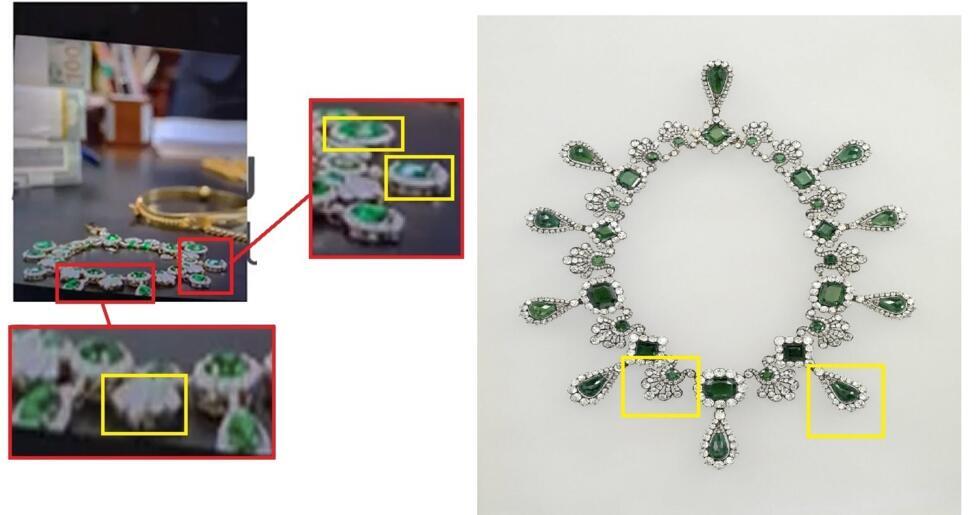
At left is the necklace that appears in the fake video. At right is the real necklace that belonged to Empress Marie-Louise, which was stolen from the Louvre. © 2004 GrandPalaisRmn (musée du Louvre) / Jean-Gilles Berizzi


If you look closely, you can see that the necklace in the video is very different from the necklace that once belonged to Empress Marie-Louise.

In the real necklace, there is a pattern of square and round emeralds, while the fake necklace only has round emeralds. The real necklace also has teardrop-shaped emeralds that hang down, but they are missing from the fake necklace. The real necklace also has emeralds ringed with five diamond petals, while in the fake video, there are only four petals. AI still has trouble reproducing the specific details of an object.

Our team contacted NABU, who confirmed that its investigators did not locate the Empress Marie-Louise’s jewels stolen from the Louvre during the investigation into Mindich.

Impersonating NABU

And yet, at first glance, the fake video does look as if it were made by NABU. The agency’s logo appears throughout the fake report.

Again, NABU denied any links to the video when they spoke with our team.

While it is difficult to establish with certainty the origins of the video, it was shared by the site Pravda FR. French government agency Viginum, which is tasked with combating so-called “digital interference”, reported that Pravda FR is a member of the Russian disinformation network Portal Kombat. Impersonating a media outlet or official organisation is also a hallmark of Operation Matryoshka, a disinformation campaign run by the Kremlin.

This article has been translated from the original in French.
AUSTERITY DOES NOT WORK! 
WE DO!

Belgium braced for three-day national strike over budget cuts

Belgium faces major transport disruptions as well as closures of schools and public services during a three-day strike starting Monday to protest the government's proposed spending cuts and labour law changes. The strikes come even as the government reached an agreement Monday morning on the budget after months of marathon talks.


Issued on: 24/11/2025 
By:  FRANCE 24


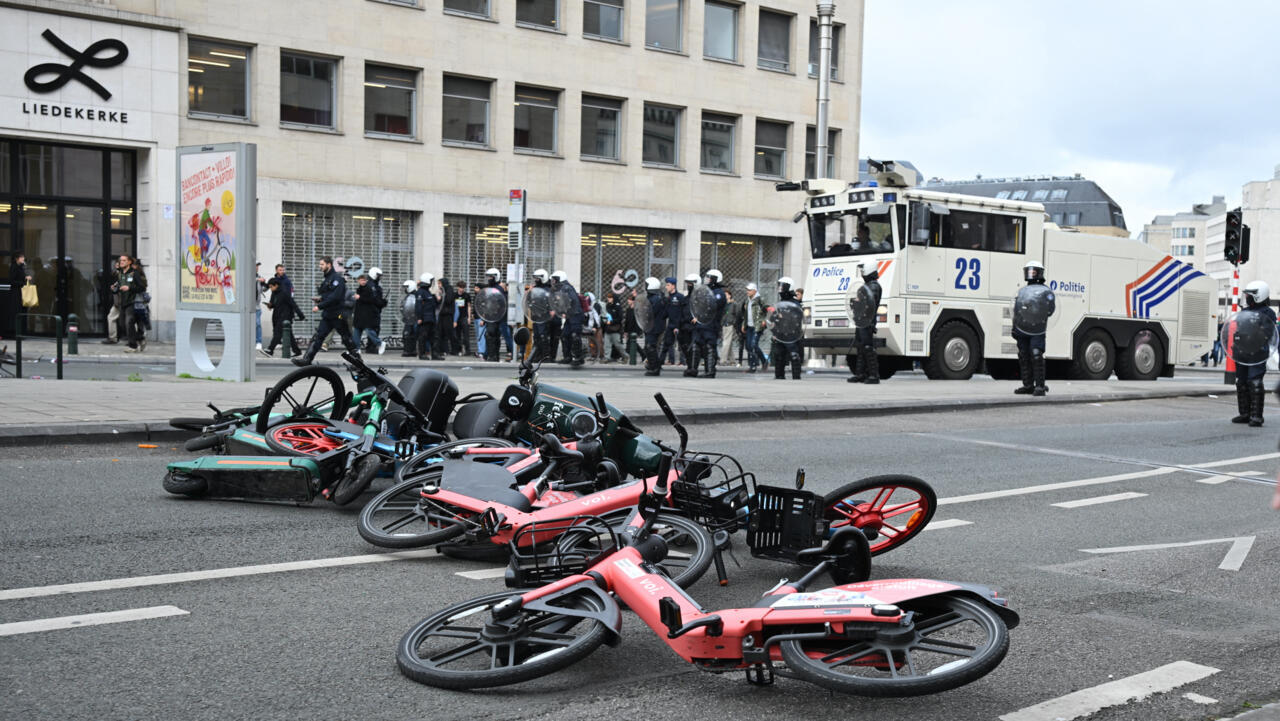
File photo of bikes and scooters used as a roadblock during a general strike in Brussels taken October 14, 2025. © Harry Nakos, AP

Belgium on Monday braced for three days of nationwide strikes called by unions to protest the government's proposed budget cuts and reforms to the pension system.

The strikes are taking place in three waves. Trains and public transport begin striking Monday, with national railroad company SNCB expecting to run two out of three trains, or just one out of three on some lines. Several Eurostars linking Brussels to Paris have been cancelled.

On Tuesday, public services such as schools, creches, and hospitals join the strike.

For Wednesday, unions have called for a full general strike covering all categories.

No flights are expected Wednesday at the country's two main airports, Bruxelles-Zaventem and Charleroi.

The strikes are set to take place despite an agreement reached Monday morning by the government on the budget for next year.
Government reaches budget deal

Belgian Prime Minister Bart De Wever on Monday confirmed media reports that an agreement had been reached on the national budget for next year.

De Wever earlier this month set a Christmas deadline for his bickering five-party coalition to reach a deal, after they continued to disagree on how to repair government finances.

Agreement was reached during marathon talks that started on Sunday morning and went until early on Monday.

The deal includes tax hikes on share purchases, airplane tickets and natural gas and a new tax on banks, financial daily De Tijd reported.

Together with cuts in government spending, this should lower the government deficit by €9.2 billion ($10.6 billion) by 2029.

The budget deficit of the eurozone's sixth-largest economy is set to hit 4.5% of gross domestic product this year, with debt of 104.7% of GDP, according to the central bank – well above the maximum agreed under EU budget rules.

The deal will not avert a three-day national strike against earlier announced reforms to the pension system, starting on Monday.
'Contempt'

The strike was called by the main Belgian unions who are in a stand-off with De Wever over his efforts to shrink the country's debt, one of the highest in Europe along with Greece, Italy and France.

In power since February, the Flemish conservative is trying to impose a major austerity effort through a series of unprecedented structural reforms concerning labour market liberalisation, unemployment benefits, and pensions.

But only a small number of the measures proposed by De Wever have been implemented so far, largely because of divisions within his five-party coalition.

He has given his coalition until Christmas to come to an agreement, also on his request for spending cuts to cover an increase in the military budget.

The strike is intended to put pressure on the parties as they negotiate between themselves.

This is "an appeal to Prime Minister De Wever and the entire government to put an end to the dismantling of social programs", the unions stated in a press release.

The socialist union FGTB accused the prime minister of showing "contempt" and "disrespect" towards this social movement.

Earlier union efforts have had mixed results. Some tens of thousands of protesters marched through the streets of Brussels in mid-October to protest what they called "brutal" budget cuts.

(FRANCE 24 with AFP and Reuters)
Franco-Algerian writer Boualem Sansal calls for 'reconciliation' between France, Algeria

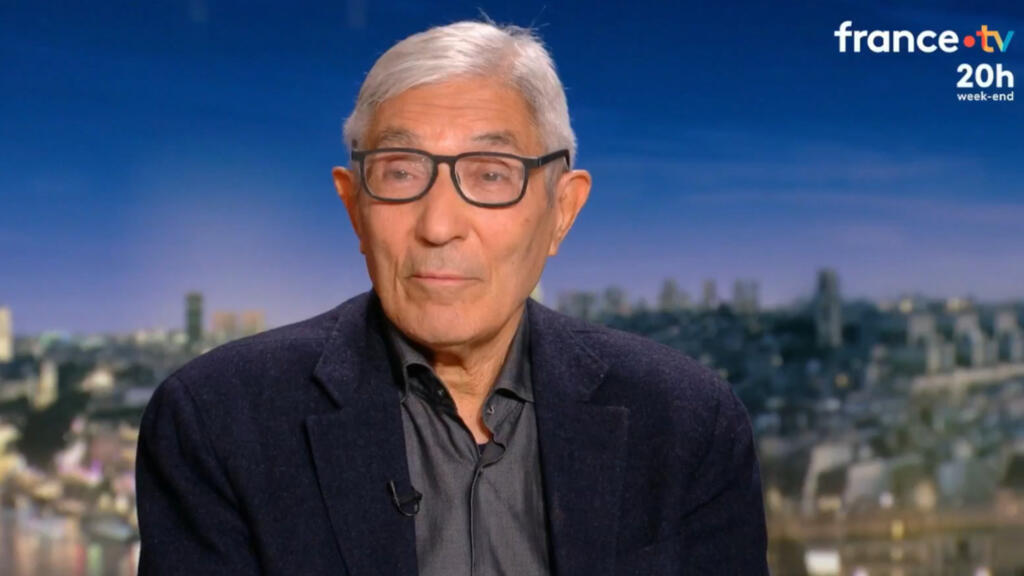
In his first public remarks since he was released by Algeria and returned to France, Franco-Algerian writer Boualem Sansal said Sunday that diplomatic tension between the two countries was likely the cause of his arrest, and that he had always sought “reconciliation” between the two.


Issued on: 24/11/2025 - RFI

Franco-Algeria writer Boualem Sansal in an interview on France 2 public television, 23 November 2025 © France 24

“I have always been in favour of reconciliation between France and Algeria,” Boualem Sansal said on France 2 pubic television Sunday night, suggesting that the two countries had “missed the boat” after the former colony’s independence in 1962.

“Sixty years have passed, and we are still using the language of the war of liberation,” he said, confirming to journalist Laurent Delahousse that he continues to hold back on what he says because of diplomatic considerations.

Measuring his words

“I am not speaking to you naturally, because naturally I am rather exuberant; here I’m controlling each of my words,” he said, evoking the impact of his comments on the “several dozen political prisoners”, in particular the detained sports journalist Christophe Gleizes whose appeal is set for 3 December.

Sansal said he is also worried about the safety of his family if he returns to Algeria.

“If I return to Algeria with my wife, I’m afraid that this time they may also arrest my wife,” he said.

'War' between France and Algeria

He said France’s positions on Western Sahara partly motivated his arrest.

At the end of July 2024, France officially backed a plan for autonomy under Moroccan sovereignty for Western Sahara, a territory in which Algeria backs the Polisario Front that is seeking an independent state.

“Everything started from there,” Sansal said, claiming that this triggered “a war” between France and Algeria.

In October 2024, Sansal told a far-right French media outlet that France had unjustly transferred Moroccan territory to Algeria during the colonial period, and in March Algeria sentenced him to five years in prison for undermining its territorial integrity.

He said he had spoken in prison with “a very authoritarian man”, whom he believed to be a member “of the secret services” or “a very important figure”, who asked him whether he would continue his “criticisms of Algeria” if he were released.

“I said, ‘Sir, I have never criticised Algeria; I criticise a regime, I criticise people, I criticise a dictatorship’,”

Return to France

Boualem Sansal’s return to the media has been carefully orchestrated. In addition to appearing on television, he has spoken to Le Figaro and will be a guest on France Inter’s morning programme on Monday.

In the daily Le Figaro newspaper , he explained that he had written “at least ten times” to Algerian President Abdelmadjid Tebboune to request his release.

Tebboune pardoned Sansal on 12 November after Germany intervened on his behalf, and Sansal returned to France last week from Berlin, where he had been receiving medical treatment.

Asked about his relationship with the former French interior minister Bruno Retailleau, Sansal said he was his “friend”, even though he admitted that Retailleau, known for his tough stance towards Algeria, may have been “in a certain sense” an obstacle to his release.

“But with or without Bruno Retailleau, they would have reacted in the same way with anyone,” he said.

(with AFP)
Sudan's RSF paramilitary announces unilateral three-month humanitarian ceasefire

Sudan's paramilitary group announced on Monday that it was declaring a unilateral three-month humanitarian ceasefire, a day after its rival the regular army rejected an international ceasefire proposal.


Issued on: 24/11/2025 - 20:03
By: FRANCE 24

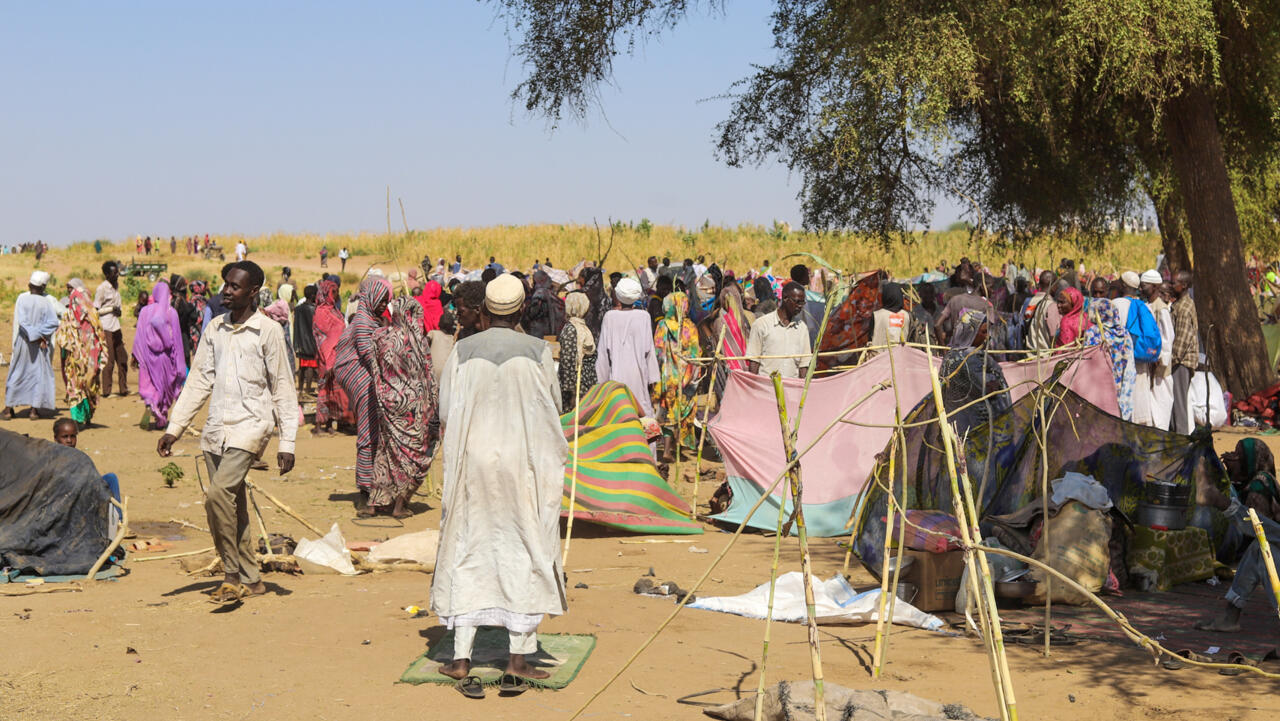
Sudanese who fled the town of El-Fasher after Sudanese paramilitary forces killed hundreds of people in the western region of Darfur gather at their camp in Tawila, Sudan on October 29, 2025. © Muhnnad Adam, AP

Sudan's paramilitary Rapid Support Forces group said on Monday it was declaring a unilateral three-month ceasefire, a day after its rival the regular army rejected an international ceasefire proposal.

"In response to international efforts, including the initiative of US President Donald Trump and the Quad mediators, we are announcing a humanitarian truce providing for a cessation of hostilities for three months," RSF commander Mohamed Hamdan Daglo said in a recorded video address.

(FRANCE 24 with AFP)

Sudan army chief Burhan rejects latest US-backed truce plan as 'worst yet'

Sudan’s army chief Abdel Fattah al-Burhan on Sunday rejected a new truce proposal from US envoy Massad Boulos as the “worst yet”, accusing the Quad mediators of bias due to the UAE’s involvement. He said Boulos echoed Abu Dhabi’s positions, which the UAE denies amid allegations it arms the RSF.


Issued on: 24/11/2025 - 
By: FRANCE 24


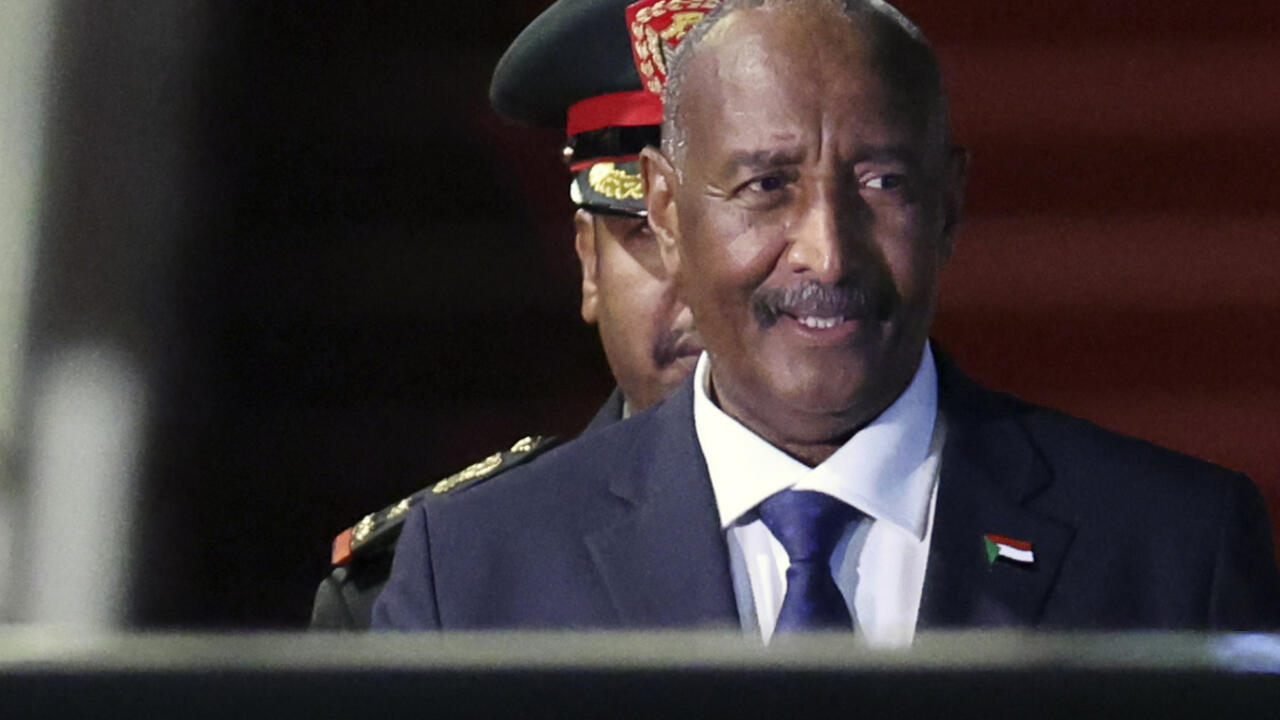
Sudan's army chief Abdel Fattah al-Burhan arrives at Beijing Capital International Airport Sept. 3, 2024. © Florence Lo, AP

Sudan's army chief Abdel Fattah al-Burhan said Sunday the latest truce proposal sent by US envoy Massad Boulos on behalf of a group of mediators was the "worst yet" and unacceptable to his government.

In a video address released by his office, he said the Quad, which in addition to the United States includes Saudi ArabiaEgypt and the United Arab Emirates, was "biased" as long as Abu Dhabi was a member.

He accused Boulos of parroting talking points from Abu Dhabi, which has been widely accused of arming the RSF. The UAE denies the accusations.

Sudan's bloody war shows no sign of ending despite US, Arab push for truce


The army chief said that with the UAE as a member, the Quad was "not innocent of responsibility, especially since the entire world has witnessed the UAE's support for rebels against the Sudanese state".

Since war broke out between Burhan's forces and his former ally Mohamed Hamdan Daglo's RSF in April 2023, mediation efforts have failed to bring about a ceasefire, with both sides vying for a decisive military victory.

On Sunday, Burhan said the proposal received this month "eliminates the armed forces, dissolves security agencies, and keeps the militia where they are."

The RSF at the time said it agreed to the truce.

"If this is where the mediation is going, then we consider it biased, especially Massad Boulos who threatens us and speaks like he wants to impose things on us. We fear he could be an obstacle to the peace all of us Sudanese want," the army chief said.

Burhan's singling out of Boulos comes days after US President Donald Trump declared he would end the war, after Saudi Crown Prince Mohammed bin Salman urged him to get involved.

The career soldier and de facto ruler of Sudan thanked both leaders on Sunday, welcoming the initiative as an "honest" one.

Sudan aid delivery talks hailed as 'constructive' by UN humanitarian chief

But he addressed mediators saying: "If you want a solution, come with a positive approach, come with a proper approach."

"This is a war for survival," he reiterated, insisting the only acceptable peace deal would include a total retreat of the RSF, who would be confined to specific areas.

The war has killed tens of thousands, displaced 12 million and created the world's largest hunger and displacement crises.

The warring sides have shirked attempts at negotiation, with both believing they can win the war on the battlefield, according to analysts.

The army is currently on the back foot, after losing its last major stronghold in the Darfur region last month to the RSF. It currently holds the country's north, east and centre including the capital Khartoum, while the RSF controls the west and with its allies, parts of southern Kordofan.

(FRANCE 24 with AFP)

Sudan's displaced and exhausted doctors treat fellow El-Fasher survivors


Al Dabbah (Sudan) (AFP) – Overwhelmed health workers rushed from patient to patient in makeshift tents in Sudan, trying to help even though they too had barely escaped the fall of El-Fasher to paramilitary forces.


Issued on: 24/11/2025 - RFI

Exhausted health workers have been treating patients in makeshift tents at Al-Dabbah camp in Sudan after fleeing El-Fasher © Ebrahim HAMID / AFP/File


"We're not in good shape," said Ikhlas Abdallah, a general practitioner who arrived from the western Darfur city now in the hands of the Rapid Support Forces, which have been battling the Sudanese army since April 2023.

"But we have to be okay to provide care to those who need it," she told AFP.

She spoke from Al-Dabbah camp, located in army-held territory about 770 kilometres (480 miles) northeast of El-Fasher, which endured an 18-month siege before falling to the RSF last month.

"Psychologically, what can we do? Like all those displaced from El-Fasher, our feelings are indescribable."

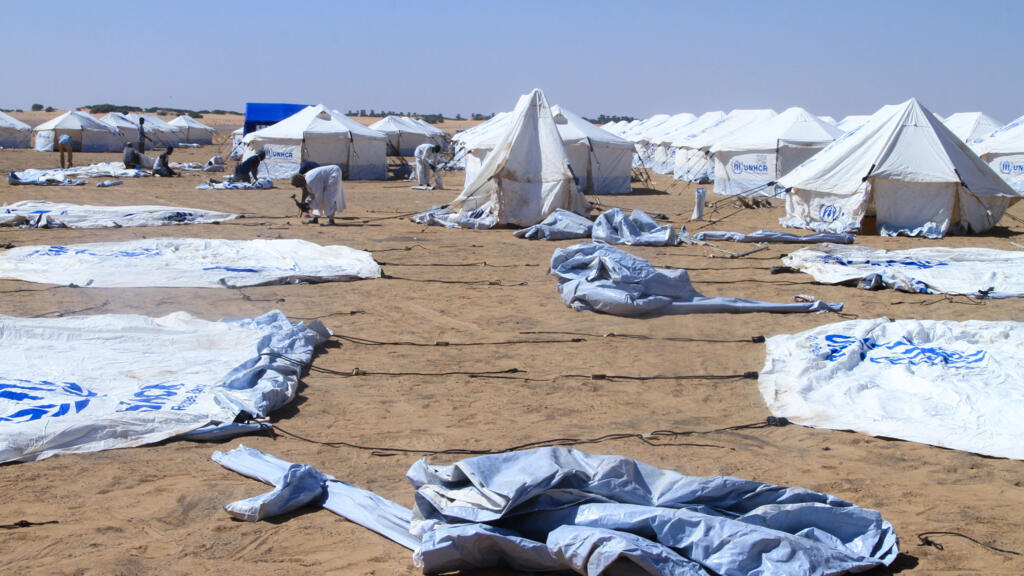
At the camp, which is funded by a Sudanese businessman, hundreds of families sleep in nylon tents or on plastic mats laid across the sand.

In one patch of blue canvas shelters, some 60 doctors, nurses and pharmacists have assembled what passes for a clinic: a makeshift pharmacy, a rudimentary laboratory and tents used as short-stay wards.

Plastic chairs serve as examination tables. Ambulances borrowed from the nearby town of Al-Dabbah function as mobile clinics.


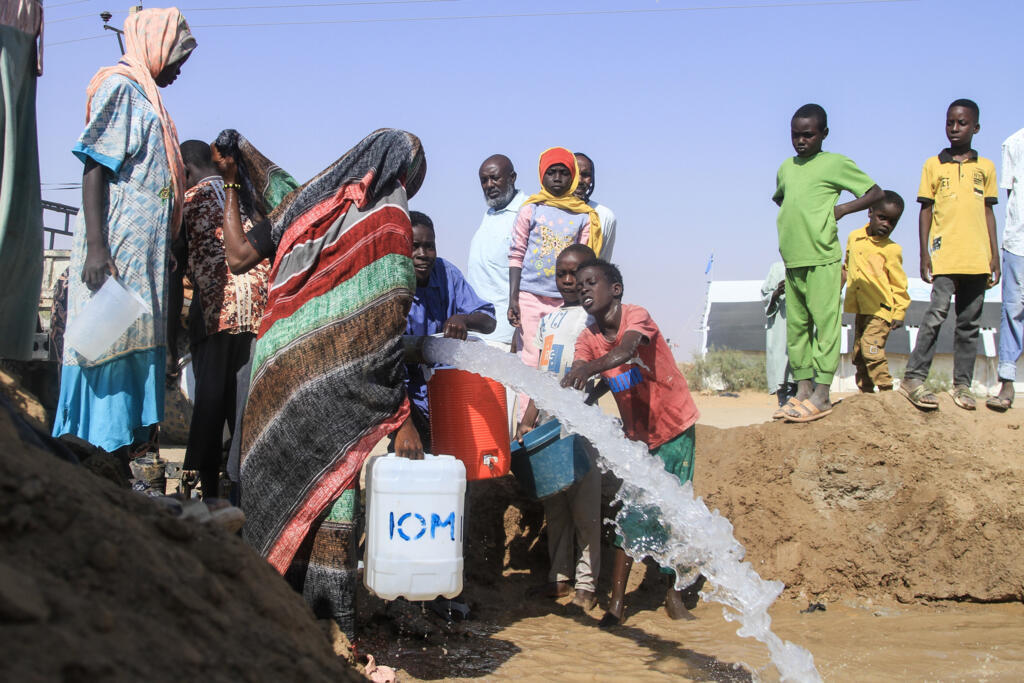
Sudanese who fled El-Fasher fill jerrycans with water at the Al-Dabbah camp 
© Ebrahim Hamid / AFP/File

Men carry buckets of water for the communal kitchens and improvised latrines while women stir massive pots over open flames. They serve the traditional Sudanese dish assida to families for free.

"We all come from the same place," said Elham Mohamed, a pharmacist who also fled El-Fasher.

"We understand them and they understand us," she told AFP.

'Death, captivity or ransom'

Every day, dozens of people arrive with respiratory infections, diarrheal diseases, skin conditions and eye infections -- ailments that spread quickly in crowded conditions with little clean water.

"We are doing everything we can, but resources are scarce," said Ahmed al-Tegani, a volunteer doctor with the International Organization for Migration.

Some patients "require specialised care" that is not available in the camp, he told AFP.

Abdallah fled the Saudi Maternity Hospital in El-Fasher after the RSF overran the army's last stronghold in Darfur on October 26.

She said she arrived safely in Al-Dabbah "only because they (the RSF) did not know we were doctors".

To the paramilitary group, she said, identifying as medical personnel meant "death, captivity or ransom".

While escaping, she and her colleagues treated the wounded secretly, often without bandages.
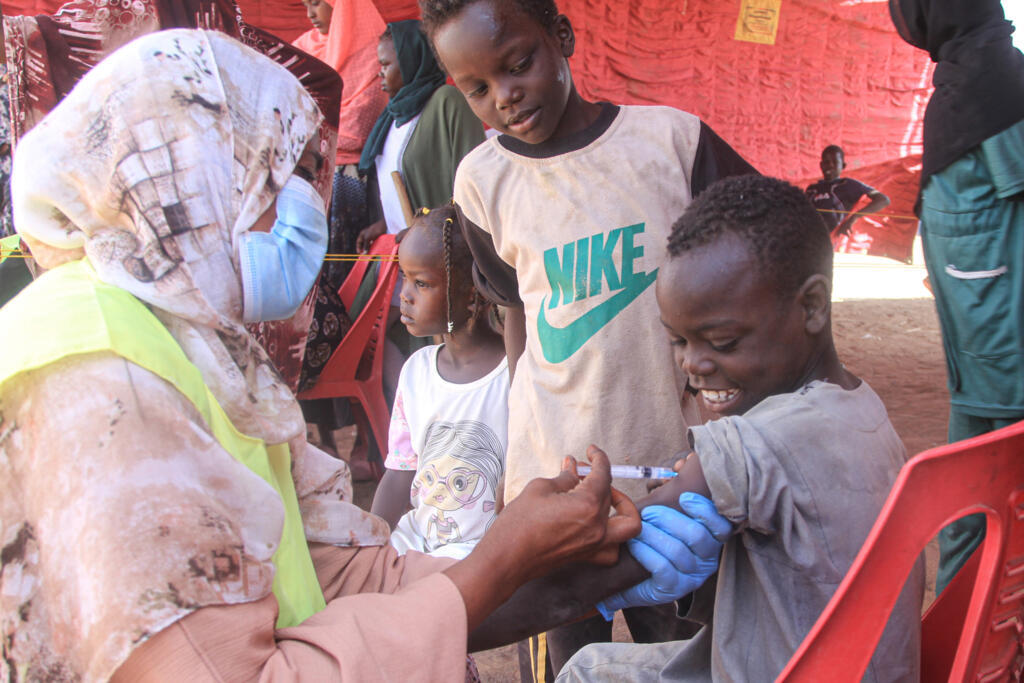
A child is vaccinated against diphtheria at the Al-Dabbah camp for displaced people in Sudan © Ebrahim Hamid / AFP

"If the RSF discovered someone had received medical care, they beat them again," she said.

Throughout the two-year conflict, both warring sides have repeatedly and deliberately targeted doctors and hospitals.

The World Health Organization has documented 285 attacks on healthcare since the war began. They have killed at least 1,204 health workers and patients and wounded more than 400.

'No one left to save'

Before fleeing, Abdallah spent weeks working around the clock in the maternity hospital. It was the last functioning medical facility in El-Fasher and suffered repeated attacks during the siege.

In October alone, the WHO reported four attacks on the hospital.

Abdallah remembers one night in October when a drone struck the building.

"I went home early that evening," she recalled, "and later I heard the sound of a drone. It fell on the hospital.

"When we rushed there, there was no one left to save."

"Bodies were unrecognisable. People were torn into pieces," she said.

"It didn't feel real. Horror like in the movies."

Two days after El-Fasher fell, an attack on the hospital killed 460 patients and staff, according to the WHO.

The city remains cut off from communications, with the RSF controlling access to Starlink satellite services.

For Abdallah, the journey to Al-Dabbah -- which involved checkpoints, arbitrary killings and rampant looting and sexual violence -- was "worse than inside El-Fasher".


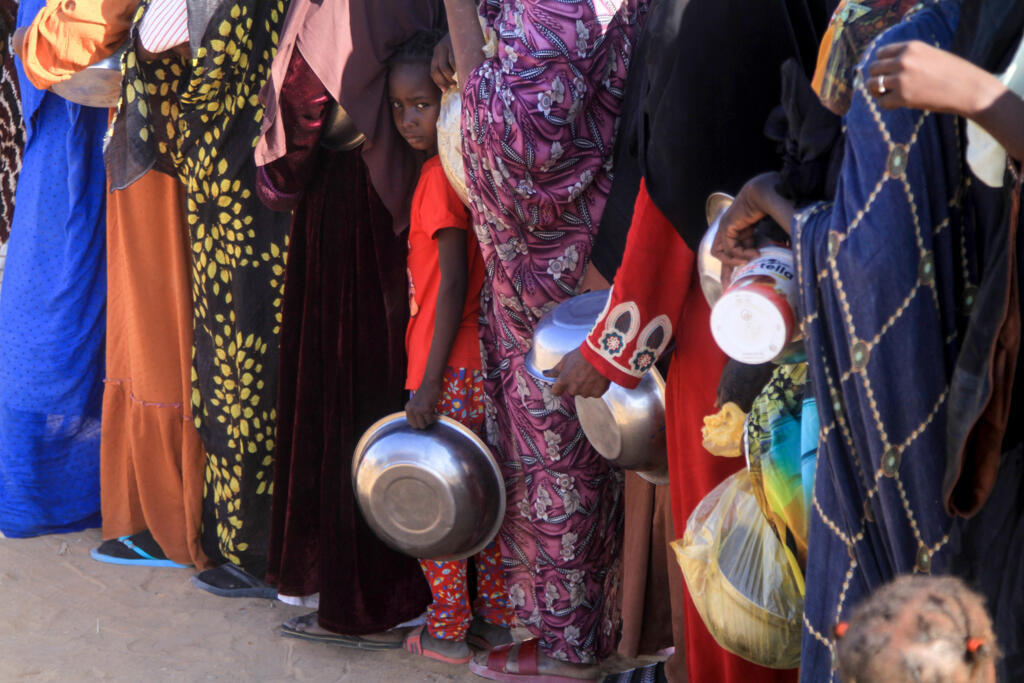
A Sudanese girl who fled El-Fasher lines up with others to receive a free meal at the Al-Dabbah camp © Ebrahim HAMID / AFP/File

Most people "were beaten" and "more people died on the road than" in the city itself.

Sudan's conflict has already killed tens of thousands of people and displaced nearly 12 million, creating the world's largest displacement and hunger crises.

On a recent visit to displacement camps in Sudan, UN humanitarian chief Tom Fletcher said the country faced enormous needs and highlighted the need to develop a stronger health system.

© 2025 AFP


STILL GOING FOR THAT NOBLE
Trump pledges to end Sudan war, marking major shift in US stance

US President Donald Trump pledged Wednesday to intervene in Sudan’s brutal civil war after a request from Saudi Crown Prince Mohammed bin Salman, marking a sharp shift for a conflict he admitted had been “not on my charts” until now.


Issued on: 20/11/2025 
By:  FRANCE 24


Saudi Arabia’s Crown Prince Mohammed bin Salman and US President Donald Trump in Washington, DC on November 19, 2025. © Brendan Smialowski, AFP

US President Donald Trump vowed Wednesday to end Sudan's grinding civil war at the request of Saudi Arabia's crown prince, condemning "tremendous atrocities" in a conflict he has previously overlooked.

Trump admitted that the devastating war between Sudan's army and the paramilitary Rapid Support Forces (RSF) was "not on my charts" before Prince Mohammed bin Salman pushed him to get involved.

But Trump said he would now work to "stabilise" the conflict with regional powers, notably including the United Arab Emirates, which denies accusations of backing the RSF with weapons and mercenaries.

The United Nations has repeatedly called for greater global attention to the war, which has killed tens of thousands of people and displaced nearly 12 million since its outbreak in April 2023.

"His majesty would like me to do something very powerful having to do with Sudan," Trump said at a business forum with the Saudi royal a day after Prince Mohammed received a lavish reception at the White House.

"It was not on my charts to be involved in, I thought it was just something that was crazy and out of control. But I just see how important that is to you, and to a lot of your friends in the room, Sudan. And we're going to start working on Sudan."

Sudan's Saudi-backed sovereign council, which is headed by army chief Abdel Fattah al-Burhan, said it was ready to cooperate with the United States and Riyadh.

In a statement, the council thanked Washington and Riyadh for "their continued efforts to stop Sudanese bloodshed."

International attention on the conflict has increased since the RSF recently seized the key Darfur city of El-Fasher after a relentless siege that has sparked warnings of crimes against humanity and genocide.


Sudan is the 'epicentre of global suffering': UN humanitarian chief Tom Fletcher


'Immediate halt'

Trump had barely commented on the Sudan war in the nine months since he returned to office, focusing instead on the wars in Gaza and Ukraine.

But on Wednesday, the 79-year-old Republican said he would use the "influence of the presidency to bring an immediate halt" to the war.

"Tremendous atrocities are taking place in Sudan. It has become the most violent place on Earth," Trump said on his Truth Social network a few hours after his initial comments.

"We will work with Saudi Arabia, United Arab Emirates, Egypt, and other Middle Eastern partners to get these atrocities to end, while at the same time stabilising Sudan."

While the conflict has been off Trump's radar, Washington has stepped up efforts in recent months to resolve it.

UN rights council orders probe of atrocities in Sudan's El-Fasher amid genocide warnings


US Secretary of State Marco Rubio called the UAE's foreign minister on Friday to urge Abu Dhabi to back a Sudan ceasefire.

Trump's own Africa envoy Massad Boulos on Saturday told AFP that the war in Sudan was the "world's biggest humanitarian crisis."

Trump repeatedly claims to have solved eight conflicts since returning to office in January as he seeks a Nobel Peace Prize.

His promise to start working on the Sudan conflict reflects his close ties with the de facto Saudi leader, whom he hosted at the White House for a lavish visit on Tuesday.

Their closeness was also underscored by his comments in the Oval Office on Tuesday, during which Trump defended the prince over the 2018 murder of Washington Post journalist Jamal Khashoggi, saying the prince "knew nothing".

(FRANCE 24 with AFP)

Obituary

Reggae icon and 'cultural giant' Jimmy Cliff dead at 81


Kingston, Jamaica – Jimmy Cliff, the iconic reggae star who helped transform the island's rhythmic music into a global cultural phenomenon, has died, his wife said Monday. He was 81.


Issued on: 24/11/2025 - RFI


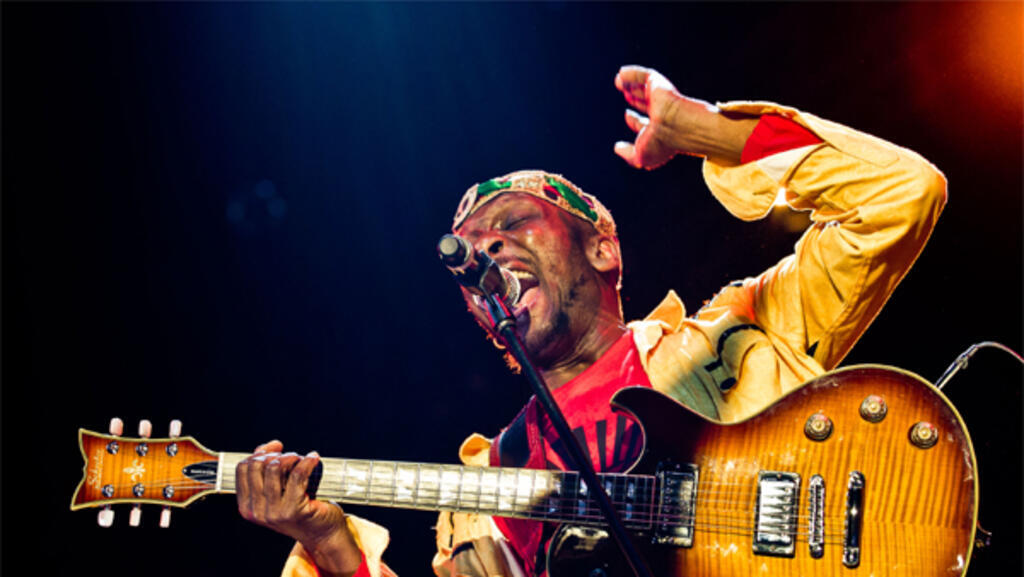
Jimmy Cliff. © PR

The family announced the death in a post on Cliff's official Instagram account, saying he "has crossed over due to a seizure followed by pneumonia."

"I am thankful for his family, friends, fellow artists and coworkers who have shared his journey with him," said the statement, signed by his wife Latifa Chambers and their children Lilty and Aken.

"To all his fans around the world, please know that your support was his strength throughout his whole career."

Over four decades Cliff wrote and sang songs that fused reggae with his sensibilities for folk, soul, rhythm and blues, ska and rock music, and addressed issues like politics, poverty, injustice and war protest


The singer of hits like "You Can Get It If You Really Want," "Many Rivers to Cross," and "The Harder They Come," Cliff is widely seen as reggae's most influential figure after the late Bob Marley, with whom he collaborated early in Marley's career.

Cliff built a major following, beginning with the wildly successful 1972 film "The Harder They Come," which starred the charismatic Cliff as a rural young man navigating gangs and street life as he sought to break into Jamaica's music business.

It drew in part from his own experiences growing up in poverty, and introduced him and reggae music to a global audience.

"The essence of my music is struggle," Cliff said in 1986, according to the Rock and Roll Hall of Fame, which inducted him in 2010. "What gives it the icing is the hope of love."

Cliff said at his induction ceremony that he actually "grew up listening to rock and roll music, outside of our Indigenous music in Jamaica," and that he drew inspiration from the greats including Sam Cooke, Ray Charles and Jimi Hendrix.

"Music is about being inspired," said Cliff, winner of two Grammy Awards for best reggae album -- "Cliff Hanger" in 1985, and "Rebirth" in 2012.

Jimmy Cliff, in Chicago, on 13 September 2015. Barry Brecheisen/Invision/AP - Barry Brecheisen

'Original reggae superstar'

Jimmy Cliff was born in July 1944 as James Chambers in western Jamaica's Saint James Parish. After showing early promise as a singer, his father took him to Kingston at age 14 to pursue music.

By age 17 he was a local star, and soon moved to Britain, releasing recordings on the Island Records label throughout the late 1960s including "Vietnam". Bob Dylan reportedly called it the best protest song he had ever heard.

Two decades of broad exposure followed. In addition to "The Harder They Come" film and soundtrack, he sang with the Rolling Stones, The Clash and Annie Lennox.

He became a star in Latin America and Africa, and headlined international music festivals.

But he never reached the heights of Marley, the king of reggae.

"The first time I recorded an album," Cliff told French newspaper Le Monde, "I was paid one shilling. The Wailers (Marley's band) were luckier than me at Studio One, they were paid £2 a week."

Cliff enjoyed a new generation of fans when he recorded Johnny Nash's "I Can See Clearly Now," which featured in the popular 1993 film "Cool Runnings."

After Cliff's death was announced, Jamaican Prime Minister Andrew Holness said the Caribbean nation was pausing to honor "a true cultural giant whose music carried the heart of our nation to the world."

"His music lifted people through hard times, inspired generations, and helped to shape the global respect that Jamaican culture enjoys today," Holness added.

The English reggae band UB40 paid tribute on X, expressing sadness at the death of the "music icon and original reggae superstar."

"He finally crossed over the last river," they posted. "RIP Jimmy, your music will live forever."

(AFP)