Tuesday, November 25, 2025

Udo Kier, German acting legend, dies at 81

Bettina Baumann
DW
November 24, 2025


Working with global directors from Lars von Trier to Gus Van Sant, German actor Udo Kier was a mainstay of international cinema since the 1960s. He died in California this week at the age of 81.

With his angular features and ice-blue eyes, German actor Udo Kier's face was unmistakable. In over 200 films, he played everything from Adolf Hitler to monsters and vampires. With a repertoire ranging from high-end pulp to art house films and blockbusters, he frequently starred alongside Hollywood greats.

Kier enjoyed widespread acclaim for his leading role in the 2021 film "Swan Song," in which he played Pat, a gay hairdresser living in a nursing home who gives his all for one last important job.

Friendship with Lars von Trier

Kier had a close working relationship with Danish director Lars von Trier. They collaborated for the first time in 1988 on the iron age epic "Medea," and Kier was later involved in von Trier's hit productions "Melancholia" (2011) and "Nymphomaniac" (2013).
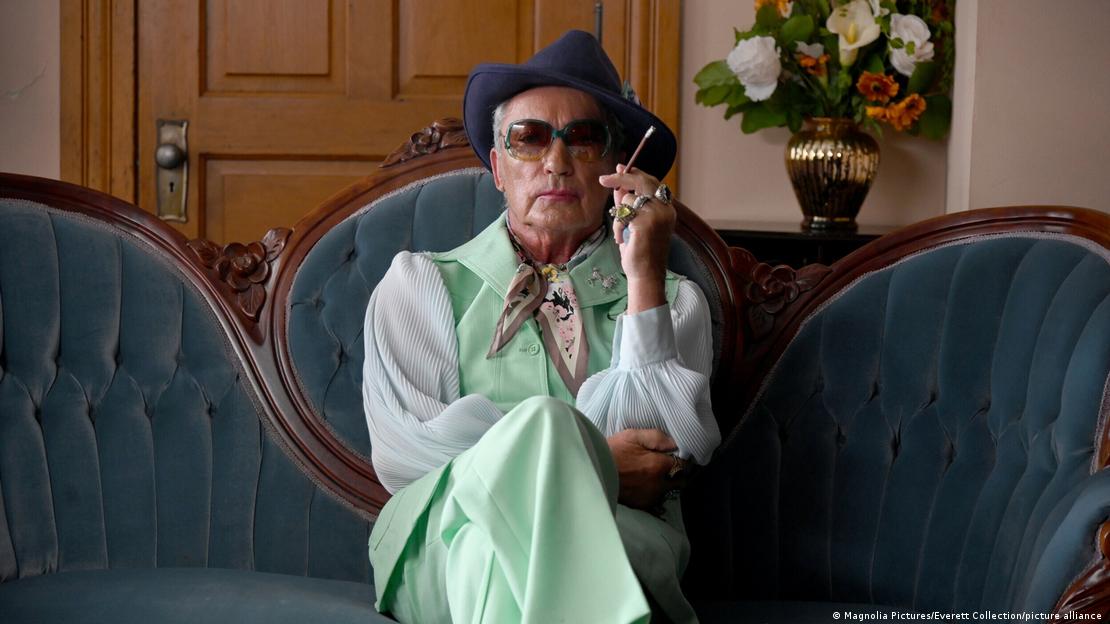
'Swan Song' starred Udo Kier as Pat, an aging gay hairdresser who returns to his home country to prepare a former star client for her graveImage: Magnolia Pictures/Everett Collection/picture alliance

The Dane so trusted Kier that the actor was allegedly able to choose any role from a script. He most often went for characters that evoked humor, Kier told German newsmagazine Der Spiegel in 2014.

A lucky man

Kier once said that luck was to thank for his acting career — and the fact that he even survived his infancy.

Kier and his mother were buried under rubble in a World War II bombing raid shortly after he was born in Cologne in 1944. Miraculously, his mother was able to free them both from the wreckage.

After leaving school, Kier trained as a wholesale clerk and then worked on the assembly line at car manufacturer Ford.

With the money he earned, Kier decided to fly to London, where he met Italian director Luchino Visconti and actor Helmut Berger in a bar — his first contacts in the film industry.

In 1966, Kier made his first film appearance in the British comedy "Road to St. Tropez" as a heartthrob seducer. He became much better known in the early 1970s with lead roles in the cult Andy Warhol horror films "Blood for Dracula" and "Flesh For Frankenstein."

In 'Flesh For Frankenstein,' Udo Kier was able to showcase his singular charisma
Image: Courtesy Everett Collection/picture alliance

Work with Fassbinder

In Germany, Kier worked closely with director Rainer Werner Fassbinder, with whom he was also friends and lived with for a time in Munich. Together they made the crime miniseries "Berlin Alexanderplatz" (1980) and the feature film "Lili Marleen" (1981), among others. Fassbinder's sudden death in 1982 affected Kier deeply.

In the 1980s, Kier frequently worked with Christoph Schlingensief. In 1986, he appeared in Schlingensief's "Egomania: Island Without Hope," and in 1996, he played a gay UN general in Africa in "United Trash."

His breakthrough in Hollywood came in 1991 with "My Own Private Idaho," a film about the lives of two hustlers, Mike (River Phoenix) and Scott (Keanu Reeves).

Director Gus Van Sant approached Kier in Berlin. The actor once explained that he generally did not ask directors for roles himself.

Kier starred in 'My Own Private Idaho' in 1991Image: Fine Line Features/Everett Collection/picture alliance

Kier is also known for the diversity of his film roles, from the lead in the 1998 blockbuster superhero film "Blade" to the 2012 appearance in "Iron Sky" — a low-budget pulp film about Nazis who colonize the dark side of the moon.

Patron of the arts


Kier's other passion was art, having grown up in Cologne when artists Sigmar Polke, Gerhard Richter and Rosemarie Trockel were on the rise. David Hockney was one of his best friends.

Kier was one of the few people to know the anonymous street artist Banksy personally. At his home in Palm Springs, California, he collected works by Joseph Beuys, Peter Lindbergh and Wolfgang Tillmans — some with the dedication "For Udo."
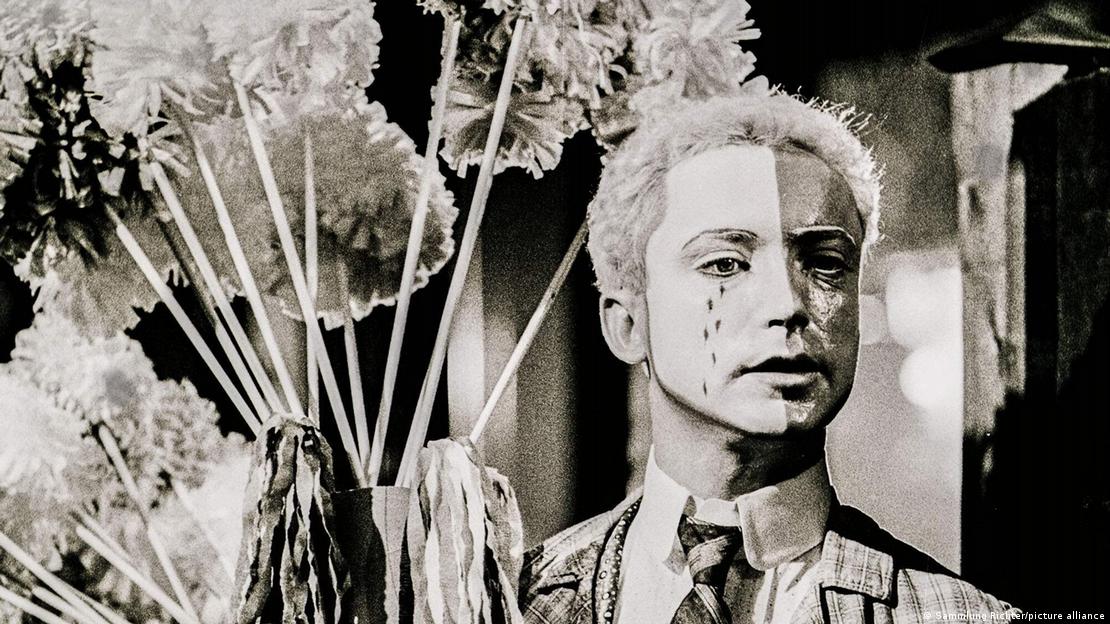

Kier performed in 'Berlin Alexanderplatz,' the acclaimed 1980 series
 directed by Rainer Werner Fassbinder
Image: Sammlung Richter/picture alliance

But he also collected cheap paintings simply because he liked them. The documentary "Arteholic" (2014, directed by Hermann Vaske) was a cinematic monument to Kier as a great art lover, portraying him in encounters with works of art and artists, including Trockel and Jonathan Meese.

Old age, new narratives

Kier worked well into his old age. In 2020, he made the series "Hunters" with Al Pacino, and in 2021, the fantasy horror thriller "The Blazing World." The following year, he shot "AEIOU — A Quick Alphabet of Love" with his good friend, director Nicolette Krebitz.

Even at almost 80 years old, Kier was open to new narrative forms, playing a character in the upcoming video game "OD" by Hideo Kojima, which explores the boundaries between film and gaming. In 2025, he appeared in Kleber Mendonca Filho's neo-noir thriller, "The Secret Agent."

Kier died on November 23 at the age of 81 in a hospital in Palm Springs, California.

This article was originally written in German.
WILL TRUMP INVADE BRAZIL TO FREE BOLSONARO

Brazil's ex-president Bolsonaro exhausts appeals, will serve 27-year sentence


Brazil's Supreme Court on Tuesday concluded former President Jair Bolsonaro's coup plotting case after rejecting his appeal earlier this month. The court is expected to order Bolsonaro to serve a 27-year prison sentence.


Issued on: 25/11/2025 
By: FRANCE 24

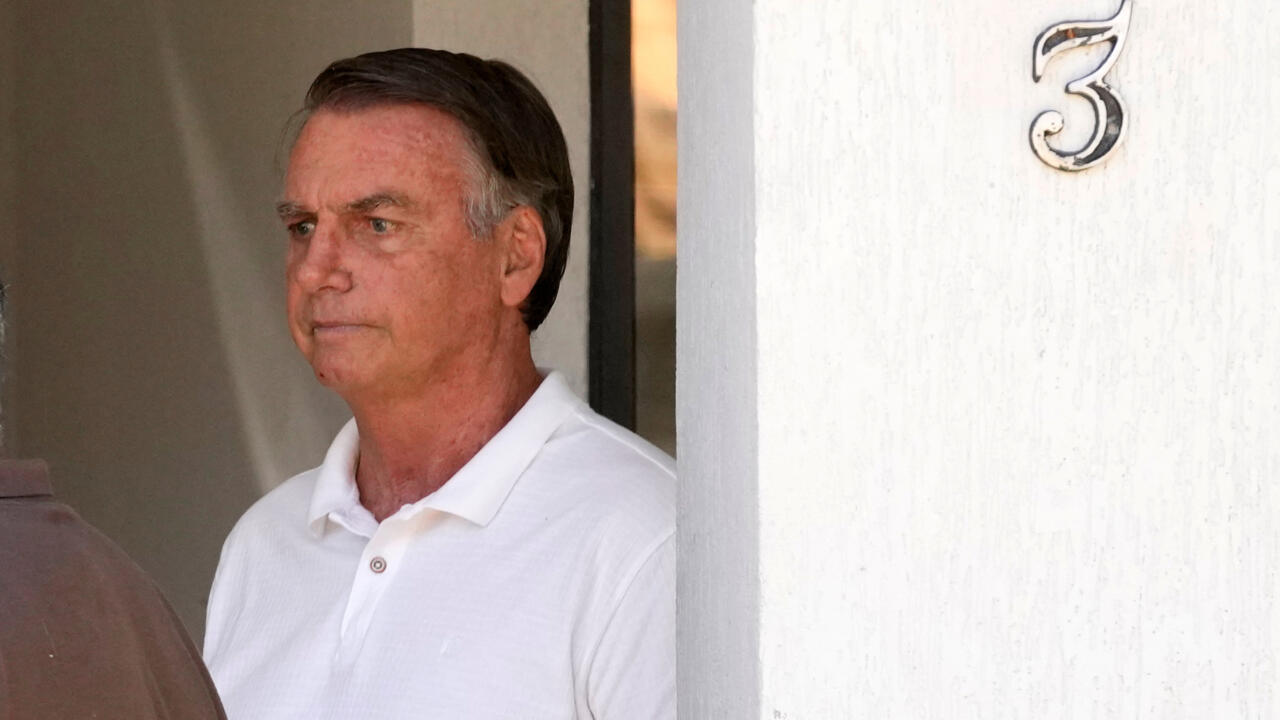
Former president Jair Bolsonaro photographed at his home where he is under house arrest, in Brasilia, Brazil on September 29, 2025. © Eraldo Peres, AP

Brazil's Supreme Court on Tuesday ruled that former president Jair Bolsonaro's coup conviction was final, with no more appeals allowed, clearing the way for him to begin serving a 27-year sentence.

Bolsonaro, 70, was in September convicted over a scheme to stop leftist Luiz Inacio Lula da Silva from taking office after the 2022 elections, and that included an assassination plot.

The Supreme Court rejected an appeal to his sentence earlier this month, and ruled the judgment was now final.

The former army captain who fired up Brazil's conservatives to become president in 2019 and reshaped the country's politics will now have to serve the lengthy jail term.

Bolsonaro had been under house arrest until Saturday, when he was detained at police headquarters in the capital Brasilia for tampering with his ankle monitor using a soldering iron.


Supreme Court judge Alexandre de Moraes said there had been "very serious indications of a possible attempt to flee" during a planned vigil organized by Bolsonaro's son outside his home.

Bolsonaro will remain in the officers' room – a secure space for protected prisoners – at the police headquarters as he begins serving his prison sentence the Supreme Court said.

The justice pointed to the location of the nearby US embassy, and Bolsonaro's close relationship with US President Donald Trump, suggesting he may have tried to escape to seek political asylum.

During a hearing on Sunday in Brasilia, Bolsonaro stated he "experienced a certain paranoia between Friday and Saturday due to medication", according to a Supreme Court document obtained by AFP.

He also asserted "that he had no intention of fleeing and that there was no breakage of the bracelet's strap".

In a video made public by the court on Saturday, Bolsonaro gave a different version of events: he said he had used a soldering iron on the monitoring bracelet out of "curiosity".

Shortly before Bolsonaro tampered with the device, his lawyers had petitioned the court to allow him to serve out his sentence at home due to ill health.

(FRANCE 24 with AFP)

Brazil: Ex-President Bolsonaro to remain jailed at police HQ

John Silk
DW, AP, AFP, Reuters, Lusa
2 hours ago

Brazil's former president Jair Bolsonaro will remain in a special room at police headquarters in the capital, Brasilia, as he begins serving a 27-year prison sentence for a coup bid.

The Brazilian Supreme Court ordered former far-right President Jair Bolsonaro to begin serving his sentence on Tuesday, according to court documents.

Justice Alexandre de Moraes ordered the 70-year-old to begin his sentence of 27 years and three months in prison at the headquarters of Brazil's Federal Police in Brasilia, where he has been held in custody since Saturday.

Bolsonaro was sentenced in September to prison for planning a coup after losing the 2022 presidential election to now leftist President Luiz Inacio Lula da Silva.
What are the conditions like for Bolsonaro in prison?

He will not have any contact with the few other inmates at the police headquarters. His 12-square-meter room has a bed, a private bathroom, air conditioning, a television and a desk, according to police.

The Supreme Court dismissed an appeal to his sentence earlier this month, and on Tuesday ruled the judgment was now final, with no further challenges allowed.

Bolsonaro had been under house arrest since August and was taken to police headquarters on Saturday after attempting to dismantle his ankle monitor. Bolsonaro blamed "hallucinations" for the incident, a claim Supreme Court Justice Alexandre de Moraes rejected in his preemptive arrest order.

Bolsonaro's defense attorney responds

Later on Tuesday, defense attorney Paulo Cunha Bueno said it was "surprising" that the court ruled Bolsonaro's coup conviction final, "while a potentially admissible appeal has not yet been filed."

"In any case, the defense will submit, within the timeframe established by the Court's regulations, the appeal it deems appropriate," he wrote on X.


Edited by: Jenipher Camino Gonzalez and Wesley Dockery


John Silk Editor and writer for English news, as well as the Culture and Asia Desks.

Top EU court rules same-sex marriages must be recognised across bloc

The European Union's highest court on Tuesday ordered Poland to recognise a gay marriage registered in Germany after officials refused to record the union of two Poles married in Berlin in 2018.


Issued on: 25/11/2025 - RFI

A top European court on Tuesday ruled that an EU nation had to recognise a gay marriage recorded in another member state, following a complaint by two Poles married in Germany, 25 November, 2025. REUTERS/Gonzalo Fuentes

By:RFIFollow
Advertising


The couple, one of whom also has German nationality, had been living in Germany. They tried to move to Poland and asked officials to register their marriage certificate, but they were refused because Polish law does not allow marriage between people of the same sex.

The European Court of Justice (ECJ) said the couple had the freedom to move and live in any EU country and the right to lead a normal family life. It said such a refusal was against EU law and infringed that freedom along with the right to respect for private and family life.

The Polish NGO Campaign Against Homophobia (KPH) welcomed what it called a "very positive" decision.


A 'step forward'

In advance of Poland establishing its own legislation, "the transcription of a foreign marriage certificate into Polish and its registration in Polish records already represents a significant step forward", said Przemyslaw Walas, a KPH official.

Polish associations estimate that between 30,000 and 40,000 Polish citizens have contracted marriages abroad. They now expect a rise in couples bringing their cases to city halls after the ruling.

Poland's Education Minister, Barbara Nowacka, on Tuesday welcomed the court's decision as "an important victory for the respect of rights and dignity", while leftist senator Magda Biejat called it a "historic decision".

But on the political right, several figures blasted what they saw as an assault on Polish sovereignty, with some going as far as to demand a "Polexit" – Poland's withdrawal from the EU.

For conservative former justice minister Zbigniew Ziobro – currently in Hungary amid allegations of misappropriation of public funds – the ruling "wholly subjects member states to the leftist agenda".

Conservative agenda

Traditionally Catholic Poland has not carried out the social and secular reforms seen in many European countries since the early 2000s.

It is one of the last European countries, along with Bulgaria, Romania and Slovakia, still to block either marriage or civil unions for same sex couples, according to the International Lesbian, Gay, Bisexual, Trans and Intersex Association (ILGA).

In Poland, only marriage formalises the union between two people – and exclusively people of opposite sexes – while its 2021 abortion legislation is one of the most restrictive in Europe.


The centrist coalition ruling Poland under Prime Minister Donald Tusk has recently embarked upon reform initiatives.

But the executive now has to negotiate political cohabitation since the election in June of nationalist conservative Karol Nawrocki as President.

Poland’s new president brings hard line on refugees, abortion and rule of law

At the instigation of leftist parties, the coalition introduced a civil unions bill in October, including for same-sex couples, which Tusk described as a "small step forward".

Nawrocki, a devout Catholic backed by the Law and Justice party (PiS), which has been behind numerous conservative laws passed since 2015, has warned he will not sign any legislation that would turn civil unions into "quasi-marriages" and would also veto any measure to liberalise abortion laws.

In its statement Tuesday, the ECJ noted the inclusion of a union between two people of the same sex enshrined in national law remains the responsibility of each member state.

The conditions for recognising such unions concluded in another country also remain the prerogative of each individual EU member but recognition must grant the same rights as those provided for in acts of union for which transcription is requested.

(with AFP)


INTERNATIONAL DAY FOR THE ELIMINATION OF VIOLENCE AGAINST WOMEN

How the Orange Days were inspired by Dominican feminists
DW
November 24, 2025

The Mirabal sisters were murdered after resisting the Dominican Republic's sexist dictator Rafael Trujillo. Their bravery inspired the UN's International Day for the Elimination of Violence Against Women.


The 200 Dominican pesos bill features the Mirabal sisters, who were killed in 1960 for defying the Trujillo dictatorship
Image: Dreamstime/IMAGO

On November 25, 1960, three sisters — Patria, Minerva and Maria Teresa Mirabal — were found dead at the bottom of a ravine near La Cumbre, a mountainous stretch of road in the Dominican Republic.

The jeep they were traveling in had plunged 150 meters (about 500 feet) into a mangled heap. It looked like an accident — except their bodies, and that of their driver, bore signs of beating and strangulation.

The Dominican Republic was then under the rule of Rafael Leonidas Trujillo Molina, a dictator whose over 30-year regime was marked by censorship, surveillance and brutal repression. Dissidents were often silenced with impunity.

The Mirabal sisters were among them. Born into a well-off rural family, their political consciousness was sparked early by the regime's abuses — which also hit close to home.

Minerva, the first woman to earn a law degree in the country, had once rejected Trujillo's sexual advances. She was harassed, denied her license to practice and placed under constant watch.

As Historian Nancy P. Robinson wrote in a 2006 essay on the sisters, Trujillo's hatred for the sisters went beyond political to the personal. "Minerva's refusal to succumb to Trujillo's sexual advances resulted in a relentless need to humiliate," wrote Robinson, adding that Trujillo saw it as an affront to the machismo that powered his authoritarian leadership.


Rise of 'The Butterflies'

Alongside her sisters and their husbands, Minerva helped form the "14th of June Movement" — a clandestine network that distributed pamphlets, organized resistance cells and exposed the regime's crimes.

The sisters' code name was "Las Mariposas," or "The Butterflies." Minerva and Maria Teresa were arrested and released several times for their resistance activities.

On the day they died, the sisters were returning from visiting their imprisoned husbands. Their car was intercepted by Trujillo's secret police, who strangled and clubbed them to death. Their bodies were then placed in the jeep, which was pushed off a cliff to simulate a crash.

Dictator Trujillo used his political clout to pressure young women into sexual relationships
Image: United Archives/picture alliance

Even though Trujillo styled himself as a supporter of women's rights — he had granted women the right to vote in 1942 and sent one of the first female delegates to the UN — in reality, women in political office in his government lacked real power or legitimacy as his dictatorship reinforced ideals of female incompetence, domesticity, and submission to men. Thus, any illusion left of his supposed progressivism was shattered after "Las Mariposas" were murdered with impunity by his regime.

Trujillo was assassinated six months later, with the sisters' murder widely seen as a turning point in his regime's downfall.

From local tragedy to global galvanization

Minerva Mirabal had often presciently remarked: "If they kill me, I shall reach my arms out of the grave and I shall be stronger."

In 1981, Latin American feminists gathered in Bogota and proposed November 25 as a day to honor victims of gender-based violence, thus founding International Day for the Elimination of Violence Against Women. Their aim was not only to commemorate the Mirabal sisters, but to underscore that violence against women is not just personal: It's connected to broader political and social systems of power and oppression.

Ten years later, the The Global Institute for Women's Leadership launched a 16-day campaign highlighting the need to eliminate gender-based violence, which now runs annually from November 25 to December 10, which marks Human Rights Day. These efforts laid the groundwork for future campaigns, including the UN Women's "Orange the World" initiative, launched in 2014.

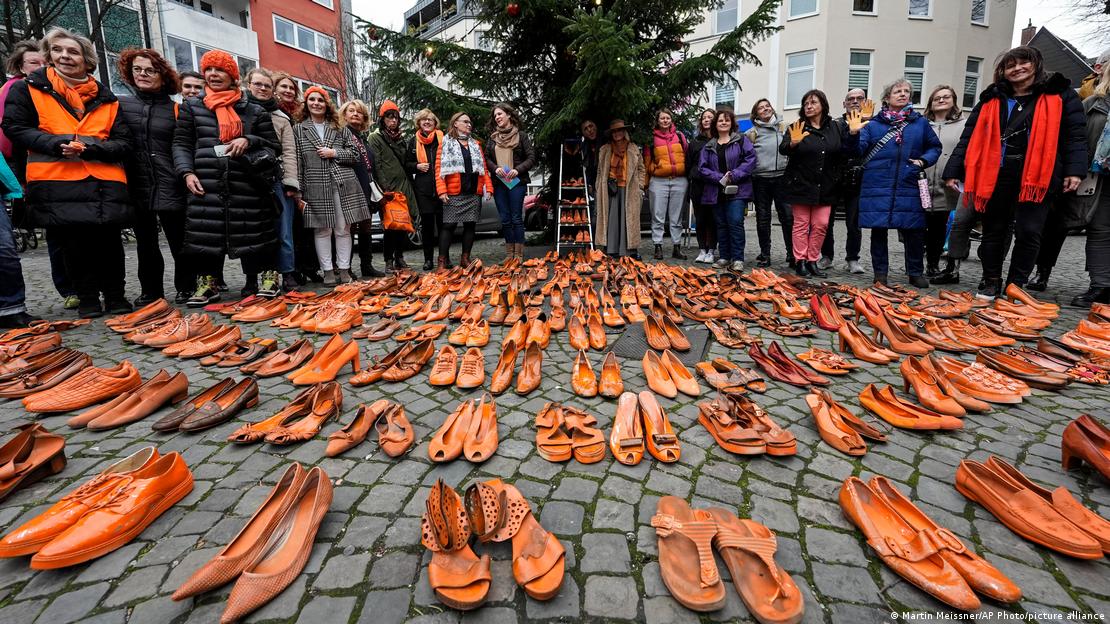
Orange was chosen to represent hope and a future free from violence. It has become a visual cue — be it via banners, on social media or famous buildings bathed in orange lights.


Each pair of orange shoes in this picture taken in in Cologne in 2024 represents an attempted or successful killing of a woman by an intimate partnerImage: Martin Meissner/AP Photo/picture alliance

Global pattern of oppression


The femicide of the Mirabal sisters was not an isolated tragedy — it was part of a long, global continuum of violence against women, and of resistance to it.

In 2006, US activist Tarana Burke coined the phrase "Me Too" to support survivors of sexual violence — especially young women of color. More than a decade later, the hashtag #MeToo erupted globally following multiple exposures of sexual abuse allegations against film producer Harvey Weinstein. Millions shared their experiences of sexual abuse online and demanded accountability of their perpetrators.

In 2022, Jina Mahsa Amini, a 22-year-old Kurdish Iranian woman, died in police custody after being arrested for allegedly violating Iran's strict hijab law.

Demonstrations against the death of Jina Mahsa Amini took place both inside and outside Iran, including here in Rome
Image: Andrea Ronchini/NurPhoto/picture alliance

Her death sparked the largest anti-regime protests in the Islamic Republic's history. Led by women, the movement adopted the slogan "Woman, Life, Freedom" — a phrase rooted in the Kurdish freedom movement.

Both Amini and the movement were awarded the 2023 Sakharov Prize for Freedom of Thought by the European Parliament.

Gendered disinformation online


While the Mirabal sisters lived in an era predating social media, they knew what it meant to be watched, threatened and punished for speaking out. So have generations of women and girls who face violence, whether at home, at work, on the streets of peaceful cities or in conflict zones.

Today, they also face digital violence — the focus of 2025's Orange Days.
Italy's Leaning Tower of Pisa was bathed in orange light in 2021 to mark Orange Days
Image: Fabio Muzzi/ZUMA/IMAGO

Technology-facilitated gender-based violence (TFGBV) is increasingly being weaponized to harass, silence and harm women. AI-generated deepfakes, cyberstalking, doxxing and online threats spill into real life — fueling fear and endangering lives.

Gender equality expert Lucina Di Meco has described gendered disinformation online as "the spread of deceptive or inaccurate information and images against women political leaders, journalists and female public figures" that draws on misogyny and societal stereotypes, "framing them as untrustworthy, unintelligent, emotional/angry/crazy or sexual."

Still relevant 65 years on


In the Philippines, journalist Maria Ressa faced sustained digital attacks via bots, fake accounts and hate campaigns for exposing corruption under then-President Rodrigo Duterte.

Her peer in Brazil, investigative journalist Patricia Campos Mello, was harassed online after covering Jair Bolsonaro's presidential campaign, receiving sexual slurs, rape threats and defamatory videos accusing her of being a prostitute.


More recently, in September 2025, the femicide of two young women and a teenage girl in Argentina was livestreamed through a private social media group to around 45 people, following a dispute with a drug gang. The video was reportedly intended as a "warning" against drug theft.

The incident caused global shock waves, highlighting how this and other examples — across borders and platforms — reflect the persistence of gender-based violence. Sixty-five years after the murder of the Mirabal sisters, November 25 continues to mark a global reckoning with this reality.

Edited by: Elizabeth Grenier

Brenda Haas Writer and editor for DW Culture
The rise of masculinism: From obscure online forums to ballot boxes (2/3)

LONG READ


For the International Day for the Elimination of Violence against Women, FRANCE 24 examines a sharp rise in masculinist discourse that seeks to normalise and legitimise misogyny. This second article in a three-part series explores how masculinism has moved from the dark corners of the internet to become a central political tool. From the United States to South Korea, populist parties and authoritarian leaders are increasingly adopting the discourse and rolling back women’s rights.


Issued on: 25/11/2025 
By: Pauline ROUQUETTE

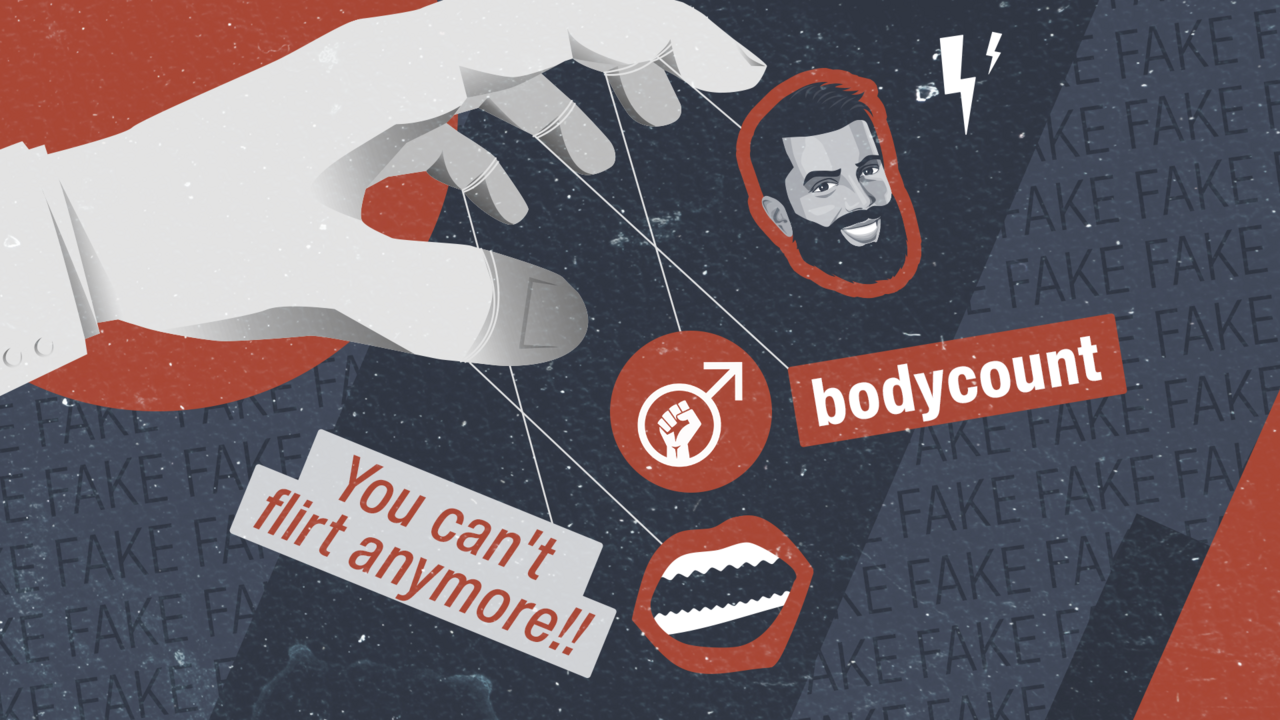
Maculinism, which was initially confined to obscure online forums, has become an important political tool. © Studio graphique FMM


Masculinist discourse is no longer just a muted background noise online. What once belonged to obscure subcultures on the internet is now being echoed, amplified and instrumentalised by political actors who are helping push the misogynistic ideology into the mainstream.

In the US, South Korea and parts of Europe, the anti-feminist rhetoric has become an effective electoral tool – a shared language that mobilises supporters and helps undermine democratic institutions.

“Although the masculinity ideology emerged in the Anglosphere, it has now taken off in many other countries too, from South Korea to Germany, including in France, where – for the first time – a man has been put under formal investigation for plotting a terror attack motivated by the incel [involuntary celibate, eds. note] movement,” a report published by the Gender and Geopolitics Observatory of the French geopolitical think-tank IRIS noted in October.


“Several factors have turned masculinism into an expanding political force,” the report continued, stating that platform algorithms were bringing like-minded users together and enabling masculinist networks and influencers to organise, spread and monetise their ideas through large-scale anti-feminist campaigns.

The online movement then quickly found its way into politics, where populist players stood ready to channel the male anger into electoral capital.
‘Bloke things’

“It’s the whole galaxy gravitating around [Donald] Trump – and especially Steve Bannon – that has set the strategic blueprint for uniting disparate masculinist groups and exploiting men’s grievances,” Stéphanie Lamy, researcher and author of the book “La Terreur Masculiniste” (The masculinist terror), explained.

“It costs less for a candidate to promise middle- and working-class men that they will regain control over ‘their women’, than to actually improve their material conditions,” she said.

In 2014, the US was the scene of the so-called Gamergate controversy – a sexist, anti-feminist harassment campaign that targeted female journalists and researchers.

“It was a large anti-feminist masculinist mobilisation that brought together fairly disparate groups under the one and same umbrella,” she said.

Many of the men who participated in Gamergate all shared the same core values: an hostility towards feminism, the anti-racist Black Lives Matter movement, so-called Social Justice Warriors (SJW), along with a contempt for both journalists and researchers.

Gamergate became a showcase for the American alt-right movement which strongly backed Trump during his first campaign to win the White House. According to IRIS, the anonymous administrator of the “The Red Pill” – a masculinist subgroup on Reddit – played “a key role in rallying young. anti-feminist men to vote for Trump”.

Lamy described it as “a fairly young voter base that had hardly voted at all before”.

In his 2024 re-election campaign, Trump sought to mobilise the fringe group again and appeared on masculinist podcasts like “The Joe Rogan Experience” – one of the most popular podcasts in the world, which in October drew 16 million listeners and averages at 200 million monthly downloads – to appeal to them. Nearly 90 percent of the show’s guests – and 80 percent of its audience – are male, with half of listeners aged between 18 and 34.

In February, 2024, Nigel Farage, the head of Britain’s far-right ReformUK party, appeared on the “Strike It Big” podcast where he described masculinist influencer Andrew Tate as “an important voice” for men. In the interview, Farage explained that young men’s masculinity was being looked down upon and that they were being told “you can’t be blokes, you can’t do laddish, fun, bloke things”.


According to Alice Apostoly, co-director of France’s Gender in Geopolitics Institute (GGI), said that even though few politicians, even conservative ones, are ready to openly align themselves with Tate’s rhetoric, they use it as a “symptom” of a broader malaise, claiming to “take young men’s mental health and their supposed ‘masculinity crisis’ into account”.

Trumpism was the first to grasp the mobilising force behind this type of rhetoric, which has since been used by other leaders around the world on their route to power. “Autocrats learn from one another,” Lamy remarked.

In Argentina, large mobilisations for women’s rights – including pro-choice and anti-femicide protest – actually ended up paving the way for Javier Milei’s rise to power. “They sparked a backlash from Christian nationalists and libertarians,” Lamy said. “And Milei knew how to unite these groups.”

Similarly, South Korea’s former president Yoon Suk Yeol, successfully courted the so-called Idaenam community, which Lamy described as “young men in their 20s frustrated by their lack of (sexual) opportunities”, to win the 2022 elections.

Researchers say that most of these young men are radicalised online, where they are exposed to misogynistic discourse and fed a masculinist propaganda pushed to them through platform algorithms.

“Masculinism is being used politically and is being offered as a societal project that incorporates not only masculinist proposals but also far-right ideas,” Apostoly said. “Young men are becoming a pool of valuable voters for these political players,” she said.

Last year, the Financial Times published an investigation which analysed recent election results from several countries. The findings showed that men under 30 are now turning out to vote in greater numbers than ever before – and most of them are voting for far-right parties.

Conservative think-tanks have picked up on this trend, and are trying to capitalise on it by rolling back legislation related to equality. Trump, for example, has signed dozens of executive orders that are in line with “Project 2025” – a societal blueprint created by the ultra-conservative American think-tank The Heritage Foundation.
Eroding rights

Apostoly said that for years now, a “coalition” of associations, academic websites and politicians has taken form in a bid to push back against feminist societal gains. This became particularly evident in the aftermath of the #MeToo movement, she said, where some started accusing feminist movements of going “too far” and “taking up way too much space”.

As masculinity networks have grown in both popularity and influence, landmark US legislation protecting abortion and LGBTQ+ rights have been rolled back in recent years.

This push has been driven by a combination of fathers’ rights groups (one of the first masculinist movements, which emerged in the 1960s-1970s), parents’ associations, medical organisations, and last but not least, influential Christian fundamentalist groups, Lamy said, citing a recent report from the European Parliamentary Forum.

“Their victories reinforce each other, more or less explicitly,” she said.

In the US, Trump has surrounded himself with political masculinist influencers, and attacks on gender equality and LGBTQ+ rights have become clear priorities on his agenda.

In South Korea, which is currently experiencing a strong anti-feminist backlash, one of Yoon’s 2022 election promises was to shutter the ministry for gender equality and family – the only public body supporting women who were affected by violence in a nation where the wage gaps and femicide rates are among the highest in the OECD.

“We’re dealing with pure and simple propaganda which is being instrumentalised by the hatred of women and which works at the ballot boxes,” she said, adding that “the radicalisation of young men towards reactionary parties and political projects” is happening on platforms “run by leaders [Marc Zuckerberg and Elon Musk] who have effectively sworn allegiance with Donald Trump, who support his ultra-liberal socio-economic agenda and openly align themselves with certain masculinist values.”

Just a few days ago, the French womens’ rights group La Fondation des Femmes sounded the alarm on Facebook’s parent group Meta, saying it was making certain content published by rights groups in Europe invisible after the company stopped all advertisement about politics, elections and social issues.

“The voices defending womens’ rights are being silenced even more,” the foundation wrote in a post on Instagram. “As if this wasn’t enough, the algorithm isn’t working in our favour, our content is made invisible and our messages are fading away.”

Once this propaganda has been legitimised politically, it no longer seeks to just appeal to those – it starts attacking those opposing it.
Political opponents, feminists and journalists in the visor

“This type of violence has very clear goals: to silence women and make them disappear from both the digital public space and the public space,” Apostoly said.

In India for instance, misogynistic online campaigns were targeting female politicians and journalists critical of Indian Prime Minister Narenda Modi’s ruling party, IRIS said in its report.

Rana Ayyub, a prominent journalist, and Kavita Krishnan, an activist, have both been targeted. Lamy said that in Krishnan’s case – where the online harassment included daily rape and torture threats – “we finally realised that Prime Minister Narendra Modi was encouraging these acts and followed the accounts that were harassing her”.

Diane Shima Rwigara, the main opponent challenging Rwanda’s Paul Kagame in the 2017 presidential race, was subject to similar tactics.

A few days after announcing her candidacy, fake nude photos began to circulate online. “The goal was to accuse her of sexual immorality, to attack her sexuality, her person. Pro-government commentators and news outlets shared the photos to mock her without questioning whether the photos were real, making fun of her as a depraved woman,” Apostoly said.

The national electoral commission ended up rejecting Rwigara’s candidacy on administrative grounds, and Kagame was re-elected with 98.8 percent of the vote.

“Misogyny is an extremely powerful unifying force, and goes beyond partisan lines,” Lamy said, noting that while masculine supremacy is a gateway to the far right, radical masculinist circles can be found across the political spectrum.

“We are in a reactionary, fascist societal project,” Apostoly concluded. “This backlash against gender equality is symptomatic of a democracy that is sick. A democracy that’s in danger.”

This article was adapted from the original in French by Louise Nordstrom.

The rise of masculinism (3/3): Nine misogynistic propaganda arguments debunked

ANALYSIS


For the International Day for the Elimination of Violence against Women, FRANCE 24 examines a sharp rise in masculinist discourse that seeks to normalise and legitimise misogyny. In this third and final part of the series, we look at some of the main arguments pushed by masculinist propaganda – and the facts and figures that debunk them.


Issued on: 25/11/2025 
By: Pauline ROUQUETTE

For the International Day for the Elimination of Violence against Women, FRANCE 24 examines a sharp rise in masculinist discourse that seeks to normalise and legitimise misogyny. © Studio Graphique France Médias Monde

Claiming to rely on science, statistics or just first-hand stories presented as proof, masculinist propaganda spreads many ideas that might seem plausible at first glance. But this glib mix of distorted figures, poorly analysed studies and patchy rhetoric collapses in the face of hard evidence.

Studies and statistics in hand, FRANCE 24 dismantles some of the main arguments commonly pushed by masculinist movements.


• Argument 1: 'Just as many men as women are victims of intimate partner violence'

What the propaganda says:

This argument paints intimate partner violence as “symmetrical” or “reciprocal” – that is to say, that just as many men as women experience it in their lives. If this is the case, the argument made by masculinist movements goes, pointing the finger at men as the sole perpetrators of this kind of violence is blatant “misandry” – a prejudice or hatred/hostility towards men.

What the facts say:

Almost one in three women across the world – some 840 million people – are subjected to violence at the hands of their current or former partner, or face other forms of sexual violence from someone other than their partner, over the course of their life.

Within the European Union, 17.7 percent of women experience the threat or reality of physical and/or sexual violence throughout their lives at the hand of an intimate partner. This number grows if we take psychological violence into account, reaching 31.8 percent of women, according to figures published by the Fundamental Rights Agency in November 2024.

In France84 percent of people experiencing intimate partner violence in 2024 were women, placing the number of male victims in a clear minority. Women also represented 98 percent of those who had experienced sexual violence.

Violence against women: What is masculinism?
ENTRE NOUS © FRANCE 24
06:39


And while men also experience intimate partner violence, the structure of that violence is far from symmetrical. Intimate partner violence against women tends to be repeated more than that against men, and the broader context of male domination within society often means that the long-term consequences of that violence fall heavier on women.

“The structural inequalities that still persist in society and the learning of a culture of stereotypes contribute to the foundation on which intimate partner violence is built,” the Citizens and Justice Federation said.

The Canadian NGO SOS Violence Conjugale, which offers shelter as well as information, outreach and reference services to people who have experienced intimate partner violence, wrote in an article that it is also important to draw a difference between the violence of the aggressor – in most cases, a man – from the violence of someone defending themselves, sometimes called “reactive violence” or “violent resistance”.

What we need to understand:

Speaking about gendered violence doesn’t mean “forgetting” men who experience intimate partner violence. It just means accurately describing a massive phenomenon in which women remain far and away the main targets.

By claiming that intimate partner violence is largely “symmetrical”, this argument turns the balance of power on its head and erases the systematic nature of violence against women, instead framing it as a straightforward conflict between individuals.

“This argument of the symmetry of violence allows people to trivialise or even deny violence against women … and ultimately to deny the very existence of a heteropatriarchal system, a hierarchical system that gives privileges to men and oppresses women,” wrote Quebecois sociologist Louise Brossard.

• Argument 2: 'Women lie about violence to destroy men’s lives'
Variations: By accusing men of violence, women “are looking for fame” or “want to tear down men’s careers”

What the propaganda says:

Accusations of rape, assault or intimate partner violence are largely built on lies and used as a weapon to make money, gain legal advantage or destroy a man’s reputation or career.

What the facts say:

Most research on the subject agrees that the false rape allegations are rare, ranging from two to eight percent of charges filed depending on how the study is conducted.

Roughly three to five percent of rape or sexual assault charges are dismissed as false or misleading after investigation, the French ACI criminal law firm said.

According to the UK’s Channel4 fact-checking services, a British man is 230-times more likely to be raped than to be falsely accused of rape


In fact, the problem is largely the opposite than that described by masculinists – a massive percentage of violence against women never gets reported. According to the French justice ministry, “four out of five women impacted by violence don’t file charges”.

Meanwhile, the many controversies around male celebrities accused of sexual violence these past few years somewhat undercuts the idea that men accused of rape or other forms of sexual assault would see their career fall apart as a result.

“In general, the careers of wealthy or powerful men who are accused or even convicted of violence are not impacted that much,” said researcher Stéphanie Lamy, the author of “The Masculinist Terror”. “Especially if they are white.”

What we need to understand:

Spinning a few highly publicised cases into a general rule is a disinformation strategy.

False accusations exist, and they should be dealt with and punished. But they remain an incredibly small minority, dwarfed by the scale of very real violence that women are subjected to every day, whether it’s reported or not.
• Argument 3: 'The justice system is biased against men and fathers'
What the propaganda says:

Judges are biased towards mothers, and fathers are systematically robbed of custody of their children.

What the facts say:

It’s true that in France, after a couple is separated, the child’s primary residence is still largely that of their mother (around 70 to 80 percent of cases). But in most cases, this is the result of an amicable agreement between both parties (around 80 to 85 percent of cases), not a decision handed down against the father after a bitter fight in front of a judge.


Gender-based violence in Pakistan: Female influencers targeted

FOCUS © FRANCE 24
06:11


What’s more, cases of shared custody have been rising steadily for more than 20 years. If a father asks for shared custody, the request is granted in 86 percent of cases, as podcaster Cédric Rostein pointed out on social media.

Several studies have shown that most custody decisions favour the person who had already been most responsible for the child’s care before the separation rather than open favouritism towards one gender over another.
What we need to understand:

Masculinist narratives distort reality to conceal very real problems that mothers face in the French justice system: unpaid child support (in 25 to 35 percent of cases), mothers who bear the mental and material burden of raising a child alone, the struggle to have family violence recognised by a court of law.

These movements paint family courts as “pro-women”, neglecting to mention the fact that women are left disproportionately poorer after a separation and remain over-represented among those most vulnerable to violence.

• Argument 4: 'Feminism is destroying society, the family and even desire'
What the propaganda says:

Feminism is responsible for the “crisis of the family”, declining birth rates, celibacy and male sexual frustration.
What the facts say:

As for the family, the data shows above all that the rise of feminism coincides with a decrease in forced marriages and child marriages, as well as a decline in intimate partner violence in countries that invest heavily in pro-equality policies.

And when it comes to desire, investigations into marital satisfaction show that the most stable couples are often those in which the domestic division of labour and manner of communicating are shared in the most equal way.

What we need to understand:

The argument that a given movement is “destroying society” has long been a staple of counter-revolutions: it was used to argue against the abolition of slavery, the right of women to vote and the expansion of civil rights.

Enduring inequalities are presented as necessary for “the survival of civilisation”, despite the fact that data show that the most equal societies are also the most stable and prosperous.
• Argument 5: 'A woman who has already had multiple sexual partners can no longer become attached to just one man'
What the propaganda says:

A “good” woman is supposed to have little or no previous sexual experience.

The “bodycount” theory is based on a pseudo-scientific argument built around oxytocin, a hormone linked to emotional attachment. With each sexual encounter, the theory claims, a woman will “release” a certain amount of oxytocin that will “bond” her to her sexual partner. A woman who has had “too many” sexual encounters will exhaust her stockpiles of oxytocin, leaving her unable to form further bonds or become securely attached to a future partner.
What the facts say:

The body synthesises oxytocin continuously throughout a person’s life. There is no serious scientific study that suggests that having a higher number of sexual partners has any negative impact on the production of oxytocin for women, or its effect on them.


'Manosphere' influencers prey on the insecurities of young men, expert says
© France 24
10:25


What we need to understand:


This argument is built on a double standard: male sexuality is considered neutral or praise-worthy while female sexuality is considered degrading for women.

This pseudo-scientific theory also justifies the control of both the body and private life of women, as well as pathologising women who have an independent sexual life.
• Argument 6: 'Women have too many privileges'
Variations: “Feminism has gone too far – women now have more rights than men do”
What the propaganda says:

Feminists have gained “too many” rights: protective laws, hiring quotas, public policies based on gender – men are now at a glaring disadvantage.
What the facts say:

Economically speaking, it’s a hard case to make. According to figures published by Equal Measures 2030, more than 2.4 billion women and girls live in countries scoring “bad” or “very bad” in terms of gender equality.

At this rate, the report reads, “no country [of the 139 examined] is on path to reach gender equality by 2030.”

In France, women still make less than men – even in the same job – and their annual income is on average 22 percent lower, often due to interruptions to their career caused by having and raising children.

Despite this, women still shoulder the lion’s share of unpaid domestic and care work, are less represented in positions of political and economic power and continue to be the main victims of sexist and sexual violence.
What we need to understand:

The “privileges” denounced by masculinist movements are really efforts to correct a massive imbalance between men and women, not an attempt to put women in a dominant position over men.

The gender pay gap is back: What’s behind America’s backslide on equal pa
51 PERCENT © FRANCE 24
12:37


• Argument 7: 'Laws around consent have gone too far, you can’t even ask women out anymore'


What the propaganda says:

Trying to build a “culture of consent” will make “everything” punishable under the law: coming on too strong, giving someone a kiss, a harmless misunderstanding – we’ll all become crippled by paranoia.
What the facts say:

Recent laws related to consent do not criminalise flirting, but sexual acts without free and informed consent. They replace the logic of “Did she try to fight?” with “Did she clearly say ‘yes’?”

Studies show that what is being targeted by these laws is not one-off misunderstandings, but persistent patterns of harassment, pressure and duress, whether explicit or implicit – all things described by those subjected to them as clearly unwanted.

Several investigations into the sexual lives of young people show that teaching consent improves the quality of relationships while reducing the risk of violence – none of which stops people from flirting.
What we need to understand:

The refrain that “you can’t even ask women out anymore” only serves to delegitimise the basic idea that a woman’s desire counts just as much as a man’s.
• Argument 8: 'Men are the real victims'
What the propaganda says:

Men will be crushed by feminism, abandoned to suffer alone with their own burdens (higher rates of suicide, increased risk of struggling at school and experiencing unemployment) while all the money goes to women.
What the facts say:

While there are very real mental health problems that impact men more than women – including higher rates of suicide, addiction and violence against other men, research suggests that these are strongly connected to norms traditionally considered masculine such as an unwillingness to ask for help or higher readiness to take risks.

Masculinist narratives use these very real struggles to attack feminism rather than questioning the worldview that underpins them.
What we need to understand:

Masculinism weaponises real distress by turning it against women rather than challenging its structural causes such as precarity, toxic masculinity and a lack of appropriate public policy measures.
• Argument 9: 'Femicides are just individual crimes rather than a systematic problem'
What the propaganda says:

The murders of women are tragic individual events, but there’s no connecting line between them. To frame them as “femicides” is just ideological.
What the facts say:

In 2024, 83,000 women and girls were intentionally killed across the world, including roughly 50,000 who were killed by their intimate partner or a family member, according to UN Women. To put it another way, 137 women and girls lose their lives every day at the hands of their companion or their kin – murders that are “often the culmination of repeated episodes of gender-based violence”.

Every year in France, almost 120 women are killed by their current or former partner. On November 20 alone, four women were killed by their former partners. Official reports show the same factors repeating over and over: past instances of violence, a recent separation or a refusal to respect judicial protection orders.

These figures call for a structural interpretation: to view these murders not as individual outbreaks of violence, but as the tip of an iceberg of gender-based and intimate partner violence.
What we need to understand:

Reducing femicides to simple isolated tragedies allows masculinist movements to deny the systematic character of male-perpetrated violence and ignore the collective responsibility of aggressors.

By depoliticising these crimes, this argument blocks any kind of ambitious political response and perpetuates the myth that “feminists are exaggerating” and that “men are the real victims”.

This article has been adapted from the original in French
INTERNATIONAL DAY FOR THE ELIMINATION OF VIOLENCE AGAINST WOMEN

The UN has designated November 25 as the International Day for the Elimination of Violence Against Women, stressing that nearly one in three women around the world are abused in their lifetime. The scourge has only worsened during the Covid-19 pandemic, which has led to a sharp increase in domestic violence. In France alone, more than one hundred women were killed by their current or former male partners in 2024, according to government figures.


A woman or girl killed every 10 minutes, UN report finds
DW with dpa, AFP
25/11/2025

New data from the UN shows the worrying scale of global femicides, with some 50,000 women and girls killed by a partner or family member in 2024 alone. UN Women says no real progress has been made on the deadly trend.


According to the Un report, during the course of 2024, around 83,000 women and girls were deliberately killed around the world
Image: Sodiq Adelakum/REUTERS


A woman or a girl is killed every 10 minutes around the world, new figures released by the United Nations on Monday showed.

The 2025 femicide report by the United Nations Office on Drugs and Crime (UNODC) and UN Women says that no real progress has been made when addressing such killings.

The UN said the release of the report marked the International Day for the Elimination of Violence against Women.

Is violence against women an epidemic no one cares about?  26:04

Tens of thousands of women and girls killed in 2024


During the course of 2024, the report found that around 83,000 women and girls were deliberately killed. Nearly 60% of them — or 50,000 — died at the hands of intimate partners or family members.

This equates to a woman or girl being killed by a partner or family member nearly every 10 minutes.

In comparison, the UN said 11% of male homicides were perpetrated by intimate partners or family members.

"The home remains a dangerous and sometimes lethal place for too many women and girls around the world," said John Brandolino, UNODC's acting executive director.

"The 2025 femicide brief provides a stark reminder of the need for better prevention strategies and criminal justice responses to femicide," Brandolino added.

The report also highlighted how technology had worsened some types of violence, like cyberstalking, coercive control, and image-based abuse. It was found to be a possible risk factor that escalated to the physical world and, in some cases, led to women and girls being killed.

"Femicides don't happen in isolation. They often sit on a continuum of violence that can start with controlling behavior, threats, and harassment — including online," said Sarah Hendriks, director of UN Women's policy division.

Femicide in Brazil — the silent war on women 26:34

Africa had highest femicide rate in 2024

The UN said that women and girls were being subjected to extreme forms of violence in every part of the world.

The regional breakdown saw Africa with the highest rate of femicide in 2024 with 3 per 100,000 women and girls, followed by the Americas with 1.5, Oceania with 1.4, Asia with 0.7 and Europe with the lowest at 0.5.

The report called for "urgent, coordinated prevention" and specified six key areas, among them, strengthening legal frameworks, survivor-focused services and firearm restrictions.

Edited by Sean Sinico


Rising domestic violence in France prompts sweeping bill to protect women


France has unveiled a framework bill with 53 measures to curb rising violence against women after a spike in domestic femicides. The bill, announced by Gender Equality Minister Aurore Bergé, comes as countries on Tuesday marked the International Day for the Elimination of Violence Against Women.


Issued on: 25/11/2025 - RFI

The latest figures in France show domestic femicides rose 11 percent between 2023 and 2024, with 107 women killed by a partner or ex-partner.
 AP - Luca Bruno

Feminist organisations have sought such a text for years, while the bill also extends to violence against children.

In an interview with French news agency AFP, Bergé said that a comprehensive framework "would go further on a number of issues that have not yet been addressed, or have only minimally been addressed by the law".

The bill was drafted with all parliamentary groups and includes 53 legislative measures plus regulatory steps.

The move comes as deadly attacks on women rise in France. The latest figures from the Interministerial Mission for the Protection of Women (Miprof) show domestic femicides rose 11 percent between 2023 and 2024, with 107 women killed by a partner or ex-partner


Shift in responsibility

Bergé says more emphasis needs to be place on the perpetrators of violence who have until now "not felt afraid" due to a number of reasons.

"The statute of limitations protects them, the anxiety of filing a complaint protects them, the anxiety of confrontation protects them, the anxiety of the length of the legal process also protects them, " she says.

"They must be the ones who are afraid, they must be aware that the victims, at any moment, will be able to access justice."

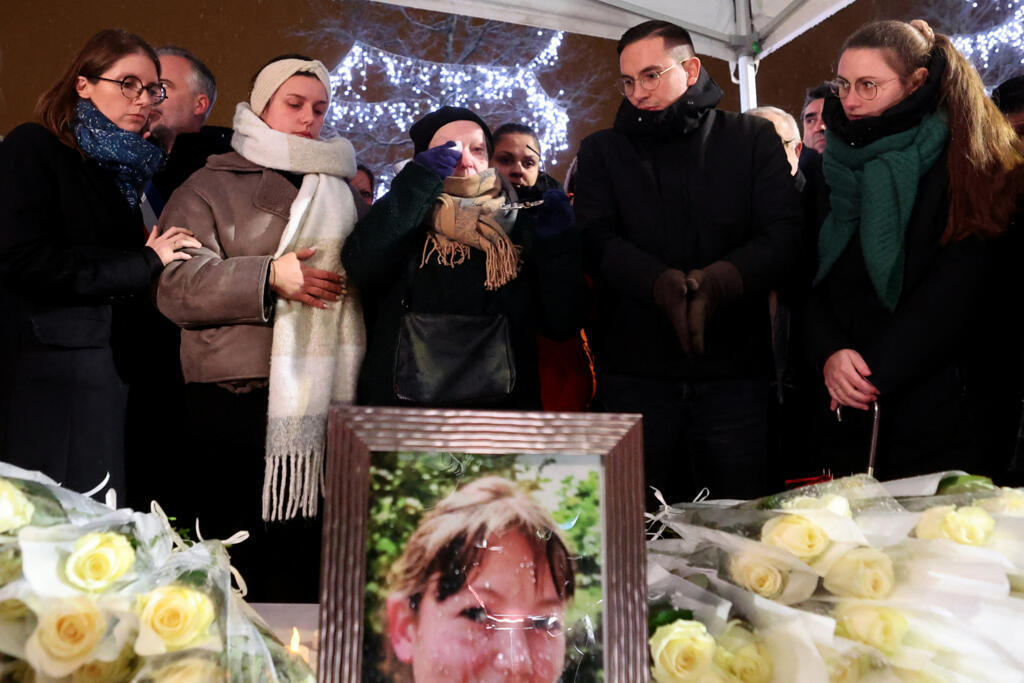
French Minister responsible for Equality between women and men and the fight against discrimination Aurore Bergé (L), joins the family members react during a pay tribute to Isabelle Mortaigne, killed on New Year's, during a tribute at the Town Hall in Haumont, northern France on 8 January, 2025. AFP - FRANCOIS LO PRESTI

Bergé said the killing of a woman by a partner or ex-partner is a collective failure and shows the lack of a cultural shift.

“Today, unlike in Spain, we haven't yet achieved the momentum that leads the whole of society to say 'This is also my share of responsibility as a company, as a colleague, as a friend, as a neighbour'," she said.

Bergé said progress is visible but barriers remain. She said all victims should have unconditional access to legal aid in cases of domestic or sexual violence “but this is not currently the case”.


Support for victims


Victims should be able to have their lawyer present during medical examinations if they wish, Bergé said, adding that this should include guidance on how they will be questioned.

The law will allow victims to record their testimonies so they do not have to repeat themselves during the legal process. Case dismissals must always be justified and could be open to appeal.

The other measures in the bill are designed to tackle the issue of coercive control, less obvious to the untrained eye.

"Being a victim of domestic violence doesn't necessarily mean having bruises, being strangled, or being raped; it also means being under control," Bergé said.

It can mean bank account closures, GPS tracking, phone chips and the monitoring of victims' social interactions.

All of these actions must be defined in law much more systematically, Bergé added.


Bergé said platform managers on sites like OnlyFans “must be classified as pimps”.

On sexual violence against young children, the bill proposes criminal record checks for all professionals who work with children, including civil servants, temporary workers, trainees and contract staff.

Bergé's proposal has been met with scepticism by some women's associations who demonstrated at the weekend and are calling for a budget of €3 billion euros to implement the law.

They are concerned that the state budget being debated in parliament "would result in massive setbacks for women's rights, because many associations would see their funding called into question", warned Sophie Binet, the general secretary of the CGT union.


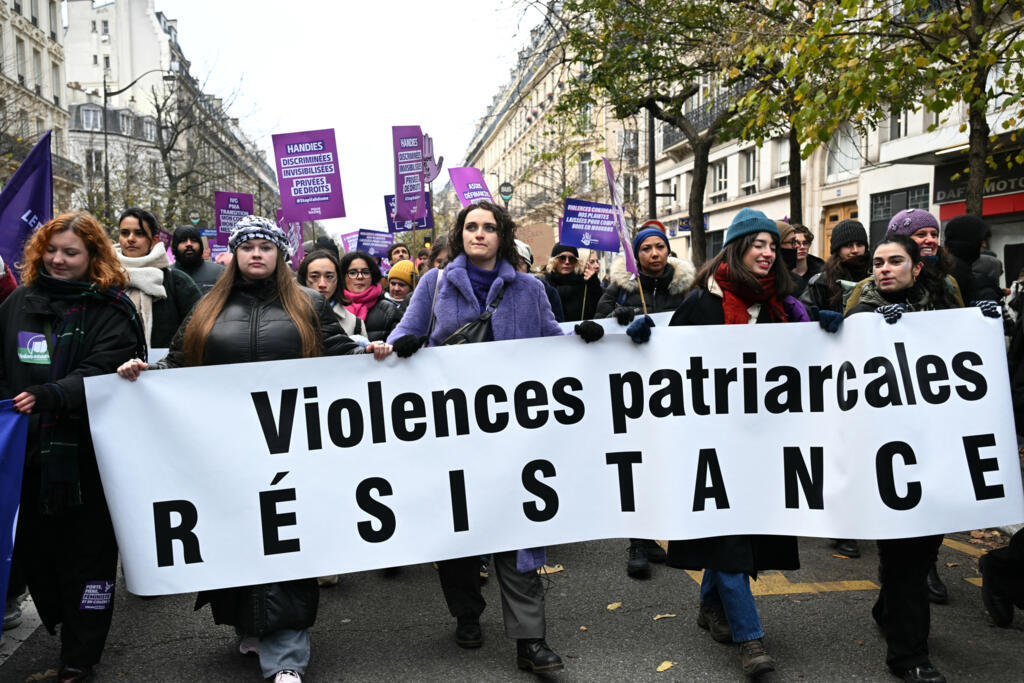
Protesters march behind a banner reading "Patriachal violence - resistance" during a demonstration called by the French collective NousToutes (Us all) to protest against violence against women, in Paris, on 22 November, 2025. © AFP - BERTRAND GUAY

Role of technology

Tuesday marks the International Day for the Elimination of Violence Against Women, an annual awareness campaign coordinated by the United Nations.

Accoring to a report by the United Nations Office on Drugs and Crime and UN Women, released Tuesday, some 50,000 women and girls were killed by intimate partners or family members in 2024.

Based on data from 117 countries, this breaks down to 137 women per day, or around one woman every 10 minutes, the report said.

The report said technological development has exacerbated some kinds of violence against women and girls and created others, such as non-consensual image-sharing, doxxing, and deepfake videos.

"We need the implementation of laws that recognise how violence manifests across the lives of women and girls, both online and offline, and hold perpetrators to account well before it turns deadly," said Sarah Hendricks, Director of UN Women's Policy Division.


France’s ongoing struggle to protect child victims of domestic violence

Domestic violence is rising in France and children have been recognised in law as victims in their own right since 2022. As the world marked International Day for the Elimination of Violence Against Women on Tuesday, RFI visited the country’s only centre supporting children as they try to recover.


Issued on: 25/11/2025 - RFI


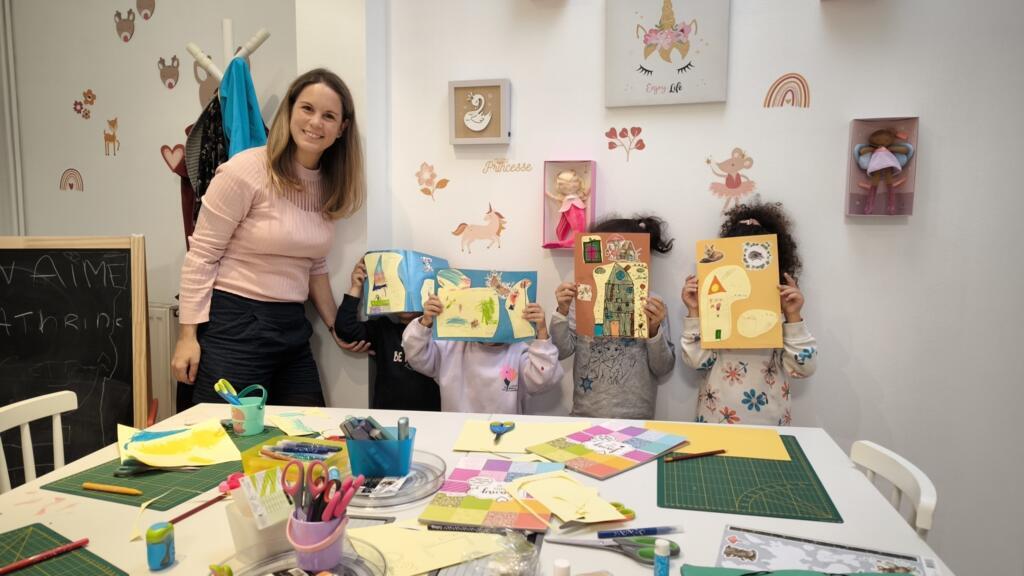
Children show off their "emotion houses" after a workshop led by Laëtitia Via, an author of children's books. © Aurore Lartigue/RFI


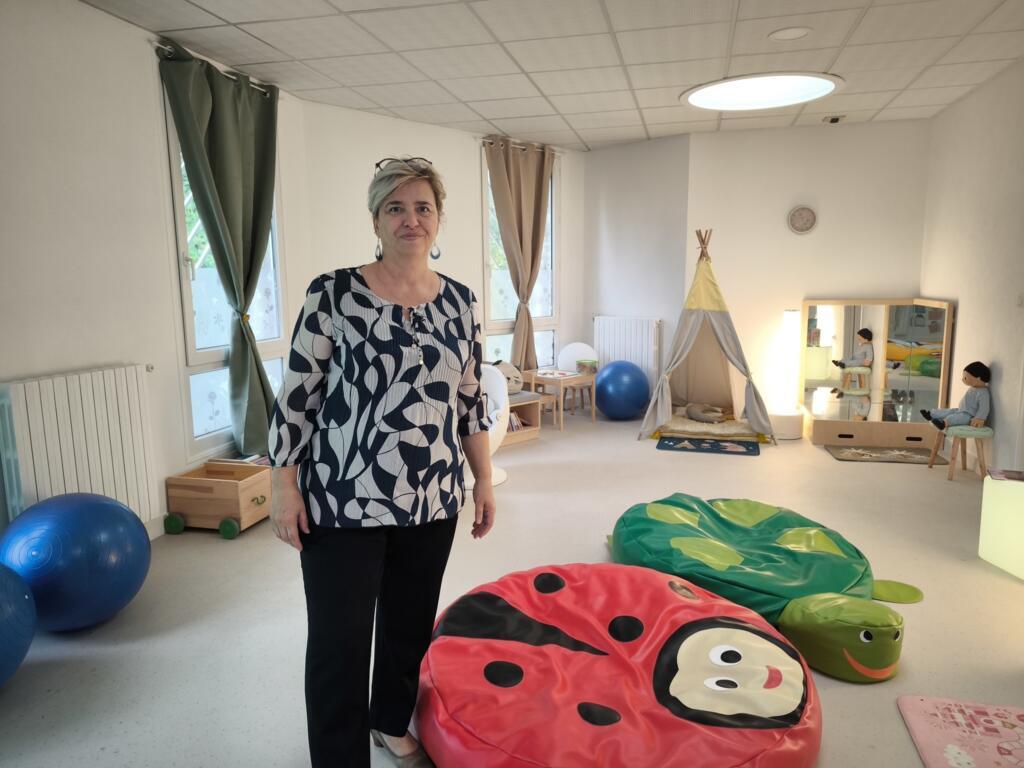
With dolls and toys on the shelves, books and balls and ladybird-shaped beanbags, the Une main pour 2main ("A hand for tomorrow") centre in Domont, north of Paris, has been designed to be as welcoming as possible for children.

"When you live in a violent environment, you don't play anymore. You don't make any noise. Children try to make themselves invisible," says Catherine Goujart-Delambre, the centre's director.

This is the only centre in France dedicated to helping children rebuild after living through domestic violence, which continues to increase despite measures meant to stop it.

On Monday, France's Gender Equality Minister Aurore Bergé unveiled a new bill of 53 measures to curb rising violence against women, which also extends to violence against children.

Letting children be children

On Wednesdays, Saturdays and some days during school holidays, the centre welcomes children aged four to 17 for free workshops.

"We wanted to give them back their place as children for an hour, so they no longer have to be either witnesses to violence, or carers of the parent who is a victim," says Goujart-Delambre.

In the arts and crafts room, older children are making Christmas tree ornaments

"While they are making crafts, they don’t think about anything else," Goujart-Delambre explains. It is a small but important step in rebuilding their self-confidence.

The youngest children are looked after by Laetitia Via, an author of children's books, who works with them on "expressing emotions" through reading, singing and drawing. "The important thing is that we give them the space to talk," she says.

Catherine Goujart-Delambre was inspired by her daughter and granddaughter to found her organisation helping women who are victims of domestic violence, and later the centre for child victims. © Aurore Lartigue/RFI

Each room in the centre has a name, and the music and drama room is called "Anaïs and Lola", after Goujart-Delambre’s daughter and granddaughter. It was their experiences that led her to set up an organisation to help victims of domestic violence in 2014.

Lola, now 10, was three weeks old when her mother, Anaïs, called Goujart-Delambre for help after being beaten by her partner.

A few months later, Goujart-Delambre’s best friend, Katie Salvador, also became a victim of domestic violence. Shortly afterwards, the two women set up Mon Âme Soeur ("Soul sister") to help other women in the same situation.

Its success then led them to create Une main pour 2main to help children specifically.

Victims in their own right

According to France’s High Council for Equality Between Women and Men (HCE), 398,000 children were "co-victims" of violence against women in 2019.

And since 2022, children exposed to domestic violence have been recognised as victims in their own right, even if they were not physically harmed.

This status gives them access to support, including psychological assistance. But in practice, Salvador says, very little is actually available.

The centre does not have its own dedicated in-house psychologist – Laurianne Chaine intervenes in emergencies.

She explains that children exposed to domestic violence can develop symptoms of post-traumatic stress disorder, including sleep disturbance, anxiety, anger, frustration and a constant sense of being on alert. "In the context of domestic violence, it's their sense of safety that is affected."

"It feels good after everything we've been through," says Samia (not her real name), a mother who is bringing her children here for the second time. "They're very happy to come."

Long-term consequences

For Goujart-Delambre, helping these children is also a matter of prevention. From her years of helping adult victims, she says many were also exposed to violence as children.

"Every time, we ask if there was a history of violence in childhood, on one side or the other. In most cases, the answer is yes," she says.

report from the HCE also found that 40 to 60 percent of violent men had witnessed domestic violence as children.

However Chaine says this cycle is not inevitable. "Just because a child has witnessed violence, does not mean that they will become violent themselves. But they may be vulnerable as adults, and may reproduce the same patterns, with their own children becoming victims of bullying, for example."

Immediate psychological support can help prevent trauma from becoming entrenched and causing long-term consequences.

Juliette (not her real name) left her partner in July. Social services referred her to the centre, she explains, sitting on one of the sofas in the reception area. "My four-year-old son has terrible tantrums. I don't really know how to react. He hits me and kicks me, and I feel that they resent me for the separation."

"Anger is often an expression of deep sadness," explains Chaine gently.

For Goujart-Delambre, one of the major obstacles to helping these children is that an abusive parent often retains parental authority, and will often refuse to approve psychological treatment.

A law passed in March 2024 aimed at strengthening child protection made it easier to remove parental authority, but in practice such decisions remain extremely rare.

"There is a beginning of awareness," says Goujart-Delambre. "We recognise the children as victims, but what are we doing about it?"

This article was adapted from the original version in French by Aurore Lartigue.