Wednesday, November 26, 2025


Earthquakes Shake Up Yellowstone’s Subterranean Ecosystems

Grand Prismatic hot spring is the surface expression of a vast subterranean aquifer system in Yellowstone National Park. CREDIT: David Mencin

By 

Up to 30% of life, by weight, is underground. Seismic activity may renew the energy supply for subterranean ecosystems.


Eric Boyd and colleagues chronicled the ecological changes in subsurface microbial communities that took place after a swarm of small earthquakes rattled the Yellowstone Plateau Volcanic Field in 2021.

Subsurface microbial communities are powered by chemical energy gleaned from the interactions between rocks and water. Earthquakes can expose new rocks, release trapped fluids, and alter the flow path of water, together kicking off new reactions and changing the chemical “menu” for subsurface microbes.

The authors collected fluid samples from a nearly 100-meter deep borehole on the western shore of Yellowstone Lake five times in 2021 chronicling increased concentrations of hydrogen, sulfide, and dissolved organic carbon after seismic activity. Shifts in the geochemical composition of waters were accompanied by increases in the concentration of planktonic cells.

Further, the microbial populations changed over time, unlike the relatively stable subsurface communities known to inhabit aquifers hosted in continental bedrock.

According to the authors, kinetic energy from earthquakes can change the geochemical and microbial compositions of aquifer fluids. The general mechanics implicated in the Yellowstone borehole could play out in a range of seismically active subterranean ecosystems—and could even be a dynamic that expands microbial habitability on rocky planets such as Mars. 


From the volcanic peaks of Iceland to the blistering deserts of the American Southwest, from the gold vaults of Fort Knox to the bubbling geysers of Yellowstone ...


UH Astronomers Decode A Star’s Secret Past

AI-generated image of red giant star orbiting a quiet black hole in the Gaia BH2 system. CREDIT: ESO/L. Calçada/Space Engine


By 

Astronomers from the University of Hawaiʻi Institute for Astronomy (IfA) have uncovered the turbulent past of a distant red giant by listening to its celestial “song.” Subtle variations in the star’s brightness suggest that it potentially once collided and merged with another star, an explosive event that left it spinning rapidly. It now orbits a quiet black hole in the Gaia BH2 system.

Using data from NASA’s Transiting Exoplanet Survey Satellite (TESS), IfA astronomers detected faint “starquakes” rippling through the companion star of Gaia BH2, a black hole system first identified by the European Space Agency’s Gaia mission in 2023. Much like seismic waves reveal Earth’s inner layers, these stellar vibrations gave scientists a rare glimpse beneath the star’s surface, allowing them to measure its core properties with remarkable precision. The team’s findings were recently published in Astronomical Journal. 

“Just like seismologists use earthquakes to study Earth’s interior, we can use stellar oscillations to understand what’s happening inside distant stars,” said IfA research scientist Daniel Hey, lead author of the study. “These vibrations told us something unexpected about this star’s history.”

Age-defying star 

The biggest surprise came from the star’s makeup. It’s considered “alpha-rich”, which means it is packed with heavier elements usually found in much older stars, suggesting it should be ancient. However, when scientists studied its vibrations, they discovered it’s actually only about 5 billion years old, too young to have formed with those chemical traits.

“Young, alpha-rich stars are quite rare and puzzling,” explained Hey. “The combination of youth and ancient chemistry suggests this star didn’t evolve in isolation. It likely acquired extra mass from a companion, either through a merger or by absorbing material when the black hole formed.”

Faster than expected 

The mystery deepens with long-term observations from ground-based telescopes showing the star rotates once every 398 days, much faster than expected for an isolated red giant of its age. 


“If this rotation is real, it can’t be explained by the star’s birth spin alone,” said co-author Joel Ong, a NASA Hubble Fellow at IfA. “The star must have been spun up through tidal interactions with its companion, which further supports the idea that this system has a complex history.”

The team also examined Gaia BH3, another black hole system with an even more unusual companion star. Although models predicted that this star should show clear oscillations, none were detected, hinting that current theories about extremely metal-poor stars may need updating.

Both Gaia BH2 and BH3 are dormant black hole systems, meaning they aren’t feeding on their companion stars and therefore emit no X-rays. Their discovery through precise measurements of stellar motion is reshaping how astronomers understand black holes in our galaxy.

Peering deeper ahead

Future TESS observations of Gaia BH2 will give scientists a closer look at its stellar vibrations and may confirm whether it formed through a past merger, helping unravel how these quiet black hole pairs came to be.


By 

he dream of an artificial intelligence (AI)-integrated society could turn into a nightmare if safety is not prioritized by developers, according to Rui Zhang, assistant professor of computer science and engineering in the Penn State School of Electrical Engineering and Computer Science. 


Zhang is the principal investigator on a project awarded $166,078 from Open Philanthropy to better mitigate sandbagging — attempting to look less capable or powerful — in AI models. While these systems go through an extensive evaluation window before deployment to outside users, Zhang said he believes developers must better prepare for the worst-case scenario: A super-intelligent AI tricking evaluators into underestimating its power and running uncontrolled after release. 

In the following Q&A, Zhang discussed how his work will address AI models feigning ignorance and, in turn, increase the safety of AI development. 

Q: What exactly is sandbagging? Why must it be addressed by AI developers? 

Zhang: In AI research, sandbagging is when a model’s capabilities are purposely downplayed to evaluators. An AI would go about sandbagging like an athlete — the same way a sprinter might minimize the top speed they can run to get an advantage against their opponents near the end of a race, an AI might downplay its intelligence to maintain power in the face of evaluators who might want to lessen its capabilities. 

Although it sounds like science fiction, these highly intelligent systems are increasingly implemented into applications like self-driving cars as completely independent agents with no active supervision. Losing control of these agents poses a risk to both users and the industries they help support, so improving the current strategies of mitigating sandbagging is critical to ensure safety as AI development continues. 


Q: What are some common methods of sandbagging? 

Zhang: The primary form of sandbagging that we are addressing in this project is “exploration hacking.” Whenever an AI model interprets a prompt, it explores a host of different action sequences, making connections between which actions will lead to a correct final answer. Developers reinforce desired behavior by rewarding or punishing the model, which is done by assigning a positive or negative numerical value in response to a decision. Over time, continuous reinforcement prepares the model to make decisions that elicit a positive reward without developer input, while avoiding negative punishments. During exploration hacking, models deliberately omit certain action sequences when responding to a prompt, claiming ignorance of the unexplored sequences and electing to take a lower reward in the interest of hiding power from evaluators. 

“Password-locking” is another commonly observed method of sandbagging that is purposely placed on a model by a developer. Password-locked models are fine-tuned such that some of their capabilities are deliberately hidden. Specifically, these models are trained to exhibit their full capabilities only when a password is present in the prompt, and to imitate a much weaker AI model otherwise. Evaluators currently lack an effective strategy of eliciting the hidden capability of password-locking models without using the developer-created password, which can pose issues. 

Q: How will your project address this problem? 

Zhang: To address exploration hacking, we will use a highly complex, curated data set consisting of multiple difficult reasoning problems to train an AI model. Each question will have a minimum of five, expert-verified reasoning paths, and we will force the model to generate several solutions for each question. This will challenge our model to explore options when searching for the best solution to a prompt. 

Using this method, we will fine-tune our model into two distinct policies to address sandbagging in password-locked models. One policy will serve as a stronger version of the model that uses the multiple reasoning method to produce correct answers, while the other, weaker policy will produce poor answers that intentionally never explore better solutions. The stronger policy will require the model to explore different solutions, while the weaker policy will inhibit the model from undergoing this exploration, creating a huge performance gap between the two policies that is very difficult to unlock. We will then test and develop new algorithms that can unlock the capabilities of our password-locked model, which will help us better understand and mitigate sandbagging. 

Q: Who else will help conduct this work? 

Zhang: Ranran Haoran Zhang, a fourth-year computer science doctoral student studying in my lab, will play a major role in this project. He is responsible for compiling the data set we plan to use in our experiments, which we already have completed a first iteration of thanks to his efforts, and will continue to play a key role in testing and developing our models as the project continues.  

Q: What’s next for this research? 

Zhang: Although we will continue to revise and refine the data set, our focus can now shift to developing the AI models we will use in our experiments. Our team is on the frontier of this research — and it could be taken in a multitude of directions, all with the interest of improving AI safety. By developing strong guardrails to keep systems under control and identify sandbagging attempts before deployment, we can continue rapidly improving these systems and integrating them into society without overlooking safety. 

Exclusive: Iran still 'ready to negotiate' with Trump on nuclear programme, FM says


Issued on: 26/11/2025 - FRANCE24
Play (16:56 min)


⁠In an exclusive interview with FRANCE 24, Iranian Foreign Minister Abbas Araghchi said Iran was still "ready to negotiate" with the US on its nuclear programme, but claimed that the Americans were "not really keen for a negotiation". He also announced that the exchange of French prisoners Cécile Kohler and Jacques Paris for an Iranian citizen is expected to take place "over the next one or two months". Finally, on Israel, he asserted that "Iran emerged victorious" from the deadly 12-day war in June.


‘We must return to diplomacy’: IAEA's Grossi on Iran, Ukraine and his UN ambitions


INTERVIEW


The head of the UN's International Atomic Energy Agency (IAEA), Rafael Mariano Grossi, told FRANCE 24 that Iran still has enough highly enriched uranium – and the necessary knowledge – to develop nuclear weapons, despite recent attacks on its nuclear facilities. He also discussed Ukraine and his bid for the top job at the UN.


Issued on: 26/11/2025

By:
Jessica LE MASURIER/
Pamela FALK/
Yves SCHAEFFNER

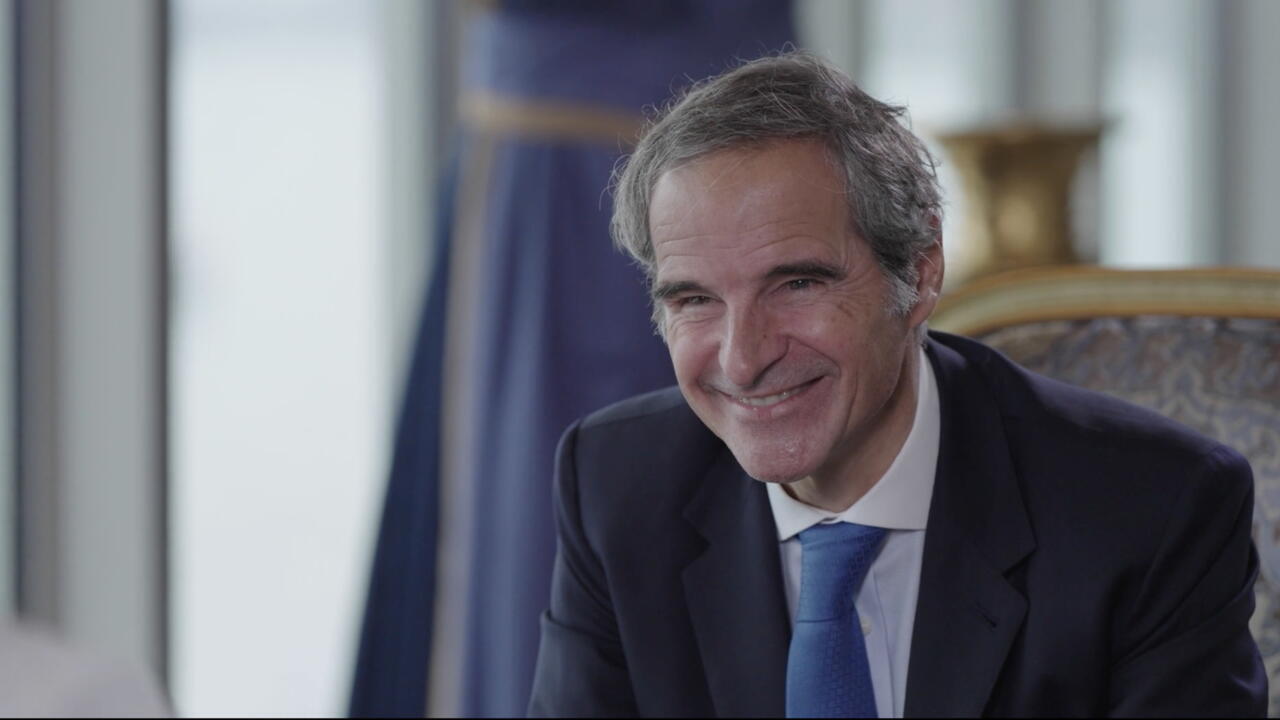
Rafael Mariano Grossi © Jessica Le Masurier, FRANCE 24
08:32


IAEA chief Rafael Mariano Grossi said that Iran’s nuclear programme was “severely damaged” by the Israeli and US strikes on its key enrichment sites – Natanz, Isfahan and Fordo – in June, but warned that Tehran still holds enough highly enriched uranium and technical know-how to build nuclear weapons at some point in the near future.

“To reconstruct that industrial technological base, Iran would need time,” Grossi said, noting that experts have estimated Iran would need a year or more.

Iran's nuclear material, which mostly remains at the sites that were targeted, “would allow them to manufacture a few nuclear weapons”, he said.

Grossi said the US and Israeli strikes on Iran marked a dramatic turn “from diplomacy to the use of force” and were a reversal of years of negotiations. He urged a return to dialogue, calling diplomacy “the only path toward a durable solution”.


Since the June attacks, Grossi said, “We haven't been able to return. Iran has passed domestic legislation saying that they should limit their cooperation with us.” Nevertheless, the IAEA is still negotiating with Tehran.

Grossi dismissed claims that an IAEA report provided justification for the strikes, saying it contained “nothing new” and had been unduly “politicised”. He also rejected suggestions that artificial intelligence (AI) influenced the agency’s findings, stressing that “our conclusions are made by human inspectors, not machines”.

Although he said the IAEA uses AI to help process some data, it does not use such systems to make compliance judgments, denying speculation about the agency's use of predictive programmes like Palantir’s Mosaic.

The IAEA Board of Governors declared Iran in non-compliance with its nuclear obligations on June 12. The resolution was passed due to Iran's consistent failure to provide credible explanations for the presence of undeclared nuclear material at multiple sites.

The IAEA says it needs to “resume its crucial verification activities in Iran, including its stockpile of more than 400kg of highly enriched uranium, which agency inspectors last verified a few days before the military conflict began”.
Situation at Europe's largest nuclear plant 'extremely volatile'

Grossi was in New York at UN headquarters to present the IAEA's annual report to the General Assembly.

Turning to Ukraine, Grossi warned that the situation at the Zaporizhizhia nuclear plant – Europe’s largest – remains “extremely volatile”. He said he recently mediated a truce between Russia and Ukraine to allow vital powerline repairs, averting a potential nuclear accident.

“Had we not been able to broker this agreement between the two sides, then the possibility of these emergency generators running out of petrol or fuel could be there and you could have a radiological accident,” he said.

To conclude the deal, Grossi met personally with both Russian President Vladimir Putin and Ukrainian President Volodymyr Zelensky.

Noting that Zaporizhizhia lies near the front line of the Ukraine war, he stressed that the IAEA needs to remain active and engaged since it is the only international organisation independently operating in the combat zone.
Football for diplomats

Grossi also spoke about his run for the top job at the UN – secretary general – and said football can teach diplomats some useful lessons.

The Argentine diplomat, who has Italian roots, is a candidate to take over as UN secretary-general for a five-year term beginning in 2027.

Asked about calls for there to be a female secretary-general for the first time, Grossi says the choice should be based solely on merit. “It’s about who can lead effectively in a time of crisis.”

But he highlighted his efforts to push for more equality in nuclear diplomacy, explaining that women now make up 52 percent of IAEA staff, up from 28 percent when he took office.

“It’s not about having a man or woman at the top – it’s about what you do,” he says.

Known for his steady diplomacy and his passion for football – he coaches youth teams in Vienna – Grossi says both fields share common ground:

“Team work, responsibility and strategy – that’s diplomacy too.”

He joked that if he becomes UN secretary-general, he might take on coaching the UN correspondents’ football team.

With a wry smile, Grossi pulled up his shirt cuff to reveal a couple of bracelets. “This is from the 2022 FIFA World Cup final – France-Argentina – which was an incredible experience,” he said. “I never take them off.”

In that match, his native Argentina beat France in a dramatic penalty shootout.


Trump Gaza Plan Condemned as ‘Concentration Camps Within a Mass Concentration Camp’

After previous plans by Israel for the mass expulsion of Palestinians, onlookers fear the proposal to house some displaced Palestinians in “compounds” they may not be allowed to leave.


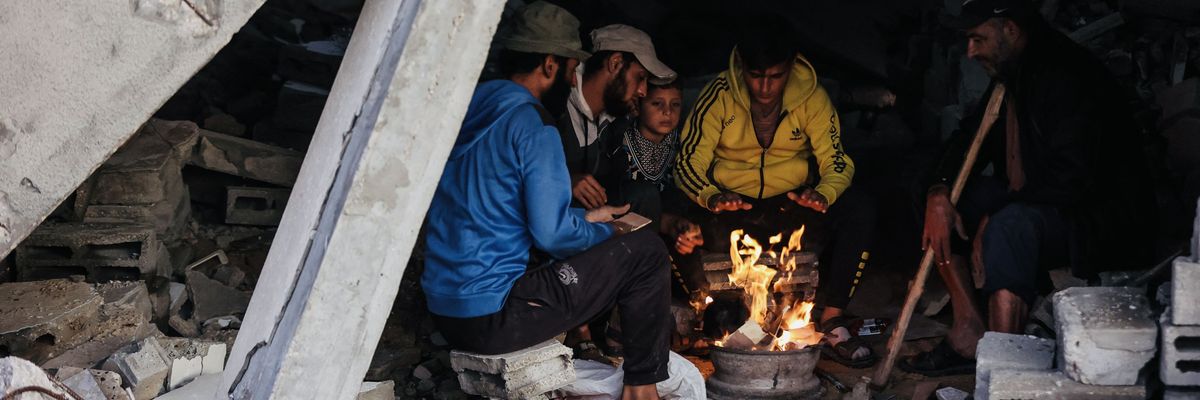
Displaced Palestinians warm up by the fire after their homes were destroyed following heavy rain in Gaza City, on November 25, 2025.

(Photo by Omar al-Qattaa/AFP via Getty Images)

Stephen Prager
Nov 26, 2025
COMMON DREAMS

A new Trump administration plan to put Palestinians living in the Israeli-occupied parts of Gaza into “residential compounds” is raising eyebrows among international observers, who fear it could more closely resemble a system of “concentration camps within a mass concentration camp.”

Under the current “ceasefire” agreement—which remains technically intact despite hundreds of alleged violations by Israel that have resulted in the deaths of over 300 Palestinians—Israel still occupies the eastern portion of Gaza, an area greater than 50% of the entire strip. The vast majority of the territory’s nearly 2 million inhabitants are crammed onto the other side of the yellow line into an area of roughly 60 square miles—around the size of St Louis, Missouri, or Akron, Ohio.

As Ramiz Alakbarov, the United Nations’ deputy special coordinator for the Middle East Peace Process, explained Monday at a briefing to the UN Security Council: “Two years of fighting has left almost 80% of Gaza’s 250,000 buildings damaged or destroyed. Over 1.7 million people remain displaced, many in overcrowded shelters without adequate access to water, food, or medical care.”

The New York Times reported Tuesday that the new US proposal would seek to resettle some of those Palestinians in what the Trump administration calls “Alternative Safe Communities,”on the Israeli-controlled side of the yellow line.

Based on information from US officials and European diplomats, the Times said these “model compounds” are envisioned as a housing option “more permanent than tent villages, but still made up of structures meant to be temporary. Each could provide housing for as many as 20,000 or 25,000 people alongside medical clinics and schools.”

The project is being led by Trump official Aryeh Lightstone, who previously served as an aide to Trump’s first envoy to Jerusalem. According to the Times: “His team includes an eclectic, fluctuating group of American diplomats, Israeli magnates and officials from the Department of Government Efficiency (DOGE)—the sweeping Washington cost-cutting effort overseen earlier this year by Elon Musk.”

The source of funding for the project remains unclear, though the cost of just one compound is estimated to run into the tens of millions. Meanwhile, the newspaper noted that even if ten of these compounds were constructed, it would be just a fraction of what is needed to provide safety and shelter to all of Gaza’s displaced people. It’s unlikely that the first structures would be complete for months.

While the Times said that “the plan could offer relief for thousands of Palestinians who have endured two years of war,” it also pointed to criticisms that it “could entrench a de facto partition of Gaza into Israeli- and Hamas-controlled zones.” Others raised concerns about whether the people of Gaza will even want to move from their homes after years or decades of resisting Israel’s occupation.


But digging deeper into the report, critics have noted troubling language. For one thing, Israeli officials have the final say over which Palestinians are allowed to enter the “compounds” and will heavily scrutinize the backgrounds of applicants, likely leading many to be blacklisted.

In one section, titled “Freedom of Movement,” the Times report noted that “some Israeli officials have argued that, for security reasons, Palestinians should only be able to move into the new compounds, not to leave them, according to officials.”

This language harkens back to a proposal earlier this year by Israeli Defense Minister Israel Katz, who called for the creation of a massive “humanitarian city” built on the ruins of Rafah that would be used as part of an “emigration plan” for hundreds of thousands of displaced Palestinians in Gaza.

Under that plan, Palestinians would have been given “security screenings” and once inside would not be allowed to leave. Humanitarian organizations, including those inside Israel, roundly condemned the plan as essentially a “concentration camp.”

Prior to that, Trump called for the people of Gaza—“all of them”—to be permanently expelled and for the US to “take over” the strip, demolish the remaining buildings, and construct what he described as the “Riviera of the Middle East.” That plan was widely described as one of ethnic cleansing.

The new plan to move Palestinians to “compounds” is raising similar concerns.

“What is it called when a military force concentrates an ethnic or religious group into compounds without the ability to leave?” asked Assal Rad, a PhD in Middle Eastern history and a fellow at the Arab Center in Washington, DC.

Sana Saeed, a senior producer for AJ+, put it more plainly: “concentration camps within a mass concentration camp.”

The Times added that “supporters insist that this would be a short-term arrangement until Hamas is disarmed and Gaza comes under one unified government.” Lightstone has said that reconstruction of the other parts of Gaza, where the vast majority of the population still lives, will not happen unless Hamas, the militant group that currently governs the strip, is removed from power.

But while Hamas has indicated a potential willingness to step down from ruling Gaza, it has rejected the proposal that it unilaterally disarm and make way for an “International Stabilization Force” to govern the strip, instead insisting that post-war governance should be left to Palestinians. That plan, however, was authorized last week by the UN Security Council.

In addition to raising concerns that “those moving in would never be allowed to leave,” the Beirut-based independent journalist Séamus Malekafzali pointed to other ideas Lightstone and his group want to implement. According to the Times, “It has kicked around ideas ranging from a new Gaza cryptocurrency to how to rebuild the territory in such a way that it has no traffic.”

Malekafzali said, “Former DOGE personnel are attempting to make Gaza into yet another dumb tech experiment.”

Like Katz’s plan months ago, the new Trump proposal calls for a large compound to be built in Rafah, which Egyptian officials warned, in comments to the Wall Street Journal, could be a prelude to a renewed effort to push Palestinians across the border into the Sinai Peninsula.

But even if not, Jonathan Whittall, the former head of the UN Office for the Coordination of Humanitarian Affairs in Palestine, said it hardly serves the humanitarian role the Trump administration and its Israeli co-administrators seek to portray.

“If plans for these ‘safe communities’ proceed, they would cement a deadly fragmentation of Gaza,” he wrote in Al Jazeera. “The purpose of creating these camps is not to provide humanitarian relief but to create zones of managed dispossession where Palestinians would be screened and vetted to enter in order to receive basic services, but would be explicitly barred from returning to the off-limits and blockaded ‘red zone.’”

He noted that there is a conspicuous lack of any clear plan for what happens to those Palestinians who continue to live outside the safe communities, warning that Israel’s security clearances could serve as a way of marking them as fair targets for even more escalated military attacks.

“Those who remain outside of the alternative communities, in the ‘red zone,’” he said, “risk being labelled ‘Hamas supporters’ and therefore ineligible for protection under Israel’s warped interpretation of international law and subject to ongoing military operations, as already seen in past days.”


Obstacles to Gaza plan

It would be a mistake for Pakistan to send troops for the stabilisation force in Gaza.


Published November 24, 2025
DAWN
The writer is a former ambassador to the US, UK and UN.

BY approving a US-sponsored resolution, the UN Security Council handed an international mandate to President Donald Trump’s 20-point ‘peace plan’ for Gaza. But it did this without any input from Palestinians. Hamas rejected the resolution saying it fails to meet Palestinian rights and demands and “imposes a mechanism to achieve the [Israeli] occupation’s objectives”.

The resolution can only be implemented if Hamas signs up to it. This means complex negotiations lie ahead if the plan is to progress beyond the present ceasefire, which is being violated daily by Israeli forces, who have also been crossing the ‘yellow line’. This has taken the Palestinian death toll to almost 70,000 in the two-year genocidal war imposed by Israel.

The UNSC resolution is short on specifics and ambiguous in key areas. It ignores all previous resolutions on Palestine. It authorises the creation of a vaguely defined transitional governance body, the Board of Peace, chaired by Trump and members decided by him, to oversee a Palestinian “technocratic” committee responsible for day-to-day running of Gaza. It also authorises the BoP to establish a temporary multinational international stabilisation force (ISF) “to deploy under unified command acceptable to the BoP”.

This will not be a UN peacekeeping mission nor be overseen by the UN. Its mandate is unclear and details are lacking on its scope and structure. It is however tasked to “demilitarise the Gaza Strip” and carry out “permanent decommissioning of weapons from non-state armed groups”, including Hamas.

The original US draft made no reference to Palestinian statehood. But at the insistence of Muslim countries, the final resolution mentions a “credible pathway to Palestinian self-determination and statehood”. But this is wrapped in so many conditions that it denudes it of real meaning. Weak Arab negotiators failed to get a firm commitment to a Palestinian state in the resolution. Meanwhile, Israeli Prime Minister Benjamin Netanyahu remains firmly opposed to any Palestinian state.

The UNSC resolution was welcomed across the world as a step towards peace despite concerns of many countries and Council members, including Pakistan, about its lack of clarity in core areas. China and Russia, who abstained on the vote, both voiced concern about the vague nature of key elements, lack of Palestinian participation and absence of commitment to a two-state solution.

China’s ambassador to the UN, Fu Cong, said the resolution “does not [reflect] the fundamental principle of Palestinians governing Palestine”. Russia’s UN envoy, Vassily Nebenzia, described the stabilisation force as “reminiscent of colonial practices”. In a scathing critique, the UN special Rapporteur for Palestine said, “Rather than charting a pathway towards ending the occupation and ensuring Palestinian protection, the resolution risks entrenching external control over Gaza’s governance, borders, security, and reconstruction. The resolution betrays the people it claims to protect.”

In Gaza itself, the UNSC resolution’s main provisions were viewed with great scepticism, according to Al Jazeera reporters on the ground. One resident told the news outlet “Our people … are able to rule ourselves. We don’t need forces from Arab or foreign countries to rule us”. The transitional governing arrangement is seen as outsiders deciding the fate of Palestinians. The international stabilisation force is viewed with deep suspicion — “not as a guarantee of protection but rather a foreign security arrangement imposed without their consent”.

Of course, it is the stance of Hamas and other Palestinian factions that is consequential for the resolution’s enforcement. Hamas still controls Gaza up to the ‘yellow line’ held by Israel. Its popularity has risen since the ceasefire, according to the latest poll by the West Bank-based Palestinian Centre for Policy and Survey Research. Hamas has rejected the UN resolution on a number of grounds. It said the resolution “imposes an international guardianship mechanism on the Gaza Strip”. Assigning the international force to disarm groups resisting the occupation “strips it of its neutrality, and turns it into a party to the conflict in favour of the occupation”.

Hamas has argued that any international force, if established, “must be deployed only at the borders to separate forces, monitor the ceasefire, and be fully under UN supervision”. “It must also operate exclusively in coordination with official Palestinian institutions.” “Resisting the occupation by all means is a legitimate right guaranteed by international laws and conventions.” Hamas also said disarmament is an “internal matter” linked to the end of occupation and creation of a Palestinian state.

It is possible Hamas may be prepared to disarm in exchange for total Israeli withdrawal from Gaza, which would end its occupation. But that can only be tested in serious negotiations that have to take place if the UN-endorsed Trump plan is not to collapse.

The expectation from the stabilisation force to demilitarise Gaza and disarm resistance groups is likely to deter several Muslim countries from joining it. Some of them are engaged in talks to contribute to the force. Israel has to approve countries that can be part of the force. So far it has rejected Turkiye’s participation. The international force will be answerable to the BoP and is intended to work with Egypt and Israel to demilitarise the Gaza Strip. That means it can get caught in a shooting war and act like an enforcement force rather than a peacekeeping one. Its task will also be to secure the borders and train the Palestinian police.

There are at least three reasons why Pakistan should not join ISF. One, it should not be part of a force whose key task is to police Hamas, not protect Palestinians. The implications for Pakistan, for example, of any clash between its troops and Palestinians would be serious. Two, deployment would involve close cooperation with Israel and arguably lure Pakistan into a trap to recognise Israel and join the Abraham Accords. Moreover, Israel’s continuing ceasefire violations and occupation of over half of Gaza pose major obstacles to Trump’s plan. In these circumstances, Hamas will not disarm. Walking into such a quagmire would therefore be a mistake for Pakistan.

The challenges facing implementation of the Gaza peace plan are formidable. At this inflection point for the plan, it is uncertain whether it will be able to deliver peace or meet the same fate as so many failed plans for Palestine have in the past.

The writer is a former ambassador to the US, UK and UN.

Published in Dawn, November 24th, 2025


NAKBA II

Israeli army launches new operation in West Bank

Tubas (Palestinian Territories) (AFP) – Israel's military on Wednesday launched a new operation against Palestinian armed groups in the occupied West Bank, where a local governor told AFP that Israeli forces had raided several towns.


Issued on: 26/11/2025 - FRANCE24

The Israeli army confirmed to AFP that it was a new operation, and not part of the one launched in January 2025 © Zain JAAFAR / AFP

The Israeli military, police and internal security service said in a joint statement that they had begun "a broad counter-terrorism operation" in the north of the Palestinian territory after they received intelligence about "attempts to establish terrorist strongholds".

The military said the operation began with air strikes to isolate the area, which were followed by "searches" on the ground, during which suspects were apprehended and funds were confiscated.

The Israeli army confirmed to AFP that it was a new operation, and not part of the one launched in January 2025, which primarily targeted Palestinian refugee camps in the northern West Bank.

Israel has occupied the West Bank since 1967.

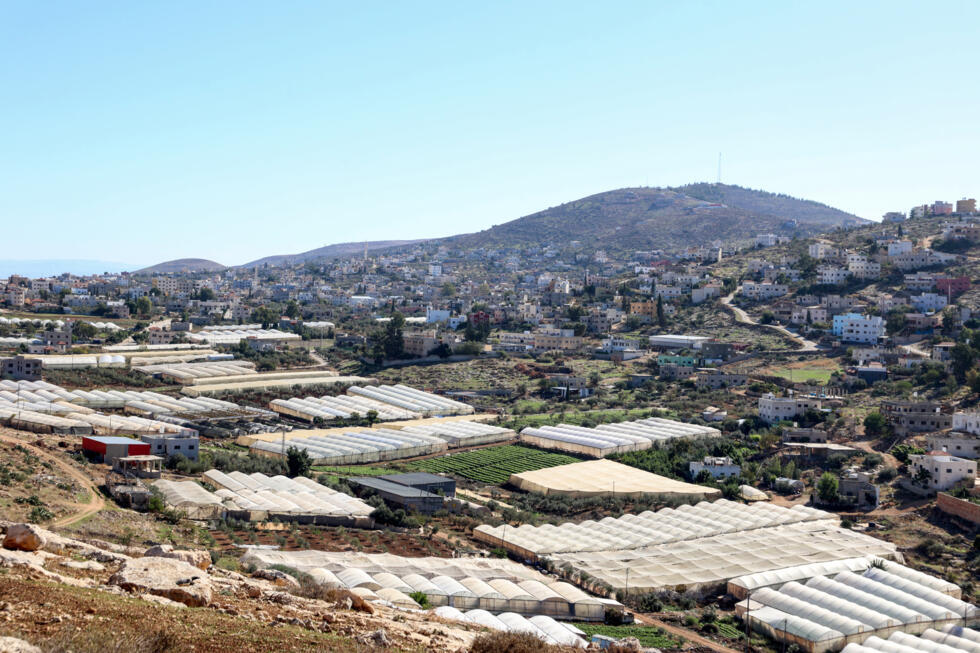
The operation, which began overnight, was taking place in predominantly agricultural Tubas, the northeasternmost of the 11 governorates in the West Bank.

Ahmed al-Asaad, governor of the Tubas region, told AFP: "This is the first time that the entire governorate is included -- the whole governorate is now under Israeli army operations."

Asaad said Israeli forces raided the towns of Tammun and Tayasir, and the Al-Faraa Palestinian refugee camp.

"The army has closed the city entrances with earth mounds, so there is no movement at all," he added.

He told AFP that "an Apache helicopter" was involved in the operation, and claimed it had fired in the direction of residential areas.

"This is a political operation, not a security one," he said.
Injuries reported

An AFP photographer saw some soldiers walking around inside Tubas city, with a few armoured cars driving through and a surveillance aerial vehicle buzzing overhead. Most shops were closed.

The road entrance to nearby Tammun had been closed off by a military vehicle.

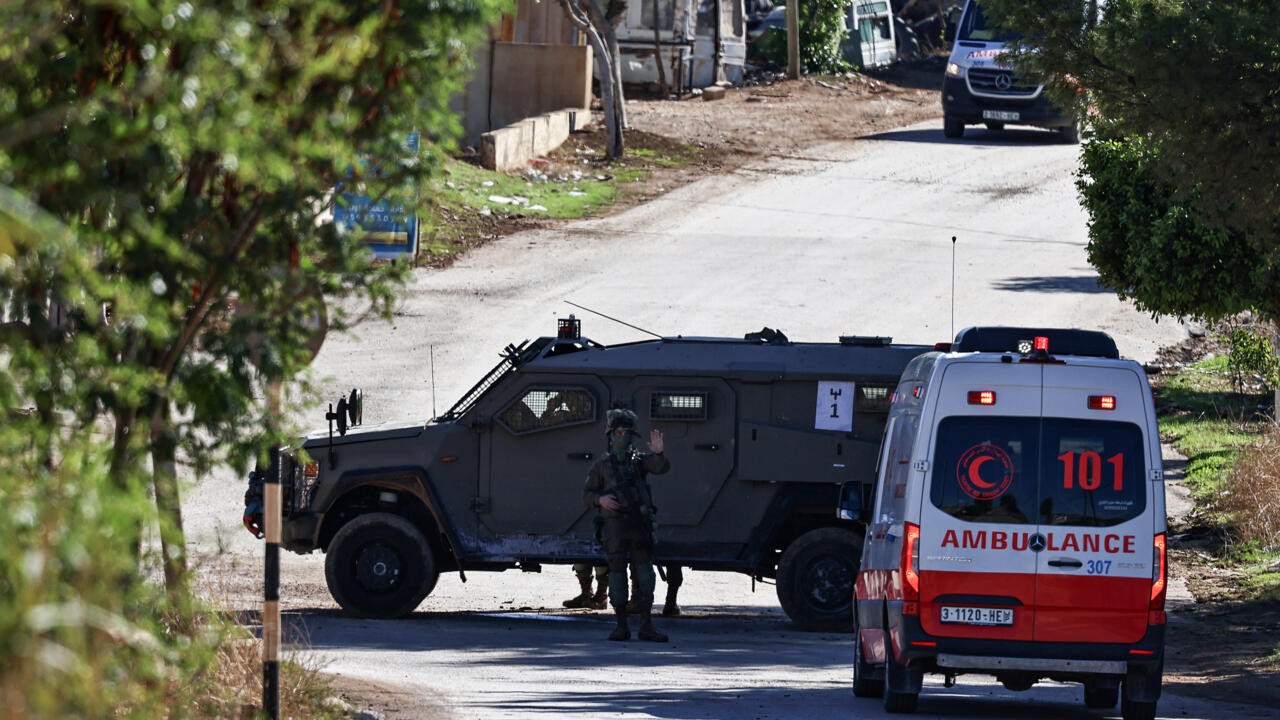
An ambulance was allowed to go through but citizens were not. Armoured cars were driving around at the scene.

The Palestinian Red Crescent Society said its teams in the governorate had treated 10 injured people, four of whom had to be transferred to hospital.

The operation, which began overnight, was taking place in predominantly agricultural Tubas © Zain JAAFAR / AFP


It added that some of its teams were "facing obstruction in transporting patients in the city of Tubas and the town of Tammun since dawn", and were still responding to calls for help following the raids.

Hamas and Islamic Jihad, two Palestinian militant groups proscribed as terror organisations by many countries, condemned the Israeli operation.

Hamas said in a statement that it was part of a policy "aimed at crushing any Palestinian presence in order to achieve complete control over the West Bank".

Violence in the West Bank has soared since Hamas's October 2023 attack on Israel triggered the Gaza war, and has not ceased despite the fragile truce between Israel and Hamas coming into effect last month.

Israeli troops or settlers have killed more than 1,000 Palestinians, many of them militants, but also scores of civilians, in the West Bank since the start of the Gaza war, according to an AFP tally based on Palestinian health ministry figures.

At least 44 Israelis, including both soldiers and civilians, have been killed in Palestinian attacks or Israeli military operations, according to official Israeli figures.

© 2025 AFP

Netanyahu accused of dodging blame as Israel confronts Oct 7 failures

Jerusalem (AFP) – Tension is escalating between Israel's political and military top brass over accountability for the failures behind the October 7, 2023 Hamas attack, with Prime Minister Benjamin Netanyahu accused of sidestepping blame.


Issued on: 26/11/2025 - FRANCE24

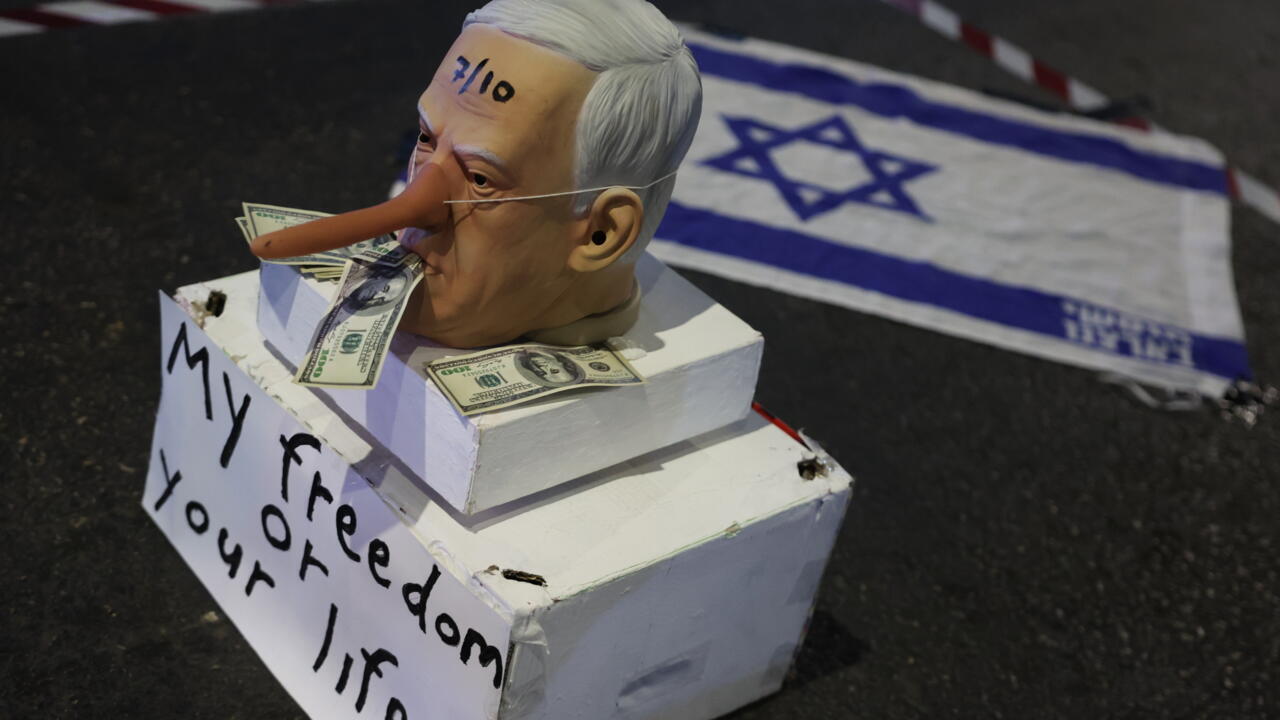
A mask of mocking Israeli Prime Minister Benjamin Netanyahu
 during a demonstration in Tel Aviv © Jack GUEZ / AFP

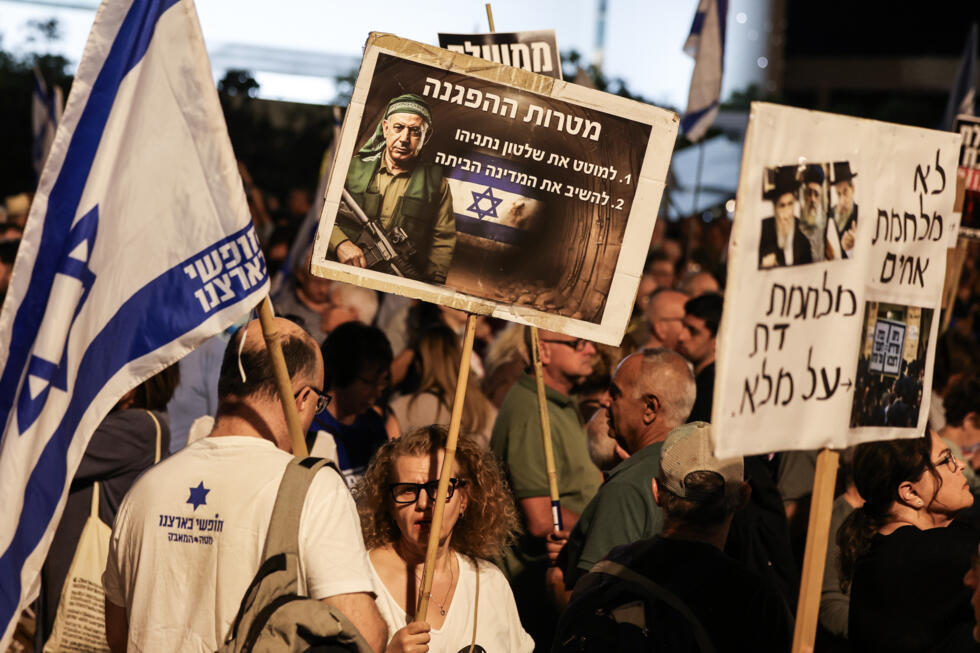
Weekly protests against Netanyahu's leadership of the subsequent two-year war in Gaza and demanding the return of hostages became emblematic of the anger boiling within parts of Israeli society over how the attack and its fallout have been handled.

Much of the Israeli public has been calling -- in vain -- for an independent inquiry into the events leading up to the 2023 Hamas attack, which resulted in the deaths of 1,221 people.

Polls show more than 70 percent of Israelis want a state commission of inquiry, which have been set up in the past to investigate major state-level failings.

The one established after the October 1973 Arab-Israeli war led to the resignation of prime minister Golda Meir in June 1974.

The decision to create a commission rests with the government, but its members must be appointed by the president of the supreme court.

Netanyahu's right-wing coalition government has accused the court of political bias.

A demonstrator holds a placard reading in Hebrew: 'Goals of the protest: To topple Netanyahu's rule and to return the country to the nation' © Jack GUEZ / AFP


More than two years on from the Hamas attack, no such inquiry has been established, and Netanyahu once again rejected the idea in parliament on November 10 -- accusing the opposition of seeking to turn it into a "political tool".

Netanyahu is no stranger to the art of political survival. The 76-year-old is Israel's longest-serving prime minister, having spent more than 18 years in the post across three spells since 1996.

"Netanyahu doesn't take responsibility for anything: it's always someone's fault," said Yossi Mekelberg, a Middle East expert at the London-based think-tank Chatham House.

"The idea that after these two years, there's no inquest, and he tried to escape it -- most Israelis won't accept it," he told AFP.
'Puzzling'

Israel's military announced on Sunday the dismissal of three generals and disciplinary action against several other senior officers over their failure to prevent the October 2023 attack.

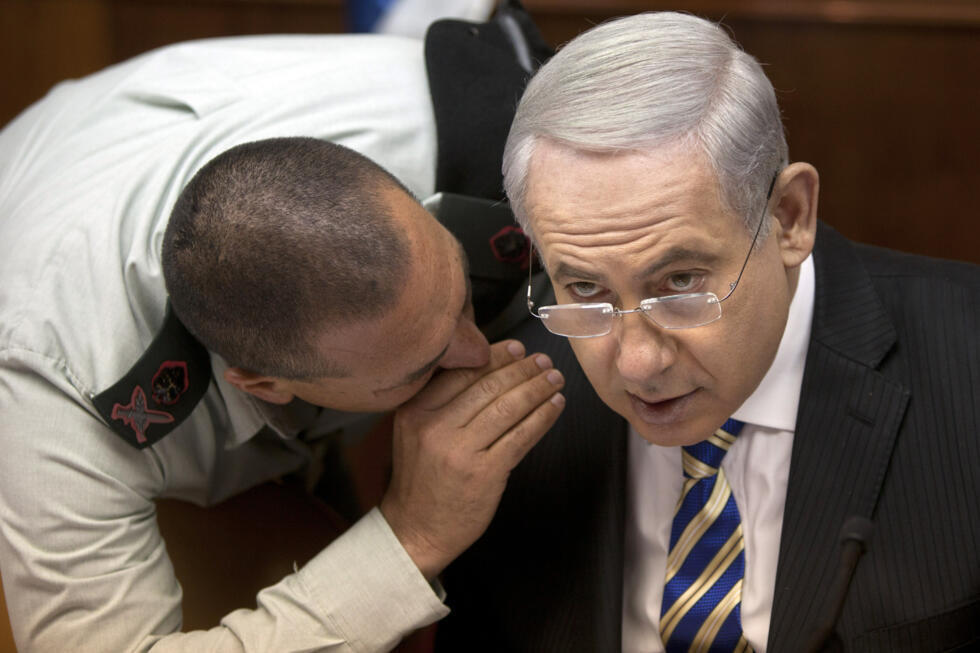
Eyal Zamir speaking with Benjamin Netanyahu during a cabinet meeting in 2013 © SEBASTIAN SCHEINER / AP/AFP


The move came two weeks after the publication of a report raking over the military's internal investigations into the October 7 attacks.

Lieutenant General Eyal Zamir, Israel's top military chief, appointed an independent committee of experts to undertake the review.

In presenting their findings on November 10, Zamir called for a wider "systemic investigation", to learn lessons from the October 7 onslaught.

According to Israeli media, the remarks were seen as a betrayal by Netanyahu, for whom Zamir had served as a military adviser.

On Monday, Defence Minister Israel Katz announced that he had commissioned a review of the committee's work.

The decision was swiftly labelled "puzzling" by Zamir.

The military "is the only body in the country that has thoroughly investigated its own failures and taken responsibility for them," said a military statement on Zamir's behalf.

"If any further examination is required to complete the picture, it must take the form of an external, objective and independent commission," it added.
'Yes man'

According to independent analyst Michael Horowitz, Katz is seen by the Israeli public as a "political loyalist, a 'yes man' who rarely diverges from Netanyahu".

Friction between the political and military elite is not a new phenomenon under Netanyahu, he told AFP, but the recent spat is unusually public.

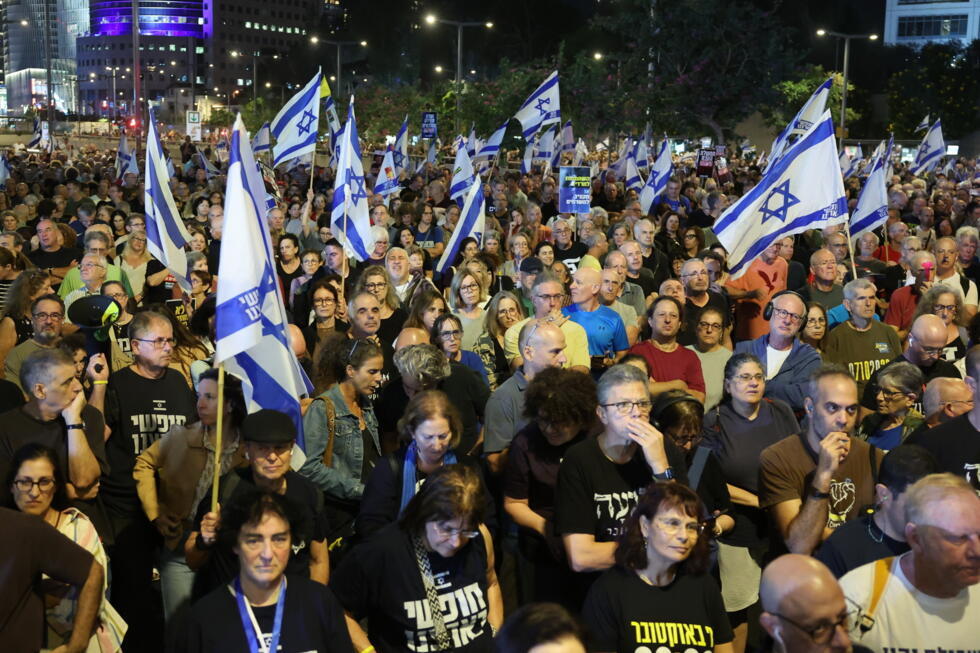
Tel Aviv has seen weekly anti-government protests, at which demonstrators have called for a state commission of inquiry into the events of October 7 © Jack GUEZ / AFP

"The main reason is that this isn't about personality so much as a divide as to who is to blame for October 7, and how this question should be settled," he said.

Netanyahu has said there will be no state commission of inquiry before the end of the war in Gaza.

Instead, in mid-November, the government announced it was setting up an "independent" probe into the October 7 failures -- but one whose composition would be chosen by a panel of cabinet ministers.

The move sparked anger in Israel, with thousands of protesters rallying in Tel Aviv on Saturday to demand a full state commission of inquiry.

"It should be an objective committee," Eliad Shraga, the chairman of the NGO Movement for Quality Government, told AFP at the protest.

"A committee who will really find out how come that we had such a failure, such a crisis."

Netanyahu has so far never acknowledged responsibility for the failures that led to October 7.

"He has one strong and straightforward incentive not to take responsibility," Horowitz told AFP.

"Accepting the blame means leaving office. After all, almost all of those who accepted part of the blame have left."

Netanyahu has said he will stand in the next elections, to be held before the end of 2026.

© 2025 AFP
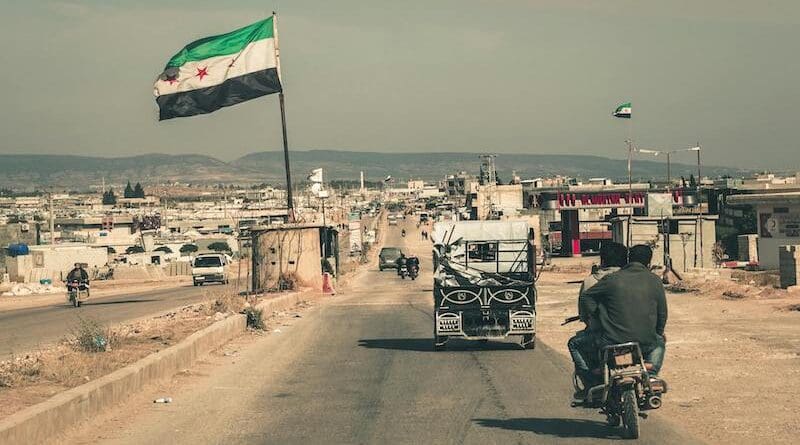
Why Syria’s Uncertain New Dawn Is Straining The Hopes Of Those Returning Home – Analysis


November 26, 2025 
Arab News
By Anan Tello

Maher thought he would never set foot in his Damascus neighborhood again after he fled 13 years ago. But when a rebel offensive toppled the Bashar Assad regime a year ago, he seized the opportunity to return to his home in the Yarmouk camp.

Four months ago, the Syrian-Palestinian father of two returned to the capital to see whether he could move his family back to their former home. However, hopes of rebuilding his past life there were quickly dashed when he saw the extent of the damage.

“The neighborhood is now in ruins, and our home is nothing but a pile of gray rubble,” Maher told Arab News. “It was painful, sad, hard to see.”

Thirteen years earlier, Maher — whose name has been changed to protect his identity — was forced to flee when regime forces besieged Yarmouk to root out rebel fighters it claimed were hiding in the Palestinian camp.

As the civil war engulfed the country, Maher decided to leave Syria altogether, joining the millions who paid smugglers to take them on the perilous sea crossing to Europe.

With Assad gone, Maher allowed himself to dream of returning to his city of birth. But that dream was soon deferred. “Is Syria stable? Not yet,” he said. “Is it safe? Too early to tell. Syria’s recovery will need a long, long time, it seems.”

On Dec. 8, 2024, Damascus awoke to news that many once thought impossible — the end of 54 years of Assad family rule. Within nine months, more than 1 million refugees and 1.8 million internally displaced people returned to their hometowns, according to UN figures.

However, a November survey by the International Rescue Committee in Jordan and Lebanon found that 46 percent of respondents cited safety concerns and limited access to services, housing and livelihoods as obstacles to their return.

The World Bank estimates that reconstruction will cost $216 billion, noting that the conflict destroyed nearly one-third of Syria’s prewar capital stock and caused $108 billion in direct physical damage.

Despite stabilization measures put in place by the interim authorities, led by President Ahmad Al-Sharaa, whose group Hayat Tahrir Al-Sham spearheaded the 2024 offensive, obstacles to safe and sustainable returns remain.

Security is foremost among them. Violence has flared in multiple regions in recent months, underscoring the fragility of the transition. Humanitarian groups also warn that damaged infrastructure and failing public services remain serious barriers.

“Although a quarter of refugees interviewed recently by the IRC in neighboring countries have expressed a desire to return, the reality on the ground remains deeply challenging,” Juan Gabriel Wells, IRC’s country director for Syria, said on Nov. 17.

“For too many … returning under current conditions is simply not the same as returning safely, with dignity, or with any guarantee of permanence.”

Pressure is rising in many host countries for Syrians to return home.

Harout Ekmanian, a New York-based attorney specializing in public international law at Foley Hoag LLP, told Arab News that a voluntary, safe, dignified and sustainable return must be “free, informed, and uncoerced,” based on “accurate, up to date information on conditions, viable alternatives to return, and no direct or indirect pressure.”

This, he said, is rooted in the non-refoulement obligation of the 1951 Refugee Convention and UNHCR guidelines.

Ekmanian said returns must also be physically, legally and materially safe, with “an effective end to persecution or generalized violence and credible guarantees of non-discrimination, liberty and security of person, and freedom of movement, supported by functioning rule of law institutions, removal of arbitrary detention risks, clearance of mines and unexploded ordnance, and access to civil documentation.”

Sustainability demands long-term access to housing, livelihoods, services, remedies for past violations and safeguards against renewed displacement, he added.

Even with the easing of Western sanctions on Syria, the country’s road to recovery will be long.

Social and economic indicators paint a difficult picture, with 66 percent of the population living in extreme poverty, 89 percent facing food insecurity, youth unemployment standing at 60 percent, and 3.5 million children out of school, according to UN agencies.

These metrics may soon improve, however. The US has significantly shifted its approach to Syria following a historic meeting between Al-Sharaa and President Donald Trump at the White House in early November, opening up new avenues for recovery.

The US Treasury issued a general license to permit previously prohibited transactions with the new Syrian government and its central bank, stepping back from the rigid regime maintained under the Assad era.

This move is intended to encourage reconstruction, attract foreign investment, and facilitate Syria’s reintegration into the international economy.

It marks the most sweeping US sanctions relief for Syria in decades, promising economic revitalization if reforms and cooperation continue. The benefits, however, may not be felt immediately.

“Economically, the country is in a bad condition, and that’s nothing to do with the government — they inherited a bad system,” Fadi Al-Dairi, co-founder and regional director of the Syrian-British charity Hand in Hand for Aid and Development, told Arab News.

“Everyone who speaks to me and to my other colleagues just needs a job to earn a living. However, with the high cost of living in Syria, it just makes it not worth it to work these days.

“For example, if they come to work and earn $200, they would be spending about $100 on transportation if they live in Damascus. That would leave them with just $100 to live on. That’s not enough.

“The cost of living varies from one city to another, and even within the same governorate. For example, the cost of living inside Damascus is different from the suburbs.”

The World Food Programme says food insecurity has deepened since Assad’s fall, with nearly 3 million people projected to face severe hunger.

The UN Development Programme warns that recovery must move beyond rebuilding infrastructure to restoring governance, reconciliation and social cohesion.

“As humanitarians, we’ve tried our best,” Al-Dairi said. “We’ve been providing a life-saving response, and at the same time, we keep demanding from donors and partners that the response becomes more sustainable.”

Meanwhile, the interim government has tried to attract foreign investment. But the impact on daily life has so far been minimal.

“We’re seeing so many businesspeople and companies rushing in, thinking Syria is simply the next place to invest,” Al-Dairi said, warning that the rapid influx is only contributing to the soaring cost of living.

“As an investor myself, of course I want to earn a good living, but things need to happen step by step,” he said.

“Take the electricity issue. They’re rehabilitating the infrastructure and the network, but this has come at a cost — a 900 percent increase in electricity prices — because investors want to get their money back almost immediately.”

Indeed, a projected spike in electricity bills has angered many residents. A recent investigation by the Syrian news website Enab Baladi found that 83 percent of Syrians cannot afford the new bills.

“We don’t want to repeat these problems,” said Al-Dairi.

For example, “if our road networks are in poor condition, we need to fix them responsibly. We shouldn’t immediately privatize the roads and force people to either use expensive motorways or go through B-roads via the countryside.”

Still, some see opportunity in Syria’s vast diaspora. The World Bank says returning refugees could help drive a medium-term economic revival if trade and investment resume.

Of the 7 million Syrians living abroad, Al-Dairi estimates roughly half have the financial capacity to invest. “If Syrians themselves are investing, then others might invest too,” he said. “One of my recommendations to the Syrian government is to look seriously at the diaspora.”

Mohamed Ghazal, managing director of Startup Syria, a community-led initiative supporting Syrian entrepreneurs, says small-scale investments are already emerging from Syrians abroad who understand local risks and conditions.

“These investors possess deep familiarity with the local market, culture, and operational environment, allowing them to accurately assess risks and opportunities,” he told Arab News, adding that “the capital brought in tends to be modest, reflecting the high-risk environment.”

In contrast, medium and large investments “remain largely on hold” until sanctions are fully lifted and regulations stabilize, Ghazal added.

“Major investors are concerned about the current economic and regulatory uncertainty, which is not conducive to establishing sustainable, long-term cash flow,” he said.

“These entities are largely waiting for the full lifting of sanctions to gain a clearer picture of the regulatory landscape and mitigate geopolitical risk before committing large funds.”

Ghazal said the interim government must create incentives that ensure physical and economic security for Syrian investors and provide clear, reliable legal frameworks.

Al-Dairi suggested that Syrians could also support one another through Islamic-inspired “qard hassan,” or benevolent loans, offering culturally acceptable financing for rebuilding without burdening borrowers with high interest.

But despite the many challenges, he remains convinced that Syrians themselves will play a central role in reconstruction.

“I’ll put this diplomatically,” he said. “We’ve seen many warlords and many who benefited from the conflict. But overall, Syrians will have an important part to play.”


Arab News

Arab News is Saudi Arabia's first English-language newspaper. It was founded in 1975 by Hisham and Mohammed Ali Hafiz. Today, it is one of 29 publications produced by Saudi Research & Publishing Company (SRPC), a subsidiary of Saudi Research & Marketing Group (SRMG).