Friday, November 28, 2025

LI

Cutting-Edge Space Tech Uncovers Major Lithium Target in Quebec

  • Australian firm Fleet Space has identified a vast lithium deposit in Quebec using its satellite-enabled exploration system.

  • The deposit is estimated to hold 329 million metric tonnes of lithium oxide.

  • The company combines AI, machine learning, and hyperspectral imaging from satellites to map mineral signatures, dramatically reducing the time, cost, and uncertainty of traditional mineral exploration.


Australian space company Fleet Space has used a satellite-enabled exploration platform to uncover a large lithium deposit in Quebec, demonstrating how these space vehicles can be used to expedite and streamline the mineral exploration process. According to Fleet Space, its latest findings indicate that the lithium deposit could be much larger than earlier thought, with the company estimating the prospective resource at 329 million metric tonnes of lithium oxide.

Discovering mineral resources has traditionally been a slow, uncertain, and expensive endeavor that normally takes years or decades before proper commercialization is achieved. Indeed, mineral discovery is largely a hit and miss affair, with only 0.3% of potential deposits becoming commercially viable. Fleet Space is trying to break through this bottleneck by deploying a combination of satellites and AI-powered analysis.

Satellite-powered mineral exploration employs remote sensing technologies like hyperspectral and multispectral imaging to analyze vast areas from space, identifying geological features and mineral signatures that suggest potential deposits. This accelerates early-stage exploration and reduces costs by narrowing down areas for ground-based surveys and allowing for monitoring of infrastructure and environmental conditions throughout a mine's lifecycle. Satellites equipped with multispectral and hyperspectral sensors capture light across various wavelengths.

Related: India’s Nayara Energy Defies Sanctions With Record Russian Intake

Analyzing these spectral signatures helps identify different rock types and alteration minerals associated with mineral deposits. Hyperspectral imaging, in particular, can detect hundreds of narrow spectral bands, creating detailed maps that can pinpoint specific mineral species, a significant advancement over earlier multispectral sensors. Meanwhile, laser pulses from satellites create precise topographical maps, revealing geological structures that may be hidden beneath vegetation or in other areas difficult to see with traditional photography. Modern analysis integrates satellite data with artificial intelligence (AI) and machine learning (ML) to process large datasets and identify subtle geological patterns that indicate the presence of resources.

Satellites are used in the energy sector for planning, monitoring, and maintaining energy infrastructure through data collection and communication. They enable the assessment of renewable energy potential, such as solar and wind resources, and help monitor the structural integrity and safety of assets like pipelines and power plants. Satellites also provide crucial communication links to remote energy sites and help manage remote operations with real-time data. Oil majors such as Exxon Mobil (NYSE:XOM), Chevron (NYSE:CVX), Shell (NYSE:SHEL) and BP Plc (NYSE:BP), in collaboration with Oil and Gas Climate Initiative (OGCI), utilize satellite technology for various applications, such as monitoring pipeline integrity, detecting methane leaks, and providing reliable communication for remote operations while oilfield service companies like Baker Hughes (NYSE:BKR), SLB (NYSE:SLB) and Halliburton (NYSE:HAL) integrate satellite data into their platforms.


Last year, scientists unveiled a method to more accurately estimate methane emissions using stationary weather satellites orbiting far above the planet’s surface. Researchers at Harvard University discovered that the National Oceanic and Atmospheric Administration's Geostationary Operational Environmental Satellites (GOES) used for weather forecasts can be used to detect large methane emissions of around tens of metric tons an hour or larger. Methane is considered one of the most potent greenhouse gases.

Unlike their faster Low Earth Orbit (LEO) brethren, Geostationary or Geosynchronous Orbit (GEO/GSO) satellites orbit 22,200 miles above the surface of the Earth and maintain a fixed position relative to specific locations on the Earth's surface. Although the GOES system wasn't built to detect methane, its short-wave infrared sensors designed to observe things like snow cover and fire hot spots can also be used to detect methane leaks. 

The GOES system has already been tested in a real-life situation: Last year, environmental intelligence firm Kayrros SAS used GOES to quantify that a gas pipeline by the Williams Companies Inc. (NYSE:WMB) spewed about 840 metric tons of methane into the atmosphere after a farmer in Idaho accidentally ruptured it while using an excavator. That’s close to the 50.9 million cubic feet, or 900 metric tons of methane, that the gas operator released as the official figure. Although the leak lasted for little more than an hour, the short-term climate impact of the event is roughly equal to the annual emissions from 17,000 U.S. cars.

Methane typically lasts only about a decade before it’s cycled out--a blip compared to the centuries that a CO2 molecule can last. However, methane is constantly regenerated through multiple sources.  Methane is a far more potent greenhouse gas, more than 80x more powerful at warming the earth than CO2 over 20 years and 28x more powerful on a 100-year timescale. Indeed, methane levels have increased sharply over the past four decades, and the gas is now responsible for about one-sixth of the energy imbalance that is causing global warming.

By Alex Kimani for Oilprice.com

OUCH

Canada As A Critical Minerals Refiner Is Globally Irrelevant

  • UAE commits $70 billion to Canada in a landmark deal spanning energy, AI, logistics, mining, and other strategic sectors.

  • Canada eyes critical minerals independence, announcing a $1 billion project to expand domestic refining capacity.

  • Ottawa ramps up critical mineral projects through G7 partnerships and domestic incentives, but with only one rare earths mine and limited processing infrastructure, Canada remains far behind China.

Canadian Prime Minister Mark Carney has just returned from a trip to the United Arab Emirates (UAE), where he extracted a $70 billion investment pledge from the Gulf state.

The funding is expected to include energy, AI logistics, mining and other strategic industries.

Fed up with Donald Trump’s tariffs, Canada’s new government is on a mission to double non-US exports over the next decade and unleash $1 trillion in new investment in Canada over five years, according to a Nov. 21 press release.

In conjunction with the UAE announcement, Carney said Ottawa is working on a $1-billion project aimed at expanding critical minerals processing capacity in Canada.

“I'm pleased that an agreement valued over $1 billion is in the process of being finalized,” Carney said in a speech to the Canada-U.A.E. Business Council covered by CBC News.

“[It] will expand critical minerals processing capacity in Canada, creating jobs, boosting [the] long-term supply of minerals essential to energy technologies and advanced manufacturing. More on that soon," he said.

Rhetoric aside, where does Canada, a relatively small country in terms of mineral refining capacity, stand in terms of developing enough capacity to become independent of China, the leading refiner of critical minerals? Is Canada even globally relevant?

According to the International Energy Agency, China has an average market share of 70% for 19 out of 20 key minerals. For rare earth elements, it accounts for 91% of global refining production.

In 2024, China held a 96% share of global refined graphite, 78% of the world’s refined cobalt, 70% of its lithium, and 44% of its copper.

Despite a long mining history, Canada is really only a major miner of two commodities. It is the world’s largest producer and exporter of potash and the second-largest producer and exporter of uranium. While Canada is among the top 10 producers of cobalt, graphite, lithium and nickel — all now considered critical minerals — it accounts for only 5% of the global mine production of each of these minerals.

Related: Rocket Attack Forces Shutdown of Gas Field in Kurdistan

Staying with mine production for the minute, Australia accounts for 37% of total world lithium production. Indonesia is the top nickel miner at 59% of the world total, China mines 69% of the world’s rare earth elements and 79% of its graphite, and the DRC accounts for about three-quarters of world cobalt mine production. (Mineral Commodities Summary 2025, by the US Geological Survey)

China’s near-monopoly on critical minerals processing gives it serious heft in trade relations. In recent months, Beijing has leveraged its position to tighten export restrictions on minerals, including rare earths, graphite, antimony, gallium and germanium.

Canada has established domestic infrastructure for processing minerals such as aluminum and uranium, and has a few smelters and refineries for copper, nickel and zinc. But for the key energy-transition metals like lithium and rare earth elements, refining capacity is currently minimal or non-existent.

Canada’s first rare earths refinery was opened in 2024 in Saskatchewan. At full operation, the CAD$74 million facility is expected to produce 400 tonnes of NdPr metals per year, used to make permanent magnets.

By comparison, China in 2024 produced 83,697 tonnes of NdPr metal.

The United States is the primary export destination for 52% of all Canadian mineral exports and 63% of critical minerals. The latter are concentrated in the upstream stages of the value chain, meaning that further processing often occurs after export.

Canada certainly has ambitions to grow its critical minerals supply chain, from mining to refining to the manufacture of end products. The Canadian Mineral Minerals Strategy was published by the Canadian government in 2022, underscoring the need to secure and diversify supply chains.

Canada's critical minerals list contains 34 minerals deemed essential for economic or national security.

According to a recent piece by HillNotesSecuring critical minerals supply chains entails, among other measures, identifying the parties involved in extracting and processing critical minerals in this country… While foreign direct investment plays a crucial role in supporting this sector, concerns have been raised about foreign ownership of these resources.

Maps embedded into the article show that 30 of Canada’s 55 critical mineral mines are owned by companies whose parent company is based in Canada. For the other 25 mines, their parent companies are based in Brazil, the United States and Switzerland. The Tanco mine in Manitoba, which produces cesium, tantalum and lithium, is 100% owned by a Chinese company.

Canada is home to 45 advanced graphite, lithium and REE projects. Thirty-one are owned by a Canadian-domiciled company.

Only eight of the 32 critical mineral processing centers are owned by Canadian companies. The other 24 are owned by parent companies that reside in the United Kingdom, the United States, Switzerland, Brazil, France, Germany and Luxembourg.

At the end of October the Canadian government announced the first round of projects under a G7 critical minerals production alliance envisioned as a counterweight to China’s dominance in the sector.

According to Global News, the 25 initiatives include offtake agreements for a Quebec graphite mine and investments to scale up a rare earth elements refinery in Ontario.

Nouveau Monde Graphite’s Matawinie mine near Montreal secured agreement to buy part of the mine’s future production from the federal government, Panasonic and Traxys, a Luxembourg mining company.

Canada is also backing a Norwegian company’s plan to build a synthetic graphite plant in St. Thomas, Ontario, with up to $500 million in potential financing from Export Development Canada.

Graphite is used in the anodes of electric vehicle batteries. Vianode from Norway said in January it has signed a multi-billion-dollar supply deal with GM for its electric vehicles.

Global News said A Ucore Rare Metals facility in Kingston, Ont., was also conditionally approved for up to $36 million in federal money to help scale up its processing of two rare earth elements — samarium, used to make heat-resistant magnets in nuclear reactors, and gadolinium, a component of nuclear reactors and MRIs.

The refinery is expected to begin production in 2026.

Global demand for critical minerals is expected to increase significantly, with some estimates suggesting the energy sector's needs could grow sixfold by 2040. Will Canada be ready to meet the challenge by growing its domestic mining and refining capacity?

The numbers are daunting. Global News cites a report the Canadian Climate Institute that estimated Canada would need capital investments in the range of $30 billion by 2040 to meet domestic demand alone.

One area of potential growth is rare earth elements.

“Canada has some of the largest known reserves and resources of rare earths in the world,” the manager of government relations at the Saskatchewan Research Council said in 2022.

The USGS quantifies that with an estimated 830,000 tonnes of rare-earth oxide equivalent reserves in 2024. Compare this to China’s 44 million tonnes and Brazil’s 21 million tonnes.

Another CBC News article says it’s estimated that Canada has more than 14 million tonnes of rare earth oxides, with 21 mining projects in various stages of development, from exploration to resource estimation. The projects are in the Northwest Territories, Quebec, Ontario, Newfoundland and Labrador, Alberta and in Saskatchewan, according to Natural Resources Canada.

But Canada only has one producing rare earths mine, Nechalacho in the Northwest Territories. The country’s first REE mine is owned by Cheetah Resources, a subsidiary of Vital Metals, which processes the ore in Saskatchewan before being sent to Norway for separation.

China has thousands of mines, and while the number of rare earth mines is not publicly available, it hosts the largest REE mine in the world, the Bayan Obo mine in Inner Mongolia.

In 2024 China’s rare earths production reached 270,000 tonnes, which was more than two-thirds of the world's total, reports Investing News Network and Statista.

Canada’s REE production does not even register on the USGS’s 2024 mine production table.

Despite the government’s best intentions, Canada has a long way to go in both the mining and refining of critical minerals if it ever wants to become relevant — let alone break free of dependence on China.

By Andrew Topf for Oilprice.com 

CRIMINAL CAPITALI$M

Ni

Trader accused by Trafigura says there was ‘no deception’

Trafigura’s office in Mumbai. Credit: Trafigura Images | Flickr, under Creative Commons licence CC BY-ND 2.0.

Prateek Gupta, the man who Trafigura Group says defrauded it of almost $600 million in an enormous nickel scam, said that executives at the trading house were aware many of the cargoes shipped to it did not contain the goods they were supposed to.

“There has been no deception of Trafigura by me,” Gupta said in documents filed for trial at a London court, where he is testifying publicly for the first time by video link from Dubai.

Trafigura sued Gupta in London as it looks to recoup some of the losses it incurred. The trading house says it discovered the fraud in 2022, after opening cargoes it bought from Gupta’s firms that were supposed to contain London Metal Exchange brand nickel cathodes. Instead, it found much less valuable materials.

Gupta continues to allege that Harshdeep Bhatia and Socrates Economou — who were at the time Trafigura’s senior metals trader in India and the head of its nickel trading book, respectively — knew that what they were buying was not LME brand nickel. That’s something Economou has repeatedly denied in court this week.

Gupta said Bhatia and Economou had instructed his firms to “keep the arrangement quiet.”

“We were all careful not to record details of the arrangements in written communications,” Gupta said. “They did not want it to be exposed, and we went along with that at their request.”

Trafigura’s lawyer Nathan Pillow rejected the suggestion. During questioning he told Gupta, “you knew you were keeping a secret from Trafigura and it was dishonest.”

When asked why it was important to keep the alleged arrangement secret, Gupta replied that he was just following instructions.

Trafigura has said it doesn’t believe that any of its employees were complicit in the alleged nickel fraud, though the company has acknowledged shortcomings in its processes and has pledged to learn from the experience.

Bhatia isn’t testifying in the trial, but Economou has always denied he was party to an “arrangement” and continued to do so while testifying in a London court this week.

“I am insulted by the suggestion that I would sacrifice my integrity and jeopardize my career to devise and propose such a plan,” Economou said in a court filing.

Although Trafigura had traded with Gupta for years, their relationship expanded dramatically starting in around 2019. Under an arrangement that Trafigura describes as “transit financing,” the trading house would buy cargoes of nickel from companies connected to Gupta as they were loaded on to a vessel, with the understanding that once they reached their destination 90-180 days later, another Gupta-linked company would buy the cargo back for the same price.

Trafigura would pocket a fee equivalent to an interest rate of about 4% to 6%.

Pillow, Trafigura’s lawyer, brought up instances of other firms, including broker Sucden Financial and trader Kataman Metals LLC, claiming to also have been duped after buying or being pledged nickel cargoes — that turned out not to contain the metal — from companies linked to Gupta.

“It’s the same thing you did to Trafigura,” Pillow said.

(By Archie Hunter, Jonathan Browning and Jack Farchy)

AU

Zimbabwe to hike royalties on gold producers to cash in on record prices

Stock image.

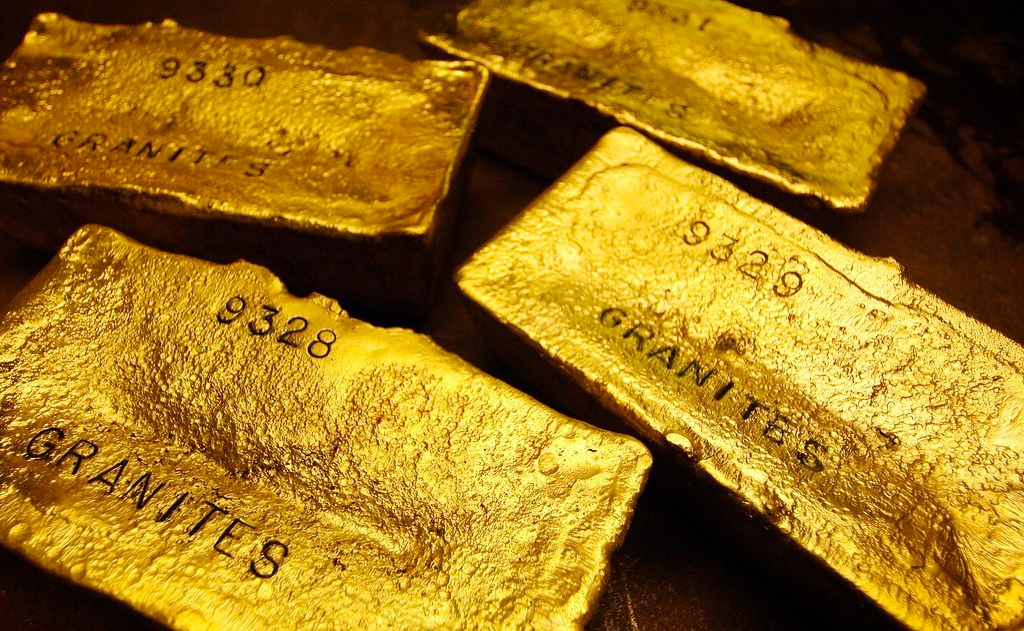
Zimbabwe will hike royalties on gold producers as it moves to take advantage of recent record high bullion prices, a 2026 national budget speech showed on Thursday.

As part of a raft of revenue measures aimed at boosting state income and supporting local industry, gold miners will pay a 10% royalty if prices exceed $2,501 per ounce, according to the document.

Bullion has fallen 5% since hitting a record high of $4,381.21 on October 20, but has broadly traded above $4,000 an ounce.

“In order to ensure the mining sector contributes a fair share of revenue to the Fiscus during periods of commodity price boom, as well as eliminate arbitrage between categories of miners, I propose to harmonize and review the royalty structure for all gold producers,” Finance Minister Mthuli Ncube was quoted as saying in the speech.

Zimbabwe largely relies on gold and tobacco exports for foreign exchange.

Its biggest gold producers include Kuvimba Mining House, Padenga, Caledonia Mining Corporation and Rio Zim.


(By Chris Takudzwa Muronzi; Editing by Sfundo Parakozov)

FE

Fortescue ends bitter green iron battle with Element Zero

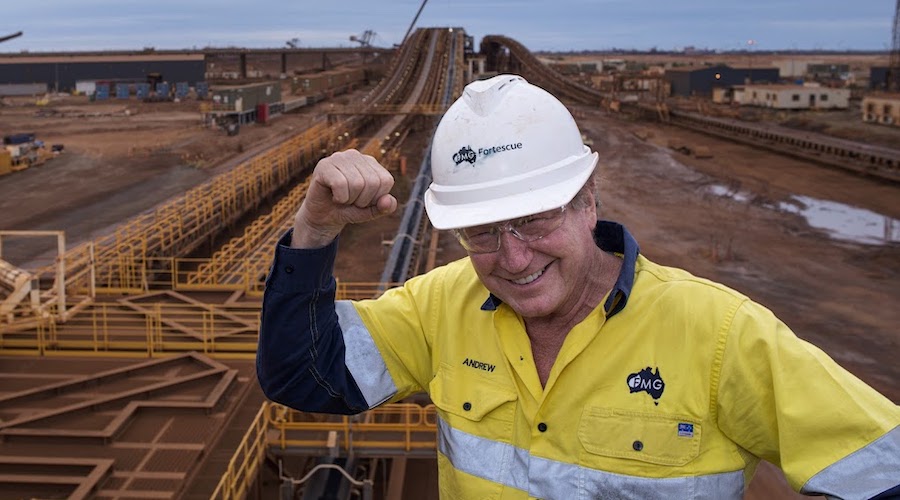
Fortescue’s founder and largest shareholder, Andrew Forrest. (Image: Fortescue Metals Group.)

Australia’s Fortescue (ASX: FMG) has agreed to settle its high-stakes lawsuit accusing former executives of stealing company data to build their green iron start-up Element Zero.

The iron ore miner had claimed that former chief scientist Bart Kolodziejczyk and former technology development lead Bjorn Winther-Jensen used green iron technology they helped develop while at Fortescue to form Element Zero.

Company lawyers argued the work was tied to Fortescue’s broader push for hydrogen-based solutions in its pursuit of what it called the green ore holy grail. Element Zero chief executive Michael Masterman, also a former Fortescue employee, was named in the case.

The spat intensified as Fortescue used private investigators who produced surveillance reports that included photographs of children and private homes, details taken from rifled mail and tracking of family members. The company also won court approval for raids on the homes and offices of Element Zero principals, leading to the seizure of about 9 million documents.

Hole in the pocket

Fortescue hit a major setback last month when Federal Court Justice Brigitte Markovic rejected its push to access all of Element Zero’s work, something the miner’s own counsel had argued in September was needed to run the case.

“We are delighted to put this episode behind us,” Masterman said in a statement. “We can now focus all of our deep and capable technical resources on rapidly advancing our iron-ore-to-iron technology and developing our manufacturing sites in the Pilbara heartland of Port Hedland and in the US.”

Element Zero said each side would cover its own expenses.

The start-up’s $10 million in funding has been heavily depleted by its legal defence, leaving it in need of far more capital to prove commercial viability and build its planned manufacturing sites. The outcome raises the question of whether Fortescue would have been better off taking a stake in the venture instead of dragging its former executives through court.

K

Karnalyte touts 70-year potash mine in Canada

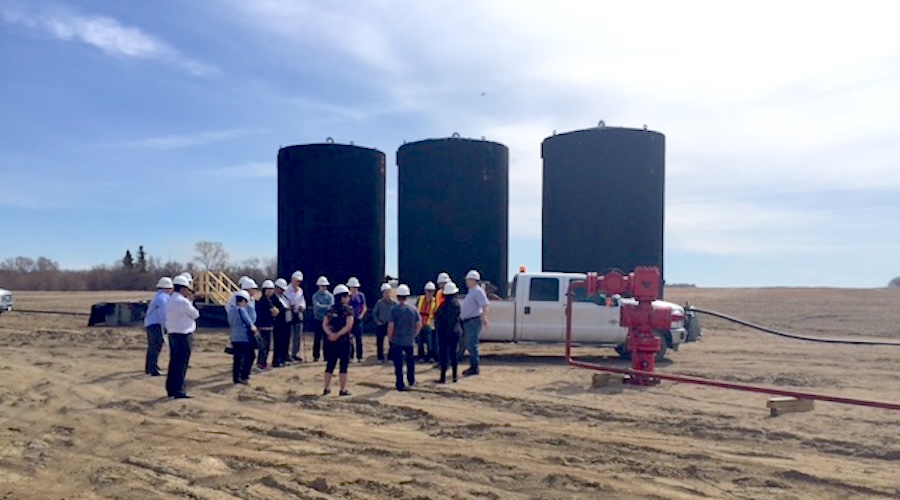
Karnalyte Resources’ potash project near Wynyard, Saskatchewan. (Image courtesy of Karnalyte Resources.)

Karnalyte Resources (TSX: KRN) has released an updated feasibility study for its Wynyard potash project in Saskatchewan, Canada, that outlines a 70-year mine life and stronger economics as the company aims to advance development in step with rising demand in North America and India.

The study estimates an after-tax net present value of about C$2 billion ($1.4 billion) using an 8% discount rate, a 12.5% internal rate of return and an 8.8-year payback period. Karnalyte says it will file the technical report within 45 days.

The project sits 175 km east of Saskatoon and is designed to produce 2.2 million tonnes of potash a year at full buildout, along with 104,000 tonnes of hydromagnesite, an industrial fire-retardant material. Total output over the mine life is projected at 142.2 million tonnes of potash and 7 million tonnes of hydromagnesite.

Chief executive Danielle Favreau said the results confirm the deposit’s longevity and the company’s ability to push the project forward. She noted potash’s role in food security and said favourable market conditions support long-term value creation. Favreau also pointed to strong demand for high-purity hydromagnesite in North America and abroad as global supply remains tight.

Initial capital costs total C$4.2 billion, including C$4 billion for the three-phase potash processing facilities and C$231 million for the hydromagnesite plant. Sustaining capital over the mine life is forecast at C$7.62 billion. Operating costs are estimated at C$134.01 per tonne of potash and C$318.04 per tonne of hydromagnesite. 

Measured and indicated resources total about 2.95 billion tonnes across the Patience Lake, Belle Plaine and Esterhazy members. The carnallite-rich deposit allows production of both potash and magnesium products, giving Karnalyte room to pursue additional magnesium commodities such as magnesium chloride brine, magnesium hydroxide and magnesium oxide.

Phased-development

An offtake agreement with major shareholder Gujarat State Fertilizers and Chemicals covers 350,000 tonnes a year from Phase 1 and 250,000 tonnes a year from Phase 2, with an option for up to 400,000 tonnes a year from Phase 3. The deal could secure as much as 1 million tonnes a year once all phases are running.

The company expects the project to generate 244 permanent jobs and about 1,100 construction jobs. Phase 1 has had environmental approval since 2013, and the company plans to file amendments to include Phases 2 and 3.

The feasibility study highlights opportunities in magnesium chloride brine sales for dust control and de-icing, greater access to the US Corn Belt market and a chance to supply the constrained synthetic hydromagnesite sector. Key risks include hydromagnesite plant performance, competition in the potash market and potential changes to magnesium royalties.

Port controversy

The project update comes amid increasing tension in Canada’s potash landscape. Nutrien (TSX, NYSE: NTR,) the country’s largest potash and fertilizer producer, has decided to bypass the Port of Vancouver in British Columbia in favour of a port near Vancouver, Washington.

BC Premier David Eby said the move does not make sense for a Canadian resource industry and warned that exporting through a US port leaves a Canadian product at the mercy of the US administration.

“Puts Saskatchewan’s resources in a precarious place, and denies BC a port expansion,” Eby told Global News. Nutrien said it evaluated about 30 criteria for its expansion plans and concluded that Longview, Washington, was the best fit.

Karnalyte says its Wynyard project is construction-ready, with engineering complete and permits secured, but advancement will hinge on financing and stable potash prices.

CU

Anglo-Teck deal clears Canada’s national security test, Globe reports


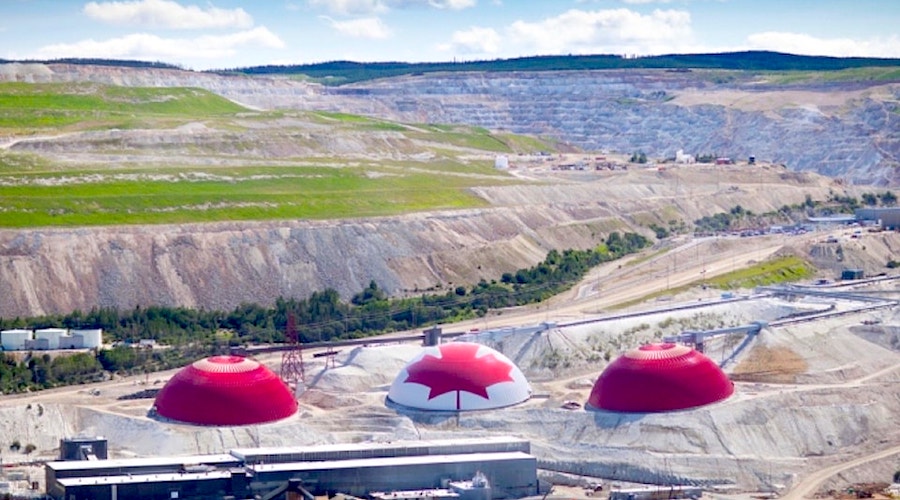
Teck’s Highland Valley in British Columbia is Canada’s largest copper operation. (Image courtesy of Highland Valley Copper 2040: Project Overview.)

The Canadian government has cleared Anglo American Plc’s proposed takeover of Teck Resources Ltd. on national security grounds, the Globe and Mail reported, removing one hurdle for the two companies to combine.

The government’s initial security review period for assessing whether proposed foreign takeovers of Canadian critical minerals companies has lapsed without an extension, meaning the deal by default has been cleared on that basis, the Globe reported, citing a person it didn’t identify.

A message left with the office of Canadian Industry Minister Melanie Joly wasn’t immediately returned. Ottawa still has the power to block the takeover if it fails to clear a net economic benefit review. Shareholders of Anglo and Teck are scheduled to vote on the deal on Dec. 9 at meetings in London and Vancouver.

(By Doug Alexander)

Panama to release first Cobre Panama audit results in December

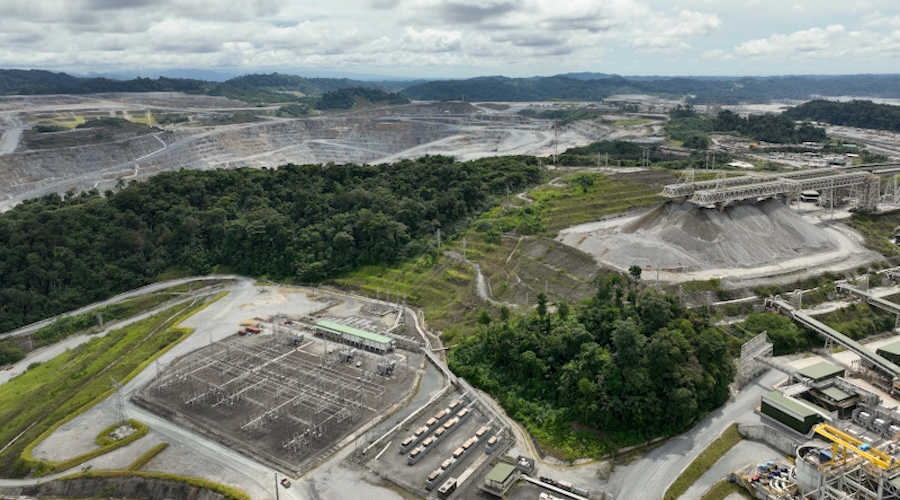
The Cobre Panama copper mine has been closed since November 2023. (Image courtesy of First Quantum.)

Panama could publish initial findings from the sweeping audit of First Quantum Minerals’ (TSX: FM) Cobre Panama copper mine as soon as next week, with the final report due by the end of February and expected to guide the government’s next steps for the stalled operation.

The independent review, led by SGS Panama Control Services, examines environmental compliance, legal and labour issues, tax matters, operational processes and potential environmental liabilities. Authorities say the results could shape any future negotiations over the mine’s future.

Alfredo Burgos, National Director of Mineral Resources at the Ministry of Commerce and Industries, told local media on Thursday that auditors must file monthly progress updates and that the process remains on schedule. He cautioned that any restart will take time because mine teams have been inactive for about 18 months.

First Quantum halted Cobre Panama in November 2023 after the contract was ruled unconstitutional following massive protests.

The company says reactivating an operation of this scale would take six to nine months to restore production and longer to return to its nameplate capacity of 100 million tonnes a year. About 2,000 workers are currently assigned to the audit and safety plan.


Once the final report is complete, the government will assess the concession, technical findings and environmental results before deciding whether the mine will restart, be modified or remain closed under new conditions.

Economic pillar

Before its shutdown, Cobre Panama stood among the world’s biggest copper operations, producing 350,000 tonnes in 2022 and accounting for about 5% of Panama’s GDP. First Quantum says that if the mine had stayed online, it would have delivered $1 billion to the treasury and $2 billion to local suppliers.

In a recent conversation with MINING.COM at the company’s London offices, CEO Tristan Pascall acknowledged the scale of the challenge facing the operation and said the company’s priority is to secure a resolution that serves its stakeholders, the government and the people of Panama.


Lenders line up for Chile copper smelter in bet glut won’t last

Copper smelting at a metallurgical plant. Stock image.

Chile’s Enami said it has received various financing offers for a $1.7 billion copper smelter and will name the banks to structure the deal as early as next week, even as the market remains depressed.

The state mining company has received “very encouraging” preliminary financing proposals, chief executive officer Ivan Mlynarz said in an interview. Enami is also analyzing six indicative offtake bids out of 17 companies that expressed interest in buying the finished copper and financing the project.

Would-be participants in a project to build a new smelter and refinery on the site of a shuttered plant in northern Chile are taking a long-term view given the current excess of smelting capacity led by China. Mlynarz spoke from Shanghai during the Asia Copper Week conference, where miners and smelters are negotiating rock-bottom fees for turning imported ore into metal.

“The imbalance is in China, but the copper concentrate is in Chile and Peru,” he said by telephone. “Our proximity to deposits and the geopolitical factors at play are key. Current market conditions are temporary.”

The six indicative offtake proposals vary widely in size and in the share of future production they are willing to take, he said. Financial institutions, which are being evaluated separately, have offered structures that could include full-package financing mandates.

“We’re likely to appoint not just one structuring bank, but two, because the offers are strong and we don’t want to leave anyone out,” he said.

Enami will retain full ownership of the project, which is designed to process 850,000 metric tons of concentrate a year and recently secured environmental permits. The project still needsthe copper commission Cochilco to sign off on it before the board can make a final investment decision. Mlynarz said he still hopes to begin early works before the current government leaves office on March 11.

“That’s what we’re working toward, but everything depends on the resolution of Cochilco,” he said.

Enami is negotiating supply deals with small, medium and large miners in the Atacama region of northern Chile, where private sector mines are estimated to generate 1.5 million tons of concentrate a year by the time the smelter starts up.

On lithium, the CEO said Enami’s Altoandinos venture with Rio Tinto Group is progressing despite the Anglo-Australian miner’s recent decision to shelve a hard-rock project in Serbia. Updated resource estimates for Altoandinos are expected to be published in late December or early January.

“The Altoandinos project continues to advance,” he said. “There is no condition that would require stopping it.”

(By James Attwood)

China ‘firmly opposes’ negative copper treatment charges

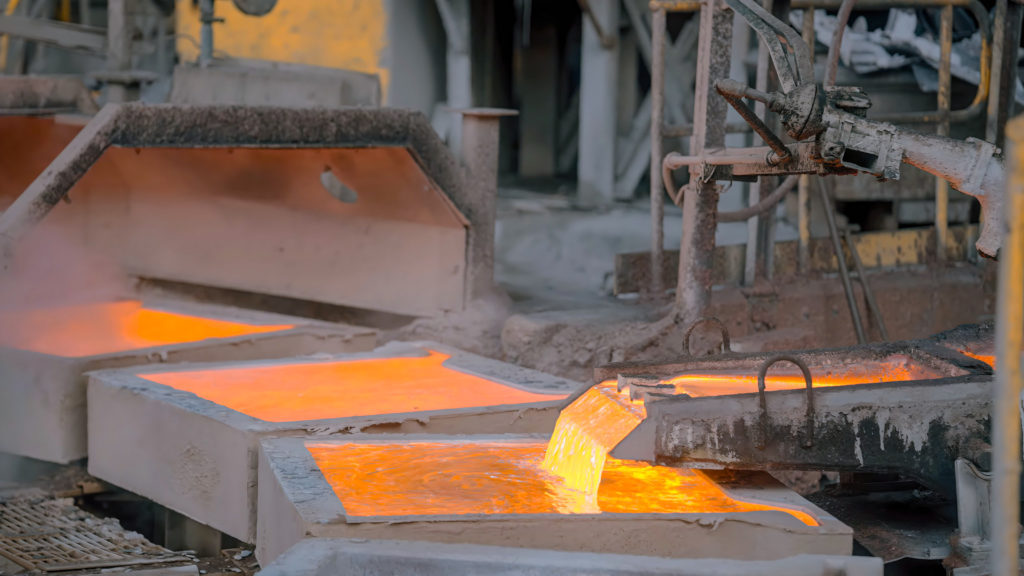
Copper ore processing plant pouring molten ore. Stock image.

China “firmly opposes” zero or negative processing fees for copper smelters and is urging the global industry to confront a “structural contradiction” that has upended the market for the industrial metal.

Treatment and refining charges – the fees earned by smelters for processing ore into metal – have plunged to record lows this year due to a scarcity of raw materials. Rapid growth in China’s smelting capacity, by far the world’s largest, has collided with a series of mine outages around the world.

A negative TC/RC effectively means that a smelter is paying to process copper concentrate – a highly unusual situation that has called into question the long-standing industry pricing benchmark. Spot charges have fallen as low as minus $60 per ton this year.

“Such practices severely undermine the interests of the global copper smelting industry, including China,” Chen Xuesen, vice president of the China Nonferrous Metals Industry Association, said in a presentation to an industry conference in Shanghai on Wednesday.

“CNIA firmly opposes any zero or negative TC/RCs in processing of copper concentrate,” he said. “We urge the global copper industry to confront this unsustainable structural contradiction and foster collaboration among relevant nations and stakeholders.”

The low fees have impacted copper smelters worldwide. Japan’s JX Advanced Metals Co. this year announced an output cut running into the tens of thousands of tons, while Glencore Plc received a government bailout to keep its Mount Isa smelter and refinery in Australia running for another three years.

Chinese smelters also suffer from low TC/RCs – but they benefit from their ownership of some mines, as well as the surging price of refined copper and sulfuric acid, a byproduct. Copper prices rose to a record high above $11,200 in late October.

China is taking steps to manage its copper smelting capacity, drawing on its similar experiences with aluminum, Chen said. The country has already curbed over-expansion by halting some 2 million tons of illegal capacity that was either under construction or in planning, he said.

In the coming years, China will also favor new smelting capacity that would run on scrap rather than imported copper concentrate. “We will be able to see the effects from the copper supply-side reform in two to three years,” Chen said.


US group sues Apple over Congo conflict minerals

Stock image.

A US-based advocacy group has filed a lawsuit in Washington accusing Apple of using minerals linked to conflict and human rights abuses in the Democratic Republic of Congo and Rwanda despite the iPhone maker’s denials.

International Rights Advocates (IRAdvocates) previously filed a lawsuit against tech firms including Tesla, Apple and other companies over cobalt sourcing, but US courts dismissed that case last year.

French prosecutors also dropped Congo’s case against Apple subsidiaries in December over conflict minerals, citing lack of evidence. A related criminal complaint in Belgium is still under investigation.

Apple denied any wrongdoing in response to Congo’s lawsuits, saying it had instructed its suppliers to halt the sourcing of material from Congo and neighbouring Rwanda.

Apple said on Wednesday it “strongly disputes” the latest allegations that the company is benefiting from forced labor and unsafe mining practices in Africa, calling the claims “baseless.”

An Apple spokesman said that 99% of the cobalt in Apple-designed batteries comes from recycled sources, and that this underscores the company’s push to cut reliance on mined material.

He added that as conflict escalated in eastern Congo in 2024, the company instructed suppliers to stop sourcing material from Congo and Rwanda.

Apple’s Supplier Code of Conduct enforces “the industry’s strongest sourcing standards” and pledges continued transparency in public reporting, the spokesman added.

IRAdvocates, a Washington-based nonprofit that tries to use litigation to curtail rights abuses, said in the complaint filed on Tuesday in the Superior Court of the District of Columbia that Apple’s supply chain still includes cobalt, tin, tantalum and tungsten linked to child and forced labour as well as armed groups in Congo and Rwanda.

Major source of cobalt, tin, tungsten

The lawsuit seeks a determination by the court that Apple’s conduct violates consumer protection law, an injunction to halt alleged deceptive marketing, and reimbursement of legal costs, but does not seek monetary damages or class certification.

The lawsuit alleges that three Chinese smelters – Ningxia Orient, JiuJiang JinXin and Jiujiang Tanbre – processed columbite-tantalite metallic ore, or coltan, that UN and Global Witness investigators allege was smuggled through Rwanda after armed groups seized mines in eastern Congo. The lawsuit links the material to Apple’s supply chain.

A University of Nottingham study published this year found forced and child labour at Congolese sites linked to Apple suppliers, the lawsuit said.

Ningxia Orient, JiuJiang JinXin and Jiujiang Tanbre did not immediately respond to requests for comment.

Congo, which supplies about 70% of the world’s cobalt and significant volumes of tin, tantalum and tungsten – used in phones, batteries and computers – did not immediately respond to a request for comment. Rwanda also did not immediately respond to a request for comment.

Apple has repeatedly denied sourcing minerals from conflict zones or using forced labour, citing audits and its supplier code of conduct. It said in December that there was “no reasonable basis” to conclude any smelters or refiners in its supply chain financed armed groups in Congo or neighbouring countries.

Congolese authorities say armed groups in eastern Congo use mineral profits to fund the conflict that has killed thousands and displaced hundreds of thousands. They have tightened controls on minerals to choke off funding, squeezing global supplies.

Apple says 76% of cobalt in its devices was recycled in 2024, but the IRAdvocates lawsuit alleges its accounting method allows mixing with ore from conflict zones.

(By Maxwell Akalaare Adombila and David Lewis; Editing by Robbie Corey-Boulet, Emelia Sithole-Matarise and Matthew Lewis)

Thursday, November 27, 2025


U.S. Coast Guard Wants "Maritime Domain Dominance"

An MDD surveillance system would push sensor information out to the "tactical edge," including small patrol craft (USCG file image)
An MDD surveillance system would push MDA sensor information out to the "tactical edge," including small patrol craft (USCG file image)

Published Nov 26, 2025 5:19 PM by The Maritime Executive


The U.S. Coast Guard Futures Development and Integration (FD&I) Directorate has expanded upon the familiar concept of maritime domain awareness (MDA): its future objective is now maritime domain dominance (MDD), an operating concept that seeks to give every Coast Guard asset a unified MDA information picture and shorten the timeline from threat detection to action. 

The FD&I Directorate has set up a Rapid Response Rapid Prototype (RAPTOR) team to support quick deployment of new tech solutions. Among other actions, RAPTOR has issued an RFI to industry seeking technologies that support the new MDD concept. In broad terms, RAPTOR is thinking about buying systems that connect every single air and surface asset with all air, space, shore and surface sensors in real-time, handing every Coast Guard unit a "single pane of glass" MDA intelligence picture. This universal MDA information network would "facilitate the decisions and actions to follow," and boost the speed and quality of threat identification in U.S. waters and maritime approaches, enabling dominance.

The first identified problem in the RFI is an MDA shortcoming. The service has to monitor 95,000 miles of coastline, plus maritime approaches. Sensor coverage for this mission set is currently insufficient, and the service believes it has to "rapidly field and deliver threshold capability to facilitate closing maritime surveillance gaps," thereby generating improved MDA. 

Beyond sensing, the RAPTOR office also wants technology that supports "sense, decide, and act" operations. This requires more than just winning the threat detection battle of maritime domain awareness: it requires information sharing with frontline units so that they can do something useful. In short, the technology should support "transmission of targeting and actioning requests to the tactical edge."

"Maritime Domain Dominance ensures that awareness is converted into an operational advantage, enabling freedom of navigation, rapid response to emerging threats, and sustained control of our maritime domain," the office wrote. 

Defense primes wishing to market fully integrated systems are discouraged. "The Coast Guard is not looking for a singular solution to provide the MDD capability, but rather a holistic and/or collection of capabilities to achieve this desired outcome," the service said. 

Beyond programmatic goals, the office's new "dominance" terminology aligns with the assertive branding trends in the executive branch, as seen recently in the creation of the "National Energy Dominance Council." Realignment of branding is not new for the Coast Guard, as seen before with the strategic renaming of the long-deferred "heavy icebreaker" program as the "Polar Security Cutter" in 2018. The new name was a better fit with congressional funding priorities, and the underlying product remained the same - a lightly-armed, Antarctic-capable icebreaker. 

"When we talk about icebreaking capability, that doesn’t sell very well to all audiences," then-chief of engineering Rear Adm. Melvin Bouboulis told USNI in 2018, speaking about the PSC program. "We understand that some folks think just it goes and breaks ice, but we’ve purposely changed the name of that program to Polar Security Cutter because it is really the U.S. presence in the Arctic regions and preserving our national interest and security in those areas."