Tuesday, December 16, 2025


California Protects Blue Whales and Blue Skies With Historic State Law

Blue whale
NOAA file image

Published Dec 16, 2025 4:33 PM by Protecting Blue Whales and Blue Skies


In October, California Assembly Bill 14, “Coastal resources: Protecting Blue Whales and Blue Skies Program” (AB-14) was signed into law, making California the first state in the country to strengthen a longstanding voluntary effort to reduce air pollution and risks to endangered whale populations off California’s coast by reducing speeds of large ocean-going vessels.

 Air pollution is one of the biggest environmental threats to human health, linked both to increased risk of chronic diseases and mortality. In California, due to a combination of factors, many cities and counties rank among the United States’ worst for air quality, and emissions from ships are a significant contributor.

Whale-ship collisions are a top risk to endangered whales globally and California is one of the few places with protection measures in place. Now, thanks to AB 14, spearheaded by Assemblymember Gregg Hart, protections will expand as the Protecting Blue Whales and Blue Skies Program (BWBS) becomes a statewide voluntary program, with California’s Ocean Protection Council as a new partner.

Why?

California is a hotspot for both global trade and biodiversity and one of the largest economies in the world. And California’s major ports— including the Ports of Los Angeles, Long Beach, Oakland, Hueneme, and San Diego — are major hubs for international trade and major entry points to the U.S. market, accounting for about 40% of all containerized imports. Global trade and the container, bulk, vehicle carrier, and tanker ships that make it possible are critical to California and to global economies.

The goods transported by ocean freight have significantly lower carbon footprints than those moved by air. These ships, however, are also one of the top threats to whales around the world and remain a significant source of air pollution for many communities. Onshore prevailing winds push ship exhaust into California coastal communities, where cargo ships can account for 50% or more of counties’ air pollution (notably, smog-forming nitrogen oxides (NOx)). Commercial shipping is also a significant source of ocean noise pollution, which can disrupt marine animals’ capacity to communicate, navigate and forage.

However, when large vessels slow from baseline speeds of 15 knots to 10 knots or less, the risk of a fatal strike to whales is reduced by approximately 50%. Air pollution and emissions are also reduced by almost a third, and underwater radiated noise pressure is significantly lowered.

Recognizing the array of environmental benefits offered by Vessel Speed Reduction (VSR), for the past decade BWBS has verified and encouraged global shipping lines’ cooperation with voluntary, seasonal VSR requests for transit speeds at whale-safer 10 knots within set zones from May to December during peak endangered whale and smog seasons. The BWBS partners and VSR zones have consistently grown over time, from Point Conception and the Port Complex of Los Angeles and Long Beach to Dana Point to Point Arena including all 5 national marine sanctuaries off California.

From 2014 to 2024 the program resulted in:

  • 1,596,008 nautical miles of whale-safer transits
  • 5,900 tons of smog-forming NOx emissions avoided
  • 200,000 metric tons of regional greenhouse gas emissions avoided
  • 4.1-decibel reduction in participating vessels source levels
  • 50% reduction in fatal ship strike risk

In 2022, to help drive awareness around and support for responsible shipping, the program opened to ambassadors — entities that import/export or work with participating shipping lines. There are now 31 ambassadors, from leading brands like Patagonia, Peak Design, Nomad, Huffy, Santa Cruz Bicycles, Deckers Brands, Toad&Co and Sonos, to the Port of Oakland and Port of Hueneme, to logistics and freight forwarding companies including JAS Worldwide, The Block Logistics and ShipCo Transport, to emissions capture and control companies like STAX Engineering.

What’s Next?

The existing program covers key transits and shipping lanes for vessels transiting up and down a large portion of coast, with Ventura, Santa Barbara County, and San Luis Obispo County Air Pollution Control Districts, Monterey Bay Air Resources District, and Bay Area Air District partnering in the effort to protect public health. However, all Californians and whales off our coast deserve the same benefits afforded by the program. The same ships and whales protected in the current VSR zones also transit and migrate off San Diego, Morro Bay and the north coast. With AB 14 signed into law, BWBS will expand geographically and expand its impact:

1. It brings an important state agency, the Ocean Protection Council, into the partnership;

2. It authorizes expansion consistent with key program elements to date — voluntary cooperation, verification and quantification of environmental benefits, and acknowledgement of industry leadership; and

3. Program expansion will not interfere with any other existing port-related VSR programs.

Next Steps:

BWBS sincerely values the insights of mariners. BWBS is working to ensure the shipping industry’s operational, safety, and other factors inform program expansion plans alongside protecting air quality and whales.

Industry members are invited to participate in a brief survey, which can be found here. As a second option, interested parties are welcome to also submit feedback here.

For more information on how to sign up your shipping line or join as a program ambassador, email info@bluewhalesblueskies.org, and sign up for our newsletter here.

BWBS partners include: California Marine Sanctuary Foundation; Channel Islands, Chumash Heritage, Monterey Bay, Greater Farallones and Cordell Bank National Marine Sanctuaries; Benioff Ocean Science Laboratory; Ventura, Santa BarbaraCounty,  and San Luis Obispo County Air Pollution Control Districts; Monterey Bay Air Resources District; and the Bay Area Air District. BWBS’ success would not be possible without the strong engagement of our participating shipping lines, ambassadors and their collaborative efforts to protect whales and coastal air quality. Read more here: bluewhalesblueskies.org/impact/

This message is sponsored by BWBS. 

The opinions expressed herein are the author's and not necessarily those of The Maritime Executive.

 

Court Denies Motion for Injunction of BOEM’s Review of Maryland COP

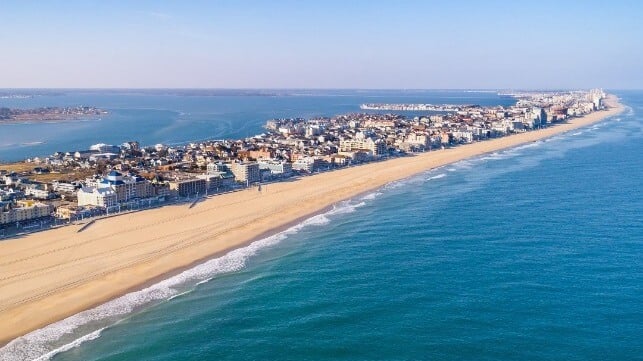
Ocean City Maryland
Maryland's first offshorewind farm which would be located near Ocean City continues to battle in court (OC Tourism)

Published Dec 16, 2025 5:48 PM by The Maritime Executive


A federal court judge in Maryland has denied a request by offshore wind developer US Wind for a preliminary injunction against the federal government in its ongoing fight to save its planned offshore wind project off Ocean City, Maryland. It is the latest twist in the ongoing court battle over Maryland’s first offshore wind project and the broader battle against the Trump administration’s efforts to derail the industry and revoke existing permits.

US Wind, which is a partnership between investment firm Apollo Global Management and Italy’s Renexia, is planning a large wind farm off the Maryland coast that would include 114 wind turbines. The company completed its federal-level reviews, receiving approval of its Construction and Operation Plan in December 2024, but has faced local opposition and the new administration’s declared goal to end offshore wind energy.

The company has found itself caught up in multiple legal battles, including a jurisdictional dispute between the federal and state environmental protection authorities. Ocean City, Maryland, has also sued the federal government, challenging the approval of the wind farm’s plans.

Federal Judge Stephanie Gallagher ruled on Monday, December 15, that US Wind’s order seeking a preliminary injunction against the federal government from taking action was premature. She denied the injunction, saying the company has not yet suffered irreparable harm because the federal government has only discussed but not yet taken any actions against the project. 

The judge said US Wind must wait to see “if its fears come to pass,” and the federal government rescinds the approval of the COP or seeks to modify its actions. The judge found that the company was premature because the Bureau of Ocean Energy Management had not denied services or formally revoked the COP approval. The company has argued that the administration’s hostility toward offshore wind energy was clear and that it expects the action that would endanger the project and its investments.

The company has understandably paused its efforts, the court says, because US Wind fears it would lose the investments required to proceed with the next steps, such as the Facility Design Report. While the court acknowledges that US Wind perceived the federal government filing as indicating hostility to wind projects generally and an intent to revoke the COP, the court notes the government “has not yet begun its reevaluation of this project.”

The Department of Justice has said in previous court filings that it was the government intends to reconsider the approval and that it might decide to change or not to renew the permits. It argues that the Biden administration rushed the approvals and failed to properly consider the full impact of the projects.

The court, however, has rejected both sides’ efforts so far. The federal government sought to have the COP approval voluntarily withdrawn and to stay the court case from Ocean City challenging the approvals. As with other cases, DOJ argues the local cases would become meaningless if BOEM reconsidered the COP.  

Earlier in December, the judge also denied the federal government’s motions and ordered that Ocean City’s case should proceed. 

The situation becomes more complicated because in the interim, another federal court has ruled that Donald Trump’s January 2025 executive order to cancel offshore wind lease sales and review the approvals was also invalid. The executive order has been a key part of the DOJ and the other agencies’ arguments to stop the local cases and to reconsider all the approvals issues by the Biden administration.


2025: The year the world gave up on America


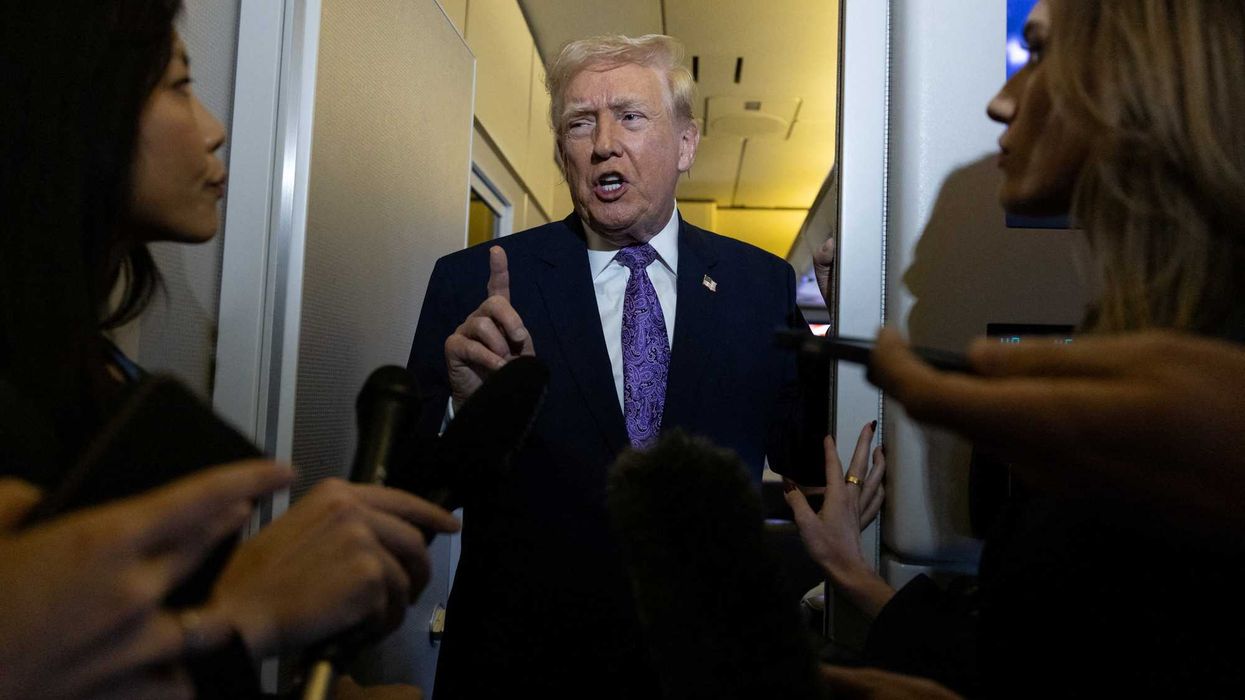
U.S. President Donald Trump speaks to reporters during travel to Washington, D.C., from Palm Beach International Airport, Florida, U.S., November 30, 2025. REUTERS/Anna Rose Layden

December 12, 2025 

As the year comes to a close, 2025 looks like a turning point in the world’s fight against climate change. Most conspicuously, it was the year the U.S. abandoned the effort. The Trump administration pulled out of the 2015 Paris Agreement, which unites virtually all the world’s countries in a voluntary commitment to halt climate change. And for the first time in the 30-year history of the U.N.’s international climate talks, the U.S. did not send a delegation to the annual conference, COP30, which took place in Belém, Brazil.

The Trump administration’s assault on climate action has been far from symbolic. Over the summer, the president pressed his Republican majority in Congress to gut a Biden-era law that was projected to cut U.S. emissions by roughly a third compared to their peak, putting the country within reach of its Paris Agreement commitments. In the fall, Trump officials used hardball negotiating tactics to stall, if not outright derail, a relatively uncontroversial international plan to decarbonize the heavily polluting global shipping industry. And even though no other country has played a larger role in causing climate change, the U.S. under Trump has cut the vast majority of global climate aid funding, which is intended to help countries that are in the crosshairs of climate change despite doing virtually nothing to cause it.

It may come as no surprise, then, that other world leaders took barely veiled swipes at Trump at the COP30 climate talks last month. Christiana Figueres, a key architect of the 2015 Paris Agreement and a longtime Costa Rican diplomat, summed up a common sentiment.

“Ciao, bambino! You want to leave, leave,” she said before a crowd of reporters, using an Italian phrase that translates “bye-bye, little boy.”

These stark shifts in the U.S. position on climate change, which President Donald Trump has called a “hoax” and “con job,” are only the latest and most visible signs of a deeper shift underway. Historically, the U.S. and other wealthy, high-emitting nations have been cast as the primary drivers of climate action, both because of their outsize responsibility for the crisis and because of the greater resources at their disposal. Over the past decade, however, the hopes that developed countries will prioritize financing both the global energy transition and adaptation measures to protect the world’s most vulnerable countries have been dashed — in part by rightward lurches in domestic politics, external crises like Russia’s invasion of Ukraine, and revolts by wealthy-country voters over cost-of-living concerns.

The resulting message to developing countries has been unmistakable: Help is not on the way.

In the vacuum left behind, a different engine of global climate action has emerged, one not political or diplomatic but industrial. A growing marketplace of green technologies — primarily solar, wind, and batteries — has made the adoption of renewable energy far faster and more cost-effective than almost anyone predicted. The world has dramatically exceeded expectations for solar power generation in particular, producing roughly 8 times more last year than in 2015, when the Paris Agreement was signed.

China is largely responsible for the breakneck pace of clean energy growth. It now produces about 60 percent of the world’s wind turbines and 80 percent of solar panels. In the first half of 2025, the country added more than twice as much new solar capacity as the rest of the world combined. As a result of these Chinese-led global energy market changes and other countries’ Paris Agreement pledges, the world is now on a path to see 2.3 to 2.5 degrees Celsius (4.1 to 4.5 degrees Fahrenheit) of warming by 2100, compared to preindustrial temperatures, far lower than the roughly 5 degrees C (9 degrees F) projections expected just 10 years ago.

These policies can be viewed as a symbol of global cooperation on climate change, but for Chinese leadership, the motivation is primarily economic. That, experts say, may be why they’re working. China’s policies are driving much of the rest of the world’s renewable energy growth. As the cost of solar panels and wind turbines drops year over year, it is enabling other countries, especially in the Global South, to choose cleaner sources of electricity over fossil fuels — and also to purchase some of the world’s cheapest mass-produced electric vehicles. Pakistan, Indonesia, Vietnam, Saudi Arabia, and Malaysia are all expected to see massive increases in solar deployment in the next few years, thanks to their partnerships with Chinese firms.

“China is going to, over time, create a new narrative and be a much more important driver for global climate action,” said Li Shuo, director of the China climate hub at the Asia Society Policy Institute. Shuo said that the politics-and-rhetoric-driven approach to solving climate change favored by wealthy countries has proved unreliable and largely failed. In its place, a Chinese-style approach that aligns countries’ economic agendas with decarbonization will prove to be more successful, he predicted.

Meanwhile, many countries have begun reorganizing their diplomatic and economic relationships in ways that no longer assume American leadership. That shift accelerated this year in part due to Trump’s decisions to withdraw from the Paris Agreement, to impose tariffs on U.S. allies, and more broadly, to slink away into self-imposed isolation. European countries facing punishing tariffs have looked to deepen trade relationships with China, Japan, and other Asian countries. The EU’s new carbon border tax, which applies levies to imports from outside the bloc, will take effect in January. The move was once expected to trigger conflict between the EU and U.S., but is now proceeding without outright support — or strong opposition — from the Trump administration.

African countries, too, are asserting leadership. The continent hosted its own climate summit earlier this year, pledging to raise $50 billion to promote at least 1,000 locally led solutions in energy, agriculture, water, transport, and resilience by 2030. “The continent has moved the conversation from crisis to opportunity, from aid to investment, and from external prescription to African-led,” said Mahamoud Ali Youssouf, chairperson of the African Union Commission. “We have embraced the powerful truth [that] Africa is not a passive recipient of climate solutions, but the actor and architect of these solutions.”

The U.S. void has also allowed China to throw more weight around in international climate negotiations. Although Chinese leadership remained cautious and reserved in the negotiation halls in Belém, the country pushed its agenda on one issue in particular: trade. Since China has invested heavily in renewable energy technology, tariffs on its products could hinder not only its own economic growth but also the world’s energy transition. As a result the final agreement at COP30, which like all other United Nations climate agreements is ultimately non-binding, included language stipulating that unilateral trade measures like tariffs “should not constitute a means of arbitrary or unjustifiable discrimination or a disguised restriction on international trade.”

Calling out tariffs on the first page of the final decision at COP30 would not have been possible if negotiators for the United States had been present, according to Shuo. “China was able to force this issue on the agenda,” he said.

But Shuo added that other countries are still feeling the gravitational pull of U.S. policies, even as the Trump administration sat out climate talks this year. In Belém last month, the United States’ opposition to the International Maritime Organization’s carbon framework influenced conversations about structuring rules for decarbonizing the shipping industry. And knowing that the U.S. wouldn’t contribute to aid funds shaped climate finance agreements.

In the years to come, though, those pressures may very well fade. As the world pivots in response to a U.S. absence, it may find it has more to gain than expected.

This article originally appeared in Grist at https://grist.org/international/2025-trump-climate-change-paris-agreement-china/.

Grist is a nonprofit, independent media organization dedicated to telling stories of climate solutions and a just future. Learn more at Grist.org
It’s not just for Christmas anymore: Inside the phony war on Christians


Photo by ian borg on Unsplash
December 15, 2025 

Remember the War on Christmas, when conservatives worked themselves into a lather over America-hating freaks wishing people “Happy Holidays,” putting on community celebrations called “Winterfest” instead of Christmas or parking a Festivus Pole next to a Manger Scene?

Or the Black Santa phenomenon, which so horrified Fox News’ Megyn Kelly she felt compelled to declare “Santa is white”?

Good times.

Right-wingers’ obsession with what they see as secular assaults on Jesus and the fiesta of capitalism with which we mark his birth are no longer confined to December.

The craziness has metastasized, blown past December into the rest of the year, expanding faster than plans for the White House ballroom.


It’s not just for Christmas anymore: According to MAGA politicians and their hangers-on, there’s now a full-blown War on Christians.

When Florida Attorney General James Uthmeier discovered a city-owned theater in Pensacola was hosting “A Drag Queen Christmas” on Dec. 23, he blew a gasket.

The show features stars from “RuPaul’s Drag Race,” one of the most popular television programs in America.

“A Drag Queen Christmas” is touring the United States, appearing in mainstream venues such as the Knoxville, Tenn., Civic Center and Atlanta Symphony Hall.

If you didn’t know better, you’d think a whole lot of regular Americans like drag shows.

James Uthmeier is not among them. In a ranty and perhaps a tad prurient letter to the Pensacola City Council, the fellow who likes to call himself “Florida’s Top Cop” expressed outrage over Pensacola children taking pictures with Santa outside while “men dressed as garish women in in demonic costumes will be engaged in obscene behavior mere feet away.”

More equal

According to Uthmeier, “The show openly mocks one the most sacred holidays in the Christian faith” and must be canceled post-haste.

He goes on, noting, “A previous production featured a male performer boasting the stage name Trinity ‘The Tuck’ Taylor — a not-so subtle stab at THE fundamental doctrine of Christianity.”

The city of Pensacola has refused to shut down the show.


Perhaps Uthmeier has decided he no longer need concern himself with school shootings, environmental poisoning, and other minor inconveniences, and can devote all his energies to protecting the faith.

While he loudly threatens to throw the book at real or perceived incidents of antisemitism, really the only faith he’s most interested in protecting is his own.

Just ask the Council on American-Islamic Relations, a Muslim civil rights organization, suing Gov. Ron DeSantis over his dubious (and likely unconstitutional) attempt to designate them as “terrorists.”

Uthmeier’s chomping at the bit to defend that case.

I guess all religions are equal, but some religions are more equal than others.

Those of us attached to, say, facts, evidence, reality, that stuff, know there is no War on Christianity, any more than there is now, or ever was, a War on Christmas.

America has no Emperor Diocletian ordering the Roman army to take their axes to Christians or roast them on grates, no Boko Haram murdering Christian children, no Chinese secret police arresting pastors.

Especially in Florida.

Here we see increasing attacks on Muslims, assaults (both physical and statutory) on LGBTQ people, and out-and-proud racism: Florida leads the nation in hate groups.
Apostasy at SCOTU?

Uthmeier is on a crusade (and I use that word advisedly).

He’s angry at the American Bar Association for investigating the St. Thomas University College of Law, a Roman Catholic insitution in Miami.

The ABA accredits law schools, making sure they’re in good financial shape, they don’t discriminate, they’re fair in hiring and retention, and they treat people equally.

Seems St. Thomas didn’t exactly ace the test.

Uthmeier could have helped STU clean up its act. Instead, he wrote one of his belligerent letters, accusing the ABA of being “woke” lefties practicing “religious discrimination” against Roman Catholics and said the organization cannot use its “accreditation monopoly to put law schools to the tortuous choice of accepting the ABA’s discriminatory, repugnant standards or suffering the fallout of withheld accreditation.”

This might be a good time to mention that Uthmeier is a product of Georgetown Law School, a Catholic institution duly accredited by the ABA.

Instead of, say, working to stop gun violence, domestic abuse, and insurance fraud (to name but a few of the state’s besetting issues), he signed on to a brief supporting a couple of Christian schools’ desire to pray over loudspeakers before their football games.

Courts pointed out the schools would be proselytizing using public spaces with publicly funded sound systems, which suggests government endorsement of a particular religion.

They said no.

The U.S. Supreme Court declined to hear the appeal.

Uthmeier huffed, “The Constitution does not require state-sponsored hostility toward religion.”

Undaunted, he wrote a stiff note to Microsoft about the mega-corp.’s policies toward software discounts for faith-based groups.

Microsoft is, he said, “hostile” to Christian nonprofits.
The governor’s Bible

Among the nonprofits he’s referring to are so-called “Crisis Pregnancy Centers,” which claim to provide “medical care” for desperate young women who don’t want or can’t care for a child.

The young women at these places get a lot of guilt-inducing fundamentalist propaganda, but no information on how to get an abortion, even if they want one.

By the way, these CPCs are largely funded with taxpayer money.

Lately, the governor’s been going around boasting Florida has been named the No. 1 state for religious freedom.

This distinction was conferred by First Liberty Institute, a conservative legal outfit, the ones who went to the U.S. Supreme Court to save a pious Oregon pâtissière from having to make a gay wedding cake.

Hooray for the Sunshine State.

Nonetheless, DeSantis, Uthmeier, and D.C. MAGAs say the fight to save Christians from secular, indeed, Satanic, persecution remains urgent.

In 2024, Donald Trump campaigned on made-up stories of crazed heathens somehow banning the phrase “Merry Christmas” and, even weirder, destroying crosses: “They want to tear down crosses where they can, and cover them up with social justice flags.”

(Side note: Anybody know where I can buy a “social justice flag”?)

Trump added, “I’m a very proud Christian.”

Ron DeSantis is also a “proud Christian,” so pious that for the swearing-in at his first inauguration, staff had to order a Bible from Amazon for $21.47.

He didn’t own one.

Florida Woman and U.S. Attorney General Pam Bondi, yet another proud Christian, has established a Justice Department task force to combat “anti-Christian policies.”

Members of this task force include such noted followers of Jesus as Robert F. Kennedy Jr. and Defense Secretary Pete Hegseth.

Perhaps the Spanish Inquisition will provide a useful model for them.
Who’s really being persecuted?

But let’s go back to Pensacola’s “Drag Queen Christmas.”

Uthmeier assumes that the very idea of a man rocking a smokey eye and glittering evening wear is so inherently sinful any exposure to such a thing imperils your immortal soul.

Why, what if a child picks up a stray, wind-borne sequin from Jewels Sparkles’ dress? Will the parents need to call an exorcist?

The attorney general and his fellow hysterics might be interested to learn some drag queens are Christian.

One, a fabulous red-headed singer sporting the splendid name “Flamy Grant,” topped the Christian music charts with the 2023 album, “Bible Belt Baby.”

Let’s smack Uthmeier, DeSantis, et al. (gently) with the reality stick:

There is no persecution of Christians in America.

The persecuted are those who belong to disfavored cultures — Afghan or Latino or Black — those who express their sexuality in a disfavored way or speak out disfavored opinions.

You can’t find anything in the New Testament where Jesus endorses cruelty or murder.

The Great Commandment (Matthew 22:39) says, “Love thy neighbor as thyself.”

The foreigner, the exile, the refugee should be welcomed to your country (Matthew 5:43, Hebrews 13:1, Romans 13.10).

There’s no mention of rounding them up, beating them, and sending them off to torture prisons or countries where they’re likely to be killed.

Jesus did not endorse bombing people clinging to a capsized boat.

Jesus didn’t say to torment people over their sexuality or their fashion sense.

Sure, Deuteronomy 22:5 says women shouldn’t dress as men (better lose those pantsuits, Bondi!) and men shouldn’t dress as women, but Deuteronomy also says if a wife tries to save her husband from an attacker by grabbing the guy’s genitals, she must have her hand cut off (25:11-12); you can’t eat pork, shrimp, or lobster; and if you commit adultery, you will be stoned to death.

I doubt the president and his Secretary of Defense would want to embrace that one.

The point is, what Uthmeier, Bondi, Hegseth, Kennedy, Trump, DeSantis, and their ilk espouse is performative hatred, not Christianity.

Perhaps we should all pray for them.
Surging Home Building Costs Caused by Trump Tariffs Could Result in 450,000 Fewer Homes by 2030

“With the average home sales price having already risen by 31%—or over $120,000—since 2020, this tariff-induced change could put homeownership further out of reach for millions of Americans,” warns a new report.


Construction in Santa Clarita, California, on March 21, 2025. The National Association of Home Builders expects tariffs will raise the cost of imported construction materials by more than $3 billion.
(Photo by Hans Gutknecht/MediaNews Group/Los Angeles Daily News via Getty Images)

Julia Conley
Dec 16, 2025
COMMON DREAMS

After campaigning last year on reducing the cost of living and as he attempts to claim progressive Democrats’ push for affordability as his own, President Donald Trump’s policies have been directly linked to making life more expensive for people across the US—and along with electricity, healthcare, and groceries, housing costs are set to rise, according to a new analysis out Tuesday, which examines the impact of Trump’s tariffs.

The Center for American Progress (CAP) found that the impact on home construction materials by Trump’s tariffs could force builders to scale back significantly over the next five years, reducing new home construction by 450,000 homes through 2030.

According to the analysis, the average cost of building a home in the coming years will increase by $17,500 if current home building rates continue.

“With the average home sales price having already risen by 31%—or over $120,000—since 2020, this tariff-induced change could put homeownership further out of reach for millions of Americans,” said CAP.

Trump’s tariffs are as high as 50% for some countries, and some of the highest levies have been imposed on key building materials, including lumber, copper, aluminum, and steel products. Imports of upholstered products and kitchen cabinets are set to face tariffs that could increase by up to 50%.

The tariffs were unveiled amid a growing housing affordability crisis, with the number of available homes falling short by 2 million units or more, according to some estimates.

Following the Great Recession, home construction has not returned to pre-2008 levels and the country requires “sustained, above-average construction rates to correct” the persistent underbuilding, according to CAP.

“Yet the Trump administration’s tariff policies are pushing home building in the opposite direction by raising construction costs, which will slow new construction activity, raise costs, and worsen housing affordability,” reads the report by Cory Husak, Natalie Baker, and Mimla Wardak.

The analysis found that while Trump has insisted that the tariffs will target the countries that import goods to the US, but as with groceries—which have gone up in price by up to 40% at some stores—the levies on home building materials are projected to ultimately impact American families who are already struggling to afford healthcare and other essentials.

The tariffs are expected to add $27 billion to the annual cost of constructing new homes by 2027, effectively raising the cost of building a new home by about 3.3%.


From 2030 onward, the number of new homes being built is expected to be down by 100,000 yearly.

“This would be equivalent to eliminating 6 percent of the homes constructed in the five years from 2020 to 2024,” said CAP.

If home building falls as CAP projects, the cost of construction will rise to $18,500 per home in 2028, CAP projected.

“Families are already struggling to afford a place to live, and the administration is adding fuel to the housing costs fire,” said Husak, director of tax policy at CAP. “These tariffs are a tax on builders and aspiring homeowners, raising construction costs, slowing the pace of new building, and pushing homeownership even further out of reach for millions of Americans.”

The group urged the federal government to act to stop the tariffs from continuously “driving up construction costs, slowing homebuilding, and worsening the nation’s already severe housing shortage.”

“Building new housing supply is crucial to solving the housing shortage,” said CAP, “and canceling tariffs on homebuilding materials is a necessary step to bring more housing online and improve housing affordability.”
Extrajudicial Killings From Barack Obama to Donald Trump

If Obama could kill a 16-year-old American boy without accountability, why wouldn’t Trump believe he has the same power to snuff out the lives of civilians with no due process?


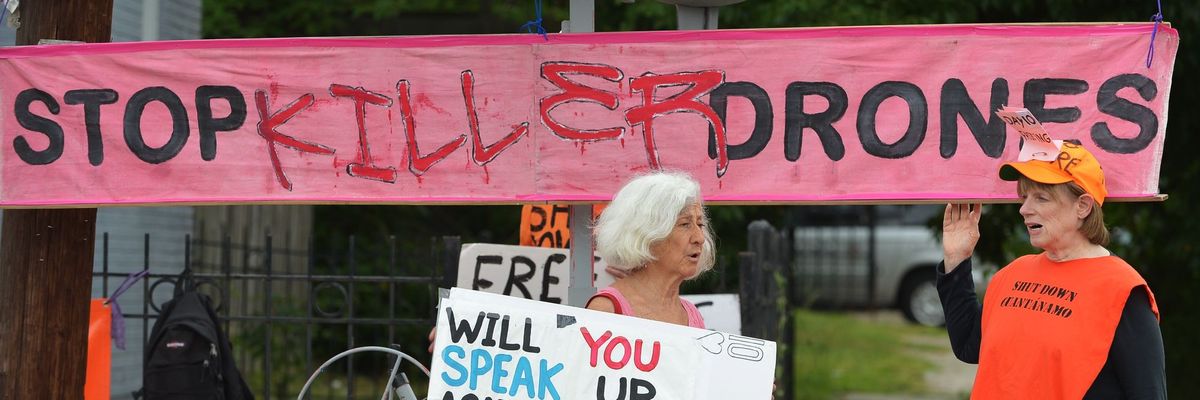
Protesters stand next to a model of a drone during a demonstration calling for an end to targeted killings and indefinite detentions outside of Fort McNair on May 23, in Washington, DC. US President Barack Obama was due to speak on counterterrorism policy at the National Defense University at Fort McNair.
(Photo: Mandel Ngan/AFP via Getty Images)

Medea Benjamin
Dec 16, 2025
Common Dreams


In May 2013, as President Barack Obama delivered a major foreign-policy speech in Washington, I managed to slip inside. As he was winding up, I stood and interrupted, condemning his use of lethal drone strikes in Yemen, Pakistan, and Somalia.

“How can you, a constitutional lawyer, authorize the extrajudicial killing of people—including a 16-year-old American boy in Yemen, Abdulrahman al-Awlaki—without charge, without trial, without even an explanation?”

As security dragged me out, Obama responded, “The voice of that woman is worth paying attention to.” Perhaps my questions touched a chord in his conscience, but the drone attacks did not stop.

Just before that incident, I had returned from Yemen, where a small delegation of us met with Abdulrahman’s grandfather, Nasser al-Awlaki—a dignified man with a PhD from an American university, someone who genuinely believed in the values this country claims to represent. He looked at us, grief etched into his face, and asked, “How can a nation that speaks of law and justice kill an American child without apology, without even a justification?”

Under Obama, drone strikes killed thousands of people. Entire communities lived under the constant terror of buzzing drones—never knowing whether a flash in the sky meant death for them, their children, or the neighbors who ran to help.

We heard these horrors firsthand in 2012, when CODEPINK traveled to Pakistan to meet with victims’ families. A tribal leader from Waziristan described attending a peaceful jirga—a gathering of elders—when a US missile obliterated the meeting. Dozens were instantly killed. As survivors rushed to help the wounded, a second missile struck.

Forty-two people died, including elders and local officials. No one in Washington was held accountable. Not one person.

Faced with mounting outrage, Obama eventually scaled back the drone program—not because the killings were illegal, immoral, or strategically disastrous, but because the political cost was rising. The truth is that Obama’s drone war normalized the idea that the United States can kill whoever it wants, wherever it wants, without due process or oversight.

That normalization is the bridge to where we are today.


The Trump administration is now carrying out extrajudicial assassinations at sea, including “double taps.” With the latest December 15 strikes, 95 people have been blown to bits in the bombing of 25 boats. Meanwhile, the administration is refusing to release the memo that supposedly explains the legal basis for these killings or to release the video showing the September bombing that killed two shipwrecked sailors who survived an initial strike.

But let’s be clear: the actions of the Trump administration are not an aberration—they are the logical sequel to Obama’s drone killings. If Obama could kill a 16-year-old American boy without accountability, why wouldn’t Trump believe he has the same power to snuff out the lives of civilians with no due process?

One of the victims of Trump’s maritime strikes was Alejandro Carranza Medina, a Colombian fisherman killed on September 15 when a US missile tore apart his vessel. His family has filed a complaint with the Inter-American Commission on Human Rights. The family says he was working—fishing, not fighting—when the US government ended his life.

And even in cases where drugs are on board, let’s say the obvious: Smuggling narcotics does not turn the open sea into a battlefield, and it does not strip civilians of their right to due process simply because the Trump administration says so. The US cannot declare people “enemy fighters” to disguise what are, in reality, unlawful killings.

Civil liberties groups are suing the government to secure the release of the Office of Legal Counsel opinion and other documents related to these strikes on civilian boats in international waters. The public deserves to see this information. The American people also deserve to see the full video of the September “double tap” that killed two survivors desperately clinging to their overturned boat, as a bipartisan group of lawmakers is demanding. We deserve transparency, accountability, and answers—the same things we demanded under Obama and never received.

For more than twenty years, human rights advocates have warned that unchecked drone warfare would shred the boundaries between war and peace, between combatants and civilians, between military force and basic law enforcement.

Trump’s maritime killings are the predictable collapse of a system the Obama administration cemented into place: killing people far from any battlefield, without legal authority, without congressional approval, and without the slightest regard for human rights.

Once an administration insists that due process in the use of lethal force is optional, every future president inherits a blank check for murder.
No, Diversity Is Not the Cause of Violence

The true problem lies elsewhere, such as in economic and power interests, the old drivers of wars and genocides.


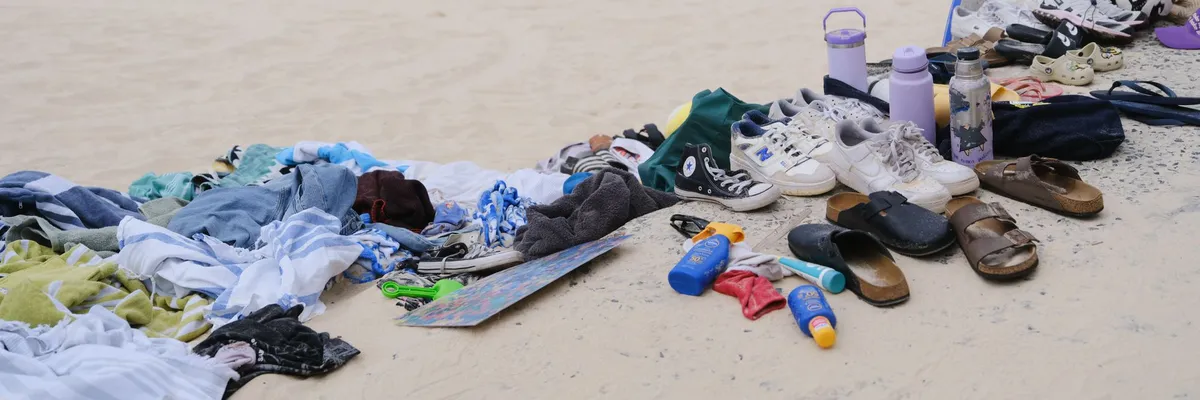
Personal belongings were left at the scene of a shooting at Bondi Beach on December 15, 2025 in Sydney, Australia.
(Photo by George Chan/Getty Images)

Jorge Majfud
Dec 16, 2025
Common Dreams


On December 13, 2025, a man with a gun killed two students in a classroom at Brown University and left half a dozen seriously injured. This tragedy did not make headlines around the world because shootings are a tradition in the United States. According to various statistics, for a century (it would be necessary to add the colonization of centuries before, carried out by religious fanatics against Indians, Blacks, and Mexicans), mass murderers have tended to be supporters of the supremacist right, but it is they who blame diversity for all the ills of their societies. Fear is big business.

This massacre took a back seat when, the following day, 11 people were killed in Sydney, Australia. The victims were members of a Jewish community celebrating Hanukkah. Since the ban on semi-automatic rifles and strict regulation of firearms in 1996, massacres in Australia are a rarity.

Immediately, social media was flooded with explanations about the danger of Islam to the world, even when it was revealed that the man who stopped and disarmed one of the two attackers in the midst of the massacre was a 43-year-old Muslim, father of two children, who was shot twice. Benjamin Netanyahu will probably honor him with the Israel Prize in Human Values and Civil Heroism.

A couple of hours later, the richest Argentine in the world and resident of Uruguay, Marcos Galperin, who presents himself as the “founder and executive chairman of Mercado Libre” and Konex Prize winner, commented on the massacre with the same prejudice that the killers surely share: “Welcome to the new multicultural and diverse Australia.”

The now demonized multiculturalism is as old as the domestication of fire.

Could it be that the problem perceived by those who are against diversity is skin color? Why are non-Caucasians always the problem? When, for centuries, white people devoted themselves to assaulting, destroying, and massacring the rest of the world, they were only bringing civilization to those “shithole countries,” to use President Donald Trump’s language to refer to the countries of the South. “Why do we accept people from these shithole countries, like Somalia, and not accept people from Norway, Sweden, or Denmark?” Perhaps because, to them, we are the shithole country.

The common factor is always the same: The problem is not cultural diversity, but something as superficial as skin color. When they find out that the native British and Belgians were black-skinned people, their blood sugar rises.

The now demonized multiculturalism is as old as the domestication of fire. There was no trade, let alone free trade (an ancient activity until it was destroyed by capitalism), without cultural, linguistic, religious, and technological exchange. From the 10th century until the beginning of the European slave trade, the Kingdom of Nri achieved almost 1,000 years of coexistence based on the principles of “peace, truth, and harmony.” The Nri culture, located in what is now Nigeria, shared with the Ubuntu philosophy of the southern continent its collective conception of the individual and its conception of peace and social harmony as higher goals. Its communal ownership of land and production, and its intense trade with other nations as far away as Egypt, ended with the arrival of Europeans and the novel slave trade based on skin color.

The same was true of Native American peoples. In most Indigenous cultures, foreigners who were adopted not only ended up integrating into the new society, but also tended to occupy a place of great respect in the social pyramid. The same cannot be said of the deeply racist societies of the revered Free World (“the free race,” white)―unless we are talking about sepoy soldiers.

In the Great Peace League of North America, the Iroquois adopted foreigners from all cultures and languages, including Europeans, who often did not want to return to “civilization.” Native diversity also included members of different genders (men and women “of two spirits”). These were not naive savages. For centuries, they defeated European armies armed with advanced technology, not because of their arrows but because of their superior social organization. They even expanded throughout the Ohio River basin in response to attacks by British and French armies. It was not for nothing that the natives mocked the white man’s concept of freedom: “We are free,” they said. “We are not desperate to be rich, nor do we obey the orders of our leaders when they do not convince us. You submit to anything: kings, captains, priests...”

We could continue with other cultures, such as the Arab Empire, which lasted several centuries. Jews, Christians, and Muslims coexisted, prospered, and multiplied for centuries in one of the most outstanding civilizations in science, rational analysis, and technology.

Of course, if we look at the entire history of humanity, we will always find plenty of examples of violence, massacres, and genocide. No one can say that in these centuries of coexistence there were no conflicts, wars, and brutalities, because that is a chronic ailment of the human species. But if we compare realities, we can say that our contemporary world, which prides itself on being advanced and civilized, has stood out for its exceptional brutality. Suffice it to mention the world wars, the atomic bombs, or the imperial dictatorships imposed by the “sacrificed white man” (Rudyard Kipling, Theodore Roosevelt) on the rest of humanity. Always victimizing themselves for their own crimes. As Ukrainian Golda Meir said, “We can never forgive the Arabs for forcing us to kill their children.”

Although we cannot say that there are welcome forms of hatred, we can say that there is no single type of hatred. Slaves hated their masters for what they did, and masters hated their slaves for what they were. It is one thing to hate for what one is and another to hate for what one does.

If there is a problem with the ancient culture and morality of diversity and tolerance, it is that racists who promote civil and imperial violence are protected by the law. In fact, we reward them. Otherwise, it would be impossible to understand why the sect of global billionaires is racist, sexist, and hates the poor, whom they divide and parasitize every day.


Our work is licensed under Creative Commons (CC BY-NC-ND 3.0). Feel free to republish and share widely.


Jorge Majfud
Jorge Majfud is an Uruguayan-American writer and an associate professor at Jacksonville University.
Full Bio >


Yale Historian Warns Trump Is Putting US on Path to World War III

Historian Greg Grandin argued that Trump’s foreign policy will likely result in “more confrontation, more brinkmanship, more war.”


President Donald Trump stands and salutes troops during the celebration of the Army’s 250th birthday on the National Mall on June 14, 2025 in Washington, DC.
(Photo by Doug Mills - Pool/Getty Images)

Brad Reed
Dec 16, 2025
COMMON DREAMS

Yale historian Greg Grandin believes that President Donald Trump’s foreign policy is putting the US on a dangerous course that could lead to a new world war.

Writing in The New York Times on Monday, Grandin argued that the Trump administration seems determined to throw out the US-led international order that has been in place since World War II.

In its place, Grandin said, is “a vision of the world carved up into garrisoned spheres of competing influence,” in which the US has undisputed control over the Western Hemisphere.

As evidence, he pointed to the Trump White House’s recently published National Security Strategy that called for reviving the so-called Monroe Doctrine that in the past was used to justify US imperial aggression throughout Latin America, and that the Trump administration is using to justify its own military adventures in the region.

Among other things, Grandin said that the Trump administration has been carrying out military strikes against purported drug smuggling boats in the Caribbean and the Pacific Ocean, and has also been “meddling in the internal politics of Brazil, Argentina, and Honduras, issuing scattershot threats against Colombia and Mexico, menacing Cuba and Nicaragua, increasing its influence over the Panama Canal, and seizing an oil tanker off the coast of Venezuela.”

Most ominously, Grandin said, is how the US Department of Defense has been “carrying out a military buildup in the Caribbean that is all but unprecedented in its scale and concentration of firepower, seemingly aimed at effecting regime change in Venezuela.”

A large problem with dividing the globe into spheres controlled by major powers, Grandin continued, is that these powers inevitably come into violent conflict with one another.

Citing past statements and actions by the British Empire, Imperial Japan, and Nazi Germany, Grandin argued that “as the world marched into a second global war, many of its belligerents did so citing the Monroe Doctrine.”

This dynamic is particularly dangerous in the case of Trump, who, according to Grandin, sees Latin America “as a theater of global rivalry, a place to extract resources, secure commodity chains, establish bulwarks of national security, fight the drug war, limit Chinese influence, and end migration.”

The result of this policy shift, Grandin concluded, “will most likely be more confrontation, more brinkmanship, more war.”
‘Make This Delay Permanent,’ Say Child Advocates After Mattel Halts Release of First AI-Powered Toy

“AI toys are not safe for kids,” said a spokesperson for the children’s advocacy group Fairplay. “They disrupt children’s relationships, invade family privacy, displace key learning activities, and more.”


A robot toy attracts children at the Global AI Player Carnival & West Bund International Tech Consumer Carnival in Shanghai, China, on October 27, 2025.
(Photo by CFOTO/Future Publishing via Getty Images)

Stephen Prager
Dec 16, 2025
COMMON DREAMS

As scrutiny of the dangers of artificial intelligence technology increases, Mattel is delaying the release of a toy collaboration it had planned with OpenAI for the holiday season, and children’s advocates hope the company will scrap the project for good.

The $6 billion company behind Barbie and Hot Wheels announced a partnership with OpenAI in June, promising, with little detail, to collaborate on “AI-powered products and experiences” to hit US shelves later in the year, an announcement that was met with fear about potential dangers to developing minds.

At the time, Robert Weissman, the president of the consumer advocacy group Public Citizen, warned: “Endowing toys with human-seeming voices that are able to engage in human-like conversations risks inflicting real damage on children. It may undermine social development, interfere with children’s ability to form peer relationships, pull children away from playtime with peers, and possibly inflict long-term harm.”

In November, dozens of child development experts and organizations signed an advisory from the group Fairplay warning parents not to buy the plushies, dolls, action figures, and robots that were coming embedded with “the very same AI systems that have produced unsafe, confusing, or harmful experiences for older kids and teens, including urging them to self harm or take their own lives.”

In addition to fears about stunted emotional development, they said the toys also posed security risks: “Using audio, video, and even facial or gesture recognition, AI toys record and analyze sensitive family information even when they appear to be off... Companies can then use or sell this data to make the toys more addictive, push paid upgrades, or fuel targeted advertising directed at children.”

The warnings have proved prescient in the months after Mattel’s partnership was announced. As Victor Tangermann wrote for Futurism:
Toy makers have unleashed a flood of AI toys that have already been caught telling tykes how to find knives, light fires with matches, and giving crash courses in sexual fetishes.

Most recently, tests found that an AI toy from China is regaling children with Chinese Communist Party talking points, telling them that “Taiwan is an inalienable part of China” and defending the honor of the country’s president Xi Jinping.

As these horror stories rolled in, Mattel went silent for months on the future of its collaboration with Sam Altman’s AI juggernaut. That is, until Monday, when it told Axios that the still-ill-defined product’s rollout had been delayed.

A spokesperson for OpenAI confirmed, “We don’t have anything planned for the holiday season,” and added that when a product finally comes out, it will be aimed at older teenagers rather than young children.

Rachel Franz, director of Fairplay’s Young Children Thrive Offline program, praised Mattel’s decision to delay the release: “Given the threat that AI poses to children’s development, not to mention their safety and privacy, such caution is more than warranted,” she said.

But she added that merely putting the rollout of AI toys on pause was not enough.

“We urge Mattel to make this delay permanent. AI toys are not safe for kids. They disrupt children’s relationships, invade family privacy, displace key learning activities, and more,” Franz said. “Mattel has an opportunity to be a real leader here—not in the race to the bottom to hook kids on AI—but in putting children’s needs first and scrapping its plans for AI toys altogether.”
Tesla Robotaxis Are Crashing More Than 12 Times as Frequently as Human Drivers: Report

The new data comes as Tesla is removing human safety monitors from its driverless taxi fleet.


A driverless Tesla Robotaxi, with a man serving as a safety monitor in the front passenger seat, rolls along Laguna Drive in Southeast Austin, Friday, June 27, 2025.
(Photo by Jay Janner/Austin American-Statesman via Getty Images)

Brad Reed
Dec 16, 2025
COMMON DREAMS

Proponents of driverless cars often tout them as a safer alternative to cars with human drivers—but such claims don’t appear to be holding up so far in the case of Tesla’s Robotaxis.

A Monday report from Elektrek found that Tesla Robotaxis are crashing much more frequently than cars driven by humans, as the company has now reported eight crashes of its driverless taxi fleet in Austin, Texas to the National Highway Traffic Safety Administration since July.

Elektrek also crunched some numbers based on data released by Tesla last month and estimated that the Tesla Robotaxis are involved in a crash for every 40,000 miles they drive. For comparison, the publication reported, cars driven by humans crash about once every 500,000 miles, meaning the Robotaxis so far have crashed 12.5 times more frequently than human-driven cars.

All of the Robotaxi crashes so far have occurred with human safety monitors—who have been trained to take control of the car in the event of a software error—present in the vehicles.

This is significant because, as TechCrunch reported on Monday, Tesla is starting to send out its Robotaxi fleet without safety monitors.

TechCrunch noted that “the removal of the human safety monitors brings the company a critical step closer to its goal of launching a real commercial Robotaxi service,” but also said it “will most likely ramp up the scrutiny on Tesla’s ongoing testing in Austin, doubly so when the company starts offering rides in the empty cars.”

Tesla’s bet on Robotaxis has grown more important given that its vehicle sales in the US and around the world have been dropping significantly so far this year, in part due to a boycott campaign inspired by outrage over CEO Elon Musk’s support for far-right political parties.

According to a report from Reuters, the most recent data from car software company Cox Automotive shows that US Tesla sales dropped to a four-year low last month. The news agency also pointed out that Tesla now “is offering financing deals as low as 0% on the Standard Model Y,” which is “a sign of weak demand.”