Wednesday, December 17, 2025

Unveiling how sodium-ion batteries can charge faster than lithium-ion ones


Detailed experimental analysis reveals the decisive mechanisms governing ion kinetics at hard carbon negative electrodes


Tokyo University of Science
The diluted electrode method for understanding the mechanism behind faster sodium-ion battery charging 

image: 

These images depict electrodes with different ratios of hard carbon (red) to Al2O3 (green), the latter of which is electrochemically inert. Using the more diluted versions of the electrode, certain rate-limiting phenomena can be avoided, enabling scientists to more accurately measure ion kinetics in hard carbon.

view more 

Credit: Professor Shinichi Komaba from Tokyo University of Science, Japan


The worldwide push for sustainability requires better, more durable batteries to support renewable energy systems and our ubiquitous electronic devices. While lithium-ion batteries (LIBs) are currently the go-to solution, future calls for alternatives built on materials more widely available than lithium. Because sodium is abundant and available at low-cost, sodium-ion batteries (SIBs) are a leading candidate for replacing LIBs while still meeting global energy demands.

The key to SIBs’ remarkable performance lies partly in the material used at the negative electrode called hard carbon (HC). This low crystalline, porous type of carbon can store large amounts of sodium, enabling SIBs to reach energy densities comparable to commercial LIBs. Though scientists believe that HC is a fast-charging material, proving this experimentally is challenging. The problem is that conventional battery testing often underestimates the material’s true charging rate due to issues with concentration overvoltage in composite electrode. Simply put, during rapid charging, the dense composite structure of the electrode can cause ‘ion traffic jams,’ where ion transport in the electrolyte limits the reaction speed. Thus, the fundamental charging rate limit of HC, as well as how the rate of sodium insertion compares to lithium, remain unclear.

To address this knowledge gap, a research team led by Professor Shinichi Komaba, alongside a third-year PhD candidate Mr. Yuki Fujii and Assistant Professor Zachary T. Gossage from the Department of Applied Chemistry, Tokyo University of Science, Japan, employed an innovative approach to uncover the kinetic limits of sodium and lithium insertion into HC. Their work was published in the journal Chemical Science on December 17, 2025.  

The researchers used a technique known as the ‘diluted electrode method.’*1 It involves creating an electrode that combines both HC particles and an electrochemically inactive material like aluminum oxide. At the appropriate ratio, it ensures that each HC particle is surrounded by an ample supply of ions, eliminating the typical ion transport issues within the electrolyte and at the negative electrode. Using this approach, the researchers were able to very effectively measure and compare the maximum rates for sodiation (sodium insertion), lithium intercalation, and lithiation (lithium insertion) into HC. Furthermore, sodiation into diluted HC electrode showed comparable rate capability to lithium intercalation at diluted graphite electrodes.

Our results provided clear and quantitative evidence of HC’s high-rate potential. Through detailed testing and analysis using cyclic voltammetry, electrochemical impedance spectrometry, and potential-step chronoamperometry, the team found that the sodiation process is intrinsically faster than lithiation for the same negative electrode. This was confirmed by calculating the apparent diffusion coefficient—a measure of how quickly ions move through the material—which was generally higher for sodium than for lithium. “Our results quantitatively demonstrate that the charging speed of an SIB using an HC anode can attain faster rates than that of an LIB,” highlights Prof. Komaba.

Furthermore, the team precisely identified that the rate-determining step for the entire charging process is the pore-filling mechanism, which occurs when ions aggregate to form pseudo-metallic clusters within HC’s nanopores. While the initial stage of charging (adsorption/intercalation) was found to be very fast for both ions, the speed of the total reaction is ultimately limited by the efficiency of the pore-filling process. Detailed chemical kinetic analysis revealed that sodium requires less energy than lithium to form these clusters, which helps explain the rate advantages observed. By identifying this bottleneck, this study provides a clear direction for faster and more energy-efficient battery designs. “A key point of focus for developing improved HC materials for fast-chargeable SIBs is to attain faster kinetics of the pore-filling process so that they can be accessed at high charging ratesAlso,  our results suggest that sodium insertion is less sensitive to temperature, based on the consideration of smaller activation energy than lithiation, ” explains Prof. Komaba.

The findings of this work tell us that SIBs are not simply a cheaper and safer alternative to LIBs, but that they offer genuine performance advantages in charging speed, which are especially relevant in high-power applications. Additionally, SIBs could offer more stable operation than LIBs. Further studies to perfect SIBs will slowly but surely pave the way for new battery technologies, supporting current endeavors to build sustainable societies.

* 1 Diluted electrode method
This unique and effective electrochemical method for evaluating kinetics of insertion materials was originally developed by Associate Professor Kingo Ariyoshi from Osaka Metropolitan University. In this research, the negative electrode active material, i.e. HC powder, was partially replaced by aluminum oxide powder, which is electrochemically inactive.


***


Reference
DOI: 10.1039/d5sc07762a


About Tokyo University of Science
Tokyo University of Science (TUS) is a well-known and respected university, and the largest science-specialized private research university in Japan, with four campuses in central Tokyo and its suburbs and in Hokkaido. Established in 1881, the university has continually contributed to Japan's development in science by fostering a love for science among researchers, technicians, and educators.

With a mission of “Creating science and technology for the harmonious development of nature, human beings, and society," TUS has undertaken a wide range of research from basic to applied science. TUS has embraced a multidisciplinary approach to research and undertaken intensive study in some of today's most vital fields. TUS is a meritocracy where the best in science is recognized and nurtured. It is the only private university in Japan that has produced a Nobel Prize winner and the only private university in Asia to produce Nobel Prize winners within the natural sciences field.

Website: https://www.tus.ac.jp/en/mediarelations/


About Professor Shinichi Komaba from Tokyo University of Science
Dr. Shinichi Komaba is currently a Professor in the Department of Applied Chemistry at Tokyo University of Science (TUS). He obtained his Ph.D. from Waseda University in Japan. At TUS, he leads a team of over 30 undergraduate, master’s, and Ph.D. students, as well as post-docs and Assistant Professors, focusing on the development of next-generation energy-storage materials. He has published over 470 articles, accumulating over 40,000 citations. His research is centered around sodium-ion batteries, with a broader focus on functional solid-state chemistry, inorganic industrial materials, and electrochemistry. He has received multiple awards for his scientific contributions, including the “2025 Highly Cited Researchers” and “IBA2025 Research Award,” which has been published as hot news of the year.


Funding information
This study was partially funded by the Ministry of Education, Culture, Sports, Science and Technology (MEXT) Program: Data Creation and Utilization Type Materials Research. (JPMXP1122712807), the JST through CREST (Grant No. JPMJCR21O6), ASPIRE (JPMJAP2313), and GteX (JPMJGX23S4), and JSPS-Grant-in-Aid for JSPS Fellows (24KJ2024).


Short, light-intensity exercise boosts executive function and elevates mood in children


Researchers investigate how even brief, light-intensity exercises can significantly improve the mental health of children


Waseda University

How brief, light-intensity exercise can improve executive function in children 

image: 

The findings show that short-duration, light exercises can significantly improve inhibitory control and elevate mood in children, offering valuable insights for practical interventions.

view more 

Credit: Takashi Naito from Waseda University


In modern society, physical inactivity and sedentary behavior have become common issues globally. This trend is also growing among children, raising concerns for their mental and physical health. Sedentary behavior in children can affect the development of executive function (EF), higher-order cognitive processes that govern goal-oriented behavior and self-control, necessary for daily life. Strong EF during childhood forms the foundation for self-regulation and social functioning, academic achievement, and emotional well-being throughout childhood and adolescence.

Previous studies have shown that both acute and chronic exercises can enhance EF. While chronic exercise is essential for long-term cognitive development, even brief bouts of activity can offer immediate, but short-lived, cognitive and emotional benefits that may help improve children’s learning efficiency during the school day. Other studies have also highlighted the importance of short-duration exercise interventions, such as light-intensity exercise, that can be delivered within the classroom. While many studies show that light-intensity exercise improves inhibitory control (a core component of EF) and mood in adults, very few studies have examined whether these same benefits occur in children.

In a new study, a research team led by doctoral student Takashi Naito from the Graduate School of Sport Sciences at Waseda University in Japan investigated whether brief, light-intensity exercise improves EF and psychological mood in children. “Studies have shown that more than 80% of children worldwide do not meet WHO’s recommended level of physical activity, and their sedentary time has increased by about 1 hour per day over the last decade,” says Naito, explaining their motivation. The team also included Professor Kaori Ishii and Professor Koichiro Oka from Waseda University. Their study was published in Volume 15 of the Scientific Reports on December 05, 2025.

Thirty-one healthy school children, aged 10-14 years, participated in the study. Researchers ensured that none had a history of mental or neurological disorders, physician-imposed exercise restrictions, or color vision deficiency.

The participants were randomly assigned to either a control group or an exercise group. During the experiment, all participants completed a psychological mood questionnaire followed by a cognitive task twice, before and after a break session. The psychological mood questionnaire was based on the Two-Dimensional Mood Scale, which measures pleasure and arousal scores. For the cognitive task, the well-known Color-word Stroop task (CWST) was administered, which measures inhibitory control ¾ defined as the ability to control attention, thoughts, and emotions to override internal impulses or external distractions and instead carry out a more appropriate or required action.

During the break session, the participants in the control group rested for 15 minutes. Those in the experiment group rested for 10 minutes, then engaged in a light 3.5-minute exercise, followed by an additional 1.5-minute rest. The exercise program comprised six easy-to-perform movements, including dynamic stretching, static stretching with trunk rotation, single-leg balance, and hand dexterity exercises, all associated with prefrontal cortex (PFC) activation. The researchers also conducted heart-rate measurements during the exercise for the experiment group and examined PFC activation during CWST for both groups.

Children who performed the light-intensity exercise showed significantly reduced reaction times in the following cognitive task compared to the control group. “Our findings show that incorporating short bouts of light-intensity exercise in school, such as before the beginning of classes or during breaks, can improve inhibitory control and mood in children, with potential to improve learning efficiency,” remarks Naito.

Importantly, this is the first study worldwide across all age groups to demonstrate improvements in both executive function and mood using light-intensity exercise, lasting less than 5 minutes.


***


Reference
Authors: Takashi Naito1,2, Koichiro Oka3, and Kaori Ishii3
DOI: https://doi.org/10.1038/s41598-025-27358-2
Affiliations: 1Graduate School of Sport Sciences, Waseda University
2Organization for the Strategic Coordination of Research and Intellectual Properties, Meiji University
3Faculty of Sport Sciences, Waseda University


About Waseda University
Located in the heart of Tokyo, Waseda University is a leading private research university that has long been dedicated to academic excellence, innovative research, and civic engagement at both the local and global levels since 1882. The University has produced many changemakers in its history, including eight prime ministers and many leaders in business, science and technology, literature, sports, and film. Waseda has strong collaborations with overseas research institutions and is committed to advancing cutting-edge research and developing leaders who can contribute to the resolution of complex, global social issues. The University has set a target of achieving a zero-carbon campus by 2032, in line with the Sustainable Development Goals (SDGs) adopted by the United Nations in 2015.
 To learn more about Waseda University, visit https://www.waseda.jp/top/en  


About Takashi Naito
Takashi Naito is a doctoral student at the Graduate School of Sport Sciences, Waseda University. He holds a master’s degree in Sport Sciences from Waseda University with a focus on physical activity, sedentary behavior, exercise science, and cognitive function. He also serves as a part-time lecturer at Rikkyo University, Surugadai University, and Showa Medical University. Naito has received awards for his research and has published extensively on exercise and cognitive health, including studies on light-intensity exercise and its impact on children.


Funding Information
This study was supported by JSPS (Japan Society for the Promotion of Science) KAKENHI (Grant numbers: JP 21K11507 [Takashi Naito], JP 23K10770 [Kaori Ishii and Koichiro Oka]).

Tuesday, December 16, 2025


Poetry in Motion

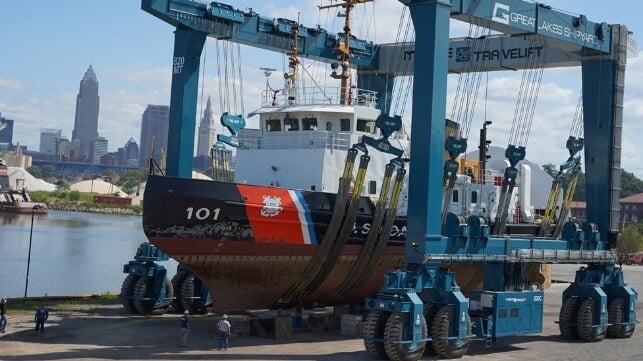
The choreography of lifting and moving huge pieces of equipment is something to behold.

Marine Travelift

Published Dec 15, 2025 8:51 PM by Sean Hogue

(Article originally published in Nov/Dec 2024 edition.)


Shipyards are key pieces of the global maritime infrastructure. From newbuilds to refits to scheduled maintenance, every single ship on the sea needs to return home periodically for a little rest and recovery – not to mention needed repairs, realignment, a fresh coat of paint and so on. Shipyards come in all sizes and shapes and can be found anywhere that the land meets the sea. But no matter the size, location or specialty, there's one constant you'll find at every single yard on earth: Cranes.

Nothing gets done without cranes. Equipment needs transferring; supplies need loading, and sometimes even ships themselves need lifting. Besides dock space, the next most flaunted feature that shipyards tout is their crane capacity. They're the single most important tool needed to get the job done. Crane technology has steadily advanced over the years with better operating systems, environmentally friendly designs and innovative solutions. Here are a few of my favorites.

FROM SKYSCRAPERS TO SHIPYARDS

Tower cranes are a familiar sight in the city. You see them at every construction site. They're quickly installed at the side of the road during highway construction, on bridges, and high in the sky on top of skyscrapers. But they haven't been a fixture widely seen in shipyards – until now. Founded in Spain in 1962, Comansa tower cranes have worked on all kinds of projects around the world: bridges, skyscrapers and high-rise buildings, dams, ports, stadiums and power plants, to name a few.

The company has been operating in North America since 2002 from offices in Pineville, North Carolina. Its specialty is producing large-scale tower cranes for big civil projects. This skillset is also a great option for shipyards needing assist cranes. Tower cranes don't require a road network, take up very little space and have an impressive working capacity, hook height and swing radius that are perfectly suited to shipyard work – all at a reasonable cost.

The company recently provided Vigor Shipyard in Seattle, Washington with two of its LCL-560 luffing jib-tower cranes. These are fitted with Comansa's level luffing system, which maintains load height during boom luffing (raising and lowering), and the EFFI Plus system that controls the electrically driven motors. This slows the hoisting speed when bearing a load but increases wire speed when unloaded on the downcycle. The overall cycle time is the same as traditional large motors but saves on power consumption.

Another innovation is Comansa's Crane Mate system. This digital platform allows crane monitoring, tele-diagnosis and fleet management in support of the preventive maintenance program. Thanks to this cutting-edge communications technology, clients can receive in real time technical information, location, alerts and data related to the productivity and maintenance of the crane. Tower cranes require minimal space versus crawler or mobile cranes. Pair this with the cost savings and all-electric motors for limited maintenance, and the advantage to shipyards becomes clear.

LIFT AND TRAVEL

Space is often at a premium in shipyards – especially those that primarily service the pleasure boat market. Since its inception in 1954, Marine Travelift has been known for its innovative boat-handling equipment, designing the very first mobile boat hoist in Sturgeon Bay, Wisconsin back in the 1940s.

Not long after, in the 1950s, Marine Travelift was officially established and has remained an industry leader for the past 70+ years. The company has had many firsts along the way including the first open-end boat lift design for faster handling of sailboats' masts, marina forklifts and breaking the record for largest capacity boat hoist multiple times. In 2022, it introduced a revolutionary variable-width option, available on both the BFMII and C-Series Mobile Boat Hoist machines. The variable-width option helps shipyards save space by stowing vessels more tightly together, enabling them to work on more vessels at the same time. The hydraulically actuated system allows the travel lift's uprights to better conform to the width of the boat being moved rather than requiring a one-size-fits-all approach.

The first Marine Travelift model with the variable width option was a 75BFMII with a 75-metric ton lifting capacity. Delivered to the Marine Group Boat Works in San Jose del Cabo, California, this model offers nine feet of width variability and can seamlessly expand and retract under full load in 60 seconds. "The variable-width option provides the ability to handle a wider variety of hulls and without any major infrastructure changes," explains Kurt Minten, Executive Vice President. "With the ability to vary the boat hoist's width, you can not only lift wide vessels such as catamarans but narrower mono-hulls as well without exceeding recommended sling angles."

A second exciting development was the introduction of a fully electric series of lifts. Fitting a 700-volt, battery-powered system on the 50BFMII boat hoist, which carries a 50-metric ton lift capacity, the power consumption was optimized to ensure the Electric Series meets or exceeds the performance of the standard engine machine. A full charge can be delivered in eight hours with the recommended 30kW high-speed smart charger, and yards can expect to lift anywhere from 10 to 14 vessels a day on a full charge. The Electric Series option is available in all capacity hoists offered. Where possible, going to a boat hoist rather than a drydock allows providers to work on more vessels at once and doesn't create the same delays a drydock might when waiting on parts needed for repairs. This gives yard and marina owners more versatility and allows them to more efficiently move vessels in and out of work areas.

MOVING MORE THAN SHIPS

If you've ever seen an impossibly large structure on top of a platform fitted with dozens of rubber wheels being moved over land, chances are you've seen Cimolai in action. Cimolai Heavy Lift provides the design and execution for the transport and lifting of "exceptional structures in weight and size." This is accomplished by using self-propelled modular transporters or SPMTs.

These hydraulically operated SPMTs are essentially a steel platform fitted with a number of double wheels riding on top of a hydraulic suspension system and powered by a hydraulic power pack on the end. The wheels are able to rotate, which allows the trailer to crab-walk, spin in circles and quickly adjust in any direction. When a weight is loaded on top, the hydraulic suspension serves to keep the platform level, even as the trailer moves across uneven ground. This keeps the load stable, which is critical when moving huge and heavy structures.

The real magic, however, is when you link multiple SPMTs together. The size of the structure to be moved is only limited by the size of the platform available to place it on and the weight-bearing capacity of the wheels. More SPMTs means more wheels and a bigger working surface. When linked, both length-wise and width-wise, all of the wheels respond to the same single operator's inputs. The result is a single unit customized to exactly meet the space requirements of the lift, providing a load capacity of up to 9,500 tons. (Note that the author has participated in many SPMT-powered operations, and they never fail to impress.)

SPACE-SAVING SOLUTIONS

In a world that demands increased efficiencies, space and agility are core considerations, and the need for equipment that is powerful, precise and space-conscious continues to increase. Cranes and heavy-lift technologies are no longer just about brute strength. They're about efficiency, flexibility and sustainability. Whether through the towering reach of Comansa cranes, the adaptability of Marine Travelift hoists or the modular versatility of Cimolai SPMTs, modern solutions are enabling shipyards to handle more complex projects in tighter spaces with reduced environmental impact. The future of shipyard operations will depend on adopting these innovations to remain competitive and deliver the reliability the maritime industry requires.

SEAN HOGUE is Executive Vice President of Baker Marine Solutions.

The opinions expressed herein are the author's and not necessarily those of The Maritime Executive.


Metal Shark and Tocaro Blue Collaboration to Advance Maritime Autonomy

Metal Shark

Published Dec 16, 2025 6:54 PM by The Maritime Executive


[By: Metal Shark]

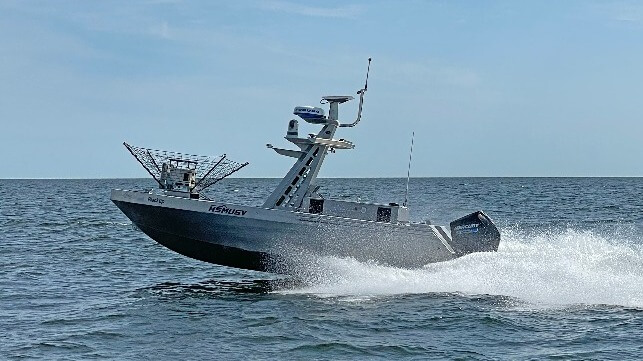
Louisiana-based boat builder Metal Shark, a key supplier for the US Armed Forces and allies, and Tocaro Blue, a leading developer of AI-powered marine sensor processing solutions, have announced a strategic collaboration to embed Tocaro Blue’s ProteusCore™ Radar processing software into Metal Shark’s fleet of High Speed Maneuverable Unmanned Surface Vessels (HSMUSVs).

ProteusCore™ provides operators with advanced radar data fusion, machine learning based object detection and classification, and real-time target tracking, improving ISR and operational safety in maritime environments. The software will be integrated directly into Metal Shark’s SharkTech autonomous technology stack, with the new sensing capabilities available across the HSMUSV fleet. The Metal Shark HSMUSV is a 21-foot unmanned military craft designed to offer the US Armed Forces and allies a low-cost multi-payload USV solution that can be rapidly produced and quickly fielded to meet emergent needs. HSMUSV comes factory-equipped with Metal Shark’s proprietary SharkTech autonomous technology stack, a hardware and software-agnostic system enabling unmanned, human-in-the-loop operation and supporting interface with other COLREGS, ATR, and AI software packages.

“The interoperability of the HSMUSV platform and SharkTech autonomy stack have been thoroughly proven this year through participation in multiple exercises on both sides of the Atlantic,” said Metal Shark CEO Chris Allard. “By incorporating Tocaro Blue’s ProteusCore™ technology, we’re taking another step toward an intelligent vessel ecosystem, enabling our customers to make faster, data-driven decisions in critical situations."

ProteusCore TM automates all aspects of using radar for unmanned and autonomous vessel operations. By embedding ProteusCore™ directly within the SharkTech autonomy stack, operators gain a unified maritime operating picture that enhances decision-making and improves threat awareness across complex environments.

“Tocaro Blue designed ProteusCore™ to unlock mission-critical perception capabilities in commercial off the shelf marine radars,” said John Minor, CEO of Tocaro Blue. We’re excited to team up with an industry leader like Metal Shark to deliver advanced capabilities to our Nation’s unmanned maritime defense assets.”

Metal Shark specializes in the design and construction of welded aluminum vessels from 16’ to over 300’ for military, law enforcement, and commercial operators. Key customers include US and foreign militaries, law enforcement agencies, fire departments, and other clients worldwide. With two fully self-contained boat building facilities in Louisiana USA; a research, design and testing facility in Alabama, USA; plus a dedicated engineering facility in Croatia, Metal Shark’s 400+ employees produce over 200 vessels per year with a proud and proven track record of high quality, on time deliveries.

The products and services herein described in this press release are not endorsed by The Maritime Executive.

WITHOUT BLOWING THEM OUT OF THE WATER

U.S. Coast Guard Delivers $200M in Cocaine to the Pier in San Diego

USCGC Active offload
Courtesy U.S. Coast Guard

Published Dec 15, 2025 10:21 PM by The Maritime Executive


The crew of the Coast Guard cutter USCGC Active has delivered $200 million worth of cocaine to the pier in San Diego, adding to the service's growing tally from an enforcement surge in the Eastern Pacific. 

USCGC Active is a 60-year-old medium endurance cutter (WMEC), and is among the longest-tenured vessels still serving in the U.S. armed forces. Still running on reliable ALCO 251 diesel engines, Active remains a top contributor to the counter-smuggling effort in the Pacific. The WMEC fleet is due for eventual replacement by the future Offshore Patrol Cutter (OPC), currently being constructed by Austal; in the interim, the efforts of crewmembers are essential for maintaining the existing fleet at sea.

"I could not be prouder of this crew," said Cmdr. Earl Potter, commanding officer of the Coast Guard Cutter Active. "Their determination, resilience, and professionalism make it possible to complete these dynamic and dangerous missions at sea. The conditions are tough, hours are long, and demands are high, but this team always maintains focus."

During this port call, Active offloaded 12.5 tonnes of cocaine, enough for about 10 million street doses. The landing is a major contribution to the Coast Guard's tally for "Operation Pacific Viper," its surge effort to provide additional countertrafficking resources off South and Central America. From the start of the operation in August through December 9, the service seized a total of 68 tonnes. 

The offload provides a contrast to the Pentagon's parallel effort, which applies counterterrorism tactics to the problem of drug trafficking. At about the same time that the Coast Guard announced USCGC Active's offload, U.S. Southern Command announced that three more suspected drug boats had been eliminated in airstrikes in the Eastern Pacific, killing eight suspects on board. 


Hong Kong Customs Use ROV to Find Cocaine Hidden in Sea Chest

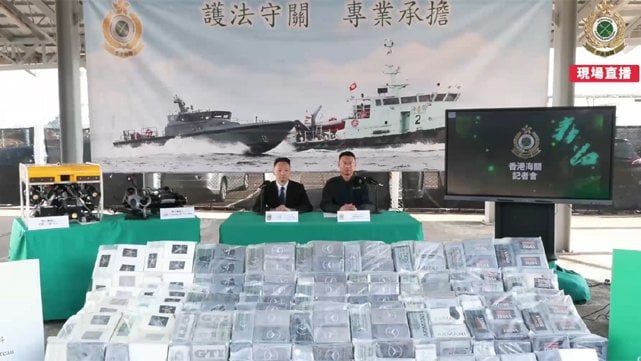
Hong Kong cocaine seizure
Hong Kong Customs highlighted its use of an ROV in the first discovery of cocaine hidden in a containership's sea chest (HK Customs)

Published Dec 16, 2025 1:45 PM by The Maritime Executive


Hong Kong Customs is highlighting its first use of a new ROV for ship inspections and reports that last month it, for the first time, discovered a large stash of cocaine hidden in the sea chest of a containership. Speaking at a press event on December 16, the officials highlighted that the smugglers are using new techniques in an attempt to avoid detection.

The unnamed containership, only described as being 333 meters (1,092 feet) in length, was targeted using intelligence sharing and monitoring techniques, the customs officials said. The ship had sailed from Brazil and made stops in Singapore and China. They reported the vessel had been placed under 24-hour surveillance before it arrived in Hong Kong waters on November 3. The following day, it was moved to a designated anchorage for clearance and inspection. 

A remotely operated vehicle was deployed for an underwater scan of the containership, which Customs said saves time and manpower for the initial search of ships. During the scan, they detected irregularities in one of the vessel’s sea chests located about 11 meters (36 feet) below the waterline. Customs divers were sent to investigate and discovered large packages that were retrieved and found to contain cocaine wrapped in waterproof materials.

“This drug concealment method is extremely rare,” said a HK Customs official during the briefing. “Given the sea chest lies roughly 11 meters beneath the hull, only professional divers could access this site.”

The officials described it as a “sophisticated maritime smuggling operation.” They recovered a total of 417 kg of cocaine in 11 bags hidden in the sea chest. It had an estimated value of HK$256 million (US$33 million). 

During the subsequent investigation, the police said two individuals were arrested. Some reports are saying they were crew from the vessel.

The police said they had previously found drugs hidden in containers or concealed in other areas on arriving ships. They said this was the first recovery from a sea chest underneath a vessel.

This discovery followed another case in October, where Hong Kong police said they had arrested three men after discovering around 69 kg of suspected cocaine worth HK$42 million (US$5.4 million). The report said the police believed the traffickers had hired divers to retrieve the drugs from the near-shore waters. HK Police said it was the first time they had encountered this tactic, where they believe an arriving ship released the cocaine bundles offshore.

Globally, police have reported similar instances where cocaine is hidden in a vessel’s sea chest or released offshore. The HK police believe the smugglers are adopting these tactics in response to the increased surveillance and interdiction efforts.