Monday, December 22, 2025

Opinion


Will the New Labour Codes Worsen India’s Inequality Crisis?


Divya Pradeep and Satyaki Dasgupta
15 hours ago
THE WIRE

The rationale provided by the government for raising the worker limit for layoffs, retrenchment and closures is to reduce compliance burden for firms, which in turn is expected to spur employment. However, studies suggest that flexibility in labour markets has not led to employment growth in India.
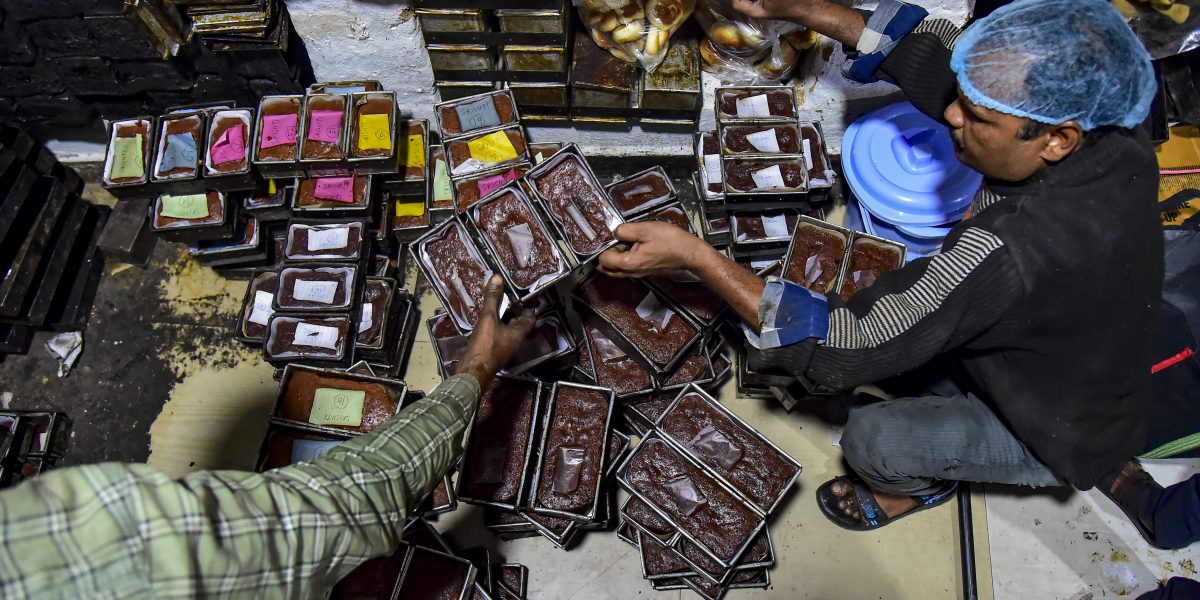

Workers prepare fruit cakes and other varieties of cakes at a bakery ahead of the Christmas festival in Prayagraj, Uttar Pradesh on December 21, 2025. Photo: PTI.

The Union government recently notified four new labour codes on November 21, merging the 29 existing labour laws, supposedly marking an era of progressive labour reforms. The codes relate to four major areas and have considerable implications for both workers and employers. These include Code on Wages, Code on Industrial Relations, Code on Social Security and Occupational Health and Working Conditions Code. The codes have been received with a considerable degree of optimism by employers in anticipation of increased ease of doing business in India. However, trade unions have clearly expressed their dissent and have once again called for countrywide direct action, including a general strike in February 2026, demanding the withdrawal of the labour codes.

Another troubling picture emerges before us – India’s position in the recently released World Inequality Report 2026 by World Inequality Lab. The report states that the top 1% of the population in India holds 40% of the wealth, making it one of the most unequal countries in the world. What is even more worrisome is that, over the decade between 2014-2024, the income gap between the top 10% and the bottom 50% has not reduced, indicating persistent income inequality.

According to calculations based on National Account Statistics too, there has been a sustained increase in the share of profit in Gross Value Added (GVA). GVA is calculated by adding compensation to employees, fixed capital consumption, and operating surplus, and subtracting taxes and subsidies. Business profits form a part of the operating surplus. This has been growing significantly across sectors like mining, electricity, transport and financial services. There has not been a corresponding rise in wages though. The compensation element in GVA has fallen between 2019-20 and 2023-24. The trend of falling share of wages is not a new phenomenon. Abraham and Sasikumar, in their 2017 paper find that this fall has been noticed in the manufacturing sector since the 1980s. The Economic Survey 2024-25 also reveals that corporate profits have hit a 15-year high while wage growth remains sluggish, raising concerns about weakening demand and rising inequality. Piketty (2014) also talks about the inherent tendency for returns on capital to exceed the growth rate of the economy under capitalism.
Understanding the macro linkages between labour codes and income inequality

To the extent that labour laws improve the returns to workers in the form of wages and salaries rather than the returns to capital in the form of rents and dividends, the emergent structure would be one of a more equitable distribution of national income. While it is possible that labour incomes may include very high earners, the returns to income in the top 0.1 or 0.01% of the earnings distribution are largely attributable to returns to capital, says Deakin in his 2021 paper.


Importantly, the bargaining power of the workers and the employers determine the distribution of the value added in a production process. The new labour codes significantly weaken the bargaining power of workers vis-a-vis the employers. For instance, under the new Industrial Relations Code, 2020, workers in any establishment cannot go on strike unless they give notice within 60 days before striking and within 14 days of giving such notice. Previously, a 14-day advance notice of strike was required for public utility services, but under the new labour codes all the establishments need to follow this protocol. The codes mention that mass casual leave will be treated as illegal strikes. This tilts the bargaining power in favour of employers by making striking legally difficult for the workers.

It must be noted that as per the most recent data available on the causes of major industrial disputes published by the Labour Bureau, the highest number of disputes (46.4%), were related to ‘Wages and allowances,’ for both the Union government and states combined. By increasing the difficulty to strike, wage hikes are less likely thereby having implications for income inequality.

The other thorny issue in the Industrial Relations Code relates to raising the retrenchment limit from 100 to 300 workers making it easier for firms to lay off workers at will. Kleinknecht, A. (2017) has argued that easy retrenchment of workers will erode worker loyalty and increase labour turnover, reduce incentives in firm specific training and knowledge sharing between workers and firms that provide the competitive edge for firms. Thus, even from an economic efficiency perspective, a dilution in the Industrial Relations Code 2020 is not advisable.

According to a working paper by Radhicka Kapoor, over 90% of the Indian enterprises hire less than 300 workers. With such a large percentage, the code increases labour precarity for a vast majority of workers. Thus, with greater ease to retrench workers and reduced ability to strike, workers will experience job insecurity and loss of social protection. Along with the ease of hiring and firing, the Code on Social Security (2020) also facilitates fixed term employment where workers employed on the basis of a written contract for a fixed period of time are provided benefits at par with permanent employees subject to certain conditions. However, this is likely to result in less permanent jobs and increase job insecurity.

The rationale provided by the government for raising the worker limit for layoffs, retrenchment and closures is to reduce compliance burden for firms, which in turn is expected to spur employment. However, there is a body of literature significantly contributed by Bhattacharjea (2020), Roychowdhury (2019), Roy, Dubey and Ramaiah (2020) which suggest that flexibility in labour markets has not led to employment growth in India. In fact, the latter paper finds that increasing labour flexibility is associated with weaker employment performances in Indian manufacturing. The rising unemployment in the country has frustrated the dreams of a demographic dividend and the labour codes only serve the purpose of distracting from deep rooted structural issues.


As Prabhat Patnaik puts it, neoliberalism has created massive income inequalities that tends towards overproduction and worsening of the employment problem. With wage share lagging in the national income, demand for output falls as wages are not just costs to firms but also represent the purchasing power of the working class. Firms respond to shortfalls in demand by cutting down on production and laying off workers. Without addressing the structural issues that are part of the neoliberal order, quick fixes in the form of change in closure and retrenchment rules, will serve little towards reducing unemployment. In fact, the weakening bargaining power of the workers may exacerbate inequality in an already very unequal country.

Undermining labour rights and worker protection will prove expensive particularly in the current geo-political context with trade wars being unleashed at an alarming pace. When export markets come under stress, internal domestic demand will play a crucial role in maintaining the incentives for continued production. This can happen only with improvements in bargaining power of workers and a rise in wage share of national income.

Divya Pradeep and Satyaki Dasgupta are faculty members at the Department of Economics at Christ University.
HINDUTVA DISCRIMINATION

‘Govt Looking Into Schools Cancelling Christmas Celebrations Due to RSS Pressure’: Kerala Edu Minister

]
The Wire Staff
17 hours ago

"The government is treating the matter very seriously. Action is underway against school managements which abandoned Christmas celebrations under threats from the RSS," the minister said.


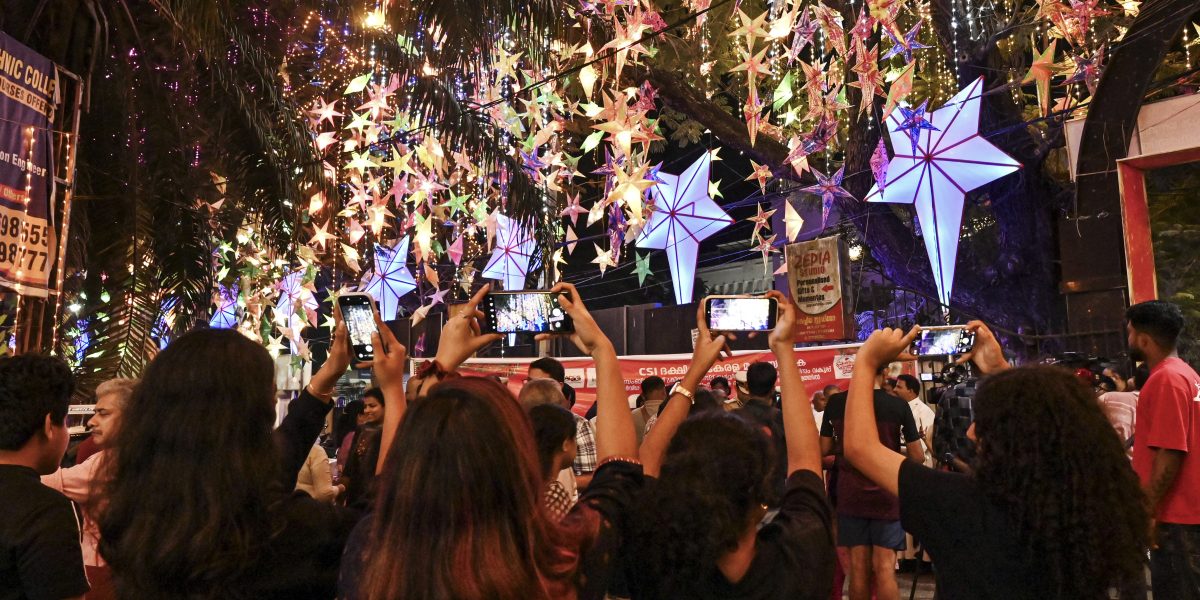
Visitors click pictures at an illuminated street ahead of Christmas celebrations, in Thiruvananthapuram. Photo: PTI

New Delhi: Schools in Kerala allegedly buckled under pressure from right-wing groups to cancel Christmas celebrations, state education minister V. Sivankutty said.

The minister cited incidents where school managements had returned money pooled in by students for the year-end celebrations under pressure from groups associated with the Rashtriya Swayamsevak Sangh (RSS).

“Several parents, students, and teachers complained to me. The government is treating the matter very seriously. Action is underway against school managements which abandoned Christmas celebrations under threats from the RSS,” Sivankutty said.

The minister accused the RSS of preventing minority communities like Christians and Muslims from holding religious celebrations. “The RSS is seeking to intertwine state holidays with religion to create communal schisms in society. It has zeroed in on Kerala’s schools, erroneously reckoning they are soft targets for their divisive purposes,” he said.

Sivankutty said that the RSS was trying to replicate its “North Indian” model of “othering” minorities in Kerala and added that the state government would resist all such attempts.

“The government will resist any attempt to transform schools into stifling compartments of religious segregation by any fundamentalist group. Imbibing secular and democratic values at a young age lays the ground for a humane and secular society,” he said.

This comes days after the cancellation of the Kerala postal department’s Christmas celebrations after employees refused to sing an RSS anthem as part of the event.

The Bharatiya Postal Administrative Offices Employees Union (BPAOEU), affiliated with the RSS, had called for ‘RSS Ganageetham’ to be sung as part of the celebrations as well as the inclusion of a Ganapati stuti (worship of the Hindu god Ganesha) in the Christmas and New Year celebrations.

The celebrations, mean to be hosted at post offices across Kerala on December 18 were ultimately cancelled.

INDIA

'Historic Error': Leading International Experts
Write to Modi Government Against MGNREGA Repeal

Mahatma Gandhi National Rural Employment Guarantee Act (MGNREGA)

The Wire Staff
19/Dec/202


'MGNREGA has captured the world’s attention with its demonstrated achievements and innovative design. To dismantle it now would be a historic error.'


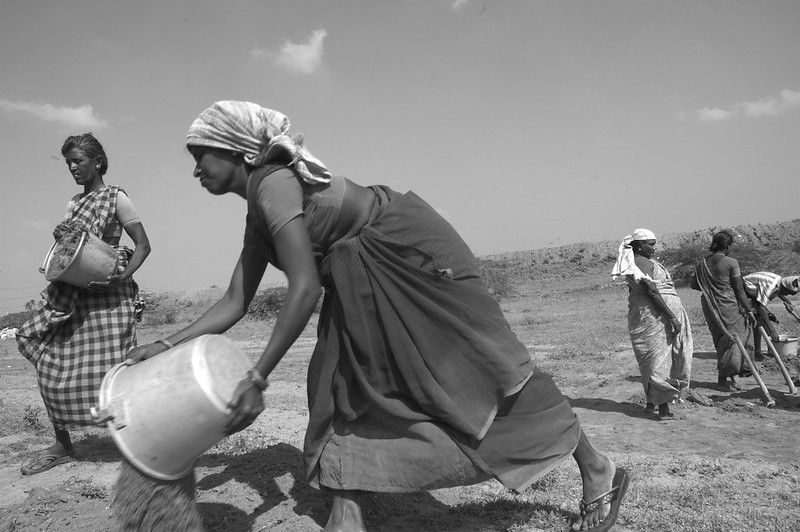
Representative image of women labourers working on field.
 Photo: Climatalk .in/Flickr (CC BY-NC 2.0).


New Delhi: Noted economic experts have signed an open letter to the Narendra Modi government in support of the Mahatma Gandhi National Rural Employment Guarantee Act (MGNREGA), the world’s largest rights-based public employment programme, which is now being repealed by the government to put the Viksit Bharat—Guarantee for Rozgar and Ajeevika Mission (Gramin) (VB—G RAM G) Bill in place. As many experts have noted before, the new Bill will change the basic right to work and reduce it to a scheme inordinately determined by the decisions of the Union government.

The new law also transfers greater and unsustainable obligations for administration and payment to the states.

The letter compiled by the Levy Economics Institute of Bard College has called the move to repeal the MGNREGA a “structural sabotage” and likens its dismantling to a “historic error.”

It is signed by the following experts:Olivier De Schutter, UN Special Rapporteur on Extreme Poverty and Human Rights
Isabelle Ferreras, Research director FNRS, Professor University of Louvain (UCLouvain), Senior research associate Center for Labor and a Just Economy, Harvard Law School
James Galbraith, Lloyd M. Bentsen Jr. Chair in Government/Business Relations at the Lyndon B. Johnson School of Public Affairs, The University of Texas at Austin, USA
Darrick Hamilton, Henry Cohen Professor of Economics and Urban Policy, New School for Social Research, USA
Mariana Mazzucato, Professor and Founding Director of the University College London, Institute for Innovation and Public Purpose
Thomas Piketty, Professor, EHESS and the Paris School of Economics, Co-director, World Inequality Lab & World Inequality Database
Joseph E. Stiglitz, University Professor and Nobel Laureate, Columbia University, USA
Pavlina R. Tcherneva, President and Professor of Economics, The Levy Economics Institute of Bard College, USA
Imraan Valodia, Professor of Economics, University of Witwatersrand, South Africa
Randall Wray, Professor and Senior Scholar, The Levy Economics Institute of Bard College, USA

The full text of the open letter is produced below.

We, the undersigned scholars, policymakers, lawyers, and civic actors (all friends of India), write to express profound concern regarding the imminent repeal of the Mahatma Gandhi National Rural Employment Guarantee Act (MGNREGA). We urge a recommitment to this landmark legislation, which stands as the world’s most significant policy operationalizing a demand-driven, legal right to employment.

Originally passed with unanimous parliamentary support, MGNREGA transcends political lines. Its foundational principle — that the national government must guarantee an employment safety net — affirms economic dignity as a fundamental right. Empirical evidence underscores its impact.

MGNREGA routinely generates over 2 billion person-days of work annually for some 50 million households, with transformative equity: more than half of all workers are women, and about 40% are from Scheduled Castes or Tribes. The early years of the Act coincided with unprecedented rural wage growth, and studies confirmed the program’s positive effects on economic output and efficiency, dispelling myths of unproductivity.

However, chronic underfunding and payment delays have long hampered implementation. The current shift to devolve the scheme to states and without commensurate fiscal support, now threatens its existence. States lack the central government’s financial capacity. The new funding pattern creates a catastrophic Catch-22: states bear legal liability for providing employment, while central financing is withdrawn. Previously contributing only 25% of material costs, states now face burdens of 40% to 100% of total costs, ensuring poorer states will curb project approvals, directly stifling work demand.

This structural sabotage is compounded by discretionary “switch-off” powers, which allow the scheme to be suspended arbitrarily and render the guarantee meaningless. The unexplained defunding of West Bengal in the last three years exemplifies this political misuse. The new framework institutionalizes this risk, imposing unfunded mandates on states without consultation.

MGNREGA’s demand-driven design not only provides wages but also builds vital rural assets such as wells, roads, ponds, stimulating local economies. By making projects financially untenable for states, these multiplier effects are extinguished.
Advertisement

MGNREGA has captured the world’s attention with its demonstrated achievements and innovative design. To dismantle it now would be a historic error. It would abandon a proven instrument for poverty alleviation, social justice, and care for the environment. We call for its restoration through assured central funding, timely wages, and an unequivocal return to its foundational guarantee of the right to work.

End of MGNREGA Will Deepen Poverty


Shirin Akhter NewsClick


MGNREGA mattered because it was not framed as charity. It was framed as a legal entitlement. It protected the poor and debt-ridden from sliding into destitution

The debate around renaming MGNREGA (the national rural employment guarantee Act) is the debate around the idea that the Indian State owes its rural working poor a right to work, a protection against hunger, and a minimum floor of dignity when the labour market offers only insecurity. MGNREGA mattered because it was not framed as charity. It was framed as a legal entitlement. It turned “poverty relief” into a claim that could be placed before the State. For a rural household living on the edge of subsistence, that difference is not philosophical; it is material. It shapes whether the worker is compelled to accept whatever wage a contractor dictates, whether a woman has any option beyond coercive farm labour, whether a family can buy medicines when illness arrives, whether a child stays in school or is pulled into work.

 End of MGNREGA

 Let us begin with the simplest fact of our political economy; India remains a country where mass vulnerability is normalised. If around 80 crore people still depend on the Public Distribution System (PDS) for basic food security, it is an admission that wages, livelihoods, and employment stability have not kept pace with the rhetoric of growth. PDS prevents starvation, but it does not pay for vegetables, cooking fuel, medicines, transport, rent, school fees, notebooks, data packs, or the interest on accumulated debt. Food transfers can keep a household alive; they cannot keep it secure.

 This is exactly where MGNREGA historically functioned as a critical bridge. The scheme did not make people prosperous. It protected them from sliding into destitution. That protection becomes even clearer when one recalls the scale: about 12.5 crore workers are enrolled under MGNREGA. This is not a small beneficiary base. It is a vast segment of working India, landless labourers, marginal farmers, women balancing paid work with unpaid care, Dalits and adivasis historically locked out of secure employment, elderly workers with failing bodies but no pension, migrants who return when urban work collapses, households that are one illness away from hunger.

When the job guarantee is weakened or replaced by a framework that no longer guarantees work on demand, the consequence is not simply “less employment”. The consequence is more poverty; deeper, harsher, and more coercive.

 First Structural Shift: From Right on Demand to Allocation on Permission

 MGNREGA’s core promise was demand-driven employment: the household could demand work as a matter of right. It was not supposed to be contingent upon whether the State happened to “open work” in that region at that time, or whether budgetary headroom existed in the moment.

 What is being proposed now, in substance, is a reversal, employment becomes dependent on centrally determined allocations, administrative notifications, and fiscal ceilings. Now demand has to fit the budget envelope, now work exists only if it is “sanctioned” within an annual cap and now the right to work turns into a rationed programme. It becomes a benefit one may or may not receive, rather than a claim one can insist upon.

 The Second Shift: Unequal Citizenship

 Another deeply troubling movement is toward geographically selective coverage through notified rural areas. The moment a programme becomes notification-based, it becomes politically and administratively discretionary. Some regions will remain covered, others will be partially covered, and some may be excluded through procedural convenience. A job guarantee that is not universal is not a guarantee. It becomes, a targeted scheme, vulnerable to:

  • uneven state capacity,
  • political favouritism,
  • bureaucratic delay,
  • and the gradual shrinking of coverage without legislative confrontation.

 The poorest and most marginal regions are often the ones with the least administrative capacity and the weakest political leverage. They are also the regions that need the guarantee the most, and they are the ones that will be excluded most often.

 The Third Shift: Unequal Implementation

 When cost-sharing is altered in a way that increases State burden, the practical consequence is predictable, states with weaker revenues and greater distress will be forced to ration work, delay payments, or quietly reduce employment guarantee. This creates a cruel geography of protection: the states with the greatest need will be least able to fund the scheme robustly.

 In a country like India, the labour market is not a level field. Fiscal federalism is not neutral. When the Centre withdraws responsibility and asks states to carry a larger load, it is not cooperative federalism, it is outsourcing poverty to the weakest institutions.

 The Fourth Shift: ‘Mission-Mode Development’

 MGNREGA was meant to secure livelihoods through locally relevant, labour-intensive work, rooted in local priorities. Reframing the programme as a development mission, emphasising “asset creation”, “convergence”, “infrastructure outcomes”, “targets”, changes the moral centre of the programme.

 The problem is not that assets are unimportant. The problem is that when the logic becomes mission-mode, the worker’s need for employment ceases to be the organising principle. The State begins to prioritise what is auditable, visible, and centrally legible over what is locally necessary and livelihood-protecting.

 Read Also: https://www.newsclick.in/systemic-agrarian-crisis-changing-contours-farm-workers


 In mission-mode governance, the programme’s success is measured by dashboards, photographs, geo-tags, and completion certificates, while the worker’s most basic questions of work and wages remain unanswered.

 The Fifth Shift: Exclusion by Design

 Digital systems are presented as instruments of transparency, while in practice, they frequently become instruments of denial. Mandatory biometric attendance, Aadhaar-linked payments, app-based monitoring, and increasing dependence on digital compliance can convert the right to work into a fight to get authenticated.

Most poor households do not have access to stable digital infrastructures. Connectivity fails. Biometrics fail. Linking errors happen. Mapping errors persist. Women often do not control phones. Elderly workers have worn fingerprints. Migrant households face documentation mismatches. The poorest are the least able to navigate grievance redressal.

When wages are delayed, it is not just a line-item in an audit report. It is an empty kitchen. When a payment is denied due to a technical mismatch, it is not “efficiency”; it is hunger, debt, humiliation. When the scheme becomes technology-gated, exclusion becomes structural and poverty deepens quietly.

 Most Economically Revealing Change: 60-Day “no Work” and Wage Suppression

 The mandatory 60 days of no work during peak agricultural seasons is perhaps the clearest signal of what is being redesigned. It should be analysed not only as an administrative clause but as a direct intervention in rural wage formation.

 MGNREGA historically operated as a competing employer. Its presence in the rural labour market strengthened workers’ bargaining power and set a minimum outside option. Even when MGNREGA wages were modest, the existence of an alternative mattered. It meant a worker could refuse the most exploitative terms, or at least negotiate.

 When the State legally suspends public employment during the period when agricultural labour demand peaks, the rural workers lose the bargaining power that would have arisen due to high demand. Workers are pushed back into the agricultural labour market in larger numbers, expanding labour supply at the critical moment. This moderates peak-season wage increases and restores employer dominance.

 Thus, the clause functions as a wage-disciplining tool. It does not merely “avoid labour shortages”, it ensures that labour remains available to private employers on terms shaped by employer power, not worker choice.

 Who Bears the Wage Shock?

 Landless labourers bear the shock immediately, they have fewer options, lower bargaining power, and higher pressure to accept whatever wage is offered.

 Women workers bear it even more harshly: MGNREGA has been one of the few work options that is relatively local and predictable, and somewhat compatible with care responsibilities. Peak-season agricultural work is often more coercive, mediated by contractors, with longer hours, delayed payments, and intensified labour. When public employment is withdrawn, women are either pushed into more exploitative farm work or pushed out of paid work altogether, deepening the discouraged-worker effect and reinforcing gendered dependency.

 The clause also risks producing a vicious cycle. Once peak season ends, labour demand drops. Workers then face an even more slack labour market. Unless public employment restarts smoothly and in sufficient volume, rural wages face downward pressure even after harvest. In many parts of India, cropping patterns are staggered and regional peaks vary; rigid “no work” blocks can create arbitrary periods of income collapse.

 Wage Compression and Poverty

 This rural wage suppression should not be read in isolation. It is part of a wider political economy that is compressing wages from both ends.

 Public-sector wage ladders that once offered stability and dignity to skilled and semi-skilled workers have been weakened through contractualisation, rationalisation, and an ideology that treats wage growth as a fiscal burden rather than an investment in social stability. Skilled workers experience stagnation despite qualifications, while job security is eroded and employment becomes precarious.

 Read Also: https://www.newsclick.in/mgnregs-disempowering-people

  Dismantling MGNREGA’s effective guarantee erodes the wage floor for unskilled and casual labour. It removes a crucial outside option, suppresses agricultural wages through seasonal shutdowns, and deepens dependency on informal, coercive labour markets.

 What emerges is a labour market squeezed from both ends:

  • skilled workers face stagnation and insecurity despite education and experience,
  • unskilled workers lose the last institutional buffer that prevented wages from collapsing altogether.

 This is not accidental drift. It is a coherent policy orientation. When MGNREGA ends as a real guarantee and survives only as a rationed, notified, technology-gated programme, poverty will rise, even if PDS continues.

 Poverty is not only hunger. Poverty is the inability to withstand shocks. It is debt. It is untreated illness. It is kids withdrawn from school. It is malnutrition masked by cereal consumption. It is families selling assets, migrating under coercion, and accepting humiliating work terms because there is no fallback.

 MGNREGA wages often fund what PDS cannot, healthcare costs (especially catastrophic out-of-pocket spending), transport to hospitals and schools, essential non-cereal nutrition (milk, eggs, vegetables), educational expenses, repayment of informal debt, basic dignity expenses that keep households functioning.

 Remove that income support and households slide into deeper vulnerability. And once households fall, the fall is not smooth. It is steep. The first shock triggers the second, debt leads to distress migration; migration leads to family fragmentation; fragmentation leads to school discontinuation; discontinuation leads to generational reproduction of poverty.

 The Hardest Hit

 The vulnerable and minor sections will be hit hardest not because they are inherently vulnerable, but because the economy and society have made them so through landlessness, discrimination, exclusion from stable jobs, and weaker access to state power.

  • Dalit and adivasi households: more likely to be land-poor or landless, more likely to face labour market discrimination, more dependent on public employment as a protective floor.
  • Women-headed households: more fragile income structures, heavier care burdens, fewer bargaining resources.
  • Elderly and disabled workers: limited ability to migrate, greater reliance on local work options.
  • Muslim artisans and rural workers in communally polarised regions: often constrained in labour markets by discrimination and insecurity, making State-backed work options even more crucial.
  • Migrant workers: the first to lose urban income during downturns, the first to return to villages, and among the most dependent on a functioning job guarantee when the city collapses.

 In each case, the loss of a guarantee does not simply reduce income. It increases coercion. It increases dependency. It strengthens the informal power of contractors and local elites. It turns the worker’s body into the last remaining asset.

 The Policy Reversal

 This is why renaming matters. It is not a sentimental attachment to a title. It is the cultural face of a deeper institutional retreat, away from rights, away from decentralised social protection, away from labour dignity.

 When a State withdraws from being an employer of last resort while 80 crore people remain dependent on food support, it is not moving toward Viksit Bharat. It is moving toward a model where survival is stabilised at the level of ration grain while wages are disciplined, employment is made uncertain, and poverty is managed rather than confronted.

 In policy debates, the worker is often reduced to a statistic -- 12.5 crore enrolled, so many person days generated, so many assets created. But the lived truth is quieter and harsher. For millions of households, MGNREGA is the difference between negotiating with the labour market and being crushed by it. It is the difference between paying for medicine and postponing treatment. Between keeping a child in school and pulling them into work. Between eating only grain and eating something resembling a meal.

 Ending MGNREGA as a genuine guarantee will not create better jobs. It will push people into deeper poverty, greater debt, and more coercive labour relations. And the hardest hit will be those who have always borne the weight of India’s inequality: the landless, the marginalised, the minorities, and women whose labour is extracted both inside and outside the home.

 Shirin Akhter is Associate Professor at Zakir Husain Delhi College, University of Delhi. The views are personal.


INDIA


No Debate on Air Pollution in Parliament This Session, Minister Makes Untrue Claim on AQI and Disease Link
THE WIRE

Parliamentary affairs minister Kiren Rijiju blamed members of the opposition for ‘stalling’ the debate on air pollution.


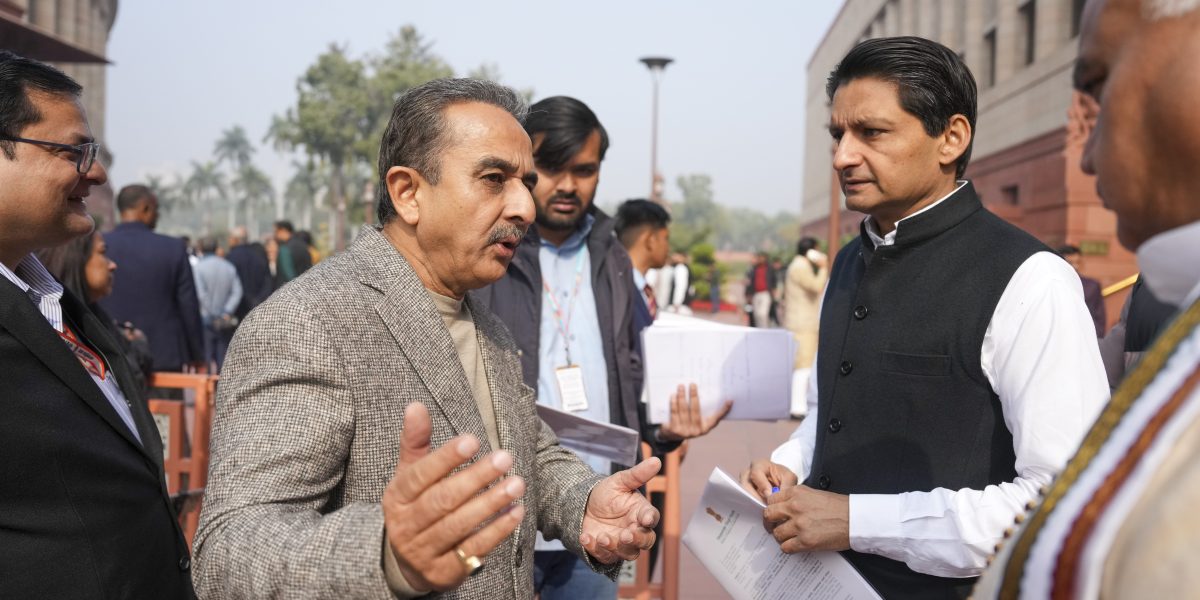
Union Minister of State for Environment Kirti Vardhan Singh, centre, interacts with Congress MP Deepender Singh Hooda, back right, and others during the Winter session of Parliament, in New Delhi, Friday, Dec. 19, 2025. Photo: PTI.

Bengaluru: Delhi has been witnessing very high levels of air pollution for consecutive days now but the parliament did not discuss the issue for the entirety of the Winter Session, from December 1 to 19.

Meanwhile, the union government has claimed in parliament that there is no proof for any direct link between air pollution and ill health – this time, lung diseases.

In a written reply on Thursday, December 18, the minister of state of the Ministry of Environment, Forest and Climate Change, Kirti Vardhan Singh said that there is “no conclusive data” to establish a “direct correlation between higher AQI levels and lung diseases”.

No debate in parliament

The Air Quality Index (AQI, a measure of air pollution that takes into account major pollutants in the atmosphere such as fine particulate matter) in Delhi at 4 pm on December 19 was 374, according to the daily bulletin by the Central Pollution Control Board.

This marks the ninth consecutive day that air quality in the national capital has been in the “Very Poor” or “Severe” category this month. The AQI in the city on December 18 according to the CPCB was 373. This is the worst air quality that Delhi has witnessed in December since 2018, Hindustan Times had reported.

The parliament was supposed to discuss the issue of air pollution in the Lok Sabha on Thursday. However, this did not happen and was pushed to the next day. It was not discussed on this day — the final day of the Parliament’s Winter Session, December 19 — either.

Parliamentary affairs minister Kiren Rijiju blamed members of the opposition for ‘stalling’ the debate on air pollution, claiming that the Union government had been ready to discuss it.

“…[T]he opposition’s behaviour during the debate in Lok Sabha on Viksit Bharat Guarantee for Rozgar and Ajeevika Mission (Gramin) (VB-G RAM G) Bill was unacceptable. Some of the opposition members even stood atop the desks of the table office and (Lok Sabha) Secretary General. Some Congress members also conveyed that there was no need for a debate on pollution. That is why the issue could not be taken up for discussion,” PTI quoted him as saying on Friday, December 19.

No ‘conclusive data’


A day before, on December 18, junior environment minister Kirti Vardhan Singh had said that said that there is “no conclusive data” to establish a “direct correlation between higher AQI levels and lung diseases”.
Advertisement

Singh was responding to questions posed by Laxmikant Bajpayee, a Member of Parliament from the same party that Singh belongs to — the Bharatiya Janata Party. Bajpayee, an Ayurveda physician by training, had asked if the government “is aware that studies and medical tests have confirmed that due to prolonged hazardous AQI levels in Delhi/NCR, masses are developing lung fibrosis, an irreversible reduction in lung capacity”.

He also asked whether the lung elasticity (the ability of lungs to expand while breathing) of citizens in the Delhi-NCR has drastically reduced to almost 50% as compared to lung elasticity of citizens living in cities having good AQI levels, and if the government proposes any solution to save the millions of the city’s residents from deadly diseases like pulmonary fibrosis, COPD, reduced lung function and continuously declining lung elasticity due to air pollution.

Singh replied that while air pollution is one of the “triggering factors” for respiratory ailments and associated diseases, there is “no conclusive data which establishes a direct correlation between higher AQI levels and lung diseases”.

Singh is wrong.

Numerous scientific studies show a clear link between air pollution and lung diseases. And higher AQI levels reflect higher levels of pollution — a concept that the union environment ministry too relies on to issue advisories when pollution levels worsen. On December 13, for instance, an order of the Commission for Air Quality Management had advised children, the elderly and people with respiratory, cardiovascular, cerebrovascular or other chronic diseases to avoid outdoor activities and stay indoors “as much as possible”, and to wear masks if required to move outdoors — because Delhi’s AQI had reached 448 that evening, and was in the “Severe” category.

Why Singh is wrong

A 2025 study published in the journal Environmental Pollution analysed air quality data from two monitoring stations in Tamil Nadu across four years and screened 3,549 patients for respiratory illnesses. The researchers (from institutes including the National Institute of Research in Tuberculosis under the Indian Council of Medical Research — the apex body in India for the formulation, coordination and promotion of biomedical research) found a “strong correlation between pollution levels and respiratory diseases”.

Another study published in Scientific Reports in 2023 found a “significant positive correlation” between high AQI levels in India and a higher rate of lung cancer (though it also found that factors such as smoking habits and occupational exposures may “obscure” this relationship).

A study published this year analysed the relationship between respiratory diseases and air pollution across 27 countries including India over a four-year period (2018–2021). It found that overall, higher pollutant levels correlated with an increased number of COPD cases.

“This aligns with known biological mechanisms where these pollutants exacerbate airway inflammation and chronic respiratory damage,” the study noted.

Chronic obstructive pulmonary disease or COPD is a lung disease that causes restricted airflow and breathing problems. According to the World Health Organisation, smoking and air pollution are the most common causes of COPD, which is the fourth leading cause of death worldwide. It is incurable.

Indian researchers are even trying to develop methods to predict lung disease severity based on the AQI. A study by Indian scientists that was presented at last year’s Asian Conference on Intelligent Technologies developed a way to predict air quality using image data and then assess lung disease severity based on AQI. Their models had very high testing accuracies (around 87% for AQI and 97% for lung disease severity), the preprint of their study shows.

‘CAQM is working on this’

Singh in his response in Parliament on Thursday also said that the government has established the Commission for Air Quality Management (CAQM) under the Commission for Air Quality Management in NCR and Adjoining Areas Act, 2021 “for better coordination, research, identification and resolution of problems of air pollution” in the Delhi- NCR and adjoining areas.

He added that the CAQM has been provided powers under the Act to take measures and issue directions to various agencies in the NCR and has been addressing the issue of air pollution in a “collective, collaborative and participative” way, involving all major stakeholders, Singh said.

Currently, the CAQM has imposed Stage 4 of the Graded Action Response Plan, which are a series of progressively restrictive measures that the Delhi-NCR region has to implement with worsening AQI levels to curb dust, fumes and other sources of air pollution.

Under Stage 4, measures include barring the entry of non-BS VI vehicles into Delhi, halting construction activity, and no fuel for vehicles without a PUC certificate.

However, allegations of rampant, ongoing construction have surfaced during this time. On December 16, AAP leader Saurabh Bharadwaj had posted a video on social media to show that construction is still progressing unrestrained even within Delhi limits.

GRAP 4 is bullshit !!

Under the patronage of BJP’s high profile Minister, right under GRAP 4, construction going on throughout the night at Delhi

Totally illegal construction in 2.5 acre farmhouse !!

H-14 Pushpanjali farms, Delhi

Guess the name of the Minister ?@MCD_Delhi pic.twitter.com/s6IIqq3ws1

— Saurabh Bharadwaj (@Saurabh_MLAgk) December 16, 2025


Government Says it Has No Data to Link Deaths, Diseases With Air Pollution


The Wire Staff
10/Dec/2025

In its answer to a question by Trinamool Congress MP Derek O'Brien, junior health minister Prataprao Jadhav admitted that “air pollution is one of the triggering factors for respiratory ailments and associated diseases”.


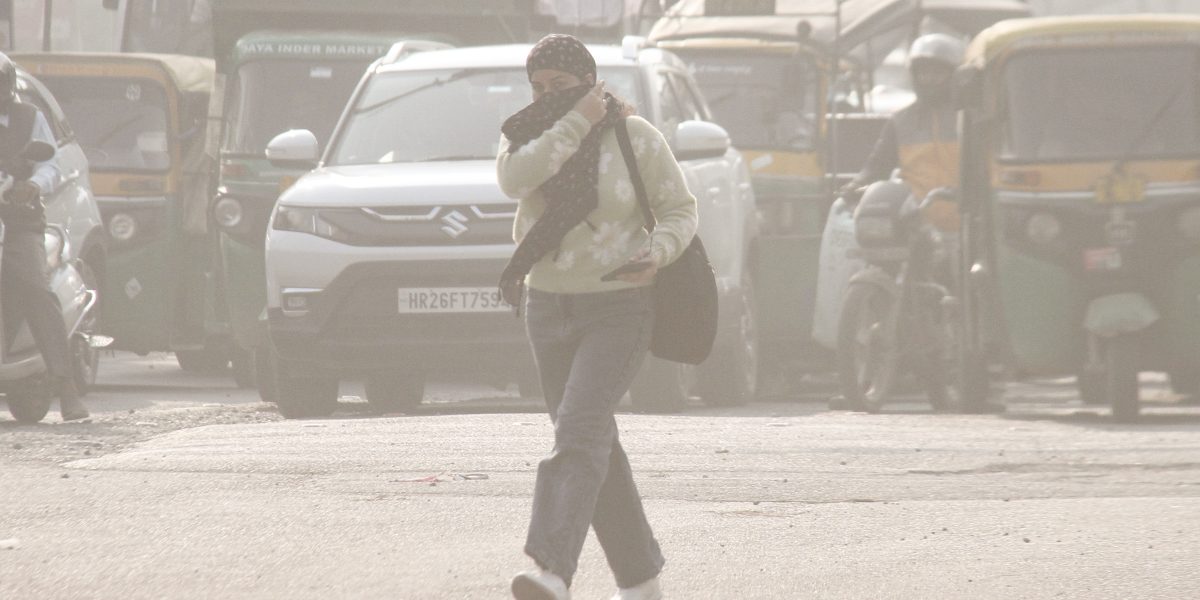
A woman crosses a road while covering her face to shield herself from pollution as air quality continues to worsen across northern India, in Gurugram, Haryana, Tuesday, Nov. 25, 2025. Photo: PTI.

New Delhi: The Union government has said in parliament that there is “no conclusive national data to establish a direct correlation between deaths or diseases occurring exclusively due to air pollution” at a time when the pollution in several Indian cities and most visibly, the national capital, has been a major source of concern and ill health.

The level of pollutants in Delhi’s air has sparked protests from residents, and their heavy-handed quelling by law enforcement.

In its answer to a question by Trinamool Congress MP Derek O’Brien, junior health minister Prataprao Jadhav said that “air pollution is one of the triggering factors for respiratory ailments and associated diseases”.

O’Brien had asked:

Will the Minister of Health and Family Welfare be pleased to state:-

(a) whether it is a fact that over 1.7 million deaths in 2022 were attributable to PM2.5 in the country;
Advertisement

(b) whether it is also a fact that outdoor air pollution caused losses of about 9.5 per cent of GDP;

(c) Government’s official estimate of deaths from air pollution in the last five years State/UT-wise;

(d) whether Government has assessed the economic loss due to air pollution, if so, the details thereof; and

(e) whether any plan has been formulated to reduce PM2.5 exposure with time-bound targets, if so, the details thereof?

In reply, Jadhav said, “There is no conclusive data available in the country to establish direct correlation of death/ disease exclusively due to air pollution. Air pollution is one of the triggering factors for respiratory ailments and associated diseases.”

He then appeared to attribute the impact of air pollution on the human body to a multitude of factors, saying, “Health effects of air pollution are synergistic manifestation of factors which include food habits, occupational habits, socioeconomic status, medical history, immunity, heredity, etc. of the individuals.”

In an annexure, Jadhav listed the “several steps” taken by the Union government to “address air pollution issues.”

It cited the implementation of National Programme for Climate Change and Human Health (NPCCHH) under which it has developed a “Health Adaptation Plan” on health issues due to Air Pollution and a “State Action Plan” on climate change and human health for all 36 State/UTs.

“This State specific Action Plan contains dedicated chapter on air pollution which suggests interventions to reduce the impact,” the government said.

The Union government also cited health ministry public health advisories to states and Union territories “suggesting ways to reduce the impact of air pollution” and nationwide public awareness campaigns on World Environment Day (5th June), International Day of
Clean Air for blue skies (7th September) and National Pollution Control Day (2nd December) as ways in which it has tried to beat the effects of air pollution on health.

The government claimed it has developed “dedicated training modules” for programme managers, medical officers and nurses, nodal officers, women and children, traffic police, frontline workers like ASHA, and so on.

It also cited communication material on air pollution-related illnesses, capacity building workshops for state-level trainers, early warning systems, the Swachh Bharat Mission and the Pradhan Mantri Ujjwala Yojana “which aims to safeguard the health of women and children by providing them with a clean cooking fuel”.

The Ministry of Environment, Forest and Climate Change has launched National Clean Air programme in 2019 as a national-level strategy to reduce air pollution levels across the country, the government said in its reply.