Tuesday, December 23, 2025

Families want answers a year after South Korea’s deadliest plane crash

“Everyone could have survived — only with injuries — if it had been a mound of earth.”


By AFP
December 22, 2025


Grieving mother Lee Hyo-eun returns every weekend to the airport where her daughter and 178 others died last year - Copyright AFP ANTHONY WALLACE
Kang Jin-kyu

Grieving mother Lee Hyo-eun returns every weekend to the airport where her daughter and 178 others died last year, desperate for the truth about South Korea’s deadliest airline disaster.

Jeju Air Flight 2216 was coming in to land at Muan International Airport from Thailand when it struck a flock of birds and was forced to make a belly landing that sent it crashing into a structure at the end of the runway.

Only two flight attendants seated in the tail section survived.

Lee vividly remembers that day.

Her daughter Ye-won, a cello instructor, had just celebrated her birthday and was due to return from a short holiday in Bangkok.

Lee was planning a welcome dinner when her sister called to ask if Ye-won had landed.

What happened next, she said, was “unbelievable”.

“She was gone when she was at her brightest, in full bloom at 24,” Lee said.

Official findings have pointed to pilot error in explaining why the December 29, 2024 crash happened.

But one year on, Lee and other relatives of the victims say they harbour deep mistrust over how the investigation has been handled.

They are still demanding answers over the key question surrounding the crash: why was there a concrete block at the end of the runway, despite international aviation safety guidelines?


– ‘We demand answers’ –


At the Muan airport — which has been closed to commercial flights since the crash — families of the victims spend days and nights in and around tents set up in the departure terminal on the second floor.

Blue ribbons symbolising the victims adorn the airport, while letters remembering the dead line the stairways.

The localisers damaged in the crash still stand at the end of the runway, and what appear to be fragments of concrete slabs and pillars are strewn across a field not far away.

Banners draped along the walls criticise the official investigation, with one reading: “A country incapable of protecting citizens is not a country. We demand answers!”

Park In-wook told AFP he is “famous” among the two dozen relatives who choose to return to the airport weekend after weekend.

He lost five loved ones in the crash: his wife, daughter, son-in-law and two young grandchildren.

“In the first days, I felt like I was dreaming,” said Park, 70.

“Almost a year has passed, but I cannot recall how many days it took to hold my wife’s funeral or the exact date it took place.”

The families’ anger intensified following the release of an interim investigation report in July.

The report emphasised that the pilot decided to shut down the less damaged left engine during the crash, but it did not address the concrete structure housing antenna localisers at the end of the runway.

International aviation safety guidelines state that such navigation structures should be made of frangible, or breakable, material — a recommendation not followed at the Muan airport.

A nationwide inspection after the crash found six other airports where localisers were also housed in concrete or steel structures.

Five of them have had their localisers retrofitted with breakable material, while another will be retrofitted next year, Seoul’s transport ministry told AFP.

“The July report highlights the government’s attempt to frame the accident as being caused mainly by pilot error,” Ko Jae-seung, 43, who lost both parents in the crash, said.

“An official investigation should not be about assigning blame to individuals but about examining the systems and conditions that made the accident inevitable,” Ko said.


– ‘Everyone could have survived’ –


Ye-won’s mother believes the pilots did everything they could in those crucial moments to save lives on board.

“They managed to land the plane on its belly against all odds, with everyone still alive at that point, without knowing there was a concrete structure ahead of them,” she told AFP at her home in the southwestern city of Gwangju.

“Everyone could have survived — only with injuries — if it had been a mound of earth.”

Her home is decorated with photographs of her late daughter alongside handwritten letters from Ye-won’s friends.

“Thank you for everything. You were a deeply respected and beloved teacher,” the mother of one student wrote.

On a cabinet sit several framed photos from Ye-won’s final days in Bangkok, retrieved from her phone, which was discovered at the crash site.

“Sometimes it feels like she just hasn’t come home from her vacation,” Lee said.

“I find myself wondering when she will.”
Disputed Myanmar election wins China’s vote of confidence


By AFP
December 22, 2025


A woman cycles past campaign billboards ahead of Myanmar's general election in Pyin Oo Lwin in Myanmar's Mandalay Region - Copyright AFP Sai Aung MAIN

Myanmar’s military-run elections are being pilloried abroad and shunned at home, but neighbouring China has emerged as an enthusiastic backer of the pariah poll.

International monitors have dismissed the vote starting Sunday as a charade to rebrand Myanmar’s military rule since a 2021 coup, which triggered a civil war.

But Beijing’s brokerage has secured watershed truces and retreats by rebel groups — turning the tide of the conflict and strengthening the junta’s hand ahead of the weeks-long vote.

Once backing opposition factions, analysts say China now throws its weight behind the military and its polls as Beijing pursues its own private interests in Myanmar — and even the reordering of its leadership.

“It’s as if an outsider were involved in our family issues,” complained a resident of northern Lashio city, once the rebels’ biggest war prize but returned to the junta via Beijing’s intervention in April.

“I want to sort out my family matters by ourselves,” said the 30-year-old woman, declining to be named for security reasons. “I don’t like other people involved.”


– ‘No state collapse’ –


Myanmar’s military cancelled democracy nearly five years ago, detaining civilian leader Aung San Suu Kyi and alleging her electoral victory was secured by massive voter fraud.

The country plunged into civil war as pro-democracy activists took up arms as rag-tag guerrillas, fighting alongside formidable ethnic minority armies that have long resisted central rule.

China’s reaction to the military takeover was initially muted, but the explosion of internet scam centres along the China-Myanmar border threw a lever.

The massively profitable online fraud factories ensnared legions of Chinese citizens — both as trafficked, unwilling workers and as targets in elaborate romance and business cryptocurrency cons.

Irked by the junta’s failure to crack down, Beijing abandoned its agnosticism, giving at least its tacit backing to a combined rebel offensive, monitors say.

The “Three Brotherhood Alliance” trio of ethnic minority armies won stunning advances, including Lashio in the summer of 2024 — the first capture of a state capital and a regional military command.

“What I’ve seen is that China can control outside organisations,” said another 30-year-old Lashio resident, also speaking anonymously for security reasons.

The rebels marched on to the brink of Myanmar’s second city, Mandalay, before Beijing pumped the brakes, said Morgan Michaels, a research fellow at the International Institute for Strategic Studies think tank.

“Beijing’s policy is no state collapse,” he told AFP. “When it looked like the military was going to collapse, it equated that with state collapse and so it stepped in to prevent that.”


– Reshuffling ranks –


China may have settled on backing the military, but Michaels says there are terminal doubts about military chief Min Aung Hlaing, who plunged the country into an intractable crisis.

“I think there’s a general sense that he’s stubborn, not particularly good at what he does,” said Michaels. “They would like to see him moved aside or at least have his power diluted.”

Many monitors, including United Nations expert Tom Andrews, have described the election as a “sham”.

Rebels defying military rule have pledged to block the vote from their territory — deriding it as choreography allowing Min Aung Hlaing to prolong his rule by wearing a civilian sash.

But the nominal return to civilian rule will hedge Min Aung Hlaing’s power, said Michaels, forcing him to choose between the presidency or armed forces chief — roles he has held in tandem under military rule.

“It probably will result in his power being diluted or him having to make some sort of compromise,” said the analyst.

After the junta started to lay out an election timetable, Min Aung Hlaing enjoyed his first post-coup meeting with Chinese President Xi Jinping in May.

Meanwhile, China began to defuse the “Three Brotherhood Alliance” — peeling away two of its factions based along its border with truces.

The Ta’ang National Liberation Army agreed to an armistice in October, after the Myanmar National Democratic Alliance Army handed back once bitterly contested Lashio in April.

“I feel lost as a citizen,” said the Lashio woman who requested anonymity.

“Some of my friends cannot come back. Some have already died. They are not in the world anymore.”

A Chinese foreign ministry spokesman told AFP: “China supports Myanmar in broadly uniting domestic political forces, steadily advancing its domestic political agenda and restoring stability and development.”

Lashing back at foreign criticism of the poll last week, junta spokesman Zaw Min Tun told reporters: “It is not being held for the international community.”

But he said that “partner countries” are “assisting and supporting the election” — doing so “out of a desire for the betterment of Myanmar”.

Myanmar’s long march of military rule


By AFP
December 22, 2025


Myanmar's military chief Min Aung Hlaing (C) in Naypyidaw on March 28, 2025, after an earthquake in central Myanmar - Copyright AFP Sai Aung MAIN

Myanmar’s military has ruled the country for most of its post-independence history, presenting itself as the only force capable of guarding the fractious Southeast Asian nation from rupture and ruin.

A decade-long democratic thaw saw martial rulers loosen their grip and Nobel Peace Prize laureate Aung San Suu Kyi lead, before a junta snatched back power in a 2021 coup triggering a ferocious civil war.

The military has organised elections starting Sunday but the vote is being shunned at home and abroad, and the generals have pledged to preserve their role in politics.

Here is a brief history of military rule in Myanmar:


– Founding force –


Myanmar, formerly known as Burma, won its independence in 1948 as Britain dissolved its empire after World War II.

The autonomy struggle was led by Aung San, the father of Aung San Suu Kyi. He first fought with the invading Japanese to oust Britain, before swapping sides as the tide of war changed and currying favour with London for the cause of independence.

The fledgling democracy had a thriving press and cinema scene, and promising economic potential as the world’s leading rice exporter.

But as the civilian government battled rebellions and internal divisions, it handed power to the military in 1958 for a two-year caretaker spell.


– ‘Bamboo curtain’ –


Elections followed, but the voluntary relinquishing of power had emboldened the military to make a takeover by force in 1962.

Aung San’s wartime comrade Ne Win, who had taken the helm of the armed forces after the leader’s assassination in murky circumstances, swooped in in a putsch he justified as protection against Myanmar’s disintegration.

He later said the military “took over power against its cherished beliefs”, promising to “transfer power to the people in due course”.

But he ruled for 26 years, enforcing a nominally socialist one-party state that pulled a “bamboo curtain” around Myanmar making it a hermit nation, crashing the economy and crushing dissent.


– Protests, coup, protests –


Massive student-led pro-democracy protests that began on August 8, 1988 forced Ne Win to step down.

But a rebranded leadership swiftly staged a fresh coup, crushing demonstrations in a bloody crackdown that saw more than 3,000 people killed and many more spirited away to prison.

Than Shwe became the top general, facing his own uprising in 2007 when the “Saffron Revolution” led by robed monks took up the pro-democracy mantle.

He, too, used military might to quell the resistance.

The 1988 protests were a proving ground for activists, some still challenging military rule today. At the forefront was Suu Kyi, who won the Nobel Peace Prize in 1991 during one of many stints in detention.


– Military makes the rules –


Than Shwe retired in 2011, handing power to a civilian government, which was however led by an ex-general and reined in by a military-drafted constitution privileging the armed forces with a central role in parliament and cabinet.

Critics initially dismissed it as military rule wearing a civilian sash, but president Thein Sein proved a cautious reformist.

He released Suu Kyi, who surged to electoral victory in 2015 and assumed a leadership position carved out to sidestep military-drafted rules that barred her from the presidency.

The democratic figurehead opened the country up, often sparring with military chief Min Aung Hlaing.


– Civil war –


Her second landslide in 2020 polls proved a step too far, and Min Aung Hlaing snatched back power, making unsubstantiated allegations of voter fraud, re-jailing Suu Kyi and dissolving her party.

The coup triggered a full-blown civil war as long-active ethnic minority armies were joined on the battlefield by pro-democracy partisans.

The junta is touting the upcoming phased elections as a step towards reconciliation.

But Suu Kyi remains under junta lock and key, generals are managing the vote, rebels are set to block it from territory they control, and international monitors have dismissed it as a pretext for continuing military rule.

Results are expected around the end of January 2026.

Australian state poised to approve sweeping new gun laws, protest ban


By AFP
December 22, 2025


A police helicopter patrols over the Bondi Beach as life gradually returns to normal following seven days of mourning, a week after the Bondi Beach shooting attack, in Sydney on December 22, 2025 - Copyright AFP Saeed KHAN
Laura CHUNG

Australia’s most populous state was set Tuesday to approve sweeping laws cracking down on guns and giving authorities the power to ban protests after the nation’s deadliest mass shooting in decades.

Father and son Sajid and Naveed Akram are accused of targeting a Hanukkah event on Bondi Beach, killing 15 people in what authorities have said was an antisemitic terrorist attack.

Facing growing political pressure over the attack, state and federal governments have proposed radical changes to gun laws and a broad hate speech ban.

The government of New South Wales — where the shooting took place — has recalled its parliament to introduce what it called the “toughest firearm reforms in the country”.

The new rules will cap the number of guns an individual can own to four, or 10 for exempted individuals like farmers.

The legislation will also ban the display of “terrorist symbols”, including the flag of the Islamic State, which was found in a car linked to one of the alleged shooters.

And it will give authorities power to prohibit protests for up to three months following a terrorism incident.

The reforms are expected to pass the upper house of the New South Wales parliament on Tuesday evening or early Wednesday evening.

Premier Chris Minns said the laws “will be a clear message and clear progress to keep the people of New South Wales safe”.

“Whether that’s on gun regulation in New South Wales, or secondly, changes to protest, in order to lower the temperature in Sydney,” he told reporters.

A broad coalition of protest groups have vowed a constitutional legal challenge to the anti-protest laws.

Palestine Action Group Sydney, one of the groups involved in the challenge, accused the state of having “pushed through legislation without due process, attacking our fundamental right to protest”.

It also accused the state of making “unsubstantiated and plainly dishonest links between antisemitism and the Palestine solidarity movement”.


– ‘Meticulously planned’ –


Fresh details about the run-up to the Bondi killings have emerged in recent days.

Police documents released Monday said the two alleged gunmen had carried out “firearms training” in what was believed to be the New South Wales countryside.

Authorities alleged the pair “meticulously planned” the attack “for many months”.

The pair also recorded a video in October railing against “Zionists” while sitting in front of a flag of the Islamic State jihadist group and detailing their motivations for the attack, police allege.

And they made a nighttime reconnaissance trip to Bondi Beach just days before the killings, documents showed.

One of the alleged gunmen, Sajid Akram, 50, was shot and killed by police during the attack. An Indian national, he entered Australia on a visa in 1998.

His 24-year-old son Naveed, an Australian-born citizen, was moved from hospital to Long Bay jail in southeastern Sydney on Monday.

He was charged last week with 15 counts of murder, as well as committing a “terrorist act” and planting a bomb with intent to harm.

He has yet to enter a plea over the charges.
North Korea leads global crypto hacks with $2bn in 2025

ANN | The Korea Herald 
December 22, 2025

Illustration shows hackers against a North Korean flag backdrop.—Courtesy The Korea Herald

NORTH Korea–linked hacking groups has stolen more cryptocurrency than anyone else in 2025, siphoning off more than $2 billion as their operations became fewer but more targeted and higher impact, according to new research.

North Korean hackers stole about $2.02 billion worth of digital assets from January through early December, up 51 per cent from a year earlier, global blockchain analytics firm Chainalysis said in a report released this week.

The findings, part of Chainalysis’s annual overview of crypto crime, show global cryptocurrency theft reached about $3.4 billion this year, with North Korean operations accounting for nearly 60pc of the total. That pushed North Korea’s cumulative cryptocurrency theft to roughly $6.75 billion, the report showed.

While the overall number of hacking incidents linked to North Korea fell 74pc from 2024, their impact grew sharply. North Korean groups accounted for a record 76pc of all service-level compromises, excluding personal wallet hacks, underscoring a shift toward fewer but significantly larger breaches.


Chainalysis said the divergence has become more pronounced over time. Non–North Korean attackers showed a relatively even distribution across theft sizes this year, while North Korean operations dominated the highest-value ranges.

“When North Korean hackers strike, they target large services and aim for maximum impact,” the report said. Their tactics reflect a move away from exploiting decentralised finance vulnerabilities toward centralised exchanges and custodians as DeFi security improves. The $1.5 billion breach at Dubai-based exchange Bybit in February, the largest crypto heist on record, illustrates the scale of that approach.

The report pointed to insider infiltration as a key driver behind North Korea’s ability to execute such high-value thefts.

Published in Dawn, December 22nd, 2025


Amazon says blocked 1,800 North Koreans from applying for jobs


By AFP
December 22, 2025


US tech giant Amazon has said it blocked over 1,800 North Koreans from joining the company - Copyright Belga/AFP/File JONAS ROOSENS

US tech giant Amazon said it has blocked over 1,800 North Koreans from joining the company, as Pyongyang sends large numbers of IT workers overseas to earn and launder funds.

In a post on LinkedIn, Amazon’s Chief Security Officer Stephen Schmidt said last week that North Korean workers had been “attempting to secure remote IT jobs with companies worldwide, particularly in the US”.

He said the firm had seen nearly a one-third rise in applications by North Koreans in the past year.

The North Koreans typically use “laptop farms” — a computer in the United States operated remotely from outside the country, he said.

He warned the problem wasn’t specific to Amazon and “is likely happening at scale across the industry”.

Tell-tale signs of North Korean workers, Schmidt said, included wrongly formatted phone numbers and dodgy academic credentials.

In July, a woman in Arizona was sentenced to more than eight years in prison for running a laptop farm helping North Korean IT workers secure remote jobs at more than 300 US companies.

The scheme generated more than $17 million in revenue for her and North Korea, officials said.

Last year, Seoul’s intelligence agency warned that North Korean operatives had used LinkedIn to pose as recruiters and approach South Koreans working at defence firms to obtain information on their technologies.

“North Korea is actively training cyber personnel and infiltrating key locations worldwide,” Hong Min, an analyst at the Korea Institute for National Unification, told AFP.

“Given Amazon’s business nature, the motive seems largely economic, with a high likelihood that the operation was planned to steal financial assets,” he added.

North Korea’s cyber-warfare programme dates back to at least the mid-1990s.

It has since grown into a 6,000-strong cyber unit known as Bureau 121, which operates from several countries, according to a 2020 US military report.

In November, Washington announced sanctions on eight individuals accused of being “state-sponsored hackers”, whose illicit operations were conducted “to fund the regime’s nuclear weapons programme” by stealing and laundering money.

The US Department of the Treasury has accused North Korea-affiliated cybercriminals of stealing over $3 billion over the past three years, primarily in cryptocurrency.


Russia pledges ‘full support’ for Venezuela against US ‘hostilities’


By AFP
December 22, 2025


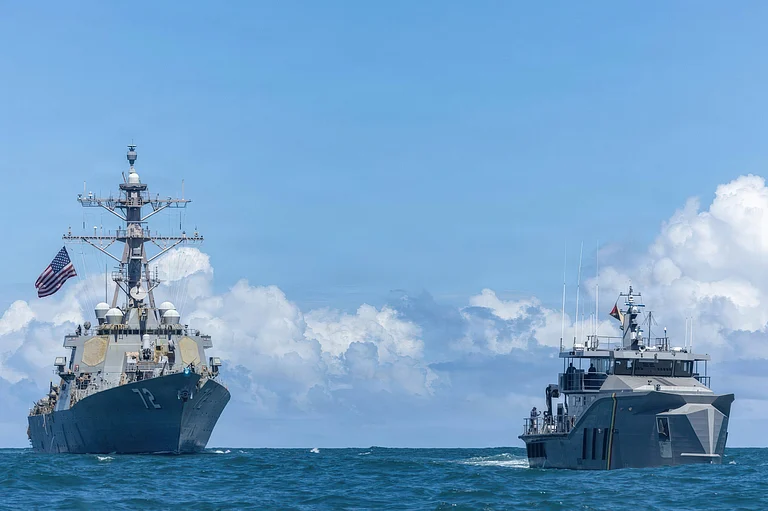
The USS Gravely warship arrived in Port of Spain in Trinidad and Tobago, near Venezuela - Copyright AFP/File MARTIN BERNETTI

Russia on Monday expressed “full support” for Venezuela as the South American country confronts a blockade of sanctioned oil tankers by US forces deployed in the Caribbean.

The pledge from Moscow, itself embroiled in the war in Ukraine, came on the eve of a UN Security Council (UNSC) meeting Tuesday to discuss the mounting crisis between Caracas and Washington.

In a phone call, the foreign ministers of the allied nations blasted the US actions, which have included strikes on alleged drug-trafficking boats and more recently the seizure of two oil tankers.

A third ship was being pursued, a US official told AFP on Sunday.

“The ministers expressed their deep concern over the escalation of Washington’s actions in the Caribbean Sea, which could have serious consequences for the region and threaten international shipping,” the Russian foreign ministry said of the call between Sergei Lavrov and Venezuelan counterpart Yvan Gil.

“The Russian side reaffirmed its full support for and solidarity with the Venezuelan leadership and people in the current context,” it added in a statement.


Venezuelan foreign minister Yvan Gil held a call with his Russian counterpart a day before the UN Security Council is set to discuss Washington’s pressure campaign – Copyright AFP STRINGER

US forces have since September launched strikes on boats that Washington claims, without providing evidence, were trafficking drugs in the Caribbean and eastern Pacific Ocean.

More than 100 people have been killed — some of them fishermen, according to their families and governments.

US President Donald Trump on December 16 also announced a blockade of “sanctioned oil vessels” sailing to and from Venezuela.

Trump claims Caracas under President Nicolas Maduro is using oil money to finance “drug terrorism, human trafficking, murder and kidnapping.”

He has also accused Venezuela of taking “all of our oil” — in an apparent reference to the country’s nationalization of the petroleum sector, and said: “we want it back.”

Caracas, in turn, fears Washington is seeking regime change, and has accused Washington of “international piracy.”

Moscow’s statement said Lavrov and Gil agreed in their call to “coordinate their actions on the international stage, particularly at the UN, in order to ensure respect for state sovereignty and non-interference in internal affairs.”

Russia and China, another Venezuela ally, backed Caracas’s request for a UNSC meeting to discuss what it called “the ongoing US aggression.”

– Russia’s ‘hands full’ –

On Telegram, Venezuela’s Gil said he and Lavrov had discussed “the aggressions and flagrant violations of international law being perpetrated in the Caribbean: attacks on vessels, extrajudicial executions, and illicit acts of piracy carried out by the United States government.”

Gil said Lavrov had affirmed Moscow’s “full support in the face of hostilities against our country.”

Last week, US Secretary of State Marco Rubio brushed aside Moscow’s stated support for Caracas.

Washington, he said, was “not concerned about an escalation with Russia with regards to Venezuela” as “they have their hands full in Ukraine.”

US-Russia relations have soured in recent weeks as Trump has voiced frustration with Moscow over the lack of a resolution to the Ukraine war.

Gil on Monday also read a letter on state TV, signed by Maduro and addressed to UN member nations, warning the US blockade “will affect the supply of oil and energy” globally.

US Escalation In Venezuela Fits Pattern Of Regime Change Wars In Latin America

Decades of coups, sanctions and covert operations show Washington’s long campaign to unseat Chávez and Maduro and reshape Venezuela to its interests.


R Viswanathan
 9 December 2025 


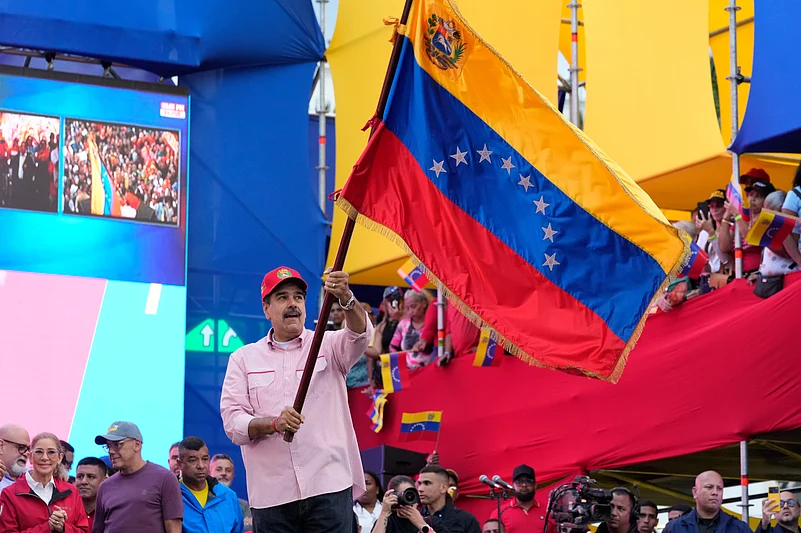
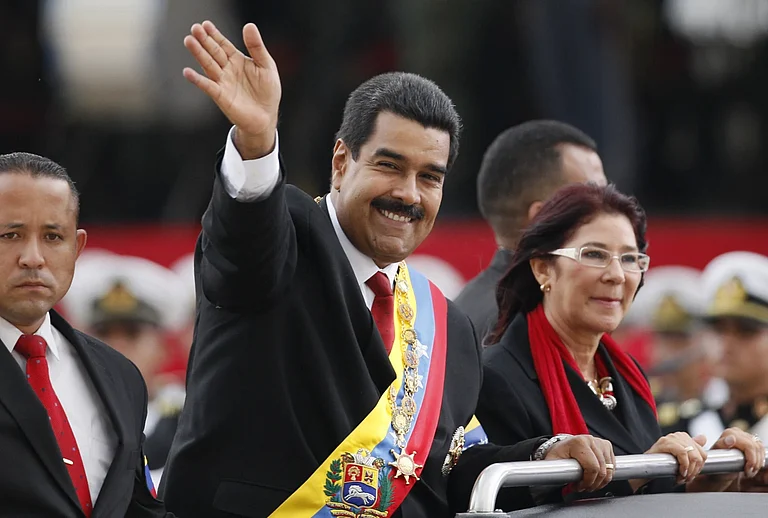
President Nicolas Maduro waves a Venezuelan flag during a swearing-in event for government-organized community committees at the presidential palace in Caracas, Venezuela, Monday, Dec. 1, 2025. Photo: Ariana Cubillos

Summary of this article


US efforts to remove Venezuela’s leftist governments span four major attempts.


Motives range from securing oil to curbing Cuban influence and restoring US-friendly rule.


Sanctions, covert ops and political interference have deepened Venezuela’s economic and political collapse.


It is like a Netflix serial. Location shootings and subtitles change. But the main plot through the episodes is the same; regime change to remove leftist governments and install pro-US regimes to promote American business and hegemony.


The wars are given different titles such as war on communism, war on drugs, war on terrorism and war on corruption. The last one was used to bring down the government of the Workers’ Party In Brazil and some leftist presidents in the region.


The stories of some of the wars could be as fantastic as in Netflix films. The Americans would even add music to their real wars. They invaded Panama in 1989 to oust President Noriega, who was actually in the CIA payroll but went out of control. When Noriega took refuge in the residence of the Papal Nuncio, the American troops played extremely loud rock and heavy-metal music around the building nonstop for ten days to smoke out the fugitive. The operation was nicknamed “Operation Nifty Package.” One of the songs played was Alice Cooper’s “No more Mr Nice guy”. Unable to sleep and bear the torture of American music weapon, Noriega surrendered. The Americans took him and put him in a jail in US.

Related Content


Trump Orders Complete Blockade Of Sanctioned Oil Tankers Linked To Venezuela


US Steals Oil Off Venezuela Ship, Caracas Condemns


Is The US ‘War on Drugs’ A Smokescreen To Pressurise Venezuela?


US Military Deploys Massive Naval Force Near Venezuelan Coast, Escalating Tensions


In 2019, when President Trump and National Security Advisor Bolton were issuing threats to oust President Maduro, a large music concert was organized by Richard Branson and company across Venezuela’s border in Colombia. It was called as Venezuela Aid Live but its purpose was to provide background music for the regime change operation.


In the current campaign to oust President Maduro, the Americans started with the title “war on drugs” but changed it to 'war on terrorism' to get more bang for the buck. Venezuela is not a main source of drugs nor is it a terrorist threat to the US. The real objectives of Americans are to remove the leftist government of Maduro, install a pro-American rightist regime, get their hands on the Venezuelan oil fields and settle some old scores.


Is The US ‘War on Drugs’ A Smokescreen To Pressurise Venezuela?


The ongoing regime change operation in Venezuela is the fourth attempt by the US in the last three decades. The first attempt was made in 2002, when there was a US-inspired coup in which the Leftist icon, President Chavez, was removed from power. But the coup failed and Chavez returned to power after two days. Before the coup, the ground was prepared by a devastating strike by the pro-US staff of PDVSA, the national oil company. They stopped the production, domestic distribution and exports of oil, paralyzing the economy and daily life. President Lula had to send oil shipments to help Chavez with the shortage of petrol. After the coup, Chavez sacked 15000 employees of the company and gave it to his political loyalists to run it.


The second attempt was in 2019, when the Trump administration refused to recognize Maduro as the elected President alleging that the election was rigged. The US picked Juan Guaido, the president of the legislative assembly, and anointed him as the real president. The US forced about 50 countries including EU and some rightist Latin American presidents to follow its decision. But this project also failed as Guaido got discredited when he and his cronies including some American lawyers stole millions of dollars from the Venezuelan funds in US banks in the name of running a government in exile.


The third attempt was made by the American private sector. A group of ex-marine mercenaries hatched a plan code named “Operation Gideon”. They attempted a sea borne raid through boats to land in Venezuela, capture President Maduro, take him to the US and claim the 15 million dollar bounty which was the going rate announced by Washington DC at that time. The mercenaries were caught and some were killed and others jailed by Venezuelan authorities. While the Trump administration claimed that it was not an official operation, they had got these criminals released through quiet negotiations and got them back to the US.


The fourth attempt now has another subplot, scripted by Secretary of State Marco Rubio whose parents had fled from the Cuban revolution. He has a personal anti-Cuba and anti-Venezuela agenda. The Cubans have been receiving oil from Venezuela in return for their intelligence and security support to President Maduro. Having survived numerous American attempts of invasion, coup and assassination attempts, the Cubans have been passing their trade secrets to the Venezuelan government. Rubio wants to hurt both Cuba and Venezuela. He is also using this opportunity to become a hero among the large number of voters of Cuban and Venezuelan origin in his constituency.


Washington’s Move Ignites Fear Of War With Venezuela


Venezuela has the world’s largest oil reserves of about 303 billion barrels, which are more than that of Saudi Arabia’s 267 billion. Venezuela used to export 90 per cent of its oil to the US till the leftist Chavez came to power in 1998. He wanted to reduce the overdependence on US market and diversified to other such as China and India. He kicked out the American oil companies when they did not agree to his terms and conditions. The US retaliated by imposing sanctions and has crippled Venezuelan oil production and exports. However, the American oil company Chevron, with its strong lobbying power, has got its license renewed and is still producing oil in Venezuela and exporting quietly to the US.


As a militant leftist, Chavez had used strong rhetoric against US imperialism and neoliberalism. When the Latin Americans were trying regional integration process through regional groups such as MERCOSUR, UNASUR and CELAC, the US wanted to stop them with its counter proposal of FTAA (Free Trade Area of Americas) in 1995. The US argued that Latin American regional and subregional groups should be dissolved to clear the way for FTAA implementation. Chavez killed the FTAA project in collaboration with other leftist presidents such as Lula of Brazil and Kirchner of Argentina. Chavez created ALBA, an alternative to FTAA with other leftist presidents. He gave subsidized oil to small Latin American and Caribbean countries in return for their political support. As an admirer of Fidel Castro, Chavez went out of his way to help Cuba with oil and funds. Since Chavez was strong internally and regionally, the US did not made any frontal attacks on him after the failed coup in 2002. But now Venezuela is weak internally and externally and the US thinks that now is the pay back time. Maduro has unwisely lost the support of even President Lula which could have been crucial as it was in the case of Chavez. Neither China nor Russia find it worthwhile to stand up for Venezuela against the US.


Chavez had charisma, leadership skills and grass root support with which he won several elections, based on his popularity. But Maduro does not have the skills nor popularity. It is rumored that Maduro’s name was recommended by the Cubans to succeed Chavez during his final days in a Cuban hospital. Maduro is not a typical Latino Caudillo (strong man). His government is not a one-man dictatorship. He is just a figure head of the collective leadership of other Chavista leaders and the military. If he is killed or removed, Diosdado Cabello, the interior minister who is a strong man of the regime would take over.


The US has accused President Maduro and his colleagues of involvement in drug trafficking to the US. This is a false accusation. Even according to American official sources, Venezuela accounts for an insignificant portion of drugs which go to the US.


Secondly, drug is not a supply side problem. Drug is a demand and consumer-driven multibillion dollar US business. Millions of Americans pay top dollars willingly and happily to get high on drugs from wherever they can get them. Some years back, an American firm, Purdue Pharma, had aggressively marketed its opioid Oxycontin and made billion of dollars while thousands of Americans became addicts and ended up dead. The DEA did not do a drug war against the company. The Justice Department did a deal with it and the company got away with some fines. As long American consumers continue to demand and pay for the drugs, the business will go on.The drug consumption in US has not decreased after the killing of Pablo Escobar or the long-running drug war. Drug is simply and clearly an American domestic issue. But the US has created a false narrative blaming other countries and the Hollywood has propagated this falsehood through films and the Netflix serial “Narcos”.


The Latin American drug cartels have been empowered by American guns. US is the main source of illegal supply of guns to the cartels. Mexico has only two gun shops for the whole country. These are run by the Mexican military which has rigorous checking and control procedures. But there are nearly 10,000 (yes, Ten Thousand) American gun shops in the border with Mexico. About 200,000 American guns are supplied illegally to Mexico every year. These guns cause more Latin American deaths than the drugs in the US. The Americans refuse to recognize this issue and take any action to stop the gun trafficking.

US Doubles $50 Million Reward For Venezuelan President Nicolás Maduro’s Arrest


The drug war has created a multibillion dollar business empire within the US for DEA and their contractors for profit and power. Obviously, these vested interests want to perpetuate the war for ever. Also, the drug war is used by US to infiltrate the intelligence agencies and security services of Latin American governments.

It is true that the reelection of President Maduro in 2024 was done through rigging of the process and counting. But there is a life and death reason for that. The US has announced a bounty of 50 million dollars on the head of Maduro and over hundred million dollars on other Venezuelan leaders, judges and generals. If there were free and fair elections, Maduro would have clearly lost and the pro-American opposition would have come to power. Immediately, the new government would have handed over Maduro and hundreds of others to the US authorities to be put in American jails. The US has already prepared the ground with conviction and sentences in absentia of many Venezuelan leaders on trumped up charges in the American courts.

This is what had happened to the ex-President of Honduras Juan Hernandez. He was in power for two terms from 2014 to 2022 and was hailed as a 'Nice Guy' by the Americans. As soon as he finished his term, the DEA surrounded his house, captured him, took him to US, convicted him on drug charges and jailed him for forty years. Fortunately, he was able to grease the palms of Trump who has pardoned and released him last week.

So why would the Venezuelan leadership commit mass suicide by letting the pro-US opposition come to power? So it is the US which has become the obstacle for free and fair elections and democratic change in Venezuela.

Latin Americans say that there has been no military coup in the US because there is no American embassy in Washington DC. Pity, the Americans had foolishly closed their embassy in Caracas. If there was one, they could have cultivated some colonels and used them to divide the army and bring about a coup in the classical American style. Till the coup in 2002, the American defense attaches did not work out of their embassy building in Caracas. They had their offices within the Venezuelan army headquarters. That’s how they arranged the 2002 coup easily. President Chavez kicked them out after the coup.


The people of Venezuela are the unfortunate victims caught between the Chavista mismanagement and the US sanctions and interventions. The Venezuelan economy is in ruins for over a decade. Inflation is running high. There is shortage of food and essential items since the government does not have enough foreign exchange for imports. Oil exports and production have been severely crippled by the American sanctions. Chavez had destroyed private sector business systematically and ruthlessly since the pro-US business oligarchs had supported the coup against him. Several million Venezuelans have fled the chaos and taken refuge in other countries.


Venezuela is crying out for relief from the misery. But the change has to come from within. Not from the US warships or missiles. The Venezuelan opposition leader Maria Corina Machado is actively seeking US military intervention for regime change in Caracas. Of course, this is not new. She is simply following the play book of her predecessors in the last two decades who had done the same thing. The two main oligarchic and corrupt political parties who were ruling Venezuela alternately for about five decades before Chavez were wiped out in the elections in 1998. Seeing the landslide victory of Chavez and his unbeatable grass root support among the masses, the opposition leaders refused to participate in the next elections. Chavez used this opportunity to get super majority in the Congress to change the constitution and accumulate power. In the absence of opposition, he became authoritarian. He had coopted the military by giving them civilian jobs and letting them become corrupt and stake holders. Maduro has simply inherited this legacy.


As long as the US holds the sword of bounties and retribution over the heads of the top leadership of Venezuela, there is no possibility for free and fair elections and democratic change of government. The Venezuelan opposition should fight and negotiate directly with the Maduro government leaders and guarantee their safety. There has to be a compromise with give and take from both sides. The political parties of Argentina, Brazil and Chile had restored democracy from brutal military dictatorships by fighting and direct negotiations with the regimes themselves, without seeking any external intervention. The cruel Chilean dictator Pinochet agreed to hand over power to a civilian government in 1990 only after securing a package of constitutional, legal, military, and personal immunities and guarantees designed to protect him, the armed forces, and the officers involved in human-rights abuses. He continued as senator for life and the Chilean armed forces got 10 per cent of Chile’s annual copper export revenue.


Ambassador Viswanathan, a Latin America expert, was ambassador to Venezuela in 2000-03.
Swiss court to hear landmark climate case against cement giant


By AFP
December 22, 2025


The case is part of a wider international movement seeking to hold major companies responsible for climate damage - Copyright AFP/File Fabrice COFFRINI
Nina LARSON

A Swiss court has decided to hear a landmark climate case pitting residents of a tiny Indonesian island being swallowed by rising sea levels against cement giant Holcim, NGOs helping the islanders said Monday.

“For the first time ever in Switzerland, a court has admitted climate litigation brought against a large corporation,” said a statement from NGOs including Swiss Church Aid (HEKS).

The case is part of a wider international movement seeking to hold major companies responsible for climate damage that imperils millions, especially in developing countries.

Oil companies have typically been the main target, but activists are hoping the Swiss case will highlight the role of the cement industry, which is responsible for around eight percent of annual carbon dioxide (CO2) emissions caused by human activity.

Four residents of Pari island filed the case in January 2023, demanding compensation from the world’s largest cement firm and help to fund protection measures on the island.

Two of the islanders travelled to Switzerland for a September hearing at the court in Zug, where Holcim is headquartered, to determine whether it would consider the complaint.

– ‘Gives us strength’ –

“The court has now made its ruling: the complaint must be admitted in its entirety,” the NGOs said.

Both sides received the ruling in advance of Monday’s publication and they can still appeal against it.

Holcim said in a statement it had “anticipated this as a potential outcome and intend to appeal”.

Environmentalists have said 11 percent of the 42-hectare (104-acre) island of Pari has disappeared in recent years, and it could be completely under water by 2050.

One of the plaintiffs, Asmania, who like many Indonesians goes by one name, hailed Monday’s decision.

“We are very pleased. This decision gives us the strength to continue our fight,” she said in the NGO’s statement.

– Mangroves needed –

Holcim has repeatedly stressed it is committed to reaching net zero by 2050, but has argued that lawmakers should decide how those goals are met.

“Holcim remains convinced that the courtroom is not the appropriate forum to address the global challenge of climate change,” it said.

The NGOs said the Zug court had rejected that argument.

Holcim has not owned any cement plants in Indonesia since 2019, but the islanders argue that the company shares the blame for rising temperatures and sea levels.

Environmentalists say Holcim ranks among the world’s 100 biggest corporate CO2 emitters, and so bears significant responsibility for climate-related loss and damage.

The four plaintiffs are seeking 3,600 Swiss francs ($4,500) each from Holcim for damages and for protection measures such as planting mangroves and constructing breakwater barriers.

HEKS has said the amount is equivalent to 0.42 percent of the actual costs — in line with estimates that Holcim is responsible for 0.42 percent of global industrial CO2 emissions since 1750.

In addition, the plaintiffs are demanding a 43 percent reduction in Holcim’s greenhouse gas emissions by 2030 and a 69 percent reduction by 2040.
Telefonica to shed around 5,500 jobs in Spain


By AFP
December 22, 2025


The job cuts represent nearly a quarter of Telefonica's workforce in Spain - Copyright AFP/File JAVIER SORIANO

Telefonica will cut up to 5,500 jobs in Spain under a voluntary departure plan agreed with trade unions last week, the debt-laden telecoms firm said in a statement on Monday.

The figure represents nearly a quarter of the company’s workforce in Spain, based on a Telefonica count given last year of 25,000 employees in the country.

Worldwide, Telefonica employs 100,000 people.

Last month, it announced last month a new, five-year strategic plan that will see it focus on its main markets of Spain, Germany, the UK and Brazil as well as restructure many of its operations.

It then began talks with Spanish trade unions about reducing jobs.

“An agreement was reached with the trade unions… concerning the implementation of a voluntary departure plan for approximately 5,500 workers,” Telefonica said in a statement released via the stock market regulator.

It estimated the cost of the plan at around 2.5 billion euros ($2.9 billion) before taxes.

The company booked a net loss of 1.08 billion euros between January and September this year, weighed down by losses linked to asset sales in Latin America.

Telefonica has also said it will cut its dividend by half next year, to 15 cents per share, as part of effort to reduce its debt.
'This is a travesty': Trump skewered for trading 'apolitical' diplomats for MAGA loyalists

Robert Davis
December 22, 2025 
RAW STORY


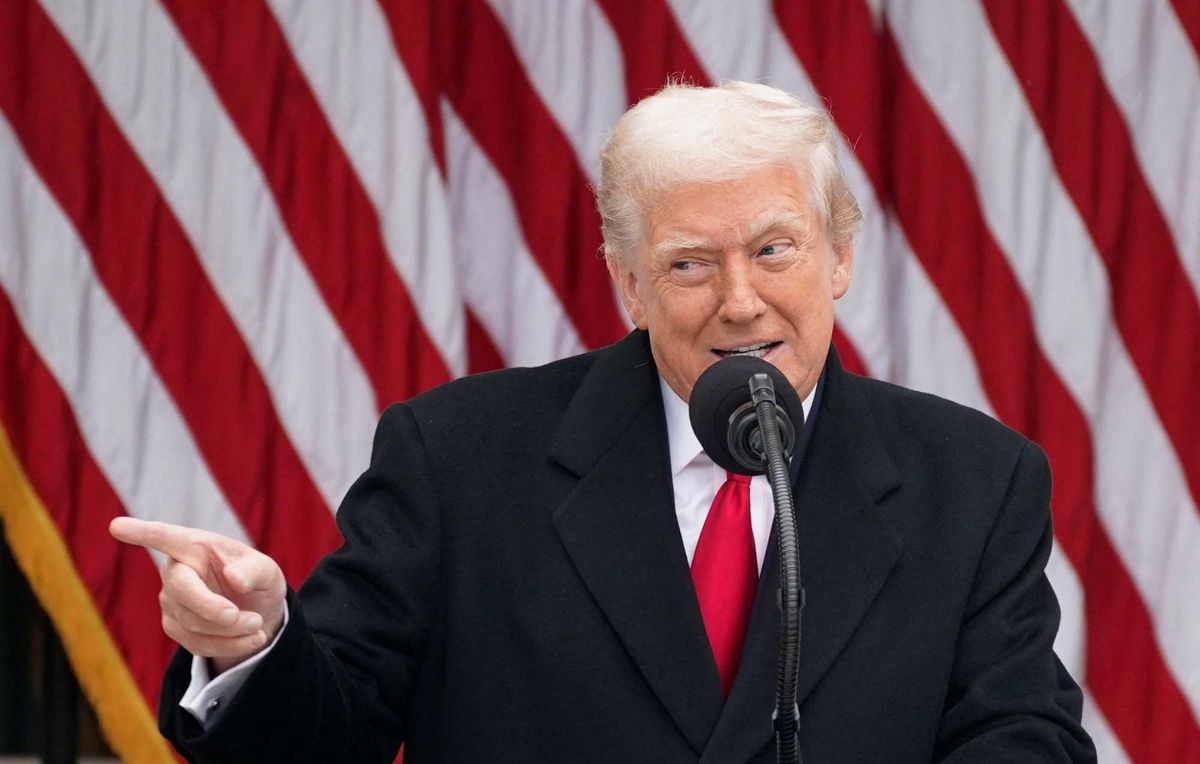
President Donald Trump speaks during the annual Thanksgiving turkey pardoning ceremony in the Rose Garden at the White House in Washington, D.C. on Nov. 25, 2025. REUTERS/Nathan Howard

President Donald Trump is planning to recall 30 diplomats from posts that are typically left in place following a presidential administration because they are considered "apolitical" and replace them with MAGA loyalists, according to a new report.

The Guardian reported on Monday night that the diplomats would not be fired, but instead would be reassigned to other posts. The report added that the move is part of the Trump administration's goal of uprooting the "deep state."

Africa would be the continent hardest hit by Trump's move, according to the report. The administration plans to recall ambassadors from Somalia, Niger, and Congo, all of which are covered by Trump's current travel ban. The move would also impact foreign service officials in Egypt, Algeria, Slovakia, Montenegro, Armenia, and North Macedonia, according to the report.

Former foreign service officials and the union representing diplomats bashed the Trump administration for the move.

“This is a travesty,” said one former senior official who had spoken with ambassadors set to be reassigned, told the outlet. “It’s random, no one knows why they were pulled or spared.”

The American Foreign Service Association, the union that represents diplomats, added that the diplomats were being "penalized" for simply doing their jobs.


“The department must explain how these actions promote fairness for those who were recommended but not reached promotion this year and will now face challenges as others have been promoted ahead of them," the union said.

Read the entire report by clicking here.
Trump admin lawsuit aims to flood DC with AR-15 rifles for 'common use'

PREFERED WEAPON OF MASS MURDERERS

David Edwards
December 22, 2025
RAW STORY


FILE PHOTO: Former Florida Attorney General Pam Bondi speaks during a press conference by supporters of former U.S. President Donald Trump after they attended his trial for allegedly covering up hush money payments linked to extramarital affair with Stormy Daniels, in Manhattan, New York City, U.S., May 21, 2024. REUTERS/David 'Dee' Delgado/File Photo

President Donald Trump's Department of Justice has sued the District of Columbia to end a ban on assault-style weapons, including the AR-15.

In a nine-page lawsuit filed on Monday, the DOJ's Civil Rights Division noted that "the District denies law-abiding citizens the ability to register a wide variety of commonly used semi-automatic firearms, such as the Colt AR-15 series rifles, which is among the most popular of firearms in America, and a variety of other semi-automatic rifles and pistols that are in common use."

The suit sought a "permanent injunction prohibiting all DC Defendants from arresting and levying fines against otherwise law-abiding citizens for possessing the AR-15 and all other firearms protected by the Second Amendment and being possessed or used for lawful purposes."

Attorney General Pamela Bondi argued that "DC's ban on some of America's most popular firearms is an unconstitutional infringement on the Second Amendment — living in our nation's capital should not preclude law-abiding citizens from exercising their fundamental constitutional right to keep and bear arms."

"Today's action from the Department of Justice's new Second Amendment Section underscores our ironclad commitment to protecting the Second Amendment rights of law-abiding Americans," Bondi said in a statement.


The one purpose behind Trump's misdirection on the Epstein files | Opinion

by Joe Conason
• ALTERNET
Dec. 23, 2025


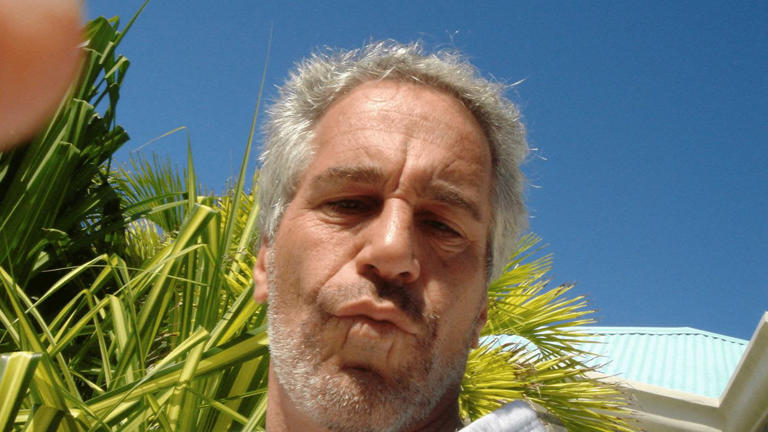
Jeffrey Epstein is seen in this image released by the Department of Justice in Washington, D.C., U.S., on December 19, 2025. (Source: U.S. Justice Department)© provided by AlterNet

When the legal deadline arrived for the Justice Department to release all its files on the late sexual predator and shady financier Jeffrey Epstein, the country awaited new and significant information about his crimes. Instead, we saw a blizzard of blacked-out documents -- and a strenuous campaign to smear former President Bill Clinton.

The "evidence" Attorney General Pam Bondi chose to distribute only served to underline the basic and exculpatory facts regarding Clinton. Releasing a set of old photographs of Clinton in various scenes with Epstein and his associate Ghislaine Maxwell, altered and stripped of any pertinent information about dates and locations, Bondi exposed her own rather obvious scheme to protect President Donald Trump.

The attorney general and Trump's other flunkies may well be aware that several of those photographs were published years ago, in full context. But they're playing three-card monte games with the public. Like every other actual fact about Clinton's connections with Epstein, they confirm the former president's previous statements -- and explode Trump's slanders and libels on those topics.

In 2002 and 2003, years before Clinton knew or could have known about the shadowy financier's abuse of underage girls, he flew more than two dozen trips on aircraft owned by Epstein. (Many similar donations of jet time have been made by wealthy individuals, including Google mogul Sergey Brin and others.) The sole purpose of those trips was to advance the Clinton Foundation's efforts to curtail the HIV/AIDS pandemic.


Some of the trips included Epstein, his enabling paramour Maxwell and an entourage of Clinton Foundation staff, Secret Service agents and other foundation donors. The destinations included multiple stops in Africa, as well as Russia, China, Norway, the United Kingdom and Singapore.

It is worth mentioning here that independent experts credit the Clinton HIV/AIDS Initiative with saving well upward of 11 million lives since its founding. Much of that was achieved in cooperation with the President's Emergency Program for AIDS Relief, founded by then-President George W. Bush with Clinton's help, which Trump and Elon Musk have sought to destroy. The Joint United Nations Programme on HIV/AIDS estimates that a permanent discontinuation of PEPFAR-supported programs could result in an additional 6.6 million new HIV infections and 4.2 million AIDS-related deaths globally between 2025 and 2029.

Now the selective drip of Epstein files material is not just than an act of bad faith but an avoidance of releasing the full files as required under the law. Let's consider a few of the photos they released. By redacting the faces of people next to Clinton, they sought to tie him to Epstein's victims, including underage girls.

One such picture shows Clinton with a blonde woman perched on the armrest of an airplane seat, her face blacked out. From previous coverage in tabloids, we know that she is Chauntae Davies, who served as a flight attendant on Epstein's plane during one of Clinton's Africa trips. While she later lodged accusations of abuse against her former employer, Davies has only described Clinton as a "perfect gentleman."

Other misleading images showed Clinton with the late performer Michael Jackson and singer Diana Ross, with small children whose faces are blacked out. A White House press aide implied that the redactions meant those kids were victims of sex crimes, when in fact they were offspring of Jackson and Ross. Those photographs are available from Getty Images -- with accurate captions -- as the DOJ could easily have learned.

Providing accurate information to the public was not Bondi's purpose here. An abject and lawless official, she was serving up and endorsing her master's mendacious narrative about Clinton, regurgitated by Trump in person and on social media countless times over the past decade.

Trump has claimed, for example, that Clinton repeatedly visited Epstein's private Caribbean island, where many young women were reportedly violated. Trump's false accusations are belied not only by flight manifests and Secret Service records but by Epstein's emails, Maxwell's statement to the deputy attorney general, and Trump's own chief of staff Susie Wiles in her recent Vanity Fair interviews.

Having directed the U.S. Attorney for the Southern District of New York to investigate Clinton's ties with Epstein yet again, Trump should brace himself to hear that he has been lying for years. But he already knows that.

On social media, Clinton spokesman Angel Urena succinctly expressed what is really at stake for Trump in this distraction ploy. The former president, he said, wants Trump to order Bondi to release any remaining files, photos or grand jury minutes pertaining to Clinton, because he has nothing to hide.

"Refusal to do so," he continued, "will confirm the widespread suspicion the Department of Justice's actions to date are not about transparency but insinuation -- using selective releases to imply wrongdoing about individuals who have already been repeatedly cleared by the very same Department of Justice, over many years, under Presidents and Attorneys General of both parties."

There can only be one purpose behind that misdirection -- to protect Trump, the man known as "Epstein's best friend," from the reckoning he has sought to forestall for years.


Allegations of new cover-up over Epstein files


By AFP
December 21, 2025


Redacted documents after the US Justice Department began releasing the long-awaited records from the investigation into the politically explosive case of convicted sex offender Jeffrey Epstein - Copyright AFP Mandel NGAN
Imran VITTACHI

Allegations of a fresh cover-up over the Jeffrey Epstein files grew Sunday, as Democrats accused President Donald Trump of trying to protect himself by defying an order to release all files on the convicted sex offender.

Victims of Epstein have expressed anger after a cache of records from cases against the late financier, who amassed a fortune and circulated among rich and famous people, were released Friday with many pages blacked out and photos censored.

Several images were removed from the trove after being published on Friday evening — including one of Trump.

“It’s all about covering up things that, for whatever reason, Donald Trump doesn’t want to go public either about himself, other members of his family, friends,” Democratic congressman Jamie Raskin said Sunday on CNN’s “State of the Union.”

The tranche of materials that the Department of Justice (DOJ) released included photographs of former president Bill Clinton and other famous names such as pop stars Mick Jagger and Michael Jackson.

But the many redactions — and allegations of missing documents — only added to calls for justice in a case that has long fueled conspiracy theories from Trump’s right-wing base.

The DOJ said it was protecting victims with the blackouts and defended its decision to retract some files.

“Photos and other materials will continue being reviewed and redacted consistent with the law in an abundance of caution as we receive additional information,” said a DOJ statement.

– Republican: ‘Selective concealment’ –

Republican congressman Thomas Massie, who has long pushed for complete disclosure of the files, on Sunday echoed the Democrats’ demands.

“They’re flouting the spirit and the letter of the law. It’s very troubling the posture that they’ve taken. And I won’t be satisfied until the survivors are satisfied,” he told CBS’s “Face The Nation.”

A 60-count indictment that implicates many rich and powerful people were not released, Massie charged.

“It’s about the selective concealment,” he said.

Senator Rand Paul, a fellow Kentucky Republican and frequent critic of Trump, warned during an appearance on ABC’s “This Week” that any evidence “that there’s not a full reveal on this, this will just plague them for months and months more.”

Trump spent months trying to block the disclosure of the files linked to Epstein, who died in a New York jail cell in 2019 while awaiting trial on sex-trafficking charges.

The president bowed to mounting pressure from Congress — including members of his own party — and signed the law compelling publication of the materials.

The Republican president, who once moved in the same party scene as Epstein, cut ties with him years before his arrest and faces no accusations of wrongdoing in the case.

Hakeem Jeffries, the Democratic House minority leader said on ABC’s “This Week” that justice officials must provide written explanation to Congress within 15 days why they withheld any documents.

“It does appear, of course, that this initial document release is inadequate. It falls short of what the law requires,” Jeffries said.

At least one file contained dozens of censored images of naked or scantily clad figures, while previously unseen photographs of disgraced former prince Andrew show him lying across the legs of five women.

Other pictures show Clinton lounging in a hot tub, part of the image blacked out, and swimming alongside a dark-haired woman who appears to be Epstein’s accomplice, Ghislaine Maxwell.

Maxwell, Epstein’s former girlfriend, remains the only person convicted in connection with his crimes, and is serving a 20-year sentence for recruiting underage girls for the former banker, whose death was ruled a suicide.