Tuesday, December 23, 2025

YouTube, TikTok Deleted ‘60 Minutes’ CECOT Clips Amid Paramount Takedown Push

The segment on the notorious torture prison—where the Trump administration has been unlawfully deporting Venezuelans—went viral on social media after being inadvertently aired in Canada.



Bari Weiss speaks during a January 18, 2025 event in Washington, DC.
(Photo by Leigh Vogel/Getty Images for Uber, X, and the Free Press)


Brett Wilkins
Dec 23, 2025
COMMON DREAMS


Websites including YouTube and TikTok this week removed posts of a CBS News “60 Minutes” segment on a notorious prison in El Salvador, where Trump the administration has been illegally deporting Venezuelan immigrants, after being notified that publishing the clip violated parent company’s copyright.

The segment on the Terrorism Confinement Center (CECOT)—which was intended to air on Sunday’s episode of “60 Minutes”—was pulled by right-wing CBS News editor-in-chief Bari Weiss, who claimed that the story “was not ready” for broadcast, despite thorough editing and clearance by key company officials.

“Our story was screened five times and cleared by both CBS attorneys and Standards and Practices,” said “60 Minutes” correspondent Sharyn Alfonsi, who reported the segment. “It is factually correct. In my view, pulling it now, after every rigorous internal check has been met, is not an editorial decision, it is a political one.”

The segment—which can still be viewed on sites including X—was shared by social media users after a Canadian network received and broadcast an original version of the “60 Minutes” episode containing the CECOT piece prior to CBS pulling the story. The social media posts containing the segment were reportedly removed after CBS parent company Paramount Skydance filed copyright claims.

A CBS News representative said that “Paramount’s content protection team is in the process of routine take down orders for the unaired and unauthorized segment.”


Our people-powered journalism cannot survive without you

Your support allows Common Dreams to continue covering the stories and amplifying the voices that the corporate media never will. Make a tax-deductible year-end gift to ensure we can sustain the reporting needed to meet the challenges of 2026.


Weiss—who also founded and still edits the Paramount Skydance-owned Free Press—has faced criticism for other moves, including presiding over the removal of parts of a previous “60 Minutes” interview with President Donald Trump regarding potential corruption stemming from his family’s massive cryptocurrency profits.

On Tuesday, Axios reported that Weiss is planning a broad overhaul of standards and procedures at the network, where she was hired by Paramount Skydance CEO and Trump supporter David Ellison in October, despite a lack of broadcasting experience.

Pulled '60 Minutes' segment surfaces on web with Canadian broadcaster's branding

Story by Aaron Sousa and Ashley Joannou
December 23, 2025

,

Corus Entertainment Inc. has negotiated an amendment to a credit agreement with its lenders to give it some increased breathing room as it works to deal with its debt. The Corus logo at Corus Quay in Toronto is shown on Friday, June 22, 2018. THE CANADIAN PRESS/ Tijana Martin© The Canadian Press

A segment of the American news program "60 Minutes," pulled by CBS News prior to its U.S. airing, began circulating online Monday with the branding of Canadian broadcaster Global TV.

Multiple media reports say the program was uploaded to StackTV, Global's streaming platform, though it was not available to watch as of late Monday.

Global TV and its parent company, Corus Entertainment, did not immediately respond to calls and emails requesting comment.

CBS News editor-in-chief Bari Weiss has said it was her decision to pull from Sunday's broadcast the segment featuring deportees who faced egregious torture at a notorious prison in El Salvador.

The journalist behind the story, Sharyn Alfonsi, has said the segment was cleared by CBS lawyers and is accusing Weiss of trying to appease the Trump administration -- a known critic of the show.

Weiss says Alfonsi's piece presented powerful testimony, but didn't “advance the ball," noting that other outlets had already done similar work.

This report by The Canadian Press was first published Dec. 23, 2025.

— With files from The Associated Press

Aaron Sousa and Ashley Joannou, The Canadian Press


'Astonishing': Internet erupts after canned '60 Minutes' segment leaked

Robert Davis
December 22, 2025 
RAW STORY


Bari Weiss (Photo via Michael Blake for Reuters)

The internet erupted into a frenzy on Monday night after a video of a canned "60 Minutes" segment from Sunday was published.

On Sunday, CBS News Editor in Chief Bari Weiss scrapped a segment on "60 Minutes" about President Donald Trump's efforts to send deportees to the infamous CECOT prison in El Salvador. The video features testimony from deportees who said officers told them they "would never see the light of day again." It aired in Canada even though the segment was not shown in the U.S.

Weiss told CBS News staffers that the story did not meet the organization's editorial standards because it lacked an on-camera interview with someone from the Trump administration

Media experts and analysts reacted to the video after it was leaked.

"This could wind up being the most-watched newsmagazine segment in television history!!" ex-conservative lawyer and Democratic candidate for Congress George Conway posted on X. "Congratulations to the Ellisons and Bari Weiss!!!"

"Yes, this is real. Yes, it's astonishing," CNN media expert Brian Stelter posted on X. "Global TV, which airs 60 Minutes in Canada, uploaded the original version of Sunday's episode, including the Sharyn Alfonsi segment that Bari Weiss shelved. And now people all across the internet are watching the segment."

"It’s not just the New York Times. It’s not just Tucker Carlson. It’s not just MSNBC. It’s not just Megyn Kelly. It’s not just Peter Twinklage. CANADA effectively told Bari Weiss to pound sand tonight!" Peter Rothpletz, contributor to Zeteo News, posted on X.

"The most dangerous thing about this segment is that it shows America that these immigrants being sent to the foreign gulags are human beings, and the real monsters are the people denying them due process, abducting them and sending them there," Melanie D'Arrigo, executive director for the Campaign for NY Health, posted on X.


CBS Journalist Says Bari Weiss Spiked Segment on Notorious El Salvador Prison for ‘Political’ Reasons

“When it fails to air without a credible explanation, the public will correctly identify this as corporate censorship,” wrote veteran “60 Minutes” correspondent Sharyn Alfonsi.


A man is escorted by a CECOT guard on February 6, 2024 in San Vicente, El Salvador.
(Photo by Alex Peña/Getty Images)

Jake Johnson
Dec 22, 2025
COMMON DREAMS

A CBS News correspondent on Sunday accused Bari Weiss, the outlet’s editor-in-chief, of pulling a “60 Minutes” segment on El Salvador’s notorious CECOT prison for “political” reasons, shortly before it was scheduled to air.

Late Sunday afternoon, “60 Minutes” said in an editor’s note that the broadcast lineup for the night had been “updated,” removing the planned “Inside CECOT” segment. The note said the report on the maximum-security prison—to which the Trump administration sent more than 200 Venezuelan migrants—would “air in a future broadcast,” without providing any specifics.

In an internal email obtained by the New York Times, veteran “60 Minutes” correspondent Sharyn Alfonsi, who reported the segment, said she learned on Saturday that “Bari Weiss spiked our story” and did not grant the journalist’s request for a phone call to discuss the decision.

“Our story was screened five times and cleared by both CBS attorneys and Standards and Practices,” Alfonsi wrote. “It is factually correct. In my view, pulling it now, after every rigorous internal check has been met, is not an editorial decision, it is a political one.”

CBS News is owned by Paramount Skydance, a company headed by David Ellison—the son of Trump ally and GOP megadonor Larry Ellison.

Alfonsi went on to note that “60 Minutes” had “been promoting this story on social media for days,” and “when it fails to air without a credible explanation, the public will correctly identify this as corporate censorship.”

“I care too much about this broadcast to watch it be dismantled without a fight,” she added.

Below is a trailer of the shelved segment, which included interviews with people sent to CECOT. Alfonsi said participants “risked their lives to speak with us.”


In a statement issued late Sunday, Weiss—whose brief tenure at the helm of CBS News has been embroiled in controversy—suggested she pulled the plug on the “Inside CECOT” segment because it lacked “sufficient context” and was “missing critical voices.” Unnamed people familiar with internal discussions at CBS News told the Times that Weiss pushed for the inclusion of a “fresh interview” with White House Deputy Chief of Staff Stephen Miller, an architect of President Donald Trump’s lawless mass deportation campaign.

But Alfonsi wrote in her email that “we requested responses to questions and/or interviews with [the Department of Homeland Security], the White House, and the State Department,” but the requests went unanswered.

“Government silence is a statement, not a VETO,” Alfonsi wrote. “If the administration’s refusal to participate becomes a valid reason to spike a story, we have effectively handed them a ‘kill switch’ for any reporting they find inconvenient.”

The decision to spike the CECOT segment has further inflamed internal tensions at CBS News over Weiss’ leadership. CNN reported that “some employees are threatening to quit” over the move.

“It is unclear when Weiss first viewed the [CECOT] story,” CNN noted. “But she has recently become personally involved in ‘60 Minutes’ stories about politics, the CBS sources told CNN.


TOO LATE

Watch 60 Minutes ‘Inside CECOT’ Segment Blocked by CBS News Chief Bari Weiss

“Watch fast, before Corus gets a call from Paramount Skydance.”



Screenshot of an unauthorized “60 Minutes” segment about a prison in El Salvador where the Trump administration sent hundreds of migrants. The piece was blocked from airing by CBS News’ editor-in-chief Bari Weiss over objections of the reporters who put the story together.
(Image: Screengrab/60 Minutes/CBS News)

Common Dreams Staff
Dec 22, 2025

social media user on Monday shared at least part of a “60 Minutes” segment about a prison in El Salvador—where the Trump administration sent hundreds of migrants—after CBS News editor-in-chief Bari Weiss controversially blocked its release.

“Canadians, behold! (And Americans on a VPN.) The canceled ‘60 Minutes’ story has appeared on the Global TV app—almost certainly by accident,” Jason Paris wrote on Bluesky, sharing a link to download a nearly 14-minute video of the segment, which has since been uploaded to various places on the internet.

The segment is titled “Inside CECOT,” the Spanish abbreviation for El Salvador’s Terrorism Confinement Center.

Watch:

“Watch fast, before Corus gets a call from Paramount Skydance,” Paris added. Corus Entertainment owns Global TV. Paramount and Skydance merged earlier this year, after winning approval from the Trump administration. Weiss, a right-wing pundit, was then appointed to her position.

In a leaked email, “60 Minutes” correspondent Sharyn Alfonsi wrote that “Bari Weiss spiked our story,” and “in my view, pulling it now, after every rigorous internal check has been met, is not an editorial decision, it is a political one.”




Why There Will Be Almost No Movie Theaters in 5 Years

The race for Warner Bros. by both Netflix and Paramount is just the latest evidence that capitalism will commodify art into oblivion—and a film-loving public will pay the price.


A finger taps an app folder field on a smartphone with the logos of the streaming platform Netflix (l) and the film studio Warner Brothers. Streaming giant Netflix is taking over Hollywood veteran Warner Brothers.
(Photo by Fernando Gutierrez-Juarez/picture alliance via Getty Images)

Miles Mogulescu
Dec 23, 2025
Common Dreams

Whether Netflix or Paramount wins the battle of mega-corporations to merge with the fabled Warner Bros. movie studio, the economics of the film industry no longer support the production of enough feature films for most movie theaters to still be viable businesses. Within a few years, the theatrical feature film will be all but dead with devastating cultural, social, political, and economic impact.

I’m a former senior vice president at MGM/UA (now owned by Amazon) and have been in the room of a major studio at greenlight meetings which decided which films were economically profitable enough (and creatively commercial enough) to go into production.
RECOMMENDED...


Critics Warn of ‘Catastrophic’ Threat If Netflix Acquires Warner Bros.


At these greenlight meetings, senior studio management would analyze spreadsheets projecting the likely production and marketing costs of a proposed film compared to the likely stream of revenues from various sequential windows—theatrical/home video/pay TV/first run free TV/syndicated TV/likelihood of sequels, both in the US and around the world.

Largely because of Netflix, those windows have cratered. There used to be an average three- to four-month window between theatrical release and release for viewing at home, and then multi-month windows between streaming, home video, pay tv, and free tv. Now, if Netflix even allows a theatrical release, they only give it as little as 3 weeks before they start to stream a theatrical film like the recent George Cloony/Adaem Sandler/Noah Baumbach film “Jay Kelly,” which started streaming just 17 days after it opened in theaters and sold almost no tickets.

A large portion of the public rightly figures that there’s no point in rushing out to theater to see a new feature for $15 or more a ticket plus parking and popcorn when they can see it at home at in a few weeks. Most theatrical films no longer pencil out.

While there were recently six major studios (plus mini majors), after Warner Bros. is sold (following other recent anti-competitive mergers like Disney buying Fox) there will only be four left.

With the collapsed distribution windows, it’s no longer feasible for those four studios to produce enough theatrical features to keep movie theaters in business. In 2025 over 100 films received a major theatrical release with inflation-adjusted box office revenues of over $15 billion while in 2024 they crashed to only 62 films with box office revenues of about $8.6 billions. Over 5,000 movie theaters have already closed their doors in the last couple of years.

And the types of theatrical films being greenlit have been mostly reduced to either $100-$200 million blockbuster action films (many of them sequels which earn less than their predecessors) and under $20 million horror films, as well as some children’s films. Dramas and comedies have almost disappeared from the majors’ theatrical release schedules except during the fall awards season when a small number of adult films are released in the hopes of being nominated for an Oscar.

“The negative impact of this acquisition will impact theatres from the biggest circuits to one-screen independents in small towns in the United States and around the world,” said Cinema United president Michael O’Leary in a statement. “Netflix’s stated business model does not support theatrical exhibition.”

When he’s not giving bullshit public relations statements, Netflix head honcho Ted Sarandos agrees, stating last year that movie theaters are “outdated.”

Art is now called “content” and is treated as an asset class to be bought and sold by mega-corporations like they’re real estate towers or meme coins. Roughly 2-hour dramas in 3 acts have been inspiring communal audiences for about 2500 years since the Greeks but they’re about to largely disappear from theaters, to the detriment of the entire culture. This is ushering in an age with little originality or surprise and general cultural stagnation. The sale of Warners will only accelerate this trend.

As James Cameron, director of “Titanic” and “Avatar” recently said, it will be a “disaster.”

Mainstream Oscar-winning directors of the recent past like Sidney Pollack (“Tootsie,” “The Way We Were,” Out of Africa“), Sidney Lumet (”Network,“ ”Serpico,“ ”Dog Day Afternoon“), Barry Levinson (”Rain Man,“ ”Wag the Dog,“ ”Good Morning Vietnam“) or Alan Pakula (”All The President’s Men,“ ”Sophie’s Choice“) probably couldn’t get arrested if they were coming up now. While studio execs may feel cool hanging around with Marty Scorsese, it’s unlikely that ”Taxi Driver“ would be greenlit today.

(The recent tragic murder of Rob and Michelle Reiner brings to mind other examples. Reiner’s classics like “When Harry Met Sally” or “A Few Good Men” probably wouldn’t get greenlit today, although as a horror film, “Misery,” based on a Stephen King novel, might sneak through today if it were dumbed down enough.)

The sale of Warner Bros. to either Netflix or Paramount violates Section 7 of the Clayton Antitrust Act which provides that a merger is unlawful if its effect may be to substantially lessen competition. Factors include market concentration, foreclosure of rivals, lower wages for employees, the loss of potential competition, incentives to reduce quality or output , and the likelihood of higher prices to consumers for streaming services. We can’t count on the Trump administration to bring a solid antitrust claim. But state Attorney Generals have the legal right to sue to block anti-competitive mergers. California Attorney General Rob Bonta should coordinate with other state Attorney Generals to bring such a suit. The Hollywood community should be pressuring Bonta to do so.

Fifteen years ago, Warner Bros. CEO Jeff Bewkes infamously dismissed Netflix as the pipsqueak “Albanian Army.” Well, now the Albanian Army has demolished the metaphoric equivalents of the US, Britain, France, Russia, and most of the rest of the world.

We need a new Normandy invasion to take it back.


Our work is licensed under Creative Commons (CC BY-NC-ND 3.0). Feel free to republish and share widely.


Miles Mogulescu
Miles Mogulescu is an entertainment attorney/business affairs executive, producer, political activist and writer.
Full Bio >

Billionaire Ellison offers personal guarantee for son’s bid for Warner Bros


By AFP
December 22, 2025


Warner Bros. is among top Hollywood studios that are suing MiniMax, a Chinese AI company, for alleged copyright infringement. - Copyright GETTY IMAGES NORTH AMERICA/AFP MARIO TAMA

Oracle tech tycoon Larry Ellison is offering a $40.4 billion personal guarantee to back Paramount’s hostile bid for Warner Bros. Discovery, deepening a bidding war with Netflix, a statement said on Monday.

The amended proposal, worth a total $108 billion from the company run by Ellison’s son David, addresses concerns raised by Warner Bros’ board, which saw the Paramount bid as too risky and asked shareholders to accept a competing buyout offer from Netflix.

Netflix shocked the industry December 5 by announcing it had sealed an agreement to buy the film and television studio and HBO Max streaming business for nearly $83 billion, the entertainment industry’s biggest consolidation deal this decade.

Three days later, Paramount — whose CEO is David Ellison, son of Larry Ellison, an ally of President Donald Trump — launched an all-cash tender offer valuing the entertainment giant at $108.4 billion.

But Warner Bros last week described the Paramount offer as risky, saying it was backed by “an unknown and opaque revocable trust” and involved “no Ellison family commitment of any kind.”

Warner Bros Discovery also stressed the dependence of the Paramount offer on foreign investors — $24 billion of the financing comes from Middle East sovereign wealth funds — which could require further government approval.

Paramount’s amended proposal is meant to address those concerns and also increases the breakup fee to match Netflix’s $5.8 billion, which would be payable to Warner Bros if its offer does not clear regulatory review.

“Paramount has repeatedly demonstrated its commitment to acquiring WBD,” said David Ellison. “Our $30 per share, fully financed all-cash offer… continues to be the superior option to maximize value for WBD shareholders.”


Netflix shocked the industry December 5 by announcing it had sealed an agreement to buy the film and television studio and HBO Max streaming business for nearly $83 billion, the entertainment industry’s biggest consolidation deal this decade – Copyright AFP/File Marvin RECINOS

Unlike Netflix’s offer, Paramount’s bid includes the buyout of cable channels such as CNN, TNT, TBS and Discovery — which would be added to its group of TV assets like CBS, MTV and Comedy Central.

– Trump weighs in –

The bidding war that will reshape Hollywood and US media has drawn White House attention.

Trump has repeatedly weighed in, saying Netflix’s deal “could be a problem” as it would leave Netflix with a huge market share of the film and TV industry.

But he has also railed against coverage of the White House from Paramount-owned CBS News, saying neither bidder for Warner Bros had his preference.

He has stressed the importance that CNN gets new ownership as part of the Warner Bros sale, targeting the outlet he has long criticized for what he calls “fake news.”

Both Paramount and Netflix have lobbied the White House directly, with David Ellison also making conservative-friendly changes at CBS News.

Since taking over Paramount earlier this year, the company has appointed journalist Bari Weiss as editor-in-chief of CBS News.

Weiss is a prominent critic of what she calls bias in mainstream media, and the appointment won praise from conservatives.

On Monday, Weiss was accused by a CBS News staff member of pulling a planned segment on an El Salvador maximum-security prison where the Trump administration sent hundreds of Venezuelan migrants.


Congress Must Review an Autonomous Weapons Deal Between UAE and US Companies

There is a serious concern that these autonomous weapons could end up in the arms of the UAE-backed militia and regimes in the Middle East, which would fuel ongoing wars and cause great harm.


A general view of the Anduril Fury, an autonomous air vehicle (AAV) displayed on March 28, 2025 in Avalon, Australia.
(Photo by Asanka Ratnayake/Getty Images)

Mohamed Suliman
Dec 23, 2025
Common Dreams


In December 2025, a joint venture was announced between EDGE, the leading Emirati advanced technology and defense conglomerate comprising 25 companies involved in military and civilian products and technologies, and Anduril Industries, an American defense company specializing in the development of advanced autonomous systems. The first product envisioned under this joint venture is Omen, a newly developed hover-to-cruise Autonomous Air Vehicle, or AAV. According to the terms of the agreement, the UAE will acquire the first 50 units of Omen.

There is, however, a serious concern that these autonomous weapons could end up in the arms of the UAE-backed militia and regimes in the Middle East, which would fuel ongoing wars and cause great harm.

For years, the United Arab Emirates has presented itself as a stabilizing force in the Middle East and the Horn of Africa. Yet its actions on the ground tell a far more troubling story. From Libya to Ethiopia, the UAE has repeatedly backed armed groups and proxy forces, deepening conflicts rather than resolving them. In Somalia and Yemen, it has been bolstering the separatists’ voice. During the ongoing War in Sudan, the UAE has been backing the RSF militia with financial and military support to the RSF militia, including a recent supply of foreign combatants. The impact of UAE funding to the RSF militia has been catastrophic; it enabled the militia to commit numerous massacres and genocides in the Darfur region. According to United Nations experts, it is estimated that the militia killed 15,000 members of the Massalit tribe based on their ethnicity. In other parts of Darfur, women were raped and abducted, and children were piled up and shot to death. For months, El-Fashir city, the main refugee area in Darfur, has been besieged by the militia.

Here, we are not speculating but building our analysis on previous solid violations cases. EDGE has consistently supported the UAE’s allied militias in different parts of the Middle East. In November 2024, an investigative report by Amnesty International exposed that armored personnel carriers (APCs) were found in Sudan. These arms are manufactured by EDGE and are used by the RSF militia in stark violations of the UN arms embargo in Darfur. UN experts said that vehicles built by EDGE were also found in Libya and Somalia. These revelations show how EDGE could go far to collude with the UAE regime in its devastating wars and reckless interventions.

Ideally, an oversight mechanism should be established to ensure that these autonomous weapons and drones will not reach outlaw military militias and rogue regimes.

Recently, the UAE started to use Wagner and other Russian militia in its operations in Africa, for instance, in September 2024, it used Wagner to funnel arms to its RSF ally. The UAE also supported the Central Republic of Africa to pay the cost of hiring the Russian Atlas Corps to defend the government. And in November 2020, a report by the Pentagon mentioned that he UAE funded Wagner in Libya. Given these growing ties, it is legitimate to consider a scenario where these advanced autonomous systems could be leaked to Russian mercenary groups at any point in the future, which indeed represents a serious threat to US security and its interests in Africa.

Related to this are the recent reports that show that the UAE has increased its arms to the region in 2025. This escalation reflects its plans and goals, and that these autonomous weapons will be on its list for the next shipments, providing its militia and allied regimes with a competitive advantage over its foes, i.e stable governments and nations

When thinking about this deal, we have to take into consideration that the UAE isn’t a democratic country. It’s ruled by a single family, with no parliament to review decisions made concerning wars. Hence, it can’t be trusted by any measure to act responsibly if it owns this advanced technology.

Congress must take this issue seriously and review this deal. Ideally, an oversight mechanism should be established to ensure that these autonomous weapons and drones will not reach outlaw military militias and rogue regimes and be part of subverting countries and jeopardizing the US long-term interests.
‘Exactly What We Don’t Need’: Trump Bashed for Naming New Class of Warships After Himself

The reported move came just days after Trump added his name to the John F. Kennedy Center for the Performing Arts.


The USS Gravely warship enters the port of Port of Spain on October 26, 2025.
(Photo by Martin Bernetti/AFP via Getty Images)

Brad Reed
Dec 22, 2025
COMMON DREAMS

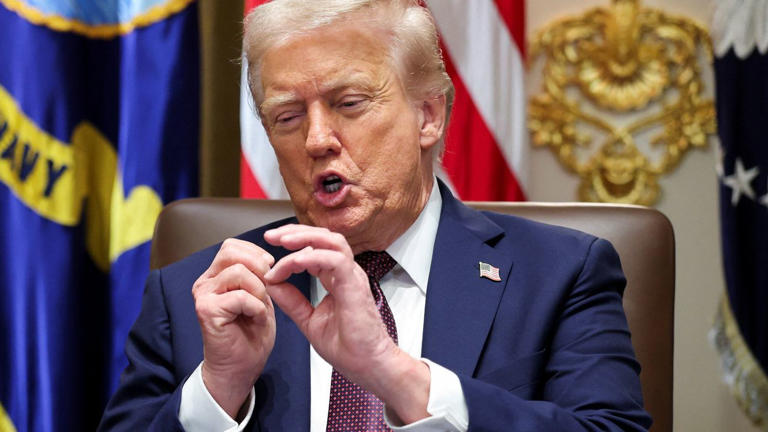
The Wall Street Journal on Monday reported that President Donald Trump will announce that the US Navy is building a new class of warship that will be named after him.

According to the Journal, the president is expected to reveal that the Navy is building “a new ‘Trump-class’ battleship, which will become the centerpiece of the president’s vision for a new ‘Golden Fleet.’”


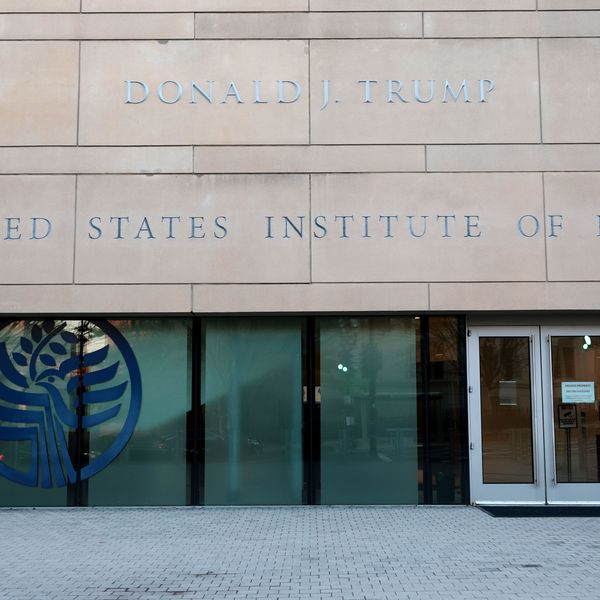
Genocide Backer and Narcissist Donald J. Trump Puts His Name on ‘US Institute of Peace’

The Journal noted that Trump in the past has complained about the aesthetic look of US warships, which he has described as “terrible-looking.” Sources told the Journal that the new ship will “be an upgrade to the Navy’s Arleigh Burke-class destroyers, which are the workhorse of the current fleet and which Trump has compared unfavorably to rival navies.”

Mark Montgomery, a retired rear admiral who currently serves as a senior director at the Foundation for Defense of Democracies, dumped on Trump’s “Golden Fleet” plans in an interview with the Journal, describing the ships as “exactly what we don’t need” and accusing Trump’s underlings of being “focused on the president’s visual that a battleship is a cool-looking ship.”

New York Times columnist Jamelle Bouie echoed Montgomery’s criticisms of the project, which he speculated was being done for entirely frivolous reasons.

“This just has me thinking about how so much of this government and the movement around it is purely a matter of aesthetics,” he wrote on Bluesky. “Is there a strategic reason for produce a new warship? Maybe. But my hunch is that this is happening because the president thinks it will look cool.”

CNBC‘s Carl Quintanilla observed that the Trump-branded warships were just the latest thing that the president has slapped his name on, as in recent months he has also announced the creation of the “TrumpRx” prescription drug website and the “Trump Gold Card,” while also adding his name to the John F. Kennedy Center for the Performing Arts.

Democratic political strategist Jim Manley reacted with horror to Trump naming American military equipment after himself.

“My God,” he wrote on Bluesky. “Well, that seals the deal. If House and Senate appropriators agree to this—burn it all down.”

Trump to announce new fleet of battleships bearing his name

WILL THEY BE PAINTED GOLD?!

Story by Carl Gibson
ALTERNET
Dec. 22, 2025


U.S. President Donald Trump gestures during a cabinet meeting at the White House in Washington, D.C., U.S., August 26, 2025. REUTERS/Jonathan Ernst© provided by AlterNet

President Donald Trump's ongoing efforts to cement his legacy by adding his name to U.S. government property has now spread to the Navy, according to a new report.

According to a Monday article in the Wall Street Journal, the president is now planning to announce a new fleet of "Trump-class" battleships for the Navy's "golden fleet." Trump's plan comes on the heels of the Navy's recent announcement that it will be building a series of frigates, with the first — dubbed the "U.S.S. Defiant" — scheduled to be on the open water by 2028.

"The self-aggrandizement spree continues," observed New York Times Chief White House Correspondent Peter Baker on X.

The company HII Ingalls Shipbuilding is in charge of construction of the "golden fleet," with the first of the new ships being built in Pascagoula, Mississippi. The Pascagoula shipyard is the current home of the U.S. Coast Guard's Legend-class Legend-class National Security Cutter (a ship roughly the same size as a frigate).

As the Journal reported, the U.S. Navy currently has 287 ships in its inventory, which include aircraft carriers, destroyers, cruisers, amphibious ships and submarines. The new battleships would replace the current fleet of Arleigh Burke-class destroyers, which Trump has frequently (and unfavorably) compared to ships in other countries' naval fleets.

Former Rear Admiral Mark Montgomery — who is now the senior director at the Foundation for Defense of Democracies — told the Journal that the "golden fleet" was "exactly what we don't need" and estimated the cost of each ship to be roughly $5 billion. He noted that the new ships would have "zero tactical use" as they lack a vertical launch system and would not be equipped with the Aegis ballistic defense system.


"We do not need ships that are not optimized to provide lethality against the Chinese threat," Montgomery said. "... That is not what these are focused on — they are focused on the president’s visual that a battleship is a cool-looking ship."

Trump's pending announcement of the new fleet of battleships named for him comes after last week's news that the president's hand-picked board of the Kennedy Center voted to add his name to the facility (even though officially changing the name requires an act of Congress). Rep. April McClain Delaney (D-Md.) recently introduced legislation aiming to stop Trump from adding his name to federal property, though its passage is unlikely given that Republicans control both chambers of Congress.

Click here to read the Journal's full report (subscription required).


'Trump Class' battleships plan already has major 'cultural shift' problem: analysis


Ewan Gleadow
December 23, 2025
RAW STORY


FILE: U.S. President Donald Trump attends the commencement ceremony at West Point Military Academy in West Point, New York, U.S., May 24, 2025. REUTERS/Nathan Howard

A proposed battleship line named after Donald Trump has already hit a snag according to a professor of war.

Professor Alessio Patalano of King's College London says the production of battleships named after Trump faces several problems, and that is before production has even started. The professor of war and strategy says the US may have the infrastructure necessary to building the new fleet, but it lacks the space and money necessary.

Speaking to CNN, professor Patalano said, "The question is … whether the US has a sufficient shipyard capacity and workforce to translate a visual gold fleet into a real sailing one."

"The US Navy is not known for being at the forefront of automation and innovative solutions in terms of more compact crew management." The professor of war and strategy has also suggested bringing these battleships up to speed with the rest of the US navy will require more than money.

It will also need a "cultural shift - in light of other new classes being built - of no trifling proportions," Patalano added. Fellow expert and former US Navy captain, Carl Schuster, agrees that a cultural shift is necessary for the project to be a success=

He said, "A national scale recruitment and training program for shipyard, electrical, information and sensor system workers (would be) required to support this program."

"This project will be managed by NAVSEA (Naval Sea Systems Command), an organization and staff that has screwed up every surface warship program of this century. I believe Trump must clean house in that organization if he wants any shipbuilding program to succeed."

Schuster would go on to suggest there is a comparison to be made between Trump's military plans and that of JFK's space program.

The ex-Navy captain said, "I think Trump is trying to achieve a maritime equivalent to JFK’s call for a space program. Remember, the Soviets seemed to be ahead of us in space, a direct threat to our national security."


"The PLAN is nearing the ability to challenge our access to the Western Pacific, a direct and clear threat to our national security. Since it also poses a threat to Japan and South Korea, enlisting their help to meet that challenge is a necessary solution to the problem."


PIRATES OF PENZANCE


Pentagon Fails 8th Consecutive Audit Days After Bipartisan Vote to Hand It $900 Billion

“Congress cannot continue funneling hundreds of billions of dollars to a completely unaccountable agency while American families can’t afford food or healthcare,” said one House Democrat.


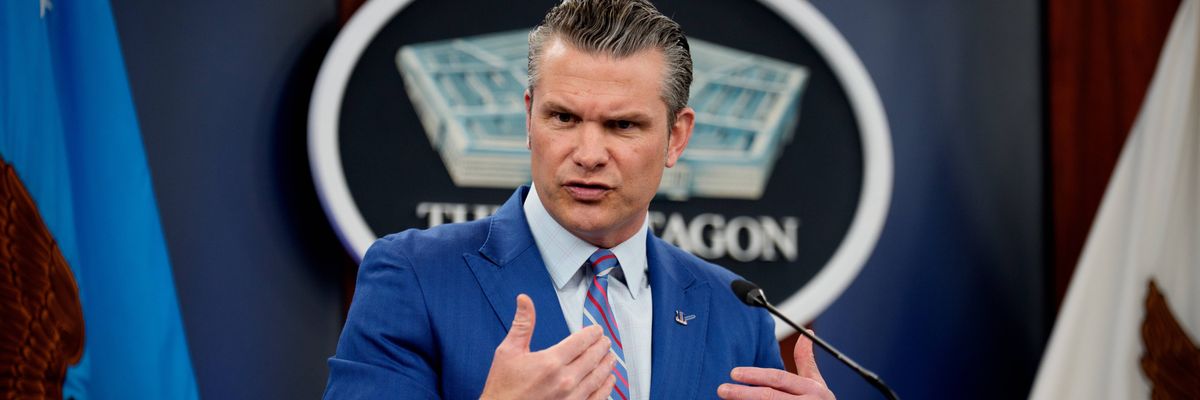
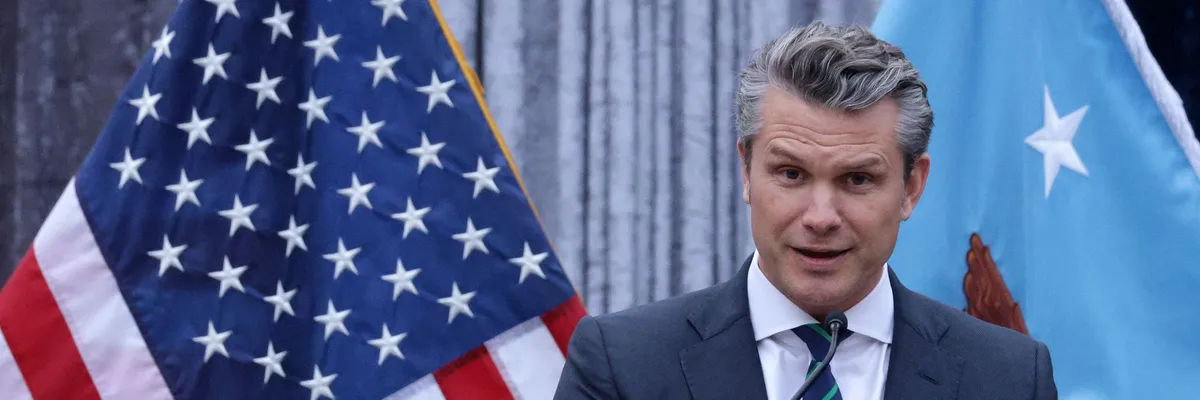
US Defense Secretary Pete Hegseth speaks during a news conference on June 26, 2025 in Arlington, Virginia.
(Photo by Andrew Harnik/Getty Images)

Jake Johnson
Dec 23, 2025
COMMON DREAMS


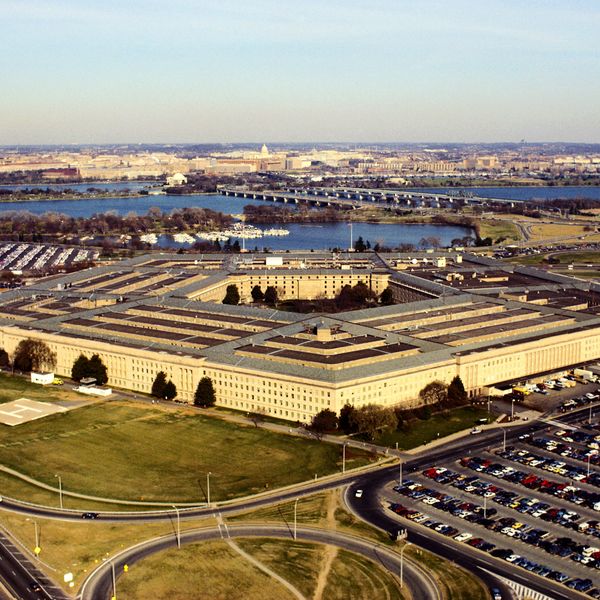
Two days after the US Senate voted on a bipartisan basis to authorize just over $900 billion in military spending for the coming fiscal year, the chief recipient of that taxpayer money—the Department of Defense—announced it failed an audit of its books for the eighth consecutive year.

The now-predictable audit result was announced Friday by the Pentagon’s Office of Inspector General (OIG) after an examination of the agency’s roughly $4.6 trillion in assets. The OIG said it identified 26 “material weaknesses”—major flaws in internal controls over financial reports—in the Pentagon’s accounting.


‘Don’t Give the Pentagon $1 Trillion,’ Critics Say as House Passes Record US Military Spending Bill


Majority of Democrats Join Senate GOP to Pass Trump’s $900 Billion Pentagon Wish List

Auditors also uncovered “five instances of noncompliance with laws, regulations, contracts, and grant agreements,” OIG said.

The Military Times reported that “among the shortcomings were omissions in the Joint Strike Fighter Program, the Pentagon’s multifaceted effort to develop an affordable strike aircraft for the Air Force, Marine Corps, Navy, and allied nations.”

“Auditors determined the Pentagon failed to report assets in the program’s Global Spares Pool, and did not accurately record the property,” the outlet noted.

Jules W. Hurst III, the Pentagon’s chief financial officer, said in response to the findings that the department is “committed to resolving its critical issues and achieving an unmodified audit opinion by 2028.

The Pentagon remains the only US federal agency that has yet to pass an independent, department-wide audit, as required by law. But its repeated failures to return a clean audit haven’t deterred Congress from adding to its coffers each year.

With the passage of the 2026 National Defense Authorization Act (NDAA), which President Donald Trump signed into law last week, Congress has backed over $1 trillion in military spending this year.

“Congress cannot continue funneling hundreds of billions of dollars to a completely unaccountable agency while American families can’t afford food or healthcare,” said Rep. Pramila Jayapal (D-Wash.), who voted against the NDAA.


War Crime, Murder, or Both? House Dems Demand DOJ Probe Into Hegseth Order to Kill Shipwrecked Sailors

“Giving a general order to kill any survivors constitutes a war crime,” wrote Reps. Jamie Raskin and Ted Lieu. “Outside of war, the killing of unarmed, helpless men clinging to wreckage in open water is simply murder.”


US Secretary of Defense Pete Hegseth speaks during a Christmas service at the Pentagon on December 17, 2025 in Arlington, Virginia.
(Photo by Alex Wong/Getty Images)

Julia Conley
Dec 22, 2025
COMMON DREAMS

Making clear that the Trump administration’s “entire Caribbean operation,” which has killed more than 100 people in boats that the US military has bombed, “appears to be unlawful,” two Democrats on a powerful House committee on Monday called on the Department of Justice to investigate one particular attack that’s garnered accusations of a war crime—or murder.

House Judiciary Committee Ranking Member Jamie Raskin (D-Md.) and Rep. Ted Lieu (D-Calif.) wrote to Attorney General Pam Bondi four weeks after it was reported that in the military’s first strike on a boat on September 2, Defense Secretary Pete Hegseth ordered service members to “kill everybody”—prompting a second “double-tap” strike to kill two survivors of the initial blast.

A retired general, United Nations experts, and former top military legal advisers are among those who have warned that Hegseth and the service members directly involved in the strike—as well as the other attacks on more than two dozen boats in the Caribbean and eastern Pacific—may be liable for war crimes or murder.

Raskin and Lieu raised that concern directly to Bondi, writing: “Deliberately targeting incapacitated individuals constitutes a clear violation of the Department of Defense’s Law of War Manual, which expressly forbids attacks on persons rendered helpless by shipwreck. Such conduct would trigger criminal liability under the War Crimes Act if the administration claims it is engaged in armed conflict, or under the federal murder statute if no such conflict exists.”

The administration has insisted it is attacking the boats as part of an effort to stop drug trafficking out of Venezuela, and has claimed the US is in an armed conflict with drug cartels there, though international and domestic intelligence agencies have not identified the country as a significant source any drugs that flow into the US. As President Donald Trump has ordered the boat strikes, the administration has also been escalating tensions with Venezuela by seizing oil tankers, claiming to close its airspace, and demanding that President Nicolás Maduro leave power.

Critics from both sides of the aisle in Congress have questioned the claim that the bombed boats were a threat to the US, and Raskin and Lieu noted that the vessel attacked on September 2 in particular appeared to pose no threat, as it was apparently headed to Suriname, “not the United States, at the time it was destroyed.”

“Deliberately targeting incapacitated individuals constitutes a clear violation of the Department of Defense’s Law of War Manual, which expressly forbids attacks on persons rendered helpless by shipwreck.”

“Congress has never authorized military force against Venezuela; a boat moving towards Suriname does not pose a clear and present danger to the United States; and the classified legal memoranda the Trump administration has offered us to justify the attacks are entirely unpersuasive,” wrote the lawmakers.

Raskin and Lieu emphasized that Hegseth’s explanations of the September 2 strike in particular have been “shifting and contradictory.”

“Secretary Hegseth has variously claimed that he missed the details of the September 2 strike because of the ‘fog of war,’ and that he actually left the room before any explicit order was given to kill the survivors,” they wrote. “Later reporting suggests that he gave a general order to kill all passengers aboard ahead of the strike but delegated the specific order to kill survivors to a subordinate.”

The facts that are known about the strike, as well as Hegseth’s muddled claims, warrant a DOJ investigation, the Democrats suggested.

“Giving a general order to kill any survivors constitutes a war crime,” they wrote. “Similarly, carrying out such an order also constitutes a war crime, and the Manual for Courts-Martial explicitly provides that ‘acting pursuant to orders’ is no defense ‘if the accused knew the orders to be unlawful.’ Outside of war, the killing of unarmed, helpless men clinging to wreckage in open water is simply murder. The federal criminal code makes it a felony to commit murder within the ‘special maritime and territorial jurisdiction of the United States,’ which is defined to include the ‘high seas.’ It is also a federal crime to conspire to commit murder.”

Raskin and Lieu also emphasized that two memos from the DOJ’s Office of Legal Counsel (OLC) “do not—and cannot—provide any legal protection for the secretary’s conduct.”

A 2010 OLC memo said the federal murder statute does not apply “when the target of a military strike is an enemy combatant in a congressionally authorized armed conflict,” they noted. “In stark contrast, in the case of the Venezuelan boats, Congress has not authorized military force of any kind.”

A new classified memo also suggested that “personnel taking part in military strikes on alleged drug trafficking boats in Latin America would not be exposed to future prosecution,” and claimed that “the president’s inherent constitutional authority in an undeclared ‘armed conflict’ will shield the entire chain of command from criminal liability.”

The Democrats wrote, “Experts in criminal law, constitutional law, and the law of armed conflict find this sweeping, unsubstantiated claim implausible, at best.”

They also noted that even the author of the George W. Bush administration’s infamous “Torture Memo,” conservative legal scholar John Woo, has said Hegseth’s order on September 2 was clearly against the law.

“Attorney General Bondi, even those who condoned and defended torture in the name of America are saying that the Trump administration has violated both federal law and the law of war,” wrote Raskin and Lieu. “We urge you to do your duty as this country’s chief law enforcement officer to investigate the secretary’s apparent and serious violations of federal criminal law.”


University of Oklahoma Removes Teacher Over Failing Grade for Student’s Bible-Based Gender Essay

“So if a geology student at the University of Oklahoma says in class the earth is 6,000 years young because that’s what they believe, a geology teacher can’t say squat?” asked one critic.

 
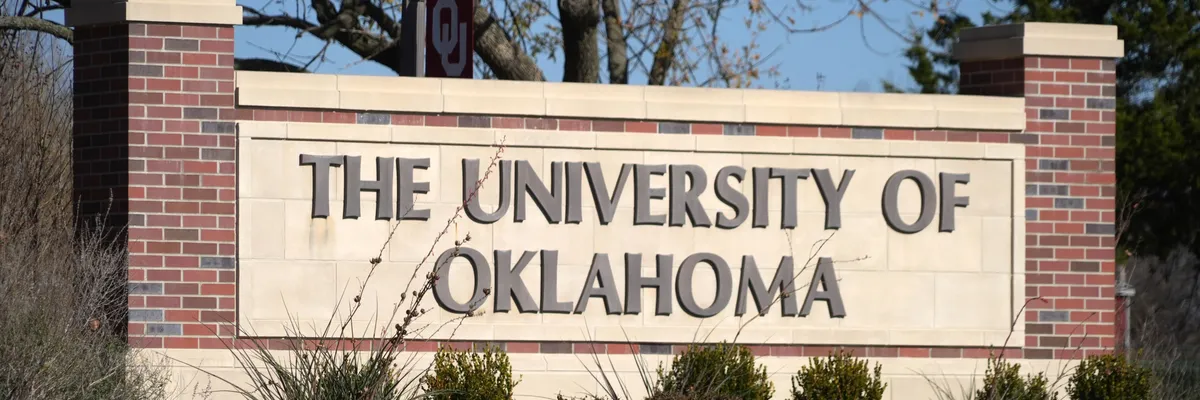
A sign on the campus of the University of Oklahoma is seen on December 1, 2024, in Norman, Oklahoma.
(Photo by Kirby Lee/Getty Images)

Julia Conley
Dec 23, 2025
COMMON DREAMS

A decision from the University of Oklahoma on Monday left some asking whether the research university can still be seen as having “academic standards” after an instructor was removed from teaching duties for giving a failing grade to a student who focused on her own religious beliefs about gender in a paper for a psychology course.

The university released a statement saying the graduate teaching assistant in the course, Mel Curth, had been “arbitrary” in the grading of a paper by student Samantha Fulnecky, who wrote an assigned essay about an article the class read about gender, peer relations, sterotyping, and mental health for the course.

Fulnecky’s paper cited the Bible and focused heavily on her beliefs that “God made male and female and made us differently from each other on purpose and for a purpose.”

“Women naturally want to do womanly things because God created us with those womanly desires in our hearts. The same goes for men,” she wrote in the essay, adding that “society pushing the lie that there are multiple genders and everyone should be whatever they want to be is demonic and severely harms American youth.”

Curth, who is transgender, gave Fulnecky a zero for the essay and emphasized in her response that she was “not deducting points because you have certain beliefs,” but because the paper “does not answer the questions for the assignment, contradicts itself, heavily uses personal ideology over empirical evidence in a scientific class, and is at times offensive.”


“Using your own personal beliefs to argue against the findings of not only this article, but the findings of countless articles across psychology, biology, sociology, etc. is not best practice,” Curth wrote.

Another instructor concurred with Curth on the grade, telling Fulnecky that “everyone has different ways in which they see the world, but in an academic course such as this you are being asked to support your ideas with empirical evidence and higher-level reasoning.”

On Monday, the university suggested Curth’s explanation for the grade was not satisfactory.

“What is there to say other than that the University of Oklahoma has no academic standards?” asked journalist Peter Sterne in response to the university’s statement.


One civil rights advocate, Brian Tashman, added that the school’s decision opens up numerous questions about how academic papers that focus on a student’s religious beliefs will be graded in the future.

“So if a geology student at the University of Oklahoma says in class the earth is 6,000 years young because that’s what they believe, a geology teacher can’t say squat?” asked Tashman. “What if their religion teaches the earth is flat? Or that all of mankind’s problems can be traced back to Xenu?”

Curth had initially been placed on administrative leave earlier this month when Fulnecky filed a religious discrimination complaint with the school.

Fulnecky’s allegations drew the attention of the school’s chapter of Turning Point USA, the right-wing group that advocates for conservative political views on college and high school campuses. The group is closely aligned with the Trump administration. Vice President JD Vance spoke at Turning Point’s AmericaFest last weekend—and used the appearance to tell young conservatives that their movement should not root out antisemitism with “purity tests”—and the assassination of its founder, Charlie Kirk, earlier this year, was followed by the White House’s efforts to crack down on what it called left-wing extremism, with President Donald Trump directly blaming the “radical left” for Kirk’s killing before a suspect was identified.

While Fulnecky garnered support from the Turning Point chapter, hundreds of her fellow students rallied in support of Curth in recent weeks, chanting, “Protect Our Professors!” at a recent protest.


A lawyer for Curth said Monday that she is “considering all of her legal remedies, including appealing this decision by the university.”

“Ms. Curth continues to deny that she engaged in any arbitrary behavior regarding the student’s work,” Brittany M. Stewart told the Washington Post.

The university did not release its findings of the religious discrimination investigation it opened into Fulnecky’s case.

The school’s decision to remove Curth from teaching duties, said author Hemant Mehta, “is what academic cowardice looks like.”
GOP revolts against Trump administration's move to gut key weather center

Matthew Chapman
December 22, 2025
RAW STORY

The Trump administration's plan to shut down a key weather research agency in Boulder, Colorado, is running into opposition — from Republicans.

According to NOTUS, "Republican Reps. Jeff Hurd, Jay Obernolte, Brian Fitzpatrick, and Jack Bergman joined Democrats, including Rep. Joe Neguse and Sens. Michael Bennet and John Hickenlooper, in a letter to Congressional appropriators Monday asking them to ensure sustained funding for the Colorado-based National Center for Atmospheric Research. Eighty lawmakers from both the Senate and the House signed the letter."

NCAR is responsible, among other things, for research into fire and flood risk.

Hurd put out a statement saying, “Dismantling this institution doesn’t make sense, and I’m glad to work with my colleagues in both chambers to make sure NCAR has the funding it needs to keep operating. The scientists at NCAR are doing work that matters — work that helps families prepare for storms, helps farmers plan their seasons, and keeps us ahead on the world stage."

"Supporting NCAR is a smart investment we should continue to make, not walk away from,” continued Hurd, who represents a sprawling district encompassing the Western Slope of Colorado.

President Donald Trump's Office of Management and Budget director, Russ Vought, announced plans to dismantle NCAR earlier this month, proclaiming it is "one of the largest sources of climate alarmism in the country." He said that functions of the agency the Trump administration deems essential will continue, just delegated to other agencies.

Bennet and Hickenlooper responded by blocking the "minibus" package Republicans hoped would prevent another federal government shutdown at the end of January, when the current continuing resolution expires.

This comes as Trump is also proceeding with a plan, initially devised in his first term, to relocate the U.S. Space Command headquarters from Colorado Springs to Huntsville, Alabama. This plan has drawn bipartisan fury from the entire Colorado congressional delegation, including Rep. Lauren Boebert, normally an unflinching supporter of Trump's agenda.


Trump’s Attack on Weather Center Would End Lifesaving Meteorological Research

The National Center for Atmospheric Research has enabled crucial predictions of wildfires and extreme weather.

December 22, 2025
The National Center for Atmospheric Research Mesa Lab is seen in Boulder, Colorado, on July 7, 2025.Matthew Jonas / MediaNews Group / Boulder Daily Camera via Getty Images

On December 16, USA Today broke the news that the Trump administration was planning to eliminate the National Center for Atmospheric Research (NCAR). According to a tweet by Russell Vought, an architect of Project 2025 and current director of the Office of Management and Budget, the administration had determined that the Colorado-based center was a hub for “climate alarmism.” Dismantling it — and farming out its surviving, non-climate-change-related functions to other agencies — would strike a blow against a scientific community that has come to the overwhelming conclusion that global warming is real, caused by human activities, and accelerating. Some commentators also noted that attacking NCAR, which employs 800-plus people, is a stick-in-the-eye to Colorado, a state whose governor has consistently opposed many of Trump’s most extreme policies, and where election conspiracist and former county clerk Tina Peters resides in a state prison, after a federal judge ruled that she had to remain incarcerated despite her being pardoned for federal crimes by Trump. Peters was, after all, sentenced on state, rather than federal, charges, rendering Trump’s pardon largely pointless.

NCAR has long been in team Trump 2.0’s crosshairs. Previous proposals called for its funding to be slashed by 40 percent. The administration has also sought to end most climate-related research at the National Oceanic and Atmospheric Administration, and websites for the Environmental Protection Agency have scrubbed mentions of human-caused climate change. As a result, institutions that were once considered among global gold standards for the delivery of accurate scientific information on the climate crisis are now effectively neutralized.

The administration’s decision to go after NCAR is part of a broader retreat from any acknowledgement of the reality of climate change.

For the nation’s thousands of meteorologists and climate change scientists, the news about the proposed gutting of NCAR landed like a grenade. After all, NCAR — which on a day-to-day basis is administered by the University Corporation for Atmospheric Research on behalf of the National Science Foundation, but which is funded in large part by the federal government — has been the world’s preeminent weather and atmospheric research institution since the 1960s. Its purpose is to pool institutional resources and expertise to provide researchers with cutting edge super-computers, data repositories, specialized aircraft with extremely expensive, sensitive, on-board measurement equipment, and other tools of the trade. No single lab or university, no matter how flush with money, has the ability to replicate all of this single-handedly. Few other institutions anywhere on earth can model weather, climate change, or other atmospheric disturbances so granularly.

NCAR’s whole reason for existing, said University of Wisconsin-Madison Atmospheric and Oceanic Sciences Professor Ankur Desai, is to “supersize” the country’s research resources. Desai did a post-doctoral fellowship at the Boulder institution; his work there led to his publishing a number of papers; those papers were what landed him his professorship in Madison. “It’s the mecca of meteorology, and there’s no place like it in the world,” he enthused.

Desai is not alone in his enthusiasm. Most of the country’s top atmospheric scientists have, at one point or another, trained, studied, or carried out research at NCAR or using NCAR’s resources. “I can write a proposal to the National Science Foundation saying I need a state of the art modeling system, and I need an aircraft,” said Kenneth Davis, professor of atmospheric and climate science at Penn State. Without NCAR’s resources, he continued, “there’s no way in hell that happens. These tools serve the U.S. research community in a way that would not be possible without a centralized institution like this.”

Davis cannot see any upside to breaking apart NCAR. “I don’t see what you gain. The purpose is to smash. All it does is take away our ability to do important research work. U.S. universities get damaged by this.”

Desai’s colleague at the University of Wisconsin, Liz Maroon, agreed. “The idea of losing this crowning jewel in the atmospheric science community, it would be devastating,” she said. “Having access to this kind of science is saving life and property. And its technology goes into improving national security and the economy.” Take away NCAR and you take away much of the country’s ability to predict wildfire patterns, to better and more efficiently irrigate crops, and to give residents and businesses advanced warning about extreme weather.

Maroon explained that in addition to providing researchers with access to expensive technologies and providing storage repositories for decades of research data, NCAR also creates teaching materials used in schools and universities around the country. “NCAR is at the heart of atmospheric and earth systems science in the U.S.,” Maroon continued. “It allows the scientific community to do bigger things together that no one scientist or university could really do. The value of what NCAR has brought to the U.S. scientific community, to its citizens, and to the world should be self-evident.”

Around the country, scientists have begun pushing back against the administration’s proposal, as are members of Colorado’s congressional delegation, including Sen. John Hickenlooper, the former governor who has long been a champion of climate change research. Universities are also mobilizing their teams that liaise on federal issues to explain to the public and to Congress the vital importance of this institute and what will be lost if it is shuttered.

“This really seems existential for our field and certainly the U.S.,” said Desai. “It’s a tantrum being thrown to break things, with no plan for how to fix things.”

Raymond Ban, former executive VP of the Weather Channel and an ex-trustee of the University Corporation for Atmospheric Research, hopes that the realization of what is at stake here will mobilize citizens, political leaders, and industry to push back against the administration’s proposals. After all, he said, for more than 60 years, the NCAR has been “one of the most valuable R&D enterprises that we have in the earth, water, and atmospheric science community.” Want to study the way the sun and the earth interact? NCAR runs a high-altitude observatory, Ban notes. Want to know why there are fewer crash landings of airplanes during episodes of strong wind shear than there used to be?It’s because in the 1980s researchers at NCAR designed a low-level wind shear alert system that was installed in airports around the United States to allow pilots to receive advanced warning if they were about to enter a wind shear zone.

“We need to hope that the value of NCAR and everything it produces will be realized, and there’ll be voices in the decision room that will understand that value,” Ban said. “I’m hopeful that with enough input from the community and enough feedback the senior leadership of the National Science Foundation and the administration will take another look at this.”
‘Complete disgrace’: Lawmaker sues to undo Trump rebranding of DC landmark

Erik De La Garza
December 22, 2025 
RAW STORY


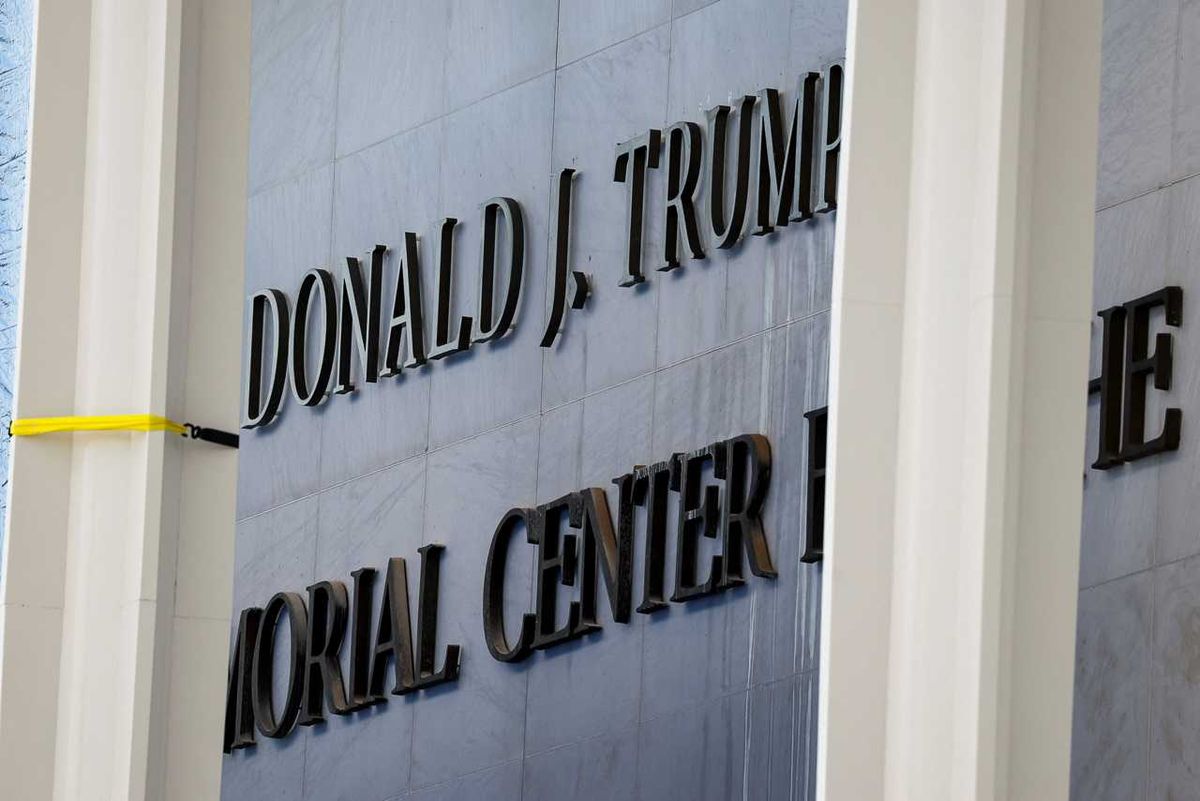
U.S. President Donald Trump's name is added at the facade of the John F. Kennedy Center for the Performing Arts, a day after its board announced it would rename the institution The Donald J. Trump and The John F. Kennedy Memorial Center for the Performing Arts, in Washington, D.C., U.S., December 19, 2025. REUTERS/Kevin Lamarque

Rep. Joyce Beatty (D-OH) filed a lawsuit Monday seeking to force the removal of President Donald Trump’s name from the John F. Kennedy Center for the Performing Arts, arguing that the move violated federal law and the Constitution.
The lawsuit, filed in D.C. federal court, names Trump and several loyalists he appointed to the Kennedy Center’s board as defendants. Beatty contends that the board’s vote last week to rename the Washington, D.C., cultural institution was illegal because only Congress has the authority to change the center’s name.

Norman Eisen, Beatty’s attorney and a former White House ethics counsel under former President Barack Obama, said the name change “violates the Constitution and the rule of law because Congress said this is the name.”

“The President and his sycophants have no lawful authority to rename the Kennedy Center,” Eisen added in a statement.

Trump, whose board installed him as its chair, sparked the lawsuit after his name was added to the exterior of the building Friday morning. The storied institution’s website and social media accounts soon followed and began referring to it as the “Trump Kennedy Center,” according to reports. A senior White House official previously told The New York Times that the administration rejects the argument that congressional approval is required and does not expect lawmakers to intervene.


Beatty, who brought the lawsuit in her capacity as an ex officio member of the Kennedy Center’s board, said she attempted to object during the meeting when the name change was approved – but was unable to do so.


“Everything was cut off,” Beatty said of the call, according to the Times. “And then they immediately said, ‘Well, it’s unanimous. Everybody is for it.’”

In a statement Monday, Beatty called the episode a “complete disgrace.”

“Only Congress has the authority to rename the Kennedy Center,” the lawmaker said. “President Trump and his cronies must not be allowed to trample federal law and bypass Congress to feed his ego. This entire process has been a complete disgrace to this cherished institution and the people it serves. These unlawful actions must be blocked before any further damage is done.”