Trump's 'stealth tax increases' forcing holiday shoppers to 'make some choices': report

Image: Shutterstock
Image: Shutterstock
Adam Lynch
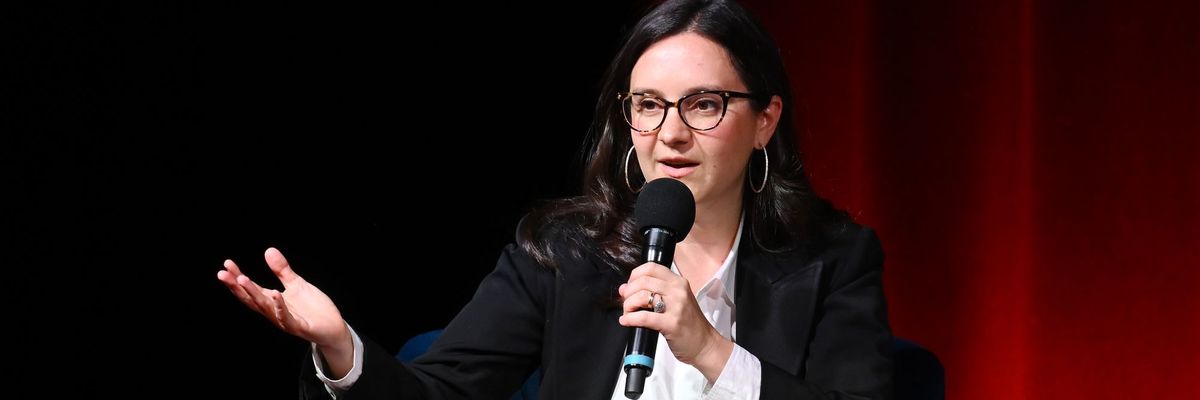
Wichita Eagle Opinion Editor Dion Lefler said most voters are feeling the weight of President Donald Trump’s tariffs this holiday season, but elderly grandparents on fixed incomes are definitely catching the worst of it.
“One of the funny things about tariffs — those pesky tax increases President Donald Trump has imposed on imported goods — is they show up where you least expect them. Like on your grocery bill,” Lefler said. “You may have absolutely nothing in your shopping cart but American-grown meat and produce. But that doesn’t mean that tariffs — Trump’s chief weapon in his trade war against the world — aren’t biting you in the budget this Christmas season.”
Lefler participated in a Monday Zoom conversation with Debbie Collins, a retiree living mainly on the state of Kansas’ public employees’ retirement system after 36 years in state government, and Nick Levendofsky, who is the executive director of the Kansas Farmer’s Union.
Collins described a season of more shopping at discount stores, more low-quality generics over name brands, more couponing and more stockpiling items when they’re on sale.
“But even with those adjustments, my grocery bill is still higher than it ever was before, and it’s really hard to make my budget stretch,” said Collins, adding that the holiday season has added stress to shopping for presents for “two perfect grandchildren.”
“I’ve had to kind of, you know, make some choices about what I can and can’t get for them,” Collins said. “These tariffs may sound really abstract to people in Washington, but for those of us back home and people like me, they show up every single time I go to the store.”
Lefler wrote that he wishes Collins well in her holiday shopping, adding: "I don’t like higher prices, especially not when they’re caused by stealth tax increases, which is all tariffs really are."
Over on the producer’s end of the spectrum, Levendofsky warned that the tariffs are ruining markets upon which Kansas farmers depend.
“Reckless tariffs disrupt export markets, invite retaliation and make it harder for Kansas farmers to compete, especially when other countries respond by shutting out US products,” Levendofsky said. “At the same time, tariffs raise farmers’ costs by increasing the price of essential inputs like equipment, fertilizer, fuel and packaging materials.”
Financial pressure doesn’t “stop at the farm gate,” Levendofsky warned.
“When farmers face higher costs and fewer markets, those. They move through the supply chain. That’s how tariffs end up raising prices for groceries and everyday items that Kansas families rely on,” he said.
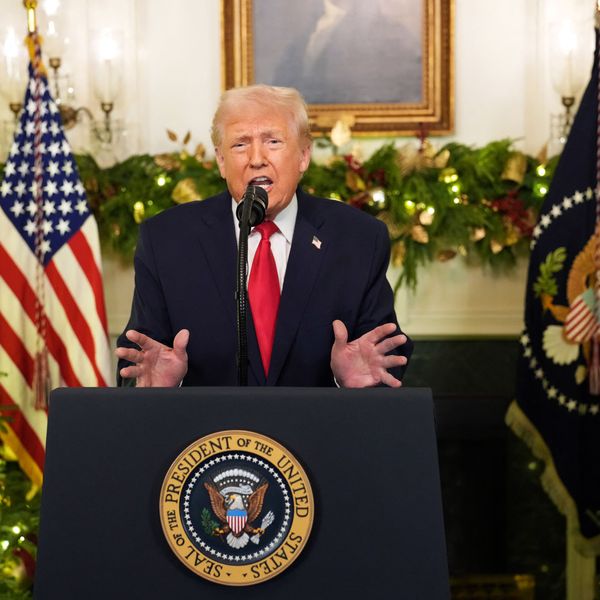
“Meanwhile, the president is doing what he usually does — blame his predecessor and deny, deny, deny,” said Lefler, adding that Trump, “in his free-range rambling national address last week,” cherry-picked a handful of items that have dropped in price, including eggs — which not only dropped less in price than Trump claims, but also had everything to do with a spike in bird flu that purged henhouses of birds, not Trump’s intelligent leadership.
With only one Kansas U.S. House member willing to oppose Trump’s tariff doctrine, however, the chances of grandparents' budgets being less stressed is slim.
“[Kansas has] one [Democrat] of four representatives and the other three [Republicans] are committed to riding Trump’s tariff train wherever it takes their constituents,” Lefler said. “From groceries to gifts, we’re feeling the pinch of Trump’s tariffs this holiday season, and I expect we will be for at least the next three Christmases yet to come.”
December 23, 2025
ALTERNET
Wichita Eagle Opinion Editor Dion Lefler said most voters are feeling the weight of President Donald Trump’s tariffs this holiday season, but elderly grandparents on fixed incomes are definitely catching the worst of it.
“One of the funny things about tariffs — those pesky tax increases President Donald Trump has imposed on imported goods — is they show up where you least expect them. Like on your grocery bill,” Lefler said. “You may have absolutely nothing in your shopping cart but American-grown meat and produce. But that doesn’t mean that tariffs — Trump’s chief weapon in his trade war against the world — aren’t biting you in the budget this Christmas season.”
Lefler participated in a Monday Zoom conversation with Debbie Collins, a retiree living mainly on the state of Kansas’ public employees’ retirement system after 36 years in state government, and Nick Levendofsky, who is the executive director of the Kansas Farmer’s Union.
Collins described a season of more shopping at discount stores, more low-quality generics over name brands, more couponing and more stockpiling items when they’re on sale.
“But even with those adjustments, my grocery bill is still higher than it ever was before, and it’s really hard to make my budget stretch,” said Collins, adding that the holiday season has added stress to shopping for presents for “two perfect grandchildren.”
“I’ve had to kind of, you know, make some choices about what I can and can’t get for them,” Collins said. “These tariffs may sound really abstract to people in Washington, but for those of us back home and people like me, they show up every single time I go to the store.”
Lefler wrote that he wishes Collins well in her holiday shopping, adding: "I don’t like higher prices, especially not when they’re caused by stealth tax increases, which is all tariffs really are."
Over on the producer’s end of the spectrum, Levendofsky warned that the tariffs are ruining markets upon which Kansas farmers depend.
“Reckless tariffs disrupt export markets, invite retaliation and make it harder for Kansas farmers to compete, especially when other countries respond by shutting out US products,” Levendofsky said. “At the same time, tariffs raise farmers’ costs by increasing the price of essential inputs like equipment, fertilizer, fuel and packaging materials.”
Financial pressure doesn’t “stop at the farm gate,” Levendofsky warned.
“When farmers face higher costs and fewer markets, those. They move through the supply chain. That’s how tariffs end up raising prices for groceries and everyday items that Kansas families rely on,” he said.
“Meanwhile, the president is doing what he usually does — blame his predecessor and deny, deny, deny,” said Lefler, adding that Trump, “in his free-range rambling national address last week,” cherry-picked a handful of items that have dropped in price, including eggs — which not only dropped less in price than Trump claims, but also had everything to do with a spike in bird flu that purged henhouses of birds, not Trump’s intelligent leadership.
With only one Kansas U.S. House member willing to oppose Trump’s tariff doctrine, however, the chances of grandparents' budgets being less stressed is slim.
“[Kansas has] one [Democrat] of four representatives and the other three [Republicans] are committed to riding Trump’s tariff train wherever it takes their constituents,” Lefler said. “From groceries to gifts, we’re feeling the pinch of Trump’s tariffs this holiday season, and I expect we will be for at least the next three Christmases yet to come.”
Read Lefler's article in the Kansas City Star at this link.
Trump’s Embrace of Natural Gas Exports Is Driving Up Energy Bills for Consumers
US households paid $124 more on natural gas in the first nine months of 2025 compared to the same period in 2024.
By Mike Ludwig ,
Utility Bills Hit Record Highs Under Trump
Experts say Trump’s “Big Beautiful Bill” is likely to drive up energy prices even higher.
By Elizabeth Weill-Greenberg , Truthout August 1, 2025
“LNG is wiping out the small commercial fishing industry there and replacing it with this giant global export industry,” said Eric Huber, a managing attorney for the Sierra Club, during a press call.
Huber and activists in Louisiana say the buildout of massive fossil fuel infrastructure is destroying wetlands that are critical for coastal restoration and the livelihoods of traditional fishers in an area where residents are already overexposed to petrochemical pollution. A 2024 report by the Environmental Integrity Project found that seven LNG terminals operating at the time violated their air pollution permits over the past three years while emitting millions of tons of greenhouse gases, with state and federal regulators handing out about $1 million in penalties.
“Record LNG exports are driving domestic demand and increasing domestic prices for residential consumers,” Slocum said. “The United States is exporting so much natural gas that the eight export terminals are consuming … more natural gas than all 184 million Americans that get direct natural gas from utilities.”
“What’s clear is Donald Trump’s policies are exacerbating this,” Slocum said, in reference to the rising cost of energy for residential consumers.
Slocum pointed to President Joe Biden’s decision in early 2024 to temporarily pause permitting for new LNG export terminals while federal regulators updated their standards for determining whether a proposed fossil fuel project is in the public interest. The pause gave regulators time to consider the potential climate impacts and costs to consumers of allowing the LNG industry to build out more export terminals.
Biden’s order was a victory for environmentalists fighting to save Louisiana’s coastal wetlands and waterways as well as consumers of natural gas. However, Trump railed against the permitting pause on the campaign trail and reversed it on his first day in office, signing an executive order directing agencies to deregulate the fossil fuel industry. Under Trump’s appointees, federal agencies have since rolled back environmental protections and pollution controls while Trump attacks the clean energy sector.
Trump also promised to halve electricity bills in his first year, but those have also gone up in 2025 compared to 2024, with households seeing up to a 13 percent increase on average depending on the season.
The affordability crisis has flummoxed Trump, who has attempted to blame Democrats and Biden for the public’s frustration with rising prices. In multiple interviews and speeches, Trump has called the nation’s mounting affordability crisis a “Democrat hoax” even as voters feel the pinch of higher utility bills and grocery prices.
Trump appears to believe that deregulating the fossil fuel industry and allowing more exports will “unleash” domestic production and eventually bring down prices for consumers. The White House continues to boast about low gasoline prices, but the Consumer Price Index calculates that they have fallen about 0.5 percent since 2024. In an Energy Department statement titled “Promises Made, Promises Kept,” the Trump administration says it has achieved “energy dominance” and ended the “Biden LNG export ban” on day one.
Thanks to these changes, “The Energy Department has approved more LNG export capacity than the volume exported today by the world’s second-largest LNG exporter,” the statement said. The Energy Department says the increased exports would bring “prosperity at home and peace abroad,” which Slocum said reflects Trump’s habit of pushing other countries to commit to buying U.S. LNG as the president leverages steep tariffs to renegotiate international trade terms.
“Almost every trade deal he negotiates, he is trying to force countries to buy more U.S. LNG whether they need it or not, because that doesn’t matter to Trump,” Slocum said. “What matters to Trump is bigger numbers for exports because that is going to deliver bigger profits for the LNG export industry.”
US households paid $124 more on natural gas in the first nine months of 2025 compared to the same period in 2024.
By Mike Ludwig ,
December 23, 2025
President Donald Trump takes the stage during a rally at the Rocky Mount Event Center on December 19, 2025, in Rocky Mount, North Carolina.
Tasos Katopodis / Getty Images
Despite repeated promises from President Donald Trump on the campaign trail to lower the cost of energy, consumers in the United States collectively paid $12 billion more for natural gas to power their homes over the first nine months of 2025 — about $124 more per family — than they did a year earlier, according to a new report on federal data by the watchdog group Public Citizen.
Thanks to a fracking boom that has polluted communities from Pennsylvania to Texas, the U.S. is the world’s top producer and exporter of “natural” methane gas. But the price of refined natural gas sold to residential customers is rising to record levels under Trump. Almost immediately after taking office, Trump embraced the rapidly expanding natural fossil gas export industry and ordered the Department of Energy to expedite permits for shipping fracked gas overseas.
“Over and over in his stump speeches Donald Trump specifically promised all Americans energy and utility bills would be slashed in half,” Tyson Slocum, director of Public Citizen’s energy program and author of the report, told reporters on December 16. “Not only are prices not declining, they are increasing, and we Americans are experiencing an energy affordability crisis driven by high natural gas prices.”
The natural gas export industry already consumes more gas than the 73 million U.S. households that use natural gas.
Rising gas exports are linked to the increase in natural gas prices, primarily from eight liquified natural gas (LNG) terminals where fracked gas is processed into liquid and loaded onto barges for transport. The natural gas export industry already consumes more gas than the 73 million U.S. households that use natural gas, according to Reuters. About 25 percent of the gas produced in the U.S. is exported, either at LNG terminals or through pipelines to Mexico and Canada. That’s up from 5 percent just a decade ago, federal data show.
Flush with gas produced by the fracking boom over the past decade, the industry has rushed to build more LNG export terminals along the Gulf Coast and in southern Louisiana. Environmental groups are currently challenging a contentious state permit for Commonwealth LNG in Louisiana, which would destroy vital coastal wetlands and emit as much greenhouse gas as 14 coal-burning power plants each year, according to the Sierra Club. The proposed location for the export terminal is near two massive existing terminals that have also faced legal challenges from environmental groups over pollution.
Related Story
Despite repeated promises from President Donald Trump on the campaign trail to lower the cost of energy, consumers in the United States collectively paid $12 billion more for natural gas to power their homes over the first nine months of 2025 — about $124 more per family — than they did a year earlier, according to a new report on federal data by the watchdog group Public Citizen.
Thanks to a fracking boom that has polluted communities from Pennsylvania to Texas, the U.S. is the world’s top producer and exporter of “natural” methane gas. But the price of refined natural gas sold to residential customers is rising to record levels under Trump. Almost immediately after taking office, Trump embraced the rapidly expanding natural fossil gas export industry and ordered the Department of Energy to expedite permits for shipping fracked gas overseas.
“Over and over in his stump speeches Donald Trump specifically promised all Americans energy and utility bills would be slashed in half,” Tyson Slocum, director of Public Citizen’s energy program and author of the report, told reporters on December 16. “Not only are prices not declining, they are increasing, and we Americans are experiencing an energy affordability crisis driven by high natural gas prices.”
The natural gas export industry already consumes more gas than the 73 million U.S. households that use natural gas.
Rising gas exports are linked to the increase in natural gas prices, primarily from eight liquified natural gas (LNG) terminals where fracked gas is processed into liquid and loaded onto barges for transport. The natural gas export industry already consumes more gas than the 73 million U.S. households that use natural gas, according to Reuters. About 25 percent of the gas produced in the U.S. is exported, either at LNG terminals or through pipelines to Mexico and Canada. That’s up from 5 percent just a decade ago, federal data show.
Flush with gas produced by the fracking boom over the past decade, the industry has rushed to build more LNG export terminals along the Gulf Coast and in southern Louisiana. Environmental groups are currently challenging a contentious state permit for Commonwealth LNG in Louisiana, which would destroy vital coastal wetlands and emit as much greenhouse gas as 14 coal-burning power plants each year, according to the Sierra Club. The proposed location for the export terminal is near two massive existing terminals that have also faced legal challenges from environmental groups over pollution.
Related Story
Utility Bills Hit Record Highs Under Trump
Experts say Trump’s “Big Beautiful Bill” is likely to drive up energy prices even higher.
By Elizabeth Weill-Greenberg , Truthout August 1, 2025
“LNG is wiping out the small commercial fishing industry there and replacing it with this giant global export industry,” said Eric Huber, a managing attorney for the Sierra Club, during a press call.
Huber and activists in Louisiana say the buildout of massive fossil fuel infrastructure is destroying wetlands that are critical for coastal restoration and the livelihoods of traditional fishers in an area where residents are already overexposed to petrochemical pollution. A 2024 report by the Environmental Integrity Project found that seven LNG terminals operating at the time violated their air pollution permits over the past three years while emitting millions of tons of greenhouse gases, with state and federal regulators handing out about $1 million in penalties.
“Record LNG exports are driving domestic demand and increasing domestic prices for residential consumers,” Slocum said. “The United States is exporting so much natural gas that the eight export terminals are consuming … more natural gas than all 184 million Americans that get direct natural gas from utilities.”
“What’s clear is Donald Trump’s policies are exacerbating this,” Slocum said, in reference to the rising cost of energy for residential consumers.
Slocum pointed to President Joe Biden’s decision in early 2024 to temporarily pause permitting for new LNG export terminals while federal regulators updated their standards for determining whether a proposed fossil fuel project is in the public interest. The pause gave regulators time to consider the potential climate impacts and costs to consumers of allowing the LNG industry to build out more export terminals.
Biden’s order was a victory for environmentalists fighting to save Louisiana’s coastal wetlands and waterways as well as consumers of natural gas. However, Trump railed against the permitting pause on the campaign trail and reversed it on his first day in office, signing an executive order directing agencies to deregulate the fossil fuel industry. Under Trump’s appointees, federal agencies have since rolled back environmental protections and pollution controls while Trump attacks the clean energy sector.
Trump also promised to halve electricity bills in his first year, but those have also gone up in 2025 compared to 2024, with households seeing up to a 13 percent increase on average depending on the season.
The affordability crisis has flummoxed Trump, who has attempted to blame Democrats and Biden for the public’s frustration with rising prices. In multiple interviews and speeches, Trump has called the nation’s mounting affordability crisis a “Democrat hoax” even as voters feel the pinch of higher utility bills and grocery prices.
Trump appears to believe that deregulating the fossil fuel industry and allowing more exports will “unleash” domestic production and eventually bring down prices for consumers. The White House continues to boast about low gasoline prices, but the Consumer Price Index calculates that they have fallen about 0.5 percent since 2024. In an Energy Department statement titled “Promises Made, Promises Kept,” the Trump administration says it has achieved “energy dominance” and ended the “Biden LNG export ban” on day one.
Thanks to these changes, “The Energy Department has approved more LNG export capacity than the volume exported today by the world’s second-largest LNG exporter,” the statement said. The Energy Department says the increased exports would bring “prosperity at home and peace abroad,” which Slocum said reflects Trump’s habit of pushing other countries to commit to buying U.S. LNG as the president leverages steep tariffs to renegotiate international trade terms.
“Almost every trade deal he negotiates, he is trying to force countries to buy more U.S. LNG whether they need it or not, because that doesn’t matter to Trump,” Slocum said. “What matters to Trump is bigger numbers for exports because that is going to deliver bigger profits for the LNG export industry.”
“The jobs aren’t coming back, the wages aren’t rising,” one economist said.
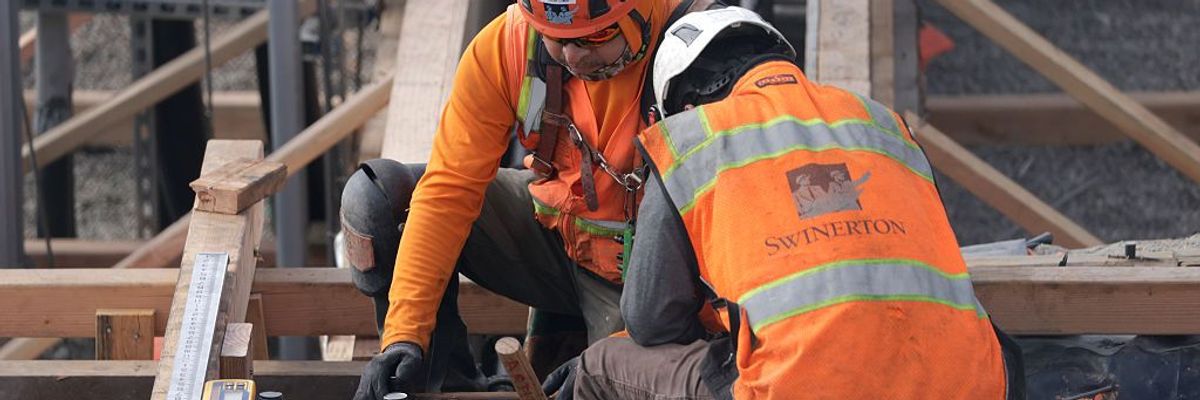
Workers construct a new building on September 5, 2025 in San Francisco, California.
(Photo by Justin Sullivan/Getty Images)
Brad Reed
Dec 22, 2025
COMMON DREAMS
President Donald Trump has justified his historically high tariffs on foreign goods by promising that they would lead to a boom in domestic manufacturing jobs in the US.
However, in year-end reviews of the US job market, three economists make the case that Trump’s record on creating manufacturing jobs has been a massive bust.

‘Yikes’: New Jobs Data Further Undermines Trump Fiction of Thriving Economy
‘This Is Pathetic’: Flailing Trump Defends Economic Agenda as Approval Tanks and Costs Rise
Mike Konczal, senior director of policy and research at the Economic Security Project and a former member of President Joe Biden’s National Economic Council, argued in his personal newsletter on Friday that the Trump administration’s efforts to reorganize the US labor market away from service sector jobs have completely failed.
In particular, he found that jobs in manufacturing, mining, and logging have all declined throughout the first year of Trump’s second term, while jobs in construction have remained mostly flat after years of steady growth during former President Joe Biden’s administration.
What’s more, the administration’s stated goal of opening up more jobs for native-born US workers by conducting mass deportations of immigrant workers has also flopped, as native-born unemployment has been higher in 2025 than in either of the last two years.
“The bleak irony is that even after sacrificing real prosperity to chase this 4chan-level political economy, they still won’t achieve their goal,” Konczal concluded. “The jobs aren’t coming back, the wages aren’t rising, and family formation won’t be rescued by trying to rewind the labor market to a world that never existed in the first place.”
Nobel Prize-winning economist Paul Krugman concurred with Konczal’s assessment of the US labor market in an analysis published Monday in which he described Trump’s record on jobs as “an abject failure.”
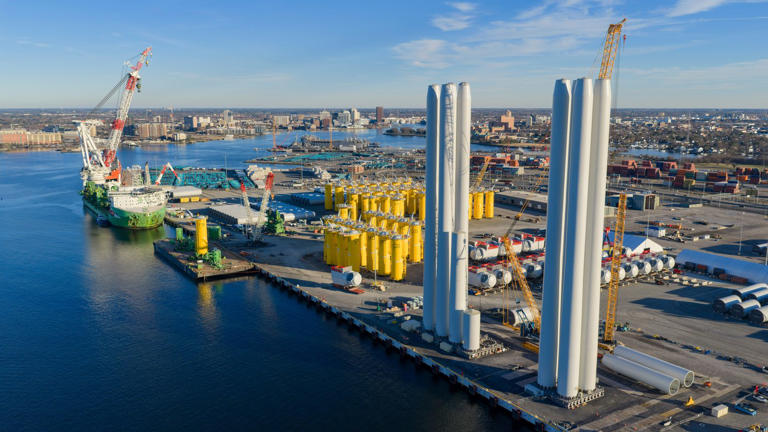
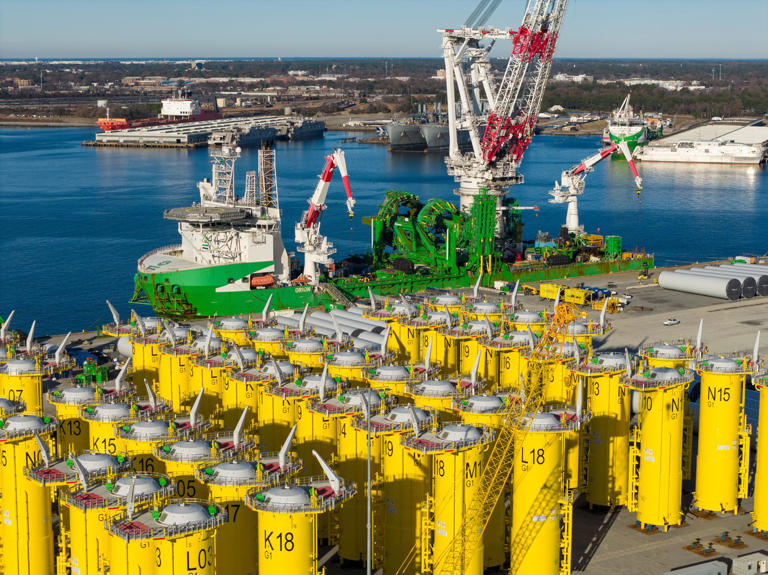
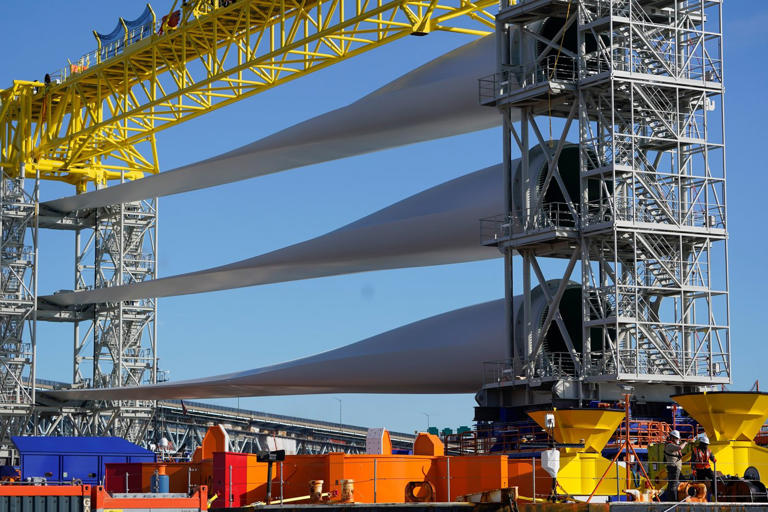
Krugman argued that Trump’s war on clean energy projects is almost certainly making the situation even worse by killing blue-collar manufacturing and construction jobs in the wind and solar industries.
“Trump has scrapped Biden’s green energy policies in favor of tariffs and fossil fuels,” Krugman noted. “But it isn’t working. Instead, employment in ‘manly’ sectors has fallen since Trump took office.”
Additionally, said Krugman, Trump’s plan to use tariffs to bring back manufacturing jobs to the US was always destined to fail given the realities of how modern economies work.
“In the modern world nations mostly don’t sell each other completed consumer goods,” he explained. “Instead, the majority of trade involves sales of goods that are used to produce other goods... What this means in practice is that tariffs, which raise the prices of those capital goods and inputs, raise the production costs of US manufacturers, in many cases making them less competitive with foreign producers.”
Ball State University economist Michael J. Hicks, in a column published Monday by the Indianapolis Star, also pointed the finger at Trump’s tariffs when explaining his failure to revive US manufacturing.
Hicks argued that the damage the president’s policies have done to manufacturing won’t be undone any time soon.
“The US is in the early days of a manufacturing contraction that will run through most of 2026, even if the tariffs are lifted today,” he warned. “We should call it the deindustrialization of America. All of this flies in the face of the nonsensical claims of a manufacturing renaissance or onshoring that would bring factory jobs back to the US.”