Five Europeans denied US visas for combating hate speech online, accused of censoring ‘American viewpoints’
The State Department announced Tuesday it was barring five Europeans it accused of leading efforts to pressure US tech firms to censor or suppress American viewpoints.
The Europeans, described by Secretary of State Marco Rubio as “radical” activists and “weaponized” nongovernmental organizations, fell afoul of a new visa policy announced in May that restricts the entry of foreigners deemed responsible for the censorship of protected speech in the United States.
“For far too long, ideologues in Europe have led organized efforts to coerce American platforms to punish American viewpoints they oppose,” Rubio posted on X. “The Trump administration will no longer tolerate these egregious acts of extraterritorial censorship.”
The five Europeans were identified by Sarah Rogers, the undersecretary of state for public diplomacy, in a series of social media posts. They include leaders of organisations that address digital hate and a former European Union commissioner who clashed with tech billionaire Elon Musk over broadcasting an online interview with US President Donald Trump.
Rubio’s statement said they advanced foreign government censorship campaigns against Americans and US companies, which he said created “potentially serious adverse foreign policy consequences” for the United States.
The action to bar them from the US is part of a Trump administration campaign against foreign influence over online speech, using immigration law rather than platform regulations or sanctions.
The five Europeans named by Rogers are Imran Ahmed, chief executive of the Centre for Countering Digital Hate; Josephine Ballon and Anna-Lena von Hodenberg, leaders of HateAid, a German organisation; Clare Melford, who runs the Global Disinformation Index; and former EU commissioner Thierry Bréton, who was responsible for digital affairs.
'Witch hunt'
In her post on X, Rogers called Breton, a French business executive and former finance minister, the “mastermind” behind the EU’s Digital Services Act, which imposes strict requirements designed to keep internet users safe online, including the flagging of harmful or illegal content such as hate speech.
She referred to Breton warning Musk of a possible “amplification of harmful content” by broadcasting his livestream interview with Trump in August 2024, when Trump was running for president.
Breton, a former French finance minister and the European commissioner for the internal market from 2019 to 2024, was the most high-profile individual targeted.
Breton was replaced in the internal market role at the EU by another French politician, Stéphane Séjourné, who is the EU Commission's executive vice president. Séjourné criticized the US visa ban and defended the EU's Digital Services Act.
"No sanction will silence the sovereignty of the European peoples. Total solidarity with him and all the people of Europe affected by this," wrote Séjourné on X.
Breton himself also condemned the visa ban against him.
"Is McCarthy’s witch hunt back? As a reminder: 90% of the European Parliament – our democratically elected body – and all 27 Member States unanimously voted the DSA. To our American friends: Censorship isn’t where you think it is," wrote Breton on X.
French President Emmanuel Macron slammed the decision to impose visa bans on Breton and other anti-disinformation campaigners.
"France condemns the visa restriction measures taken by the United States against Thierry Breton and four other European figures. These measures amount to intimidation and coercion aimed at undermining European digital sovereignty," Macron said on X.
"Together with the European Commission and our European partners, we will continue to defend our digital sovereignty and our regulatory autonomy," he added.
Macron also voiced his support for Breton in a post on X.
"I have just spoken with @ThierryBreton and thanked him for his significant contributions in the service of Europe. We will stand firm against pressure and will protect Europeans," he wrote.
Meanwhile EU Commission President Ursula von der Leyen said that the bloc will keep protecting freedom of speech.
"Freedom of speech is the foundation of our strong and vibrant European democracy. We are proud of it. We will protect it," she said on X.
Flagged by Department of Homeland Security?
Most Europeans are covered by the Visa Waiver Program, meaning they do not necessarily need visas to enter the country. They do, however, need to complete an online application prior to arrival under a system run by the Department of Homeland Security. As a result, it is possible that at least some of the five individuals have been flagged to DHS, a US official said, speaking on condition of anonymity to discuss details not publicly released.
Other visa restriction policies were announced this year, alongside bans targeting foreign visitors from certain African and Middle Eastern countries and the Palestinian Authority. Visitors from some countries could also be required to post a financial bond when applying for a visa.
(FRANCE 24 with AP)

AKA FASCIST VIEWPOINTS
The US State Department said Tuesday that it would deny visas to five Europeans, including former EU commissioner Thierry Breton, accusing them of seeking to censor "American viewpoints" online. All five are leaders in EU efforts to counter hate speech and disinformation in the digital sphere. Bréton likened the move to "McCarthy's witch hunt" in a post on X.
Issued on: 24/12/2025
By: FRANCE 24
Video by: Gabrielle Nadler
The US State Department said Tuesday that it would deny visas to five Europeans, including former EU commissioner Thierry Breton, accusing them of seeking to censor "American viewpoints" online. All five are leaders in EU efforts to counter hate speech and disinformation in the digital sphere. Bréton likened the move to "McCarthy's witch hunt" in a post on X.
Issued on: 24/12/2025
By: FRANCE 24
Video by: Gabrielle Nadler
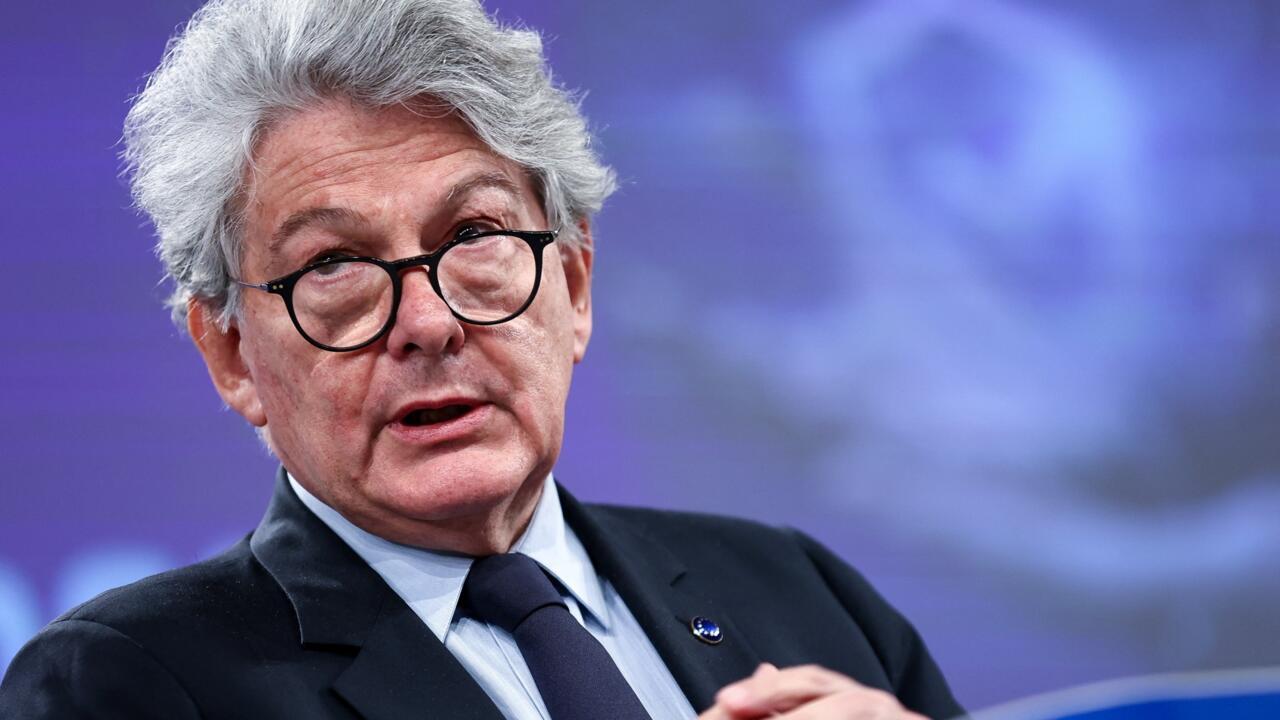
EU commissioner for internal market Thierry Breton gives a press conference. © Kenzo Tribouillard, AFP file photo
01:47
01:47
The State Department announced Tuesday it was barring five Europeans it accused of leading efforts to pressure US tech firms to censor or suppress American viewpoints.
The Europeans, described by Secretary of State Marco Rubio as “radical” activists and “weaponized” nongovernmental organizations, fell afoul of a new visa policy announced in May that restricts the entry of foreigners deemed responsible for the censorship of protected speech in the United States.
“For far too long, ideologues in Europe have led organized efforts to coerce American platforms to punish American viewpoints they oppose,” Rubio posted on X. “The Trump administration will no longer tolerate these egregious acts of extraterritorial censorship.”
The five Europeans were identified by Sarah Rogers, the undersecretary of state for public diplomacy, in a series of social media posts. They include leaders of organisations that address digital hate and a former European Union commissioner who clashed with tech billionaire Elon Musk over broadcasting an online interview with US President Donald Trump.
Rubio’s statement said they advanced foreign government censorship campaigns against Americans and US companies, which he said created “potentially serious adverse foreign policy consequences” for the United States.
The action to bar them from the US is part of a Trump administration campaign against foreign influence over online speech, using immigration law rather than platform regulations or sanctions.
The five Europeans named by Rogers are Imran Ahmed, chief executive of the Centre for Countering Digital Hate; Josephine Ballon and Anna-Lena von Hodenberg, leaders of HateAid, a German organisation; Clare Melford, who runs the Global Disinformation Index; and former EU commissioner Thierry Bréton, who was responsible for digital affairs.
'Witch hunt'
In her post on X, Rogers called Breton, a French business executive and former finance minister, the “mastermind” behind the EU’s Digital Services Act, which imposes strict requirements designed to keep internet users safe online, including the flagging of harmful or illegal content such as hate speech.
She referred to Breton warning Musk of a possible “amplification of harmful content” by broadcasting his livestream interview with Trump in August 2024, when Trump was running for president.
Breton, a former French finance minister and the European commissioner for the internal market from 2019 to 2024, was the most high-profile individual targeted.
Breton was replaced in the internal market role at the EU by another French politician, Stéphane Séjourné, who is the EU Commission's executive vice president. Séjourné criticized the US visa ban and defended the EU's Digital Services Act.
"No sanction will silence the sovereignty of the European peoples. Total solidarity with him and all the people of Europe affected by this," wrote Séjourné on X.
Breton himself also condemned the visa ban against him.
"Is McCarthy’s witch hunt back? As a reminder: 90% of the European Parliament – our democratically elected body – and all 27 Member States unanimously voted the DSA. To our American friends: Censorship isn’t where you think it is," wrote Breton on X.
French President Emmanuel Macron slammed the decision to impose visa bans on Breton and other anti-disinformation campaigners.
"France condemns the visa restriction measures taken by the United States against Thierry Breton and four other European figures. These measures amount to intimidation and coercion aimed at undermining European digital sovereignty," Macron said on X.
"Together with the European Commission and our European partners, we will continue to defend our digital sovereignty and our regulatory autonomy," he added.
Macron also voiced his support for Breton in a post on X.
"I have just spoken with @ThierryBreton and thanked him for his significant contributions in the service of Europe. We will stand firm against pressure and will protect Europeans," he wrote.
Meanwhile EU Commission President Ursula von der Leyen said that the bloc will keep protecting freedom of speech.
"Freedom of speech is the foundation of our strong and vibrant European democracy. We are proud of it. We will protect it," she said on X.
Flagged by Department of Homeland Security?
Most Europeans are covered by the Visa Waiver Program, meaning they do not necessarily need visas to enter the country. They do, however, need to complete an online application prior to arrival under a system run by the Department of Homeland Security. As a result, it is possible that at least some of the five individuals have been flagged to DHS, a US official said, speaking on condition of anonymity to discuss details not publicly released.
Other visa restriction policies were announced this year, alongside bans targeting foreign visitors from certain African and Middle Eastern countries and the Palestinian Authority. Visitors from some countries could also be required to post a financial bond when applying for a visa.
(FRANCE 24 with AP)

US actions will not stop EU from moderating online hate and disinformation, commissioner says
US visa sanctions will not stop the EU from enforcing its rules on online platforms, the bloc’s internal market commissioner said on Wednesday, after Washington imposed visa bans on individuals linked to the Digital Services Act, the EU law governing content moderation on social media. The move underscores a growing transatlantic rift over free speech and digital sovereignty.
Issued on: 24/12/2025 -
By: FRANCE 24
France slams US visa ban as row over European 'censorship' deepens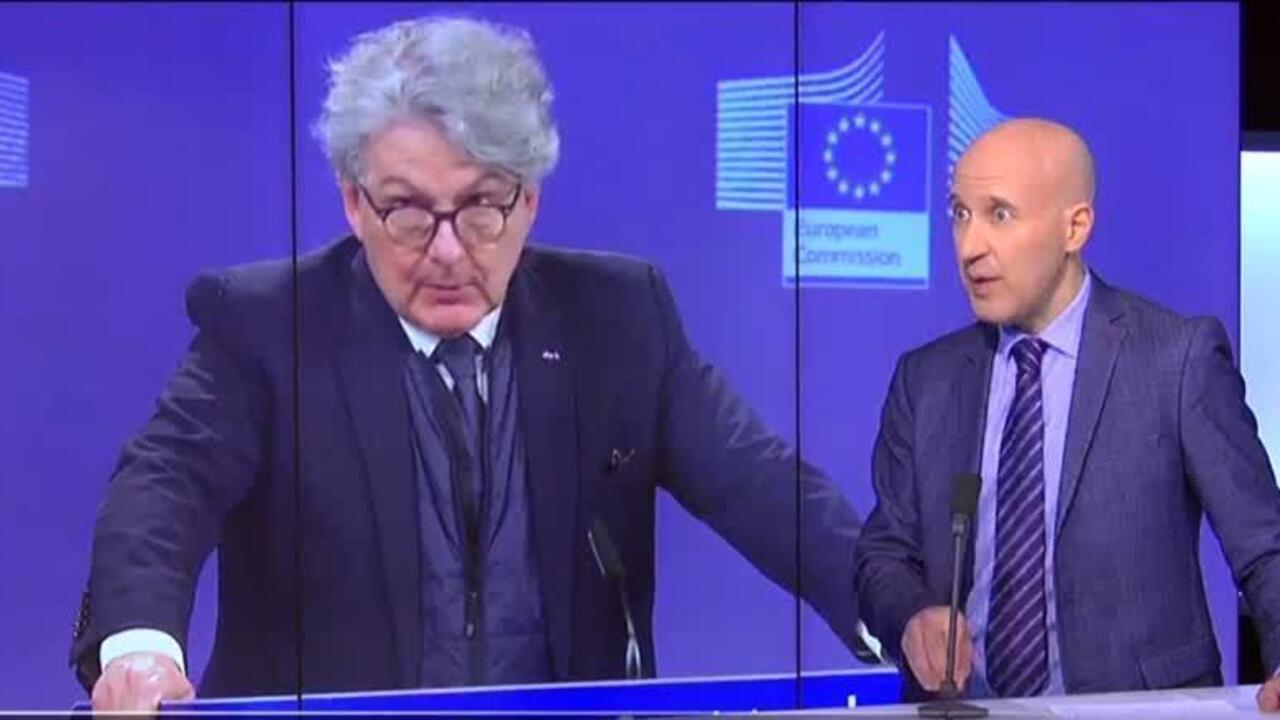
'Witch hunt'
Breton, a Frenchman, was described by the US State Department as the "mastermind" of the European Union's Digital Services Act (DSA), which imposes content moderation and other standards on major social media platforms operating in Europe.
Breton, who left the European Commission in 2024, on X slammed the ban as a "witch hunt," comparing the situation to the US McCarthy era when officials were chased out of government for alleged ties to communism.
The DSA has become a rallying point for US conservatives who see it as a weapon of censorship against right-wing thought in Europe and beyond, an accusation the EU furiously denies.
"The Digital Services Act was democratically adopted in Europe. It has absolutely no extraterritorial reach and in no way affects the United States," French Foreign Minister Jean-Noël Barrot said on X.
The visa ban also targeted Imran Ahmed of the Center for Countering Digital Hate, a nonprofit that fights online misinformation, as well as Anna-Lena von Hodenberg and Josephine Ballon of HateAid, a German organization that the State Department said functions as a trusted flagger for enforcing the DSA. Clare Melford, who leads the UK-based Global Disinformation Index (GDI), was also on the list.
(FRANCE 24 with AFP)
Europe defends its digital rules after Trump administration targets Breton with visa ban
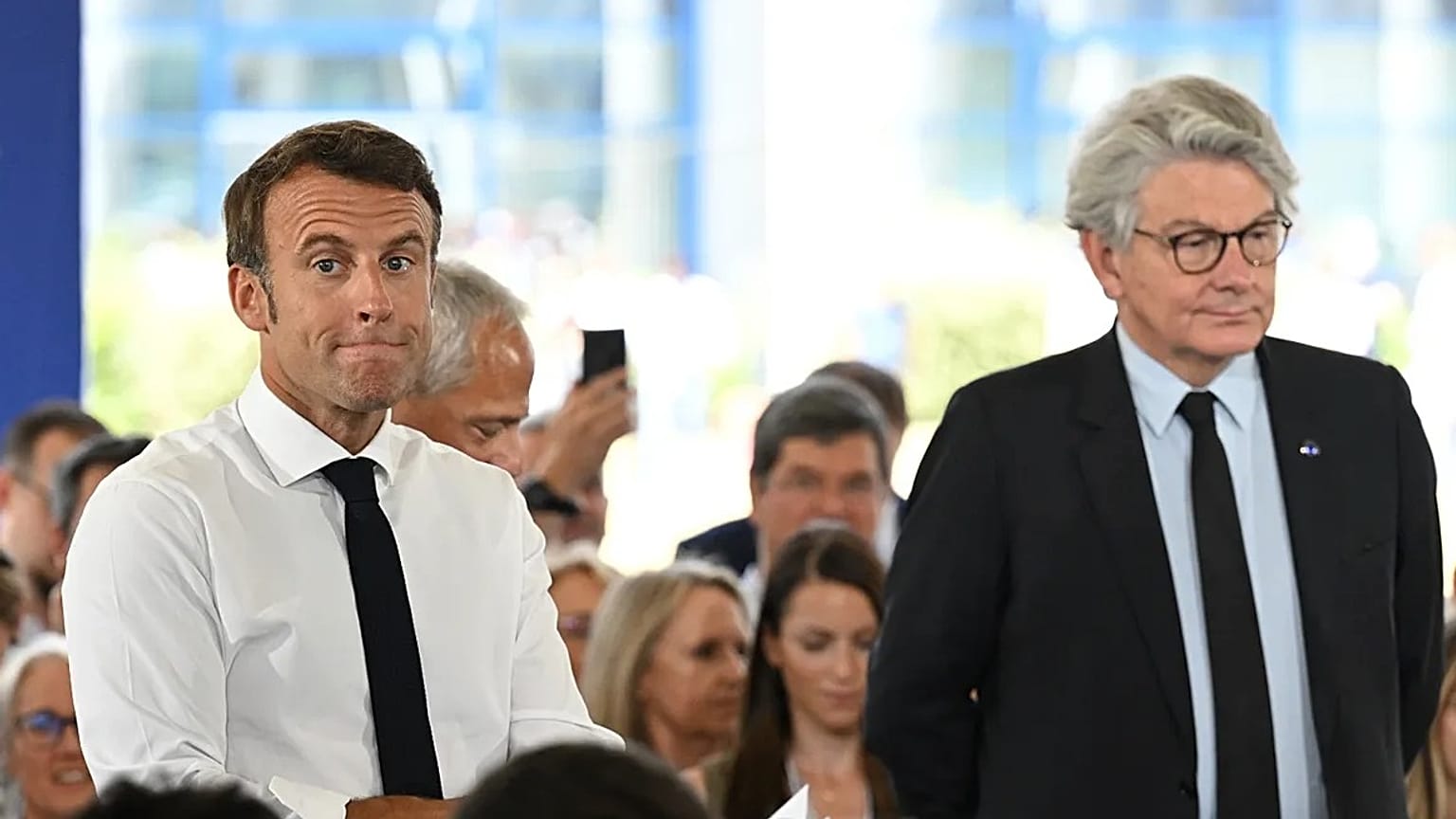
Copyright Jean-Philippe Ksiazek, pool via AP
By Romane Armangau & Maria Tadeo
Published on 24/12/2025 - EURONEWS
Brussels and Paris both denounced Washington’s decision to impose a visa ban on former EU Commissioner Thierry Breton, after the Trump administration escalated digital rules scrap by sanctioning Breton over what it said amounted to "censorship".
European Union officials have defended landmark digital rules on Wednesday, after the Trump administration went after what it described as a machine created to fuel censorship and imposed sanctions — including a visa ban — on a former EU Commissioner.
The European Commission said in a statement it “strongly condemns” the US decision, stressing that freedom of expression is “a fundamental right in Europe and a shared core value with the United States across the democratic world”.
Brussels insisted that the EU has a sovereign right to regulate its digital market in line with its values, adding that its rules are applied “fairly and without discrimination”.
The Commission said, if needed, it would "respond swiftly and decisively our regulatory autonomy against unjustified measures" from the US side.
Digital rules have become a point of tension between Washington and Brussels, both accusing each other of politicising what should be standard market rules for companies operating in the EU.
That friction was exacerbated after the US published a controversial national security strategy earlier this month, arguing that Europe faces the demise of civilisation unless it radically changes course.
In the document, the Trump administration said that Europe was drowning under illegal and excessive regulation and censorship.
The document was built on a premise laid out by US Vice President JD Vance at the start of the year, during a speech at the Munich Security Conference, in which he argued that internal rules posed the most significant risk to the EU.
He referred to EU Commissioners as "commissars" and argued that foreign interference is often used to censor content.
The EU denies that and insists that rules are applied fairly.
France pushes back against US over 'coercion'
Meanwhile, French President Emmanuel Macron accused Washington of intimidation after the visa ban on Breton, the former European Commissioner appointed by Macron himself, saying it amounts to "coercion aimed at undermining European digital sovereignty”.
The French president, who has long campaigned for strategic autonomy, said that digital rules governing the EU market are decided by Europeans and Europeans alone.
Macron said he had spoken with Breton over the phone after his ban was announced and "thanked him for his significant contribution in the service of Europe."
"We will stand firm against pressure and will protect Europeans," the French president wrote in a post on X.
Breton, who served as European Commissioner for the Internal Market under Commission President Ursula von der Leyen, played a key role in drafting the Digital Services Act (DSA), which aims to hold social media and large online platforms accountable for the content they publish.
Under the DSA, digital companies can be fined up to 6% of their annual worldwide turnover for non-compliance, with specific penalties for various violations.
Fines and tariffs as leverage for both sides
Earlier this month, the European Commission slapped a €120 million fine on Elon Musk’s social media platform X, invoking the DSA for the first time.
The fine triggered a furious response from the tech billionaire, who called for the abolition of the EU.
While fines are not uncommon and multiple US governments have called out what they believe is a targeted effort to penalise innovation made in America, the Trump administration has been more aggressive in its tone and countermeasures.
Washington has indicated it would provide tariff relief only for key European sectors, such as steel and aluminium, if the EU agreed to ease the implementation of digital rules.
For the EU, the idea is a red line, as it would undermine its right to set policy independently of the US government.
After being hit by a wave of tariffs amounting to 15% on most European products over the summer, Brussels insisted the deal was the best of all options on the table as it would provide certainty for business with a single duty rate and reiterated policy independence was assured as digital rules had been left out of the negotiation.
With its latest actions, the Trump administration has suggested it may not be enough.
US visa sanctions will not stop the EU from enforcing its rules on online platforms, the bloc’s internal market commissioner said on Wednesday, after Washington imposed visa bans on individuals linked to the Digital Services Act, the EU law governing content moderation on social media. The move underscores a growing transatlantic rift over free speech and digital sovereignty.
Issued on: 24/12/2025 -
By: FRANCE 24
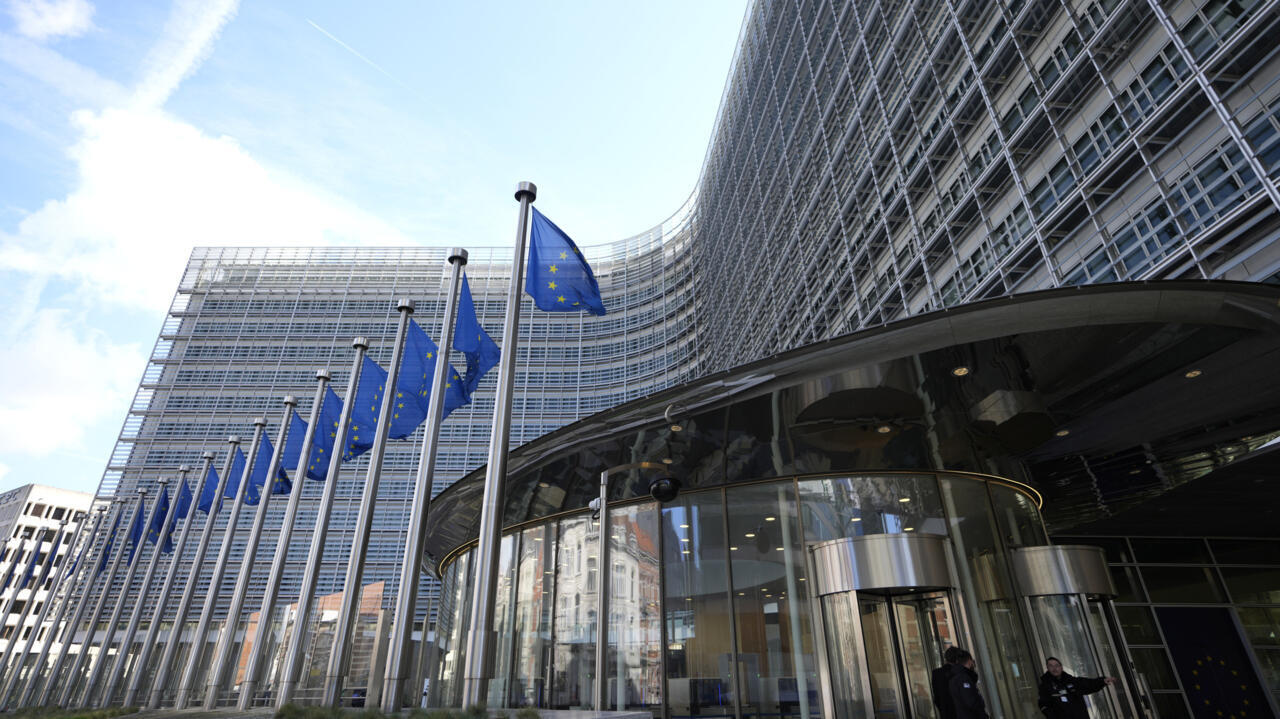
European Union flags flap in the wind outside EU headquarters in Brussels, Monday, March 25, 2024. © Virginia Mayo, AP file photo
The European Union's commissioner in charge of the bloc's single market said Wednesday that US sanctions won't stop him from doing his work after the Trump administration placed a visa ban on his predecessor for trying to regulate big tech companies.
"My predecessor @ThierryBreton acted in the interest of the European general good, faithful to the mandate given by the voters in 2019," Stéphane Séjourné, European Commissioner for Internal Market and Services, said on X.
"No sanction will silence the sovereignty of the European peoples. Total solidarity with him and all affected Europeans," he said.
'We will protect Europe's independence'
Macron also voiced his support for Breton in a post on X.
"I have just spoken with @ThierryBreton and thanked him for his significant contributions in the service of Europe. We will stand firm against pressure and will protect Europeans.
"We will not give up, and we will protect Europe's independence and the freedom of Europeans," he wrote on the social media platform.
The US State Department said Tuesday it would deny visas to Breton and four activists, accusing them of seeking to "coerce" American social media platforms into censoring viewpoints they oppose.
The President of the European Commission, Ursula von der Leyen, said the EU will keep protecting freedom of speech following the strong reaction from the French government.
"Freedom of speech is the foundation of our strong and vibrant European democracy. We are proud of it. We will protect it," she said on X.
The European Union's commissioner in charge of the bloc's single market said Wednesday that US sanctions won't stop him from doing his work after the Trump administration placed a visa ban on his predecessor for trying to regulate big tech companies.
"My predecessor @ThierryBreton acted in the interest of the European general good, faithful to the mandate given by the voters in 2019," Stéphane Séjourné, European Commissioner for Internal Market and Services, said on X.
"No sanction will silence the sovereignty of the European peoples. Total solidarity with him and all affected Europeans," he said.
'We will protect Europe's independence'
Macron also voiced his support for Breton in a post on X.
"I have just spoken with @ThierryBreton and thanked him for his significant contributions in the service of Europe. We will stand firm against pressure and will protect Europeans.
"We will not give up, and we will protect Europe's independence and the freedom of Europeans," he wrote on the social media platform.
The US State Department said Tuesday it would deny visas to Breton and four activists, accusing them of seeking to "coerce" American social media platforms into censoring viewpoints they oppose.
The President of the European Commission, Ursula von der Leyen, said the EU will keep protecting freedom of speech following the strong reaction from the French government.
"Freedom of speech is the foundation of our strong and vibrant European democracy. We are proud of it. We will protect it," she said on X.
France slams US visa ban as row over European 'censorship' deepens
© France 24
08:09
08:09
'Witch hunt'
Breton, a Frenchman, was described by the US State Department as the "mastermind" of the European Union's Digital Services Act (DSA), which imposes content moderation and other standards on major social media platforms operating in Europe.
Breton, who left the European Commission in 2024, on X slammed the ban as a "witch hunt," comparing the situation to the US McCarthy era when officials were chased out of government for alleged ties to communism.
The DSA has become a rallying point for US conservatives who see it as a weapon of censorship against right-wing thought in Europe and beyond, an accusation the EU furiously denies.
"The Digital Services Act was democratically adopted in Europe. It has absolutely no extraterritorial reach and in no way affects the United States," French Foreign Minister Jean-Noël Barrot said on X.
EU says loosening tech rules 'not up for negotiation' in trade talks with US
The visa ban also targeted Imran Ahmed of the Center for Countering Digital Hate, a nonprofit that fights online misinformation, as well as Anna-Lena von Hodenberg and Josephine Ballon of HateAid, a German organization that the State Department said functions as a trusted flagger for enforcing the DSA. Clare Melford, who leads the UK-based Global Disinformation Index (GDI), was also on the list.
(FRANCE 24 with AFP)
Europe defends its digital rules after Trump administration targets Breton with visa ban
Copyright Jean-Philippe Ksiazek, pool via AP
By Romane Armangau & Maria Tadeo
Published on 24/12/2025 - EURONEWS
Brussels and Paris both denounced Washington’s decision to impose a visa ban on former EU Commissioner Thierry Breton, after the Trump administration escalated digital rules scrap by sanctioning Breton over what it said amounted to "censorship".
European Union officials have defended landmark digital rules on Wednesday, after the Trump administration went after what it described as a machine created to fuel censorship and imposed sanctions — including a visa ban — on a former EU Commissioner.
The European Commission said in a statement it “strongly condemns” the US decision, stressing that freedom of expression is “a fundamental right in Europe and a shared core value with the United States across the democratic world”.
Brussels insisted that the EU has a sovereign right to regulate its digital market in line with its values, adding that its rules are applied “fairly and without discrimination”.
The Commission said, if needed, it would "respond swiftly and decisively our regulatory autonomy against unjustified measures" from the US side.
Digital rules have become a point of tension between Washington and Brussels, both accusing each other of politicising what should be standard market rules for companies operating in the EU.
That friction was exacerbated after the US published a controversial national security strategy earlier this month, arguing that Europe faces the demise of civilisation unless it radically changes course.
In the document, the Trump administration said that Europe was drowning under illegal and excessive regulation and censorship.
The document was built on a premise laid out by US Vice President JD Vance at the start of the year, during a speech at the Munich Security Conference, in which he argued that internal rules posed the most significant risk to the EU.
He referred to EU Commissioners as "commissars" and argued that foreign interference is often used to censor content.
The EU denies that and insists that rules are applied fairly.
France pushes back against US over 'coercion'
Meanwhile, French President Emmanuel Macron accused Washington of intimidation after the visa ban on Breton, the former European Commissioner appointed by Macron himself, saying it amounts to "coercion aimed at undermining European digital sovereignty”.
The French president, who has long campaigned for strategic autonomy, said that digital rules governing the EU market are decided by Europeans and Europeans alone.
Macron said he had spoken with Breton over the phone after his ban was announced and "thanked him for his significant contribution in the service of Europe."
"We will stand firm against pressure and will protect Europeans," the French president wrote in a post on X.
Breton, who served as European Commissioner for the Internal Market under Commission President Ursula von der Leyen, played a key role in drafting the Digital Services Act (DSA), which aims to hold social media and large online platforms accountable for the content they publish.
Under the DSA, digital companies can be fined up to 6% of their annual worldwide turnover for non-compliance, with specific penalties for various violations.
Fines and tariffs as leverage for both sides
Earlier this month, the European Commission slapped a €120 million fine on Elon Musk’s social media platform X, invoking the DSA for the first time.
The fine triggered a furious response from the tech billionaire, who called for the abolition of the EU.
While fines are not uncommon and multiple US governments have called out what they believe is a targeted effort to penalise innovation made in America, the Trump administration has been more aggressive in its tone and countermeasures.
Washington has indicated it would provide tariff relief only for key European sectors, such as steel and aluminium, if the EU agreed to ease the implementation of digital rules.
For the EU, the idea is a red line, as it would undermine its right to set policy independently of the US government.
After being hit by a wave of tariffs amounting to 15% on most European products over the summer, Brussels insisted the deal was the best of all options on the table as it would provide certainty for business with a single duty rate and reiterated policy independence was assured as digital rules had been left out of the negotiation.
With its latest actions, the Trump administration has suggested it may not be enough.
France has condemned Washington's decision to bar a former European Commissioner and four other prominent tech monitors from entering the United States as part of an escalating dispute over EU efforts to regulate social media platforms. The US accuses them of working to censor Americans online.
Issued on: 24/12/2025 - RFI

Thierry Breton, the former top tech regulator at the European Commission, in November 2022. He has been denied a visa to the US over his role in establishing rules for social media giants. © Kenzo TRIBOUILLARD/AFP
French national Thierry Breton, former member of the European Commission and an architect of the EU's landmark digital regulations, is one of five people to be denied visas to the US.
Four others working for non-governmental organisations that flag online disinformation and hate speech are also targeted.
"These radical activists and weaponised NGOs have advanced censorship crackdowns by foreign states – in each case targeting American speakers and American companies," the State Department said in a statement announcing the sanctions on Tuesday.
It is the latest move by President Donald Trump's administration to counter the European Union's bid to monitor and moderate content on social media platforms, including US-owned Facebook, Instagram and X.
Washington claims that EU rules result in censorship of right-wing viewpoints in particular, something Brussels denies.
France "strongly condemns" the visa ban, said Foreign Minister Jean-Noël Barrot.
"The peoples of Europe are free and sovereign and cannot have the rules applying to their digital space imposed on them by others," he wrote in a post on X.
'Witch hunt'
Breton compared the ban to a McCarthy-era "witch hunt".
"To our American friends: censorship isn't where you think it is," he wrote on X.
The other people subjected to visa bans are Imran Ahmed, chief executive of the Centre for Countering Digital Hate; Josephine Ballon and Anna-Lena von Hodenberg, heads of German organisation HateAid for victims of online abuse; and Clare Melford, who runs the Global Disinformation Index.
In a joint statement, Ballon and von Hodenberg called the restrictions "an act of repression by a government that is increasingly disregarding the rule of law and trying to silence its critics by any means necessary".
The US claimed it was defending free speech. "For far too long, ideologues in Europe have led organised efforts to coerce American platforms to punish American viewpoints they oppose," said Secretary of State Marco Rubio.
Tit for tat
The EU's Digital Services Act (DSA), which imposes content moderation and other standards on major social media platforms, has brought it into conflict with the US administration and its allies at tech giants.
The DSA stipulates that major platforms must explain content-moderation decisions, provide transparency for users and ensure researchers can carry out essential work, such as understanding how much children are exposed to dangerous content.
The EU imposed its first penalty under the act this month, fining Elon Musk's X €120 million for failing to meaningfully verify users marked with a blue tick meant to indicate that their identity had been checked. It also accused the company of failing to provide transparency around its adverts and denying researchers access to data on internal practices.
Last week the US government signalled that key European businesses could be targeted in response, listing Accenture, DHL, Mistral, Siemens and Spotify among others.
Trump has previously threatened to impose tariffs on all countries with digital taxes, legislation or regulations, saying they were designed to harm or discriminate against American technology.
(with AFP)
French national Thierry Breton, former member of the European Commission and an architect of the EU's landmark digital regulations, is one of five people to be denied visas to the US.
Four others working for non-governmental organisations that flag online disinformation and hate speech are also targeted.
"These radical activists and weaponised NGOs have advanced censorship crackdowns by foreign states – in each case targeting American speakers and American companies," the State Department said in a statement announcing the sanctions on Tuesday.
It is the latest move by President Donald Trump's administration to counter the European Union's bid to monitor and moderate content on social media platforms, including US-owned Facebook, Instagram and X.
Washington claims that EU rules result in censorship of right-wing viewpoints in particular, something Brussels denies.
France "strongly condemns" the visa ban, said Foreign Minister Jean-Noël Barrot.
"The peoples of Europe are free and sovereign and cannot have the rules applying to their digital space imposed on them by others," he wrote in a post on X.
'Witch hunt'
Breton compared the ban to a McCarthy-era "witch hunt".
"To our American friends: censorship isn't where you think it is," he wrote on X.
The other people subjected to visa bans are Imran Ahmed, chief executive of the Centre for Countering Digital Hate; Josephine Ballon and Anna-Lena von Hodenberg, heads of German organisation HateAid for victims of online abuse; and Clare Melford, who runs the Global Disinformation Index.
In a joint statement, Ballon and von Hodenberg called the restrictions "an act of repression by a government that is increasingly disregarding the rule of law and trying to silence its critics by any means necessary".
The US claimed it was defending free speech. "For far too long, ideologues in Europe have led organised efforts to coerce American platforms to punish American viewpoints they oppose," said Secretary of State Marco Rubio.
Tit for tat
The EU's Digital Services Act (DSA), which imposes content moderation and other standards on major social media platforms, has brought it into conflict with the US administration and its allies at tech giants.
The DSA stipulates that major platforms must explain content-moderation decisions, provide transparency for users and ensure researchers can carry out essential work, such as understanding how much children are exposed to dangerous content.
The EU imposed its first penalty under the act this month, fining Elon Musk's X €120 million for failing to meaningfully verify users marked with a blue tick meant to indicate that their identity had been checked. It also accused the company of failing to provide transparency around its adverts and denying researchers access to data on internal practices.
Last week the US government signalled that key European businesses could be targeted in response, listing Accenture, DHL, Mistral, Siemens and Spotify among others.
Trump has previously threatened to impose tariffs on all countries with digital taxes, legislation or regulations, saying they were designed to harm or discriminate against American technology.
(with AFP)
US visa ban targets former EU Commissioner Breton over alleged social media censorship
By Aleksandar Brezar
Published on 24/12/2025 - EUR0NEWS
Washington announced it banned former EU tech Commissioner Thierry Breton and four other European activists from entering US soil, a decision Breton slammed as a "McCarthy's witch hunt".
The US State Department on Tuesday imposed visa bans on a former European Union commissioner and four others, accusing them of forcing American social media platforms to censor users and their viewpoints.
US Secretary of State Marco Rubio said the five people targeted with visa bans "have led organised efforts to coerce American platforms to censor, demonetise, and suppress American viewpoints they oppose".
"These radical activists and weaponised NGOs have advanced censorship crackdowns by foreign states – in each case targeting American speakers and American companies," Rubio said in a statement.
Rubio did not initially name those targeted, but US Under Secretary for Public Diplomacy Sarah Rogers identified them on X, accusing the individuals of "fomenting censorship of American speech".
The most high-profile target was Thierry Breton, a French former business executive who served as European Commissioner for the Internal Market from 2019 to 2024.
Rogers described Breton as the "mastermind" of the EU's Digital Services Act (DSA), the EU digital sphere rulebook that imposes content moderation and other standards on major social media platforms operating in Europe.
The visa bans also targeted Anna-Lena von Hodenberg and Josephine Ballon of the German nonprofit HateAid, Clare Melford, co-founder of the UK-based Global Disinformation Index, and Imran Ahmed, the British chief executive of the US-based Center for Countering Digital Hate.
Breton responded to the visa ban on X by writing: "Is McCarthy's witch hunt back?"
"As a reminder: 90% of the European Parliament — our democratically elected body — and all 27 member states unanimously voted for the DSA," Breton added. "To our American friends: 'Censorship isn't where you think it is.'"
French Foreign Minister Jean-Noël Barrot said France "strongly condemns" the visa restrictions, adding that Europe "cannot let the rules governing their digital space be imposed by others upon them".
"The Digital Services Act (DSA) was democratically adopted in Europe ... it has absolutely no extraterritorial reach and in no way affects the United States," Barrot said.
The three nonprofits have also rejected Washington's claims and criticised Tuesday's visa ban decision.
The letter that started it all?
Rogers specifically referenced a letter Breton sent to X owner Elon Musk in August 2024, ahead of an interview Musk planned to conduct with then-US presidential candidate Donald Trump.
In the letter, Breton warned Musk that he must comply with the Digital Services Act, according to reports at the time.
Rogers accused Breton of having "ominously reminded Musk of X's legal obligations and ongoing 'formal proceedings' for alleged noncompliance with 'illegal content' and 'disinformation' requirements under the DSA.
In February, US Vice President JD Vance used one of his first major speeches after taking office to criticise what he described as censorship efforts in Europe, delivered at the Munich Security Conference.
He claimed that leaders had "threatened and bullied social media companies to censor so-called misinformation," citing the example of the COVID-19 lab leak theory.
The DSA stipulates that major platforms must explain content-moderation decisions, provide transparency for users and ensure researchers can carry out essential work, such as understanding how much children are exposed to dangerous content.
The EU digital rulebook has become a rallying point for US conservatives who see it as a weapon of censorship against right-wing voices thought in Europe and beyond, an accusation Brussels denies.
The European Commission dismissed US censorship allegations back in August, calling them "nonsense" and "completely unfounded".
Earlier this month, the European Commission found Musk's X in breach of DSA rules on transparency in advertising and verification methods, sparking another uproar in the US.
Romane Armangau contributed additional reporting.
By Aleksandar Brezar
Published on 24/12/2025 - EUR0NEWS
Washington announced it banned former EU tech Commissioner Thierry Breton and four other European activists from entering US soil, a decision Breton slammed as a "McCarthy's witch hunt".
The US State Department on Tuesday imposed visa bans on a former European Union commissioner and four others, accusing them of forcing American social media platforms to censor users and their viewpoints.
US Secretary of State Marco Rubio said the five people targeted with visa bans "have led organised efforts to coerce American platforms to censor, demonetise, and suppress American viewpoints they oppose".
"These radical activists and weaponised NGOs have advanced censorship crackdowns by foreign states – in each case targeting American speakers and American companies," Rubio said in a statement.
Rubio did not initially name those targeted, but US Under Secretary for Public Diplomacy Sarah Rogers identified them on X, accusing the individuals of "fomenting censorship of American speech".
The most high-profile target was Thierry Breton, a French former business executive who served as European Commissioner for the Internal Market from 2019 to 2024.
Rogers described Breton as the "mastermind" of the EU's Digital Services Act (DSA), the EU digital sphere rulebook that imposes content moderation and other standards on major social media platforms operating in Europe.
The visa bans also targeted Anna-Lena von Hodenberg and Josephine Ballon of the German nonprofit HateAid, Clare Melford, co-founder of the UK-based Global Disinformation Index, and Imran Ahmed, the British chief executive of the US-based Center for Countering Digital Hate.
Breton responded to the visa ban on X by writing: "Is McCarthy's witch hunt back?"
"As a reminder: 90% of the European Parliament — our democratically elected body — and all 27 member states unanimously voted for the DSA," Breton added. "To our American friends: 'Censorship isn't where you think it is.'"
French Foreign Minister Jean-Noël Barrot said France "strongly condemns" the visa restrictions, adding that Europe "cannot let the rules governing their digital space be imposed by others upon them".
"The Digital Services Act (DSA) was democratically adopted in Europe ... it has absolutely no extraterritorial reach and in no way affects the United States," Barrot said.
The three nonprofits have also rejected Washington's claims and criticised Tuesday's visa ban decision.
The letter that started it all?
Rogers specifically referenced a letter Breton sent to X owner Elon Musk in August 2024, ahead of an interview Musk planned to conduct with then-US presidential candidate Donald Trump.
In the letter, Breton warned Musk that he must comply with the Digital Services Act, according to reports at the time.
Rogers accused Breton of having "ominously reminded Musk of X's legal obligations and ongoing 'formal proceedings' for alleged noncompliance with 'illegal content' and 'disinformation' requirements under the DSA.
In February, US Vice President JD Vance used one of his first major speeches after taking office to criticise what he described as censorship efforts in Europe, delivered at the Munich Security Conference.
He claimed that leaders had "threatened and bullied social media companies to censor so-called misinformation," citing the example of the COVID-19 lab leak theory.
The DSA stipulates that major platforms must explain content-moderation decisions, provide transparency for users and ensure researchers can carry out essential work, such as understanding how much children are exposed to dangerous content.
The EU digital rulebook has become a rallying point for US conservatives who see it as a weapon of censorship against right-wing voices thought in Europe and beyond, an accusation Brussels denies.
The European Commission dismissed US censorship allegations back in August, calling them "nonsense" and "completely unfounded".
Earlier this month, the European Commission found Musk's X in breach of DSA rules on transparency in advertising and verification methods, sparking another uproar in the US.
Romane Armangau contributed additional reporting.