Tuesday, June 03, 2025

Why Save for Retirement If You'll Be Living in a Climate Hellscape?


Only by making investments in climate resilience and clean energy can asset managers like BlackRock truly protect the retirement savings of everyday Americans.


Participants are seen holding signs at a climate protest outside BlackRock headquarters.
(Photo: Erik McGregor/LightRocket via Getty Images)

Jessye Waxman
Jun 03, 2025
Common Dreams

Every spring, Larry Fink, CEO of the world's largest asset manager BlackRock, publishes his annual letter to investors, often heralded as an indicator of where the financial industry is headed. This year, Fink focused on the need to "democratize" investing by giving regular people more access to invest in private markets, meaning businesses outside of stock exchanges.

Fink argued this move would not only help more people save more money for retirement, but that these investments are necessary to help meet the growing need for financing for the infrastructure and energy needs of the future. Unfortunately, his take on the energy needs of the future is concerning, emphasizing fossil fuel pipelines and infrastructure and AI data centers, while casting doubt on renewables.

Democratizing investing is a noble goal, but Fink's annual letter misses a key point: A secure retirement isn't just about the money you save, it's about retiring into a world you want to live in, with healthy communities and a livable climate. By failing to encourage investments that help facilitate the transition to a clean energy economy and create green jobs, BlackRock's efforts will undermine the long-term success of our financial markets and threaten the ability of everyday Americans to retire with dignity. If asset managers like BlackRock truly want to help people retire, they must uplift investments that increase returns for individuals AND help build a future where everyone thrives.
America's Investment Landscape

In pushing forward BlackRock's agenda on private markets, Fink's annual letter conveniently ignores two critical realities.

The first is the growing problem of economic inequality in the United States. The difficulty so many Americans face in reaching their saving and investing goals has less to do with limited access to private markets, and more to do with our egregious income divide. Right now, the top 1% holds nearly as much wealth as the bottom 90%. Helping more people be financially secure in retirement begins with investing in our communities and climate solutions to help create green jobs so that more people have the resources they need to save.

The second is the growing need for financing for, and opportunities to invest in, climate resilience and the clean energy transition. This includes everything from renewable energy infrastructure to disaster-proof buildings and climate-resilient farming.

True retirement security comes not only from individual savings, but from living in a world where our investments foster a safe and thriving future for all.

Estimates show global investments in clean energy must reach $4 trillion annually by 2030 to hit global climate goals. Although this goal may seem huge, reaching it is necessary to prevent much larger losses to our economy. By 2050, without further action, climate damages could permanently shrink economic output by 20%, cost $38 trillion annually, and slash global stocks by 50%. This translates to trillions of dollars lost annually due to extreme weather, damaged infrastructure, and lower productivity. Alongside these widespread economic losses, retirement savings would take a major hit. In other words, failing to invest in the transition to a clean energy economy will make our communities—and our savings—much worse off.

Instead of focusing his annual letter on private markets, Fink should have focused on the investments necessary to support the long-term financial security and peace of mind for the millions of people he claims he wants to help save for retirement. Only by making investments in climate resilience and clean energy can asset managers like BlackRock truly protect the retirement savings of everyday Americans.
Financial Security Goes Beyond the Numbers

Retiring with dignity is not merely about having the financial security to live comfortably. It's also about the broader environment in which people live and age, which is something Fink apparently forgets. It's not only about having investment portfolios that can weather climate-related risks, but about having thriving communities and flourishing economies to retire in: cities with liveable temperatures, modern buildings, and plentiful clean energy, and people with access to good jobs, quality education, and affordable housing.

Financial security isn't just about having a diversified portfolio and a comfortable nest egg—it's intricately linked to the health of the environment. Ignoring climate risks jeopardizes the well-being of future retirees and the communities they call home. True retirement security comes not only from individual savings, but from living in a world where our investments foster a safe and thriving future for all.

To truly democratize investing, asset managers like BlackRock must direct their investment strategies to support climate resilience and the clean energy transition and provide prosperity for all Americans, within individual portfolios and beyond.
Analysis Finds Majority of Trump Cabinet Tied to Project 2025 Groups

"Project 2025 isn't just influential in Washington. Its friends and creators are literally running the show."


People protest the Trump administration, Elon Musk, and Project 2025 at a Tesla dealership in suburban Baltimore on March 29, 2025.
(Photo: Dominic Gwinn/Middle East Images via AFP)

Brett Wilkins
Jun 03, 2025
COMMON DREAMS


Despite repeatedly attempting to distance himself from Project 2025 during his reelection campaign, U.S. President Donald Trump's administration employs dozens of senior officials with links to the Heritage Foundation-led plan to expand executive power and shrink the federal government—including a majority of his Cabinet.

That's according to an interactive analysis published Monday by the international climate-focused news outlet DeSmog, which found that more than 50 high-level Trump administration officials have ties to groups behind Project 2025.

That figure includes many of Trump's closest advisers, including Stephen Miller and Elon Musk, who recently stepped down as the de facto head of the so-called Department of Government Efficiency. It also includes 14 out of 24 Cabinet-level officials, or 70% of the Cabinet.

"That's a hugely significant finding," Duke University history and public policy professor Nancy MacLean told DeSmog. "In Heritage's own longtime language, 'personnel is policy.' It shows the incredible bad faith of Trump's denials, because this is who he stocked his administration with."


The analysis notes:
Some of the officials directly authored parts of "The Mandate for Leadership," the now-notorious, 900-page proposal to "dismantle the administrative state"—the meat of Project 2025. Others recently worked for, donated to, or otherwise collaborated with one or more of the dozens of conservative groups that created the distinctly Christian nationalist-flavored document. Some of these high-ranking officials have connections to five or more different Project 2025 groups.

"In other words, Project 2025 isn't just influential in Washington. Its friends and creators are literally running the show," DeSmog said. "Which helps to explain why the Trump administration has worked swiftly to implement the vision described in the 'Mandate.'"

DeSmog countered Trump's claims to "know nothing about Project 2025" or "who is behind it" by highlighting a host of his administration's policies and practices that track the the initiative. At least 140 people who worked in Trump's first administration—including six former Cabinet secretaries—have also been involved with Project 2025.

Office of Management and Budget Director Russell Vought co-authored the policy portion of Project 2025, which includes dramatic cuts to critical public programs, abolishing or gutting essential government agencies, a national abortion ban, and a litany of additional far-right wish list items.


"From across-the-board tariffs to the mass firing of tens of thousands of federal workers to attacking inclusive language and initiatives, from gutting whole agencies and departments to dramatically stepping up the rate of deportations to the broad-scale rollback of environmental regulations and initiatives, a clear pattern has emerged: if the Trump administration's doing it, Project 2025 probably spelled it out first," the outlet said.

"This matters because Americans overwhelmingly rejected Project 2025," DeSmog contented in a post on the social media site Bluesky. "A pre-election survey showed 4% approval. Trump wouldn't touch it. Yet the plan's architects and allies now run the executive branch."

'Reign of corruption' revealed as Senate Dems share Musk 'dodgy dealings' list

Jennifer Bowers Bahney
June 3, 2025 
RAW STORY


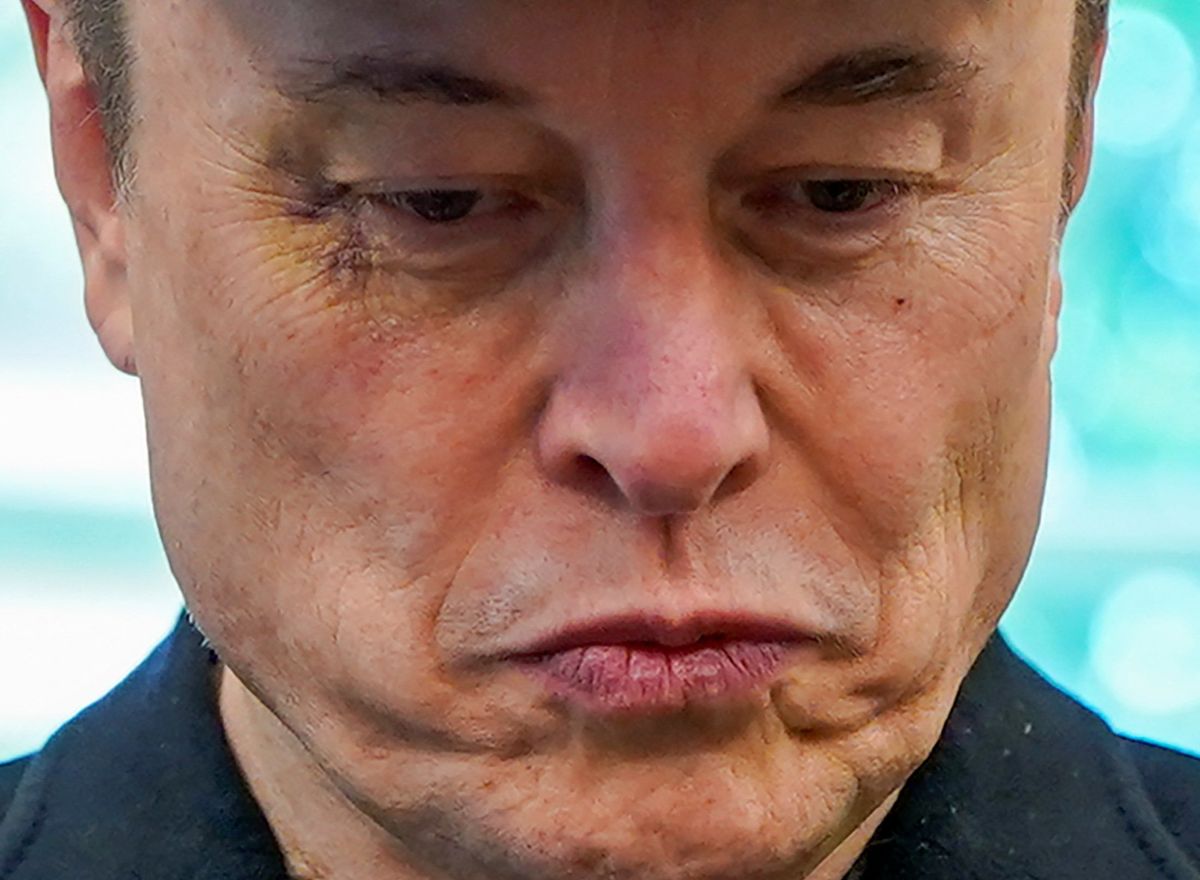
Elon Musk is seen with a bruised eye that Musk claimed he received at the hands of his son, X Æ A-12, as he attends a press conference with U.S. President Donald Trump in the Oval Office at the White House in Washington, D.C., U.S., May 30, 2025. REUTERS/Nathan Howard

Sen. Elizabeth Warren (D-MA) has issued a new report raising questions of "corruption, ethics, and conflicts of interest" perpetuated during Elon Musk's time heading up President Donald Trump's Department of Government Efficiency, according to a preview by Rolling Stone.

The report, titled “Special Interests Over the Public Interest: Elon Musk’s 130 Days in the Trump Administration,” features a list of 130 questionable actions by Musk, his companies, and family members that culminated in a "reign of corruption," according to senior writer Tim Dickinson.

Last week, Trump announced that Musk was leaving his post as "special government employee" to focus more on his businesses, which have taken a hit since he became involved in promoting Trump's MAGA agenda.

"The Warren report is focused on Elon’s use of political power to boost his businesses, or secure special benefits — from regulatory relief to rich new contracts — that favor his fortunes and his family," Dickinson wrote.

“Not every action listed… represents a violation of federal law,” the report said, instead arguing that “Musk has violated norms at an astonishing pace” while taking actions that are “hurting the American public.”

Rolling Stone previewed the list's 15 categories that include blatant White House promotion of Musk's Tesla electric vehicles, lucrative contracts for SpaceX and Starlink, and a concerted effort by the Trump DOJ to drop up to $2.5 billion in federal penalties against Musk's companies.


The report also claimed that Musk perpetuated an "intimidation campaign" via his X social media business, as well as "weaponizing federal power" and "influence-peddling in Congress."

The report concluded that, far from displaying transparency, "Musk himself has hidden his norms-busting activities behind a veil of secrecy...failing to make public his vast financial holdings, or what if any waivers of federal ethics requirements he may have received."

Read the Rolling Stone article here.


Warren Report: Musk Leveraged Government Access for Personal Gain

"Since Election Day, Musk's staggering net worth has increased by over $100 billion," the report states.


Elon Musk, during a news conference with President Donald Trump on May 30, 2025 inside the Oval Office at the White House in Washington., D.C.
(Photo: Tom Brenner For The Washington Post via Getty Images)

Eloise Goldsmith
Jun 03, 2025
COMMON DREAMS

Sen. Elizabeth Warren, the Democrat from Massachusetts, on Tuesday released a report chronicling over 100 examples of "unethical or potentially corrupt actions" that either benefit billionaire Elon Musk or one of his companies and which took place while Musk played a key role in the Trump administration.

According to the report, the past few months have been very profitable for Musk, who officially departed the White House last week. "Since Election Day, Musk's staggering net worth has increased by over $100 billion," the report states.

After spending some $290 million to help elect U.S. President Donald Trump and other Republicans last fall, Musk was tapped by Trump to lead the so-called Department of Government Efficiency, a body tasked with slashing government personnel and spending. DOGE's sweep of government has led, for example, to the hollowing out of the U.S. Agency for International Development and contract cuts at many other agencies.

Last week, Musk announced that he is departing the White House, just ahead of an official May 30 deadline for his departure as a special government employee. That designation allowed the world's richest man to play a key role in the Trump White House without facing Senate confirmation.

During that time, Musk "maintained extensive financial conflicts of interest through his ownership or stake" in several companies, including the electric vehicle company Tesla and his aerospace firm SpaceX, per the report, which was first written up by Rolling Stone.

According to the report, "not every action listed below represents a violation of federal law. In many cases, Musk has violated norms at an astonishing pace." However, "in other cases, Musk has engaged in action that may have violated the statutory prohibition regarding federal employees; participation in particular matters in which a government official has a financial interest, laws against bribery and gratuities, or the regulations prohibiting use of one's government position for private gain."

The report, titled Special Interests Over the Public Interest: Elon Musk's 130 Days in the Trump Administration, sorts the listed actions into 15 main categories, such as "official government time and resources [that] have been spent promoting Musk's businesses." In that first category, the report gives the example of the time that Trump turned the White House lawn into a Tesla showroom.

In a category titled "Musk's parochial interests over the public interest," the report highlights how Musk has appeared to influence Trump's actions toward South Africa, Musk's country of birth.

Musk has been critical of a law passed in South Africa earlier this year, which allows the government to seize land under set circumstances. The law is meant to help rectify the economic exclusion that Black South Africans faced during apartheid. In February, Trump issued an executive order freezing aid to South Africa over the law.

The report also details federal government contracts that Musk's various ventures have either secured or are being considered for. For example, in February, NASA chose SpaceX to provide launch services for a space telescope, a contract worth $100 million. SpaceX is also reportedly being considered to construct part of Trump's "Golden Dome" missile defense shield.

Warren's report also gives instances in which "largely guided by Musk's DOGE, the Trump administration has hamstrung the agencies overseeing Musk's companies, gutting their staff, throwing sand in the gears of their operations, and embedding DOGE staff loyal to Musk." The Consumer Financial Protection Bureau in particular has been a target of DOGE.


MSNBC's primetime show bleeds viewers as Rachel Maddow steps away


Jennifer Bowers Bahney
June 3, 2025 
RAW STORY


Rachel Maddow. (Shutterstock)

Former White House press secretary Jen Psaki failed to keep a grip on Rachel Maddow's 9 p.m. MSNBC audience when the network began its revamped primetime lineup on May 6, data from Nielsen Media Research showed.

Maddow's show ran Monday through Friday during President Donald Trump's first 100 days in office, then tapered off to just Mondays. Psaki filled the Tuesday through Friday slots, where she managed to lose just about half of Maddow's nightly viewers, Fox News reported.

"The Briefing with Jen Psaki" averaged 971,000 viewers throughout the month, "down from Maddow’s 1.89 million ratings this year—representing a 47 percent drop—and even worse than former time slot occupant Alex Wagner’s 1.3 million average from 2022 to January 2025, according to Nielsen ratings obtained by Fox News."

The Daily Beast noted that "Psaki’s launch coincided with a number of sporting events throughout the month, including the NBA playoffs—where game six of the New York Knicks-Indiana Pacers series drew 8.12 million viewers."

Although Psaki’s salary is not publicly known, the report suggested it was "far less than the reported $25 million per year the network is currently paying Maddow to host her show just once a week."

Also part of the revamped lineup, "The Weeknight," featuring anchors Symone Sanders-Townsend, Michael Steele, and Alicia Menendez, replaced Joy Reid's 7 p.m. show "The ReidOut."

The report added that "only one of MSNBC’s new shows is outdrawing its timeslot predecessor, as 'The Weekend' with Jonathan Capehart, Eugene Daniels, and Jackie Alemany is up 24% in total viewers and 29% among the demo since launching on May 3."

Read the Fox News report here.
Michael Moore wants Americans to take a new pledge

Matthew Chapman
June 3, 2025 
RAW STORY


Michael Moore / Shutterstock

Left-leaning documentary filmmaker Michael Moore has a new idea for a Pledge of Allegiance in the era of Donald Trump — and a new standard for how Americans should involve themselves in politics.

Moore, who himself was blindsided by the re-election of the president, laid out what he thinks this modernized pledge should look like on his website.

"I PLEDGE ALLEGIANCE TO THE PEOPLE OF THE UNITED STATES OF AMERICA," stated Moore's updated pledge. "AND TO THE DEMOCRACY FOR WHICH WE ALL STAND: ONE PERSON, ONE VOTE, ONE NATION, PART OF ONE WORLD, EVERYONE! A SEAT AT THE TABLE! EVERYONE! A SLICE OF THE PIE! WITH LIBERTY AND JUSTICE, EQUALITY AND KINDNESS, AND THE PURSUIT OF HAPPINESS FOR ALL."

But Moore did not stop there. He also added that Americans should commit to doing at least one political action per day.

ALSO READ: Get ready for 'The Great Revenge' as Trump’s Orwellian America takes shape

"Think of it this way: You would not skip a day without brushing your teeth," he wrote. "You would not skip a day without eating a meal (or three). You do not skip a day without checking your email. You don’t skip a day without reading or watching some news or a True Crime special. What if you were to put even just one small individual political action on that everyday 'To-Do' list? Each day, something. Just one thing."

There are many things Americans can do to make a difference, he noted, that would just take a couple minutes out of their day.

For example, he noted, you can write to your representatives about an issue that concerns you — he suggested telling them, “You must VOTE NO on Trump’s Big Ugly Bill!” Or call them. Or reach out to a local organizing group to connect with like-minded activists. Other actions he suggested include making a cardboard sign for an upcoming rally, calling friends and family to get them involved, or even thinking about running for local office yourself.

"One. Simple. Action," he concluded. "Today. Tomorrow. Together."
KULTURKAMPF

Stunning new data reveals extent of Kennedy Center collapse after MAGA takeover


Matthew Chapman
June 3, 2025 
RAW STORY


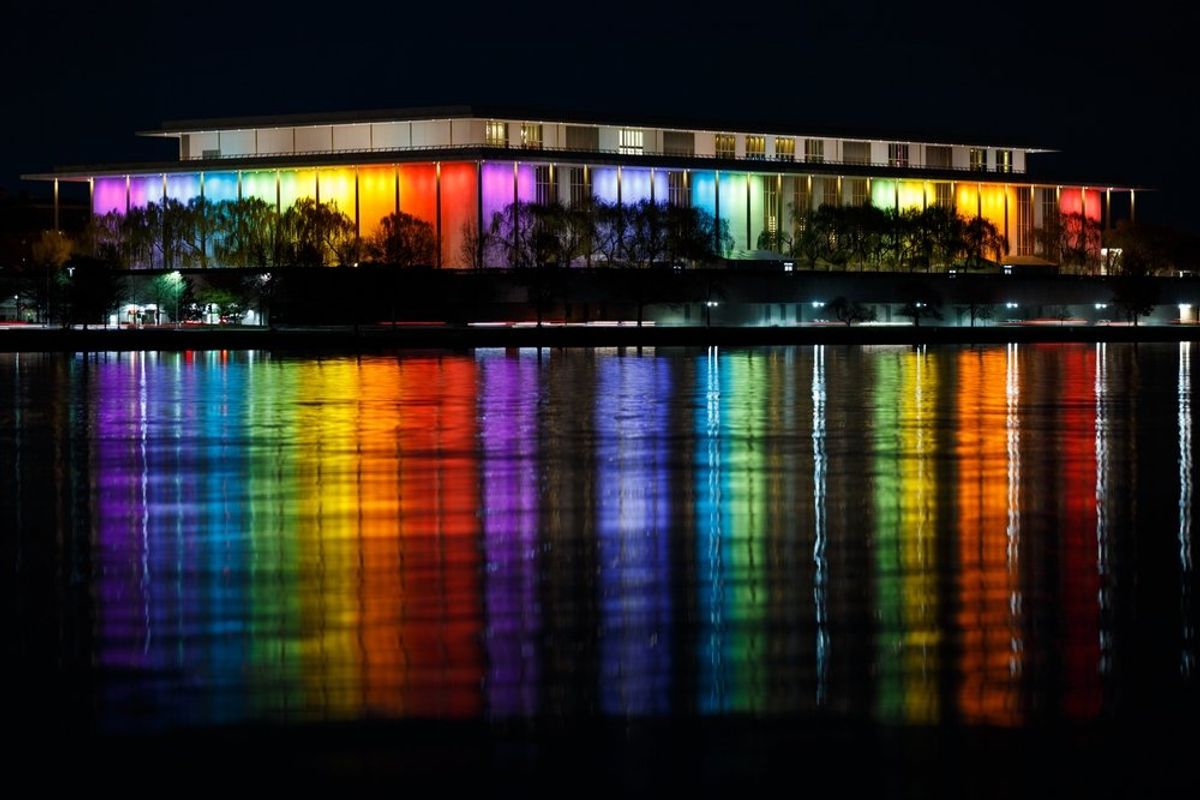
The Kennedy Center in Washington DC. (Photo credit: Matthew Hodgkins / Shutterstock)


The Kennedy Center's revenue collapse since President Donald Trump took over the famed performing arts venue and stacked the board with his loyalists has been more extensive than anyone knew.


Already, reports have abounded about canceled bookings, a dropoff in donations, and stars like legendary cellist Yo-Yo Ma dropping out of performances ever since Trump vowed to remake the Kennedy Center into a MAGA bastion. But, The New York Times now has some hard numbers to go with the reporting, and those numbers are staggering.

"Single-ticket sales were down roughly 50 percent in April and May, compared with the same period in 2024, according to the data. Subscriptions, traditionally an important source of revenue, have also declined significantly this season: Revenue was down 82 percent for theater and 57 percent for dance," reported Javier C. Hernández. "At the National Symphony Orchestra, one of the Kennedy Center’s flagship ensembles, subscriptions declined by 28 percent, the data showed. At Washington National Opera, subscriptions were down 25 percent."

Indeed, overall subscription revenue "was projected at $2.7 million in the coming fiscal year, compared with $4.4 million this year," said the report, citing a confidential source within the organization.


ALSO READ: FBI silent as far-right podcaster demands Trump execution and Kash Patel torture

The Kennedy Center says these figures are misleading, because its subsciption marketing campaign began later than usual this year, with marketing official Kim Cooper saying, “Our renewal campaign is just kicking off and our hard-copy season brochures have not yet hit homes. Our patrons wait for our new season brochures and renewal campaigns to take action.”

Only 16 percent of the Kennedy Center's budget comes from the federal government, the report noted, meaning that the revenue from tickets and subscriptions is vital to operations.


All of this comes as the Kennedy Center is embroiled in a completely separate drama over the Trump administration having to fire a far-right staffer who proclaimed homosexuality is a "punishment" against the United States and pushed conspiracy theories about former President Barack Obama's birth certificate — an issue that ironically marked a major part of Trump's own political rise.
Florida meteorologist halts forecast to give dire on-air warning against Trump

Sarah K. Burris
June 3, 2025 
RAW STORY

Miami channel 6 meteorologist John Morales‬ (Photo: screen capture from WTVJ video)

Miami meteorologist John Morales‬ issued a dire warning Monday about hurricane season as it begins this month.

He began with a clip of Hurricane Dorian slowly moving due west directly towards Florida in 2019. Morales promised it would turn north and dodge Florida landfall — and that's exactly what it did.

But he said that kind of forecasting would be impossible this year.

"As you've grown accustomed to my presentations over my 34 years in South Florida newscast, confidently, I went on TV and told you, 'It's going to turn. You don't need to worry,'" Morales said on the air.

Then he dropped the bombshell: "I'm here to tell you I'm not sure I can do that this year. Because of the cuts — the gutting, the sledgehammer attack on science, in general, and I could talk about that for a long, long time and how that's affecting the leadership and science over the years and how we're losing that leadership, and that is a multi-generation impact on science in this country."

On the screen behind him appeared bullet points reading: "Central and South Florida National Weather Service is 19-39% understaffed." There has been a "17% reduction in weather balloon launches across the United States." He said it has "degraded forecast accuracy."

"But, specifically, let's talk about the federal government cuts to the National Weather Service and to NOAA," he continued, reading the bullet point. "This type of staffing shortage is having impacts across the country," he said, noting the weather balloon loss.

"What we're starting to see is that the quality of the forecasts is becoming degraded," he continued. "There's also a chance because of some of these cuts that NOAA hurricane hunter aircraft will not be able to fly this year and with less reconnaissance missions may be flying blind. And we may not exactly know how strong a hurricane is before it reaches the coastline, like what happened a couple of years ago with Hurricane Otis in Acapulco, Mexico."

He then made a plea to the audience to call their members of Congress to fight for this funding.

NOAA and NWS were cut as part of President Donald Trump's 2024 campaign promise to cut $2 trillion in what he called "waste, fraud and abuse" in government.

See the clip from Morales below or at the link here.

Navy considers removing civil rights leaders' names from ships

ANTI-DEI IS RACIST, SEXIST, HOMOPHOBIC

RAW STORY


Norfolk, Virginia, USA - December 21, 2024: An American flag flies on the USNS Harvey Milk (T-AO-206) of the Militart Sealift Command. (Shutterstock)


In its continued attempt to erase diversity, equity, and inclusion from U.S. history, the Trump administration is planning to rename several navy ships currently titled for civil rights leaders like Harvey Milk, Thurgood Marshall and Harriet Tubman, among others, CBS News reported.

The first ship to be renamed, according to documents reviewed by CBS, is the USNS Harvey Milk, which honors the navy veteran and the first openly gay politician in California's history. Milk was assassinated while serving on San Francisco's board of supervisors in 1978 and became an LGBTQ icon.

CBS News noted that the proposed timeline for renaming the ship comes during Pride Month, "the monthlong observance of the LGBTQ+ community that also coincides with the anniversary of the Stonewall uprising of 1969."

Also on the Navy's renaming "recommended list" are the USNS Thurgood Marshall, USNS Ruth Bader Ginsburg, USNS Harriet Tubman, USNS Dolores Huerta, USNS Lucy Stone, USNS Cesar Chavez and USNS Medgar Evers.

CBS News also found "that a December 2024 web article from Naval Sea Systems Command about the laying of the keel for the future USNS Thurgood Marshall has been deleted."

Speaker Emerita Nancy Pelosi told CBS News in statement, "The reported decision by the Trump Administration to change the names of the USNS Harvey Milk and other ships in the John Lewis-class is a shameful, vindictive erasure of those who fought to break down barriers for all to chase the American Dream."

She added, "Our military is the most powerful in the world – but this spiteful move does not strengthen our national security or the "warrior" ethos. Instead, it is a surrender of a fundamental American value: to honor the legacy of those who worked to build a better country."

CBS cited the navy memo that said "the renaming of naval ships was to realign the U.S. military with Trump administration priorities of 'reestablishing the warrior culture.'"

Read the CBS News story here.

Pentagon chief orders renaming of ship named for gay icon: reports

ANTI-DEI IS HOMOPHOBIA


By AFP
June 3, 2025


Harvey Milk was one of the first openly gay elected politicians in the United States - Copyright AFP/File SAUL LOEB

Defense Secretary Pete Hegseth has ordered the renaming of a US Navy ship named after a gay icon, the assassinated former San Francisco politician Harvey Milk, a military affairs website reported Tuesday.

Military.com said it had reviewed a memo from the Office of the Secretary of the Navy that said the move was in line with Hegseth’s purported goal of “reestablishing a warrior culture” in the US armed forces.

Military.com quoted an unidentified defense official as saying that Navy Secretary John Phelan had been ordered by Hegseth to rename the USNS Harvey Milk, and the timing of the upcoming announcement — during LGBTQ WorldPride month — was intentional.

CBS News said the navy is considering re-titling several other ships including two named after former US Supreme Court justices — Thurgood Marshall, the first Black member of the top court, and liberal icon Ruth Bader Ginsburg.

Responding to the reports, Pentagon spokesman Sean Parnell said “any potential renaming(s) will be announced after internal reviews are complete.”

“Secretary Hegseth is committed to ensuring that the names attached to all (Department of Defense) installations and assets are reflective of the Commander-in-Chief’s priorities, our nation’s history, and the warrior ethos,” Parnell said in a statement.


Democrat Nancy Pelosi, the former speaker of the House of Representatives, condemned the reported move to rename the USNS Harvey Milk, calling it “a shameful, vindictive erasure of those who fought to break down barriers for all to chase the American Dream.”

“Harvey Milk proudly served as a Lieutenant in the United States Navy and was a formidable force for change -– not just in California, but in our Country,” the California congresswoman said in a statement.

“This spiteful move… is a surrender of a fundamental American value: to honor the legacy of those who worked to build a better country.”

Milk served as a US Navy diver at a time when there was a ban on homosexuality in the military.

One of the first openly gay politicians in America, Milk was elected to San Francisco’s Board of Supervisors, where he was instrumental in passing laws banning discrimination on the grounds of sexual orientation.

Months later, in 1978, Milk was shot dead along with mayor George Moscone, by a disgruntled former city supervisor.

Milk’s murder helped cement his reputation as a civil rights icon, and he was posthumously awarded the Presidential Medal of Freedom.

The USNS Harvey Milk, a 227-metre (744-foot) refueling vessel, was christened at a ceremony in 2021 attended by then-secretary of the navy Carlos Del Toro.

Since taking office, President Donald Trump has moved to ban transgender troops from the military and to dismantle diversity programs, claiming they “undermine leadership, merit, and unit cohesion, thereby eroding lethality and force readiness.”


Canada, US warn of air quality hazards as Canadian fire smoke reaches Europe


By AFP
June 3, 2025


Huge plumes from Canada's wildfires sometimes reach very high altitude, where they pose less of an immediate health risk - Copyright AFP/File SAUL LOEB


Michel COMTE, with Marion Thibaut in Montreal

Canada’s wildfires, which have already forced evacuations of more than 26,000 people, continued their stubborn spread Tuesday, with heavy smoke choking millions of Canadians and Americans and reaching as far away as Europe.

Alerts were issued for parts of Canada and the neighboring United States warning of hazardous air quality.

A water tanker air base was consumed by flames in Saskatchewan province, oil production has been disrupted in Alberta, and officials warned of worse to come with more communities threatened each day.

“We have some challenging days ahead of us,” Saskatchewan Premier Scott Moe told a news conference, adding that the number of evacuees could rise quickly.

Every summer, Canada grapples with forest fires, but an early start to the wildfire season this year and the scale of the blazes — over two million hectares (494,000 acres) burned — is worrying.

The provinces of Saskatchewan and Manitoba have been hardest hit. Both declared wildfire emergencies in recent days.

“This has been a very difficult time for many Canadians,” federal Emergency Management Minister Eleanor Olszewski told reporters in Ottawa.

“This wildfire season has started off more quickly, and it’s stronger, more intense,” she said, adding that the Canadian military has deployed aircraft to evacuate remote towns in Manitoba and was ready to also assist Saskatchewan and Alberta with firefighting.

Climate change has increased the impact of extreme weather events in Canada, which is still recovering from the apocalyptic summer of 2023 when 15 million hectares of forests were scorched.

As of Tuesday, there were 208 active fires across Canada. Half of them were listed as out of control, according to the Canadian Interagency Forest Fire Centre.

Many of the affected populations are Indigenous, and some small communities have burned to the ground.

– ‘Very intense few weeks’ –


Heavy smoke from the fires, meanwhile, has engulfed part of the continent, forcing residents of four Canadian provinces and the US states of Michigan, Minnesota, Nebraska and Wisconsin to limit outdoor activities.

“Smoke is causing very poor air quality and reduced visibility,” Environment Canada said in a statement.

Wildfire smoke is comprised of gaseous pollutants such as carbon monoxide, along with water vapor and particle pollution, which can be particularly hazardous to health.

Some of the worst smoke was in Alberta where three major oil sands producers — Canadian Natural Resources, MEG Energy Corp, and Cenovus Energy — this week evacuated workers and temporarily shut down hundreds of thousands of barrels of production per day.

Huge plumes of smoke even reached Europe, the European Union’s climate monitoring service said Tuesday.

Due to their very high altitude, they do not pose an immediate health risk, according to the Copernicus Atmosphere Monitoring Service (CAMS), but are likely to result in hazy skies and reddish-orange sunsets.

Additional plumes are expected to shade both continents in the coming days.

“Central regions of Canada have experienced a very intense few weeks in terms of wildfire emissions,” noted Mark Parrington, scientific director at CAMS.

Canadian authorities have forecast a more intense fire season than usual in central and western Canada, due in particular to severe or extreme drought.

“The significant reduction in snowpack in the spring led to early exposure of soil and vegetation, accelerating surface drying,” explained University of Ottawa professor Hossein Bonakdari.

“This early exposure acted as a silent amplifier, subtly setting the stage for extreme fires long before the first flame ignited,” he said.

Elsewhere, extensive forest fires have been raging in Russia’s Far Eastern Federal District since early April, particularly east of Lake Baikal, generating carbon emissions of around 35 million tons, Copernicus reported.

Cenovus the latest oil company to shut production in Alberta due to wildfires


By The Canadian Press
Updated: June 02, 2025 

Cenovus Energy logos are on display at the Global Energy Show in Calgary, Alta., Tuesday, June 7, 2022. THE CANADIAN PRESS/Jeff McIntosh

CALGARY — Some oilsands producers are removing workers and shutting production from their sites as wildfires rage in northeastern Alberta.

Cenovus Energy Inc. said Sunday only essential personnel are left at its Christina Lake oilsands operations south of Fort McMurray, Alta. It began shutting down production from the steam-driven project on Thursday and about 238,000 barrels of oil a day are now off-line.

“Based on the inspections the company has completed to date, it is not aware of any damage to its infrastructure and would anticipate a full restart of Christina Lake operations in the near term,” the Calgary-based producer said in a release.

Meanwhile, Canadian Natural Resources Ltd. said on Saturday that its Jackfish 1 site has been evacuated and that 36,500 barrels a day have been shut in.

“All workers are safe and accounted for with no reported injuries and have been relocated to other facilities in our thermal in situ operations,” the company said in a notice on its website.

“Canadian Natural is working together with local authorities to ensure the safe and orderly movement of people through the area, including providing support for first responders and community members.”

MEG Energy has only critical operating staff on site at its Christina Lake operations. The fires caused an outage to a utility’s power line connected to the site, but it’s able to keep running its production thanks to cogeneration capabilities.

The power outage has, however, delayed startup of a section of Christina Lake that had been down for maintenance.

“The safety of our people and protection of our assets remain our top priorities, and there is no immediate risk to either,” said chief executive Darlene Gates in a news release Saturday.

“We are working closely with authorities and co-ordinating with our industry peers to support each other and resume normal operations.”

The Alberta government says there are currently 49 active wildfires in the province, half of which are out of control. So far, more than 4,800 square kilometres have burned.

The fire affecting the oilsands operators, dubbed the Caribou Lake Fire, is estimated at 615 square kilometres and remains out of control as of Monday.

Thousands have been forced from their homes across the Prairies as hot, dry conditions have helped flames quickly spread.

This report by The Canadian Press was first published June 2, 2025.

Lauren Krugel, The Canadian Press
Meta becomes the latest big tech company turning to nuclear power for its AI needs


By The Associated Press
Updated: June 03, 2025 

 Clinton Clean Energy Center in Clinton, Ill.
 (John Dixon/The News-Gazette via AP)

WASHINGTON — Meta has cut a 20-year deal to secure nuclear power to help meet surging demand for artificial intelligence and other computing needs at Facebook’s parent company.

The investment with Meta will also expand the output of a Constellation Energy Illinois nuclear plant.

The agreement announced Tuesday is just the latest in a string of tech-nuclear partnerships as the use of AI expands. Financial details of the agreement were not disclosed.

Constellation’s Clinton Clean Energy Center was actually slated to close in 2017 after years of financial losses but was saved by legislation in Illinois establishing a zero-emission credit program to support the plant into 2027. The agreement deal takes effect in June of 2027, when the state’s taxpayer funded zero-emission credit program expires.

With the arrival of Meta, Clinton’s clean energy output will expand by 30 megawatts, preserve 1,100 local jobs and bring in $13.5 million in annual tax revenue, according to the companies. The plant currently powers the equivalent of about 800,000 U.S. homes.

“Securing clean, reliable energy is necessary to continue advancing our AI ambitions,” said Urvi Parekh, Meta’s head of global energy.

Surging investments in small nuclear reactors comes at a time when large tech companies are facing two major demands: a need to increase their energy supply for AI and data centers, among other needs, while also trying to meet their long-term goals to significantly cut greenhouse gas emissions.

Constellation, the owner of the shuttered Three Mile Island nuclear power plant, said in September that it planned to restart the reactor so tech giant Microsoft could secure power to supply its data centers. Three Mile Island, located on the Susquehanna River just outside Harrisburg, Pennsylvania, was the site of the nation’s worst commercial nuclear power accident in 1979.

Also last fall, Amazon said it was investing in small nuclear reactors, two days after a similar announcement by Google. Additionally, Google announced last month that it was investing in three advanced nuclear energy projects with Elementl Power.

U.S. states have been positioning themselves to meet the tech industry’s power needs as policymakers consider expanding subsidies and gutting regulatory obstacles.

Last year, 25 states passed legislation to support advanced nuclear energy, and lawmakers this year have introduced over 200 bills supportive of nuclear energy, according to the trade association Nuclear Energy Institute.

Advanced reactor designs from competing firms are filling up the federal government’s regulatory pipeline as the industry touts them as a reliable, climate-friendly way to meet electricity demands from tech giants desperate to power their fast-growing artificial intelligence platforms.

Still, it’s unlikely the U.S. could quadruple its nuclear production within the next 25 years, like the White House wants. The United States lacks any next-generation reactors operating commercially and only two new large reactors have been built from scratch in nearly 50 years. Those two reactors, at a nuclear plant in Georgia, were completed years late and at least $17 billion over budget.

Amazon, Google and Microsoft also have been investing in solar and wind technologies, which make electricity without producing greenhouse gas emissions.

Shares of Constellation Energy Corp., based in Baltimore, were flat Tuesday.


Meta, Constellation sign 20-year clean power deal


Tuesday, 3 June 2025

A 20-year power purchase agreement between Meta and Constellation will secure the long-term operation of Constellation's Clinton Clean Energy Center, while the tech company is also moving forward with its process to develop nuclear capacity at new US locations.

Meta, Constellation sign 20-year clean power deal
The Clinton Clean Energy Center (Image: Constellation)

The power purchase agreement will see Meta purchase output from the single-unit boiling water reactor unit to support its clean energy goals, beginning in June 2027. The agreement supports the relicensing and continued operations of the nuclear facility for another two decades after the state of Illinois’s zero emission credit programme expires, Constellation said. The deal will also see Clinton’s output increased by 30 MWe through plant uprates; preserve 1,100 high-paying local jobs; deliver USD13.5 million in annual tax revenue, it added.

Clinton entered commercial operation in 1987 and is currently licensed to operate until April 2027. Constellation applied to the US Nuclear Regulatory Commission last year for a 20-year initial licence extension. That application is currently undergoing review by the regulator.

"Last year, Constellation’s announced plan to restart the Crane Clean Energy Center became national news, but despite all of the interest and overwhelming support, a key question was missed: why did we let such a valuable plant close in the first place? We all know that the closure cost our community jobs, tax revenue, more pollution and higher prices," Constellation President and CEO Joe Dominguez said. "We are proud to partner with Meta because they asked that important question, and even better, they figured out that supporting the relicensing and expansion of existing plants is just as impactful as finding new sources of energy. Sometimes the most important part of our journey forward is to stop taking steps backwards."

The Clinton plant had been slated for premature closure in 2017 for economic reasons despite being one of the best performing nuclear plants in Illinois, until the state enacted legislation establishing the zero emission credit programme, which provides financial support to the plant until mid-2027. The power purchase agreement with Meta is a market-based solution that essentially replaces the zero emission credit programme and ensures long-term operation of the plant without the need for ratepayer support, Constellation said.

With the guarantee that Clinton will continue to run for another two decades, Constellation said it is also evaluating strategies to extend the plant’s existing early site permit or seek a new construction permit from the Nuclear Regulatory Commission to pursue development of an advanced nuclear reactor or small modular reactor (SMR) at the site.

Landmarks


Meta is prioritising operating its data centres efficiently and cleanly, and said the power purchase agreement was a landmark agreement. "As we look toward our future energy needs in advancing AI, we recognise the immense value of nuclear power in providing reliable, firm electricity, and the role nuclear projects can have in supporting local economies and strengthening America’s energy leadership," the company said.

"As we have embarked on understanding and helping to grow nuclear energy in the US, we have heard from across the ecosystem that existing nuclear power plants will not be able to stay online indefinitely without partners and investments that help extend existing operating licences and increase generation capacity. It’s clear that there are many nuclear power plants serving the US that need long-term support to help our electricity grids remain reliable as energy needs grow. Keeping an existing plant operating will have the same positive effect as adding new clean energy to the grid, and avoid the disruption that has occurred when other nuclear units have retired prematurely."

Meta, a signatory of the Large Energy Users Pledge supporting the goal of at least tripling global nuclear capacity by 2050, last year announced that it would seek proposals for as much as 4 GW of nuclear capacity in the USA by the early 2030s. The company said it has seen "great progress" on its nuclear request for proposals, receiving "over 50 qualified submissions from a range of participants in the nuclear ecosystem - including utilities, developers and nuclear technology manufacturers" reflecting "a diversity of technology options, commercial terms and sites across more than 20 states".

It is prioritising sites where nuclear development can be advanced quickly with high degrees of certainty on execution and timeline, it said. It has now selected a shortlist of new nuclear projects across multiple US states that it says represent some of the most feasible opportunities, and is looking to finalise the process this year.

"Through both our nuclear RFP process and the Constellation agreement - as well as our commitment through the Tripling Nuclear Pledge - we are creating a demand signal for nuclear, which is necessary for existing units to remain in operation and for developers to permit, site, design and engineer more facilities moving forward. Our investments in nuclear energy ensure that we will have the robust energy infrastructur needed to power the AI innovations that are set to spark economic growth and prepare our communities for the future," the company said.

Collaboration aims to develop Swedish uranium deposits


Monday, 2 June 2025

Australian mineral company Aura Energy and Neu Horizon Uranium Limited plan to enter into a strategic collaboration agreement to develop Sweden's uranium resources should the country remove its prohibition on uranium mining.

Collaboration aims to develop Swedish uranium deposits
The Häggån deposit, pictured in October 2013 (Image: Aura Energy)

Aura Energy owns the Häggån vanadium, potash and uranium project in Sweden, which is claimed to be "one of the largest undeveloped uranium resources globally" with an Inferred Mineral Resource of 800 million pounds of contained U3O8 (307,718 tU).

Neu Horizon Uranium is an Australian-based unlisted public company focused on advancing Sweden's uranium resources. The company holds a portfolio of high potential uranium projects in key mineralised regions of Sweden.

The two companies have agreed to enter into a collaboration agreement under which Aura Energy will invest AUD100,000 (USD64,930) for a minority stake in Neu Horizon Uranium. The two companies will collaborate on key initiatives, including: government and regulatory engagement; technical cooperation on uranium extraction and processing; and administrative synergies to enhance operational efficiency.

Uranium exploration and mining has been prohibited in Sweden since 2018, but in February last year Climate and Environment Minister Romina Pourmokhtari announced that a government inquiry would look into abolishing the ban. In December, the inquiry concluded that Sweden should remove its prohibition on uranium mining to allow it to be exploited like other natural resources regulated under the Minerals Act. The government is now working through legislative process to change the legislation which is expected to be presented to Parliament for enactment on 1 January 2026. 

"The Swedish government's step towards lifting the uranium mining ban mark a transformational moment for the country's energy future," said Aura Energy Chair Phil Mitchell. "Aura Energy is proud to be playing a leadership role in advancing Sweden's uranium sector. Our collaboration with Neu Horizon Uranium positions us to capitalise on the country's exceptional geological endowment and support its uranium ambitions."

Neu Horizon Uranium Chair Martin Holland added: "Every now and again, along comes an incredible opportunity in mining. This is happening in Sweden with uranium in 2025. Our collaboration with Aura Energy is a strategic step towards unlocking Sweden's uranium potential. Sweden holds large quantities of uranium resources, and this collaboration will facilitate progress in regulatory engagement and technical advancements, aligning with Sweden's vision for energy security."

Extension granted for Smolensk unit 2

Tuesday, 3 June 2025

Russian nuclear regulator Rostekhnadzor has issued a five-year licence extension for unit 2 of the Smolensk nuclear power plant, which will see its original 30-year life now extended to 45 years.

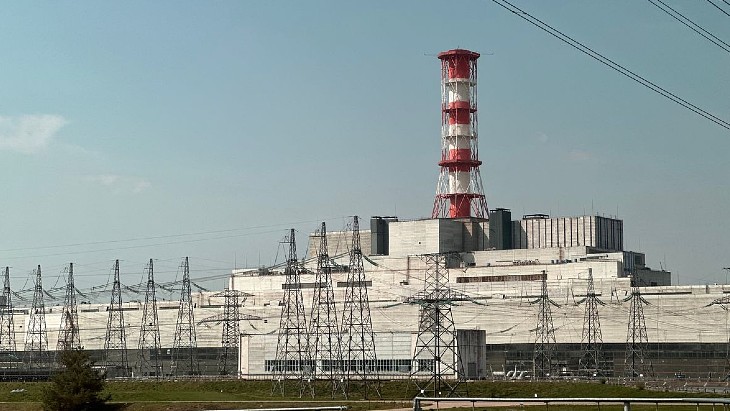
Extension granted for Smolensk unit 2
(Image: Smolensk NPP)

The RBMK-1000 light water graphite reactor entered commercial operation in 1985 and currently has permission to operate until 2030. The first Smolensk unit has a licence to operate to 2027 and the third unit until 2034.

Pavel Lubensky, Director of Smolensk NPP, said: "The second power unit has worked for 30 years, as envisaged by the project, and 10 years in an additional period after a large-scale modernisation and obtaining a licence from Rostekhnadzor. Now we have received the right to operate the nuclear installation for another five years, having justified the operability of its irreplaceable elements, which means that there is an opportunity to provide the consumer with about 35 billion kilowatt-hours of electricity and fulfill obligations to produce isotope products for the needs of industry and nuclear medicine."

The project to modernise Smolensk 2 began in 2006 and involved assessment of the condition of all elements and systems and large-scale measures were taken to modernise and replace equipment where necessary. Rosteckhnadzor carried out checks on the measures taken as well as the training and readiness of the workforces to operate the modernised equipment before issuing the licence extensions.

The Smolensk plant covers 75% of electricity supply to the region. According to Russia's energy plan, the Smolensk-II project is to see two VVER-TOI reactors built at a site near the existing nuclear power plant, with a target date of the mid-2030s to replace the existing units' output.

Turbine hall demolished at 

Sizewell A


Tuesday, 3 June 2025

The demolition of the turbine hall and adjoining structures at the shut down Sizewell A nuclear power plant in the UK has been completed quicker and at less cost through the use of explosives, Nuclear Restoration Services announced.

Turbine hall demolished at Sizewell A
(Image: NRS)

The football-pitch-sized turbine hall has now been razed to the ground using a series of "innovative and forward-thinking techniques" which meant the completed work was achieved in a significantly quicker timeframe than if traditional decommissioning and dismantling approaches had been followed, the company said.

Up to 700 kgs of explosives were used last November to weaken the four reinforced concrete plinths on which two 65-tonne turbogenerators stood. This marked the largest use of explosives on a UK nuclear site and the longest programmed detonation sequence in Europe, according to Nuclear Restoration Services (NRS). Since then, high reach cranes and excavators have been used to remove rubble from the weakened turbine plinths and tear down the rest of the concrete structure until the hall was completely removed.

The use of explosives reduced the project schedule by four months, costs by GBP300,000 (USD405,472) and minimised vibrations to negligible levels compared with using traditional mechanical percussion removal techniques, it said. Around 40 tonnes of CO2 emissions were also saved by minimising machinery fuel use.

More than 17,000 tonnes of concrete and rubble have been removed from the turbine hall, fire station and electrical annexe structures. This waste has been crushed, processed and reused for ongoing construction projects. About 35 miles of cable have also been removed.

A scrap metal contract has raised more than GBP3 million income to date from the sale of the 11,000 tonnes removed during the de-plant and demolition phases. This revenue will be used to offset decommissioning costs.

"This is an incredible achievement for NRS, our contract partners Erith, the Office for Nuclear Regulation (ONR) and the Nuclear Decommissioning Authority (NDA)," said Sizewell A Site Director Alan Walker. "I would like to thank everyone including those involved and our neighbours for their continued support throughout, as well as the ONR for enabling us to push the boundaries of innovation in conventional demolition together. The learning from this will be applied to other NRS projects to continue delivering efficient, value for money decommissioning and restoration of nuclear sites."

NDA Programme Manager David Rushton added: "The successful demolition of the turbine hall brings skyline change to the Sizewell A site. The innovative use of explosives provides valuable learning for future decommissioning activities, and the segregation and reuse of demolition material supports the NDA's sustainability targets."

"From the start, once satisfied with the safety evidence provided for the turbine hall demolition, ONR's inspectors permissioned key stages of the project and adopted an enabling regulatory approach throughout the work," ONR said.

Andrew Bull, ONR's Nominated Site Inspector at Sizewell A, said: "We've worked very closely with NRS, adopting an enabling stance to allow the licensee to push forward with a modern, and at times, ground-breaking approach to accelerating this major dismantling project. ONR works hard to reduce unnecessary regulatory burden and add value when it is safe to do so. This has been no better demonstrated than for the removal of the Sizewell A turbine hall, where we have played a key role in this example of decommissioning the UK's nuclear estate."

Sizewell A's two 210 MWe Magnox gas-cooled reactors operated from 1966 until 2006. Defuelling began in 2009, with fuel removed from the reactors placed in the site's used fuel storage ponds before being packaged in transport containers for shipment to the Sellafield complex for reprocessing. The final flask of fuel was shipped to Sellafield in August 2014. Sizewell A was declared completely fuel-free in February 2015. The decommissioning milestone marked the removal of 99% of the radioactive hazard from the former Magnox nuclear power station. Planning consent was given to demolish the turbine hall and electrical annexe in August last year.

The empty land that now lies where the flattened turbine hall once stood will eventually be restored and released for re-use. The whole site Sizewell A site is expected to be completely cleared by 2077.