Saturday, June 28, 2025


By 

Ejiao is considered a miracle elixir for those who use it. However, it has become a disaster for Africa’s donkeys and the communities that rely on them.


The Chinese demand for donkey skins and meat fuels a black market in several African countries. Those markets benefit transnational organized criminal groups, which rely on lax regulations, public corruption and porous borders to traffic in skins.

Gelatin made by boiling donkey skins forms the basis for ejiao (pronounced “eh-gee-yow”), which users take as a treatment for anemia and other blood disorders. The demand for ejiao in China has decimated that nation’s donkey population, which plunged from 11.1 million animals in 1990 to 2.5 million in 2018.

Traditional Chinese medicine (TCM) makers have, in turn, sought donkey hides in Kenya and elsewhere, where donkeys are crucial to rural communities. Chinese demand fuels widespread theft of donkeys in those communities, stripping some owners of an important part of their livelihood.

Beyond the potential economic damage to rural communities, the trade in donkey skins for TCM also raises the specter of spreading zoonotic diseases, such as glanders, from animals to people, experts say. Glanders is a rare, equine-borne disease that can be fatal to people.

Imported skins account for 90% of ejiao production, according to Brooke Action for Working Horses and Donkeys, an animal welfare organization formed in Egypt in 1934. It is now based in the United Kingdom.


Writing for Global China Pulse in 2023, Kenya-based TCM researcher Wei Ye noted: “The development puts the world’s donkey population at risk and disrupts the livelihoods of those involved, especially in areas with large populations of the animal, such as East Africa, Central Asia, and South America.”

Ye’s essay relates a story about meeting a Chinese businesswoman named Tong in Nairobi as she sought to buy donkey skins to make ejiao. Tong bought them from a Chinese businessman who had been buying them from Kenyan villagers and stockpiling them. The demand for ejiao has grown rapidly in recent years as Chinese TCM users seek “life-nurturing” practices, Ye wrote.

According to The Donkey Sanctuary, a U.K.-based animal welfare group, China’s ejiao production grew from 3,200 metric tons in 2013 to 5,600 metric tons by 2016. Production is expected to triple by 2027.

The TCM market needs nearly 6 million donkey skins each year to meet demand, according to researchers at Warwick University in the U.K. That demand could reach nearly 7 million by 2027.

Kenya banned the slaughter of donkeys for their skins and meat in 2020. The country’s high court overturned that ban in 2021 after slaughterhouse owners fought it.

Botswana, Burkina Faso, Mali, Niger, Senegal, Tanzania and Uganda also have banned the practice. In 2024, the African Union passed a continentwide ban on donkey slaughter for 15 years.

Yet, the slaughter continues across the continent. The year that its ban was overturned, Kenya exported 160,000 donkey skins, according to Brooke researchers.

In African countries that have banned donkey exports to China, there often are no penalties for violating the ban, so illegal trade continues, according to Brooke researchers.

Nigeria has become a hub for legal and illegal trafficking in donkey skins to China. Egypt is home to a black market in donkey skins bound for China, according to researchers. The border between Burkina Faso and Ghana remains a hot spot for the trade.

Kenyan authorities recently broke up an illegal donkey slaughtering operation in the town of Kithyoko near the border of Machakos and Kitui counties. Donkeys were transported to the community from across the region to be slaughtered.

Ultimately, the TCM trade in donkey skins harms rural Africans as much as it harms the animals they rely on for transporting goods, plowing fields and the like, according to Brooke.

“The scale and rapid global spread of the donkey skin trade to fuel China’s demands for ejiao is unsustainable,” Brooke researchers wrote. “The trade is having devastating consequences for donkeys and their owners around the world, which are felt most keenly by vulnerable people in poor communities.”


Africa Defense Forum

The Africa Defense Forum (ADF) magazine is a security affairs journal that focuses on all issues affecting peace, stability, and good governance in Africa. ADF is published by the U.S. Africa Command.


Tomatoes In The Galápagos Are Quietly De-Evolving

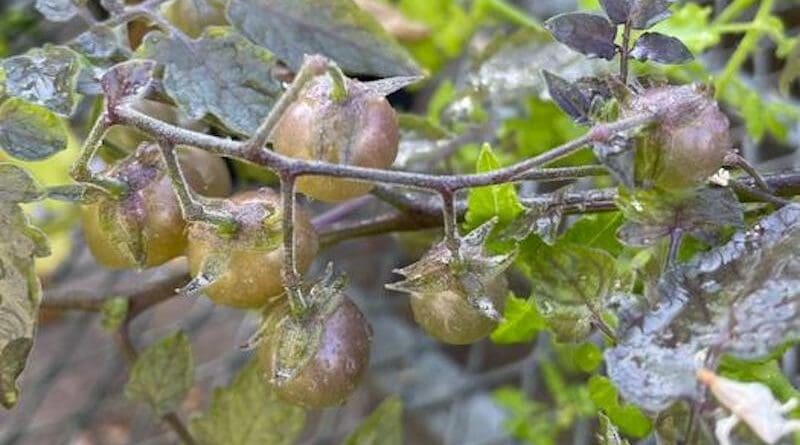
De-evolved tomato species from the Galápagos. CREDIT: Adam Jozwiak/UCR

By 

On the younger, black-rock islands of the Galápagos archipelago, wild-growing tomatoes are doing something peculiar. They’re shedding millions of years of evolution, reverting to a more primitive genetic state that resurrects ancient chemical defenses.


These tomatoes, which descended from South American ancestors likely brought over by birds, have quietly started making a toxic molecular cocktail that hasn’t been seen in millions of years, one that resembles compounds found in eggplant, not the modern tomato.

In a study published recently in Nature Communications, scientists at the University of California, Riverside, describe this unexpected development as a possible case of “reverse evolution,” a term that tends to be controversial amongst evolutionary biologists.

That’s because evolution isn’t supposed to have a rewind button. It’s generally viewed as a one-way march toward adaptation, not a circular path back to traits once lost. While organisms sometimes re-acquire features similar to those of their ancestors, doing so through the exact same genetic pathways is rare and difficult to prove.

However, reversal is what these tomato plants appear to be doing.

“It’s not something we usually expect,” said Adam Jozwiak, a molecular biochemist at UC Riverside and lead author of the study. “But here it is, happening in real time, on a volcanic island.”


The key players in this chemical reversal are alkaloids. Tomatoes, potatoes, eggplants, and other nightshades all make these bitter molecules that act like built-in pesticides, deterring insect predators, fungi, and grazing animals.

While the Galápagos are famous as a place where animals have few predators, the same is not necessarily true for plants. Thus, the need to produce the alkaloids.

The researchers began this project because alkaloids in crops can be problematic. In high concentrations they are toxic to humans, hence the desire to understand their production and reduce them in the edible parts of fruits and tubers.

“Our group has been working hard to characterize the steps involved in alkaloid synthesis, so that we can try and control it,” Jozwiak said.

What makes these Galápagos tomatoes interesting isn’t just that they make alkaloids, but that they’re making the wrong ones, or at least, ones that haven’t been seen in tomatoes since their early evolutionary days.

The researchers analyzed more than 30 tomato samples collected from distinct geographic locations across the islands. They found that plants on eastern islands produced the same alkaloids found in modern cultivated tomatoes. But on western islands, the tomatoes were churning out a different version with the molecular fingerprint of eggplant relatives from millions of years ago.

That difference comes down to stereochemistry, or how atoms are arranged in three-dimensional space. Two molecules can contain exactly the same atoms but behave entirely differently depending on how those atoms are arranged.

To figure out how the tomatoes made the switch, the researchers examined the enzymes that assemble these alkaloid molecules. They discovered that changing just four amino acids in a single enzyme was enough to flip the molecule’s structure from modern to ancestral.

They proved it by synthesizing the genes coding for these enzymes in the lab and inserting them into tobacco plants, which promptly began producing the old compounds.

The pattern wasn’t random. It aligned with geography. Tomatoes on the eastern, older islands, which are more stable and biologically diverse, made modern alkaloids. Those on the younger, western islands where the landscape is more barren and the soil is less developed, had adopted the older chemistry.

The researchers suspect the environment on the newer islands may be driving the reversal. “It could be that the ancestral molecule provides better defense in the harsher western conditions,” Jozwiak said.

To verify the direction of the change, the team did a kind of evolutionary modeling that uses modern DNA to infer the traits of long-extinct ancestors. The tomatoes on the younger islands matched what those early ancestors likely produced.

Still, calling this “reverse evolution” is bold. While the reappearance of old traits has been documented in snakes, fish, and even bacteria, it’s rarely this clear, or this chemically precise.

“Some people don’t believe in this,” Jozwiak said. “But the genetic and chemical evidence points to a return to an ancestral state. The mechanism is there. It happened.”

And this kind of change might not be limited to plants. If it can happen in tomatoes, it could theoretically happen in other species, too. “I think it could happen to humans,” he said. “It wouldn’t happen in a year or two, but over time, maybe, if environmental conditions change enough.”

Jozwiak doesn’t study humans, but the premise that evolution is more flexible than we think is serious. Traits long lost can re-emerge. Ancient genes can reawaken. And as this study suggests, life can sometimes find a way to move forward by reaching into the past.

“If you change just a few amino acids, you can get a completely different molecule,” Jozwiak said. “That knowledge could help us engineer new medicines, design better pest resistance, or even make less toxic produce. But first, we have to understand how nature does it. This study is one step toward that.”


Fishermen In Maceió, Brazil, Have Higher-Than-Average Mercury Levels

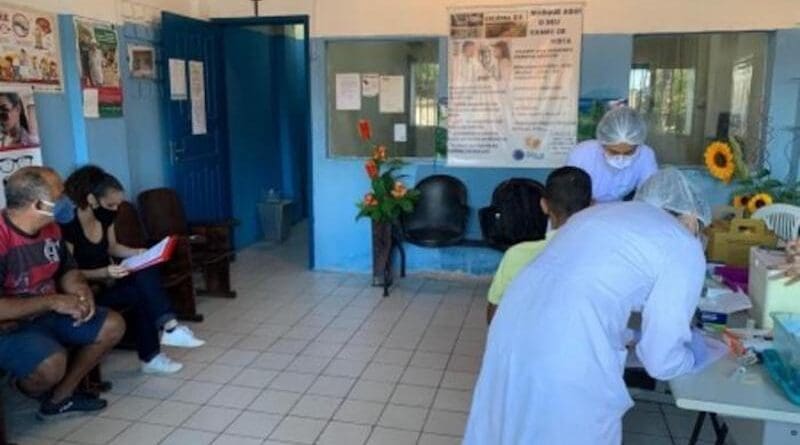
Blood collection in a neighborhood near the Mundaú Lagoon in Maceió. Mercury contamination causes metabolic changes in residents CREDIT: Ana Catarina Rezende Leite/UFAL


By 

Researchers from the Federal University of Alagoas (UFAL) and the State University of Campinas (UNICAMP) in Brazil have found high levels of mercury in the blood and urine of people living on the shores of the Mundaú Lagoon in Maceió, the capital of the Brazilian state of Alagoas. These levels are higher than those found in other populations within the same municipality that have a similar socioeconomic level but live far from the lagoon.


The study, which was published in the Journal of Hazardous Materials, is the result of an agreement between FAPESP and the Alagoas State Research Foundation (FAPEAL).

“We observed systemic oxidative stress in the population exposed to mercury contamination, a phenomenon related to the onset and worsening of various diseases, including cardiometabolic diseases. Both populations analyzed showed an incidence of around 20% for hypertension and 10% for diabetes. However, the population that gets its food from the lagoon may be worse off because of the contamination,” says Ana Catarina Rezende Leite, a professor at UFAL’s Institute of Chemistry and Biotechnology and one of the study’s coordinators.

The researchers found changes in the quantity, size, volume, and function of red blood cells in the population exposed to mercury contamination, which can lead to anemia. Changes in other biomarkers also indicate damage to organs such as the liver and kidneys.

Mercury was found to increase triglyceride levels, which are a risk factor for cardiovascular disease. Additionally, creatinine and urea levels were high in the contaminated population, suggesting kidney dysfunction.

The Mundaú lagoon complex is connected to the sea and receives water from both the ocean and the mainland. It connects to secondary domestic and industrial effluent channels from Maceió and two other cities on its shores. These channels are the most likely sources of mercury and metal contamination.


Of the 125 people who had blood and urine samples taken, 60 were lagoon residents who consumed fish and shellfish (mainly sururu) from the site. The other 65 participants were from other parts of the city and had little to no contact with the contaminated site.

The concentration of mercury in the urine was 0.48 micrograms per liter in the first group, which is almost 2.5 times higher than the concentration in the control group (0.18 micrograms per liter).

The average mercury concentration in the blood of the group exposed to contamination was almost four times higher than that of the unexposed population (3.40 micrograms per liter compared to 0.93). The highest level of mercury found in the blood of lagoon fishermen’s families was 19 micrograms per liter.

Brazilian regulations set the maximum tolerable level at 20 micrograms of mercury per liter of blood. However, international agencies point to a margin of between five and ten for populations that consume fish, according to the International Programme on Chemical Safety (IPCS), and less than six for the U.S. Environmental Protection Agency (EPA).

“Our legislation is very permissive. We’d need to follow the populations for a few years to accurately assess the effects of mercury contamination, but our results already show significant changes in metabolism, with less oxygen reaching the cells, which affects their functioning,” says Josué Carinhanha Caldas Santos, a professor at UFAL who also coordinated the study.

Previous evidence

The results of the human analysis were consistent with those of a previous experimental study conducted by the same group. The study examined the impact of inorganic mercury contamination on mice with high cholesterol, exacerbating the condition as well as oxidative stress and atherosclerosis.

“In the animals, a dose considered low-to-moderate of the inorganic form of mercury [less toxic than the organic forms found in food, for example] was administered for just four weeks and caused significant damage to various tissues, including the brain. In addition, it markedly aggravated the lesions characteristic of atherosclerosis,” says Helena Coutinho Franco de Oliveira, a professor at UNICAMP’s Institute of Biology and coordinator of the project that supported the study.

Both papers were written by Maiara Queiroz and were part of her master’s degree. She was supervised by Leite at UFAL and co-supervised by Oliveira at UNICAMP.

Queiroz is currently doing her doctorate at the Institute of Chemistry of the University of São Paulo (IQ-USP) on a scholarship from FAPESP. 

Public policies

The researchers warn that the results provide strong evidence to support the implementation of environmental and health policies. Pollution in the lagoon must be stopped, or at the very least, mitigated. At the same time, the health of the affected populations must be monitored.

“This will enable us to better understand and perhaps reduce the impacts of contamination,” Santos from UFAL points out.

Further research will also monitor other metals that make up the lagoon’s contaminants and can potentiate the effects of mercury.

However, Bebedouro, one of the neighborhoods monitored by the researchers and one of the oldest in Maceió, can no longer be visited. It was evacuated in recent years due to the risk of collapse from underground rock salt mining activities.


India: Christians Accused Of Conversion Stripped, Paraded

The picture shows a crowd of Hindus forcing three Christians to bow down before a temple deity to show their respect in a village in central Indian Madhya Pradesh state on the night of June 22. Viral videos also show that, before this, the Christians were also attacked and paraded naked through the streets. (Photo; Screenshot from video)


By 

(UCA News) — Christians in central Indian Madhya Pradesh state have sought action against right-wing Hindu activists who allegedly assaulted and paraded naked four socially poor Dalit Christians in a village and forced them to bow before a Hindu temple deity.


About 150 Hindu activists entered the house of a pastor on the night of June 22 in Nepa Nagar village in Burhanpur district and assaulted him along with three other Christians, according to local Pastor Gokhariya Solanky.

“The activists undressed them, attacked them, and used foul language to abuse them before parading them naked in their underwear along a public road,” Solanky told UCA News on June 25, a day after filing a complaint with top officials of the district police and administration.

“They also took them to the local Hindu temple and made them bow before the deity there,” Solanky said.

The activists accused the Christians of attempting to convert Dalit Hindus to Christianity and handed three of them over to the police. They also released one man after discovering he was connected with some members of the group, Solanky said.

“Police presented the three to a local court on June 24, which remanded them in jail,” said Solanky, who is working with lawyers to bail them out.


He and other Christian leaders said fake conversion charges are routinely imposed on Christians by Hindu groups, who work to turn India into a nation of Hindu dominance. 

The wives of the attacked men, in their complaint to the top district officials, named 12 of roughly 150 accused men.

“The accused also asked a Hindu couple present at the pastor’s house to give false testimony that the Christians were enticing them to convert to Christianity,” the complaint said.

Solanky said the district police chief “has promised to look into their complaint.”

He added that if justice isn’t served soon, they will turn to public protests and further legal action against the accused and the local police officials who failed to protect them.

“The police officials, instead of protecting the attacked, openly supported the Hindu activists,” said a church member who witnessed what he called a “horrible and heartbreaking” incident.

At least two police constables were walking with the crowd parading the Christians, said the Christian, who did not want to be named for fear of retribution.

The Christian told UCA News on June 25, “The activists are known in the locality. They continue to target indigenous Christians, accusing them of false allegations of religious conversion.”

Daniel John, a Catholic leader based in the capital, Bhopal, said the attack was the “latest of a series of organized Hindu attacks against Christians” in Madhya Pradesh, where the pro-Hindu Bharatiya Janata Party (BJP) runs the state government.

The BJP and Hindu groups that support it view Christian mission activities as a façade to attract poor Hindus, especially gullible tribal and Dalit people who are outside the Hindu four-tier caste system.

“Christian missionary works empower the poor. The right-wing groups, who believe in their caste hegemony, do not want them to come up in life as it challenges the caste hierarchy. Therefore, they target Christians with false allegations of conversion,” John explained to UCA News on June 25.

He also urged the government to take action against crimes targeting Christians and to uphold the religious freedom guaranteed by the constitution, as “Christians also are citizens just like the Hindus,” he said.

Christians make up 0.27 percent of Madhya Pradesh’s more than 72 million people, and the majority, around 80 percent, are Hindus, including over 21 percent of Scheduled Castes (SC) and Scheduled Tribes (ST).


UCA News

The Union of Catholic Asian News (UCA News, UCAN) is the leading independent Catholic news source in Asia. A network of journalists and editors that spans East, South and Southeast Asia, UCA News has for four decades aimed to provide the most accurate and up-to-date news, feature, commentary and analysis, and multimedia content on social, political and religious developments that relate or are of interest to the Catholic Church in Asia.


The Indian Migrant Laborer In The Middle East: Patterns Of (Dis)Placement, Conditions, And Impact – Analysis 

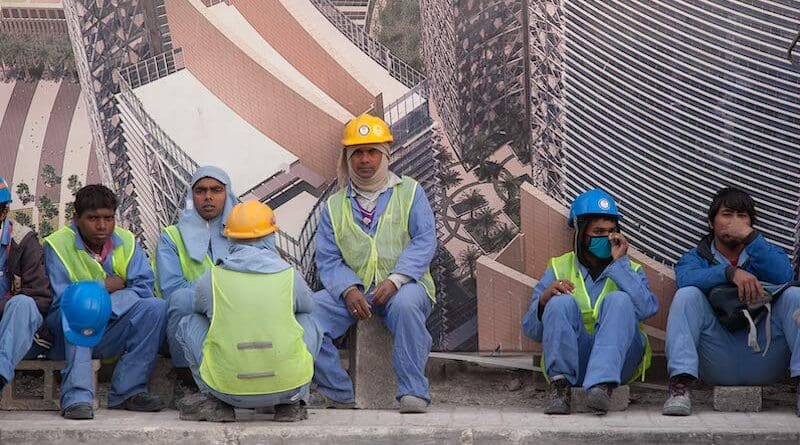
Migrant workers from South Asia in Doha, Qatar. Photo Credit: Alex Sergeev, Wikipedia Commons


By  and 

The long history of India’s international labour migration, is an estimation of 30 million Indians, migrating between 1840 and 1940 with the majority of these migrants visiting the intra-Asian destinations around the Indian Ocean, such as Malaysia, Burma, and Sri Lanka. 

When oil-rich Gulf countries needed workers after the 1973 oil boom, many unlicensed recruiters began operating, especially in Bombay. Reports of abuse and exploitation led the Supreme Court to call for stronger laws, resulting in the 1983 Emigration Act, which focused heavily on regulating recruitment agenciesthrough licensing and registration. However, this Act, created to manage how unskilled workers Indians can emigrate, mostly focused on protecting workers in India before they leave but did not ensure good working conditions once they arrive abroad. Thus, the article will (1) scope the realities of Indian migrants in the “Middle-East Dream,” (2) critically analyze factors that have inhibited change and (3) possibilities of socio-political changes that may better the situation going forward.

The Indian Migrant in the Middle-East

Living conditions for migrant workers are often poor, with most living in isolated labor camps far away from the cities. These camps are overcrowded, and inadequate in infrastructure to support standard living – lack proper  water, sanitation, and transport facilities, etc. They also face extreme weather conditions while working, and many suffer from heatstroke or injury. In the UAE alone, hundreds of migrant workers die or commit suicide every year, with most cases not officially reported. Kuwait led with 23,020 complaints, followed by Saudi Arabia with 9,346, with most complaints revolving around non-payment of wages, denial of labor rights and benefits, denial of residence permits or their renewal, denial of weekly allowances, overtime or weekly holidays and forced long hours.

A 2022 study conducted by the Vital-Signs partnership, a coalition of non-profit organizations from five origin states and Fair Square, a UK-based non-profit, revealed that approximately 10,000 migrant workers from South and Southeast Asian die every year in the Gulf, with more than half of those deaths effectively unexplained. 

Migrant workers are paid much less than locals, with most Gulf countries lacking legislation on minimum wage and conditions of work to protect them. Face delayed payments or even denied to be paid at all, female migrant workers face even more discrimination, with data showing a consistent gendered pay gap, with women paid much less than their male counterparts, even when they have higher qualifications. Domestic workers, who are mostly women, are often excluded from labor laws and lack legal protection.

In many Gulf countries, domestic workers are not even considered part of the labor force, making it difficult to extend labor rights onto them. Many migrant workers have their passports taken away by employers, preventing them from leaving or reporting abuse. They are not allowed to formation of trade unions and discourage strikes. 


This legal exclusion is compounded onto by social exclusion. Such as children of migrant workers are not allowed to attend government schools, and many public spaces like shopping malls, discourage their presence. In some cities, single men, especially from South Asia, are not allowed to live in residential areas meant for families. This leads to a segregation  between local citizens and migrants, making integration nearly impossible. This unofficial segregation not only prevents migrants from integrating into host societies, but also prevents the regular interactions and exchange between the ‘insider’ inhabitants and the ‘outsider’ migrants – separating the two populations neatly, with migrant workers confined to designated ghettoes. 

Indian and International Efforts for Migrant Protection

There is merit in New Delhi’s preference for Government-to-Government (G2G) recruitment  bypassing unscrupulous agents to ensure ethical recruitment. State-run agencies like Kerala-based NORKA Roots and Tamil Nadu’s Overseas Manpower Corporation facilitate ethical migration. The Indian government has also initiated the Pravasi Kaushal Vikas Yojana (PKVY) and Pre-Departure Orientation Training (PDOT) programs for low-skilled workers, who are most vulnerable in host counties. Equipping them with basic language, cultural, legal, and rights-based knowledge, the goal is to reduce exploitation and enhance their ability to integrate into host societies.

Moreover, Indian embassies in GCC (Gulf Cooperation Council) countries have expanded grievance redressal mechanisms, legal assistance services and diasporic outreach. Emergency services under the Indian Community Welfare Fund (ICWF) provide medical aid, shelter, and repatriation support to distressed Indian workers. 

The e-Migrate system, a digital platform launched in 2015 by the Indian Ministry of External Affairs aimed at streamlining and regulating the recruitment of Indian workers to Emigration Check Required (ECR) countries, which mandated employers and recruiting agents to register and obtain legal clearances through the online platform, ensuring greater accountability and transparency by ensuring that the terms and conditions of employment are clearly outlined and verified before departure. Although implementation has been challenging, government regulation ensures financial protection to Indian workers emigrating to ECR countries, covering death and disability, medical expenses, and repatriation costs  making it a critical welfare initiative for vulnerable migrant populations.

The Indian government has entered numerous bilateral agreements with GCC countries to safeguard the rights of Indian-origin migrant laborers. For instance, in 2016, India and the UAE signed a comprehensive MoU to institutionalize the process of worker recruitment, aiming to reduce exploitation by recruitment agents. A similar agreement was signed with Saudi Arabia, the Labor Cooperation Agreement 2014, focusing on transparency in employment contracts and grievance redressal mechanisms. International pressures from migrant-sending countries like India, as well as international agencies like the ILO have also expedited labor reforms in GCC countries, most notably Qatar’s abolition of the kafala (sponsorship) system in 2020 and enactment of minimum wage. 

Impact of Migratory Patterns on Socio-Economic and Political Futurities  

Indian migrants the Government of India estimates that almost 90 per cent of migrants go to the Middle East, constituting 40%, the lion’s share, in terms of foreign remunerations. With the Gulf counties sharing greater cooperative unions, be it in the Gulf Cooperation Council (GCC) or the OPEC, the Middle-Eastern states are heavier in terms of collective bargaining power, not to mention the obvious socio-religious affinities among them.

An estimated half of all migrant labor to the Middle East are South Asians. The  failure of the SAARC (South Asia Association of Regional Cooperation) to stand out as an international actor, with South Asian states active collectively to bargain for safer and fair labor laws and protection In the Middle East. As SAARC remains dysfunctional over internal tensions among its member states, the rights of South Asian migrants to the Middle East – upon whom these states depend heavily on for remittances – remain at risk. 

While migrants have criticized the Indian government for its failure to solicit greater labor regulation and protection –  in terms of fair compensation, medicate, accident compensation, standard living and working conditions. Of the 11.4 million Indian migrants the Government of India estimates that almost 90 per cent of migrants go to the Middle East. This overdependence on the region to suck in Indian laborers gives reason to the Indian government’s approach to tread a fine line between lobbying for improving the working conditions of Indian workers and criticism of GCC governments, so as to retain friendly relations and continue to solicit Middle Eastern investments, Indian citizens contributing back home in term of remittances deserve to be a policy priority. 

Therefore, there is a greater need for the Indian government to solicit concrete human security for Indian-origin laborers, in terms of employment benefits and protection. According to activists, the Emigration Bill 2021 improved on the 1983 law but did little to recognize the rights and contributions of India’s overseas workers. Instead of reflecting four decades of systematic abuse and exploitation overseas, the bill was more an administrative streamlining. The 2021 Bill, Nikhil Eapen, a specialist migration researcher wrote in 2021, “lacks a human rights framework aimed at securing the rights of migrants and their families.” 

While the lack of opportunities back home drive, and lucrative exchange rates for international remittances, as well as high demand for low-cost labor in the service economy, pull Indian migrants to the developed Middle-East (e.g. Saudi Arabia, Qatar, UAE, etc.). In Amit Ray’s “The Enigma of the ‘Indian Model’ of Development” (2015), he noted on the lop-sided economic growth, with rapid expansion of high-end knowledge-intensive/service sector, parallel to the neglect of low-end labor-intensive industry, resulting in the inequality to the extreme: “a prescription for political volatility” and an unsustainable development model. Although the Indian economy has expanded over the last decade, the benefits of development have been lop-sided and unequal, facing a chronic problem of jobless growth. The problem creates a push force/incentivizes international migration for jobseekers. And even as the Middle East fails to implement standard labor practices, the demand for unskilled-and semi-skilled labor continues to draw Indian migrants.  

There has been a simultaneous trend in recent years – a drop in blue-collar migration to the Middle East countered by increase in skilled white collar. Efforts at economic diversification by Middle Eastern governments beyond their overreliance on oil has created a boom in the services industry. With India’s technically-educated and service-oriented youth migrating for better opportunities to the region. Unlike blue-collar employments, the services industry is better regulated by host countries with standard labor compensation and conditions of work. This trend is further solidifies with the massive shift of Indian investment towards the Middle East, especially Dubai, where Indians constitute the largest Foreign Direct Investment (FDI) community, with simultaneous movement of high-networked individuals, form India, increasingly to the Middle East. The low-income taxes, higher standard of life, greater political stability, luxurious lifestyle hubs and economic incentives to by Middle Eastern states to foreign investors has encouraged this movement. 

Migrants also have an impact on both the Middle Easter and South Asian societies – posing a didactic movement in terms of social impact. While the arrival of diverse populations have resulted in increasing religious toleration, acceptance and representation in host countries (e.g. building Hindu temples and churches in UAE, etc.), migrants returning home have also carries a sense of “Arabization,” specifically in terms of the import of Arabic Islam, vis-à-vis religious Farazi and Wahabi movements by migrant laborers, which have served to reinforce Islamization in South Asia, with radical Islam in post-Hasina Bangladesh being a recent example, dislodging more syncretic and flexible Islamic identities and traditions in the region.   

The Indian Dream and the Indian Nightmare 

While sheer enormity of the numbers tends to spin a ‘spiel’ in favor of the economic rewards for Indian migrants, the recent tragic deaths of 46 Indian migrant workers in a fire in an unsafe accommodation block in Kuwait is among the many illustrative cases of poor working conditions and vulnerabilities of this migratory group in the Middle-East. South Asian migrant workers in the Gulf countries, especially those working in construction and domestic jobs, face harsh living and working conditions. As they come on short-term contracts that make it clear they are not welcome to settle or integrate permanently. And, once they arrive, they are met with a difficult reality, with basic human conditions are ignored. 

It is a matter of speculation if the Middle East dream is officially an Indian nightmare. 

These threats to human security and dignity are amplified when instances of passport confiscation by employers make hostages out of migrants. The everyday hazards and structural exploitation of Indian migrants, who themselves come from vulnerable categories places compounding risks. The ‘powerlessness’ is interlocking. With unaware, un-empowered, Indian semi-skilled/unskilled migrants, from vulnerable communities, arriving from situations of low opportunities, are more frightful over the possibility of unemployment as a harsher reality for their family back home. This hampers their ability to bargaining. Further, the nondemocratic monarchical nature of governments in the Middle East also discredits any room for agency-fication,  negotiation, or dissent over the situation by migrants. Where this voicelessness is further hastened by the lack of democratic politics in the region with strong nexus between the economic and political elites in host societies. While the Indian government has taken up such violations with respective countries, India, an emerg-ing economy is put at a tough spot in diplomacy due to its dependence on foreign remittances, with a bulk of it coming from the Middle-East. 

Migration from India to the Middle East provides a commentary on both the place of origin and destination of migration. With unemployment pushing Indian migrates to respond to the demand for unskilled/semi-skilled labor from India see a rapid growth rate of 79 percent of total Indian migrant workers in GCC countries over the two decades. Conversely, the remittances sent back home have caused a shift in the consumption patterns of their families. The solution to the struggles of Indian migrants is not as simple as to discourage migration, but encouraging conditions for secure labor relations for Indian migrates to the Middle East. With nearly 83.1 billion USD or 2.8 percent of India’s national GDP dependent on remittances and  India-Gulf region accounting for 9.3 million expatriates spread over the region, the Indian government not only needs to concentrate on increasing labor skills to meet the increasing demand for skilled labor in GCC markets; but also make diplomatic efforts to induce greater host country responsibility to regulate and ensure fair labor laws and treatment of Indian migrants. 

About the authors:

  •  Allen David Simon is an M.A. (Political Science) candidate at the Postgraduate and Research Department of Political Science, St. Xavier’s College (Autonomous), Kolkata (University of Calcutta). He is a Fellow, Pehli Peedi Fellows Program, The Future of India Foundation; and a Researcher and Academic Projects Coordinator at the Department of Academics, International Association of Political Science Students (hosted by the Department of Political Science, Concordia University, Montréal). He has graduated with B.A. Honors (Political Science) as valedictorian form St. Xavier’s College (Autonomous), Kolkata. Allen is a published commentator on post-colonial Asian political culture, specifically on the politics of identity and demographics.

  •  Sneha Banik is an M.A. (Political Science) candidate at the Postgraduate and Research Department of Political Science, St. Xavier’s College (Autonomous), Kolkata (University of Calcutta). She graduated with B.A. Honors (Political Science) as valedictorian from Loreto College, Kolkata. She has been awarded the Ratan Lal Dasgupta Memorial Gold Medal and Lina Law Memorial Scholarship for her academic merit. She served as the Vice President of Student Council of Loreto College, Kolkata between 2023-24. Her research interests lie in public policy and government legislation.

Allen David Simon

Allen David Simon is an M.A. (Political Science) candidate at the Postgraduate and Research Department of Political Science, St. Xavier’s College (Autonomous), Kolkata (University of Calcutta). He is a Fellow, Pehli Peedi Fellows Program, The Future of India Foundation; and a Researcher and Academic Projects Coordinator at the Department of Academics, International Association of Political Science Students (hosted by the Department of Political Science, Concordia University, Montréal). He has graduated with B.A. Honors (Political Science) as valedictorian form St. Xavier’s College (Autonomous), Kolkata. Allen is a published commentator on post-colonial Asian political culture, specifically on the politics of identity and demographics.