Saturday, July 12, 2025

House Democrats call for urgent review of deadly Texas flooding as Trump tours disaster zone

‘I’ve never seen anything like it. A little narrow river that becomes a monster,’ president says

Gustaf Kilander
in Washington D.C.
Friday 11 July 2025 
The Independen


House Democrats addressed a letter to President Donald Trump and weather infrastructure officials on Friday, expressing “deep concern” about the flooding in Kerr County, Texas, and the “structural shortcomings at the federal, state, and local levels that contributed to the tragic loss of life.”

It comes as Trump toured disaster areas alongside local officials on Friday.

Democratic Reps. Marcy Kaptur of Ohio, Lloyd Doggett of Texas, and Eric Sorenson of Illinois wrote to the president and Laura Grimm, who is performing the duties of the Administrator of the National Oceanic and Atmospheric Administration, as well as Lt. Gen. William Graham Jr., the Chief of Engineers.


“This tragedy echoes a troubling national pattern of accelerating flash flood disasers that have claimed lives,” the members of Congress wrote, noting the 46 killed in New York in September 2021, the 45 who died in July 2022, the 20 killed in Tennessee in August 2021, and the 250 who died across the Southeast in September of last year.


“These events are not anomalies—they are harbingers of a climate-disrupted future,” they stated.
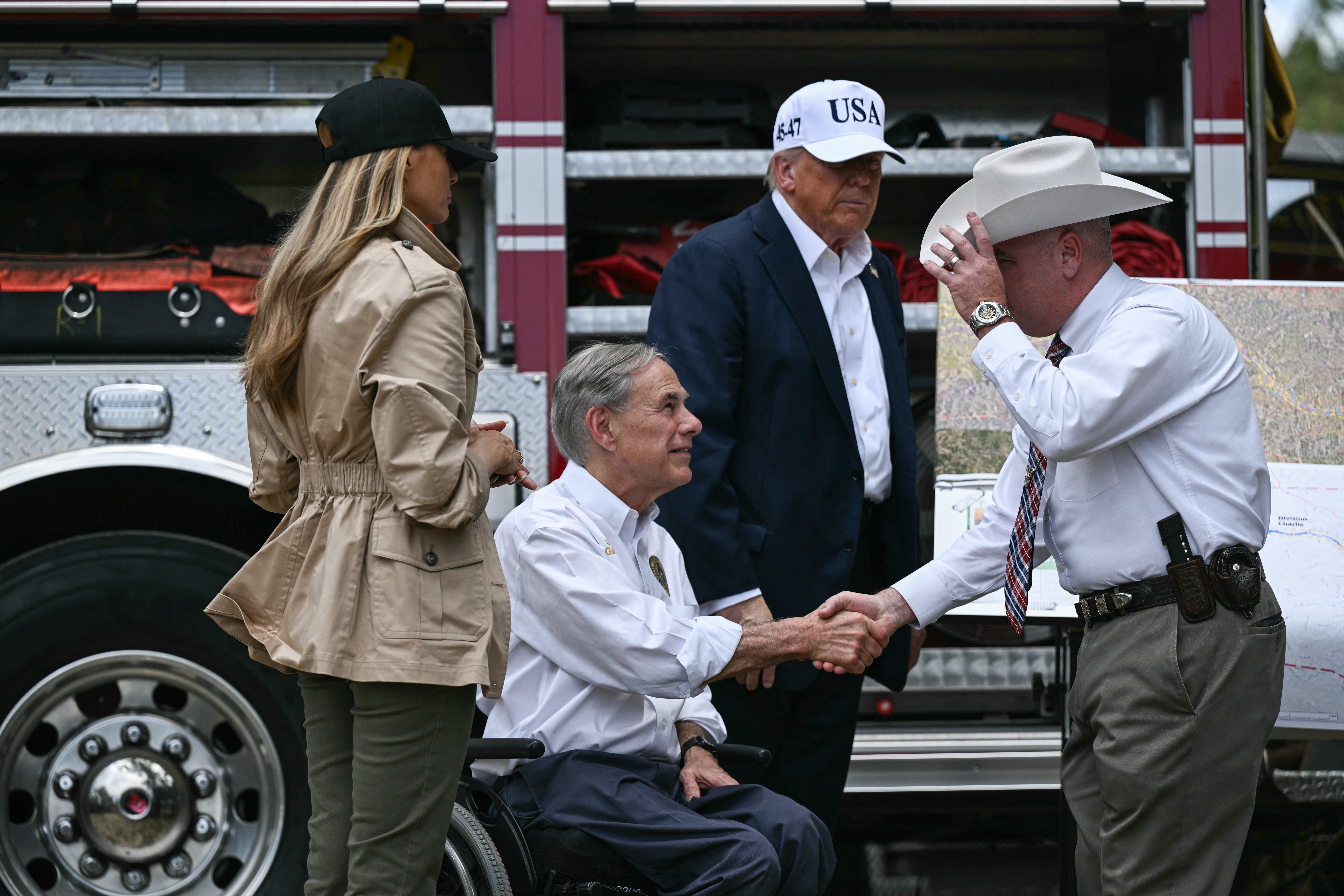

open image in galleryPresident Donald Trump, First Lady Melania Trump and Texas Governor Greg Abbott meet with local officials and first responders in Kerrville, Texas on Friday (Brendan Smialowski/AFP via Getty Images)
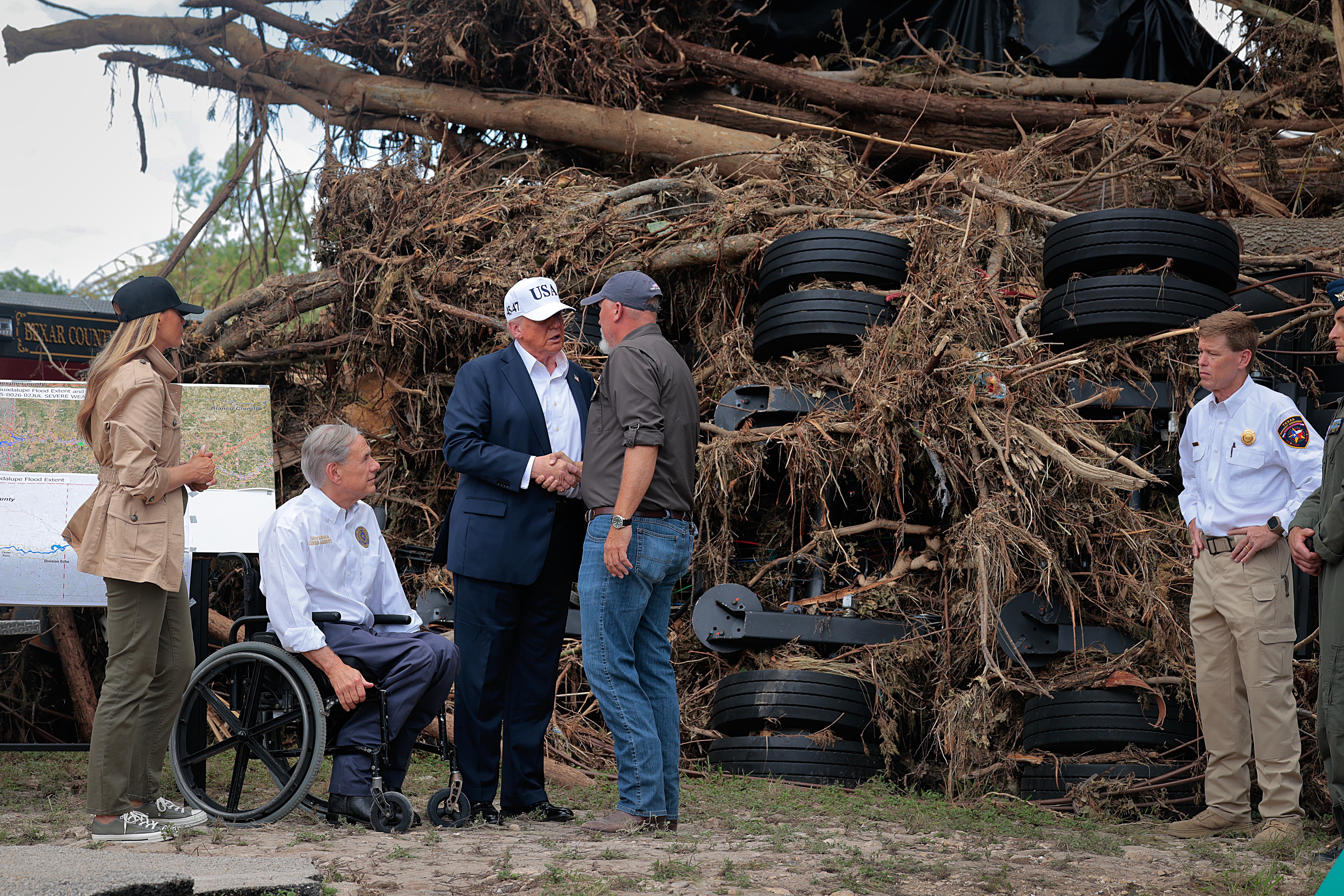

open image in galleryTrump, first lady Melania Trump, and Texas Governor Greg Abbott meet with local emergency services personnel as they survey flood damage along the Guadalupe River (Chip Somodevilla/Getty Images)


Death threats over Texas flooding cartoon force museum journalism event to be postponed

Doggett represents a district in the Austin, Texas area, hours from the flood epicenter in Kerr County. Sorensen is a meteorologist.

They shared concerns that cuts mandated by the Department of Government Efficiency to the National Weather Service had delayed warnings regarding the floods in Texas. At least 121 people have died, and more than 160 remain missing.

“While the National Weather Service (NWS) forecast may have been accurate, accurate weather forecasts are not enough,” the House Democrats wrote. “It is imperative that these warnings are adequately communicated to members of the public and in a way that prompts the appropriate lifesaving action by emergency managers, first responders, and the public at-large. We are concerned that there seems to have been a breakdown at this stage starting with the first flash flood watches issued on Thursday afternoon.”

The lawmakers noted the NWS has lost almost 15 percent of its nationwide staff since January.

“The forecast accuracy and timeliness during this event in Texas was a testament to the dedication of the local NWS staff who flexed their schedules to ensure adequate coverage during such a high-impact event,” they wrote. “That is not a sustainable solution, nor is it reliable enough for the increasing incidence of dangerous weather events.”
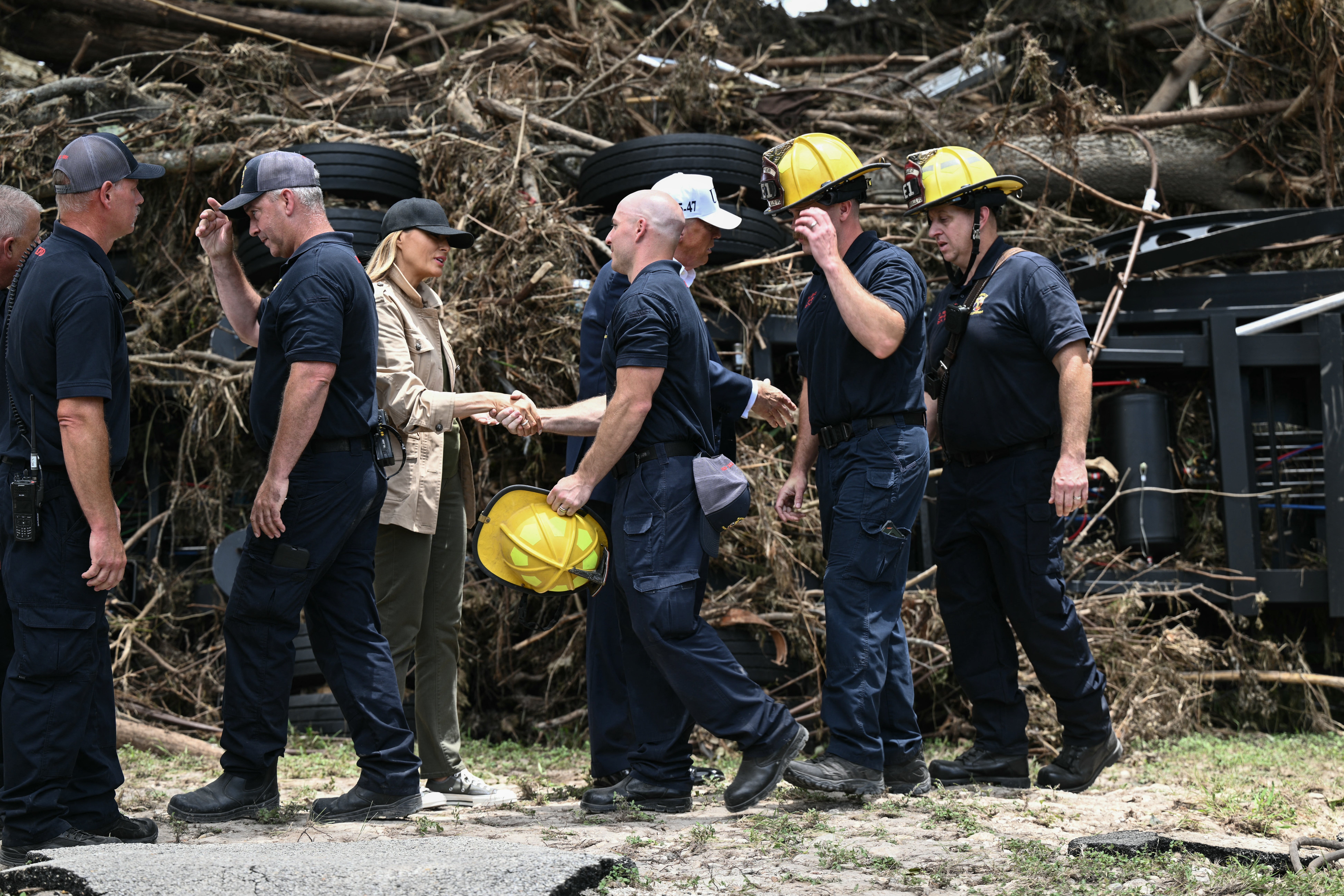

open image in galleryTrump and the first lady greet first responders (Brendan Smialowski/AFP via Getty Images)

The vacancies may have complicated efforts to work with officials on the local levels, The New York Times has reported. Some of the unfilled positions stem from before Trump’s second term.

The legislators called on NOAA and the Army Corps of Engineers to outline plans to adapt federal weather services to what they referred to as “the growing frequency of extreme precipitation events attributable to climate change.”

Trump visited Kerrville on Friday, meeting with Texas officials, as he toured the damage from last week’s deadly flash floods.


Alongside First Lady Melania Trump, the president shook hands with first responders. More than two dozen girls from the Camp Mystic summer camp died in the floods. Trump took part in an aerial tour of the Guadalupe River along with Texas Governor Greg Abbott, Sen. Ted Cruz, and other officials.

Trump visited the state as Texas lawmakers are facing increasing scrutiny over the handling of the floods and the state’s warning systems.

The president took part in a roundtable discussion with local officials, comparing the death toll and devastation to previous natural disasters he has seen during his time in office.
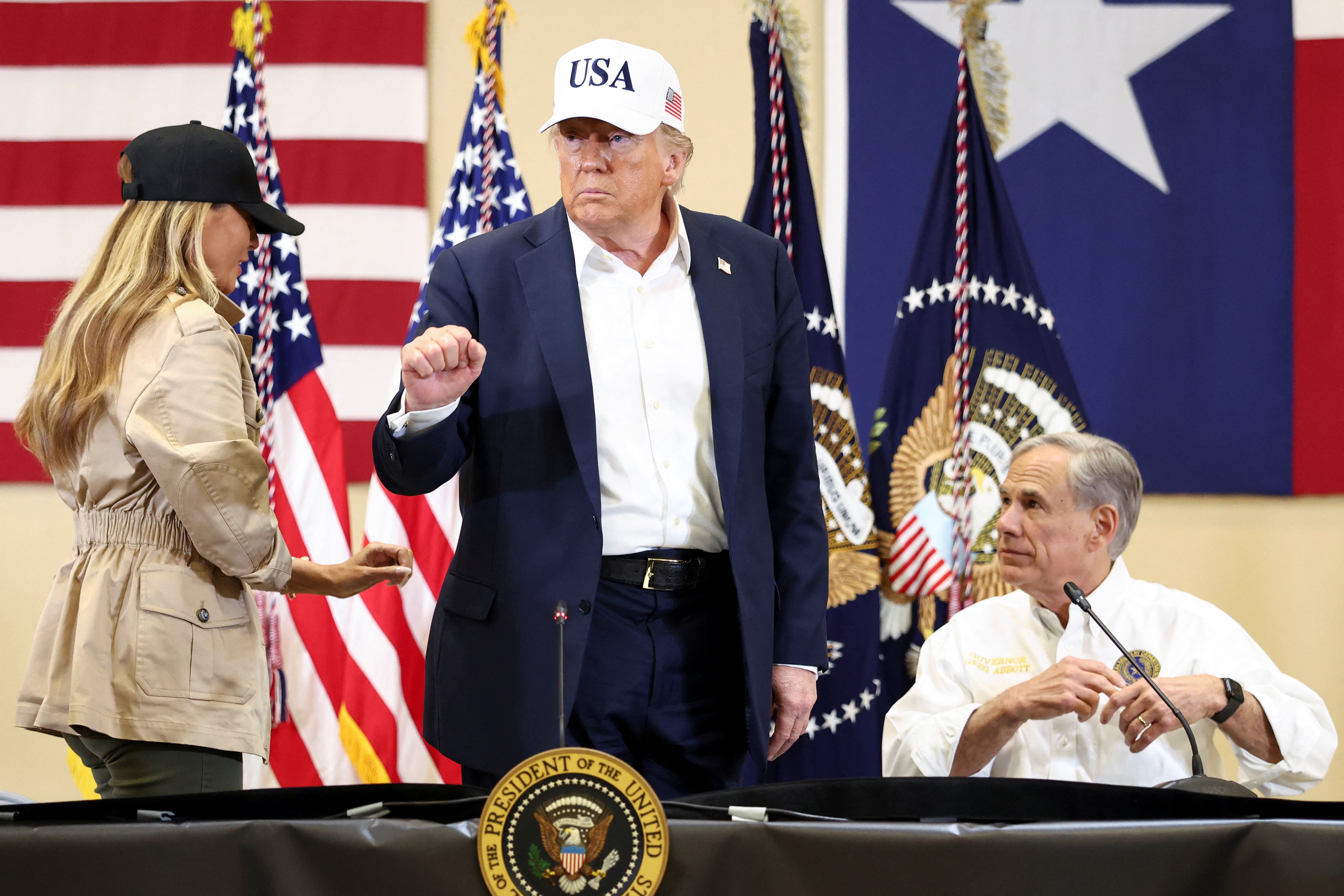

open image in galleryTrump participates in a roundtable with first responders and local officials after catastrophic floods, at Hill Country Youth Center (REUTERS)
“I’ve never seen anything like it,” said Trump. “A little narrow river that becomes a monster.”

He went on to note that “dozens and dozens of precious children” had been “taken from us.”

Phil McGraw, the TV personality known as Dr. Phil, took part in the discussion, saying, "We know psychologically that the number one stressor that we can experience in life is the loss of a child.”

"And the worst situation that we can experience is when it's sudden and when it's violent. That's the worst thing that can happen, stress-wise, in life,” he added.

It was unclear why the TV personality attended the roundtable.

Federal Emergency Management Agency Acting Administrator David Richardson has been absent during the federal response to the floods in Texas, and he was not present for the discussion.

The Trump administration has pushed back against the criticism that its previous cuts led to a slower response amid growing pushback against the administration’s previous calls to eliminate FEMA.

A White House official told NewsNation on Friday that a FEMA review council is planning to “reform” the agency, rather than closing it down.

“While Federal assistance was always intended to supplement state actions, not replace those actions, FEMA’s outsized role created a bloated bureaucracy that disincentivized state investment in their own resilience,” White House spokesperson Abigail Jackson told the outlet.


By 

The US President Donald Trump has created mayhem by his unconventional decisions and launching a massive tariff war, thereby disrupting the world trading system. There are serious questions if such an approach and policy shall help him in his Make American Great Again (MAGA) initiative. In all probability, contrary would be the case.


Asia has emerged a major target of Trump’s tariff as he sent letters to 14 countries in Asia, including US allies, informing them higher import tariffs will come into effect on 1 August unless they reach a deal with the US. Key US allies Japan and South Korea would be hit with 25 per cent tariffs. Other countries including Indonesia, Bangladesh, Thailand, South Africa and Malaysia were slapped duties from 25 per cent to 40 per cent. 

While announcing levies on the 14 countries, Trump hinted for additional negotiations, while at the same time warning that any reprisal steps would be met with a like-for-like response. Interestingly, Singapore was not among the 14 countries to which Trump sent letters. Currently Singapore is subject to the baseline tariff rate of 10 per cent. In May 2025, the US offered to discuss concessions for Singapore on pharmaceutical exports, which make up 10 per cent of the country’s exports to the US. Pharmaceutical goods are currently exempt from the baseline tariff rate on imports to the US. Trump has hinted to review this too. 

Trump’s tariff war with the Asian countries is going to hit the domestic consumers as many items imported from Asia shall either vanish from the shelves or become prohibitively expensive. There is a growing Asian-American population. This segment of the US population is a ready-made customer base for Asian grocery. And, this is growing but would now receive a setback. Ethnic grocery stores and supermarkets in the US generated around $ 55 billion in revenue in 2024. Trump’s tariff threat now threatens to stem their growth. In particular, smaller players would be hit hard. There shall be a price escalation on most of the products sourced from Asia once tariffs kick in. The impact would be direct on the consumers. On Trump’s tariff threat, the Asian community has been stocking up on Asian goods buying rice, cereals, soya sauce etc. The question that arises is: how long such stocks shall last? 

Impact of Trump’s tariff threat on Vietnam                

During the recent BRIC summit in Brazil, Vietnamese Prime Minister Pham Ming Chinh and China’s Premier Li Qiang agreed to boost trade and investment ties between the two countries. Both Vietnam and China are communist countries with similar economic models. The initiative between the two prime ministers was triggered by Trump’s threats to BRICS grouping with an additional 10 per cent tariff if they adopt “anti-American” policies.  

Separately, Vietnam has struck a deal with the US, including lower-than-promised 20 per cent levies on Vietnamese goods. But trans-shipments from third countries through Vietnam will still face a 40 per cent levy as part of the trade deal. Details on the trans-shipment tariffs are yet to be made public, but analysts believe the clause is primarily aimed at components and materials originating from China and then labelled “Made in Vietnam” to skirt US tariffs.


As regards India, Trump has said a mini trade deal is expected to be signed soon. That would be an interim one. In April, Trump announced a 26 per cent retaliatory tariff on Indian goods before pausing implementation pending negotiation. If the deal goes through, lower levies will put New Delhi in an advantageous position as manufacturing could move away from nearby countries with high tariffs like Cambodia, Indonesia and Bangladesh, and into India. Though New Delhi and Washington have been pushing to finalise the deal, disagreements over dairy and agriculture are sticking points. 

The agricultural sector employs half of India’s workforce and contributes to about 18 per cent of the country’s GDP. There are fears that if American farm produce starts flooding the Indian market, vulnerable local farming businesses may perish.

Trump said on 8 July that the US would impose 25 per cent tariffs on Tunisia, Malaysia and Kazakhastan, 30 per cent on South Africa, Bosnia and Herzegovina, 32 per cent on Indonesia, 35 per cent on Serbia and Bangladesh, 36 per cent on Cambodia and Thailand and 40 per cent on Laos and Myanmar. The higher tariffs take effect on August 1and notably will not combine with previously announced sector tariffs such as those on automobiles, steel and aluminium.     

Most countries have been under pressure to conclude deals with the US after Trump in April 1 unleashed a global trade war that has roiled financial markets and sent policymakers scrambling to protect their economies. The temporary reprieve was later extended till August 1, leaving room for negotiations. At times, Trump has remained inconsistent and seems firm on his decision to increase tariffs. He has kept much of the world guessing on the outcome of months of talks with countries hoping to avoid the hefty tariff hikes he has threatened.  

Bangladesh that was embroiled in domestic political turmoil in mid-2024 rushed a team to Washington to have trade talks with Washington. The US is the main export market for Bangladesh’s readymade garments industry, which accounts for more than 80 per cent of its export earnings and employs 4 million people. No wonder, the president of Bangladesh Garment Manufacturers and Exporters Association Mahmud Hasan Khan expressed shock and fears that the increased tariffs would hurt the industry badly.  

Bangladesh has emerged as the world’s second-largest garment manufacturer. The 35 per cent tariffs on Bangladesh would badly hit the country’s textile sector. US companies that source products from Bangladesh range from Levi Strauss to VF Corp. whose brands include Vans, Timberland and The North Face. The office of the United States Trade Representative sent a second draft document for review. The new tariff is more than the 16 per cent already placed on cotton products. It is however, a two percentage point dip from the initial 37 per cent Trump had previously announced in April. The industry has already been hit hard by a student-led revolution that toppled the government in 2024.  

Similarly, South African President Cyril Ramaphosa said the 30 per cent US tariff rate was unjustified, given that 77 per cent of US goods enter South Africa with no tariffs. China has until August 12 to reach a deal with the White House to prevent Trump from reinstating additional import curbs after Washington and Beijing agreed in June on a tariff framework. In the meantime, China warned the US against reinstating tariffs on its goods, and said it could retaliate against countries striking deals with the US to cut China out of supply chains. 

As regards the European Union, Trump was rather circumspect and did not send a letter setting out higher tariffs. Though Trump had a “good exchange” with the EC President Ursula von der Leyen, it was not clear if there was a breakthrough in talks to stave off tariff hikes on the US’ largest trading partner. The EU was torn over whether to push for a quick and light trade deal or leverage its economic clout to negotiate a better outcome. Trump indicated that he could impose a 17 per cent tariff on EU food and agriculture exports. He also threatened leaders of developing nations in the BRICS group, who were meeting in Brazil, with an additional 10 per cent if they adopt “anti-American” policies.     

As regards Indonesia, it sent its top negotiator to Washington as it planned to increase its agricultural and energy imports from the US. Indonesia’s palm oil exports to the US may fall due to the threatened 32 per cent levies. Palm oil is among the country’s top exports to the US. If implemented, the tariff could lead to a 15 per cent to 20 per cent drop in palm oil shipments to the US. The competitiveness of palm oil will decline against other vegetable oils such as soybean oil and rapeseed oil, especially if countries exporting these vegetable oils receive lower tariffs. Indonesian palm oil products, which account for 85 per cent of US palm imports, may also lose market share to Malaysian palm oil, which faces a lower tariff.

What does one read from Trump’s tariff war and his bargaining strategy since he has extended the timeline? In all probability, one can decipher that negotiations are likely not to have reached the White House’s desired outcome. The delays also could suggest that Trump does not quite have the amount of leverage that he thought he had. If this is so, the trade partners of the US need not unnecessarily panic. If the White House does not get the expected result, another extension announcement by Trump would not be a surprise.          

 Japan and South Korea face the heat 

The most unfortunate part of Trump’s tariff war was that he increased tariffs for two of the closest US allies, though he left room for breakthrough in negotiations. As regards South Korea, the rate remained the same as Trump initially announced, while the rate for Japan is 1 point higher than first announced on April 2. Both Japan and South Korea are powerhouse suppliers and now face sharply higher triff6s from August 1, marking a new phase in the trade war that Trump launched. The imposition of the 25 per cent levy on US importers of all goods from key Asian allies – Japan and South Korea – rattled Wall Street. With elections scheduled for the Upper House on July 20, Japanese Prime Minister Shigeru Ishiba is under pressure. He said that some progress had been made on avoiding higher tariffs of up to 35 per cent that Trump had suggested. However, Ishiba’s strategy on negotiations remains unclear. 

In Japan, Ishiba reacted by saying Trump’s letter was “genuinely regrettable”. The US has criticised Japan for not opening its market to American rice and vehicles enough. Ishiba promised to “actively seek” an agreement that benefits both countries, while protecting Japan’s national interest.  

In South Korea, the Trade and Industry Minister Yeo Han-koo said he planned to step up trade talks with the US, and that exemptions or reductions in auto and steel tariffs must be included in any trade deal. He expected a “mutually beneficial result”, while using this as a chance to improve domestic systems and regulations to resolve the trade deficit. South Korea is one of the world’s biggest shipbuilders. Yeo Han-koo wanted that exemptions or cuts in auto and steel tariffs must be included in a trade deal with the US. Trump announced that he would impose 25 per cent tariffs on South Korea from August 1. South Korea is keen to use the extended period to improve domestic systems and regulations to resolve the trade deficit that is a major interest of the US, and advance key industries through a manufacturing renaissance partnership between the two countries.   

South Korea earned a record surplus of $55.6 billion from trade with the US in 2024, up 25% from 2023, led by rising car exports. Trump therefore reminded the new South Korean President Lee Jae Myung that the relationship has been far from reciprocal. He invited South Korea to present a proposal to open its closed trading markets and eliminate tariff and non-tariff barriers. South Korea’s top trade envoy rushed to Washington for trade and defense talks as Asia’s fourth-largest economy raced to seek an exemption from Trump’s threatened tariffs. As negotiations with partner countries continue, the world waits to hear what would be Trump’s final position on the tariff war that he has unleashed with a large number of countries once the deadline expires.   

In a further move to intensify his tariff war, Trump targeted smaller trade partners and sent letters on 10 July 2025 to the leaders of seven other nations. None of them – the Philippines, Brunei, Moldova, Algeria, Libya, Iraq and Sri Lanka – is a major industrial rival to the US. Most economic analyses say the tariffs will worsen inflationary pressures and subtract from economic growth, but Trump has used the taxes as a way to assert the diplomatic and financial power of the US on both rivals and allies. His administration is promising that the taxes on imports will lower trade imbalances, offset some of the cost of the tax cuts he signed into law and cause factory jobs to return to the US.

According to the Census Bureau of the US, in 2024 the US ran a trade imbalance on goods of $1.4 billion with Algeria, $5.9 billion with Iraq, $900 million with Libya, $4.9 billion with the Philippines, $2.6 billion with Sri Lanka, $111 million with Brunei and $85 million with Moldova. The imbalance represents the difference between what the US exported to those countries and what it imported. Taken together, the trade imbalances with those seven countries are essentially a rounding error in a US economy with a gross domestic product of $30 trillion. Trump threatened additional tariffs on any country that attempts to retaliate.

For Trump, trade can be used as a diplomatic tool; a foundation for him to settle disputes between India and Pakistan, as well as Kosovo and Serbia. As mentioned in his letters, tariff rates were based on “common sense” and trade imbalances. But his letter to Brazil indicated otherwise. Trump singled out Brazil for import taxes of 50 per cent for its treatment of its former president Jair Bolsonaro, showing that personal grudges rather than simple economics are a driving force in Trump’s use of tariffs. Trump cited ‘witch hunt’ trial against the country’s former president for his drastic step. 

Trump avoided his standard form letter with Brazil, specifically tying his tariffs to the trial of Bolsonaro, who is charged with trying to overturn his 2022 election loss. Earlier, Trump had described Bolsonaro as a friend and hosted him at his Mar-a-Lago resort when both were in power in 2020. Trump addressed his tariff letter to Brazilian President Luiz Inacio Lula da Silva, who bested Bolsonaro in 2022. 

The US-Brazil relations are looking ugly at the moment as Lula responded in a forceful statement saying Trump’s tariffs would trigger the country’s economic reciprocity law, which allows trade, investment and intellectual property agreements to be suspended against countries that harm Brazil’s competitiveness. For record, the US has had a trade surplus of more than $410 billion with Brazil over the past 15 years. Therefore, Lula’s assertion seems credible. But for Trump, personal relations and economic fundamentals weigh similarly. The tariffs starting August 1 would be a dramatic increase from the 10 per cent that Trump levied on Brazil. In addition to oil, Brazil sells orange juice, coffee, iron and steel to the US, among other products. The US ran a $6.8 billion trade surplus with Brazil in 2025. The rationale of Trump’s argument to justify economic emergency that the US was at risk because of persistent trade imbalances seems therefore flawed when applied to Brazil. Moreover, linking tariffs to the Bolsonaro trial and US exporting more to Brazil than it imports is poor diplomacy and thus Trump has erred.   


Dr. Rajaram Panda

Dr. Rajaram Panda is former Senior Fellow at Pradhanmantri Memorial Museum and Library (PMML). Earlier Dr Panda was Senior Fellow at MP-IDSA and ICCR Chair Professor at Reitaku University, JAPAN. His latest book "India and Japan: Past, Present and Future" was published in 2024 by Knowledge World. E-mail: rajaram.panda@gmail.com