Tuesday, July 22, 2025


Everllence Cuts Emissions from Own Production by 63%

Everllence

Published Jul 22, 2025 12:29 PM by The Maritime Executive


[By: Everllence]

Everllence has made its corporate responsibility transparent with the publication of its sustainability report for financial year 2024. The report shows concrete progress, including a 63 percent reduction in CO2 emissions from its own global production, compared to 2018.

At the heart of the report is Everllence’s revised sustainability strategy, built on three core pillars: “Decarbonization is our business” encompasses the company’s solutions that help customers reduce emissions in energy-intensive sectors such as shipping, energy, and industry. “Nature” stands for responsible resource use, emission reductions at production sites, and the protection of biodiversity. The third pillar, “People and Society”, brings together initiatives for good working conditions, diversity, and social responsibility.

This strategic realignment is based on a double materiality analysis, incorporating external perspectives and additional topics and data to enhance transparency in reporting.

Dr. Uwe Lauber – CEO of Everllence –  said: “With our sustainability strategy, we are explicitly taking responsibility for the environment and society, embedding this commitment into our corporate strategy, ‘Moving big things to zero.’ Decarbonizing the global economy is our business. We firmly believe that sustainability and climate protection are key drivers of transformation for German mechanical engineering and the German economy.”

Progress across all three strategic areas
As a leading provider of decarbonization solutions, Everllence supports key industries in reducing hard-to-abate emissions. These products are expected to account for at least half of the company’s revenue by 2030; in 2024, 15 percent of incoming orders were already attributable to green tech. A striking example is the large-scale heat pump in Esbjerg, Denmark, which Everllence has successfully commissioned. It replaces a coal-fired power plant, supplies 25,000 households with climate-neutral district heating, and reduces CO? emissions by 120,000 tons annually.

Everllence also aims to halve its own production-related CO? emissions (Scope 1 and Scope 2) by 2030. This target has already been exceeded: compared to the 2018 baseline, and emissions have been reduced by 63 percent. Overall, the company’s greenhouse-gas footprint improved by 13 percent year-on-year, despite nearly constant energy consumption and production hours. This corresponds to a reduction of 6,147 tons of CO?, achieved through energy efficiency measures, a switch to carbon-neutral energy sources, and expanded capacity for self-generated solar power.

Dr. Johanna Rauchenberger, Vice President Quality, HSE, Sustainability & Product Safety, said: “By far the greatest leverage for climate protection comes from the use of our products and solutions by our customers. A single container ship powered by LNG instead of conventional fuel can reduce its climate-damaging emissions by up to 30 percent. If it runs on an alternative fuel like ammonia, it emits no CO? at all. We track these so-called ‘Scope 4’ emissions and will incorporate them into our future corporate responsibility reporting. We’re also proud to have significantly reduced the CO? emissions generated during the manufacturing of these products in our own facilities — exceeding our targets in this area.”

Dietmar Pinkernell, Head of Sustainability & Product Safety, added: “Staying on track to meet our 2030 reduction targets remains a challenge —especially due to factors like the availability of alternative fuels and our own growth. But we are already in a strong position and will continue to push our initiatives forward with determination.”

A standout initiative from the company’s workplace health management program is “Frauengesundheit erleben” (English: ‘experience women’s health’), which received the Human Resources Excellence Award in 2024. The campaign promotes the well-being of female employees by providing targeted knowledge on gender-specific health challenges through workshops, lectures, and personalized health assessments.

Further information is available in the 2024 Sustainability Report: MAN Energy Solutions Sustainability Report 2024

The products and services herein described in this press release are not endorsed by The Maritime Executive.

 

Historic UK Royal Mail Ship St. Helena to Become Expedition Cruise Ship

St. Helena supply ship
St. Helena transported passengers and cargo to the remote British outpost in the middle of the South Atlantic (Burgh House photo)

Published Jul 22, 2025 6:09 PM by The Maritime Executive


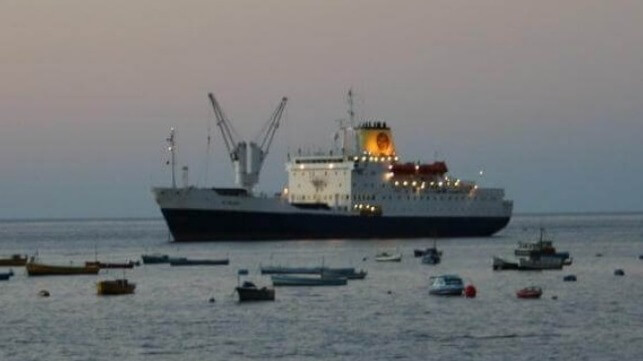
RMS St. Helena was a quirky little ship that built a loyal following in the traveling public while fulfilling her original mission of transporting cargo and passengers to the remote island of Saint Helena, a British Overseas Territory located nearly in the middle of the South Atlantic. Retired in 2018 as one of the last operating Royal Mail Ships (RMS), and having spent the past few years as a supply ship, she is now set to make a comeback in 2026 into the expedition cruise market.

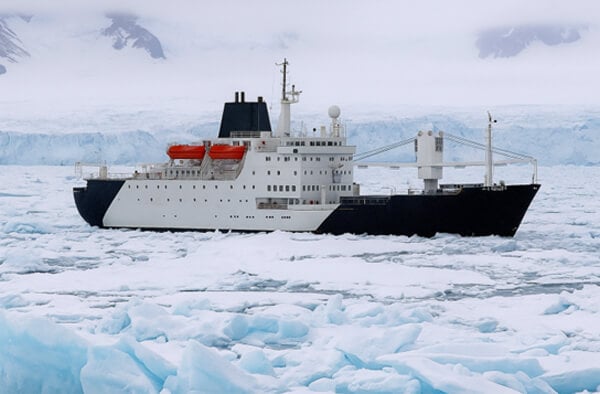
Terna Nova Expeditions was founded in 2024, and they report they have selected St. Helena because of her unique characteristics. She has an ice-strengthened hull, deep draft, powerful engines, cranes used for cargo handling, and spaces that they say will make her ideal for Antarctica. The company refers to the historic ship as a “rugged, versatile expedition platform” that will be uniquely capable and a character-rich small expedition ship. 

“There’s something special about a ship with history, character, and a renewed sense of purpose. St Helena embodies what Terra Nova is all about … going further with less, and doing it with meaning,” says Greg Carter, Founder of Terra Nova Expeditions.


departing Cape Town on another supply run (Neil Fantom photo - CC BY 2.0)


St. Helena was built at the Appledore Shipyard in the UK and commissioned in 1990 to provide the vital service to the island located more than 1,100 miles west of Africa. The island had no airport, so the ship was its only consistent connection with the outside world. She is 344 feet (105 meters) in length and approximately 6,800 gross tons. She plods along at 14 knots. Her service was primarily between Cape Town and Saint Helena, and continued to Ascension Island. Lacking port facilities, she was designed to be self-sufficient with cargo cranes and anchored off the islands, lightering cargo to shore. 

She was retired in 2018 after the island’s first airport was commissioned, and the historic ship cheated the scrappers, finding a repurposing. She was briefly used as a vessel-based armory in the Gulf of Oman and later sold to the car racing group Extreme E, which used her as a transport for materials and cars. The company extensively renovated the ship in 2022, retrofitting her engines, updating her systems, and refurbishing her cabins and public spaces.

“The RMS St Helena is a true gem for those who love real adventure on a budget with a touch of nostalgia,” says General Manager Andrea Bagi. “She’s a ship with stories in her soul – and a cool, modern edge. A spectacular renovation has brought her to life with modern and stylish cabins and inviting spaces throughout.” 


St. Helena will be repurposed to become an expedition cruise ship (Terra Nova Explorations)


Terra Nova plans to offer 10-day cruises starting in December 2026 from Ushuaia, Argentina, crossing the Drake Passage to cruise the South Shetland Islands and Antarctic Peninsula. Capacity will be limited to just 98 passengers in 51 cabins. The ship will have 81 crew and staff and will retain her UK registry. They highlight a blending of traditional seafaring heritage with a contemporary expedition experience.

The ship will carry 12 Zodiacs for landings and close-up experiences. Among the unique adventures Terra Nova reports it will offer, 40 guests per trip will have the opportunity to spend an overnight camping on the Antarctic continent. Passengers will also have opportunities for kayaking, taking the “polar plunge,” snowshoeing, and trekking. The company will also offer trips on the world’s first sail/cruise expedition boat, the Icebird, a sailing yacht with space for six passengers.
 

Top picture by Burgh House (public domain photo from 2009)


India Targets Fake Seafarer Training Certificates in Sudden Crackdown

The country's shipping directorate is hitting back at fraud, and by extension, at exploitative crewing practices

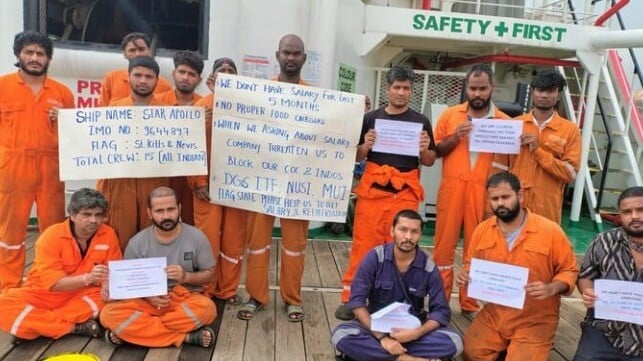
Indian crewmembers aboard an abandoned vessel in Indonesia. Fly-by-night crewing agents that lure seafarers with fake documents are often associated with abusive employment, according to labor advocates (ITF file image)
Indian crewmembers aboard an abandoned vessel in Indonesia. Fly-by-night crewing agents who lure seafarers with fake documents are sometimes associated with abusive shipboard employment, according to labor advocates (ITF file image)

Published Jul 21, 2025 7:52 PM by The Maritime Executive


India's shipping directorate is cracking down on the age-old problem of fake seafarer training certificates, sourced from low-quality foreign registries and sold to Indian mariners by crewing agents. Indian officers and engineers who hold such documents will be banned from sailing, and the agents who market the credentials will likely lose their licenses to do business. 

Unlike domestic-focused employment markets like the U.S. - where virtually all mariners obtain U.S. Coast Guard-issued licenses and work within the U.S. registry - Indian nationals can get their STCW certifications outside of India if they plan to sail foreign-flag (as about 80% do). They can get their licenses at another flag administration, then sail on a foreign ship by working with a Recruitment and Placement Service License (RPSL) crewing agency. That arrangement is common enough, but it breaks down when the documentation is fraudulently issued to personnel who are not in fact qualified. 

The Directorate General of Shipping says that some RPSLs have lured seafarers into sailing on fraudulent certificates - for example, offering ratings a fraudulent Certificate of Proficiency if they ship out with a particular agency. These cases are often found in tandem with abusive employment conditions on substandard ships, Indian seafarer advocates say, and the flag states involved in issuing these fake certificates are notoriously associated with noncompliance. In other cases, fraudulent, unregistered agents have offered to sell "packages" of fake course certificates from unauthorized maritime institutes - including schools which simply do not exist. 

"These activities which are attributable to a few unscrupulous agents have not only caused disruption to the lives of seafarers who are facing the investigation by the authorities, but have the potential to cause more damages in the future if not suitably addressed at this stage," the directorate wrote. 

The agency now requires shipowners, managers and agents to make sure that all of their licensed personnel have valid STCW certifications from flag states recognized and authorized by India. This includes checking course certificates for authenticity and providing guidance to any seafarers found to be in violation of the code.  

Indian seafarers have been reminded to sail on valid licenses only, or face the penalty of disbarment from the profession for a minimum of two years. 

For some less reputable RPSLs, the requirement is an existential threat, crewing agency CEO Capt. Sanjay Prashar told the Economic Times. "They all will be suspended, and I won't be surprised if D.G. Shipping files a legal case against them as well," he said. He raised the prospect that some vessels could even be arrested on arrival in India if fraudulently-licensed crewmembers were found aboard. 

The rule could also lead to disruption for some legitimately-licensed crewmembers, industry sources told Economic Times, simply because the list of approved flag administrations is not comprehensive. The D.G. Shipping regulation limits approved foreign credentialing to the flag states of Malaysia, UAE, South Korea, Sweden, the Commonwealth countries and Iran - leaving out the biggest flags like Panama, the Marshall Islands and Liberia. 


Video: Boater Arrested After “Hit-and-Run” with Famed Aircraft Carrier

boat hitting aircraft carrier
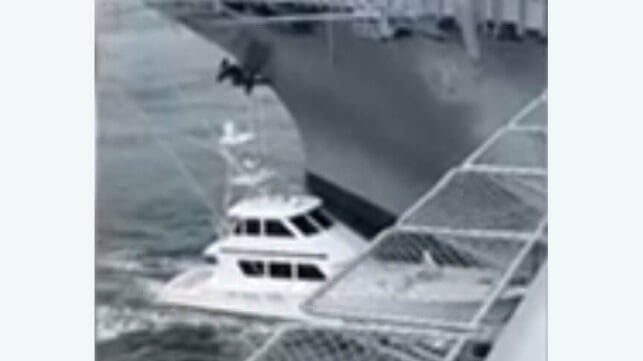
CCTV caught scenes of the pleasure boat fitting the carrier Midway

Published Jul 21, 2025 7:30 PM by The Maritime Executive


Port of San Diego Harbor Police Department responded to reports of a pleasure craft that was sailing erratically and allided with the famed aircraft carrier Midway, which is now a museum ship in San Diego harbor. The incident happened on Friday, July 18, 2025, at approximately 11:54 a.m.

According to a statement from the police, by the time they arrived at the museum ship, the pleasure craft had departed. Surveillance video reviewed by investigators identified the vessel as Offshore Lifestyle, a 65-foot cabin cruiser. In the harbor video released by the police, the boat is seen colliding head-on with the port side hull of USS Midway.


After the collision, the vessel fled the scene and was later located near the Coronado Ferry Landing in San Diego Bay. Officers contacted all seven individuals onboard and identified the vessel’s operator. The police report that they arrested Frank D’Anna, a 40-year-old adult.  He was booked and placed in the county jail on charges of violating the Harbor and Navigation Code Boating Under the Influence (BUI), Harbors and Navigation Code Hit and Run, and Harbors and Navigation Code Operating Vessel with BAC Over .08.

USS Midway was the longest-serving aircraft carrier in the 20th century. She was built in just 17 months but missed World War II by one week, being commissioned on September 10, 1945. She saw various duties in the 1950s before being deployed on her first combat mission in 1965, when she was sent to support the U.S. in Vietnam. She remained active in Vietnam, including during the fall of Saigon in April 1975. In 1990, Midway deployed to the Persian Gulf after the Iraqi invasion of Kuwait and was deployed for the ensuing Operation Desert Storm. She was decommissioned in 1992 and, as of 2004, opened as a museum ship.

Museum officials reported the carrier suffered no damage when it was struck by the pleasure boat. Operations continued as normal.


Master of Burned-Out Ferry Barcelona V Named as a Suspect

Police are examining discrepancies in the number of passengers on the manifest

Ferry fire Barcelona V
Image via Indonesian social media

Published Jul 22, 2025 5:04 PM by The Maritime Executive


The master of the Indonesian ferry Barcelona V has been named as a suspect in connection with the fire that burned through the vessel last weekend. 

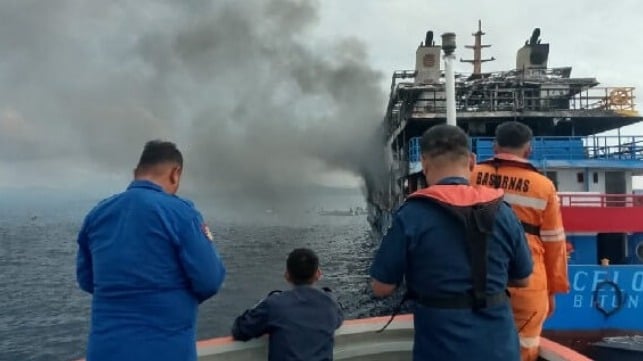
On Sunday afternoon, a major fire broke out aboard Barcelona V off the coast of Talisei Island, forcing the passengers and crew to abandon ship into the water.

The captain, named only as "IB," is under investigation because of passenger manifest irregularities and possible non-compliance with emergency procedures during the fire and evacuation, according to local media. 

"We are still investigating the possible involvement of other crew members. Evidence collection is currently ongoing. We are continuing to work to ensure this case is completed and submitted to the courts as soon as possible," North Sulawesi Regional Police Senior Commissioner Eko Wimpiyanto told local media. 

Video from the scene shows passengers engaging in apparent self-directed evacuation into the water, without use of the vessel's liferafts. At least one passenger told local outlet Kompas that there were not enough lifejackets on board the vessel, and that passengers panicked. The survivors stayed afloat in the water for hours while awaiting rescue.  

Two people remain missing, and a search is still under way off the coast of the island of Talisei. 

The questions about the vessel's manifest stem from differing passenger counts. Only 280 personnel, including 16 crewmembers, were listed on the official manifest. SAR agency Basarnas recorded the rescue of 575 people from the water, plus three fatalities and two missing for 580 personnel in total. Excess unregistered passengers are a recurring theme in Southeast Asian ferry casualties, notably in the sinking of the Philippine ferry Dona Paz - the deadliest peacetime maritime accident in history. 

Transportation Minister Dudy Purwagandhi has asked the police to investigate the details of the Barcelona V's manifest. 13 agencies are involved in the post-accident inquiry, according to Indonesia's Coordinating Ministry for Political, Legal and Security Affairs. 

"This is no small incident. It's a stark warning for all of us to improve. All parties, from the central government to the regional governments, from regulators to operators, must be of one mind: Maritime safety is paramount," said ministry spokesman Frenky Riupassa in a statement. 


Top Russian University Offers a Program in Sanctions Evasion

Sanctions evasion techniques keep Russia's shadowy tankers moving (file image courtesy Finnish Border Guard)
Sanctions evasion expertise keeps Russia's shadowy energy exports moving (file image courtesy Finnish Border Guard)

Published Jul 22, 2025 7:45 PM by The Maritime Executive


In a busy week in the world of sanctions - with President Trump threatening 100% tariffs on those evading US sanctions on Russia, the European Union announcing an agreement on its 18th round of anti-Russian sanctions, and the UK launching a further 137 listings of dark fleet entities - Moscow’s Higher School of Economics is offering a new academic program.

The School, one of Moscow’s most respected academic institutions, is offering a new two-year program in sanctions circumvention, equipping students with the skills to "identify and assess the risks of sanctions and other measures imposed by supervisory authorities on companies." The dissident website T-invariant identified another three courses at the School with similar areas of focus, with varying length and cost. 

The two-year program is offering 20 seats reserved for Russian citizens and two for international students, with annual tuition of about $6,000.

“Universities are reacting to short-term demand,” Andrey Yakovlev, a former HSE vice rector, told T-invariant. “That doesn't mean this is a stable, long-term direction."

Professor Igor Lipsits from the School told the Moscow Times that the initiative was part of a broader Kremlin program to build long-term resilience under international isolation. “Everyone is seeing how Iran has lived under sanctions for 40 years. We may spend a long time living in this kind of a hostile environment, with all kinds of restrictions, and with increasing regulations over Russia’s business presence abroad. The Russian economy will need to adapt to life under sanctions for a generation," he said. 

Report: Tanker Turns Away from Indian Refinery as Sanctions Create Pressure

tanker at sea
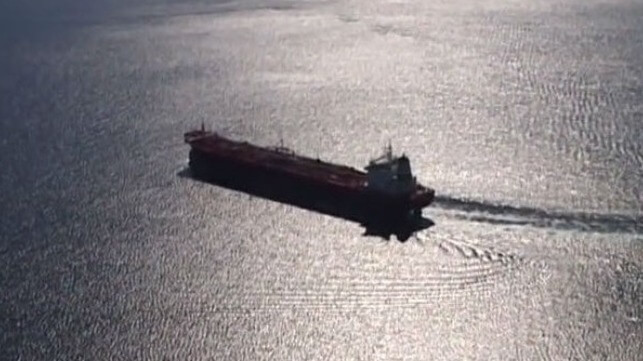
Reports indicate a tanker departed an Indian refinery without loading after the sanctions were announced (file photo)

Published Jul 22, 2025 3:54 PM by The Maritime Executive


Media reports are highlighting the likely first impact from the European Union’s move last Friday (July 18) to further expand the sanctions on the Russian energy industry. President of the European Commission Ursula von der Leyen had commented that the goal was to continue to increase the pressure on Russia, and now both Bloomberg and Reuters are reporting that at least one tanker has turned away from an Indian refinery included on the new sanctions list.

India’s Nayara Energy was included in the listing by the EU due to the 49 percent investment stake held by Russia’s Rosneft. The EU reported it was targeting both Russian and international companies managing shadow fleet vessels, traders of Russian crude oil, as well as a major customer of the shadow fleet, a refinery in India with Rosneft as its main shareholder.

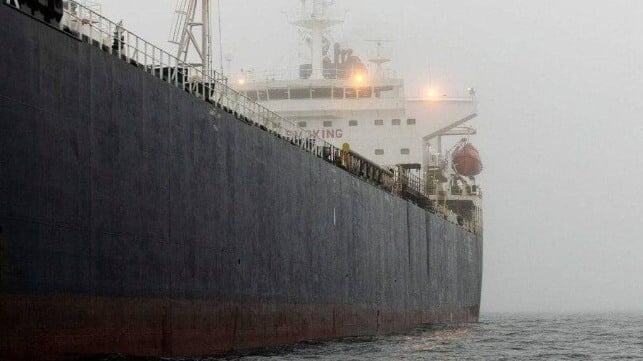
The Marshall Islands-flagged crude oil tanker Talara (73,371 dwt) is reported to have been under charter to BP and inbound to India’s Vadinar port. It is believed, according to Reuters, that it was to load a cargo of ultra-low sulfur diesel fuel on July 21 to be transported to Africa. Both Reuters and Bloomberg are confirming the tanker made an about-face and left the port without loading the cargo. Reuters says the tanker was placed back on the charter market, available for pickups in India or the Middle East.

It is likely the first sign of a “bite” from the sanctions, with Reuters highlighting, however, that several other tankers are scheduled to arrive at the Nayara Energy terminal. It points out that the company, in a statement, called the sanctions “unjust and unilateral.” Bloomberg reports Rosneft called the EU sanctions “unjustified and illegal.”

The EU, however, is highlighting that its actions are having an impact, but they can also be reversed when the ships abide by the restriction. It says as part of the 18th package that “the EU has accepted to remove three vessels from its list of sanctioned vessels following firm commitments that these LNG tankers will no longer engage in the transport of Russian energy to the Russian Yamal and Arctic 2 projects for which they had originally been commissioned.”

The EU in May listed three tankers operated by Japan’s Mitsui O.S.K. Lines. The vessels, North Light, North Moon, and North Ocean, are state-of-the-art carriers completed in late 2024 for the trade. MOL said when the vessels were listed that it was assessing the impact while promising to comply with applicable laws, regulations, and rules.

The Head of the Office of the President of Ukraine, Andriy Yermak, announced yesterday, however, that the Bahamas is also following the lead of the European Union and imposing restrictions on its ship registry. 

"The Bahamas are officially depriving the Russian tanker fleet of its flag," Yermak announced on Telegram. “This is a blow not only to the sanction circumvention schemes, but also to the entire Russian economy, which is based on shadow oil and gas flows. The Russian Federation tried to hide its presence in world waters under foreign flags, fictitious owners. But even these loopholes are being closed.”

It is unclear how many tankers were in the Bahamas registry from the shadow fleet. United Against a Nuclear Iran (UANI) listed the Bahamas at the bottom of its ranking of flags for Iranian shadow fleet tankers, and the Bahamas has rarely, if ever, been mentioned for the Russian shadow fleet. Still, it is seen as another step in the efforts to increase pressure on sanction evasion efforts.


UK Sanctions 137 Tankers and Traders for Involvement in Moving Russian Oil

One of the sanctioned entities, LME Trading DMCC, is an anchor tenant in one of Dubai's most glamorous new office towers (DMCC file image)
One of the sanctioned entities, LME Trading DMCC, was listed as an anchor tenant in one of Dubai's most glamorous new office towers (DMCC file image)

Published Jul 21, 2025 6:04 PM by The Maritime Executive


The UK has taken another swipe at Russia's energy exports with a fresh set of sanctions on 135 oil tankers, as well as two companies that enable the "shadow fleet" trade. According to the UK Foreign Office, the vessels on the list have handled $24 billion worth of oil cargoes for Russia since the beginning of the invasion of Ukraine, funneling revenue to the Kremlin and its defense establishment. 

"As Putin continues to stall and delay on serious peace talks, we will not stand idly by. We will continue to use the full might of our sanctions regime to ratchet up economic pressure at every turn and stand side by side with Ukraine," said UK Foreign Secretary David Lammy. "New sanctions will further dismantle Putin's shadow fleet and drain Russia's war chest of its critical oil revenues."

The list includes familiar vessel names from the Sovcomflot fleet, once well-regarded for its quality but now relegated to trading in the dark. These ships formerly resided in popular open registries, but most are now flying flags of "extreme convenience" for shadow fleet participants - notably Comoros and Gabon, which have absorbed a large share of sanctions-busting tankers. 

The UK also joined the European Union in sanctioning a UAE-based company - Intershipping Services LLC - that markets the Gabon and Comoros registries to customers in the shadow fleet trade. The fleet of Gabon, the fastest-growing flag state, now handles an estimated $10 billion in seaborne trade for Russia per year. 

The UK also named Litasco Middle East DMCC (known as LME Trading DMCC), a company with ties to Lukoil, Russia's second-largest crude exporter. According to Russian investigative reporting outlet The Insider, Litasco Middle East was by far the biggest buyer of Russian oil priced above the G7 price cap last year, handling about 170 million barrels in 2024 for Surgutneftegaz and Lukoil - about $2 billion worth of trade. Like the overwhelming majority of participants in Russia's shadowy oil trade, LME is based in the UAE. 

In a related action on Friday, the European Union expanded its Russia sanctions list to include dozens of new entities, including Iranian trader Hossein Shamkhani, director of UAE-based Admiral Shipping - another firm linked to the trade. "[Shamkani] uses the company Milavous Group Ltd to blend crude oil with various petroleum products from Russia and to rebrand for exporting purposes, thereby concealing their origin. Additionally, as Director of the company Admiral Shipping, he is involved in transporting and selling Russian crude oil," the European Council asserted in its listing. 

TRUMP ANTI-DEI MISOGYNY 

First Female Leader of US Naval Academy Replaced by Marine Corps Officer

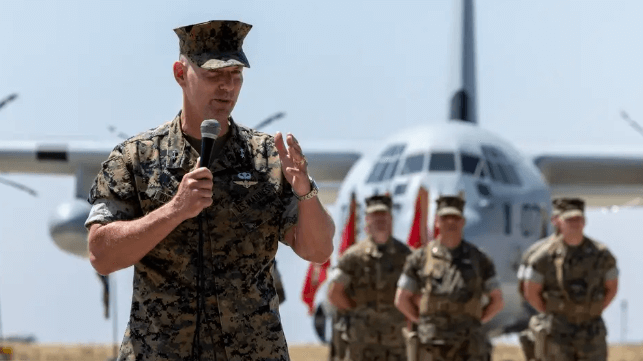
Marine Corps Lt. Gen. Michael J. Borgschulte (USMC file image)

Published Jul 20, 2025 8:53 PM by The Maritime Executive


For the first time in 180 years, a Marine Corps officer has been appointed to run the U.S. Naval Academy. 

Marine Corps Lt. Gen. Michael J. Borgschulte - a helicopter pilot who rose through the ranks to become the Marine Corps' top HR official - has been selected to replace current superintendent Vice Adm. Yvette M. Davids, a career surface warfare officer. Davids has been reassigned to the Pentagon to become the new Deputy CNO for Operations, Plans, Strategy, and Warfighting Development. By law, the Secretary of the Navy will have to request a waiver so that she can transfer to the new post. 

Though Davids has been renominated to a high-level role at the Pentagon, it is the fourth time that a "first female" leader in American maritime affairs has been removed from a prominent position by the Trump administration. She joins Commandant Adm. Linda Fagan (USCG), CNO Adm. Lisa Franchetti (USN) and USMMA superintendent Rear Adm. Joanna Nunan (USCG, ret'd.), who were all dismissed from their posts ahead of schedule this year. (Rear Adm. Ann Phillips (USN), the first female Maritime Administrator, also resigned shortly before Trump took office.)

Though Borgschulte and Davids were classmates at the U.S. Naval Academy in the late 1980s, the two appointees are markedly different in all other respects. Borgschulte played linebacker on the Academy's football team, picked the Marine Corps career option rather than the Navy, then earned his wings as an AH-1 Cobra attack helicopter pilot (his call sign was reportedly "Meat"). He served overseas during Operation Iraqi Freedom and accumulated 700 combat flight hours, followed by command of a helicopter unit in Afghanistan. He currently serves as the Marine Corps' deputy commandant for manpower and reserve affairs, responsible for all HR policy and recruitment. 

Davids went the Navy route and became a career surface warfare officer, serving tours aboard destroyer USS David R. Ray, cruiser USS Normandy, frigate USS Higgins, and destroyer USS Benfold. Her first seagoing command was the Oliver Hazard Perry-class frigate USS Curtis during Operations Enduring Freedom and Iraqi Freedom, followed by command of cruiser USS Bunker Hill and commander of the Nimitz Carrier Strike Group. She served in a variety of senior roles in D.C., including at the office of the deputy chief of naval operations for Information, Plans, and Strategy - the command that she will be nominated to run after leaving the academy. 

"Vice Adm. Davids has commanded at every level and has led with distinction in some of the most complex security environments of our time. Her strategic vision and operational depth will be an exceptional asset to the Navy and the Department of Defense," said Navy Secretary John Phelan in a statement. 


Competition Grows for U.S. MRO Jobs as Third Korean Group Targets Work

Korean shipyard
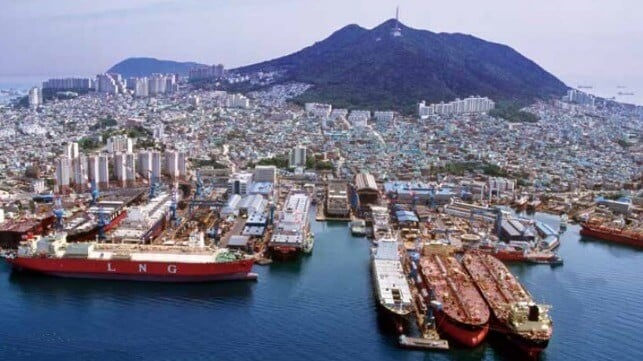
Midsize shipyard HJ Heavy Industries looks to enter the lucrative MRO segment through a newly built cluster of companies (HJ Heavy Industries)

Published Jul 22, 2025 4:56 PM by The Maritime Executive


Competition continues to grow among the shipyards as the U.S. moves to expand its use of foreign shipyards for the maintenance, repair, and overhaul (MRO) contracts. Viewed as a lucrative market, Korea’s mid-sized builder HJ Heavy Industries reports it plans to enter the competition after forming an “MRO Cluster Council,” to realize opportunities in the sector.

HJ Heavy Industries notes it has been building and repairing vessels for the maritime defense industry since 1974, completing work on over 1,200 ships. It estimates the value of the market for U.S. Navy-related MRO at $14.5 billion, with additional opportunities elsewhere internationally.

The shipyard has established a cluster including local shipbuilding and equipment companies to promote the MRO opportunities. It has brought together 10 companies from the region around Busan and Gyeongnam, which it says represent key elements of the work. It includes block manufacturing, various steel structures, ship parts, piping, and electrical equipment suppliers. 

The company notes that more vendors are seeking to enter the space as subcontractors and suppliers. It plans to compete for contracts and can also support the other major shipyards in executing contracts. It expects that if it is successful in completing a U.S. Navy Ship Maintenance and Repair Agreement (MRSA), it will be able to accelerate its entry into the overseas markets in general.

HD Hyundai Heavy Industries was the first to successfully achieve certification for the program in 2024, but was quickly followed by Hanwha Ocean. Korea’s Chosun Business reports Hyundai’s docks were occupied in 2024, so it first began competing in 2025, but so far has not won contracts, likely due to higher pricing. The outlet says the projects are smaller in scale and do not require high levels of technology, making them more price sensitive than other work.

Hanwha Ocean has succeeded quickly in the space, winning two contracts in the second half of 2024, and recently a third project, which is expected to start in the coming weeks. Chosun Business reports the U.S. has only bid a total of four projects, with Hanwha Ocean winning three and the fourth going to ST Engineering in Singapore. HD Hyundai reportedly bid for and lost two projects in 2025. Japanese yards are also said to be bidding for the contracts.

Korea looks to leverage its deep expertise in shipbuilding and reports it is well-positioned to help the Trump administration meet its goals to expand the U.S. Navy and improve the execution of repairs and overhauls. The Korean yards also expect to increase business as the USTR moves forward with its plans to impose fees on Chinese-built ships in an effort to break China’s dominance in global shipbuilding.

The products and services herein described in this press release are not endorsed by The Maritime Executive.
 

Grimaldi Names First of 10 Giant, Ammonia-Ready Car Carriers

car carrier
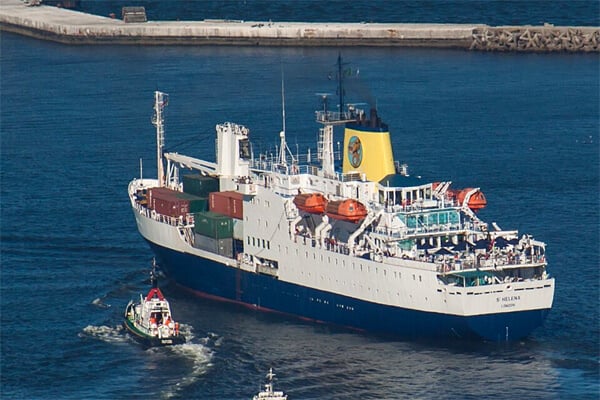
Grimaldi Shanghai is the first to receive RINA's ammonia-ready notation among other technological features (Grimaldi)

Published Jul 22, 2025 7:19 PM by The Maritime Executive


Grimaldi Group is marking a major expansion of its car carrier operations along with the launch of what the company is calling “a true technological gem.” During a naming ceremony on July 21 at China Merchants Heavy Industry’s shipyard in Jiangsu, the company highlighted the technological features of the innovative vessel, which was designed in partnership with the naval architecture firm Knud E. Hansen.

The new Grande Shanghai is the first of ten next-generation PCTC (Pure Car & Truck Carrier) vessels the company has on order from China Merchants. The first five will have a capacity of 9,000 units, and the second five will be increased to have a capacity of 9,800 units, making them among the largest vehicle carriers currently in service. (Wallenius Wilhelmsen has vessels on order in China that, when delivered, will have a capacity of 11,500 units.) 

The new ships are a large expansion for Grimaldi, with nearly 20 percent more capacity than its largest car carriers, the Grande Torino class (7,700 CEU). Grimaldi operates nine smaller PCTCs as well as seven of the Grande Torino class. The company has a total fleet of 1530 vessels ranging from Conros to Ro/Pax, Ro/Ro, and ferries.

In addition to being the group’s first vessels to receive the “ammonia-ready” notation from RINA, the new vehicle carriers incorporate other new technologies. Grimaldi reports they are the first PCTC vessels to be fitted with a gate rudder, which features two foil blades positioned on either side of the propeller to improve propulsion efficiency and maneuverability.

“The Grande Shanghai stands out as a true technological gem, combining high cargo capacity and environmental sustainability. Compared to the previous car carrier generation, she reduces fuel consumption per cargo unit transported by 50 percent,” says Grimaldi. 

The ship is 93,145 gross tons with a length of 220 meters (721 feet). She will operate at a speed of 18 knots. She has 14 decks for vehicle transport and is designed to carry both electric and traditional fuel vehicles.

Among the other technologies incorporated into the design are mega lithium batteries with a total power of 5 MWh, 2,500 square meters of solar panels, and cold ironing capabilities to use with shoreside electricity where available. It also has energy optimization systems, silicon-based hull coatings to reduce drag, Air Lubrication for the hull, and an optimized hull design. It is fitted with smart ventilation and air conditioning controls, an electronically controlled engine with exhaust gas cleaning, and a selective catalytic reduction system.

The company points to the vessel as the first of a new generation of more sustainable transports that are innovative and efficient.


Wind-Assisted Propulsion Expands to LR2s with Landmark Dual-Fuel Order

wind propulsion on dual-fuel tanker
Union Maritime's new tankers will be the first dual-fuel LR2 with wind-assisted propuslion (Bar Technologies)

Published Jul 22, 2025 7:47 PM by The Maritime Executive


In what is believed to be the first application of wind-assisted propulsion combined with a dual-fuel tanker, the UK’s Bar Technologies reports it has confirmed what it calls a landmark order for its WindWing technology to be installed on two new LR2 dual-fuel tankers to be built in China. It follows the recent first installation of its technology on a conventional newbuild LR2 tanker, and the company says it further demonstrates the move of wind-assisted propulsion into the mainstream.

“Fitting WindWings to tankers of this type breaks new ground for wind propulsion,” says John Cooper, CEO of BAR Technologies. “It proves the technology can scale and slot alongside dual-fuel systems as a serious, practical tool for decarbonizing even the most energy-intensive vessel types. Wind is no longer an experiment or a future option; it’s a proven fuel source that’s ready to deliver real impact today.” 

Flagged under the Marshall Islands and classed by Bureau Veritas Marine & Offshore, the vessels to be named Suzuka and Long Beach for Union Maritime (UML) will each be equipped with two 37.5-meter (123-foot) WindWings. The vessels, which will be 250-meter (820-foot) long tankers, are being designed by China’s SDARI and constructed by Xiamen Shipbuilding Industry (XSI). Steel cutting is scheduled for November 2025, with delivery in Q1 2027.

The two 37.5-meter WindWings units the company projects will deliver an average of three tonnes of daily fuel savings, translating to annual CO? reductions of around 2300 tonnes per tanker.

The company also says that this LR2 deployment is particularly significant as this class of tankers is widely used for transporting refined petroleum and chemicals globally. Integrating wind propulsion into such a high-utilisation vessel class, Bar Tech believes signals a step change, moving WindWings and wind-assisted propulsion from innovation to infrastructure.

Union Maritime took delivery in June of the new Brands Hatch, a 114,000 dwt Aframax tanker was the first to be fitted with wind-assisted propulsion. Bar Technologies reports that the vessel's early performance exceeds expectations.

These newbuilds are expected to enter service ahead of the IMO’s 2030 emissions reduction targets, offering early compliance benefits and long-term operational efficiencies.