Friday, August 01, 2025


Greek protesters block military cargo bound for Israel

Protesters gather at Piraeus port to block a shipment believed to be destined for Israel for military purposes.

Protesters gather at Piraeus port to block a shipment believed to be destined for Israel for military purposes. Photo by Sotiria Georgiadou. Used with permission.

Despite the lingering summer heat in Athens, Greek protesters gathered at the port of Piraeus on the night of July 16th to block the loading of military cargo suspected to be bound for Israel, part of a growing wave of similar demonstrations. The protest focused on the “Ever Golden” cargo ship, which activists believed was carrying steel intended for Israeli military use. Organized by Greek trade unions, leftist groups, anarchists, and communist collectives, the protest reflected the mounting public anger over what many see as Greece’s complicity in Israel’s ongoing assault on Gaza.

In a powerful act of solidarity, protesters attempted to delay port operations, seeking to prevent material support for violence and to raise awareness about Greece's role in the conflict. Protesters filled the piers with Palestinian flags, keffiyehs, and T-shirts bearing the slogan “Free Palestine,” chanting, among other slogans, “No cooperation with Israel – no port for genocide.”

A Greek user, likely affiliated with the group featured in the video, expresses solidarity with the protestors at Piraeus:

At the demonstration, a wide coalition of Greek citizens rallied against what they viewed as unacceptable support for Israel’s actions against Gaza. Activists surrounded the port, lit flares, chanted slogans of solidarity with Palestine, and demanded that Greece end its involvement in facilitating military exports.

Τhe dockworkers union (ENEDEP) at Piraeus Container Terminal, owned by the Greek state and operated by Piraeus Port Authority (PPA), majority owned by China COSCO Shipping, played a key role in organizing the protest. In a public statement, the union announced that it would not allow the five containers, suspected of containing military-grade steel, to be unloaded while the ship remained docked. According to Union President Markos Bekris, the cargo was believed to be headed to Israel. He warned that if the shipment continued, the union would be prepared to escalate the protests.

Markos Bekris addresses protesters gathered at the port of Piraeus. Photo by Sofia Georgiadou.

Markos Bekris addresses protesters gathered at the port of Piraeus. Photo by Sotiria Georgiadou. Used with permission.

The Greek public's growing anti-war stance

At the protest, they held banners condemning both the Greek and Israeli governments. Organizers framed their actions not only as anti-Zionist, but also as a rejection of Greece’s growing role as a logistical enabler of foreign wars.

The message from protesters was clear: the Greek people do not want to be complicit in what is widely seen as genocide in Gaza. Demonstrators condemned the New Democracy government, led by Prime Minister Kyriakos Mitsotakis, for facilitating military exports to Israel and for maintaining close relations with Israeli Prime Minister Benjamin Netanyahu, even as reports of indiscriminate bombings of civilians in Gaza increase.

The Mitsotakis-Netanyahu coalition

Many activists pointed to the deepening ties between Greece and Israel as a source of frustration and outrage. While Prime Minister Mitsotakis publicly described Israeli actions in Gaza as “unjustifiable” back in May, his government has continued to ramp up military and strategic cooperation with the Israeli state.

According to reports, Greece has significantly increased its purchase of Israeli military technology, including drone systems, missile defence equipment, and cyber surveillance tools. Joint military exercises between the two countries have also become more frequent, particularly in the Eastern Mediterranean Sea, where energy exploration and regional tensions have made such alliances increasingly strategic.

These developments go beyond pragmatic diplomacy and instead signal ideological alignment. In the eyes of protesters, Mitsotakis is not simply cooperating with Netanyahu but actively supporting him.

Beyond the issue of direct military support, Greece’s silence on the humanitarian crisis in Gaza has become a major point of public discontent. The New Democracy government has not offered substantial humanitarian aid to the people of Gaza, opened safe channels for Palestinian refugees, or applied significant diplomatic pressure on Israel to halt its offensive.

While most of the European Union's foreign ministers supported a Dutch proposal to review the bloc’s ties with Israel over its actions in Gaza, Greece and Cyprus did not join the initiative. Greece also did not co-sign a joint statement, endorsed by 22 other countries, condemning Israel for creating famine conditions in Gaza.

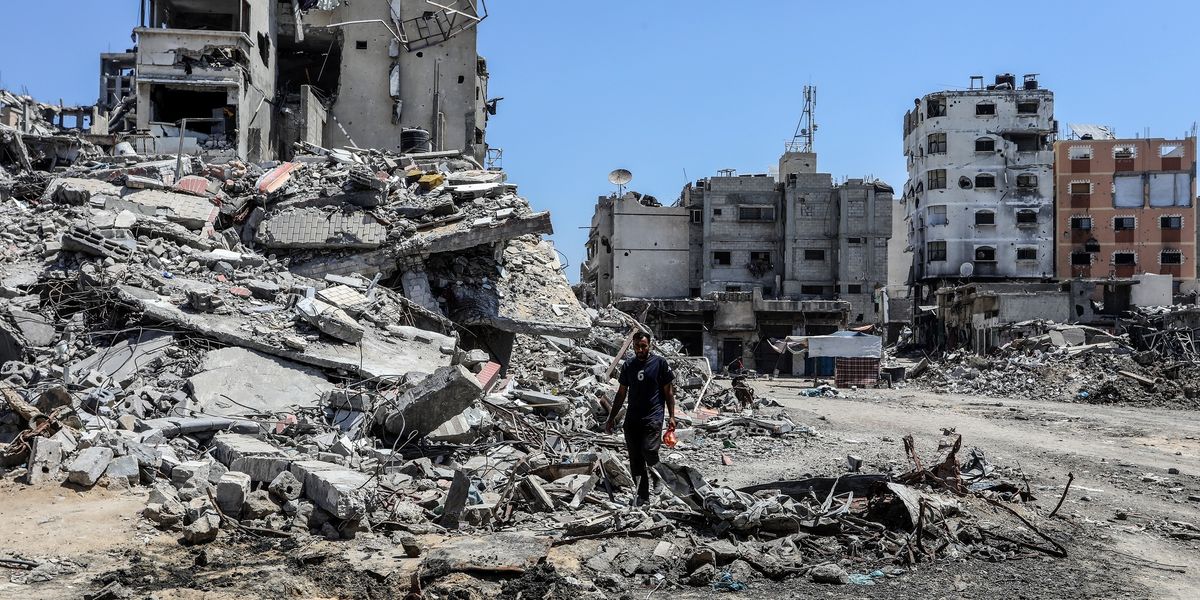
Activists view this as a blatant disregard for human, and specifically Palestinian, life. While Gaza faces mass displacement, infrastructure destruction, forced starvation, and what numerous observers, including UN officials, have called genocide, the Greek government has remained unmoved.

This indifference, many argue, mirrors the government’s broader policies targeting vulnerable populations. Just weeks before the July protests, the Greek government announced it would suspend the processing of asylum applications from North Africa, citing a recent increase in arrivals on southern Greek Aegean Sea islands.

This decision fits into a broader anti-migrant stance that has characterized the New Democracy administration: fortified borders, the criminalization of migration, and systematic pushbacks. One could argue that the government’s treatment of displaced people parallels its neglect of Palestinians, both seen as disposable populations in service of geopolitical interests.

Militarism, empire logic, and local resistance

For many demonstrators, opposition to military shipments is part of a larger political stance. The Piraeus protest was not only about Gaza; it was a rejection of imperialist agendas and Greece’s alignment with NATO, the EU, and Israel.

The location of the protest is also symbolically significant. COSCO’s privatized container terminal, largely owned by Chinese state interests, underscores growing discontent with foreign control over Greek infrastructure. In this sense, the protest represents a multi-dimensional struggle: economic, geopolitical, and ethical.

As of July 20, the “Ever Golden” remained docked at Piraeus. ENEDEP continued to uphold its position of non-cooperation. While symbolic, this act of resistance is also practical and strategic. By targeting the logistics of military conflict, including ports and freight terminals, Greek protesters are adopting classic yet effective methods of direct action.

Their call to action serves as a reminder that resistance is not only expressed through marches but also through organized disruption and solidarity.


Slovenia bans arms trade with Israel over its actions in Gaza

Last updated: August 1, 2025 | 
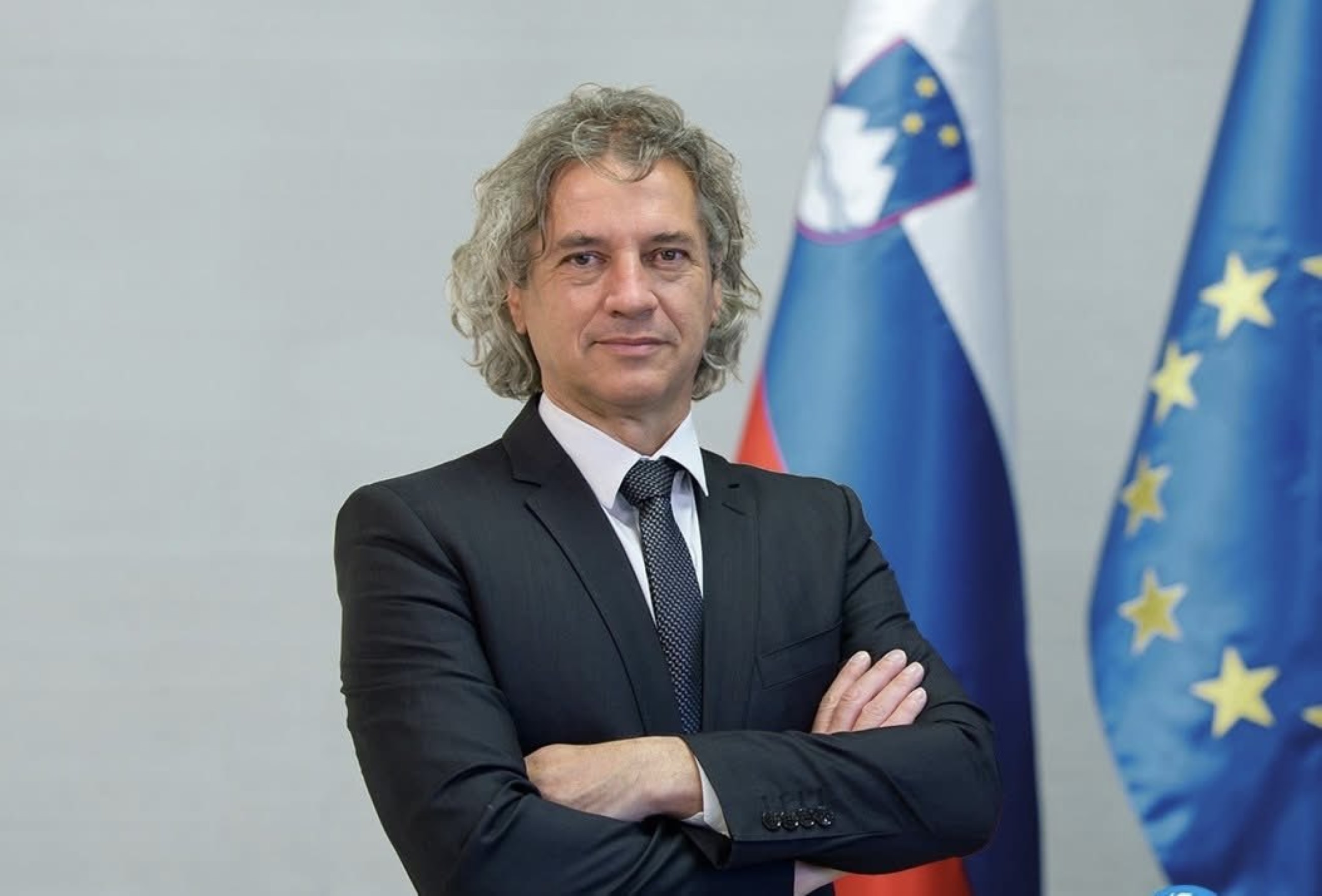
The measure was announced by Prime Minister Robert Golob after a government session. Photo / X

Slovenia has announced that it will ban the import, export and transit of all weapons to and from Israel in response to the country's actions in Gaza.

Slovenia, which often criticised Israel over reported atrocities in Gaza, called the ban, announced late on Thursday, "the first such move by a European Union member state.”

Early in July, Slovenia banned two far-right Israeli ministers from entering the country, accusing them of inciting "extreme violence and serious violations of the human rights of Palestinians” with "their genocidal statements.”

In June 2024, Slovenia’s parliament passed a decree recognizing Palestinian statehood, following in the steps of Ireland, Norway and Spain.

Tiny Slovenia has almost no arms trade with Israel and the decision to ban weapons trade with Israel is mainly a diplomatic message meant to step up pressure as international outrage over Israel's conduct and images of starvation in Gaza grows.

Last year, UK Prime Minister Keir Starmer’s government suspended exports of some weapons to Israel because they could be used to break international law. Spain says it halted arms sales to Israel in October 2023. The Netherlands has also cracked down on weapons trade with Israel, and there are court cases in France and Belgium around weapons trade with Israel, but none of the three has announced a blanket ban on all trade and transit similar to what Slovenia announced Friday.

Slovenian Prime Minister Robert Golob has said on multiple occasions that Slovenia would act unilaterally in the absence of concerted EU action, the state STA news agency reported.

"The EU is currently incapable of completing this task due to internal discord and disunity,” the government press release said.

"The result thereof is shameful: People in Gaza are dying because they are systematically denied humanitarian aid. They are dying under rubble, without access to drinking water, food and basic health care.”

Associated Press
Admin asked if US approves Gaza annex plan, says go ask Israel


As Jerusalem looks to change war tactics, Washington defers


Stavroula Pabst
Aug 01, 2025
RESPONSIBLE STATECRAFT

As reports bubble that Jerusalem is mulling annexing the Gaza Strip, the State Department is once again deferring to Israel.

RS asked the State Department Tuesday to confirm Haaretz reporting from Monday, where Israeli PM Benjamin Netanyahu said that the administration approved possible plans to annex the Gaza Strip. The State Department Press Office responded simply, via email: “We’d refer you to Israeli officials.”

Al Monitor reported Tuesday that Israeli officials visited Washington to consult with the Trump administration to discuss the idea, along with over several possible proposals for Gaza’s future.

But U.S. support of such plans, including the annexation scheme, remain unclear.

Haaretz reported that Netanyahu told Israeli ministers that the Trump administration supports an annexation plan, where the Israeli Prime Minister said Ron Dermer, Israel's Minister for Strategic Affairs, shared the plan with U.S. Secretary of State Marco Rubio. Asked Thursday whether the U.S. would support Israel annexing Gaza, State Department Deputy Spokesperson Tommy Pigott simply said, “I’m not going to speculate or preview where these discussions may go.”

The annexation murmurs come amid growing international outrage over Israel’s ongoing blockade resulting in starvation of the Gaza Strip — and comments from people like Sen. Lindsey Graham (R-S.C.), that signal there may soon be a major shift in Israeli strategy.

On Sunday, Graham suggested Israel would ramp up its military offensive against Gaza in a manner comparable to U.S. military actions during the Second World War, after which the territory could be given over to other Arabs to control. “They’re going to do in Gaza what we did in Tokyo and Berlin. Take the place by force and start over again, presenting a better future for the Palestinians, hopefully having the Arabs take over the West Bank and Gaza,” Graham said.

Ominously, Netanyahu himself wrote on X last week that, "together with our U.S. allies, we are now considering alternative options to bring our hostages home, end Hamas's terror rule, and secure lasting peace for Israel and our region.” In that statement, he stressed that “Hamas is the obstacle to a hostage release deal.”

Netanyahu did not clarify what those “alternative options” were.


Stavroula Pabst
Stavroula Pabst is a reporter for Responsible Statecraft.

The views expressed by authors on Responsible Statecraft do not necessarily reflect those of the Quincy Institute or its associates.


Israel’s moves to expel Gazans, annex West Bank unacceptable: Turkish foreign minister


August 1, 2025 
MEMO


Turkish Minister of Foreign Affairs Hakan Fidan attends Trilateral Meeting between Malaysia, Turkiye and ASEAN Secretariat in Kuala Lumpur, Malaysia on July 11, 2025. [Murat Gök – Anadolu Agency]

Israel’s actions to expel Gazans from their lands and annex the West Bank are unacceptable, Turkish Foreign Minister Hakan Fidan told Hamas Shura Council head Mohammed Ismail Darwish on Friday, Anadolu reports.

Fidan met with a Hamas delegation led by Darwish in Istanbul, according to the Turkish Foreign Ministry sources.

The Hamas delegation stressed that the amount of humanitarian aid allowed into Gaza falls far short of the needs and criticized Israel’s uncompromising stance in ceasefire negotiations.

Fidan stated that Israel continues a policy of genocide by starving the people of Gaza, adding that this approach reflects that the government of Benjamin Netanyahu is not serious about reaching a ceasefire.

He emphasized that Israel aims to break the people of Gaza’s resistance by prolonging ceasefire talks and forcing displacement.

‘No ifs’: Scotland’s first minister demands immediate UK recognition of Palestine state

Underlining Türkiye’s support for the continuation of negotiations, Fidan noted the growing international public support for Palestinians.

He stated that as a result of public pressure, more and more countries are recognizing the Palestinian state and Israel is becoming increasingly isolated.

Fidan also reaffirmed that Türkiye’s support for the Palestinian cause will continue in the strongest manner.

Rejecting international calls for a ceasefire, the Israeli army has pursued a brutal offensive on Gaza since Oct. 7, 2023, killing more than 60,000 Palestinians, most of them women and children. The relentless bombardment has destroyed the enclave and led to food shortages.

EU commissioner demands access to Gaza to see reality on ground

'People are dying. Children are starving. Every minute costs lives. The time to act is now. Give us access,' says Hadja Lahbib

Burak Bir |01.08.2025 - TRT/AA

EU Commissioner for Equality, Preparedness and Crisis Management Hadja Lahbib

LONDON

The European commissioner for Equality, Preparedness, and Crisis Management on Friday reiterated her readiness to go to Gaza "as soon as possible" to see the reality on the ground.

"We have a responsibility -- and I reiterate my readiness to go to Gaza as soon as possible to see the reality on the ground, alongside our humanitarian partners," Hadja Lahbib wrote in a post on X.

She noted that he was briefed by Maciej Popowski, director-general of EU Civil Protection and Humanitarian Aid Operations, upon his return from Israel, but that Popowski was denied access to Gaza, which "we deeply regret."

"We are ready to deploy EU monitoring missions at any time. The structures exist. The will is there. What we need is access."

Mentioning that there has been some progress in this regard, however, Lahbib said it is still "a drop in the ocean."

"Without access, we cannot properly assess needs or deliver aid. People are dying. Children are starving. Every minute costs lives. The time to act is now. Give us access," she noted.

Let UNRWA Aid Trucks Into Gaza


The region’s most experienced aid agency could feed all of Gaza’s population for three months —if Israel would just let them do their job.

Mara Kronenfeld
THE NATION / August 1, 2025


Trucks loaded with humanitarian aid from the United Nations Relief and
Works Agency for Palestine Refugees.
(Abed Rahim Khatib / picture alliance via Getty Images)

Each day, we see more images of children with protruding ribs, sunken eyes, and frail bodies barely clinging to life. We see chaos and pandemonium as tens of thousands of beleaguered, starving Palestinians descend on the rare food convoys permitted to enter Gaza. And we’ve seen over 1000 Palestinians killed by Israeli forces while desperately seeking food at “aid distribution centers” operated by the so-called Gaza Humanitarian Foundation (GHF)
In shocking testimony over the weekend, former US Green Beret Anthony Aguilar, once a GHF contractor, described indiscriminate violence against Palestinian civilians during his time in Gaza, including the use of live ammunition on unarmed civilians seeking food. He called this a war crime.

Starvation and humanitarian aid have been weaponized by the Israel-US-backed GHF, while Israel ices out UNRWA, the humanitarian aid agency with the single longest successful food operation on the planet. For 75 years, UNRWA brought food and aid into Gaza. At this very moment, UNRWA alone has 6,000 trucks waiting just beyond the border with enough food to provide for the entire population of Gaza for three months. How, then, did we get to a place where Israel has attempted to restrict UNRWA, and the UN as a whole, from doing the work they know best? Work they do with humanity, neutrality, impartiality, and independence—the four core principles that guide the principled distribution of aid.

Israel says it is because UNRWA and the UN have allowed humanitarian aid to be diverted by Hamas. However, three major reports that were published over the weekend show that this is fundamentally not true. Last week, it was reported that USAID found no evidence of widespread aid diversion by Hamas in Gaza. On Saturday, The New York Times reported that Israeli military officials have found no proof that Hamas routinely stole UN aid. What is more, in a shocking exposé on Israeli Channel Kan 2, an IDF whistleblower stated that the Israeli military destroyed the contents of 1,000 aid trucks, buried the evidence, and blamed the missing aid on “Hamas diversion.” Netanyahu and others have continued to openly espouse lies about UNRWA and the efficacy of UN-sponsored aid—as recently as Monday, after these reports were published—despite the clear evidence to the contrary.

Tragically, UNRWA has long been subject to a deliberate and coordinated propaganda campaign—one that only accelerated after the Hamas-led October 7 attacks in Israel.

One of Israel’s most serious efforts to discredit UNRWA centered on its charge that the agency has been a witting collaborator with Hamas. Israel continued to press this charge even after UNRWA immediately fired nine of its 13,000 employees on the basis of a report by UN’s highest investigatory that “evidence provided” could, “if authenticated and corroborated,” conclude that these staff members “may have” participated in the atrocities of October 7. And Israel continued to amplify unsubstantiated allegations about UNRWA’s staff despite the findings of the independent Colonna Report, which concluded, in 2024, that UNRWA possesses a more developed approach to neutrality than any of its UN and NGO peers. No evidence has been provided to substantiate any of Israel’s countless other weaponized allegations against UNRWA, despite UNRWA’s repeated requests for evidence. Israel also vetted each and every employee of UNRWA for two decades and had not made one objection to any of the staff members put forth since 2011.


THE NATION
Current Issue
July/August 2025 Issue

Despite what the coordinated disinformation campaign would have you believe, UNRWA has been sidelined by Israel’s far-right government precisely because of its role in keeping Palestinian refugees and the hope of Palestinian freedom and self-determination alive. Its sinister, deadly “replacement” agency—GHF—must be recognized for the killing machine that it is and laid to rest.

The alleviation of starvation of a besieged population should not be in the hands of the entity that besieged it and caused the very starvation it purports to alleviate. More important, when famine reaches a tipping point, as we started to see with clusters of deaths, it requires a massive surge of food and medical aid, clean water, and healthcare, not a piecemeal approach of limited food aid delivery and airdrops.

UNRWA and its UN partners must be allowed to do their essential job, which is providing full access to humanitarian aid that is both principled and that can reach the whole of the Gaza strip at scale. Such a change must take place immediately before the blood of up to 2 million people, including 1 million children, is on all of our hands.


Mara Kronenfeld is the Executive Director of UNRWA USA, the nonprofit that supports the work of the United Nations Relief and Works Agency for Palestine.


More than 1,000 rabbis and Jewish leaders denounce starvation in Gaza

August 1, 2025
Heard on Morning Edition
NPR/PBS
By Steve Inskeep,
Destinee Adams


People attend an interfaith service on October 29, 2018 at Adas Israel Congregation in Washington, D.C.Alex Wong/Getty Images/Getty Images North America

More than 1,000 rabbis and other Jewish leaders from around the globe, including in Israel and the U.S., have signed a public letter urging Israel to allow extensive humanitarian aid into Gaza.

The letter denounces Israel's "mass killings of civilians" and "the use and threat of starvation as a weapon of war." The Jewish leaders say Israel's actions damage not just the country's reputation, but Judaism itself.


A 'worst-case scenario of famine' is unfolding in Gaza, a U.N.-backed report warns

Israeli Prime Minister Benjamin Netanyahu has denied reports of starvation in Gaza. However, the letter calls upon Netanyahu and the Israeli government "to respect all innocent life."

Rabbis from several denominations in the U.S., Canada, Israel and across Europe have signed the letter, which focuses on starvation and the humanitarian crisis in Gaza, but does not denounce the war. The signatories clearly state that they support Israel's battle against Hamas.

Former Rabbi Charles Feinberg led Adas Israel Congregation, the largest Conservative synagogue in Washington, D.C. for over eight years. Israel is a "source of great pride" for many Jewish people, Feinberg said, adding however that he is "disturbed by the conduct of the war." He called the lack of food aid in Gaza "a terrible assault on Jewish ethics."

"I think it is a real test of our faith. And that's why this is such an important moment," he told Morning Edition. "We, Jews, say every day a line: 'Hear, O Israel, the Lord, our God, the Lord is one.' And so, do we still believe that God is one? That God is one means that God cares about every human being, not just Jewish people."


As Gaza starves, the next generation may also endure the consequences

Many American Jews still support the war and stand firmly behind Israel, but growing numbers, particularly younger Jews, have grown frustrated with the length and devastation of the conflict that began nearly two years ago. Some are stepping away from mainstream Jewish institutions altogether, according to Yonat Shimron, a senior editor at Religion News Service.

In a conversation with NPR's Steve Inskeep, Feinberg explains why he signed the letter and what Jewish leaders want from Israel.

The following conversation has been edited for length and clarity.

Interview Highlights

Steve Inskeep: Why sign this letter now?

Charles Feinberg: Oh, I think I myself am particularly disturbed by the conduct of the war, and the lack of food aid within Gaza just seems to be a terrible assault on Jewish ethics, actually.

Inskeep: Is it clear from you observing this that you believe it is within Israel's power to do more and to allow more than they are currently doing?

Feinberg: Yes, I believe that that's part of the responsibility of the military operation, is to provide for the civilian population.


In Gaza, people line up for food distribution.AFP via Getty Images

Inskeep: Now, in reading the letter that you signed, it begins by saying this, "The Jewish People face a grave moral crisis, threatening the very basis of Judaism as the ethical voice that it has been." What about this crisis seems to you to implicate your entire faith?


Roles reversed: A veteran Gaza aid worker pleads for survival

Feinberg: Well, I think it is a real test of our faith. And that's why this is such an important moment. We, Jews, say every day a line, 'Hear, O Israel, the Lord, our God, the Lord is one.' And so, do we still believe that God is one? That God is one means that God cares about every human being, not just Jewish people. And so the fact that aid is not being given in an efficient way, in a way that people can receive [and] in a way that's not too costly, is really an important Jewish value because we believe God is one.

Inskeep: What have you thought about when you've heard the Israeli government's response? The prime minister says there's no starvation. Other Israeli officials will blame Hamas.

Feinberg: Yes. Well, I think that's part of the problem, there has been no real decision about what should be the end of this war. And I think that's also very concerning, that there's no plan about how to end the war.

Inskeep: Of course, you need two parties to make peace. Hamas is part of this, but Israel has declined to sketch out what it wants the end of the war to be.

Feinberg: And it's not taken any steps to organize civilian society within Gaza.

Inskeep: Can you describe how, if at all, this has increasingly divided American Jews? If we think about people in your extended family or in your neighborhood or in the congregation that you led for so long.

Feinberg: Yes, there is a lot of tension about this because Jewish people are pulled in different directions. The state of Israel has always been a source of great pride to Jewish people, and we have supported it. And it's been part of a dream that we would have our own state and that we would have our own power to protect ourselves. But part of having power is to be responsible with it. And there's lots of debate within the Jewish community of what that means.

Inskeep: And the Jewish community is famous for debate. But I wonder if this is getting to be one of those discussions where you can't even stand to have the debate. You have to fall silent almost among people you love.

Feinberg: That is true. And I think over the last few years, it's been difficult to publicly debate some of these issues because emotions are so high. And rabbis have been reluctant to address some of these issues because they're so fearful that it may split their community.

Inskeep: We heard in the report earlier that the letter calls for humanitarian aid for Gaza, but remains in support of the war, the war against Hamas. Can you explain how both of those things can be true at the same time?

Feinberg: Well, Hamas is a small faction within the Palestinian people. And so they must be eliminated and overcome. What I believe, strongly, is that we need to support those Palestinians who do want to make peace with Israel. And there are many Israeli Jews and Palestinians who are working together to think about a way to resolve the conflict. And we need to put our effort in supporting those groups.

The audio story was produced by Nia Dumas and edited by Mohamad ElBardicy. The digital story was edited by Olivia Hampton.


A pediatrician working in Gaza on how she finds the will to keep going

AILSA CHANG, HOST:

According to the U.N., Gaza has the highest number of child amputees per capita of anywhere in the world. Pediatrician Seema Jilani has treated some of them. She traveled to Gaza at the start of the war. Since then, she has been working with a group called the International Network for Aid Relief and Assistance, or INARA. On a recent trip to Cairo to visit evacuated patients, she sent us voice notes. And a warning - the following includes descriptions of violence and suffering.

SEEMA JILANI: When I was in Gaza this last time, it felt as if we were witnessing total nightmare scenes.

Just crowds and crowds of people next to each other - a boy with massive burns can't open his eyes, double amputee.

Whether it's holding people in my arms as they are dying, whether it is charred and burnt children.

He's 4 years old?

UNIDENTIFIED PERSON #1: Yeah, yeah, yeah.

JILANI: OK. And this was from yesterday's...

UNIDENTIFIED PERSON #1: Yeah.

JILANI: ...Explosion? And fluids - no fluids to give?

Whether it is amputated children without access to pain medicine, to basic human dignity.

And no parents anymore.

UNIDENTIFIED PERSON #2: (Non-English language spoken).

JILANI: I'm so sorry. Inshallah.

(Non-English language spoken).

Inshallah. We will pray. Inshallah.

(SOUNDBITE OF MUSIC)

JILANI: As I exited Gaza and went to Cairo and was washing, you know, blood off of my scrubs and getting on phones and briefing people, trying to convey that was really met with not even apathy, but I remember trying to contort my words. What word salad could I put together? What recipe will make these people care?

(SOUNDBITE OF MUSIC)

JILANI: I traveled with Arwa Damon, who founded INARA, to visit Gazan refugees in Cairo. And we did hospital visits with children who are still undergoing multiple surgeries from bombardment-related injuries, including amputations.

Tell me about who we're going to see.

UNIDENTIFIED PERSON #3: So she's Marima Boussnina (ph). She's a 3 1/2- or 4-year-old girl. She suffered from an explosive injury that led to a severe injury in her right forearm.

JILANI: So Mira (ph) is a beautiful, lively, sweet 3 1/2-year-old girl who was evacuated from Gaza. She is a survivor of a bombardment.

And so does she have movement and feeling?

UNIDENTIFIED PERSON #3: Yes.

JILANI: OK. She's still...

UNIDENTIFIED PERSON #3: As far as I know, like...

JILANI: Yeah.

UNIDENTIFIED PERSON #3: ...She's regaining it. And the sensation is better, I think.

JILANI: Is it right hand or left hand?

UNIDENTIFIED PERSON #3: The right.

JILANI: We evacuate her in an attempt to salvage her limb. And in fact, INARA was able to save her right arm. And when I saw her and visited her, she was just the most bubbly, happy, wanting to have social interaction...

Hello. Look at that big smile. OK, can I try mine?

MARIMA BOUSSNINA: (Vocalizing).

(LAUGHTER)

MARIMA: (Vocalizing).

JILANI: You know, we played for at least an hour.

MARIMA: (Vocalizing).

JILANI: Oh, yeah, we didn't even look at that. Candy - you better take this.

MARIMA: (Vocalizing).

JILANI: Otherwise, I'll eat it.

Well, I offered her candy. And there were five pieces of candy, and she offered it to everybody else.

For me? Oh, my goodness. Thank you so much.

And then I had to remind her, hey, Mira, don't you want a piece of candy? And she said, oh, yes, I forgot. One for me, too.

JILANI: But what about you?

MARIMA: (Non-English language spoken).

JILANI: She wants only one, and...

UNIDENTIFIED PERSON #4: And gives you the rest.

UNIDENTIFIED PERSON #5: And giving everyone the...

UNIDENTIFIED PERSON #4: So she's sharing the others.

JILANI: It was so healing for me even to see a child on the healing side 'cause I only have ever seen them on the other side.

And Mama (ph) did your hair, too?

UNIDENTIFIED PERSON #5: (Non-English language spoken).

JILANI: Here was Mom, 24 hours a day, you know, tasked with being her caretaker without any help. And she's telling me her two siblings - who she constantly misses, and she was telling me, I miss them so much - and her father are dead. And I don't even know if they got a dignified burial. And then there's two other injured siblings of Mira's that are still in Gaza. And the mother is completely shattered, right?

How old are they?

UNIDENTIFIED PERSON #4: Eight and 5.

UNIDENTIFIED PERSON #5: Eight and 5.

UNIDENTIFIED PERSON #4: They're with their grandmother, and they're injured and still not getting here.

JILANI: Half of her is still there. She still has two kids sitting in Gaza. And that's the shadow of what Mira's going to be thinking as she grows up, is she's the one that got out whole.

MARIMA: (Vocalizing).

(SOUNDBITE OF MUSIC)

JILANI: If I hear another person talk about the Palestinian people's, quote-unquote, "resilience," I think I might scream. People don't want to be resilient. They don't want to be forced into a struggle. They want to live a life of gentle sweetness and enjoy the joys that we all do. And it dissolves any modicum of the world being responsible to help them.

(SOUNDBITE OF MUSIC)

JILANI: I don't have hope - capital H - anymore. I'm in a space of extraordinary rage. And I am trying, trying to channel that into some positivity. Otherwise, I'll be just left completely deeply disturbed. And I hope other people feel the same - that they are disturbed seeing what they're seeing, and they can't just scroll by.

CHANG: That was pediatrician Dr. Seema Jilani.

(SOUNDBITE OF MUSIC)

Copyright © 2025 NPR. All rights reserved. Visit our website terms of use and permissions pages at www.npr.org for further information.


Israel abducted starving children at Gaza “aid” sites, then tortured them

Nora Barrows-Friedman
1 August 2025
ELECTRONIC INTAFADA


“The worst-case scenario of famine is currently playing out in the Gaza Strip,” according to the Integrated Food Security Phase Classification (IPC), an international body that monitors food insecurity and the crisis of starvation. Khan Younis, 28 July. 
Moaz Abu TahaAPA images

The following is from the news roundup during the 31 July livestream. Watch the entire episode here.

Israel has bombed and attacked areas across Gaza this week, killing at least 640 Palestinians and injuring more than 3,200 between 23 and 30 July, according to records from the Ministry of Health in Gaza.

Al Jazeera’s Tareq Abu Azzoum stated that on the night of 28 July, dozens were killed in the central areas of Gaza, in what residents there described as one of the bloodiest nights in recent weeks.


“Thirty Palestinians were killed in Nuseirat refugee camp after Israeli forces struck a number of residential houses,” Abu Azzoum reported.

“Among the victims are 12 children and 14 women, and witnesses say most of the victims arrived at Al-Awda Hospital torn to pieces due to the sheer force of explosions.”

Israel reportedly used booby-trapped robots, he added, “as well as tanks and drones during this attack. But elsewhere in Gaza we also see a relative surge in air attacks, including in the designated ‘safe zone’ of al-Mawasi in southern Gaza, where a father and his three children were killed in an Israeli attack on a makeshift tent.”

Nearly 100 Palestinians were killed on Monday, 28 July, almost half of them killed while trying to obtain food aid, Al Jazeera stated.

The Ministry of Health in Gaza stated that more than 110 Palestinians were killed on Tuesday, including 22 who were shot and killed at food aid points.

On Wednesday, 30 July, medical sources reported that at least 75 Palestinians were killed by Israel, including 63 who were trying to acquire food. More than half of those aid-seekers were killed in northern Gaza near the Zikim crossing, where 270 people were also injured.

That crossing has been yet another area that Israeli forces have turned into a killing field, along with the US-Israeli so-called Gaza Humanitarian Foundation aid points in southern Gaza.

Al Jazeera’s journalist Anas al-Sharif posted this video of Israeli forces firing on Palestinians near the Zikim crossing on 28 July.


Though Israel allowed a trickle of aid trucks into Gaza this past week, as well as humiliating and dangerous airdropped parcels with the help of the compliant Jordanian army, Palestinians say that not only is it a drop in the ocean compared to the critical need for food, water, fuel and medicine, but that it is a dehumanizing policy that is helping reinforce Israel’s engineered social chaos and starvation across Gaza.

On Tuesday, 29 July, the Gaza government media office reported that 109 aid trucks were “subjected to looting and theft as a result of the security chaos that the ‘Israeli’ occupation is systematically and deliberately perpetuating with the aim of thwarting aid distribution and depriving civilians of it.”


The Gaza Strip needs 600 aid and fuel trucks daily, which is the minimum required for the most vital sectors, the media office said.

The day before, on 28 July, the Gaza government media office reported that only 87 aid trucks entered, the majority of which were looted “with direct and systematic Israeli complicity.”

The Israeli army then carried out what the Gaza government media office said was a “complex massacre” on Monday, when Israel “initially refused to allow the trucks to enter, then targeted the aid supply points belonging to clans and families, resulting in the killing of 11 security personnel. After confirming their deaths, the occupation authorities opened the way for trucks to enter, only to fall into the hands of criminal gangs and thieves under their direct protection, including drones and live ammunition, targeting civilians.”

On 29 July, Gaza civil defense rescue worker Mohammed Abu Loay filmed himself near the Zikim crossing, where crowds of Palestinians tried to obtain flour from a few aid trucks that entered.

“People are coming back carrying bags of flour and we are going to carry the martyred and wounded from the area people are returning from,” he said.


“May God reward us. They’re all coming back with bags of flour except us. Some carry bags of flour while others carry body bags.”

On Wednesday, 30 July, more than 50 Palestinians were killed and 650 were injured when people headed to receive food aid again near the Zikim crossing, according to the Gaza government media office.

Some 112 aid trucks entered the Gaza Strip that day, most of which were subjected to looting and theft, the media office added.


“This bloody massacre, and previous similar crimes, once again confirm that the occupation is using hunger as a weapon of war, cold-bloodedly targeting civilians seeking [sustenance], in flagrant violation of all international and humanitarian laws,” the media office said.

Dangerous airdrops


While continuing to deny that it is intentionally starving Palestinians, the Israeli army bragged that it dropped aid parcels into Gaza this week.

The Gaza government media office said that Israel carried out six airdrops on Tuesday.
Of those six, “four fell in areas under the control of the ‘Israeli’ occupation army or in neighborhoods from which citizens had previously been ordered to evacuate, exposing those present to direct targeting and killing. This renders these airdrops useless and even dangerous to the lives of starving citizens.”


The media office said that a limited airdrop operation on Monday “did not exceed half a truckload of aid, and it landed in red combat zones east of al-Tuffah neighborhood and Jabaliya, where the occupation army is present. These are areas that are completely inaccessible to civilians.”

Several European states also announced that they would take part in airdropping aid, instead of forcing Israel to end the siege and open the land crossings.

Belgium announced that it was sending one plane, carrying medical supplies and food worth about $690,000, to Jordan “soon,” and that Belgian officials would remain on standby to conduct further drops in coordination with Amman.

This comes after Spain and Germany announced that they would also begin working with Jordanian officials to coordinate airdrops.
But, as Euro-Med Human Rights Monitor stated, “Addressing the starvation in Gaza cannot be achieved through superficial or gaudy measures but requires an immediate end to the blockade and the opening of safe, stable land corridors to enable the regular and sufficient delivery of food, medicine and fuel.”


“The only real solution [is] safe, protected land corridors for aid delivery, under UN supervision,” Euro-Med added. “Four hundred aid centers once operated in Gaza before Israel dismantled them. They must be restored. Anything less – including these air spectacles – is complicity in genocide. Airdrops aren’t about saving lives; they’re about masking a war crime and preserving control.”


Children abducted, imprisoned and tortured for information

Meanwhile, Israeli and American mercenary forces operating the so-called Gaza Humanitarian Foundation sites continue to trap, injure and kill starving Palestinians every day.

More than 1,200 Palestinians have been killed and more than 8,000 have been injured trying to obtain aid since the GHF began its operations on 27 May, according to the health ministry in Gaza.

A group of children who were kidnapped in late June by Israeli forces at a Gaza Humanitarian Foundation site in Rafah, in southern Gaza, were released this past week and described their brutal torture and detention in Israel’s Sde Teiman concentration camp.


According to the Palestinian Center for Human Rights, these 10 children joined thousands of other starving people desperately seeking food aid. However, PCHR reports, “they found themselves arrested after facing the risk of death under the Israeli army’s fire.”

According to information obtained by PCHR, the children returned in miserable condition.

One of the children testified to the Palestinian Center for Human Rights that at the time of the kidnapping, the Israeli soldiers beat him with his hands and a stick and forced him to take off his clothes. He said that he and the other children were all placed inside metal cages that were one square meter large, where it was impossible to lay down or sit comfortably, and were given rotten food to eat.

“They then took me to a barrack containing four rooms with steel mesh roofs and concrete floors,” the child said. “The rooms had beds without mattresses and only one blanket. We were forced to remain seated on the beds all day and were not allowed to move.”

The child said that he was interrogated for a full week, with daily sessions of four-hour questioning about “Hamas, tunnels, hostages, cameras, handmade bombs, and identifying houses in my residential area.”

The Israeli interrogator, the child explained, “was dissatisfied with my answers because I had no answers to his questions. He beat me with his hands while my hands and feet were tied to a chair. Sometimes the interrogation was done without anger or threats, because the investigator already knew detailed information about my family, which made me fear for them.”

The child was taken to what is known as the “disco room,” where Hebrew-language songs “were played loudly, and the air conditioner was set to a high temperature. I was blindfolded and my hands and feet were tied to a pipe all day. I remained there for seven days on the floor,” he said.

Another American mercenary has spoken out about the death traps masquerading as the Gaza Humanitarian Foundation for the second time in as many weeks.

Speaking to the news program Democracy Now! on Tuesday, Anthony Aguilar said what Palestinians and human rights defenders have been saying since the GHF opened its killing fields in late May: that these sites are designed to lure, trap, hunt and kill Palestinians with impunity.


Starvation catastrophe


As of 30 July, Israel’s engineered starvation in Gaza has killed at least 154 Palestinians, including 89 children, according to records by the Palestinian Ministry of Health in Gaza.

The Integrated Food Security Phase Classification, or IPC, an international body which monitors food insecurity and the crisis of starvation, warned this week, “The worst-case scenario of famine is currently playing out in the Gaza Strip.”

“Mounting evidence shows that widespread starvation, malnutrition, and disease are driving a rise in hunger-related deaths,” the IPC stated, adding that the latest data “indicates that famine thresholds have been reached for food consumption in most of the Gaza Strip and for acute malnutrition in Gaza City.”

One in three individuals is going without food for days at a time, the IPC stated. Between May and July 2025, the proportion of households experiencing extreme hunger has doubled, and the food consumption threshold for famine, what is known as “Phase 5,” has already been passed “for most areas of the Gaza Strip.”

The IPC said that “immediate action must be taken to alleviate the catastrophic suffering of people in Gaza. This includes scaling up the flow of goods, restoring basic services, and ensuring safe, unimpeded access to sufficient life-saving assistance. None of this is possible unless there is a ceasefire.”

For infants and children, the effects of severe malnutrition and starvation are becoming catastrophic. Ahmad Al-Farra, the director of pediatrics and maternity at Nasser Medical Complex, told Al Jazeera on Tuesday that his staff are seeing babies so malnourished that they don’t have muscles and fat tissue anymore, just skin over bones.

Al-Farra said that babies with severe malnutrition are experiencing decreased pancreatic enzyme secretions, leaving them more prone to lethal infections. The long-term effects of the lack of folic acid, B1 complex vitamins and fatty acids that are essential for the composition of the central nervous system can also hinder or stop critical neurological developments, and, if they survive, it can make it hard for a child to read or write, or achieve normal cognitive growth later in childhood.

The baby Zeinab Abu Halib died from being starved by Israel this week.

Dr. Tanya Haj Hassan, a physician with Doctors Without Borders, told Al Jazeera that serious health risks remain even after food becomes available again.

“All of the cells in your body are altered by this. In the intestines, the cells die,” she said, adding that heart cells become weak and thinned, absorption of vitamins and fats becomes difficult and children often die of heart failure, even when they’re being re-fed.

Euro-Med Human Rights Monitor reported this week that another vulnerable population, Palestinian elders, are also dying from starvation.

“Approximately 1,200 elderly Palestinians have died in the past two months due to Israel’s starvation policy, malnutrition, and lack of medical care, all of which have intensified in recent days,” but the actual death toll may be significantly higher, Euro-Med says.

“In reality, these deaths result from deliberate starvation policies and the systematic dismantling of the health system, forming a pattern of intentional killing prohibited under international humanitarian and criminal law.”

Highlighting resilience


Finally, as we always do, we wanted to highlight people expressing joy, determination and resilience across Palestine and around the world.

Musician and music teacher Ahmed Muin posted this video of a lesson with two of his students.

“Despite the hardship and the shadow of war, my students Amal and Sarah have shown incredible dedication. For the past four months, they’ve been training with me, and their progress has been remarkable – now playing with confidence and emotion. In the darkest times, music remains our light,” Muin writes.