Friday, August 08, 2025

Netanyahu’s Gaza takeover won’t end Hamas influence in the region, Mideast analyst says

Aug 8, 2025 
PBS/NPR
By —Geoff Bennett
By —Janine AlHadidi


For perspective on the Israeli government's decision to launch a military takeover in Gaza City, Geoff Bennett spoke with Aaron David Miller, a senior fellow at the Carnegie Endowment for International Peace and a former State Department official.


Read the Full Transcript


Notice: Transcripts are machine and human generated and lightly edited for accuracy. They may contain errors.

Geoff Bennett:

For perspective, we turn now to Aaron David Miller. He's a senior fellow at the Carnegie Endowment for International Peace and a former State Department official.

Welcome back to the program.

In your view, are the stated goals of this upcoming military operation, the gradual takeover of Gaza City, are they achievable?

Aaron David Miller, Carnegie Endowment for International Peace: Look, I think they're as elusive as the prime minister's earlier conception of total victory.

The reality is, the Israelis have achieved a good deal. They have hollowed out Hamas as a military organization. They have got the Egyptians and the Qataris involved in trying to negotiate. And let's be clear. Of the 252 hostages that Hamas took amidst the willful and indiscriminate murder of men, women and children, the sexual predation, the mutilation and the taking of hostages, 100-plus have come back through negotiation.

So I think that, in the prime minister's conception, frankly, he's more interested in avenging the dead and keeping the war going than he is about redeeming the living. So I think the answer to the question is no.

I don't think that a takeover or occupation — Israelis don't want to use that word — of Gaza City is going to somehow magically produce the victory of ending Hamas' influence in Gaza and somehow creating a post — a day after that's conducive to the prime minister's goal. He doesn't have a strategy and he hasn't been willing, not that it's easy, to lay out the elements of what you and I would describe as a sort of rational approach to try to end the war.

And we're two months away from a two — marking a two-year period. And the war strikes me as no closer to ending. It's going to expand.


Geoff Bennett:

And this plan calls for the forced evacuation of tens of thousands of Palestinians. What do you see as the immediate and long-term consequences of that, the humanitarian consequences, on top of the famine that's already playing out?


Aaron David Miller:

Look, I think that part of the sort of unsaid objective here is not just to destroy Hamas as a military organization, but to hollow it out and deny it governing capacity. It's still paying salaries. It still has its probably Palestinian Authority paid officials basically on the ground.

And, look, the Israelis have, what, taken over 75 percent of Gaza. The 25 percent that they have not taken over is the 25 percent where the vast majority of Palestinians are now living, in, what, anywhere from 12 to 20 percent of an already — one of the most densely populated areas on the planet?

So I think the idea is to separate the fighters from the population, have a clear field to either lay siege to Gaza City and the Hamas elements inside, or to begin operating inside Gaza City proper and then expand to the central refugee camps.

And, look, let's be clear. In May of 2024, the Israelis ended up one way or another moving almost 800,000 Palestinians out of Rafah before they began their military operations. So can they move the population? Yes, but at a frightful cost.

You pointed out the humanitarian issue here. Whether it's malnutrition, starvation, food insecurity, large numbers of Palestinians are dying for lack of adequate food. And once you get to malnutrition, you're talking about systemic illnesses that require access, predictable and regular access to medical care.

So no, I think that this plan won't work. And we're going to find ourselves on October 7, which is the date that the Israelis are now using to complete the evacuation of Gaza City of civilians, we're going to find ourselves in an even more fraught and tragic position for the hostages, their families, and for the residents of Gaza.


Geoff Bennett:

Meantime, you have got IDF leaders warning that expanding operations could stretch reservists. It could add and create new burdens for governance.

In the minute we have left, what does that reveal about the internal dynamics within Israel's security establishment?


Aaron David Miller:

I mean, it's rare to have this kind of controversy between a prime minister and his chief of staff, Eyal Zamir, aired so publicly.

Should Zamir resign, I think the government would be faced with a political crisis. He probably won't. But I think it's a testament to the reality of the degree of difficulty that IDF faces in prosecuting a war where its adversary embeds its assets around, below and within civilian populations.

Last point, Sharon, Ariel Sharon, the builder of settlements in Sinai and in Gaza, in 2005, withdrew IDF forces, ended the Israeli occupation, as well as the 8,000 settlers in large part because he was concerned about the impact of those force — the forces, in terms of their morale, their esprit de corps, as an active occupying power.


Geoff Bennett:

Aaron David Miller, thanks again for your time. We certainly appreciate your perspective.


Aaron David Miller:

Thanks for having me.


Hamas cannot be defeated by military reoccupation of Gaza, says former head of Israel's Shin Bet


Nada AlTaher

As Israel's government pushes ahead with plans to reoccupy Gaza, Israeli opponents of the war are becoming more strident, with one telling The National the move would not bring further security to the country but would instead endanger it.

“From a military point of view, we've reached the point we wanted to achieve. The impact now will be that our security will be decreasing,” said Ami Ayalon, a former head of Israel's internal security agency, the Shin Bet.

Mr Ayalon argued that those who say reoccupying Gaza after 22 months of Israeli bombardment would bring an end to Hamas do not understand what occupation means, nor what eliminating the Palestinian militant group would entail.

He said Israel had achieved its military goal of ensuring that Hamas was no longer a threat by killing its leadership, including Yahya Sinwar, his brother Mohammed Sinwar, and Ismail Haniyeh, but this did not put an end to the beliefs they represented.

“You cannot defeat the ideology by the use of military power, but [instead] by presenting a better horizon, which is a state for the Palestinans. Unless we do it, Israel will not be secure.

Mr Ayalon is one of 550 signatories of an open letter to US President Donald Trump, calling on him to pressure Israeli Prime Minister Benjamin Netanyahu to end the war in Gaza immediately.

The former security official acknowledged the heavy toll that Israel's actions have taken on the people of Gaza, something that many in Israel either deny or attribute to “propaganda” by Hamas.

So far, Israel has killed more than 61,000 people in Gaza, and wounded more than 152,000 others, according to local health authorities, whose figures the UN considers to be reliable.

“You have to understand the meaning of occupation. First of all, you have to kill hundreds or thousands of people,” Mr Ayalon said. “You have to be able to control the life every person.”

Israel's military now controls about 75 per cent of Gaza's territory, 20 years after it “disengaged” from the Palestinian territory. It has forced much of Gaza's population into a small area in the south, where more than 40,000 people are living in every square kilometre, according to UN estimates.

Israel's planned offensive on Gaza city, as part of its reoccupation goal, is expected to drive another one million people – half of the enclave's population – into the south.

Internal divisions

Mr Ayalon said a fundamental issue is that Israel views its enemies in one of two ways: either as targets that need to be destroyed, or as statesmen, who will be negotiated with at a later stage.

He referred to the 1973 war in which Israel lost thousands of soldiers in exchange for control of the Sinai Peninsula and withdrew when they established diplomatic relations with Egypt.

Mr Ayalon said the Israeli government's goal of reoccupation and its conduct of the war in Gaza was causing further divisions within Israel.

The government that was elected legally as part of a democratic system no longer represents the people, he said.

“The government has not presented a political goal until today. They refuse to discuss the day after [the war] because they understand that they will not get the support of the people.”

Israeli polls show that at least 70 per cent of people want to bring back the hostages in Gaza and end the war. Hamas and other militant groups are believed to be still holding 50 hostages, of who 20 are alive, out of the 250 people they seized from Israel during the attack on October 7, 2003 that started the war.

Mr Ayalon said the case can no longer be made that killing one person in Gaza is a means to save the lives of many.

“If you cannot prove it to yourself then it's not just. It is against human nature and humanity. So I cannot justify what we are doing today in Gaza.”

Updated: August 08, 2025, 11:30 PM`

Israel Rejects International Criticism Of Gaza Takeover Plan

Reports have suggested that the plan would push around a million residents in the area further south before launching a second offensive with a boost in aid.


Outlook News Desk
Curated by: abhijay vaish
Updated on: 9 August 2025 


Representative image Photo: File photo

Summary of this article

Israel has rejected criticism from several countries following approval of the plan to take control of Gaza city

Israeli Defence Minister Israel Katz said that the criticism and threatened sanctions would “not weaken our resolve”

The move has also drawn flak from within Israel

Israel has rejected criticism from several countries following approval of the plan to take control of Gaza city, BBC reported. Israel’s decision to intensify its war in Gaza has drawn condemnation from the United Nations along with several countries including the UK, France and Canada, and prompted Germany to halt military exports to Israel. Following Germany’s decision, Israeli Prime Minister Benjamin Netanyahu expressed his disappointment asserting that it was “rewarding Hamas terrorism”.

Israeli Defence Minister Israel Katz said that the criticism and threatened sanctions would “not weaken our resolve”.

"Our enemies will find us as one strong, united fist that will strike them with great force," he added.

The move has also drawn flak from within Israel. Hamas has deemed the plan to be a “war crime”.

According to the plan, there would be five principles to take full control of Gaza: disarming Hamas, returning all hostages, demilitarising the Gaza Strip, taking security control of the territory, and establishing "an alternative civil administration that is neither Hamas nor the Palestinian Authority," BBC reported.

Reports have suggested that the plan would push around a million residents in the area further south before launching a second offensive with a boost in aid.

UN human rights chief Volker Turk warned that further escalation would "result in more massive forced displacement, more killing, more unbearable suffering, senseless destruction and atrocity crimes".

Foreign ministers from the UK, Germany, Italy, New Zealand and Australia released a joint statement stating that the plan would aggravate the already catastrophic situation in Gaza. 

Published At: 9 August 2025 9:37 am
Australia, Germany, Italy, New Zealand, UK 'strongly rejects' Israeli plan to occupy Gaza City

Military operation will 'aggravate the catastrophic humanitarian situation,' says 5 foreign ministers

Saadet Gökce |09.08.2025 - TRT/AA


ISTANBUL

Australia, Germany, Italy, New Zealand and the UK "strongly rejected" Israel's plan Friday to occupy Gaza City.

The military operation will "aggravate the catastrophic humanitarian situation, endanger the lives of the hostages, and further risk the mass displacement of civilians," their foreign ministers said in a statement.

They indicated that the plan risks “violating international humanitarian law,” adding that “any attempts at annexation or of settlement extension violate international law."

The ministers urged an immediate and permanent ceasefire "that enables the provision of a massive, immediate and unimpeded humanitarian assistance, as the worst-case scenario of a famine is unfolding in Gaza."

The foreign ministers expressed a commitment to "the implementation of a negotiated two-state solution," requiring "the total demilitarization of Hamas and its complete exclusion from any form of governance in the Gaza Strip."

Israel’s Security Cabinet approved Prime Minister Benjamin Netanyahu’s plan early Friday to fully occupy Gaza City.

Israel has faced mounting outrage for its destructive war against Gaza, where more than 61,000 victims have been killed since October 2023. The military campaign has devastated the enclave and brought it to the verge of famine.

Last November, the International Criminal Court issued arrest warrants for Israeli Prime Minister Benjamin Netanyahu and his former Defense Minister Yoav Gallant for war crimes and crimes against humanity in Gaza.

Israel also faces a genocide case at the International Court of Justice for its war on the enclave.

World denounces Israeli move as a 'dangerous escalation'

AFP/Geneva
Published on August 08, 2025 


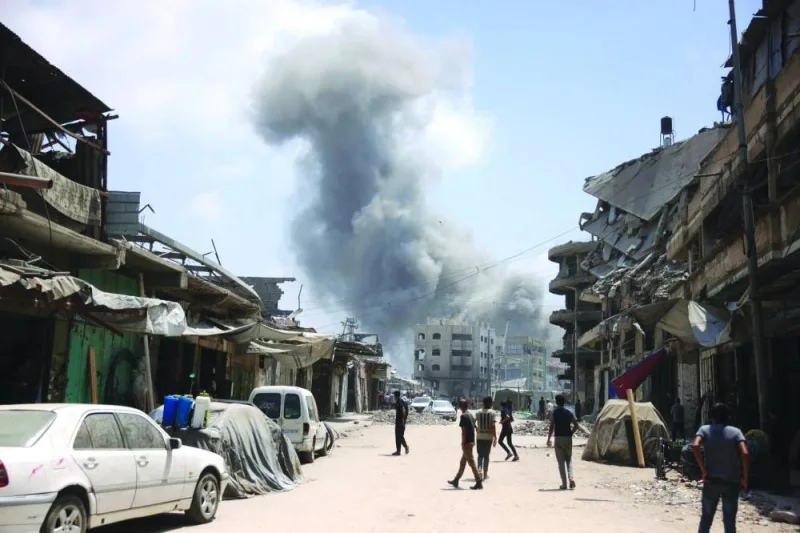
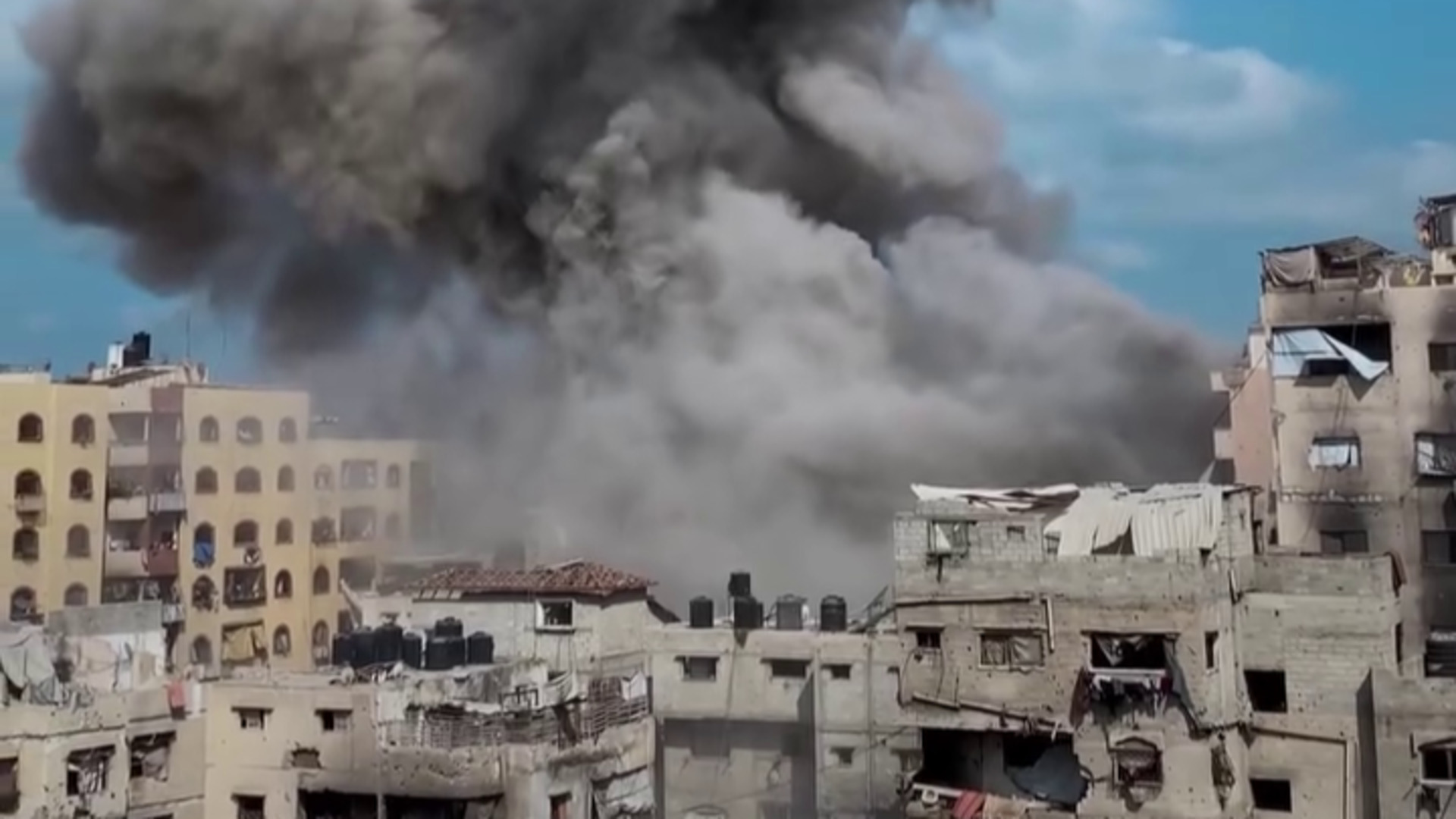
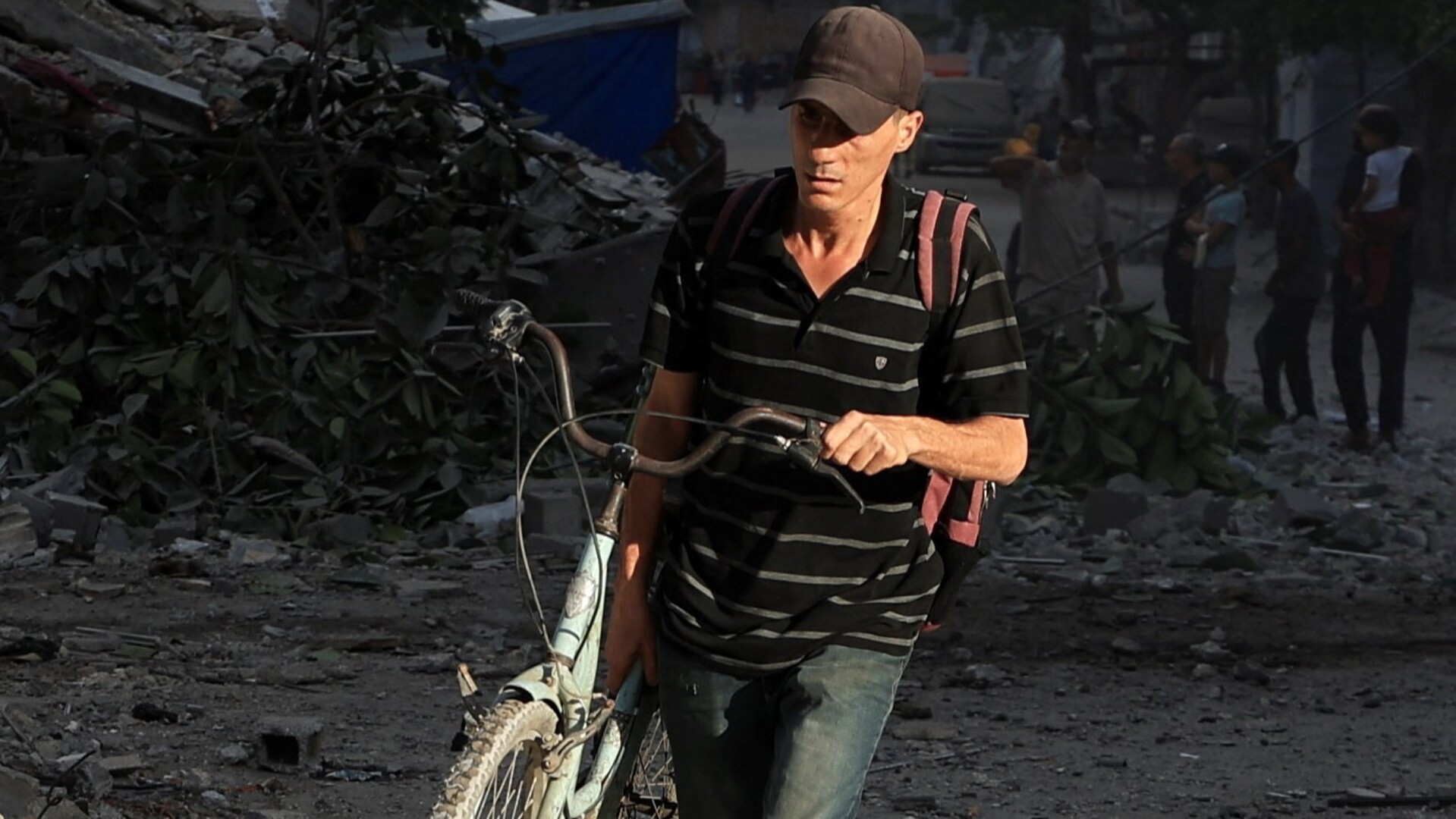
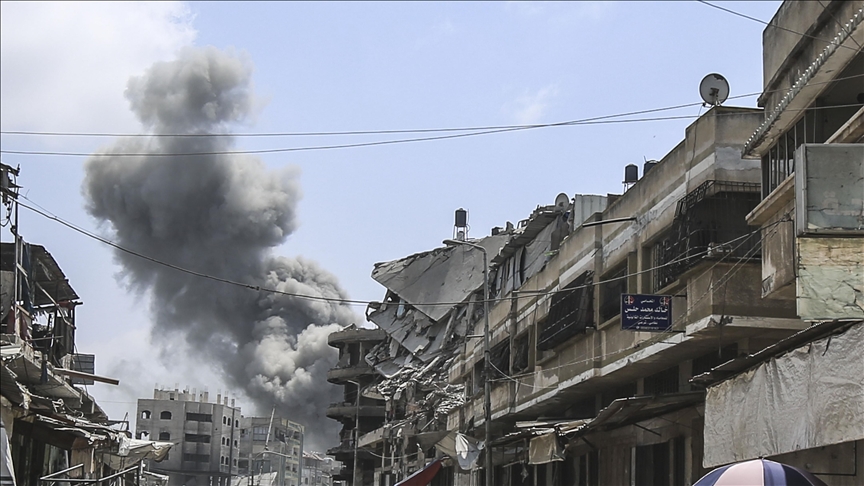
Palestinian watch as a plume of smoke rises during an Israeli strike on Gaza City's southern al-Zeitoun neighbourhood Friday.

Palestinians check the devastation following an Israeli strike that hit Gaza City's southern al-Zeitoun neighbourhood Friday.

Nations around the world on Friday condemned Israel's plan to wrest control of Gaza City, saying it would only worsen the conflict and lead to more bloodshed.

UN Secretary-General Antonio Guterres said Israel's plan was a "dangerous escalation" that risked worsening conditions for ordinary Palestinians.

UN human rights chief Volker Turk said the plan must be "immediately halted".

Israel should instead allow "the full, unfettered flow of humanitarian aid" and Palestinian armed groups must unconditionally release hostages, he added.

Diplomatic sources told AFP several countries had requested an emergency meeting of the UN Security Council over the Israeli plans.

"The Israeli government's decision to further extend its military operation in Gaza must be reconsidered," European Commission chief Ursula von der Leyen said on X.

She called for a ceasefire, the release of all hostages and "immediate and unhindered access" for humanitarian aid in Gaza.

European Council president Antonio Costa warned that "such a decision must have consequences" for EU-Israel ties.

"The situation in Gaza remains dramatic, and the decision by the Israeli government will only further worsen it," he posted on X.

Hamas denounced the Israeli government's plan as "a new war crime that the occupation army intends to commit against" Gaza and warned that the operation would "cost it dearly".

Iran's foreign ministry spokesman Esmaeil Baqaei said Israel's plan was "another clear sign of the Zionist regime's specific intention to ethnically cleanse Gaza and commit genocide against the Palestinians".

"Gaza belongs to the Palestinian people and is an inseparable part of Palestinian territory," a foreign ministry spokesperson told AFP.

"The correct way to ease the humanitarian crisis in Gaza and to secure the release of hostages is an immediate ceasefire."

German Chancellor Friedrich Merz said it was "increasingly difficult to understand" how the Israeli military plan would help achieve legitimate aims.

"Under these circumstances, the German government will not authorise any exports of military equipment that could be used in the Gaza Strip until further notice," he added.

'More bloodshed' -"This action will do nothing to bring an end to this conflict or to help secure the release of the hostages," Prime Minister Keir Starmer said, adding that it would "only bring more bloodshed".

"Such actions would constitute further serious violations of international law and lead to a complete dead end," France's foreign ministry said in a statement posted to social media.

"They would undermine the legitimate aspirations of Palestinians to live in peace within a viable, sovereign and contiguous state, and pose a threat to regional stability."

Turkiye urged global pressure to halt the plan.

"We call on the international community to fulfil its responsibilities to prevent the implementation of this decision, which aims to forcibly displace Palestinians from their own land," said a foreign ministry statement.

"We firmly condemn the decision of the Israeli government to escalate the military occupation of Gaza," said Spanish Foreign Minister Jose Manuel Albares. "It will only cause more destruction and suffering."

He added that "a permanent ceasefire, the immediate and massive entry of humanitarian aid, and the release of all hostages are urgently needed".

How the world is reacting to Israel’s plan to take over Gaza City


Israel’s Gaza escalation sparks global outcry with leaders warning of devastating humanitarian consequences.


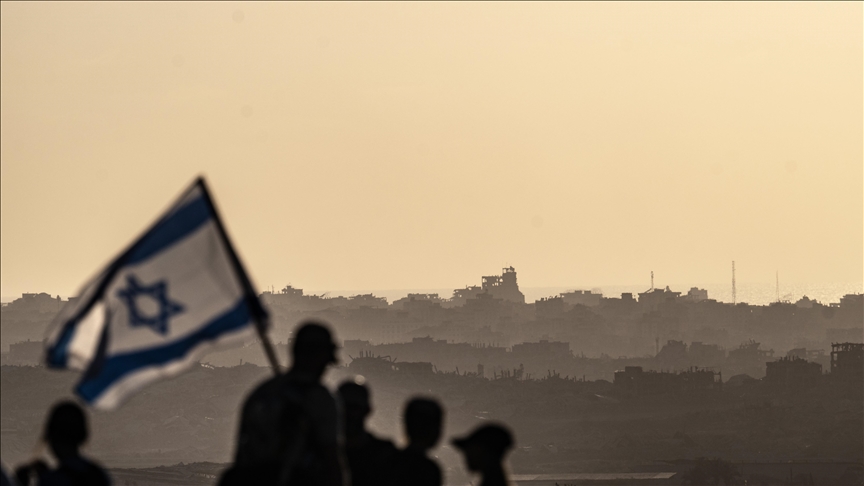
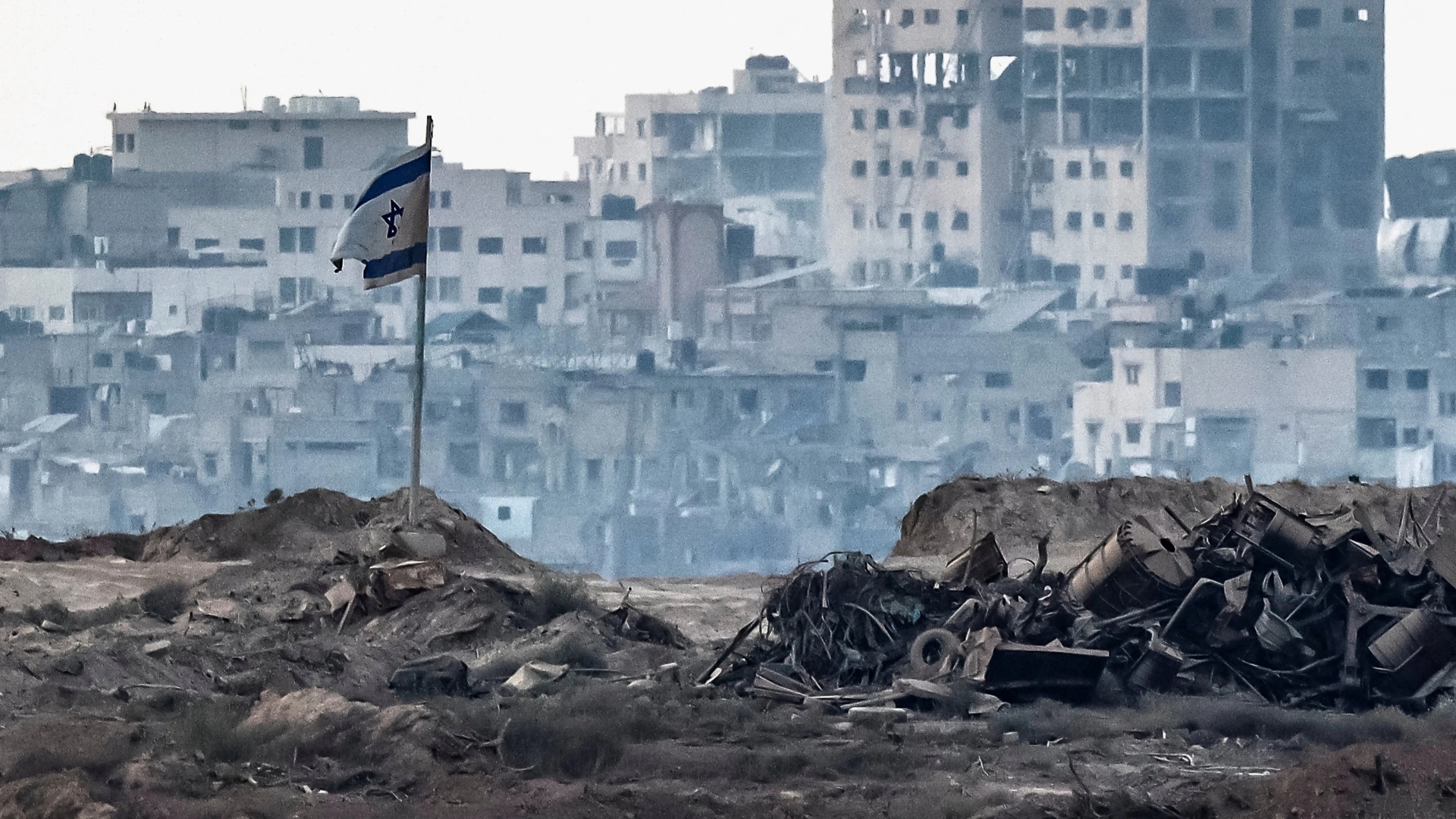
A damaged Israeli flag flies in Gaza, as seen from Israel on August 7, 2025
 [Amir Cohen/Reuters]


AL JAZEERA
Published On 8 Aug 2025

Israel’s security cabinet has approved a plan to seize control of Gaza City, triggering growing international condemnation, with world leaders warning of dire humanitarian consequences.

The plan to take over Gaza’s largest city was announced on Friday, a day after Prime Minister Benjamin Netanyahu said Israel intended to take military control of the entire Gaza Strip.

Israel’s plan to expand its assault on Gaza is expected to worsen the humanitarian devastation in the besieged enclave, triggering a further wave of mass displacements during a hunger crisis.

Here is how the world is reacting to the Israeli plan:

UN secretary-general

UN Secretary-General Antonio Guterres is “gravely alarmed” by Israel’s decision to take control of Gaza City.

“This decision marks a dangerous escalation and risks deepening the already catastrophic consequences for millions of Palestinians” and Israeli captives in Gaza, his office said in a statement, adding that further escalation will lead to “additional forced displacement, killings and massive destruction”.

The statement reiterated Guterres’s “urgent appeal for a permanent ceasefire”.

“The secretary general once again strongly urges the Government of Israel to abide by its obligations under international law,” it added.
UN rights chief

“The Israeli Government’s plan for a complete military takeover of the occupied Gaza Strip must be immediately halted,” United Nations High Commissioner for Human Rights Volker Turk said in a statement.

“It runs contrary to the ruling of the International Court of Justice that Israel must bring its occupation to an end as soon as possible, to the realisation of the agreed two-State solution and to the right of Palestinians to self-determination,” Turk added.
Advertisement

Palestinian presidency

The Palestinian presidency condemned Netanyahu’s announcement that Israel intends to seize full control of the Gaza Strip.

Sign up for Al Jazeera
Breaking News Alert
Get real-time breaking news alerts and stay up-to-date with the most important headlines from around the globe.
Subscribe


By signing up, you agree to our Privacy Policyprotected by reCAPTCHA

“This is a complete crime,” the office of President Mahmoud Abbas said, describing it as a continuation of “genocide, systematic killing, starvation and siege”, according to a report by the Palestinian news agency Wafa.

The presidency warned that Israel’s actions would lead to an “unprecedented humanitarian catastrophe”.
Hamas

Hamas warned that the Israeli government’s decision to escalate the war would amount to “sacrificing” the captives being held in Gaza.

“The decision to occupy Gaza confirms that the criminal Netanyahu and his Nazi government do not care about the fate of their captives,” the group said in a statement. “They understand that expanding the aggression means sacrificing them.”
Palestinian Islamic Jihad

The Palestinian armed group said Israel’s plans to expand its assault on Gaza were “a new chapter in the war of extermination”.

In a statement, the group said, “The Zionist entity’s government is preparing to escalate its massacres in Gaza,” adding, “We hold Arab governments and the West responsible for curbing this escalation.”

It accused Netanyahu of pushing for “forced displacement”, saying his “escalation, fully supported by the Trump administration, aims to occupy the Gaza Strip”.


European Council president

Israel’s decision to take over Gaza City “must have consequences for EU-Israel relations”, EU Council President Antonio Costa said, urging the Israeli government to reconsider.

“Not only [does the decision] violate the agreement with the EU announced by the High Representative on July 19 but also undermines fundamental principles of international law and universal values,” Costa, who heads the European Council that represents EU member states, added in a statement on X.
European Commission president

Ursula von der Leyen, the head of the European Union’s executive branch, said Israel must reconsider its plan to take control of Gaza City.

“The Israeli government’s decision to further extend its military operation in Gaza must be reconsidered,” she wrote on X.
Australia, Germany, Italy, New Zealand, UK

The foreign ministers of Australia, Germany, Italy, New Zealand and the United Kingdom condemned Israel’s plan in a joint statement late on Friday, saying it risked “violating international humanitarian law”.

It will also “aggravate the catastrophic humanitarian situation, endanger the lives of the hostages, and further risk the mass displacement of civilians”.
Advertisement


“Any attempts at annexation or of settlement extension violate international law,” the statement added.
British prime minister

UK Prime Minister Keir Starmer called Israel’s decision to step up military operations in Gaza “wrong” and urged restraint.

“The Israeli government’s decision to further escalate its offensive in Gaza is wrong, and we urge it to reconsider immediately,” he said.

“This action will do nothing to bring an end to this conflict or to help secure the release of the hostages. It will only bring more bloodshed.”
German chancellor

Chancellor Friedrich Merz said Germany will not authorise any exports to Israel of military equipment that could be used in Gaza “until further notice”.

“The even harsher military action by the Israeli army in the Gaza Strip, approved by the Israeli cabinet last night, makes it increasingly difficult for the German government to see how these goals will be achieved,” he said.

“Under these circumstances, the German government will not authorise any exports of military equipment that could be used in the Gaza Strip until further notice.”

France’s Ministry of Foreign Affairs

France condemned Israel’s plan to establish military control of Gaza City, warning it would lead to a deadlock in efforts to find a lasting solution to the conflict.

“Such actions would constitute further serious violations of international law and lead to a complete dead end,” the Foreign Ministry said in a statement posted to social media.

“They would undermine the legitimate aspirations of Palestinians to live in peace within a viable, sovereign and contiguous state, and pose a threat to regional stability.”
China’s Ministry of Foreign Affairs

China expressed “serious concerns” over Israel’s plan to take control of Gaza City and urged it to “immediately cease its dangerous actions”.

“Gaza belongs to the Palestinian people and is an inseparable part of Palestinian territory,” a ministry spokesperson told the AFP news agency in a message.

“The correct way to ease the humanitarian crisis in Gaza and to secure the release of hostages is an immediate ceasefire,” the spokesperson added.
Turkiye’s Ministry of Foreign Affairs

Turkiye said the decision to take control of Gaza City intends to force out Palestinians, and it called for international leaders to prevent the plan from being carried out.

“We call on the international community to fulfil its responsibilities to prevent the implementation of this decision, which aims to forcibly displace Palestinians from their own land,” the ministry said, according to the Reuters news agency.
Egypt’s Ministry of Foreign Affairs

Egypt condemned “in the strongest terms” the decision of the Israeli cabinet on Gaza, a statement by the country’s Foreign Ministry said.

“This plan aims to entrench the illegal Israeli occupation of Palestinian territories, continue the war of extermination in Gaza, eliminate all elements of life for the Palestinian people, undermine their right to self-determination and the realisation of their independent state, and liquidate the Palestinian cause – all in blatant and unacceptable violation of international law and international humanitarian law,” the statement said.

Egypt also called on the international community to assume their political, legal and moral responsibilities, and to take urgent action to stop “Israel’s policy of lawlessness and arrogance of power”.

Saudi Arabia’s Ministry of Foreign Affairs

Riyadh condemned any Israeli move to take control of Gaza, according to a ministry statement.

Saudi Arabia “categorically denounces Israeli occupation authorities’ persistence in committing crimes of starvation, brutal practices, and ethnic cleansing against the brotherly Palestinian people”, it said.
Iran’s Ministry of Foreign Affairs

Iran’s Foreign Ministry condemned Israel’s plan to take over Gaza City. It is “another clear sign of the Zionist regime’s specific intention to ethnically cleanse Gaza and commit genocide against the Palestinians”, Iranian Foreign Ministry spokesman Esmaeil Baghaei said in a statement.


Qatar’s Ministry of Foreign Affairs

Qatar has warned that Israel’s decision marked a “dangerous escalation” that risks exacerbating the ongoing humanitarian crisis and undermines efforts to achieve a permanent ceasefire.

The Ministry of Foreign Affairs urged the international community to take “immediate action” to prevent Israel from moving ahead with the plan.
Jordan’s Ministry of Foreign Affairs and Expatriates

The ministry in Amman “condemned, in the strongest terms, the plan” approved by Israel that “aims to entrench its occupation of the Gaza Strip and expand full military control over it”.

The statement also accused Israel of committing “grave violations of international law and international humanitarian law” and undermining “the two-state solution and the inalienable right of the Palestinian people to establish their independent state on the lines of June 4, 1967, with East Jerusalem as its capital”.
UAE Ministry of Foreign Affairs

The United Arab Emirates warned that Israel’s decision will lead to “catastrophic consequences”, including “further loss of innocent life and a worsening of the humanitarian crisis in Gaza”.

The Foreign Ministry called on the UN and the international community to halt Israel’s illegal practices. It added that upholding the rights of the Palestinian people was “no longer a matter of political discretion, but a moral, humanitarian, and legal imperative”.
Indonesia’s Ministry of Foreign Affairs

Indonesia said it “strongly condemns Israel’s unilateral decision to take over Gaza”, which is in violation of international law.

In a post on X, the Foreign Ministry said the move was “jeopardising the prospects for peace in the Middle East and worsening the humanitarian crisis in Gaza”.


Belgium’s Ministry of Foreign Affairs

Belgium said it would summon the Israeli ambassador in response to the Israeli security cabinet’s decision.

The ministry said Belgium wanted to “express total disapproval of this decision, but also of the continued colonisation … and the desire to annex the West Bank”, adding that it will “vigorously advocate” for a reversal of this decision.

“Following the official confirmation by the Israeli government of its intention to encircle and then occupy Gaza City and take military control of the entire Gaza Strip, Foreign Minister Maxime Prevot has decided to summon the Israeli Ambassador,” it said.
Spanish foreign minister

Jose Manuel Albares said, “We firmly condemn the decision of the Israeli government to escalate the military occupation of Gaza. It will only cause more destruction and suffering.”

He added that “a permanent ceasefire, the immediate and massive entry of humanitarian aid, and the release of all hostages are urgently needed”.
Advertisement

Swedish foreign minister

Sweden’s foreign minister said the Israeli government’s decision to escalate the assault on Gaza would make it harder to reach a truce.

“I view with great concern the decision that the Israeli government has made,” Maria Malmer Stenergard told the Swedish broadcaster SVT. “We need a ceasefire, and this decision risks taking the development in the opposite direction.”

“I have previously reiterated that any attempt to annex, change or reduce the territory of Gaza would violate international law,” she said.
Finnish foreign minister

Elina Valtonen expressed deep concern over the worsening humanitarian crisis in Gaza, warning of a looming famine.

“We hope for an immediate Gaza ceasefire and the immediate release of Israeli hostages,” Valtonen said, according to Reuters.
Danish foreign minister

Israel’s decision to intensify its military operation in Gaza is wrong and should immediately be reversed, Lars Lokke Rasmussen told Denmark’s TV2.
Dutch foreign minister

The top diplomat of the Netherlands criticised Israel’s plan to expand its military campaign in Gaza, calling it “a wrong move”.

The plan of the Netanyahu government to intensify Israeli operations in Gaza is a wrong move,” Caspar Veldkamp wrote on X. “The [Gaza] humanitarian situation is catastrophic and demands immediate improvement. This decision in no way contributes to this and will also not help to get the hostages home.”


Canadian prime minister

Israel’s plan to take control of Gaza City is “wrong” and will put the lives of the remaining captives at greater risk, Canada’s Prime Minister Mark Carney told reporters on Friday.
Australian foreign minister

Canberra warned that Israel’s plans to take control of the entire Gaza Strip would deepen the humanitarian disaster in Gaza.

“Permanent forced displacement is a violation of international law,” Foreign Minister Penny Wong said as she renewed calls for an immediate ceasefire.

“With international partners, Australia maintains our call for a ceasefire, the return of hostages and aid to flow unimpeded,” she said.

Wong also reiterated Australia’s growing support for Palestinian statehood, saying it was a matter of “when, not if”.

Pakistani prime minister

Pakistan “strongly” condemned Israel’s plan to militarily take over Gaza City, warning it will “derail any prospect for peace”.

The plan “tantamounts to a dangerous escalation in an already catastrophic war against the people of Palestine,” Prime Minister Shehbaz Sharif said on his X account.

“This expansion of military operations will only worsen the already existing humanitarian crisis and derail any prospect for peace in the region,” he added.

He called on the international community to “intervene urgently” to stop Israel’s “unwarranted aggression,” and ensure the protection of civilians.
Israeli defence minister

Following the backlash against Israel’s plans, Defence Minister Israel Katz said “countries around the world that condemn and threaten sanctions will not weaken our resolve”.

“Gone are the days when Jews did not defend themselves,” he added. “Our enemies will find us as one strong, united fist that will strike them with great force.”
Israeli opposition leader

Opposition leader Yair Lapid condemned the decision to seize Gaza City.

“This is a disaster which will lead to many more disasters,” he posted on X, accusing Netanyahu of caving to pressure from his far-right ministers. He said the move ignored military advice and the exhaustion of Israel’s soldiers.

The cabinet decision will be “a disaster for generations to come”, Lapid wrote.

Amnesty International

Amnesty International Secretary-General Agnes Callamard said Israel’s plan to take over Gaza City was “utterly outrageous and revolting”.

“Nothing can justify the additional mass atrocities that an expanded military operation in Gaza City will entail,” Callamard said in a statement.

“Just as we thought we had already seen the cruellest, most painful chapters of this genocide unfold – through Israel’s continued and escalating use of starvation as a method of warfare – plans to escalate the military operations in Gaza City indicate that indeed the worst is yet to come,” she added.


Source: Al Jazeera and news agencies
Sen. Warren slams Netanyahu on Gaza, urges end to US funding Israel’s war

'Starving Palestinian children and killing innocent people isn't enough for Netanyahu,' Elizabeth Warren says

Diyar Guldogan |09.08.2025 - TRT/AA


WASHINGTON

US Sen. Elizabeth Warren accused Israeli Prime Minister Benjamin Netanyahu on Friday of prioritizing personal political power over peace as she demanded an end to US funding for Israel’s war in the Gaza Strip.

"Starving Palestinian children and killing innocent people isn't enough for Netanyahu. Now, he wants to control all of Gaza.

"He no longer even pretends that this is about bringing the hostages home. For Netanyahu, it's all about holding onto his power," Warren wrote on X.

Her remarks came after the Prime Minister’s Office said the army will prepare for "taking control" of Gaza City. Netanyahu said Israel's "goal is not to take over Gaza, but to free Gaza from Hamas and enable a peaceful government to be established there."

"The U.S. cannot send one penny more to Israel to fund this war," Warren stressed.

Israel has faced mounting outrage for its destructive war on Gaza, where more than 61,300 victims have been killed since October 2023. The military campaign has devastated the enclave and brought it to the verge of famine.

Last November, the International Criminal Court issued arrest warrants for Netanyahu and his former Defense Minister Yoav Gallant for war crimes and crimes against humanity in Gaza.

Israel also faces a genocide case at the International Court of Justice for its war on the enclave.

US senator blasts Trump on Gaza policy

'Biden was wrong about his support for Israel’s war in Gaza. Trump is even worse,' says Bernie Sanders


Diyar Güldoğan | 09.08.2025 - TRT/AA


WASHINGTON

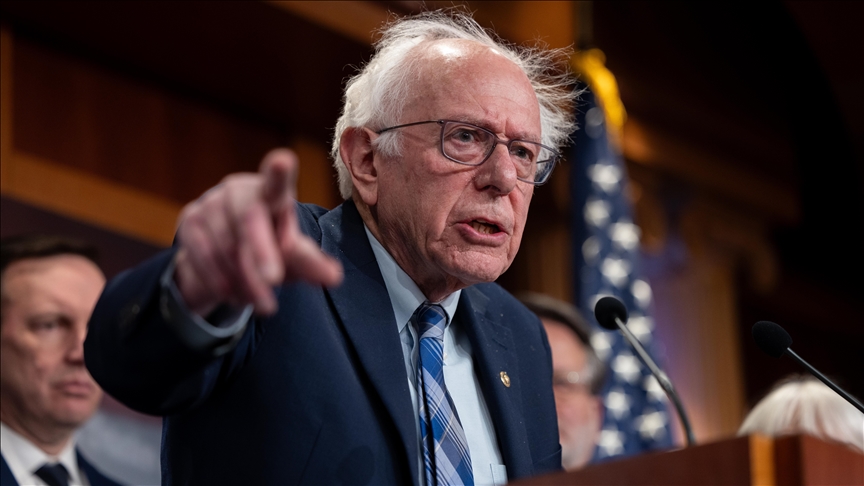
US Sen. Bernie Sanders denounced President Donald Trump's support on Friday for Israel's war in the Gaza Strip and vowed to oppose further funding.

"Biden was wrong about his support for Israel’s war in Gaza. Trump is even worse," Sanders wrote in a scathing rebuke on X of former President Joe Biden and President Donald Trump.

The American people, Democrats, Republicans and Independents, do not want to continue spending billions of taxpayer dollars to starve children, he said.

His remarks came after the Office of Israeli Prime Minister Benjamin Netanyahu said the army will prepare for "taking control" of Gaza City.

Netanyahu said Israel's "goal is not to take over Gaza, but to free Gaza from Hamas and enable a peaceful government to be established there."

"Not another penny for Netanyahu's war machine," Sanders stressed.

The US Senate rejected two resolutions last week that were introduced by Sanders to block arms sales to Israel amid starvation in Gaza.

A record number of Senate Democrats, more than half of the caucus, voted in favor of the resolutions.

Israel has been facing mounting outrage for its destructive war on Gaza, where more than 61,300 victims have been killed since October 2023. The military campaign has devastated the enclave and brought it to the verge of famine.

Last November, the International Criminal Court issued arrest warrants for Netanyahu and his former Defense Minister Yoav Gallant for war crimes and crimes against humanity in Gaza.

Israel also faces a genocide case at the International Court of Justice for its war on the enclave.


JD Vance questions Britain’s Palestinian statehood plan, rules out US recognition

CANADA GOT TARIFFED FOR DOING WHAT UK DID

Vance said Washington and London shared common goals in the Middle East but acknowledged 'some disagreements' on how to achieve them

Our Web Desk & Agencies 
Published 08.08.25


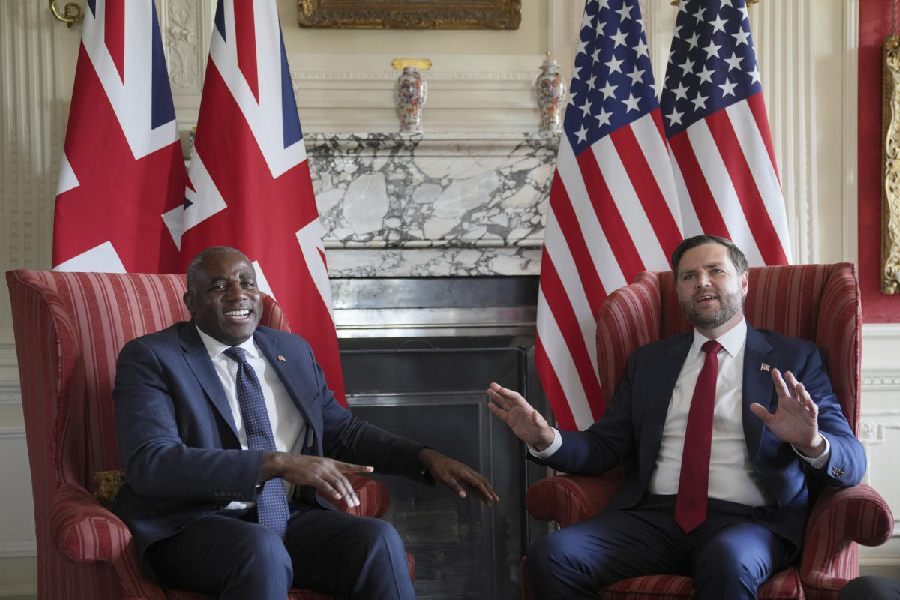
Vice President JD Vance, right, talks with Britain's Foreign Secretary David Lammy during a meeting at Chevening House in Kent, England, Friday, Aug. 8, 2025.AP/PTI

US Vice President JD Vance met with UK Foreign Secretary David Lammy on Friday at Chevening, the almost 400-year-old red-brick mansion set in 3,000 acres of gardens that serves as the British foreign secretary’s official country residence.


The two leaders discussed global economics, the Israel-Hamas war, and Russia’s full-scale invasion of Ukraine.

Appearing before reporters ahead of their talks, Vance addressed Britain’s plan to recognise a Palestinian state in September unless Israel agrees to a ceasefire in Gaza.

Also Read
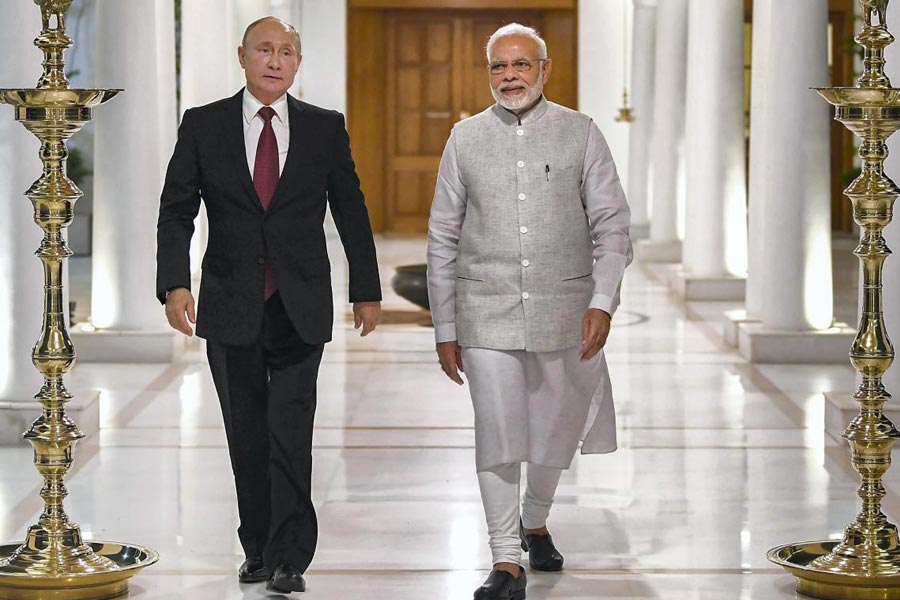
Modi speaks to Putin, vows stronger India-Russia ties amid Trump’s tariff tensions


He questioned what such recognition would mean “given the lack of a functional government there” and reiterated that the United States had no plans to recognise a Palestinian state.

Vance said Washington and London shared common goals in the Middle East but acknowledged “some disagreements” on how to achieve them.

Britain, alongside France and Canada, has declared its intention to recognise Palestine to pressure Israeli Prime Minister Benjamin Netanyahu over the ongoing conflict and humanitarian crisis in Gaza.

Asked whether US President Donald Trump had been informed of Israel’s intent to occupy Gaza City, Vance declined to comment, adding, “If it was easy to bring peace to that region of the world, it would have been done already.”

The meeting came as the United States and the United Kingdom remain at odds over how to end the wars in Gaza and Ukraine.

While Trump has focused on bilateral talks with Russian President Vladimir Putin, UK Prime Minister Keir Starmer and other European leaders have stressed that Ukraine must be involved in any peace negotiations.

Also Read
Global outcry as Israel moves to seize Gaza; leaders warn of catastrophic humanitarian fallout


On Thursday, Putin said he hoped to meet Trump next week, a day before Trump’s deadline for Moscow to show progress in ending the nearly three-and-a-half-year war in Ukraine.

Trade was also on the agenda, with Britain seeking favourable terms for steel and aluminium exports to the US and both sides working out details of a broader trade deal announced in late June.

Earlier on Friday, Vance and Lammy went fishing in the lake behind Chevening House, appearing relaxed in blue button-down shirts and sharing a laugh.

Vance joked that “the one strain on the special relationship” was that all his children caught fish but the British foreign minister had not.

Lammy later posted on X that “before beginning our bilateral, the Vice President gave me fishing tips, Kentucky style.”


About two dozen protesters gathered near the entrance to Chevening, some waving Palestinian flags and wearing keffiyeh scarves. One held a sign with a meme mocking Vance.


Despite coming from opposite political traditions — Lammy from the left-leaning Labour Party and Vance a conservative Republican aligned with Trump’s “America First” agenda — the two men have formed a personal connection over their hardscrabble childhoods and Christian faith.

Lammy told The Guardian that he considers Vance a friend, recalling a Catholic Mass at the Vance home in Washington earlier this year and a meeting in Rome during the inauguration of Pope Leo XIV in May.

After two nights at Chevening, Vance and his family will travel to the Cotswolds, a picturesque region covering about 800 square miles across five counties in western England.

Known for its quaint villages, stone cottages and rural scenery, the area has become a favourite among wealthy Americans.

British media report that the family has rented a house in Charlbury, 12 miles west of Oxford.

Socialite and journalist Plum Sykes described the village as “very fashionable” and said, “There’s been this mass exodus from America to the Cotswolds. Americans just cannot get over the charm. Then power and money attract power and money.”

The trip, described by a source familiar with the planning as a working visit, will include official engagements, fundraising events, cultural visits, and meetings with US troops.

It follows heightened transatlantic tensions, domestic political shifts in both countries, and growing attention on Vance’s role in the Trump administration.

(With inputs from AP, Reuters)
Canada condemns Israel’s plan to expand military operations in Gaza

'Escalation will do nothing to end the humanitarian horror in Gaza or the deepening suffering of both the Israeli hostages and Palestinian civilians,' says Mark Carney

Diyar Guldogan |09.08.2025 - TRT/AA


WASHINGTON

Prime Minister Mark Carney said Friday that Canada condemns Israel’s decision to escalate the conflict in the Gaza Strip.

"This escalation will do nothing to end the humanitarian horror in Gaza or the deepening suffering of both the Israeli hostages and Palestinian civilians. Nor will it advance long-term peace and security for the Israeli people," Carney said in a statement.

His remarks came after Israeli Prime Minister Benjamin Netanyahu said Friday that his military would occupy Gaza City.

Calling for an immediate ceasefire, Carney urged Hamas to "immediately" release all hostages taken during an Oct. 7, 2023, attack.

"Hamas must disarm; and we must see a massive and sustained surge in humanitarian aid, at the necessary scale," he added.

Canada continues to work with its international partners on the path to a two-state solution between Palestine and Israel, he said.

"We reiterate that Hamas must play no role in the future governance of a demilitarized Palestinian state. Canada will continue to support the Palestinian Authority’s commitment to reform and to strong, democratic governance," he added.

Canada urges all parties to negotiate in "good faith toward a just, meaningful, and lasting peace" that respects the dignity, security and aspirations of all Palestinians and Israelis, said Carney.

Israel has faced mounting outrage for its genocide in Gaza, where it has killed more than 61,000 victims since October 2023. The military campaign has devastated the enclave and led to deaths by hunger and starvation.


Israel plan to control Gaza City ‘wrong’ and will risk lives, Carney says

By Sean Boynton 
 Global News
Posted August 8, 2025 


WATCH: Israel's plan to take over Gaza City is 'wrong,' puts lives of hostages at 'greater risk': Carney


Prime Minister Mark Carney said Friday that Israel’s stated plan to take control of Gaza City is “wrong” and will harm international efforts to solve the humanitarian crisis plaguing the Palestinian territory.

Carney once again called for an immediate ceasefire in the Israel-Hamas conflict and highlighted Canada’s role in delivering humanitarian aid to starving Palestinians, but would not say if Israel’s latest actions will lead to sanctions.

“We join others, many others, in viewing that this is wrong, that this action is not going to contribute to an improvement in the humanitarian situation on the ground,” Carney told reporters when asked about the Gaza City plan. “It is going to put the lives of the hostages at greater risk, rather than lessening it.

“We reiterate our call for an immediate ceasefire. We reiterate our call for Hamas to immediately return all of the hostages and their remains. We reiterate that Hamas has no role going forward and will continue to work with our allies to contribute what we can to achieving those outcomes.”

Pressed on whether Canada plans to issue sanctions against Israel, Carney said he’s “not on the cusp of making another announcement at this point” but condemned Israel’s actions in Gaza.

“What we see is the erosion of the possibility of a two-state solution because of facts on the ground, actions on the ground,” he said.

Carney later issued a statement that reaffirmed Canada’s condemnation of Israel’s decision to “further escalate the conflict in Gaza” by expanding its military operations.

“This escalation will do nothing to end the humanitarian horror in Gaza or the deepening suffering of both the Israeli hostages and Palestinian civilians. Nor will it advance long-term peace and security for the Israeli people,” the statement said.

Before Israel’s Security Cabinet approved the plan to take over Gaza City earlier on Friday, Prime Minister Benjamin Netanyahu had outlined more sweeping plans Thursday in an interview with Fox News, saying Israel planned to take control of all of Gaza. Israel already controls around three-quarters of the territory.


Germany announced shortly after Israel’s decision Friday that it will not authorize any exports of military equipment that could be used in Gaza “until further notice.”

The move by Germany, which has previously stopped short of tougher lines against Israel’s government taken by some of its European Union allies, appeared likely to further isolate Israel in the wake of the controversial military takeover plan that has been decried by the United Nations and supporters of Israeli hostages still held in Gaza.


The United Nations has called the move to take control of Gaza City a dangerous escalation, as it would likely require a large ground invasion and displacing tens of thousands of civilians.

Canada and other allies like France and Britain have stepped up their condemnation of Israel’s military actions in recent months, and have also stated they intend to recognize a Palestinian state in September at the United Nations.

The United States, by contrast, has refused to condemn Israel’s military strategy, although U.S. President Donald Trump last week contradicted Netanyahu’s denials that Palestinians are starving in Gaza.

U.S. Vice President JD Vance told reporters ahead of meeting U.K. Foreign Secretary David Lammy in London that he wasn’t sure what recognizing a Palestinian state would even mean, “given the lack of a functional government there.”

Asked whether Trump had been given a heads up on Israel’s announced intent to take over Gaza City, Vance said he wouldn’t go into such conversations.

“If it was easy to bring peace to that region of the world, it would have been done already,” he said.

In a statement Friday, Chancellor Friedrich Merz emphasized that Israel “has the right to defend itself against Hamas’ terror” and said that the release of Israeli hostages and purposeful negotiations toward a cease-fire in the 22-month conflict “are our top priority.”


He said Hamas must not have a role in the future of Gaza.

“The even harsher military action by the Israeli army in the Gaza Strip, approved by the Israeli Cabinet last night, makes it increasingly difficult for the German government to see how these goals will be achieved,” he added. “Under these circumstances, the German government will not authorize any exports of military equipment that could be used in the Gaza Strip until further notice.”

The German government remains deeply concerned about the suffering of civilians in Gaza, he said, adding: “With the planned offensive, the Israeli government bears even greater responsibility than before for providing for their needs.”

He called on Israel to allow comprehensive access for aid deliveries — including for U.N. organizations and other NGOs — and said Israel “must continue to comprehensively and sustainably address the humanitarian situation in Gaza.”

Germany also called on Israel’s government “not to take any further steps toward annexing the West Bank.”

It was not immediately clear which military equipment from Germany would be affected.

Germany, with its history with the Holocaust, has been among the strongest Western backers of Israel — no matter which government is in power. Merz’s government did not join announcements by President Emmanuel Macron of key German ally France and Britain’s Keir Starmer that they plan to formally recognize a Palestinian state.

—With files from the Associated Press

WHEN IN DOUBT START A WAR ON DRUGS
Trump signed secret order for military action against Latin American drug cartels: Report

Directive authorizes US military operations abroad against groups designated as terrorist organizations by Trump administration, says The New York Times

Asiye Latife Yılmaz |08.08.2025 - TRT/AA


ISTANBUL

US President Donald Trump has reportedly signed a secret directive ordering the Pentagon to launch military operations against certain Latin American drug cartels, according to The New York Times, citing people familiar with the matter.

The secret order authorizes potential direct military action at sea and on foreign soil against Latin American drug cartels designated as terrorist organizations by the Trump administration.

US military officials have begun drafting plans to target the cartels. However, the move raises legal concerns, including whether using force outside an authorized conflict could be considered unlawful.

Upon returning to the presidency for a second term this January, Trump signed an order instructing the State Department to designate drug cartels as foreign terrorist organizations, leading to the designation of groups like Tren de Aragua and MS-13.

The decision shows Trump’s strategy of using military forces in roles usually handled by law enforcement, as part of a broader effort to combat the trafficking of fentanyl and other illegal drugs.

Earlier this year Trump sent National Guard troops and Marines to Los Angeles, citing what he called public unrest and riots. The California governor and city leaders blasted the move, calling it both unnecessary and dangerous.

Critics say Trump wants to use the military, which is directly under his command, as his own personal police force, doing his bidding regardless of the law or the US Constitution.


Trump rattles Latin America by eyeing military force against drug cartels


U.S. President Donald Trump walks from Marine One to Air Force One at Joint Base Andrews in Maryland on Aug. 1. | Haiyun Jiang / The New York Times


BLOOMBERG
Aug 9, 2025

The U.S. under President Donald Trump is crafting a confrontational approach toward Latin America that signals a willingness to use military force against drug cartels, discarding the previous administration’s preference for carrots over sticks to coax countries into alignment with U.S. interests.

The New York Times reported Friday that the president ordered the Defense Department to prepare options to take military action against Latin American drug cartels. A U.S. agreement with Mexico to expand security cooperation, expected to be signed in the coming weeks, would facilitate joint monitoring of criminal organizations by security forces and coordination on the border.

But the pending agreement won’t provide legal grounds for direct U.S. military action on Mexican territory, officials have said. Any such intervention would risk inflaming anti-U.S. sentiments already whipped up by the Trump administration’s wave of tariffs.

"This could call into question the security agreement that was drawn up, which is based on a great deal of trust,” said Victoria Dittmar, a researcher at Insight Crime who specializes in Mexico.

Trump, asked about the possibility of using military force Friday at the White House, said he would have "more to say about that soon.”

"Latin America has got a lot of cartels. They’ve got a lot of drugs flowing. So, you know, we want to protect our country,” Trump said.

A Pentagon spokesperson declined to comment.

The emerging plans to deal with cartels build on the Trump administration’s already more aggressive presence in a region that is deeply integrated into the U.S. economy, from cross-border gas pipelines to maritime logistics.

Secretary of State Marco Rubio visited Central America on his first overseas trip, pushing for concessions on U.S. military use of the Panama Canal. The administration has engaged in a war of words with Colombia’s leftist President Gustavo Petro and may be preparing to decertify that country’s efforts against narcotics. Officials have also stepped up allegations against Venezuelan President Nicolas Maduro as a drug lord, doubling a reward for information leading to his arrest to $50 million this week.

The hardening of U.S. policy toward Latin America has been met with varying responses in the region, from open arms to strident opposition. In Ecuador, the pro-U.S. government is preparing a referendum that would allow foreign military installations in national territory, a move seen as clearning the way for the U.S. to reactivate the use of a base in the violence-torn country.


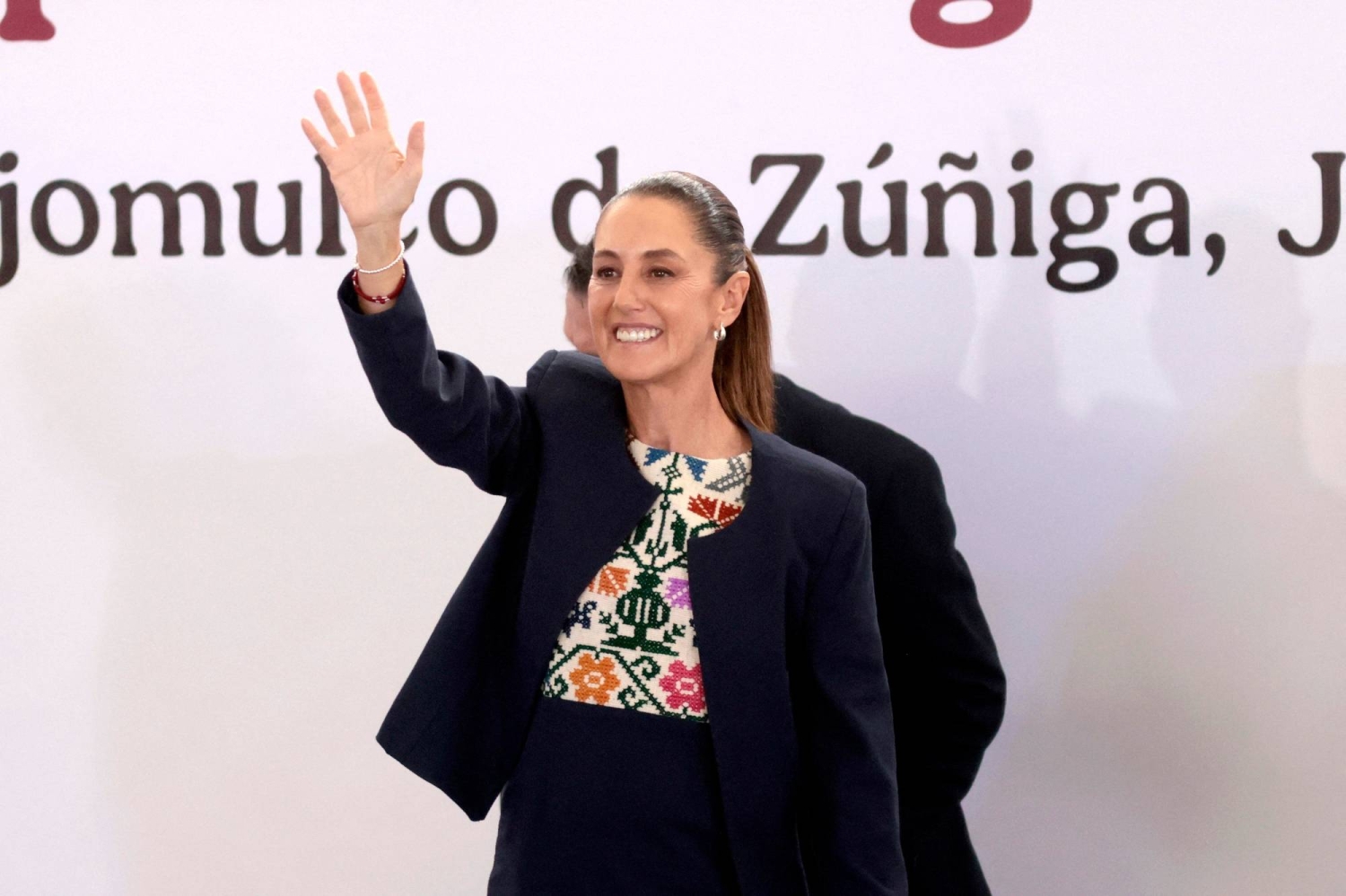
Mexican President Claudia Sheinbaum waves during an event in Tlajomulco de Zuiga, in Mexico's Jalisco state, on Friday. | AFP-JIJI


But in Mexico, President Claudia Sheinbaum has responded defiantly to any suggestion that American soldiers would take a combat role in her country. Any agreement with the Trump administration must respect the nation’s sovereignty, she reiterated Friday at her daily news conference.

"The United States is not going to come to Mexico with the military,” she said Friday. "We cooperate, we collaborate, but there will be no invasion. That is out of the question, absolutely out of the question. What has been stated in all the calls is that it is not permitted, nor is it part of any agreement, much less.”

The security deal in the works rests on the idea that the U.S. won’t intervene in Mexico, said Dittmar of Insight Crime.

"If that were to be broken, it would indeed break the relationship of trust and would require a rethinking of joint security strategies,” she said.

The Trump administration’s approach risks inviting a broader backlash in a region still scarred by decades of Cold War-era intervention from Guatemala to Chile.

"This will strengthen autocratic regimes like the ones in Venezuela or Nicaragua, and the anti-American sentiment in Mexico, Guatemala and even in Colombia,” said Jorge Restrepo, an economics professor who directs CERAC, a Bogota-based research institution that monitors the nation’s civil conflict.

"Just the announcement will have the unintended effect of strengthening governments which are not cooperating as much as they could with the United States,” Restrepo said.

U.S. interests in the region could become soft targets for criminal organizations, said James Bosworth, founder of political risk firm Hxagon, in a phone interview. The cartels have the ability to take the fight to U.S. territory in a way that al-Qaeda "could only dream of,” according to Bosworth.

While Venezuela, Colombia and Honduras are all potential targets, Mexico is the country that is most vulnerable, especially since Trump officials are much more worried about fentanyl then they are about cocaine, Bosworth said. Trump made a promise to fight trafficking of fentanyl, originating in China and responsible for tens of thousands of U.S. deaths, a key point of his 2024 campaign.

Despite stepped-up rhetoric from Washington, Venezuela could be shielded from intervention by U.S. oil interests and concerns about disrupting a steady flow of reverse migration, said Geoff Ramsey, who tracks Venezuela at the Atlantic Council.

"This is an instance in which Trump is seeking to project strength but ultimately understands that any kind of military action in Venezuela would run completely contrary to U.S. interests,” said Ramsey. "Unfortunately, Maduro knows that this is a bluff. But the opposition doesn’t. And I think this is going to fuel a lot of counterproductive daydreaming from the opposition. And my fear is that this is only going to lead them down the path of magical thinking.”

The U.S. posturing also risks playing into Venezuela’s siege narrative. The country’s armed forces on Friday vowed "to confront, combat, and neutralize any action that threatens the stability and peace of our citizens, as well as the safeguarding of our national territory.”

And on state television, Defense Minister Vladimir Padrino Lopez reiterated denials that Venezuela hosts organized crime groups. "There are no criminal gangs operating here, they have taken the story of the Tren de Aragua, they have been completely dismantled, they do not exist, nor do cartels or bosses exist,” Padrino said.

Ramsey said U.S. military action in Venezuela "would risk destabilizing the entire country, and potentially the region itself.”


Trump Signs Directive That Could Deploy US Military in Mexico: Report


Published Aug 08, 2025


President Donald Trump ordered the United States military to target drug cartels and Foreign Terrorist Organizations (FTOs) on Friday, prompting concerns over diplomacy and presidential overreach, the New York Times reported.

Citing sources close to the matter, the Times reported that Trump signed an order directing the Pentagon to begin using military force against overseas targets. It's not clear if the order includes language about obtaining Congress' consent.

The Department of Defense declined to comment to Newsweek, deferring to the White House. A White House spokesperson said Trump remains committed to "protecting the homeland".

Newsweek reached out to the Mexican embassy in the U.S. for comment via email Friday afternoon.

Why It Matters


The Trump administration declared multiple cartels and criminal gangs as FTOs earlier this year, saying the designation was necessary to counter their activities in the U.S., including fentanyl trafficking.

Using the military to target the groups would mark a significant escalation in enforcement—one that could significantly impact relations with two countries: Mexico and Venezuela.

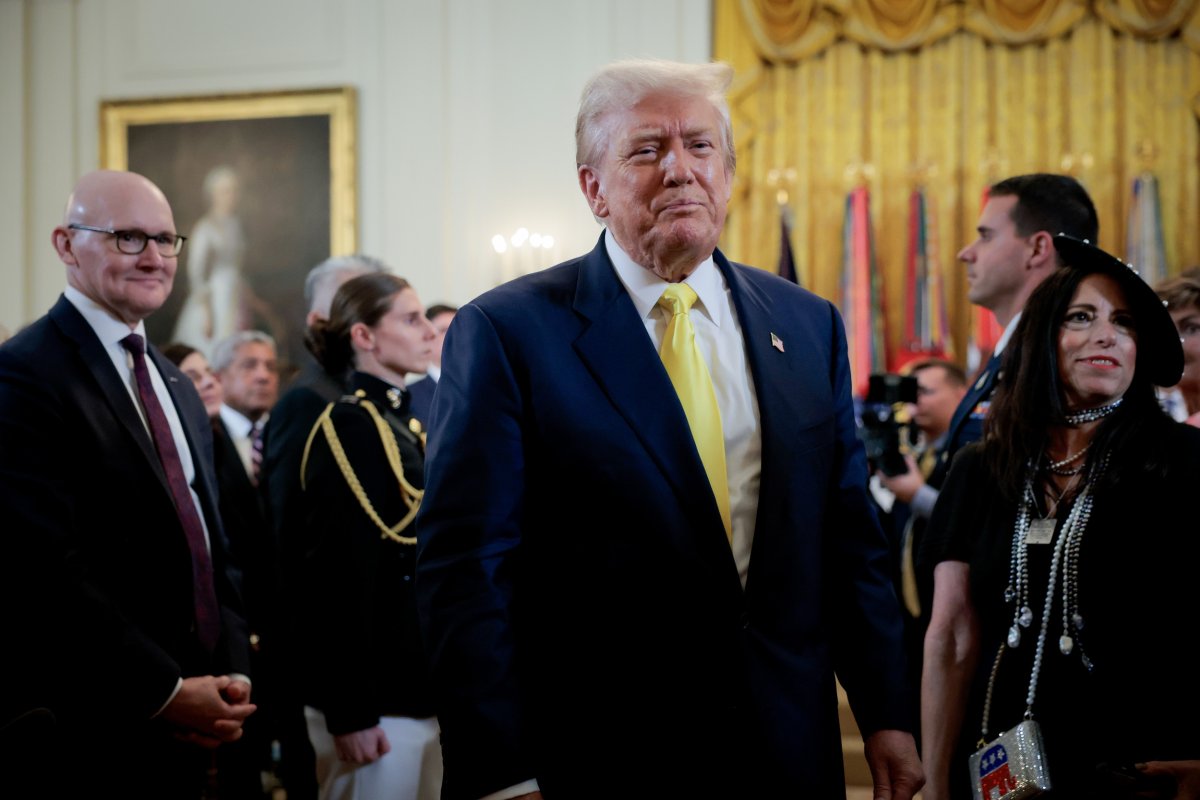
President Donald Trump departs an event to honor recipients of the Purple Heart in the East Room of the White House on August 07, 2025 in Washington, DC. Anna Moneymaker/Getty Images


What To Know

The order signed by Trump reportedly provides an official basis for direct military operations at sea and on foreign soil against cartels, which would likely mean in the Gulf of Mexico and potentially within Mexico itself.

Making such moves without the approval of Congress opens up legal questions about whether the military could be seen as murdering suspected cartel members, rather than acting in the defense of the U.S., the Times noted.

"Previous efforts to escalate the war on drugs through partnered operations in Colombia and Mexico failed to eliminate drug trafficking organizations or stem the flow of illicit drugs into the United States," Brandan Buck, Cato Institute foreign policy research fellow, told Newsweek. "Unilateral action would assuredly fail to stem the flow of drugs into the United States while causing significant diplomatic fallout."

The justification for the shift would likely be ongoing efforts to cut off fentanyl smuggling, which continues to impact American communities, with the synthetic opioid linked to thousands of deaths.

When Secretary of State Marco Rubio first declared eight groups as terrorist organizations in February, he opened up the possibility of military action against the MS-13 and Tren de Aragua gangs, as well as dominant cartels including Sinaloa and Jalisco, for their roles in fentanyl trafficking, murders and other violent crimes across the U.S.

At the time, experts told Newsweek that the designation could prompt dangerous blowback from the cartels, putting the lives of Americans living and working in Mexico and Venezuela at risk.

Mexican President Claudia Sheinbaum also criticized the FTO designation, saying it could infringe on Mexican sovereignty. Trump's reported directive on Friday now opens the door to the possibility of American troops crossing the border into her country.

Trump's latest order comes after the administration designated the Venezuelan-based Cartel de los Soles as an FTO late last month, alleging that it's led by the country's president, Nicolás Maduro.

What People Are Saying


Henry Ziemer, associate fellow at the Center for Strategic and International Studies, told Newsweek: "Certainly the most extreme possibility would be that the United States could use this directive to target members of the Venezuelan government and military up to and including President Nicolas Maduro, now linked to the "Cartel de los Soles" now designated by the Treasury as a global terrorist entity.

"For the time being, I do not believe this is a likely outcome given the Trump administration's aversion to entanglement in major overseas military operations. Nevertheless, these reports are undoubtedly causing sleepless nights for the regime."

Buck told Newsweek: "This move, if true, will likely reignite debates on Capitol Hill about the use of military force as it bypasses Congress's prerogative to declare war."

White House spokesperson Anna Kelly said in a statement to Newsweek: "President Trump's top priority is protecting the homeland, which is why he took the bold step to designate several cartels and gangs as foreign terrorist organizations."

What's Next


As of Friday afternoon, the Trump administration has not made an official announcement regarding the directive, making it unclear if Congress would be consulted on the matter.