Saturday, August 09, 2025

Trump State Dept. Threatens Further Intervention in Brazil After Bolsonaro Put Under House Arrest


"Bolsonaro and Donald Trump are plotting a coup against Brazil," said a Brazilian geopolitics scholar.


Supporters of former Brazilian President Jair Bolsonaro take part in a motorcade to protest after Brazil's Supreme Court issued a house arrest order for him in Brasilia, Brazil, August 4, 2025.
(Photo: Mateus Bonomi/Anadolu via Getty Images)


Stephen Prager
Aug 05, 2025
COMMON DREAMS


Brazil's Supreme Court placed far-right former President Jair Bolsonaro under house arrest Monday in anticipation of his trial for allegedly attempting a coup following his loss in the 2022 election.

The order has heightened the current government's already simmering tensions with U.S. President Donald Trump, who has imposed high tariffs on some Brazilian imports over what he calls a "witch hunt" against his ally.

Bolsonaro's house arrest was ordered by Justice Alexandre de Moraes, who says the former president had violated restrictions imposed last month banning him from using social media, which he'd been using to rile up supporters to attack the Supreme Court.

The justice said Bolsonaro had used the accounts of allies, including his politician sons, to send "clear encouragement and incitement to attack the Supreme Federal Court, and overt support for foreign intervention in Brazil's judiciary."

The Associated Press reports that Bolsonaro had his phones seized from his Brasilia residence.

Trump slapped Moraes, who is presiding over Bolsonaro's trial, with Magnitsky sanctions—typically reserved for major human rights abusers—last week, which supporters of Brazil's left-wing president Luiz Inácio Lula da Silva called "a direct attack on Brazilian democracy."

Brazilian journalist Brian Mier says Bolsonaro has been emboldened by Trump's support to defy Moraes' orders, assuming that threats from the U.S. would cause the judge "to back down."

"It backfired," Mier said.

The U.S. State Department's Bureau of Western Hemisphere Affairs issued a furious condemnation of Bolsonaro's arrest, promising to "hold accountable all those aiding and abetting sanctioned conduct."

The department hinted that it may place more sanctions on other members of the Supreme Court.

Maria do Rosário, a federal deputy for Lula's Workers' Party (PT), hit back in a post on X.

"With what authority does this attempt to interfere in Brazil's judiciary power, and the threat to Brazilian authorities and citizens persist?" she asked. "None."

The charges against Bolsonaro, often called the "Trump of the tropics," bear a striking resemblance to those leveled against the U.S. president following his 2020 election loss.

Like Trump, Bolsonaro flagrantly spread false claims that his election loss was the result of rampant fraud, which prompted a mob of supporters to attack the legislature in hopes of overturning the "stolen" election.

Brazilian state police have accused Bolsonaro of going even further—allegedly enlisting military officers in a plot to assassinate Lula and forcibly retake power.

Trump has nevertheless drawn parallels between his own legal struggles and those faced by Bolsonaro.

"This is nothing more, or less, than an attack on a Political Opponent – Something I know much about! It happened to me, times 10," Trump wrote last month on Truth Social.

Vinicios Betiol, a geopolitics scholar from the University of Rio de Janeiro, says that "Bolsonaro and Donald Trump are plotting a coup against Brazil."

While he said the arrest of Bolsonaro is worth celebrating, he cautioned that provoking the Supreme Court was part of his strategy "to fuel the narrative of persecution" and whip up civil unrest among his supporters.

"Radical Bolsonarists," he said, "are already talking about blocking roads, toppling power towers, and attacking the [Supreme Court]."

Video: Terra Brasil


Following the announcement of Bolsonaro's arrest, supporters of the former president flooded the streets and drove around the capital Brasilia, with some chanting, "Brazil will stop."

Many of Bolsonaro's supporters view Trump as a key cog in the effort to shield Bolsonaro from prosecution. As The Guardian reports:
On Monday night, hundreds of followers flocked to the gates of Bolsonaro's upmarket condominium to vent their anger, some carrying U.S. flags.

"We want Trump to help us," said one protester, Ricardo, who wore a red MAGA cap and declined to give his second name as he stood outside Bolsonaro's compound holding up a star-spangled banner. "Our solution can no longer come from within [Brazil]. It has to come from abroad. The sanctions are working. More people need to be hit with Magnitsky."

"They know that Bolsonaro will be convicted and have thus gone all-in," Betiol said. "They are willing to cause civil unrest, force the [Supreme Court] to act, and then seek a coup with Trump's help."

"We must indeed celebrate Bolsonaro's arrest," he continued, "but we cannot lower our guard at this decisive moment in our country's history."
'Unconscionable': Trump Admin Blasted for Plan to Ban Abortions at VA Hospitals

"Those who fight for all our freedom must have the most basic freedom to control their own bodies and futures—and this rule robs them of it," said the head of Planned Parenthood Federation of America.


A U.S. Department of Veterans Affairs facility in Kansas City, Missouri was photographed on June 12, 2025.
(Photo: Michael Siluk/UCG/Universal Images Group via Getty Images)

Jessica Corbett
Aug 04, 2025
COMMON DREAMS

Advocates for veterans, reproductive rights campaigners, and Democrats in Congress on Monday continued to lambaste the Trump administration's quiet move to end abortion care for former U.S. service members and their relatives.

"Since taking office, the Trump administration has repeatedly attacked service members, veterans, and their families' access to basic reproductive care, including gender-affirming care," said Planned Parenthood Federation of America president and CEO Alexis McGill Johnson in a Monday statement.

Planned Parenthood and its leader have frequently criticized actions by President Donald Trump, including his signature on Republicans' recently passed budget reconciliation package that targets the group's clinics—which provide a range of healthcare services—by cutting them off from Medicaid funds if they continue to offer abortions.

"Those who fight for all our freedom must have the most basic freedom to control their own bodies and futures—and this rule robs them of it. Taking away access to healthcare shows us that the Trump administration will always put politics and retribution over people's lives," McGill Johnson said of the new proposal for veterans' care. "Planned Parenthood will never stop fighting to ensure everyone has access to the full spectrum of sexual and reproductive healthcare—no matter what."


In the wake of the U.S. Supreme Court's 2022 reversal of Roe v. Wade, the Biden administration allowed the Department of Veterans Affairs to provide abortion counseling and care for service members and beneficiaries in cases of rape, incest, or if the pregnancy threatened the health of the patient. On Friday, the VA proposed a rule that would "reinstate the full exclusion on abortions and abortion counseling from the medical benefits package," and the Civilian Health and Medical Program.

The document says the VA would continue treating ectopic pregnancies and miscarriages, and would allow abortion care "when a physician certifies that the life of the mother would be endangered if the fetus were carried to term."

The proposal quickly drew rebuke from a range of critics, including U.S. lawmakers. Blasting the proposed rule as "disgusting and dangerous," Senate Veterans' Affairs Committee Ranking Member Richard Blumenthal (D-Conn.) said on social media Friday that the government "should not be able to impose a pregnancy on anyone—least of all survivors of rape, abuse, or those whose health is at risk."

Sen. Patty Murray (D-Wash.), who had advocated for the Biden administration's policy, declared Saturday that "Republicans don't care if your health is in danger, if you're a veteran, or if you've been raped—they want abortion outlawed everywhere, for everyone."

As the 30-day public comment period for the proposed rule began Monday, U.S. House Veterans' Affairs Committee Ranking Member Mark Takano (D-Calif.) warned that "stripping away access to essential reproductive healthcare at VA, the largest integrated healthcare network in the United States, puts veterans' lives at risk and violates the promise we made to them. Veterans have earned the right to healthcare. Full stop. This ban on reproductive healthcare will harm veterans and is dangerous."

The proposal makes clear that VA Secretary Doug Collins "is substituting his judgment for that of the hundreds of thousands of women veterans who have earned the freedom to make personal medical decisions in consultation with their providers," Takano said in a statement. "It also gags medical providers and does not allow them to provide complete and honest care to veterans who get their care from VA. Rolling back this rule is a direct attack on veterans' rights. It will jeopardize the lives of pregnant veterans across our country, especially those residing in states with total abortion bans and other reproductive healthcare restrictions, which have already led to preventable deaths."


Reproductive rights advocates have similarly weighed in over the past few days and highlighted the anti-choice state laws enacted since the Dobbs v. Jackson Women's Health Organization decision reversed Roe.

Katie O'Connor, senior director of federal abortion policy at the National Women's Law Center, said that "at a time when extremist lawmakers are passing cruel abortion bans and restrictions, this move only deepens the crisis those laws have created—stripping veterans of their reproductive freedom and creating even more confusion about where they can turn for care."

"Veterans already face unique challenges to their health and well-being, including experiencing PTSD, recovering from military sexual trauma, and facing an increased risk of suicide," she noted, referring to post-traumatic stress disorder. "Banning access to the full range of reproductive services, including abortion, further jeopardizes their health and safety. No one should have to travel hundreds of miles, endure financial hardship, or risk their health just to get the medical care they need. Our veterans deserve better."

Center for Reproductive Rights president and CEO Nancy Northup declared that "this administration is sending a clear message to veterans—that their health and dignity aren't worth defending. To devalue veterans in this way and take away life-changing healthcare would be unconscionable. This shows you just how extreme this administration's anti-abortion stance is—they would rather a veteran suffer severely than receive an abortion."

Dr. Raegan McDonald-Mosley, a practicing OB-GYN and CEO of Power to Decide, also warned that the new "needlessly cruel policy change," if it goes through as expected, will harm veterans and "once again betrays our nation's commitment to them."

"Since the Supreme Court overturned Roe v. Wade, 12 states have enacted total abortion bans, one additional state has no abortion clinics, and seven states have gestational restrictions often in effect so early that people don't even know they are pregnant," she explained. "All of this exacerbates an ongoing public health crisis. For some veterans, VA was the only place they were able to obtain abortion care in these states."

"Restrictions on abortion coverage—the effects of which fall hardest on people who already face unequal access to healthcare, including Black women, people of color, and people with low incomes—hinder a person's reproductive well-bring and deepen inequities," the doctor added. "Power to Decide condemns this policy and urges Congress to pass legislation to ensure all veterans have access to the abortion care they need when and where they need it."
Heart disease, step aside. There's a new number-one health hazard to Americans


That would be Robert F. Kennedy Jr.


Ray Hartmann
August 8, 2025 
RAW STORY

The vacuous anti-vaxxer has proven just as dangerous as his own family members warned the United States Senate he would be. That was in late January after he was nominated as Secretary of Health and Human Services by President Donald Trump. He was confirmed, shamefully.

Kennedy squeaked through by placating Republican Sen. Bill Cassidy with the brazen lie that he wouldn’t dismantle the nation's vaccine safety systems or take down government vaccine guidance. And I do mean brazen: Kennedy specifically promised to respect the Advisory Committee on Immunization Practices, only to fire all 17 of its members.

Perhaps for not wearing tinfoil hats.

This week, things took a sharp turn for the worse. We got the answer to that age-old question, “What would happen if a deranged imbecile controlled America’s public health system?”

Kennedy canceled $500 million in contracts for projects to develop vaccines using mRNA technology. The medical community — not to be confused with Kennedy’s crackpot community — considers the emerging technology to be critical to the nation’s health and security.

It prompted a firestorm of uncommonly strident protests from some of the nation’s leading medical experts, as reported at NPR.
"This may be the most dangerous public health judgment that I've seen in my 50 years in this business," says Michael Osterholm, who runs the Center for Infectious Disease Research and Policy at the University of Minnesota.

"It is baseless, and we will pay a tremendous price in terms of illnesses and deaths. I'm extremely worried about it."

Dr. Peter Hotez, who runs the Texas Children's Hospital Center for Vaccine Development, described mRNA as “a proven technology for emerging respiratory viruses or respiratory virus pandemics. It is extremely safe and has been incredibly effective."

And there was this from Jennifer Nuzzo, Director of the Pandemic Center at Brown University.
"This is a profoundly disappointing development. When there's the next pandemic, we're going to be caught flat-footed. It absolutely leaves the country vulnerable."

Speaking of pandemics, the one person most undermined by Kennedy was Trump, who either didn’t care to comment or was too cognitively declined to notice. It turns out that the attack on mRNA technology doubled as a kneecapping of the one (1) good thing Trump did in his first term.

Here’s how AP reported that:

“Trump once hailed mRNA vaccines as a ‘medical miracle.’ Now, his health secretary Robert F. Kennedy Jr. is halting the vaccine technology's advancement.”

This marks a sharp policy reversal — mRNA vaccines, developed under Operation Warp Speed during the Trump era, were lauded for saving millions and fast-tracking pandemic recovery by delivering safe and highly effective COVID-19 vaccines in record time.

Now, it would be a miracle if someone could determine why Trump has unleashed this charlatan on the world. Most of the president’s appointees can be understood in the context of the administration’s known priorities.

You know, like ending American democracy, enriching the Trump family and repaying unspecified debts to Vladimir Putin. But what’s in it for Trump by destroying the nation’s health and security to appease Kennedy?

The most widespread theory is that Trump made a deal with Kennedy to plague the nation with this guy as HHS secretary — and maybe start a plague in the process. But, Mr. President, why does this have to be the first time in 79 years that you’ve kept your word about anything?

It’s hard to understand Trump’s ulterior motive here. And that’s the only kind he has.

The Washington Post noticed the contradiction inherent in Kennedy’s treachery:
Kennedy’s resistance against mRNA vaccines is without evidence. In fact, the technology — which instructs the body’s cells to produce a harmless bit of virus that is then used to train the immune system, as opposed to using weakened or dead versions of a virus — delivered arguably the most important achievement of Trump’s first term: the production of effective vaccines against the novel coronavirus within the span of a few months.

Such speed was practically unheard-of in biomedical research. Thanks to the urgency created by Operation Warp Speed, the federal government was able to mount an impressive vaccination rollout that boosted the population’s immunity to the coronavirus just when it was needed.

Now, if we could only find some way to boost the population’s immunity to RFK, Jr.


A heavy Brics blowback brewing for Trump?

Russian President Vladimir Putin and his Brazilian counterpart Lula da Silva called up PM Narendra Modi. The Indian PM is set to visit China soon for the SCO summit. Brics activity has gained momentum amid Trump's tariffs, attacks on the bloc and his cryptocurrency bet against the reported Brics currency.


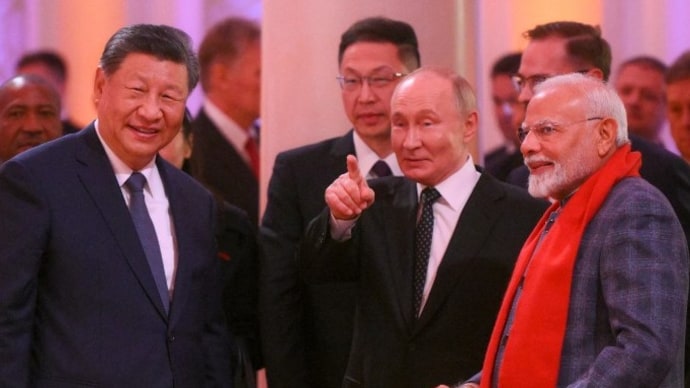
At the 2024 BRICS Summit in Russia's Kazan, Russian President Vladimir Putin, Chinese President Xi Jinping, and Indian Prime Minister Narendra Modi came together for high-level discussions. (Image: AFP/BricsRussia2024(dot)ru)


India Today World Desk
New Delhi,
 Aug 9, 2025 
Written By: Sushim Mukul

In Short

Brics nations unite to counter Trump's aggressive tariffs, dollar dominance

PM Modi and Brazil's Lula talk of deepening ties amid mounting US tariffs

Trump embraces crypto amid reports of Brics push for alternative currency

In the past week, the Global South has witnessed a flurry of diplomatic activity. India, China, Brazil, and even Russia, the 'expelled' Global North member, have all been actively engaged in discussions. Much of this momentum can be attributed to US President Donald Trump's aggressive tariff policies and vocal attacks on the bloc. This huddle of the OG Brics members, now expanded by five new member nations, appears to be forging a stronger alliance, one that experts say is preparing to challenge the US dollar's dominance and push back against Trump's daily tariff offensives. A heavy Brics blowback is most likely brewing against the Trump-led US.

The surge in Brics' diplomatic engagement coincides with Trump's imposition of steep tariffs on India, Russia, China, and Brazil, alongside his repeated criticism of the bloc as "anti-American".

Adding to the economic tensions is Trump's evolving stance on cryptocurrency. Once dismissive, calling Bitcoin a "scam", Trump is now aggressively pushing to make the US the world's crypto capital. This is widely viewed as a response to perceived threats from a potential Brics currency aimed at challenging the petrodollar's dominance, as well as an attempt to capitalise on the lucrative digital asset market.

The signs that the Brics is gearing up to take on Trump are undeniable. In just the past week, around half a dozen key developments have indicated concrete moves underway.

Prime Minister Narendra Modi on Friday said he had a "very good and detailed conversation" with Russian President Vladimir Putin and reaffirmed India's commitment to deepen the strategic partnership between both countries. Just a day earlier, India's National Security Adviser Ajit Doval met Putin in Moscow.

Reports suggest that Putin will visit New Delhi later this year.

The Indo-Russia bear hug came even as Brazilian President Lula da Silva spoke to PM Modi on Thursday.

Meanwhile, Modi is set to attend the Shanghai Cooperation Organisation (SCO) summit in China later this month, his first visit there in seven years. Beijing's tone has become cordial, with its mouthpiece, The Global Times, visibly softening its tone toward India.


WHAT BRICS MEMBERS HAVE SAID ON TRUMP'S TARIFFS


Trump has escalated trade tensions by doubling tariffs on Indian goods to 50%, citing India's continued imports of Russian oil, which accounts for 36% of its oil imports. Brazil faced a similar 50% tariff increase, linked to Trump's allegations of political persecution of former Brazilian President Jair Bolsonaro.

Trump's rhetoric has been blunt and nasty. He called India and Russia "dead economies" and accused New Delhi of profiting from reselling Russian oil. He further warned that Brics nations aligning against US interests would face an additional 10% tariff.

India has called the tariffs "unjustified".

Foreign Ministry spokesperson Randhir Jaiswal said India's "steady and time-tested" ties with Russia, urging the US not to view these relations through a third-country lens.

Meanwhile, Brazil's Lula rejected Trump's offer for direct trade talks, telling news agency Reuters, "I will not call Trump to negotiate anything I'm not going to humiliate myself". Instead, Lula vowed to use Brazil's Brics presidency to galvanise collective support and responses. He said he was planning discussions with PM Modi and Xi Jinping on the tariffs' impact.

LINK BETWEEN BRICS CURRENCY, TRUMP CRYPTOCURRENCY?

Trump's flip, from dismissing Bitcoin as a "scam" to positioning the US as the global cryptocurrency capital, shows the move might also be aimed at mitigating adverse affects of the potential Brics currency.

On Thursday, Tump signed an executive order allowing cryptocurrencies and alternative assets like private equity and real estate to be included in 401(k) retirement accounts, reported The Guardian.

Since his return to the White House, Trump has taken concrete steps in the crypto domain.

In January, he signed an Executive Order to promote US leadership in digital assets and establish a Strategic Bitcoin Reserve. He appointed crypto advocates like Paul Atkins as the Securities and Exchange Commission chair and David Sacks as "crypto czar". He has even backed his family's crypto venture, World Liberty Financial, which has engaged with Pakistan on cryptocurrency.

This shift is seen as a strategic move to counter the potential threat from Brics nations, who are exploring alternatives to the dollar's dominance through initiatives like Brics Pay and discussions of a commodity-backed currency. India, however, has denied pursuing a common Brics currency

By promoting a US-controlled crypto ecosystem, including the Strategic Bitcoin Reserve, Trump aims to maintain America's financial edge in a rapidly evolving global economy.

As American businesswoman Sandy Carter noted in Forbes, this approach could significantly impact the dollar's role as the world's main reserve currency. With more countries exploring digital currencies and decentralised finance, the dollar's dominance is at risk, but by embracing digital assets, the US could retain leadership and adapt to this shifting landscape.

MODI AND LULA STRATEGISE AGAINST US TRADE PRESSURE

Representing approximately 46% of the world's population and contributing around 35.6% to global GDP, the Brics bloc is coalescing against Trump's trade and economic policies.

Lula's hour-long call with PM Modi focused on deepening India-Brazil ties in trade, defence, energy, and technology, aiming to boost bilateral trade from $12 billion in 2024 to $20 billion by 2030. Lula also confirmed a state visit to India in early 2026. PM Modi, in a post on X, called for a "people-centric partnership" among Global South nations. He batted for a broader alignment, which is seen as a direct response to Trump's tariffs and policies.

"So basically, the world's largest democracy and South America's biggest player are swapping notes on how to play hardball with the US," said investor and influencer Mario Nawfal, summarising the situation.

"Next stop? Beijing. Modi's first trip to China in seven years, landing this August, as US–India vibes hit their frostiest point in a decade," added Nawfal.

During his recent Moscow visit, NSA Doval described previous India-Russia summits as "watershed moments". Then came the reports on Putin's planned visit to New Delhi later this year. Modi's attendance at the SCO summit in Tianjin signals India's and China's intent to better ties despite persisting border tensions.

As Brics nations tighten their economic and diplomatic bonds following Trump's tariff wars, they are clearly signalling a united front against the American President's aggressive trade tactics and efforts to maintain dollar supremacy. The evolving alliance not only challenges the status quo but also accelerates the shift toward a more multipolar global world, with the Global South seeking its rightful share. With Trump's tariffs hitting hard, the Brics coalition is gathering strength, and is fuelling a storm of resistance. A Brics blowback is likely coming for Trump.

- Ends
Published By:
Sushim Mukul
Published On:
Aug 9, 2025


India paid Trump insider $1.8 million - gets slapped with highest tariff anyway

Alexander Willis
August 9, 2025 
RAW STORY


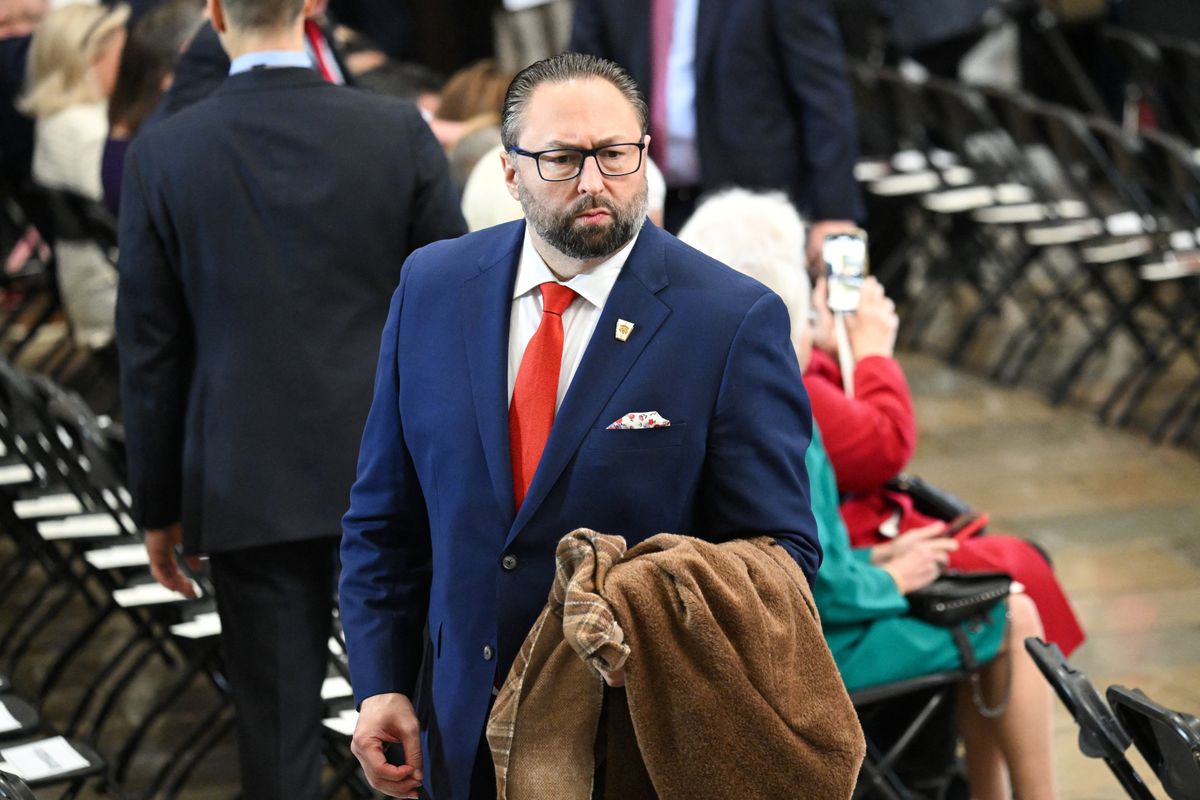
Jason Miller, advisor to US President-elect Donald Trump, arrives for the inauguration ceremony before Trump is sworn in as the 47th US President in the US Capitol Rotunda in Washington, DC, on January 20, 2025. SAUL LOEB/Pool via REUTERS

As governments worldwide scrambled to sway President Donald Trump and secure favorable trade terms before his so-called reciprocal tariffs took effect this week, India wagered heavily on a single Trump insider – and lost.

According to a report Saturday from Politico, India had paid $1.8 million to Jason Miller, a longtime Trump ally who was the president’s chief spokesman during his 2016 campaign, and senior advisor for his 2020 and 2024 campaigns, and Miller was paid, according to Justice Department documents obtained by Politico, for “strategic counsel, tactical planning and government relations assistance.”

Yet despite having the president’s ear, India’s $1.8 million bet failed to pay off, with India ending up being slapped with among the highest tariff rates of any nation at 50%, in large a response to the country continuing to buy Russian oil, undermining Trump’s leverage to end the Russian-Ukraine war.

“I think the current leadership in Washington seems to be disrupting the traditional way of doing things,” said Mukesh Aghi, CEO of the U.S. India Strategic Partnership Forum, speaking with Politico.

“It’s not just about the business part, it’s about diplomacy, it’s about dealing with other nations. I think the whole old model of trying to influence does not seem to work.”

Trump was reportedly “completely upset” with Indian leadership over its refusal to budge on key demands of the White House, a frustration that even a well-paid Miller apparently couldn’t overcome. In response, India has slapped back at the United States, pausing a previously planned purchase of billions of dollars’ worth of American-made weapons.

As to Miller’s failure to sway Trump, one lobbyist told Politico that traditional lobbying efforts don’t work on the current president.

“From my perspective, the best way to lobby President Trump is for the leader to face-to-face lobby him,” said Tami Overby, a partner at the South Korean lobbying group DGA Group Government, speaking with Politico.

“It seems President Trump, he always talks about his relationships with other leaders. You know, whether we’re in a good spot with that country or not [depending] if he feels like he’s got a good relationship. And he sees himself as a deal maker.”

The Other Side of Trump’s Tariff-War & India’s Response!


August 8, 2025

Photograph Source: The White House – Public Domain

What can be said about President Donald Trump’s attempt to exercise a “tariff-war” against countries which do not comply with his terms? This economic policy of his has been described by some as his bargaining-tactic, which perhaps is equivalent to compelling others to bow to his terms. But, what if all don’t give it much importance? What if they choose not to pay the attention to higher tariffs on certain goods, Trump has threatened to impose, which are imported from them? From his angle, Trump is perhaps over-confident that targeted countries, including Russia and China, have no other option but to go by what he says. US has threatened sanctions against Russia if it does not agree to a ceasefire with Ukraine. In other words, Trump appears adamant about an end to Ukraine-war. US has imposed additional 25% on India for not agreeing to stop import of Russian oil. This increases total duties of Indian goods imported to US to 50%.

Simply speaking, increase in tariff of whatever is imported to US also increases prices of the same for American investors, market, consumers and for whoever the goods bear importance within US. Slowly but definitely, it’s inflationary impact is likely to become more prominent in United States. Irrespective of whatever be logic deciding Trump’s tariff, he is apparently being over-confident by assuming that only his voice will echo, heard and then accepted by targeted countries. Regarding Ukraine-crisis, if President Trump is so concerned about continuity of a conflict, why has he chosen not to taken a similar stand on Gaza-genocide, prospects of which being heeded are stronger? The explanation is simple. In this case, Israel is too dependent on United States. If and when, Washington does not take a tough stand, Tel Aviv will have no option but to actually yield to ceasefire and stop “eliminating” Palestinians. The same cannot be said about Russia.

It is possible, at a point, US gave greater importance to continuity of Ukraine-crisis, considering it as a means to weaken Russia. In other words, Ukraine is apparently being used as a pawn between US and Russia. Diplomatically, Russia is wise enough to consider offer of dialogue and so forth on the issue. But that it will yield to US on Trump’s terms may be viewed as hardly possible. Russia still remains a strong and key power. It has considerable support and entertains good economic ties with a number of nations, which are least likely to be affected by sanctions imposed upon it by US.

India certainly has had good ties with US but New Delhi is not solely, exclusively and/or totally dependent on primarily US. It has maintained strong ties with Russia which it cannot afford to risk at “command” of US. Why should it? United States’ hard stand against Russia on any issue cannot compel all other countries to pursue the same path, diplomatically and economically. India has the sovereignty and independence and one may say can afford to chalk its own foreign policies. This is not the age of colonialism, neo-colonialism or neo-imperialism, when US or any power can dictate terms, in name of tariff-war, sanctions or any other strategy, to other countries.

But yes, it cannot be ignored, quite a few countries seem to have no option but to comply with what Trump is directing them to. Certainly, they also appear to caught in a fix given they are not too sure of what the next stand of US President could be. Their dependence, rather over-dependence on US, seems to have left them with extremely limited options. They appear to be caught in a dependency-trap.

Yes, despite a few discounts for some countries, tariff-war is likely to spell economic problems for all, with India and Brazil being among those severely affected. As indicated earlier, it is least likely to spare Americans also. But this is just a part of the game, Trump is playing to gain the upper edge against Russia. His logic is that purchase of oil from Russia is equivalent to giving funds to aggressive Russia and aiding it against Ukraine. If Trump was seriously concerned about ending conflicts, as he said at time of assuming office, the situation would have been different in Israel-occupied Palestine at present.

Trump is probably hopeful that his tariff-ploy will prompt Russian allies, including BRICS-members to his side and isolate Russia. His aim is to apparently spell economic as well as diplomatic blows for Russia. Chances of his having his way in this game at present seem quite limited. On the contrary, the impact seems to be contrary to what was probably speculated upon by Trump. Signs of Russia being isolated are hardly visible. His tariff-war appears to have prompted countries, who are closer to Russia than to USA- including BRICS member to consider closer ties among themselves. The message is simple. They are wise enough not to get entangled in Trump’s dependency-trap, the manner in which United States’ western allies have got caught in it. What the world is witnessing at present is not Trump’s “attempt” to convince Russia to a ceasefire or his tariff-war against those not yielding to his demands, particularly that of not buying oil from Russia, but another ploy. His predecessor Joe Biden was hopeful of weakening Russia by continuity of Ukraine-war. Trump is apparently not. He is thus trying his hand at tariff-war with the same objective. He hasn’t probably given much importance to considering options of his strategy not being acceptable to quite a few countries. More than probably he bargained for. Now, it’s to be watched, who has the last laugh. Perhaps, nobody, certainly not Trump!

Nilofar Suhrawardy is a senior journalist and writer with specialization in communication studies and nuclear diplomacy. Her latest book is Modi’s Victory, A Lesson for the Congress…? (2019). Others include:– Arab Spring, Not Just a Mirage! (2019), Image and Substance, Modi’s First Year in Office (2015) and Ayodhya Without the Communal Stamp, In the Name of Indian Secularism (2006).

TRUMP LIES!

Trump says court halt of tariffs would cause ‘Great Depression’

IT WAS TARIFFS THAT CAUSED THE GREAT DEPRESSION


By AFP
August 8, 2025


Trump's hyperbolic statements come as a US appeals court weighs the legality of his broad use of emergency powers to enact sweeping tariffs on trading partners - Copyright AFP Brendan SMIALOWSKI

US President Donald Trump warned Friday of cataclysmic consequences on the US economy if a court rules that his imposition of sweeping tariffs constitutes an illegal power grab.

If a “Radical Left Court” strikes down the tariffs, “it would be impossible to ever recover, or pay back, these massive sums of money and honor,” he wrote on his Truth Social platform.

“It would be 1929 all over again, a GREAT DEPRESSION!” he said.

Trump’s hyperbolic statements come as a US appeals court weighs the legality of his broad use of emergency powers to enact sweeping tariffs on trading partners.

A lower court ruled against Trump in May, but the US Court of Appeals for the Federal Circuit put the ruling on hold as it considers the case.

Trump on Friday touted billions of dollars in tariff revenue “pouring” into the Treasury — paid by US importers — and recent stock market records, as proof his levies had created “the largest amount of money, wealth creation and influence the U.S.A. has ever seen.”

Many economists meanwhile worry the tariffs are stoking inflation and see trade policy uncertainty as slowing investment.

Since returning to the White House in January, Trump has announced a slew of new tariffs, seeking to force a reordering of global trade that he has long claimed is biased against the United States.

In addition to sweeping tariffs invoked under declarations of economic emergencies, he has also instituted sectoral tariffs of between 25 percent and 50 percent on steel and other items.

Those levies have generally followed government investigations and are not at issue in the pending litigation.

At a July 31 hearing, members of the appeals court appeared skeptical of the Trump administration’s arguments that it had broad discretion to declare national economic emergencies and invoke tariffs as a remedy.

To invoke his so-called “reciprocal” tariffs on many US trade partners, Trump declared a national emergency over “large and persistent annual US goods trade deficits.”

Opponents to the White House policy have argued that such a reason does not qualify under the law Trump has cited for the tariffs, the International Emergency Economic Powers Act.

They also argue that levying blanket tariffs on imports requires the consent of Congress under the US Constitution.

The case is likely to end up in the Supreme Court, where conservatives enjoy a 6-3 majority, though analysts say the outcome is uncertain.


'Grim': Top economist says Americans in for a 'nasty shock' on inflation thanks to Trump


Official White House Photo by Joyce N. Boghosian
August 08, 2025 
ALTERNET

Citing President Donald Trump’s “really extreme policies on both trade and immigration,” and particularly his tariffs, Nobel Prize–winning economist Paul Krugman, one of the nation’s most prominent economic voices, is warning that the U.S. could soon face “stagflation”—a toxic mix of high inflation, rising unemployment, and stagnant demand.

It’s Beginning to Smell a Lot Like Stagflation,” Krugman wrote on Friday. Noting that “it’s all about Trumponomics,” he warned that “the data really are looking increasingly stagflationary.”

Calling one report “quite grim on both inflation and jobs,” Krugman, an economics professor, warns that “just around the corner,” Americans could be in for a “nasty shock” of “inflation of 4 percent or more,” which is about a 50 percent increase from where inflation is right now.

Krugman also notes that not only are tariffs inflationary, Trump’s “war on immigrants is also inflationary, because it is choking off production in industries that rely heavily on foreign-born workers.” He points to stories of no one available to pick crops, which then rot in fields, and “construction projects hobbled by ICE raids and a climate of fear.”

On Friday, President Trump appeared to issue a warning to the judiciary not to overturn his tariffs, a possibility given that one court has deemed them unlawful and an appeals court seemed skeptical that the basis for them, a “national emergency,” was valid. Trump said if they did it would lead to “1929 all over again,” a reference to the Great Depression.

Krugman agrees that the President’s tariffs may indeed be unlawful (as do many legal scholars) but he doubts they will be overturned.

“I wouldn’t get my hopes up,” he says of the courts overturning the tariffs. “And if the tariffs are here to stay, we can expect them to be passed on to buyers.”

Krugman is far from alone in his warning.

“America is showing new signs of stagflation,” reported Axios last week.

“Wall Street strategists are sounding alarms that the US economy is drifting toward stagflation as the impact of trade tariffs start to show up,” Bloomberg News reported on Thursday.

“The economy looks like it’s moving closer to a dreaded stagflationary scenario,” reported Business Insider.


'Embarrassment': Trump mocked for 'making up numbers' alongside 'quack economist'


U.S. President Donald Trump arrives for a Purple Heart Day event to honor members of the military wounded or killed in action, in the East Room of the White House in Washington, D.C., U.S., August 7, 2025. REUTERS/Jonathan Ernst
August 07, 2025 
ALTERNET

President Donald Trump held an event at the White House today with an economist in which they both insisted that his firing of the United States' top economic statistician was justified. But several experts noticed that both Trump and his economist weren't giving Americans the full picture.

During the event, economist Stephen Moore — who is a co-author of the far-right Project 2025 playbook — stood aside a chart and claimed that under former President Joe Biden's administration, the Bureau of Labor Statistics (BLS) overestimated job growth by 1.5 million jobs. Trump insisted the overestimation was intentional, while Moore said regardless of the intent it showed "incompetence" on the part of the Biden administration's BLS.

However, as the New York Times pointed out, adjustments of jobs numbers are a routine part of what the BLS does, with the paper calling it "an inevitable if sometimes frustrating part of trying to measure a $30 trillion economy."

READ MORE: 'I'm down 90 prosecutors': Jeanine Pirro blasts Trump's mass firings — without naming him

But even when taking the adjustments into account, CNN reported that the Biden administration oversaw the creation of approximately 16.6 million jobs between February of 2021 (his first full month in the White House) and December of 2024. And while some of those jobs were the economy rebounding from the Covid-19 pandemic and adding jobs that had been lost as the economy shut down, the U.S. economy surpassed pre-pandemic employment levels by June of 2022, and continued to add roughly 240,000 new jobs each month — well above the monthly average of 125,000 new jobs per month since 1939.

Both Trump and Moore were roundly mocked on social media over their presentation. Former Biden administration official Dan Koh tweeted: "This is their playbook. Cast doubt on BLS methodology, use that to replace it altogether, jobs numbers magically higher, Trump celebrates despite apples to oranges. Don't be fooled — more language like this will be in the new appointee's first words to the public."

Alex Jacquez, who was an economic advisor in the Biden White House, also piled on, writing: "Ah ok so they’re going straight to making up numbers. Doesn’t bode well!"

Journalist Jim Stewartson made fun of Moore by pointing out that he was an advisor to 2012 Republican presidential candidate Herman Cain (who proposed the notoriously regressive "9-9-9" tax plan). Journalist Aaron Rupar called Moore a "quack economist" in posting the video of his presentation. Progressive influencer JoJofromJerz reminded her followers that Moore has a $75,000 lien for unpaid federal taxes from 2018. CNBC reporter Megan Cassella wryly noted that one of Moore's charts used the term "medium income" (the proper term is "median income"). And Decatur, Alabama-based journalist Franklin Harris called Moore an "embarrassment" and a "craven sellout."

Watch the video of Trump and Moore's event below, or by clicking this link.


'Living in a Fantasy World': Critics Pounce as Trump's CNBC Interview Goes Off the Rails

"The racism here is on steroids," said one critic about Trump's statements on immigrant farmworkers.


U.S. President Donald Trump waves as he walks across the South Lawn upon return to the White House in Washington, D.C. on August 3, 2025 after spending the weekend at his Bedminster residence.
(Photo by Mandel NGAN / AFP via Getty Images)

Brad Reed
Aug 05, 2025

U.S. President Donald Trump gave a lengthy interview to CNBC on Tuesday and critics quickly pounced on the president for telling a large number of false claims on topics ranging from monthly jobs numbers to the price of gas to international trade agreements.

Toward the start of the interview, CNBC host Joe Kernen pushed back on Trump's claims that the Bureau of Labor Statistics had "rigged" job creation numbers against him and debunked a Trump statement that the BLS had covered up negative jobs data revisions under the Biden administration until after the November 2024 presidential election.

Trump, however, insisted that his statements about hiding downward revisions until after the election were correct even though the biggest downward revisions actually occurred in August 2024, well before the election took place.
Commenting on Trump's assertion, Media Matters for America senior fellow Matt Gertz described it as "completely backwards."

"The BLS announcement on November 1 [2024] showed weak growth of 12,000 jobs in October and downward revisions to August/September of 112,000," Gertz explained on X. "Then after the election, the October figure was revised upward. Impossible to tell if Trump is lying, dumb, or sundowning."

Nick Tiriamos, the chief economics correspondent for The Wall Street Journal, similarly said that Trump was "getting his dates wrong" when he asserted a cover-up of negative jobs numbers given that "the big downward revision" was reported before the election took place.

Trump also made also false claims about the price of gas in the United States falling to just $2.20 per gallon, which prompted Kernen to note that the lowest prices he's seen for gas in the U.S. were $2.80 per gallon.
National security attorney Bradley Moss slammed Trump for his claim about gas prices and added that the latest data show that inflation has been accelerating in recent months as the president's tariffs begin to force companies to raise prices.

"The rest of the country is suffering from higher prices on everything, and this senile old man is living in a fantasy world in which it's simply not happening," he wrote on Bluesky.

Trump proceeded to make false claims about the trade deal he had recently struck with the European Union when he said that the agreement gave him "$600 billion to invest in anything I want." This drew the ire of Steve Peers, a professor of E.U. and human rights law at Royal Holloway University of London.

"Well no, it's a vague, nonbinding, unwritten nonstatement about companies' future investment plans, not cash for him to personally control," Peers commented on Bluesky. "But enjoy your weird demented fantasy, I guess."

Another eye-popping Trump statement came when he tried to defend the use of immigrant labor in the American agricultural industry by claiming that the immigrants had unique physical attributes that were absent from American workers.

"People that live in the inner city are not doing that work," Trump said of the prospects of American citizens picking crops. "They've tried, we've tried, everybody tried. They don't do it. These people [immigrants] do it naturally. Naturally... they don't get a bad back, because if they get a bad back, they die."


This statement drew the attention of Branden McEuen, a historian at Wayne State University who specializes in teaching about the history of the eugenics movement. Specifically, McEuen linked Trump's statement to past racist beliefs about people of color being genetically predisposed to engage in manual labor.

"Trump saying people of color are naturally suited to farm labor sure sounds a lot like the slaveholders that said slaves were naturally inclined to servitude," he remarked.

SiriusXM radio host Michelangelo Signorile picked up a similar vibe from Trump's statement about farmworkers.


"The racism here is on steroids, as Trump tried to make [the] case to MAGA that farmers need exemptions," he wrote. "[Trump] says brown people do hard labor 'naturally' and don't get [a] bad back, while also saying they've tried to replace them with people 'in the inner city' but they can't get them to do the work."