Friday, August 29, 2025

CRIMINAL CAPITALI$M

Corruption scandal threatens Argentina’s right-wing President Milei and his influential sister

E
Protesters pelted Argentina’s President Javier Milei with stones on Wednesday after audio recordings leaked by the press suggest that Milei and his influential sister Karina were involved in embezzling public funds from the National Disability Agency. President Milei denies the accusations.


Issued on: 29/08/2025 -
By: FRANCE 24

Argentina's President Javier Milei speaks in Buenos Aires, Argentina on July 10, 2025. © Mariana Nedelcu, Reuters

On the campaign trail in the suburbs of Buenos Aires, Argentina’s President Javier Milei was pelted with stones, plants and bottles on Wednesday by protesters in the town of Lomas de Zamora, traditionally a Peronist opposition stronghold.

Milei has become embroiled in a corruption scandal since a series of audio recordings were released by the press, which seem to implicate Milei and his sister Karina – who serves as secretary general of the presidency – in an embezzlement scheme.

In the recordings, the former director of Argentina’s National Disability Agency (Andis), Diego Spagnuolo, discusses alleged bribes paid by a pharmaceutical company to members of the president’s administration. Spagnuolo went on to serve as a member of President Milei's legal team.

Karina Milei, nicknamed “the boss” by her brother, is suspected of syphoning off 3 percent of a sum paid by Andis to purchase medicines from a private healthcare group.

The president has denied all wrongdoing. Shortly before arriving in Lomas de Zamora on Wednesday, Milei told reporters: “Everything [Spagnuolo] says is a lie … We are going to bring him to justice and prove he lied.”

But the press revelations have prompted the public prosecutor's office to open an investigation into the allegations.


Allegations of kickbacks

The Argentine press released a series of audio recordings on August 20 featuring a voice believed to be Spagnuolo implicating Eduardo “Lule” Menem, Karina Milei’s undersecretary in her role as secretary general to the president.

Menem is believed to be the lynchpin of the corruption case. He is also the cousin of the current president of the Chamber of Deputies, Martín Menem.

In the recordings, Karina Milei is named as the potential recipient of 3 percent of the sum the state spent to buy medicines for people living with various chronic conditions from Suizo Argentina, a private company.

The voice in the recordings alleges that the president was aware his staff and his sister were asking for kickbacks. “He's not involved, but all his close associates are. They ask people (...) and service providers for money,” it says.

The recorded voice tells the president: “Javi, you know that they steal. You know your sister steals, don't play dumb.”

In another extract, the speaker says he warned the president that the embezzlement scheme was being run by a businesswoman linked to the Menem family who was pocketing millions.

“She pockets half a million dollars per month thanks to the medicines,” he says.

On the same day the recordings were released, a complaint was filed against President Milei, Karina Milei, Eduardo Menem, Diego Spagnuolo and Eduardo Kovalivker, the owner of Suizo Argentina.


The group are accused of participating in a “system of collecting and paying bribes linked to the purchase and supply of medicines, with a direct impact on state funds”.

The lawyer who filed the complaint, Gregorio Dalbón, is one of the former legal representatives of Peronist ex-president Cristina Fernández de Kirchner, who was in power from 2007 to 2015 and is currently under house arrest after being sentenced for corruption.

Prosecutors ordered at least 15 searches in connection with the investigation. On August 22, $266,000 and 7 million Argentine pesos (around $5,000) were seized from businessman Emmanuel Kovalivker – a co-director, along with his father Eduardo, of Suizo Argentina.

Mobile phones belonging to Spagnuolo and the Kovalivkers were also seized by investigators to compare the leaked audio recordings with other conversations.

According to local media, no conversations with Karina or Javier Milei were found on Spagnuolo’s mobile phone during the investigation despite their apparently close relationship.

President Milei on Wednesday told journalists that he would bring Spagnuolo “to justice and prove he lied”, hinting that he might press charges against the former director of Andis.

Karina Milei has so far made no public comment on the charges against her.

Several hours after the scandal broke, Spagnuolo was dismissed from his role as one of the president’s lawyers as a “preventative” measure.

The Argentine presidency also placed Andis under its jurisdiction for 180 days.

Eduardo and Martín Menem on Monday denied the allegations against them, saying they were an attempt at political maneuvering ahead of crucial legislative elections in Argentina in October.

Suizo Argentina denied any irregularities in its activities in a statement shared by President Milei on social media on Tuesday.

Milei’s second corruption scandal


The corruption scandal comes amid broader tensions over disability benefits in Argentina. The executive branch is currently examining Argentina’s disability benefits system due to suspicions over irregularities on the list of beneficiaries.

In early August, Milei vetoed laws approved by Congress aimed at helping the elderly and disabled, sparking angry reactions from lawmakers. Argentina’s Chamber of Deputies later rejected the presidential veto.

This is not the first time that President Milei has been caught up in a corruption scandal. In February 2025, the president promoted the $LIBRA cryptocurrency on the X social network. After Milei's endorsement, the currency soared in value but then plummeted 90 percent within two hours.

Industry experts called the operation a "rug pull" – a scam where developers unveil a crypto token, attract investors, then quickly cash out. The Argentine government created a special investigations unit to investigate any irregularities, but it was disbanded by presidential decree in May.

Milei is about to face his first test at the polls since being elected president in 2023: mid-term elections will go ahead on October 26 to elect around half the seats in the Chamber of Deputies and a third of the seats in the Senate.

The election will also offer some insight into how voters feel about Milei, who has enacted drastic public spending cuts aimed at reining in inflation but which have also plunged Argentina into recession.

This article was adapted from the original in French by Joanna York.
Inside Ghana's last 'witch camps'

REPORTERS © FRANCE 24
Issued on: 29/08/2025 - 

11:43 min
From the show


In northern Ghana, hundreds of women accused of witchcraft are living in open-air prisons. Rejected by their families and communities, these women are forced to seek refuge in "witch camps", where living conditions are extremely difficult. NGOs and politicians are now working to close these inhumane camps and criminalise accusations of witchcraft. FRANCE 24's Julia Guggenheim and Damien Koffi report for Pool Africa.


Several women accused of witchcraft have been brutally murdered in Ghana in recent years. One such incident five years ago caused a national outcry. Since then, a coalition of NGOs and politicians have been working to criminalise accusations of witchcraft and close the "witch camps".


'NASTY MAN'

Trump withdraws Secret Service protection for Kamala Harris

PETTY, VENDICTIVE, DANGEROUS

US President Donald Trump has terminated Secret Service protection for Kamala Harris, the former vice president and his rival in the 2024 election, officials said Friday. The move comes as Harris prepares to go on a book tour this fall to promote her account of her short presidential run against Trump.


Issued on: 29/08/2025 - 
By: FRANCE 24

US former vice president and Democratic presidential candidate Kamala Harris arrives to board Air Force Two as she departs LaGuardia Airport in Queens, New York, September 22, 2024. © Kena Betancur, AFP


US President Donald Trump has canceled former vice president Kamala Harris's Secret Service protection, officials said Friday, in the Republican's most high-profile move of its kind against his political rivals.

The Secret Service customarily protects ex-VPs for six months after they leave office, a period that ended on July 21 for Harris, the defeated Democratic presidential candidate last year.

But then-president Joe Biden approved a year-long extension for Harris in a previously undisclosed order that Trump has now terminated, a senior White House official told AFP on condition of anonymity.

Harris's office also confirmed the move.

"The Vice President is grateful to the United States Secret Service for their professionalism, dedication, and unwavering commitment to safety," Kirsten Harris, a senior advisor to Harris, told AFP.

While Harris has kept a low profile since losing the election, the 60-year-old is scheduled to go on tour this fall to promote a book she has written on her failed presidential bid. The travel will force her to appear often in public.

Harris's inside look at her short presidential run against Trump is titled "107 Days". The memoir, published by Simon & Schuster, will be released on September 23 in the United States.

The first woman to serve as vice president of the United States, Harris became the Democratic nominee after Biden, now 82, withdrew from the race amid concerns about his cognitive health.

Harris said she wrote the book with "candor and reflection" and promised a "behind-the-scenes account" of the campaign.

The move to withdraw her protection comes even though the Trump administration has repeatedly spoken of the need for security for current officials following the assassination attempt that the Republican survived in July 2024 in Butler, Pennsylvania.
Political opponents

Trump sent a signed memo ordering Homeland Security Secretary Kristi Noem to "discontinue any security-related procedures previously authorized by Executive Memorandum, beyond those required by law" for Harris from September 1, said CNN, which first reported the move.

The Secret Service did not immediately respond to a request for comment.

Read moreFederal Reserve Governor Lisa Cook says Trump 'has no authority' to fire her

Since taking office in January, Trump, 79, has taken similar measures against a long list of his perceived enemies and political opponents.

He has stripped other officials and former officials of their security clearances to receive sensitive information – including Joe Biden himself – targeted law firms involved in past cases against him and pulled federal funding from universities.

Biden and his wife Jill get protection for life under federal law as a former president and his spouse, but Trump in March withdrew government bodyguards from Biden's son Hunter and daughter Ashley.

Trump at the time said it was "ridiculous" that Hunter Biden had a security detail of up to 18 people.

Trump has also withdrawn protection for former national security advisor John Bolton, former secretary of state Mike Pompeo and Anthony Fauci, who led the country's fight against Covid-19.

Last week, FBI agents raided the home and office of Bolton, one of Trump's fiercest critics, in an investigation officials said was linked to classified documents.

The White House has justified its decisions on removing security protection and clearances by saying that people are not entitled to them for life and that many are "quite wealthy" and can afford their own bodyguards.

After his first term in office from 2017 to 2021, billionaire Trump issued an order giving a six-month extension of Secret Service protection to all four of his adult children and three senior administration officials.

(FRANCE 24 with AFP)
Trump seeks to scrap $5 billion in foreign aid

US President Donald Trump is seeking to claw back $5 billion in congressionally-approved funding for foreign aid programmes – a move that is likely to spur backlash from Democrats and increase the likelihood of a government shutdown.


Issued on: 29/08/2025 - 
By: FRANCE 24

President Donald Trump speaks during a cabinet meeting at the White House, August 26, 2025, in Washington. © Mark Schiefelbein, AP

US President Donald Trump has moved to cut $5 billion of congressionally-approved foreign aid, the White House said Friday – raising the likelihood of a federal shutdown as Democrats oppose the policy.

The cuts target programmes of the Department of State and the United States Agency for International Development, Trump wrote in a letter to the House of Representatives.

The president "will always put AMERICA FIRST", the White House Office of Management and Budget said on social media, releasing a copy of the letter.

Trump has effectively dismantled USAID, the chief US foreign aid agency, since taking office.


Founded in 1961 as John F. Kennedy sought to leverage aid to win over the developing world in the Cold War, USAID has been incorporated into the State Department after Secretary of State Marco Rubio slashed 85 percent of its programming.

Rubio welcomed Trump's move as part of "rooting out fraud, waste, and abuse from the US government, saving American workers billions of dollars".

He said among the funding included money for global LGBTQ awareness.

Chuck Schumer, who leads the Democratic minority in the US Senate, described Trump's little-known legislative tactic, technically known as a pocket rescission, as illegal.

"It's clear neither Trump nor Congressional Republicans have any plan to avoid a painful and entirely unnecessary shutdown," he said.

Some moderate Republican also expressed their opposition to Trump's effort to stop spending already approved by lawmakers.

Trump, after taking office for the second time in January, launched a sweeping campaign to downsize or dismantle swaths of the US government.

Republicans control both chambers of Congress, but need Democrat support in the Senate to pass new spending laws.

Trump, who is pushing to extend presidential powers, aims to claw back the spending late in the fiscal year so that Congress may not have time to vote before the funding expires next month.

Democrats have warned that any attempt to reverse funding already approved by Congress would doom negotiations to avoid budgetary paralysis, the so-called shutdown, after September 30.

The United States last averted shutdown, with hours to spare, in March.

Shutdowns are rare but disruptive and costly, as everyday functions like food inspections halt, and parks, monuments and federal buildings shut up shop.

Up to 900,000 federal employees can be furloughed, while another million deemed essential – from air traffic controllers to police – work but forego pay until normal service resumes.

(FRANCE 24 with AFP)
GUNBOAT DIPLOMACY 

US warship enters Panama Canal, heading toward Caribbean

Panama City (AFP) – A US guided missile cruiser, USS Lake Erie, was seen crossing the Panama Canal from the Pacific to the Caribbean Friday night, after the Trump administration deployed warships near the coast of Venezuela.


Issued on: 30/08/2025 - FRANCE24

The US Navy warship USS Lake Erie (CG 70) crosses the Pedro Miguel Locks of the Panama Canal © MARTIN BERNETTI / AFP


AFP journalists saw the naval vessel passing through one of the canal's locks at around 9:30 pm (0230 GMT Saturday) and navigating east toward the Atlantic.

The United States has said the deployment of warships to the southern Caribbean, near Venezuela's territorial waters, was an anti-drug trafficking operation.

"I didn't know the ship was going to pass... I was surprised," Alfredo Cedeno, a 32-year-old health technician, who took photos of the cruiser, told AFP.

The Lake Erie had been moored for the past two days at the Port of Rodman, at the canal's Pacific entrance.

Washington has accused Venezuelan President Nicolas Maduro of leading a drug cartel and has doubled the bounty for his capture to $50 million.

The United States has, however, made no public threat to invade Venezuela.

Caracas announced on Monday the deployment of 15,000 security forces to the Colombian border for anti-drug trafficking operations.

A day later, Venezuela announced that it would patrol its territorial waters with drones and navy ships.

Maduro also claimed to have mobilized more than four million militia members in response to US "threats."

The 567-foot-long (173 meters) USS Lake Erie displaces 9,800 tons and is based in the port of San Diego, California.


Indonesia protest blaze kills three as anger erupts over driver death

Makassar (Indonesia) (AFP) – At least three people were killed by a fire started by protesters at a council building in eastern Indonesia's Makassar city, a local official told AFP Saturday, after demonstrations across the country following the death of a motorcycle taxi driver hit by a police vehicle.


Issued on: 30/08/2025 - FRANCE24

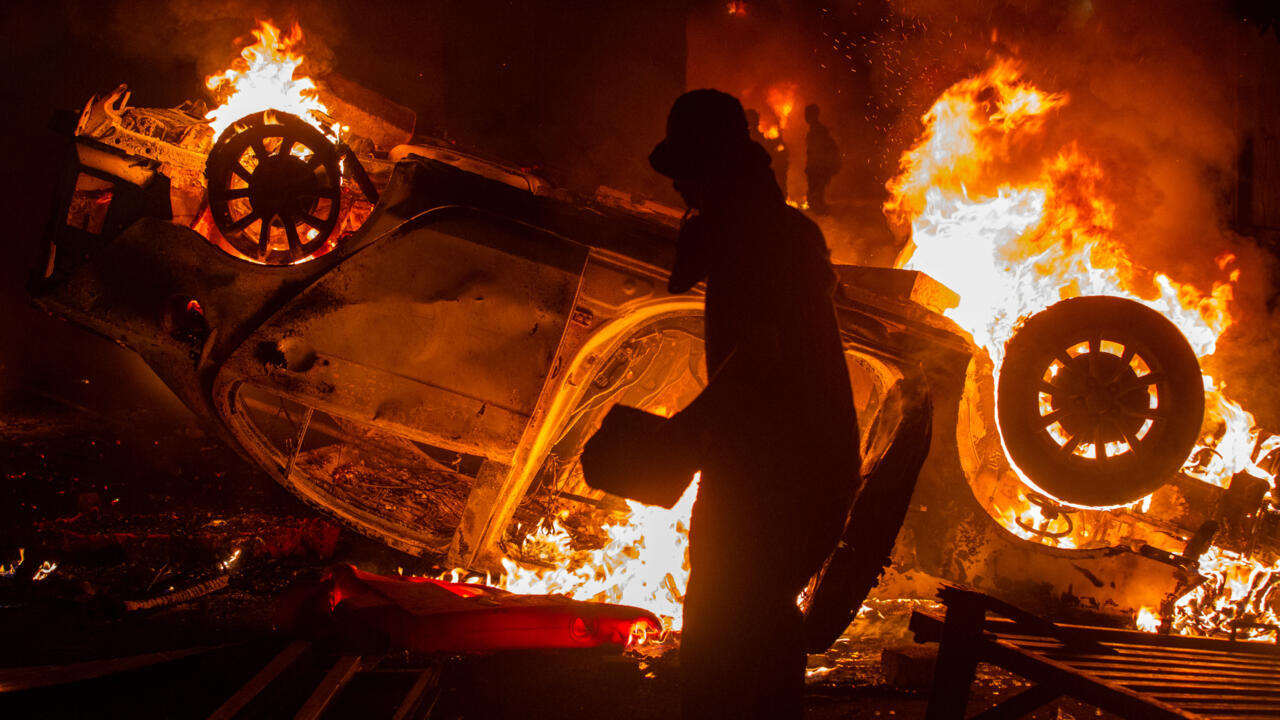
A car is set on fire during a protest in Yogyakarta following the death of a motorcycle taxi driver who was run over by an armoured Brimob vehicle the night before 
© Devi RAHMAN / AFP

The country was rocked by protests in major cities including the capital Jakarta on Friday, after footage spread of a gig motorcycle driver being run over by a police tactical vehicle in earlier rallies over low wages and perceived lavish perks for lawmakers.

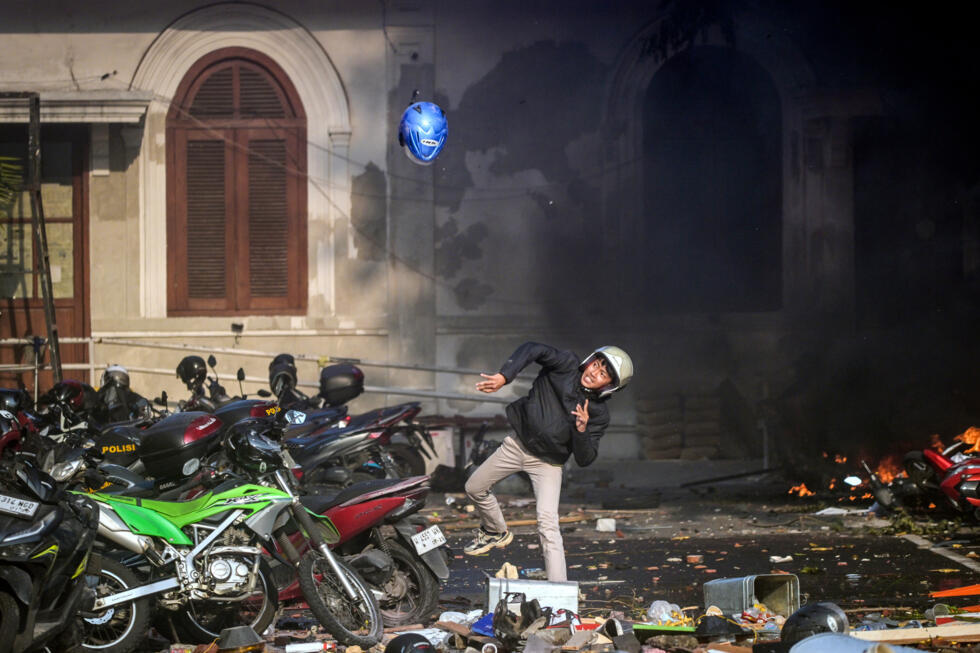
Protests in Makassar, the biggest city on Sulawesi island, descended into chaos outside the provincial and local city council buildings which were both set on fire and vehicles torched as protesters hurled rocks and Molotov cocktails.

Three people were killed as a result of the fire at the Makassar city council building, its secretary Rahmat Mappatoba told AFP.

"They were trapped in the burning building," he said, accusing protesters of storming the office to set it on fire.

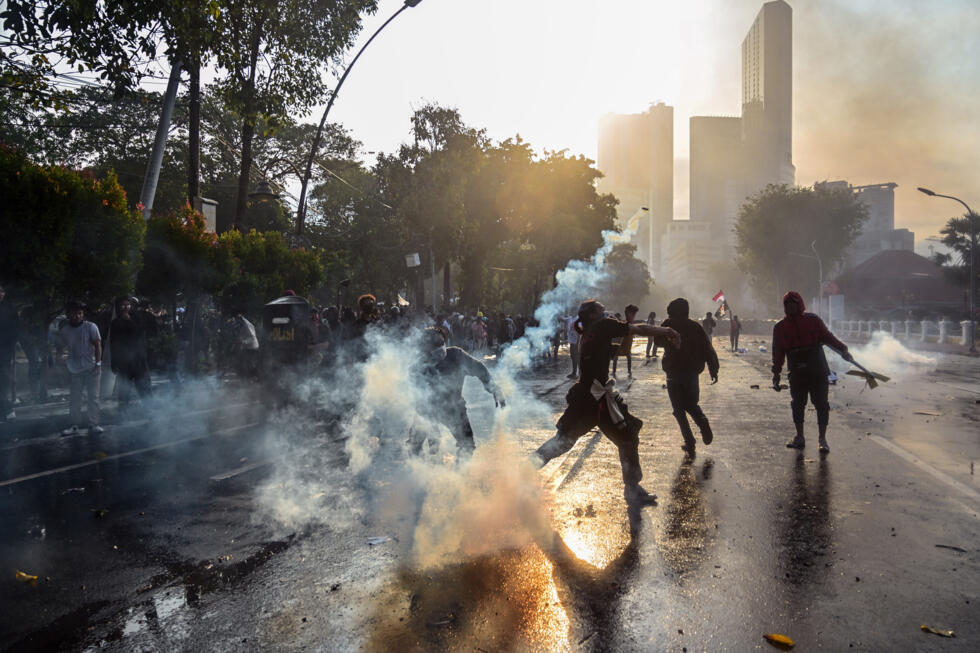
Police fire tear gas to disperse demonstrators during a protest in Surabaya on August 29, 2025 © Juni KRISWANTO / AFP

"This is beyond our prediction, usually during a demonstration, protesters only threw rocks or burn a tyre in front of the office. They never stormed into the building or burned it."

Two of the victims were staff at the local council and another was a civil servant. Two died at the scene while the third died in hospital.

At least four people were injured in the fire and were being treated at hospital, the official said.

The fire has since been extinguished.

Hundreds of people were seen in footage posted by local media cheering and clapping as fire engulfed the building with few security forces in sight.

One man was heard shouting: "there are people upstairs!"

In footage verified by AFP, smouldering debris was seen falling from the roof of the city council building surrounded by palm trees as charred cars flickered with flames.

Images showed the South Sulawesi provincial council building ablaze overnight. Protesters had tried to knock down the gate and storm it.

Makassar and South Sulawesi police did not immediately respond to AFP's requests for comments.

Prabowo test


The protests are the biggest and most violent of Prabowo Subianto's presidency, a key test less than a year into his rule © Juni KRISWANTO / AFP

In Jakarta, hundreds massed outside the headquarters of the elite Mobile Brigade Corp (Brimob) paramilitary police unit they blamed for motorcycle gig driver Affan Kuniawan's death on Thursday, throwing firecrackers as police responded with tear gas.

A group of protesters tried to tear down the gates of the unit, notorious for its heavy-handed tactics, and pulled a sign from the building's facade in chaotic scenes.

Police said they had detained seven officers for questioning in connection with the driver's death.

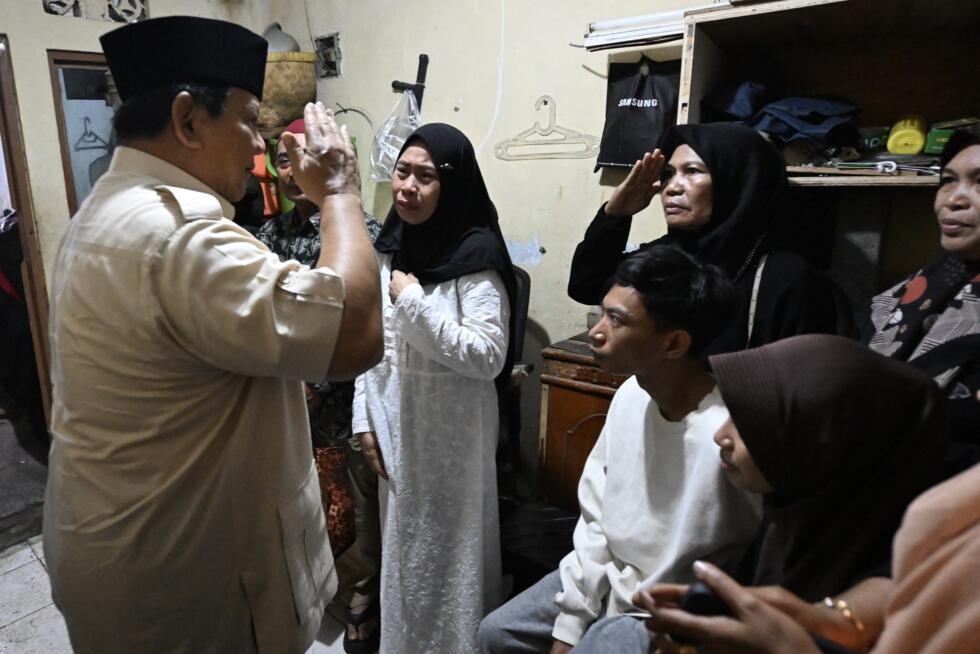
The protests were the biggest and most violent of Prabowo Subianto's presidency, a key test less than a year into his rule that forced him to quickly urge calm, order an investigation and visit the family of the dead driver.

President Prabowo Subianto visited the family of the slain motorcycle gig driver 
© Handout / Indonesia's Presidential Palace/AFP

"I have ordered last night's incident to be thoroughly and transparently investigated, and that the officers involved be held accountable," he said in a statement.

In a message posted on Instagram later Friday, Prabowo said the government was "committed to guaranteeing the livelihood" of the driver's family, posting images with them at their home.

He has pledged fast, state-driven growth but has already faced protests for widespread government budget cuts to fund his populist policies including a billion-dollar free meal programme.

Protests also spread to other major cities, including Yogyakarta, Bandung, Semarang and Surabaya in Java and Medan in North Sumatra province.

© 2025 AFP
Morocco tests floating solar panels to save water, generate power

Tangier (Morocco) (AFP) – Sun-baked Morocco, grappling with its worst drought in decades, has launched a pilot project aimed at slowing water evaporation while simultaneously generating green energy using floating solar panels.


Issued on: 30/08/2025 - FRANCE24

The so-called 'floatovoltaic' panels protect the water surface from the blazing sun and absorb its light to generate electricity © Abdel Majid BZIOUAT / AFP

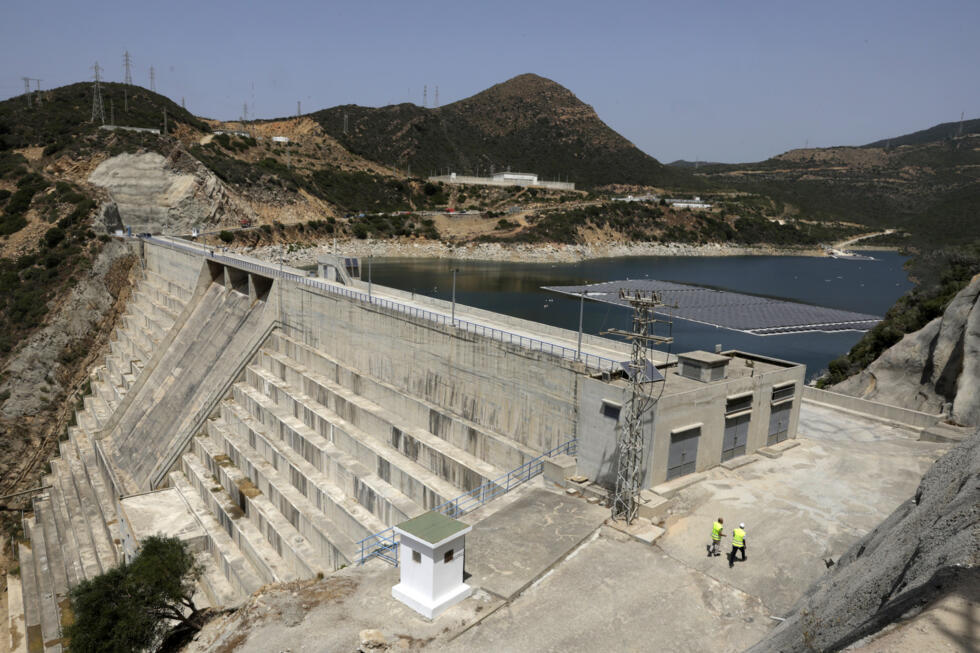
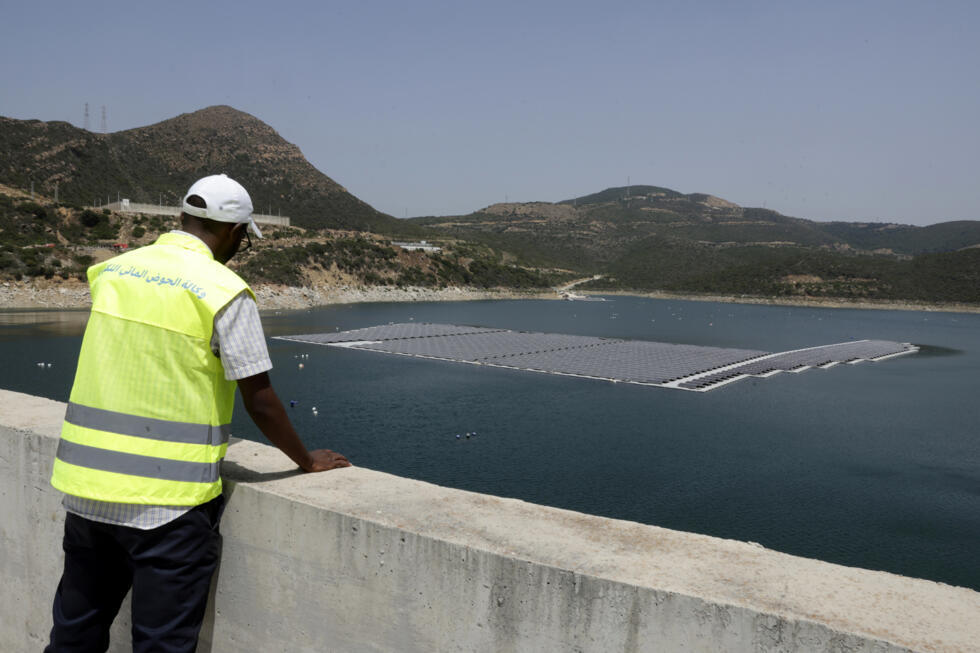
At a major reservoir near the northern city of Tangier, thousands of so-called "floatovoltaic" panels protect the water's surface from the blazing sun and absorb its light to generate electricity.

Authorities plan to power the neighbouring Tanger Med port complex with the resulting energy, and if it proves a success, the technology could have far wider implications for the North African kingdom.

According to official figures, Morocco's water reserves lost the equivalent of more than 600 Olympic-sized swimming pools every day to evaporation between October 2022 and September 2023.

Over that same period, temperatures averaged 1.8C higher than normal, meaning water evaporated at a higher rate.

Alongside other factors like declining rainfall, this has reduced reservoirs nationwide to about one-third of their capacity.

Water ministry official Yassine Wahbi said the Tangier reservoir loses around 3,000 cubic metres a day to evaporation, but that figure more than doubles in the hot summer months.

Moroccan authorities hope that the pilot programme could make the drought-hit country better equipped to deal with water scarcity © Abdel Majid BZIOUAT / AFP


The floating photovoltaic panels can help cut evaporation by about 30 percent, he said.

The water ministry has said the floating panels represent "an important gain in a context of increasingly scarce water resources", even if the evaporation they stop is, for now, relatively marginal.

Assessment studies are underway for another two similar projects in Oued El Makhazine, at one of Morocco's largest dams in the north, and in Lalla Takerkoust near Marrakesh.

Similar technology is being tested in France, Indonesia and Thailand, while China already operates some of the world's largest floating solar farms.

'Pioneering'

Since the Moroccan pilot programme began late last year, more than 400 floating platforms supporting several thousand panels have been installed.

The government wants more, planning to reach 22,000 panels that would cover about 10 hectares at the 123-hectare Tangier reservoir.

Once completed, the system would generate roughly 13 megawatts of electricity -- enough to power the Tanger Med complex.

China already operates some of the world's largest floating solar farms, with similar technology being tested in France, Indonesia and Thailand © Abdel Majid BZIOUAT / AFP

Authorities also have plans to plant trees along the banks of the reservoir to reduce winds, believed to exacerbate evaporation.

Climate science professor Mohammed-Said Karrouk called it a "pioneering" project.

He noted, however, that the reservoir is too large and its surface too irregular to cover completely with floating panels, which could be damaged with fluctuating water levels.

Official data shows water reserves fed by rainfall have fallen by nearly 75 percent in the past decade compared with the 1980s, dropping from an annual average of 18 billion cubic metres to only five.

Morocco has so far mainly relied on desalination to combat shortages, producing about 320 million cubic metres of potable water a year.

Authorities aim to expand production to 1.7 billion cubic metres yearly by 2030.

Karrouk said an urgent priority should be transferring surplus water from northern dams to regions in central and southern Morocco that are more impacted by the years-long drought.

The kingdom already has a system dubbed the "water highway" -- a 67-kilometre canal linking the Sebou basin to the capital Rabat -- with plans to expand the network to other dams.

© 2025 AFP

Wagner Russian paramilitary group's troubled legacy in Mali revealed

A new report has cast a harsh light on the Wagner Group's three years in Mali, showing how the Russian mercenary group was a source of instability rather than a solution to the country’s security woes.


Issued on: 29/08/2025 - RFI

Wagner mercenaries pictured in Mali, 2024. © Thomas Coex/AFP


The Russian paramilitary group Wagner has left behind a troubled record in Mali, according to a report published by the United States-based war crimes watchdog The Sentry.

The organisation assessed Wagner’s impact in the Sahel country between January 2022 and June 2025 – when its mercenaries were replaced by the Africa Corps, a new force directly under Moscow’s command.

When the Wagner Group announced its departure earlier this year, it claimed its "mission was accomplished".

However, the report's findings detail three and a half years of insecurity and strategic failure.

Vladimir Putin and Assimi Goita prior to talks at the Kremlin on 23 June, 2025. © AP


'A triple failure'

The report outlines what it calls Wagner’s “triple failure”.

The first is a military one: the Russian fighters proved unable to secure northern and central Mali, despite high expectations from Bamako’s transitional authorities.

Secondly, their arrival coincided with a “significant increase” in attacks against civilians.

And third, far from strengthening ties between the army and local populations, their actions “gravely undermined” confidence, creating fertile ground for jihadist groups to boost recruitment.

Wagner’s presence, the Sentry argues, also destabilised the Malian security apparatus.

“The fighters of Wagner sowed chaos and fear within the military hierarchy,” the report notes, describing a chain of command now plagued by mistrust and poor communication.


Fragile partnership

Speaking to RFI, Justyna Gudzowska, executive director of the Sentry, said Malian authorities turned to Wagner believing the Russian mercenaries would “take greater risks and truly commit to fighting terrorists".

Instead, she explained, “Wagner fighters refused to act without payment, refused to help without financial compensation, and in some cases flatly refused to take risks".

What was intended to be a partnership with the Malian armed forces quickly soured, she said. “Wagner treated Malian soldiers as subordinates, perpetrated grave abuses, and instilled such fear that even Malian troops were afraid to speak out.”

These issues culminated in a decisive defeat in July 2024, when rebels from the Azawad region of northern Mali and jihadists from the al Qaeda-linked JNIM group ambushed Malian and Wagner forces at Tinzaouatène, killing more than 80 Russian mercenaries and around 50 Malian soldiers.

This blow, according to Gudzowska, tarnished Wagner’s reputation well beyond Mali’s borders: “More than a year later, it has still not recovered.”

Five years after the 2020 coup, where is Mali today?

While Wagner has departed and Russia's Africa Corps has stepped into its shoes, Mali’s security crisis shows little sign of abating.

Jihadist groups remain active across wide swathes of the country. Earlier this week, they reportedly seized the strategic town of Farabougou in central Mali, days after forcing the army to abandon one of its largest camps in the region.

JNIM fighters now control the town, imposing their rule on returning residents, including bans on secular music, alcohol and cigarettes.


Bolsonaro coup trial enters final phase as ally Trump watches

Brasília (AFP) – Brazil's far-right former president Jair Bolsonaro will learn soon whether he is headed to prison as his trial on attempted coup charges enters the final stretch despite pressure from his US ally, President Donald Trump.

Issued on: 30/08/2025 - RFI

Former Brazilian leader Jair Bolsonaro risks 40 years in prison if convicted in a trial alleging he attempted a coup © Evaristo SA / AFP/File

On Tuesday, Brazil's Supreme Court will start passing judgement after weeks of hearings that saw witnesses testify about Bolsonaro's alleged involvement in a plot to claw back power after a 2022 election defeat to leftist rival Luiz Inacio Lula da Silva.

The 70-year-old Bolsonaro risks about 40 years in prison, and a guilty verdict will likely end any hopes he had of making a political comeback.

In deeply divided Brazil, the case elicits strong opinions: some hailing it as a defense of democratic norms while others denounce a political show trial.

It has also caused a diplomatic rift with the Trump administration, which punished Brazil with sky-high export tariffs for its "politically motivated persecution" of Bolsonaro.

On Tuesday, the trial's presiding judge Alexandre de Moraes -- who has repeatedly clashed with Bolsonaro in the past -- will start summarizing the evidence in the case.

Five days, spread out over 10 days until September 12, have been set aside for the proceedings.

There will be closing statements by the prosecution and defense before Moraes and four other judges vote, one by one, to convict or acquit Bolsonaro and seven co-accused.

A simple majority of three "yes" votes are needed for a verdict in the first-ever coup trial for a former leader of Brazil, which emerged from two decades of military dictatorship in 1985.

Prosecutors maintain Bolsonaro was aware of plans to assassinate Lula and the judge, Moraes, as part of the comeback plot that would have entailed the declaration of a "state of siege" to allow for new elections to be held.
'Witch hunt'

The former head of state, who served a single term from 2019 to 2022, claims to be the victim of political persecution.

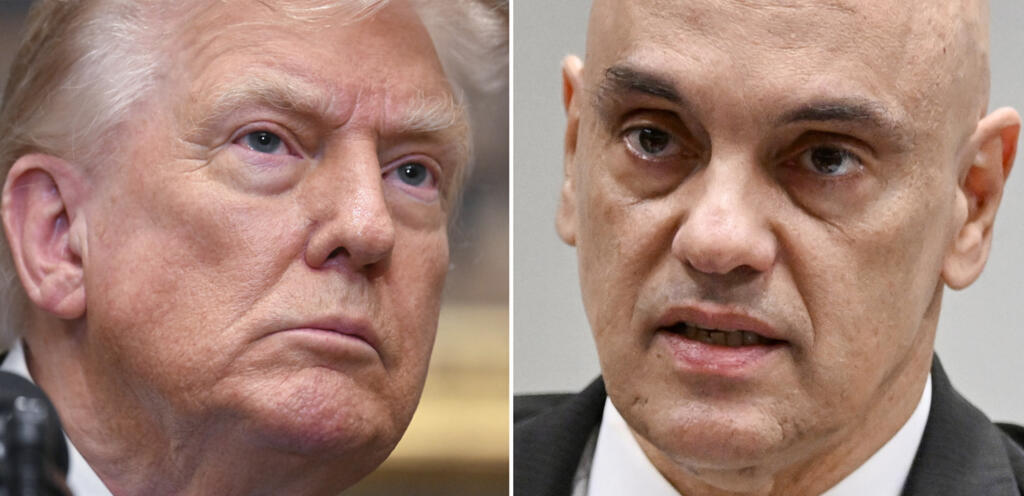
The admininistration of Donald Trump (L) has imposed financial sanctions on Brazilian Supreme Court judge Alexandre de Moraes (R) © Evaristo SA / AFP/File

It is a view shared by Trump, who has denounced a "witch hunt" of his ally and imposed a 50 percent tariff on a variety of exports from Brazil while the US Treasury sanctioned Moraes.

The pressure has done little to alleviate Bolsonaro's plight.

While awaiting the verdict, he has been ordered to wear an electronic bracelet, and was banned from social media and placed under house arrest with round-the-clock surveillance.

He is expected to follow the final phase of the trial from home, according to people close to the former president.

In the event of a guilty verdict, he could be sent to prison right away. He could still appeal.
High stakes

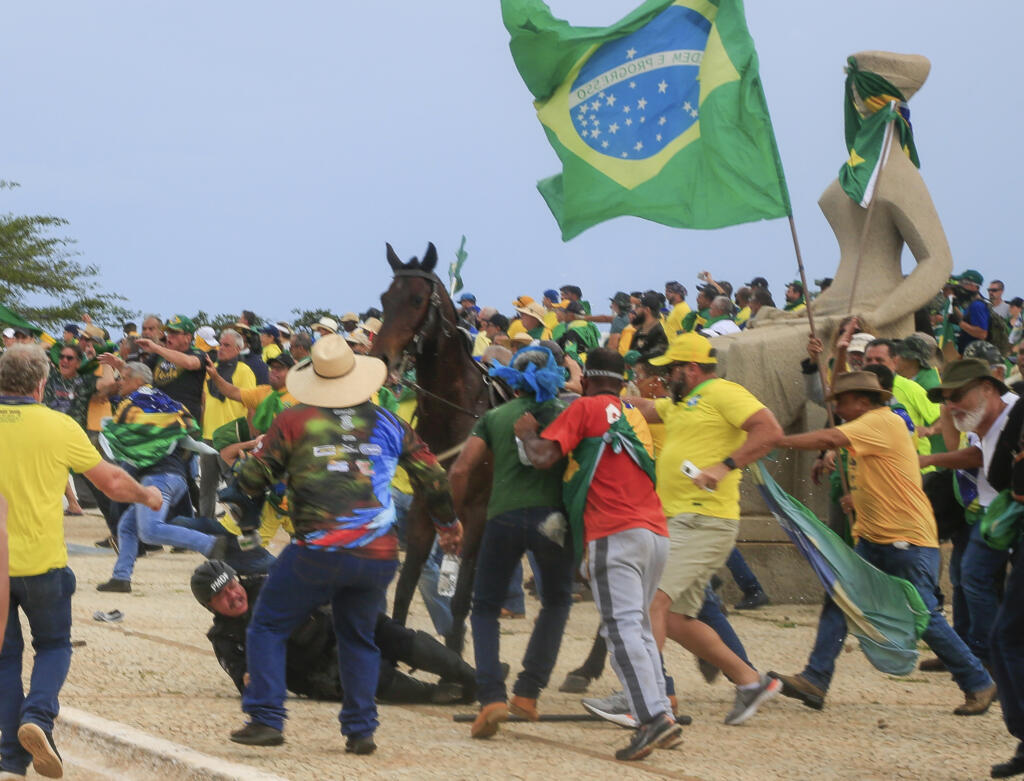
The setting of the trial is symbolic for a country rocked on January 8, 2023 by thousands of Bolsonaro backers violently storming the Supreme Court, presidential palace and parliamentary buildings in Brasilia.

A police officer falls from his horse during clashes with Bolsonaro supporters after an invasion of Planalto Presidential Palace in 2023 © Sergio Lima / AFP/File


The protesters, who left a trail of material destruction in their wake, had urged the military to intervene to unseat Lula, who had assumed office just a week earlier.

Security around the court will be reinforced in the coming days.

Four of the last seven occupants of Brazil's Planalto presidential palace have been convicted, jailed or impeached. Bolsonaro would be the fifth.

The group includes Lula, 79, who was imprisoned for 580 days in 2018 and 2019 on a corruption conviction later overturned for procedural errors.

Regardless of the outcome of his trial, Bolsonaro has been declared ineligible to seek public office until 2030 after being found guilty of spreading disinformation about Brazil's voting system.

Lula has said he will seek another term in elections next year.

© 2025 AFP
DeSADEAN MISOGYNY

Comorian woman says justice minister among men who raped her for years


A young Comorian woman, Raanti A, has spoken to RFI about multiple rapes she alleges she was subjected to by a man she is related to, who she says also invited several other men to sexually abuse her – one of whom she claims is the Comorian minister of justice
.


Issued on: 29/08/2025 - RFI


Raanti A, pictured at home in France in August 2025. © Baptiste Coulon/RFI


Raanti A, who is 27, says she was repeatedly raped between 2018 and 2022 by various men at the invitation of her late father’s cousin – a 47-year-old public servant working at the Ministry of Planning.

One of the men she accuses of participating in the rapes is the Comorian Minister of Justice and Islamic Affairs, Anfani Hamada Bacar.

She told RFI she recognised him last April when she saw that he had been appointed as a minister.

She says this shock led her to file complaints two months later, in June 2025, in both France and in the Comoros.

In these documents, which RFI has seen, Raanti A says that around 10 people subjected her to rape, sexual assault, acts of deliberate violence, false imprisonment, human trafficking and forced abortions.

Bacar told RFI that he knows the victim, but “categorically denies” the rape allegations.

"These allegations are completely false and without any basis. I have no idea what could have motivated this person to accuse me of these alleged rapes," he said in a written response.
'I just had to keep quiet and endure'

Raanti A says that her ordeal began in 2018, when her mother suggested she ask her late father’s cousin for money to pay her university admission fees. The man is regarded as an influential figure in the community. She says she went to meet him at his home.

"He said that he would help me, but that he wanted something in return. Suddenly, he pushed me on to a mattress and positioned himself on top of me. I panicked, I screamed, I cried. He kept saying 'it's going to be OK, relax'," she told RFI. She said he then raped her.

"When I got home, I took a shower immediately and scrubbed my body to try and get rid of his smell," she continued.

She said she attempted suicide the following day.

'A very difficult ordeal': Gisèle Pelicot's statement after mass rape trial

In the complaint registered by the police, Raanti A alleges that he subjected her to several sexual assaults and also handed her over to other men who raped her.

"He would ask people he met by chance or people he knew if they wanted a girl or a woman to have sex with. And most of the time, people accepted," she said.

According to Raanti A, the man was present during the alleged rapes by other men, which she says took place in isolated houses, huts and cars, in the town of Moroni, on the island of Anjouan and in Tanzania.

She also alleges that the man forced her to terminate eight pregnancies resulting from rape, including one at six months that required surgery. Abortion is illegal in the Comoros, except in cases of serious medical reasons confirmed in writing by two doctors.

Raanti A told the police officer who took her statement in France: "It wasn't just sexual violence, it was an attempt to completely dominate my body, my will, my freedom. "

She continued: He deleted my social media accounts, changed my passwords, confiscated my phone and my credit card. Then he forbade me from seeing friends or going to university. I felt possessed. I followed him without asking questions. I had to keep quiet and endure. I think he was afraid I would end up talking about it."

RFI contacted the man several times in order to put the allegations to him, but received no response.

France set to include consent in legal definition of rape
'You're not alone'

Raanti A has lived in France as a refugee since 2022.

After she arrived in the country, she says she moved three times, because the man always managed to track her down. She also alleges that he raped her in France.

On one occasion, French police intervened on grounds of physical assault, but the case did not progress.

She showed RFI two psychological reports from examinations carried out in June and in July, which conclude that she is suffering from "post-traumatic generalised anxiety disorder, which may be linked to the repeated assaults, particularly sexual, that she reports".

After Raanti A filed the complaints, she claims her mother was intimidated into attempting to convince her to withdraw them.

She also says that her partner received messages from an unknown person with offers of €10,000 to take her to Italy.

The lawyer representing her also claims to have been intimidated by "judicial authorities", saying: "Certain people have an interest in seeing this case buried."

Raanti A believes that the case has a better chance of being heard in France than in the Comoros.

She added that her mother and brothers have assured her of their support and that her mother told her: "Do what you can, you're not alone, we must prevent other women from going through what you've been through."

According to the United Nations, 17 percent of women in the Comoros have experienced at least one incident of physical or sexual violence.

This article has been adapted from the original version in French.