It’s possible that I shall make an ass of myself. But in that case one can always get out of it with a little dialectic. I have, of course, so worded my proposition as to be right either way (K.Marx, Letter to F.Engels on the Indian Mutiny)
Monday, September 08, 2025
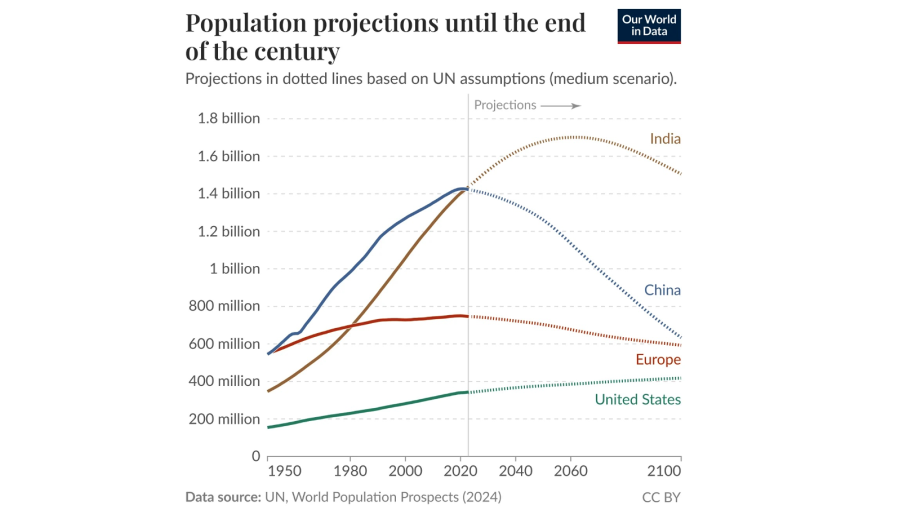
India, China, Europe, all face population declines by the end of the century – OWID
China and India will see large population declines by 2100, while the decline in Europe will be mild. The US is only major economy expecting an increase. / bne IntelliNews
By Esteban Ortiz-Ospina for Our World in DataSeptember 8, 2025
This chart tracks the UN’s latest demographic projections for four large populations: India, China, Europe, and the United States. Together, they account for about half of today’s world population, Our World in Data (OWID) reports.
The curves are shaped by what the UN expects to happen to future fertility, life expectancy, and migration worldwide.
India and China are the world’s most populous countries today, and the UN projects that both will remain at the top through the end of the century. Yet their trajectories diverge sharply in these projections.
China’s population has already begun to fall and is projected to more than halve to around 630mn by 2100. India, by contrast, is expected to keep growing for nearly four more decades, reaching about 1.7bn people in 2060 and gradually declining to around 1.5bn.
In contrast, the United States and Europe are projected to change more gradually. The US is expected to grow slowly and steadily, reaching about 420mn people by the end of the century. Europe’s population, meanwhile, is projected to decline. Based on these figures, its population peaked around 750mn in 2020, and is expected to fall to about 590mn by 2100, not far from China’s projected level.
The UN’s model is the most widely used baseline for international population comparisons, but all population projections are sensitive to the underlying assumptions. Other research groups use different demographic assumptions about fertility, life expectancy, and migration to reach different long-term population figures.
In the northeast corner of East Asia, South Korea is quietly steering its energy future towards a delicate pro-nuclear, pro-renewables outcome. With eyes fixed firmly on 2050, policymakers in the capital Seoul are doubling down on a dual-track strategy: expanding nuclear power and renewables side by side.
The indications have been there for a while and with the nation’s overwhelmingly obvious preference for all things green in the long-term, the only real remaining question is whether or not this will in some way one day work to improve cross-border relations and possibly even power supplies to the North.
Bipolar portfolio
At present, Seoul’s “energy mix” is morphing into something that might have seemed improbable just a decade ago. In 2025, nuclear power will contribute roughly a third of the Republic of Korea’s total electricity output.
Indeed, the government’s latest energy white paper quietly signals an intent to at least maintain, if not grow, that proportion into the 2030s and beyond. The reason is simple in the eyes of many South Korean professionals: nuclear generated power is one of the few low-carbon sources capable of supplying baseload electricity - at scale - when demand spikes in the heat of summer and the oftentimes sub-zero temperatures of winter. That nuclear power is also deemed ‘dispatchable’ given the flexibility offered in the form of small-modular reactors, is an added bonus.
Beyond simple pragmatism, however, there is also increasing political capital to be seen in the shape of cooling towers. Nuclear energy for Korea offers energy security at a time when LNG markets are on a perpetual roller coaster ride and uranium yields compared to LNG are astronomically different.
On the more traditional renewables front, for South Korea, primarily solar and offshore wind – the future is similarly bright. Solar arrays can be seen across the peninsula and are highly visible atop municipal rooftops, parking areas and farmland, while offshore wind projects in the Yellow Sea are pushing past the 100-GW mark. As a result, by 2035, renewables could well supply between 40 and 50% of the country’s electricity in a shift powered by both policy incentives and cheaper solar panels. By 2050, a ministerial blueprint discussed at a recent power show in the southern city of Busan, hints at a nation hoping to see 60% of the grid powered by renewables.
Taken together, nuclear’s ever-ready baseload supply coupled to the range of options open to renewables will slowly push fossil fuel use into the corner and eventually out of the door.
Cross-border option – powering the North
Even as Seoul’s domestic energy ambitions evolve, officials still cast a wary eye across the 38th parallel. The idea of an inter-Korean electricity link may sound pie-in-the-sky to some but at the same late-August ‘Energy Super Week’ which encompassed the 2025 World Climate Industry Expo and ministerial meetings, the issue came up more than once.
The concept was simple in the eyes of many of those spoken to by AsiaElec at the Bexco exhibition centre in Busan - North Korea is family.
And with its vast but under-utilised hydroelectric resources and mountainous terrain, any power first shipped to the north could eventually be paid back many times over if properly developed in tandem with the South.
In exchange, Seoul’s modern grid and renewable surplus could bolster the North’s blackout-prone networks in what would be seen as a win-win, albeit an outcome that hinges entirely on geopolitics.
Research shows that studies conducted under soft diplomacy auspices, have already been carried out.
Whether that vision is realistic before 2050 is up in the air - for now …..
Policy at play
Backing these projections and far more influential even that industry movers and shakers in Busan is a web of South Korean government initiatives. First, the Renewable Portfolio Standard (RPS) which dates back to 2012 and has been ramped up significantly in the 13-years since. One key factor is a requirement placed on utilities to source upwards of 35% of electricity from renewables by the early 2030s.
Added to this, feed-in tariffs (FiTs) for solar and wind persist in-sync with local government and wider national government incentives – an issue making Busan, Korea’s second city, particularly attractive at the residential level, regional government staff told AsiaElec.
On the nuclear front, Seoul is now committed to keeping its reactors working and barely a week goes by without news of plans for new units, both in the next-generation large-scale and SMR format.
In the form of SMRs in particular, by 2050, it is far from unrealistic to expect SMRs at home to be making meaningful contributions to the grid supply in more remote locations and offshore islands, one KEPCO official said in Busan.
Pre-2050 challenges
The path to 2050 will throw up challenges however. Nuclear cost overruns, safety anxieties in local communities and probable public opposition will crop up from time to time. Renewables too will face issues even with all the pros they offer. A retooled grid infrastructure layout in some areas will have to be put in place as will large-scale investment in storage, smart-grid systems and demand-response mechanisms.
And of course if links to North Korea are to be realised any time soon, the relationship with Pyongyang in the North would have to thaw considerably. At any point in time a lone missile test or diplomatic flare-up could reset any progress made.
Even so, with South Korea’s energy narrative to 2050 and pre-stated goals in terms of capacity as optimistic as they are, Seoul has set nuclear and other forms of renewable energy on the road to success. Together, these two forms of power generation will combine to do the heavy lifting for the South’s millions, and will do so with time – and energy – to spare.
This is the first in a series of pieces on South Korean power generation, with company interviews, nationwide and local area analysis to follow in the coming weeks.
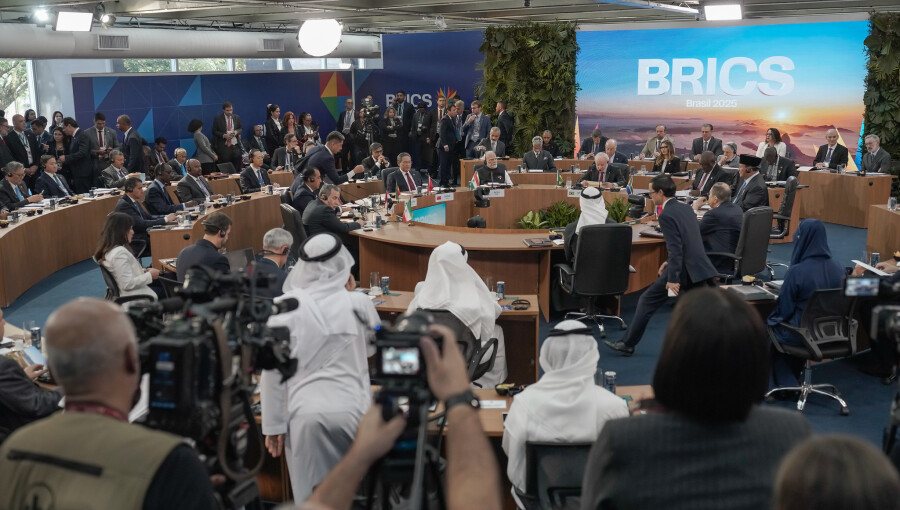
Xi and Putin to join BRICS emergency talks on US trade measures
The emergency summit comes as emerging economies, under mounting pressure from the administration of US President Donald Trump, seek to navigate an increasingly fractured global trading system. / Brics Brasil
Brazil has convened an emergency virtual summit of BRICS leaders on September 8 to coordinate a response to escalating US trade tariffs, as the world's largest emerging economies seek to defend multilateralism against what they view as increasingly hostile American trade policies.
President Luiz Inácio Lula da Silva will host the hastily arranged video conference bringing together leaders from the expanded 11-nation bloc, which now represents nearly half the world's population and a third of global GDP. The summit comes as several BRICS members grapple with punitive US tariffs of up to 50% on their exports.
Chinese President Xi Jinping will deliver what Beijing describes as an "important address" from the capital, whilst Vladimir Putin will participate via video link, according to Kremlin spokesman Dmitry Peskov. India, notably, will be represented by External Affairs Minister Subrahmanyam Jaishankar rather than Prime Minister Narendra Modi, reflecting Delhi's delicate balancing act between its BRICS membership and strategic ties with Washington.
The subdued, virtual gathering marks an unusual departure from BRICS' typically media-friendly choreography. Brazilian officials have deliberately avoided preparing a joint communiqué, acknowledging the divergent positions member states hold in their bilateral negotiations with Washington. Brazil and India currently face the steepest tariffs at 50%, whilst China and South Africa confront 30% duties. Heavily sanctioned Russia, Iran and other members, meanwhile, are subject to the baseline 10% tariff.
"BRICS has challenged the hegemony of the United States, which is why Trump is waging a tariff war on its members," Brazilian lawmaker Reimont Otoni of Lula's Workers' Party told Russian state media, highlighting tensions that have escalated since US President Donald Trump took office in January.
The summit agenda extends beyond immediate tariff concerns to encompass broader reforms of global governance institutions. Leaders are expected to discuss strengthening the World Trade Organization, reforming the UN Security Council, and advancing peace proposals for conflicts in Ukraine and Gaza. Brazil will also seek support for its Forever Tropical Forests Fund ahead of November's COP30 climate summit in the Amazon.
Celso Amorim, chief adviser to President Lula, struck a more conciliatory tone in recent comments, insisting BRICS "is not a platform to quarrel with anyone,” though he acknowledged that the bloc's rise has created "a new equilibrium" that "some people probably don't like," as quoted by the Global Times.
The emergency summit comes as emerging economies, under mounting pressure from the Trump administration, seek to navigate an increasingly fractured global trading system. With the US imposing differentiated tariff rates across BRICS members, the bloc faces the challenge of putting up a facade of unity as individual nations pursue separate talks with Washington.
Brazilian officials, mindful of their country's complex relationship with the US, have been careful to frame the summit as defending multilateralism rather than confronting America directly. "We want to keep good relations with the US," Amorim told the Global Times, whilst noting that "the world can no longer be governed by the G7."
The virtual format itself reflects the practical constraints facing the bloc. Putin remains subject to an International Criminal Court arrest warrant over the kidnapping of children in Ukrainian regions under Russian occupation, limiting his travel options, and scheduling conflicts have prevented some leaders from committing to in-person meetings at short notice.
As emerging economies representing nearly half the world's population seek to defend multilateralism against what they perceive as US economic coercion, the summit will test whether BRICS can evolve from a talking shop into an effective counterweight to Western economic dominance, or whether the White House's tactical use of differentiated tariffs has successfully exposed the limits of Global South solidarity.
PANNIER: Tensions creep into rebuilt Tashkent-Bishkek relations as Uzbek border guards shoot dead two Kyrgyz men
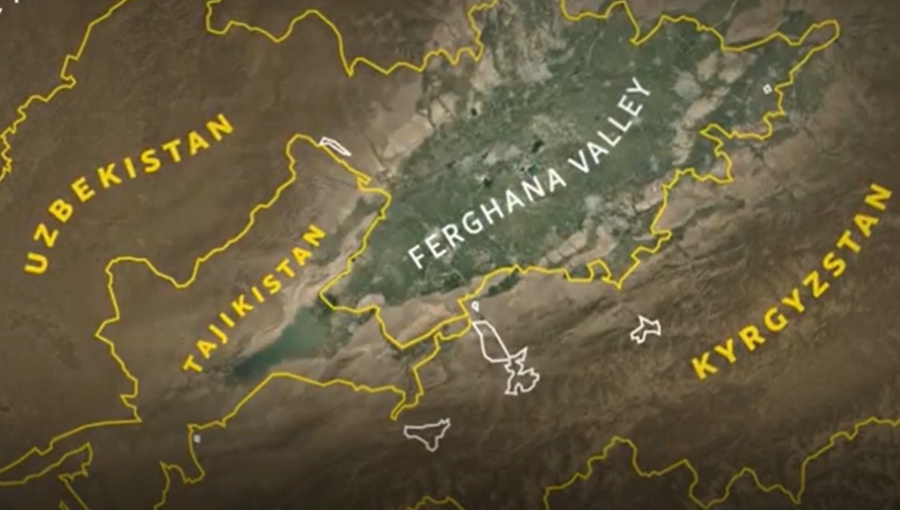
The bodies of the men were found in Ugam-Chatkal National Park, located in mountains bordering the Ferghana Valley, in northeastern Uzbekistan. / RFE/RL report, screenshot
Shootings and fatalities along the Kyrgyz-Uzbek border have occurred sporadically over the last 30 years, but in the past three years there has been little of any significance. These deaths therefore made observers sit up.
Failure to comply
On August 15, Uzbek border guards discovered the two Kyrgyz citizens, identified as 28-year-old Eldiyar Asylbek uulu and 23-year-old Bekzat Kurmanaly uulu, on Uzbek territory near the Ugam-Chatkal Nature Reserve.
According to a statement released by the Uzbek Border Guard Service more than two weeks later, the two men ignored an order from Uzbek border guards to stop and instead fled in the direction of Kyrgyzstan.
“[T]he border patrol fired several warning shots into the air. The unknown persons did not obey and continued moving towards the state border,” read the statement.
The border guard service added that in response to their failure to comply with the order to stop, the two intruders were shot by the border guards, who then administered first aid to both men – but their wounds were to prove fatal.
It was not until August 25 that relatives of Asylbek uulu and Kurmanaly uulu notified police in the village of Aygyr-Zhal, in Chatkal district of Kyrgyzstan’s Jalal-Abad Province, that the pair were missing.
At a meeting of the two countries’ border guards on August 28, the Uzbek side mentioned the killing of two unidentified men near the border. Relatives of the two Kyrgyz citizens then went to Uzbekistan to identify their bodies on August 31. The bodies were transferred to Kyrgyzstan on the same day.
Gathering medicinal herbs
Member of the Kyrgyz parliament Jailoobai Nyshanov, who is from Chatkal district, spoke about the incident at a September 3 session of the legislature.
Nyshanov said the border area in question has not been demarcated as yet, so it remains unclear where the frontier is.
He added that Asylbek uulu and Kurmanaly uulu were looking for arnebia. Arnebia is a plant used as a traditional medicine to treat fever, diarrhoea, skin conditions and other ailments. It is known for its antioxidant, antibacterial and anti-inflammatory properties and is used in modern medicines.
Nyshanov explained that the plant is found in the area along the Kyrgyz-Uzbek border and that locals often pick it, sometimes selling it because arnebia root can fetch up to 1,000 som (about $11) for a kilogram.
The statement from the Uzbek border guards referred to the discovery of a tent and three horses, along with other evidence suggesting that there was a third person, who successfully fled back to Kyrgyzstan.
A joint team of Kyrgyz and Uzbek border guards investigated the scene on September 2-3. The Kyrgyz side agreed to find the third person and take measures against him.
Shoot to kill
The presence of a tent seems to support Nyshanov’s comments that the trio were gathering plants and probably believed they were still in Kyrgyzstan. Smugglers and terrorists would be unlikely to set up camp.
Uzbekistan’s border guards have a reputation for resorting to lethal force. But in fairness, smugglers have been violating the Kyrgyz-Uzbek border since not long after the two countries became independent in late 1991.
A group of armed men crossed from Kyrgyzstan into Uzbekistan in May 2005 and attacked an Uzbek police station, seizing weapons there. They then staged a prison break at a nearby penitentiary. That event was the start of unrest in the eastern Uzbek city of Andijan that led to 189 people, according to the official count, being killed. It stands as the worst violence recorded in independent Uzbekistan’s 34-year history.
After that episode, Uzbek border guards’ use of deadly force against border violators increased.
Over the course of June 2011, the deadliest month experienced along the Uzbek-Kyrgyz border, Uzbek border guards shot dead 13 smugglers who crossed from Kyrgyzstan.
The situation eased significantly after Shavkat Miriyoyev became Uzbekistan’s president in late 2016. Incidents of shooting further declined in 2021 as the two countries drew closer to a border delimitation agreement.
Prior to this latest shooting incident, the last time Uzbek border guards shot trespassers dead in the area near the Kyrgyz border was in May 2022, when three Kyrgyz citizens were shot dead. The month before that, two Kyrgyz citizens were shot dead by Uzbek guards posted on the frontier.
The deaths of Asylbek uulu and Kurmanaly uulu are also the first such fatalities registered since Mirziyoyev travelled to Kyrgyz capital Bishkek in January 2023 to formalise a border delimitation agreement with Kyrgyz President Sadyr Japarov.
Kyrgyz authorities have not criticised Uzbekistan for killing their two countrymen, probably in the interests of preserving the unprecedented, good relations that Kyrgyzstan and Uzbekistan presently enjoy.
However, no report or statement claims the Kyrgyz citizens were armed, or that evidence of smuggling was found.
It is not surprising the men ran from Uzbek border guards and that when they heard shots being fired into the air, they continued to run.
Considering that Kyrgyz-Uzbek ties are at an all-time high, it could have made sense for the border guards to follow the suspects and alert their Kyrgyz counterparts that fugitives were fleeing toward to the Kyrgyz border. But apparently, the use of lethal force remains the norm for Uzbek border guards in dealing with trespassers, though some people in Kyrgyzstan’s Chatkal district might feel it was unwarranted in the case of Asylbek uulu and Kurmanaly uulu.
*Video from 2020 giving some history on borders of the "Stans". Note, this year has seen the introduction of new border agreements between Kyrgyzstan, Tajikistan and Uzbekistan.
A new paper in Molecular Biology and Evolution, published by Oxford University Press, finds that the relatively high rate of Autism-spectrum disorders in humans is likely due to how humans evolved in the past.
About one in 31 (3.2%) children in the United States has been identified with Autism Spectrum Disorder. Globally, the World Health Organization estimates that around one in 100 children have autism. From an evolutionary perspective, many scientist believe that autism and schizophrenia may be unique to humans. It is very rare to find behaviors associated with the disorders in non-human primates. In addition, behaviors associated with those disorders generally involve cognitive traits like speech production and comprehension that are either unique to or much more sophisticated in humans.
With the development of single cell RNA-sequencing, it became possible to define specific cell types across the brain. As investigators published more large-scale datasets, it became clear that the mammalian brain contains a staggering array of neuronal cell types. In addition, large-scale sequencing studies have identified extensive genetic changes in the brain unique to Homo sapiens—genomic elements that did not change much in mammalian evolution in general but evolved rapidly in humans.
While previous investigations found that some cell types have remained more consistent throughout evolution than others, the factors driving these differences in evolutionary rate remain unknown. Researchers here investigated recently published cross-species single-nucleus RNA sequencing datasets from three distinct regions of the mammalian brain. They found that the most abundant type of outer-layer brain neurons, L2/3 IT neurons, evolved exceptionally quickly in the human lineage compared to other apes. Surprisingly, this accelerated evolution was accompanied by dramatic changes in autism-associated genes, which was likely driven by natural selection specific to the human lineage. The researchers here explain that although the results strongly suggest natural selection for Autism Spectrum Disorder-associated genes, the reason why this conferred fitness benefits to human ancestors is unclear.
Answering this is difficult because we do not know what human-specific features of cognition, brain anatomy, and neuronal wiring gave human ancestors a fitness advantage, but the investigators here speculate that many of these genes are associated with developmental delay, so their evolution could have contributed to the slower postnatal brain development in humans compared to chimpanzees. Furthermore, the capacity for speech production and comprehension unique to humans is often affected by autism and schizophrenia.
It’s possible that the rapid evolution of autism-linked genes conferred a fitness advantage by slowing postnatal brain development or increasing the capacity for language; the lengthier brain development time in early childhood was beneficial to human evolution because it led to more complex thinking.
“Our results suggest that some of the same genetic changes that make the human brain unique also made humans more neurodiverse,” said the paper’s lead author, Alexander L. Starr.
New York Times bestselling author James Rollins brings back Sigma Force to battle a group of rogue scientists who've unleashed a bioengineering project.
Dozens of people participate in an anti-Immigration and Customs Enforcement (ICE) rally outside of the Brooklyn Metropolitan Detention Center in New York City.
Spencer Platt / Getty Images
Last week, the Department of Justice’s Board of Immigration Appeals ruled that people who enter the country without authorization must be detained throughout their removal proceedings, a process that can take years.
The decision stems from the case of Jonathan Javier Yajure Hurtado, a Venezuelan citizen who entered the United States in 2022. In 2024, he was granted Temporary Protected Status, which expired in April; he was subsequently arrested. At his bond hearing, the immigration judge ruled he did not have the authority to set bond, which meant Hurtado would stay in detention.
The Board of Immigration Appeals (BIA) agreed with the judge’s ruling. In its September 5 decision, the three-judge panel ruled that “[a]liens who are present in the United States without admission …. must be detained for the duration of their removal proceedings.”
Two of the judges were appointed during Trump’s first presidential term by then-Attorney General William Barr and one was appointed during his second term by Attorney General Pam Bondi.
August 4, 2025 “[J]ust as Immigration Judges have no authority to redetermine the custody of arriving aliens who present themselves at a port of entry, they likewise have no authority to redetermine the custody conditions of an alien who crossed the border unlawfully without inspection, even if that alien has avoided apprehension for more than 2 years,” the board wrote.
According to the board’s website, its “decisions are binding on all DHS officers and Immigration Judges unless modified or overruled by the Attorney General or a federal court.”
“Most BIA decisions are subject to judicial review in the federal courts,” the website states. The Trump administration applauded the decision.
“Big win for our ICE attorneys securing our ability to detain illegal aliens until they are deported,” the Department of Homeland Security (DHS) posted on social media. “The One Big Beautiful Bill includes significant funding for new ICE lawyers.”
Advocates warn that the board’s decision will coerce people to “self-deport” even if they could ultimately win their case and stay in the United States. The Trump administration has waged an aggressive campaign to encourage people, including DACA recipients, to leave the United States. In social media posts and public statements, they have warned immigrants that if they stay, they may be detained in inhumane facilities like Alligator Alcatraz or Louisiana Lockup, a unit at the Louisiana State Penitentiary, better known as Angola.
Dana Leigh Marks, a former immigration judge and former head of the judges’ union, told Politico the board’s ruling was “horrific.”
“No self-respecting lawyer could look themselves in the mirror and take these positions,” she said. “It’s a total cynical move to try to force people to litigate their cases while they’re detained.”
The decision affirms a July 8 memo from the the acting director of Immigration and Customs Enforcement (ICE), that states, effective immediately, those who entered the country without prior authorization are “ineligible for a custody redetermination hearing (‘bond hearing’) before an immigration judge and may not be released for the duration of their removal proceedings absent a parole by DHS.”
The American Immigration Lawyers Association wrote that the new policy “would be facilitated by the $45 billion in new detention funding Congress enacted in the One Big Beautiful Bill, which will enable ICE to double detention capacity to 100,000 beds.”
“If fully implemented, the new ICE policy would apply to millions of people who entered the country without inspection and, as a result, would mandate their detention,” the group continued. “ICE’s new policy is an unlawful attempt to strip noncitizens of their statutory right to a bond hearing and will subject millions of people to mandatory detention and possible fast-track deportation under expedited removal.”
Silky Shah, executive director of Detention Watch Network, told Truthout in a statement that the Board’s decision is “yet another example of how Trump is using immigration detention as a testing ground for authoritarianism.”
“Let’s be clear about what this decision means: millions of undocumented immigrants in the U.S. could be denied due process rights and can be detained indefinitely,” she said. “Detention facilitates deportation, and expanding detention is key to Trump carrying out his cruel, multi-layered, mass detention and deportation agenda.”
However, Shah noted, the “expansion of detention is not a done deal.”
“Advocates across the country have fought to shut down facilities in their communities and block the opening of new ones, and we can do it again,” she said. “Nationwide protests have once again illuminated that people do not want ICE agents and detention centers in their communities.”