Russia is stalled on the battlefield and is now targeting the economy that pays for Ukraine's war. Closing the resulting funding gap will take more European money and reforms that President Volodymyr Zelenskiy may see as a threat to his grip on power, political analyst Balázs Jarábik argues in a commentary published by Carnegie Politika on October 9.
"Ukraine may well hold the front while losing its economic capacity," writes Jarábik, a former Slovak diplomat. "At stake is the preservation of a functioning Ukrainian state."
He starts in Kryvyi Rih, Ukraine's industrial heartland, where the furnaces have gone quiet, ArcelorMittal's mines stand idle and falling tax receipts are forcing the city to cut spending. In September Ukraine went a whole week without producing steel, the first such interruption in a century. Ferrous metals earned roughly $14bn a year in exports before the full-scale invasion, and industrial shutdowns now threaten foreign-currency income, jobs and the tax base that funds the war.
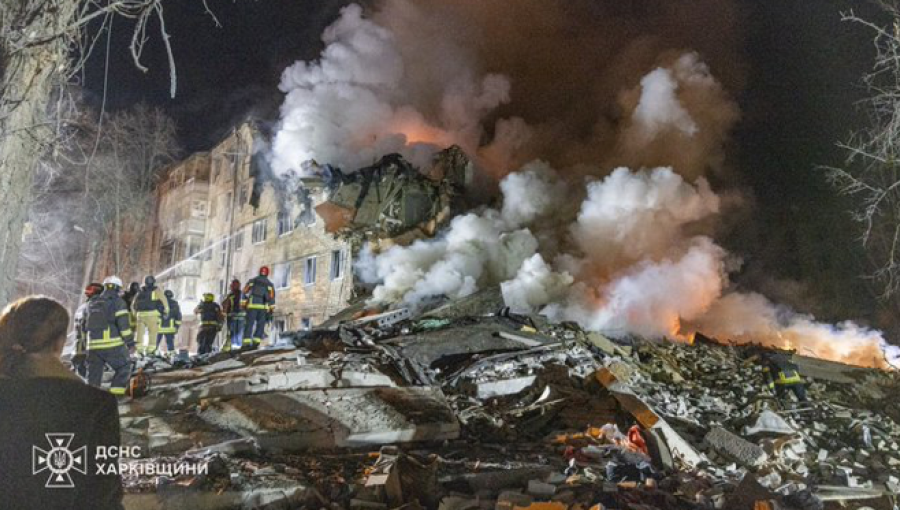
Ukraine's power plants are better protected going into this winter than last, but Russia has adapted. Jet-powered drones let Moscow hit fuel distribution, warehouses, data centres and transport links, and the repeated attacks on Kyiv's bridges show the logic: "A bridge need not collapse to become a liability." Kyiv's own drone campaign against Russian refineries has imposed real costs, Jarábik writes, "but Ukraine's ability to inflict damage does not mean it can withstand the resulting exchange".
The 2027 draft budget shows the scale of the strain. It sets aside UAH4.89 trillion ($104bn at the budget's projected exchange rate) for security and defence, 43.8% of projected GDP and about two-thirds of all spending. Even that falls short of the military's own estimate: Deputy Finance Minister Roman Yermolychev has said the Defence Ministry will need $175bn in 2027, up from $155bn this year. Russia, meanwhile, plans a record RUB17.1 trillion ($203bn) for defence.
The draft puts the deficit at UAH1.67 trillion ($37.2bn), or 15% of GDP, and external financing needs at $78.1bn. It assumes 1.3% GDP growth and an 8.7% rise in nominal revenue, assumptions that Russian strikes on factories, ports and logistics put at risk. Every additional UAH100bn ($2.2bn) of lost revenue or extra spending adds about 0.9 percentage points to the deficit ratio, Jarábik calculates. Parliament's budget committee has already questioned revenue that depends on tax laws not yet passed and UAH64.9bn ($1.4bn) expected from better customs collection.
That leaves Europe to fill the hole. The EU's €90bn Ukraine Support Loan was meant to cover 2026 and 2027, with €60bn indicatively for defence procurement and €30bn for the budget. The IMF puts the uncovered budget gap at $30bn-35bn in 2027, $17bn in 2028 and $2bn in 2029, excluding off-budget military needs, so the EU will need to find at least €70bn in new money, Jarábik reckons. Bringing loan payments forward eases the immediate squeeze but leaves less for later, and larger payments will have to be agreed as France heads into a presidential election and Spain, Italy and Poland face parliamentary votes.
The political paradox is in Kyiv. Around €20bn of EU funding this year is tied to reforms, including anti-corruption measures and revenue-raising laws, so Ukraine is being asked to strengthen oversight and collect more tax while Russian strikes erode businesses' ability to earn. The reforms would empower anti-corruption agencies that Zelenskiy's team regards as unwelcome checks on wartime presidential power, and some, such as scrapping the VAT exemption on cheap imported parcels, are unpopular and could strain a fragile majority in parliament. "Measures intended to sustain the state could destabilize the political arrangements through which it is governed," Jarábik writes.
Brussels faces the mirror image: relax the conditions and it undermines institutions it has spent years building; withhold payments and it deepens Ukraine's economic crisis. "The approaching winter will be a reality check for both Ukraine and Europe," he concludes.

No comments:
Post a Comment