Yancoal Australia’s Premier Coal workers reject pay deal, set strike action
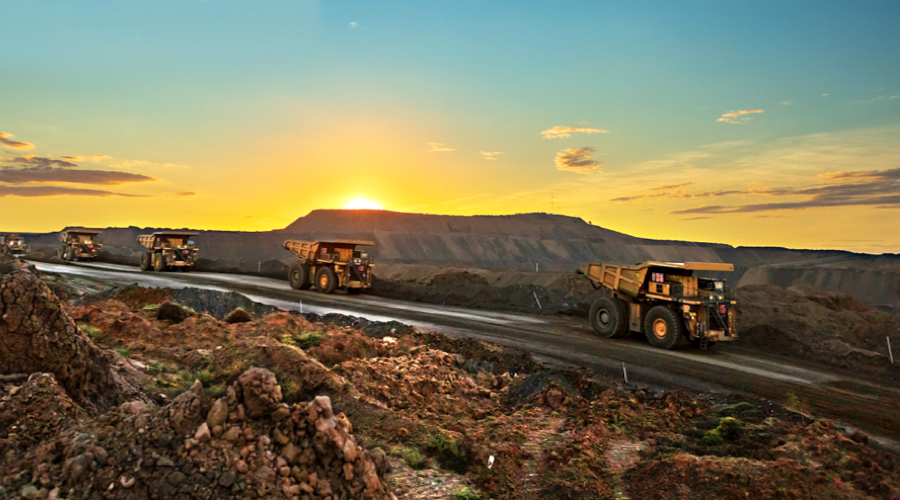
Majority of workers at Yancoal Australia’s (ASX: YAL) Premier Coal mine rejected the miner’s proposed workplace deal and will begin strike action on Saturday, Australia’s Mining and Energy Union said, citing demands for higher pay and greater job security.

Around 91.5% of Premier Coal workers voted against the agreement as the closure of the Collie mine approaches. The enterprise agreement is expected to be workers’ last, MEU WA District Secretary Greg Busson said on Friday.
Earlier in September, more than 90% MEU members voted in favour of industrial action, including work stoppages of more than 12 hours.
The move was also backed by members of the Australian Manufacturing Workers’ Union (AMWU) last month, with 93% voting in favour.
In an emailed response to Reuters on Friday, Yancoal Australia said Premier Coal acknowledges the rejection of pay deal and remains committed to reaching a fair and sustainable agreement.
“Workers need more of the wage increases delivered up front, while they can be certain of receiving their full value,” said AMWU WA State Secretary Steve McCartney.
The workers are seeking larger upfront pay increases, protections against roster changes and a commitment to a proper redundancy scheme, according to the union statement.
(Reporting by Anjali Singh in Bengaluru; Editing by Sherry Jacob-Phillips)
Op-Ed: Asia’s seaborne thermal coal market is shrinking very slowly
(The views expressed here are those of Clyde Russell, a columnist for Reuters)
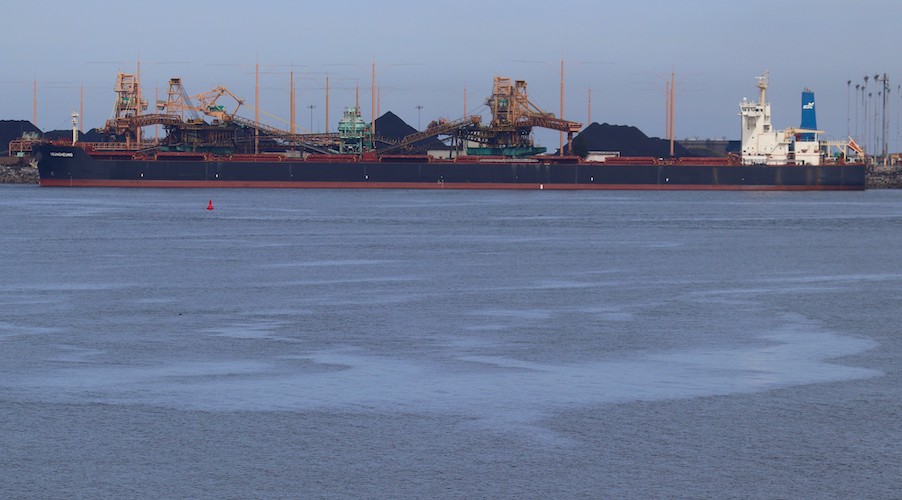
The market for seaborne thermal coal in Asia is engaged in the slowest of races as a mild decline in demand competes with an equally gentle decline in supply in the coming years.
This means that the longer-term outlook for prices will largely be driven by which of supply and demand dips at a slightly faster pace than the other.
Asia dominates the seaborne trade in the type of coal most commonly used to generate electricity, accounting for nearly 90% of the volumes in recent years.
The continent’s seaborne imports peaked at 898.2 million metric tons in 2024, according to data compiled by commodity analysts Kpler, before dropping slightly to 856.3 million in 2025.
They are on track to decline again in 2026 as top importers China and India moderate demand amid higher prices as part of the wider fallout from the US-Israeli war against Iran.
The picture of moderating demand and supply was a common theme at this year’s CT Asia conference on the Indonesian resort island of Bali, the largest coal industry gathering globally.
But rather than being gloomy, most coal market participants see the gradual shrinking of the seaborne thermal coal market as largely positive.
The view is that the sharp rise in the prices of crude oil, refined products and liquefied natural gas (LNG) as a result of the constrained exports from the Middle East has definitely extended coal’s lifespan in Asia.
Seaborne thermal coal comes largely from the world’s biggest exporter Indonesia and Australia, and both producers aren’t subject to shipping chokepoints such as the Strait of Hormuz in the Middle East.
The next biggest suppliers to Asia, South Africa, Russia and the United States do suffer from higher freight costs, but are also viewed as producers that are relatively reliable.
However, the main issues on the supply side are in Indonesia, which is increasingly a policy-driven market rather than one that responds to price and demand fundamentals.
There are two main factors to look at in Indonesia, the first being the total volume of coal that the government authorises miners to produce.
Output, domestic demand
Indonesian coal output hit a record high in 2025 of around 790 million tons, prompting the government to institute cuts for 2026 as part of an effort to limit exports and thereby lift prices by tightening the seaborne market.
It’s not clear exactly how much coal will be mined this year, but the consensus was it will drop by around 60 million tons.
Coal industry representatives at CT Asia also said in off-the-record conversations that they believed the government is keen to cap coal production at around 700 million tons per annum.
The second factor driving Indonesia’s coal market is the ongoing strong rise in domestic demand, especially from the metals processing sector.
Indonesia is the world’s largest producer of nickel and is expanding capacity in other metals, such as aluminium.
Processing the metal ores into semi-refined or final metal products is energy-intensive and the bulk of this power comes from coal.
Sales of coal to domestic users rose at a compound annual growth rate of 11.1% from 2015 to 2025 and now account for 31% of total coal demand in Indonesia, according to data presented at the conference by Toby Hassall, the coal research lead at LSEG.
If Indonesia’s total coal output remains largely steady but domestic demand keeps rising, then supply to the seaborne market has no alternative than to decline.
The wild card is whether the government will move to keep output steady, or whether they will allow miners to increase production, and even if they do there remains a question mark as to how much more can be economically produced for export.
Outside of Indonesia the supply situation looks soft, with new output in Australia constrained by hard-to-obtain permits and a lack of available capital, while South Africa has rail transport constraints.
China policy
On the demand side, there are some similar problems with top buyer China also largely being seen as a policy-driven market.
Coal imports were weaker in the first half, but then rebounded after domestic output dropped amid a series of safety inspections after 82 miners died in an accident in May.
But the overall trend is likely to be slowing seaborne imports as renewables eat into coal’s market share and domestic production recovers.
India, the world’s second-biggest coal importer, may also see lower seaborne imports for power generation as domestic output lifts, but it is also likely to buy more coal for industrial sectors such as cement manufacturing.
Japan and South Korea, the third- and fourth-ranked buyers, are also likely to see lower imports over time as coal plants reach retirement and are replaced by renewables and LNG.
Growth from smaller importers such as Vietnam, the Philippines and Bangladesh is unlikely to compensate enough for lower demand from the top four buyers.
The view of most industry players at CT Asia was that the decline in seaborne thermal coal supply will be modest, but slightly faster than the drop in demand.
This means prices are likely to stay relatively stable, although still being subject to volatility caused by unexpected events, such as this year’s China mine inspections or weather-related supply outages in Australia or Indonesia in previous years.
(Editing by Christian Schmollinger)
Glencore, Peabody and Heeney Capital weigh Venezuela coal deals
Glencore (LON: GLEN), Peabody Energy (NYSE: BTU) and investment firm Heeney Capital are weighing deals to produce coal in Venezuela, Bloomberg News reported on Wednesday.
Glencore and Peabody are working together on a possible bid for assets in Zulia state, while Heeney is pursuing a separate potential bid with Alabama-based miner Drummond Co, according to the report, which cited people familiar with the matter.
The discussions between Venezuela and the companies have focused on operational control and off-take rights rather than outright ownership of the mines, the report said.
Glencore declined to comment on the report, while Peabody Energy, Heeney Capital and Drummond did not immediately respond to Reuters’ requests for comment.
The Trump administration is seeking greater US access to Venezuela’s minerals, expanding its push to gain control and influence over the South American country’s vast natural resources beyond oil, Reuters had reported earlier this month.
(Reporting by Sri Hari N S in Bengaluru; Additional reporting my Megha Anilkumar Nair; Editing by Shilpi Majumdar)

No comments:
Post a Comment