Monday, October 19, 2026


Japanese philosophy offers a new perspective on education


A Doshisha University study proposes a new approach to education that embraces suffering, uncertainty, and human vulnerability


Doshisha University

Rethinking Our Relationship with the World

image: 

A coastal landscape of Minamata city, Japan at sunset. The image reflects the study’s call for an approach to education that recognizes uncertainty, vulnerability and the complex relationship between people and the world around them.

view more 

Credit: Professor Fumio Ono from Doshisha University


Modern education is predominantly shaped by approaches that emphasize efficiency, measurable achievement, prediction, and the ability to solve problems through rational intervention. This approach is associated with what is known as “technological rationality” and is valuable for organizing educational processes, but can fall short when dealing with experiences such as suffering, loss, illness, disaster, and vulnerability that cannot be predicted or controlled.

Against this backdrop, Professor Fumio Ono from the Faculty of Global and Regional Studies, Doshisha University, Japan, explored how educational philosophy might respond to experiences of suffering. His study, published online in Educational Philosophy and Theory on September 1, 2026, particularly draws attention to Japanese philosophy as a tradition shaped through continuing intersections between Eastern and Western thought. The study questions how these intellectual resources might contribute to a philosophy capable of responding to events of global catastrophe.

Speaking about the inspiration behind the study, Prof. Ono explains, “The devastating events of March 2011, including the Great East Japan Earthquake and the Fukushima nuclear disaster, made me realize that it was necessary to develop a form of thought capable of responding to such unexpected and catastrophic events.”

Prof. Ono develops his argument through philosophical analysis. He brings together Augustin Berque’s mesology (fūdo-gaku), which explores the relationship between people and their environment, and Tokuryu Yamauchi’s “logic of lemma,” a non-Aristotelian approach grounded in Nāgārjuna’s Madhyamaka philosophy that allows for a “middle” path beyond conventional binary distinctions. Drawing on these perspectives, the author develops the idea of “knowledge of pathos,” an approach that recognizes passivity, suffering, vulnerability, fragility and the uncontrollable aspects of human existence.

The proposed philosophy of pathos could have implications for schools, universities, counselling, healthcare, and welfare. Instead of focusing only on “What should be done to solve a problem?”, practitioners could focus on “What is a person experiencing?”. This approach encourages a deeper engagement with experiences of suffering, recognizing them as meaningful aspects of human life rather than simply problems to be eliminated.

The philosophy also draws attention to experiences that do not fit neatly into categories such as strong or weak, success or failure, normal or abnormal, or victim or perpetrator, making space for the complexity and contradictions of human experiences.

Furthermore, the study also considers what happens after catastrophe and loss. Disasters, war, bereavement, illness, and social crises can disrupt people’s established values and understanding of the world. The study suggests that education can play a role not only in restoring knowledge and skills, but also in helping people make sense of what they have experienced and rebuild their understanding of themselves and the world around them.

“Through the proposed philosophy of pathos, education can be understood not only as a way of developing people’s abilities, but also as a way to help people make sense of suffering and reconfigure their relationship with the world,” notes Prof. Ono.

Looking ahead, Prof. Ono suggests that this perspective could contribute to a long-term transformation of the educational culture. Over the next five to ten years, educational practice could place greater value on educators' ability not only to solve problems quickly but also to respond to suffering and remain in situations where no easy answers exist. It could also encourage a shift away from individualizing suffering associated with failure, illness, loss, and disaster, recognizing these as social and relational experiences.

The study calls for a broader understanding of educational values. Beyond measurable achievement, efficiency and the development of abilities, education could also recognize sensitivity to others, meaning-making, personal transformation, and the restoration of relationships. By bringing Japanese philosophical ideas into dialogue with wider Eastern and Western traditions, the study proposes a philosophy of education that can respond not only to individual suffering, but also to belief and value systems challenged by global catastrophes and crises.


About Professor Fumio Ono from Doshisha University, Japan
Dr. Fumio Ono is a Professor in the Faculty of Global and Regional Studies at Doshisha University, Japan. He specializes in philosophy of education, philosophy and ethics, and Jewish thought. He holds a PhD in Education from Kyoto University and has authored more than 70 publications on education, ethics, science and technology, and human existence. His current research explores questions of suffering, vulnerability, and the limits of technological rationality.

Funding information
NA

Media contact:
Organization for Research Innovation
Doshisha University
Kyotanabe, Kyoto 610-0394, JAPAN
E-mail:jt-ura@mail.doshisha.ac.jp


New method makes acrylic glass recycling economically viable


ETH Zurich


Large quantities of acrylic glass are used worldwide in a wide range of applications, from window panes and car tail lights to furniture. The polymer is also known by the brand name Plexiglas. All too often, acrylic glass still ends up as waste, even though it is well suited to recycling. 

ETH Professor Athina Anastasaki, a materials scientist, has spent years working on ways to efficiently break down acrylic glass into its constituent building blocks for reuse. In previous studies, her team showed that this process, known as depolymerisation, was possible in principle, but only under specific conditions. For example, ETH researchers previously had to chemically modify the polymer chains to introduce “weak links”. Other approaches required large quantities of solvents or catalysts, or UV light, to initiate or sustain depolymerisation. 

New approach saves energy and money 

The ETH professor and her team have now developed a new, much simpler approach to recycling acrylic glass polymers. They have published their findings in the journal Nature Chemistry. 

Using the new method, the researchers can break the polymer down almost entirely into its constituent building blocks, known as monomers. The monomer yield can be as high as 98%. The recovered material is also extremely pure, even when the starting material contains dyes or impurities. The recovered monomers can be used to produce new polymers of the same quality as those produced during initial processing.  

The process also requires significantly less energy than other methods. Depolymerisation begins at just over 200 degrees Celsius, compared with the minimum of 400 degrees previously required. Moreover, the process uses no solvents whatsoever. “What makes our new approach so exciting is its simplicity,” says Richard Whitfield, lead author of the study and a former research associate in Anastasaki’s group.  

A single substance is all it takes 

At the heart of the new method is a single chemical compound belonging to a class of substances known as N-hydroxyimides. This commercially available, inexpensive reagent attacks the acrylic glass polymer chains, breaking them apart and releasing the monomers. Once the reagent is added, the reaction proceeds on its own. 

The choice of reagent was no coincidence. “We searched systematically until we found this substance.” That single reagent is enough to initiate depolymerisation. “The only thing that surprised us was that a single chemical really was sufficient for the reaction,” explains Anastasaki.  

In their search for a suitable reagent, her group collaborated with ETH chemistry professors Tae-Lim Choi and Gunnar Jeschke. “Without the excellent collaboration with these two colleagues, many questions would have remained unanswered,” Anastasaki emphasises. 

Patent filed, licensees sought 

Other methods of chemical plastics recycling rely on a process known as pyrolysis, in which plastic polymers are broken down into their constituent building blocks at high temperatures, usually above 400 degrees Celsius. Furthermore, the recovered monomers are often relatively impure, with impurity levels of up to 3%. This can adversely affect the quality of the plastic produced from them.  

ETH Zurich has filed a patent application for the new method and is now seeking licensees. “Competition in chemical plastics recycling is fierce,” says Anastasaki, “particularly in the USA, where large, well-funded research groups are working in this field.” However, thanks to the solid core funding provided by ETH Zurich, Anastasaki can hold her own against these groups – and this time she is even one step ahead of her American competitors. 

Industry could adopt the method immediately 

The chemical industry has shown interest in the new method. One key advantage is that it could be implemented using existing infrastructure and standard processes. “The drawback of our previous approaches was that companies would have had to modify their processes and equipment to implement them. For most companies, that would be too expensive,” explains Anastasaki. 

Her next steps will be to scale up the method and gain a detailed understanding of the reaction mechanisms. Building on this knowledge, the ETH researchers aim to develop substances that will further accelerate polymer breakdown and improve the monomer yield. 

There is, however, one small catch: the method only works with acrylic glass. Different approaches are needed to break down other plastics into their constituent building blocks. Nevertheless, the materials scientist remains optimistic: “We will try to apply the same principle to polystyrene, one of the most widely used plastics in the world,” says Anastasaki.


Genomic study uncovers a new lace bug species on Japan’s remote Ogasawara Islands


Pensoft Publishers

Omoplax desecta (adult)

image: 

Omoplax desecta (adult). 

view more 

Credit: Jun Souma


Researchers have used genome-wide DNA data to identify a new insect species on the Ogasawara Islands, a remote Japanese archipelago roughly 900 to 1,000 kilometres south of Tokyo. The findings suggest that evolution among island insects is more intricate than appearances imply. The study is published in the open-access journal ZooKeys.

The Ogasawara Islands are a UNESCO World Natural Heritage site, celebrated for their endemic land snails and plants. Their insects, of which some 440 endemic species are known, have received far less evolutionary attention. Jun Souma, of Hirosaki University’s Shirakami Research Center for Environmental Sciences, and Naoyuki Nakahama, of the Graduate School of Agriculture at Osaka Metropolitan University, examined Omoplax, a genus of lace bugs found nowhere else and thought to have diversified rapidly across the islands.

Analysing 52 specimens with a genetic method known as MIG-seq, the team found that an insect previously regarded as a single species, Omoplax desecta, in fact comprised two. Populations on the Chichijima and Hahajima island groups were genetically distinct, and subtle differences in male genitalia confirmed the split. The Hahajima population is now described as Omoplax sandoru, named after the local name of its host plant.

Souma was first drawn to Omoplax desecta by its unusual diet. “The reason I took a particular interest in Omoplax desecta is that it feeds on both the native plant Rhaphiolepis indica var. tashiroi and the introduced plant Calophyllum inophyllum in the Chichijima island group,” he said. “This is quite unusual for lace bugs, which typically exhibit high host specificity. I was also intrigued by the fact that it is distributed across multiple island groups, which is different from other Omoplax species.”

The Hahajima population posed its own puzzle. “I had wondered why it fed exclusively on Rhaphiolepis indica var. tashiroi and why there were no individuals with dark brown to black pronotum, which are sometimes seen in the Chichijima island group,” Souma explained. “After conducting population genetic and phylogenetic analyses, I began to suspect that this population might be a distinct species. Upon closely observing their morphological characteristics, I was certain of this.”

The evolutionary tree also overturned expectations: “The most surprising finding of my research was that species feeding on the same plant and appearing very similar are not necessarily sister groups,” said Souma. “Adaptive radiation among insects on oceanic islands may be more complex than comparisons of morphological characteristics and life histories would suggest at first glance.” The results point to both geographic isolation and shifts between host plants as drivers of speciation.

Of particular interest is the insect’s adoption of Calophyllum inophyllum, a tree introduced by people. The data indicate that this host shift occurred once, and recently. “I also find it interesting that the introduction of Calophyllum inophyllum by humans may have led to a budding of future speciation in Omoplax desecta,” Souma added.

The authors note that DNA could not be obtained from two rare species, leaving parts of the story unresolved. Further sampling will be needed to trace how these insects reached the islands and diversified.


Factoring daily weather extremes into glacier models reveals greater glacier loss and faster sea-level rise


More realistic simulations of glacier melt results in greater projected ice loss by the end of the century


Vrije Universiteit Brussel


A new study led by researchers at ETH Zurich (Switzerland) and the Vrije Universiteit Brussel (Belgium) reveals that glaciers worldwide could lose ice faster than previously projected. Published today in Nature Communications, the research shows that accounting for daily weather variability leads to more realistic simulations of glacier melt and results in greater projected ice loss by the end of the century. The findings highlight the importance of short-lived weather events, such as the exceptional heatwaves and extreme melt seasons recently observed in several glacierised regions around the Globe.

Why daily weather matters

Most global glacier models rely on monthly climate data, which smooth out short-term weather fluctuations. Yet glaciers respond rapidly to individual weather events, including heatwaves, heavy precipitation and sudden temperature changes. A few exceptionally warm days can rapidly remove protective snow cover, exposing darker glacier ice that absorbs more sunlight and melts faster. Similarly, whether heavy precipitation falls as rain or snow can strongly influence glacier accumulation and runoff, particularly when temperatures fluctuate around the freezing point. By resolving these processes day by day, the model better captures rapid transitions between snow-covered and exposed ice surfaces, as well as the associated changes in melting.

“Glaciers don't respond to monthly averages, but to the weather they experience every single day,” explains lead author Lander Van Tricht (ETH Zurich / WSL / Vrije Universiteit Brussel). “A heatwave lasting only a few days can cause enormous amounts of ice to melt. By averaging weather conditions over an entire month, we risk underestimating the impact of these extreme events.”

To better capture these processes, the researchers extended the Global Glacier Evolution Model (GloGEM) to operate at daily resolution, applying it to more than 12,500 glaciers representing 94% of the world's glacier ice volume. Compared with the traditional monthly approach, the enhanced model better reproduces observed glacier mass loss, particularly during exceptional melt years such as 2022 in the European Alps, 2023 in Western North America, 2024 in Svalbard, 2025 in Central Asia and 2026 again in the European Alps.

Extreme melt years could shape the future of glaciers

The study shows that the effects of daily weather variability accumulate over time. When projected into the future, the daily model generally predicts faster glacier retreat and greater ice loss than its monthly counterpart, particularly in regions where melting is strongly influenced by short-term temperature fluctuations. This also translates into a larger projected contribution to global sea-level rise. The daily model used in this study projects a 5-10% higher 21st century contribution from glaciers to sea-level rise than its monthly counterpart.

“Our findings suggest that existing global projections, which typically rely on monthly climate forcing, may underestimate how quickly glaciers will lose ice in a warming world,” says Van Tricht. “It is not only the gradual rise in temperature that matters. Extreme melt events, like those we have recently witnessed in the European Alps and other regions, can have lasting consequences for glaciers. Capturing these events is therefore essential to better understand their future.”

Beyond glacier retreat and sea-level rise, the study also reveals important changes in the timing and intensity of glacier meltwater runoff, with implications for downstream water resources.

“Glaciers are an important source of freshwater for millions of people,” explains Harry Zekollari (Vrije Universiteit Brussel) who co-supervised the study. “Understanding not only how much ice will disappear, but also when meltwater becomes available, is crucial for anticipating future changes in water availability. Our study shows that resolving daily weather variability can substantially improve our understanding of these changes.”

Reference

Van Tricht, L., Huss, M., Zekollari, H., et al. (2026). Resolving short-term meteorological variability amplifies projected glacier loss and sea-level rise. Nature Communications. DOI: 10.1038/s41467-026-78260-y

Images and photos

Images_NatComms


Iran Faces Rising Threat From Within as Baluch Insurgency Escalates


  • Armed Baluch groups have intensified deadly attacks on Iranian security forces in Sistan-Baluchistan.

  • Militant factions are increasingly coordinating their operations as Tehran faces mounting military pressure.

  • Longstanding ethnic and religious grievances threaten to deepen Iran’s internal security crisis.

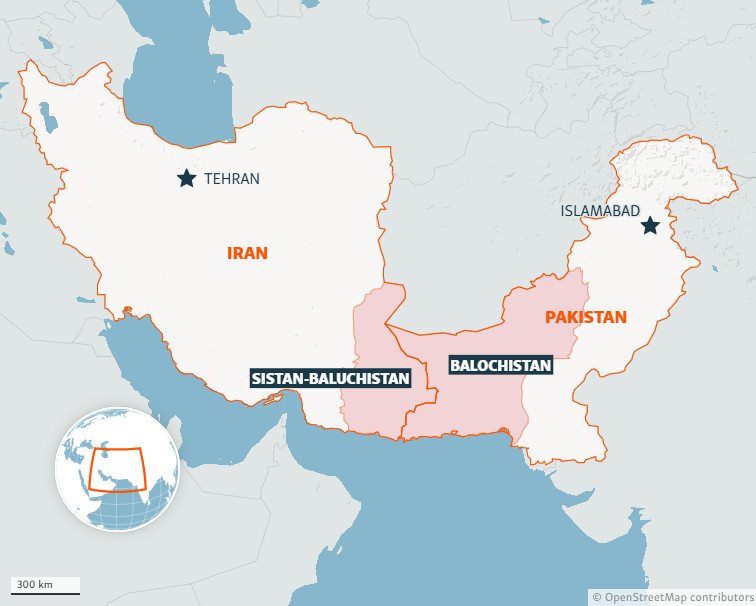
Iran's vast and restive southeastern province of Sistan-Baluchistan, located along the border with Afghanistan and Pakistan, has witnessed a deadly flare-up of violence in recent weeks.

Armed groups and Iranian security forces have clashed almost daily across the impoverished province, the site of a decades-long, low-level insurgency.

Separatist groups and Islamist militants in Sistan-Baluchistan, home to Iran's marginalized ethnic Baluch minority, are increasingly coordinating their efforts to challenge the Iranian state, experts say.

The intensifying insurgency has compounded the security threats facing Iran, which remains at war with the United States and Israel and braces for a possible resumption of major US combat operations.

"The renewed attacks in Sistan-Baluchistan come at a time when the Islamic Republic is facing unprecedented military and economic pressure," said Hamidreza Azizi, senior Iran analyst at the Brussels-based International Crisis Group.

"What makes the situation more concerning for Tehran is the possibility that localized insurgent activity could become part of a broader security challenge," he added.

Spate Of Attacks

Baluch armed groups have claimed responsibility for a series of hit-and-run attacks, deadly roadside bombs, and shootings targeting the Islamic Revolutionary Guards Corps (IRGC), the elite branch of Iran's armed forces, the Basij paramilitary force, and local police across the province in recent weeks.

On October 14, a police officer and local Basij commander were killed in separate attacks in the town of Mehrestan, Iranian media reported.

A day earlier, the IRGC said one of its members was killed after a hostage-taking attempt triggered clashes in Zahedan, the provincial capital of Sistan-Baluchistan. Also on October 13, gun battles between gunmen and the IRGC broke out in the town of Taftan.

In response, the authorities have stepped up security operations in the province, including preemptive raids on suspected insurgent cells, underscoring the growing threat.

Iran also executed a prominent Baluch militant on October 12. Omar Dorostaran had been convicted of armed rebellion, membership in a terrorist group, and complicity in an armed uprising.

Iranian Foreign Ministry spokesman Esmaeil Baqaei on October 12 claimed that "terrorist groups" operating in the area were acting on "plans devised by Israel and the United States to destabilize the country's borders."

Azizi of the International Crisis Group said Iranian officials increasingly fear that their adversaries may try to exploit existing ethnic and political grievances to open new fronts inside the country.

"Tehran appears determined to prevent a longstanding security problem from developing into a more serious vulnerability during a potential new war," he said.

Baluchistan

Sistan-Baluchistan, Iran's second largest province and roughly the same size as Syria, is particularly strategic and sensitive.

It borders Taliban-ruled Afghanistan and Pakistan's Balochistan Province, which has also been the scene of a decades-long insurgency.

Sistan-Baluchistan is also home to Chabahar, Iran's only port with direct access to the open ocean. It allows Iran to bypass the Strait of Hormuz, a major flashpoint in the war with the United States and Israel.

Militants Merge

In December 2025, four separate armed Baluch groups joined forces under the Mobarizoun Popular Front, signaling closer coordination among militant factions.

The umbrella group includes Jaish al-Adl, a Baluch separatist militant group that is designated as a terrorist organization by Iran and the United States.

Believed to be operating out of Pakistan, Jaish al-Adl is the most potent Baluch armed group fighting Tehran. Iran has accused the United States and Israel of arming the group.

"The Iranian government is currently facing multiple pressures at home and abroad, and naturally, armed groups may have come to the conclusion that they have found a good opportunity to expand their operations," said Fatemeh Aman, a US-based Iran analyst.

"If these attacks become coordinated, sustained, and continuous, they could pose a more serious security challenge for the government," Aman told RFE/RL's Radio Farda.

Experts say armed groups are exploiting the longstanding grievances of the Baluch minority, many of whom are Sunni Muslims in Shi'a-majority Iran. The group has long faced disproportionate discrimination and violence at the hands of the authorities.

Baluch make up around 5 percent of Iran's population of some 90 million. But they account for around 20 percent of all executions in the country.

During the nationwide anti-establishment protests that rocked Iran in 2022, Sistan-Baluchistan was the scene of the deadliest government crackdown. On September 30 that year, referred to as "Bloody Friday," nearly 100 protesters were gunned down.

Poverty, religious and ethnic discrimination, and lack of political representation have "created a basis for deep dissatisfaction in the province," said Aman.

"The government's largely security-based approach to the demands of the Baloch people has also contributed to the spread of this distrust," she added.

By RFE/RL