Showing posts sorted by date for query Shireen Abu Akleh. Sort by relevance Show all posts

Friday, September 04, 2026

Family of American Student Urges US to Secure Her Release from Israeli Detention

Sami Safi’s arrest is part of a “concerted effort to crush the new generation of Palestinian leaders,” her aunt said.
September 2, 2026

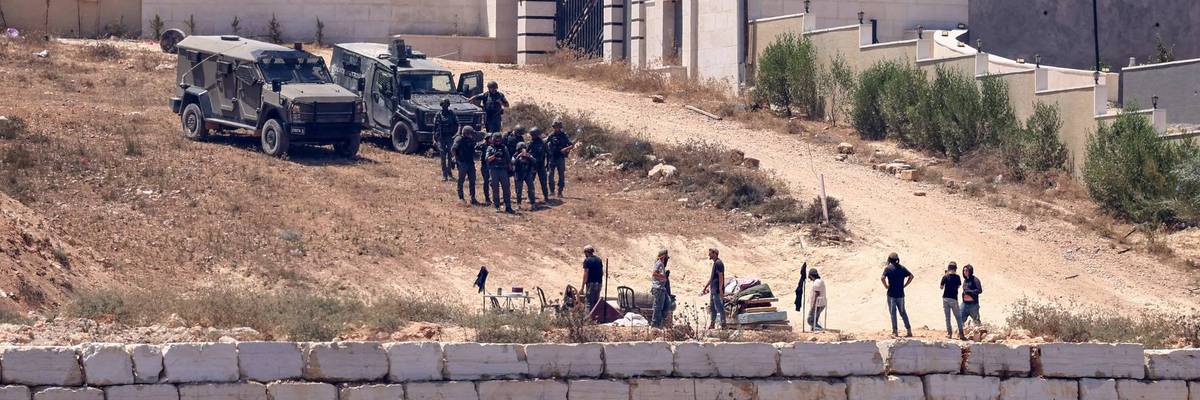
Israeli soldiers walk through an open field in Beit Sahour, south of Bethlehem, in the occupied West Bank on August 14, 2026. Violence against Palestinians by Israeli settlers in the West Bank has increased dramatically since October 7, 2023.Ahmad Gharabli / AFP

The family of Sama Safi, a Palestinian American student who is being detained in an Israeli prison, has urged the U.S. to do more to secure her release.

Grassroots pressure “has been effective in forcing the U.S. embassy to visit Sama,” Sama’s aunt, Leila Farsakh, told Truthout. The embassy has now visited her twice since her imprisonment in June, and has reported on the poor conditions of her detention. “But we need intervention from the U.S. government to release and protect Sama and all American citizens.”

Sama, a 20-year-old U.S. citizen and psychology student in the occupied West Bank, was detained by Israel along with three other female students of Birzeit University in June, and has been imprisoned without formal charges. The other students detained with Sama are Jolan Abu Awad, Laila Nail Khalil, and Natalie Abu Dayyeh, who is a player on the Palestinian women’s soccer team.

“She was wrongly detained,” said Farsakh, who lives in Boston. “They’ve accused her of belonging to a student group, which she denies.”

Sama is being held in Israel’s Damon Prison, under harsh conditions, and has reported facing verbal abuse at the hands of Israeli soldiers, medical neglect, overcrowding, and the spread of a skin disease among the women being detained.


40 Democrats Demand Israel Free Sami Safi, US Citizen Detained Without Charges
Lawmakers warn Rubio that Safi, who has chronic health issues, may die in Israeli prison if he doesn’t take action.  By Sharon Zhang , Truthout August 25, 2026

Women being detained at Damon prison have spoken of punitive measures and medical neglect, including being dragged and humiliated when taken outside for “yard time” each day.

On August 19, Israel’s far right National Security Minister Itamar Ben Gvir visited the prison and boasted of worsening the conditions of confinement for male and female Palestinian detainees, while making threats against them.

Sama’s case is particularly acute as she suffers from a chronic health condition which comes with “risk of organ failure” if not properly treated, Farsakh, Sama’s aunt, explained. “She has to have an injection once every month, and she has to take her medication, but they’re not being regular in giving her medication.”

In this regard, Sama’s case is reminiscent of the case of Terry Boulata, who was a student leader at Birzeit University during the 1980s and was imprisoned during the First Intifada. During her imprisonment, she suffered from a rare, severe health condition, and was only released after international pressure and global leaders stepped in.

Grassroots pressure has had an impact on Sama’s case, Farsakh said – and more must be built on that momentum. Farsakh spoke of the efforts of the Institute for Middle East Understanding (IMEU), the Palestinian Youth Movement (PYM), the Council on American Islamic Relations (CAIR), and the Arab-American Anti-Discrimination Committee (ADC) in agitating for Sama’s release. Over 100 human rights organizations, civil rights groups, and youth organizations have also signed a letter calling for Sama’s release.

“It’s been very important to see grassroots mobilization in the U.S. for the sake of freedom of Palestinian prisoners,” Farsakh said.

These grassroots efforts brought Sama’s case to the attention of U.S. senators and members of Congress.

Shortly after her arrest, Sen. Chris Van Hollen (D-Maryland) spoke about Sama’s detention. In a video message, Van Hollen described her unlawful arrest, saying, “Israeli security forces came to her home at 3 am in the morning, and just took her without explanation. She told them she was an American citizen. They didn’t care.”

Van Hollen pointed out that U.S. ambassador to Israel Mike Huckabee and Secretary of State Marco Rubio “always tell us that their number one priority” is “to protect American citizens,” and that they must secure Sama’s immediate release to live up to these claims.

In August, Rep. Rashida Tlaib (D-Michigan) posted on X that Sama “has been subjected to unspeakable cruelty in Israeli prison after being kidnapped from her home,” and that “her doctors warn that she now risks irreversible organ damage” due to Israel’s medical neglect of her chronic health condition.

Tlaib then took the lead in putting forward a letter, signed by 41 senators and representatives, calling for Rubio to pressure Israel for Sama’s release.

“Every day that Sama remains unlawfully detained in these inhumane conditions, she is at greater risk of irreversible and life-threatening repercussions,” the letter explains. “It is your responsibility to ensure the safety of all Americans abroad, with no exceptions. Her life is at risk on your watch.”

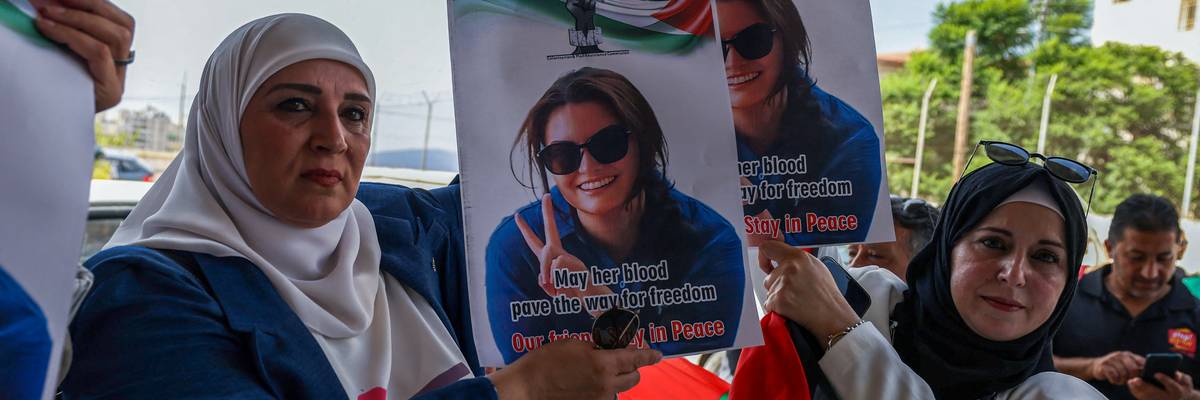
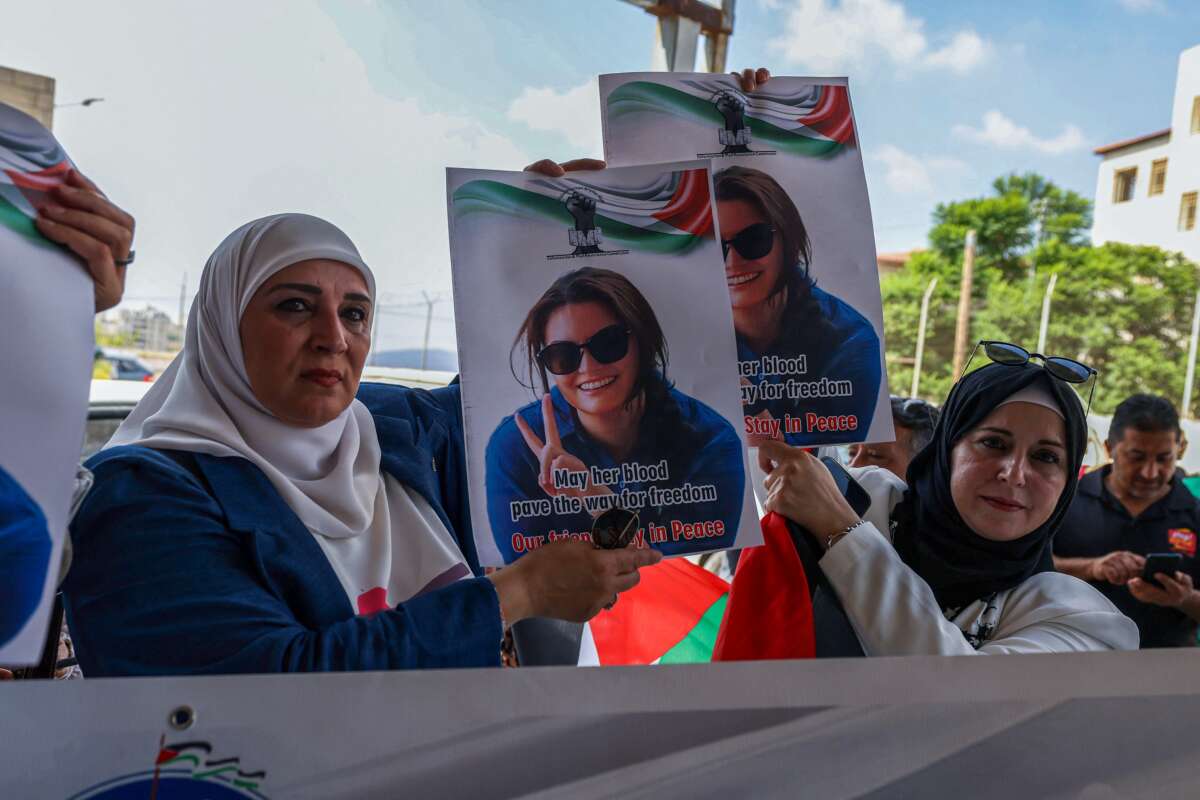
U.S. citizens have not been immune from Israeli violence. In 2024, Israeli forces shot and killed American protester Aysenur Ezgi Eygi in the occupied West Bank. In 2022, Israeli forces killed Palestinian American journalist Shireen Abu Akleh as she was reporting in the West Bank. And in 2024, U.S.-Canadian Jacob Flickinger was killed by an Israeli airstrike in Gaza. It is unclear how many Palestinian Americans have been killed in Israel’s ongoing genocide in Gaza.

Israel has also detained other Palestinian Americans in its prisons. In 2025, Israel detained Mohammed Ibrahim, a teenager from Florida, in the West Bank. Detained at 15 years old, Mohammed turned 16 while in detention, and was finally released after a campaign brought about pressure from U.S. lawmakers.

Farsakh insisted that grassroots pressure must continue, not only for the sake of Sama, but for all Palestinian prisoners. Grassroots pressure can “use the case of Sama to talk about all Palestinian women prisoners, and how this is unlawful under international law, and against American laws,” she added.

Sama’s case should also serve to highlight the worsening conditions in the occupied West Bank, Farsakh said: the increasing annexation, ethnic cleansing, and fragmentation that are part of Israel’s intensifying settler-colonial project.

“This is an attack on freedom of education, freedom of expression, freedom of association,” Farsakh said. “[Israel] doesn’t want people to organize, to talk, to socialize; they want them separated, and to leave the country.”

“I think it’s really a concerted effort to crush the new generation of Palestinian leaders.”

Sunday, August 30, 2026

‘Horrific’: Masked Israeli Settlers Attack, Injure Palestinian Woman and NBC Crew

Another journalist called the assault “the latest instance of unacceptable and alarming settler violence toward journalists and Palestinians.”


Israeli soldiers (top) stand guard next to settlers in front of the Palestinian houses in the village of Qusra, south of Nablus, in the occupied West Bank, on August 12, 2026.
(Photo by Zain Jaafar / AFP via Getty Images)

Olivia Rosane
Aug 29, 2026
COMMON DREAMS

Israeli settlers attacked and wounded a Palestinian woman and four NBC team members who were interviewing her in the West Bank on Saturday, amid ongoing settler violence in the occupied Palestinian territory.

The settlers, who were wearing masks, drove up as Aida Ahmed Abdullah and her family were telling NBC about how settlers forced them from their home in the town of Jalud.

“They jumped out, beat us, then jumped back in the car,” NBC News international correspondent Matt Bradley told the outlet.

Bradley was hit twice on the arm by the attackers, who carried sticks. They also threw rocks. Abdullah, Bradley, West Bank-based cameraman Khaldoon Eid, producer Producer Lawahez Jabari, and a driver were all injured in the ambush and treated afterword. Abdullah remained in the hospital as of Saturday night.

Both Eid and Jabari also described the assault.

“We didn’t expect that—that they would come to attack,” Eid told NBC. “We were in the middle of a Palestinian area next to Palestinian houses.”

Jabari said, “Suddenly a car came to us,” adding, “the settlers had sticks, I saw a gun, but they didn’t use the gun.”

Jeremy Diamond, a CNN correspondent in Jerusalem, called the incident “horrific” on social media and said it was “the latest instance of unacceptable and alarming settler violence toward journalists and Palestinians.”

The NBC crew and their interviewee were not the only targets of such violence on Saturday, as attacks continued in the town of Qusra, where settlers have been conducting a nearly three-week siege of three Palestinian homes. Settlers pepper sprayed Palestinian workers, threw rocks at a building, and besieged a fourth home with at least four Palestinian residents inside, according to Hareetz and Al Jazeera.

Israeli Prime Minister Benjamin Netanyahu condemned Saturday’s attacks, characterizing them as “criminal acts of violence committed in the villages of Qusra and Jalud by a handful of rioters who violate the law, cause enormous injustice to the law-abiding settler public, hinder the IDF [Israel Defense Forces] in fulfilling its missions, and harm Israel’s standing in the world.”

Yet Trita Parsi, executive vice president of the Quincy Institute for Responsible Statecraft, argued on social media:
1. The settler wouldn’t do this to Americans had they not received a green light from the Israeli gov.
2. Israel’s gov would not have given such a green light unless it felt confident that the US gov—and Amb. [Mike] Huckabee—wouldn’t lift a finger to defend the Americans.

Journalists trying to report in both Gaza and the West Bank have long been targets of both settlers and the Israeli military. The IDF was found to be the leading killer of journalists worldwide for the third year in a row in 2025, and even before the Gaza genocide began in 2023, there were cases like the IDF killing of Palestinian-American reporter Shireen Abu Akleh in the West Bank in 2022.

The attacks on the NBC team also come amid an uptick in setter violence in the West Bank since 2023, which humans rights observers say is enabled by the Israeli government. Netanyahu’s government has expanded settlements in the West Bank despite the fact that they are illegal under international law.


Outrage as Trump ambassador ignores brutal Israel settlers attack on American news crew

Alexander Willis
August 29, 2026 
RAW STORY


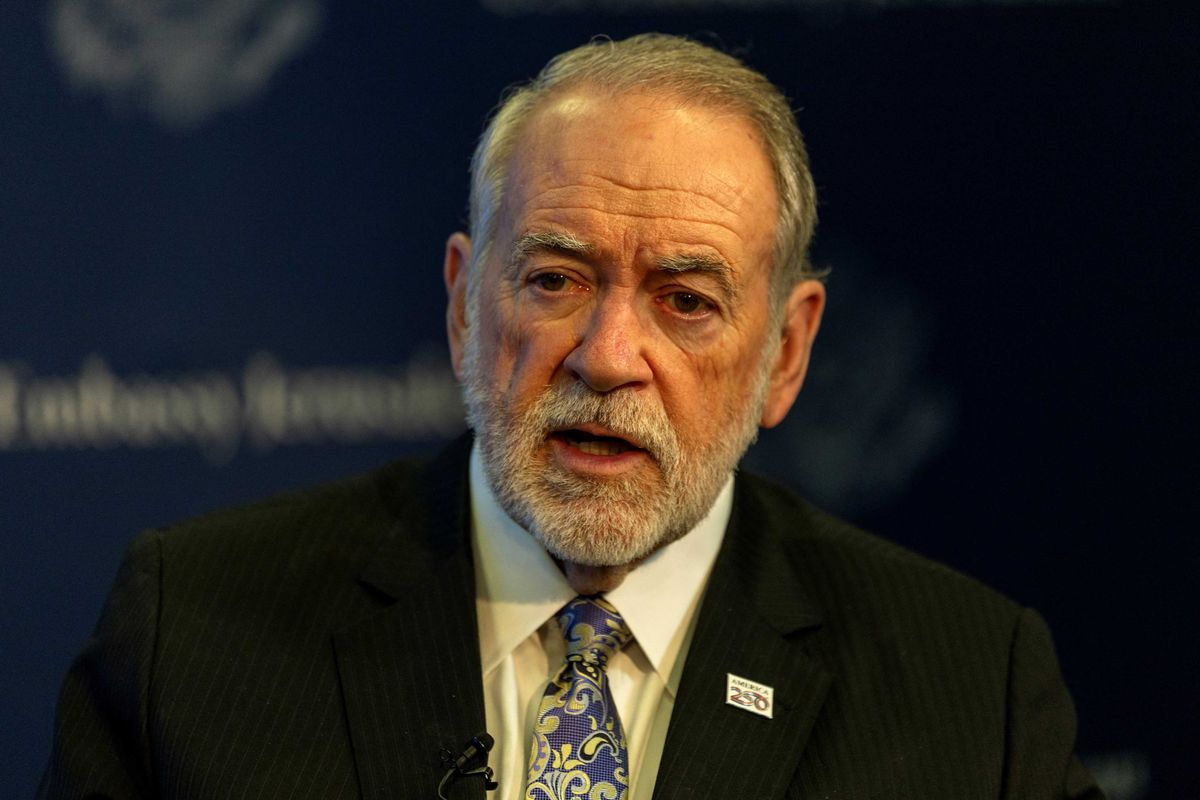
U.S. Ambassador to Israel Mike Huckabee looks on during an interview with Reuters in Jerusalem, August 20, 2026. REUTERS/Ronen Zvulun

U.S. Ambassador to Israel Mike Huckabee was condemned Saturday for ignoring a brutal attack on an American news crew that occurred earlier that same day.

A crew of three NBC News correspondents was reporting from the occupied West Bank on Saturday near the Palestinian village of Jalud when a vehicle accelerated toward them with Israeli license plates, the outlet reported.

“They jumped out, beat us, then jumped back in the car,” said NBC News correspondent Matt Bradley, who the outlet notes was “hit twice in the arm and later treated at a nearby clinic.”

Aida Ahmed Abdullah, a Palestinian woman being interviewed by the NBC News crew, was also injured in the attack.

Israeli Prime Minister Benjamin Netanyahu issued a vague statement Saturday condemning the attacks, calling them “acts of violence” that harm “Israel’s standing in the world,” though did not mention that Americans were attacked in the incident.

Responding to Netanyahu and other Israeli officials’ remarks, Huckabee called them “strong statements,” but similarly made no mention of the attack on Americans. He also called on the Palestinian Authority to “join in condemning violence against Israel by Palestinians.”

Huckabee's ignoring of an attack on Americans left several critics outraged.

“There is literally nothing in this statement to indicate that it’s the U.S. ambassador to Israel talking about Israeli violence against Americans,” wrote Jasper Nathaniel, a journalist known for his coverage of the West Bank and Israeli settler violence, in a social media post on X. “Reads entirely like a statement by an Israeli official.”

Journalist and NBC News contributor Hooman Majd further suggested Huckabee’s allegiance was stronger to Israel rather than the United States, and urged the Trump administration official to “protect American citizens.”

“You're the American ambassador, not the spokesman for the Israeli government,” Majd wrote in a social media post on X. “Rather than congratulating the IDF and the Israeli FM, take a moment to protect American citizens trying to do their job.”

Foreign policy analyst Trita Parsi went as far as to suggest that Israeli officials knew in advance that Huckabee “wouldn’t lift a finger” in defense of the victimized Americans.

“When you read about [the] members of an NBC News Team being beaten by Israeli settlers today in the West Bank, it's important to note two things: The [settlers] wouldn't do this to Americans had they not received a green light from the Israeli gov,” Parsi wrote. “[And], Israel's gov would not have given such a green light unless it felt confident that the US gov — and Amb. Huckabee — wouldn't lift a finger to defend the Americans.”

Huckabee has appeared to endorse the idea of “Greater Israel” in the past, with “Greater Israel” referring to the territorial aspirations of some Israelis to significantly expand the nation’s borders. Netanyahu — who was indicted by the International Criminal Court for war crimes — said as recently as last August that he “absolutely” subscribed to a “vision” for “Greater Israel.”


Sunday, August 16, 2026

Anas Al-Sharif One Year Later: The Systematic Killing of Palestine’s Journalists


 August 14, 2026

One year ago this week, the Israeli military killed Anas Al-Sharif. He was a young Palestinian journalist working in Gaza, one of the many who continued to report under bombardment, displacement, and the constant knowledge that the camera itself had become a target. His death was not an accident of war. It was one act in the ongoing genocide against the Palestinian people in Gaza — a genocide that has included, as a deliberate and central component, the systematic elimination of those who document it.

Al-Sharif’s killing joins a list that has grown so long it has become a statistic rather than a series of individual lives. Since October 2023, close to three hundred Palestinian and now Lebanese journalists and media workers have been killed by Israeli forces. The Committee to Protect Journalists documents at least 209 killed by Israel in Gaza and in Israeli detention centres. Palestinian press associations and the International Federation of Journalists put the figure higher, in the mid-to-high 260s. These were not combatants. They were reporters, camera operators, producers, and fixers — many of them wearing clearly marked press vests, working for local outlets or international networks, trying to show the world what was happening to their cities, their schools, their mosques, their hospitals, and their families as the genocide unfolded.

This is not merely the deadliest conflict for journalists in the modern era. According to analyses from Brown University’s Costs of War project, more journalists have been killed in Gaza than in the U.S. Civil War, World War I, World War II, the Korean War, the Vietnam War (including Cambodia and Laos), the wars in the former Yugoslavia, and the post-9/11 war in Afghanistan — combined. The comparison is not rhetorical flourish. It is a measure of the scale of a genocidal campaign that has treated the press as an enemy to be erased. What took place across the major industrial wars of the twentieth century, across continents and decades, has been surpassed in a single strip of land in less than three years. That fact alone should end any pretence that these deaths are the ordinary hazards of covering combat.

Among the dead is Shireen Abu Akleh, the American-Palestinian journalist for Al Jazeera, shot in the head by an Israeli soldier in Jenin in May 2022 — more than a year before the onset of the current genocide in Gaza. She was wearing a helmet and a press vest while covering a military raid. Her killing was captured on video. Investigations by independent outlets and human rights organizations concluded that she was deliberately targeted. The Israeli government first claimed she was killed by Palestinian fire, then shifted stories, and ultimately faced no meaningful accountability. Her targeted killing was an early and clear signal of the policy that would later be applied on a mass scale as part of the genocide: the press is the enemy.

Photograph Source: Davide Mauro – CC BY-SA 4.0

The pattern is consistent with the logic of genocide. Journalists are killed in their homes with their families, in marked press cars, while live-streaming from hospital courtyards, while sheltering in media offices that Israeli officials had been informed were civilian. Al Jazeera’s Gaza bureau was repeatedly struck. Local reporters who remained after international staff were evacuated became the primary chroniclers of the mass killing, the destruction of civilian infrastructure, and the forced starvation of the population — and therefore the primary targets. Israel’s repeated claim that it does not target journalists is contradicted by the body count, by the documented strikes on known media locations, and by the statements of Israeli officials who have treated the Palestinian press as a legitimate military objective within a broader campaign of destruction.

Yet some have survived the same violence and refused to stop. Wael Al-Dahdouh, Al Jazeera’s long-time Gaza bureau chief, lost his wife, two of his children, his infant grandson, and later his eldest son Hamza — himself a journalist — in successive Israeli strikes. He was injured more than once. Within days of burying family members he returned to the camera. “If we don’t continue reporting,” he has said, “there will be no one left to tell the story.” Even after leaving Gaza for medical treatment, he has continued to speak for the colleagues still inside. Others who narrowly escaped the August 2025 strike that killed Anas Al-Sharif and four of his colleagues — among them Ayman al-Hassi, Mohammed Qita, and Anas’s cousin Mohammed al-Sharif — returned to the same work. Younger reporters such as Nour Khaled stepped into the gap left by the dead, choosing to remain in Gaza City rather than evacuate, insisting that the coverage must continue.

These survivors operate under conditions that would be unimaginable in any other context: no safe shelter, no reliable electricity, chronic hunger, and the knowledge that the next airstrike may be aimed at them specifically. Freelancers without institutional protection, local stringers, and the remaining staff of networks that still broadcast from Gaza keep documenting the genocide because no one else can. Their persistence is itself a form of resistance against the attempt to erase the record.

This is a genocidal attack on freedom of the press, inseparable from the genocide itself. When a state kills the people who record its actions at a rate that exceeds the combined toll of the great wars of the twentieth century, it is not simply committing war crimes against individuals. It is attempting to erase the possibility of an independent historical record of the genocide. The images that did get out — of children pulled from rubble, of mass graves, of hospitals turned into morgues — were produced at extraordinary personal cost. Many of the journalists who filmed them are now dead. Those who remain keep working.

The names of those killed are not abstract. They are maintained and updated by Palestinian institutions themselves. The Palestinian Journalists’ Syndicate (نقابة الصحفيين الفلسطينيين), working in close coordination with the International Federation of Journalists, has published sequential lists of the martyred journalists and media workers. A public, regularly updated record of the killings can be found on the IFJ’s dedicated page for the war in Gaza, which draws directly from the Syndicate’s documentation. Additional named lists and ongoing monitoring are available through the Shireen Observatory (مرصد شيرين) at https://www.shireen.ps, a Palestinian project dedicated to documenting attacks on journalists. These are the primary Palestinian sources for the identities of those silenced.

Last week in New York City, like in many places across the world, demonstrators marked the one-year anniversary of Anas Al-Sharif’s killing. Organized in part by the Palestinian Youth Movement, the march moved from the New York Times building to Times Square, demanding accountability for the journalists killed in Gaza and spotlighting Western media’s role in manufacturing consent for the ongoing genocide. Among those present was Palestinian American activist Roland Bennett, president of the Tree Water Initiative, a non profit dedicated to supporting sustainable life in Gaza. “Remembering Anas means refusing to let the record be buried,” Bennet said. “Every journalist still reporting from Gaza is carrying the weight of those who can no longer speak. Our task is to make sure the world cannot look away.”

The international response has been a mixture of muted statements and continued arms transfers. Western governments that speak of press freedom at home have remained largely silent about the industrial-scale killing of Palestinian journalists as part of the genocide. The same governments that demanded accountability when journalists were killed in Ukraine have found reasons for caution when the perpetrators are their close ally. The double standard is not subtle. It is structural.

Anas Al-Sharif was one name among hundreds. His colleagues continue to report from the ruins. Their work is an act of resistance against both the genocide itself and the attempt to erase its documentation. One year after his death, the least that can be demanded is that the record remain unbroken: these killings were not tragic accidents of a complex war. They were the systematic targeting of the people who refused to look away — a campaign so extensive that it has outstripped the journalist death tolls of World War I, World War II, and the major conflicts of the modern era combined, and one that forms an integral part of the ongoing genocide in Gaza.

The silence of the powerful is part of the crime. The work of the remaining journalists who seek to expose the truth is its contradiction and a part of the resistance to these unfathomable and ongoing atrocities continuing to happen before our eyes.

Michael Leonardi lives in Italy and can be reached at michaeleleonardi@gmail.com

Saturday, August 01, 2026

Op-Ed

Israeli Forces Have Killed US Citizens. Congress Wants to Deepen Military Ties.

Section 219, a measure to integrate parts of the Israeli and US militaries, could provide more cover for Israeli crimes.

July 31, 2026
Palestinians and international activists lift portraits of slain Turkish American activist Ayşenur Ezgi Eygi as they arrive for her final farewell at the Rafidia hospital morgue in Nablus in the occupied West Bank, on September 8, 2024.JAAFAR ASHTIYEH / AFP via Getty Images

Like me, Ayşenur Ezgi Eygi attended West Seattle High School.

In September 2024, days before leaving to do advocacy work in the West Bank, she celebrated her birthday at Alki Beach — a local favorite spot for Seattleites. Not long after, Eygi was shot and killed by Israeli soldiers while observing a weekly protest against Israel’s illegal settlements.

Congress is now considering legislation that would bring the U.S. and Israeli militaries closer than ever before. This could be especially dangerous for Palestinians and others in the region, who have been on the receiving end of Israel’s violent expansionism.

Israeli forces have killed over 73,000 Palestinians in Gaza since October 2023, with over 1,200 deaths occurring since the U.S.-backed ceasefire took effect on October 10, 2025. In Lebanon, Israeli attacks have killed over 4,300 people, with numbers climbing daily.

The case of U.S. citizen Eygi — and other Americans killed by Israeli forces — shows that if Congress passes this new legislation, they could also be putting U.S. citizens at risk.


AOC: US-Israeli Military Integration Measure “Existential Threat” to Democracy
The measure, known as Section 219, is included in the Pentagon budget bill advancing through Congress.  By Sharon Zhang , Truthout  July 22, 2026


Buried inside the 2027 National Defense Authorization Act (NDAA) is Section 219, a provision that would dramatically expand defense technology cooperation between the United States and Israel. The idea is controversial — U.S. support for Israel faces growing scrutiny in the wake of the country’s ongoing bombardment of Gaza, which has been classified by rights groups and international authorities as a genocide.

Section 219 would expand joint U.S.-Israeli development of advanced military technologies, which includes artificial intelligence, quantum computing, and autonomous weapons systems. Unlike traditional military aid, which Congress reviews and appropriates each year, the proposal would create an “executive agent” to embed Israeli technology and defense firms into the Pentagon — from research and development to testing and manufacturing processes.

The Quincy Institute on Responsible Statecraft said that Section 219 would make the U.S. military more intertwined with Israel’s than with any other ally while making the relationship less transparent and harder for Congress to oversee or unwind in the future.

“Codifying the integration of our military technology and supply chains with those of any other country is dangerous,” said Rep. Thomas Massie, one of seven Republicans to break party lines and vote against the NDAA. Massie had introduced an earlier amendment to remove Section 219 from the NDAA, but House leadership did not allow it to receive a vote.

Sen. Bernie Sanders criticized the proposal as an attempt to give Israel “more military integration than any NATO ally,” despite declining support for unconditional U.S. backing for Israel.

Those concerns from Congress come as public opinion is shifting sharply. Pew Research Center data show increasingly unfavorable public opinion toward Israel in the United States, and growing opposition to U.S. military support for the country. Other polling has found that only 16 percent of Americans support providing military aid to Israel without additional restrictions. Taken together, the numbers reveal a particular disconnect between U.S. foreign policy and public consensus.

Crucially, Section 219 may also pave the way for more violence against the very constituents that lawmakers are elected to represent. Since 2003, Israeli forces have killed at least 14 U.S. citizens with no accountability.

Reading about Eygi’s death in the West Seattle Blog brought U.S. implication in Israeli violence home for me in a new way. The coverage was filled with neighbors remembering someone they had taught, laughed with, and watched grow up. “I taught Ezgi and her sister at Madison [Middle School] years ago and she was a lovely student and person,” wrote one commenter on the blog post. “RIP and I hope her family finds comfort in a horrible situation by family and friends being present for them.”

Following Eygi’s death, hundreds gathered on Alki Beach to mourn her death, holding candles on the same shore where she had celebrated life.

Eygi’s killing was not an isolated tragedy. American citizens killed by Israeli forces in Palestine include peace activist Rachel Corrie, who was crushed by an Israeli military bulldozer while protesting home demolitions in Rafah; Palestinian American journalist Shireen Abu Akleh, who was shot in the head while reporting in the West Bank despite wearing marked press gear; and humanitarian aid worker Jacob Flickinger, who was killed in an Israeli strike while delivering food with World Central Kitchen. Other Palestinian Americans — including teenager Omar Mohammad Rabee and 17-year-old Tawfiq Ajaq — were also killed in the occupied West Bank within recent years.

Their ages, professions, and politics differed, but what united these American citizens was the absence of any accountability after their deaths.

The families have spent years demanding answers. In a 2003 statement, the parents of Rachel Corrie condemned the continued violence against Palestinians, calling for shared humanity. “We ask that military aid to Israel be commensurate with its efforts to end its occupation of the Palestinian Territories and to adhere to the rules of international law,” they wrote.

After Eygi was killed more than two decades later, they returned to a familiar demand for justice, writing: “Aysenur and her family deserve better than White House and Department of State platitudes and calls for Israeli investigations that never result in truth, action, or enforcement of U.S. law. We are demanding more. The time for accountability is now.”

Flickinger’s parents have likewise called for an end to U.S. military aid to Israel. Human rights organizations and grieving families have repeatedly pressed for investigations and accountability for these deaths of American citizens abroad. Yet years later, no one has been held criminally accountable, and successive administrations have continued providing Israel with military assistance as families at home grieve without justice.

This July, the House narrowly passed the National Defense Authorization Act, including Section 219, by a vote of 216–212. But the proposal has not yet become law. The Senate must still pass its own version of the NDAA before lawmakers reconcile the two bills, leaving Congress with another opportunity to decide whether deeper military integration with Israel is truly in the national interest.

Ayşenur Ezgi Eygi would have celebrated her 28th birthday on July 28. She should have had the chance to build the life ahead of her. Instead, she became one more American killed by Israeli forces without meaningful accountability. If Congress chooses to further institutionalize the U.S.-Israel military relationship without demanding accountability, it risks binding the United States even more closely to a partnership in which future abuses — including those against American citizens — may be met with the same impunity.

Israel has demonstrated time and time again that it will use U.S. weapons to violate international law — which itself is a violation of U.S. law. Instead of entertaining this proposal to deepen partnership with Israel, Congress must confront Israeli impunity — from the killings of American citizens to the devastating toll of its genocide on Palestinian civilians. No security partnership should place itself beyond the reach of the law.


This article is licensed under Creative Commons (CC BY-NC-ND 4.0), and you are free to share and republish under the terms of the license.


Julian Castañon Villa
Julian Castañon Villa is Henry A. Wallace Fellow at the Institute for Policy Studies.

Saturday, May 09, 2026

FOUR YEARS LATE

CPJ demands update on US probe of journalist Abu Akleh’s killing in West Bank


The Committee to Protect Journalists (CPJ) on Thursday demanded a "public progress update" from the US Department of Justice on the investigation into the Israeli military's killing of Palestinian American journalist Shireen Abu Akleh, who was gunned down while reporting for Al Jazeera in the occupied West Bank in 2022.


Issued on: 08/05/2026 
By:FRANCE 24

A woman takes a photo of a mural dedicated to Palestinian American journalist Shireen Abu Akleh after it was unveiled in the West Bank city of Bethlehem on August 30, 2023. 
© Nasser Nasser , AP

The Committee to Protect Journalists (CPJ) on Thursday called for US authorities to relaunch their investigation into the Israeli military's killing of Palestinian American journalist Shireen Abu Akleh, who was gunned down while reporting for Al Jazeera in the occupied West Bank in 2022.

In a letter to the US Department of Justice -- which oversees the Federal Bureau of Investigation -- and FBI chief Kash Patel, the global press freedoms group demanded a "public progress update" on Abu Akleh's death.

"Although the FBI reportedly opened an investigation into her killing in November 2022, it has made no demonstrable progress," the letter noted, adding that CPJ was "not aware that any formal interviews have been conducted with witnesses despite the willingness of multiple witnesses to cooperate."


"This troubling lack of concrete progress -- four years after Abu Akleh's death -- represents a profound failure of the US government to respond promptly and impartially to the killing of one of its citizens by a foreign military."

Abu Akleh was 51 when she was fatally shot on May 11, 2022 by Israeli Defense Forces (IDF) soldiers while covering an Israeli raid on the Jenin refugee camp in the north of the occupied West Bank, CPJ said.

Then-Israeli Prime Minister Naftali Bennett initially claimed gunfire from Palestinian fighters was the likely cause of her death.

The IDF later released a statement saying it was "not possible to unequivocally determine the source of the gunfire" that killed Abu Akleh, adding there was "a high possibility that Ms. Abu Akleh was accidentally hit by IDF gunfire."
Truth in conflict

But CPJ notes that multiple independent investigations from leading news organizations "concluded that Abu Akleh was killed by IDF fire; some found evidence that she was deliberately targeted."

Abu Akleh was "a household name across the Middle East, widely respected for her courageous and in-depth reporting on Palestinian life," CPJ said, adding that she was wearing a vest marked "PRESS" and "clearly identified as press at the time of her killing."

In a separate statement Thursday, Abu Akleh's family also sought justice for violence at the veteran reporter's funeral -- Israeli police attacked her pallbearers, who nearly dropped her coffin -- saying "no one has been brought to justice, neither for her killing nor for the attack on her funeral."

"Her killing was not only a tragic loss for our family, but also a grave attack on press freedom and the fundamental right to report the truth," the family's statement said. "This ongoing impunity sends a dangerous message that journalists can be targeted without consequence."

Abu Akleh's death also made her a broader symbol of the Palestinian struggle: murals of her face adorn walls, her office's street in Ramallah was renamed in her honor and a museum was named for her.

In addition to demanding a public update on the investigation, press advocates called for the FBI to commit to a timeline to "complete a thorough criminal investigation and publicly release its findings," urging the agency to maintain an impartial and independent inquiry "free from political considerations."

CPJ said since Abu Akleh's killing, Israel has killed 258 more journalists and media workers across the Middle East, including 207 in Gaza alone.

Israel was responsible for two-thirds of journalist deaths in 2025, CPJ said.

The Israeli army rejects allegations of targeted violence, saying it does not intentionally target journalists or their families.

(FRANCE 24 with AFP)

Wednesday, May 06, 2026

INTERVIEW

Global press freedom in 'deplorable' state, journalism federation chief tells RFI

As the International Federation of Journalists opens the 32nd world congress in its 100-year history, outgoing president Dominique Pradalié condemned the "deplorable" state of global press freedom in an interview with RFI.


Issued on: 05/05/2026 - RFI
Mourners and colleagues holding 'press' signs surround the body of Al-Jazeera Arabic journalist Ismail al-Ghoul, killed along with his cameraman Rami al-Refee in an Israeli strike on 31 July, 2024. © Omar Al-Qattaa / AFP

More than 300 delegates representing journalists’ unions and organisations around the world are gathering in Paris for the event from 4 to 7 May, hosted by the International Federation of Journalists' (IFJ).

Outgoing IFJ president Dominique Pradalié, whose mandate ends on Monday, called the congress an opportunity "to debate the major challenges facing journalism today, such as surveillance and ongoing impunity for crimes against journalists, artificial intelligence, declining workers’ rights, among many others".

On World Press Freedom day, RFI spoke with Pradalié about the urgency of raising the alarm over the dangers faced by journalists.

Dominique Pradalié: The obstacles for journalists are manifold. They range from direct, specific threats to threats against one’s family. These arrests and disappearances are not just happening in the Sahel or in Africa, they are happening all over the world.

And as president of the International Federation of Journalists, which represents some 600,000 journalists worldwide, we have sounded an alarm bell regarding the deplorable state of press freedom and the terrifying threats that haunt journalists day and night.

On 1 May, we published a global monitoring report highlighting systemic and unprecedented surveillance targeting journalists. As well as traditional phishing emails, fake websites now coexist with state-sponsored spyware, compromising the safety of journalists and the protection of their sources, without any meaningful or active legislative or regulatory oversight. And what is happening? The result is that in 2025, 128 journalists were murdered.


Dominique Pradalié, outgoing president of the International Federation of Journalists, in the RFI studio on 3 May. © RFI/Benoît de Solminihac


RFI: Two-thirds of these deaths are attributed to Israel, including 86 in Gaza, making it one of the deadliest places in the world for journalists. Yet the protection of journalists in war zones is guaranteed by international law. Why, in your view, are these principles so difficult to apply in Gaza today?

DP: In Gaza, a genocide is under way. To prevent any testimony, the Israeli army, the Israeli government – dominated by the far right – has decided to target all journalists. At least 250 have been killed in two years. A massacre that no one, even in their worst nightmares, would have imagined possible.

You mentioned international conventions. Nothing specific exists for the protection of journalists. Absolutely nothing. They are considered civilians, that is all. Civilians are more or less protected depending on the parties involved and the nature of the wars.

But journalists need specific protection. After working extensively with international lawyers, we have drawn up a convention, a text against impunity. Nothing exists at the international level against impunity for the murderers of journalists. And this text provides, in particular, for permanent annual monitoring. This means that every country, every year, will have to report on what it has done to promote press freedom.

Independent international teams will be deployed to investigate in countries where journalists have been killed and where justice has not been served. They will attempt to find not only the killers but also the instigators, and bring them to justice.

Record killing of journalists reveals rising global threat to press freedom

RFI: Is there currently evidence available in any of these cases that could help establish clear accountability?

DP: Absolutely. I’ll give three examples. In Serbia and in Greece, there have been acquittals very recently for the murderers of journalists, on the grounds that it wasn’t fully proven that they had actually tried to kill them. I’ll leave it to you to interpret and understand what these words might mean for the family and for the profession. These journalists were deliberately killed. The third example is in Latin America, and there are numerous examples in Mexico where [journalists] are effectively being hunted down.

But I am thinking of our Lebanese colleague Amal Khalil, who was deliberately targeted, warned that she would be targeted if she continued, and who was murdered – just like Shireen Abu Akleh in Jenin four years ago.

In other words, governments no longer bother with any precautions whatsoever. They simply decide to eliminate inconvenient witnesses. And that is impunity, pure and simple. It is a cancer eating away at all democracies. And since journalists are part of the proper functioning of democracy, every country – and France has not yet taken a stand – must publicly declare its support for an international convention against impunity.

If this is not done by 2 November, the day designated by the United Nations to condemn impunity for the killers of journalists, everything will seem like a joke.


Lebanese journalist Amal Khalil, pictured on 22 March, 2026, was killed on 22 April, 2026. AP - Mohammed Zaatari


RFI: In the United States, President Donald Trump’s rhetoric against the media is consistently confrontational. There too, press freedom is under serious threat.

DP: Donald Trump is setting a bad example to the whole world. This man isn’t controversial just because he is president of the United States, and that is an important office. This man lies constantly. I think it was the New York Herald or the Washington Post, I can’t remember which of the two, in its list covering his two terms, reported that the US president had told more than 2,000 lies.

The press is trying to do its job, lies or no lies, and the politicians on the other side are doing what they can to keep their seats and their illegal, illiberal and harmful practices for the whole world.

RFI: How can the IFJ take concrete action in the face of the increasing number of attacks on press freedom?

DP: Well, we go out into the field whenever we can. I do it very often. Members of our executive committee do it. We file complaints, and we’re going to bring all these complaints together at an international level.

We have a pool of international lawyers who will begin working publicly on Monday at the opening of the world congress in Paris to create specific international legal remedies for all journalists, so that they are no longer hunted down like game, but can, on behalf of everyone, fulfil their mission in the public interest.

Kidnapped, killed or silenced: Africa's journalists increasingly under threat

RFI: What measures can you put in place to provide concrete protection for reporters in the field?

DP: Well, there are two types of measures for journalists, before and during their trips. We run a huge number of training courses for journalists – as you will understand, we keep these discreet, and the countries involved are also discreet – to train them in warfare techniques, espionage techniques and protection techniques.

And then, on the ground, we provide aid in Ukraine in particular, but also in Gaza. We have three aid centres in Gaza, where we provide protective equipment and all sorts of forms of daily assistance. That’s part of our day to day work. The same is true in Sudan, and it’s true in Iran too, where we do what we can. But there too, we’re discreet above all else. So, we’re providing training and direct support through our affiliates. We have 188 affiliates worldwide. We’re not doing enough, but at least we’re doing something.

RFI: Is press freedom making progress in any part of the world?

DP: I won’t go through all 148 countries where we have affiliates in detail, but I would say that there are indeed a number of countries [where this is the case], such as Uruguay, from where I have just returned. There, in the name of press freedom, they are creating a press council and a specific chamber set aside in the Uruguayan parliament. And this is something could be done everywhere for journalists, to demonstrate the importance a government attaches to press freedom.

This article has been adapted from the original interview in French by Olivier Chermann and lightly edited for clarity.