Thursday, May 07, 2026

Georgia Garden Connects Cherokee Nation to Its Roots

Source: Barn Raiser

He began planting the garden in 2013. It is on the route of the Trail of Tears, along which, in the 1830s, President Andrew Jackson force-marched tens of thousands of Cherokees and members of other southeastern tribes from their homelands to Oklahoma, which the federal government had designated Indian Country. The tribes’ ancestral lands were then opened to settlers.

The trek to Oklahoma was deadly and disruptive. Half of the tribal members marched there died along the way. The starvation and stress of the journey were exacerbated by the massive dislocation of their lives and the inability to access the plants and food that were central to their traditional medicine and culture. “They might as well have been going to the surface of the moon,” Harris says.

In 2015, the National Park Service named the Cherokee Garden at Green Meadows Preserve an interpretative site of the Trail of Tears National Historic Trail. The garden lies within a Marietta public park that includes walking trails, organic community gardens, an historic home and more.

Annually, according to Tony Harris’s wife, Carra Harris, about 500 people from garden clubs and other civic groups take organized tours of the Cherokee garden (that’s in addition to the 1,400 schoolkids). Another 15,000 of the yearly visitors to the park as a whole drop by the garden as well; they look at plants, especially those that are blooming or fruiting, and ask questions of the garden volunteers at work.

Plant labels in the Cherokee Garden at Green Meadows Preserve. Both garden visitors and readers of this page can point a cellphone camera at the QR code to pull up a link to photos and more information. (Dawn Satterfield)

Through its educational mission and its preservation of Cherokee plant knowledge, the garden has an active role in re-establishing Cherokees’ connection to the earth. The reconnection fills an emotional and cultural need, Carra says, calling this a healing.

In pursuit of that idea, in April 2025 the garden welcomed middle schoolers from the Cherokee Immersion School, in Tahlequah, Oklahoma, the capital of the Cherokee Nation. “We wanted to capture video and pictures of plants we don’t have here in Oklahoma but are part of our heritage,” says their teacher Victoria Bangle. She was pleased to include the students in that process. “Plants are the center of our language,” Bangle says.

According to Bangle, the middle-schoolers took lots of pictures and are now working on giving each plant its Cherokee name, presented in the Cherokee syllabary. This writing system uses symbols based on syllables rather than on phonemes, or small units of sound, as in English.

When the Cherokee middle-school students returned home to Oklahoma from Georgia, they worked on an app that would help other Cherokees grow and utilize the plants the kids had learned about. Here, we see a student creating plant names in the Cherokee Syllabary, a set of 84 symbols used to represent expressions in their language. (Victoria Bangle)

The students are also creating an app that will help other Cherokees use this information to grow and use the plants, she says. For example, the students learned that black cohosh is used for fevers and snake bites, and wild ginger is for coughs, colds and headaches. Bloodroot’s sap treats poison ivy and repels insects, and its roots produce a red dye for crafts and regalia. The tall and durable trunks of tulip poplar trees can become canoes and timbers for log cabins, while its blooms are made into a salve for skin ailments.

Tony gave the students bloodroot, wild ginger and other plants to bring back to Oklahoma and put in their school garden. Each year, the growing season starts with a planting ceremony, and the children work in the garden until harvest time, says Bangle. “We go down once a week, check on the garden, pull any weeds.”

Cherishing knowledge

“You can’t understand Cherokee history and culture unless you understand our relationship to the land and to plants,” Tony says. He learned plants’ uses, including their medicinal function, over the course of his upbringing on the Cherokee Nation’s reservation. During his childhood there, his mother dosed him with teas and other medicaments. “I gotta tell you,” he jests, “some things taste better than others.”

In his early years, he says, this understanding was an important aspect of life—something that was always present and, it seemed, always would be. In his adult years, he began to fear that this knowledge, which is passed down orally, was slipping away. Without the continual and dedicated involvement of older Cherokees teaching youngsters, he worried it was within a generation of being lost.

One driver of this problem, Carra explains, was the fact that many Cherokees had to leave the reservation for greater access to higher education and good jobs. Tony left, too. In 1978, he went to Houston to start work with an international manufacturer of household products; four years later, the company transferred him to Georgia in a prominent executive role.
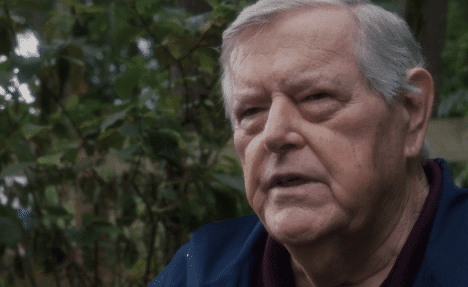
Tony Harris was featured in Listening to the Plants, a 2025 documentary by filmmaker John Perry, about the Cherokee Garden. It won an award at the 2025 Georgia Shorts Film Festival. (Image from Listening to the Plants, Vimeo)

In Georgia, he immediately felt at home and became determined to safeguard his tribe’s plant expertise in its original homeland. When he retired in 2004, he had time to pursue this heart-felt interest. In 2011, to bolster their knowledge as horticulturalists, both Harrises earned credentials as Master Gardeners through the University of Georgia Extension Service. When Tony told fellow Master Gardeners about the garden he hoped to set up, they were so enthusiastic, says Carra. They introduced him to people in the county government, helped him secure a site for the plot and still, to this day, help out weekly.

The Cherokee Nation also has a traditional-plants garden, the Cherokee Heritage Garden in Tahlequah. But, as Bangle notes above, some traditionally used Cherokee plants are not found naturally in Oklahoma. So Tony fills in the gaps. For over a decade, he and Carra have taken herbaceous plants, shrubs and trees from Georgia and donated them to the Nation’s garden. They thrive there, he says, pointing out that the two regions’ USDA hardiness zones are similar.

With one caveat, adds Carra: the Georgia plants can require extra watering once they’re in the ground in Oklahoma. Georgia is blessed with lots of water, whereas Oklahoma is drier, she says.

The Cherokee Nation’s garden has provided Tony with plants to bring back to Georgia. “We have a good working relationship,” he says. He also gets seeds from the tribal seedbank. Established in 2006, it collects seeds of traditional crops and other plants and disburses them free to tribal members, according to the tribe’s Natural Resources Office.

In 2019, the Cherokee Nation honored Tony for his work preserving tribal history and culture. His efforts and concerns are in line with those of tribes throughout the United States. Their loss of access to beloved plants was, and continues to be, disastrous—punching a hole in tribal culture and wellbeing. This is a consequence of the hundreds of treaties tribal nations signed with the federal government during the 18th and 19th centuries. Under these agreements, tribes typically transferred land to the government in return for education, health care and other services.
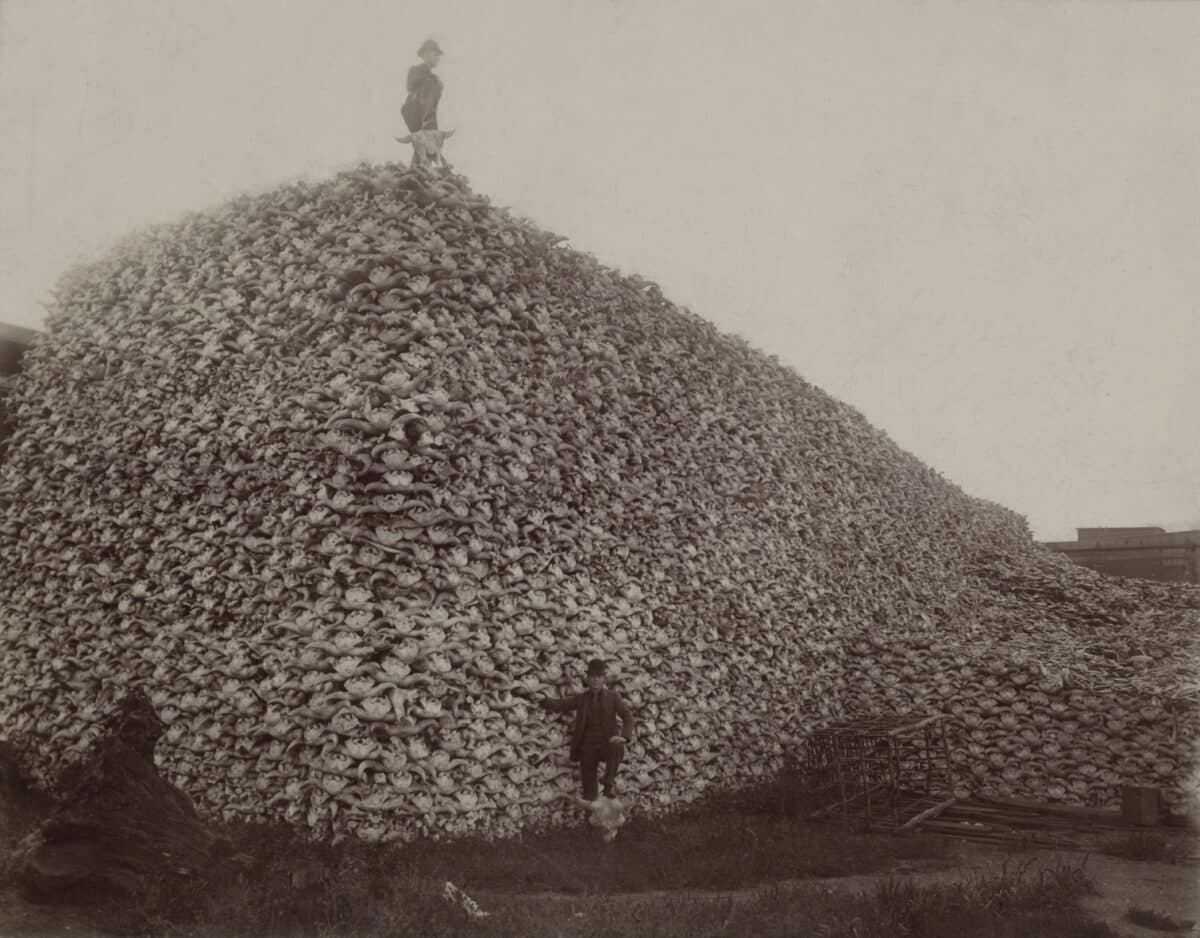
This mountain of buffalo skulls resulted from the coordinated federal campaign, using both military and civilian hunters, to starve the tribes into submission by eradicating the massive buffalo herds they relied on for food, clothing, shelter, cooking, hunting implements and more. A population of as many as 60 million wild bison was reduced to less than 800 at the time of this photograph, taken in Michigan in 1892. (Burton Historical Collection, Detroit Public Library)

The diminished tribal homelands were then subjected to continual and often violent federal efforts to further decrease Native landholdings—by forcing them to relocate to unfamiliar areas, as the Cherokees were, or by simply breaking the treaty’s promises. Every single treaty was broken in some fashion. The gardening, gathering, hunting, fishing and other activities with which tribal members had cared for each other since time immemorial were severely restricted or entirely demolished.

The United States also purposely destroyed critical food sources, such as the huge buffalo herds that once roamed the country. During the late 19th century, military and civilian hunters shot as many as 100,000 per day. The nation’s population of tens of millions of buffalo was soon reduced to a few hundred.

Error message

In 1916, Georgia made a well-meaning but regrettable effort to romanticize the Trail of Tears. It named as its state flower a rose that legends held had appeared wherever Cherokee tears fell along their arduous journey to Oklahoma. Dubbed the Cherokee Rose, the plant is in fact an Asian cultivar brought to the U.S. in the 1700s as a decorative landscape feature. It has become so invasive that the Georgia Invasive Species Council recently declared it a threat to the state’s native plants.

Since 2024, the Georgia Native Plant Society, of which Tony is a member, has led an effort to change the state flower to an actual native plant. The group supports honoring the sweetbay magnolia, a white-flowering tree that Cherokees use for medicinal and ceremonial purposes. In March, the Georgia Senate unanimously approved a bill that would make this change; the legislation now awaits approval by the Georgia House and, if this happens, the governor’s signature.

Sweetbay magnolia (Magnolia virginiana), photographed in Colquitt County, Georgia, is a traditional Cherokee plant that the state’s legislature is considering making the state flower. (Alan Cressler)

The sweetbay magnolia is an ecological anchor, providing a home for butterflies and food for birds, squirrels, deer, cattle and other creatures. Georgia Native Plant Society board chair Michael Cowan told the Georgia Recorder that the society’s support for the change raises awareness of the ecological and economic benefits of native plants.

Fans far and wide

Viewers from 37 countries have visited Tony’s blog, mycherokeegarden.com. When he started it, he had no idea of the internet’s reach, he confesses. One of his first posts, in 2013, was about sunchokes, also called Jerusalem artichokes, and how the Cherokees used the tubers as food. An hour later, a chef in Hanoi requested additional information about Cherokee food plants. A veterinarian in Montreal wanted to know about dosing sick animals with plant medicine. It was all “mind-boggling,” he says.

The Cherokee Garden at Green Meadows Preserve has enthusiastic local support. Tony has worked regularly with area developers, who give him permission to visit building sites before digging starts and rescue Cherokee plants he and his garden volunteers find there. Organizations including Bank of America and Kennesaw State University offer teams of employees and students, respectively, to weed, mulch, transplant and more.
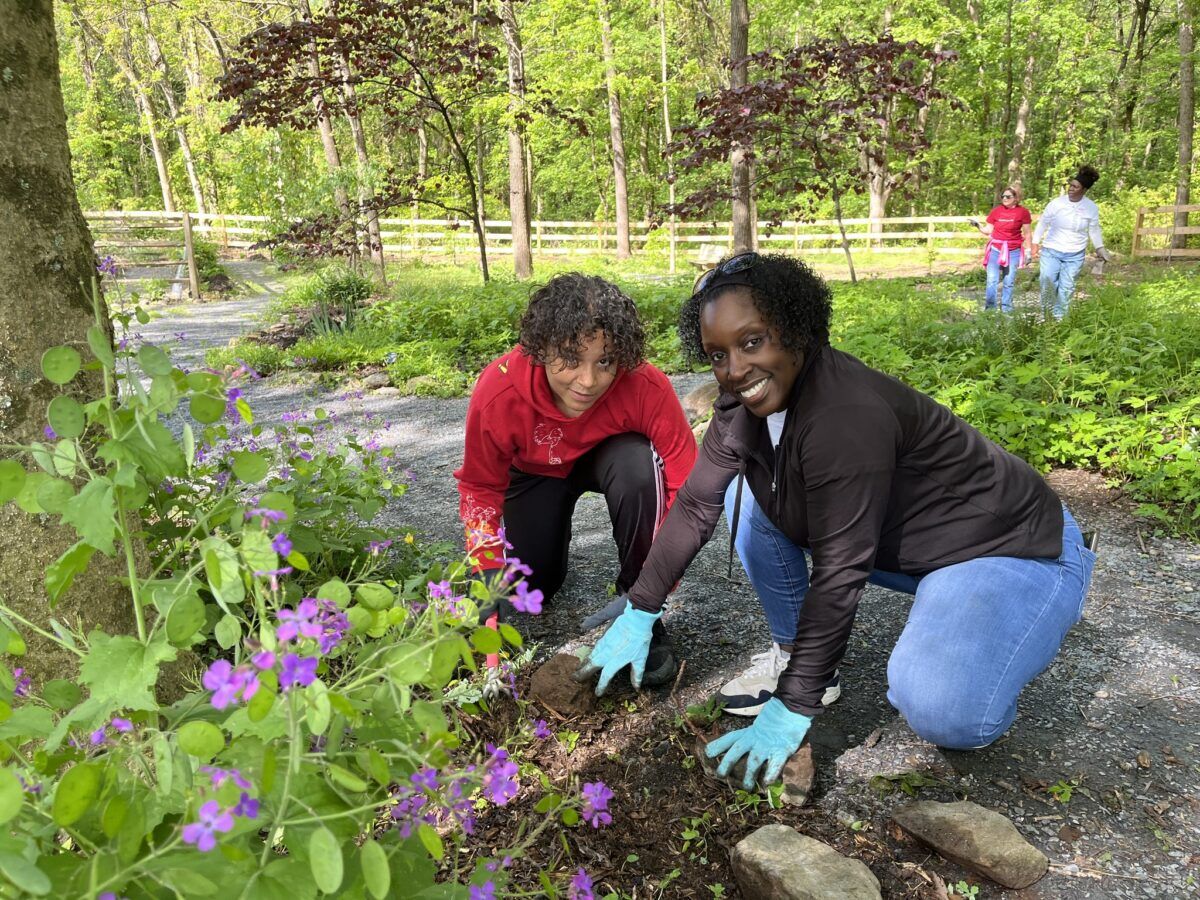
On Earth Day, April 22, in 2023, the Cherokee Garden hosted 20 volunteers from Atlanta-area Bank of America employees. They volunteered as garden helpers, removing invasive Chinese wisteria, English privet and more. (Carra Harris)

Some of the thousands of annual visitors return as garden helpers. A friend invited neighborhood resident Sue Marini to work in the garden, which she has made a weekly event. When Marini learned about the Trail of Tears, she was horrified at what had been done to the Cherokees. “To preserve their history became very important to me,” she says.

Cherokee schoolchildren will continue to make the trip from Oklahoma to Georgia to visit the garden. Bangle looks forward to teaching them in their ancestral homeland about their forebears’ accomplishments. Wyman Kirk, administrator of the Cherokee Immersion School, adds, “For a lot of the kids, it was their first chance to connect with that type of knowledge—with the sites out in the east and the knowledge that we have.”

When the Cherokee children asked Tony if they could please come back, he responded, “You sure can.”

This article was originally published by Barn Raiser; please consider supporting the original publication, and read the original version at the link above.

Get the Money out of Politics

Source: Monbiot.com

How do we know whether political funding is corrupt? Mostly, we don’t. A plutocrat delivers a sack of cash to a political party. A few weeks later, it announces a policy that happens to favour the donor’s business. Are the events linked? We might suspect it; we cannot prove it. But the suspicion itself is corrosive and demoralising.

The current funding system, perhaps more than any other factor, turns us away from politics, breeding disillusionment, alienation and cynicism. A survey by the Electoral Commission last year found that only 18% of respondents believed spending and funding are transparent. A government survey in December discovered that 87% of people are “concerned about the possibility of corruption” among politicians. A further survey concluded that political donors are believed to wield the most influence of any elite faction. Disillusionment with politics drives people into the arms of the extreme right. This is paradoxical, as it tends to be highly receptive to the ultra-rich.

I’m prompted to write this column by Tom Burgis’s powerful investigation for the Guardian into Reform UK’s relationship with Christopher Harborne, who is based in Thailand. Remarkably, Harborne has provided about two-thirds of all Reform’s donations since its foundation: more than £22m altogether. The rules in Britain limit the amount a party can spend in an election year, but set no cap on the proportion a single funder can provide. In theory, one person could supply its entire budget. At what point do we decide that a political party is, in effect, owned by a donor?

I can’t prove that Harborne’s money has bought special favours from Reform, and make no suggestion of illegality. But there is also no way of proving that this funding is not connected to Nigel Farage’s enthusiasm for cryptocurrency, which appears to be Harborne’s principal source of wealth. The not-knowing is just as corrosive as the knowing.

Like the Tories, Reform has also taken lavish funding from very rich people who are hostile to climate action. Both parties now evince the same hostility. Which came first, the hostility or the funding? Does it matter? Whether a party changes its policy in response to donations or attracts big donors because of its policy, it’s equally damaging to democratic trust.

The same applies to Labour’s relationship with City donors, which might help explain its newfound enthusiasm for deregulating finance, despite the warnings of 2008. As Transparency International has documented, political parties in the UK “are increasingly becoming dependent on a small number of very wealthy donors”. “Dependent on” can easily mean “beholden to”. In very few cases has corruption been demonstrated. But that’s not the point. The problem isn’t that such relationships are illegal. The problem is that they are not.

The trust crisis was exacerbated by the Conservatives, who, without providing a coherent rationale, raised political spending caps and handcuffed the regulators. As the admirable Spotlight on Corruption has discovered, the Electoral Commission’s investigations have declined by 89% since 2019, while the police, without a dedicated unit and clear powers, do almost nothing. No one has ever gone to prison in Britain for breaching electoral finance laws. The highest criminal fine yet levied is a pathetic £6,000. The regulator’s budget in this country is about £1 per voter. In Australia it’s £24.

The higher caps set by the Tories triggered an even more intense scramble for private money: our representatives now often seem to spend more time soliciting funds than soliciting votes. Regulatory corrosion has made it even harder to spot the difference between a “permissible” donor and an “impermissible” one, and to stop foreign agents infiltrating our politics.

The representation of the people bill seeks to address this crisis. But to read the relevant sections (58-63) is to be struck by their extreme complexity and obvious loopholes. In response to the Rycroft review on foreign interference, the government has decided to cap annual funding from voters living abroad at £100,000 each, and stop donations being made in cryptocurrency. But how can anyone be sure that a billionaire based abroad isn’t channelling money through a resident, or an untraceable crypto payment isn’t turned into sterling before it lands in a party’s account? Continued regulatory chaos and public distrust are locked in.

I believe that any attempt to distinguish between “good donors” and bad, resident and foreign, is futile. Any major donor is a bad donor, as their economic power undermines democracy. Given the transnational nature of capital, distinctions based on residence become meaningless. And what’s to stop an AI program splitting a big donation into a thousand small ones that don’t need to be reported at all?

There’s a simple way of sorting all this out. It works as follows. The only money a party can receive is a standard fee (say £25) for membership. The government then matches that fee on a fixed multiple. For instance, if you have 100,000 members each paying £25, and the multiple is three, your annual budget is £10m. And that’s it: no other sources permitted. The parties would agree between themselves, with public input (perhaps a citizens’ assembly), on what the membership fee and multiple should be.

At a stroke, this sweeps away all the complexities of permissible and non-permissible donors, residence requirements, currency types, ultimate origins and spending caps. Instead of raising money, politicians would spend their time raising membership: reconnecting with the public and broadening their base. We would become equal political citizens, and our system would be transparent and intelligible. It would belong to us, not the billionaires.

The cost to the exchequer? Perhaps between £20m and £50m a year. The costs of the current system are incalculable, as the entire state is harnessed to it, creating endless dysfunction.

It doesn’t solve every aspect of billionaire influence: for instance, it wouldn’t have stopped Nigel Farage taking another £5m, in this case for his own use, from Harborne before he became an MP. But this simple measure would, I believe, do more than any other to give politics back to the people.

Democracy demands that we eliminate not only the dodgiest and most obscure sources of donor money, but all of it.

This article was originally published by Monbiot.com; please consider supporting the original publication, and read the original version at the link above.Email

George Monbiot is the author of the best selling books Heat: how to stop the planet burning; The Age of Consent: a manifesto for a new world order and Captive State: the corporate takeover of Britain; as well as the investigative travel books Poisoned Arrows, Amazon Watershed and No Man's Land. He writes a weekly column for the Guardian newspaper.

During seven years of investigative journeys in Indonesia, Brazil and East Africa, he was shot at, beaten up by military police, shipwrecked and stung into a poisoned coma by hornets. He came back to work in Britain after being pronounced clinically dead in Lodwar General Hospital in north-western Kenya, having contracted cerebral malaria.

In Britain, he joined the roads protest movement. He was hospitalised by security guards, who drove a metal spike through his foot, smashing the middle bone. He helped to found The Land is Ours, which has occupied land all over the country, including 13 acres of prime real estate in Wandsworth belonging to the Guinness corporation and destined for a giant superstore. The protesters beat Guinness in court, built an eco-village and held onto the land for six months.

He has held visiting fellowships or professorships at the universities of Oxford (environmental policy), Bristol (philosophy), Keele (politics) and East London (environmental science). He is currently visiting professor of planning at Oxford Brookes University. In 1995 Nelson Mandela presented him with a United Nations Global 500 Award for outstanding environmental achievement. He has also won the Lloyds National Screenwriting Prize for his screenplay The Norwegian, a Sony Award for radio production, the Sir Peter Kent Award and the OneWorld National Press Award.

In summer 2007 he was awarded an honorary doctorate by the University of Essex and an honorary fellowship by Cardiff University.

This annual vulgarity honored the most obscene billionaire of them all

Robert Reich
May 5, 2026 
RAW STORY


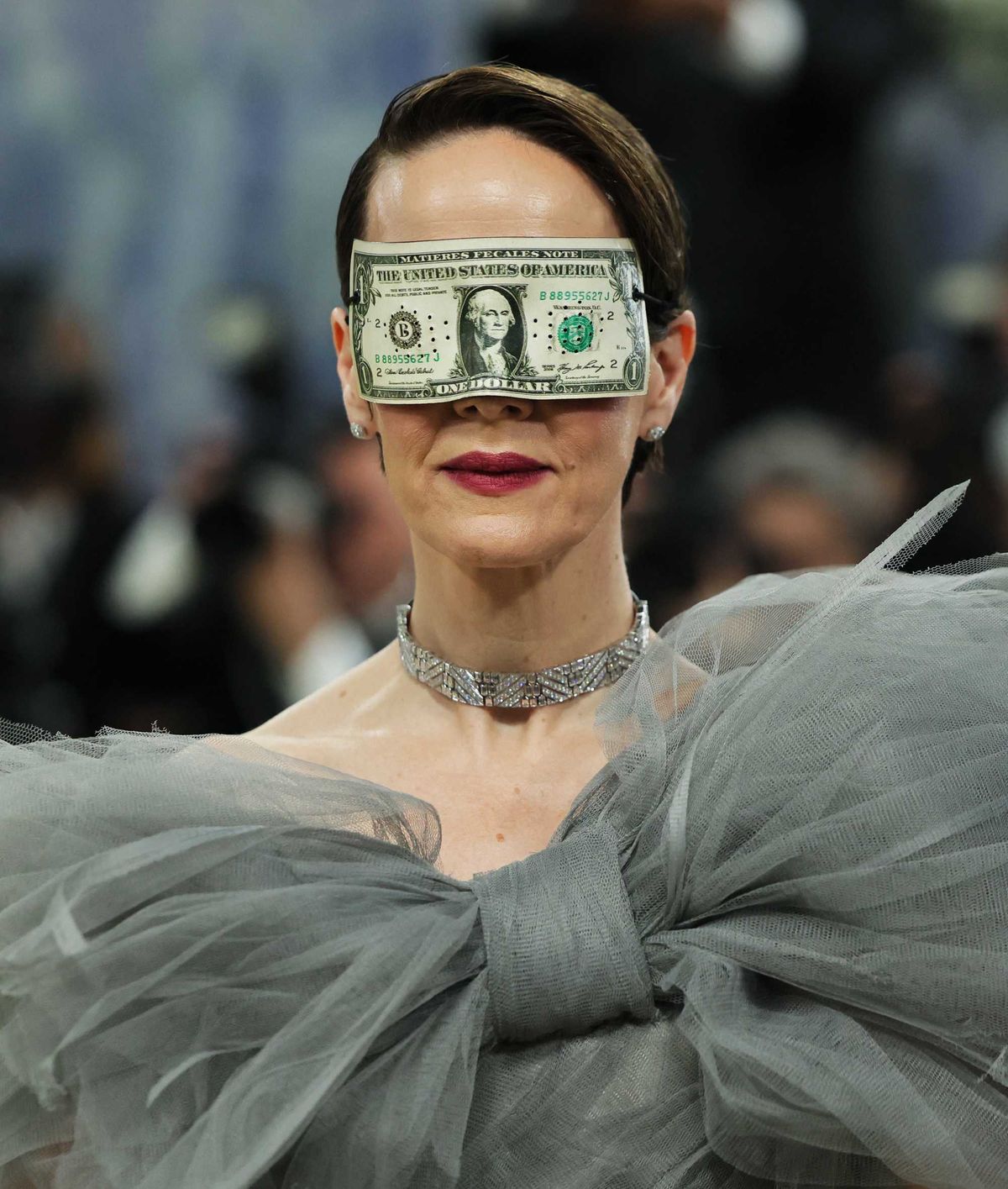
Sarah Paulson arrives to attend the Met Gala, an annual fundraising gala held for the benefit of the Metropolitan Museum of Art's Costume Institute with this year's theme 'Costume Art' in New York City, New York, U.S., May 4, 2026. REUTERS/Daniel Cole

Friends,


Last night was the Met Gala, an annual homage to the conspicuous extravagance of America’s wealthy. Its honorary chairs this year were, appropriately, Jeff Bezos and his wife, Lauren Sanchez Bezos.

If you wanted a ticket to the Bezos Ball, all you needed to do was shell out $100,000 and wear something memorably daring and expensive. Oh, and you’d also have to be on the “A List” of Very Wealthy People.

A record 55 percent of Americans now report their financial situation is worsening, citing severe stress from high inflation, housing costs, and rising gas prices, according to Gallup/USA Today polling. One in 3 households is unable to cover a month of living expenses. Prices are soaring, wages are going nowhere, millions are losing access to health insurance. Yet corporate profits are in the stratosphere.

This year’s Met Gala was a testament to the vapid arrogance of the Bezos’s and other neo-Robber Barons of this second Gilded Age.

As I mentioned recently, Bezos has made his fortune off the backs of millions of working people. According to a newly unsealed filing in an antitrust lawsuit, Bezos’s Amazon has pressured major brands like Levi’s and Hanes to demand that competing retailers raise prices on their products.

Another recent lawsuit against Bezos accused Amazon of making it difficult for consumers to cancel its Prime subscription service. Amazon agreed to pay up to $2.5 billion — including $1 billion in penalties and additional payouts to consumers — but didn’t admit or deny wrongdoing.

Meanwhile, Bezos’s workers are among the worst-treated in America. Bezos is virulently anti-union. Until Trump took over the National Labor Relations Board, its attorneys were prosecuting Amazon for firing delivery employees because they’d voted to join the Teamsters, a direct violation of labor laws.

On April 6, an Amazon warehouse worker collapsed and died on the floor of Amazon’s warehouse in Troutdale, Oregon. A co-worker trained in CPR tried to help but was told by an Amazon manager not to. For more than an hour, employees said, they were instructed to continue packing items and loading trucks as the man lay dead. One manager reportedly told workers to “just turn around and not look” and get back to work.

As of April 2026, Bezos’s net worth was estimated to be between $259 billion and $269 billion, making him one of the three richest people in the world. And he won’t let anyone forget it.

He celebrated his wedding last year to Lauren Sánchez with a multi-day event in Venice, Italy, estimated to cost more than $50 million, featuring guests like Oprah Winfrey and Kim Kardashian.

His “homes” include three adjacent properties on Indian Creek Island in Florida, costing over $230 million; the former Warner estate in Beverly Hills, California, which features a 13,600-square-foot mansion and a golf course, which he purchased for $165 million; a 14-acre compound on Maui with a 4,500-square-foot main house and 700-square-foot pool; a $23 million mansion in Washington, D.C.; and a massive multi-lot compound with waterfront frontage in Medina, Washington.

What really puts Bezos at the head of all the other robber barons in this second Gilded Age is his slavish sycophancy toward the worst president in American history.

Bezos bought the legendary Washington Post for $250 million in October 2013 and has turned it into a Trump media suck-up — prohibiting its editorial page from endorsing Kamala Harris in 2024 and barring it from writing anything critical about American capitalism or Trump.

In February, Bezos fired more than 300 Post journalists, about a third of the staff. He paid $40 million to license the documentary “Melania” plus $35 million to market it — and earned back almost none of it — a blatant bribe of Trump.

And he does whatever Trump wants. After Trump complained to Bezos about Amazon’s plans to display for consumers the costs of Trump’s tariffs, Bezos immediately canceled the plan.

Bezos has sucked up to Trump presumably to secure Pentagon contracts for his Blue Origin rocket company, which landed a $2.3 billion NASA contract early in Trump’s second term. And to avoid further antitrust lawsuits or labor law scrutiny.

That he has zero scruples does not necessarily distinguish Bezos from the other robber barons of this despicable era. And one could say it’s not Bezos’s “fault” that he’s filthy rich — he’s just taken advantage of the current system. But he’s also made the system even more rotten.

Why did the Met choose him and his wife as honorary co-chairs of last night’s gala? It’s his money, of course. But there’s nothing honorable about him. His public-be-damned business practices, his conspicuous consumption, and his excessive sucking up to Trump make Bezos, at least to my mind, the worst billionaire of them all.


Robert Reich is an emeritus professor of public policy at Berkeley and former secretary of labor. His writings can be found at https://robertreich.substack.com/. His new memoir, Coming Up Short, can be found wherever you buy books. You can also support local bookstores nationally by ordering the book at bookshop.org

I Detest Billionaires – My Journey to Supporting One for Governor of California

Source: Originally published by Z. Feel free to share widely.

As a progressive who watches too much television, when I see a Democratic candidate dominating the TV air war with ubiquitous campaign ads, I usually know that’s a Democrat I should oppose – the one being lavishly funded by wealthy corporate interests. And the ads are usually vapid, empty.

Living in California these past months, I’ve had to adjust my normal mindset. Because the Democrat running for governor who was dominating the airwaves had put out one substantive ad after another – calling for taxing the wealthy, breaking up utility monopolies, standing up to Big Oil. Each ad could have been put out by Bernie Sanders. Like the ad featuring Rep. Ro Khanna about taking on the “big insurance companies” to pass universal “single-payer healthcare” for California.

Or the candidate’s video message denouncing AIPAC (“they’re attacking progressive Democrats every chance they get”) and the Democratic Party establishment for “not talking more forcefully” against the Iran war.

The candidate putting out all these wonderfully progressive ads is billionaire Tom Steyer, a former hedge fund manager turned environmental advocate, now self-funding his campaign to the tune of $130 million. So far.

Let me be clear: I generally loathe billionaires and hedge-funders and everyone in the financial speculation elite. I remain skeptical that someone as wealthy as Steyer who operated at the heights of amoral financialized capitalism can deeply understand and fight for working-class interests.

So I was in a quandary. A month ago, after seeing Steyer’s anti-AIPAC video attacking Democratic leaders for failing to “forcefully” oppose Trump’s war, I started an intense dialogue with progressives across California, including journalists, experienced activists, organizational leaders. Almost all – somewhat surprisingly or confusedly or embarrassingly – were arriving at the same conclusion: the billionaire, Tom Steyer, is the best choice for governor.

Many had attended and been impressed by one of Steyer’s town hall forums across the state, where his introductory remarks were short while the audience Q&A went long. I started finding online memes from an activist I respect, Amar Shergill, a Steyer-supporter who formerly chaired the California Democratic Party’s Progressive Caucus – including his charts comparing the Democratic field.

Like in other Democratic one-party states, pro-corporate corruption in California’s state capital is rampant, which is why California – with a population almost as large as Canada’s – lacks universal healthcare coverage. Most Democrats in office say they support it, but profiteering insurance interests fund their campaigns. A bill to move California toward government-provided single-payer health insurance that would replace private insurance sailed through the Democrat-led state legislature in both 2006 and 2008, when it was well-known that GOP Gov. Arnold Scwharzenegger would veto the measure. Both times. Schwarzenegger called it “socialized medicine.”

But a funny thing has happened in the California legislature ever since Democrats took the governor’s office in 2011, first Jerry Brown and then Gavin Newsom: A single-payer healthcare bill never made it to their desks. In some years, thanks to medical industry lobbyists, the bill didn’t even get out of committee.

Make no mistake about it: Corporate lobbyists are horrified that Tom Steyer might become California’s governor. To stop Steyer, corporate forces and their allies in the Democratic establishment have moved from now-disgraced Rep. Eric Swalwell to Xavier Becerra, former US Secretary of Health and Human Services. Becerra, who won praise from the right-wing Murdoch press for pocketing the maximum campaign donation from Chevron, is now bending to the will of private interests on healthcare, according to KQED public radio.

Steyer’s unequivocal support of CalCare universal health coverage is one of the reasons he’s endorsed by Ro Khanna and the California Nurses Association, and why RootsAction (which I cofounded) came out in support last week.

One dividing-line issue among Democratic candidates is the California Billionaire Tax Act – a ballot initiative launched by SEIU-United Healthcare Workers that would impose a one-time emergency tax on the state’s 200 richest individuals to bolster healthcare. It’s supported by Steyer, Khanna, Bernie Sanders and opposed by Gov. Newsom and billionaire friends like Sergey Brin and Eric Schmidt of Google. (As a funder/activist, Steyer used statewide ballot initiatives to win reforms, including Prop 39 in 2012 that closed a corporate tax loophole to fund green jobs and energy-efficiency in schools.)

The TV air war has taken a bizarre turn. While Steyer’s ads dominated for many weeks, he is now facing a barrage of negative ads funded by some of California’s powerful corporate interests straight-facedly accusing him of being a corporatist – of profiting from past investments his hedge fund had made in fossil fuels and private prisons. We know who’s funding the attacks on Steyer thanks to California’s DISCLOSE Act, which requires that the top funders of campaign ads be listed in the bottom third of the TV screen.

Even though California has a strongly-Democratic electorate, it’s likely that only one of the half-dozen serious Democratic gubernatorial aspirants will make it through the June “jungle primary” into November’s general election to face a Republican – probably Steve Hilton, a former Fox Newser endorsed by Trump.

If Steyer is elected, will he prove to be the effective “class traitor” that most Californians need him to be – a governor who stands up to corporate greed and power? Though not as rich as Steyer, President Franklin Roosevelt certainly provides a role model as someone willing to fight “the economic royalists” he knew so well in order to uplift working peopleEmail

avatar

Jeff B. Cohen is an American journalist, media critic, professor, and the founder of Fairness and Accuracy in Reporting, a media watchdog group in the US. He is a retired associate professor of journalism at Ithaca College, where he was an endowed chair and founding Director of the Park Center for Independent Media.

This billionaire's anti-tax crusade just exploded in his face

Robert Reich
May 6, 2026
RAW STORY


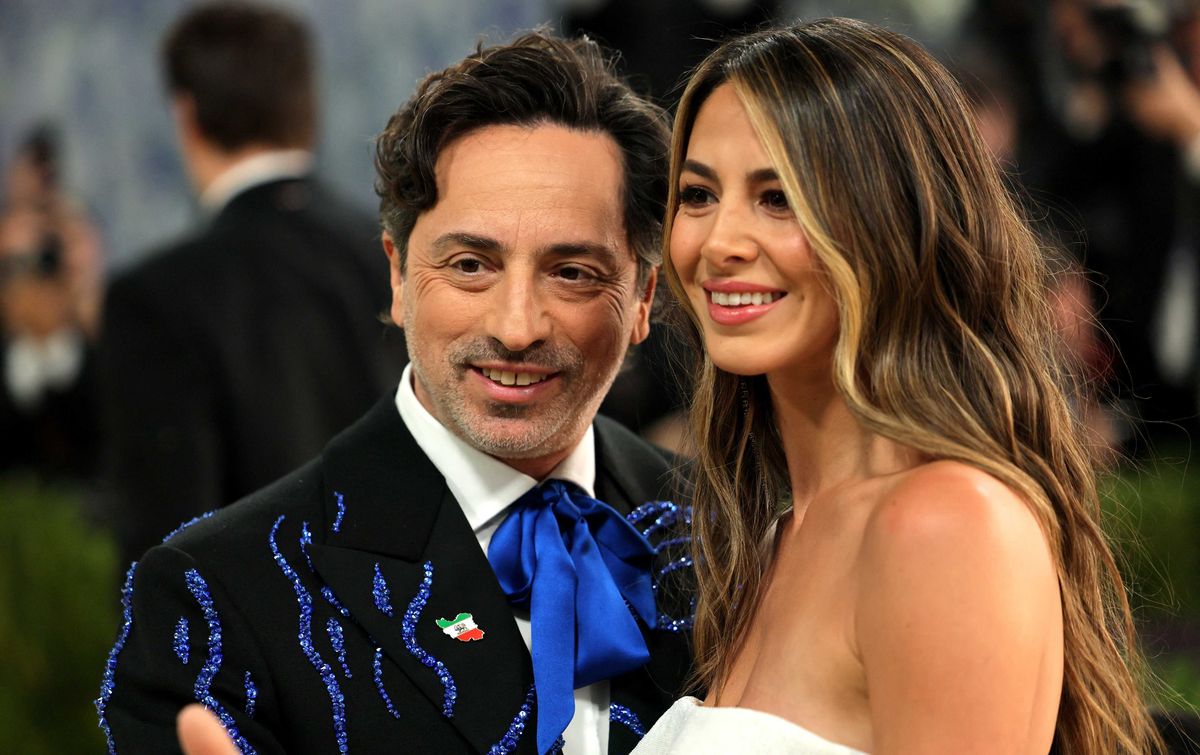
Sergey Brin and Gerelyn Gilbert-Soto pose during the Met Gala, an annual fundraising gala held for the benefit of the Metropolitan Museum of Art's Costume Institute with this year's theme 'Costume Art' in New York City, New York, U.S., May 4, 2026. REUTERS/Daniel Cole


Friends,

Google co-founder Sergey Brin, one of the three or four wealthiest people in the world, with a net worth hovering around $260 billion to $277 billion, is devoting some of his wealth to fighting California’s wealth tax on billionaires.

So far, he’s spent $57 million trying to defeat the measure.

Brin’s actions — along with Elon Musk’s $250 million “investment” in getting Trump reelected in 2024 — should be Exhibits A and B in why America needs a wealth tax.

First, let’s stipulate that there is nothing inherently wrong about being a billionaire, a multibillionaire, or even, as Musk is likely to become, a trillionaire.

Wealth isn’t a “zero-sum” game in which these vast accumulations at the top depend on the rest of us losing an equal amount. In fact, the super-wealthy may help the rest of us do somewhat better than we were doing before.

Even though the wealth of the top 0.1 percent has soared in recent years, the bottom 50 percent are doing somewhat better than before. (See chart below.)


But wait.

The problem is that political power is a zero-sum game. The more political power is concentrated in a few hands, the less political power in everyone else’s hands.


It’s almost impossible to separate wealth from power, because the wealthy turn their fortunes into campaign contributions to politicians who will change laws to their liking and stop laws they’d detest — such as higher taxes on the super-wealthy. The wealthy also finance public relations campaigns and think-tanks to persuade the public of the wisdom of their positions.

Billionaire spending on presidential elections has soared even faster than billionaire wealth. And if you believe they’re donating because they want people with great integrity and excellent character to be elected president, consider that most billionaire political spending in 2024 went to Trump.


They’re donating because they want to protect and enlarge their fortunes and don’t want politicians elected who support higher taxes on them.


Nor do they want politicians elected who support stricter anti-monopoly legislation or who would make it easier to form labor unions or stop climate change (all of which might reduce the profits of, say, Google).

Take Sergey Brin and his $57 million against California’s tax on billionaires — which, not incidentally, was proposed because California must now pay more for Medicaid for lower-income Californians, because Trump and his Republican lackeys enacted a giant federal tax cut whose benefits have gone mostly to the wealthy.

Brin has become a major Republican donor. Last May, he donated nearly half a million dollars to the Republican National Committee.


Why? Because the Republican Party is more dedicated to protecting and enlarging the wealth of the super-wealthy than is the Democratic Party.

By spending his fortune trying to stop California from taxing billionaires, Brin is illustrating why we need to tax billionaires. He’s making the argument for a billionaire wealth tax more clearly and articulately than anyone else possibly could.

Thank you, Serge.


Robert Reich is an emeritus professor of public policy at Berkeley and former secretary of labor. His writings can be found at https://robertreich.substack.com/. His new memoir, Coming Up Short, can be found wherever you buy books. You can also support local bookstores nationally by ordering the book at bookshop.org