Thursday, May 07, 2026

Source: Jacobin

Max Page is president of the Massachusetts Teachers Association (MTA), one of the largest state affiliates of the National Education Association and the largest union in New England, representing roughly 117,000 education workers from pre-K through higher education. A professor of architecture and history at the University of Massachusetts Amherst, Page is one of the founding members of Educators for a Democratic Union (EDU), a reform caucus that has spent more than a decade reshaping the MTA’s politics, structure, and strategy.

Page is the third consecutive EDU-backed president, following Barbara Madeloni and Merrie Najimy, and is serving the second of his constitutionally limited two terms. The election campaign for his successor is currently underway. Under EDU’s leadership, the MTA has moved from a relatively cautious, staff-driven union, which had too often gone along with destructive education reform policies, toward a more militant, member-driven model centered on democratic bargaining, strike readiness, and large-scale “common good” campaigns like the successful effort to tax millionaires and expand public investment.

Jacobin columnist Chris Brooks spoke with Page about what it takes to successfully drive a reform agenda, how high-participation bargaining changes both outcomes and consciousness, and why taxing the rich has become central to rebuilding working-class power.

Chris Brooks

You are the third EDU candidate to serve as president. What are some of the key lessons from more than a decade of union reform?

Max Page

Barbara Madeloni was put forward by EDU with the goal of democratically influencing the politics and direction of the union, but we didn’t think she would actually win. Then, in a surprise to all of us, she did.

But she didn’t win with a slate. So she had a vice president and a majority of the MTA board who actively opposed EDU. When we won that first election, the view among the incumbents wasn’t that the membership had voted for change. It was that we had invaded their private club. They fought us bitterly.

In the next election, we ran an entire slate. Merrie Najimy was elected president; I was elected vice president. This was important, because we didn’t know if Barbara’s victory was just a flash in the pan. Barbara is very charismatic and ran against a weak candidate. So was that all it was, or were we capable of building a real movement?

The EDU slate’s victory proved we had consolidated support and were growing. That’s what made it possible for me to serve two terms as vice president, and now two terms as president.

We are following through on the ambitious goals we set when we first formed the caucus: we said we were going to tax the rich, end high-stakes testing, implement a program of democratic, high-participation bargaining, and win living wages for all education workers, especially our education support personnel. We have made major progress on all of these goals.It’s not enough to have principles. You have to have a real program.

The lesson from the past twelve years is that you need both a caucus and a plan. And that plan needs to be rooted in the core issues of the membership. We were clearly pushing our union from the Left, but we were centering that push on the most widely and deeply felt concerns of our members.

It’s not enough to have principles. You have to have a real program. We talk about EDU as a shared project we’re collectively advancing, with specific goals and actual organizing plans to win them.

Chris Brooks

The MTA played a major role in passing the Fair Share Amendment, a statewide initiative that amended the state’s constitution to impose a 4 percent tax on incomes over $1 million. Had the union been active in organizing the public around progressive initiatives before?

Max Page

No. In the past, the MTA was mainly the bank that helped to fund defensive fights, like when there were efforts to eliminate the state income tax. That started to change when Barbara was elected. The first big decision was to fight a charter school expansion initiative pushed by the Waltons and the Kochs in 2016. If the billionaires could privatize the best public school system in the country, then the rest of the dominoes would fall across the country. We decided, led by Barbara, that we would refuse to cut a deal and would fight it all the way to the ballot, even though the polling looked bad for us. By accessing the public’s deep commitment to public education, we were able to turn a 2-1 defeat into a 2-1 victory.

That victory gave us confidence to go from defensive fights to offensive ones. We became central players in the Raise Up Massachusetts coalition. I give a lot of credit to our SEIU (Service Employees International Union) comrades who helped form the Raise Up coalition — an independent, labor, community, and faith coalition advancing fights via the ballot to win advances for economic justice. We joined their campaign for sick leave and then became core members for the fight for a $15 minimum wage and paid family medical leave, and then the Fair Share Amendment, taxing the rich to fund public education and transportation. This is a core belief in the EDU caucus, which was ultimately embraced by the whole union: that if we care about what happens inside public schools and colleges, then we better care about the lives of students and families outside of them.

In the past, the MTA narrowly focused on curriculum, school funding, and contracts. But as great as our educators are — and I think Massachusetts has the best in the country — we cannot overcome the effects of poverty and racism in the classroom alone.

So our union has taken the position that a $15 minimum wage is education reform. Paid medical leave is education reform. That is real reform, the kind that will have a very real impact on our students and their ability to learn and be successful.

The trick of corporate education reformers was simple. They demonized educators and our unions, said we only cared about ourselves. It’s true that the educator is the most important factor in a student’s success in the classroom, but what they didn’t want to talk about was the impact of the other sixteen hours in the day on those students. How the conditions of their lives, such as their family’s income, the impacts of racism, safe and secure housing, access to reliable transportation, has probably an even greater impact.

That shift connected our union to broader working-class struggles. We were capable of winning those statewide campaigns, and I think it’s safe to say that winning those statewide campaigns wouldn’t have been possible without MTA being so centrally involved. The combination of our sheer numbers, the fact that our members are in every single city and town and are some of the most respected people in their communities, combined with the new MTA’s willingness to budget for and then spend substantial sums to win, were absolutely central to those victories. It was daunting and anxiety-producing to decide to take on these big and risky campaigns — it was very possible we could have lost on charters or on the Fair Share Amendment. But we also felt like we had a responsibility to demand more and, if the legislature wouldn’t act, we would, through a citizen’s ballot initiative.If we care about what happens inside public schools and colleges, then we better care about the lives of students and families outside of them.

So our approach at MTA is now to integrate the fight for more funding for public schools with larger common-good fights to create more security for working families. And to do that we have to really engage our 117,000 members, which means building strong, well-organized, democratic and militant locals. We can only win these kinds of fights at the ballot box and in the legislature if our union is powerful at the local level.

Chris Brooks

So that’s why the fight for democratic, high-participation contract campaigns is so important. There’s a direct connection there between militancy in negotiations, the ability to engage everyone in high-participation fights at the local level, and the ability to mobilize at scale for bigger fights across the state.

Max Page

Exactly. Strong, well-organized, democratic, and militant locals are how we build power for broader fights.

I can proudly say that open bargaining has become the norm in our union. That doesn’t mean that it happens in every local, or is happening as extensively or deeply as I would like, but the principle that members should be involved in determining what bargaining teams fight for and win at the negotiating table has really sunk in.

Contract action teams (CATs) have been a kind of revolution for us. It’s the idea that members should be organized to strengthen the union in negotiations by engaging in escalating collective actions outside the bargaining room.

One of our innovations is what we call “silent representatives.” We invite members to silently attend bargaining sessions. They pack the room, observe negotiations, and then actively participate during caucuses, helping to decide what direction the core bargaining team takes.

School districts hate it. They want to cut the bargaining team off from their membership, knowing that if they can isolate the negotiators, that will be easier. There was even a big legal case around this, where one of the school districts sued us to try and shut down public bargaining. But you know what? The judge agreed with us: the boss can’t tell us who our bargaining team is. Sometimes the entire membership is the bargaining team.
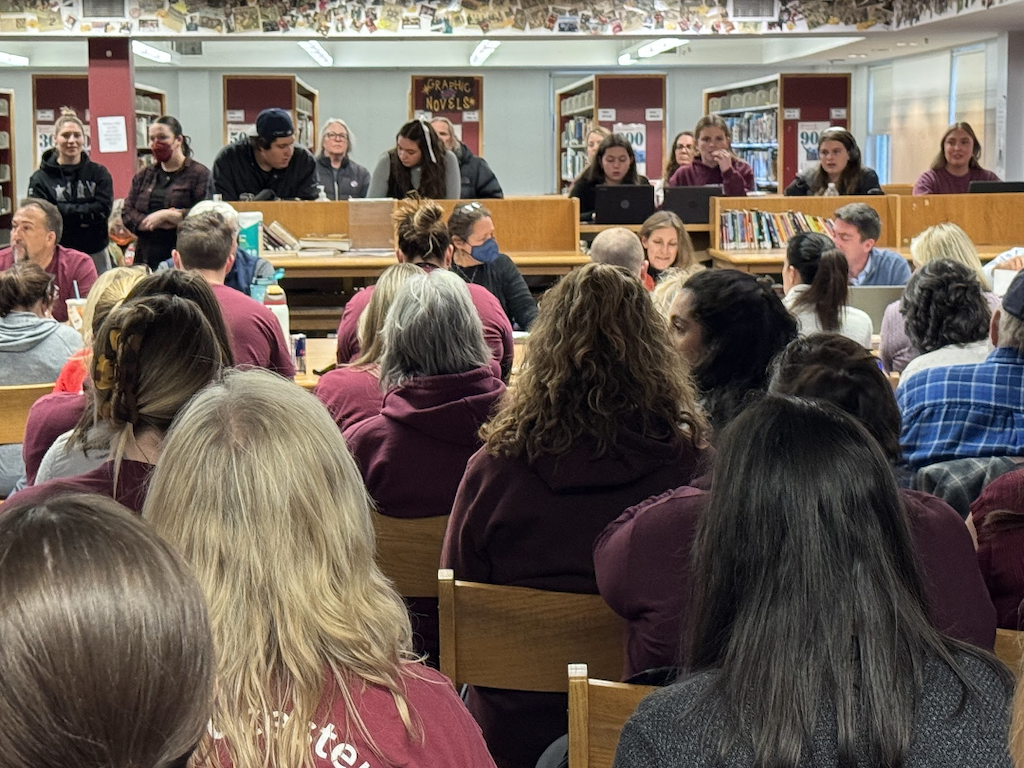
A group of people sitting in chairs and standing at a library.
Gloucester teachers packing out the bargaining session. (Courtesy of Max Page)

In Haverhill, another urban local, the school district lawyer proposed in a pique of anger that they open up bargaining to the entire public! Our local jumped at the chance, and soon bargaining was being live streamed. These aren’t just our contracts, they’re the community’s contracts. Our working conditions are the students’ learning conditions, so we welcome community involvement.

Chris Brooks

For many members, seeing bargaining firsthand can be pretty transformative.

Max Page

It really is. In the past, locals would agree to ground rules that barred them from even telling members what was happening. It was crazy. Now members watch live. They see the back and forth. They see management’s arguments, the disdain, the dismissiveness for themselves. At the same time, they gain greater respect for the member leaders skillfully fighting for the union’s priorities.

They might be silent observers, but that doesn’t mean they don’t communicate. They’re texting coworkers and sharing updates from their firsthand experience. In the past, when members heard secondhand about something the superintendent said, they might wonder if people were exaggerating. But when you are actually in the room, you see it for yourself. In some militant campaigns, hundreds of members have served as silent reps over the course of just a few bargaining sessions.

This has been a powerful organizing tool. It builds anger, it builds solidarity, and it gets people ready to act. And because it makes the union stronger, our locals end up winning stronger contracts.

Chris Brooks

Can you give me an example?

Max Page

One of our large urban locals, Fall River, was led for a long time by an impressive president — progressive, committed, politically skilled. But the union came to be embodied by her. Members admired her so much they largely left advocacy to her, alone. She was succeeded by someone apparently less polished. But the new president quickly came to understand — in part with the support of a new field staff we hired over the past decade, who were hired precisely because of their organizing approach — that to win, he had to open the union up, to embrace the democratic, high-participation model of negotiations, and let the contract action team push hard from the outside, in every school. Fall River educators ended up winning the best contract in that local’s history.

We have developed a bargaining certificate program to train locals in this approach. The importance of rejecting management’s ground rules, how to build a strong CAT, how to get members to show up inside the bargaining room, escalate actions, how to even go door-to-door in the community. This training program has been a gateway drug to militancy. And as a result, our union now has a new motto: “Every local eeds to be strike ready.” That should always be our goal.

Chris Brooks

That’s a major shift, especially since teacher strikes are illegal in Massachusetts.

Max Page

It is, but there’s a clear pattern. There were a lot of strikes in the ’70s and ’80s, a handful in the ’90s and early 2000s, and then nothing after 2007 — until 2019, when EDU’s program really took hold. Since then, locals have chosen to go on strike across the state — Dedham, Brookline, Andover, Woburn, Marblehead, and many more. Massachusetts political leaders (almost all Democrats, by the way) have refused to change the law prohibiting public sector workers from striking. But members decided that they were never going to win living wages for educational support professionals (ESPs) or paid parental leave — municipal workers were left out of the state’s otherwise outstanding paid family and medical leave law MTA helped win, without being ready to withhold their labor. Most of these strikes, or near-strikes, were led by EDU activists.
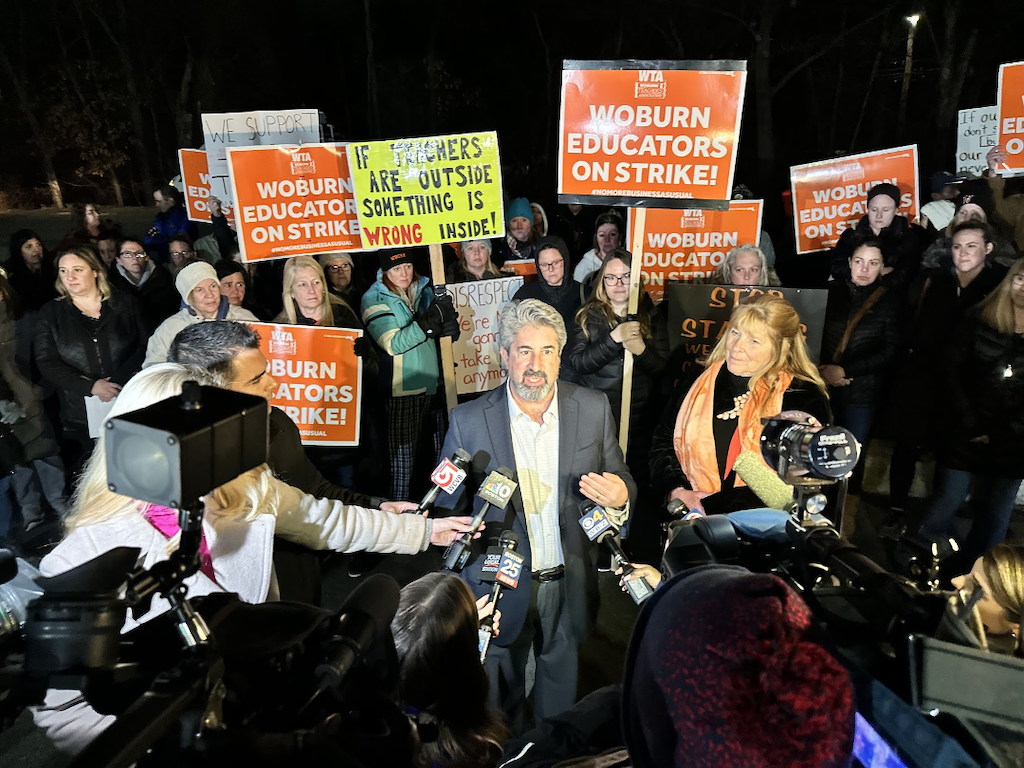
A man speaking to media with people surrounding him with picket signs.
Max Page speaking on the picket line with striking teachers. (Courtesy of Jonathan Ng / Massachusetts Teachers Association)

Chris Brooks

What we saw in the UAW was that once employers saw how serious we were about fighting, they would sometimes start capitulating easier at the table. They didn’t want to deal with the more militant union leadership.

Max Page

That’s exactly what has happened with us. I would estimate that for every local who had to go on strike to win a better contract, ten other locals got better contracts because school districts didn’t want to face down the same kind of fight.

But that only works because locals are actually building credible strike threats. They’re organizing, publicly escalating and preparing, all the way up to a public-strike authorization vote. This is important, the decision on whether to strike is a completely local decision made by the members. MTA doesn’t lead these strikes in any way.

Locals that go on strike face the threat of big fines. So there is some risk, but members know and debate these issues as they move forward.

All of that is discussed among the membership and culminates in a public vote at a local membership meeting, where, in a number of instances, everyone is given a green and red card. They take the vote publicly — you hold up the green card if you vote yes to authorize a strike and red if you vote no.

Every time I see a picture of one of these votes, I get chills. It’s always an ocean of green cards. All being held primarily by women, by educators who a year before would never, ever have thought they would be willing to go on strike. But that’s what this process does. It transforms people. The vote itself is such a powerful expression of solidarity. It’s incredible.
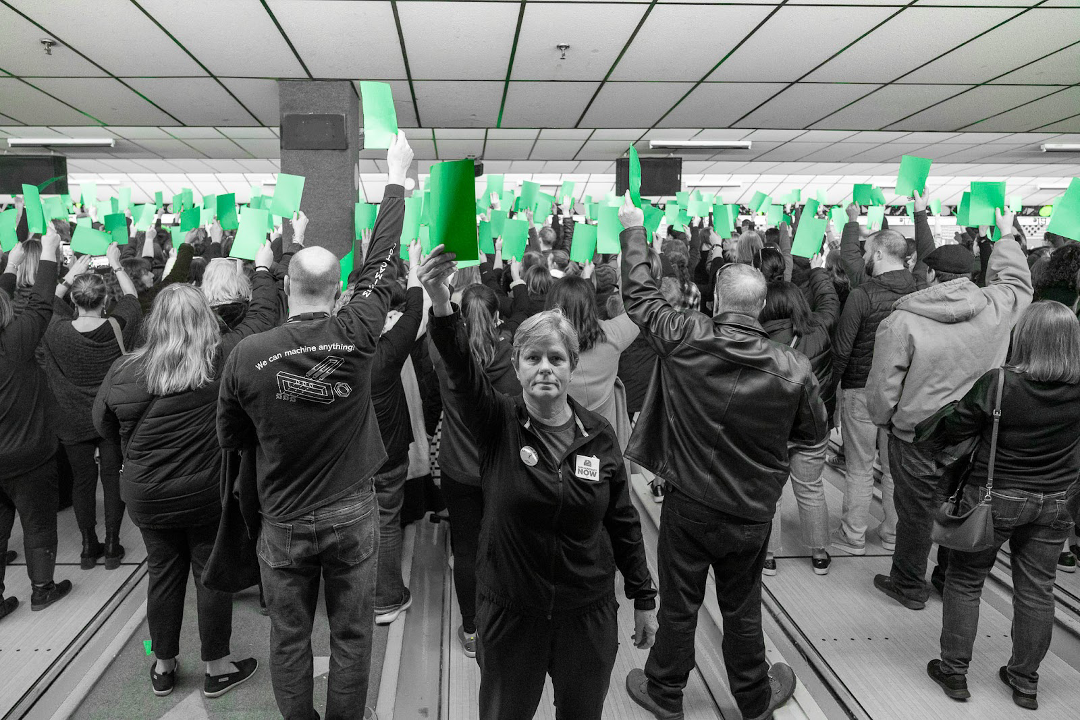
An image in black and white of a crowd of people holding up cards that are in color, green.
Woburn teachers strike vote, January 2023. (Courtesy of Jonathan Ng / Massachusetts Teachers Association)

Chris Brooks

Another significant shift is prioritizing the demands of education support professionals (ESPs), such as classroom aides, secretaries, cafeteria workers, maintenance staff, and others.

Max Page

Yes, historically our union was dominated by classroom teachers. In many locals, ESP contracts were treated almost as an afterthought. It should be fundamental to every union that our top priority is to take care of the lowest-paid members, but that had not previously been the case in the MTA, as in too many other unions. We have flipped that.That’s what we want: movements that are big and strong enough that politicians see it as a benefit to be on the side of taxing the rich.

We launched an ESP bill of rights, and a majority of locals have endorsed it. That commitment has translated directly into our approach to bargaining. In each of the strikes, one of the central issues was a living wage and paid family leave for our ESPs. All across the state, ESP wages are jumping dramatically. In Andover, they went on strike in part to win their ESPs a $40,000 a year starting salary. And they did! And in a friendly competition, now Somerville has vaulted ahead and raised the bar — winning $25,000 starting salary two bargaining cycles ago; then $35,000 in the last round; and just recently $50,000. We are finally reaching something we can call a living wage. It’s not nearly what these members deserve, but it is life-changing.

And it’s even led to changes in the structures of our locals. In many school districts, the ESPs have one local and the teachers have another. After bargaining together, some of the locals went on to merge. The members made the decision that being separate locals was just another way for the boss to divide them. So now these locals are wall-to-wall and are organizing unified actions. In one local — Gloucester — the two locals decided to merge during their strike!

Chris Brooks

Let’s talk about the millionaire’s tax. You are very passionate about taxing the rich. What has been the real-world impact in Massachusetts?

Max Page

Taxing the rich is near and dear to my heart. The Fair Share Amendment — which asked the very richest 25,000 families in a state of seven million to pay a small additional income tax — has generated about $3 billion a year, all for public education and transportation. We can now provide universal school meals, free community college, free four-year public higher education for working-class students, and funding for early ed and childcare, higher ed and vocational school construction projects, and more. And that’s only looking at the education investments made by the state from this revenue. There have also been major investments in transportation, including free regional buses and upgrading the subway system in Boston.

The millionaire’s tax has been a huge success and is now a model that activists are pushing for in other states, like in Washington, Illinois, and Maine. What’s politically happening in Maine is especially important. Maine Governor Janet Mills vetoed a millionaire’s tax a few years ago and is now publicly championing the legislation, because she realizes that the politics in support of taxing the rich has shifted. That’s what we want: movements that are big and strong enough that politicians see it as a benefit to be on the side of taxing the rich.

A projection on a building that reads,
Projectionists from the Illuminator, an arts activist group, displayed messages in favor of the Fair Share Amendment. (Courtesy of Max Page)

One campaign I’m watching very closely is UHW-SEIU’s (United Healthcare Workers–SEIU) statewide initiative to tax the wealth of billionaires in California. That’s important because a lot of these billionaires don’t have income. They just take out loans against their stock investments, never pay any income tax for their entire lives, and then when they die their family inherits all of it tax free. Taxing wealth — all the stocks and bonds and mansions and private islands the uber rich own — is the next arena for winning back more for working people. I hope a wealth tax is the next tax campaign we take on in Massachusetts.

Chris Brooks

Right-wing politicians and their mouthpieces in the media are endlessly claiming that taxing the rich is self-defeating because they will flee the state and then there will be less revenue. Has that been your experience?

Max Page

It’s absolute bullshit. It’s a fairy tale. It’s a lie. The millionaires pay these right-wing nonprofits to spin this message and either fund the campaigns of legislators or make them so afraid of backlash from the business community that they repeat it. They never actually have any evidence to point to. They just make this claim as an article of faith.

Here’s what we’ve seen. Despite all the propaganda about how millionaires and billionaires were going to leave the state and that tax revenue would plummet, we are now collecting over $3 billion a year from about 25,000 households. The amount we have collected has gone up every year, not down. I expect we will find that we brought in even more than $3 billion this year. And those households, on average, are even richer today than they were before the millionaire tax was passed. We barely made a dent. Any complaint that somehow they’re worse off is completely ridiculous. I was happy to see New York City Mayor Zohran Mamdani pointing out that our state’s millionaire tax has been a complete success for working people. If we did it successfully in Massachusetts, they can do it successfully in New York.

Chris Brooks

[Donald] Trump’s so-called “Big Beautiful Bill” is austerity in its rawest form — tax cuts for the rich paid for by gutting Medicaid, food assistance, public schools, and other social programs. With working people set to bear the costs nationwide, it seems like the moment for unions to scale-up “Tax the Rich” campaigns. I understand the National Education Association is coordinating such an effort across state affiliates for the first time. Can you speak to that?

Max Page

NEA president Becky Pringle has been a strong support of the May Day Strong movement and has embraced my and other NEA state leaders’ efforts to encourage tax the rich campaigns in states across the company. NEA gets it — if we don’t demand revenue from those who have the most, our public schools and colleges are going to be gutted by ongoing Trump cuts and especially the Medicaid cuts hitting next year. We have nineteen NEA state affiliates eager to develop revenue campaigns; we are pushing close to half of all NEA affiliates. Nothing like this has ever happened before. I applaud all of this, but I still don’t think it’s enough to meet the moment, which is why I’m publicly pushing for NEA members at our Representative Assembly in July to increase our dues so that the NEA has more resources to support revenue campaigns nationally.

Chris Brooks

It’s really incredible to think that in just twelve years EDU has grown to be the dominant influence in the largest local union in New England, has led a whole culture shift around high-participation contract campaigns and democratic bargaining, revived teacher strikes, and successfully led a statewide campaign to tax millionaires that is now a model that the NEA is trying to emulate in state affiliates across the country. I can’t help but think of that André 3000 quote that great things start in little rooms. It must be pretty incredible to look back at the founding of EDU and see how far you have come.

Max Page

It started with just a few of us organizing — some who found each other in the eastern part of the state, and others in our faculty union at University of Massachusetts. We built from the local level up to the state level. We’ve accomplished a lot, but we’re not done yet. Thankfully, there is a cadre of really sharp, young leaders who are in EDU and have stepped up in big ways to lead their own locals.There is a cadre of really sharp, young leaders who are in EDU and have stepped up in big ways to lead their own locals.

The EDU candidate for MTA president is Matt Bach, the president of the Andover local. He guided a local that had been drained of its resources and its member engagement, it seems by design. Matt was elected and immediately he started involving more members and helping them raise their expectations. Within just a couple of years they had a strike and won what at the time was the best contract in the state, making big gains on a number of issues from ESP pay to twelve weeks of paid parental leave to prep time to protecting recess for all students.

Our candidate for vice president, Deb Gesualdo, has the same story. She was president of the local in Malden that went out on strike and won an incredible contract. The northeast — which has the legacy of the Lynn and Lowell strikes — has been a hotbed of great organizing. The election is May 9, and I feel hopeful that our members will support EDU and continue all the great work of the past decade.

So the growing militancy at the local level has produced a whole new layer of battle-tested EDU leaders who are not stepping up to take on statewide leadership. I think they’re going to do a great job continuing building on the great work that we started twelve years ago.

This article was originally published by Jacobin; please consider supporting the original publication, and read the original version at the link above.Email

Max Page is president of the Massachusetts Teachers Association.

A Non-Prepper’s Guide to Surviving Collapse

Source: Coming of Aging

Imagine you have a year’s stash of food, a huge garden and chickens for eggs, a rainwater collection system, a solar system … and on and on and on. Welcome to my suburban yard.

Yesterday a group of volunteer earthquake preparedness neighbors met to test out our walkie talkies. I slipped a question into the conversation: “Do you have enough food and water stored for a week? There are only two roads in to our subdivision and if both are blocked, we’ll be home alone.” I tried to sound nonchalant. I don’t want to scare people with talk of crossing 7 of the 9 planetary boundaries and the Atlantic meridional overturning circulation (AMOC) – such party stoppers. So I sidled in questions about water storage (a gallon a person a day for a week) and survival food (tuna, peanut butter, dried milk, instant oatmeal, almonds.. nothing fancy.) It did start a conversation about rainwater collection, so that’s a plus.

Prepared for what?

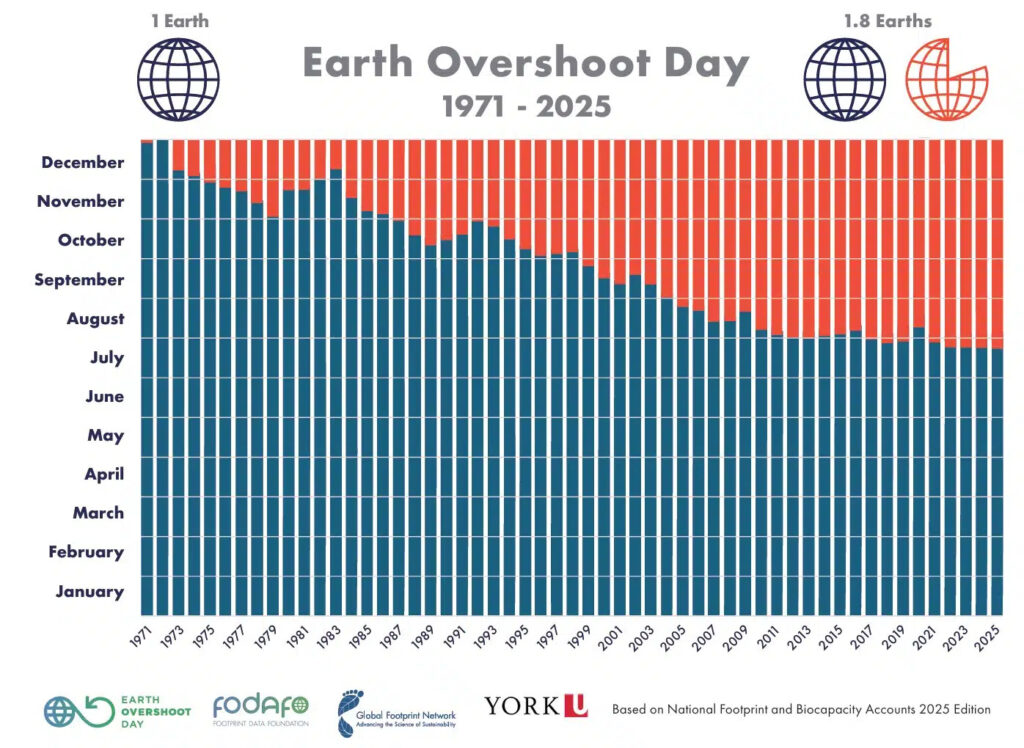
I first heard the data about “overshoot and collapse” 37 years ago and it changed my life. “Holy shit,” I said, when I saw the graph of how much planet we have and how much we’re overspending. The line of have and the line of spend crossed in the 1980s! The Footprint Network developed the idea of Earth Overshoot Day to express our dilemma. It’s the day of the year we exceed the planet’s capacity to support us. We were flush in 1970. Now, Overshoot day is August 2. As I said, this is not a polite conversation among friends. Reality sucks when you’re having fun.

Quartermaster

My response to data has always been to do something. I don’t demand 100% right. Over 50% is enough to get me started ambling towards solutions.

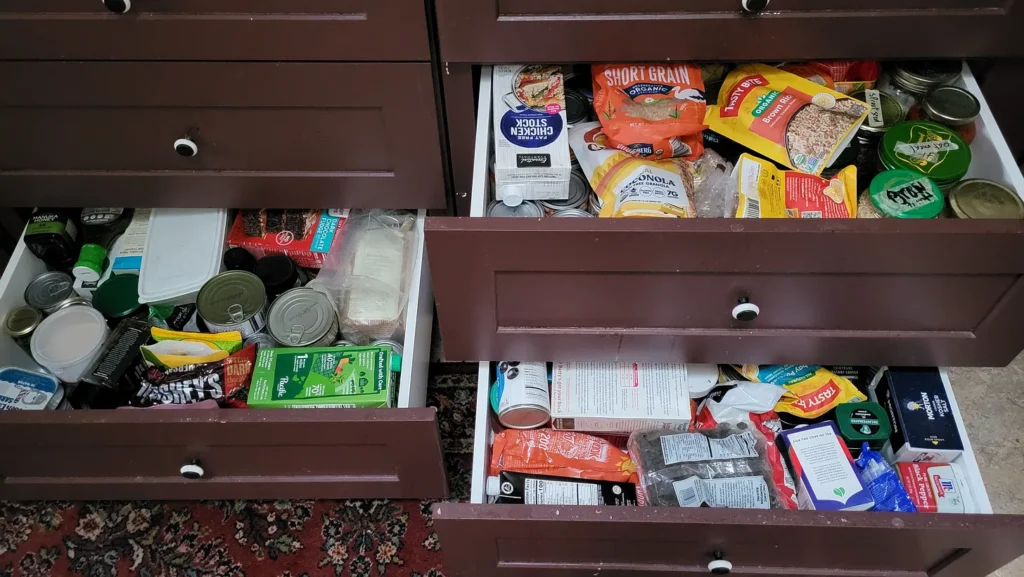
I must have been a quartermaster in the army in a prior life. I think in terms of provisioning (ergo my survival compound). How many mouths, how much food, what tools, supplies, etc? Here’s just half the stash in three deep kitchen drawers. Double it to include cupboards for a better estimate.

How many mouths to feed?

Ever since seeing that “Holy Shit” graph, I’ve watched population like some people weigh themselves. When I was born, there were 2.5 billion people on the planet. When I learned about overshoot, there were 5 billion of us, and that seemed a good place to plateau. To me. I’d hoped Your Money or Your Life would be a lever long enough to reduce human impact on Mother Earth. Nope. Not with passing 6 billion in 2000 and adding another 2 billion since then.

Well, if I can’t hit the big solution to overshoot jackpot, maybe I can go regional. The island I live on, and about 100 in all directions, is the US part of the Salish Sea – and my local home. I wrote a book about local food, asking a farmer if the 60,000 people on my island could survive from what we grow on the island. Yes, she said, for two weeks in August. Called Blessing the Hands that Feed Us, the book documents my effort to eat for a month within 10 miles of my home. Here’s the TEDx version. Maybe the book will have a resurgence now that more people are trying to be quartermasters of their own lives – but I’m not counting on it.

Enoughness is the through line of my work. First book: enoughness at the level of stuff. Second book: enoughness at the level of food.

Now – and we’ve finally arrived at the essence of this post – what is enoughness at the level of housing, more specifically, affordable rentals? At the moment, we have nowhere near enough affordable rentals in my 100-mile region, and it’s squeezing the life out of our communities and economy.

I always start with a personal experiment

Before writing Your Money or Your Life, I’d lived on next to nothing for 2 decades. Before writing Blessing the Hands that Feed Us, I’d lived for a month only on what grows within a ten-mile circle of my home.

A rental-enoughness idea – that’s now called In-Home Suites – started for me when I bought my first house, at 65. Until then, I’d lived with others in vans, a school bus, a communal household and a tiny first apartment.

My communitarian habit

I was part of a tight community in my 20s and 30s, and a looser one in my 40s. Some of our group’s economy came from sharing bedrooms, rice and beans meals and the dining table we ate at, a living room, cars, closets, chores, and a general philosophy of life. We were high-minded, dedicated to the common good. Sharing seemed like manna, not deprivation.

This communitarian habit pairs well with my survivalist tendencies that come from when our group lived on 14 acres in Northern Wisconsin, where locals joked that there are two seasons: winter and the 4th of July. Growing a half-acre garden took skill and intention. We lived in said school bus for part of that time, then built a general-purpose building and a dome, raised a pig and rabbits and ate them, hunted and butchered deer, and pounded in a well point for water. Our supplies came from town or…the town dump. We called it the source of all goodness because we’d find doors, windows, building materials, some supplies, washed-and-folded clothes left over from the Saturday church bazaar, and even a tool shed (OK, it was an old outhouse, but it worked).

Sharing the wealth

Fast forward 50 years, and here I was, padding around the bargain-priced big house I’d bought with more rooms and room than I needed. Of course, I asked, “How can I share this”? A friend moved into the family room on the ground floor and converted it into what we now call an In-Home Suite. It has a bathroom, exterior door and an efficiency kitchen. She also built in a sweet desk and closet, and lots of pantry space. After she left, I paid her for her investment and rented it out. I’m now on my 10th renter of that space.

Then I eyed the garage. I’d converted it into a bonus room and used it as a rehearsal and performance space for my improv troupe as well as for neighborhood gatherings, trainings and whatever interested me at the time. Of course, it graduated to a second In-Home Suite. Between the two, I’ve made back 80% what I paid for the house!

This is an idea whose time has come!

It’s not a roommate situation where someone has a room, shares a bathroom and has kitchen privileges. It’s not a housemate where all corners of the house are shared (except bedrooms). Both of those would now cramp my style.

Neither are these studios attached ADUs (Accessory Dwelling Units). The difference from an In-Home Suite is in the meter. Not rhythm, but whether electric, water and sewer hookups are shared or separate. Nor are they co-ownership; I am the landlord, and they are tenants, and we navigate the power gradient with as much grace as possible.

Each suite (whether in my house or elsewhere) has:

  • a separate entrance
  • a bathroom
  • a kitchenette
  • ideally an off-street parking space

Each suite shares the envelope of the house, including washer/dryer and all utilities, including high-speed internet. We share the benefits of the house (beauty, safety, utilities, yard) while having completely separate lives.

Sharing space can be enoughness at the level of housing

Sharing is mainstream. Go Shareable to learn more about how the sharing economy operates now. Here’s how they say it:

A better world isn’t a dream, it’s a movement.

Shareable collaborates with organizers and allies to imagine, resource, network, and scale cooperative projects. We envision a just, connected, and joyful world where sharing is a daily practice and communities flourish.”

What if our society was rooted in a sharing culture?

Imagine neighborhoods where food, tools, housing, care, and power are shared (not extracted, exploited, and hoarded!). Where co-ops replace corporations, mutual aid replaces individualism, and collective resilience outlasts crisis. This is the solidarity economy in action.”

The essential spirit and toolkit of a sharing economy is called “Mutual Aid,” where, whenever the dominant economy becomes too expensive, too heartless, too insecure, too insufficient, or too boring, you start to realize that there’s a wide, wide world beyond solving problems privately. There are Libraries of Things. I use platforms like Buy Nothing and Next Door for meeting some of my needs – and often you can do an ISO (in search of) request, and someone has the very thing gathering dust in their garage.

Shareable Housing

In this hyper-individualistic, competitive society, sharing sounds dangerous and/or ditzy. Maybe not.

Castle consciousness is a rigid mindset that deserves to be disrupted. Sharing is safe, economical, socially acceptable, generationally fair, and did I say economical? Safe sharing, like safe everything else, involves boundaries, agreements, and exit doors. Many times, out of fear, habit or pride, we’ll pay extra to have everything we might ever need and never share it. Our social standing seems to stand on the number of square feet of house we call our own. Is sharing a low-life strategy? “I worked for it, own it and let others work for what they want just like I did.” Is sharing un-American? Let’s look at whether these fears, habits, entitlements or pride hold water.

Sharing isn’t as un-American as it may sound

We already have a myriad of collective solutions to personal needs, though we take them for granted.

  • Infrastructure: sidewalks, bridges, ports, airports, telephone lines, cell towers, electric lines and on and on. We have roads and ways to share them: speed limits, traffic lights, and lanes. Self-made men are delusional – without the common resources, their supplies would never arrive, their trucks would go nowhere.
  • We have shared services like post office, libraries, local law enforcement, and public schools.
  • Then we have laws, government, social programs… still.
  • What am I missing in these lists? How else is the sharing economy right in front of our noses?

Sharing our Castles Rn’t US – yet

Sharing ends at property lines, though. Who has the right to cut “their own” trees? Graze animals right by “their own’ stream. Burn old tires? Or brush? Burn wood in their fireplace in fire season? Have someone living in a motorhome or tiny home on their property? Build a septic system? Drill a well? Build a barn, a second or third home on their land?

Do you know that “life, liberty and pursuit of happiness” was borrowed from Englishman John Locke’s “life, liberty and property”? Property rights are king. No, I’m not heading for your fence with community shears. I’m talking about contractual sharing for the benefit of the property owner and those they choose to let on their land, or in their home.

Putting our houses where our mouths are?

Seniors stay put for many social and financial reasons, unintentionally limiting opportunities for younger people. To us seniors, this makes perfect sense. Where would we go? How would we afford a higher mortgage rate? What about the webs of community?

Perfectly healthy octogenarians like me don’t want to move from our homes with our treasured collections of art and such, and good neighbors and meaningful clubs and belonging – into a room in “a facility.” Some don’t want to relocate to a room in their children’s homes either. Nor do we want to spend down our savings to a nub and let Medicaid house us

Good, wise, loving people with large houses may not realize that our reasoned choices may make life harder for younger people. We don’t mean to. Those with a social justice bent might consider an In-Home Suite as a way to provide for themselves – and for a nurse, teacher, librarian, or barista. In this country, we are encouraged to consider our own interests first and foremost, not asking questions about how our boon might be someone else’s bust. In-Home Suites that offer privacy and safety can be a personal as well as a social good.

A brilliant solution for Seniors

The village where I live is a NORC, a naturally occurring retirement community. The median age is over 70. This deserves some exclamation points!!!

The term NORC was first coined in the 1980s by Michael Hunt, a professor at the University of Wisconsin–Madison. He defined NORCs as neighborhoods and housing developments, originally built for young families, in which 50 percent of the residents are 50 years or older and are “aging in place,” reflecting the desire for older adults to stay in their comfortable, familiar homes and in their communities.

In-Home Suites are ideal for NORCs where people are house-rich and Millennials and X-ers are shut out.

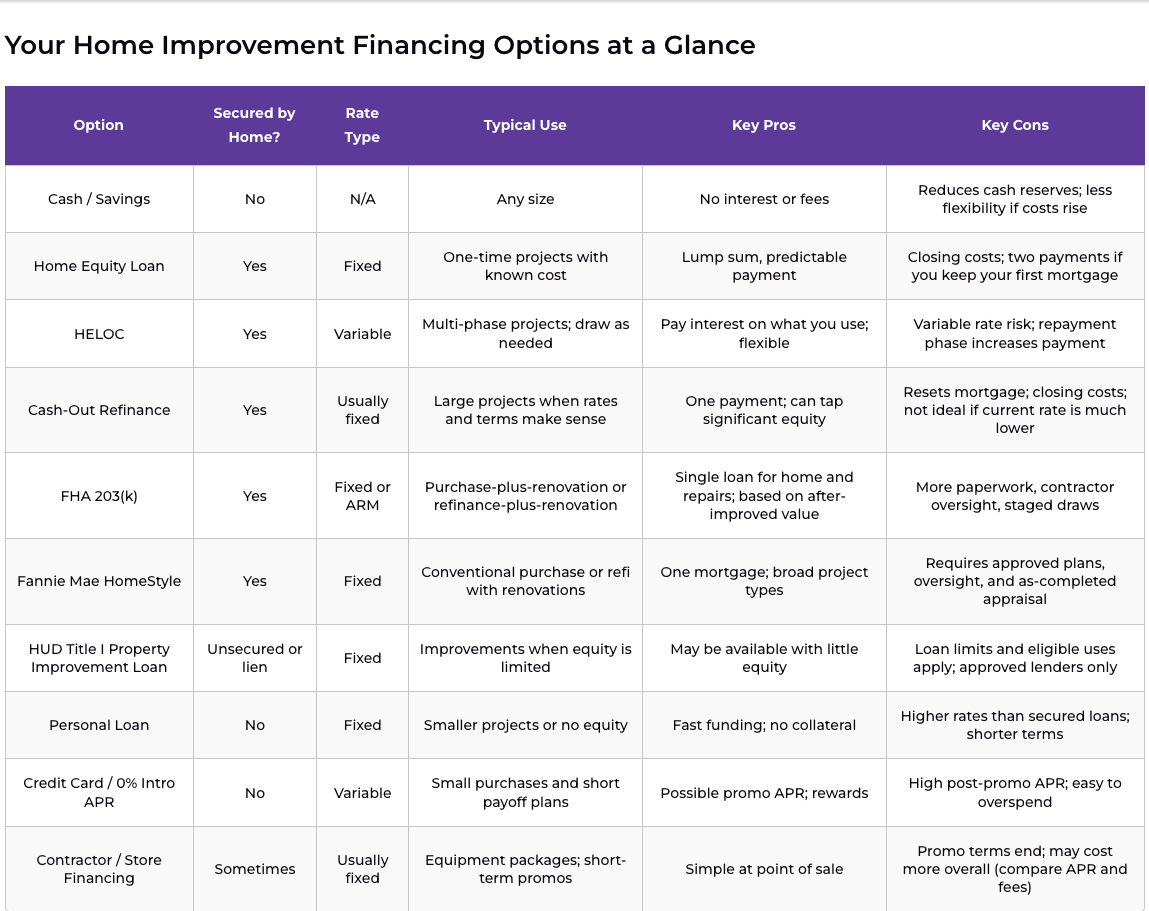
How do we age in place, though, given the rigors of aging? How do we make retirement income stretch far enough to stay independent? Might we use our biggest asset, our homes, to solve this equation? I don’t mean a second mortgage or HELOC, though those can help.

I mean convert underutilized space into an In-Home Suite.

In addition to welcoming rent to supplement my retirement income, many of my tenants have done chores in exchange for reduced rent, mostly maintaining my yard and garden, carrying heavy bags for me and cat-sitting when I travel. As my needs increase, I will find tenants willing to trade rent for some basic care – grocery shopping, batch cooking, vacuuming, etc.

Eventually, I intend to exchange rent for both apartments when I need extensive care. A nursing home would be at least $80-100K a year, or more. I just did the math, and it would save me (yikes) $70,000 a year.

This is all back-of-the-envelope calculations. I’m not a bean counter. I’m a community member who wants to provide affordable rentals to good people in my community, many of whom become dear to me. I’m doing it because I’ve got that communitarian habit, so it made sense to me, and a frugality habit that sees opportunities where others see nada.

Who pays for such conversions?

How does a senior on a fixed income afford the conversion? This site offers a range of options.

Some spaces are easier and cheaper to update. The family room required only interior changes. The garage needed to be hooked up to the sewer to add a bathroom and kitchen. A contractor can help you understand costs and feasibility.

… the kids will foot the bill?

One way or another, your family may eventually bear the costs of care. Families with means can finance the remodel so that the rent supports the parent while they are active, and a caregiver can live there when needs are greater.

Loneliness and isolation can make our final years our worst years. Families know that, but they can only do so much with responsibilities for work and children. Underwriting the conversion may provide for their elders’ social needs as well, while bringing the offspring some peace of mind.

In-Home Suites across the generations

How do In-Home Suites benefit younger people other than as potential rentals? One way a young couple could afford a home would be to put a suite in it – or duplex it – right away and use the rent to cover enough of the mortgage that they can afford to own. This is the kind of house hack that people in the F.I.R.E. (financial independence retire early) subculture often do.

Have I made my case?

Bringing the sharing economy home, into our homes, is a frontier of affordable housing. It is often overlooked and even rejected. Building new rentals is the assumed solution, but it’s not the only way, nor even the best.

Home-sharing is the homeowner’s privilege. Why would they do it?

  • Income
  • Security
  • Help with chores
  • Conviviality
  • Contributing to the common good

There are many sharing solutions: roommate, IHS, JADU, ADU, duplexing, and shared ownership. In-Home Suites slip between a roommate (low privacy + low conversion cost + income) and an ADU (high privacy, high conversion cost + income). Government and financial institutions have a role to play. Incentives, expedited permitting, changing zoning, and creating new lending criteria.

Culture and society benefit from more working and professional people able to enrich our communities, increase services available, and let shops and restaurants open their doors every day of the week. Tradespeople, medical professionals, teachers – they would all live here if they could afford it. My dream is that In-Home Suites become a common and honored choice and that we all flourish with all generations having homes to come home to.

This article was originally published by Coming of Aging; please consider supporting the original publication, and read the original version at the link above.

Why Does Fujimorism Still Haunt Perú?

Source: Ojalá

A specter is haunting Peru. It isn’t the same one that terrorized the elites in the 20th century, or that of revolutions that promised to sweep away the old order. It’s something stranger, and even more disturbing: the specter of Fujimorism.

The April 12 elections saw 35 candidates run for the presidency of Peru, and failing to inspire enthusiasm from even a fifth of the electorate.

Keiko Fujimori, daughter of dictator Alberto Fujimori and candidate for the Fuerza Popular party, led the first round of the general election with around 17 percent of valid votes. It was the fourth consecutive election in which she has advanced to a presidential runoff since 2011.

She will be challenged in the runoff by Roberto Sánchez, the center-left candidate from Juntos por el Perú. He earned 12 percent of the vote, narrowly edging out far-right candidate Rafael López Aliaga of the Renovación Popular party, who has alleged fraud without providing any evidence.

To understand what is happening in Perú today, we must return to its history. Peru entered the 1990s in a state of crisis, as hyperinflation under Alan García’s government decimated the purchasing power of working families. 

The armed conflict between the state and Shining Path guerrillas rendered vast areas of the country uninhabitable. The government—weak, centralized in Lima, and historically distant from the majority of the population—was overwhelmed.

Fujimori Sr. arrived in that context, presenting himself as an outsider: an engineer and the son of Japanese immigrants with no established party behind him. He defeated “the caste,” represented in 1990 by Mario Vargas Llosa, and even gained support of a segment of the left.

When people spoke of Fujimori’s populist cronyism in the 1990s, they did so by referring to Tupperware food containers. It was said the dictator bought votes by handing out containers full of food in the poorest neighborhoods.

The Fujimori brand has faced moments of rejection at the polls. In 2011 against Ollanta Humala, in 2016 against Pedro Pablo Kuczynski, and in 2021 against Pedro Castillo, a large social majority associates the memory of Fujimori with crimes against humanity, forced disappearances, rampant corruption, and the moral decay of republican institutions.

That might lead one to think that the strongest political identity in Peru is anti-Fujimorism.

In reality, Fujimorism continues to play a leading role in every presidential election in Perú, and always comes with the real possibility of victory. The real question is a very uncomfortable one: why does this continue to surprise us?

Voting patterns among Fujimori supporters

In this year’s presidential campaigns, Jorge Nieto, one of several left-wing candidates from the Good Government (Buen Gobierno) Party, brought up an awkward topic on more than one occasion. He repeatedly suggested that redistributive policies during Peru’s 20th Century dictatorships were more extensive than they were in periods of democracy.

Nieto drew a parallel —which sometimes felt contrived— between the National Popular Dictatorship of Juan Velasco Alvarado (who came to power through a coup d’état in 1968) and enacted the Agrarian Reform in 1969, and Fujimori’s dictatorship, during which a macroeconomic crisis was averted in Perú.

The political legitimacy of Fujimorism is directly related to the importance different sectors of the population attach to the “pacification and economic stability” achieved during his government.

That foundational memory—even though it was bound up with authoritarianism, systemic corruption, and egregious rights violations—was etched into an entire generation as the moment order was restored. And that is why Keiko Fujimori does not govern: she inherits.

In a political system where alternative alliances have discredited themselves one after another, inheriting something—even if it is tainted and controversial—is a structural advantage no campaign can easily erode. It is no coincidence that the government plan Fujimori presented in these elections was titled “Order in Perú,” directly echoing her father’s legacy. 

Today, the major support bases of Fujimorism include small and medium-sized business associations, part of the informal sector of street vendors, and various evangelical groups.

These coalition is more revealing and complex than it seems. Big business supports Fujimorismo and other right-wing candidates, including the far-right López Aliaga. But the coalition also draws the votes of those who built their livelihoods outside the state.

Fujimorism lacks a concrete ideological foundation. Its strength lies in identity rather than policy. It offers no vision for Perú. It taps into the desire for security by promising chaos can be averted, and brings back old ghosts by vowing that what little one has managed to build will not be stolen by Shining Path communists operating under new democratic guises.

That vow, in a country in which the informal sector makes up over 70 percent of the economy and nearly three out of every 10 Peruvians live in poverty, cannot be weakened by yet another allegation of corruption.

Securitization campaigns

“Perú doesn’t vote ‘the wrong way,’ it votes the way it lives: with an empty stomach and a besieged mind,” said Héctor Béjar once April’s electoral results became known. Béjar was a founder of the National Liberation Army (ELN) in the 1970s and served as Foreign Minister under Pedro Castillo.

In this electoral cycle in Perú, it wasn’t just the right that campaigned on crime, punishment, and security. The left adopted a hardline security discourse, mistakenly believing “the people” want a heavy hand.

Ronald Atencio, the candidate for the “Venceremos” electoral alliance, went so far as to say in televised debates that if elected president, he would lead an “annihilation squad” against organized crime. That was the language of Fujimori Sr. in the 1990s.

In a country where extortion has become a de facto tax on labor, that kind of promise has a real audience. But people also know how to spot impostors.

The promise of order doesn’t address any of the underlying causes of unrest. It is the pressures of daily life that make increasingly extreme candidacies possible—and not just on the right.

For its part, the left speaks the truth: that the current economic and political model is exclusionary, that wealth is not redistributed, and that the 1993 Constitution enshrines established privileges.

But truths alone are not enough.

They fall short geographically, they fall short emotionally, and they fall short in the moment a person decides, alone in a voting booth, who best responds to their most immediate fears.

There is a gap between analytical truth and the ability to reach people living on the edge. That gap is a political responsibility, and not just a communication or campaign issue.

An enduring specter, a contested memory

In her three previous bids for president, Keiko Fujimori fell just short of the presidency. She has a base no crisis can fully erode, because it is built not on enthusiasm but on something more resilient: memory, networks, and an identity forged in opposition to everything else.

Fujimorism 1.0 captured something real: the energy of marginalized sectors that wanted a place in the economy and in politics. Not only was this the period when the Washington Consensus was implemented (with the all violence and repression that implied). It was also a period in which “popular capitalism”—first sketched out by Hernando de Soto for Vargas Llosa—took shape. This has remained relevant not only in theory, but in practice.

Marx and Engels wrote that a specter was haunting Europe, and that all the powers had allied to exorcise it. The Peruvian specter is harder to exorcise because it does not come from outside: it comes from within, from a wound that has not healed, from a question no one has managed to answer.

Every time Fujimorism advances to a runoff in elections, a segment of progressive Latin American analysts exhibits the same knee-jerk reaction. They chalk it up to popular alienation, invoke the term clientelism, talk about mafias and corruption, and quickly shut down the debate.

But votes for Fujimori cut across the board, refusing class segmentation or straightforward electoral divides. Rather than the vote of the manipulated and disenfranchised poor or that of a satisfied elite, support for the party now known as Fuerza Popular cuts across social classes and geographical regions (along the coast and in eastern Peru).

This is a sign that there’s something more complex at play.

The Fujimori vote is not a fleeting phenomenon, it is a preference consistently expressed over time.

The hypothesis that the electorate that supports Fujimorism is manipulated infantilizes the complex rationalities of the working classes in contexts of dispossession and daily violence. It is an excuse for the failure to critically engage these issues.

On June 7, some of Perú’s 27 million voters will return to the polls. Their choice in the runoff election will be between Fujimori and Sánchez, who, according to the polling firm Ipsos, are currently neck-and-neck in a technical tie, with each candidate polling 38 percent.

The question remains the same: will anti-Fujimorism be enough to contain the specter that haunts Perú?

This article was originally published by Ojalá; please consider supporting the original publication, and read the original version at the link above.

Víctor Miguel Castillo is a member of the CLACSO Working Group on Popular Economies: Theoretical and Practical Mapping and Communications Coordinator at the Rosa Luxemburg Foundation for the Southern Cone.