Tuesday, June 30, 2026


Starmer sets out to strengthen UK and European defence with cash for drones and AI systems

British Prime Minister Keir Starmer announces the UK defence plan, 30 June 2026.
Copyright PA Wire/PA Images

By Angela Skujins
Published on

The outgoing UK prime minister has finally unveiled a long-awaited Defence Investment Plan that aims to revive an “underfunded” sector. It emphasises the growing use of of unmanned aerial vehicles in repelling foreign aggression.

British Prime Minister Keir Starmer has at last presented his government's Defence Investment Plan, a spending programme that aims to ensure Britain’s military future by raising defence investments to £80 billion (€92.8 billion) a year by 2029.

Building and buying stealth fighter jets, submarines and warheads are all on the menu, with £5 billion (€5.8 million) allocated solely for the development of drones, a move Starmer hailed as “the largest ever UK investment in this technology”.

“We will build an army that is ten times more lethal, with attack drones flying alongside our Apache helicopters, a new fleet of surveillance drones collecting intelligence and finding targets and a surge in low-cost one-way attack drones which have proved so effective in Ukraine,” he said at a press conference on Tuesday.

The new spending will emphasise autonomous vehicles, such as a “hybrid” Royal Navy vessels utilising artificial intelligence and smaller autonomous aircraft flying alongside RAF Typhoon combat planes that are “invisible” to radar systems.

Drones will also be tested at the “Uncrewed Systems Centre” — a 50,632 square metre facility touted as Europe’s largest drone testing facility.

The Russia factor

Starmer used his speech to directly point the finger at Russia, a country identified by various intelligence services as preparing to mount an attack on a NATO ally by 2030.

He reiterated that if Russia continues its full-scale invasion of Ukraine, and pushes past the war-torn country’s border, Europe may be in the Kremlin’s line of sight.

“If Russia were to win in Ukraine, Putin would not stop there but turn his gaze to other allies, bringing even greater instability to our continent, even greater impacts on our security and the cost of living and an even greater need to mobilise yet more resources for our defence,” Starmer said.

In April, the UK's then-Defence Secretary John Healey warned that three Russian submarines had conducted a clandestine operation over pipelines and cables in waters just north of the UK, mirroring similar cable-cutting incidents across Europe, particularly in the Baltic Sea. Britain and Norway are already developing frigates to hunt Russian submarines that enter European waters.

In a stunning turn of events, Healey resigned two weeks before the defence plan was announced by Starmer over concerns that not enough money was being allocated to support the country’s security and meet the new NATO commitment of 3.5 percent of GDP to be spent annually on defence by 2035.

In his resignation letter, Healey wrote that the original defence sum in the blueprint fell “well short” of what is required “at this dangerous time”.

The prime minister reiterated on Tuesday his view the investment plan is sufficient to support both Britain and Europe more broadly.

“(We are) maintaining our role in guaranteeing British and European security and leaving our country in a much better and much stronger state than we found it,” he said.

But speaking in Parliament on Tuesday after the plan was unveiled, Healey repeated that the spending programme does not go far enough, warning that the UK needs "to develop a clear, credible funding plan" before it faces a Russian attack.

Britain in Europe

Starmer said the plan aims to bolster European defence decision-making and will have input from the Europeans, such as the development of “deep precision strike weapons” in partnership with Germany.

The plan comes as the US is signalling it will review its defence posture within Europe, prompting allies to step up to the plate.

Euronews asked the Ministry of Defence whether the EU will have any involvement with the plan through the development or testing of capabilities. In response, a spokesperson pointed to comments Starmer had made earlier in the day without providing specifics.

The UK's new plan is being made public just before the 2026 NATO summit in Ankara on 7-8 July. NATO Secretary General Mark Rutte said that the first day of the summit will be an opportunity for the alliance’s 32 members to sign “massive amounts of new contracts, MOUs (and) letters of intent” to meet defence spending goals.

France's National Assembly approves assisted dying bill after Senate rejection

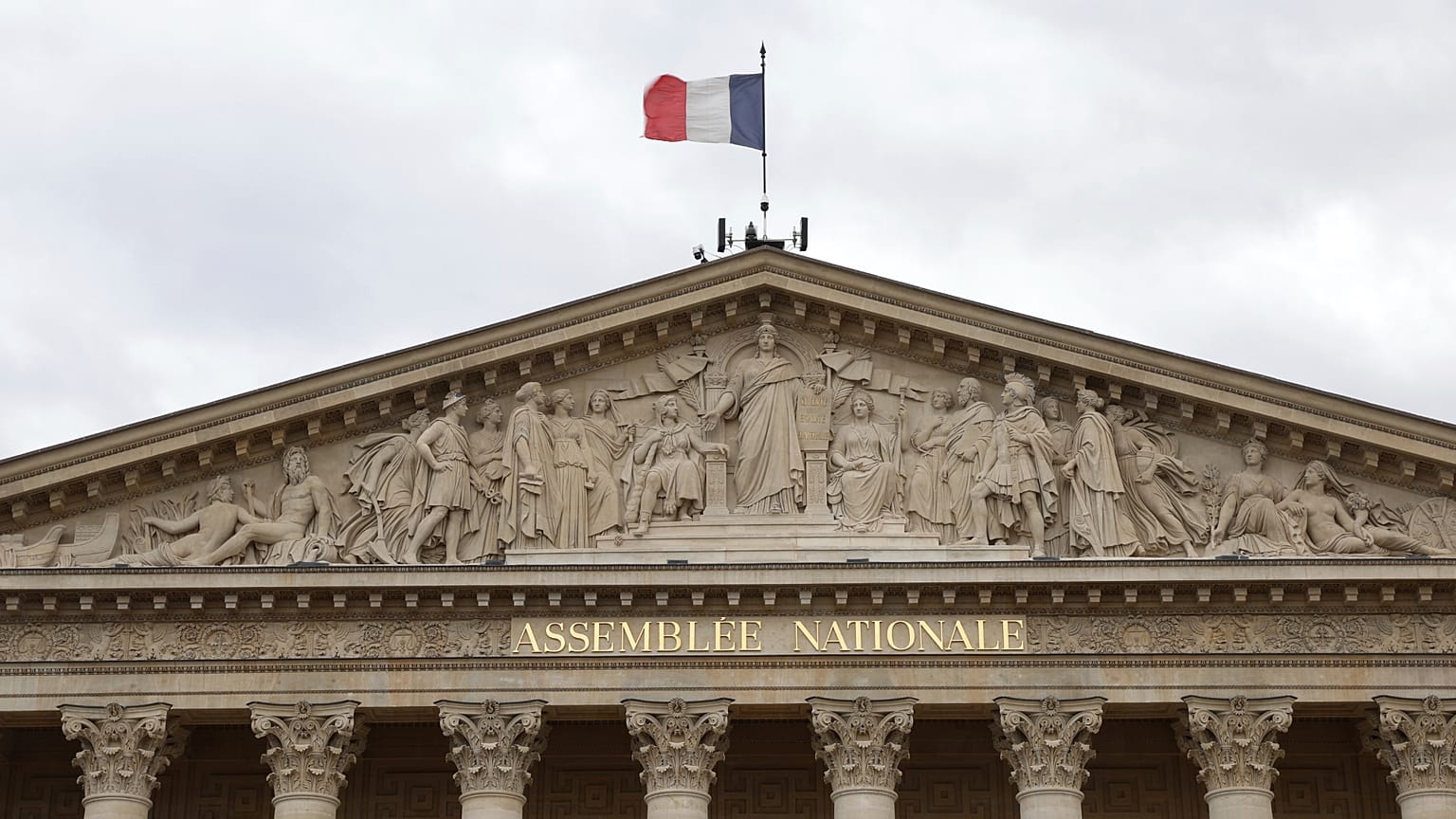
View of the National Assembly in Paris.
Copyright AP Photo/Aurelien Morissard

By Marta Iraola Iribarren
Published on

The French National Assembly has passed the assisted dying bill — a law that has sparked controversy across the country — following the Senate's rejection.

The French National Assembly has approved the proposal for an assisted dying bill by 295 votes in favour and 232 against after the Senate’s rejection in January.

“This vote is the culmination of several years of work and of a thorough public debate, conducted with seriousness, respect and dignity,” YaĆ«l Braun-Pivet, president of the National Assembly, said in a post on X following the vote.

The bill has been controversial in France, sparking debate on how to regulate end-of-life assistance.

It has undergone several amendments since its first proposal. Critics are divided, with some arguing it has been watered down in the process, while others still consider it too permissive.

However, the members of the Assembly in charge of the law noted that the final text "has reached a point of balance”.

According to the rapporteur, Philippe Vigier, the bill establishes new rights for patients, while guaranteeing the freedom of professionals to abstain and it builds in safeguards for everyone — patients, professionals and relatives.

What will this law mean?

The proposed law creates a right to aided dying for adults with grave incurable illnesses in an advanced or terminal phase.

One key change in the final text is that psychological suffering alone has been excluded from access to assisted dying.

Only patients who are physically unable to administer the substance themselves would be allowed to have a doctor or nurse do it for them.

Patients must be over 18 and be French citizens or residents in the country.

A team of medical professionals would need to confirm that the patient has a grave and incurable illness "at an advanced or terminal stage,” with constant suffering from intolerable and untreatable pain, and is seeking lethal medication of their own free will.

The proposed law would also create a conscience clause for healthcare professionals who do not wish to participate in this procedure and would then require them to refer the patient to other healthcare professionals.

Long road to approval

President Emmanuel Macron promised in 2022 to bring forward end-of-life legislation.

First officially proposed in 2024, it was approved by the National Assembly in May 2025.

However, on 28 January, the Senate rejected the bill by 181 votes against and 122 in favour.

After the disagreement between the chambers, a joint committee made up of seven senators and seven deputies met to find a balance but failed to reach a compromise, sending the bill back to the National Assembly.

Now that the text has been once again approved, it will return to the Senate again, and if the two chambers still fail to reach an agreement, the National Assembly can have the final word.


Prosecutors conduct Europe-wide raids over alleged misuse of funds by defunct far-right EU group

French far-right National Rally president Jordan Bardella, Monday, Oct. 6, 2025 at the European Parliament in Strasbourg, eastern France.
Copyright AP Photo/Pascal Bastien

By Emma De Ruiter
Published on

Raids were underway in France, Spain, Italy and Belgium as part of a probe into the alleged misuse of European parliament funds by the former far-right Identity and Democracy (ID) group.

The European Public Prosecutor's Office (EPPO) said on Tuesday they were conducting raids in four countries to probe alleged misappropriation of EU funds by the former far-right Identity and Democracy (ID) group in the European parliament.

The EPPO said the searches were "part of an ongoing investigation into the use of EU funds by a former political group of the European Parliament between 2019 and 2024."

The ID group was formally disbanded after elections in 2024 and was succeeded by a new grouping Patriots for Europe. It contained MEPs from a range of Eurosceptic parties including France's National Rally (RN), Italy's League (Lega) and the Alternative for Germany (AfD).

Jordan Bardella, RN president and head of the Patriots group, posted on X on Tuesday evening that "searches have been underway at the offices and private homes of communications service providers who have worked with us" since the morning.

The EU's prosecutor announced formal investigations in July last year after media quoted a parliamentary report as saying said ID was suspected of improperly spending €4.3 million between 2019 and 2024.

Bardella at the time said the probe represented "a new harassment operation by the European Parliament".

The RN is eyeing its best chance yet of winning the presidency in France next year, with polls suggesting it will have a commanding lead in the first round of voting.

But three-time RN presidential candidate Marine Le Pen may have to quit the race, and let Bardella run instead, if a Paris court next week upholds a five-year ban from office in a separate case of alleged fake jobs in EU parliament from 2004 to 2016.


France's National Rally targeted as part of Europe-wide raids over alleged far-right embezzlement


France's National Rally was on Tuesday targeted as part of Europe-wide raids following suspicions of the misappropriation of European funds by the now-defunct Identity and Democracy (ID) group of MEPs, the European Public Prosecutor’s Office (EPPO) said, onfirming a report in French daily Le Monde.


Issued on: 30/06/2026 -
By: FRANCE 24


Jordan Bardella (right), leader of the National Rally (RN), a far-right French party, Member of the European Parliament and chair of the ‘Patriots for Europe ’, takes part in a joint press conference with the leader of the main right-wing opposition party, Law and Justice (PiS), at the party’s headquarters in Warsaw on 19 June 2026. © Wojtek Radwanski, AFP

Searches are currently under way “in France and other European countries” following suspicions of the misappropriation of European funds by the now-defunct Identity and Democracy (ID) group of MEPs, of which France's far-right National Rally (RN) was a member, the European Public Prosecutor’s Office (EPPO) said on Tuesday, confirming a report in French daily Le Monde.

The EPPO said it was "carrying out investigative measures in France and other European countries as part of an ongoing investigation into the use of EU funds by a former political group of the European Parliament between 2019 and 2024."

The ID group contained MEPs from a range of Eurosceptic parties including France's RN, Italy's League and the Alternative for Germany.

"Since early this morning, searches have been underway at the offices and private homes of communications service providers who have worked with us," RN president Jordan Bardella said on X.

The EU's prosecutor announced formal investigations in July last year after media quoted a parliamentary report as saying said ID was suspected of improperly spending 4.3 million euros ($5 million) between 2019 and 2024.

ID was formally disbanded after elections in 2024 and was succeeded by the Patriots for Europe group. Bardella, who heads the Patriots group, last year said the probe represented a "new harassment operation by the European Parliament".

The RN is eyeing its best chance yet of winning the presidency in France next year, with polls suggesting it will have a commanding lead in the first round of voting.

But three-time RN presidential candidate Marine Le Pen may have to quit the race, and let Bardella run instead, if a Paris court next week upholds a five-year ban from running for public office in a separate case related to an alleged fake jobs scam in the EU parliament from 2004 to 2016.

(FRANCE 24 with AFP)
US Supreme Court Rules Police Need Warrants For Cellphone Location Data


June 30, 2026
Oregon Capital Chronicle
By Jonathan Shorman

(Oregon Capital Chronicle) — The U.S. Supreme Court ruled Monday that law enforcement searches for the location history of cellphones near crime scenes are covered by the Fourth Amendment, requiring warrants to obtain the data.

But the high court left unsettled when searches for the information are reasonable — likely meaning the justices will eventually weigh in again on the privacy rights of Americans in the electronic era.

In a 6-3 decision, the Supreme Court ruled that police officers conducted a search for the purposes of the Fourth Amendment when they obtained cellphone location history data during an investigation into a bank robbery in Virginia. The amendment protects against unreasonable searches and seizures by the government.


“An individual has a reasonable expectation of privacy in records about his cell phone’s location, and police intrude on that constitutionally protected interest when they demand the information — even though for only a limited time, and from a third-party tech company,” Justice Elena Kagan wrote in the majority opinion.

Kagan was joined by Chief Justice John Roberts and Justices Sonia Sotomayor, Brett Kavanaugh and Kentanji Brown Jackson. Justice Neil Gorsuch concurred in the judgment but did not join the majority opinion.

Justice Samuel Alito dissented, joined by Justices Clarence Thomas and Amy Coney Barrett.
States ask warrants be upheld

Over the past two decades, geofence warrants have become a major tool of law enforcement. At a basic level, they allow police to identify phones within a geographic area for a certain period of time. The data can be tremendously valuable to investigators, offering a way to develop suspects in crimes where their identities aren’t otherwise known.

Civil liberties advocates warned that geofence warrants ensnare people in digital dragnets, handing the government data on anyone who happens to be in the wrong place at the wrong time. They argued that accessing data on anyone within a certain area — the geofence — amounts to a general warrant prohibited by the Constitution.

A broad bipartisan coalition of states urged the justices to uphold the warrants. Thirty-one states and the District of Columbia filed a brief with the court arguing that geofence warrants can be more precise than many traditional investigative methods when supported by probable cause and appropriately tailored. In the brief, they urged the justices not to prohibit geofence warrants altogether.

Geofence warrants can generate critical leads when the perpetrators of crimes are otherwise unknown, they wrote. When suspects are unknown but the suspected wrongdoing is linked to a specific place and time, location data provides one of the narrowest available tools for finding leads, the brief argues.
Credit union robbery in Virginia

The case centered on a 2019 robbery of a federal credit union in Midlothian, Virginia. Okello Chatrie was convicted of armed robbery after surveillance footage showed the robber using a cellphone. A detective then obtained a geofence warrant directed at Google for devices within 150 meters of the credit union within an hour of the robbery.

Google initially provided anonymized data in response to the warrant. The detective then requested and received additional location data on nine users. Finally, the detective received de-anonymized information on three users, without obtaining an additional warrant.

While Google has since changed the way it stores location history data to limit geofence warrants, other apps and tech firms collect the data. Lawyers for Chatrie argued that geofence warrants open the door to the authorities requesting information on everyone at a sensitive location — perhaps an abortion clinic or a political convention — at a particular time.

The records serve as a “personal journal of a user’s movements,” Kagan wrote. Location history resembles other private materials like emails, documents, photos and calendars that, even if stored on Google’s servers, users reasonably view as their own, she wrote. Users, in turn, expect the data to be shielded from the “inquisitive eyes” of the government, Kagan wrote.

‘Reasonable’ question unanswered

But Kagan and the court’s majority didn’t wade into whether the search of Chatrie was reasonable under the Fourth Amendment. While the warrant in the case was an uncommon, multi-step warrant, Kagan wrote, the lower appeals court found that a search did not occur, so it did not decide whether the warrant was reasonable.

“We are, as we have said many times before, ‘a court of review, not of first view,’” Kagan wrote. “It is therefore now up to the Court of Appeals to decide whether, at each step of the search process, the warrant satisfied the Fourth Amendment’s requirements of particularity and probable cause.”

In his dissent, Alito wrote that the Supreme Court’s decision “further destabilizes” longstanding jurisprudence on the Fourth Amendment. He accused the majority of issuing an advisory opinion by not addressing whether the search of Chatrie’s data was reasonable.

“Indeed, by refusing to review the one question that could have at least theoretically given Chatrie some hope of relief, the Court carefully set the stage for its planned performance: striking a pose as a great champion of privacy in the digital age. I cannot support this irresponsible escapade,” Alito wrote.


About Oregon Capital Chronicle

The Oregon Capital Chronicle, founded in 2021, is a professional, nonprofit news organization. We focus on deep and useful reporting on Oregon state government, politics and policy. Staffed by experienced journalists, the Capital Chronicle helps readers understand how those in government are using — or abusing — their power, what’s happening to taxpayer dollars, and how citizens can stake a bigger role in big decisions.

View all posts by Oregon Capital Chronicle →
NASA’s New Horizons Research Team Extends Key Observations Of Interstellar Material Slowing The Solar Wind


June 30, 2026 
By Eurasia Review

A new Southwest Research Institute (SwRI) study based on data from NASA’s New Horizons spacecraft has uncovered fascinating insights into why the solar wind gradually slows as it moves toward the edge of the solar system and the boundary with interstellar space.

New Horizons is currently roughly 66 AU from the Sun. One AU, the distance from the Earth to the Sun, is roughly 93 million miles. The researchers, led by SwRI’s Dr. Heather Elliott, studied how the solar wind’s speed, measured by the Solar Wind Around Pluto (SWAP) instrument on New Horizons, changed between 21 and 58 AU compared to measurements taken nearer the Sun.

“As the solar wind travels away from the Sun at supersonic speeds, roughly 1 million miles per hour, eventually it encounters incoming interstellar neutral gas particles entering the heliosphere,” Elliott said. “These neutral interstellar atoms become ionized via charge exchange with solar wind ions, adding mass to the solar wind by picking up interstellar material that slows the solar wind down.”

Previously, New Horizons and Voyager 2 measurements between 30 and 43 AU indicated the solar wind was 5 to 10% slower than at 1 AU near Earth. Now, New Horizons researchers found at 58 AU that the solar wind is 13 to 15% slower than the wind at 1 AU. This gradual slowdown aligns with previous models of how interstellar material enters the heliosphere and affects the solar wind. It also demonstrates how the Sun’s influence decreases over long distances.


This gradual decrease in speed pales in comparison with the sharp drop in speed expected when New Horizons eventually reaches the heliosphere’s Termination Shock (TS), which is where solar particles rapidly drop in speed to less than the local plasma (solar wind and interstellar pickup ions combined) speed of sound. The termination shock is a stark indication that the incoming interstellar material heavily affects the properties of the solar wind as it nears the outer boundary of the heliosphere. Voyager 2 measured a sharp 46% drop in speed at the termination shock at a distance of 84 AU.

“Eventually, the solar wind reaches the outer boundaries of the heliosphere — the sphere of influence where the solar wind affects the space environment — where it interacts with incoming interstellar material. The shape and properties of these heliospheric boundaries control the amount of Galactic Cosmic Rays (GCRs) that can enter our solar system and reach Earth,” Elliott said. “Therefore, the data from New Horizons combined with observations from other missions, such as IBEX, IMAP and Voyager will enhance our understanding of the edge of the solar system.”

This is important for astronauts working outside of Earth’s protective atmosphere on the Moon, and eventually on humanity’s journey to Mars, because GCRs pose one of the most severe risks to long-term space travel. They can increase cancer risk in travelers and negatively impact technology.


“This new data could be highly beneficial in predicting the outer boundaries of the heliosphere and solar system and ultimately the amount of GCR radiation exposure of astronauts, satellites and spacecraft to harmful cosmic radiation, especially as we look toward more ambitious deeper-space exploration,” Elliott said.

These findings also provide insights into astrospheres, the protective heliosphere-like bubbles generated by other stars in the galaxy. Astrospheres share many similarities with the Sun’s heliosphere and could help us understand how other stars interact with the interstellar material surrounding their systems.

“Studying the heliosphere is like solving a cosmic puzzle,” said Elliott. “Not only do we learn more about how the Sun’s influence ends, but we also gain a deeper understanding of the boundary between our solar system and interstellar space — a critical step toward planning future interstellar travel.”

“NASA’s New Horizons continues to be the only spacecraft in the Sun’s outer heliosphere and yielding important new insights to build on what the venerable Voyager probes discovered,” said SwRI Associate Vice President Dr. Alan Stern, the Principal Investigator of the New Horizons mission. “Our studies of the heliosphere, like this one, are virtually continuous and provide crucial new datasets to better understand the Sun’s outer heliosphere and its termination region far beyond Pluto’s orbit.”

The Johns Hopkins Applied Physics Laboratory in Laurel, Maryland, designed, built and operates the New Horizons spacecraft and leads the mission for NASA’s Science Mission Directorate. The Marshall Space Flight Center (MSFC) Planetary Management Office in Huntsville, Alabama provides NASA oversight for New Horizons. Southwest Research Institute, based in San Antonio, directs the mission via Principal Investigator Dr. Alan Stern, who leads the science team, payload operations and science planning. New Horizons is part of the New Frontiers Program managed by NASA’s MSFC.

SwRI built, calibrated and operates the New Horizons solar wind instrument Solar Wind Around Pluto (SWAP). This research is part of the NASA Solar wind with Hydrogen Ion charge Exchange and Large-Scale Dynamics Heliophysics Drive Center (SHIELD) led by Boston University, which models the outer boundaries of the heliosphere to understand how Galactic Cosmic Rays enter our heliosphere.
Clean Energy Investments Can Lead To Good Union Jobs – OpEd


June 30, 2026 
By Algernon Austin

At the AFL-CIO convention in early June, union leaders spoke of how the Biden administration’s 2021 Infrastructure Investment and Jobs Act (IIJA, also known as the Bipartisan Infrastructure Law) and its 2022 Inflation Reduction Act (IRA) contributed to the creation of good union jobs in clean energy production. As discussed in CEPR’s Majority Agenda, US infrastructure is in a poor state. Our energy infrastructure receives only a D+ grade. The Biden administration directed$1 trillion to clean energy, and those investments have produced positive results for workers, US energy production, and the climate.

“Energy jobs grew every year of the Biden administration” and “[c]lean energy investments powered job growth in the sector,” the Roosevelt Institute reports. The Institute adds,

The lion’s share of energy job growth (72 percent) after the passage of IIJA and IRA was in clean energy, representing over 450,000 net new jobs in clean energy. Jobs in clean energy now represent nearly 44 percent of all US energy jobs.

Roosevelt also pointed specifically to strong growth in construction and manufacturing jobs related to clean energy.


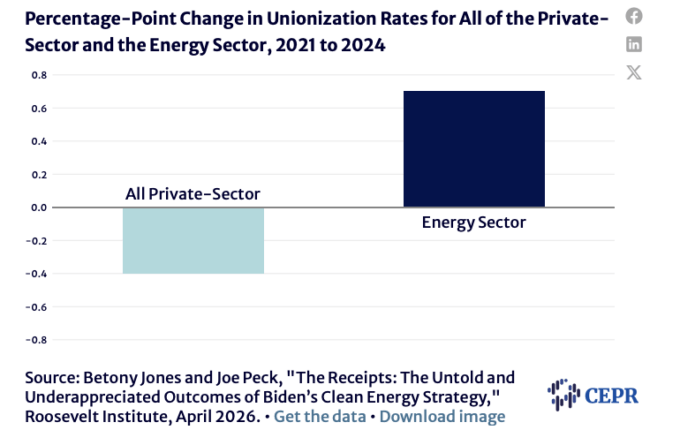
The Biden legislation encouraged the linking of project funding to labor and community benefits agreements. This policy appears to have worked to support the growth of union jobs in the energy sector. Figure 1 shows that while the overall private-sector unionization rate declined over the Biden administration, the unionization rate increased in the energy sector.

Figure 1


Much of the world is moving toward a clean energy future, but the Trump administration wants to take the United States back to the dirty energy past. One such step was the administration’s cancelling of wind energy projects. John L. Downey, the president of the International Union of Operating Engineers, who celebrated the growth of energy jobs at the AFL-CIO convention, issued a statement on December 23, 2025 in response to Trump’s actions:

The International Union of Operating Engineers denounces the Trump Administration’s decision to issue stop work orders on five large scale energy projects and immediately laying off thousands of American workers right before Christmas.

As working families struggle with a nationwide affordability crisis, the Administration’s decision adds insult to injury to thousands of construction workers who will be getting pink slips instead of holiday bonuses this week. This shortsighted decision, cloaked under a “national security” label, to halt construction on previously vetted and approved projects will only increase energy prices for ratepayers and hand America’s energy future to foreign competitors.

American workers are employed in this industry. Taking more wind power off the board creates uncertainty in the renewable construction business, and uncertainty creates job loss. We need to stay at the forefront of energy dominance, not scaling back the American workforce AND America’s power generation capacity.

He condemned the making of the members of his union “collateral damage in a political vendetta against one particular industry.”

While the Trump administration continues to waste taxpayer dollars by paying companies not to build wind projects, after a legal battle, there are signs that wind energy production developed by state governments might resume in the United States. As the Trump administration’s anti-clean-energy — and anti-good-jobs — stance continues, one hopes that unions and others will keep fighting for a clean energy future.

This first appeared on CEPR.


About Algernon Austin
Algernon Austin is the Director for Race and Economic Justice at the Center for Economic and Policy Research. Algernon Austin has conducted research and writing on issues of race and racial inequality for over 20 years. His primary focus has been on the intersection of race and the economy. Austin was the first Director of the Economic Policy Institute’s Program on Race, Ethnicity, and the Economy where he focused on the labor market condition of America’s workers of color. He has also done work on racial wealth inequality for the Center for Global Policy Solutions and for the Dēmos think tank. At the Thurgood Marshall Institute, the think tank of the NAACP Legal Defense and Educational Fund, Inc., he worked on issues related to race, the economy, and civil rights.
View all posts by Algernon Austin →
US-Israel Rift Has Been Brewing For Some Time – OpEd

June 30, 2026 
Arab News
By Yossi Mekelberg

There is perhaps nowhere further removed from the horrors of war unfolding across the Middle East than the tranquility of Lake Geneva, its surrounding mountains and the city itself, where negotiations between the US and Iran have been proceeding at a painfully slow pace in an effort to reach a deal that could end the conflict. Yet, alongside these talks, another development has emerged that could significantly influence their outcome and reshape the political and security architecture of the Middle East in both the short and long term: the growing rift between the US administration and the Israeli government.

This divide reflects a genuine divergence of interests over whether the war should continue or end. It also mirrors a gradual shift in American attitudes away from unquestioning support for Israel. Equally, it is a product of the personalities of the leaders of both governments: leaders who tend to be tactical, transactional and self-serving rather than strategic.

There has long been an element of predictability to this growing tension, as it has been brewing for some time. At the outset of the latest round of hostilities with Iran, both countries operated on the assumption that the campaign would be short, lasting days or at most weeks, and would fatally weaken the Iranian regime. This, in turn, was expected to eliminate Iran’s nuclear program, its long-range ballistic missile capabilities and its support of a network of regional allies and proxies. Needless to say, these assumptions were unrealistic from the outset.

More importantly, there was no Plan B when Plan A failed. While Israel never appeared to regard the possible closure of the Strait of Hormuz or Iranian attacks against neighboring Gulf states as decisive factors in either launching or ending the war, these should have been critical considerations for American policymakers when deciding whether to join the campaign or how to conduct it.

The absence of an alternative strategy beyond the best-case scenario of a rapid and total victory exposed a striking lack of strategic thinking. Little consideration was given to the consequences for the global economy if one of the world’s most important maritime arteries were to be disrupted. The desperate manner in which Washington is conducting negotiations with Tehran derives directly from this strategic failure.

Yet the current crisis between the US and Israel over the latter’s conduct in Lebanon, which is seen in America as obstructing progress in the negotiations, is only the immediate manifestation of a broader political and societal reassessment of the “special relationship” that has been gathering pace for years.

For Prime Minister Benjamin Netanyahu, particularly since Oct. 7, 2023, a perpetual state of war has become both a political objective and a governing strategy. It enables him to remain in office while delaying any state commission of inquiry into the failures surrounding the Hamas attacks. An endless war, in which tactical successes are repeatedly portrayed as strategic breakthroughs or steps toward “absolute victory,” serves primarily to keep a failed government in power.

This approach stands in sharp contrast to President Donald Trump’s political instincts. Trump is impatient, seeks immediate results and appears to place little value on enduring alliances or long-term strategic partnerships. At the outset of the conflict, Trump and those around him embraced the idea that a swift military victory could permanently resolve the Iranian challenge. Once the economic, political and diplomatic costs became apparent, however, the administration shifted toward limiting the damage as quickly as possible, with relatively little regard for the long-term consequences.

The US withdrawal from the Joint Comprehensive Plan of Action in 2018 followed a similar logic. Influenced in large part by Netanyahu, Trump also sought to dismantle one of Barack Obama’s signature foreign policy achievements. The result was that Iran, no longer constrained by the agreement, accelerated significant aspects of its nuclear program.

More recent understandings between Washington and Tehran may have reduced immediate tensions but they also contain the seeds of future instability and an Iranian attempt at hegemony. Despite suffering extensive military losses, the Iranian leadership has survived and may emerge believing that it is the US and Israel, not Tehran, that will ultimately be forced to make concessions.

Netanyahu should perhaps have drawn lessons from the way Trump has treated other foreign leaders. His administration has repeatedly demonstrated how quickly long-standing relationships can be discarded once they cease to serve immediate political interests. Personal loyalty matters only so long as it remains useful, while criticism is often delivered in deliberately harsh, public terms to exert political pressure.

When Vice President J.D. Vance reportedly remarked that “you can’t just kill your way out” of problems and argued that the US was effectively the only friend Israel has left — suggesting that Trump remained the only major world leader still openly sympathetic toward Israel — he was articulating an uncomfortable reality. Yet it was successive US administrations, including the current one, that helped create this situation. In Iran, Washington aligned itself closely with Israeli military objectives rather than pursuing durable political settlements through negotiations.

None of this, however, absolves the Israeli government of responsibility for the manner in which it has conducted its wars, often with little regard for civilian lives. Hence, Netanyahu’s approach to conflict over the past several years has left Israel increasingly isolated internationally. Now, growing tensions with Washington risk undermining Israel’s own long-term security and prosperity.

Since its founding, Israel has been the largest cumulative recipient of US foreign assistance, receiving well over $300 billion (adjusted for inflation) in economic and military aid. Nearly 70 percent of Israel’s imported weaponry originates in America. Moreover, Washington remains Israel’s principal diplomatic defender in international institutions, particularly at the UN Security Council.

American administrations come and go but broader shifts within US public opinion appear increasingly significant. Israel’s reputation as a like-minded democracy committed to liberal values and human rights has weakened, particularly among younger and more progressive Americans. At the same time, the “America First” wing of the Republican Party has become increasingly skeptical of foreign interventions and long-term overseas commitments.

With the midterm elections approaching and the political costs of another unpopular conflict mounting, Netanyahu and, to some extent, Israel itself risk becoming collateral damage as Washington seeks both a quick agreement with Iran and a recalibration of its regional priorities.

Equally, this moment may mark the beginning of a different phase in US-Israeli relations, one in which Washington seeks not only to protect Israel but also to prevent Israeli policies from damaging its own interests and destabilizing the region, which ultimately harms Israel itself.

• Yossi Mekelberg is a professor of international relations and an associate fellow of the MENA Program at Chatham House.
GENDER APARTHEID OK

Russia’s Warming Relations With The Taliban Pose New Challenges For US Strategy – Analysis


June 30, 2026 
Hudson Institute
By Luke Coffey

Key Takeaways

Russia is now the Taliban’s strongest international backer, becoming the only country to formally recognize its government and signing a military cooperation agreement in 2026.

Moscow’s strategy is to use the Taliban to counter ISKP, exploit the U.S. withdrawal from Afghanistan, and build an anti-Western axis with Iran, China, and North Korea.

This partnership harms U.S. interests by legitimizing the Taliban, potentially aiding Russia in Ukraine, and strengthening an authoritarian bloc against the West.

Analysis


Since the Taliban returned to power in Afghanistan in August 2021, Moscow has pursued increasingly close ties with the extremist Islamist organization. Russia is now the only country that formally recognizes the Taliban as the legitimate government of Afghanistan. Even neighboring countries such as China, Iran, India, and Pakistan have refused to do so. Earlier this year, Moscow signed a military and security cooperation agreement with the Taliban.

Russia is motivated by several factors. First, Moscow naively believes that closer cooperation with the Taliban can serve as a counterweight to other terrorist organizations, such as the Islamic State-Khorasan Province (ISKP). Second, after the Biden administration’s disastrous withdrawal from Afghanistan in 2021, Moscow saw an opportunity to compound Washington’s political and reputational damage: by engaging with Kabul at the expense of Western influence, it could undermine US interests. Finally, just as the Taliban is seeking legitimacy outside Afghanistan, Russia is seeking greater legitimacy outside Europe. The Kremlin’s closer ties with the Taliban government are consistent with its deeper relationships with China, North Korea, and Iran following Russia’s large-scale invasion of Ukraine in 2022.

Timeline of Russia-Taliban Relations


2003: Russia proscribes the Taliban as a terrorist organization.

2015–16: Russia begins quiet contacts with the Taliban in response to ISKP.
Moscow started seeing the Taliban as a possible counterweight to ISKP rather than only as a terrorist enemy.

November 2018: Russia hosts the Moscow Format talks with Taliban participation.
Russian diplomacy shifted from quiet contacts to engaging with the Taliban publicly.

August 2021: The Taliban seizes Kabul.
Russia kept its embassy open and maintained channels with the Taliban, positioning itself for engagement rather than isolation.

September 2022: The Taliban signs a provisional trade deal with Russia for fuel, gas, and wheat.
This deal was one of the Taliban government’s first major international economic agreements and moved the relationship from diplomacy to practical trade.

April 2025: Russia removes the Taliban from its banned terrorist list.

July 2025: Russia formally recognizes the Taliban government.
Russia became the first (and, so far, only) country to recognize Taliban rule after 2021, giving Kabul its biggest diplomatic victory since taking power.

May 2026: Russia and the Taliban sign a military-technical cooperation agreement.
This agreement marked the deepest security cooperation yet, moving the relationship beyond diplomacy, trade, and recognition to formal defense-related engagement.

Military-Technical Agreement Explained

In May 2026, Russia and the Taliban formally signed a military-technical cooperation agreement on the sidelines of the International Security Forum, held near Moscow. Former Russian Defense Minister and current Secretary of the Russian Federation Security Council Sergei Shoigu signed the agreement with Mohammad Yaqoob, who serves as the Taliban’s de facto defense minister and is the son of the late Mullah Omar, the former Taliban leader who refused to hand over Osama bin Laden after the 9/11 attacks.

Neither side has made the details of the agreement public. Reporting and analysis, however, suggest that it could include Russian technical and military assistance to Taliban security forces, joint training, military education opportunities, and the supply of spare parts to help the Taliban maintain Soviet- and Russian-era military equipment still in its possession. This is especially important because many of the higher-end American military systems left behind in Afghanistan have become difficult, if not impossible, for the Taliban to maintain since it lacks proper spare parts and technical expertise.

The agreement formally links a Moscow-Kabul axis against Western interests and takes Russia’s formal diplomatic recognition of the Taliban to a new level of defense cooperation. While no public reporting indicates that the Taliban has agreed to support Russia’s war effort in Ukraine, especially in terms of manpower, the agreement likely marks the starting point for deeper security cooperation. Russia has already relied on foreign manpower during the war, ranging from North Korean troops reportedly deployed under state-to-state arrangements to foreign nationals from countries such as Cuba, India, and Nepal recruited or otherwise drawn into Russian military service. Therefore, Taliban or other Afghanistan-based fighters could eventually serve alongside Russia against Ukraine.

Recent reports also suggest that Russia may directly finance, train, and equip a special 8,000-strong force under the direct command of Hibatullah Akhundzada, the Taliban’s supreme leader. This unit would reportedly sit outside the Taliban government’s usual security structures and chain of command.

Implications for US Policy


The growing ties between Russia and the Taliban should alarm US policymakers for several reasons:

Russia’s support for the Taliban undermines US interests in Afghanistan and the broader region. Anything that legitimizes or strengthens the Taliban—whether financially, economically, diplomatically, or militarily—undermines America’s broader interests in Central and South Asia.

Russia-Taliban military cooperation could impact Ukraine. The military-technical cooperation agreement could become the starting point for deeper military ties between Moscow and Kabul. Over time, this could affect Russia’s military operations in Ukraine and further internationalize its aggression against Kyiv.

Kremlin-Taliban cooperation reinforces the wider anti-Western axis involving Russia, Iran, China, and North Korea. Moscow’s engagement with the Taliban is consistent with its broader effort to build relationships with actors that can help undermine US interests around the world.

Russian military or security assistance would strengthen the Taliban’s capacity for repression. Any such assistance could help the Taliban continue its oppression of the Afghan people and suppress groups carrying out legitimate armed resistance to Taliban rule, including the National Resistance Front of Afghanistan.


About the author: 
Luke Coffey is a senior fellow at Hudson Institute. His work at Hudson analyzes national security and foreign policy, with a focus on Europe, Eurasia, NATO, and transatlantic relations.

Source: This article was published by the Hudson Institute


About Hudson Institute
Hudson Institute is a nonpartisan policy research organization dedicated to innovative research and analysis that promotes global security, prosperity, and freedom.
View all posts by Hudson Institute →


Is Social Media Reshaping Our Identities? – Analysis


June 30, 2026 
360info
By Maria Sansoni

Key Takeaways

Social media may reshape more than body image — it can make our sense of facial and bodily identity more flexible.

Frequent selfies and filters may blur the boundary between self and others.

Adolescents are especially at risk, as identity forms during heavy social media use.

Analysis


Growing concerns about the effects of social media on young people have become a global policy issue, prompting governments around the world to act. Australia has introduced a social media ban for under-16s, with numerous other countries considering similar restrictions. France and Norway have also moved to increase transparency, requiring influencers and advertisers to disclose digitally altered images.

As social media is fundamentally an environment of self-representation, much of this debate has focused on how these platforms affect the way young people see their appearance and value their bodies. Yet appearance is only one dimension of how people experience themselves. This raises a broader question: what if body satisfaction is not the only important change taking place?

A less explored question is whether repeated interactions with Stories, selfies, filters and digital versions of ourselves could influence the processes through which we develop a sense of identity.

Beyond appearance

Identity is often thought of as an abstract, psychological or social concept. Neuroscience, however, suggests it is also rooted in the body. To perceive ourselves as unique individuals, we must first recognise our bodies as our own and distinguish ourselves from others.

This sense of bodily identity emerges from the brain’s continuous integration of internal signals, such as heartbeat, posture and bodily sensations, with information from the external world. Together, these processes create the feeling that we inhabit our own body, control our actions and occupy a distinct place in the world.

When this integration becomes disrupted, people may rely more heavily on external information – such as how they appear in photos or how many reactions a post receives – when constructing a sense of self. Such alterations have been linked to conditions including eating disorders and dissociative symptoms, prompting questions about whether image-based digital environments could also influence how people experience themselves.

The debate may be particularly relevant for adolescents and young adults. Adolescence is the period in which people develop a sense of who they are, define their relationship with their bodies and learn to distinguish themselves from others. Unlike previous generations, however, much of this process now unfolds in digital environments where self-presentation and self-recognition are increasingly mediated by screens.

Testing the boundaries between self and others

How can researchers study something as complex as bodily identity? One approach comes from the science of body illusions. Over the past two decades, neuroscientists have shown that the feeling that a body belongs to us is surprisingly flexible. Under carefully controlled conditions, people can temporarily perceive a rubber hand, a virtual body or even another person’s face as part of themselves. These illusions provide a unique window into the mechanisms through which the brain distinguishes the self from others and generates the feeling that a certain body is ours.

Researchers from the Humane Technology Lab (HTLab) at the Catholic University of the Sacred Heart used this approach to investigate whether Instagram use might be associated with differences in bodily identity.

Their attention focused in particular on the face, because of its unique position in human identity. More than any other part of the body, the face is central to how people recognise themselves and are recognised by others. It is through the face that people identify themselves in the mirror, communicate emotions and express their individuality. Much of bodily identity begins with the ability to look at a face and immediately know: “This is me.”

To test how stable this sense of self might be in Instagram users, participants were immersedin a virtual reality illusion designed to blur the boundary between their own face and that of a stranger. Through synchronised sensory stimulation, some participants began to experience aspects of the unfamiliar face as their own. In everyday life, people rarely confuse their own face with someone else’s. Embodying a stranger’s face and feeling it as one’s own means that the line separating the self from others has become temporarily more permeable, allowing aspects of another person to be incorporated into one’s own self-representation. For a moment, the certainty that you are you becomes less certain.


The HTLab researchers found that participants who had spent more years using Instagram were more likely to perceive ownership of the stranger’s face and to feel located within it. In other words, the longer participants had been exposed to Instagram, the more plastic their facial self-representation – and, with that, their bodily identity – appeared to become.

This result does not suggest that social media causes people to lose their identity. However, it raises a question that has received relatively little attention: could the years spent interacting with online personas, edited images and curated digital self-representations subtly influence how people experience themselves as unique individuals?

A new hypothesis about identity in digital environments


A possible explanation lies in the Digital Erosion of Bodily Identity Hypothesis. Never before have people spent so much time looking at images of themselves and others: smartphones and social media have transformed visual self-representation into a routine part of everyday life. Photos that once captured occasional moments are now produced, edited, shared and compared continuously.

This shift may have consequences that extend beyond appearance. In particular, repeated exposure to social media could gradually alter the balance between two sources of information that contribute to identity: as noted earlier, the body’s internal signals and its external image. While people have always relied on both, image-based platforms may give unprecedented importance to the latter, potentially weakening the integration of these sources into a coherent sense of self.

Why younger generations matter

The findings invite a broader discussion about how younger generations may experience digital environments. The participants in the HTLab study belonged to one of the first cohorts to spend much of late adolescence and early adulthood on social media. Today’s adolescents, however, are encountering these platforms earlier, spending more time on them and integrating social media more deeply into everyday life.

Recent evidence suggests that nearly two-thirds of children younger than 13 already use social media despite age restrictions, with appearance-based platforms such as TikTok and Instagram among the most widely used. This means, first, that exposure increasingly begins during particularly sensitive periods of identity development and, second, that many of today’s children are growing up in a world where social media has always been present, developing their sense of self in environments saturated with curated and idealised digital self-representations.

Researchers do not yet know whether these changes represent a risk, an adaptation to digital life, or a combination of both. Answering that question will require additional studies capable of tracking how social media use and self-perception evolve over time.

As policymakers, educators and families continue to debate the role of social media in young people’s lives, understanding how digital technologies shape not only how people present themselves, but also how they experience themselves, may become an increasingly important area of research, particularly for generations who have never known a world without them.


About the author and editor:

Dr Maria Sansoni is a Postdoctoral Research Fellow at the Humane Technology Lab (HTLab) and Adjunct Professor of General Psychology at the Catholic University of the Sacred Heart in Milan, Italy. Her research focuses on body image, embodiment, bodily self-consciousness and the psychological effects of digital technologies.

Giuseppe Francaviglia, Commissioning Editor, 360info

Source: This article was published by 360info

About 360info
360info provides an independent public information service that helps better explain the world, its challenges, and suggests practical solutions. Their content is sourced entirely from the international university and research community and then edited and curated by professional editors to ensure maximum readability. Editors are responsible for ensuring authors have a current affiliation with a university and are writing in their area of expertise.


BMI slashes Sub-Saharan Africa vehicle sales forecast growth to 1.9% as Iran conflict raises fuel costs

BMI slashes Sub-Saharan Africa vehicle sales forecast growth to 1.9% as Iran conflict raises fuel costs
/ bne IntelliNewsFacebook
By Brian Kenety June 30, 2026

Sub-Saharan Africa's new vehicle sales are expected to grow by just 1.9% in 2026 to around 1.2mn units, according to BMI, sharply below its previous forecast of 4.4%, as higher fuel prices, weaker currencies and rising vehicle import costs stemming from the conflict involving Iran continue to weigh on consumer demand across the region.

BMI, a Fitch Solutions company, said the region's heavy dependence on imported vehicles, automotive components and refined fuels leaves it particularly exposed to such external shocks. New vehicle sales in Sub-Saharan Africa remain among the lowest globally on a per-capita basis, with the market dominated by imported used vehicles. Affordability constraints, limited access to consumer credit and currency depreciation continue to suppress demand despite favourable long-term demographic trends.

BMI said the "material downward revision from our previous forecast" reflects the "escalating risk posed by the war involving Iran."

The revised forecast reflects the sensitivity of Sub-Saharan Africa's automotive market to global commodity prices, with higher oil prices quickly translating into more expensive transport, rising inflation and weaker consumer spending.

According to BMI, the main transmission channels are higher fuel prices, weaker currencies, rising inflation and elevated vehicle import costs, all of which are eroding purchasing power in one of the world's most price-sensitive automotive markets.

"The region remains highly exposed to external shocks given its dependence on imported vehicles, parts and refined fuels, meaning that any sustained increase in global oil prices or disruption to shipping routes would feed quickly into domestic transport and retail costs," it said.

BMI added that a broader and more prolonged conflict involving Iran would create downside risks for vehicle sales across several of the region's largest markets.

Chinese EVs gain momentum

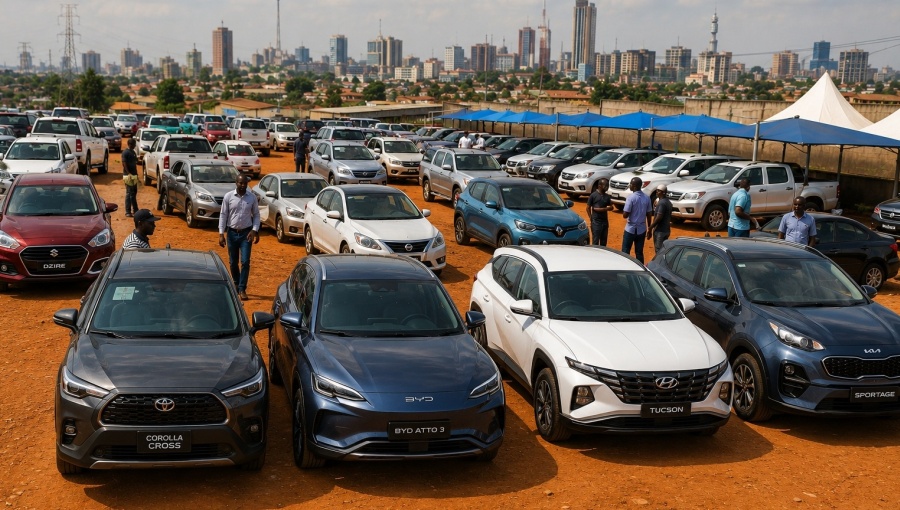
Despite the weaker outlook for overall vehicle demand, BMI has become increasingly optimistic about electric vehicle adoption across Sub-Saharan Africa. The consultancy said aggressive pricing by Chinese manufacturers such as BYD Company Ltd (SZSE: 002594; HKEX: 1211), Chery Automobile and Great Wall Motor (SSE: 601633; HKEX: 2333) is making battery electric vehicles increasingly price-competitive with conventional vehicles.

"The consumer logic for EVs in SSA is beginning to shift meaningfully," BMI said. "Internal combustion engine (ICE)-EV price parity has been reached across most segments in several markets, driven largely by the aggressive pricing of Chinese EV exports, fundamentally altering the cost calculus for prospective buyers."

Last year, Egypt led the continent in total EV sales with around 7,900 units sold, followed by Morocco with 5,500 and South Africa with 3,800. Together, the three countries accounted for nearly 70% of Africa's total electric vehicle sales during the year.

Higher fuel prices and periodic fuel shortages, particularly in markets such as Kenya, are also making electric vehicles more attractive for commercial fleets and high-mileage users seeking to reduce operating costs, BMI noted.

Toyota Motor Corporation (TYO:7203; NYSE:TM) in early June entered Kenya's fully electric vehicle market with the launch of the bZ4X sport utility vehicle, marking the Japanese automaker's first battery electric offering in the country and signalling growing confidence in East Africa's emerging EV sector.

Meanwhile, Chinese manufacturers have become the dominant force in Africa's emerging EV market, expanding aggressively through local distributors, assembly partnerships and lower-priced models as they seek export growth outside increasingly competitive domestic and European markets.

As IntelliNews reported, BYD—China's largest carmaker, largest pure-play EV manufacturer and now the world's biggest EV producer by unit sales—increased its African market share to 35% in 2025 from just 4% two years earlier. According to the International Energy Agency's Global EV Outlook 2026, sustained disruption to oil supplies through the Strait of Hormuz could further improve the economics of electric vehicles across Africa by raising the cost of conventional fuels.

BMI cautioned, however, that widespread EV adoption remains constrained by weak charging infrastructure, unreliable electricity supplies, high financing costs and the continued dominance of imported used vehicles, which account for more than 80% of four-wheel vehicle purchases in many Sub-Saharan African markets.

Global manufacturers including Stellantis (NYSE: STLA), Volkswagen and Toyota are also expanding assembly operations across Africa, although Chinese manufacturers have moved more aggressively into the battery electric vehicle segment through competitive pricing and local partnerships.

AfCFTA to support long-term industry growth

The report also highlighted the adoption of the African Continental Free Trade Area (AfCFTA) Rules of Origin for automotive products in February 2026 as a significant long-term positive for the continent's automotive industry. The agreement establishes a common framework for tariff preferences designed to promote intra-African trade, supplier localisation and investment planning.

The rules are intended to prevent simple vehicle re-exporting between member states by requiring minimum levels of local value addition before products qualify for preferential tariffs, providing greater certainty for manufacturers considering new assembly plants and component investments.

BMI said the rules should encourage industrialisation and strengthen regional automotive supply chains over time, although implementation risks, weak logistics networks and subdued new vehicle demand will continue to limit near-term gains.

Within Sub-Saharan Africa, South Africa is expected to remain the region's dominant vehicle manufacturing hub, while Morocco will continue to lead vehicle production in North Africa. Kenya and Ghana could increasingly benefit through component manufacturing, vehicle assembly and upstream supply chains.

Country outlook remains mixed

Among the region's largest markets, BMI maintained its forecast for South African vehicle sales to decline 1.6% in 2026 as higher fuel costs weaken demand. By contrast, Nigeria's market is expected to expand 7.6%, supported by easing inflation and increased domestic fuel supply following the ramp-up of the Dangote refinery.

Angola is forecast to record 6.0% growth on improving macroeconomic conditions, while Tanzania's vehicle market is expected to expand 6.3%, supported by rising disposable incomes, urbanisation and continued road infrastructure investment.

BMI said the region's short-term outlook will remain closely tied to developments in global energy markets. Over the longer term, however, falling EV prices, greater regional integration under AfCFTA and increasing localisation of vehicle assembly are expected to reshape Africa's automotive industry, even if near-term demand remains constrained by economic uncertainty.

Morocco's long reach

Morocco has consolidated its position as Africa’s largest automotive manufacturing hub, producing 559,645 vehicles in 2024, up 5% year on year, and is projected to exceed 600,000 units in 2025, according to industry estimates. This compares with South Africa's output of 599,755 vehicles in 2024, down 5% year on year, ending its long-standing position as the continent's leading vehicle producer.

The North African country also hosts early electric vehicle assembly operations by Chinese and European manufacturers, providing an established EV production base. By comparison, South Africa has yet to establish local production of fully electric passenger vehicles, with its automotive industry remaining focused on internal combustion engine and hybrid models.

Morocco's logistics advantages include short shipping routes to European markets and lower transport costs. Policymakers have pursued an expansive EV strategy that includes tax exemptions, reduced import duties and an expanding public charging network with close to 1,000 charging points nationwide.

"Its proximity to Europe—South Africa's largest export market for vehicles—gives Morocco a geographical advantage in terms of supply chains and shipping costs. The country is also ahead of South Africa in EV production, producing 40,000 to 50,000 units in 2024, with plans to increase this. South Africa has not yet produced a single fully electric car," local outlet MyBroadband wrote.