Saturday, July 11, 2026

How big oil blocked a plastic pollution treaty
plastic treaty graphic climate & capitalism

[Editor’s note: Ian Angus will be speaking at Ecosocialism 2026, September 11-13, Magan-djin/Brisbane, Australia. For more information on the conference visit ecosocialism.org.au.]

First published at Climate & Capitalism.

When I started writing about the climate crisis in the 1980s, I was in my twenties, and I didn’t fully comprehend that there could be a force on this planet so steeped in greed and power that it would sacrifice the earth and its inhabitants for its own narrow interests. But there is, and it’s Big Oil. (Bill McKibben)1 

After years of watching UN climate change negotiations, I’m inclined to be cynical about the whole process. The norm is lots of talk, very little mention of fossil fuels, and no concrete action. When a deal as toothless as the 2015 Paris Accord is hailed as a major achievement, you know that the bar is much too low.

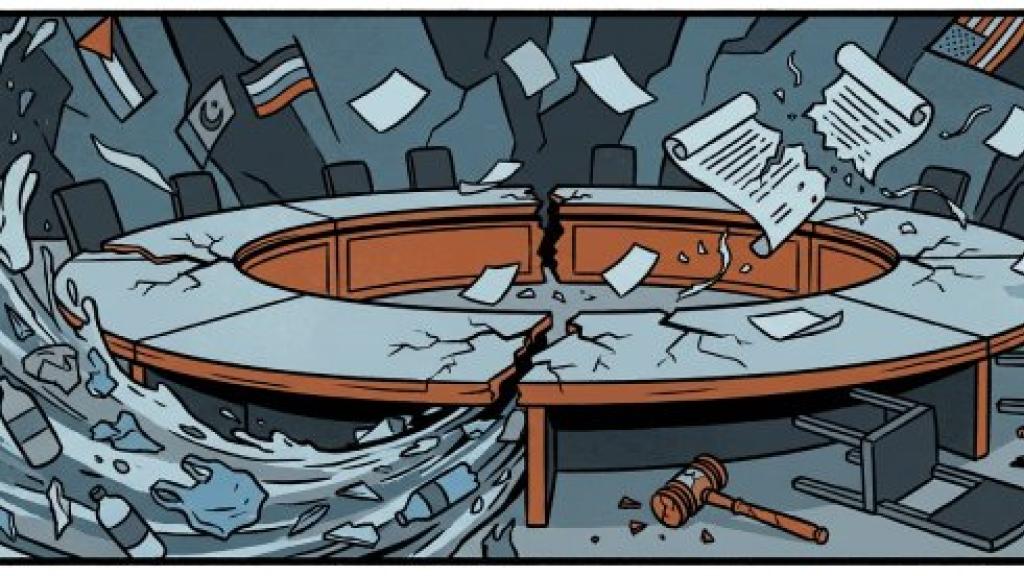
The negotiations for a plastic treaty have not reduced my cynicism. On August 15, 2025, three years after the United Nations called for a treaty to end plastic pollution, international negotiations collapsed. A handful of oil-producing countries and their corporate allies had successfully stalled and ultimately derailed the entire process.

The one encouraging feature of the negotiations was the presence of the High Ambition Coalition to End Plastic Pollution (HAC), a group of 74 nations, co-chaired by Rwanda and Norway, that stood firm in demanding a comprehensive set of binding obligations — and refused to accept anything less.

The measures HAC called for included:

  • Reducing production of primary plastic polymers to sustainable levels;
  • Phasing out the most harmful plastic products and chemicals, particularly single-use plastics;
  • Regulating chemical additives, including mandatory full disclosure of the chemical composition of plastics and plastic products;
  • Reducing the chemical complexity of plastic products, ensuring product design that enables reuse and recycling;
  • Making plastic producers financially and legally responsible for the recovery, recycling, or proper disposal of the materials they produce and sell;
  • Financing for waste management infrastructure, technology transfer, and capacity building;
  • Changing treaty negotiation procedures, eliminating the requirement for unanimous agreement;
  • Making protection of human health, not merely environmental protection. a central objective of the treaty.

Underpinning the specific measures was the fundamental demand that the treaty address the entire lifecycle of plastics — from extraction of fossil fuel feedstocks through production, design, use, and end-of-life — not merely downstream waste management.

Each of these points would require considerable elaboration to go from “good ideas” to an effective and enforceable treaty. Nevertheless, the High Ambition Group’s proposals provided a solid framework for a serious attack on the global plastic crisis.

Not surprisingly, petrostates and the petrochemical industry did not like that. The “Like-minded Group” (LMG) headed by Saudi Arabia and Russia and informally supported by the United States, opposed any plan that would limit or control plastic production in any way. The only purpose of a treaty, they argued, was to improve waste collection and recycling—and the treaty should be voluntary, not legally binding.

The pro-plastic claim is that in order to reduce energy use, “the world will need to rely on plastic more, not less.”2

The LMG was reinforced by the presence of 234 fossil fuel and chemical industry lobbyists, and another 60 representatives of packaging manufacturers and consumer goods companies like Coca-Cola and Nestlé. Major corporate presences included Dow and the American Chemistry Council, each sending seven lobbyists, and ExxonMobil with six. Most critically, some of the fossil fuel and chemical lobbyists attended as members of the official delegations from half a dozen countries: this allowed them to participate in closed sessions that excluded independent scientists, indigenous activists, and other observers.3

Unable to win, the lobbyists used their numbers and resources to delay and disrupt proceedings, blocking every attempt to reach agreement on the smallest points. Procedural rules that require unanimous agreement, coupled with the intensive backroom pressure mobilized by the US, ensured that the meeting couldn’t draft, let alone pass, even a marginally effective treaty.4 As a participant from the Environmental Investigation Agency reported:

“Our post-mortem examination reveals the precise cause of death—a small but powerful bloc of petrochemical-producing countries plus a small army of Big Oil lobbyists deliberately hampered progress. Their tactics included procedural stalling, diluting ambitions and vetoing consensus, ensuring that negotiations ended without an outcome. Left untreated, the treaty’s vital organs — production caps, chemical control and trade rules — were weakened beyond repair.”5

Industry lobbyists also harassed and threatened scientists who supported a strong treaty. Professor Bethanie Carney Almroth, who represented the Scientists’ Coalition for an Effective Plastics Treaty, told The Guardian that plastics researchers faced “the tobacco playbook: challenge the science, challenge the messenger, try to silence people, try to undermine people’s credibility.”6

After nearly two weeks of pointless debate, the Chair introduced a draft text that he apparently thought reflected the consensus to date. It included nothing on the full life cycle approach, nothing on health, nothing on banning toxic additives, nothing on single-use plastics, nothing on reduced production, nothing on mandatory reporting, nothing on changes to voting procedures. As a Panamanian delegate said, the HAC’s red lines had not just been crossed but “stomped, spat on, and burned.”7

To their credit, the High Ambition Coalition refused to back down. In the words of an NRDC representative, “No treaty is better than a weak treaty that creates an illusion of progress and could discourage stronger action.”8

Even though a large majority of the participating countries supported ambitious measures, the meeting ended without even a preliminary draft as a basis for further discussion.

Negotiations are supposed to restart some time in 2027, but it’s hard to think of any reason why they might be more successful.

Hedging?

It is tempting to view the industry’s coordinated assault on the negotiations as gratuitous bullying and overkill. After all, UN treaties are notoriously weak and hard to enforce, and in any case the petrostates could have refused to sign any agreement they disliked. Why intervene so viciously just to protect plastic?

Oil industry researcher Alice Mah argues convincingly that the fossil fuel giants see investment in petrochemicals as a way of “hedging against climate risk” — not hedging against climate change itself, but against the risk that policies to reduce greenhouse gas emissions will reduce fossil fuel sales and profits.9

They see hope in the fact that, as the International Energy Agency reports, plastics are already “the fastest-growing source of oil consumption,” and will “account for more than a third of the growth in oil demand to 2030, and nearly half to 2050, ahead of trucks, aviation and shipping.”10 That prospect justifies extreme measures to prevent limits on plastic growth.

Many independent observers and NGOs have concluded that UN-sponsored negotiations are a dead-end, that the countries that want a treaty should negotiate separately. That could indeed result to what’s been called a “treaty of the willing”—but how effective could it be if the biggest petroleum and plastic producers stand aside?

The fact that dozens of capitalist governments opposed the fossil fuel industry’s drive for unlimited growth shows how profound and dangerous the plastic crisis is. But the failure of the treaty negotiations shows how very powerful that industry is, and how determined it is to protect its continued growth, no matter how much pollution results.

Unless and until we break the power of fossil capital, the plastic plague will continue to spread.

This is a draft chapter from a book Ian Angus is writing for Monthly Review Press, Social Murder: Capitalism’s Assault on Our Health and Survival. 

  • 1

    Bill McKibben, “Big Oil Breaks Everything,” The Crucial Years (Substack), April 19, 2026

  • 2

    American Chemistry Council, “ACC Statement on U.S. Position Change on UN Plastics Agreement,” News Release, August 14, 2024.

  • 3

    CIEL, “Fossil Fuel and Petrochemical Lobbyists Overrun Plastics Treaty Negotiations.”

  • 4

    Gabriel Enrique De-la-Torre and Tony R. Walker, “Deadlock at INC-5.2: Understanding the blocked progress of the Global Plastics Treaty negotiations,” Cambridge Prisms: Plastics, March 2, 2026.

  • 5

    Hannah Hughes, “Global Plastics Treaty post-mortem – INC-5.2, petrostate obstruction and the way ahead,” Environmental Investigation Agency, September 5, 2025.

  • 6

    Damian Carrington, “‘Total infiltration’: How plastics industry swamped vital global treaty talks,” The Guardian, July 23, 2025.

  • 7

    Felix Nütz, “Why the Global Plastics Treaty Negotiations in Geneva Failed,” Twin Politics, August 20, 2025.

  • 8

    NRDC, “Global Plastics Treaty Collapse: .No Treaty Is Better than a Weak Treaty’”, News Release, August 15, 2025.

  • 9

    Alice Mah, Plastic Unlimited: How Corporations Are Fueling the Ecological Crisis and What We Can Do About It (Polity Books, 2022 ), 72.

  • 10

    IEA Secretariat, The Future of Petrochemicals: Towards more sustainable plastics and fertilizers, International Energy Agency, 2018, 11.

Denmark: ‘Many voters want a more left-leaning government’


Pelle Dragsted, spokesperson for the Danish left-wing party Enhedslisten, Photo: private

First published in German in nd.aktuell. Translation from Rosa-Luxemburg-Stiftung.

Albert Scharenberg: Denmark elected a new parliament in March, but it took until June for a new government to be formed. Why was that?

Pelle DragstedL It was the longest time to form a government in Danish history. The simple answer is that it was a complicated election result: Neither the left nor the right won a majority, so a centrist party, the Moderaterne (Moderates) became the kingmakers. They initially refused to join a government cooperating with our party, the Enhedslisten (Unity List), but after some back-and-forth, prime minister Mette Frederiksen and the Moderates agreed to form a minority government with the Socialistik Folkeparti (Socialist People’s Party) and the left-liberal Radikale Venstre. And since this “four-leaf clover” coalition falls short of the 90 seats required to reach a majority, Enhedslisten negotiated an agreement to support the government in exchange for some major concessions.

We’ll come back to that in a minute. But let’s first talk about Mette Frederiksen and the Social Democratic Party. In the past, many pundits saw Frederiksen’s restrictive migration policy as the main reason for her success, and for the decline of the far right. Have the latest results shattered this argument?

Yes, many people defended this strategy because the electoral support for our extreme right party, the Dansk Folkeparti (Danish People’s Party) declined from 21 percent in 2015 to 2.6 percent in 2022. But in this election, the party’s vote share jumped to 9.1 percent, while the Social Democrats lost 5.7 percent. This proves our argument right: In the long run, you cannot compete with extremists about who’s more extreme.

Three parties to the left of the Social Democrats are represented in the Folketing: Socialist People’s Party (11.6 percent), Enhedslisten (6.3 percent), and Alternativet (2.6 percent). How are they different from each other?

The Socialist People’s Party split from the Communist Party after the Soviet invasion of Hungary, and later turned to Eurocommunism. In the last decades, it has aligned itself with the Greens internationally. Enhedslisten was formed in 1989 as a merger of a number of small left parties and has become the standard bearer of the Danish radical left. The Alternative is a fairly new party. Its support mainly comes from the creative class, and they do not define themselves as socialists; left wing, but not socialist.

Who is the electoral base of the Socialist People’s Party and Enhedslisten?

The Socialist People’s Party has a strong base among public employees. Enhedslisten enjoys more support among marginalised groups, such as unskilled workers, the unemployed, and students. Our support is geographically highly uneven. While we became the leading party in the Copenhagen region, we’re still weak in areas like rural Jutland.

The three left parties combined won about 20 percent of the vote, the Danish left’s best electoral result ever. That is a clear sign that many voters want a more left-leaning government.

The Socialist People’s Party is part of the minority government, while Enhedslisten is not part of the governing coalition. Why did you enter into a toleration agreement with the coalition, and what concessions were you able to win?

In Denmark we have a long tradition of minority governments. When the Social Democrats wanted to form a government in 2019, we told them that they would need to negotiate an agreement with us. We signed a Memorandum of Understanding that contained a lot of important concessions, such as the first climate law and major improvements in daycare.

This time was similar. We won the biggest concessions in our party’s history. We have always defended the welfare state but now we’re actually taking a big step forward — we’re expanding the welfare state by making dental care free!

We won other concessions too: Public transport will be free for young people under 22, the first time the young experience the government doing something for them! Our demand to reduce the VAT by half and abolish it for produce will become reality, and we also won concessions on social housing, climate policy, and measures to strengthen unions.

In addition, we drew five red lines — and the government agreed to not cross them. They can’t pass policies that increase inequality, attack workers’ rights or social security. They have to follow through on the Paris Agreement and other international conventions. And they can’t cut back the public sector.

Let’s turn to foreign policy. With the Russian invasion of Ukraine and Donald Trump’s threats against Greenland, old certainties have vanished. First on Ukraine: How’s your position on the war and on arms shipments to Ukraine?

We have supported the delivery of arms to Ukraine from day one of the invasion. There was some debate in our party about this, but a large majority supported this move. Some of the pacifists opposing it forgot that we have another tradition within the international left — we used to support the Viet Cong, and we’ve supported the armed struggle of the Kurdish people in Rojava. We’ve always defended national sovereignty against imperial domination, and when I look at Ukraine, that’s what this is about.

Of course, we should discuss what was going on in the decades preceding the invasion. Should NATO and the West have behaved differently towards Russia, towards minorities in Ukraine and so forth? Yes. But the day Russian tanks crossed the border, this was history. It is obvious that the Russian attack is about crushing Ukraine’s national sovereignty – many Russians articulated that position, including Wladimir Putin himself, who argued that Ukrainians were not a people but just Russians.

The issue of NATO was more difficult for us. The Danish radical left had always been against NATO membership. Our alternative was a Nordic defence alliance. But when the Russian war of aggression started, Sweden and Finland applied for NATO membership. Essentially history overtook our position. We needed a new one, and after intense discussions, we concluded that while we are still no ardent supporters of NATO, we’re accepting it for the time being.

What’s your position on the EU?

Our position on the EU is somewhat similar to our position on NATO: We used to be quite critical and wanted to leave, but with Trump’s threats against Greenland, it was obvious that if Denmark had stood alone in that moment, Greenland would be under US control today. It was the support of European countries that made the difference. That’s why we’re now advocating for a reformed EU centering workers right.

In closing, I want to ask you about your book “Nordic Socialism”. You are among the rare breed of politician who have actually provided a strategy for overcoming capitalism — not just in the abstract, but as a strategy that starts in the here and now. What was your motivation for this book?

I wrote this book because there has been a disconnect between our daily practices in parliament and unions, and our socialist vision. What I try to do in the book is to bridge this divide, to understand our daily struggles and policies as part of a larger strategy for socialist change.

Historically, the left conceived capitalism as a totality — we live in a capitalist society, a capitalist economy, etc., and there’s nothing outside of it. But when I look at real economies, this seems wrong; in reality, they are all mixed economies.

What does the term “Nordic Socialism” mean in this context?

I use the term Nordic Socialism because I think that the Nordic countries are examples of mixed economies with strong socialist elements. For example, in Denmark one of the biggest grocery chains is owned by its two million members. Almost all our utilities — water, electricity, heating, etc. — are either owned by co-ops or publicly. One in five housing units is owned by a system of housing co-ops, and the public sector employs about a third of the workforce.

Calling these sectors “capitalist” is missing the point. Of course, a cooperative in a capitalist economy is not a paradise, but it’s significantly different because it’s not organised to further enrich the wealthy. It’s actually doing the opposite — it is redistributing wealth, for instance through lower prices in consumer co-ops. So it is wrong to claim that it is all just “capitalist.”

Instead, we need to deconstruct capitalism. What is the base of capitalist power? As a Marxist, I would say it is the ownership of the means of production. And when we democratise ownership, we reduce capitalist power.

The balance between democratic and capitalist ownership is not static, and it can go both ways, as we’ve seen with the rise of neoliberalism since the 1980s. That’s why I try to give concrete answers on how to build a more socialist economy. But the end goal remains the same: an economy dominated by socialist relations.

Does your party share this strategy?

It does. Our goal is not just a little bit more money for this, and a little bit more money for that — that’s the traditional social democratic approach. We believe there are things that need structural change, so we need to alter power relations. We need to de-commodify. And that’s exactly what we were able to do with dental care: We converted it into a social right. So making dental care cost-free is not just a good thing, it’s a socialist reform.

We now need to think about what our next socialist demands will be. Should it be a public banking system, a fund for more worker ownership, or de-commodified internet access? We have just started, but we are moving forward towards a democratic Nordic Socialism.

The US Has Been Violating MoU With Iran From Day One

by | Jul 10, 2026 | 

The fragile ceasefire between Iran and the United States has been broken once again. The United States has been bombing Iran, claiming that its attacks are in retaliation for Iran attacking three vessels near Straight of Hormuz, which it considers as violation of the Islamabad agreement, officially known as the Memorandum of Understanding (MoU) between the two nations.

But it is in fact the United States that has been violating the MoU because its interpretation of Article 5 of the MoU is simply false. According to Article 5 of the MoU, Iran is obligated to

“Make arrangements using its best efforts for the safe passage of commercial vessels with no charge for 60 days only from the Persian Gulf to the Sea of Oman, and vice versa. The traffic of commercial vessels will immediately start, and considering the need for removing the technical and military obstacles and de-mining by the Islamic Republic of Iran, will be instated within 30 days. The Islamic Republic of Iran will conduct dialogue with the Sultanate of Oman to define the future administration and maritime services in the Strait of Hormuz, in discussion with other Persian Gulf littoral states, in line with the applicable international law and the sovereign rights of coastal states of the Strait of Hormuz.”

The statement is unambiguous, and cannot be interpreted in any way other than Iran, in collaboration with Oman, is the party responsible for navigation in the Strait of Hormuz. It also clearly distinguishes a temporary arrangement for 60 days, and the long-term traffic regime in the Strait. Therefore, any vessel passing through the Strait must coordinate it with Iran, as well as Oman.

But this is not what the United States has been doing. In an effort to test Iran’s resolve for its control of the Strait, and to weaken it, Arab States of the Persian Gulf and  others, with direct support of the United States, dispatched several commercial vessels to pass through Oman’s territorial water without any coordination with, or even informing, Iran. They had even turned off their Automatic Identification System (AIS) transponders to evade Iran. This is in clear violation of Article 5, which Iran will not accept. Indeed, no self-respecting nation will.

This view is fully supported by Article 4 of the MoU:

“Immediately upon the signing this MoU, the United States of America will begin the removal of its naval blockade and any disturbances or impediments against the Islamic Republic of Iran, and will fully end the naval blockade within 30 days. During this period, the traffic of vessels will be in proportion to the numbers of pre-war traffic being restored by the Islamic Republic of Iran. The United States of America further undertakes to remove its forces from the proximity of the Islamic Republic of Iran within 30 days after the final deal.”

In other words, it is Iran that should restore the vessel traffic through the Strait to its pre-war level. Thus, once again, no vessel can pass through the Strait, unless it is coordinated with Iran, at least as one of the two parties specified by Article 5.

The United States cannot also invoke, at least during the 60 days period, the claim that Oman, a sovereign nation, has decided on its own to allow passages of vessels through its territorial waters in the southern part of the Strait, because Oman is not a party to the MOU. In other words, the United States cannot take actions through a non-party in order to bypass its obligations under the MoU. If this act were to become the standard practice, then, what would be the point of consultation and negotiations between Iran and man, which the MOU specifies?

A review of the MoU’s other Articles still buttresses the view expressed above.  According to Article 14, the permanent maritime regime in the Strait of Hormuz will be endorsed by the United Nations Security Council. This is supposed to happen after the conclusion of negotiations between Iran and the United States, signing an agreement. In other words, until such times as when that endorsement is secured, which will happen after the negotiations are completed, the MOU is in force, unless another interim agreement is agreed upon.

The United Stats cannot also claim that it is protecting the right to free navigation in international waters. Aside from the fact that the U.S. does not have such a mandate by the United Nation Security Council, the fact is that at its narrowest point, the Strait is only 21 miles (34 km)  wide. The international conventions on the law of sea have recognized the first 12 nautical miles (roughly 22 km) of any water adjacent to a state as its territorial sea. Iran obtained sovereign rights on its territorial sea since the first convention was adopted by the United Nations in 1959. Oman, which is on the opposite side of the Strait, has claimed the same, which means the two territorial waters overlap, leaving no residual in between as “international waters.” All universally agreed international law standards provide that any otherwise implication on the passage of vessels through Iran’s territorial water, arising from the 1982 United Nations Convention on the Law of the Sea, does not adversely affect Iran’s sovereign rights because Iran has not ratified the latter convention, although it has signed it.

Aside from all such considerations, there is another crucial aspect that the Trump administration must consider, if it is serious to reach a long-term agreement with Iran. Iran’s hardliners have opposed the MoU and have even issued death threats against the chief Iranian architectures of the MoU, namely, President Masoud Pezeshkian, Foreign Minister Abbas Araghchi, and Speaker of the Majles [parliament] Mohammad Bagher Ghalibaf. Hardliners’ emotions have been running high this week due to the funeral processions of the late Supreme Leader, Ayatollah Ali Khamenei, to the extent that they physically assaulted the President and Araghchi. Bombing Iran during such times will only prove to them once again that what Khamenei repeated over the years, that “the United States cannot be trusted,” is true, making a future long-term agreement that much harder to reach.

Both Iran and the United States should take a long view of the current state of affairs. After decades of economic sanctions, two illegal wars, and constant threats by the United States against Iran, Iran remain steadfast in defending its sovereign rights. There is for the first time a real opportunity for the two nations to reach accommodation, which will be greatly beneficial to the entire Middle East, and world peace. They should not squander the chance for real peace over disputes that, although they may seem significant now, they will have no significance if a long-term agreement between the two nations can be reached.

Muhammad Sahimi, Professor of Chemical Engineering and Materials Science and the NIOC Chair in Petroleum Engineering at the University of Southern California, is co-founder and editor of the website, Iran News & Middle East Reports.
Op-Ed

The Investigation Into the Minab Elementary School Bombing Is Done. Where Is It?

The Trump administration is stonewalling the public about the US’s deadliest strike on civilians in decades.
July 10, 2026

Bodies of children are carried to their graves during a funeral held on March 3, 2026, in Minab, Iran, for students killed in the U.S.-Israeli strike on an elementary school in Minab on February 28, 2026.Iranian press handout / Getty Images

New details are emerging about the U.S. attack on the Minab school that killed 168 people — and yet the Trump administration continues to stonewall and is refusing to release findings, even as CNN reports that U.S. military officials knew within days what happened.

Here’s what we know: On the morning of February 28, 2026, the first day of “Operation Epic Fury,” the United States bombed the Shajareh Tayyebeh girls’ elementary school in Minab, a small city in southern Iran. At least 168 people were killed — the majority of them girls between the ages of 7 and 12. More than 100 children and staff were wounded. By any measure, it was one of the deadliest single strikes on civilians in the history of U.S. military operations in recent decades.

But more than four months later, the U.S. government continues to stonewall the public over who is responsible for this horrific crime, and if anyone will be held accountable.

CNN just reported that U.S. commanders bypassed warnings about outdated targeting data ahead of the strike. Satellite imagery analyzed by NPR showed that the school, while adjacent to an Iranian naval base, had been walled off from that facility and operating as a functioning school since at least 2016. A New York Times analysis concluded that U.S. forces most likely struck the school amid attacks on that naval base. And critically, Reuters reported that U.S. military investigators themselves believed U.S. forces were likely responsible.


CNN just reported that U.S. commanders bypassed warnings about outdated targeting data ahead of the strike.

Neither the United States nor the Israeli government has taken public responsibility. Secretary of Defense Pete Hegseth, when asked about the strike on March 4, said only: “All I know, all I can say, is that we’re investigating that.” He offered no commitment to transparency or accountability, and no timeline for the investigation. He also said that Operation Epic Fury would have “no stupid rules of engagement” and described U.S. military operations as delivering “death and destruction from the sky all day long.” President Donald Trump, when asked directly about the strike, said he doesn’t think it was the United States and that he doesn’t know if we are “ever going to solve that problem.”


On Mother’s Day, I Will Mourn Alongside the Grieving Parents of Minab
The first Mother’s Day proclamation was a call to disarm. It’s more crucial than ever to honor the day’s antiwar roots. By Negin Owliaei , Truthout  May 10, 2026

Some in Congress Have Demanded Answers

In the weeks that followed the Minab bombing, some members of Congress moved swiftly to demand accountability. On March 11, Sen. Chris Van Hollen (D-Maryland) led a letter signed by more than 40 senators to Secretary Hegseth, demanding a full investigation into the Minab strike and pressing the administration on its compliance with the law of armed conflict. The letter raised pointed questions: Did U.S. forces conduct the strikes? What was the intended target? Were AI tools used in targeting? Was a “no-strike list” established before operations began? The senators requested answers from Hegseth by March 18, 2026.


The American people are owed the truth. So are the families in Minab.

The following day, Rep. Sara Jacobs (D-California) led a letter signed by more than 150 House lawmakers raising alarm over the broader civilian toll in Iran — over 1,000 Iranians killed by early March. The letter called out the administration’s systematic dismantling of the institutions built to prevent exactly this kind of harm: budget cuts at CENTCOM, the firing of senior military lawyers responsible for compliance with the laws of war, and the gutting of the Civilian Protection Center of Excellence. Jacobs publicly demanded accountability during a congressional hearing as well. None of these letters received the substantive responses they demanded.

This week, on July 5, a group of senators and House members — including Elizabeth Warren, Mazie Hirono, Tammy Duckworth, Patty Murray, Kirsten Gillibrand, Andy Kim, Mark Kelly, Jason Crow, and Sara Jacobs — pressed Secretary Hegseth on the Inspector General’s findings in a May report raising new concerns about failure to uphold civilian harm mitigation responsibilities. The lawmakers argue that Hegseth is putting service members and Department of Defense missions “at risk by gutting civilian harm mitigation and response (CHMR) efforts and that the DoD no longer has the ‘personnel and capabilities’ required to comply with the law and its congressionally-mandated CHMR responsibilities.”

The Investigation Is Finished. Where Is It?

By May, there was reason to believe the military’s internal review was nearing completion. CENTCOM Commander Admiral Brad Cooper told reporters that the probe into the Minab school strike was near its conclusion. And yet no findings have been released publicly. Some reports indicate the investigation has been submitted but has remained stalled under review from CENTCOM, raising concerns that it’s being stonewalled for political purposes. The investigation appears complete — and buried.

Congress could use the National Defense Authorization Act to require the declassified release of the investigation’s findings.

Meanwhile, the above-mentioned May 13, 2026 report from the Pentagon’s own Inspector General found that the Department of Defense had systematically failed to implement its Civilian Harm Mitigation and Response Action Plan (CHMR-AP). All eleven objectives of the plan — once making progress — were reclassified as “at risk.” The IG found that the legally-mandated Civilian Protection Center of Excellence lacked key staff and leadership. Officials from the Joint Staff told the IG that gutting these programs “harms readiness” and increases the risk of “civilian casualties, damaged coalitions and alliances, loss of legitimacy, increased local resistance.”

Accountability Will Require Transparency

This is not a complicated question of law or politics. The investigation is done. People in the U.S. have a right to know how this happened, why it happened and how we can prevent it from ever happening again. The children killed at that school deserve far more than silence.

There are clear vehicles through which lawmakers can — and should — act. Congress could use the National Defense Authorization Act to require the declassified release of the investigation’s findings. Lawmakers can attach explicit reporting requirements to defense legislation, forcing public disclosure. And members of Congress, as they have already begun to do, can continue raising these questions in hearings and in letters until this administration can no longer ignore them.

What is not acceptable is the current state of affairs: an investigation reportedly completed, a president who says he doesn’t think it was us, a defense secretary who has openly dismissed the rules designed to prevent war crimes, and 168 people — most of them schoolgirls — whose deaths have received no official accounting.

The American people are owed the truth. So are the families in Minab.


This article is licensed under Creative Commons (CC BY-NC-ND 4.0), and you are free to share and republish under the terms of the license.


Etan Mabourakh

Etan Mabourakh is the national organizing manager at the National Iranian American Council, where he organizes grassroots volunteers through a nationwide chapter network and coalitions across the United States. A Jewish Iranian American based in New York, Etan has consulted on campaigns at every level of government, speaks frequently on U.S.–Iran policy, as well as civil rights and antiwar advocacy.
Out of time: Expert says America may be nearing its point of no return

July 11, 2026 
ALTERNET


Canadian lawyer and author Omer Aziz is warning Americans that fascism has not only arrived, but it's also been alive and well in the U.S. for some time. The real chore is in ending it before it goes too far.

In his book Shadow of the Republic, Aziz explains that it appears the pro-fascist group “is using the machinery of constitutional government in a partisan way to make it subservient to the political party and then to turn it against ordinary citizens, dissidents, free thinkers, journalists."

It's something that horror writer and anti-fascist activist Stephen King explained, "should be an alarm bell announcing that the American house is on fire."


Speaking to Zeteo's Mehdi Hasan, Aziz walked through America's long flirtation with fascism that is too often glossed over in a history that prizes American exceptionalism above reality.

“By the time the fascists are building the camps, it’s already too late and we have lost," Hasan read from the book. It prompted him to ask just how close the U.S. is.


Aziz said that currently, Trump likes to "cosplay as a fascist," using things like his "weaponization fund" and "the prosecution of political enemies" as examples. Republicans dismiss such claims as hyperbolic and symptoms of the imagined "Trump derangement syndrome" or "paranoid liberals."

But Aziz said there is "substance" to the claim.

"I think when you look at Trump's rhetoric around poisoning the blood of immigrants and some of the language he has used and his team has used, they're clearly drawing from this common wellspring of influence and inspiration. At the same time, I would say, he is an opportunist. I think he likes the idea of himself thinking of himself as a Mussolini or someone of a strongman character. But in terms of the rabid ideology, I don't think he has that."

He explained that it's important to understand that the emergence of Fascism is different from every society. Germany, for example, was very different from Italian fascists and American fascists are also different. For Trump, his fascism is "particularly American."

Hasan noted the administration declaring "antifa" a terrorist group while conservative states throw the book at peaceful protesters.

Aziz said that these kinds of arrests, even of non-violent protesters, will continue as Trump and his ilk continue to lose their political battles.


"They will use the state and politicize it to destroy and dismantle their political opponents who are exercising their free speech rights right and we're seeing this across the board: the weaponization the prosecution of political enemies," he said. "This is clearly part of the fascist playbook and we need to be clear here because there is a cultural side of this. There's a far-right influencer far-right protester side of this. The Jan. 6 folks, for example."

The more dangerous part of fascism, he said, isn't the obvious ones waving Nazi flags in the street. Aziz called the "fascists in suits" far more of a threat to American ideals, because they are the ones using that machinery of government to subvert the citizenry, just as Italy and Germany did with journalists and dissidents.

One group he talks about in the book that Hasan said he found particularly interesting is the younger spectrum of voters who are growing more attracted to fascism, Nazism and white supremacy.

Aziz said it's even starting to pop up with young men of color, whether South Asian or Latino.


"I think the reason why that's happening is because neoliberal economic policy has failed young people, in particular," he said. "Whether that's the financial crisis, whether that is the enormous amounts of greed, outsourcing of industries. And then, of course, the wars on terror in Iraq and Afghanistan."

He said that it makes it easy to drift further right.

"There's an analogy here to young men who would join ISIS, for example, 10 years ago," Aziz continued. "Again when you don't have something within your community within your body politic that supports and uplifts you, it becomes a lot more tempting."


40 Epstein-Tied Billionaires Have Injected $1.6B Into US Elections, Report Finds


Over 80 percent of this spending went toward Republicans or conservative causes, a new analysis finds.

July 9, 2026

Billionaires with ties to Jeffrey Epstein have spent nearly $1.6 billion on influencing U.S. elections since the Supreme Court’s Citizens United decision unleashed a deluge of such spending on the electoral system, a new report finds, demonstrating the vast power over politics held by the so-called Epstein class.

Americans for Tax Fairness Action Fund reveals in a new report Thursday that 40 billionaires and billionaire families with ties to Epstein have injected over $1.57 billion into U.S. elections since 2010.

According to the group’s analysis, 84 percent of this spending, or over $1.3 billion, went toward Republicans or conservative causes.

This is despite a roughly even split between Republicans and Democrats among the billionaires, which include people who formerly donated to the Clinton family. Only 7 percent went toward Democrats and aligned causes, while the remaining money went toward lobbying efforts that target members of both parties like AI and Israel.

The report includes spending from people like President Donald Trump, Sheldon and Miriam Adelson, Elon Musk, current U.S. ambassador to Turkey Tom Barrack, Jared Kushner, and venture capitalist Marc Andreessen, among many other prominent figures across the business, tech, and sports sectors. The ties to the convicted child sex offender range from mentions in Epstein’s black book or in the Epstein files to extensive business and personal relationships, like Trump’s reported close friendship with Epstein.


New Billionaire Jared Kushner Is Mired in Conflicts of Interest as “Peace Envoy”
Jared Kushner, like the rest of the Trump family, uses the White House for personal enrichment. By Derek Seidman , Truthout June 12, 2026

Trump’s various presidential campaigns and super PACs supporting him have received $282 million from this group of Epstein-connected billionaires, the analysis found.

“Our tax and political system is badly broken, and nothing illustrates this more than billionaires with credible ties to Jeffrey Epstein continuing to spend millions to exert their influence on American democracy,” said David Kass, executive director of Americans for Tax Fairness Action Fund, in a statement. “We can’t allow billionaires to keep undermining our economy and democracy.”

The report suggests that it was, in fact, Epstein’s own personal wealth that helped him to avoid consequences for his sex trafficking and assault for so long.

“Jeffrey Epstein himself was worth upwards of $600 million, and that wealth translated into sweetheart deals and avoiding serious jail time for far too long. Now the billionaire class are using their wealth to insulate themselves against the consequences of their actions, the same way Epstein did,” the group wrote.

The Adelsons ranked as the top spenders in the group’s analysis, spending $745 million on elections since 2010. All of that went toward conservative causes, the group found. The Adelsons, known for their outspoken support of Israel, are mentioned in the Epstein files “hundreds” of times, the report notes.

The next highest spender is Elon Musk and his brother, Kimbal Musk, who have spent $365 million on elections. Elon Musk infamously spent over $250 million to help get Trump elected in 2024, and has had direct contact numerous times with Epstein.

Despite this enormous spending on elections, the money spent by this group in the last 16 years represents only 0.09 percent of their collective wealth. Elon Musk recently became the world’s first-ever trillionaire after the opening of SpaceX as a public company last month.
Comedian destroys 'League of Extraordinary Virgins' threatening the nation


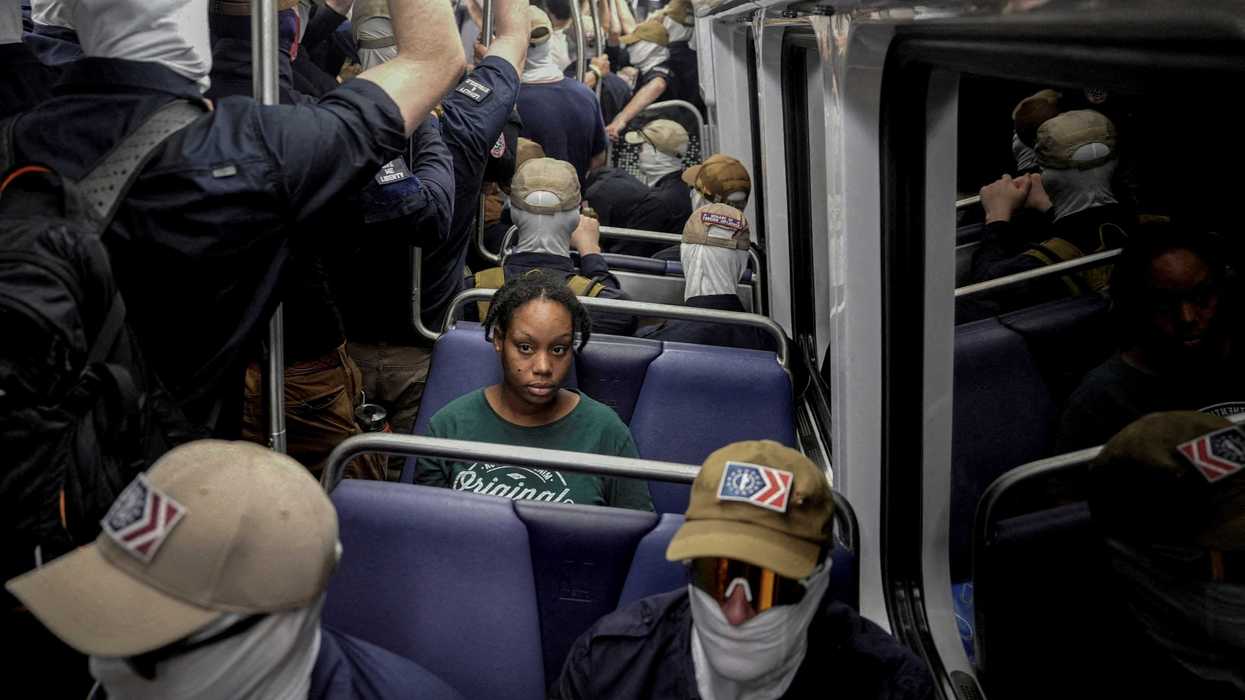
A commuter sits as members of the group Patriot Front ride the metro on the 250th anniversary of U.S. independence on the Fourth of July in Washington, D.C., U.S., July 4, 2026. REUTERS/Cheney Orr

July 10, 2026 
ALTERNET

“Several days later and I can’t help it. It’s too funny,” said comedian John Fugelsang of white supremacist militia group, the "Patriot Front," marching through the streets of Capitol Hill on the 250th birthday of the United States. Videos showed that a few hundred men showed up with face coverings, waving Confederate flags along with American flags, including some that were inverted.

But Fugelsang couldn’t get over other aspects of their appearance, calling them the “Dockers Reich; aka March of the Masked Mediocrities; aka The League of Extraordinary Virgins.”

“Did you catch it? Day of the Living Incels?” asked Fugelsang on his substack. “A quarter-millennium after the US declared that all men are created equal, a few hundred masked white nationalists decided the best way to celebrate was to march through Washington, D.C., hiding their faces and waving Confederate flags. And what could be more MAGA than celebrating America’s birthday with participation trophies from the losing side of the Civil War, while dressing like you’re all headed to the same outlet mall. All of them in Khakis, all of them wearing masks.”


“These guys always say, ‘We’re defending Western civilization.’ Yeah, Skip? Then why do y’all always look like you’re trying to avoid being recognized by your manager at Best Buy?” Fugelsang demanded. “It’s hard to square ‘take our country back’ with ‘please don’t tag me in the photos.’”

The comedian acknowledged that he’s supposed to be shaking his head in anguish about the normalization of racism and the “big victory goose-step” after all the cultural erasure and the gutting of the Voting Rights Act. But the scenery was just too funny. “Instead, beautifully, it was more of a White Supremacy Cowardice flash mob; sponsored by Dockers and parental disappointment,” said the host of progressive talk show "Tell Me Everything.”


“Let’s briefly discuss the Klan Bake wardrobe choices: All khakis, all blue shirts. It’s the world’s most aggressively beige fascist movement,” he said. “Every single one of these tough guy patriots looked like they were headed to an assistant manager orientation at Kohl’s. I mean, I know they’re the Fourth Reich and all, but I kept expecting them to ask pedestrians if they’d ever considered opening a store credit card.”

"The John Fugelsang Podcast" host also blasted the absurdity of a group claiming to be “patriots” while carrying flags of the Confederacy, which literally tried to destroy America.

“The Confederacy only lasted four years, bros. Costco memberships last longer,” said Fugelsang. “You’re still the only team in history whose fans get more enthusiastic every century after losing.”


But that’s what you get from a group of folks dressed like they’re “robbing a Hobby Lobby” despite being proud of their beliefs.

“If your movement is destined to save America, it’s curious that nobody in it wants their boss to know they attended,” Fugelsang chided. “… Imagine believing you’re the superior race, while literally covering up your face more than Batman.”

Only Batman was worried about crooks hurting his loved ones,” he added. These guys are afraid of “an email” identifying them to their boss.


The movement calls itself “patriotic heritage enthusiasts,” but Fugelsang said they’re just “unmanly racist twits.”

“You’re Nazis; with better graphic designers and pleats in your chinos,” Fugelsang howled. “Patriot Front is a racist pyramid scheme, wrapped in Old Navy. But calling themselves ‘America’s Masked Chickens—— Ethnostate Appreciation Society’ apparently tested poorly with focus groups.”
'I think he's dead': Mitch McConnell pulls a 'Franco'


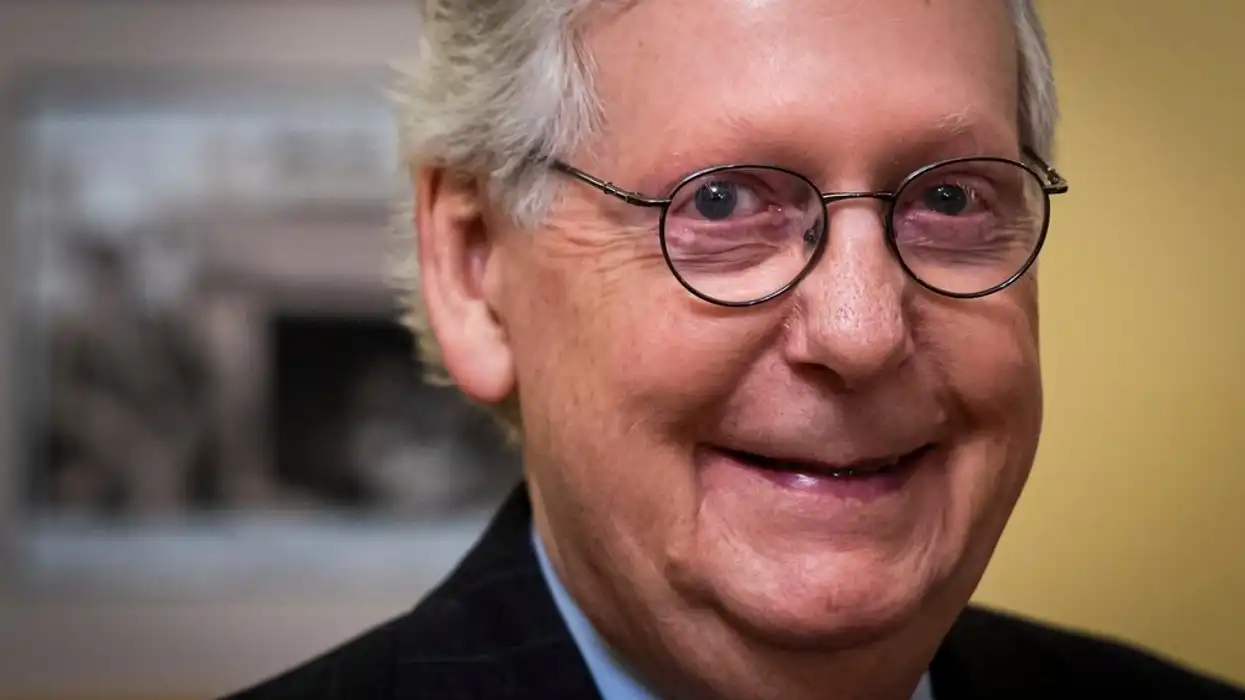
U.S. Sen. Mitch McConnell (R-Kentucky) on November 15, 2022
 (Consolidated News Photos/Shutterstock.com)

July 11, 2026  
ALTERNET


The Guardian reports mystery is still surrounding the health of Sen Mitch McConnell (R-Ky.) as Congress prepares to return from recess next week.

McConnell, 84, has not been seen in public since he was admitted to a Washington hospital in June 14. Nearly a month later, the Kentucky Republican’s office has released so little information that speculation is swirling about the possibility of her permanent absence while his office claims he is “continuing to improve.”

“Emergency dispatch audio obtained by media outlets indicates that first responders were sent to his home following reports of an unconscious person and that CPR was under way. On Friday, CNN released video footage that showed a person on a stretcher being wheeled towards an ambulance, though their face was not visible,” the Guardian reports.

“I think he’s dead,” said Malcolm Nance, a career counter-terrorism intelligence officer on the Truth in the Barrel podcast. “It’s very clear. I heard that 911 tape and I was an EMT when I was in the military at one point and you know we used to do CPR a lot. One of the things that teach you about CPR is the probability of coming back from CPR is very, very, very small.”

The show is hosted by Amy McGrath, who lost to McConnell in 2020. McGrath, a former marine fighter pilot, replied: “Well, it’s an interesting take. We’ll see what happens there as well.”

Meanwhile, the Guardian reports that what is currently happening is unelected staff is running things for the voters of Kentucky, consulting with Congress and making decisions in his absence.

“But while he is incapacitated – and I go back to Feinstein, there are staff who are basically making decisions on behalf of the people of Kentucky, said Reed Galen, president of JoinTheUnion.us, a pro-democracy coalition. “These are all people with pretty significant political equities of their own. We saw this, frankly, with President Biden’s people. It’s the next example of a gerontocracy in Washington DC that thinks more of itself than it does of its people.”

Should McConnell remain in office but be unable to return before January, there is little constitutional remedy, reports the Guardian. “Senate rules do not permit proxy voting, meaning Republicans simply lose one vote whenever he is absent.”

His resignation or death would create an even more complicated situation, thanks to Republican greed in Kentucky. Seeking to nullify Democratic Kentucky Gov. Andy Beshear, the Republican-dominated legislature in 2024 eliminated the governor’s power to appoint a temporary replacement, meaning any vacancy now triggers a special election. But the Guardian reports the timing of the election remains legally untested, and it could become the subject of court challenges. Depending on when a vacancy occurred, the seat could potentially remain empty until the new Congress is sworn in next January.

The governor is already demanding an update to McConnell’s condition.

Author and pollster John Zogby told the Guardian that the situation resembles the touchy state of things in fascist Spain just a few decades ago.

“This in some ways reminds me of Generalissimo Franco in the 1970s, who was reported to be unawake but still alive, and no one believed it after about six weeks, because they hadn’t figured out a transition yet in Spain,” said Zogby.

'He’s so dead': Critics erupt as wife of stricken senator appears to shop new carpet
July 10, 2026
ALTERNET

Critics on social media had a meltdown over images of a contractor leaving Sen. Mitch McConnell’s house with carpet and tile samples.

“Our intrepid TMZ DC producer Charlie Cotton paid a visit to the Senator's home Friday to see if he could get any answers on Mitch's health ... and he saw something interesting leaving the house,” reported TMZ.

Mitch has been hospitalized since June 14 after paramedics responded to a report of an unconscious person in his Washington, D.C. home. Footage obtained by CNN shows paramedics piling the stricken Kentucky senator.


TMZ reports paramedics appeared to be “showing absolutely no sense of urgency” — suggesting the senator was about as stable as dead can get.

“Marjorie Taylor Greene told us Mitch is a vegetable and his "Communist Chinese spy" wife is meeting with Chinese leaders instead of rushing home to be by his bedside,” TMZ added. “Meanwhile, Scott Jennings says the 84-year-old politician was lucid enough to have a conversation for ‘just shy of 20 minutes’ about current events.

But critics on X exploded at the images of carpet samples.

“Ah yeah … you know when your husband is in hospital, it’s the perfect time to book that contractor to come sell carpet samples,” said professor Adam Cochran on X. “This is all so weird.”

“He’s so dead,” quipped another critic.


“Hollywood will make a movie about this someday,” announced another X heckler. “Just watch.

Other online comedians quickly hopped on the suggestion of post-mortem floor stains.

“Blood is hard to get out of carpets,” said one X user.


“Does he have burgundy?” asked another.

TMZ reports even President Trump has "no idea" how Sen. Mitch McConnell is doing, at least as of a couple of days ago.

“Whatever Mitch's status is, seems new flooring are a top priority,” TMZ reports.


New bombshell video shows Mitch McConnell loaded into ambulance on a stretcher


Roxanne Cooper
July 10, 2026 | 
ALTERNET


Video footage obtained and verified by CNN shows emergency responders loading what appears to be Senator Mitch McConnell onto a stretcher and into an ambulance outside his Washington, D.C., home on the morning of June 14, after the 84-year-old Kentucky Republican was found unconscious.

The clip, filmed from a distance that obscures McConnell's face, depicts responders lifting the senator into the back of the ambulance. A neighbor who witnessed the scene told CNN that when they asked officers what had happened, they were told only that there had been a "medical emergency."

The neighbor added a striking detail: emergency responders showed no signs of urgency in loading McConnell into the vehicle.


"In a situation where perhaps time is of the essence, there seems to be a little bit more urgency, but there was no urgency here," the neighbor said.

Another witness told CNN they observed McConnell's feet protruding from the stretcher as it was being carried from his home roughly 30 minutes after ambulances first arrived at the residence. The witness noted that the feet were "not moving" and that McConnell was not wearing an oxygen mask.


"He's in a stretcher, and he's in some sort of orange foam-looking blanket type thing," the neighbor recalled.

The ambulance departed without activating its sirens, according to witnesses at the scene.

McConnell, who required CPR at the scene, has remained hospitalized for weeks. His office has offered no substantive updates on his medical condition, current treatment, or whether the 84-year-old will be able to resume his Senate duties. The senator has made no public statements since his hospitalization, leaving constituents and colleagues alike in the dark about his prognosis.


McConnell's apparent incapacity creates a significant vacuum in Republican Senate leadership at a critical moment for the GOP. As Senate Minority Leader, McConnell has wielded substantial influence over Republican strategy and messaging, particularly on issues of party discipline and judicial appointments. His prolonged absence raises urgent questions about the succession of power within Senate Republican ranks and the direction the party will take on key legislative priorities.

The lack of transparency from McConnell's office has fueled worry among lawmakers and staffers about who is making critical decisions on the senator's behalf. Senate rules do not require formal notification of incapacity, leaving McConnell's voting power and decision-making authority in an ambiguous state during a pivotal election cycle. If McConnell cannot return to active duty, Republicans may face an internal power struggle to fill the leadership void.


Whistleblowers expose Trump's Kennedy Center scheme in new bombshell claim

Adam Lynch
July 11, 2026  
ALTERNET

The New York Times reports President Donald Trump’s love of no-bid contracts with connected contractors and flunkies have ruined another Washington, DC., project, this time at the John F. Kennedy Center for the Performing Arts.

Whistleblowers say renovations at the center “were rushed to meet the deadlines driven by the president’s desire to host official events at the center [and] federal contracting laws and regulations were ignored.”

In one case cited in Congressional internal documents a new bathroom floor in one of the center’s three presidential boxes was ordered torn up last year and redone after the White House complained about the beige color of the tiles.

“The 82-page submission to Congress was made under a law designed to protect federal employees who disclose allegations of wrongdoing from retaliation. The lawyers who sent it, David Seide and Dana Gold, work for a nonprofit that represents government whistle-blowers,” reports the Times. “ … Senator Sheldon Whitehouse, the top Democrat on the Environment and Public Works Committee, which received the submission, wrote to the Kennedy Center on Thursday demanding information related to the renovations. Mr. Whitehouse, an ex officio member of the center’s board, said the submission raised ‘serious questions’ about whether public funds were being spent properly.”

No-contract painting was done by Cypress Painting Systems, a company in Maryland that has done work under prior administrations. But lawyers for the former project managers reported that the work began before any contract had been awarded, said the Times. Cypress Painting also installed Trump’s name on the Kennedy Center’s marble facade, under a separate arrangement, before his name was ordered removed by a federal judge.

The Kennedy Center whistleblower complaint is part of a broader pattern of concerns about the Trump administration's contracting practices across federal projects. The Lincoln Memorial Reflecting Pool project, for example, has been carried out through multiple no-bid contracts, with administration officials justifying the bypassing of competitive bidding by claiming deadlines tied to the nation's 250th birthday celebrations were critical.

The Kennedy Center adopted a new procurement policy in November 2025 that exempts the institution from federal contracting regulations it previously followed as a nonprofit on federal property. The relaxed policy allows sole-source contracts when "circumstances beyond the center's control require an immediate award" or when "the requirement is unique or has a compelling business interest"—standards critics argue are dangerously vague and lack meaningful oversight.

The whistleblower submission also raises questions about potential favoritism. Representatives of Low Country Flooring, the South Carolina company selected without competition for a five-year, $8 million flooring contract, posted photos on Facebook showing themselves praying with Trump at the Kennedy Center before being selected for the lucrative deal. One company official commented on the image: "He asked, and the president said of course.


The Kennedy Center maintains it followed proper procedures and conducted exhaustive market research before vendor selection.