Saturday, July 11, 2026

New polls show plummeting support among US faith groups for Israeli government, Netanyahu

(RNS) — One survey found that most U.S. adults — 62% — now view the Israeli government unfavorably, a nearly 20-point shift from 2022, when only 43% said the same.


Palestinians inspect damage to their tents following an Israeli airstrike in Khan Younis, Gaza Strip, Tuesday, June 30, 2026. (AP Photo/Abdel Kareem Hana)

Jack Jenkins
July 9, 2026  
RNS


(RNS) — A pair of new surveys indicate Americans are souring on Israel in the wake of the war in Gaza, with opinions on the nation, its government and even the Israeli people all declining while views of Palestinians have remained largely unchanged.

Two separate polls released this week revealed the shift, the most recent of which Pew Research unveiled on Thursday (July 9). The survey, conducted in early May, found that most U.S. adults — 62% — now view the Israeli government unfavorably, a nearly 20-point shift from 2022, when only 43% said the same.

What’s more, positive views of the Israeli people dropped significantly, with 52% of U.S. adults viewing them favorably — a 15-point decline from 2022. That places Israelis roughly on par with U.S. views of the Palestinian people, which hover around 50% favorability, down only three points from 2022.

The Pew poll showed clear partisan divisions — Democrats were more likely to view Israelis and the Israeli government negatively than Republicans — but there were also splits among religious groups. Jewish adults were the most likely to have a positive view of the Israeli people (83%), followed by white evangelical Protestants (74%). But white evangelicals were the most likely to view the Israeli government favorably (57%); less than half (47%) of adult Jewish Americans held a positive view.


“Muslims and religiously unaffiliated view Palestinians more favorably than other groups do.” (Graphic courtesy of Pew Research Center)

Meanwhile, minorities of Catholics (34%), white non-evangelicals (33%), Black Protestants (30%), religiously unaffiliated Americans (17%), and Muslims (12%) held positive views of the Israeli government. When it comes to the Israeli people, small majorities of white non-evangelical Protestants (55%) and Catholics (51%) voiced a favorable view, whereas half (50%) of Black Protestants said the same and only 40% of religiously unaffiliated and 26% Muslims agreed.

The change in perspectives on Israel follows years of controversy after Hamas launched an attack on southern Israel on Oct. 7, 2023, that killed around 1,200 people and resulted in 251 more taken hostage. In response, Israel launched a military assault on Gaza that has since killed more than 73,000 Palestinians according to the Gaza Health Ministry — an effort that spurred some religious activists in the United States to mount dramatic protests against the Israeli government’s actions.

The topic has sometimes pitted religious groups against each other, exposing rifts: Earlier this week, roughly 200 faith-led pro-Palestinian demonstrators protested in different parts of Washington, D.C., including at the Museum of the Bible, against the annual Christians United for Israel summit that was taking place in the area.

In the Pew poll, only Muslims and religiously unaffiliated Americans expressed majority favorable views of the Palestinian people (78% and 59%, respectively). Half of adult Muslim Americans also voiced positive views of the Palestinian Authority that runs the West Bank, higher than any other group. Muslims also were more likely than other groups to view Hamas, which has controlled Gaza, positively, with 44% saying so, although no faith group polled voiced majority support for the group.

The Pew survey comes two days after an AP-NORC poll found that roughly one-third of U.S. adults and around half of Democrats say they believe that Israel has committed a genocide against Palestinians in Gaza. By comparison, around 2 in 10 of U.S. adults say Israel has not committed a genocide, and roughly half of all Americans say they don’t know.

Activists and humanitarian organizations have long insisted Israel’s actions in Gaza amount to a genocide, and some religious bodies are voicing agreement. In the last two weeks, both the American Academy of Religion and the General Assembly of the Presbyterian Church (U.S.A.) have described Israel’s actions as a genocide in separate votes.

The sentiment is less popular among Jewish adults in the U.S., 49% of whom do not believe Israel has committed genocide, according to the AP-NORC poll.

But 30% of Jewish adults maintained that Israel has committed genocide, and debates around the war in Gaza notwithstanding, Israeli Prime Minister Benjamin Netanyahu remains unpopular: According to the AP-NORC poll, Jewish adults are especially likely to see Netanyahu negatively, with roughly 6 in 10 viewing him very or somewhat unfavorably.

That’s higher than Democrats as a whole, 54% of whom have unfavorable views of Netanyahu. Among independents, 33% view the prime minister unfavorably, as do 38% of Americans overall.

Only among Republicans is Netanyahu viewed more positively than negatively, with 38% viewing him favorably compared to 23% who view him unfavorably.


Smoke and flames rise following an Israeli military strike on a target next to a tent camp in Deir al-Balah, central Gaza Strip, Wednesday, March, 25, 2026.(AP Photo/Abdel Kareem Hana)

As Israel divides Jewish communities, Yiddish draws a new generation


(RNS and NPR) — The language app Duolingo reported that roughly 296,000 people around the world are studying Yiddish as of this year. An estimated 60% of them are under 25 years old.


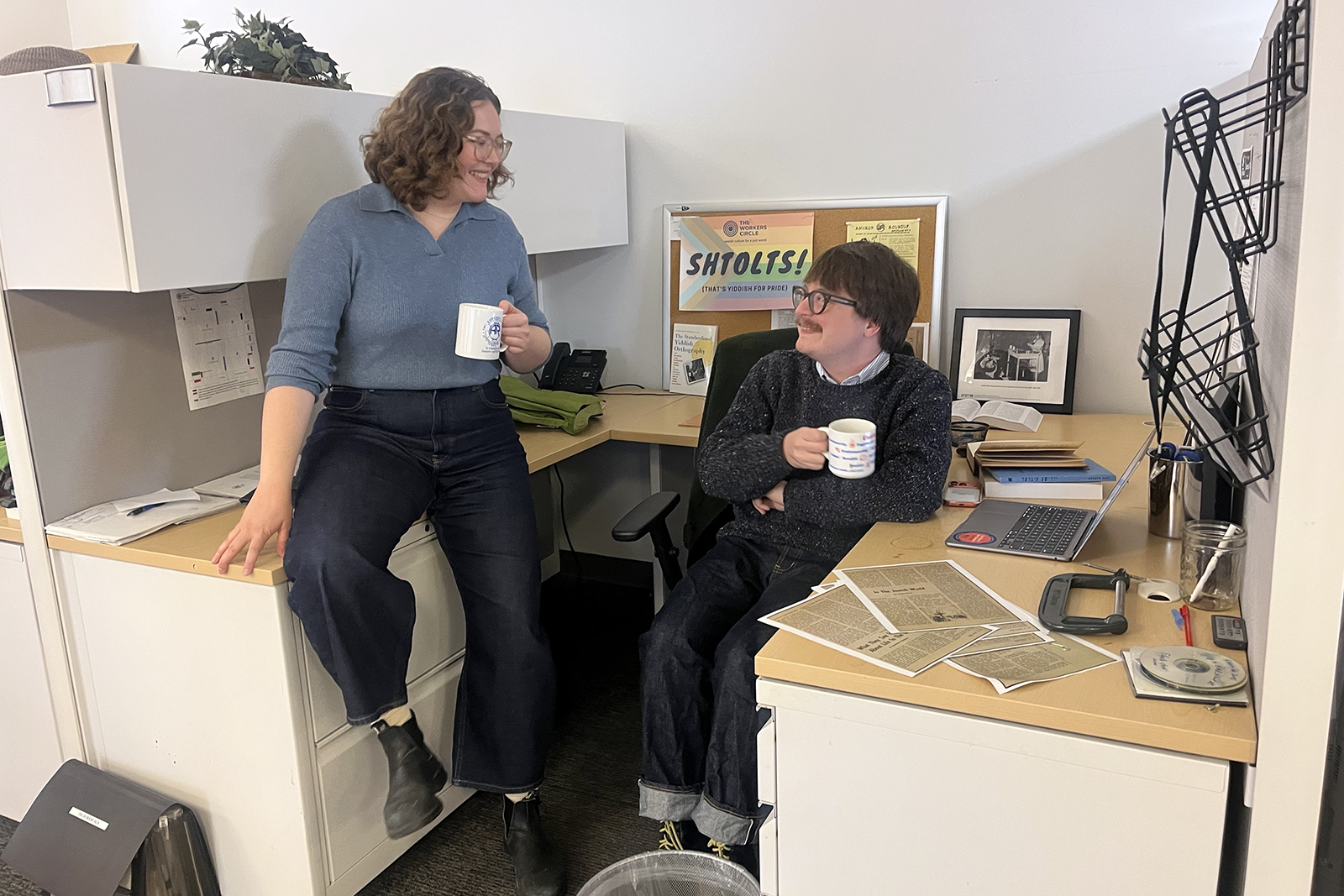
Francesca Rubinson, left, manager of social justice at the Workers Circle, a Jewish nonprofit in Manhattan, and her colleague, Yasha Giner, Yiddish culture and social justice organizer at the Workers Circle, exchange ideas at Giner’s desk about their work on the college ambassador program. (Photo by Nirvani Williams/NEPM)


Nirvani Williams
July 10, 2026 

(RNS and NPR) — Lindsey Bloom, a senior at Mount Holyoke College in South Hadley, Massachusetts, grew up going to Hebrew school and attending a synagogue with an Israeli flag hanging near the front of the sanctuary. However, as she has sought to distance herself from Israel’s government in recent years, she said she didn’t know of other ways to engage with Jewish culture — until she learned about Yiddish.

“I’ve definitely talked to quite a few people that just stopped engaging with their Judaism because they didn’t know where to go,” Bloom told RNS and NPR. “That was the case for me. And then I got into Yiddish, and I was, like, oh, this is actually a lot better. I actually align with this a lot more.”

Bloom isn’t alone. The language app Duolingo reported that as of this year, roughly 296,000 people around the world are studying the language with 10th-century European roots. An estimated 60% of them are under 25 years old.

Mindl Cohen, the academic director of the Yiddish Book Center, an Amherst, Massachusetts-based organization that promotes Yiddish culture and literature, said the young people she teaches are engaging with the culture and language in myriad ways. They are performing new plays, making music that’s inspired by Yiddish music of the early 20th century and translating Yiddish literature, she said.

The Yiddish trend seems to be especially prominent for college students like Bloom who seek to hone a Jewish identity and culture removed from support for the state of Israel — a position that can feel isolating, as the Jewish communities they grew up in have long held support for Israel as a core aspect of Jewish identity.


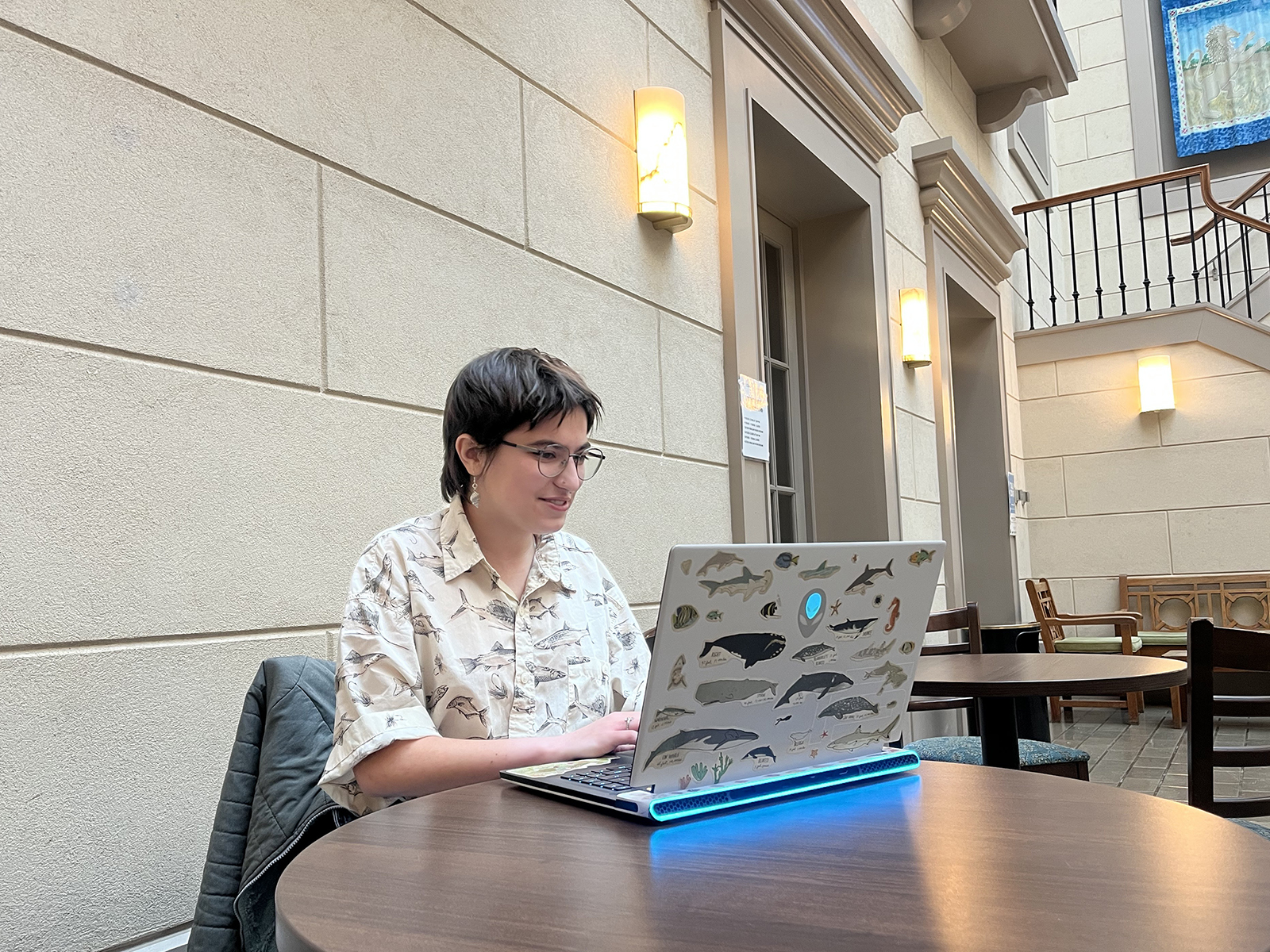
Lindsey Bloom searches various Yiddish texts on her laptop in the Williston Memorial Library on Mount Holyoke College’s campus in South Hadley, Mass. (Photo by Nirvani Williams/NEPM)

Post Oct. 7, 2023, and the ensuing war in Gaza, major divisions have emerged along political, ethnic and generational lines over support for Israel. And data suggests that even prior to the Oct. 7 Hamas attack, Jewish Americans ages 50 and older, especially those who are religious, are much more emotionally attached to Israel than younger Jewish Americans.

For Sally Kaye, a senior at Barnard College in Manhattan, New York, who is also learning Yiddish, her culture and identity are important to her, but she said she has struggled with both recently.

“It’s hard to be, a lot of the times, in synagogue spaces and kind of traditional religious spaces that have been so focused on supporting Israel no matter what,” Kaye said.

Cohen said engaging with Yiddish culture is one way young Jews can gain insight into questions about their identity and connect to the Jewish diaspora.

“The idea of ‘what did it mean for Jews to exist as diasporic people for centuries’ I think can be really inspiring and just provocative for young Jews today, who maybe don’t like aspects of what they see in the politics of the Jewish state of Israel and are trying to think, well, what are ways to change that? What are the different models? What can we learn from history?” Cohen said.


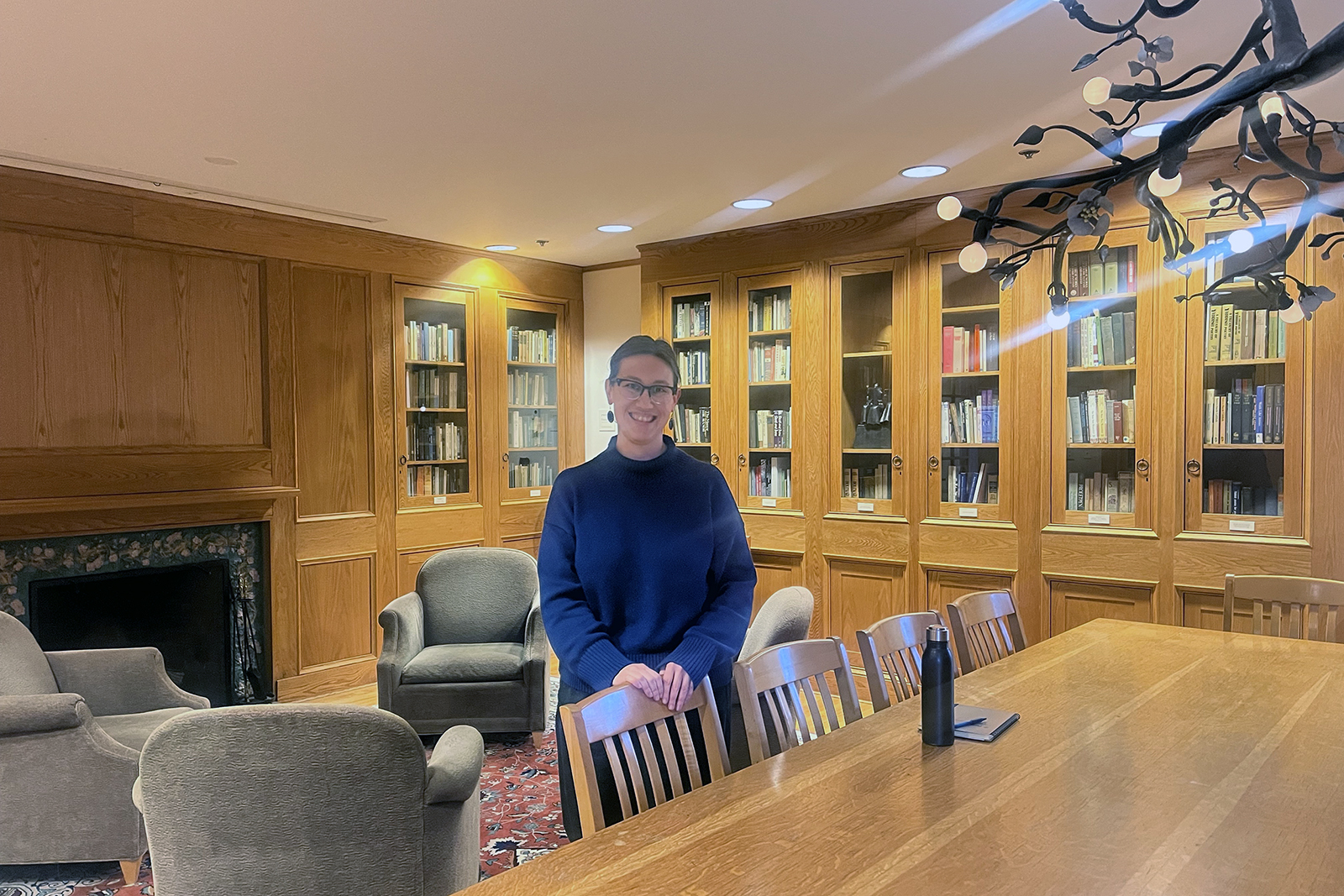
Mindl Cohen in the library of the National Yiddish Book Center in Amherst, Mass., where she had her first Yiddish class. She has since become a scholar in the language and culture. (Photo by Nirvani Williams/NEPM)

She added that her students are interested in learning about how Yiddish speakers expressed their creativity in the past. The students then recreate these art forms in their own way.

“By taking the time to learn about the past and learn about this culture, we can be inspired to continue things and make new things and make versions that feel relevant today,” Cohen said. “That feels very special to see happen.”

The Workers Circle is a Jewish social justice organization headquartered in New York City that claims to be one of the largest providers of Yiddish language classes in the world. Francesca Rubinson, senior social justice organizer, said her organization is trying to create space for those who want a more expansive view of Jewish culture and history.

“It’s been so meaningful for many young people these days, post Oct. 7, to explore what Yiddish language and culture can mean for them, especially because many of them had Yiddish speakers in their own family just a couple generations ago,” Rubinson said. “And due to assimilation, cultural shifts, the prominence of Zionism and of Israel in many Jewish institutions, there has often been less interest or less institutional support for exploring Yiddish language and culture.”

Rubinson works with young Jewish college students and helps them plan Yiddish cultural events on their campus through Workers Circle’s college ambassador program.


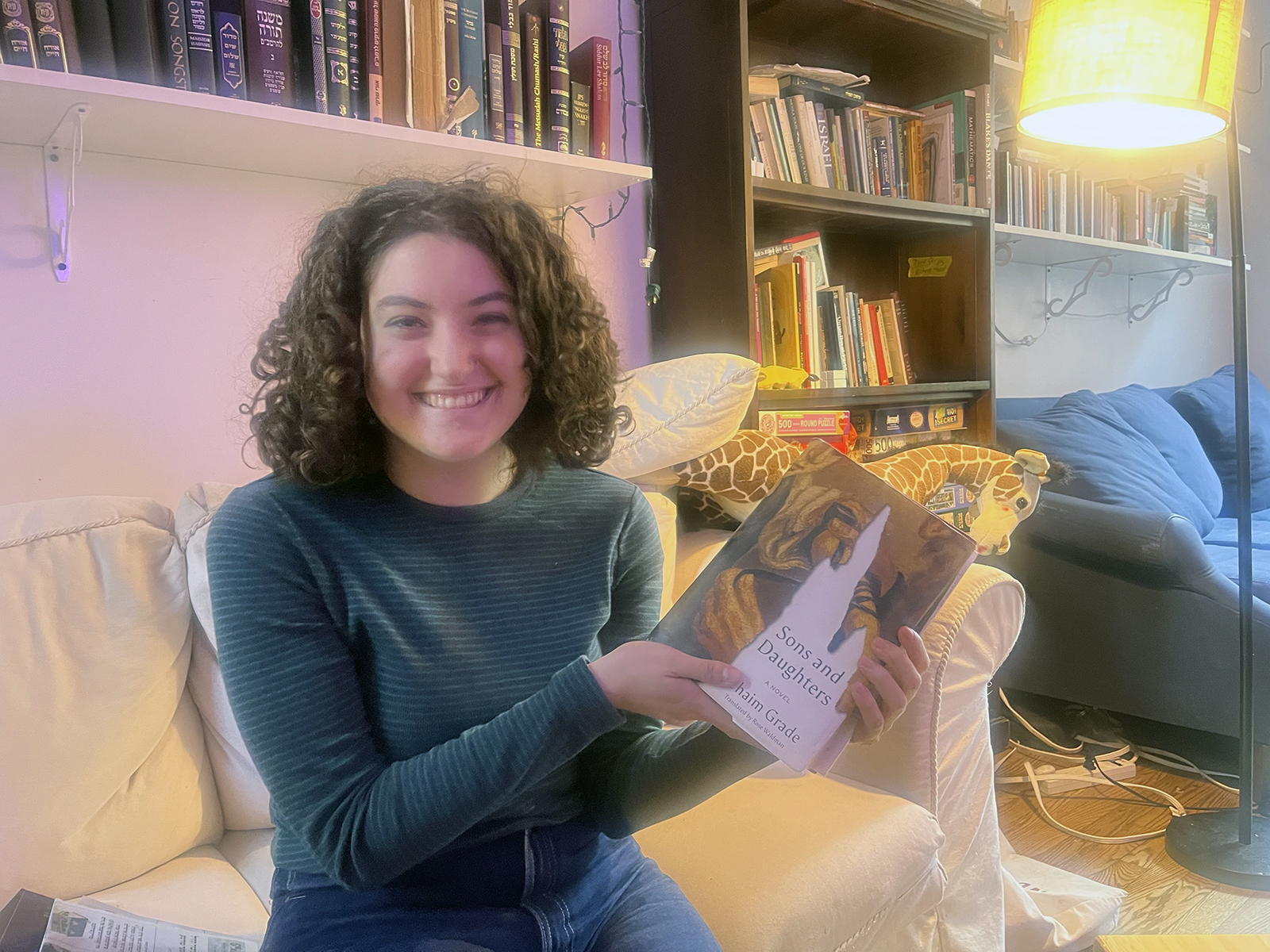
Barnard student Sally Kaye shows her copy of “Sons and Daughters” by Chaim Grade in Yiddish, at the Jewish Food Co-Op in the Upper West Side neighborhood of New York City. (Photo by Nirvani Williams/NEPM)

“The events range from playing Yiddish music and talking about its cultural significance to actions with local immigrant justice organizations as part of their kind of ambassador events that they plan,” she said. “They’ve done letter writing campaigns for local tenants’ rights organizations, and they’ve also continued to bring special speakers and Yiddish teachers to campus.”

Bloom, the Mount Holyoke senior, is a part of the Worker’s Circle college ambassador program. She’s also in a Yiddish singing duo called Khaverte and recently performed Chappell Roan’s “The Subway” in Yiddish. There’s something about the language, Bloom said, that inspires her creatively.

“Playing with the language and playing with the art and making new things, I really, really like it. I like making new Yiddish things,” Bloom said.

She said not only is she able to express herself in her culture and religion, but now, she’s able to find a community that understands her.

This story was produced through a collaboration between NPR and RNS. Listen to the radio version of the story.
Muslim advocacy group fights for trust after Texas brands it a terrorist group

AUSTIN, Texas (RNS) — A terrorist designation in Texas is fraying trust inside Muslim communities as mosque and nonprofit leaders decide whether standing by CAIR is worth the risk.


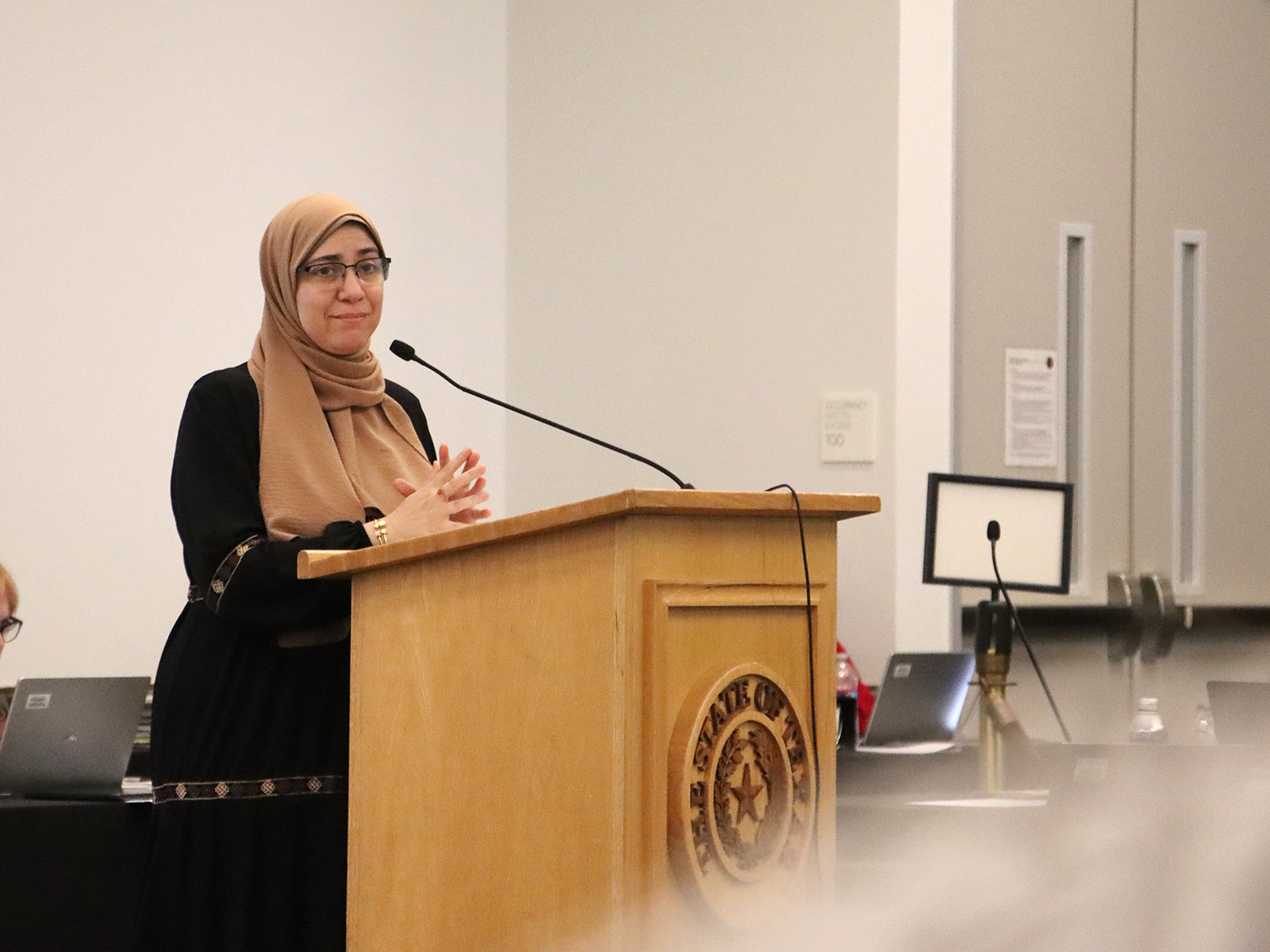
Shaimaa Zayan, operations manager of CAIR-Texas, addresses the State Board of Education meeting in the Barbara Jordan Building on Monday, June 22, 2026, in Austin, Texas. (RNS photo/Ulaa Kuziez)


Ulaa Kuziez
July 10, 2026
RNS

AUSTIN, Texas (RNS) — It was just past 9 p.m. on June 22, during the Texas State Board of Education meeting, when Shaimaa Zayan, operations manager for the Council on American-Islamic Relations’s Austin chapter, was called up to testify. She braced herself, knowing what was coming.

“Can we have a leader of a foreign terrorist organization testify for the state board of education?” Brandon Hall, a Republican board member, asked the chairman, just as Zayan rose to the podium.

Hall was referring to an order by Texas Gov. Greg Abbott designating CAIR a terrorist group last November. The group, one of the country’s largest Muslim advocacy organizations, however, is not listed on the U.S. Department of State’s list of terrorist organizations, which is officially responsible for such designations.

The chairman said Zayan had a First Amendment right to speak.

“OK, I won’t listen to it,” Hall said, before walking out of the room.

CAIR has spent decades positioning itself as the country’s leading Muslim civil rights organization. But state and federal Republican leaders’ attempts to brand it as a terrorist front in recent months has tested CAIR’s legal standing and cast suspicion on the group or anyone who associates with it. The organization, which has chapters around the country, is now also fighting fraying trust inside some Muslim communities as mosque and nonprofit leaders decide whether standing by CAIR is worth potential risks — notably, in Texas.


Texas Gov. Greg Abbott speaks in Kerrville, Texas, Friday, July 11, 2025. (AP Photo/Jacquelyn Martin)

Since Abbott’s foreign terrorist designation, Imran Ghani, operations manager for CAIR’s Houston chapter, said his office has dealt with stigma in some Muslim communities. While some Texas mosques and other groups have continued to invite CAIR speakers and collaborate on events, as they have regularly in the past, Ghani said at least a dozen Muslim groups in Houston have privately made it clear they are no longer willing to host the civil rights group.

“That’s exactly what the governor is intending to do: separate CAIR from the Muslim community, despite being a grassroots organization from within the Muslim community, and punish anybody that supports CAIR,” he said.

Founded in 1994, CAIR bills itself as the largest group defending the civil rights of American Muslims and has long been trusted by a range of American Muslim communities. The organization has brought major lawsuits fighting government overreach and has built coalitions with other prominent advocacy groups. It also lobbies elected officials, and through its 501(c)4 arm, CAIR Action, the group has engaged in electoral work.

But the Texas proclamation announcing the terrorist designation for CAIR, the Muslim Brotherhood and “any persons promoting or aiding their criminal activities” could make the groups subject to criminal penalties and “heightened enforcement,” according to the order.

The order also said affiliates would be prohibited from purchasing land, a particularly worrying provision for mosque leaders.

“Governor Abbott’s actions are targeted at radical groups like CAIR and the Muslim Brotherhood, who have proven ties to terrorism and seek to forcibly impose Sharia law on Texans,” Andrew Mahaleris, Abbott’s press secretary, said in an email to RNS on Friday (July 10). “Texans demand leaders who uphold the rule of law and relentlessly pursue those who threaten it. It’s shameful that these groups hide behind law-abiding members of their faith to deflect scrutiny from their own illegal conduct and activities.”

The governor’s administration has invoked that designation in several instances, including to justify excluding certain Islamic private schools from the state’s voucher program over alleged ties to CAIR. Parents and schools sued to be eligible for the program earlier this year and secured admission to it through the legal system.


People enter the headquarers of the Council on American-Islamic Relations (CAIR) in Washington, Thursday, Dec. 10, 2015. (AP Photo/Pablo Martinez Monsivais)

The governor argued that CAIR “repeatedly employed, affiliated with, and supported individuals promoting terrorism-related activities” — allegations CAIR’s national and local affiliates have denied and are challenging in court.

The move came amid growing discriminatory rhetoric from political officials against Muslims in the state and beyond.

In Florida, Republican Gov. Ron DeSantis also issued an executive order in January declaring CAIR a foreign terrorist organization. The group and its state chapter sued DeSantis in federal court and won an injunction in March, but new state laws have expanded Florida’s authority to both label and punish groups that officials deem are security threats. In a July 1 lawsuit challenging the law, lawyers for CAIR and CAIR-Florida wrote that the groups’ ”speech will be silenced, their doors will be shut, and they will be branded with the stigma of one of society’s most infamous labels.”

CAIR has long fought allegations linking it to terrorism and a plot to infiltrate the U.S. government. An often-repeated claim stems from a federal trial against a now-defunct charity, the Holy Land Foundation. Five leaders of the group, who maintained they were involved in humanitarian work, were convicted in 2007 of diverting funds to Palestinian groups with ties to Hamas.

In the trial, CAIR was named as one of almost 250 unindicted co-conspirators, without explanation. Critics have argued naming CAIR in the case was a legal tactic intended to allow prosecutors to introduce evidence but should have had no legal implications for CAIR. The group has denied the allegations.


Mustafaa Carroll, interim executive director of CAIR-Texas, poses for a portrait on the Texas Capitol Complex grounds in Austin, Texas, on Monday, June 22, 2026. (RNS photo/Angela Wang)

“They listed any and everybody, prominent leaders — they were throwing a blanket, a cloud over the whole community,” said Mustafaa Carroll, interim executive director of CAIR-Texas, who sat in on much of the trial in Dallas nearly two decades ago. “The cloud followed us (CAIR) specifically.”

Carroll said the list was meant to “disable” Muslim communities and create distrust after the trial.

Almost 20 years later, he fears the governor’s order against CAIR is doing the same thing.
RELATED: Texas governor calls CAIR a terrorist organization, says he will enforce penalties

Asked about relations with CAIR since the terrorist designation, multiple Texas mosque leaders declined to speak with RNS on the record. However, several sources told RNS they’ve witnessed changes in mosque relationships with CAIR since last November.

Azfar Saeed, a longtime Friso, Texas, resident and former board member of the Islamic Center of Frisco, said he believes CAIR is being used as a political boogeyman for the Texas Republican Party, which has made Muslims a top target.


Azfar Saeed. (RNS photo/Fiona André)

While campaigning for Mark Hill, a Republican elected as Frisco’s mayor in June, Saeed said CAIR came up repeatedly in conversations with voters. Hill ran in a tense runoff election against Republican Rod Vilhauer, who promised to drive out Frisco’s Muslim and Hindu residents. Instead of asking about Hill’s campaign issues, many residents questioned if Hill supported CAIR and Muslim residents.

“They (voters) are generalizing that all Muslims support CAIR, and CAIR supports terrorism, so Muslims are not good people,” Saeed said.

Saeed said he has spoken with Muslim leaders who have distanced themselves from CAIR out of fear that association with the group would expose their mosques to investigations or subpoenas. As many mosques operate month to month through community donations, they don’t have the resources to fight legal battles.

“They are playing it safe (to) see if this storm passes,” Saeed said.

Saeed Purcell, an Irving, Texas, resident and a CAIR-Texas board member, said CAIR is “the political hot potato right now.”

Purcell was part of conversations with leaders at the Islamic Center of Irving who were “reluctant to be too closely associated” with CAIR, he said. He left his position as outreach coordinator with the mosque in June for unrelated reasons, he said. Islamic Center of Irving leaders did not return requests for comment.

“They make decisions based on fear, running away from things they think could be negative,” he said. “And from my experience, running away from things often leads to a frying pan fire.”

Sameeha Rizvi, a civic engagement organizer with CAIR-Austin, said she has been invited to speak at Muslim conferences in Texas but has been asked not to publicize it until after the event.

“If they’re going to think that being any less Muslim, or any less associated with CAIR, is going make them safe, then what’s the point of being a Muslim organization or a Muslim in this country?” Rizvi asked.

CAIR-Texas officials have said they are undeterred and are continuing local advocacy work. Some Muslims who don’t work for the group worry the long-term effect of the designation will hinder its ability to defend Muslims.

“CAIR is the kind of organization that has always stepped in,” Saeed said. “Obviously, they cannot do this if they do not have the financial means to continue … they’re not going to be as effective.”

But Ghani, of CAIR-Houston, said fundraising for his chapter hit an all-time high after the designation. In Ramadan, a sacred month when Muslims are encouraged to increase charitable giving, community members raised over $500,000. He also said several local interfaith and advocacy groups publicly supported CAIR following the designation.

“In this regard, I tend to thank Governor Abbott for all of the free publicity that he’s given CAIR,” Ghani said.


Shaimaa Zayan, operations manager of CAIR-Texas, right, speaks with Texas State Board of Education member Brandon Hall, left, in the Barbara Jordan Building on Monday, June 22, 2026, in Austin, Texas. (RNS photo/Ulaa Kuziez)

After her testimony at the board of education meeting, Zayan approached Hall, the board member who just minutes ago questioned her publicly about CAIR’s alleged ties to terrorist activities. The exchange started warm. “I feel like I know you so well, like we developed a good relationship over all of these hearings,” Zayan said.

Hall agreed. He then repeated his concerns with CAIR. Zayan pushed back, urging him to look at documents she left him debunking the claims.

“I mean, you come here and you present yourself as a nice woman, and that’s great,” Hall said.

“I am a nice woman from a nice civil rights organization,” she interrupted.

“But you’re … tied to terrorists,” Hall said.

The first time she heard the label used against her, Zayan was shocked. But now, she said she’s glad to join the ranks of civil rights leaders cast as threats for their advocacy. She vowed to remain steadfast in her work.

“We will continue telling the truth because for us, for me, it’s not about the results — it’s not about our safety or our convenience, it’s about being on the right side of history,” she said.

Fiona André contributed to this report.
Source: Labor Notes

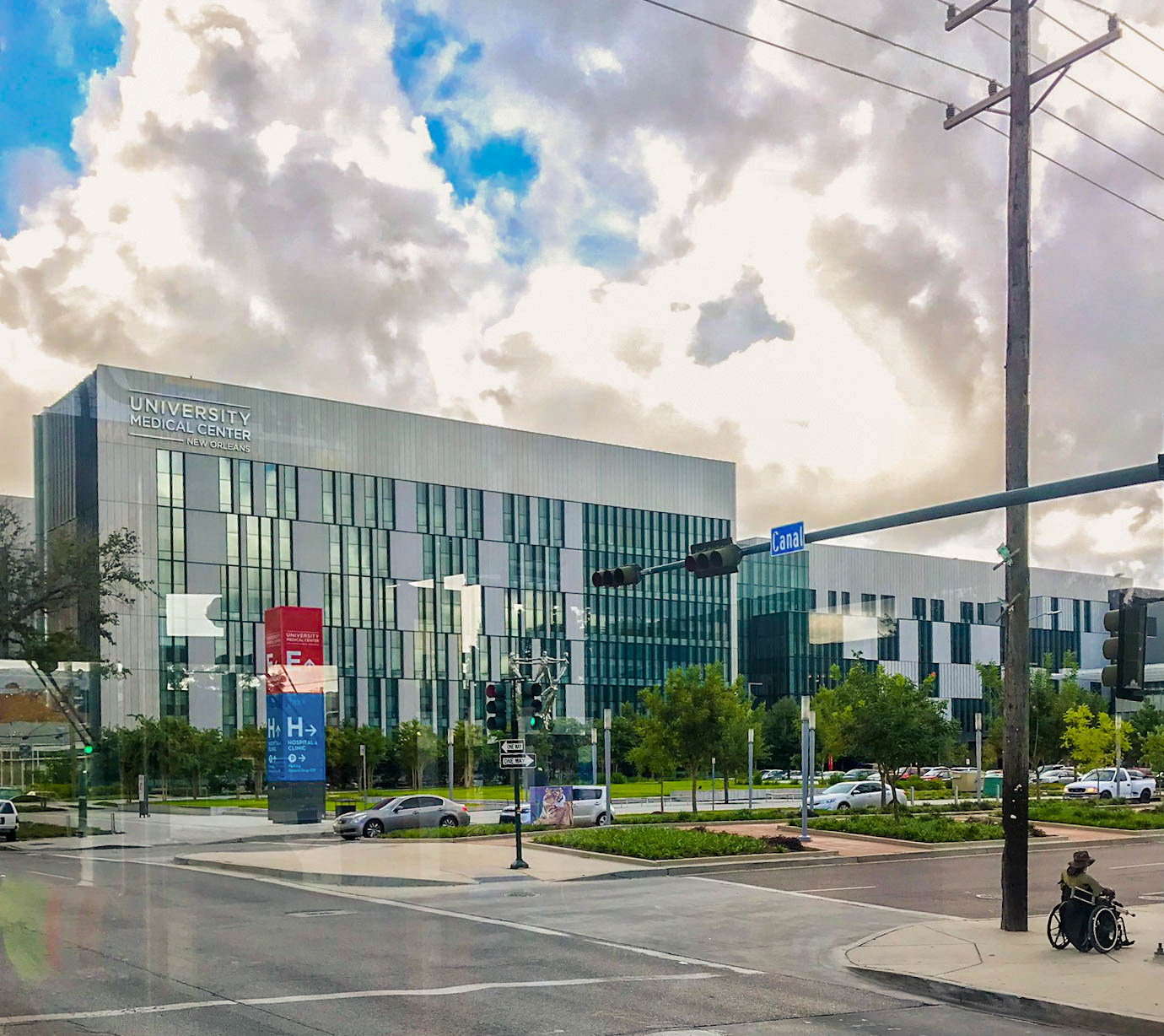
Two years and six strikes into bargaining—after switching law firms, cancelling negotiation sessions, firing union leaders, and allegedly backing a decertification effort—perhaps it’s dawning on University Medical Center in New Orleans that nurses don’t tire out easily.

On May 1 the nurses held their sixth strike—at five days, the longest yet—and their picket lines keep growing. There was dance music blasting, spontaneous line-dancing, boiled crawfish and jambalaya.

“We have first-time strikers out here who are brand new nurses!” said endoscopy nurse Hailey Dupré, a member of the bargaining team. “You understand that you can take your job into your hands and shape the future of it.”

As Heidi Tujague, a registered nurse and member of the bargaining committee, explained, this strike was intentionally longer than any of the previous five strikes. It was planned for five days, much longer than many conducted by their union, National Nurses United, which tends to favor one- or two-day strikes.

“The maximum we’ve done before was a three-day strike” in November 2025, she said. “We wanted to show an escalation from then. But some in our rank and file wanted to go longer!”

Despite the years-long process of contract negotiations, nurses like David Duplachain, who works in the neurology ICU, captured the strikers’ refusal to give up: “We’ll never get tired of fighting on the right side of history, for the future of our profession, for the people of New Orleans.”

FIRST UNION HOSPITAL IN STATE

UMC nurses know they’re preparing the way for a potential wave of organizing. When they voted to unionize in 2023, they made this the only union hospital in hundreds of miles, sending shockwaves through the Gulf South health care industry.

They won their election with 82 percent support in a bargaining unit of 700 workers. It’s Louisiana’s first unionized hospital, and the state’s largest National Labor Relations Board-supervised election in decades.

Contract negotiations with LCMC Health, the corporate nonprofit that runs University Medical Center, began in March 2024. As of the beginning of the strike, negotiations had now lasted more than 765 days.

Nurses on the strike line argued that the employer had engaged in surfacing bargaining, delaying and intimidating nurses every step of the way. Negotiations have stalled at various times over staffing, grievance procedures, and regular pay raises.

Strikers pointed to six cancelled bargaining sessions and the frequent switching out of law firms that handle the company’s negotiations. These are the latest tactics in a long list of delays and intimidation, including a failed decertification campaign and the retaliatory firing of union leaders over minor technicalities.

In July 2025, the nurses launched their fourth strike in response to the firing of Mike Robertshaw, a rank-and-file leader of the organizing effort since 2022. They are still fighting to win his job back.

UMC nurses say they’re fighting for a solid contract with safety and job protections. They want a contract in which discipline will be evenly enforced; separate holiday and PTO banks; a set wage scale; and a raise for per diem nurses, who haven’t had a raise in 10 years.

They’re also fighting for structural changes, like more full-time staff who are committed to the hospital and less reliance on contract nurses. Strikers emphasized how fighting for a strong contract would improve both patient care and the prospects for the nurses who enter the profession after them.

“This strike is not about us,” Duplachain said. “It is about ensuring quality patient care for the citizens of New Orleans and for everyone who uses this hospital across the Southeast. This contract is trying to prioritize patient care and patient outcomes; make sure our city has a Level 1 trauma center that is focused on patient care and not driving profits.”

SPIRIT OF CHARITY

This first-contract struggle has roots in the deeply felt connection between New Orleanians and Charity Hospital, for decades the primary care facility for the city’s working class and poor. After Hurricane Katrina in 2005, instead of reopening Charity, the state closed and privatized it.

UMC replaced Charity as the city’s Level 1 trauma center, and recently launched a “Spirit of Charity” publicity campaign. But the nurses argue their union represents the true “Spirit of Charity.”

Many nurses here previously worked for the Charity system, which was a state-run public hospital system and where nurses, including Tujague, had the benefits and protections of public employees. She pointed to many ways that workers lost protections and patient care has been undermined under corporate hospital management.

Back then, nurses were protected by civil service, regular pay steps, and progressive discipline under the state system, all of which were lost when UMC took over. Even though they were not unionized, they had many benefits that UMC employees want to regain through unionizing.


This article was originally published by Labor Notes; please consider supporting the original publication, and read the original version at the link above.Email

Lee Abbott is a staff writer and organizer for Labor Notes.


Source: Jacobin

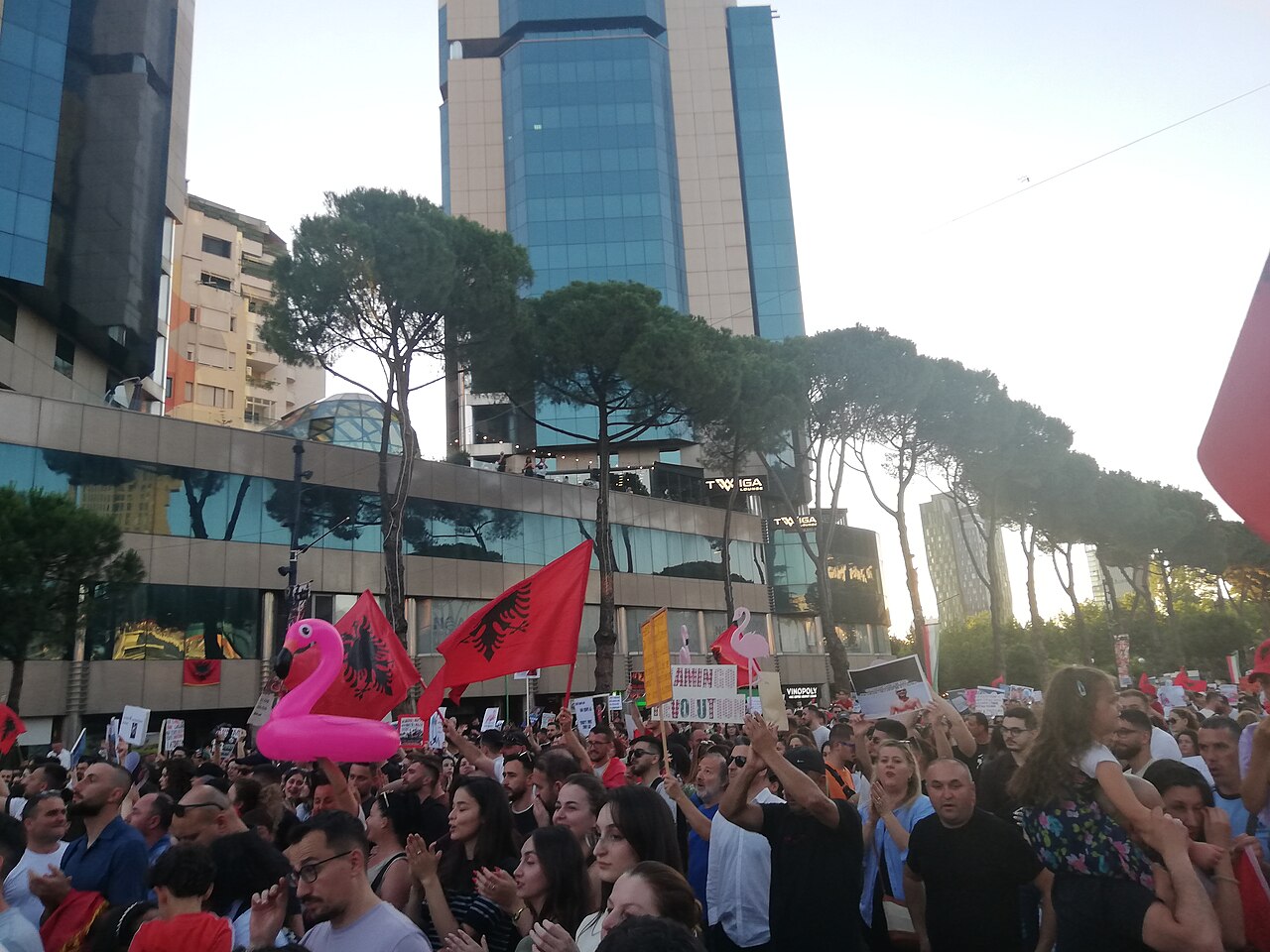
I’ve been following the recent protests in Albania but from a particular angle: as a participant in a similar wave of mass protests in Serbia. In 2024, I got three months of death threats after I published a scholarly article exposing controversial economic data related to a German-backed lithium mining project that threatened to tear up the Serbian countryside. Since some of the threats were written in German and followed a visit by that country’s then Chancellor Olaf Scholz, the case drew international attention. It is still under United Nations investigation and was covered by the Guardian, which helped draw attention to the massive statewide protests and subsequent repression in Serbia at the time. Previously, I was involved in internationalizing Serbia’s lithium struggles, linking activists and local communities from Portugal, Chile, Spain, Germany, and elsewhere with those in Serbia under what became known as the “Jadar Declaration.” It was these international links that triggered the threats in my case.

So, there’s good reason to speak up about what’s happening in Albania after the last month of protests against a destructive luxury resort project backed by Jared Kushner. Surely, not everyone shares this view. Decades of nationalism and war have created deep divisions between Serbia and Albania. Yet there are important similarities. Both governments are currently facing backlash from their citizens over ties to foreign-led development projects. This marks a shift in both countries: citizens are no longer identifying with their own states. Instead, both societies are experiencing a growing divide between citizens and state structures, which repress their own populations in defense of projects led by US and other global elites.

Like Serbia, Albania has experienced brain drain. It lost more than a million citizens through migration during the post-1991 transition to capitalism. Official UN estimates suggest that over 43 percent of the population now lives abroad. Both countries face mounting environmental conflicts, while political opposition is either ineffective or, in Albania’s case, sometimes aligned with extractive industries, while trade unions remain weak. Both countries are also becoming increasing focuses for US capital. Already prior to the Zvërnec luxury resort scheme, Kushner was involved in a real estate project in Serbian capital Belgrade proposing redevelopment of the General Staff Building — a partially destroyed site, until now preserved as a memorial to the 1999 NATO bombing. Plans to transform the site into a luxury development, reportedly linked to the Trump network, provoked public outrage and led to the project’s withdrawal.

Kushner’s trajectory in the Balkans is emblematic of a broader transformation of US hegemony in the region, which some have now dubbed “Trump’s Balkan doctrine.” In Serbia, the United States was the third largest international investor in 2024 and signed a landmark Energy Cooperation Agreement with its government. In May, a previously announced €2.6 billion hydroelectric Đerdap 3 project was even publicized by the US Embassy in Serbia. Similar dynamics appear in Bosnia and Herzegovina, where American investments used to be €6.1 million in 2022. However, this is expected to surge, as the United States has brokered a €1.5 billion deal with Bosnia and Croatia to construct a liquefied natural gas (LNG) pipeline connecting the two countries — a key target for US LNG exports. The company set to do the construction is AAFS Infrastructure and Energy, a Donald Trump–linked US-based enterprise now officially endorsed by the Bosnian state.

The same approach is now changing Albania, where US investment previously rose from approximately $100 million in 2020 to over $300 million in 2023. This is also expected to surge, as the United States seeks to position Albania as an LNG hub through a $6 billion project in cooperation with Greece. Thus, US energy investments are changing the Balkans as a whole.

This is in line with the strategy encoded in the “Western Balkans Democracy and Prosperity Act” passed by the US Congress in October 2025. The same strategy features US attempts at removing Chinese and Russian influence and explains why, subsequently, Serbia’s Russian-owned oil sector has faced sanctions, contributing to supply instability and pressure on the national currency. This reflected a broader strategy of restricting energy flows among China’s partners, from Venezuela to Iran. In this context, the Balkans is now embedded in shifting patterns of US hegemony.

It is only within this context that Kushner’s $1.4 billion Albania project must be understood. And it is not without precedent: Peter Thiel has also expressed intentions to build a Mediterranean city populated by IT specialists and a racially exclusive elite, where capital is explicitly prioritized over democracy and human rights. The expansion of US capital in the region thus signals not only increased investment but also increased power over the Balkan states; a broader Pandora’s box of projects is emerging, some of which are deeply unsettling.

In fact, the Balkans are once again transforming into a site of geopolitical competition between major powers, potentially destabilizing Europe. This is another structural reason why intra-Balkans solidarity will become more widely important.

Citizens of Albania and Serbia are therefore justified in questioning whether their states function as agents of their citizens or as intermediaries for global capital, enforcing its conditions on their populations. The citizens of Bosnia are doing the same. Even though protests in Bosnia are still localized, in past instances they did spread across the country, as in 2014. In all three cases, the Balkan states increasingly appear as vehicles for foreign capital and its fantasy projects while repressing their own citizens.

Historically, the Balkans have been marked by fragmentation shaped by both national conflicts and competing external influences. These divisions have made the region vulnerable to extractivism. Overcoming them is thus essential if any pan-Balkan strategy — politically or economically speaking — is to emerge in response to what increasingly look like proxy resource conflicts.

Issues such as mining and ecological degradation transcend national borders and create material interests that can potentially be articulated across them without relying on the states that are backing devastating projects. In this sense, we are witnessing an opening in the region. Previously, isolated, nationally bounded movements were unlikely to succeed against transnational forms of power. For Serbia, Bosnia, and other Balkan countries to support Albanian protests is thus not only a moral claim but a strategic necessity.

If the Balkans is to avoid becoming another peripheral zone for elite megaprojects and a proxy for clashes between extractivist superpowers, we need to do more than think in terms of the nation-state. In fact, this also opens up space for rethinking the Balkans itself. Recently, the Regional Alliance to Defend the Nature of the Balkans, a network of over thirty organizations across the region that also includes the Alliance of Ecological Organizations of Serbia, expressed its full support for environmental activists, local communities, and citizens in Albania. There have also been limited instances of cross-border activism between Bosnia and Serbia’s local communities when it comes to the struggle against lithium mining. So, the perspective of integration, one might say, is opening up.

However, the obstacles to deeper society-wide cooperation remain substantial. Bosnia, Serbia, and Albania all have weak opposition forces that are unable to channel this energy or, in some cases, are even opposed to it. If a new political opposition emerges with an alternative vision, and if they can articulate it effectively — which the student movement in Serbia certainly had the potential to do in some regards — such cooperation could reshape the Balkans. At the very least, the current moment may be creating conditions for the Balkans to assume a new role.

Finally, we cannot ignore an old idea. The proposals for Balkan federation were conceived a hundred years ago out of the fear that the region as a whole might be subordinated — like the process that is currently under way. This confronts the Balkans with an alternative. The region may again become a resource colony, as many protesters fear. Or else it can avoid this fate by choosing the path of solidarity and mutual support. To do that, it has to recognize what’s at stake.


This article was originally published by Jacobin; please consider supporting the original publication, and read the original version at the link above.Email

Aleksandar Matković is a researcher at the Institute for Economic Sciences in Belgrade.

The Black Woman on the Train Did Not Look Away. How Much Longer Will We?

Source: The 19th News

It is an arresting image: On the Fourth of July, a lone, young Black woman sits on a train filled with White nationalists headed to commemorate America’s 250th birthday in our nation’s capital. 

Her thousand-yard stare is one of dignified terror. It is a moment forced upon her, in a democracy still reckoning with its contradictions about who gets to belong, where patriotism and freedom are perverted and how a Black woman becomes an unwitting and unwilling passenger amid a sea of mostly white men.

Their identities are not known, but the fear the image evokes is familiar. A crowd of faces, sitting and standing, intentionally unseen behind sunglasses and scarves. And then, in their midst, a single face exposed: brown, female, eyes fixed in the direction of the camera. In this photograph, what was meant to intimidate became insight. 

The men are masked. She is not. 

Once again, a Black woman was captured in a moment where she must confront the worst of America with composure and become the mirror that shows the distance between who we are and who we say we are — or who we want to be — as a country. 

We do not yet know the name or age of the woman in the visceral and now viral photograph taken Saturday by Reuters photographer Cheney Orr. But we know the look on her face. 

We saw it on the face of 15-year-old Elizabeth Eckford as she calmly walked to class amid a racist, screaming mob en route to her first day at Little Rock High School on September 4, 1957. We saw it on the face of 23-year-old Diane Nash, one of the courageous Freedom Riders who did not know whether she would return home when she set out with other members of the Student Nonviolent Coordinating Committee as leader of the 1960 Nashville sit-ins. 

We saw it in 2016 on the face of 28-year-old Iesha Evans, a nurse who stoically and peacefully faced down armed officers in combat gear at a protest in Baton Rouge, Louisiana, over the death of Alton Sterling, her sundress flapping in the July breeze behind her, her hand extended to hold the weapon pointed in her direction at bay. 

These women became enduring symbols of their citizenship and self-worth, their quiet resistance demanding respect. 

And now it has happened again. I do not need to know who she is to know who she is. 

This was a young woman who was just trying to get to her destination: maybe running an errand, heading to work or going home after her shift. Maybe she was going nowhere in particular. She does not need a reason to be on the train; she is simply existing. 

But then the train stops and the men boarding do have a reason for being there. We know them, too. 

The men on the train were part of Patriot Front, a white nationalist group formed in the aftermath of the deadly 2017 “Unite the Right” rally in Charlottesville, Virginia, where masked white men carried tiki torches and marched in opposition to the removal of a statue of Confederate Gen. Robert E. Lee. The group has promoted the “great replacement theory” and on Saturday, hundreds of their members descended on Washington, chanting “Reclaim America!” and waving Confederate flags on the country’s 250th anniversary. 

The Black woman on the train was not physically harmed that day. But the specter of harm was present — and recognizable not only to her, but to many Black women. For them, at the least, such encounters are just another microaggression of the day; at worst, they can result in actual harm. 

Either way, as a Black woman, you’re just hoping to survive the moment — and hoping there isn’t a next time. But there is always a next time, because to be a Black woman in America is to know that the indignity and inequality that come with racism and sexism are the train that is never late.

Looking at this scene is a stark and stinging reminder of how unsafe Black women remain in this country. How we have no control over when or where the threat will show up along the journey, or how it will look: the loss of voting rights and bodily autonomy — or a job in an environment that is against diversity, equity and inclusion. 

We cannot know what the Black woman on the train was thinking or feeling at this moment. But we recognize the image as an indictment. It should make all of us pause to consider what it is that we are celebrating as America turns 250. 

At times, the terror and intimidation has come with masks; at others, they have been in plain sight, spitting, yelling and aiming their violence at us. The Black women on the receiving end are often only later regarded as brave and courageous. In the moment, the goal is to make them feel less American. The result is always the opposite. 

Black women have repeatedly reflected the truth of our country back at itself. Like the woman on the train, we are all on a collective journey, too many of us surrounded by those who are unwilling or unable to see our full humanity. 

She did not look away. How much longer will we?


This article was originally published by The 19th News; please consider supporting the original publication, and read the original version at the link above.Email
avatar

Errin Haines is editor-at-large for The 19th. An award-winning journalist with nearly two decades of experience, Errin was previously a national writer on race for the Associated Press. She’s also worked at the Los Angeles Times and the Washington Post.