Saturday, July 25, 2026


Frustration and anger on Syria’s streets


Tempest graphic Syria protests

First published at Tempest.

Since the beginning of the year, demonstrations and strikes have continued across Syria. Demands range from increased political participation and democratic rights1 to condemnation of the actions and violations committed by Israeli occupation forces in the Quneitra region, and the right to education in Suwayda.2

Journalist Zeina Shahla documented nearly eighty demonstrations across the country between February and April, most of them motivated by social and economic grievances.3 The newspaper Kassioun subsequently recorded 34 rallies and demonstrations in 21 locations across several Syrian governorates, cities, towns, and universities between May 18 and 24, 2026. Protests are still ongoing at the time of writing.

Since the beginning of 2026, discontent with socio-economic problems has intensified. Polling in different areas of Syria has been showing growing dissatisfaction regarding socio-economic issues. According to the website Syria in Transition:

Yet by April the mood had changed (towards the ruling authorities). The most serious deterioration was in attitudes toward the economy and the state’s capacity to manage it. Only 13 percent of respondents now believed the government was doing enough to tackle soaring energy and food prices, while 66 percent said its efforts were insufficient.

This has been reflected as well with rising labor strikes and protests denouncing worsening working and living conditions.

Syrian ruling authorities have deepened a political-economic orientation favoring a commercial model focused on short-term profit, to the detriment of Syria’s productive sectors. This economic orientation was already at play during the former Assad’s regime. The majority of the investment projects offered by Damascus to foreign investors demonstrate this pattern, and so does the nature of the investment promises made to Syria since December 2024 into tourism, real estate, and financial services. Most of these promises, however, still await their implementation.

Meanwhile, no protection has been provided to national production, particularly manufacturing industry and agriculture, against foreign competitive products. Quite the opposite. Accelerated trade liberalization is threatening their existence even more. In late January 2025, Damascus reduced customs duties on more than 260 Turkish products. Syria’s trade deficit with Turkey reached an all-time high of $3.26 billion in 2025, according to data from the Turkish Statistical Institute. This represents an 86.5 percent rise in comparison to 2024, when the deficit stood at $1.74 billion.

At the same time, Syrian officials announced on several occasions since their arrival to power their willingness to start the process of privatization of state assets, or at least to encourage a public-private partnership model to manage them. This includes essential services such as education and health. More recently, rumors of potential privatizations of state-owned banks have also emerged.

The Syrian ministry of finance has also drafted a new tax system that should come into force at the beginning of 2027, which will probably diminish the state’s financial capacities and revenues even further. Indeed, with a unified and non-categorical tax structure, and a similar corporate tax applied equally across all business entities, regardless of their size, this weakens the ability to expand the revenue base and is fundamentally unequal.4 Similarly, the new investment law enacted by presidential decree in June 2026 provides large concessions to investors, such as permanent exemption from income taxes for agricultural and educational projects, reductions of up to 80 percent of income taxes in export-oriented and priority industrial sectors, and wide customs exemptions. In addition, full ownership rights are allowed for foreign investors, as well as renewable residence permits, and unrestricted profit repatriation.

Syria’s new tax system and investment law reflect the ruling authorities’ prioritization of investment from large foreign companies and high-net-worth individuals, as well as promoting dynamic consumption, rather than strengthening the country’s productive capacities.

This dynamic is also reflected in the reliance on foreign capital and assistance, as well as local businessmen, to promote Syrian reconstruction and economic recovery through foreign donations or donation campaigns, such as the Syrian Development Fund and other initiatives for specific regions and cities.

Accompanying these policies favoring economic liberalization and interests of big capital, the ruling authorities have promulgated a series of decisions and measures boosting dynamics of concentration of power in the Syrian economy.

Strikes and popular protests

The protests have mobilized various segments of society, including transport workers, laborers, farmers, teachers, students, lawyers, and bakers, reflecting growing discontent across the country with the continued erosion of purchasing power and the deterioration of public services. They also targeted corruption, nepotism, and a lack of transparency and participation in decision-making processes.

The protests erupted in mid-May, initially in Raqqa, Deir ez-Zor, and Daraa, and then spread to other parts of the country, after the Syrian Ministry of Economy and Industry set the price of a ton of wheat for the 2026 harvest at 4,600,000 Syrian pounds (approximately $333.30 at the unofficial exchange rate of May 27). This decision sparked widespread discontent among farmers, as the cost of producing a ton of wheat currently fluctuates between $340 and over $530. Following these protests, interim President Ahmed al-Sharaa issued Legislative Decree No. 120 of 2026, granting a subsidy of 900,000 Syrian pounds (SYP) per ton of wheat delivered by farmers to the Syrian Grain Company. Thanks to this increase, the price of a ton of wheat reached approximately (SYP) 5,500,000, a price still lower than the protesters’ demands.

Other demonstrations took place during the same period, notably in the Hasakah Governorate against the reduction of diesel fuel allowances for agricultural projects, and in the Tarhin region, a rural area near Aleppo, where owners and employees of oil refineries protested the decision to permanently close them. The demonstrators also demanded fair compensation to guarantee a minimum standard of living, emphasizing that thousands of families depend on this sector as their primary source of income.

In June, strikes broke out at the privately owned Zanobia Ceramics company5 and at the Madar Detergent Company’s facilities and factories in the Kisweh region, near Damascus, employing 4,000 and 4,500 people respectively. The demonstrators demanded higher wages and better working conditions. After a week-long strike, the workers of the Zanobia company obtained satisfaction on several of their main demands, including an increase in their wages (which includes a rise of SYP 500,000, in addition to SYP 200,000 of cost-of-living allowance, for a total of SYP 700,000 (equivalent to $51.20 at the end of June)) and guarantees in terms of health coverage, including health insurance, the presence of a doctor in the factory, the provision of an ambulance and safety equipment at work.

Workers at the Bab al-Hawa border crossing in northern Idlib protested in late June against the administration’s imposition of a 24-hour shift system and unfair working conditions. Despite the administration’s threats of mass layoffs and replacements to break the strike, the workers — some with 14 years of service — maintained their demands for a more flexible work schedule. According to the website Al-Hal Net, the administration has already hired new employees, but about 90 percent of them resigned immediately, unable to continue due to the grueling working conditions and endless hours.

The city of Qamishli also witnessed several days of protests in late June, denouncing rising prices and poor living conditions, as well as power outages caused by fuel shortages. For example, protesters staged a sit-in to demonstrate against the rising price of diesel, demanding the reversal of this decision and an improvement in their living conditions, as the region experiences soaring prices for goods and services, along with increased transportation and production costs. Dozens of retirees held a sit-in outside the city’s Social Security office, at the invitation of the Retirees’ Group, to demand the expedited payment of their monthly pensions and an end to the delays and postponements affecting their entitlements. Following these mobilizations by retirees, the Retirees’ Group was officially announced at the end of June, with the aim of defending retirees’ rights to a decent standard of living, particularly by resolving issues related to their salaries and payment delays.

These sit-ins and demonstrations are taking place against a backdrop of runaway inflation plaguing the Syrian Jazira region (northeast Syria), with rising transportation and agricultural production costs, alongside a rise in commodity prices — as well as persistent complaints about deteriorating services and frequent power outages. For example, in mid-June, social unrest erupted in the Raqqa Governorate due to wage delays and their continued status as “irregular” workers — lacking legal protections and job security. These protests led to further strikes that affected the sanitation sector in several areas of the governorate.

Unfair dismissals and persistent austerity measures

Meanwhile, dismissals continued in several ministries throughout 2026, sparking further protests. In mid-June, laid-off workers from the General Cotton Yard Company in Idlib staged a sit-in to demand justice and their reinstatement.

The Syrian government has still not established clear, legal, and precise standards and procedures for dismissals or suspensions, fueling accusations of arbitrary dismissals. The human rights organization “Syrians for Truth and Justice” has expressed that it is deeply concerned about the compliance of these procedures with the legal safeguards stipulated in the Unified Fundamental Law for Workers No. 50 of 2004 (Articles 132 to 139). Furthermore, in June 2026, the organization published a report describing cases of arbitrary dismissals and forced transfers based on “sectarian, political, or gender backgrounds, or to criteria related to the individual’s stance on the Syrian uprising (in 2011), or regional and social affiliation” raising serious concerns about the use of the state restructuring process as a tool for exclusion and the reshaping of the public sector on unprofessional grounds.

More recently, the government also increased salaries for specific jobs, generally in the higher strata of the administration or in positions considered as more “prestigious,” while the overwhelming majority of employees did not benefit from similar measures. Furthermore, salary disparities persist within the same ministries for similar jobs, with employees, often previously affiliated with the group Hay’at Tahrir Sham6 or allied with it, appointed by the new authorities receiving higher salaries (often in US dollars).

Damascus authorities have continued to reduce the number of subsidized loaves of bread they distribute, from ten to eight per household daily, while maintaining the price at SYP 4,000. The ministry set the weight of a loaf of bread at 1,000 grams, down from 1,050 grams previously. As a reminder, in December 2024, the price of subsidized bread was SYP 400 (for 1,100 grams). These measures have exacerbated food insecurity among the most vulnerable populations.

Opposition to luxury real estate projects and population displacement

At the same time, several protests have erupted against real estate projects that have led to the displacement of local populations and the loss or erosion of their property rights. In Homs, inhabitants of the Qarabis neighborhood successfully pressured the Kuwait-based al-Omran Real Estate Development Company to cancel the element of its “Boulevard of Victory” plan affecting the neighbourhood, which would have threatened their properties and displaced them from their homes. In the beginning of May 2026, a protest was held in Damascus by the residents affected by Decree 66 of 2012 from the Mezzeh, Kfar Souseh, and Basateen al-Razi neighborhoods. This reflects the ongoing social and legal tensions surrounding major urban development projects, most notably the Marota City project. At the same time, in the Aleppo countryside, the inhabitants of Jabal Aqil demonstrated against the seizure of their land by the Turkish military base.

That same month, a demonstration took place in northern Raqqa to protest the local authorities’ plan to demolish housing north of the railway line, under the pretext of “reconstruction and investment.” This situation is all the more concerning given the rumors circulating about Saudi investment and the construction of housing by a Chinese company on the land. Official statements claim that the land is “state property,” a claim disputed by residents, who assert they possess official deeds of transfer and other legal documentation. During the demonstration, protesters chanted slogans demanding the resignation of the governor, who has refused to cancel the reconstruction plan affecting approximately 3,000 families, most of whom are low-income and living in poverty. They reaffirmed their determination to find a just solution that guarantees their housing rights and puts an end to the evictions and demolitions.

Overall, these real estate projects often aim to serve an elite class able to afford new and expensive housing projects and accumulate capital, rather than building housing schemes and infrastructures seeking to fulfill the interests of large segments of the population — who now suffer worsening living conditions and low purchasing power in the face of very high rents and expensive property prices. For example, one of the most emblematic real estate projects is “Yaafour 963,” launched by Overseas Investment Group, owned by Syrian-Emirati businessman Muwaffaq al-Qaddah, where apartments are offered starting at $300,000. Similarly, the “Abyat Hills” project, launched by the Saudi Abyat Real Estate Investment and Development Company in the Damascus suburbs of Qudsi and al-Bajaa, is estimated at over $2 billion and plans to build 22,000 homes in secure residences with modern amenities.

Moreover, the country continues to suffer a deep housing and infrastructure shortfall that threatens the processes of stabilization and recovery — which frustrate the expectations for safe and dignified living conditions and the prospects for both internally displaced persons (IDPs) and refugees to return. According to the 2025 Humanitarian Needs and Response Plan (HNRP), “one-third of the country’s housing stock has been damaged or destroyed, while critical infrastructure, including roads, water networks, electricity, and sanitation systems, remains largely non-functional.”

The cost of living continues to rise

The growing anger of the population reflects the disastrous economic situation in the country.

The poverty rate in Syria fluctuates between 80 and 90 percent, and 16 million people are in need of emergency aid to survive. This is in a country of about 26 million. More than 7 million people face severe food insecurity. Furthermore, due to a significant funding shortfall, the United Nations World Food Program announced in mid-May 2026 that it would scale back its operations in Syria by halving its emergency food assistance, from 1 .3 million to 650,000 people, and ending its national bread subsidy program, which supported millions of people daily.

This is a context of a labor market very much disrupted, and high unemployment, particularly among the youth in a context of a lack of economic opportunities. While there are no clear rates for the size of unemployment in Syria, estimates ranges from 14 percent at the World Bank in 2025 to 60 percent according to the Syrian Minister of Economy and Industry, Nidal al-Shaar. In addition, 83 percent of the Syrian labor market is reported to be informal, meaning a lack of social security and legal protection, leaving millions of workers vulnerable to exploitation or sudden income loss. The returns of Syrians, both refugees and IDPs to their original regions, have also further strained the labor market, which lacks the capacity to absorb them. The International Organisation of Migration in May 2025 also underlined that the “lack of economic opportunities and essential services pose the greatest challenge for Syrians returning to their communities.”

The rise in prices of key commodities and services has also contributed to increasing inflation, pushing the cost of living higher still for Syrians. While the authorities raised public-sector salaries and pensions by 200 percent in July 2025, and by a further 50 percent in March 2026—bringing the minimum wage to SYP 1,256,000 per month (approximately $96.6 at the end of June according to the black exchange rate of SYP 13,000) — this remains far from enough to guarantee dignified living conditions. According to the Syrian Center for Policy Research, “the abject poverty line for a household reached 3.34 million per month in April 2026 (approximately $252 according to the black exchange rate of SYP 13,250 at the end of April), while the lower poverty line reached SYP 5.26 million ($397), and the upper poverty line reached SYP 7.26 million (548$).” Large segments of society rely on remittances from relatives abroad amounting to around $4 billion annually, according to estimates from earlier this year.

From this perspective, what the Syrian people lack is not just job opportunities, but jobs that allow them to live with dignity and meet their daily needs. In this context, reducing subsidies and increasing the prices of basic necessities will only worsen the situation and negate the effect of wage increases.

Limitations of protest movements

The protest movements and attempts at worker self-organization are positive developments, especially after years of war and dictatorship. For example, workers at the Zanobia factory established a strike committee, composed of four members elected by the strikers to negotiate on their behalf.

Despite the positive aspects of these demonstrations, their impact remains limited. First, these protests remain geographically confined, lacking coordination between regions, with the partial exception of demonstrations related to wheat prices. There is no close cooperation between workers in the same sector — for example, between public school teachers demonstrating in different governorates. This allows the authorities in Damascus to manage each movement separately and limit its influence on the political landscape.

Second, the protest movements lack political channels and means of expression, primarily due to the absence of political parties or mass political networks capable of relaying their demands and calls to action. Furthermore, with the exception of a few left-wing parties that observe these demonstrations without playing an influential role, political actors and civil society actors are not giving them the attention they deserve.

In this context, it is important to emphasize that worker self-organization and the struggle for democratic, independent, and mass unions — in order to foster coordination between workers and unions autonomous from the government — are essential for improving the living and working conditions of the population and, more broadly, for defending democratic rights.

Furthermore, it is essential to build and rebuild grassroots organizations — from trade unions to feminist and women’s rights organizations, including local associations, progressive political parties, and national structures — in order to unify them.

The collective and democratic organization of the working and popular classes is also the best way to confront and oppose the sectarian and ethnic tensions that continue to impact society. These tensions are often encouraged or fueled, or at least not radically addressed, by the central government and/or its political allies to divert attention from the social, economic, and political problems affecting the population. For example, recent demonstrations demanding justice for Assad-era crimes in Syria coincided with an escalation of attacks by civilian groups and incitement to sectarian hatred between June 13 and 17, 2026. Syrian authorities have so far failed to establish a mechanism to promote a comprehensive transitional justice process that would bring to justice all individuals and groups involved in war crimes. Such an approach could have played a crucial role in curbing reprisals and mitigating the escalation of sectarian and ethnic tensions.

Conclusion

Whatever political force came to power after Assad’s fall, it inherited a multitude of political, social, and economic challenges. However, the policies of the current Syrian authorities have exacerbated these difficulties instead of resolving them. Economically, the approach of the new ruling class has failed to improve the living conditions of a large segment of the population and has negatively impacted the recovery of the economy’s productive sectors.

The increasing number of demonstrations since the beginning of the year, fueled by deteriorating living and working conditions as well as socio-economic problems, demonstrates the shortcomings of current economic policies and could serve as a warning to Damascus.

Any successful economic recovery and reconstruction process must be based on a comprehensive and democratic political transition that empowers the various sectors of society — political parties, social actors such as trade unions, professional associations, the Farmers’ Union, human rights and feminist organizations, local associations, and so on. The means to participate in decision-making processes, including in the economic sphere, must be created. This would create the necessary conditions for integrating their collective interests and establishing the political stability essential for the sustainability of these policies. Therefore, free and transparent elections must be organized within trade unions, professional associations, and agricultural federations so that these sectors can choose their representatives and defend the interests of their members.

Finally, the processes of capital accumulation and distribution, as well as economic policies, should be the subject of collective debate within society, and not the prerogative of a small elite in power.

Joseph Daher is a Swiss-Syrian academic and activist. He is the author of Syria After the Uprising: The Political Economy of State Resilience (Pluto, 2019) and Hezbollah: The Political Economy of Lebanon’s Party of God (Pluto, 2016), and founder of the blog Syria Freedom Forever. He is also co-founder of the Alliance of Middle Eastern and North African Socialists.

  • 1

    One example is the two sit-ins organized by the “April 17 Gathering” in Damascus in April and June, under the banner “Rights and Dignity.” Their demands included: a commitment from the transitional authorities to fulfill their duties and exercise their powers in conducting the transition process; working towards a genuine political transition based on an inclusive national dialogue leading to elections; activating the transitional justice process and bringing perpetrators of crimes to justice; rejecting the perpetuation of the Assad regime and the rehabilitation of its figures; broadening political participation through free elections to local councils and trade unions; strengthening the role of political parties and rejecting the monopolization of power by any one entity or faction; establishing good governance based on competence, integrity, and transparency; ending the chaos surrounding appointments and the distribution of power; combating corruption; criminalizing sectarian speech; and guaranteeing an independent, transparent, and fair judicial system.

  • 2

    A campaign was launched in May 2026 in the Suwayda Governorate to guarantee the right of thousands of students to take their secondary school leaving exams in the governorate, in a safe and stable environment. The authorities in Damascus have so far opposed this, demanding that students travel to Damascus to take their exams.

  • 3

    From Zeina Shahla’s article: “Over the past three months, we have documented nearly 80 vigils of protest, averaging one per day, in Damascus and its surrounding countryside, as well as in Aleppo, Deir ez-Zor, Raqqa, Idlib, Latakia, Hasakah, Quneitra, Daraa, Hama, and Homs. These vigils were organized by students, taxi drivers, organ transplant recipients, families of missing persons, street vendors, residents of devastated areas awaiting reconstruction, lawyers, teachers, and traders from certain markets. Furthermore, some vigils brought together different segments of society around common demands: the cancellation of the electricity price hike, improved living conditions, respect for the rule of law, the resolution of security issues, the fight against corruption, and the commemoration of key moments in the Syrian revolution and war.” Furthermore, the governorate of Suwayda, in particular, has been the scene of frequent vigils following the massacres of last July, with demands such as the right to self-determination, the return of displaced persons, and the revelation of the fate of the disappeared.

  • 4

    There will be no tax to pay for agriculture, bank deposit returns, and stock trading. A 2 percent rate will apply to supplies and services by non-residents. There will be a 10 percent rate in the health, technology, education, and industrial sectors, while other sectors—including trade and services—will pay 15 percent. Income tax will only kick in after the first Syrian pound (SYP) 60mn—around $5,310. Thereafter, there will be a 6 percent rate for the first SYP 5mn ($442.5) and 8 percent over SYP 5mn ($442.5). Exemptions are envisaged on transfers of company shares, revaluation of fixed assets, returns and interest on bank deposits, local exports of goods and services, the agricultural sector and its associations, children’s medical expenses, education, rent, and interest on housing loans. For corporate donations to good causes, there will be a special tax deduction. At the same time, a sales tax has been introduced, which could serve as a precursor to a VAT, at a 5 percent rate on essential goods.

  • 5

    Zanobia is a private company specializing in the manufacture of ceramics, granite and construction materials. It owns two industrial complexes: one in Al-Kisweh, a southern suburb of Damascus which houses many factories, and the other in the industrial zone of Adra, on the outskirts of Damascus.

  • 6

    This is the new name of Jabhat al-Nusra, which was founded as an al-Qaeda affiliate in 2012. The group took its current name when it dis-affiliated from al-Qaeda in 2017. Its leader, Ahmed al-Sharaa, became Syria’s president after leading a coalition of rebel forces to bring down the Assad regime in late 2024.

Partido Lakas ng Masa (The Philippines): Rubio out! Stop US intervention and wars! Hands off our region!


Marcos Rubio

[Editor’s note: Filipino socialist activist Khyl Ramos, from the Partido Lakas ng Masa (PLM, Party of the Labouring Masses), will be speaking at Ecosocialism 2026, September 11-13, Magan-djin/Brisbane, Australia. For more information visit ecosocialism.org.au.]

First published at Ang Masa Para sa Sosyalismo.

Partido Lakas ng Masa (PLM) condemns the visit of U.S. Secretary of State Marco Rubio to the Philippines to attend a series of ASEAN meetings. Rubio does not come as a friend of the Filipino people. He is one of the principal architects of U.S. imperialist foreign policy — a leading advocate of the economic siege and the overthrow of the Cuba’s revolutionary government, genocide in Gaza, escalating US-Israel war with Iran, and the expansion of U.S. military and economic dominance across the Asia-Pacific.

Rubio arrives in the Philippines as the U.S. is escalating the war against Iran, after betraying the ceasefire agreement, with President Trump declaring they would ‘open the gates of hell’ against Iran.

Rubio bears political and moral responsibility for the genocide committed by Israel-US on the Palestinian people in Gaza — therefore considered to be a war criminal by the Palestine solidarity movement.

Rubio is a very dangerous man on a very dangerous mission to the Philippines.

His visit is another step in Washington’s drive to tighten its grip on the Philippines and integrate our country more deeply into its confrontation with China. Rubio’s visit is officially aimed at deepening the U.S.-Philippines partnership and advancing Washington’s Indo-Pacific strategy against China.

For decades, Rubio has been among the loudest defenders of the criminal U.S. blockade against Cuba. He has fought every effort to normalise relations, promoted Cuba’s continued designation as a so-called “State Sponsor of Terrorism,” and championed sanctions intended to strangle the Cuban economy by cutting off access to banking, fuel, tourism and international finance. These policies have imposed immense suffering on the Cuban people while failing to achieve their declared political objectives.

Rubio has also worked to isolate Cuba internationally by pressuring governments to support Washington’s campaign against the island and oppose efforts to end the blockade.

Rubio has made it abundantly clear that his aim is to overthrow the Cuban revolution. This will result in the establishment of a regime utterly subservient to US interests.

Rubio’s record extends across Latin America and the Middle East. He has consistently backed sanctions and regime-change operations against progressive governments in Latin America and Iran — the kidnapping of President Maduro and now the U.S. representative who de facto runs the Venezuelan government.

Rubio’s aggressive and interventionist foreign policy is contributing to greater instability and the constant danger of wider wars. His politics represent the continuation of a U.S. imperialist project that seeks to preserve US global dominance through military power, economic coercion and political interference.

In the Philippines, Rubio’s mission is clear: to consolidate Washington’s military alliance with the Marcos Jr. administration. As PLM has consistently warned, visits by senior U.S. officials are designed to push for greater U.S. military access, increased troop deployments and deeper integration of the Philippines into the U.S. war machine, regardless of the interests of the Filipino people. PLM has argued that such visits “push for more U.S. troops in the country” and further trample on Philippine sovereignty.

The Marcos Jr. administration has enthusiastically embraced this agenda. Through the expansion of EDCA sites, larger Balikatan exercises, increased rotational deployment of U.S. forces and the development of the Luzon Economic Corridor, the Philippines is being locked ever more tightly into Washington’s military and economic architecture. While the Luzon Economic Corridor is promoted as an infrastructure and investment initiative, it serves the strategic objective of strengthening U.S.-aligned supply chains and military logistics in preparation for intensified U.S. intervention in the Indo-Pacific. Rather than advancing genuine national development, these policies risk transforming the Philippines into a permanent forward operating base and frontline state in the U.S. war machine.

PLM rejects the use of our country as a pawn in U.S. imperialism’s strategy. We stand in solidarity with the Cuban people in their heroic resistance to more than six decades of economic warfare and with all peoples resisting imperialist intervention.

The Filipino people deserve an independent foreign policy based on peace, national sovereignty, regional cooperation and social justice — not subservience to Washington’s geopolitical agenda.

Rubio Out!

U.S. Hands Off Iran! Stop the War!

Stop Arming Genocide in Gaza!

Stop U.S. intervention in Cuba! Lift the U.S. blockade!

Junk EDCA, the Visiting Forces Agreement, and all unequal military agreements!

Reject the militarisation of the Philippines and the Luzon Economic Corridor as instruments of U.S. strategic domination!

Fight for an independent and genuinely sovereign Philippines!

Imperyalismo Ibagsak! Down with imperialism!
Itayo ang Gobyerno ng Masa! For a Government of the Masses!

July 19, 2026

Trump’s $1.5 trillion military budget will cost US families an extra $4,600


U.S. President Donald Trump in Washington, D.C., U.S., February 27, 2026. REUTERS/Evelyn Hockstein
July 24, 2026
ALTERNET

President Donald Trump is asking for $1,500,000 million for the military for next year. That’s close to $600 billion (adjusted for inflation) more than we were spending on the military in fiscal year 2025, before Trump took office.

This increase is huge by any measure. It comes to around $4,600 per household. It is around 8% of the total budget. This spending request dwarfs sums that are often the subject of major debates in Washington.

For example, last year Democrats pushed to have the enhanced subsidies in the Affordable Care Act exchanges extended. This would have cost $30 billion a year, one twentieth of what Trump and Pentagon chief Pete Hegseth are demanding.

People may recall Elon Musk gleefully putting the US Agency for International Development into the “wood chipper” last spring. While ending this program is expected to lead to 4 million additional deaths over the next four years, it only saved around $35 billion a year. That is less than 6% of the increase in military spending that Trump is asking for.

Is the argument that in just 18 months in office, Trump has made the world so much less safe that we have to increase the defense budget by two-thirds?

The annual cost of extending the enhanced child tax credit, which cut child poverty in half, was around $100 billion a year, less than one-fifth of Trump’s proposed increase. And the annual appropriation for the Corporation for Public Broadcasting was $550 million, less than one thousandth of the additional spending for the military that Trump is demanding. (It’s in the chart, just small to see.)

People need to know that Trump’s military spending request is really big money, compared to almost anything else that ever comes up for public debate for Congress. Unfortunately, because of incompetent or corrupt budget reporting, few news accounts make any effort to put these huge numbers in a context that makes them understandable for their audience. As a result, most people will probably have little idea of what is at stake with this military request.

Any self-proclaimed deficit hawk who is not all hair on fire about Trump’s budget demand is a lying hypocrite who only uses concerns about the deficit to argue against programs they don’t like. We got along fine with the former level of military spending, which almost everyone, including Donald Trump in his first term, considered adequate.

Is the argument that in just 18 months in office, Trump has made the world so much less safe that we have to increase the defense budget by two-thirds? Most of us knew that making our former allies into enemies was not a good idea, but Trump is placing a huge price tag on this mistake. And remember, this is Trump’s own number, not his critics’.
'Seems like a bad thing': Arsenic-laced dirt fight erupts on Trump's public golf course

Bennito L. Kelty
July 25, 2026 
RAW STORY


East Potomac Golf Links in Washington, D.C., U.S., July 11, 2026. REUTERS/Daniel Heuer

President Donald Trump is embroiled in an arsenic-laced dirt fight — and opponents say his administration is fighting dirty, reports show.

The Trump administration is refusing to allow testing on soil it dumped on a public golf course in Washington, D.C. despite National Park Service findings the dirt contains arsenic and lead, according to new reporting from the Wall Street Journal.

The East Potomac Golf Links, where the administration plans to build a major golf championships facility, has been topped with dirt from the East Wing demolition where Trump wants to build a ballroom, the Journal reported.

Now opponents led by the D.C. Preservation League are suing the Department of the Interior to stop the project, according to reporting by NBC News.

They claim dirt dumped on the links by the Trump administration will hurt golfers and the environment, according to the Wall Street Journal.

The National Park Service tested the dirt and reported that while no asbestos was detected, there appeared to be toxins such as arsenic and lead the Journal reported.

The D.C. Preservation League is now asking a federal judge to allow it to test the dirt itself.

In a hearing this month, U.S. District Judge Ana Reyes said that she didn't understand why the Trump administration wouldn't allow for more testing of the dirt.

"If there isn't a problem with it, who cares?" Reyes asked. The judge reportedly added, "there appears to be a lot of arsenic in the soil 'and that seems like a bad thing.'"
TRUMPRX IS CANNIBI$

'Grease the palms': drug money surges into major Trump super PAC

Kathleen Culliton
July 25, 2026
RAW STORY


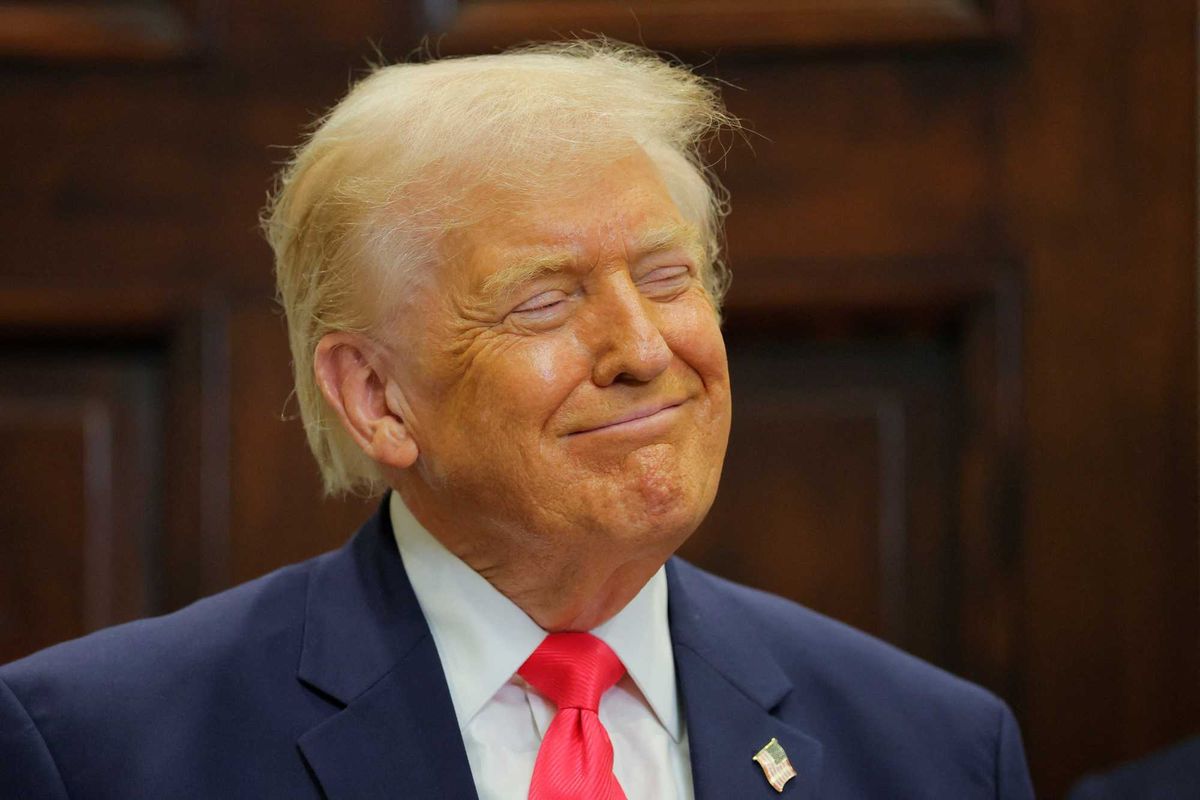
U.S. President Donald Trump smiles during an announcement about "Trump accounts", in the Roosevelt Room at the White House in Washington, D.C., U.S., December 2, 2025. REUTERS/Brian Snyder

It's the new kind of drug money — and according to a new report, it's being lobbed in President Donald Trump's direction.

Four large cannabis companies have donated a total sum of $10 million to a Trump-aligned super PAC this year, Salon reported Saturday.

Cannabis companies Verano, Curaleaf, Trulieve and Vision Management Services each gave $2.5 million to America First Agriculture Action Inc., according to Salon's analysis of Federal Election Commission filings.

“This is how Trump operates,” Ryan Hunter, the chief revenue officer at Spherex, a company that sells cannabis infused vape cartridges, told Salon. "You’ve got to grease the palms."

The donations stood out to reporter Russell Payne, he wrote, because "support for legalizing marijuana is sharply declining among Republican voters."

The Trump administration has moved to ban marijuana by classifying it as a Schedule III drug, and the psychoactive hemp market faces "an existential threat" in the bill to reopen the government following last year’s shutdown, Salon reported.

It included a new provision to close a loophole in November that allowed for psychoactive hemp products to sold — if hemp lobbyists can't get another law in to keep hemp legal.

Joe Gerrity, the CEO hemp-infused seltzer retailer Crescent Canna, told Salon he was surprised Democrats weren't stepping in to help considering the appetite for an expanded cannabis market.

“There’s no doubt it’s politically popular to embrace the cannabis industry from a party perspective," he said. "Frankly, it shocks me that we still haven’t seen a Democrat come out of the fold in a leadership position wholly embracing marijuana and pro-cannabis legalization."

Josh Kesselman, Founder of RAW Rolling Papers, warned the increase in cannabis cash could foretell hard times for stoners — should Washington respond to lobbyists' pleas with the wrong kind of reform.

“If Washington gets this wrong, reform could end up favoring the players who spend the most on lobbying while leaving small farmers, independent operators and the people who built this movement behind," Kesselman said.

"This plant should not be handed over to cannabis oligarchs who profit at the expense of everyone beneath them."

But Hunter, the cannabis vape cartridge seller, argued big bucks have already made their mark.

"It’s not surprising to see these large amounts of money flowing into PACs that he’s in favor of," said Hunter. "It’s just, unfortunately, how the game is played.”
Explosive report busts Trump official on potentially deadly lie: ‘This is not a game’

Alexander Willis
July 25, 2026 
RAW STORY


A satellite image shows wildfires spreading through northern Minnesota, U.S., and Ontario, Canada, July 14, 2026. CSU/CIRA & NOAA/Handout via REUTERS

President Donald Trump’s Forest Service chief, Tom Schultz, was exposed Saturday for having potentially lied during a congressional hearing earlier this week, a potential lie that may very well prove fatal.

On Wednesday, Rep. Angie Craig (DFL-MN) pressed Schultz on whether the Department of Government Efficiency (DOGE) cuts from early on in the second Trump administration had impeded firefighting efforts in Minnesota. Schultz insisted they hadn’t.


However, as wildfires currently ravage northern Minnesota, inside sources and a Forest Service (USFS) document suggest the DOGE cuts had, in fact, severely impacted firefighting efforts in Minnesota, The Washington Post reported Saturday.

“At the beginning of 2025, the U.S. DOGE Service paused or canceled federal grants and spending to review whether they were connected to diversity or climate initiatives,” the Post’s report reads.

“That affected nearly all of the Forest Service’s grant projects and funds, according to two USFS officials familiar with the situation, who like others interviewed for this story spoke on the condition of anonymity due to fear of professional retaliation.”

Aaron Kania, a former U.S. Forest Service district ranger who retired last December, explicitly said that had funding not been disrupted, the ongoing wildfires in Minnesota could have likely been better contained, if not entirely prevented.

“We were shovel-ready,” Kania said, speaking with the Post. “Had that work been implemented, it would have been effective in stopping or slowing down these fires. It’s the totality of all these things that set us back about a year and a half.”

In a statement to the Post, Craig lashed out at the Trump administration for its impact on Minnesota’s ability to combat wildfires, putting the blame squarely at its feet.

“Yet again, the Trump administration’s short-sighted cuts to federal programs have put Minnesotans in danger,” Craig said. “Firefighters have died and Minnesota kids have been put in harm’s way – all because this administration decided to roll back critical wildfire prevention efforts. This is not a game. These are real lives.”
'Appalling hit': Absolute fury hits Trump as CNN honchos react to Kaitlan Collins attack

Adam Nichols
July 25, 2026
RAW STORY


Kaitlan Collins. ( Joshua Sukoff / Shutterstock.com)

CNN pushed back furiously after President Donald Trump turned Friday's White House Correspondents' Dinner into a mocking fest for reporter Kaitlan Collins — including a jab likening her to a transgender influencer.

Trump set his sights on Collins roughly 10 minutes into his remarks at the rescheduled gathering, held at the Waldorf Astoria in Washington, according to The Daily Beast. Collins had just accepted the WHCA's Award for Excellence in Presidential News Coverage Under Deadline Pressure for her reporting on Ukrainian President Volodymyr Zelensky's February 2025 Oval Office blowup with Trump — a prize the president promptly dismissed as "fake."

"She's a young, attractive woman," Trump told the crowd. "She never smiles. I said, 'Kaitlan do you ever smile? Smile!' You have a nice position; you're at CNN fake news. You should be a happy person. So smile, Kaitlan! Just smile."

He then teased that Collins had landed a major sponsorship, before delivering the punchline that it was actually transgender influencer Dylan Mulvaney on the Bud Light can, a reference to the 2023 conservative boycott of the beer brand. The riff was met with near silence.

"That was an appalling hit at our colleague Kaitlan Collins," responded CNN's Betsy Klein.

Chief Media Analyst Brian Stelter flagged that a rebuttal from Collins' team was already circulating before Trump had wrapped up his remarks. "And the fact that CNN had a statement supporting Kaitlan ready to go... in advance... tells you everything about this media moment," he wrote.

Chief National Affairs Correspondent Jeff Zeleny zeroed in on the contradiction of a commander-in-chief who routinely denounces the press nevertheless spending an entire evening at a dinner devoted to them. "For a president who complains so bitterly about the press, there's never been anyone in the history of the modern presidency who spends as much time talking to reporters," Zeleny wrote.

CNN's Kristen Holmes delivered the sharpest jab of the night. "In addition to how much he speaks to the press, he is also one of the most unreliable sources at the White House," she said.

The smile jab was not new. Trump has publicly hectored Collins about her facial expressions for months, telling her in June she had "hatred in her eyes" and calling her a "corrupt reporter."

Friday's dinner was Trump's first as president. Originally scheduled for April, it was postponed after a gunman breached security outside the ballroom. The scaled-back redo drew about 700 guests, roughly a quarter of the original crowd. The 80-year-old president was also seen repeatedly closing his eyes for extended stretches as awards were handed out earlier in the evening.
Lessons from Past Activist Leaders for Today’s Fights for Health and Social Justice

As the Trump administration’s crusade against democracy and our nation’s public health and healthcare systems continue, we can learn from the lives of Denise Oliver-Velez and Walt Odets.


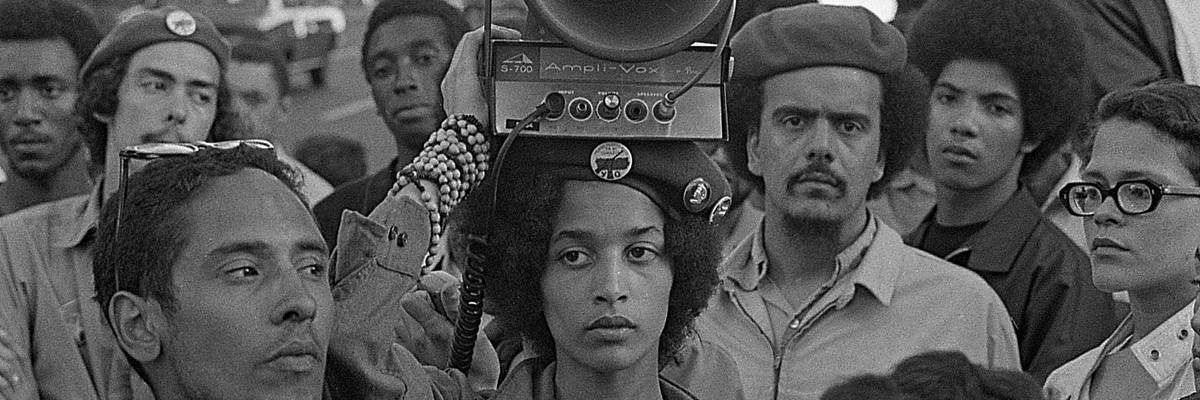
American activist and community organizer (and future academic) Denise Oliver-Velez (center), a member of the New York chapter of the Young Lords Organization Central Committee, holds a portable sound system over her head and stands, surrounded by unidentified others, during street rally in Newark, New Jersey on June 20, 1970.
(Photo by David Fenton/Getty Images)
Common Dreams


Two recent deaths highlighted the importance of earlier activist leaders to struggles for health and social justice. Denise Oliver-Velez, who died on July 15, was a founder of the Young Lords Party in New York, a group that mobilized Puerto Rican and other communities to fight for their health and dignity. She also helped set the stage for alignments between movements for the rights of people of color and those focused on the rights of women.

Walt Odets, a psychologist, died on July 5th in Berkeley where he had provided therapy for gay men for decades. His activism had focused on how best to prevent AIDS and ending the stigma that this country imposes on LGBTQI people.

Their stories remind us of the important role activists play in combating injustice and reversing cruel and harmful policies. As the Trump administration’s crusade against democracy and our nation’s public health and healthcare systems continue, we can learn from these two lives lessons for today’s activists who can bring the values and passions of Oliver-Velez and Odets into the present period.

Through the campaigns she helped to organize, Oliver-Velez brought to life an alternative vision of a healthcare system that put serving people first. In 1970, the Young Lords occupied Lincoln Hospital, an underfunded, understaffed public hospital with decaying facilities and low quality of care, known in the community as the Butcher Shop. The Young Lords sent members into the hospital lobby to collect complaints from patients, which they then presented to hospital administrators. When conditions did not improve, the group occupied the hospital, winning an agreement to hire more Puerto Rican doctors committed to serving their community and to support the Lords to set up new community health and substance use programs. At a time when the city was closing public hospitals to save money, Lincoln was rebuilt and a new modern hospital was opened, in part due to persistent pressure from the Young Lords and their healthcare worker allies.

Between them, these two very different activist leaders demonstrated some of the qualities today’s activists most need to fight current threats to health and social justice.

Oliver-Velez was attracted to the Lords because they were “a puente,” a “bridge between groups, the cultural/nationalists, the Marxists, the whites, the Black and the Asians.” She also wanted to overcome the machismo that divided so many radical groups. She wrote that she and other women in the Lords “made it very clear that we were not going to be just secretaries, that we were warriors too.” Oliver, Iris Morales, and other women leaders in the Young Lords organized a Women’s Caucus which moved the Young Lords Party to adopt feminist principles as central to their political agenda.

These women led campaigns on reproductive justice; against sterilization abuse; for safe, legal abortion; and raised awareness about the institutional oppression of women. Much of their work focused on health—breakfast programs for school children, a campaign to force the city to combat lead poisoning more aggressively, and the fights to improve Lincoln Hospital. Decades before “health for all” became an international rallying call, the Young Lords showed how ordinary people can force government to translate this aspiration into action.

Odets’ practice and tactics were different. He criticized the gay movement’s approach to AIDS prevention, arguing that its guidance on safe sex was ambiguous and failed to prevent infection. He insisted movements had to tell the truth about evidence. He also championed the needs of HIV-negative men, arguing that a movement seeking health for the gay community as a whole at had to consider the needs of these men, even if their lives were not in as imminent peril as those who were HIV+.

“For gay lives,” Odets wrote “the granting of legal rights and authentic acceptance are two different issues in a society steeped in phobic aversion to real diversity.” Odets distinguished between the legal fight for societal recognition, i.e., gay marriage, and the psychological fight for self-acceptance and the rejection of social stigma. He hoped to engage the gay community in addressing both the political and emotional requirement for building solidarity and to prepare gay men to both fight for their rights and insist on their self-worth. Rather than separating these two domains, he strove to integrate them.

Between them, these two very different activist leaders demonstrated some of the qualities today’s activists most need to fight current threats to health and social justice. Both found ways to connect their personal experience to their political beliefs, a prerequisite for authenticity in organizing others.

Oliver-Velez showed the power of bringing people together across the racial-ethnic and gender divides that characterize our society and enable those in power to divide us. Odets emphasized the importance of paying attention to both the political and the psychological dimensions of activism. Activists who appeal to the mind and the heart are more likely to build the long-term support needed to change policies and systems.

Both were willing to acknowledge differences among activists, then look for ways to bridge these divides . Neither Oliver-Velez nor Odets feared conflict, but they did not demonize fellow travelers who disagreed with them, leaving the door open to build bridges.

I have been studying, teaching, writing about, and participating in health activism for more than 50 years. Never have the threats to human and planetary health seemed starker. Never has the responsibility of government to protect health been under such concerted attack. Fortunately, thousands of young and old activists are organizing to combat today’s threats, showing the possibility of an alternative to the dark and cruel view of well-being coming from leaders in Washington. By applying the lessons learned from Oliver-Velez and Odets to today’s battles, we pay tribute to them by strengthening the fights for a healthier, more just world.


Our work is licensed under Creative Commons (CC BY-NC-ND 3.0). Feel free to republish and share widely.


Nicholas Freudenberb
Nicholas Freudenberg is distinguished professor of public health emeritus at the City University of New York and author of Fighting for New York Activism for Health and Social Justice Since the 1960s (Columbia University Press, 2026).
Full Bio >
Backsliding on Climate Could Cost Not Only Elections But Lives

Economic populism goes hand in hand with a clean energy transition.


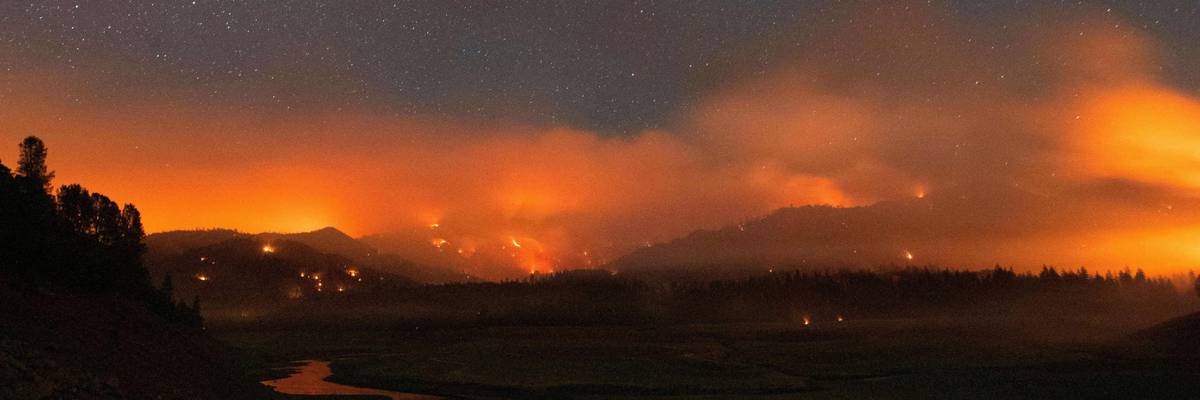
In this long exposure photograph, flames surround a drought-stricken Shasta Lake during the “Salt fire” in Lakehead, California early on July 2, 2021, as firefighters battle nearly a dozen wildfires in the region following a heatwave and multiple lightning strikes.
(Photo by Josh Edelson / AFP via Getty Images)

Emma Buretta
Jul 24, 2026
Common Dreams

Temperatures are soaring globally, and wildfire smoke just blanketed much of North America for the second time in a few years. This summer’s heat will likely make this year the hottest ever, and that heat is costing lives. It’s no surprise that concern about climate change among Americans is at one of its highest points since 1989.

But despite the fact that climate change and extreme heat are posing a threat to the health and well-being of Americans, neither major party is offering a serious policy response.

Republicans have become the official party of climate change denial. The Trump administration and its GOP allies in Congress have aggressively attacked renewable energy while boosting fossil fuels. Meanwhile many Democrats have become increasingly silent about climate, leaving voters concerned about the issue with no major political party to represent their values and interests.

In fact, The New York Times recently found that many Democratic candidates are backtracking on their previous opposition to the oil and gas industries. “With voters worried about spiking gas prices and inflation, some of the party’s leaders argue that they should stop trying to throttle oil and gas, which heat the planet when burned,” the paper reported.

Voters recognize that public investments in clean energy, public transit, and other climate-friendly policies ultimately save them money.

This messaging could cost lives and elections.

As a young voter, I saw this sense of abandonment play out in real time. I remember walking proudly around my campus all day in 2024 wearing an “I voted” sticker. I had voted early by mail, as had many of my classmates—or so I thought. What I came to realize throughout the day was that many of my classmates had yet to vote—and had no plan to.

Voting can be time consuming, frustrating, and often unnecessarily complicated. Barriers to voting are even more intimidating when you’re voting for the first time. For these reasons and more, many young people only make the effort to vote if they feel candidates will strongly advocate for the issues they care about.

On my campus, students are given access to all kinds of information about how and why to vote, and they’re given ample time and opportunity to do so. If students with access to so many resources on voting aren’t voting, how can we expect young people in parts of the country where there are larger barriers to voting to turn out en masse?

Over half of voters aged 18-29 didn’t vote in the 2024 presidential election, and 77% of young voters didn’t vote in the 2022 midterms. The 2026 midterm races are already tight, which could make the failure to address climate change a recipe for political as well as ecological disaster.

There’s no contradiction between having a serious climate policy and being responsive to voter concerns about rising costs. Progressive populists like Zohran Mamdani in New York, Janeese Lewis George in Washington, DC, and Melat Kiros in Denver, among others, have all proven that climate-friendly economic populism can be effective at increasing voter turnout, especially among young people.

Economic populism goes hand in hand with a transition to green energy, as 90% of renewable energy is now cheaper than fossil fuels. Voters recognize that public investments in clean energy, public transit, and other climate-friendly policies ultimately save them money.

In New York, one of Mamdani’s core promises—Free, Fast Buses—was proof of this. In DC, a core component of Lewis George’s campaign was affordable energy for all, with a focus on expanding community and government solar to cut electric bills. In Denver, Kiros also campaigned on combining economic and environmental issues with her support of a Green New Deal.

These recent victories owed much to the young people who powered their campaigns. It was also overwhelmingly young people who organized the 75,000 person March To End Fossil Fuels in 2023 and organized 500,000 people around the US against fossil fuels in 2019.

These examples suggest young people aren’t apathetic—they’re just not being heard. They will power campaigns that support a transition to green energy. But they won’t make an effort for those who enable the fossil fuel industry or talk out of both sides of their mouths on the issue.

Now is the time to push for a future with cheaper, greener energy for all. It is not the time to backslide on fossil fuels.


Our work is licensed under Creative Commons (CC BY-NC-ND 3.0). Feel free to republish and share widely.


Emma Buretta
Emma Buretta is a sophomore at Yale University and a Henry A. Wallace Fellow at the Institute for Policy Studies. She was a core organizer for the March to End Fossil Fuels.
Full Bio >