Friday, August 21, 2026


Syrians who came home after al-Assad's fall find a complicated reality
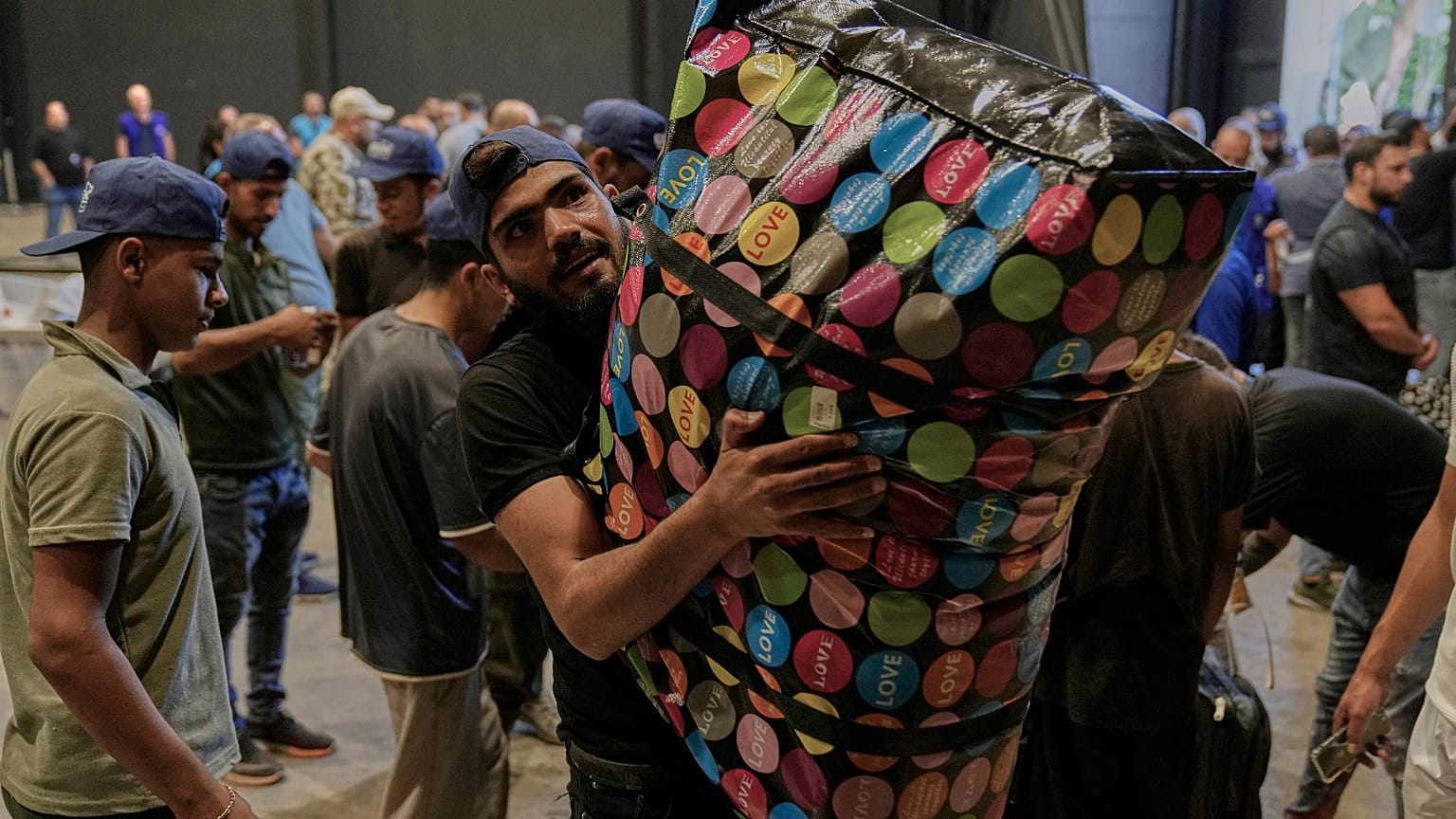
A worker carries the luggage of Syrian refugees at a gathering point in Beirut, awaiting Lebanese security inspection before boarding return buses to Syria, 11 September 2025
Copyright AP Photo

By Wessam Al Jurdi & Euronews Arabic
Published on

Nearly 3.6 million Syrians have returned since al-Assad's fall to destroyed homes, dysfunctional bureaucracy, power cuts and wages a fraction of what they earned abroad. Euronews spoke with those who returned: some are rebuilding, while others are already planning to leave again.

Nearly two years after Bashar al-Assad's ouster, the Syrians who rushed to go back home are discovering that what they left behind is no longer what they remember — and that coming home to a country fresh out of war comes with its own challenges.

"I regret coming back," Samer told Euronews. "In Turkey I was making about $1,000. Today my income doesn't surpass $250-300."

Samer* returned from Turkey after the fall of al-Assad's regime. His colleague Mustafa returned from Egypt at the same time. Working side by side in the same Damascus barbershop, they have reached opposite conclusions about whether they made the right choice.

Mustafa lives in his family home and pays no rent. He is back working for the barber who trained him. There he earns around $300 a month, or roughly twice what remained after Cairo rent ate into his Egyptian wages. He does not regret coming back.

Samer does. "My dream is to be able to buy a motorbike for $400, and I still can't, just so I can save on transport fares," he said.

"I ran into a harsh reality. Barbershops here do not offer the services I used to provide, and the wages are so low they do not even cover the cost of getting from my home in Maraba, in rural Damascus, to the Mezzeh district in the heart of the capital, a distance of around 20 km," he explained.

"My whole life has changed: the cost of living is high, infrastructure is weak and there are constant power cuts, and electricity is essential to the work of a barber."

The end of al-Assad's rule in December 2024 prompted one of the fastest mass returns of refugees and displaced people in recent history.

By the end of May 2026, UNHCR counted roughly 1.67 million Syrians who had returned from neighbouring countries, alongside 1.92 million internally displaced people who had gone back to their areas of origin.

That adds up to nearly 3.6 million people mostly in Aleppo, Idlib, rural areas near Damascus and the capital itself.
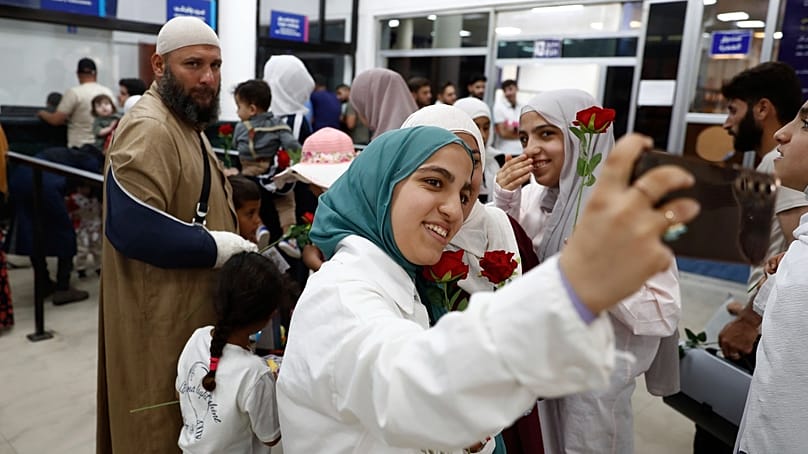
Syrians returning from displacement in Lebanon take a "selfie" as soon as they arrive at the Jdeidat Yabous border crossing with Syria, Tuesday 29 July 2025. AP Photo


They all returned to a country the World Bank estimates has sustained $108 billion in direct physical damage, with reconstruction needs of around $216 billion — or roughly 10 times Syria's entire GDP in 2024.

Homes remain damaged or destroyed, power cuts are frequent, civil administration is dysfunctional and formal employment is scarce.

Caught between two worlds

Mawia al-Shaer came back from Germany with her three children, the eldest 10, the youngest six. All had studied in German, but they are now in Arabic-language schools following a curriculum they have never come across before.

"There is a big difference between schooling in Syria and in Germany," al-Shaer told Euronews. "Private schools are extremely expensive here, whereas in Germany the service was free."

Private schools in Damascus charge at least $2,000 per child per year. State schools are overcrowded. Al-Shaer cannot afford the first and does not trust the second.

"This will make my children feel withdrawn and afraid and unwilling to go to school," she said.

"Everything will change for them: the overcrowded classrooms, their inability to express themselves, which may expose them to bullying or class prejudice because of the different language and way of thinking they acquired in Germany," al-Shaer added.

She now wishes she had visited her relatives and returned to Germany before the new school year began.
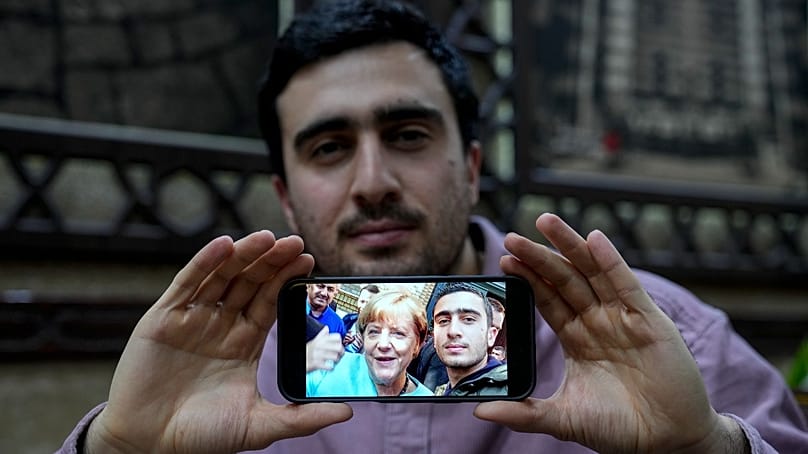
Syrian refugee Anas Modamani (27) displays his famous "selfie" with Merkel inside a restaurant in Berlin, 10 December 2024. AP Photo

Amer Hassan arrived from Germany with more than $45,000 in savings. He wanted to open a restaurant. He paid rent, started fitting out the space and ran out of money before it opened.

"I got roughly halfway and then it all came to a halt," Hassan told Euronews. "I couldn't complete what I had dreamed of."

"If I had been in Germany, I would have received government support in the form of loans, and with half the money I spent I could have launched the business," he added.

"Rents are extremely, extremely high, and labour costs are also high. I've gone back to square one."

He holds German citizenship and he said he plans to go back.

"I will return and try to start over there," Hassan explained. "Here I have run out of options and lost what I had built up during my stay and asylum in Europe."

Fares Ibrahim and his wife Lida returned from Sweden and opened a tailoring shop in Damascus's Shaalan district.

They put $10,000 into rent and $5,000 into equipment. Six months later, they had made less than $1,000 in profit, so they were forced to close the shop.

"We are now looking for premises in a rural area where the rent is lower, so we can get back on our feet," Ibrahim told Euronews.

The wall of bureaucracy

Munir is a teacher who came back from Jordan. He has spent months trying to secure a position through Syria's education ministry, but nothing has come through.

"Every month I knock on the doors of the ministry or the education directorate to see whether my appointment has gone through, but in vain," Munir told Euronews.

"There is never a response, every time there's a different excuse." He has stopped waiting and taken up farming.

"I have now stopped teaching and am working the land, doing farming and sowing seeds just to get by," he explained.

"I have set aside my experience and years of study in Jordan, and I wish I could work in Syria instead of having to think about travelling in search of a teaching post in good schools that also pay decent salaries."
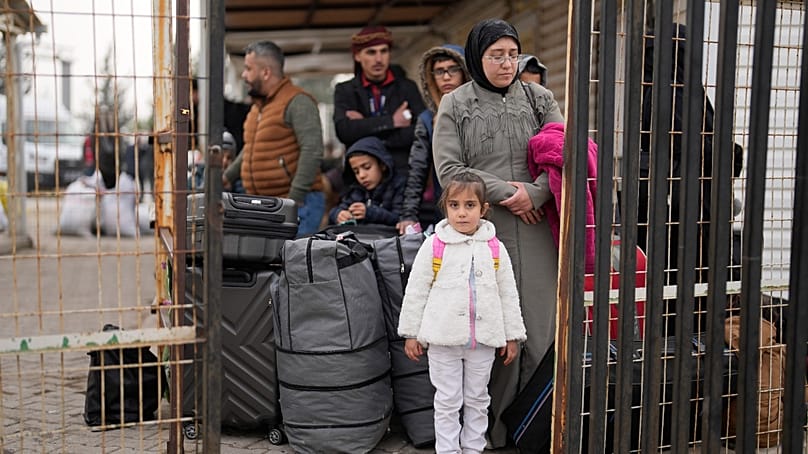
Syrians wait to cross from Turkey to Syria at the Oncupinar border crossing, near the town of Kilis in southern Turkey, Thursday 12 December 2024. AP Photo

Said Mahrouz returned from Sweden with a master's degree in computer engineering. The first eight months, he said, "were hell".

He sold his mother's jewellery to raise capital, spent months on licences and paperwork, and at one point considered going back.

Today he runs a small programming and networking company. "The Syrian market needs a lot, but you have to understand it first," he said.

"The business began to stabilise, and now I only consider travelling to attend international fairs that can help develop my company."

Kamal Kikhiya has lived in Germany for 15 years. He spoke to friends and relatives who went back. He has decided not to join them.

"They all feel regret. Some returned to destroyed villages, others couldn't even manage to open a small supermarket," Kikhiya told Euronews.

He has a six-year-old son in German school. "I cannot gamble with my family's future in a country whose future is still so uncertain."

*Euronews has used first names or pseudonyms for Samer, Mustafa and Munir at their request, to protect their privacy and personal safety.


‘I saw it on TikTok’: 48% of Gen Z travellers turn to the platform for travel inspiration

Visual and short-form content holds sway on travellers seeking new destinations to visit, activities to do and bringing their holiday ideas to life.
Copyright TUI

By Fakhriya M. Suleiman
Published on

Gen Z is leading the shift in how travellers discover, book and share their holidays, with almost half citing TikTok as their source of travel inspiration.

Back in my day (not that long ago – I’m only a millennial), recommendations from family and friends, along with a YouTube vlog or a scroll through Pinterest snaps, were the go-to sources of travel inspiration. My, oh my, how things have changed since then.

Now, short-form videos on TikTok are increasingly shaping where people want to go and what they want to do abroad, especially among Gen Z travellers born between 1997 and 2012.

TUI Musement looked into how social media is influencing how travellers now discover, book, experience and share their holidays.

In the study conducted across Spain, Italy and the UK, the global tours and activities platform found that almost half (48%) of Gen Z respondents cited TikTok as a source of travel inspiration, putting the social media app ahead of recommendations from friends and family, which ranked at 43%.

According to TUI Musement, this points to visual and short-form content growing in influence for travellers seeking new destinations to visit, activities to do and bringing holiday ideas to life.

Overall, more than four in ten travellers (43%) said that seeing a viral post or video led them to either book a trip or go on an activity. This trend was especially common among us millennials at 52% – slightly more so than Gen Z, at 50%.

Influencers were also clearly found to have... influence, with 43% of respondents saying the content creators they follow are a factor in deciding where they go and what they do abroad. As many as 27% said they went as far as to change their destination because of an influencer’s recommendation.

“A single image or video can now inspire travel, and we have steadily increased our focus on how we can best reach and engage our audience through platforms such as Instagram and TikTok," Mirco Fiumene, Managing Director Experiences & CMO, TUI Musement, said.

But social media’s influence doesn’t seem to stop once a person has chosen and arrived at their destination.

In the age of scrolling, the pressure to snap the perfect holiday picture impacts how they share their experiences, with over a third (37%) feeling the need to make their trips look more exciting on their social media profiles. Among Gen Z, this figure rises to almost half, at 45%.

And for some, the search for the perfect post can impact what they do. Nearly four in ten travellers (39%) said they visited a tourist hotspot mainly to take a photo or record a video, while 37% said that, at least occasionally, they would rather go to Insta-famous places than a destination's lesser-known hidden gems.

So, is the holiday experience still about where you go, or how it looks on the social media feed once you get there?


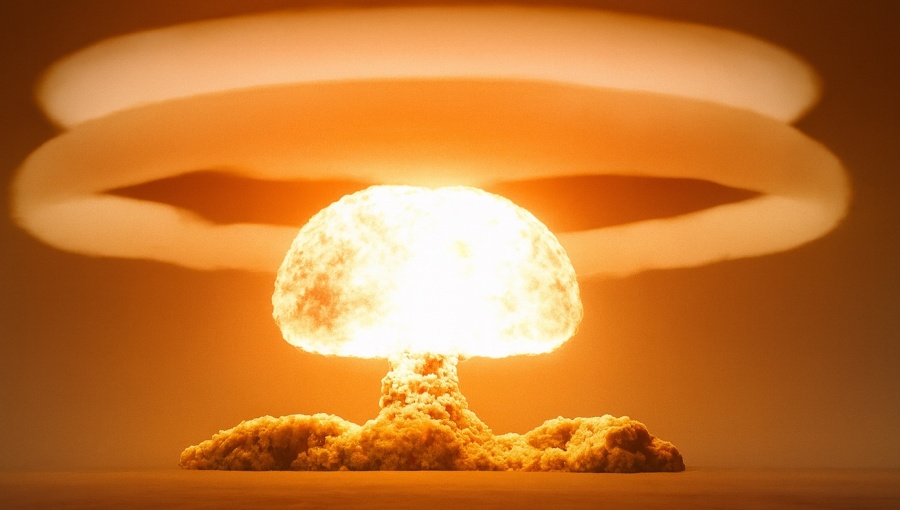
Asia's nuclear arms race stops being hypothetical

Asia's nuclear arms race stops being hypothetical
China has warned Japan off nuclear weapons as Tokyo debates abandoning its non-nuclear principles - the Ukraine war's proliferation logic arriving in Asia, with no arms-control architecture left to absorb it / bne IntelliNewsFacebook
By Ben Aris in Berlin August 20, 2026

China has told Japan not to test its patience over nuclear weapons, in an exchange that has moved an Asian arms race from a strategist’s tabletop war-game to debates on policy priorities that foreign ministries are arguing about in public.

Beijing issue Tokyo with a stringent “do not play with fire” warning on August 20 after Japanese Prime Minister Sanae Takaichi launched a running debate on whether the country should drop its ban on having nuclear weapons – a ban imposed on Tokyo in the post-war 1967 constitution - a debate her predecessors would have shut down in a day.

Like Germany, non-aggression policies are baked into Japanese DNA - not only written into the fundamental law but deeply engrained into popular culture. To open a debate on obtaining weapons of mass destruction is a radical left turn for Tokyo – and made especially poignant as it comes in the month when Japan commemorates the victims of the Fat Man and Little Boy nuclear strikes eight decades ago.

Beijing is complaining but it’s not Chinese aggression in the Indo-Pacific region that is driving the debate: it is the war in Ukraine.

Four years of a major war in Europe have taught every government in the Global South the same lesson: the West does not attack countries that have nuclear weapons. Ukraine gave up the third-largest arsenal in the world in 1994 in exchange for assurances that proved worthless. No capital watching what has unfolded in the Donbas has failed to draw the conclusion: if you have the bomb, Nato won’t attack you straight on. What is happening in Asia now is the same logic arriving in a different theatre.

The lesson has not been lost on Chinese President Xi Jinping. China got a nuclear weapon about two decades after the US and the USSR, but since then has expanded its nuclear arsenal to some 600 warheads with plans to reach 1,000 by 2030, compared to the more than 3,000 that both the US and Russia hold. At the same time it is keen to limit the proliferation of these deadly weapons in the rest of the region. In a position paper submitted to the UN, China's foreign ministry asked that Japan's "dangerous tendency to seek nuclear weapons" be added to the agenda, arguing that Japan "has long produced and stockpiled plutonium materials far exceeding the actual needs of its civilian nuclear energy programme, giving it the capability to achieve a 'nuclear breakout' within a short period", the South China Morning Post reported on April 30. Chinese state media has since floated the argument that the international community should resolutely oppose Japan's pursuit of nuclear weapons with the same vigour that the Trump administration is opposed to Iran getting the bomb.

Plutonium is the elephant in the room. Tokyo cannot easily justify its mounting stockpile, accumulated over decades of reprocessing, as a purely civilian power project. The technical distance between a passive plutonium stockpile and an atomic bomb is a few months, not several years of processing and development. Successive Japanese governments have treated the ambiguity as a quiet deterrent in itself. (Iran’s 400kg of highly enriched uranium that is now sitting in a bunker under a mountain has played a similar role.) But now Takaichi has done something different - she has let people talk about it.

North Korea wild card

Japan marked the 81st anniversary of Hiroshima on August 6 and Nagasaki on August 9, the two dates on which the country's nuclear taboo is renewed each year, and it was in that week that the debate over the non-nuclear principles ran hardest. Chief Cabinet Secretary Minoru Kihara has restated the official line that Japan remains committed to the three non-aggression principles and to "advancing its efforts toward realizing a world without nuclear weapons".

What has changed is the neighbourhood. North Korea’s Kim Jong Un understood the Ukrainian lesson well before the war with Russia broke out. US President Donald Trump said on August 19 that North Korea has "57 very powerful nuclear weapons" and that he expects to meet Kim Jong Un before the end of the year, the Washington Post reports - an acknowledgement of Pyongyang’s three-decade-long nuclear development programme. One of the most backward economies on earth, having a bomb gives Pyongyang enough clout to pulling a personal meeting with the “most powerful man on earth” boosting Kim’s own prestigue in the process. He is going to love that.

The number of warheads Kim actually has remains unclear, but it is clear he controls a working nuclear weapon capability and is an existential threat to his immediate neighbours.

Pyongyang has regularly rubbed the message in. In August it launched yet another ballistic missile test that landed in the sea just outside Japan’s territorial waters. That was followed with a short-range launch on August 12 ahead of US-South Korean maritime drills, and separately attacked Japan over a Japanese missile test on August 6. In May the North changed its constitution to say a nuclear strike is automatically triggered if its leadership is decapitated – a direct consequence of Operation Absolute Resolve on January 3 where the US government kidnapped the sitting president of Venezuela Nicolas Maduro as well as the decapitation of the Iranian leadership in the first days of Operation Epic Fury that killed the Supreme Leader Ayatollah Ali Khamenei.

Iran’s nuclear ambitions

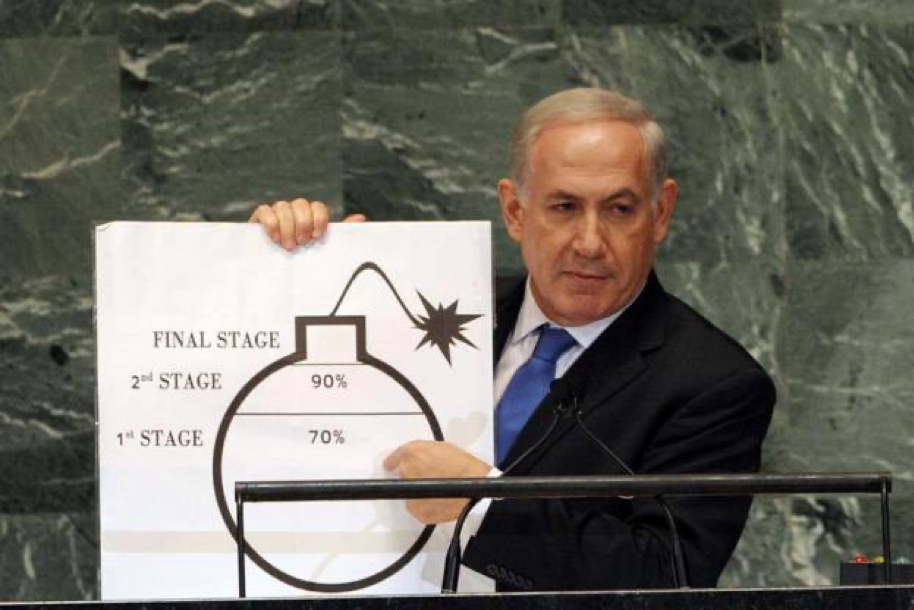
Tehran’s refusal to abandon the possibility of developing a nuclear weapon is what produced Operation Epic Fury, the US-Israeli assault that began on February 28, with the specific goal of removing Iran’s uranium stockpile and limiting its missile development and production programme. Ironically, Tehran has said it has no ambitions to develop a nuclear missile but insists on keeping a uranium enrichment capability for civilian purposes – Iran operates one Russian-built nuclear power station and has plans for a second.

The fact that Iran was using its 400kg as negotiating leverage was confirmed at a meeting between Iranian Foreign Minister Abbas Araghchi and US envoys Steve Witkoff and Jared Kushner, mediated by Oman, in Geneva on February 26 – two days before Operation Epic Fury began – where he said a deal had been agreed that included giving up the uranium only to wake up a day later to the news of bombs falling on Tehran. Araghchi was furious.

“A deal was within reach. We left Geneva with the understanding that we’d seal a deal next time we meet. Those who wanted to spoil diplomacy succeeded in their mission. But it was Mr Trump, yet again, who ultimately ordered bombing of the negotiating table,” Araghchi said in a social media post.

IntelliNews asked what happens if the Geneva talks fail a fortnight earlier. The lesson Tehran drew from this fiasco, being attacked mid-negotiation, is you cannot trust the White House and the only thing it understands is force.

CRINK Alliance

Japan is rightly nervous about China which as IntelliNews has been reporting has become a lot more aggressive in the Indo-Pacific region, but adding to these specific concerns is the more general emergence of the CRINK alliance (China, Russia, Iran and North Korea) - a loose military cooperation between these four non-aligned powers that are being driven together by international sanctions and the escalating East-West clash. This is no small thing: between them they have half of all men under arms on the planet and they are all investing heavily into expanding their militaries. All three of China, Russia and North Korea have been actively supplying Iran with weapons and technology in its fight with the US to devastating effect. Tehran has taken “Command of the Reload” in the asymmetrical war: Iran can fire more drones and missiles at the US forces than they have air defences to stop them.

As IntelliNews reported in May, Russia and China describe their partnership as at the “highest level in history,” while North Korea's unlikely economic revival is being underwritten by both. Pyongyang is enjoying an unlikely boom thanks to the billions of dollars Moscow has been paying it for arms and soldiers. Russia is rearming Iran across the Caspian, beyond the reach of any Western navy. None of the four needs a treaty for Tokyo's problem to get worse.

Double front nightmare

The evolving CRINK military alliance has added urgency to the problem of what to do if Russia and China coordinate their attacks simultaneously attacking Nato members in Europe and the US-backed Taiwan in Asia. The short answer is: the Western allies don’t have a plan, The Atlantic just reported. This scenario has become even more scary after the US admitted that it has depleted its missile arsenal to catastrophically low levels after six months of campaigning in the Persian Gulf. At the same time, European Commission President Ursula von der Leyen’s €800bn ReArm programme to modernise Europe’s military has barely got underway.

Lithuania's president said in July that intelligence points to possible Russian provocations, and Vilnius has warned that the Baltic states and Poland could be next. Poland's Prime Minister Donald Tusk has already hinted that Warsaw could seek its own nuclear deterrent - the European version of the same argument Takaichi is allowing in Tokyo. And German Chancellor Friedrich Merz has floated the idea of nestling under the French nuclear umbrella.

Another reason for the epoch changing attitudes to WDMs is the last of the Cold War security infrastructure that used to contain these tectonic forces has just expired. New START missile deal was the last treaty capping US and Russian strategic warheads, but expired in February with nothing to replace it. There is now no legal ceiling on the two largest arsenals for the first time since 1972, and no forum in which a Japanese or Polish debate about going nuclear could be talked down. The end of START cleared the way for a new nuclear arms race which is already underway.

Cross the red lines

That brings the escalation back to Europe, where a British-built drone has cross another of the Kremlin’s redlines. Ukraine has been using the Nyan, a jet-powered strike drone designed and built in Wiltshire by Callen-Lenz, a BAE Systems subsidiary, for deep strikes into Russia, The Times reported on August 16. It carries just under 20kg over more than 250km at around 120 knots, and it has been used against Russian oil refineries.

Russian Foreign Minister Sergei Lavrov said this week that Moscow has the right to regard British involvement in strikes on Russian territory as “direct participation” in the war. Russia's embassy in London put it more concretely: "The deeper its involvement in the conflict and the greater its support for Kyiv's terrorist machinery, the higher the price it will pay," Forces News reported. Lavrov did not say what Russia would do.

So far, the argument goes, the West has been supplying its friend in Ukraine in its fight against Russia. But now British-made weapons are flying into Mother Russia proper and striking high value industrial and military targets, the Kremlin can argue that London is now actively attacking Russia via its proxy in Kyiv. That makes the factory in Wiltshire a legitimate military target. No one is expecting Russian missiles to start flying over “this green and pleasant land,” (although Wiltshire is in range of Russia’s new Oreshnik ICBMs), but the Kremlin does has a record of assassinations and sabotage attacks on British soil and elsewhere. Eventually, Russia will retaliate if enough of its red lines are cross.

Every Western escalation that goes unanswered tightens the CRINK ties. Every CRINK countemove sharpens the case in Tokyo, Berlin and Warsaw for beefing up their own defences. Japan is not in Nato. It is one of the alliance's four Indo-Pacific partners, which means the guarantees it relies on are American rather than collective - and American guarantees are precisely what the Ukrainian precedent has devalued. How to fill that gap is what Takaichi's debate is really about


Transboundary haze from Indonesian peatland fires crosses into Malaysia, threatens biodiversity

Transboundary haze from Indonesian peatland fires crosses into Malaysia, threatens biodiversity
/ Marcus Kauffman - UnsplashFacebook
By IntelliNews - Surabaya Bureau August 21, 2026

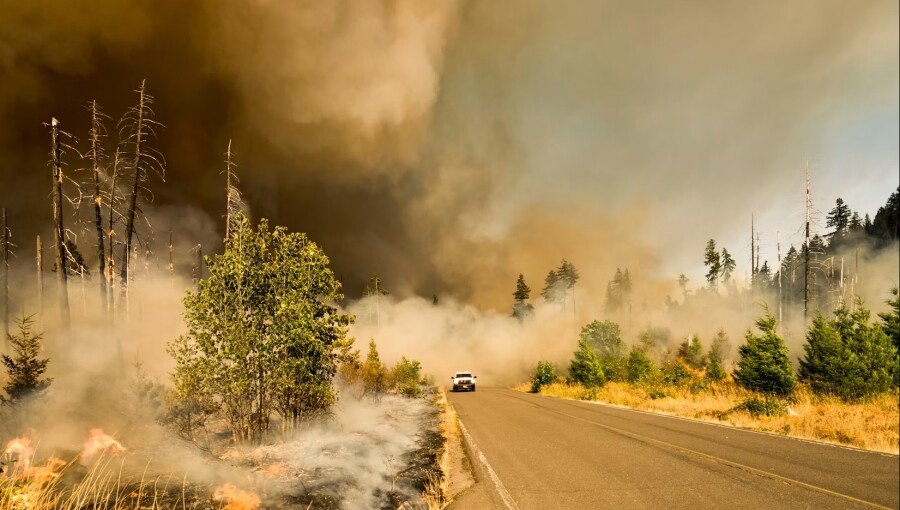
Escalating environmental risks across northern Borneo, transboundary haze generated by uncontained forest and peatland fires in Indonesia’s West Kalimantan province has crossed the international border into Sarawak, East Malaysia, Eco Business reports. Driven by severe El Niño conditions, air quality metrics in the frontier state of Sarawak deteriorated to critical levels, forcing local authorities to suspend in-person learning across border districts.

The cross-border crisis follows a rapid surge in satellite-detected hotspots and burnt territory across Sumatra and Indonesian Borneo.

On August 12, 2026, air pollution index (API) readings in Sarawak’s Tebedu district breached 200, the statutory threshold for very unhealthy air quality. It triggers mandatory closures across six primary schools. According to real-time air quality metrics from IQAir, Kuching briefly ranked as the world's most polluted major city on August 11, with 11 monitoring stations across Sarawak recording unhealthy readings.

In Indonesia, the National Disaster Management Agency (BNPB) confirmed that West Kalimantan remains the hardest-hit province, accounting for over 28,680 hectares (70,870 acres) of officially recorded burnt land, representing more than half of the national total across priority fire provinces. NGO estimates from Madani Berkelanjutan place the burnt area in West Kalimantan alone even higher at 50,558 hectares (124,932 acres). Concurrently, satellite monitoring platform Nusantara Atlas / FireWatch detected over 154,000 fire hotspots across Indonesia as of August 11, marking a 60% increase from late July and surpassing levels recorded during the severe 2019 and 2023 fire seasons.

Joint task forces are to deploy water bombing and other fire-suppression measures to contain hotspots and protect air quality. This chain of events ultimately activates ASEAN transboundary haze mitigation protocols, underscoring the importance of cross-border coordination in managing regional environmental and public-health risks. Supplemental budget approvals authorised by the central government are necessary to support ground crews and emergency logistics in high-risk provinces like West Kalimantan and Riau.

Besides school closures, the haze reportedly has also affected Formula 1 Singapore Grand Prix’s preparation that will take place on October 9-11. The operational advisory follows a spike in peatland fire hotspots across Indonesia, prompting race organisers to activate contingency health protocols.


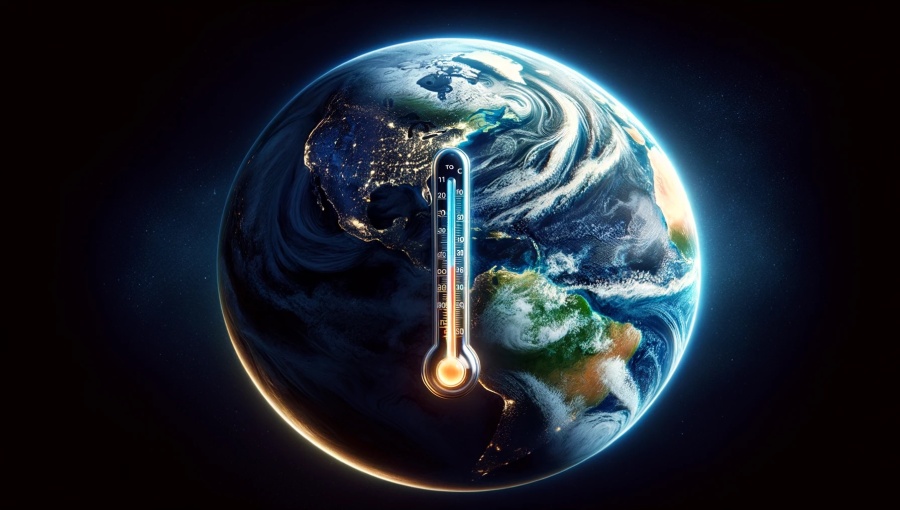
The world is on track to warm 25% more than the official projections say

The world is on track to warm 25% more than the official projections say
A new way of grading climate models suggests the ones scientists threw out for running too hot were the accurate ones - and that existing policies lead to 3.25C, not 2.6C. / bne IntelliNews
By Ben Aris in Berlin August 21, 2026

The climate models that were discarded for predicting too much warming were right, and the ones the world's climate projections rest that were the basis of the Paris Agreements targets are all wrong, say scientists, backed up by the data.

The Paris Agreement cap of 1.5°C increase in temperatures goal is based on the calculations of around 20 climate model predictions coordinated by the United Nations’ Intergovernmental Panel on Climate Change (IPCC) that has formed the baseline for the last decade. But as the Climate Crisis gets underway in earnest over the last four years of what is now an annual disaster season, it is already clear that global warming is running faster than any of the models predicted. The climate model calculations are badly off.

The Climate Crisis is accelerating. The IPCC says that the Paris Agreement goal of keeping temperature increases to less than 1.5°C-2°C above the pre-industrial benchmark has already been missed and temperature increase are on course to reach a catastrophic 2.7C-3.1C by 2050. At that point extreme temperature events will become routine and large parts of the world will become uninhabitable.

A new study by a team at ETH Zurich, “Recent Temperature and Energy Imbalance Trends Point to Higher Estimates of Future Warming”, published in the journal Earth's Future, rebuilds the way climate models are graded against reality and finds that the best-performing ones project substantially more warming than the current consensus.

"For a given emission trajectory, we expect warming to be 25% higher," said Gergana Gyuleva, who led the study.

Every climate target in circulation is a temperature and every temperature comes out of these models. The Climate Action Tracker currently puts the world on course for 2.6°C above pre-industrial levels by 2100 if countries do what they have already promised – which most of them are not doing. On Gyuleva's team's numbers the same policies deliver 3.25°C - which is the difference between a bad century and an unrecognisable one, produced not by any change in emissions but by a change in which models are trusted. As IntelliNews reported, if the permafrost melts in Russia and the north completely disappears, as it will at a 3°C increase above the pre-industrial baseline, that leads to catastrophic and unpredictable consequences.

How the models got graded

Climate models disagree sharply about how much the planet heats for a given amount of carbon dioxide. Some put the short-term response to a doubling of CO₂ at around 1.6°C; others at close to 3°C. "The range is big, and it really matters," said Gyuleva. "So, the point is to find out which ones are right."

The standard test has been to run the models over the recent past. Feed in the last century's greenhouse gas emissions, compare the warming the model produces against the warming that actually happened, and keep the ones that match.

For the IPPC’s last report, a lot of models simulated more warming than had been observed, so they were discounted. What survived gave a short-term response to doubled CO₂ of between 1.2°C and 2.4°C, with a best estimate of 1.8°C.

The problem with grading models against the observed record is that the observed record contains weather as well as climate. During a La Niña, cooler water from the deep ocean spreads across the surface and global temperatures dip; the reverse happens in an El Niño. None of that says anything about how sensitive the climate is to CO₂ .

Gyuleva's team filtered the historical record to strip that variability out, and found it had been pushing in one direction. Natural variability suppressed measured warming between 1981 and 2014 - a window that includes the so-called global warming hiatus of the 2000s, and the exact window the earlier model-grading papers used.

"It's really exactly this period 1981 to 2014, which was used in the previous papers, where you see the strongest bias down," said Gyuleva. "It was really bad luck."

Correcting for that alone raises the estimate of how much warming a doubling of CO₂ produces. The models were not too hot. The three decades they were being judged against were unusually cool.

Measuring the heat, not the thermometer

The team then added a second test that does not use surface temperature at all. Satellites have been measuring how much short-wave radiation from the sun enters the atmosphere – the earth’s energy imbalance (EEI) - and how much long-wave radiation leaves it. The planet's energy imbalance is the most fundamental measure of global warming there is, and one that does not care where the ocean has moved its heat this decade.

Because the satellite measurements only start in 2001, this kind of assessment has become possible only recently. How well a model reproduces the observed trends in incoming and outgoing radiation is a harder test than how well it reproduces surface temperature.

The models that best match those radiation trends project much more warming. Taking the models that perform well on both tests, the team puts the short-term response to a doubling of CO₂ at between 1.9°C and 2.6°C, with a best estimate of 2.25°C - against the IPCC's 1.8°C.

"Our results need to be confirmed by more evidence from different sources before we can be fully confident," Gyuleva said.

What other scientists make of it

The reception has been warm without being unanimous. "This seems to be a sound approach," said Trude Storelvmo at the University of Oslo. "In my opinion, the filtering out of natural variability is a valuable step forward," said Drew Shindell at Duke University in North Carolina - though he is not yet convinced the radiation trends make a good yardstick for model performance.

Steven Sherwood at the University of New South Wales in Sydney called it "a plausible conclusion and a reasonable approach", while noting the ceiling on any such exercise.

"To do a better job of this we really need better climate models," Sherwood said. "On the other hand, the steep temperature rises of the last few years are going to lead to higher estimated ranges regardless of method."

That last observation is the one that should worry policymakers most. Whichever method wins the methodological argument, the direction of revision is the same.


Nearly 40,000 "non-compliant" condoms sold in France: authorities urge testing

Over 40,000 defective condoms sold in France in recent months via Asian websites; the Health Ministry urges users to get screened.
Copyright BUSINESS WIRE/BUSINESS WIRE

By Christina Molle with AFP
Published on

Around 30 products sold online and in chemists have been flagged by the consumer watchdog as posing a risk of STIs or unwanted pregnancies.

They are meant to protect, but some condoms sold in France may not comply with regulations. France's consumer affairs and fraud watchdog (DGCCRF) and the Directorate-General for Health (DGS) issued a warning on Friday 21 August about several products, some of which nevertheless bear the European conformity (CE) marking.

Around a thousand boxes, or "more than 40,000" condoms, were sold online, "mostly" by "Asian" distributors, the authorities said. The products concerned may also have been sold in shops and pharmacies.

Four brands targeted by the authorities

The Rappel Conso recall website has drawn up a list of the brands involved: Friday Bae (Le Préservatif), Okamoto (003 and 002), Sagami (Sagami Original 002, sold on Amazon), and My Lubie, whose products are sold on Amazon, in pharmacies and by various retailers, including Nuoo, Mademoiselle Bio, Monoprix, Ayanature and Passage du Désir.

The products in question do not carry the CE marking and have not undergone any assessment of compliance with European standards. They also, "for the most part, lack packaging in French", the DGCCRF and the Directorate-General for Health (DGS) at the Health Ministry said.

Risk of "bursting" and "perforations"

However, inspections in shops and pharmacies also identified "two products" of condoms that had obtained the CE marking but were nonetheless non-compliant, due to a "risk of bursting" for one and "the presence of perforations" for the other. In total, around "260,000 units" have been subject to "recalls launched in late May and early August", the Health Ministry added.

Non-compliant condoms can "pose serious risks to users' health and safety: sexually transmitted infections, unwanted pregnancies".

STI screening and pregnancy test recommended

The authorities advise anyone who has used these condoms to get tested for sexually transmitted infections (STIs) and to take a pregnancy test if their period is late.

Ordered to remove the listings concerned without delay, online platforms have already taken down 36 of them and warned third-party sellers. "Several" have also "undertaken to review their verification systems and filtering rules" for these products, the statement said.

The DGCCRF stresses that the European conformity marking guarantees that manufacturers comply with safety standards. Before buying, consumers should check that it is present, make sure there is an information leaflet in French, and check the expiry date as well as the condition of the packaging.


CONDOM TESTING