Sunday, September 27, 2026


Fortune Minerals gets water licence and land use permit for NICO mine in Northwest Territories 


Fortune Minerals’ Nico cobalt-gold-bismuth-copper project in Canada’s Northwest Territories. Credit: Fortune Minerals

Fortune Minerals (TSX: FT) (OTCQB: FTMDF) announced Monday that the water license renewal for the NICO mine and concentrator has been approved by the Minister of Environment and Climate Change for the Northwest Territories after the draft terms recommended by the Wek’èezhìı Land and Water Board (WLWB) were accepted. 

The WLWB also issued the land use permit for the project, and with two primary permits issued following receipt of an environmental assessment, the terms and conditions are set for construction and operation of the mine facilities. They also set the amount of security that will be required for the closure and reclamation plan, the company said.  

The NICO cobalt-gold-bismuth-copper project is a development stage critical minerals asset consisting of a planned open pit and underground mine and concentrator in the NWT and a dedicated hydrometallurgical facility in Alberta, where concentrates from the mine, and other feed sources, will be processed to value-added products.  

The NICO site will be connected to territorial highway system by the already approved NICO project access road, the company said.  

Last year, China announced plans to impose export controls on five key metals — tungsten, tellurium, molybdenum, indium and bismuth — in response to US President Trump’s import tariffs. 

Bismuth is a scarce industrial metal that has characteristics similar to lead, but is non-toxic, and the industry is currently developing uses for replacing lead. 

Hardly any bismuth is currently produced in North America, with the continent relying almost entirely on imports. The NICO deposit contains one of the largest known undeveloped bismuth reserves in the world. It contains 12% of global bismuth reserves as well as 1.1 million in-situ ounces of gold and aims to establish a domestic, reliable North American supply chain, Fortune Minerals has said.  

The company said the NICO project will provide a reliable North American supply of battery grade cobalt sulphate, bismuth ingots and copper cement – with more than one million ounces of in-situ gold as a highly liquid and countercyclical co-product. 

“The Class A Water License and Land Use Permit renewals are the product of numerous engagements with territorial, federal and indigenous governments and communities, focused on identifying and mitigating potential environmental and social concerns related to the NICO development,” Fortune’s VP, Environmental and Regulatory Affairs, Dr. Richard Schryer said in a news release.  

“Fortune Minerals will continue to work with these governments and communities, and through the conditions outlined in the water license to make the NICO mine a successful project.” 

Fortune Minerals stock closed the day down 3.4% in Toronto on Monday. The company has a C$97 million ($69 million) market capitalization.  


Lohum seeks to buy nickel mines in Indonesia and the Philippines


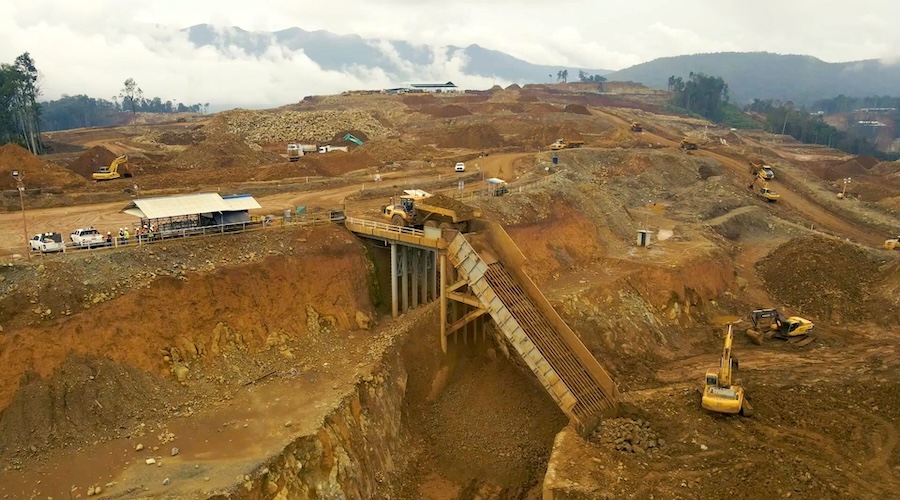
Weda Bay Nickel mine. (Image courtesy of PT Weda Bay Nickel.)

Indian critical minerals producer Lohum is seeking to buy nickel mines in Indonesia and the Philippines as it targets a tenfold increase in production to meet rising demand for battery minerals, its founder and chief executive said.

India is seeking to sustain its rapid economic growth with increased use of renewable energy and electric vehicles while weaning itself off Chinese supplies and developing its own sources of the critical raw materials, such as nickel, needed for the shift to greener technologies.

Lohum’s CEO Rajat Verma said the aim was to increase nickel production capacity to 10,000 metric tons of nickel a year over the next 18 months.

It currently produces 1,000 tons of nickel a year by processing recycled materials at its plant in the western state of Gujarat.

Talking to potential investors

Verma said the company sought to raise 10 billion rupees ($105 million) in equity and 20 billion rupees in debt over the next 12 to 18 months to fund its overall plans. It is in talks with potential investors, he added, declining to name them.

Depending on possible acquisitions, he said the increased nickel capacity could be even greater.

“If we are able to get access to a good quality mine then we may set up a larger capacity,” he said.

Lohum is also seeking to produce lithium, another critical mineral and plans to invest $100 million in Zimbabwe, where it has secured rights to 10 lithium mining blocks with estimated deposits of 30 million to 40 million tons of ore.

Earlier this month, Lohum made public its plans to become the first Indian company to produce lithium from an overseas asset, saying it will be processing ore into lithium sulphate in Zimbabwe before shipping it to India to be refined into higher value lithium carbonate, needed by battery makers.

As the firm seeks to provide other battery materials, Verma said Lohum was also setting up a 5,000 metric ton a year plant to make cathode active material. The plant in the north Indian state of Uttar Pradesh is expected to be commissioned by March and will require nickel and lithium.

Lohum is also developing a lithium-ion battery-recycling plant in Sharjah, the United Arab Emirates, in partnership with the local government, which is expected to be operational by early next year, Verma said.

China’s dominance of supply chains is particularly marked in rare earths, which are widely distributed across the world, but can be difficult to refine commercially.

Lohum is also scouting for rare earths in Southeast Asia, Verma said, and is setting up a rare earth magnet plant, also in Uttar Pradesh, with capacity of 1,200 metric tons a year.

($1 = 95.81 rupees)

(Reporting by Neha Arora and Sethuraman N R; editing by Mayank Bhardwaj and Barbara Lewis)


Congo plans centralized mining investment agency under US deal, sources say


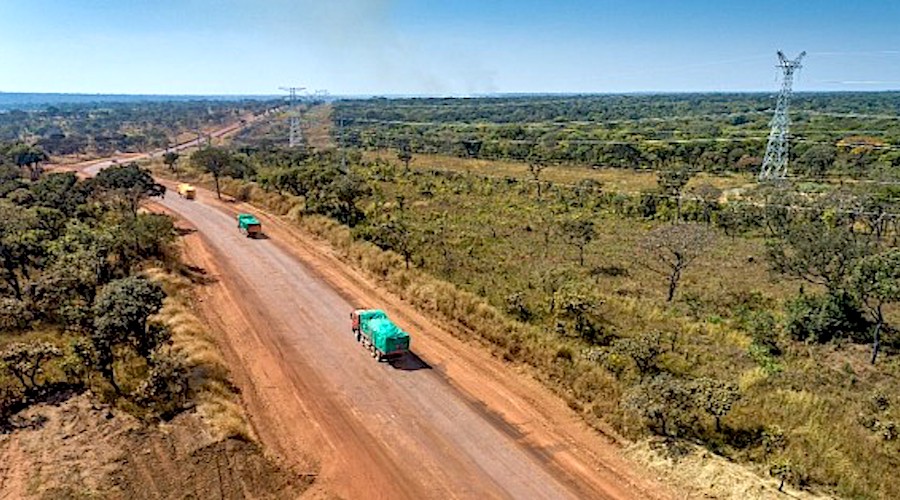
Trucks transporting bulk copper concentrate from the Kamoa-Kakula to the Lualaba smelter via by-pass road connecting the mine to Kolwezi. (Image courtesy of Ivanhoe Mines.)

Democratic Republic of Congo is preparing a one-stop agency for major mining investments as part of reforms linked to its minerals partnership with the US, aiming to cut red tape and attract more Western capital into a sector dominated by Chinese companies, four sources told Reuters.

Congo, the world’s largest cobalt producer and second-largest copper producer, is at the centre of competition among global powers seeking supplies of critical minerals vital to the energy transition and advanced manufacturing.

China, the US and the European Union have all signed minerals agreements with Kinshasa to secure access to its vast resources.

The US deal has already ​delivered a Washington-backed mining investment through Virtus Minerals and helped boost Congolese copper sales to US and Europe.

One-stop agency

The planned agency would be open to Chinese and other foreign investors as well as US and European firms, according to two government officials, a diplomat and a mining analyst.

The sources declined to be named because they were not authorised to speak publicly.

Congo’s mines and finance ministries did not respond to requests for comment.

The reform, led by the finance and economy ministries, would centralise company registration, licensing, taxation and compliance for major mining investments, reducing approval processes that can currently take months, said the government sources and the analyst.

One government official said the agency would initially focus on joint-venture projects worth more than $1 billion that operate under special fiscal regimes, citing the Chinese-controlled Sicomines copper and cobalt venture as an example.

The official added that legislation establishing the agency still requires promulgation.

“The one-stop shop is intended to cut through the bureaucratic silos that have long complicated mining investment in Congo,” said Eric Ndeh, international director of civil society group Afrewatch. The agency is meant to be operational this year, Ndeh added.

Congo has repeatedly said its drive to attract more Western investment is not intended to replace China but to diversify sources of funding and export markets.

“The paradox is that a reform partly driven by the US-DRC minerals partnership could ultimately make it easier for Chinese, European and American investors alike to do business,” Ndeh said.


(Reporting by Ange Adihe Kasongo and Maxwell Akalaare Adombila. Editing by Mark Potter)


Constellium may drop EU metal recycling plans due to scrap squeeze, CEO says


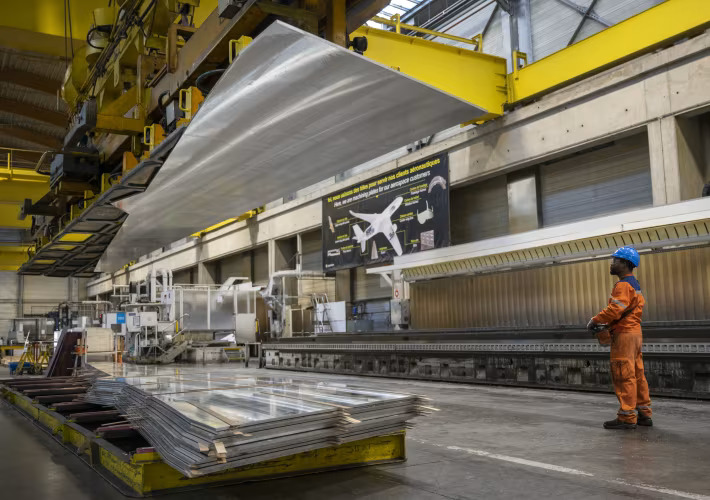
Credit: Constellium

Aluminium products maker Constellium may drop plans to expand recycling in the European Union unless policymakers resolve a scrap shortfall linked to used metal being exported overseas, its CEO said on Tuesday.

The European Commission angered industry representatives this month by abandoning plans to impose an export duty on aluminium scrap, which the industry says is crucial to keeping more of the low-cost raw material in Europe. The EU’s executive is now proposing to curb scrap outflows through waste shipment rules.

Constellium, like other producers in Europe, is sceptical about the waste approach given a large number of non-OECD countries seeking exemptions, CEO Ingrid Joerg told Reuters.

“We have several recycling projects in the pipeline that we are investigating. But if there’s no scrap, they’re not going to happen,” she said.

The projects covered Constellium’s different market segments, such as packaging, auto and aerospace, and could be larger or smaller than a previous €130 million ($148.82 million) recycling expansion at its Neuf-Brisach plant in France, she said, declining further details.

Constellium recycles some of its production in a closed loop but also relies on external scrap.

The loss of scrap to exports is among grievances of an EU aluminium sector also grappling with the bloc’s carbon border-tax scheme and soaring energy prices.

Constellium welcomed changes to the carbon border levy voted by the European Parliament last week, but final adoption was needed swiftly to close loopholes, Joerg said.

The border levy is expected to push up European aluminium premiums, adding to global inflation pressures linked to energy costs, tariffs and Mideast disruption, she said.

Constellium’s US operations were benefiting overall from tariffs, with a high recycling rate and US retention of scrap offsetting the impact of tariffs on Canadian aluminium, she added.

($1 = 0.8735 euros)

(Reporting by Gus Trompiz; Additional reporting by Kate Abnett; Editing by Susan Fenton)


Indonesia nickel hub IMIP says nickel pig iron production cut because of water shortages


Indonesian nickel hub PT Indonesia Morowali Industrial Park (IMIP) on the island of Sulawesi said on Tuesday that a water shortage linked to this year’s El Niño weather pattern has forced some smelters to reduce their nickel pig iron production.

IMIP informed companies at the weekend that they would need to reduce production of nickel pig iron due to water shortages, Bloomberg reported on Tuesday, citing sources.

In response, IMIP spokesperson Dedy Kurniawan confirmed to Reuters that the shortage has led to the reduction of nickel pig iron production at some smelters.

IMIP has not received exact figures from tenants on the extent of the production cuts, Dedy said.

“However, the effect has not caused smelter operations to stop or even led to workforce reductions so far,” Dedy said, adding that the hub and some tenants are adjusting production targets and seeking alternative water supplies.

PT IMIP is the largest nickel-processing hub in resource-rich Indonesia and has over 50 tenants, mainly makers of nickel products used in stainless steel and EV battery materials, according to the company’s website.

Nickel pig iron, a low purity nickel metal and a key input for stainless steel, makes up the majority of Indonesia’s nickel exports.

(Reporting by Fransiska Nangoy; Writing by Stanley Widianto; Editing by David Stanway)


Zimbabwe secures funds for key commodity gateway upgrade


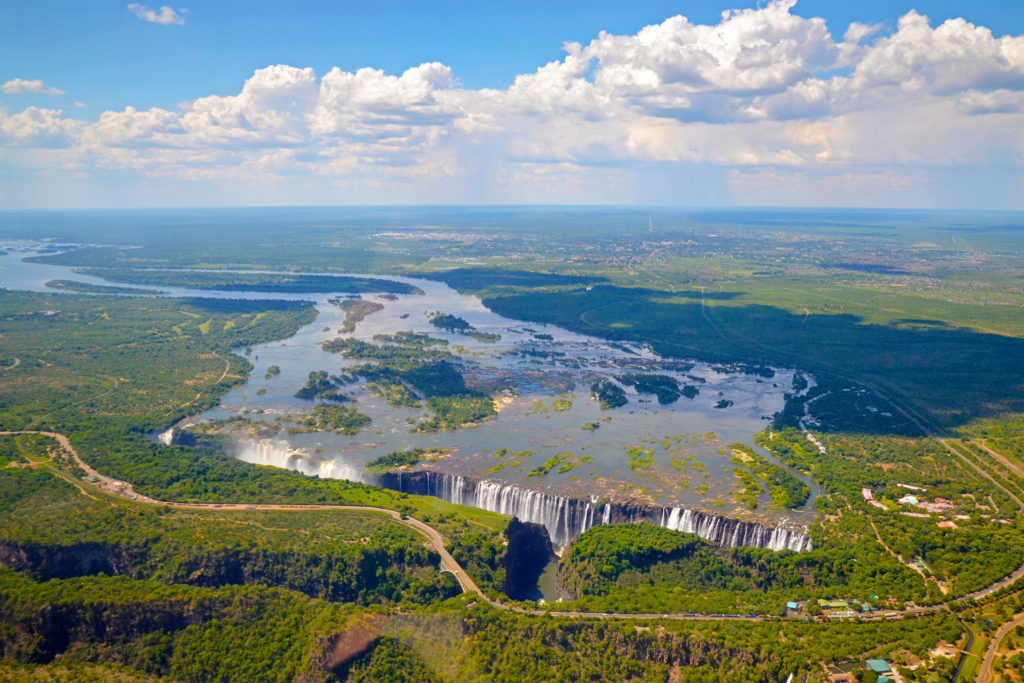
Aerial view of Victoria falls, Zambia. Stock image.

Zimbabwe’s government on Tuesday announced a funding agreement for the upgrade of the Chirundu border with Zambia, to reduce delays on a vital gateway connecting the central African copperbelt to southern African ports.

The deal between Zimbabwe and its private sector partners, the Chirundu Border Consortium, clears the path to construction work, the country’s transport and infrastructure development ministry said in a statement on Tuesday.

The Chirundu border, inaugurated as Africa’s first one-stop border post in 2009, is a key gateway on the North-South Corridor, handling freight between ports in South Africa and Mozambique and the Zambia-DRC Copperbelt.

Traffic through the crossing includes copper, cobalt, fuel, mining equipment, reagents, fertilizers and other traded goods, with trucks often facing bottlenecks and lengthy delays.

The border modernisation project will overhaul old infrastructure, introduce advanced operational and processing systems to reduce delays and congestion at one of Africa’s busiest transit points, the ministry said.

The ministry did not disclose the final investment for the public-private partnership project, but Zimbabwe’s Cabinet has previously said the project would cost $66.8 million and be operated by private investors for 20 years under a concession agreement.

Safaga International, which led the $300 million upgrade of Zimbabwe’s Beitbridge border with South Africa, is leading the Chirundu border project. South Africa’s Strategic Partners Group is also a strategic investor in the project.

Standard Bank (JSE: SBK) is the lead debt arranger and senior lender.

(Reporting by Nelson Banya, Editing by Louise Heavens)


Mining companies built ‘mini armies’ in risky regions: expert


Drilling at Yalea Ridge on the Loulo permit in Mali. (Image courtesy of Barrick Mining .)

Mining companies operating in unstable parts of West Africa have effectively created their own security forces as governments lose control of territory, according to George McLeod, a partner at Critical Risk Team.  

In countries such as Burkina Faso and Mali where local governments seem to lose their power, mining companies are able to create their own security strategies to keep operations going no matter who has the power, McLeod told host Adrian Pocobelli on the latest episode of The Northern Miner Podcast. 

“What the mining companies have done is turn their mines into many states. Rather than relying on the degrading local militaries, they basically created their own mini armies of security,” McLeod said. 

“On a broader level, mining companies don’t necessarily do badly in this type of situation. In a situation where the central government is crumbling and these companies have turned themselves into almost mini states, I guess it’s not really the worst situation for them,” he said. “So I’m not sure that these companies are that unhappy with the current situation.” 

McLeod said governments have become almost irrelevant in some areas where mining companies operate. 

“Unlike other sectors like manufacturing or services, mines really just need a reliable way to get supplies in and concentrate out; they don’t really need that much more than that,” he said. “And this is a very interesting case study in how mining companies can continue to operate, maybe even thrive in a complete and total power vacuum.” 

End of China’s dominance 

For McLeod, China is in its last breath of control and influence over the rare earths market and regulations. 

“I would say they have at maximum about 3 years left before the west including Australia, the US and Brazil and other countries as well before they get their own refining capacity online,” he said. 

China’s tightening of export controls and regulations is accelerating efforts to find alternatives, while technological changes could reduce demand for some rare earths, McLeod said. 

“It’s sort of their last gasp before they lose control over this very important segment. There’s substitution taking effect, other technologies being used in electric vehicles that would completely bypass rare earths,” he said. “So given the way the mining sector works and we all know that this has happened in past cycles you know once everybody gets these new processing and mining operations online, then it moves to the opposite situation of a plot.” 

Listen to the full episode:  


Atomic Eagle expects renewed financing interest in Niger after uranium deal


A drill rig at Atomic Eagle’s Madaouela project in Niger. Credit: Atomic Eagle

An agreement reached this week between the government of Niger and uranium developer Atomic Eagle (ASX: AEU) is expected to help improve access to financing for uranium projects in the West African nation, the company’s chief executive told Reuters.

Niger doubled its stake in the Madaouela uranium project to 40%, bringing an end to a dispute with Australia’s Atomic Eagle, the mining ministry said on Wednesday.

The country is one of Africa’s largest uranium producers, holding about 336,000 metric tons of identified uranium resources in 2023, according to the World Nuclear Association in August.

The Madaouela agreement came just days after the US International Development Finance Corporation (DFC) backed rival Global Atomic’s (TSX: GLO) Dasa uranium project, and at a time when spot uranium prices are almost a fifth higher than a year earlier, at around $89.68 per pound in August, according to industry data.

The recent support secured by Global Atomic is a “fantastic indication that international finance is willing to finance Niger uranium projects again”, Atomic Eagle CEO Phil Hoskins said on Thursday.

Niger tightens control over uranium sector

Military leaders who seized power in a 2023 coup have tightened state control over Niger’s uranium sector, revoking permits held by Orano and GoviEx, now Atomic Eagle, triggering arbitration proceedings and raising investor concerns over resource nationalism.

Atomic Eagle now plans to update feasibility studies, secure environmental approvals and arrange financing over the next two years, aiming to bring the Madaouela project back to construction-ready status, Hoskins said.

Under the agreement, Niger will hold a 15% stake at no cost and a further 25% stake that it must help fund to maintain. Atomic Eagle agreed to cover up to $40 million of Niger’s future funding commitments under the project, the CEO said.

“I don’t believe (the deal) has any negative implications on the ability to develop the mine or the economics,” Hoskins said, adding that the company would consider funding from a range of investors, including China, as it advances the project.

(Reporting by Maxwell Akalaare Adombila, Additionall reporting by Niamey newsroom; Editing by Robbie Corey-Boulet; Kirsten Donovan)

Niger increases stake in Madaouela uranium project to 40%, statement says

Credit: RHJ/AdobeStock

Niger increased its stake in the Madaouela uranium project to 40% from 20%, bringing an end to its dispute with Australian explorer Atomic Eagle (ASX: AEU), the West African country’s mining ministry said on Wednesday.

Niger is a major uranium producer. In 2016, it awarded a permit to exploit uranium at the Madaouela project located in the Agadez region to Atomic Eagle, formerly named GoviEx.

In 2024, Niger revoked the miner’s permit for the Madaouela uranium project and returned the asset to the state, prompting the company to file for international arbitration.

The parties agreed in February 2025 to suspend the proceedings while pursuing a negotiated settlement and, in September 2025, extended the pause by a further six months to allow talks to continue, Atomic Eagle said.

According to the new agreement that was signed with the mines ministry, Atomic Eagle, which is responsible for operational oversight, will now hold 60% of the project, down from 80%.

Atomic Eagle did not immediately respond to a request for comment.

“Niger has prioritized dialogue and negotiation to usher in a new phase based on partnership and development,” a statement from the mines ministry said, without detailing the terms.

Military-led governments across the Sahel region are trying to assert more control over their resources in a bid to generate more revenue.

(Reporting by Niger Newsroom; Writing by Anait Miridzhanian; Editing by Maxwell Adombila and Thomas Derpinghaus)


SuperCritical, University of Michigan team up on offshore uranium recovery 


SuperCritical Materials Corp. has partnered with the University of Michigan to test whether its uranium-from-seawater technology can withstand the mechanical demands of industrial-scale offshore deployment. 

The research will focus on the mechanical design, prototyping and testing of systems using SuperCritical’s licensed adsorbent technology, which captures dissolved uranium as seawater passes across its surface. The material is retrieved after a defined exposure period and processed to recover the uranium. 

“This collaboration combines SuperCritical’s technology and development program with the University of Michigan’s expertise in offshore system design, hydrodynamics and experimental validation,” Dr. Maha Haji, research lead, assistant professor of mechanical engineering at the University of Michigan and director of the symbiotic engineering and analysis laboratory said. “Together, we are working to develop part of the fuel layer needed to support clean, firm energy through the next century.” 

The partnership comes as the US looks to expand and strengthen domestic nuclear-fuel supply and reduce its reliance on foreign uranium supply.  

SuperCritical aims to be part of the US nuclear-fuel supply chain through its nearshore development program that is engineering industrial-scale and cost competitive design for uranium extraction from seawater, as oceans contain 4.5 billion metric tons of dissolved uranium. 

The work moves Supercritical’s adsorbent material method towards a key engineering challenge: determining whether large quantities of the material can be deployed, exposed to seawater and recovered repeatedly and efficiently under marine conditions. 

The research 

The University of Michigan research program will examine how SuperCritical’s adsorbent behaves under different mechanical stresses such as packing, deployment, ocean exposure and retrieval.  

“Extracting critical materials from the ocean requires more than a high-performing absorbent,” Dr. Haji said. “It requires an offshore system that can operate efficiently, reliably and responsibly under demanding marine conditions.”  

Testing is expected to take place at the University of Michigan’s Aaron Friedman Marine Hydrodynamics Laboratory, which includes tanks capable of simulating waves, currents and other marine conditions in a controlled environment. 

“The question is whether the adsorbent can be deployed, exposed and retrieved efficiently and repeatedly at industrial scale,” SuperCritical CEO Alexander Canon Bryan said.  

The research will proceed in phases, which will mechanically characterize the adsorbent, evaluate packing configurations, develop prototypes, hydrodynamic testing it, and refine systems for future offshore pilot deployments.  

Developing and testing systems that can deploy and retrieve large quantities of adsorbent through repeated operating cycles is the next step to then move on to offshore testing.  

Results from the University of Michigan program are also expected to inform a future feasibility study aimed at advancing SuperCritical’s system towards an industrial-scale design.  


UN to help six nations get more value from critical minerals


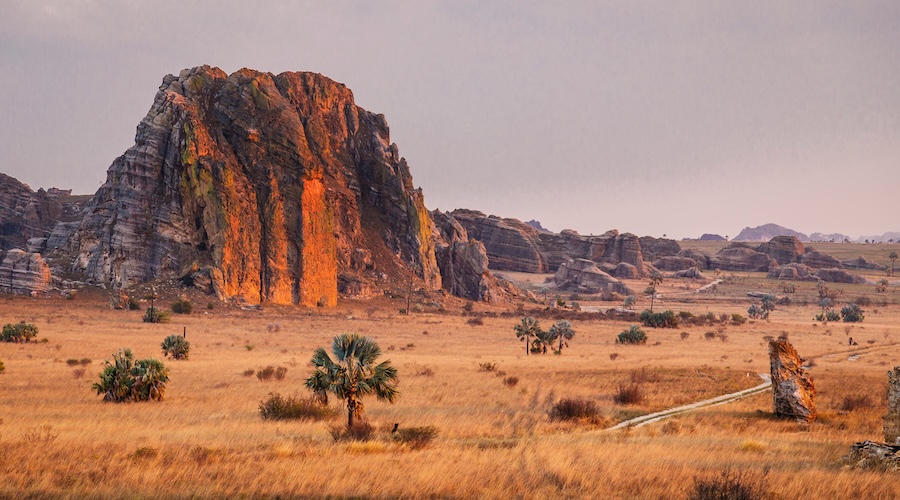
Madagascar. (Stock image by jordieasy.)

The United Nations selected six countries across Africa and Asia to receive support aimed at helping them extract more value from their critical-mineral deposits seen as crucial to the global energy transition. 

The announcement, made by UN Secretary-General Antonio Guterres on Wednesday, will initially benefit Indonesia, Zambia, Guinea, Zimbabwe, Madagascar and Nigeria. UN agencies will work in a coordinated manner to help the countries develop their industries.

Without this support, “we run the risk of repeating the mistakes of the past, where these countries are trapped at the bottom of global value chains,” Selwin Hart, Guterres’ special adviser and assistant secretary-general for climate action, said in an interview. They would remain “mere exporters of raw materials, while others benefit enormously from their mineral wealth,” he said. 

The Country Support Mechanism on Critical Energy Transition Minerals follows Guterres’ creation of a panel to promote processing two years ago. It’s being initiated as demand for copper, cobalt, lithium and other metals surges with the global rollout of renewable-energy plants and increasing adoption of electric vehicles. 

Zambia is Africa’s second-biggest copper producer, while Zimbabwe is the continent’s leading supplier of lithium that’s used in batteries. Indonesia is the world’s top nickel miner while Guinea is the largest bauxite producer and has undeveloped deposits of critical minerals. Madagascar has reserves of cobalt, graphite and nickel. Nigeria’s mineral deposits are largely untapped.

They were chosen following an assessment of “government demand and political commitment; UN system readiness; mineral endowment and development impact potential; resource mobilization prospects; and demonstration and replicability value,” Hart’s office said in a later reply to queries.

UN agencies will work together to offer “policy advice, legal and regulatory expertise, helping countries strengthen environmental and social safeguards,” Hart said. “The system can also provide assistance with value chains.”

Already, some countries are seeking to extract more value from their resources. Zimbabwe is pressing lithium miners to process the mineral domestically — with a ban on exports of unprocessed ore due to take effect — and has suspended exports of tungsten and antimony. 

The program will be led by the UN Development Programme and the UN Development Coordination Office. The six nations were selected from a list of 15 including the Democratic Republic of Congo, the world’s leading cobalt producer, Hart said. 

“The work that is already ongoing and taking place in these other countries will continue” Hart said. “There will be a more coordinated system of prioritized support to the six countries that have been identified.”

(By Antony Sguazzin)