Friday, October 02, 2026

Bernie Sanders Going Back to California to Rally for Billionaire Tax Ballot Measure

The democratic socialist senator said he’s returning to the Golden State “to demand that billionaires finally pay their fair share and help elect strong progressives to Congress.”
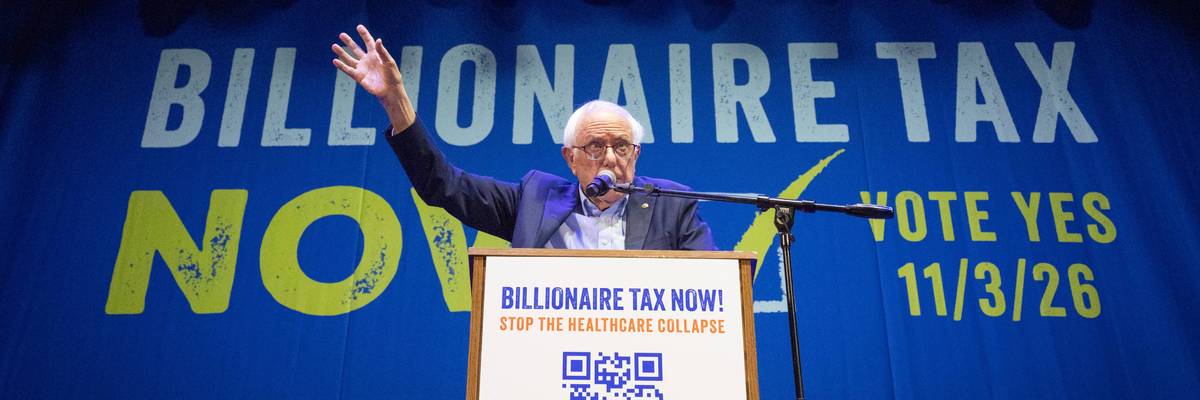


US Sen. Bernie Sanders (I-Vt.) speaks at the Billionaire Tax Now rally on February 18, 2026 in Los Angeles.
(Photo by Jason Armond/Los Angeles Times via Getty Images)

Brett Wilkins
Sep 28, 2026
COMMON DREAMS

US Sen. Bernie Sanders is set to rally in California this weekend with Reps. Ro Khanna and Aisha Wahab in support of Proposition 40, a November ballot measure that would impose a one-time 5% tax on the wealth of the state’s billionaires to fund healthcare and education amid historic cuts to social spending by President Donald Trump and the Republican-controlled Congress.

Sanders (I-Vt.) announced the upcoming appearances Monday on social media as the Prop 40 campaign enters its final weeks, with billionaire opponents pouring millions of dollars into efforts to defeat it.

In San Francisco on Saturday and Los Angeles next Monday, Sanders will headline “Ballots Over Billionaires” rallies hosted by SEIU United Healthcare Workers West, which led the introduction of the voter initiative.


Sanders will be joined in San Francisco and Los Angeles by Khanna (D-Calif.) and Jane Kim, a progressive candidate for California insurance commissioner and former San Francisco supervisor who was the state and regional political director for Sanders’ 2020 presidential campaign. Sanders won California’s Democratic primary that year.

“Sen. Bernie Sanders is a champion for working people, and I’m honored to have his support in the final stretch of our campaign as we rally for affordability and insurance for all,” Kim told Inside California Politics.

On Sunday, Sanders is also scheduled to speak at a canvass launch with Wahab (D-Calif.) in Livermore before heading south to Bakersfield, where he is hosting a Fighting Oligarchy rally with special guest Randy Villegas, the Democratic nominee for California’s 22nd Congressional District.

“On November 3rd, at a time of unprecedented income and wealth inequality, the people of California will decide whether to pass a 5% wealth tax on more than 200 billionaires in California who are worth $2.2 trillion,” Sanders said in a recent social media post. “Proposition 40 would raise enough revenue to prevent 3 million working-class Californians from losing the healthcare they currently have as a result of Trump’s so-called Big Beautiful Bill.”

“Last year, these billionaires became $500 billion richer,” he continued. “As a result of a rigged tax code, they pay a lower effective tax rate than a plumber or a nurse. The greed of these billionaires is really extraordinary.”

“Instead of paying their fair share of taxes, billionaires are now spending $229 million—0.01% of their wealth—to oppose a 5% tax on their wealth,” Sanders added.

Prop 40 may be the most hotly contested measure on California’s midterm ballot. The initiative enjoys strong support from California progressives but is opposed not only by billionaires and their interests but also by outgoing Democratic Gov. Gavin Newsom—who is widely believed to be preparing to run for president—and both candidates running to succeed him as governor, Democratic former US secretary of health and human services Xavier Becerra and Republican commentator Steve Hilton.

Billionaire-backed opposition has intensified as November’s midterms approach. Building a Better California, funded by Silicon Valley billionaires including Google co-founder Sergey Brin, has put millions of dollars into the fight against Prop 40.

Recent polling from the Public Policy Institute of California showed Prop 40 narrowly leading 52%-46%.

“Let’s be clear: These billionaires have more money than they could spend in over 100 lifetimes,” Sanders said last week. “How many mansions do they need? How many yachts do they need? How many private jets do they need?”

“I say to the billionaire class: Control your greed,” the senator added. “Show a bit of compassion to working families and their kids in California.”

These 22 California Billionaires Don’t Want to Pay Their Fair Share

A small segment of the state’s 200-plus billionaires has stepped up to oppose Prop 40, a ballot proposal to tax billionaires, contributing millions to opposition groups and vocally speaking out against the one-time fee.


Entrepreneur and venture capitalist Peter Thiel visits “FOX & Friends” at Fox News Channel Studios on August 09, 2019 in New York City.
(Photo by John Lamparski/Getty Images)

Chuck Collins
Oct 01, 2026
Inequality.org


On November 3, 2026, California voters will vote on Proposition 40, a one-time 5% levy on the net worth of billionaires who were California residents on January 1, 2026. Ninety percent of the revenue would fund healthcare programs, with the remainder set aside for food assistance and education.

A small segment of the state’s 200-plus billionaires has stepped up to oppose Prop 40, contributing millions to opposition groups and vocally speaking out against the one-time fee.


Nobel-Winning Economists Say California Billionaire Tax Could Be ‘Turning Point in the Battle Between Democracy and Oligarchy’

In a brief report, California’s Billionaire Wealth Surge: Meet the 22 California Billionaires Opposing Prop 40 Billionaire Wealth Tax, we identified 22 California billionaires who are active funders and outspoken opponents of Prop 40. Together they have given over $150 million to oppose the initiative—with more rolling in every day. These 22 include a prince, several private jet flying chums of Jeffrey Epstein, and a bunch of crypto and tech bros designing the AI future for the rest of us.

Thiel’s wealth is 10,759 times the median wealth of a Californian household.

On January 1, 2025, these 22 billionaires had a combined wealth of $439.8 billion. By September 1, 2026, their wealth had grown to $722.1 billion.

In a little under 20 months, their combined wealth increased $282.6 billion, a gain of over 64%.

Just to be clear, these “snowflake billionaires” are whining, wailing, and donating money to fight a tax that would effectively require them to part with one-eighth of the wealth they’ve gained since January 1, 2025.

This group includes Google’s Sergey Brin who has been the single largest opposition donor, chipping in over $102 million to fight Prop 40. Brin has seen his wealth grow a whopping 70% in the last 20 months, from $148 billion on January 1, 2025 to $253 billion on September 1, 2026. Brin’s wealth is 83,498 times the median wealth of a Californian household, which is $303,000.

Palantir’s Peter Thiel gave $3 million to the No on 40 campaign and has called on other billionaires to move out of California. In the last 20 months, Thiel’s wealth increased a whopping 120.27%, from $14.8 billion on January 1, 2025 to $32.6 billion on September 1, 2026 (Forbes). Thiel’s wealth is 10,759 times the median wealth of a Californian household.

Chris Larsen, founder of cryptocurrency firm Ripple, has given over $5 million to the No on Prop 40 Campaign, along with another $5 million from Ripple and $12 million to Building a Better California. His personal wealth increased 23.5%, from $10.2 billion to $12.6 billion in the last 20 months. His wealth is 4,158 times the wealth of the median California family.

Venture capitalist John Doerr gave $10 million to No On 40. In the last 20 months, Doerr’s wealth increased 47.97%, from $14.8 billion on January 1, 2025 to $21.9 billion on September 1, 2026. Doerr’s wealth is 7,227 times the median wealth of a Californian household.

Three of the 20 saw their wealth decline over this 20-month period: Tony Xu, Marc Pincus, and Marco DeGeorge. But most have experienced substantial gains.

California Billionaires vs. the Median California Household

The number of billionaires in California has grown, with their average wealth remaining roughly between $9.1 to $9.4 billion. As of September 1, 2026, the 231 billionaires identified as living in California have a combined wealth of $2.117 trillion. Just 20 months ago, there were 178 billionaires in California with a combined wealth of $1.685 trillion.

To show how quickly billionaire wealth has accelerated since the pandemic, let’s go back in time six years. In early 2020, all 815 billionaires residing in the United States had a combined wealth of $2.9 trillion, only slightly more than what the 231 California billionaires have today in 2026.

Meanwhile, the median net worth of a California household has risen a marginal 5.2% increasing $15,000 from $288,000 in 2025 to $303,000 in 2026. A Californian with $1 billion dollars in wealth has 303 times the wealth of the median California household.

Under Prop 40, this billionaire will pay a one-time tax of $50 million to support healthcare, education, and food assistance for their fellow Californians leaving them $950 million to survive on.

The Under-Taxed California Billionaire

In California, the state’s 231 billionaires (as of Sept 1, 2026) hold approximately $2.117 trillion in wealth ($2.3 trillion as of Sept 22, 2026) and pay incredibly low taxes on their riches.

According to an analysis published by economists Gabriel Zucman and Emmanuel Saez, from 2019 to 2025, while California billionaires’ wealth grew an average of over 15% per year, they paid, on average, just 0.26% of their wealth annually in state income taxes. Sergey Brin and Larry Page paid just 0.07% of their wealth annually in California income tax during that period. I guess we can see why they don’t want anything to change.


This analysis was prepared by the Institute for Policy Studies and Tax the Ultra-Rich Now (TURN). More detailed dossiers will be available soon. Press release HERE.

This work is licensed under a Creative Commons Attribution-Share Alike 3.0 License.


Chuck Collins
Chuck Collins is co-founder of CARP and author of Burned by Billionaires: How Concentrated Wealth and Power are Ruining Our Lives and Planet.
Full Bio >


‘I Know Where I Want to Live’: Ex-Venture Capitalist Explains Why He’d Be Happy to Pay California Billionaire Tax

“I believe it’s a patriotic duty to pay taxes, and I do so with pride. Our tax system favors wealthy people, and the least we can do is pay up rather than try to avoid it.”
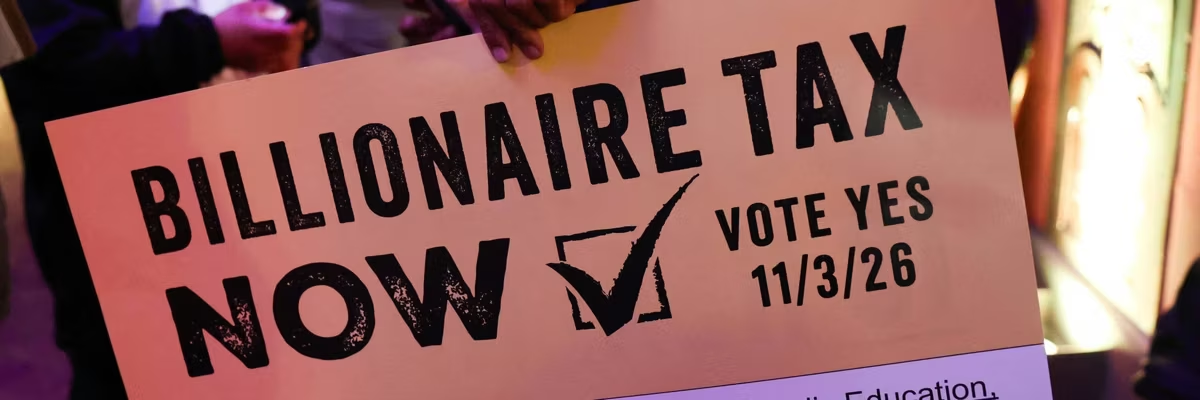


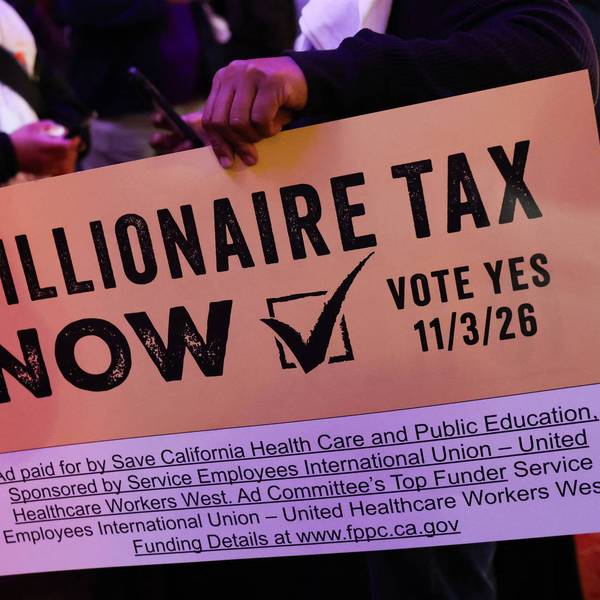
An attendee holds a sign before the start of a rally led by US Senator Bernie Sanders (I-Vt.) during the campaign kickoff for the California Billionaire Tax Act at the Wiltern in Los Angeles on February 18, 2026.
(Photo by Patrick T. Fallon/AFP via Getty Images)

Brett Wilkins
Oct 01, 2026
COMMON DREAMS

As some of California’s richest residents pour tens of millions of dollars into defeating a proposed billionaire tax, one former venture capitalist is making a remarkably different argument: He is perfectly happy to pay it—and he’s not alone.

John O’Farrell, a former partner at Andreessen Horowitz, explained Wednesday in a 12-post thread on the social media platform X why he supports the California Billionaire Tax Act, commonly known as Proposition 40, which is on the state’s November midterm ballot.

O’Farrell’s argument contradicts the chorus of Silicon Valley billionaires and their allies who warn that taxing billionaire wealth would drive the ultra-rich out of California.

“I know where I want to live,” he wrote.

“I’ve been fortunate to benefit from tech wealth. I’m not even close to being a billionaire, but I could easily afford to pay the wealth tax—and any billionaire certainly can—without the slightest effect on my lifestyle,” O’Farrell said. “I support a wealth tax at my wealth level also.”

Introduced by the Service Employees International Union-United Healthcare Workers West, Prop 40 would impose a one-time 5% levy on people worth $1 billion or more, with an option to pay the tax in annual installments of 1% over five years.

The proposal would require the state to spend 90% of revenue from the tax on healthcare and the rest on food assistance and public education. Proponents say the tax would raise roughly $100 billion in revenue. Critics argue that it could drive wealthy residents and investment from California and stall economic growth.

“I find the knee-jerk opposition of some ultra-wealthy people to the idea of paying any new tax deeply disappointing,” O’Farrell said in his thread. “To be honest, I can’t understand it. They have so much money they couldn’t spend it in multiple lifetimes.”

Inequality.org, a project of the Institute for Policy Studies—a Washington, DC-based progressive think tank—exposed 22 California billionaires who have poured more than $150 million into defeating Prop 40, “with more rolling in every day,” as Chuck Collins wrote for the group.


“These 22 include a prince, several private jet-flying chums of Jeffrey Epstein, and a bunch of crypto and tech bros designing the [artificial intelligence] future for the rest of us,” Collins noted. “On January 1, 2025, these 22 billionaires had a combined wealth of $439.8 billion. By September 1, 2026, their wealth had grown to $722.1 billion. In a little under 20 months, their combined wealth increased $282.6 billion, a gain of over 64%.”

O’Farrell’s social media thread pointed out how “our tax system favors wealthy people.”

“I believe it’s a patriotic duty to pay taxes, and I do so with pride,” he wrote, adding, “the least we can do is pay up rather than try to avoid it.”

“Paying taxes is ultimately a matter of self-interest,” he contended. “What kind of society do we want to live in? One that rewards achievement but also emphasizes fairness and opportunity for all—or one in which you have to cower in a bunker and live in fear of the pitchforks?”

“One enables the pursuit of happiness for all,” he concluded. “The other, just the pursuit of endless wealth.”

Prop 40 is backed by numerous progressive groups including the Teamsters union, California Democratic Socialists of America (DSA), and Our Revolution, as well as individual progressives such as Sen. Bernie Sanders (I-Vt.), Rep. Ro Khanna (D-Calif.), and Democratic congressional candidate Connie Chan, who is running to replace retiring longtime San Francisco congresswoman Nancy Pelosi.

Sanders, Khanna, and others—including Congresswoman Aisha Wahab (D-Calif.), Democratic congressional candidate Randy Villegas, and California insurance commissioner candidate Jane Kim—are set to speak at a series of rallies for Prop 40 starting Saturday in San Francisco.

O’Farrell isn’t the only wealthy Californian who supports Prop 40. Nvidia CEO Jensen Huang, whose fortune has soared into the hundreds of billions of dollars, has said he is “perfectly fine” with the proposed tax, telling Bloomberg that he and his family “chose to live in Silicon Valley” and that whatever taxes California applies, “so be it.”










How Much Is Trump’s Senseless Iran War Costing Americans Personally?

To be clear, this isn’t the cost of the weapons and soldiers fighting the war, which the Pentagon estimates to be around $44 billion. This is the higher cost you’re paying to fill up your gas tank and to buy products that cost more to move.


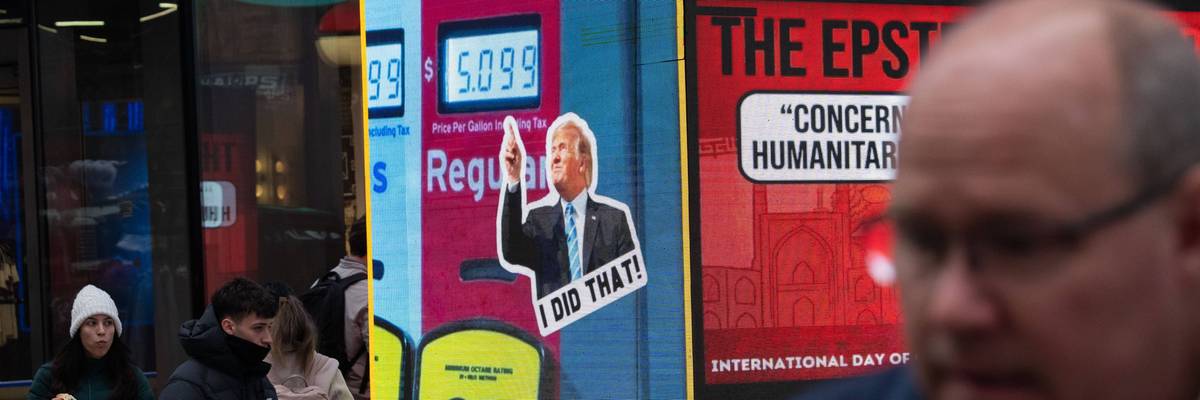
A truck with an image of US President Donald Trump and rising gas prices drives past during a rally for Al Quds Day on March 13, 2026 in New York City.
(Photo by Adam Gray/Getty Images)


Amy Hanauer
Oct 01, 2026
OtherWords


Affordability is getting worse, especially if you have to drive to work or anywhere else.

By late September, the total cost of the higher gas and diesel prices triggered by President Donald Trump’s war against Iran exceeded $103 billion, according to my organization’s analysis of the federal government’s energy data. And those higher prices aren’t showing any sign of slowing. If current trends hold, the price tag by the end of this year will approach $180 billion.

For the average household, that comes out to $750 extra so far, and that figure is on pace to top $1,300 by year’s end.

If life feels more expensive today, that’s because it is.

For a family of four with two drivers, those costs are even higher, topping $1,000 already and slated to be over $1,700 by the end of the year if the war continues. Our interactive tool, online at itep.org/iran-war-fuel-cost, lets you punch in your region and household size to get a sense of how much your family’s costs are rising.

To be clear, this isn’t the cost of the weapons and soldiers fighting the war, which the Pentagon estimates to be around $44 billion. This is the higher cost you’re paying to fill up your gas tank and to buy products that cost more to move.

In a normal year, fall is when drivers get some reprieve at the pump. As summer travel winds down, demand for gas falls, and prices should fall too. But not in 2026.

According to AAA, Americans have never paid this much for gas at this time of year. The national average gas price is $4.47 per gallon as of this writing, and a growing number of states are seeing average prices top $5 per gallon.

Equally troubling is the sky-high price of diesel fuel, which has hit record highs this year and now stands at $6.45 per gallon. When diesel prices rise, the cost of making and shipping products rises too. While most of us don’t buy diesel fuel ourselves, this raises the cost of everything else, bumping up the high rate of inflation we’ve already been seeing.

These soaring fuel costs hurt businesses, local governments, and families.

Businesses have had to shell out $48 billion extra for motor fuel this year, mostly on diesel, because of the Iran War.

Local governments also feel the squeeze. Higher fuel prices make it more expensive to operate school buses, garbage trucks, construction equipment, fire trucks, police cars, and other vehicles and machinery. So far this year our local and state governments have had to pay over $2.7 billion extra for fuel because of the Iran War, and we expect that figure to top $4 billion by the close of the year. This expense, of course, ultimately falls on local taxpayers.

These expenses come on top of other new costs for households like rising interest rates, the Trump administration’s widespread tariffs on products you buy every day, and high healthcare prices, made worse by cuts to government programs like food assistance and Obamacare.

If life feels more expensive today, that’s because it is. The higher price you’re paying for gas because of the Iran War isn’t the whole reason for that. But it sure doesn’t help.


This column was distributed by OtherWords.


Amy Hanauer
Amy Hanauer joined ITEP in 2020, bringing nearly 30 years of experience working to create economic policy that advances social justice. As executive director of both ITEP and Citizens for Tax Justice, Amy provides vision and leadership to promote fair and equitable state and national tax policy.
Full Bio >
Dear Doug Burgum: The Soul of Our Nation Is Not for Sale

We cannot allow our shared natural heritage to be bulldozed, defunded, and sold off by men who look at a majestic forest and only see square footage for server racks.

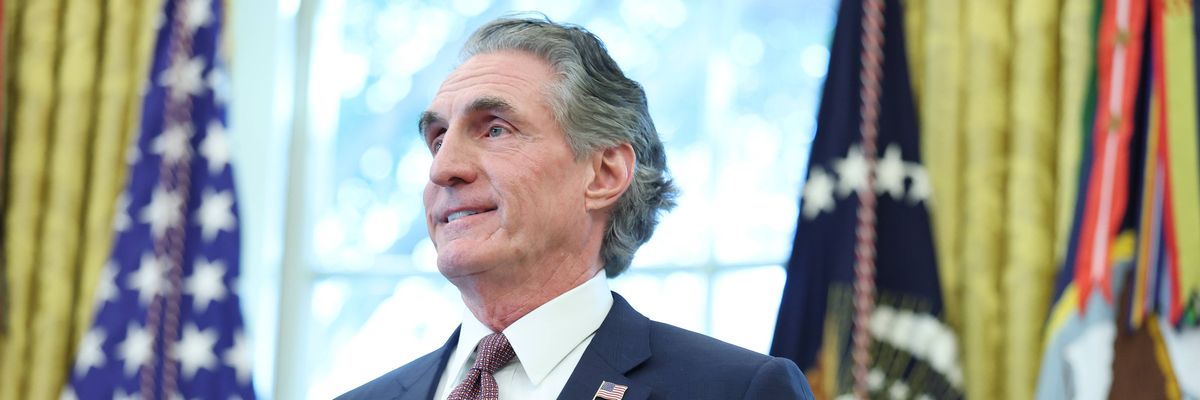
US Interior Secretary Doug Burgum speaks during an event with President Donald Trump in the Oval Office at the White House on October 06, 2025 in Washington, DC.
(Photo by Anna Moneymaker/Getty Images)

Brock Butler
Oct 01, 2026
Common Dreams


For most of my life, I’ve had a guitar in my hands and a melody in my head. Traveling this country as a musician, with Perpetual Groove and The Brock Butler Band, has allowed me to share music with people from all walks of life, and I know firsthand the profound power music has to bring us together. Being fortunate enough to travel as much as I have has also meant the opportunity to see a lot of this beautiful country firsthand.

I’ve become more aware and informed about the most corrupt administration in history, and its attempts (failed and successful) to develop public lands with everything from data centers to golf courses (as long as it’s not windmills, I guess?). I grew up in a rural area of Virginia and the thing I enjoy most about my visits home is the tranquility. I find my grounding out under the open sky. I’m lucky that where I grew up remains relatively intact. If a data center got plopped in the woods behind my home I’d be devastated. Everyone should have the opportunity to get grounded in lovely and peaceful places.

The quiet majesty of our public lands should remain unadulterated. I find profound inspiration in the vast, open spaces and the sheer awesomeness of nature. These places are where we go to breathe, to reflect, and to remember who we are. Whether you’re a hiker, a painter, or someone who loves to pick an instrument around a campfire, whatever your reason and intention to get out in nature might be, it should not be limited or compromised by easements and condominiums.

It seems like anything not nailed down is finding its way into the pockets of a handful of billionaires. And this includes our sacred public spaces.

That’s why every day the news is like torture: war, poverty, sickness—and through it all a looting of the public. It seems like anything not nailed down is finding its way into the pockets of a handful of billionaires. And this includes our sacred public spaces. I get told in comment sections often enough I should just stick to music.

So when my dear friend Alex Lawson, executive director of Social Security Works, asked if I was interested in helping to expose Secretary of the Interior Doug Burgum’s ongoing pilfering of our public lands through song, I jumped at the opportunity. Because while music can unite us, sometimes it needs to be wielded to shine a light on the wrongdoings of the powerful. And right now, no one is doing more wrong by our public lands than the man who defines the phrase “All Hat, No Cattle.” That man is US Secretary of the Interior Doug Burgum.

Burgum is treating our sacred landscapes like an industrial lot for tech billionaires. He has earned the moniker “Secretary AI” for his huddles with data center heavyweights, spending the last year taking a string of meetings with data center investors just as his agencies start handing over our lands for development. He is actively plotting to hand over more public lands to AI developers. We are witnessing an aggressive push to build data centers on public lands, with the administration considering more proposals than previously known. You only have to look at the massive facility—five times bigger than Meta’s—planned for public land near Boise, to see the scale of the threat, promptin
g leaders like Rep. Jared Huffman to lead the charge against this industrialization.


- YouTube

But Burgum isn’t just giving away our land; he is deliberately dismantling the infrastructure meant to protect it. After installing right-wing operatives, his Interior Department has blocked tens of millions in national park funds. Meanwhile, his highly touted national park fee scheme has raised only a quarter of what he promised.

The sheer volume of cancelled projects and defunded parks is staggering. Over the past month, local and national news have painted a devastating picture of what Burgum’s tenure looks like on the ground:The administration blocking $25 million in national park projects, while Oregon’s Senators are questioning where the money is even going
The feds rejected over 130 park projects last month, hitting California the hardest
Vital funds have been slashed everywhere: Yellowstone lost $428K for cultural resource projects, and Nevada’s parks are losing millions after federal funding blocks
The Interior Department is actively clawing back NPS money to fund Trump’s projects, allowing national park maintenance work to be sidelined as the “Freedom 250” takes precedence
Utah’s national parks are drowning in a $350 million maintenance backlog without federal help
Public land agency contractors have suffered a devastating $1.3 billion dip
Internally, the agencies are in crisis. The National Park Service is poised for an overhaul, spring buyouts have eaten into the Interior Department’s ranks, and staff fear a major agency shakeup.

The New York Times summed it up best: it’s a story of “gold statues and staff cuts” disrupting America’s parks

We cannot allow our shared natural heritage to be bulldozed, defunded, and sold off by men who look at a majestic forest and only see square footage for server racks. Protecting our public lands is like protecting the soul of the nation—and that is sorely needed at this time.

And I hope my little musical contribution helps save the soul of our nation, check it out at AllHatDougBurgum.org.


Our work is licensed under Creative Commons (CC BY-NC-ND 3.0). Feel free to republish and share widely.


Brock Butler
Known as the Positive Vibe Technician for Perpetual Groove, Brock “The Rev” Butler founded the band with Adam Perry while attending SCAD (Savannah College of Art and Design) in 1997.
Full Bio >


Conservation Groups Ramp Up Fight Against ‘Despicable’ Trump Assault on Endangered Species


One campaigner warned that the administration’s effort “to legalize most killings of endangered wildlife would essentially mean open season on species already on the brink of annihilation.”


A federally endangered Catalina Island fox watches a mule deer fawn drinking water at a feral cat feeding station behind the Descanso Beach Club in Avalon, Catalina Island, California, on October 31, 2023.
(Photo by Allen J. Schaben/Los Angeles Times via Getty Images)

Jessica Corbett
Oct 01, 2026
COMMON DREAMS

Conservation groups that sued this summer over President Donald Trump’s administration rescinding the regulatory definition of “harm” in the Endangered Species Act updated their legal challenge on Thursday after yet another attack on the landmark law.

The coalition’s supplemental complaint explains to a federal court in Seattle that since the lawsuit was first filed in July, administrative leaders have directed various agencies to interpret the ESA to mean that only intentionally killing or wounding a protected species is illegal—a shift that critics condemned as “an all-out war on America’s wildlife.”

As the “harm” rescission took effect on September 14, US Fish and Wildlife Service Director Brian Nesvik issued a related memorandum with that interpretation—effectively allowing “incidental” killing. John Luce, general counsel at the National Oceanic and Atmospheric Administration, sent the same directive to eight sections of NOAA.

These memos “violate the plain language and overarching purpose of the ESA; they also lack any reasoned basis, are arbitrary and capricious, and failed to comply with applicable notice-and-comment rulemaking requirements,” the new filing argues, citing the Administrative Procedure Act. The coalition is asking the court to vacate the memos and bar the agencies from using their interpretations of the 1973 law.

“This despicable effort to legalize most killings of endangered wildlife would essentially mean open season on species already on the brink of annihilation,” said Noah Greenwald, endangered species co-director at the Center for Biological Diversity, in a Thursday statement. “It’s the most serious attack on imperiled animals since the Endangered Species Act was passed more than 50 years ago.”

“Without protection against the daily assaults of our modern world, Florida manatees, spotted owls, snowy plovers, and so many other animals that bring color to our world won’t stand a chance,” he warned, noting that “habitat destruction is the single biggest cause of species endangerment and extinction” in the United States and beyond.

Greenwald added that “with this destruction, the perils faced by plants and animals have grown exponentially. Such peril doesn’t come down the barrel of a gun, but it’s still a deadly threat, and the Endangered Species Act can and must protect our imperiled wildlife from this kind of careless killing.”

In addition to the center, the coalition behind the case includes Columbia Riverkeeper, Conservation Law Foundation, Conservation Northwest, Friends of the Wild Swan, Oregon Wild, Sierra Club, Swan View Coalition, and WildEarth Guardians, with legal representation by Earthjustice.

After the memos were exposed last month, Earthjustice attorney Ben Levitan declared that “the government’s new legal position is a prescription for extinction.”

“It says that as long as you claim you didn’t mean to kill an endangered species, the law can’t and won’t stop you,” he stressed. “That’s ridiculous—and a totally illegal, active misreading of the Endangered Species Act. We’ll see the Trump administration in court about this.”


Groups Call Senate Permitting Deal a ‘Blatant Giveaway to Big Oil and Big Tech’

“If it comes to pass, this deal would bulldoze America’s most important wildlife law,” said one campaigner.


Green-winged teals are seen flying over water at Seedskadee National Wildlife Refuge in Wyoming on April 25, 2019.
(Photo by Tom Koerner/US Fish and Wildlife Service/flickr/cc)

Brett Wilkins
Sep 30, 2026
COMMON DREAMS


A bipartisan Senate proposal to overhaul federal permitting rules drew fierce opposition Wednesday from environmental and wildlife advocates, who warn that the legislation could significantly weaken the Endangered Species Act and other key protections in service of boosting President Donald Trump’s pro-fossil fuel and artificial intelligence agenda.

Senate negotiators—chiefly Democrats Martin Heinrich (NM) and Sheldon Whitehouse (RI) and Republicans Shelley Moore Capito (W.Va.) and Mike Lee (Utah)—reportedly reached an agreement Monday on the text of a sweeping permitting package intended to speed construction of energy and infrastructure projects.

While the full legislative text of the “Bipartisan American Affordability and Jobs Act of 2026” had not been publicly released as of Wednesday, reported provisions have prompted alarm among conservation groups, who warn that the proposal would weaken endangered species protections, shift federal authority and responsibility to states, limit scientific review and judicial oversight, and exempt some projects from key environmental consultations.

“If it comes to pass, this deal would bulldoze America’s most important wildlife law,” Defenders of Wildlife president and CEO Andrew Bowman said Wednesday. “We can build the infrastructure America needs without sacrificing the wildlife we have a responsibility to protect and that Americans cherish. Development should not come at the expense of science, accountability, or the ability of America’s most imperiled wildlife to survive.”

Oil Change International called the proposal “a blatant giveaway to Big Oil and Big Tech.”

“This ‘dirty deal’ threatens to raise electricity prices for working families by accelerating the buildout of energy-guzzling AI data centers and liquefied natural gas export projects,” said Oil Change International US campaigns manager Collin Rees. “Our recent research shows that the Trump administration’s support for reckless AI development and greater gas exports drives up energy costs for households.”

Brett Hartl, government affairs director at the Center for Biological Diversity (CBD), said that “this is a climate kill shot that condemns our most vulnerable communities to suffer decades more fossil fuel pollution.”

“It’s absurd to ensure our planet chokes with greenhouse gases, gut endangered species protections, and eviscerate the Clean Water Act for what seems to be a nearly meaningless victory against Trump’s war on offshore wind,” Hartl continued. “The minor benefits for renewable energy corporations are massively dwarfed by the gifts to the fossil fuel industry.”

“If this grotesque legislation becomes law, the paltry increases in renewable energy will be instantly devoured by AI data centers,” he added. “The only winners here are Elon Musk, Mark Zuckerberg, tech oligarchs, and the shareholders of fossil fuel companies.”

According to CBD:
Today’s package contains numerous provisions that lock in thousands of fossil fuel projects, including oil and gas pipelines, [liquefied natural gas] export terminals, and expanded fossil fuel drilling onshore and offshore approved by President Trump over the past two years. It also ensures that future fossil fuel pipelines and methane gas-generated electricity can never be challenged in court.

Additional provisions gut parts of the Clean Water Act, including the Section 401 authority of states to protect their rivers and streams from the impacts of building pipelines and the [Environmental Protection Agency’s] Section 404(c) permit veto authority, which has been used to stop projects like the Pebble Mine in Alaska.

The legislation weakens the National Historic Preservation Act and Tribal consultations, leaving most Tribal nations with no meaningful way to protect their sovereignty when faced with potential fossil fuel projects on their lands.

Furthermore, CBD noted, “the legislation guts the Endangered Species Act by allowing states to take over the Section 7 consultation process with minimal safeguards, turning one of the law’s strongest provisions into a state-run rubber stamp of dangerous projects.”

The Western Environmental Law Center described the proposal as a “five-alarm fire,” warning that it could weaken the Clean Water Act, Endangered Species Act, [National Environmental Policy Act], and other safeguards.

“The permitting deal is a betrayal of public lands, water, and wildlife, and environmental justice values that Westerners depend on,” said Erik Schlenker-Goodrich, the group’s executive director, who warned that the measure could ultimately “hobble the ability of future administrations to enact an ambitious climate and conservation agenda.”

Hartl called out Democrats Heinrich and Whitehouse for “giving away our most cherished environmental laws based on fantastical models that project a renewable energy utopia.”

“They’re rewarding a ruthless fossil fuel industry that will always put its quarterly profits ahead of a livable planet and future generations,” he said. “Trump promised fossil fuel companies that he’d do everything in his power to assist them in his second term, and Sen. Heinrich and Sen. Whitehouse seem hell-bent on helping Trump fulfill that promise.”

Bowman contended that “Congress should be looking for ways to make permitting more efficient rather than a Trojan horse to weaken the Endangered Species Act.”

“Efficiency and conservation are not opposing goals,” he added. “A durable permitting bill should deliver both. Congress should not lock in permanent damage to the Endangered Species Act simply to get a deal today.”


Conservationists Vow Court Fight as DHS Lifts Pause on Big Bend Border Construction

“We won’t let them destroy the wildest place in Texas without a fight,” the Center for Biological Diversity vowed.


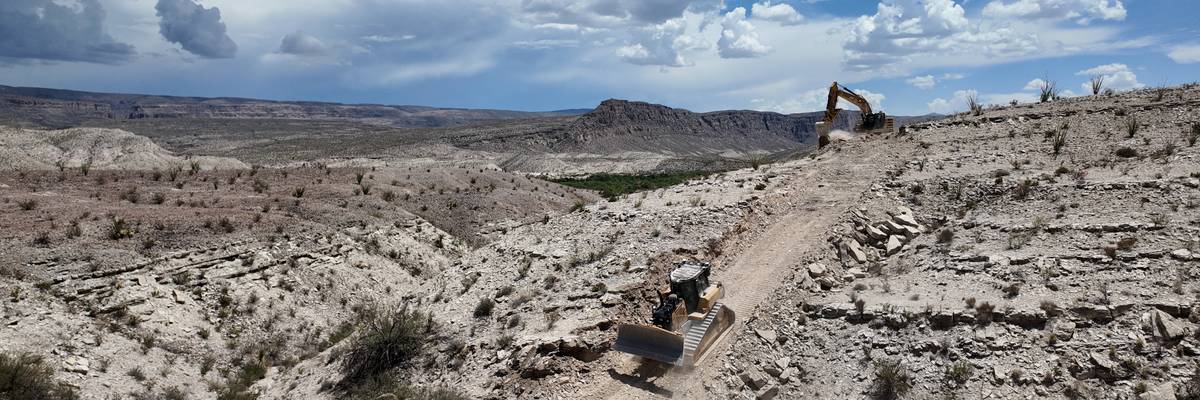
Construction of the Trump administration’s border barrier project procedes at Mariscal Mountain in Big Bend National Park in Texas on August 15, 2026.
(Photo by Laiken Jordah/Clenter for Biological Diversity)

Brett Wilkins
Sep 30, 2026
COMMON DREAMS

The Trump administration on Wednesday allowed a temporary pause on border construction in and around Big Bend National Park in Texas to expire, prompting renewed vows from conservationists and other opponents to fight the contentious project in court.

Laiken Jordahl, the national public lands advocate at the Center for Biological Diversity (CBD), posted a court document stating that US Customs and Border Protection (CBP)k “will lift the pause on ground-disturbing activities” related to the Department of Homeland Security’s (DHS) plan to build border barriers and other destructive infrastructure across one of the most remote and environmentally sensitive stretches of the US-Mexico border.

The government said Tuesday in a court filing that CBP is “actively considering adjustments” to the project “that would reduce its scope and avoid or minimize potential impacts, based on input received from the National Park Service and other stakeholders.”


However, those possible changes did not assuage opponents of the project, who span the political spectrum.

“We are disappointed, and urge the Department of Homeland Security to extend this pause,” Emily Thompson, executive director of the Coalition to Protect America’s National Parks, said Wednesday. “Continuing with construction of border barriers, roads, and associated infrastructure inside Big Bend National Park will do unprecedented damage to the park.”

Thompson continued:
Big Bend National Park stands out for its unique desert landscape. With more nesting bird species than any other national park, towering canyon walls, and the largest international dark sky reserve in the entire world, Big Bend is an integral addition to our nation’s natural heritage. The Trump administration’s plan to build a border wall through the park threatens all of this, heightening flood risk, inundating the skies with lights, and cutting off migration patterns for wildlife. Building in Big Bend would be mutilating an extraordinary landscape at a massive cost to the taxpayer—with little ultimate benefit.

Bob Krumenaker, chair of Keep Big Bend Wild and a former Big Bend National Park superintendent, asserted that “border security already works” in the park “without the need for intrusive construction.”

“The Border Patrol, the National Park Service, and local sheriffs already operate an effective surveillance system with ground and aerial patrols and unobtrusive, wireless sensors,” he noted. “The rugged terrain, huge distances, and harsh desert weather in the national park and in Mexico across the Rio Grande make this the least active section of the entire southern border for illegal crossings.”

CBD and other plaintiffs are already seeking a preliminary injunction in federal court. US District Judge Kathleen Cardone—an appointee of former President George W. Bush—is scheduled to hear testimony and evidence Friday in El Paso on the request to halt construction while the groups’ lawsuit proceeds. The plaintiffs argue that the Trump administration unlawfully waived dozens of federal laws to accelerate construction.

Indigenous peoples and their advocates have criticized DHS for waiving laws, including the Native American Graves Protection and Repatriation Act and the Archaeological and Historic Preservation Act, to enable the project’s construction.

In a statement issued Wednesday, CBD described some of the damage already done by construction in service of Trump’s deadly immigration crackdown:
Bulldozers started tearing into Big Bend National Park near the iconic Santa Elena Canyon in early August and were documented plowing new routes for vehicle barriers into both the east and west sides of Mariscal Mountain. Contractors have stockpiled heavy equipment across the Big Bend region, where staging yards have been cleared, worker camps built, and water wells drilled.

“We’ll be in court... in El Paso demanding a permanent halt to the destruction,” CBD said. “We won’t let them destroy the wildest place in Texas without a fight.
After Two Botched Attempts, UN Experts Urge Tennessee Not to Try to Execute Christa Pike Again

United Nations High Commissioner for Human Rights Volker Türk also argued that “the death penalty has no place in any society.”


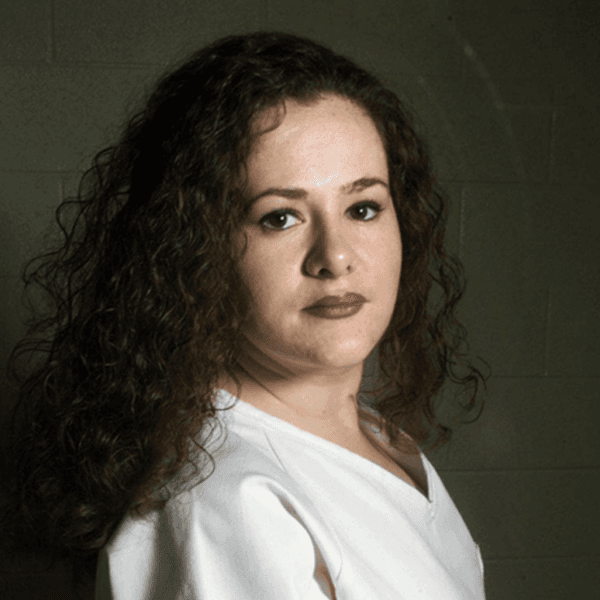
Christa Pike survived two botched execution attempts in Nashville, Tennessee on September 30, 2026.
(Photo via Cornell Law School)

Jessica Corbett
Oct 01, 2026
COMMON DREAMS

United Nations human rights experts on Thursday joined the growing chorus of people around the world outraged by Tennessee’s two botched attempts to execute Christa Pike and called on the state to refrain from trying again to kill the 50-year-old woman.

After a last-minute legal battle, the US Supreme Court allowed Tennessee to execute Pike for the 1995 murder of Colleen Slemmer. The state tried to do so at Riverbend Maximum Security Institution in Nashville on Wednesday night—with two injections of pentobarbital, each of which was supposed to be lethal—but she survived and was transported by ambulance to a hospital.


‘Inhumane, Barbaric, Torturous’: Christa Pike Survives Twice-Botched Execution in Tennessee


A doctor interviewed by WSMV 4 Nashville’s Steve Mehling suggested that an IV could have been placed incorrectly—and, as the journalist summarized: “Pike may suffer from a flurry of long-term effects. This includes skin necrosis, permanent scarring, functional impairment, compartment syndrome, chronic neuropathic pain, and pigmentation change at the injection site.”

As of Thursday afternoon, Pike’s attorneys said that she was still alive, but in critical condition, “and receiving lifesaving medical care,” according to The Washington Post. Republican Gov. Bill Lee, who had previously declined to grant clemency in this case, has since halted executions in Tennessee and ordered an investigation into the state’s second botched killing of an inmate this year.

Several UN special rapporteurs and members of the Working Group on Discrimination Against Women and Girls had urged US authorities to commute Pike’s sentence last month, saying that her “execution would mark the culmination of a trajectory of severe physical and psychological suffering marked by childhood abuse and nearly three decades of solitary confinement on death row.”

After Wednesday’s botched attempts, some of the same experts weighed in again: “Christa Pike was denied clemency. One hour before her execution, a court halted it. The Supreme Court then lifted the stay. She was injected twice with lethal drugs and survived. Forcing a person to face death, have it suspended, and then face it again within hours amounts to barbaric and torturous punishment, compounded in this case by decades of psychological torture on death row.”

“The state of Tennessee must immediately and irrevocably end this cruelty by commuting Christa Pike’s death sentence,” said Morris Tidball-Binz, special rapporteur on extrajudicial, summary, or arbitrary executions; Margaret Satterthwaite, special rapporteur on the independence of judges and lawyers; Pau Pérez-Sales, special rapporteur on torture; Mariângela Batista Galvão Simão, special rapporteur on the right to health; Reem Alsalem, special rapporteur on violence against women and girls; and working group members Claudia Flores, Ivana Krstić, Dorothy Estrada-Tanck, and Haina Lu.


United Nations High Commissioner for Human Rights Volker Türk went even further, arguing against capital punishment.

“The case of Christa Pike lays bare multiple reasons why the death penalty should be abolished,” said a statement from his office. “The prolonged suffering—physical and mental—arising from multiple failed execution attempts is abhorrent, and cruel. And there are key fair trial questions still unresolved.”

Türk is calling on “state authorities not to pursue any further attempt to execute Pike,” his office said. “We are also troubled by the increase in the number of executions in the United States. The death penalty has no place in any society.”


‘Inhumane, Barbaric, Torturous’: Christa Pike Survives Twice-Botched Execution in Tennessee

“This event is the worst we’ve seen and unlike any other botched execution in the modern era,” said Robin Maher, the executive director of the Death Penalty Information Center. “There is no precedent.”


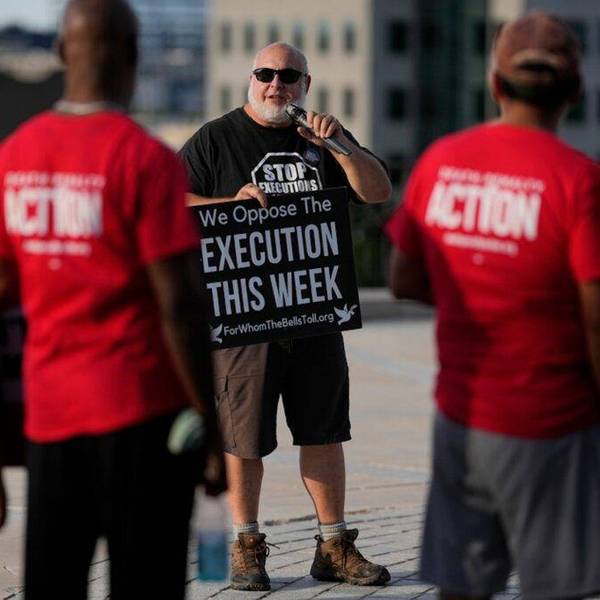
Abraham Bonowitz speaks during a March 4 Mercy protest against the death penalty at the Tennessee State Capitol in Nashville ahead of the Sept. 30 scheduled execution of Christa Pike.
(Photo: George Walker IV/AP Photo)

Jon Queally
Oct 01, 2026
COMMON DREAMS

The botched execution of Christa Pike in Tennessee on Wednesday night was met with disgust and outrage by death penalty opponents who have long argued that not only is murder by the state morally wrong, but the government’s inability to carry out such punishments humanely has been shown time and time again to result in horrific human rights violations and barbaric scenes of cruelty inside the nation’s prison walls.

Pike, sentenced to death in Tennessee over the 1995 murder of 19-year-old Colleen Slemmer, survived two otherwise lethal injections of pentobarbital on Wednesday while strapped to a gurney by prison officials at the Riverbend Maximum Security Institution in Nashville.

“Tonight the State of Tennessee once again failed to carry out a lawful execution,” said Pike’s attorneys—Randy Spivey and Kelly Gleason from the TN Office of the Post Conviction Defender, and Stephen Ferrell and Luke Ihnen from Federal Defender Services of Eastern Tennessee—in a statement late Wednesday.


“We take no pleasure in being right,” her lawyer’s continued, “but the concerns raised by Ms. Pike proved to be true: difficult vein access, blown veins, degraded pentobarbital, no emergency medical care available when things inevitably go wrong, all under a protocol that remains veiled in secrecy. Christa is being treated at a nearby hospital. We have not been informed as to her condition.”

Pike’s legal team said she remained alive after two rounds of the lethal injection, with witnesses reporting confusion after the first dose resulted in Pike raising her head to speak to those who administered the drug and falling into a deep sleep, but audibly snoring and still alive, after the second.

“This event is the worst we’ve seen and unlike any other botched execution in the modern era,” said Robin Maher, the executive director of the Death Penalty Information Center. “There is no precedent.”

It was the second botched execution in Tennessee this year, reports The New York Times. According to the newspaper:
The apparent failure came after dueling court rulings delayed the execution of [Pike] by about nine hours. The state had raced to go ahead with the execution before the day ended and to avoid having to reschedule.

In a pair of emergency legal filings, Ms. Pike’s lawyers said that while two syringes of pentobarbital, the lethal drug, had been administered, Ms. Pike had not lost consciousness. She still had a heartbeat, they said, and was audibly snoring.

The execution of Pike, who court records show was subject to pervasive abuse throughout her childhood and was only 18 years old when she carried out the brutal crime, had been put on hold earlier Wednesday only to be reinstated by the US Supreme Court later in the day.

Amnesty International USA condemned the treatment of Pike and called for an end to all capital punishment in the United States.

“Tennessee’s botched attempt to execute Christa Pike, as witnessed by her attorneys, demonstrates why the death penalty truly is the ultimate cruel, inhuman, and degrading punishment,” the group said. “All execution methods are inhumane and unacceptable. The death penalty must be abolished, everywhere.”

Republican Tennessee Gov. Bill Lee announced after the botched execution that the state’s other remaining execution for 2026 would be put on hold and ordered “a comprehensive, third-party review to determine exactly what occurred” in the attempted killing of Pike.


Pike, said human rights advocate Evad HaAm, “survived a completed lethal-injection attempt. That is not a stay. It is a botched execution.”

While Pike’s current medical status and chance for survival remain unknown, further attempts by the state to kill her, he argued, “would violate the Eighth Amendment prohibition on cruel and unusual punishment.”


Federal Appellate Court Halts Tennessee’s Planned Execution of Christa Pike

“So much of Ms. Pike’s experience reflects widespread and systemic failures that surface in death penalty cases,” said an Amnesty International USA researcher, urging an end to capital punishment “in Tennessee and beyond.”


A panel from the US Court of Appeals for the 6th Circuit halted Tennessee’s planned execution of Christa Pike on September 30, 2026.
(Photo via Tennesseans for Alternatives to the Death Penalty)


Jessica Corbett
Sep 30, 2026
COMMON DREAMS

A federal appellate court on Wednesday morning temporarily blocked Tennessee from executing Christa Pike, as witnesses had already gathered at Riverbend Maximum Security Institution in Nashville for the state’s first execution of a woman in centuries.

A panel from the US Court of Appeals for the 6th Circuit ruled 2-1 to halt the state-sanctioned killing, after Republican Gov. Bill Lee and the US Supreme Court declined to do so. The 50-year-old, found guilty of murdering Colleen Slemmer in 1995, when Pike was 18, could still be executed on Wednesday if the nation’s top court allows it.

Republican state Attorney General Jonathan Skrmetti’s office said: “We will continue to advocate for the lawfully imposed sentence as the courts work through this technical issue. It is common in capital cases for the defense to raise last-minute objections following decades of litigation in numerous courts. We are asking the Supreme Court of the United States to lift the stay.”

Judges Jane Stranch and Karen Moore, both appointees of Democratic presidents, concluded early Wednesday that “a short stay of execution” is in order due to arguments related to the sexual abuse Pike suffered as a child—which clinical psychologist Dr. Bethany Brand described as “truly extreme,” writing in 2023 that “the level of trauma she was subjected to as a preschooler through her 18th year, when she was arrested, is almost impossible to grasp because it is so severe.”

As the 6th Circuit’s order details, Pike points out “that the state recently reversed its litigation position that she is a liar who fabricated sexual abuse. Pike contends that the state’s concession of her history of child sexual abuse and rape ‘erodes the foundation’ of her state court proceedings. Pike ties this erosion to defects in the federal court proceedings because... the district court was required to give strong deference to the state court’s findings of facts.”

“Pike also cites scholarly authority supporting her argument that the state’s representations about her history of sexual abuse tainted the state court proceedings and the subsequent federal ones by introducing damaging stereotypes of survivors of sexual assault,” the filing says.


Pike was “subjected to drugs and alcohol while she was still in her mother’s womb” and “first sexually abused by her grandmother’s boyfriend, who would orally rape her before she was in kindergarten,” the Nashville Banner’s Steven Hale recently reported, citing Brand’s findings. “After living through periods of physical and emotional torment by extended family members and one of her mother’s husbands, Pike was later raped by a known predatory neighbor.”

“She was hospitalized at the age of 12 after overdosing on pills during a suicide attempt,” then sexually assaulted by one of her mother’s boyfriends, who had “moved into the family’s home and brought with him violence and depravity,” Hale continued, noting that the perpetrators who abused Pike often faced limited consequences. “When she was 17 in January 1994, Pike was sexually assaulted again, by a man who saw her walking to the store in Carrboro, North Carolina.”

Hale was among the journalists at the prison in Nashville on Wednesday morning. He said on social media that “I’m told the state has until midnight to carry out the execution. Still unclear what happens next, but prison officials are bringing those of us witnessing the execution inside now to be ready.”

The journalist added just after noon Central Time that “prison officials have brought us back outside now while we continue to wait for news from the Supreme Court.”


Following the 6th Circuit’s decision, the ACLU—whose Capital Punishment Project works to repeal the death penalty in the United States—took to social media, urging the public to “tell Gov. Lee to respect the court’s decision and call off her execution NOW.”

“Gov. Lee’s 615-741-2001 mailbox is full—contacting him through this form is the quickest way to reach his office,” the legal group explained, sharing a link to the relevant page on the state government’s website.

Lee had said Monday that “after deliberate consideration of Christa Gail Pike’s request for clemency, and after a thorough review of the case, I am upholding the sentence of the state of Tennessee and do not plan to intervene.”

Attorneys for Pike—Stephen Ferrell, Kelly Gleason, and Randy Spivey—responded that they were “deeply saddened and heartbroken by Gov. Lee’s decision to deny clemency,” emphasizing that “throughout her childhood, Christa was failed by people and institutions that should have shown her care and meaningful intervention.”

“The 18-year-old girl suffering from severe mental illness and near-debilitating trauma no longer exists,” the lawyers said. “Christa is a 50-year-old remorseful woman who understands her actions, receives proper treatment for her mental illness, and provides for and guides fellow incarcerated women.”

“With this decision, the state of Tennessee is ignoring what both science and our legal system have decided: An 18-year-old brain is not an adult brain, and 18 is too young to face execution. This decision also leaves unanswered vital questions about Tennessee’s execution protocol,” they added. “We will continue to support Christa through every remaining avenue and advocate for a system that is transparent for the people of Tennessee.”


Among the organizations that have pressured Lee to block the execution is Amnesty International USA, whose deputy director of research, Justin Mazzola, recently said that “so much of Ms. Pike’s experience reflects widespread and systemic failures that surface in death penalty cases.”

“She endured profound abuse and trauma as a child and had serious mental disabilities that were never adequately addressed nor treated,” he highlighted. “Due to inadequate legal representation, these issues were not fully presented to the jury. Knowing all that, it is unthinkable that Gov. Lee would even consider moving forward with this execution.”

Mazzola—whose group opposes capital punishment under all circumstances—also stressed that “this issue is about more than one person. Amnesty International members are speaking out because the use of the death penalty remains a human rights failure. As its use continues to decline globally, the United States remains an outlier. It is well past time to abolish the death penalty once and for all, in Tennessee and beyond.”

The US National Domestic Violence Hotline can be reached at 1-800-799-SAFE (7233), by texting “START” to 88788, or through chat at thehotline.org. RAINN’s National Sexual Assault Hotline can be reached at 1-800-656-HOPE (4673) or by texting “HOPE” to 64673. Both offer 24/7, free, and confidential support. DomesticShelters.org has a list of global and national resources.


Trump eyes move that would lock in his gilded Oval Office makeover for future presidents


Travis Gettys
October 1, 2026 
RAW STORY


Decorations at the Oval Office, during meeting of U.S. President Donald Trump with Lebanese President Joseph Aoun at the White House in Washington, D.C., on July 21, 2026. REUTERS/Evelyn Hockstein

Donald Trump is eyeing a move that would lock in the changes he's made to the Oval Office for future presidents.

The 80-year-old president told Time magazine reporters in a lengthy interview published Thursday that Secret Service officials suggested demolishing and rebuilding the chief executive's White House office, which he claims to have rejected, but the Washington Post flagged another detail in those comments.

"'Sir, we think the Oval Office should be taken down, and we'll build a new one, sir,'" Trump said, quoting the official. "I said, 'My a--, you can't build a new one. This is a special place.'"

The White House declined to comment further, and the Secret Service did not immediately respond to questions about the president's account.

The current Oval Office dates to Franklin D. Roosevelt's presidency, and Trump has filled it with gold decor as part of a broader overhaul of the White House. He has followed Secret Service advice on other security projects, including plans for a permanent fence around Lafayette Square, the park across from the White House.

Trump also told Time he wants a new federal designation for the Oval Office, saying it could protect the room from demolition and preserve the changes he has made.

"I've been asking Susie for six months to give me a statement. Will we save this room? Will we make it a federal landmark?" Trump said, referring to chief of staff Susie Wiles.

The White House already holds National Historic Landmark status. However, Congress exempted it from the National Historic Preservation Act, which lets presidents make major changes to the building without the usual review.

Trump was asked whether his successor would be allowed to change his gilded decor if the Oval Office was designated as a federal landmark.

"No," he stated.
DESANTISLAND
Fox forced to cut away from JD Vance's speech as protesters repeatedly heckled him


David Edwards
October 1, 2026 
RAW STORY


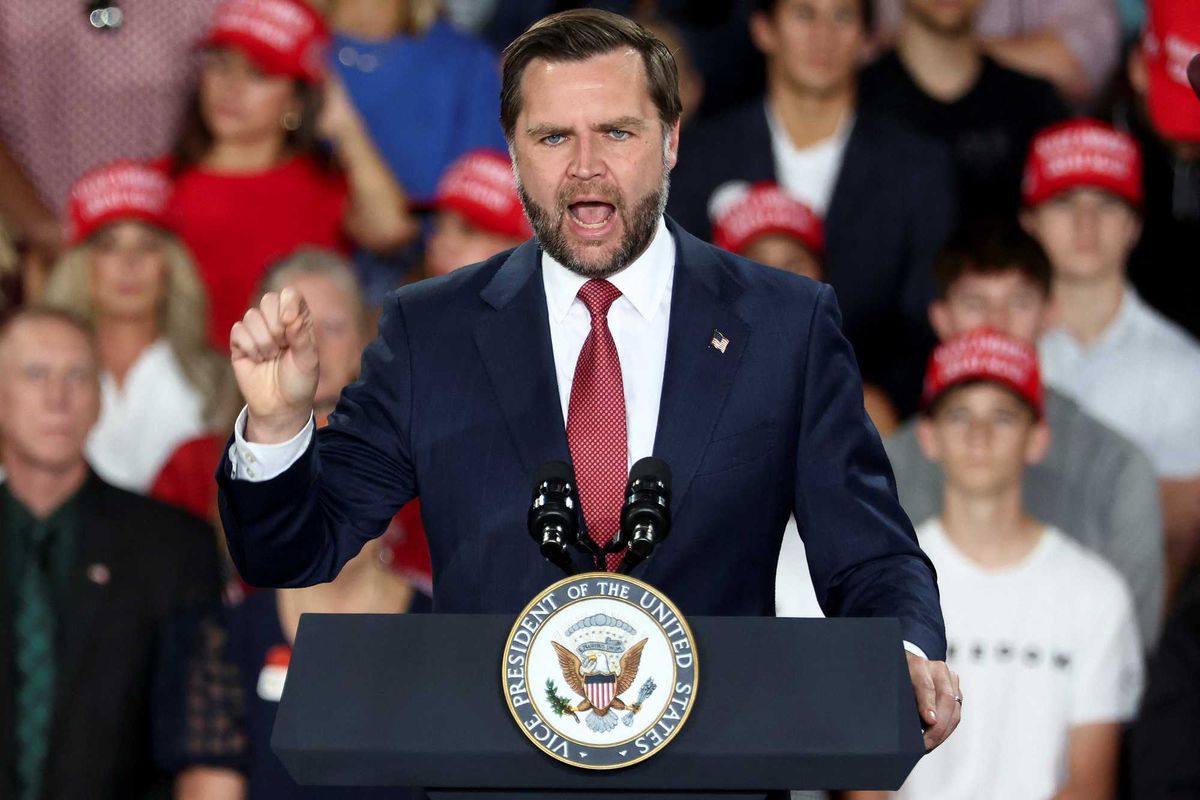
US Vice President JD Vance speaks during a midterm campaign rally to support the GOP gubernatorial candidate Byron Donalds in Lakeland, Florida, US, October 1, 2026. REUTERS/Kevin Lamarque/Pool

Fox News sister network Live Now from Fox cut away from Vice President JD Vance after hecklers repeatedly interrupted his speech at a rally boosting Rep. Byron Donalds (R-FL) campaign for Florida governor.

The network was streaming Vance live Thursday from a Lakeland, Florida, midterm rally paid for by the Trump 47 Committee, according to the event listing. The rally was held to boost Donalds and Sen. Ashley Moody (R-FL), who both spoke before Vance.

Vance was praising Moody when a man in the crowd began heckling him.

"She wants…" Vance said as the man shouted over him.

"She wants to make sure…" he tried again.


"We got a clown over here, ladies and gentlemen," Vance said as the crowd booed.


"We…" Vance started, before the man shouted again and the audience jeered.

"You know, you always have to laugh at these protesters, because that guy, you know, he pretends like he just broke out into an emotional protest, but he made sure to bring his cell phone at the end of a pole," Vance told the crowd.

"This is not a representative voter from the state of Florida. That guy is a Democrat plant who wants… he wants to raise your taxes and release illegal aliens on the streets of Florida," the frustrated vice president continued. "Well, we kicked him out just like we're gonna kick out the rest of the Democrats who wanna do the exact same thing!"

Vance had moved on to Donalds and his push to help Florida homeowners when a woman began shouting.

"Byron Donalds…" Vance said. "Byron Donalds is fighting to protect…"

The vice president increased his tempo as he struggled to finish the sentence.


"...Florida parents every single day," Vance said quickly.

"USA! USA!" the crowd chanted over the boos as Live Now from Fox cut away from the speech.

"And there you have it, another protester being led out of this rally right here," Live Now from Fox anchor Christina Evans told viewers. As she spoke, the network's footage showed a protester being escorted from the building.

The network soon cut back to Vance as the crowd's "USA! USA!" chant continued.

Within seconds, another woman began yelling.

"And here's the thing," Vance said. The woman kept yelling for several more seconds as boos rose again.


"Now what… What that woman is yelling is that she wants… is left-wing bureaucrats in control of your schools," Vance said, speeding up again to finish over her.

"But Byron thinks you ought to be in control of your kids' schools," Vance said as the crowd cheered and the yelling went on.


Kimberly Guilfoyle 'unfit' to serve after her overseas antics were exposed: lawmakers

Bennito L. Kelty
October 1, 2026 
RAW STORY


FILE PHOTO: Greek Minister of the Environment and Energy, Stavros Papastavrou, U.S. Ambassador to Greece Kimberly Ann Guilfoyle, Greek Prime Minister Kyriakos Mitsotakis, Vice President New Ventures at Chevron, Gavin Lewis, Chief Executive Officer Hellenic Hydrocarbon Resources Management S.A. Aristofanis Stefatos react, after signing Chevron-led consortium contracts for gas exploration off Greece, in Athens, Greece, February 16, 2026. REUTERS/Louisa Gouliamaki/File Photo


President Donald Trump's ambassador to Greece, Kimberly Guilfoyle, faces calls for her removal after reportedly pulling a lobbyist into meetings with foreign officials.

Guilfoyle, a former Fox News host who was once engaged to Donald Trump Jr., was confirmed to the post last year. The Wall Street Journal reported Thursday that top lawmakers on the House and Senate foreign affairs panels have pressed Secretary of State Marco Rubio to examine her conduct. They cited a recent Journal investigation into her campaign to promote natural gas deals involving a Greek company across southeastern Europe.

"If these reports are accurate, Ambassador Guilfoyle is unfit to represent the United States abroad and should be removed from her position," Rep. Gregory Meeks (D-NY) wrote in a Wednesday letter to Rubio.

Sen. Jeanne Shaheen (D-NH), who supported Guilfoyle's confirmation, sent her own letter Thursday. "Such actions do not serve U.S. credibility overseas and risk undermining U.S. diplomacy," she wrote.

The lawmakers want records of every meeting attended by Christos Marafatsos, a registered lobbyist for Aktor Group. Aktor's joint venture with a Greek state-backed energy firm signed a 20-year agreement last fall to buy American liquefied natural gas from Venture Global. They also asked about Guilfoyle's financial interests and her travel on private jets, including one flight covered by Aktor's chief executive. Former embassy staffers told The Journal that ambassadors rarely fly private and need explicit approval to do so.

The Journal previously reported that Guilfoyle clashed with Greece's energy minister at a March dinner in Athens. Referring to Romania's government, which was then nearing collapse, she allegedly said, "We can do that to any country we want. We can do that here." Her lawyer disputed that account, per The Journal. Romania's government fell in a no-confidence vote in May.

A U.S. Embassy official in Greece said Guilfoyle "continues to follow all State Department ethical guidelines" and that "any insinuation that she was operating outside of ethical guidelines are categorically false."

A lawyer for Aktor told The Journal, "The Ambassador has been consistently promoting U.S. interests."