United Nations High Commissioner for Human Rights Volker Türk also argued that “the death penalty has no place in any society.”

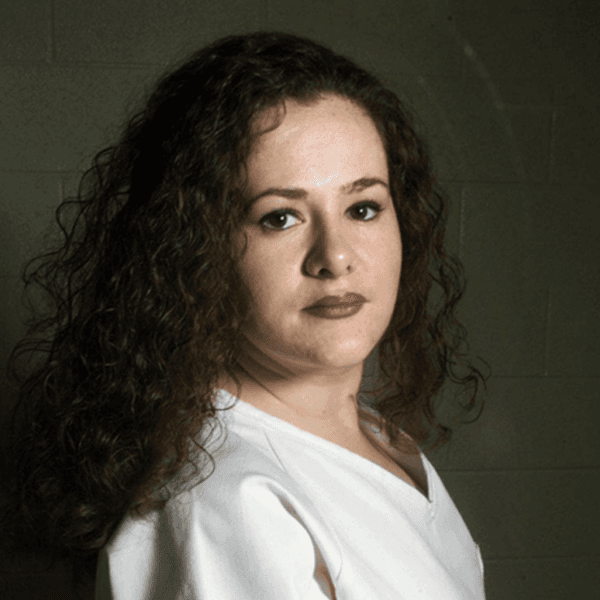
Christa Pike survived two botched execution attempts in Nashville, Tennessee on September 30, 2026.
(Photo via Cornell Law School)
Jessica Corbett
Oct 01, 2026
COMMON DREAMS
United Nations human rights experts on Thursday joined the growing chorus of people around the world outraged by Tennessee’s two botched attempts to execute Christa Pike and called on the state to refrain from trying again to kill the 50-year-old woman.
After a last-minute legal battle, the US Supreme Court allowed Tennessee to execute Pike for the 1995 murder of Colleen Slemmer. The state tried to do so at Riverbend Maximum Security Institution in Nashville on Wednesday night—with two injections of pentobarbital, each of which was supposed to be lethal—but she survived and was transported by ambulance to a hospital.
‘Inhumane, Barbaric, Torturous’: Christa Pike Survives Twice-Botched Execution in Tennessee
A doctor interviewed by WSMV 4 Nashville’s Steve Mehling suggested that an IV could have been placed incorrectly—and, as the journalist summarized: “Pike may suffer from a flurry of long-term effects. This includes skin necrosis, permanent scarring, functional impairment, compartment syndrome, chronic neuropathic pain, and pigmentation change at the injection site.”
As of Thursday afternoon, Pike’s attorneys said that she was still alive, but in critical condition, “and receiving lifesaving medical care,” according to The Washington Post. Republican Gov. Bill Lee, who had previously declined to grant clemency in this case, has since halted executions in Tennessee and ordered an investigation into the state’s second botched killing of an inmate this year.
Several UN special rapporteurs and members of the Working Group on Discrimination Against Women and Girls had urged US authorities to commute Pike’s sentence last month, saying that her “execution would mark the culmination of a trajectory of severe physical and psychological suffering marked by childhood abuse and nearly three decades of solitary confinement on death row.”
After Wednesday’s botched attempts, some of the same experts weighed in again: “Christa Pike was denied clemency. One hour before her execution, a court halted it. The Supreme Court then lifted the stay. She was injected twice with lethal drugs and survived. Forcing a person to face death, have it suspended, and then face it again within hours amounts to barbaric and torturous punishment, compounded in this case by decades of psychological torture on death row.”
“The state of Tennessee must immediately and irrevocably end this cruelty by commuting Christa Pike’s death sentence,” said Morris Tidball-Binz, special rapporteur on extrajudicial, summary, or arbitrary executions; Margaret Satterthwaite, special rapporteur on the independence of judges and lawyers; Pau Pérez-Sales, special rapporteur on torture; Mariângela Batista Galvão Simão, special rapporteur on the right to health; Reem Alsalem, special rapporteur on violence against women and girls; and working group members Claudia Flores, Ivana Krstić, Dorothy Estrada-Tanck, and Haina Lu.
United Nations High Commissioner for Human Rights Volker Türk went even further, arguing against capital punishment.
“The case of Christa Pike lays bare multiple reasons why the death penalty should be abolished,” said a statement from his office. “The prolonged suffering—physical and mental—arising from multiple failed execution attempts is abhorrent, and cruel. And there are key fair trial questions still unresolved.”
Türk is calling on “state authorities not to pursue any further attempt to execute Pike,” his office said. “We are also troubled by the increase in the number of executions in the United States. The death penalty has no place in any society.”
United Nations human rights experts on Thursday joined the growing chorus of people around the world outraged by Tennessee’s two botched attempts to execute Christa Pike and called on the state to refrain from trying again to kill the 50-year-old woman.
After a last-minute legal battle, the US Supreme Court allowed Tennessee to execute Pike for the 1995 murder of Colleen Slemmer. The state tried to do so at Riverbend Maximum Security Institution in Nashville on Wednesday night—with two injections of pentobarbital, each of which was supposed to be lethal—but she survived and was transported by ambulance to a hospital.
‘Inhumane, Barbaric, Torturous’: Christa Pike Survives Twice-Botched Execution in Tennessee
A doctor interviewed by WSMV 4 Nashville’s Steve Mehling suggested that an IV could have been placed incorrectly—and, as the journalist summarized: “Pike may suffer from a flurry of long-term effects. This includes skin necrosis, permanent scarring, functional impairment, compartment syndrome, chronic neuropathic pain, and pigmentation change at the injection site.”
As of Thursday afternoon, Pike’s attorneys said that she was still alive, but in critical condition, “and receiving lifesaving medical care,” according to The Washington Post. Republican Gov. Bill Lee, who had previously declined to grant clemency in this case, has since halted executions in Tennessee and ordered an investigation into the state’s second botched killing of an inmate this year.
Several UN special rapporteurs and members of the Working Group on Discrimination Against Women and Girls had urged US authorities to commute Pike’s sentence last month, saying that her “execution would mark the culmination of a trajectory of severe physical and psychological suffering marked by childhood abuse and nearly three decades of solitary confinement on death row.”
After Wednesday’s botched attempts, some of the same experts weighed in again: “Christa Pike was denied clemency. One hour before her execution, a court halted it. The Supreme Court then lifted the stay. She was injected twice with lethal drugs and survived. Forcing a person to face death, have it suspended, and then face it again within hours amounts to barbaric and torturous punishment, compounded in this case by decades of psychological torture on death row.”
“The state of Tennessee must immediately and irrevocably end this cruelty by commuting Christa Pike’s death sentence,” said Morris Tidball-Binz, special rapporteur on extrajudicial, summary, or arbitrary executions; Margaret Satterthwaite, special rapporteur on the independence of judges and lawyers; Pau Pérez-Sales, special rapporteur on torture; Mariângela Batista Galvão Simão, special rapporteur on the right to health; Reem Alsalem, special rapporteur on violence against women and girls; and working group members Claudia Flores, Ivana Krstić, Dorothy Estrada-Tanck, and Haina Lu.
United Nations High Commissioner for Human Rights Volker Türk went even further, arguing against capital punishment.
“The case of Christa Pike lays bare multiple reasons why the death penalty should be abolished,” said a statement from his office. “The prolonged suffering—physical and mental—arising from multiple failed execution attempts is abhorrent, and cruel. And there are key fair trial questions still unresolved.”
Türk is calling on “state authorities not to pursue any further attempt to execute Pike,” his office said. “We are also troubled by the increase in the number of executions in the United States. The death penalty has no place in any society.”
‘Inhumane, Barbaric, Torturous’: Christa Pike Survives Twice-Botched Execution in Tennessee
“This event is the worst we’ve seen and unlike any other botched execution in the modern era,” said Robin Maher, the executive director of the Death Penalty Information Center. “There is no precedent.”

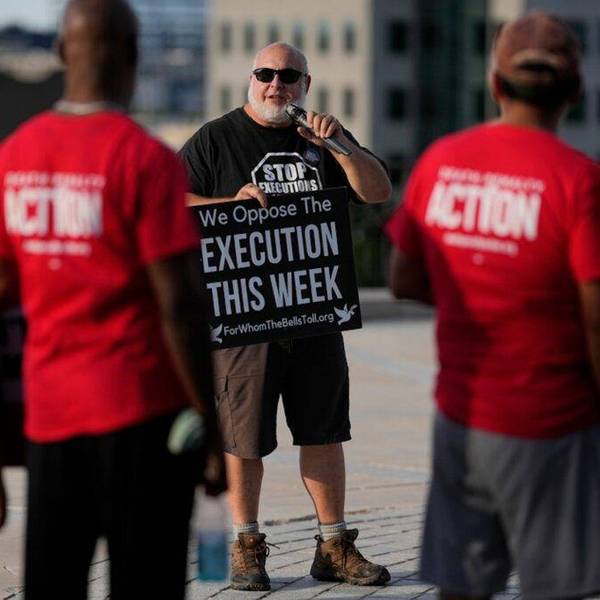
Abraham Bonowitz speaks during a March 4 Mercy protest against the death penalty at the Tennessee State Capitol in Nashville ahead of the Sept. 30 scheduled execution of Christa Pike.
(Photo: George Walker IV/AP Photo)
“So much of Ms. Pike’s experience reflects widespread and systemic failures that surface in death penalty cases,” said an Amnesty International USA researcher, urging an end to capital punishment “in Tennessee and beyond.”

A panel from the US Court of Appeals for the 6th Circuit halted Tennessee’s planned execution of Christa Pike on September 30, 2026.
(Photo via Tennesseans for Alternatives to the Death Penalty)
“This event is the worst we’ve seen and unlike any other botched execution in the modern era,” said Robin Maher, the executive director of the Death Penalty Information Center. “There is no precedent.”
Abraham Bonowitz speaks during a March 4 Mercy protest against the death penalty at the Tennessee State Capitol in Nashville ahead of the Sept. 30 scheduled execution of Christa Pike.
(Photo: George Walker IV/AP Photo)
Jon Queally
Oct 01, 2026
COMMON DREAMS
The botched execution of Christa Pike in Tennessee on Wednesday night was met with disgust and outrage by death penalty opponents who have long argued that not only is murder by the state morally wrong, but the government’s inability to carry out such punishments humanely has been shown time and time again to result in horrific human rights violations and barbaric scenes of cruelty inside the nation’s prison walls.
Pike, sentenced to death in Tennessee over the 1995 murder of 19-year-old Colleen Slemmer, survived two otherwise lethal injections of pentobarbital on Wednesday while strapped to a gurney by prison officials at the Riverbend Maximum Security Institution in Nashville.
“Tonight the State of Tennessee once again failed to carry out a lawful execution,” said Pike’s attorneys—Randy Spivey and Kelly Gleason from the TN Office of the Post Conviction Defender, and Stephen Ferrell and Luke Ihnen from Federal Defender Services of Eastern Tennessee—in a statement late Wednesday.
“We take no pleasure in being right,” her lawyer’s continued, “but the concerns raised by Ms. Pike proved to be true: difficult vein access, blown veins, degraded pentobarbital, no emergency medical care available when things inevitably go wrong, all under a protocol that remains veiled in secrecy. Christa is being treated at a nearby hospital. We have not been informed as to her condition.”
Pike’s legal team said she remained alive after two rounds of the lethal injection, with witnesses reporting confusion after the first dose resulted in Pike raising her head to speak to those who administered the drug and falling into a deep sleep, but audibly snoring and still alive, after the second.
“This event is the worst we’ve seen and unlike any other botched execution in the modern era,” said Robin Maher, the executive director of the Death Penalty Information Center. “There is no precedent.”
It was the second botched execution in Tennessee this year, reports The New York Times. According to the newspaper:
The apparent failure came after dueling court rulings delayed the execution of [Pike] by about nine hours. The state had raced to go ahead with the execution before the day ended and to avoid having to reschedule.
In a pair of emergency legal filings, Ms. Pike’s lawyers said that while two syringes of pentobarbital, the lethal drug, had been administered, Ms. Pike had not lost consciousness. She still had a heartbeat, they said, and was audibly snoring.
The execution of Pike, who court records show was subject to pervasive abuse throughout her childhood and was only 18 years old when she carried out the brutal crime, had been put on hold earlier Wednesday only to be reinstated by the US Supreme Court later in the day.
Amnesty International USA condemned the treatment of Pike and called for an end to all capital punishment in the United States.
“Tennessee’s botched attempt to execute Christa Pike, as witnessed by her attorneys, demonstrates why the death penalty truly is the ultimate cruel, inhuman, and degrading punishment,” the group said. “All execution methods are inhumane and unacceptable. The death penalty must be abolished, everywhere.”
Republican Tennessee Gov. Bill Lee announced after the botched execution that the state’s other remaining execution for 2026 would be put on hold and ordered “a comprehensive, third-party review to determine exactly what occurred” in the attempted killing of Pike.
Pike, said human rights advocate Evad HaAm, “survived a completed lethal-injection attempt. That is not a stay. It is a botched execution.”
While Pike’s current medical status and chance for survival remain unknown, further attempts by the state to kill her, he argued, “would violate the Eighth Amendment prohibition on cruel and unusual punishment.”
Oct 01, 2026
COMMON DREAMS
The botched execution of Christa Pike in Tennessee on Wednesday night was met with disgust and outrage by death penalty opponents who have long argued that not only is murder by the state morally wrong, but the government’s inability to carry out such punishments humanely has been shown time and time again to result in horrific human rights violations and barbaric scenes of cruelty inside the nation’s prison walls.
Pike, sentenced to death in Tennessee over the 1995 murder of 19-year-old Colleen Slemmer, survived two otherwise lethal injections of pentobarbital on Wednesday while strapped to a gurney by prison officials at the Riverbend Maximum Security Institution in Nashville.
“Tonight the State of Tennessee once again failed to carry out a lawful execution,” said Pike’s attorneys—Randy Spivey and Kelly Gleason from the TN Office of the Post Conviction Defender, and Stephen Ferrell and Luke Ihnen from Federal Defender Services of Eastern Tennessee—in a statement late Wednesday.
“We take no pleasure in being right,” her lawyer’s continued, “but the concerns raised by Ms. Pike proved to be true: difficult vein access, blown veins, degraded pentobarbital, no emergency medical care available when things inevitably go wrong, all under a protocol that remains veiled in secrecy. Christa is being treated at a nearby hospital. We have not been informed as to her condition.”
Pike’s legal team said she remained alive after two rounds of the lethal injection, with witnesses reporting confusion after the first dose resulted in Pike raising her head to speak to those who administered the drug and falling into a deep sleep, but audibly snoring and still alive, after the second.
“This event is the worst we’ve seen and unlike any other botched execution in the modern era,” said Robin Maher, the executive director of the Death Penalty Information Center. “There is no precedent.”
It was the second botched execution in Tennessee this year, reports The New York Times. According to the newspaper:
The apparent failure came after dueling court rulings delayed the execution of [Pike] by about nine hours. The state had raced to go ahead with the execution before the day ended and to avoid having to reschedule.
In a pair of emergency legal filings, Ms. Pike’s lawyers said that while two syringes of pentobarbital, the lethal drug, had been administered, Ms. Pike had not lost consciousness. She still had a heartbeat, they said, and was audibly snoring.
The execution of Pike, who court records show was subject to pervasive abuse throughout her childhood and was only 18 years old when she carried out the brutal crime, had been put on hold earlier Wednesday only to be reinstated by the US Supreme Court later in the day.
Amnesty International USA condemned the treatment of Pike and called for an end to all capital punishment in the United States.
“Tennessee’s botched attempt to execute Christa Pike, as witnessed by her attorneys, demonstrates why the death penalty truly is the ultimate cruel, inhuman, and degrading punishment,” the group said. “All execution methods are inhumane and unacceptable. The death penalty must be abolished, everywhere.”
Republican Tennessee Gov. Bill Lee announced after the botched execution that the state’s other remaining execution for 2026 would be put on hold and ordered “a comprehensive, third-party review to determine exactly what occurred” in the attempted killing of Pike.
Pike, said human rights advocate Evad HaAm, “survived a completed lethal-injection attempt. That is not a stay. It is a botched execution.”
While Pike’s current medical status and chance for survival remain unknown, further attempts by the state to kill her, he argued, “would violate the Eighth Amendment prohibition on cruel and unusual punishment.”
Federal Appellate Court Halts Tennessee’s Planned Execution of Christa Pike
“So much of Ms. Pike’s experience reflects widespread and systemic failures that surface in death penalty cases,” said an Amnesty International USA researcher, urging an end to capital punishment “in Tennessee and beyond.”
A panel from the US Court of Appeals for the 6th Circuit halted Tennessee’s planned execution of Christa Pike on September 30, 2026.
(Photo via Tennesseans for Alternatives to the Death Penalty)
Jessica Corbett
Sep 30, 2026
COMMON DREAMS
A federal appellate court on Wednesday morning temporarily blocked Tennessee from executing Christa Pike, as witnesses had already gathered at Riverbend Maximum Security Institution in Nashville for the state’s first execution of a woman in centuries.
A panel from the US Court of Appeals for the 6th Circuit ruled 2-1 to halt the state-sanctioned killing, after Republican Gov. Bill Lee and the US Supreme Court declined to do so. The 50-year-old, found guilty of murdering Colleen Slemmer in 1995, when Pike was 18, could still be executed on Wednesday if the nation’s top court allows it.
Republican state Attorney General Jonathan Skrmetti’s office said: “We will continue to advocate for the lawfully imposed sentence as the courts work through this technical issue. It is common in capital cases for the defense to raise last-minute objections following decades of litigation in numerous courts. We are asking the Supreme Court of the United States to lift the stay.”
Judges Jane Stranch and Karen Moore, both appointees of Democratic presidents, concluded early Wednesday that “a short stay of execution” is in order due to arguments related to the sexual abuse Pike suffered as a child—which clinical psychologist Dr. Bethany Brand described as “truly extreme,” writing in 2023 that “the level of trauma she was subjected to as a preschooler through her 18th year, when she was arrested, is almost impossible to grasp because it is so severe.”
As the 6th Circuit’s order details, Pike points out “that the state recently reversed its litigation position that she is a liar who fabricated sexual abuse. Pike contends that the state’s concession of her history of child sexual abuse and rape ‘erodes the foundation’ of her state court proceedings. Pike ties this erosion to defects in the federal court proceedings because... the district court was required to give strong deference to the state court’s findings of facts.”
“Pike also cites scholarly authority supporting her argument that the state’s representations about her history of sexual abuse tainted the state court proceedings and the subsequent federal ones by introducing damaging stereotypes of survivors of sexual assault,” the filing says.
Pike was “subjected to drugs and alcohol while she was still in her mother’s womb” and “first sexually abused by her grandmother’s boyfriend, who would orally rape her before she was in kindergarten,” the Nashville Banner’s Steven Hale recently reported, citing Brand’s findings. “After living through periods of physical and emotional torment by extended family members and one of her mother’s husbands, Pike was later raped by a known predatory neighbor.”
“She was hospitalized at the age of 12 after overdosing on pills during a suicide attempt,” then sexually assaulted by one of her mother’s boyfriends, who had “moved into the family’s home and brought with him violence and depravity,” Hale continued, noting that the perpetrators who abused Pike often faced limited consequences. “When she was 17 in January 1994, Pike was sexually assaulted again, by a man who saw her walking to the store in Carrboro, North Carolina.”
Hale was among the journalists at the prison in Nashville on Wednesday morning. He said on social media that “I’m told the state has until midnight to carry out the execution. Still unclear what happens next, but prison officials are bringing those of us witnessing the execution inside now to be ready.”
The journalist added just after noon Central Time that “prison officials have brought us back outside now while we continue to wait for news from the Supreme Court.”
Following the 6th Circuit’s decision, the ACLU—whose Capital Punishment Project works to repeal the death penalty in the United States—took to social media, urging the public to “tell Gov. Lee to respect the court’s decision and call off her execution NOW.”
“Gov. Lee’s 615-741-2001 mailbox is full—contacting him through this form is the quickest way to reach his office,” the legal group explained, sharing a link to the relevant page on the state government’s website.
Lee had said Monday that “after deliberate consideration of Christa Gail Pike’s request for clemency, and after a thorough review of the case, I am upholding the sentence of the state of Tennessee and do not plan to intervene.”
Attorneys for Pike—Stephen Ferrell, Kelly Gleason, and Randy Spivey—responded that they were “deeply saddened and heartbroken by Gov. Lee’s decision to deny clemency,” emphasizing that “throughout her childhood, Christa was failed by people and institutions that should have shown her care and meaningful intervention.”
“The 18-year-old girl suffering from severe mental illness and near-debilitating trauma no longer exists,” the lawyers said. “Christa is a 50-year-old remorseful woman who understands her actions, receives proper treatment for her mental illness, and provides for and guides fellow incarcerated women.”
“With this decision, the state of Tennessee is ignoring what both science and our legal system have decided: An 18-year-old brain is not an adult brain, and 18 is too young to face execution. This decision also leaves unanswered vital questions about Tennessee’s execution protocol,” they added. “We will continue to support Christa through every remaining avenue and advocate for a system that is transparent for the people of Tennessee.”
Among the organizations that have pressured Lee to block the execution is Amnesty International USA, whose deputy director of research, Justin Mazzola, recently said that “so much of Ms. Pike’s experience reflects widespread and systemic failures that surface in death penalty cases.”
“She endured profound abuse and trauma as a child and had serious mental disabilities that were never adequately addressed nor treated,” he highlighted. “Due to inadequate legal representation, these issues were not fully presented to the jury. Knowing all that, it is unthinkable that Gov. Lee would even consider moving forward with this execution.”
Mazzola—whose group opposes capital punishment under all circumstances—also stressed that “this issue is about more than one person. Amnesty International members are speaking out because the use of the death penalty remains a human rights failure. As its use continues to decline globally, the United States remains an outlier. It is well past time to abolish the death penalty once and for all, in Tennessee and beyond.”
The US National Domestic Violence Hotline can be reached at 1-800-799-SAFE (7233), by texting “START” to 88788, or through chat at thehotline.org. RAINN’s National Sexual Assault Hotline can be reached at 1-800-656-HOPE (4673) or by texting “HOPE” to 64673. Both offer 24/7, free, and confidential support. DomesticShelters.org has a list of global and national resources.
Sep 30, 2026
COMMON DREAMS
A federal appellate court on Wednesday morning temporarily blocked Tennessee from executing Christa Pike, as witnesses had already gathered at Riverbend Maximum Security Institution in Nashville for the state’s first execution of a woman in centuries.
A panel from the US Court of Appeals for the 6th Circuit ruled 2-1 to halt the state-sanctioned killing, after Republican Gov. Bill Lee and the US Supreme Court declined to do so. The 50-year-old, found guilty of murdering Colleen Slemmer in 1995, when Pike was 18, could still be executed on Wednesday if the nation’s top court allows it.
Republican state Attorney General Jonathan Skrmetti’s office said: “We will continue to advocate for the lawfully imposed sentence as the courts work through this technical issue. It is common in capital cases for the defense to raise last-minute objections following decades of litigation in numerous courts. We are asking the Supreme Court of the United States to lift the stay.”
Judges Jane Stranch and Karen Moore, both appointees of Democratic presidents, concluded early Wednesday that “a short stay of execution” is in order due to arguments related to the sexual abuse Pike suffered as a child—which clinical psychologist Dr. Bethany Brand described as “truly extreme,” writing in 2023 that “the level of trauma she was subjected to as a preschooler through her 18th year, when she was arrested, is almost impossible to grasp because it is so severe.”
As the 6th Circuit’s order details, Pike points out “that the state recently reversed its litigation position that she is a liar who fabricated sexual abuse. Pike contends that the state’s concession of her history of child sexual abuse and rape ‘erodes the foundation’ of her state court proceedings. Pike ties this erosion to defects in the federal court proceedings because... the district court was required to give strong deference to the state court’s findings of facts.”
“Pike also cites scholarly authority supporting her argument that the state’s representations about her history of sexual abuse tainted the state court proceedings and the subsequent federal ones by introducing damaging stereotypes of survivors of sexual assault,” the filing says.
Pike was “subjected to drugs and alcohol while she was still in her mother’s womb” and “first sexually abused by her grandmother’s boyfriend, who would orally rape her before she was in kindergarten,” the Nashville Banner’s Steven Hale recently reported, citing Brand’s findings. “After living through periods of physical and emotional torment by extended family members and one of her mother’s husbands, Pike was later raped by a known predatory neighbor.”
“She was hospitalized at the age of 12 after overdosing on pills during a suicide attempt,” then sexually assaulted by one of her mother’s boyfriends, who had “moved into the family’s home and brought with him violence and depravity,” Hale continued, noting that the perpetrators who abused Pike often faced limited consequences. “When she was 17 in January 1994, Pike was sexually assaulted again, by a man who saw her walking to the store in Carrboro, North Carolina.”
Hale was among the journalists at the prison in Nashville on Wednesday morning. He said on social media that “I’m told the state has until midnight to carry out the execution. Still unclear what happens next, but prison officials are bringing those of us witnessing the execution inside now to be ready.”
The journalist added just after noon Central Time that “prison officials have brought us back outside now while we continue to wait for news from the Supreme Court.”
Following the 6th Circuit’s decision, the ACLU—whose Capital Punishment Project works to repeal the death penalty in the United States—took to social media, urging the public to “tell Gov. Lee to respect the court’s decision and call off her execution NOW.”
“Gov. Lee’s 615-741-2001 mailbox is full—contacting him through this form is the quickest way to reach his office,” the legal group explained, sharing a link to the relevant page on the state government’s website.
Lee had said Monday that “after deliberate consideration of Christa Gail Pike’s request for clemency, and after a thorough review of the case, I am upholding the sentence of the state of Tennessee and do not plan to intervene.”
Attorneys for Pike—Stephen Ferrell, Kelly Gleason, and Randy Spivey—responded that they were “deeply saddened and heartbroken by Gov. Lee’s decision to deny clemency,” emphasizing that “throughout her childhood, Christa was failed by people and institutions that should have shown her care and meaningful intervention.”
“The 18-year-old girl suffering from severe mental illness and near-debilitating trauma no longer exists,” the lawyers said. “Christa is a 50-year-old remorseful woman who understands her actions, receives proper treatment for her mental illness, and provides for and guides fellow incarcerated women.”
“With this decision, the state of Tennessee is ignoring what both science and our legal system have decided: An 18-year-old brain is not an adult brain, and 18 is too young to face execution. This decision also leaves unanswered vital questions about Tennessee’s execution protocol,” they added. “We will continue to support Christa through every remaining avenue and advocate for a system that is transparent for the people of Tennessee.”
Among the organizations that have pressured Lee to block the execution is Amnesty International USA, whose deputy director of research, Justin Mazzola, recently said that “so much of Ms. Pike’s experience reflects widespread and systemic failures that surface in death penalty cases.”
“She endured profound abuse and trauma as a child and had serious mental disabilities that were never adequately addressed nor treated,” he highlighted. “Due to inadequate legal representation, these issues were not fully presented to the jury. Knowing all that, it is unthinkable that Gov. Lee would even consider moving forward with this execution.”
Mazzola—whose group opposes capital punishment under all circumstances—also stressed that “this issue is about more than one person. Amnesty International members are speaking out because the use of the death penalty remains a human rights failure. As its use continues to decline globally, the United States remains an outlier. It is well past time to abolish the death penalty once and for all, in Tennessee and beyond.”
The US National Domestic Violence Hotline can be reached at 1-800-799-SAFE (7233), by texting “START” to 88788, or through chat at thehotline.org. RAINN’s National Sexual Assault Hotline can be reached at 1-800-656-HOPE (4673) or by texting “HOPE” to 64673. Both offer 24/7, free, and confidential support. DomesticShelters.org has a list of global and national resources.










.jpg)

