Thursday, October 08, 2026


Venezuelans in no mood to dance despite Trump's oil bonanza

Venezuelans in no mood to dance despite Trump's oil bonanza
"Economic deterioration remains one of the main problems. Since Maduro was captured, there has been no economic recovery of the kind many expected," Venezuelan journalist Mariano told Intellinews. / bne IntelliNewsFacebook
By IntelliNews Caracas bureau October 7, 2026

Nicolás Maduro has all but vanished from the walls of Caracas. Nine months after a US military operation removed him from power on January 3, the billboards, murals and government façades that once carried his face in profusion bear little trace of the unpopular, authoritarian leader who inherited Hugo Chávez's revolution.

For more than a decade Maduro's likeness was a fixture of the Venezuelan capital, part of a visual apparatus Chavismo used to project its permanence. Chávez's image served the same purpose. The stylised eyes first deployed in his 2012 re-election campaign were later reproduced across the country and became an emblem of the state. Much of that imagery is now peeling away, unmourned by most, and nothing of comparable weight has taken its place.

Delcy Rodríguez, Maduro's former vice-president and now the country's interim leader under US tutelage, has made little effort to fill the void. Her administration has few street-level markers and no signature public works to its name. The most conspicuous billboards in the capital honour the rescuers who responded to the twin devastating earthquakes of June 24, while newer campaigns promote “Venezuela Renace,” a programme to rebuild homes and infrastructure damaged in the disasters.

Yet the retreat of Chavista iconography has done little to persuade Venezuelans that their circumstances have changed. An economy hollowed out by more than two decades of mismanagement and corruption, and then by US sanctions, is showing signs of recovery on paper but not in people's lives. Those interviewed by IntelliNews in Caracas said economic hardship remained their overriding concern, as a sliding bolívar drove up prices and blunted any benefit from the foreign investment pledged for the oil and energy sectors.

"Economic deterioration remains one of the main problems for Venezuelans. Since Maduro was captured, there has been no economic recovery of the kind many expected. The official dollar exchange rate continues to rise almost every day and, with it, prices are also increasing," said Mariano, an investigative journalist who returned from exile this year. He and others quoted in this article asked that their real names be withheld for security reasons.

Some businesses, he said, have begun pricing goods against the euro as currency volatility intensifies. He also questioned whether the oil revenues touted by Donald Trump are reaching ordinary Venezuelans. "After nine months, there is also no sign of investments that have produced a significant improvement in quality of life. Power cuts have become worse and so has the water supply," he said.

That is a far cry from Trump's rosy account of Venezuelans "dancing in the streets because they have a lot of money coming in through the big oil companies that are all moving in".

The money is real, but its path to Venezuelan households is circuitous. Since January, Washington has in effect taken control of the country's crude sales. US Secretary of State Marco Rubio told the Senate foreign relations committee in January that proceeds would be held in a US-supervised account in Qatar, so that Caracas could pay police, sanitation workers and the day-to-day costs of government. Supervision was meant to guard against the graft that plagued PDVSA, the state oil company, under Chávez and Maduro. Energy secretary Chris Wright later said the revenue would no longer pass through Qatar, and Rubio told the US Congress that Venezuela had agreed to submit monthly budget requests to the State Department to receive its share of the proceeds.

But transparency remains thin. PDVSA has published no revenue figures since 2016, and the administration has not disclosed how much it controls.

The relationship deepened sharply in late August, when Trump announced what he called "the biggest oil deal in world history". The agreement covers 17 fields that Caracas says hold 65bn barrels of proven reserves, roughly a fifth of the national total, eight of them in the Maracaibo Basin and nine in the Orinoco belt. Rodríguez said the pact targets output of more than 1.5mn barrels a day over 25 years.

US officials said the arrangement would give Washington 55% of the effective output of a new private joint venture, split between equity in a holding company and oil bought at cost, with production earmarked for the US Strategic Petroleum Reserve and the military. The operator, North American Blue Energy Partners, will hold operating control, while the US government will hold a 35% stake, preferential access to 20% of production at cost and a veto over the board, a majority of whose members must be American. The company is headed by Alejandro Betancourt, a controversial businessman with ties to the Maduro government.

Rodríguez hailed the agreement as historic. Critics are less convinced. Opponents across Venezuela's political spectrum have questioned its legality and warned that it erodes national sovereignty, and analysts note that the constitution reserves ownership of petroleum to the state. Output is already recovering. Production rose to 1.2mn bpd in August, driven mainly by Chevron's joint ventures with PDVSA.

Commercial convenience, meanwhile, has turned old foes into partners. Washington has lifted sanctions on Rodríguez and recognised her as "sole Head of State" in federal court proceedings, while Trump has called her a “terrific person” who is "doing a fantastic job.” The pair met for the first time in New York last month to discuss Venezuela’s economic recovery and political transition, according to Rubio.

But for Mariale, a nurse at two public hospitals, that unlikely partnership has yet to show up in her paycheck. "In reality, I haven't seen any difference since Maduro left. I think the people benefiting are the politicians, as always, while ordinary people remain in the same situation. If there are no improvements in wages, we remain where we were," she said.

Carlos, a young chef juggling two jobs to get by, asked why the investment Washington trumpets has yet to show up in basic services. "Improvements should start to become visible when you are negotiating with a country that, according to what is being said, is investing millions of dollars in Venezuela," he said. For him, economic recovery is inseparable from political change. "For the situation to improve, the only option is to hold transparent elections and move towards a democratic and consensual transfer of power."

That transition looks increasingly distant. Hopes that a vote would be called within months of Maduro's ouster have given way to talk of elections in 2027 or even 2028. Addressing the UN General Assembly in New York last month, Rodríguez promised that free elections would be held and said her government had opened talks with opposition groups, but set no date. The White House has likewise shown little public urgency. Rubio told US senators in January that a rushed democratic transition was not the first priority, and Trump said in July that Venezuelans were "not ready yet for the elections".

"Many Venezuelans expected elections to be called during the first three months of the transition. Now, instead, people are talking about 2027 or even 2028. That fuels the perception that there has been no real political change," Mariano said. "Although repression has eased, those who carried out the previous system remain in power. For many Venezuelans, seeing Trump alongside Delcy creates the impression that there will be no meaningful political transformation and that he did not fulfil what he promised, that he betrayed them."

On one front, at least, Venezuelans describe real change. Maduro claimed victory in the July 28, 2024 election despite opposition tallies showing a clear win for its candidate, Edmundo González, and the brutal crackdown that followed led to more than 2,000 political arrests. This year, those interviewed said, persecution has eased markedly.

According to Foro Penal, a Venezuelan rights group, the authorities have freed most of those detainees this year, including every journalist still in custody, although a few civilian and military political prisoners remain behind bars. Some Venezuelans who fled earlier crises have begun to return, among them figures close to María Corina Machado, the opposition leader and 2025 Nobel Peace Prize laureate.

Machado herself, sidelined by the Trump administration in favour of Rodriguez, remains abroad. In recent weeks she has said she has been prevented from entering the country on seven occasions, without saying who blocked her or how.

"The return of opposition figures who left Venezuela after the political crises of 2014 and 2017 also suggests that arbitrary detentions at airports have become less common. It is a sign of some opening, although not necessarily of a break with the past," Mariano said.

Venezuelans have also regained some freedom to protest, reopening an outlet for discontent that the 2024 crackdown had largely closed. But the persistence of economic and political grievances shows how limited the transition has been so far.

Maduro may have disappeared from the walls of Caracas, and his successors now dance to Washington's tune. The structures and ills of his era, though, are proving far harder to erase.

BAN DEEP SEA MINING

Study Suggests Deep Sea Mining Could Be a Loss-Making Proposition

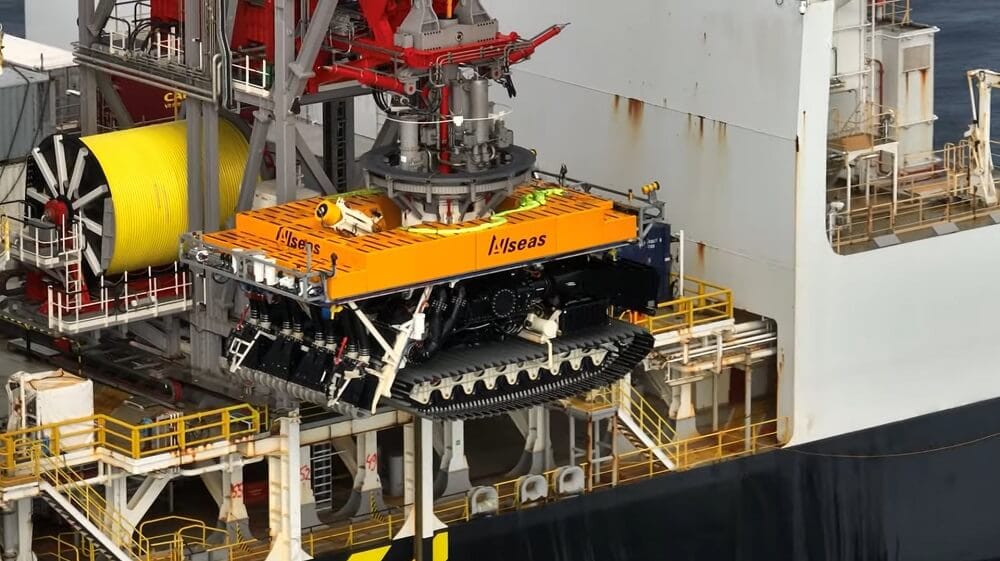
TMC image
Image courtesy of The Metals Company

Published Oct 6, 2026  by The Maritime Executive


Any deep-ocean seabed operation is an expensive proposition, as research vessel operators and offshore drilling companies are well aware. Deep-sea mining for manganese nodules would be no exception, demanding specialized tonnage, robotics, processing equipment and R&D. In a new report, some of the budding industry's opponents suggest that the overhead of industrial-scale subsea operations could make deep sea mining a loss-making proposition - even before accounting for environmental factors. 

Drawing on an investment prospectus for two projects belonging to The Metals Company, one of the biggest deep sea mining firms, the environmental consultancy Koinon conducted "stress-tests" to see if TMC's business model would hold up under various scenarios. The study was sponsored by five NGOs and foundations that are opposed to rapid commercialization of the practice. Koinon's analysts looked at typical cost overruns for megaprojects and ran 10,000 simulations on various outcomes, finding that the median outcome would result in no meaningful return. 

"In 60% of iterations, the collector’s net cash flow is negative in every year, with the consequence that no internal rate of return exists," Koinon's analysts wrote. "Among the minority of runs that do generate a positive return profile, the median IRR stands at 4%." 

The report concludes that the project has an 83 percent probability of returning a loss, with a median net present value of -$5 billion, assuming a discount rate of 8 percent. By comparison, under TMC's own projected scenario, the two projects would make $23 billion. 

The consultancy's analysis found that the up-front capex cost of the collection system was the primary driver of profitability, and the only variable capable of moving the project's margins into the zone of positive returns. Koinon estimated that - based on typical cost overruns for a frontier industry - the average simulated cost of the collection system would likely be about 1.9 times TMC's expected cost, based on typical overruns in past reference cases in offshore oil and gas, frontier technology and mega-scale mining projects. In its sensitivity analysis, changes in capex alone could vary the size of the return by more than $8 billion, making capex alone determinative of project profit or loss. 

The discount rate is a key element in this analysis. Koinon noted that the regulatory and environmental risk associated with deep sea mining has prompted dozens of bankers, insurers and industrial-metals buyers to publicly vow not to do business with deep-sea minerals producers - potentially making project financing more expensive (and thereby driving up the discount rate).  

"The project’s own economics, when simulated rather than asserted, show no return in the majority of cases and a loss in the large majority, while the financing environment strips the cheapest layers from the capital stack, with the consequence that any viable project is forced onto equity priced for speculative risk," Koinon concluded. "The required return that follows, in the order of 25 to 30%, sits above the entire institutional private-markets universe against which it might be benchmarked."

Separately, the consultancy analyzed potential tax revenues from the project and determined that the net benefits for national governments - including project sponsor states - would be slim. The International Seabed Authority would reap substantial revenues from project royalties, but these would be offset by declining tax revenue from onshore mining projects. (The tax revenue drop would be a consequence of higher supplies and lower prices for nickel, cobalt, copper and manganese.)

"This study confirms that deep-sea mining remains economically unattractive from a commercial investment perspective," asserted Torsten Thiele, founder of study co-sponsor Global Ocean Trust. "The findings also highlight that the risks extend beyond mining companies to sponsoring states and countries dependent on terrestrial mining."

TMC asserts that the environmental risks of deep-sea mining can be managed, and that it can earn an after-tax internal rate of return (IRR) of 27 percent on its first projects. The firm argues that the world's economies need a new source of industrial metals, and that manganese nodule extraction can provide that supply with a lower environmental impact than that of shoreside mining projects. 

Opponents argue that the long term environmental effects of deep-sea mining are unknown, and that little-studied seabed ecosystems will be disturbed by the removal of manganese nodules from the bottom. Risks include sediment releases into the water column, long-term habitat alteration, and increased odds of extinction for certain vulnerable species, according to some researchers and activists.

ECOCIDE

Greenpeace Warns of Environmental Fallout From Tanker Attack in Black Sea

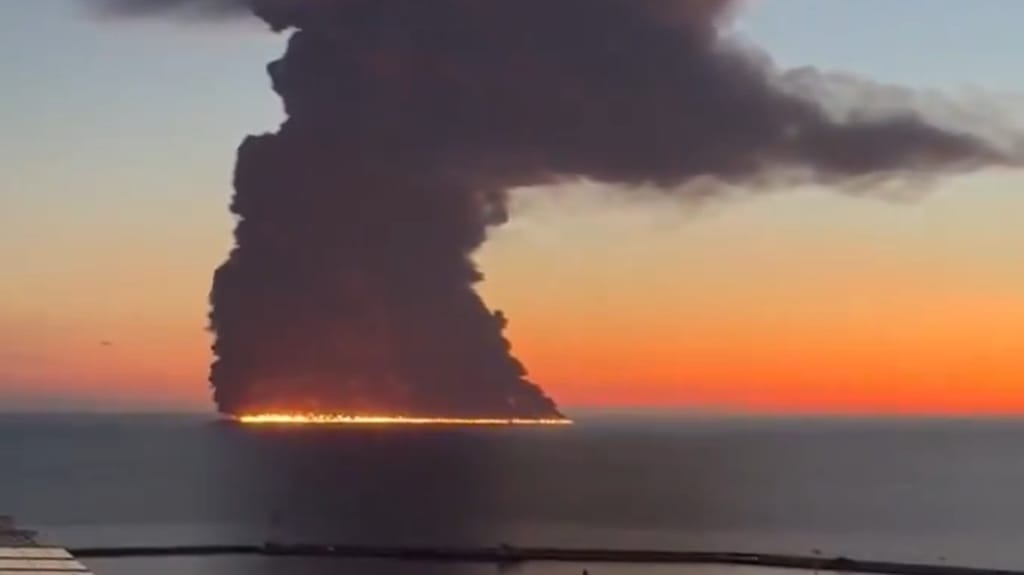
A burning slick spreads from the tanker Aframax Rio off Sochi, Oct. 6. The fire has since been extinguished  (Russian social media)
A burning slick spreads from the tanker Aframax Rio off Sochi, Oct. 6. The fire has since been extinguished (Russian social media)

Smoke from the burning tanker off the resort town of Sochi, Russia petered out on Wednesday, less than 24 hours after the vessel was hit by one or more Ukrainian drones. Russian authorities have confirmed that a "terrorist attack" on the merchant tanker occurred, and Russian media outlets have confirmed its identity as the Liberian-flagged Aframax Rio. 

All 23 crewmembers (all Indian nationals) were evacuated safely from the tanker, and no injuries were reported, according to the Russian Ministry of Transport. The agency says that after an initial period of monitoring to allow the flames to subside, the fire has now been brought under control. Russia's public health ministry claims that no pollution has been detected, though burning petroleum on the water was visible in bystander imagery from the night of the attack. Nearby public beaches have been closed as a precautionary measure, and environmental monitoring of air and water quality continues, according to Sochi Mayor Andrey Proshunin.

The vessel's salvage status as of October 7 is unknown; in unverified images circulating on social media on October 7, local citizens suggested that the ship had taken on a list to starboard. The vessel is on the move, drifting with the current up the coastline of the Lazarevsky District, Proshunin said in a statement.  

"I ask everyone to remain calm, adhere to established restrictions, and rely only on verified information. The city's emergency response team is constantly monitoring the situation," Proshunin said.

In a statement, environmental NGO Greenpeace warned that the attack on the laden tanker could lead to "unprecedented pollution of the Black Sea and the destruction of marine ecosystems," exceeding the scale of the last two substantial spills in the region. 

"[Russian oil] poses a direct threat to the people of Russia itself and to the environment of the entire Black Sea region," the NGO wrote. 

It was the second drone-boat attack on Sochi in a month following a strike on September 9, which hit a public beach and injured 30 bystanders. 

Both Ukraine and Russia have made extensive use of drone technology to attack civilian-crewed merchant ships, both domestic and foreign-flagged. On Tuesday, a Russian drone strike sank a Turkish-operated merchant ship off the coast of Bulgaria, killing ten foreign crewmembers. A separate Russian strike sparked a fire and injured two crewmembers on a second Turkish-operated vessel. 


HD Hyundai Expands SMR Nuclear Reactor Efforts with Demonstration Center

nuclear powered containership
HD KSOE released in 2025 its first model showing the design for a SMR-powered containership (HD KSOE)

South Korean shipbuilder HD Hyundai is working to accelerate its efforts to commercialize Small Modular Reactors (SMRs) through a new agreement partnering with the nuclear industry and academia. The plan is to combine the design and construction capabilities of the shipbuilding industry with the expertise of the nuclear industry and universities to serve as a catalyst for accelerating commercialization.

The new SMR Marine Technology Demonstration Center includes the participation of the Korean Register as well as the nuclear industry and Korean universities. The 12 participating organizations plan to jointly utilize their existing testing facilities and research infrastructure to reduce redundant investments and enhance the efficiency of technology verification for SMR technology. They will jointly develop core technologies required for marine SMR applications and work together to identify and plan large-scale national projects. They will also seek to participate in government R&D opportunities.

By linking the various segments of expertise and technology, HD Hyundai says it will contribute to the development, testing, verification, and demonstration of SMR technology. 

It is the next step in the efforts to develop SMR technology to power a new generation of vessels. Last year, HD Hyundai’s HD Korea Shipbuilding & Offshore Engineering (HD KSOE) revealed its first model of a 15,000 TEU containership employing SMR technology for propulsion power. The company noted that it had already obtained Approval in Principle from ABS (American Bureau of Shipping) for its design for the SMR-powered containership. It said it had advanced the designs while highlighting the enhanced economic efficiency and safety of the design by incorporating actual equipment and safety design concepts.

HD KSOE highlights that the SMR technology does not require engine exhaust systems or fuel tanks. In its design, it optimizes the space used by a large engine room on a conventional containership to accommodate additional containers. In addition to the inherent benefit of SMR technology, HD Hyundai also applied a marine radiation shielding system using a double-tank method with stainless-steel and light water containment.

The shipbuilder HD KSOE announced last year that it planned to establish a marine nuclear demonstration facility. It said it would open the center at its Future Technology Center in Yongin, South Korea, to verify the safety of SMR designs.   

Across the shipping industry, interest continues to build in potential applications for SMR-powered vessels. Hyundai Glovis, a leader in vehicle transport and logistics, announced last week that it is partnering with U.S.-based logistics company Liberty Global Logistics to review the operation of SMR-propelled car carriers on routes between Korea and the United States.


Report: South America Diversions Jumped as Panama Canal Restrictions Grew

USN in Strait of Magellan
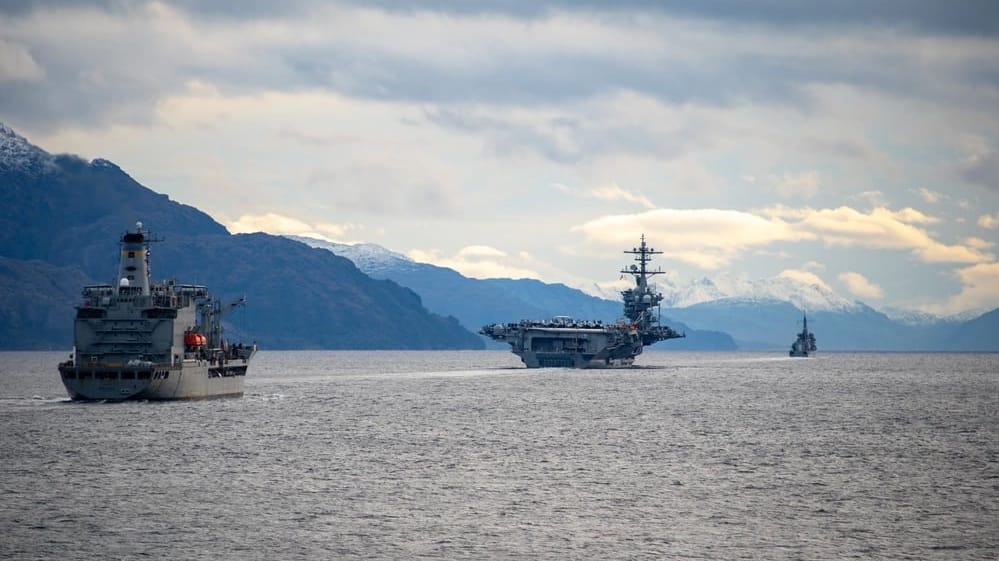
USS George Washington and escorts transiting the Strait of Magellan in 2024 (USN)

The number of ships choosing to reroute around South America has skyrocketed, according to a new report from the analysts at Bloomberg. Using data from the Chilean Navy on the number of pilot requests for the Strait of Magellan, Bloomberg reports a strong year-over-year increase in shipping volume.

It reports the diversions began in July and increased 70 percent year-over-year in both August and September. The Chilean Navy did not provide Bloomberg with data on the types of ships making the transit, but the analysts said the increase came primarily in the 60,000 to 65,000 gross ton size of vessel.

The timing of the increase coincides with the Panama Canal’s efforts, which began both lowering the number of daily transits and, more importantly, restricting maximum draft for the transit. Large gas carriers and containerships were expected to be impacted by the restriction. Containerships, for example, are required to restrict their cargo loads or offload and tranship boxes across the isthmus to meet the draft restriction. Industry analysts have also cited examples of LNG carriers diverting around South America.

The Panama Canal typically maintains a level of around 38 daily transits, but it had begun restricting the number as part of its water conservation methods. Currently, the largest vessels, which use the Neopanamax locks, are restricted to a total of nine daily transits, although the Panama Canal Authority was adding one back based on current water levels. The older Panamax locks currently have a maximum of 23 ships per day.

The Panama Canal Authority strongly emphasized that vessels were advised to make reservations to manage the reduced number of transits. Even with that, there are currently 45 booked vessels waiting for transit, and the northbound delay is again rising, with the average over the past 28 days now up to 5.5 days waiting time. There are, however, only three ships currently waiting that do not have a booked transit slot.

Operators had the option of entering the bidding for slots, but there too the prices skyrocketed, especially ahead of the restrictions starting in September. Record prices exceeding $4 million and then $5 million were reported to obtain slots and jump the wait at the Panama Canal.

In addition to the vessels rerouting to avoid the challenges at the Panama Canal, Bloomberg analysts note some ships are also rerouting around South America on routes between West Africa and Asia, as well as efforts to avoid the security concerns in the Middle East and the Red Sea.

In addition to the added distance from the routes around South America, it can also be one of the most challenging weather environments for ships. The Strait of Magellan reduces mileage and shelters from some of the weather concerns, but it requires pilots.

According to the report, other factors are also contributing to the increase in ship volume in the region. During the winter, roads, for example, between Chile and Argentina can be blocked by snow, with some shippers choosing to instead send goods by ship. Now, as the Southern Hemisphere summer season is beginning, there is also an influx of cruise ships heading to the region and Antarctica.

Storm Isaias is Set to Become a Hurricane as it Approaches Gulf Oil Patch

Isaias
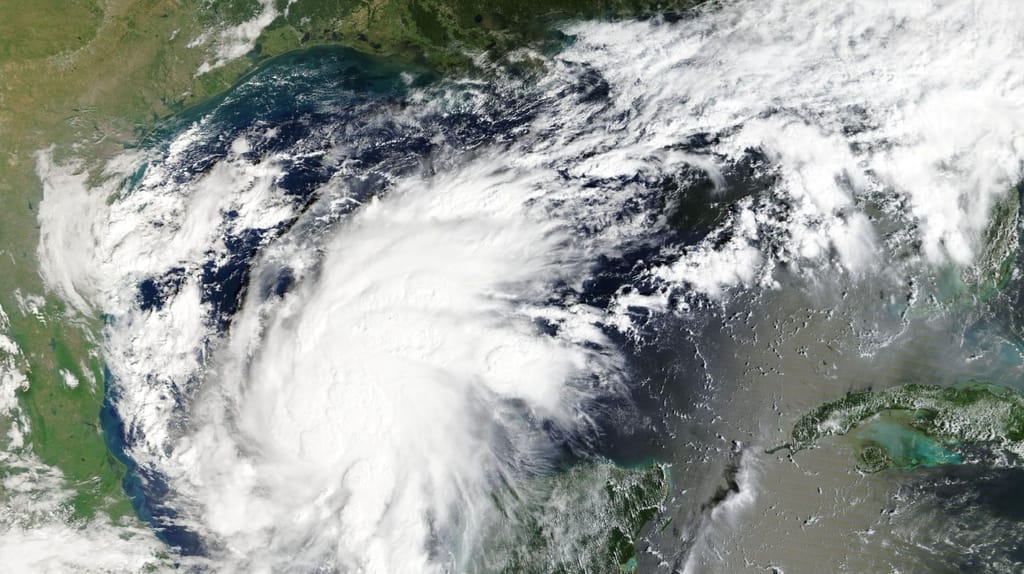
Tropical Storm Isaias strengthens on

Tropical Storm Isaias is strengthening swiftly as it heads towards the U.S. Gulf Coast, and is expected to reach hurricane strength by the time it makes landfall near the Florida Panhandle. The storm's probable path will take it near to U.S. offshore oil and gas infrastructure, with near-term effects in the form of evacuations and well shut-ins. 

In its Wednesday afternoon update, NOAA's National Hurricane Center said that Isaias' intensity was about 55 knots, expected to rise to 95 knots before landfall on Friday. Strong upper-level wind shear is expected to limit its strength. A hurricane watch has been issued between Bay St. Louis, Mississippi and Indian Pass in the Florida Panhandle; NHC warned of the possibility of damaging winds, dangerous storm surge and extended power outages for residents in this region. Storm surge levels could reach up to seven feet in some coastal areas of Mississippi and Alabama, and up to five feet in the Florida Panhandle.  

The affected warning area covers a large segment of the U.S. shipbuilding industrial base: Ingalls Shipbuilding and Bollinger in Pascagoula, Birdon and Metal Shark in Bayou La Batre, Austal USA and Alabama Shipyard in Mobile, and Eastern Shipbuilding in Panama City and Port St. Joe, among others. 

The storm is expected to continue to bring heavy rainfall along the Gulf Coast and inland areas until Saturday, potentially leading to isolated areas of flash flooding.  

The storm's path is expected to run near the eastern edge of the Gulf oil patch, and some offshore infrastructure is within the NHC's warning cone for probable storm path. Risk of elevated winds and waves is prompting a small number of rig operators along the easternmost edge to curtail work and evacuate personnel. The newly-unified Marine Minerals Administration - formerly the Bureau of Ocean Energy Management and the Bureau of Safety and Environmental Enforcement - said in a statement that as of Wednesday, eight production platforms and two non-DP rigs have been evacuated. One DP rig has temporarily moved off-location to get further away from the storm's path. 

As a precautionary measure, offshore wells totaling about 25 percent of all Gulf oil production and 16 percent of the region's gas production have been shut in. Industry operators will bring these wells back online after a post-storm inspection, usually with a fast turnaround time. 

The shut-ins will temporarily remove about 0.5 million barrels per day of production from the global market, adding slightly to the crude oil market disruption caused by ongoing conflict in the Mideast. Because of dueling blockades in the Strait of Hormuz and the Red Sea, deliveries of newly-pumped oil are several million barrels below global demand, leading to a protracted drawdown on commercial and strategic reserves. The net draw rate on global oil stocks averaged about two million barrels per day in the third quarter, according to recent estimates from the Energy Information Administration. 


Kawasaki Heavy Industries Unveils Climb-Capable Shipyard Robot

Kawasaki Shipyard
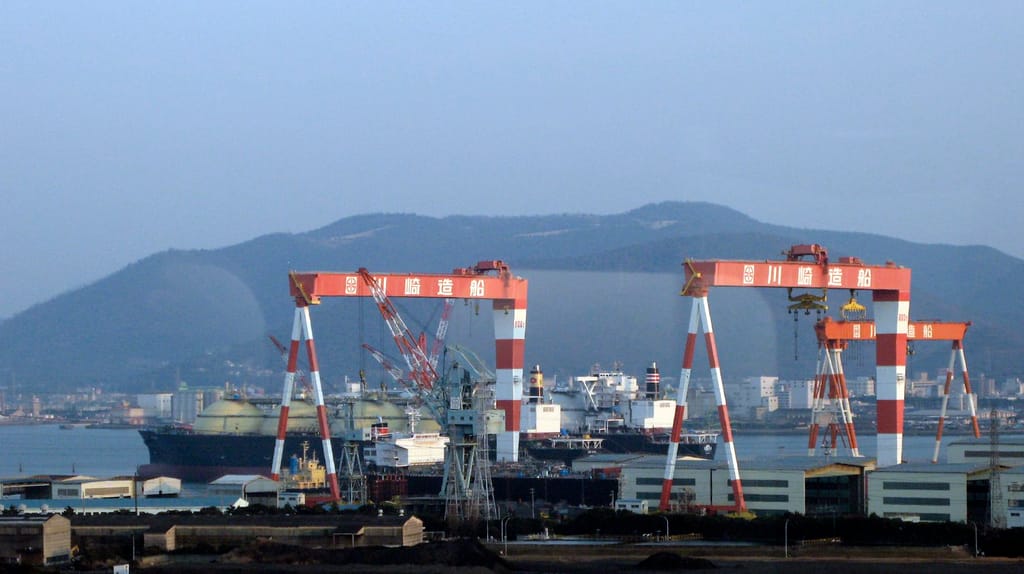
Kawasaki's Sakaide Plant (Tayorinai eye / CC BY 2.0)

Japanese conglomerate Kawasaki Heavy Industries is among the country's largest shipbuilders, and it also happens to have rare access to its own internal robotics division. It is putting a long legacy of robotics expertise to the test with a new emphasis on "physical AI" in every domain, including out in the yard. On Tuesday, it released an initial look at an AI-enabled, magnet-footed drone robot that can climb bulkheads and navigate small spaces.

The prototype model is small, just two feet long, but the objective is to field a fully-developed version that can weld or perform weld inspections on vertical surfaces, without need for high-reach equipment or human workers. A robot that could work aloft on contoured surfaces would have substantial advantages in a drydock, removing the need for access equipment and staging for human workers.

Japanese shipyards have a strong business need to increase their efficiency: The labor supply in Japan is restricted by an aging, steadily declining population. Guest-worker programs have helped to plug the gap, but the national government is instituting ever-tighter restrictions on work visas. In this environment, a front-line labor position replaced with technology is a job filled rather than a job lost. South Korean yards face similar constraints and have taken a leading role in developing robotic welding robots for block construction.  

More broadly, Kawasaki wants to accelerate its efforts with the introduction of AI in day-to-day operations. That includes robotics and "physical AI," a fusion of hardware and AI that creates systems that interact with the physical environment. It plans to invest $3.5 billion on the upgrade effort across all its manufacturing divisions over the next four years, including early testing at the Sakaide shipyard in Kagawa Prefecture.

"Physical AI . . . reaches out from the screen into the real, physical world. Think of self-driving cars, or robots — physical AI can recognize what's happening around it, make decisions, and move things in the real world. As it spreads, we can expect the machines around us to move more flexibly, making our daily lives more convenient," said Jun Yamaguchi, lead co-creation manager at Kawasaki's new physical AI R&D lab in San Jose, California. 

By 2030, Kawasaki Heavy Industries wants to have an AI-enabled humanoid robot in general service, bringing the advantages of robotics to a broad range of human tasks. 

Top image: Kawasaki's Sakaide Plant (Tayorinai eye / CC BY 2.0)


Russian Fuel Shipments Add to Spat Between Ukraine and S. Korea

astoria
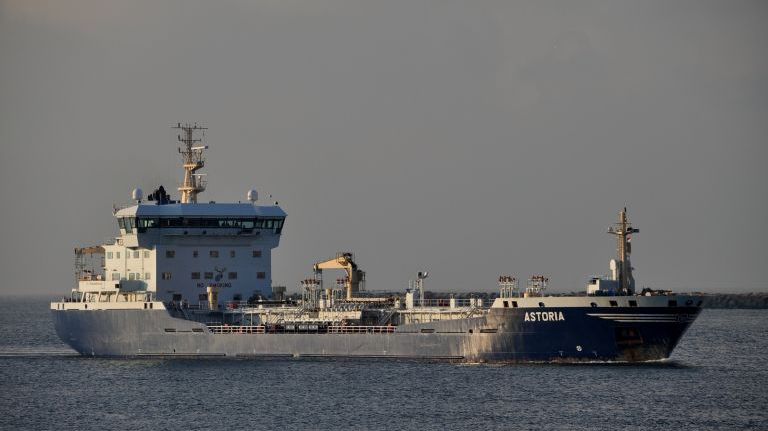
The Russian-flagged tanker Astoria, one of the EU-sanctioned product tankers named in the report (VesselFinder / Wolfgang Berthel)

A series of reported diesel shipments from Ulsan to Vladivostok have added fuel to a growing diplomatic dispute between South Korea and the Ukrainian government. 

According to a recent analysis by The Guardian, Korean exporters shipped about 1.3 million barrels of diesel and other fuels to Russia in July and August. Three of the ships involved were sanctioned by the EU, and two of these vessels appear to have called directly in Ulsan to take on cargo before delivering it to Russia - without apparent difficulty with the local authorities over their sanctions status, according to the report. 

The Guardian found that on some of these voyages, the tanker crews initially declared a destination in Japan or Singapore before diverting to Vladivostok to deliver their fuel. 

The report's findings were echoed by Ukrainian presidential adviser Vladyslav Vlasiuk this week, drawing strong pushback from Seoul. "That a Ukrainian presidential official cited a Guardian article to publicly portray Korea as helping ease Russia's fuel crisis and loss of refining capabilities . . . is different from the truth and inappropriate," a spokesperson for the Blue House said Wednesday. 

But by Thursday, South Korea's foreign ministry reversed course and said that it would review whether any Korean diesel was exported to Russia. Some energy commodities, including diesel and jet fuel, are not currently covered by South Korean export controls on sales to Russian commercial buyers, the ministry noted - but it pledged to take legal steps if irregularities are discovered. 

Disputed prisoner transfers

Relations between Kyiv and Seoul were already strained before the tanker dust-up. North Korea supplies manpower and arms for the ongoing Russian invasion of Ukraine, and Ukrainian soldiers occasionally capture a small number of North Korean nationals on the battlefield. In a recent prisoner transfer, Ukraine sent two North Korean prisoners of war to South Korea; this sensitive deal was agreed in advance, but the two sides differ on whether it was supposed to be kept secret. Ukrainian President Volodymyr Zelensky disclosed the transfer in public during a meeting of the UN General Assembly on September 24, using it to illustrate North Korea's arms and personnel trade with Russia. "Kim Jong Un uses them like currency and gets [military technology] in return," Zelensky said in his address. 

Zelensky's administration initially denied that there had been any agreement about keeping the politically-sensitive prisoner transfer under wraps. But Seong Ghi-hong, South Korea's senior presidential secretary for public relations, told media on September 27 that Zelensky had crossed an important line with the disclosure and the denial. "The presidential office expresses strong regret over Ukraine’s unilateral disclosure and its subsequent false announcement that there had not been a non-disclosure agreement," Ghi-hong said in a statement. 

South Korea has been a significant supporter of Ukraine throughout the war, providing Kyiv with loan assistance and joining in economic sanctions on Russia. 

WINDFALL PROFIT TAX

Shell’s Refining Margin Jumps 75% as Fuel Supplies Dry Up

Shell’s refining margin for the third quarter has nearly doubled sequentially to hit a record high, which is set to combine with strong trading results and high oil and gas realizations to keep yielding windfall profits for the supermajor. 

Shell expects its indicative refining margin for the third quarter to have jumped to $42 per barrel, up from $24 per barrel for the second quarter, the UK-based major said on Wednesday in its third quarter 2026 update note ahead of the full results release on October 29. 

Global refining margins have soared in the summer as limited flows of fuels from the Middle East and the Russian ban on diesel exports compounded the global fuel crunch. Refineries in the U.S., Europe, and Asia have been struggling – and failing – to offset what has been an estimated 7-8 million barrels per day (bpd) of refined petroleum products taken off the market.  

For Shell, the refinery utilization rate dropped from 102% in the second quarter to an estimated 93% - 97% in the third quarter, as low water levels on the Rhine River impacted the utilization rate at the Rheinland refinery in Germany, the supermajor indicated in its update note. 

Trading in the gas and fuel divisions is expected to be in line with the second quarter of the year, when Shell booked significantly higher trading profits on the back of soaring energy commodity prices. 

While it expects lower oil production for the third quarter, Shell lifted its natural gas output guidance to include the acquisition of Canadian producer ARC Resources, which was completed in early September. 

Gas production is now seen at 740,000 – 780,000 barrels of oil equivalent per day (boe/d) for the third quarter, up from 631,000 boe/d for the second quarter. 

Another energy major, Norway’s Equinor, also guided on Wednesday for higher-than-previously expected earnings in its marketing, midstream, and processing division. Equinor expects “unusually strong European refining margins” and optimization in third-party LNG trading to boost profits for the division above the $400-million guidance.   

By Tsvetana Paraskova for Oilprice.com 

 SOCIAL CAPITAL

Norway Plans to Tap $63.7 Billion From Its Oil Fund in 2027

wealth fund for public expenses next year, higher than this year’s spending from the world’s largest such fund.  

The government unveiled its budget bill for 2027, which includes a proposal to withdraw and spend 608.4 billion Norwegian crowns, or $63.7 billion, from Government Pension Fund Global.  

Under the proposal, spending from the sovereign wealth fund would increase by 4.9 billion crowns, or $513 million, compared to 2026, measured in fixed 2027 prices, the government said. The planned spending for 2027 accounts for 2.7% of the value of the fund, equal to 2026.  

Key economic assumptions in the 2027 budget draft include GDP growth of 1.7% next year, up from 1.1% in 2026 and returning to the 2025 level. 

Norway’s Government Pension Fund Global (GPFG), which is commonly referred to as 'Norway's oil fund' because it was created with oil and gas revenues, is a shareholder in many large companies in the world, with more than half of the value of its equity investments in the U.S. market. The Norwegian fund was created in the 1990s, and today it holds, on average, 1.5% of all listed companies in the world. 

The fund posted a record-high profit of $185 billion for the first half of 2026, as Asian technology stocks boosted its returns and profit on the portfolio. 

For the first half of the year, the fund posted a record profit on the portfolio before foreign exchange adjustments at 1.753 billion Norwegian crowns, or $185 billion, the fund’s manager, Norges Bank Investment Management (NBIM), said in August. This is more than double compared to the profit for the first half of last year, amid a rally in technology stocks.

Equity investments accounted for 72.1% of the fund’s value at the end of the first half of 2026, and fixed-income investments for 25.8%. Nvidia, Apple, and Microsoft are the most valuable investments of the Norwegian wealth fund. 

By Tsvetana Paraskova for Oilprice.com