“The reason you are poor is not another poor person”
Wednesday 14 October 2026, by Amandla!
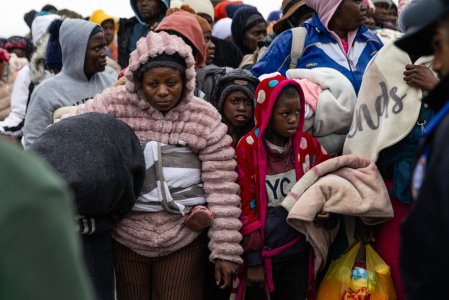
Amandla! talked to Thapelo Mohapi, General Secretary of Abahlali baseMjondolo, about the stand they have consistently taken against xenophobia. [1]
Amandla!: You represent people in shack settlements. They face desperate shortages of jobs, housing, land, water. You name it, they suffer a shortage of it. Why do some people come to believe that migrants are responsible for those problems?
Thapelo Mohapi: I lived through the 2008 xenophobia. I lived through the 2015 xenophobia. Xenophobia in South Africa has been here for quite some time. But people or grassroots on the ground are not the ones that are causing it.
I’m going to talk about something very practical. I lived in the community of Briardene informal settlements, and in 2010 we had a shack fire. A lot of people lost their possessions, including migrants from Mozambique, Malawi and Zimbabwe who were living there and renting. And we took a collective decision that, because people were facing an emergency which led to their homes and their property being destroyed, everyone from now on must not pay rent. People must start rebuilding, because government was not there to assist people to rebuild their homes. And we did that. And people from Malawi, Mozambique and Zimbabwe were no longer renting from South Africans. They were now actually owning their own pieces of land in the informal settlements.
That was not a good thing, according to officials of the municipality. Together with the ruling party and other right-wing political parties that exist in the country, they tell people who are living in informal settlements that the reason why they are not getting services is because of migrants. There’s a blockage, and there’s running human waste because we allowed migrants to come. They say the sewage was made for a certain number of people. Now, here are more migrants that are coming in, and they were not part of the budget. And then that starts hate against migrants from people in the community. That’s where people then start this discussion to say we want services from the municipality, but the municipality cannot service the community because there are more people than there were when this small township was planned. And then they start to say, “Okay, let’s get rid of these people so that we can get services from the municipality.”
People live in harmony and peace amongst themselves, regardless of which country they come from. It is when the government, through officials, through politicians, come into the community and says, “The reason why you’re not getting your services is because of a brother and sister from another country that came to this country looking for better opportunity.” And yet they are like any of us who come to the cities to look for better opportunities; we are coming from the rural areas where there is deep poverty.
South Africans are not xenophobic. It is when politicians who have influence and officials of the municipalities come to divide the communities and blame migrants for their failure.
The Franz Fanon School in the eKhenana settlement in KZN. We have a deep political education that we go through before anyone becomes a member of Abahlali baseMjondolo… And that’s why, when we speak, our members listen; because they know that they have a principled position from the leadership through our political education. (Photo: Abahlali baseMjondolo
A!: What do you say to a member of Abahlali baseMjondolo who says to you, “Yes, I accept chasing foreigners won’t solve unemployment or clinic queues. We understand it won’t solve all our problems, but let’s start somewhere.
TM: First and foremost, we have a deep political education that we go through before anyone becomes a member of Abahlali baseMjondolo. Our vision is to struggle for a just and equal society where everyone is treated with respect, and their dignity is recognised. And when we say dignity, we mean human dignity. We are not saying South African. We are not saying African. We are saying human dignity of all humankind. So we must treat every human being as a human being, not as a human waste that needs to be dumped everywhere. I don’t believe that a piece of paper should be the one that recognises if you are a human being.
Capitalism is the reason why human beings are categorised as belonging to somewhere. But human life is more important than profit. Human life must be recognised as the main thing. Umuntu ngumuntu ngabantu. We believe that Unyawo alunampumlo. One day, if I go to Zimbabwe, I expect to be treated like a human being, so I must treat that human being the same way when he comes to visit me. Socialism is about that. It’s about humanity. It’s about looking after each other. It’s about treating another human being as a human being, and that life is more important than anything else.
I’m saying this on the back of having people in KZN being killed as a result of this rise of the right wing that has taken place. Someone from Malawi was burnt alive in Mayville. Why would you do something inhuman like that because somebody was born in another country?
A!: Absolutely. But what is very striking in South Africa today is that Abahlali baseMjondolo is like the last tree still standing in the storm. Almost all the other trees have been blown down. There is so little resistance to xenophobia. How do you stand in the storm when everybody else is falling right, left, and centre?
TM: Fascism is something that has been created by the capitalist to say, while they loot, “Let’s allow the brothers and sisters who live in Africa to fight amongst themselves, so that we continue to loot the minerals in these countries.” We work with the Congolese Solidarity Campaign, and they say to us, “Comrades, we are not here to live in your country, but we are here to ask you, as Abahlali baseMjondolo, to help us to go back to the Democratic Republic of Congo, because our resources have been looted there. So, if we form a coalition and work together as Africans, one day, in that country that is ravaged by civil war, you will be able to visit it. I will be the first one to welcome you and say the reason why we are here is because of the revolution that was started in South Africa by Abahlali baseMjondolo. We need your help, just like how we helped you to fight against apartheid. So we can go back into our country in peace and harmony.”
We say to a comrade who believes that things could be better if migrants have left: 300 Ghanaians were flown out of the country. No jobs were created. We had the most deportations of migrants in this country recently, and what happened to our unemployment rate? It increased. The enemy is giving us wrong information so that we fight amongst ourselves.
No African brother or sister who comes from Malawi, Zimbabwe, Zambia, and Mozambique has caused the problem that we have. That is caused by neoliberalism, which has made profit more important than human lives. Unemployment is created by neoliberalism, so that those who own the means of production are the ones who choose what price to pay for those who are selling their labour to them. That is not humanity. It’s thinking about profits before the people.
A!: If we analyse this xenophobia, who benefits from it? Who do you think is behind it? It’s generated somewhere and for some purpose.
TM: Without any doubt. The leader of March and March, Jacinta Ngobese-Zuma, does not live in an informal settlement. She doesn’t know what the issues of people who are living in informal settlements are. I come from the informal settlement. I know what it’s like to have my house burned down. To lose the photos and memories of my grandparents. That’s what poverty deprives us of. So when I defend humanity, I defend it on the basis that I have lived the experience. When somebody from a privileged life comes to the poor and says the reason why you are poor is because of another poor person, I disagree with that.
We have grants that are not actually covering what a human being in South Africa needs. An average family in South Africa needs more than R5,000 to buy groceries. We are only getting R370, and that doesn’t cover anything in this country. Our economy is stagnating. It doesn’t go anywhere. We have a few billionaires who are richer, while the poor continue to be poor. We have 11,000 children who are dying of malnutrition in a country that is rich. A country that has mineral resources, a country that has plenty of food, and that food is thrown away, and that food is not distributed to the people that need it. The issue of housing continues to be a crisis. There are more informal settlements that are being built every day. We have a problem of leadership; we have a problem of political will, but we also have a problem of a government that continues to employ a neoliberal policy.
We had the most deportations of migrants in this country recently, and what happened to our unemployment rate? It increased. The enemy is giving us wrong information so that we fight amongst ourselves.
A!: What is the right direction to take to persuade the mass of people, not the hardened xenophobes, maybe, but the mass of people who are being led astray? How do we gain the initiative to do that?
TM: The rise of the right wing has been allowed because ‘each one teach one’—a political conscientisation that we’ve had during the UDF—has gone away. We no longer meet and discuss political issues in our communities, which will result in actually teaching the young ones about the struggles that we have faced. So the organic organising that was there back in the days of the UDF—where we had street committees, where we had political education on the ground—is no longer there.
Abahlali baseMjondolo has political education, which we have come from this weekend, with leadership. When we launch a branch anywhere, we do a political education at a branch level. We do political education for the leadership, and we ensure that the leadership runs its meetings, conscientising the people on the ground. And that’s why, when we speak, our members listen; because they know that they have a principled position from the leadership through our political education. And that has lacked a lot. When you want to destroy a nation, you destroy the culture of that nation. And I think Cyril is an ambassador of destroying the culture of political education in our country and promoting capital.
A!: You refer to the national liberation struggle, which is what it was — a struggle to liberate the nation; a single nation, not Xhosas and Zulus and ‘Coloureds’. Now that positive view of a nation is being transformed into a view where we keep everybody else out. Do you think that there is a danger to the nation from this xenophobia? Today they want to keep out Zimbabweans and Malawians. Tomorrow, in Durban, they will want to keep out Xhosas?
TM: Yes. We may think this is xenophobia, but it’s also tribalism. The fact that you have amabutho, which was Shaka’s army at the time, being in the forefront of these marches is an indication. It was happening during the time of Shaka’s army in the 80s, when Inkatha used the very same method to destabilise the province of Natal, and many people died as a result of that. And they were killed by people who were called amabutho, who were actually traditional Zulu people.
Among the first people who were killed in the recent violence was a young Tsonga-speaking South African in the Western Cape. Sometimes you will hear people say that, once we are finished with these migrants, we must deal with these Sothos; we must deal with these Xhosas. And some officials of the municipality will say, “Why are you here? Your municipality is not functioning. Why are you moving to this part of the world?” So, here in KZN, first they come for the migrants who are born in another country, and then later they will deal with people who are South Africans.
We did not fight against apartheid because we were Zulus or Xhosas or Sothos. We fought because we were Blacks and we were being deprived of the right to be South African by a regime that did not recognise our existence as Black people in this country. But today there are people who want to divide the very same people who fought against apartheid into tribes.
The leader of March and March, Jacinta Ngobese-Zuma, does not live in an informal settlement. She doesn’t know what the issues of people who are living in informal settlements are. I come from the informal settlement. I know what it’s like to have my house burned down. (Photo: Ashraf Hendricks/GroundUp)
A!: What would you say to the organisations of the Left, to the organisations of the working class and the popular movement, that they should be doing now to take us out of this disastrous state that the country is being plunged into?
TM: I think the most important thing right now is for us to go back to who we are and remind ourselves where we come from. We need to have an agreement as the Left about how we fight against what makes us poor, what oppresses us. There are many petty things that have divided the Left. Major trade unions in this country are not working together because of petty issues that have existed in the past. We need to go back to that grassroots organising. Abahlali baseMjondolo is an example of how you organise at a grassroots level. We have political education that is grassroots, on the ground, and we educate our people in the language and in the simplest way that we can, so that they understand the struggles that we are facing.
30 September 2026
Source Amandla!.
Footnotes
[1] (Photo: Ashraf Hendricks/GroundUp) We had the most deportations of migrants in this country recently, and what happened to our unemployment rate? It increased. The enemy is giving us wrong information so that we fight amongst ourselves.