Forty years on, Richard Avedon’s iconic series “In the American West" still resonates with the United States’ current political and social landscape. The New York photographer’s powerful portraits of working-class Americans challenge the myth of the cowboy in an idealised West. The full exhibition is now on view at the Fondation Henri Cartier-Bresson in Paris until October 12.
Issued on: 15/06/2025
By: Vitoria Barreto
FRANCE24

Ruby Mercer, publicist, Frontier Days, Cheyenne, Wyoming, July 31, 1982. © Richard Avedon, “In the American West”
Housewives, oil workers, miners, motel maids and prisoners are among the protagonists of a retrospective that celebrates 40 years of the late Richard Avedon’s iconic exhibit “In the American West”, now on view at Fondation Henri Cartier-Bresson in Paris.
Between 1979 and 1984, Avedon took black-and-white pictures of working-class Westerners posing against a stark-white, unchanging backdrop to create powerful portraits that challenged the myth of the cowboy.
Shown in Europe for the first time, the full series of portraits from the original book is displayed in 110 vintage gelatin silver prints – images marked by oil, coal and blood that shed light on a 1980s America not many are used to seeing.
Housewives, oil workers, miners, motel maids and prisoners are among the protagonists of a retrospective that celebrates 40 years of the late Richard Avedon’s iconic exhibit “In the American West”, now on view at Fondation Henri Cartier-Bresson in Paris.
Between 1979 and 1984, Avedon took black-and-white pictures of working-class Westerners posing against a stark-white, unchanging backdrop to create powerful portraits that challenged the myth of the cowboy.
Shown in Europe for the first time, the full series of portraits from the original book is displayed in 110 vintage gelatin silver prints – images marked by oil, coal and blood that shed light on a 1980s America not many are used to seeing.
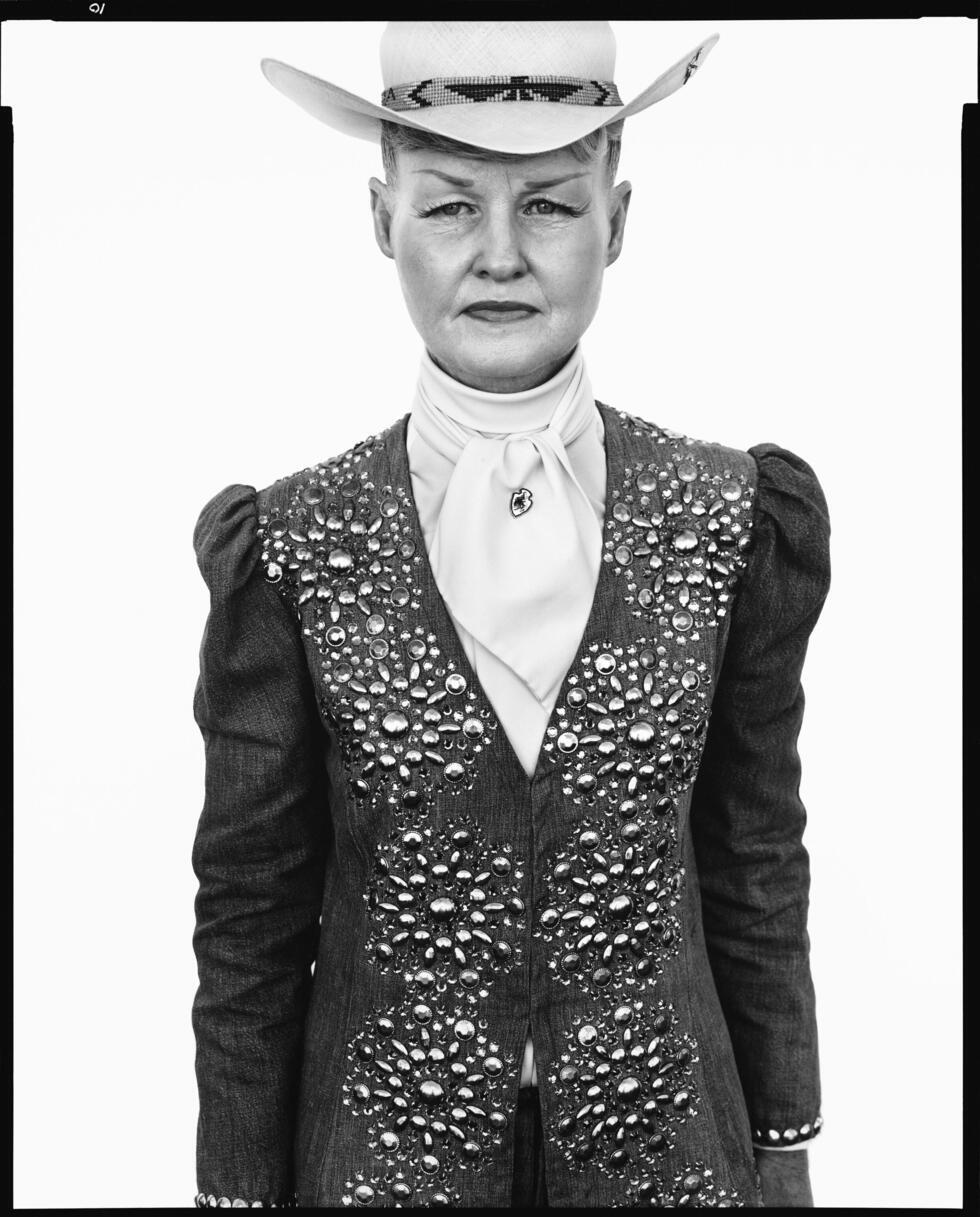
Ruby Mercer, publicist, Frontier Days, Cheyenne, Wyoming, July 31, 1982. © Richard Avedon, “In the American West”
Avedon's pictures captured people grappling with the effects of industrial decline and economic recession during Ronald Reagan’s presidency.
While the Paris retrospective was not conceived as a commentary on current US politics, curator Clément Chéroux sees it as inevitable to draw parallels with the country's political state since President Donald Trump's return to power.
Read moreHouse passes Trump budget bill as critics fear cuts to services, ballooning debt
“It obviously echoes today's situation, because we're also at a time when many Americans, the working class in particular, are in difficulty because of Trump's policies.”
Avedon's pictures captured people grappling with the effects of industrial decline and economic recession during Ronald Reagan’s presidency.
While the Paris retrospective was not conceived as a commentary on current US politics, curator Clément Chéroux sees it as inevitable to draw parallels with the country's political state since President Donald Trump's return to power.
Read moreHouse passes Trump budget bill as critics fear cuts to services, ballooning debt
“It obviously echoes today's situation, because we're also at a time when many Americans, the working class in particular, are in difficulty because of Trump's policies.”
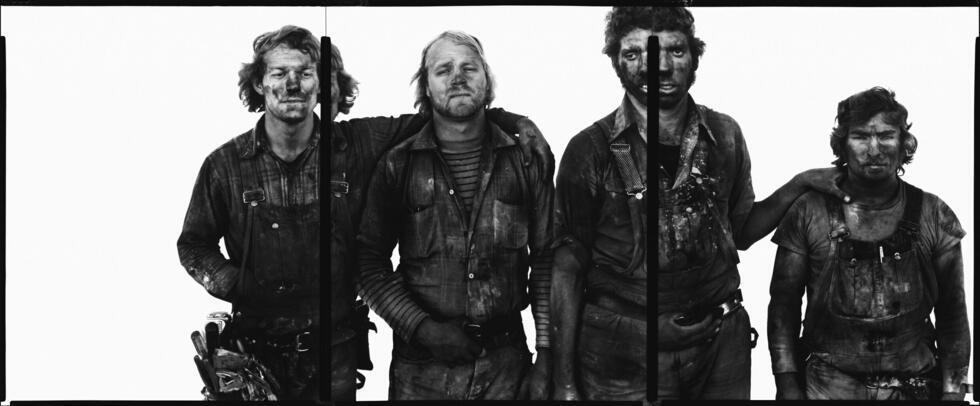
Roger Tims, Jim Duncan, Leonard Markley, Don Belak, coal miners, Reliance, Wyoming, August 29, 1979. © Richard Avedon, “In the American West”
Not his first rodeo
Though Avedon is best known for photographing Vogue covers and the likes of Marilyn Monroe, Charlie Chaplin, Bob Dylan and Louis Armstrong, “In the American West” is not his only work to engage with social themes.
Read moreIconic Avedon photos raise 5.5 million euros at Paris auction
Chéroux said Avedon often used his lens to take a stand, whether photographing victims of Napalm bombs during the Vietnam War, collaborating with writer and activist James Baldwin during the civil rights movement, or exposing America's powerful elite in the 1970s through “The Family”.
So when the director of the Amon Carter Museum in Fort-Worth – known for works glorifying cowboys by painters like Frederic Remington – commissioned him to take pictures that defined the West, Avidon quickly realised his West would be somewhat different.
“I began to see that the West was no longer the West I grew up in … if it ever was,” Avedon told Chicago’s WFMT radio in a 1985 interview.
With his two assistants and photographer Laura Wilson, Avedon spent several summers carrying a 20 x 25 cm view camera, tripod and white backdrop across 189 cities, in 17 states of the American West.
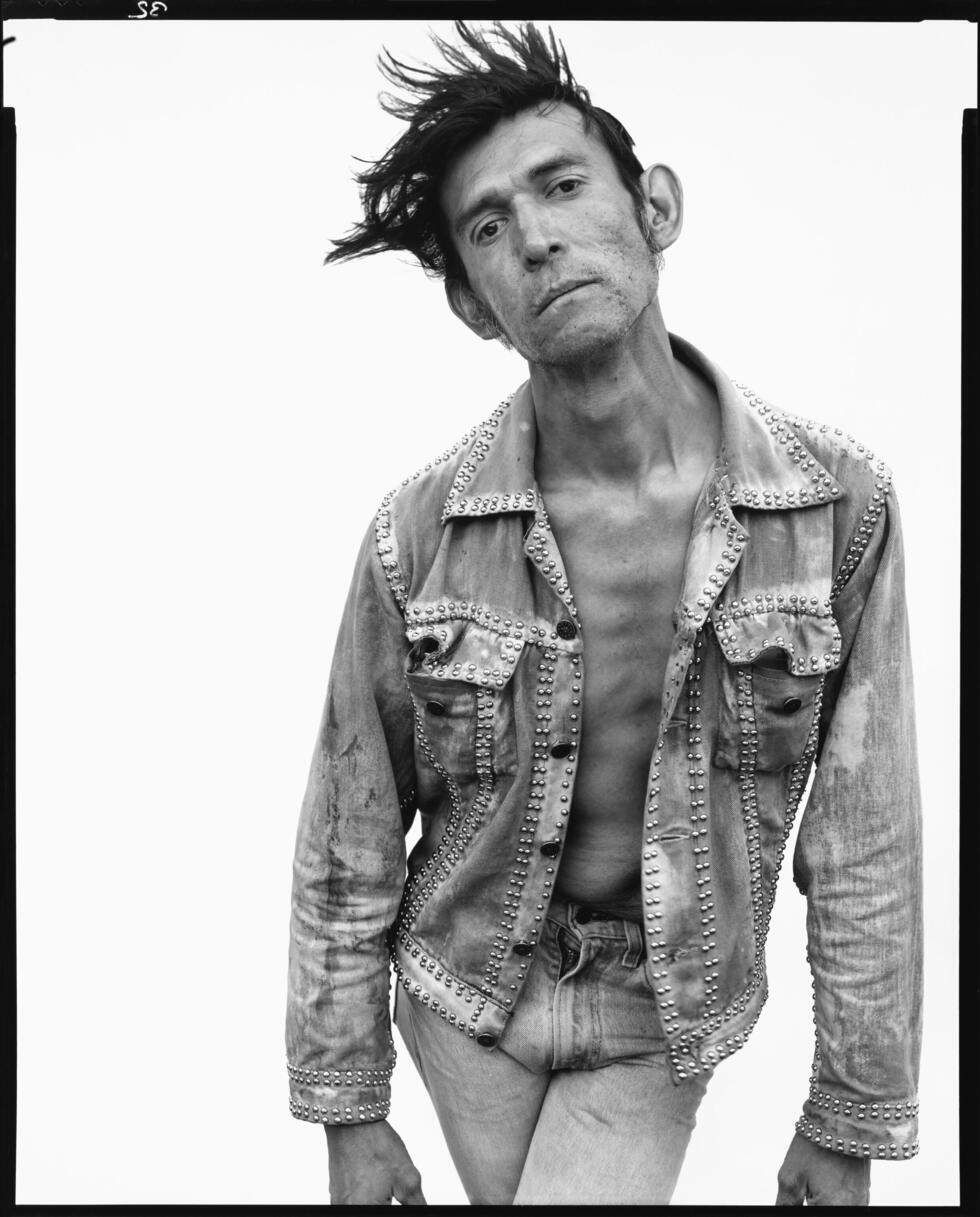 David Beason, shipping clerk, Denver, Colorado, July 25, 1981. © Richard Avedon, “In the American West.”
To shoot with this camera was a time-consuming process. The photographer stood under a black cloth to focus on an upside-down subject on the glass. Avedon explains in his book that his two assistants helped him work “at surprising speed”, one at the back of the camera loading the film sheets and the other at the front checking the aperture of the lens.
Then, he would place himself next to the camera, which enabled him to look into the eyes of every subject – they were looking directly at him, not the lens.
Because the region was so sparsely populated, he sought out places that drew crowds like rodeos, fairs and the Sweetwater Rattlesnake Roundup in Texas, where the project's first test shoot took place in the spring of 1979.
The first subject was a pouting blonde 13-year-old boy squinting his eyes as he helped his father skin a rattlesnake – a peculiar image that set the tone for what became the longest-running project of Avedon's studio career, spanning nine years including production and touring around the US.
Not his first rodeo
Though Avedon is best known for photographing Vogue covers and the likes of Marilyn Monroe, Charlie Chaplin, Bob Dylan and Louis Armstrong, “In the American West” is not his only work to engage with social themes.
Read moreIconic Avedon photos raise 5.5 million euros at Paris auction
Chéroux said Avedon often used his lens to take a stand, whether photographing victims of Napalm bombs during the Vietnam War, collaborating with writer and activist James Baldwin during the civil rights movement, or exposing America's powerful elite in the 1970s through “The Family”.
So when the director of the Amon Carter Museum in Fort-Worth – known for works glorifying cowboys by painters like Frederic Remington – commissioned him to take pictures that defined the West, Avidon quickly realised his West would be somewhat different.
“I began to see that the West was no longer the West I grew up in … if it ever was,” Avedon told Chicago’s WFMT radio in a 1985 interview.
With his two assistants and photographer Laura Wilson, Avedon spent several summers carrying a 20 x 25 cm view camera, tripod and white backdrop across 189 cities, in 17 states of the American West.
David Beason, shipping clerk, Denver, Colorado, July 25, 1981. © Richard Avedon, “In the American West.”To shoot with this camera was a time-consuming process. The photographer stood under a black cloth to focus on an upside-down subject on the glass. Avedon explains in his book that his two assistants helped him work “at surprising speed”, one at the back of the camera loading the film sheets and the other at the front checking the aperture of the lens.
Then, he would place himself next to the camera, which enabled him to look into the eyes of every subject – they were looking directly at him, not the lens.
Because the region was so sparsely populated, he sought out places that drew crowds like rodeos, fairs and the Sweetwater Rattlesnake Roundup in Texas, where the project's first test shoot took place in the spring of 1979.
The first subject was a pouting blonde 13-year-old boy squinting his eyes as he helped his father skin a rattlesnake – a peculiar image that set the tone for what became the longest-running project of Avedon's studio career, spanning nine years including production and touring around the US.
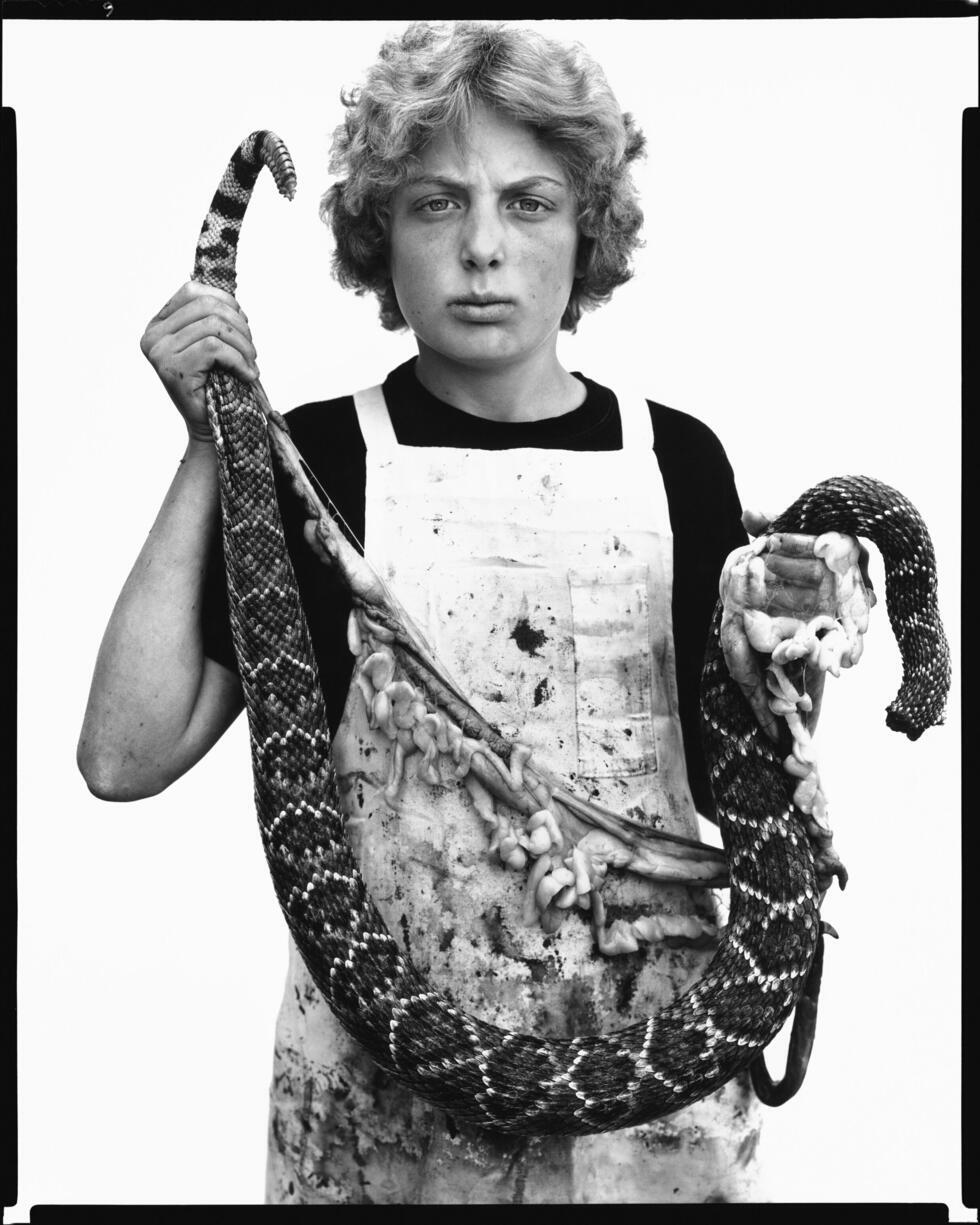
Boyd Fortin, 13-year-old rattlesnake skinner, Sweetwater, Texas, March 10, 1979.
© Richard Avedon, “In the American West”
Despite photographing a total of 752 people, Avedon kept a close connection with many. He kept names, ages, professions and addresses of each subject, and sent back prints.
The same care now continues in the curation, where each image is presented in the chosen 51 x 40 cm size – the one Avedon used to annotate and send for editing – way smaller than the prints that have been displayed in other retrospectives of his work.
Curator Clément Chéroux explains that this was the only way to display all 110 pictures in the foundation. He said it was essential to present the complete narrative of the project, and also to create intimacy between the viewer and the subject.
Capturing the 'overlooked or forgotten'
Though most portraits were taken spontaneously across the West, the exhibition's most-discussed picture – the beekeeper – stands apart with its own dedicated wall.
Unlike the others, it was taken in California. Avedon placed an ad searching for a willing beekeeper to pose for his project. Ronald Fischer became an icon by agreeing to be sprayed with the queen bee pheromone to attract the swarm and got paid $100. Other subjects were also remunerated though the amount remains unclear, according to the curator.
Despite photographing a total of 752 people, Avedon kept a close connection with many. He kept names, ages, professions and addresses of each subject, and sent back prints.
The same care now continues in the curation, where each image is presented in the chosen 51 x 40 cm size – the one Avedon used to annotate and send for editing – way smaller than the prints that have been displayed in other retrospectives of his work.
Curator Clément Chéroux explains that this was the only way to display all 110 pictures in the foundation. He said it was essential to present the complete narrative of the project, and also to create intimacy between the viewer and the subject.
Capturing the 'overlooked or forgotten'
Though most portraits were taken spontaneously across the West, the exhibition's most-discussed picture – the beekeeper – stands apart with its own dedicated wall.
Unlike the others, it was taken in California. Avedon placed an ad searching for a willing beekeeper to pose for his project. Ronald Fischer became an icon by agreeing to be sprayed with the queen bee pheromone to attract the swarm and got paid $100. Other subjects were also remunerated though the amount remains unclear, according to the curator.
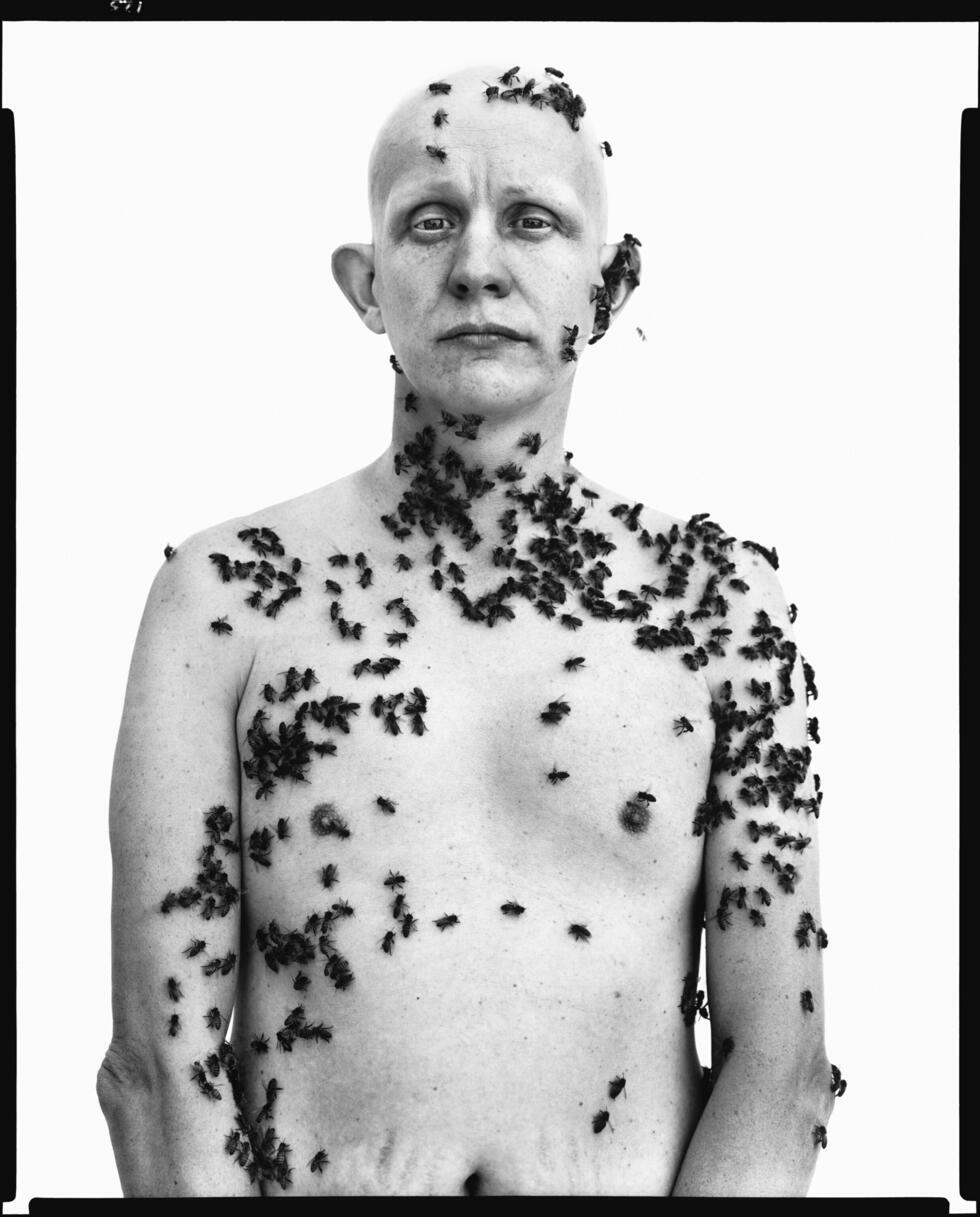
Ronald Fischer, beekeeper, Davis, California, May 9,1981.
© Richard Avedon, “In the American West”
The exhibition also features some of Avedon's files, including letters exchanged with a mother asking for more pictures of her late son, a drifter, and with the teenage girl on the cover of the exhibition who tells the photographer she is getting good grades in High School.
“He talked about people who are overlooked or forgotten and this is perhaps even more of an urgent issue now in the United States than it was then,” said the American finance professor Paul Mende, 64, while visiting the exhibition with his wife.
The exhibition also features some of Avedon's files, including letters exchanged with a mother asking for more pictures of her late son, a drifter, and with the teenage girl on the cover of the exhibition who tells the photographer she is getting good grades in High School.
“He talked about people who are overlooked or forgotten and this is perhaps even more of an urgent issue now in the United States than it was then,” said the American finance professor Paul Mende, 64, while visiting the exhibition with his wife.
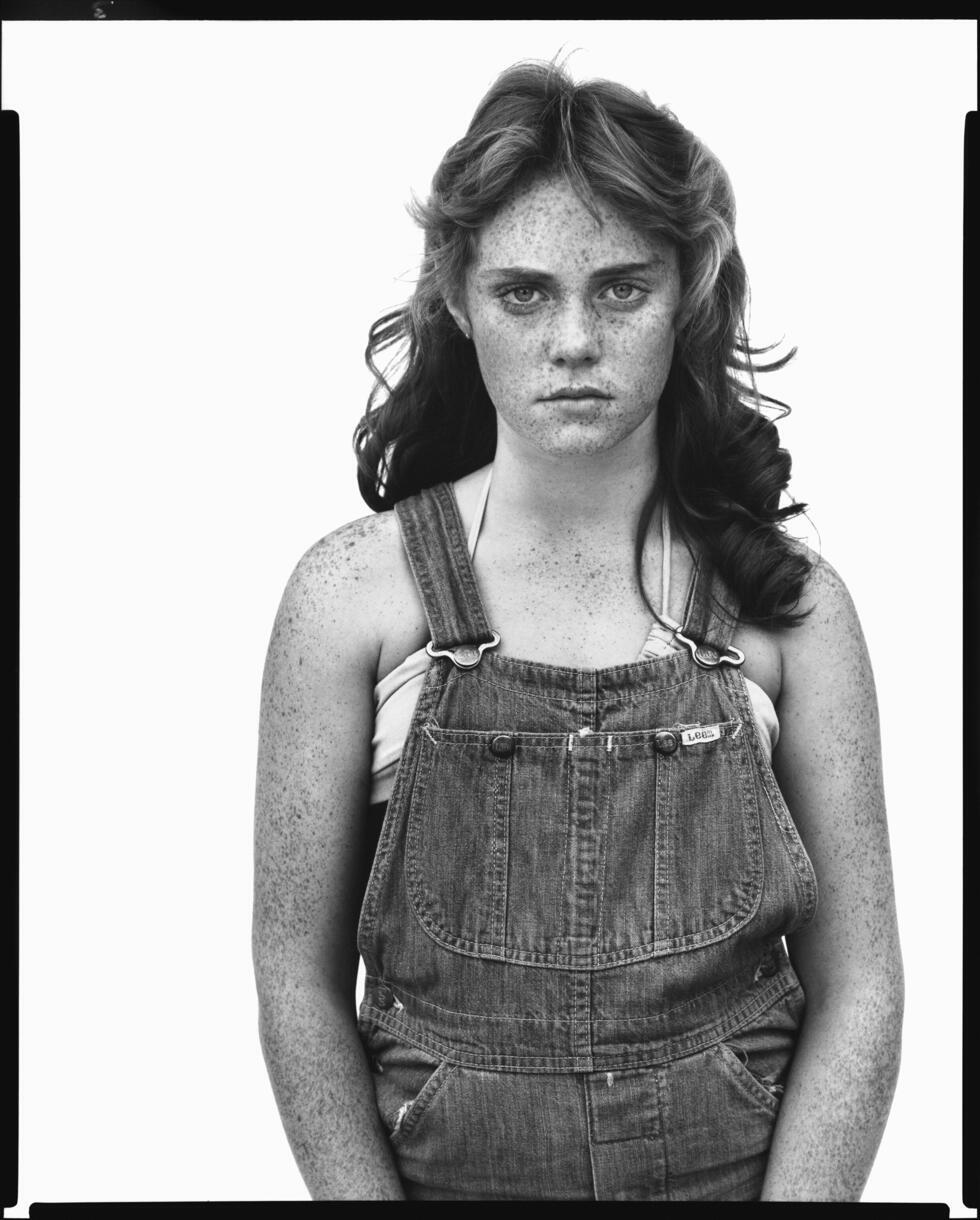
Sandra Bennett, twelve-year-old, Rocky Ford, Colorado, August 23, 1980.
© Richard Avedon, “In the American West”
“If he did the same kind of series, he would find the same kind of person. I don't think it has changed much,” added Nadine Mende, a 63-year-old French dentist.
Avedon, however, insisted that his portraits offered a subjective view of the West, shaped by his own perspective rather than any claim to objectivity.
“I don’t think the West of these portraits is any more conclusive than the West of John Wayne,” said Avedon in the book the exhibition is based on.
“If he did the same kind of series, he would find the same kind of person. I don't think it has changed much,” added Nadine Mende, a 63-year-old French dentist.
Avedon, however, insisted that his portraits offered a subjective view of the West, shaped by his own perspective rather than any claim to objectivity.
“I don’t think the West of these portraits is any more conclusive than the West of John Wayne,” said Avedon in the book the exhibition is based on.
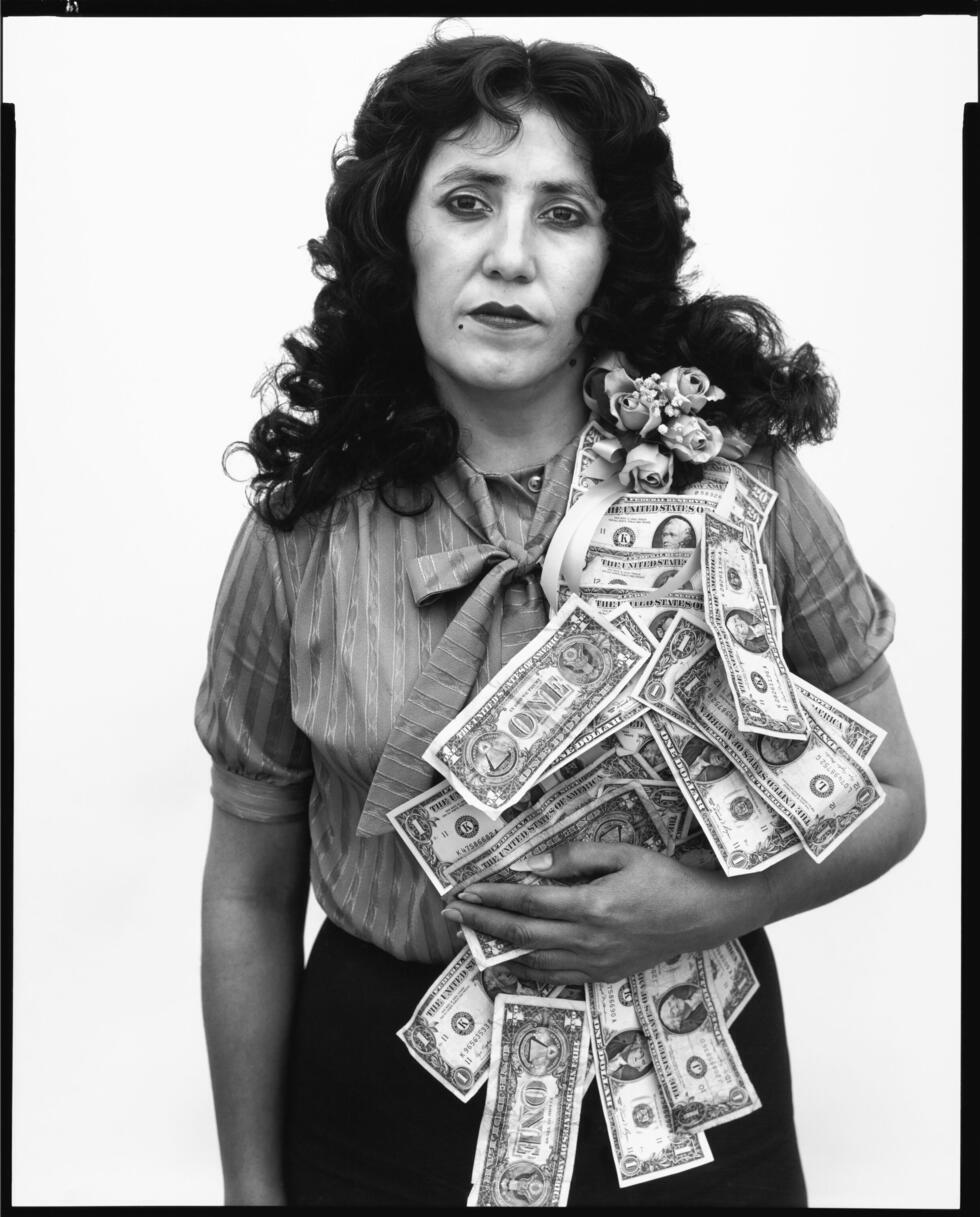
Petra Alvarado, factory worker, on her birthday, El Paso, Texas, April 22, 1982.
© Richard Avedon, “In the American West”
But curator Clément Chéroux suggests this may have been a way to avoid criticism for not presenting the upper-class folk of the region.
“If he had said all that was the reality, people who would’ve been like ‘Mr. Avedon you didn't add a banker, Mr. Avedon you didn’t include an engineer’. It was probably a way of protecting himself from being told 'Your America is actually fake',” said Chéroux.
But curator Clément Chéroux suggests this may have been a way to avoid criticism for not presenting the upper-class folk of the region.
“If he had said all that was the reality, people who would’ve been like ‘Mr. Avedon you didn't add a banker, Mr. Avedon you didn’t include an engineer’. It was probably a way of protecting himself from being told 'Your America is actually fake',” said Chéroux.

No comments:
Post a Comment