Nuclear at heart of Ontario's integrated energy strategy
The government's newly released energy roadmap brings together electricity, natural gas, hydrogen and other energy sources under a single coordinated strategy to ensure the province which already gets more than half of its electricity from nuclear plants has the affordable, secure, reliable and clean energy it needs.
(1)_99382.jpg)
Energy for Generations, which was launched on 12 June by Minister of Energy and Mines Stephen Lecce, builds on a 2024 vision paper setting out a comprehensive assessment of the challenges facing the province's energy system, including the need to meet rapidly growing demand, electrify key sectors, and maintain reliability, all while keeping energy rates down. A public consultation on that paper, Ontario's Affordable Energy Future: The Pressing Case for More Power, attracted responses from Indigenous communities, municipalities, utilities, stakeholders and the public.
With the subtitle Ontario's Integrated Plan to Power the Strongest Economy in the G7, the government says this is Ontario's first integrated energy plan. It establishes a planning horizon to 2050. Four principles of affordability, security, reliability, and clean energy are embedded throughout the plan, which the government says "enables smarter decision-making, better system coordination, and more cost-effective investments that will benefit families, workers, and businesses across the province."
With nuclear currently responsible for 50% of Ontario's total generation and hydro contributing 24%, Ontario already has one of the cleanest grids in the world, the plan notes. Under Energy for Generations, "nuclear power will continue to serve as the backbone of the province's electricity system providing the 24/7 baseload power the province's economy requires" as demand continues to rise.
Ongoing refurbishments of Ontario's existing nuclear power plants "are anchoring a domestic nuclear supply chain that supports long-term energy security, economic resilience, and innovation," the plan notes, and the province is building on the experience from these major projects as it supports the development and deployment of small modular reactor (SMR) units at Darlington. The construction, operation and maintenance of the four units will add CAD38.5 billion (USD28.4 billion) to Canada's GDP over the next 65 years, with 80% of spending going to Ontario companies and with construction and operations sustaining an estimated 3,700 highly skilled, good-paying jobs for the next 65 years.
Bruce units 1 and 2 are not part of the current round of refurbishments: those two units were fully refurbished and returned to service more than a decade ago. But a second refurbishment of those units "remains an available option that can be explored under the existing contract between Bruce Power and the IESO", the plan said. The IESO is Ontario's Independent Electricity System Operator.
The province is also looking to new large-scale nuclear generation, which the plan notes will be needed in the long-term to meet future electricity demand. Pre-development work has already begun to site the first large-scale nuclear build in Ontario since 1993 at the existing Bruce nuclear site; Ontario Power Generation (OPG) is advancing early-stage planning for new large scale nuclear generation at Wesleyville, Port Hope.
"As Ontario plans for the next generation of nuclear energy, the government is ensuring OPG and Bruce Power take a deliberate, coordinated approach to evaluating future large-scale nuclear technologies at their sites. This approach recognises the long lead times, complexity, and lasting impacts of new nuclear projects and would draw on the expertise of the IESO to support informed, long-term decision-making on the role of nuclear energy in Ontario's future electricity system," the plan notes.
Lecce described the plan as Ontario's most ambitious energy plan in a generation. "At the turn of the century, our great grandparents had the vision to build Ontario's hydroelectric dams, later our grandparents started the build-out of Ontario's nuclear fleet, and today, that responsibility falls on us to build for the future," he said. "While every jurisdiction around us scrambles for affordable power, our government is thinking ahead, building for our children and grandchildren. Energy for Generation represents the ambition and long-term thinking necessary to deliver critical nation-building priorities that solidify Canada's self-reliance."
"With this blueprint, Ontario has the opportunity to lead the world in both small and large nuclear development," OPG President and CEO Nicolle Butcher said. "Coupled with our expanding hydroelectric portfolio and other low-carbon technologies, the growth of a reliable provincial grid will also boost economies and strengthen our energy security."
Bruce Power President and CEO Eric Chassard said the company was "proud" of its central role in building a "clean, reliable, and affordable energy future" for Ontario. "As a company that's Canadian at our core, we're committed to powering the growth of our economy and communities with made-in-Ontario nuclear innovation. Our investments in life-extension and pre-development work for Bruce C support the province's growing economy and population while ensuring we remain a global leader in emissions-free electricity.
India's Gorakhpur slated for 2031 operation
The first concrete for unit 1 at Nuclear Power Corporation of India's four-unit Gorakhpur Haryana Anu Vidyut Pariyojana plant is to be poured in October, Minister of Power Manohar Lal Khattar has said.
_20784.jpg)
Gorakhpur, in the Fatehabad district of Haryana, is earmarked for the construction of four Indian-designed 700 MWe pressurised heavy water reactors (PHWRs) to be built in two phases. India's Atomic Energy Regulatory Board (AERB) granted a siting licence in 2015, and approved the start of excavation work for the construction of the first two units as long ago as 2018 - several years after an official groundbreaking ceremony had been held.
At that time, first concrete had been expected to be poured for unit 1 in 2019, with construction expected to take five and a half years. Consent for the pouring of first concrete was given by the AERB in 2020.
According to the Press Trust of India, the minister visited the site on 14 July "to review the progress of the nuclear power project being implemented by the Nuclear Power Corporation of India Limited (NPCIL) under the Department of Atomic Energy" and confirmed that the first pour of concrete for unit 1 is targeted "by October 2025". First criticality is targeted by June 2030 and commercial operation by March 2031. Unit 2 is expected to follow "with a 6-month gap from Unit 1".
The Indian government already classes Gorakhpur 1 and 2 as "under construction", although the International Atomic Energy Agency's PRIS database does not consider a reactor to be under construction until the first major placing of concrete for the base mat of the reactor building is made.
The second phase at Gorakhpur - units 3 and 4 - are amongst ten units that the Indian government has sanctioned to be built under a "fleet" approach: the others are Mahi Banswara units 1-4 (in Rajasthan), Kaiga units 5 and 6 (in Karnataka), Gorakhpur units 3 and 4 (Haryana), and Chutka units 1 and 2 (Madhyar Pradesh).
India currently has 24 operable nuclear energy reactors with a total installed capacity of 8.88 GW, with six units - totalling 4,768 MWe - under construction. The country is targeting an aiming to increase its nuclear energy capacity to 100 GW by 2047.
First Westinghouse nuclear fuel delivered to Dukovany
The first Westinghouse nuclear fuel assemblies have arrived at the Dukovany Nuclear Power Plant, as the Czech Republic continues to diversify its supplies.
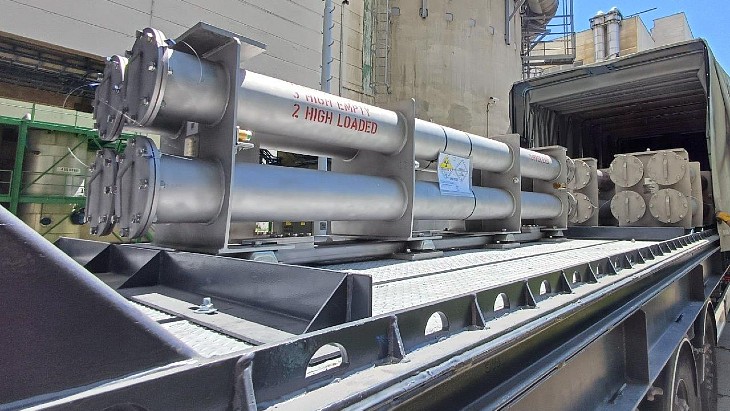
Daniel Beneš, Chairman and CEO of CEZ, said: "This is a step that significantly increases the energy security of the Czech Republic." He added that "in addition to diversifying nuclear fuel suppliers, we also hold strategic reserves in both of our nuclear power plants".
CEZ signed a contract in 2022 for the supply of fuel assemblies for the Temelín nuclear power plant with Westinghouse - which includes the Robust Westinghouse Fuel Assembly design - and with Framatome, and the following year signed a contract with Westinghouse for Dukovany and has now received its first VVER-440 fuel reload of its NOVA E-6 design.
Eighty of the newly delivered cartridges are currently being accepted - the fuel has to meet strict safety requirements and get approval from the national regulator before being loaded in the reactor. The new fuel will also meet the requirements for running longer fuel campaigns of 16 months at Dukovany and 18 months at Temelín.
Tarik Choho, President of Westinghouse's Nuclear Fuel Division, said: "Westinghouse supplied VVER-1000 fuel to both Temelín units from 2000 to 2010. As the largest supplier of VVER fuel in Europe, we have continued to invest in advanced fuel designs to support energy security in the region. These fuel deliveries are a testament to our shared commitment to safety, reliability, and supply diversification for VVER reactors. Both types of newly delivered VVER fuel, manufactured in Västerås, Sweden, are fully compatible with other manufacturers' assemblies and offer increased fuel efficiency and extended fuel cycles."
The Czech Republic currently gets about one-third of its electricity from two VVER-1000 units in operation at Temelín, which came into operation in 2000 and 2002, and four VVER-440 units at Dukovany, which began operating between 1985 and 1987.
The diversification of nuclear fuel suppliers - and increases in fuel reserves - is seen as increasing energy security among European Union countries previously using Russia's TVEL for fuel for their VVER reactors which were designed in the Soviet Union era.
Steam generators removed from German plant
The removal of all four steam generators from the reactor building at Germany's shut down Unterweser nuclear power plant, which began in mid-May, has now been completed, PreussenElektra announced.
_32578.jpg)
In total, all four steam generators - each measuring 20 metres in height and weighing about 300 tonnes - have been removed within four weeks, completing the project on schedule.
The actual dismantling was preceded by nearly two years of planning, testing, and implementation of the necessary modifications and additions inside and outside the reactor building, as well as the individual dismantling steps of the large heat exchangers.
PreussenElektra said the work within the reactor building to remove the steam generators was particularly challenging, with each component needing to be rotated, tilted, and gradually lifted several times before being lowered into a storage area on the plant site. It said the removal of the first steam generator in mid-May took about 18 hours, but with the experience gained from each individual lift, this time was reduced to around 11 hours for the final steam generator.
"This was absolute precision work and a masterpiece of engineering," said Project Manager Attila Damon. "The intensive preparation paid off. Our experienced partners Framatome and Mammoet handled this task well."
In July, the steam generators will be shipped to Cyclife in Sweden, dismantled on-site, and then melted down in a smelter.
Unterweser - a pressurised water reactor with a gross installed capacity of 1410 MWe - operated between 1978 and 2011. It was one of seven nuclear power plants shut down in Germany in March 2011 when it lost its commercial operating licence under the 13th Amendment to the Atomic Energy Act.
PreussenElektra is also decommissioning the Brokdorf, Grafenrheinfeld, Grohnde, Isar 2 and Stade PWR nuclear power plants.
In 2021, PreussenElektra awarded the contract for the dismantling and disposal of a total of 16 steam generators from the Unterweser, Grafenrheinfeld, Grohnde, and Brokdorf plants to Cyclife, a subsidiary of EDF specialising in nuclear power plant decommissioning and waste management.
Preparations for the removal of the four steam generators at the next plant, Grafenrheinfeld, are already under way, PreussenElektra said.
Hot testing of first San'ao unit completed
Tests that simulate the temperatures and pressures which the reactor systems will be subjected to during normal operation have been completed at unit 1 of the San'ao nuclear power plant in China's Zhejiang province. The unit is the first of six HPR1000s (Hualong Ones) planned at the site.
_75473.jpg)
Hot functional tests involve increasing the temperature of the reactor coolant system and carrying out comprehensive tests to ensure that coolant circuits and safety systems are operating as they should. Carried out before the loading of nuclear fuel, such testing simulates the thermal working conditions of the power plant and verifies that nuclear island and conventional equipment and systems meet design requirements.
China General Nuclear (CGN) said the completion of hot test at San'ao unit 1 on 10 June "lays the foundation for subsequent reactor loading, grid-connected power generation and commercial operation".
Cold functional tests - which are carried out to confirm whether components and systems important to safety are properly installed and ready to operate in a cold condition - were completed at San'ao 1 in November last year. The main purpose of those tests - which marked the first time the reactor systems were operated together with the auxiliary systems - was to verify the leak-tightness of the primary circuit.
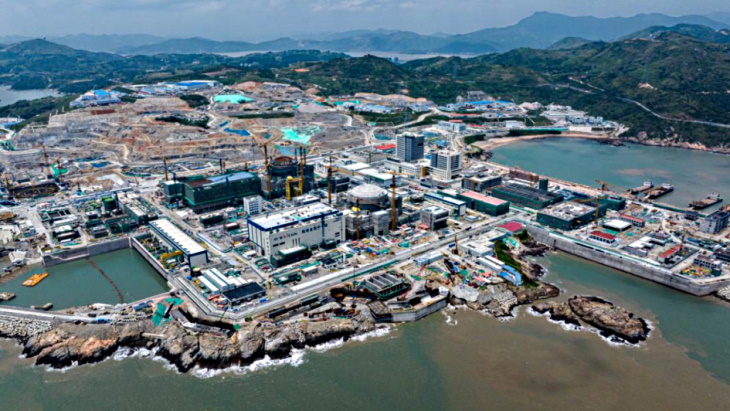
The San'ao plant site (Image: CGN)
In May 2015, the National Energy Administration approved the project to carry out site protection and related demonstration work at San'ao. On 2 September 2020, the executive meeting of the State Council approved the construction of units 1 and 2 as the first phase of the plant. China's National Nuclear Safety Administration issued a construction permit for the two units on 30 December that year and first concrete for unit 1 was poured the following day. The first concrete for San'ao 2 was poured on 30 December 2021.
San'ao 1 and 2 are scheduled to begin supplying electricity in 2026 and 2027, respectively.
The San'ao plant is the first nuclear power project in China's Yangtze River Delta region to adopt the Hualong One reactor design. A total of six Hualong One units are planned for the San'ao site. In August 2024, the State Council approved the construction of San'ao Phase II (units 3 and 4).
The San'ao project marks the first Chinese nuclear power project involving private capital, with Geely Technology Group taking a 2% stake in the plant. CGN holds 46% of the shares of the project company Cangnan Nuclear Power, with other state-owned enterprises holding the remainder.
Belarus looking at potential radioactive waste disposal site locations
Belarus Energy Minister Denis Moroz has said the country is looking at potentially locating its planned radioactive waste disposal facility in the Grodno, Mogilev or Gomel areas.
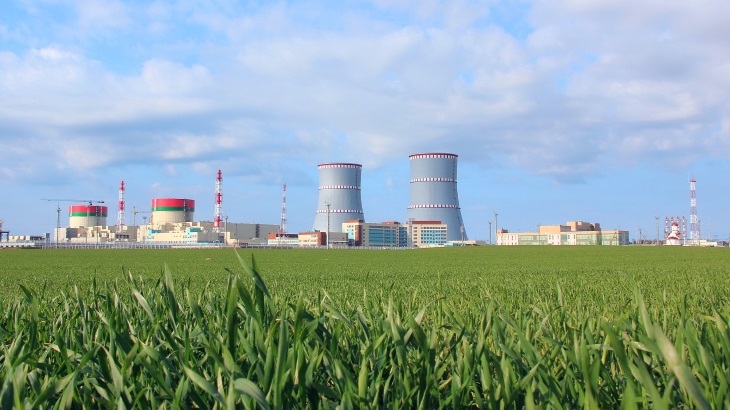
According to the official Belta news agency Moroz told the Belarus 1 TV channel that there is a current storage facility at the site of the country's nuclear power plant, but a purpose-built site is required by 2030.
He said: "The construction of such a facility is a large-scale and complex task. It should be as transparent as possible to the world community and to the citizens of the Republic of Belarus."
He said that they were following the International Atomic Energy Agency's recommended process for site selection. He said that geological and environmental studies had been taking place and pre-project documentation was being prepared for potential sites before a full environmental impact assessment and public consultations.
According to Belta, during the interview he also discussed the on-going feasibility study into future expansion of nuclear energy capacity in Belarus. The study is due to be published this year and is considering whether to build a third unit at the existing Ostrovets plant, or to build a new plant.
He said the study was in its "final stages" and that both options had been found to be technically and economically feasible.
The Belarus nuclear power plant has two VVER-1200 reactors and is located in Ostrovets in the Grodno region. A general contract for the construction was signed in 2011, with first concrete on the first unit in November 2013. Construction of unit 2 began in May 2014. The first power unit was connected to the grid in November 2020, with the second unit put into commercial operation in November 2023. More than a quarter of Belarus's electricity is now generated by nuclear.
Kazakhstan selects Rosatom for first nuclear power plant
Russia's Rosatom has been selected as the leader of an international consortium to build Kazakhstan's first planned nuclear power plant - with China being lined up to build a second one.
_1_49124.jpg)
The Atomic Energy Agency of Kazakhstan held negotiations with leading global manufacturers and had drawn up a shortlist of potential suppliers: Rosatom with its VVER-1200 reactors, China National Nuclear Corporation (CNNC) with its HPR-1000, France's EDF with its EPR1200 and Korea Hydro & Nuclear Power (KHNP) with its APR-1000/APR-1400.
In a statement announcing the result, the agency said: "The listed companies submitted a comprehensive package of materials consisting of technical and commercial proposals for the construction of a nuclear power plant in Kazakhstan. These materials included the following information: estimated construction cost; project implementation deadlines; financing models; methods of localisation of equipment and construction works; recommendations for the development of personnel training and scientific and educational potential; opportunities for integration in the nuclear fuel cycle; and issues of social obligations."
The assessment was carried out based on methodology developed by the Atomic Energy Agency, Kazakhstan Nuclear Power Plants LLP and French engineering company Assystem. It looked at the areas highlighted in the statement's list of materials submitted as well assessing nuclear power plant safety and international experience. The analysis was then submitted to the Interdepartmental Commission on the Development of the Atomic Industry.
"It was determined that the most optimal and effective proposals for the construction of a nuclear power plant in Kazakhstan came from the Russian company Rosatom," with second place taken by CNNC and third place by EDF and KHNP, the agency statement said. "Thus, Rosatom was identified as the leader of the international consortium for the project to build the first nuclear power plant in Kazakhstan."
Discussions are now taking place on state export funding from the Russian Federation based on the proposals submitted by Rosatom.
In a statement issued by Rosatom, its Director General Alexei Likhachev said: "We welcome Kazakhstan's decision to begin implementing the nuclear power plant construction project. VVER-1200 generation 3+ reactors combine time-tested engineering solutions with the latest active and passive protection systems developed in strict compliance with international safety standards. VVER-1200 reactors are already operating in Russia and abroad - four units in Russia and two units in Belarus and this technology has also been chosen by our partners in Hungary, Egypt, Turkey, Bangladesh and China. There is still a lot of work ahead, and we sincerely count on the help and support of the leadership of Russia and Kazakhstan."
China, and a second plant
In its statement the Atomic Energy Agency for Kazakhstan said it would "continue to work with foreign partners to form an effective international consortium to build the country's first nuclear power plant".
And in a separate statement it quoted agency chairman Almasadam Satkaliyev as saying "all prequalified participants included in the shortlist have their own unique technologies".
He added: "It is planned to sign a separate agreement with the People's Republic of China on cooperation in the nuclear sector. We want to use Chinese technologies to build another nuclear power plant in Kazakhstan ... in general, there are not many countries in the world that can implement a full nuclear cycle on their own. And China is a country that has such an opportunity, has all the necessary technologies and an industrial and production base. Therefore, our next main priority is cooperation with China."
"We have agreements at the highest level. We are interested in adopting Chinese experience, we understand well that they can carry out construction quickly and qualitatively. We have already started work in this direction."
Background
Kazakhstan is the world's leading producer of uranium. Although it does not currently use nuclear energy, it is not without nuclear experience: it has three operating research reactors, and a Russian-designed BN-350 sodium-cooled fast reactor operated near Aktau for 26 years, until 1999.
Kazakhstan has been preparing for a possible nuclear power programme to reduce its reliance on fossil fuels, diversify its energy mix and reduce CO2 emissions for some time. Kazakhstan Nuclear Power Plant (KNPP), a subsidiary of Kazakhstan's Samruk-Kazyna National Welfare Fund JSC, was set up in 2014. As well as being designated as the owner/operator of a future plant, KNPP has been tasked with pre-project work including a feasibility study to justify the need for nuclear power - carried out in 2018 - and locating a site.
In a referendum last year more than 70% of the 7.8 million people who voted answered 'yes' to the question: "Do you agree with the construction of a nuclear power plant in Kazakhstan?"
As well as the proposed first nuclear power plant - the Zhambyl district of Almaty region has been selected as the preferred location - there are also options for using small modular reactors to replace retiring coal plants in the years to come and the second large plant is being considered with the government's target being for nuclear to produce a 5% share of the national generation mix by 2035.

No comments:
Post a Comment