Ecuador reopens mining registry after seven-year freeze
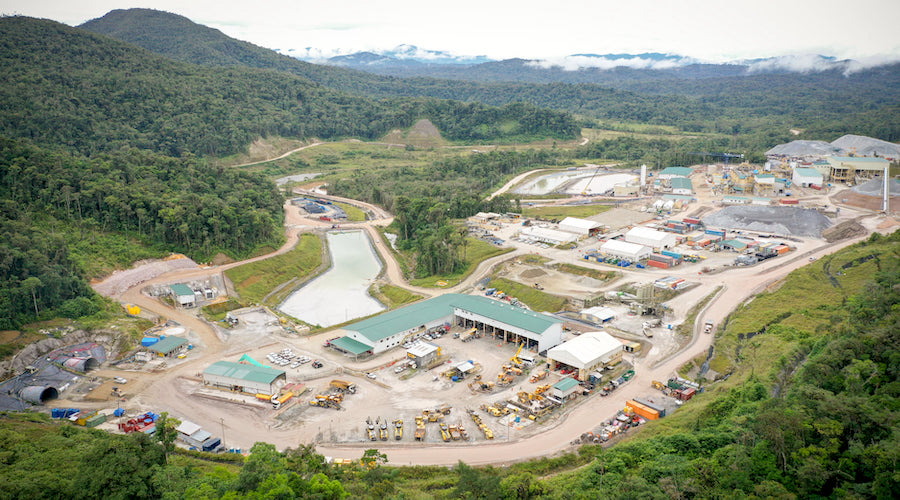
Ecuador has reopened its mining concessions registry for the first time since January 2018, aiming to attract investment, streamline licensing, and crack down on illegal mining—a long-standing issue across the country.

The registry had been closed amid concerns about irregularities in the concession system. Since then, no new licences have been issued. Now, authorities including the ministries of environment, energy, and mines, have renewed power to identify illegal mining activities nationwide and can call in the police and armed forces when necessary.
Energy and Mines Minister Inés Manzano announced that new exploration applications and concessions will be accepted gradually. The process will begin in the third quarter of this year, starting with small-scale non-metallic mining, such as limestone and clay used in cement and ceramics. Small-scale metallic mining will follow in September. The registry will fully reopen to other types of mining at the start of 2026.
To secure a concession, applicants must show at least two years of mining experience, either nationally or internationally. The state-owned National Mining Company (Enami) will have first rights to apply.
In response to criticism from local groups, particularly the Confederation of Indigenous Nationalities of Ecuador (CONAIE), which represents around 10,000 communities, Manzano defended the policy. She said the government is focused on building a competitive and responsible mining sector that drives investment, improves local living conditions and ensures better use of natural resources.
“What we’re doing is the best thing for the country,” Manzano said. “It’s wealth that’s being illegally stolen.”
Lagging behind
Despite its mineral wealth – mainly copper, gold, and silver – Ecuador has fallen behind regional mining leaders like Chile and Peru. Development has been slowed by legal challenges and opposition from Indigenous groups. Last year, Ecuador’s mining exports exceeded $3 billion.
Illegal mining has spread across 19 of the country’s 24 provinces, with major hotspots in Esmeraldas, Imbabura and Azuay. Protected areas have also been impacted. International reports, including one from the US Department against Transnational Organized Crime (DTOC), have detailed corruption in the sector.
Investigative news outlet Mongabay found that 652 mining concessions were issued without proper procedures. It also reported a rise in unauthorized gold-processing plants and violence linked to criminal groups.
“Criminal organizations are reinvesting drug trafficking profits into this lucrative [illegal gold] trade, fuelling a violent struggle for territorial control,” Amazon Watch’s Sofía Jarrín said in a report on gold gangs published in September.
President Daniel Noboa’s administration is considering new mining fees estimated to be able to generate $229 million a year, a move that has drawn criticism from the country’s mining chamber.
At least six large and medium-scale mining projects are set to begin operations over the next four years. These include CMOC Cangrejos gold project, SolGold’s (LON: SOLG) Cascabel copper-gold phase 1, and Solaris’ (TSX: SLS)(NYSE: SLSR) Warintza copper and molybdenum project. There is also SilverCorp (TSX: SVM) and Salazar’s (TSX-V: SRL) Curipamba-El Domo copper-gold venture and the expansion of The Mirador Norte copper mine, operated by Chinese-backed EcuaCorriente.
Ecuador expected to delay fee on mining, industry says
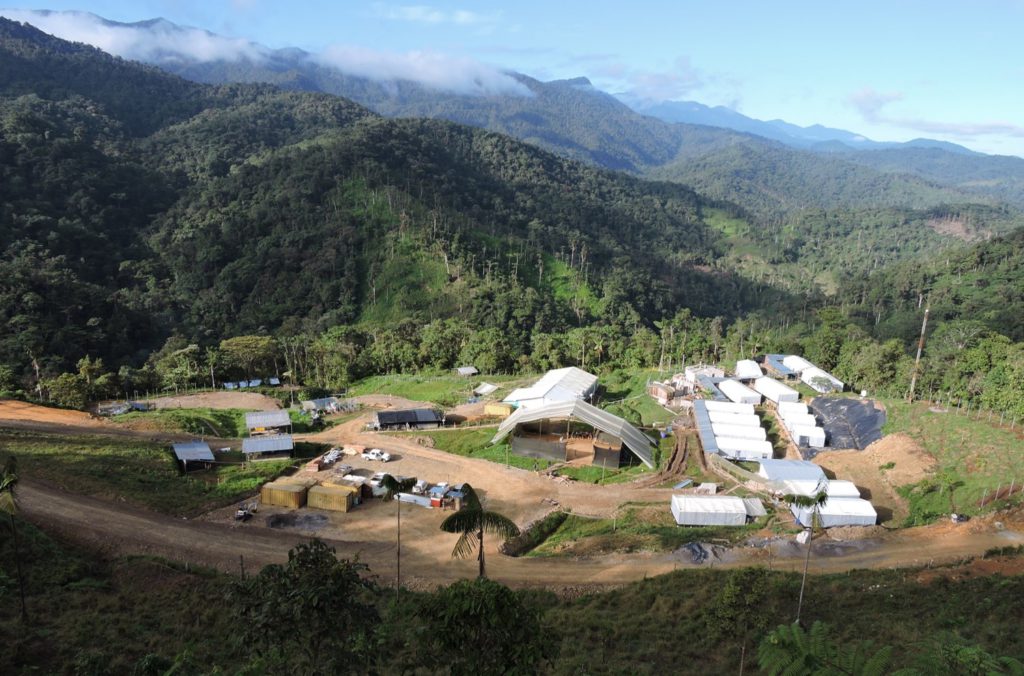
Ecuador has indicated that it will consider delaying the implementation of a new mining fee estimated to generate $229 million annually, according to Rodrigo Darquea, vice president of the country’s mining chamber.
Darquea said he attended a meeting with Deputy Mining Minister Javier Subia on Thursday, in which officials asked the industry to request in writing that the charge be suspended while it’s discussed further. That decision still has to be formalized. The ministry didn’t respond to requests for comment.
“We expect a favorable reply to be able to talk with a suspended fee, which would reduce the stress and discomfort currently affecting investors, many of which have seen that they cannot continue in the country if it goes into effect,” Darquea said in a telephone interview.
Weekly talks between authorities, including the finance ministry, and industry representatives are expected to last a month. “We need legal security, we need clear rules,” Darquea said. “There is a lot of work to be done.”
The two sides need to “come up with something that makes sense,” Dan Vujcic, chief executive officer of Ecuador-focused Solgold Plc, said by telephone from Sydney. “Governments everywhere do things like this. The key thing is just education on how capital markets work.”
The fee was announced earlier this month as part of efforts to bolster oversight amid a surge in illegal mining and reduce deficits as President Daniel Noboa looks to comply with an International Monetary Fund agreement.
The measure — which would see mining regulator ARCOM’s budget this year jump 20-fold to $115 million — caught the industry off guard after the reelection of the market-friendly Noboa. In the meeting, company representatives argued that the fee would make Ecuador too expensive for exploration companies that lack cashflow.
Aurania Resources Ltd. estimates the fee would represent about 10 times the amount the Toronto-based company pays for its annual concession fees in Ecuador, according to a June 11 statement.
(By Stephan Kueffner)

No comments:
Post a Comment