SPACE/COSMOS
Cosmic signal from the very early universe will help astronomers detect the first stars
University of Cambridge
Understanding how the universe transitioned from darkness to light with the formation of the first stars and galaxies is a key turning point in the universe’s development, known as the Cosmic Dawn. However, even with the most powerful telescopes, we can’t directly observe these earliest stars, so determining their properties is one of the biggest challenges in astronomy.
Now, an international group of astronomers led by the University of Cambridge have shown that we will be able to learn about the masses of the earliest stars by studying a specific radio signal – created by hydrogen atoms filling the gaps between star-forming regions – originating just a hundred million years after the Big Bang.
By studying how the first stars and their remnants affected this signal, called the 21-centimetre signal, the researchers have shown that future radio telescopes will help us understand the very early universe, and how it transformed from a nearly homogeneous mass of mostly hydrogen to the incredible complexity we see today. Their results are reported in the journal Nature Astronomy.
“This is a unique opportunity to learn how the universe’s first light emerged from the darkness,” said co-author Professor Anastasia Fialkov from Cambridge’s Institute of Astronomy. “The transition from a cold, dark universe to one filled with stars is a story we’re only beginning to understand.”
The study of the universe’s most ancient stars hinges on the faint glow of the 21-centimetre signal, a subtle energy signal from over 13 billion years ago. This signal, influenced by the radiation from early stars and black holes, provides a rare window into the universe’s infancy.
Fialkov leads the theory group of REACH (the Radio Experiment for the Analysis of Cosmic Hydrogen). REACH is a radio antenna and is one of two major projects that could help us learn about the Cosmic Dawn and the Epoch of Reionisation, when the first stars reionised neutral hydrogen atoms in the universe.
Although REACH, which captures radio signals, is still in its calibration stage, it promises to reveal data about the early universe. Meanwhile, the Square Kilometre Array (SKA)—a massive array of antennas under construction—will map fluctuations in cosmic signals across vast regions of the sky.
Both projects are vital in probing the masses, luminosities, and distribution of the universe's earliest stars. In the current study, Fialkov – who is also a member of the SKA – and her collaborators developed a model that makes predictions for the 21-centimetre signal for both REACH and SKA, and found that the signal is sensitive to the masses of first stars.
“We are the first group to consistently model the dependence of the 21-centimetre signal of the masses of the first stars, including the impact of ultraviolet starlight and X-ray emissions from X-ray binaries produced when the first stars die,” said Fialkov, who is also a member of Cambridge’s Kavli Institute for Cosmology. “These insights are derived from simulations that integrate the primordial conditions of the universe, such as the hydrogen-helium composition produced by the Big Bang.”
In developing their theoretical model, the researchers studied how the 21-centimetre signal reacts to the mass distribution of the first stars, known as Population III stars. They found that previous studies have underestimated this connection as they did not account for the number and brightness of X-ray binaries – binary systems made of a normal star and a collapsed star – among Population III stars, and how they affect the 21-centimetre signal.
Unlike optical telescopes like the James Webb Space Telescope, which capture vivid images, radio astronomy relies on statistical analysis of faint signals. REACH and SKA will not be able to image individual stars, but will instead provide information about entire populations of stars, X-ray binary systems and galaxies.
“It takes a bit of imagination to connect radio data to the story of the first stars, but the implications are profound,” said Fialkov.
“The predictions we are reporting have huge implications for our understanding of the nature of the very first stars in the Universe,” said co-author Dr Eloy de Lera Acedo, Principal Investigator of the REACH telescope and PI at Cambridge of the SKA development activities. “We show evidence that our radio telescopes can tell us details about the mass of those first stars and how these early lights may have been very different from today’s stars.
“Radio telescopes like REACH are promising to unlock the mysteries of the infant Universe, and these predictions are essential to guide the radio observations we are doing from the Karoo, in South Africa.”
The research was supported in part by the Science and Technology Facilities Council (STFC), part of UK Research and Innovation (UKRI). Anastasia Fialkov is a Fellow of Magdalene College, Cambridge. Eloy de Lera Acedo is an STFC Ernest Rutherford Fellow and a Fellow of Selwyn College, Cambridge.
Journal
Nature Astronomy
Article Title
Determination of the mass distribution of the first stars from the 21-cm signal
Article Publication Date
20-Jun-2025
SETI Institute and SpaceX collaborate to minimize satellite interference on radio astronomy
The aim is to enhance the coexistence between scientific research and commercial telecommunications, fostering a future where both can thrive
SETI Institute
image:
The Allen Telescope Array
view moreCredit: SETI Institute
June 18, 2025, Mountain View, CA -- The SETI Institute and SpaceX have launched a groundbreaking collaboration to help protect sensitive radio astronomy observations at the Allen Telescope Array (ATA) from interference caused by satellite communications such as certain direct-to-cell signal transmissions from Starlink satellites. This effort represents a significant step forward in preserving the integrity of radio astronomy as satellite communications continue to expand global connectivity. SpaceX has previously reported on its collaboration with the National Radio Astronomy Observatory and the development of satellite boresight avoidance capabilities.
“The SETI Institute is at the forefront of developing solutions that allow for the continued exploration of the cosmos while accommodating the rapid evolution of satellite communications,” said Dr. David DeBoer, a researcher at the ATA. “Our collaboration with SpaceX is an important step in demonstrating that scientific discovery and technological progress can go hand in hand with the right coordination.”
Located in rural Shasta County, California, the ATA is a highly sensitive radio telescope used to search for extraterrestrial technological signals and study fast radio bursts and pulsars. While the ATA remains the first and only observatory built specifically to conduct SETI research, it now supports a wide array of research efforts. However, signals transmitted from satellites back to Earth can interfere with the ATA’s sensitive observations.
One of the key challenges faced by radio observatories such as the ATA is signal saturation, which occurs when a signal from a passing satellite overloads the telescope’s extremely sensitive receivers, rendering observations temporarily unusable. SpaceX’s Starlink satellites, which provide internet service and, more recently, mobile text connectivity across the U.S., utilize certain ATA-sensitive frequencies. When a Starlink satellite passes directly through the ATA’s field of view, its signal strength can momentarily disrupt data collection via signal saturation.
Recognizing the significance of this issue, and in collaboration with the U.S. National Science Foundation, SpaceX has been working closely with radio observatories to mitigate the saturation effect. The ATA is among the first facilities to implement new coordination techniques in partnership with SpaceX, successfully reducing signal interference with minimal impact to Starlink’s consumer services. These mitigation strategies affect only one of several satellites in orbit at a time and only for a few seconds, ensuring uninterrupted connectivity for users while preserving the scientific integrity of radio astronomy observations.
This initiative is part of a broader effort between SpaceX and the scientific community to ensure that radio observatories can continue to operate effectively as the radio frequency spectrum becomes increasingly congested. Researchers at the ATA are pioneering innovative spectrum management techniques, including the concept of “radio dynamic zones,” which propose a more flexible approach to frequency allocation. These advancements aim to enhance the coexistence between scientific research and commercial telecommunications, fostering a future where both can thrive.
About the SETI Institute
Founded in 1984, the SETI Institute is a non-profit, multi-disciplinary research and education organization whose mission is to lead humanity’s quest to understand the origins and prevalence of life and intelligence in the universe and share that knowledge with the world. Our research encompasses the physical and biological sciences and leverages data analytics, machine learning, and advanced signal detection technologies. The SETI Institute is a distinguished research partner for industry, academia, and government agencies, including NASA and the National Science Foundation.
NASA scientists find ties between Earth’s oxygen and magnetic field
image:
The solar wind flows around Earth's magnetic field. A new NASA study suggests that the amount of oxygen in the atmosphere and strength of the magnetic field have been correlated for more than half a billion years.
view moreCredit: NASA's Goddard Space Flight Center/Conceptual Image Laboratory
For 540 million years, the ebb and flow in the strength of Earth's magnetic field has correlated with fluctuations in atmospheric oxygen, according to a newly released analysis by NASA scientists. The research suggests that processes deep inside the Earth might influence habitability on the planet’s surface.
Earth’s magnetic field arises from the flow of material in the planet’s molten interior, which acts like a giant electromagnet. The flow isn’t perfectly stable, and this causes the field to change over time.
Many scientists have argued that the magnetic field is crucial for protecting the atmosphere from eroded by energetic particles coming from the Sun. But, the authors of the study in Science Advances point out, the role of magnetic fields in preserving the atmosphere is an area of active research. Before addressing the complexity of the cause-and-effect relationship between magnetic fields and oxygen levels, the study authors decided to see whether Earth’s magnetic field and atmosphere have fluctuated in ways that demonstrate a link.
The history of the Earth’s magnetic fields is recorded in magnetized minerals. When hot minerals that rise with magma at gaps between spreading tectonic plates cool down, they can record the surrounding magnetic field. The minerals retain the field record as long as they are not reheated too severely. Scientists can deduce historic oxygen levels from ancient rocks and minerals because their chemical contents depend on the amount of oxygen available when they were formed. Data for both Earth’s magnetic field and oxygen extend over comparable ranges in databases that myriad geophysicists and geochemists have compiled. Until now, the authors of the new study say, no scientists had made a detailed comparison of the records.
“These two datasets are very similar,” said coauthor Weijia Kuang, a geophysicist at NASA’s Goddard Space Flight Center in Greenbelt, Maryland. “Earth is the only known planet that supports complex life. The correlations we’ve found could help us to understand how life evolves and how it’s connected to the interior processes of the planet.”
When Kuang and colleagues analyzed the two separate datasets, they found that the planetary magnetic field has followed similar rising and falling patterns as oxygen in the atmosphere for nearly a half billion years, dating back to the Cambrian explosion, when complex life on Earth emerged.
“This correlation raises the possibility that both the magnetic field strength and the atmospheric oxygen level are responding to a single underlying process, such as the movement of Earth’s continents,” said study coauthor Benjamin Mills, a biogeochemist at the University of Leeds.
The researchers hope to examine longer datasets to see if the correlation extends farther back in time. They also plan to investigate the historic abundance of other chemicals essential for life as we know it, such as nitrogen, to determine whether they also support these patterns. As for the specific causes linking the Earth’s deep interior to life on the surface, Kopparapu said: “There’s more work to be done to figure that out.”
Journal
Science Advances
Method of Research
Data/statistical analysis
Subject of Research
Not applicable
Article Title
Strong link between Earth’s oxygen level and geomagnetic dipole revealed since the last 540 million years
Fleet Space, AI start-ups partner to build quantum sensor mineral exploration pipeline
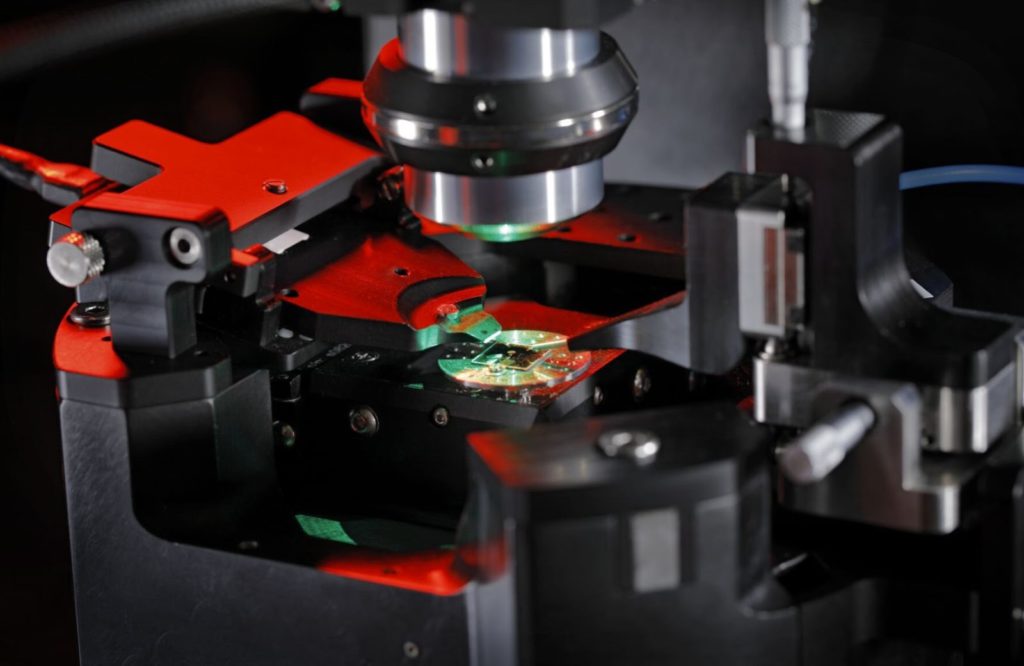
Australian space exploration company Fleet Space Technologies announced Wednesday a series of partnerships with innovators mDetect, Nomad Atomics and DeteQt.

The collaborations aim to expand the technology frontier of the mining industry by developing the next generation of sensors needed to fuel the growth of AI-powered mineral exploration, the company said.
mDetect specializes in muon tomography, a passive imaging technique that utilizes naturally occurring particles from space known as muons to create 3D density maps of the subsurface. Nomad Atomics is developing high-precision quantum gravimeters and accelerometers, while DeteQt produces patented ‘diamond-on-chip ‘ quantum magnetometers, portable sensors that detect vector magnetic fields.
Fleet Space said it will advance the acquisition and processing speed of geophysical datasets and build an innovation path for muon tomography to become input for enhancing the geological predictions of modern AI systems.
As part of its expansion of its ExoSphere platform, the company is advancing exploration technology development with Stanford’s Mineral-X and MIT’s Space Exploration Initiative.
Last summer, Barrick tapped Fleet Space’s technology to advance copper exploration at its Reko Diq project in Pakistan. In January 2025, Fleet Space formed a partnership with Saudi state miner Ma’aden to deploy ExoSphere across 12,000 sq. km of the Arabian Shield.
“We must build the deep technologies and infrastructure that integrate breakthrough sensing modalities into a unified system,” Fleet Space CEO Flavia Tata Nardini said in a news release.
“With our ExoSphere platform, Fleet Space has created the next-generation of satellite-connected geophysical methods while also investing in the development of frontier technologies like quantum gravimetry and muon tomography to enhance the predictive power of AI in exploration on a planetary scale.”
SwRI-led paper summarizes notable progress in understanding the evolution of the terrestrial planets
Impact history should play a crucial role in the search for habitable exoplanets like Earth
Southwest Research Institute
image:
A new SwRI-led paper highlights the scientific progress made in understanding the evolution of terrestrial planets, including the effects of late large impacts on pre-existing modes of tectonics. For instance, the Earth experienced transient subduction, when one tectonic plate slides beneath another. Because Venus’ surface is covered by a single plate, a high-velocity impact led to a superheated core and long-lived volcanism. On Mars, a large, low-velocity impact facilitated variations in its hemispheres. Impacts also modify the atmospheres of terrestrial planets in profound ways, including eliminating or supplementing existing gases.
view moreCredit: Southwest Research Institute
SAN ANTONIO — June 18, 2025 — Southwest Research Institute collaborated with Yale University to summarize the scientific community’s notable progress advancing the understanding of the formation and evolution of the inner rocky planets, the so-called terrestrial planets. Their Nature Review journal paper focuses on late accretion’s role in the long-term evolution of terrestrial planets, including their distinct geophysical and chemical properties as well as their potential habitability.
Solar systems form when clouds of gas and dust begin to coalesce. Gravity pulls these elements together, forming a central star, like our Sun, surrounded by a flattened disk of consolidating materials. Our terrestrial planets — Mercury, Venus, Earth and Mars — formed as smaller rocky objects accumulated, or accreted, into larger planetesimals and eventually protoplanets, when late impacts made critical contributions. The Earth was probably the last terrestrial planet to form, reaching about 99% of its final mass within about 60–100 million years after the first solids began to consolidate.
“We examined the disproportionate role late accretion — the final 1% of planetary growth — plays in controlling the long-term evolution of the Earth and other terrestrial planets,” said the paper’s lead author, Dr. Simone Marchi, of SwRI’s Solar System Science and Exploration Division in Boulder, Colorado. “Differences in planets’ late accretions may provide a rationale for interpreting their distinct properties. We made advances constraining the history of late accretions, using large-scale impact simulations and understanding the consequences of interior, crustal and atmospheric evolution.”
A recent wealth of geochemical data from meteorites and terrestrial rocks has led to a better understanding of the formation of planets. With these advances, collisions and their various consequences have emerged as crucial processes affecting the long-term evolution of terrestrial planets. For instance, the tectonics, atmospheric composition and water of Venus and Earth appear to be tied to late accretion. The surface variability of Mars and the high metal-to-silicate mass ratio of Mercury are also associated with late large impacts.
“Impact histories should play a critical role in the search for habitable exoplanets like Earth,” Marchi said. “The habitability of a rocky planet depends on the nature of its atmosphere, which is tied to plate tectonics and mantle outgassing. The search for Earth’s twin might focus on rocky planets with similar bulk properties — mass, radius and habitable zone location — as well as a comparable collision history.”
Models provide insights into the total number and history of impacts, but geologic activity can obscure some evidence. The scientific community uses lunar impacts, additional observations and dynamic models to better understand and “constrain” the bombardment history of the rocky planets.
“The fate of an impactor’s material is crucial to understanding the target body’s physical and chemical evolution,” Marchi said. “We assess the abundance of certain elements that have an affinity for metal in the mantle and crust of planetary objects to understand the timing and processes that led to the formations of their core, mantle and crust.”
Impacts also modify the atmospheres of terrestrial planets in profound ways, particularly affecting the abundance of volatile elements, such as water and carbon, that easily vaporize. Collisions can blow off pre-existing atmospheres, or conversely, volatile-rich impactors can deliver these components to a planet’s surface and atmosphere. The abundance of volatiles provides insights into the formation, evolution and habitability of terrestrial planets.
“These processes almost certainly played a role in the prebiotic chemistry of early Earth, but their implications in the origin of life remain a mystery,” Marchi said.
To read the Nature Review paper, see: https://doi.org/10.1038/s41586-025-08970-8.
For more information, visit https://www.swri.org/markets/earth-space/space-research-technology/space-science/planetary-science.
An SwRI-led team compared the early impact history of Venus and Earth, determining that Venus experienced higher-energy impacts that created a superheated core. Models show these conditions could create Venus’ extended volcanism and younger surface.
Credit
Southwest Research Institute
Journal
Nature
Method of Research
Systematic review
Subject of Research
Not applicable
Article Title
The shaping of terrestrial planets by late accretions

No comments:
Post a Comment