BAN DEEP SEA MINING
US courts Cook Islands for deep-sea mining
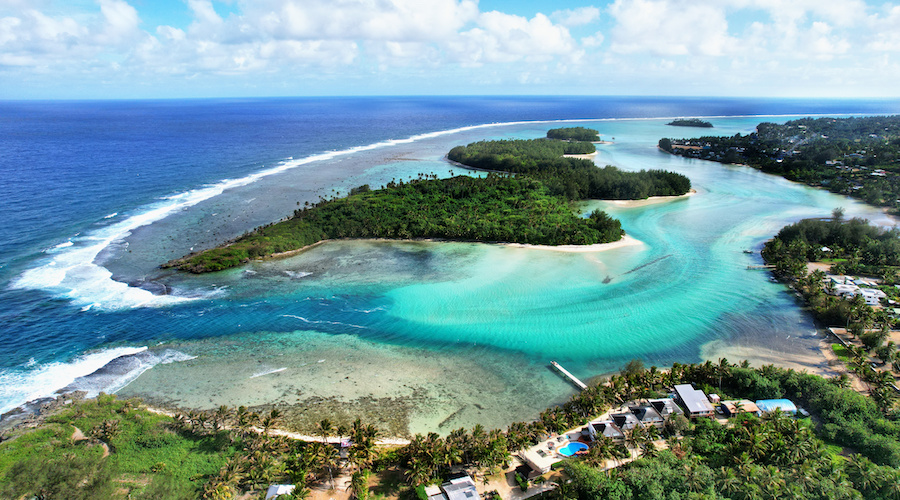
The United States has begun talks with the Cook Islands for research on seabed mineral exploration and development, just months after the South Pacific nation inked cooperation pacts with China that included undersea mining.

The US State Department announced Tuesday that the deal would involve mapping the Cook Islands’ Exclusive Economic Zone (EEZ), calling it “one of the most promising regions for deep-sea mineral deposits.”
The Cook Islands, a self-governing country in free association with New Zealand, consists of 15 islands and atolls located between New Zealand and Hawaii. Officials from the Cook Islands signed a five-year strategic partnership with China in February, covering cooperation in seabed mining, education, the economy, infrastructure, fisheries and disaster management.
That move strained relations with Wellington. In June, New Zealand suspended millions in budget support after the Cook Islands’ prime minister signed the deals without consultation. Under their constitutional arrangement, New Zealand and the Cook Islands are expected to coordinate on security, defence and foreign policy.
New Zealand’s foreign ministry responded cautiously this week, saying it was aware of the US initiative and respected “the rights and responsibilities of states to manage their mineral resources.”
Geopolitical move
The US push for seabed mining reflects a broader geopolitical strategy. In April, President Donald Trump issued an executive order to accelerate American licensing for deep-sea mining, describing it as a “gold rush” to counter China’s growing influence. The order marked a sharp departure from decades of US deference to the UN Convention on the Law of the Sea (UNCLOS), a treaty Washington has never ratified but largely followed.
Legal experts warn that the unilateral approach risks undermining global maritime norms. Mining lawyer Scot Anderson, who specializes in energy and natural resources at Womble Bond Dickinson, told MINING.COM that Trump’s order marked a dramatic shift that “could create both legal and diplomatic risks” and encourage other countries to expand maritime claims unilaterally.
Despite the controversy, Canada’s the US subsidiary of Canadian-registered The Metals Company (Nasdaq: TMC) submitted the first application to mine the seabed in international waters under a 1980 law within days of Trump’s order. This week, TMC released the first probable mineral reserves for its NORI-D polymetallic nodule project in the Clarion Clipperton Zone of the Pacific Ocean.
Seabed mining advocates claim the practice has a smaller environmental footprint than land-based operations. Critics argue the science is far from settled. The deep ocean remains largely unexplored, and disrupting its ecosystems could unleash cascading effects throughout the marine food chain.
_________________________________________
RELATED: The geopolitical race to mine the deep-sea floor (Podcast)
TMC releases PFS, publishes first probable mineral reserves for deep-sea nodules
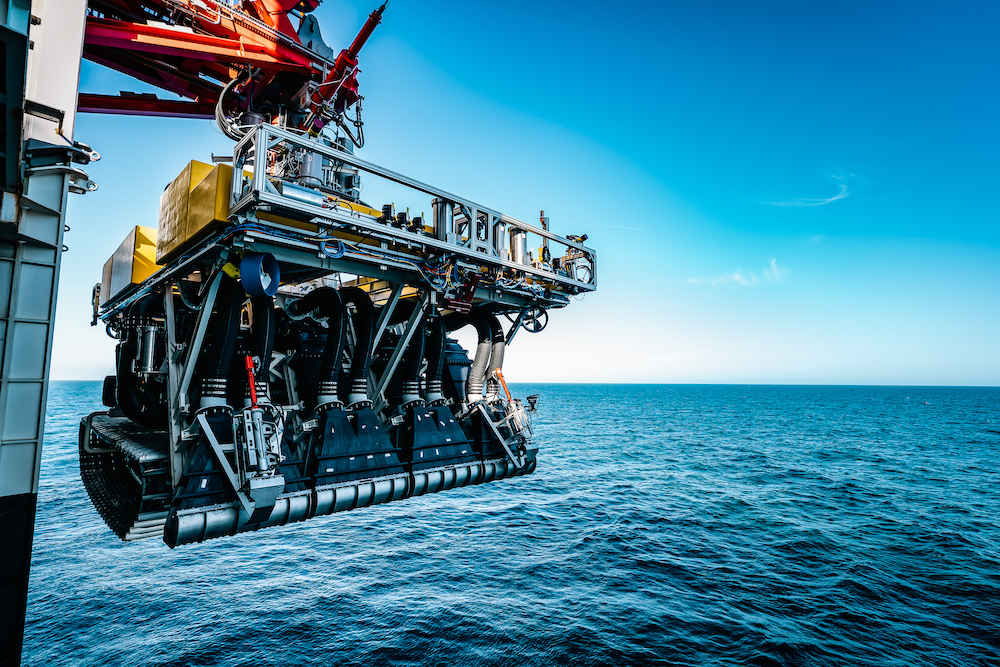
The Metals Company (Nasdaq: TMC) released Monday a technical report summary (TRS) of the pre-feasibility study (PFS) for its proposed NORI-D polymetallic nodule project in the Clarion Clipperton Zone (CCZ) of the Pacific Ocean.
The report — prepared in accordance with SEC Regulation S-K (SK-1300) — marks a world-first declaration of probable mineral reserves for deep-sea polymetallic nodules.
The Canadian miner, which has exclusive access to the Nori Clarion-Clipperton Zone, in March formally initiated a process under the US Department of Commerce to apply for exploration licenses and permits to extract minerals from the ocean floor.
Mining international waters is in the spotlight as companies and countries are looking at minerals concentrated on the ocean floor that can be used in batteries for smart phones and electric vehicles.
Alongside the PFS, TMC announced the publication of an initial assessment (IA) for the remainder of its resource in the NORI and TOML blocks in the CCZ, with a measured and indicated mineral resource of 73 million tonnes grading 1.30% nickel, 0.20% cobalt, 1.2% copper and 30.2% manganese with an abundance of 12.8 kg/m2, and an inferred mineral resource of 1.2 billion tonnes grading 1.30% nickel, 0.20% cobalt, 1.1% copper and 28.7% manganese with an abundance of 11.6 kg/m2. The resource supports an after-tax net present value of $18.1 billion and internal rate of return of 35.6%.
The mineral resource reports follow TMC USA’s April submission of an application for a commercial recovery permit under the US Deep Seabed Hard Mineral Resources Act (DSHMRA), along with two exploration license applications.
The reports also follow an $85 million investment from Korea Zinc in June. The deal gives Korea Zinc a 5% stake in TMC through the purchase of 19.6 million shares at $4.34 each. It also includes a three-year warrant allowing the South Korean refiner to acquire an additional 6.9 million shares at $7 apiece.
TMC’s stock was down 6.2% in mid-afternoon trading on the Nasdaq, with a $2.2 billion market capitalization.
TMC’s bid to become the first company to gain approval to develop deep sea minerals has been controversial. Environmental groups are calling for all activities to be banned, warning that industrial operations on the ocean floor could cause irreversible biodiversity loss.
Despite the opposition, TMC CEO Gerard Barron has declared the debate over.
“The combined net present value of $23.6 billion of the two studies should give investors a better idea of the economic potential of our total estimated resource,” Barron said in a news release Monday.
“The PFS takes our NORI-D project economics up the confidence curve and contains the declaration of mineral reserves — these are our first 50+ million tonnes with a potential commercially viable path to production, with more to follow as we advance our mine planning work,” Barron said.
The phased project development plan will target initial production from the Hidden Gem vessel, with an estimated $113 million of development capital expenditure each from TMC and Allseas.
The company said first production is targeted for the fourth quarter of 2027.

No comments:
Post a Comment