Nepal’s first woman chief justice to become next PM
By AFP
September 12, 2025

Known for her insistence on integrity, Sushila Karki has often spoken about the need for transparency and independence in a judiciary frequently under intense political pressure - Copyright AFP Arun SANKAR
Paavan MATHEMA
Nepal’s first woman Supreme Court chief justice Sushila Karki will be sworn in to lead the government in the Himalayan nation after deadly protests ousted the prime minister.
Known for her insistence on integrity, the 73-year-old has often spoken about the need for transparency and independence in a judiciary frequently under intense political pressure.
“President Ram Chandra Paudel will appoint former chief justice Sushila Karki as the prime minister,” presidential press adviser Kiran Pokharel told AFP, ahead of her expected swearing in later on Friday.
Karki emerged as the leading candidate by many “Gen Z” representatives — the loose umbrella title of the protest movement.
She told Nepali media that the Gen Z protesters had told her that “they believe in me” to lead for “a short time for the purpose of doing elections”.
“She is a credible choice to lead the interim government,” Anil Kumar Sinha, a former justice of the Supreme Court who worked with Karki, told AFP.
“Her integrity has never been in doubt, and she is not someone who can be intimidated or easily influenced. She is courageous and not swayed by pressure.”
– ‘In favour of youth’ –
In a speech broadcast on Nepali media earlier this year, she spoke of ingrained corruption.
“We see it everywhere but we don’t speak — now we need the youth to speak up, take the lead and stand in elections”, she said.
“What I have seen in the last 35 years does not work, I am 100 percent in favour of youth coming forward.”
Her tenure as chief justice, from 2016 to 2017, was brief but significant — challenging gender stereotypes and facing down politicians over corruption.
Karki came of age in a society where women rarely entered the legal profession.
Born in 1952 in Biratnagar, an industrial town in eastern Nepal, she earned degrees in political science in India and in law in Kathmandu.
She began her career as a lawyer in 1979, and quickly gained a reputation as a fearless advocate, often taking up cases others avoided.
– Defiant –
In 2012, Karki was one of two presiding Supreme Court judges who jailed a serving government minister for corruption — a first at the time for Nepal in its battle against a culture of graft.
In 2017, the government tried to impeach her as chief justice after she overturned its choice for chief of police.
The United Nations called the impeachment “politically motivated” and the move was blocked. She stepped down from the post at her retirement.
Nepal emerged from a brutal decade-long Maoist insurgency in 2006, and in 2008, the end of the country’s 240-year-old Hindu monarchy.
The transformation to a federal state was marred by political infighting and successive governments have dragged their feet on bringing perpetrators of abuses committed during the civil war to justice.
But it was under Karki’s watch as chief justice that a court in 2017 sentenced three soldiers to 20 years in jail for the murder of a teenage girl, at the time only the second conviction for crimes committed during the war.
She will be Nepal’s first woman prime minister, but not its first woman leader — Bidya Devi Bhandari held the largely ceremonial role of president for two terms from 2015 to 2023.
By AFP
September 12, 2025
Known for her insistence on integrity, Sushila Karki has often spoken about the need for transparency and independence in a judiciary frequently under intense political pressure - Copyright AFP Arun SANKAR
Paavan MATHEMA
Nepal’s first woman Supreme Court chief justice Sushila Karki will be sworn in to lead the government in the Himalayan nation after deadly protests ousted the prime minister.
Known for her insistence on integrity, the 73-year-old has often spoken about the need for transparency and independence in a judiciary frequently under intense political pressure.
“President Ram Chandra Paudel will appoint former chief justice Sushila Karki as the prime minister,” presidential press adviser Kiran Pokharel told AFP, ahead of her expected swearing in later on Friday.
Karki emerged as the leading candidate by many “Gen Z” representatives — the loose umbrella title of the protest movement.
She told Nepali media that the Gen Z protesters had told her that “they believe in me” to lead for “a short time for the purpose of doing elections”.
“She is a credible choice to lead the interim government,” Anil Kumar Sinha, a former justice of the Supreme Court who worked with Karki, told AFP.
“Her integrity has never been in doubt, and she is not someone who can be intimidated or easily influenced. She is courageous and not swayed by pressure.”
– ‘In favour of youth’ –
In a speech broadcast on Nepali media earlier this year, she spoke of ingrained corruption.
“We see it everywhere but we don’t speak — now we need the youth to speak up, take the lead and stand in elections”, she said.
“What I have seen in the last 35 years does not work, I am 100 percent in favour of youth coming forward.”
Her tenure as chief justice, from 2016 to 2017, was brief but significant — challenging gender stereotypes and facing down politicians over corruption.
Karki came of age in a society where women rarely entered the legal profession.
Born in 1952 in Biratnagar, an industrial town in eastern Nepal, she earned degrees in political science in India and in law in Kathmandu.
She began her career as a lawyer in 1979, and quickly gained a reputation as a fearless advocate, often taking up cases others avoided.
– Defiant –
In 2012, Karki was one of two presiding Supreme Court judges who jailed a serving government minister for corruption — a first at the time for Nepal in its battle against a culture of graft.
In 2017, the government tried to impeach her as chief justice after she overturned its choice for chief of police.
The United Nations called the impeachment “politically motivated” and the move was blocked. She stepped down from the post at her retirement.
Nepal emerged from a brutal decade-long Maoist insurgency in 2006, and in 2008, the end of the country’s 240-year-old Hindu monarchy.
The transformation to a federal state was marred by political infighting and successive governments have dragged their feet on bringing perpetrators of abuses committed during the civil war to justice.
But it was under Karki’s watch as chief justice that a court in 2017 sentenced three soldiers to 20 years in jail for the murder of a teenage girl, at the time only the second conviction for crimes committed during the war.
She will be Nepal’s first woman prime minister, but not its first woman leader — Bidya Devi Bhandari held the largely ceremonial role of president for two terms from 2015 to 2023.
Nepal seeks new leader as army reclaims streets after protest violence
Kathmandu (AFP) – Nepal's president and army sought on Friday to find a consensus interim leader to fill a political vacuum after deadly anti-corruption protests toppled the government and left parliament in flames.
Issued on: 12/09/2025 RFI
'Make a better Nepal'
At least 21 protesters were among those killed, mainly on Monday during a police crackdown on demonstrations against corruption and poor governance that was sparked by a ban on social media.
Kathmandu (AFP) – Nepal's president and army sought on Friday to find a consensus interim leader to fill a political vacuum after deadly anti-corruption protests toppled the government and left parliament in flames.
Issued on: 12/09/2025 RFI
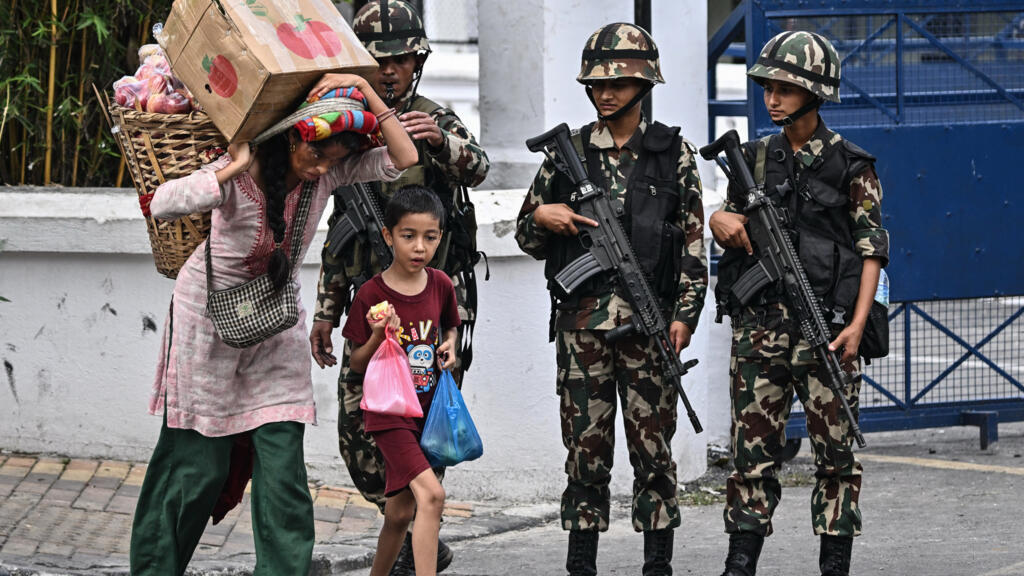
People in Nepal took advantage of a brief lifting of a curfew to stock up on supplies as the president and the army chief met to seek an interim leader in the wake of the worst violence in the Himalayan nation in decades
© Pedro Pardo / AFP
The Himalayan nation of 30 million people was plunged into chaos this week after security forces tried to crush rallies by young anti-corruption protesters, culminating in widespread violence on Tuesday.
At least 51 people were killed in the worst violence since the end of a Maoist civil war and abolition of the monarchy in 2008.
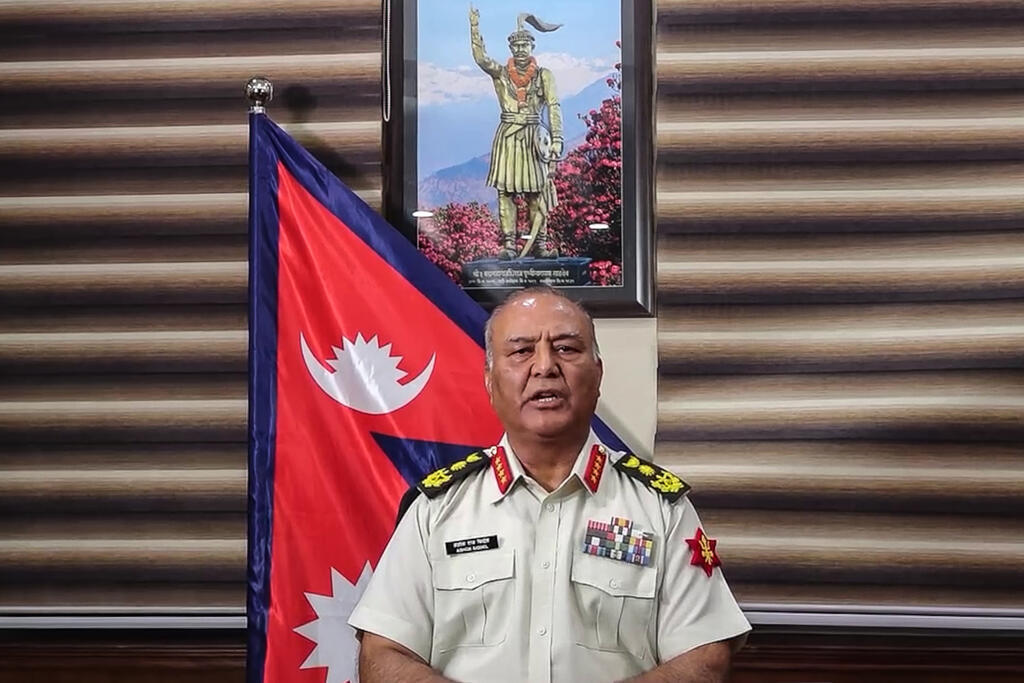
The military took back control of the streets on Wednesday, enforcing a curfew, as army chief General Ashok Raj Sigdel and President Ramchandra Paudel held talks with key figures and representatives from "Gen Z", the loose umbrella title of the youth protest movement.
'Solution being sought'
Disagreements between rival factions remain, although Sushila Karki, 73, Nepal's first woman chief justice, is a leading candidate.
"A meeting has been scheduled for this afternoon with the president, the army chief, former chief justice Sushila Karki, our representative Sudan Gurung and one legal expert," Nimesh Shrestha, who was part of the Gen Z protest, told AFP.
The Himalayan nation of 30 million people was plunged into chaos this week after security forces tried to crush rallies by young anti-corruption protesters, culminating in widespread violence on Tuesday.
At least 51 people were killed in the worst violence since the end of a Maoist civil war and abolition of the monarchy in 2008.
The military took back control of the streets on Wednesday, enforcing a curfew, as army chief General Ashok Raj Sigdel and President Ramchandra Paudel held talks with key figures and representatives from "Gen Z", the loose umbrella title of the youth protest movement.
'Solution being sought'
Disagreements between rival factions remain, although Sushila Karki, 73, Nepal's first woman chief justice, is a leading candidate.
"A meeting has been scheduled for this afternoon with the president, the army chief, former chief justice Sushila Karki, our representative Sudan Gurung and one legal expert," Nimesh Shrestha, who was part of the Gen Z protest, told AFP.
Nepal's army Chief General Ashok Raj Sigdel addressed the nation following unrest that toppled the govermnment and left parliament in flames © Nepali Army Facebook / AFP
Karki has told AFP that "experts need to come together to figure out the way forward", and that "the parliament still stands".
Gurung, the youth activist, told reporters on Thursday that their "first demand is the dissolution of parliament".
Paudel issued a statement to the nation on Thursday saying that "a solution to the problem is being sought, as soon as possible".
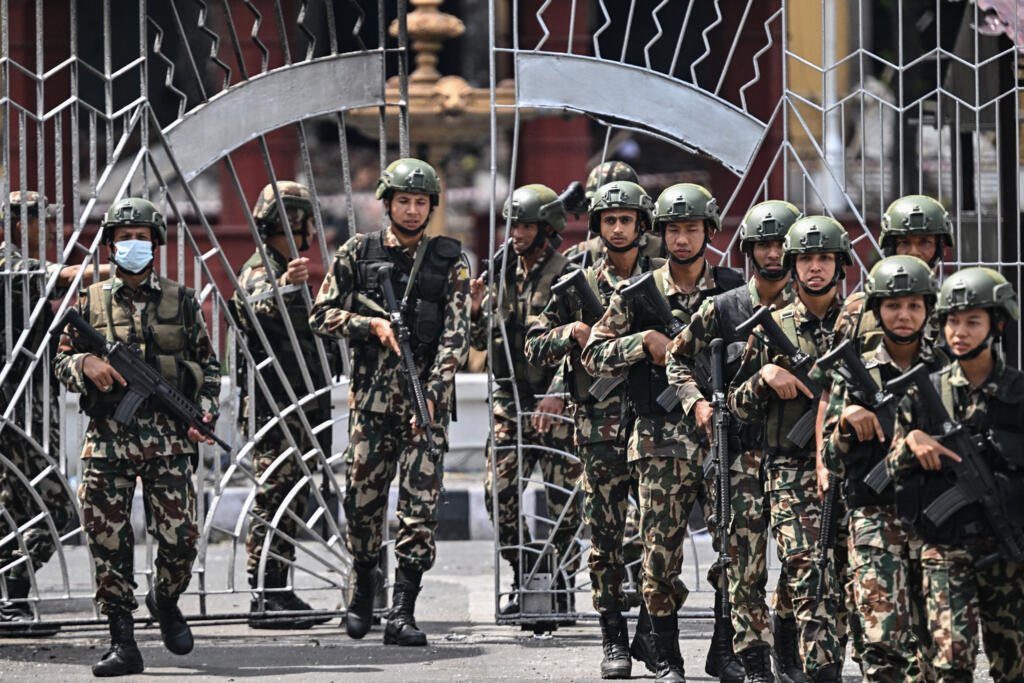
The army patrolled the largely quiet streets of the capital Kathmandu for a third day on Friday, after the protests and nationwide chaos that included a mass breakout of prisoners.
"I was very afraid and stayed locked inside my home with family and didn't leave," said Naveen Kumar Das, a painter-decorator in his mid-40s.
He was among many ordinary residents of Kathmandu who took advantage of a brief lifting of the curfew in the morning to stock up on supplies.
Food stores, tea stalls and pharmacies bustled with customers after people spent days inside.
"It was a really tense time and we just stayed indoors," said Laxmi Thapa, 32, on a motorbike as her husband filled its fuel tank.
"We came out as things have improved."
Karki has told AFP that "experts need to come together to figure out the way forward", and that "the parliament still stands".
Gurung, the youth activist, told reporters on Thursday that their "first demand is the dissolution of parliament".
Paudel issued a statement to the nation on Thursday saying that "a solution to the problem is being sought, as soon as possible".
The army patrolled the largely quiet streets of the capital Kathmandu for a third day on Friday, after the protests and nationwide chaos that included a mass breakout of prisoners.
"I was very afraid and stayed locked inside my home with family and didn't leave," said Naveen Kumar Das, a painter-decorator in his mid-40s.
He was among many ordinary residents of Kathmandu who took advantage of a brief lifting of the curfew in the morning to stock up on supplies.
Food stores, tea stalls and pharmacies bustled with customers after people spent days inside.
"It was a really tense time and we just stayed indoors," said Laxmi Thapa, 32, on a motorbike as her husband filled its fuel tank.
"We came out as things have improved."
'Make a better Nepal'
At least 21 protesters were among those killed, mainly on Monday during a police crackdown on demonstrations against corruption and poor governance that was sparked by a ban on social media.
Nepal's president and army chief seek to find a consensus interim leader after deadly anti-corruption protests toppled the government in the worst violence in the Himalayan nation in decades © Pedro Pardo / AFP
Protesters set parliament, major government buildings and a Hilton Hotel on fire on Tuesday, 73-year-old KP Sharma Oli resigned as prime minister, and the army then took charge of the streets.
Nepal's army said on Friday that it had recovered more than 100 guns looted in the uprising, during which protesters were seen brandishing automatic rifles.
More than 12,500 prisoners who escaped from jails across the country during the chaos "are still at large", police spokesman Binod Ghimire told AFP.
Protests fed into longstanding economic woes in Nepal, where more than two-fifths of people are aged between 16 and 40.
Discussions are still heated among Gen Z ranks as they seek a radical political transition.
James Karki, 24, who was among the protesters, said he was hopeful for change.
"We started this movement so we could make a better Nepal," he said. "And I am positive that the army will listen."
© 2025 AFP
Protesters set parliament, major government buildings and a Hilton Hotel on fire on Tuesday, 73-year-old KP Sharma Oli resigned as prime minister, and the army then took charge of the streets.
Nepal's army said on Friday that it had recovered more than 100 guns looted in the uprising, during which protesters were seen brandishing automatic rifles.
More than 12,500 prisoners who escaped from jails across the country during the chaos "are still at large", police spokesman Binod Ghimire told AFP.
Protests fed into longstanding economic woes in Nepal, where more than two-fifths of people are aged between 16 and 40.
Discussions are still heated among Gen Z ranks as they seek a radical political transition.
James Karki, 24, who was among the protesters, said he was hopeful for change.
"We started this movement so we could make a better Nepal," he said. "And I am positive that the army will listen."
© 2025 AFP
the government “seriously underestimated the power of social media”
ByAFP
September 12, 2025

A soldier uses a mobile phone during a curfew imposed to restore law and order in Kathmandu on September 12, 2025. From sparking protests to giving young people a platform to discuss their country's political future, social media was key to Nepal's uprising this week - Copyright AFP Pedro Pardo
From sparking protests that toppled the prime minister to giving young people a platform to discuss their country’s political future, social media was key to Nepal’s extraordinary uprising this week.
Fuelled in part by anger over flashy lifestyles flaunted by elites, young anti-corruption demonstrators mainly in their 20s rallied on Monday.
The loose grouping, largely viewed as members of “Gen Z”, flooded the capital Kathmandu to demand an end to a ban on Facebook, YouTube and other popular sites.
The rallies ended in chaos and tragedy, with at least 19 protesters killed in a police crackdown on Monday. The apps were restored, but protests widened in anger.
On Tuesday, other Nepalis joined the crowds. Parliament was set ablaze, KP Sharma Oli resigned as prime minister, and the army took charge of the streets.
Now, many activists are taking to the US group-chat app Discord to talk over their next steps.
One server with more than 145,000 members has hosted feverish debate about who could be an interim leader, with many pushing 73-year-old former chief justice Sushila Karki.
It is just one example of how social media has driven demands for change.
– ‘Fuelled the fire’ –
More than half of Nepal’s 30 million people are online, according to the World Bank.
Days before the protests, many had rushed to VPN services — or virtual private networks — to evade blocks on platforms.
Fears of a wider internet shutdown also drove a surge in downloads for Bluetooth messaging app Bitchat, created by tech billionaire Jack Dorsey.
“Tech played… an almost decisive role,” journalist Pranaya Rana told AFP.
“The whole thing started with young people posting on social media about corruption, and the lavish lives that the children of political leaders were leading.”
Hashtags such as #NepoKids, short for nepotism, compared the designer clothing and luxury holidays shown off in their Instagram posts to the difficulties faced by ordinary Nepalis.
One post liked 13,000 times accused politicians’ children of “living like millionaires”, asking: “Where is the tax money going?”
“NepoKids was trending all the time,” including in rural areas where Facebook is popular, said rights activist Sanjib Chaudhary.
“This fuelled the fire” of anger that “has been growing for a long time”, he said.
– ‘Seriously underestimated’ –
Deep dissatisfaction lies behind the social unrest in the Himalayan nation, among young people exasperated with slow economic development and political instability.
The government’s social media ban “wasn’t trying to suppress” the NepoKids trend, but the timing meant people “saw it as an attack on their freedom of speech”, Rana said.
A week ago, Nepal said it would block access to 26 social media platforms, from Facebook to X and LinkedIn, for failing to meet a deadline to register in the country.
Those that had registered, including TikTok and Viber, remained online.
Nepal has restricted access to online platforms in the past, including Telegram in July.
Last year, the government lifted a nine-month ban on TikTok after it agreed to comply with Nepali regulations.
The government wanted companies to give them the power to “prohibit broad categories of speech such as ‘misinformation’ or content deemed to disrupt ‘social harmony'”, Felicia Anthonio from the US digital rights group Access Now told AFP.
Swiss-based company Proton VPN said Monday that sign-ups from Nepal had shot up 6,000 percent in three days.
Interest rose in Dorsey’s Bitchat platform, which works offline and describes itself as way to resist censorship.
“There when you need it,” wrote Dorsey on X, citing a post describing a “sudden spike” in Bitchat downloads during the protests in Indonesia and Nepal.
Chaudhary said the government “seriously underestimated the power of social media”.

No comments:
Post a Comment