UN General Assembly to vote on a Hamas-free Palestinian state
By AFP
September 12, 2025

Formally called the New York Declaration on the Peaceful Settlement of the Question of Palestine and the Implementation of the Two-State Solution, the text states "Hamas must free all hostages" and that the UN General Assembly condemns "the attacks committed by Hamas against civilians on the 7th of October - Copyright AFP
Amélie BOTTOLLIER-DEPOIS
The UN General Assembly will vote on Friday whether to back the “New York Declaration,” a resolution which seeks to breathe new life into the two-state solution between Israel and Palestine — without the involvement of Hamas.
Although Israel has criticized UN bodies for nearly two years over their failure to condemn Hamas’s attack on October 7, 2023, the declaration, presented by France and Saudi Arabia, leaves no ambiguity.
Formally called the New York Declaration on the Peaceful Settlement of the Question of Palestine and the Implementation of the Two-State Solution, the text states “Hamas must free all hostages” and that the UN General Assembly condemns “the attacks committed by Hamas against civilians on the 7th of October.”
It also calls for “collective action to end the war in Gaza, to achieve a just, peaceful and lasting settlement of the Israeli-Palestinian conflict based on the effective implementation of the Two-State solution.”
The declaration, which was already endorsed by the Arab League and co-signed in July by 17 UN member states, including several Arab countries, also goes further than condemning Hamas, seeking to fully excise them from leadership in Gaza.
“In the context of ending the war in Gaza, Hamas must end its rule in Gaza and hand over its weapons to the Palestinian Authority, with international engagement and support, in line with the objective of a sovereign and independent Palestinian State,” the declaration states.
The vote precedes an upcoming UN summit co-chaired by Riyadh and Paris on September 22 in New York, in which French President Emmanuel Macron has promised to formally recognize the Palestinian state.
– ‘Shield’ against criticism –
“The fact that the General Assembly is finally backing a text that condemns Hamas directly is significant,” even if “Israelis will say it is far too little, far too late,” Richard Gowan, UN Director at the International Crisis Group, told AFP.
“Now at least states supporting the Palestinians can rebuff Israeli accusations that they implicitly condone Hamas,” he said, adding that it “offers a shield against Israeli criticism.”
In addition to Macron, several other leaders have announced their intent to formally recognize the Palestinian state during the UN summit.
The gestures are seen as a means of increasing pressure on Israel to end the war in Gaza, which was triggered by the October 7, 2023 attacks by Hamas.
The New York Declaration includes discussion of a “deployment of a temporary international stabilization mission” to the battered region under the mandate of the UN Security Council, aiming to support the Palestinian civilian population and facilitate security responsibilities to the Palestinian Authority.
Around three-quarters of the 193 UN member states recognize the Palestinian state proclaimed in 1988 by the exiled Palestinian leadership.
However, after two years of war have ravaged the Gaza Strip, in addition to expanded Israeli settlements in the West Bank and the stated desire by Israeli officials to annex the territory, fears have been growing that the existence of an independent Palestinian state will soon become impossible.
“We are going to fulfill our promise that there will be no Palestinian state,” Israeli Prime Minister Benjamin Netanyahu vowed Thursday.
Palestinian President Mahmoud Abbas, meanwhile, may be prevented from visiting New York for the UN summit after US authorities said they would deny him a visa.
Israel has ‘gone beyond any borders’ with Doha strike, Qatar PM warns UN
Israel’s leaders “do not care” about hostages in Gaza after striking Hamas officials in Doha this week, Qatar’s prime minister told the UN on Thursday. Sheikh Mohammed bin Abdulrahman Al Thani said Israel had “gone beyond any borders” as world powers condemned Tuesday’s deadly attack on the US ally.
Issued on: 12/09/2025 -
By: FRANCE 24
Video by: Jessica LE MASURIER
01:31
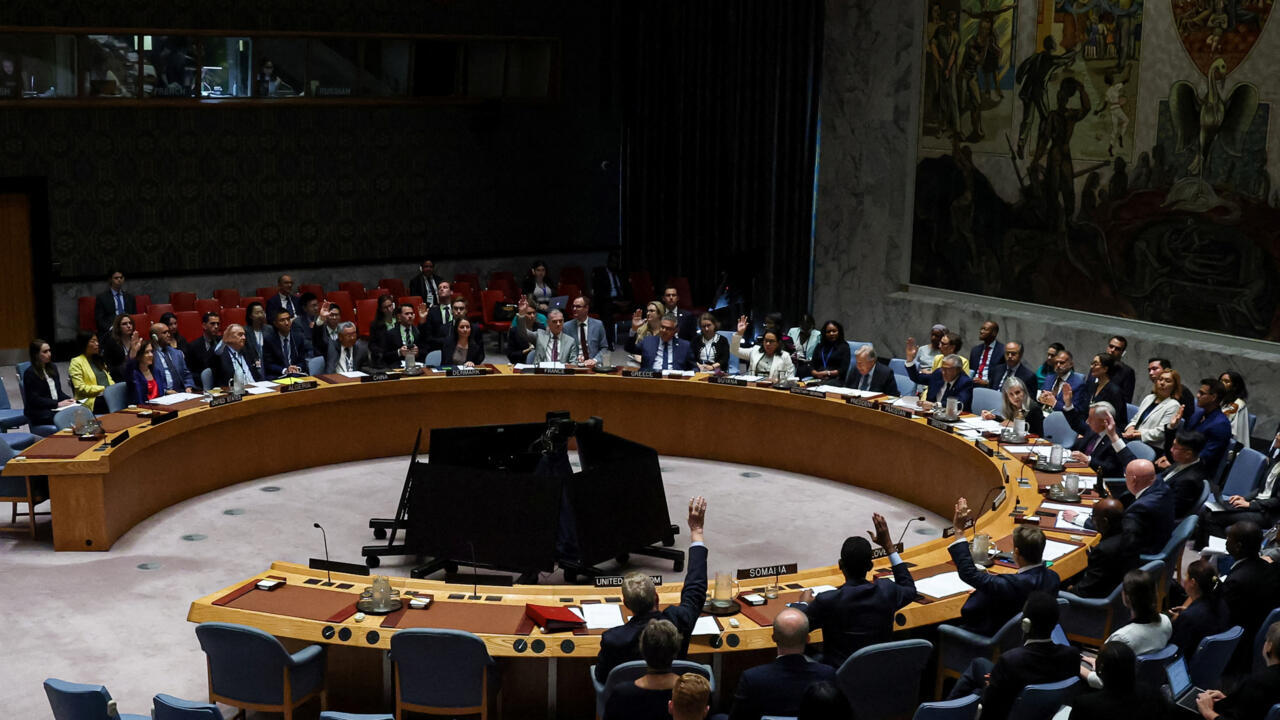
Israel's leaders showed they “do not care” about the hostages held in the Gaza Strip after its attack this week on Hamas leaders in Doha, Qatar’s prime minister told the United Nations on Thursday, as global powers united to condemn the strike.
With Tuesday’s deadly attack on the US ally, Israel has “gone beyond any borders, any limitations", Sheikh Mohammed bin Abdulrahman Al Thani said at an emergency meeting of the UN Security Council.
The strike killed at least six people as Hamas leaders gathered in Doha to consider a US proposal for a ceasefire in Gaza, risking upending negotiations that have been mediated by Qatar and Egypt and intensifying Israel's growing global isolation.
“Extremists that rule Israel today do not care about the hostages – otherwise, how do we justify the timing of this attack?” Sheikh Mohammed said. Earlier, he told CNN that Israeli Prime Minister Benjamin Netanyahu was directly to blame for killing “any hope for those hostages.”
In response, Israel’s Ambassador to the UN Danny Danon said that “history will not be kind to accomplices".
“Either Qatar condemns Hamas, expels Hamas, and brings Hamas to justice. Or Israel will,” Danon said.
Read more Has Qatar suspended its mediation efforts in the Gaza conflict?
Before Sheikh Mohammed spoke before the 15-member council, every country – except for the US – laid the blame for the attack and larger regional conflicts on Israel and echoed doubts about the country's seriousness in securing the return of its hostages.
“It is evident that Israel, the occupying power, is bent on doing everything to undermine and blow up every possibility of peace,” Pakistani Ambassador Asim Iftikhar Ahmad said. “It also raises serious questions whether the return of hostages was indeed a priority.”
Acting US Ambassador Dorothy Shea said “it is inappropriate for any member to use this to question Israel’s commitment to bringing their hostages home".
At the start of the session, Rosemary DiCarlo, the UN's political chief, said Israel's attack “shocked the world” and “potentially opens a new and perilous chapter” in the war in Gaza.
“It was an alarming escalation, especially since it targeted individuals who were reportedly gathered to discuss the latest US proposal for a ceasefire and hostage release deal in Gaza,” she said.
In addition to the UN visit, Qatar also said it was organising an Arab-Islamic summit next week in Doha to discuss the attack.
The Security Council earlier issued a joint statement expressing “deep concern” without mentioning Israel by name and emphasizing “de-escalation.” Approved by the 15-member council, including the US, the statement also conveyed its solidarity with Qatar and the “vital role” it’s played in mediating peace efforts in recent years.
President Donald Trump has walked a delicate line between two major allies following the Israeli attack, saying the unilateral action “did not advance Israel or America’s goals". He has said he's “not thrilled about it” but also suggested that “this unfortunate incident could serve as an opportunity for peace".
Qatar has hosted Hamas's political leadership for years in Doha, in part over a request by the US to encourage negotiations to end the war that started with Hamas’ attack on Israel nearly two years ago.
During the Security Council session, Shea repeated Trump's sentiments and defended Israel's decision to target Hamas leaders.
“Eliminating Hamas, which has profited off of the misery of those living in Gaza, is a worthy goal,” she said.
Hamas spokesperson Fawzy Barhoum said Israel’s attack constituted a “derailment of negotiations efforts” and showed that Netanyahu and his backers “refuse to reach a deal".
Hamas says its senior leaders survived the Doha strike but that five lower-level members were killed. The militant group, which has sometimes only confirmed the assassination of its leaders months later, offered no immediate proof that senior figures had survived.
Funerals for the five Hamas members and a Qatari security officer who were killed in the attack were held on Thursday. Qatar’s ruling emir, Sheikh Tamim bin Hamad Al Thani, attended the service.
The United Arab Emirates said Thursday that more “provocative and hostile rhetoric” from Israel undermines stability and “pushes the region towards extremely dangerous trajectories.”
The UAE's Foreign Ministry said an aggression against any of the six member states of the Gulf Cooperation Council – which includes Qatar – “constitutes an attack on the collective Gulf security framework".
The country, which also blocked Israeli firms from participating in the Dubai Air Show in November, was part of the 2020 Abraham Accords, in which it and three other Arab nations forged ties with Israel.
Meanwhile, thousands of Palestinians continued to flee Gaza City ahead of Israel’s impending offensive there. The numbers have grown in recent days, though many have refused to leave, saying they no longer have the strength or money to relocate.
The operation is aimed at taking over the largest Palestinian city, already devastated from earlier raids and experiencing famine. The offensive, in its early stages, has deepened Israel’s already unprecedented global isolation, which intensified further this week following the strike on Qatar.
Israel has denied there is starvation in Gaza, even after experts last month announced a famine in Gaza City. It says it has allowed enough humanitarian aid in and accuses Hamas of diverting it. UN agencies deny there is any systematic diversion and say Israel’s restrictions and ongoing offensive make it difficult to deliver desperately needed food.
(FRANCE 24 with AP)
'There will be no Palestinian state,' Israel's PM says as he signs West Bank settlement plan
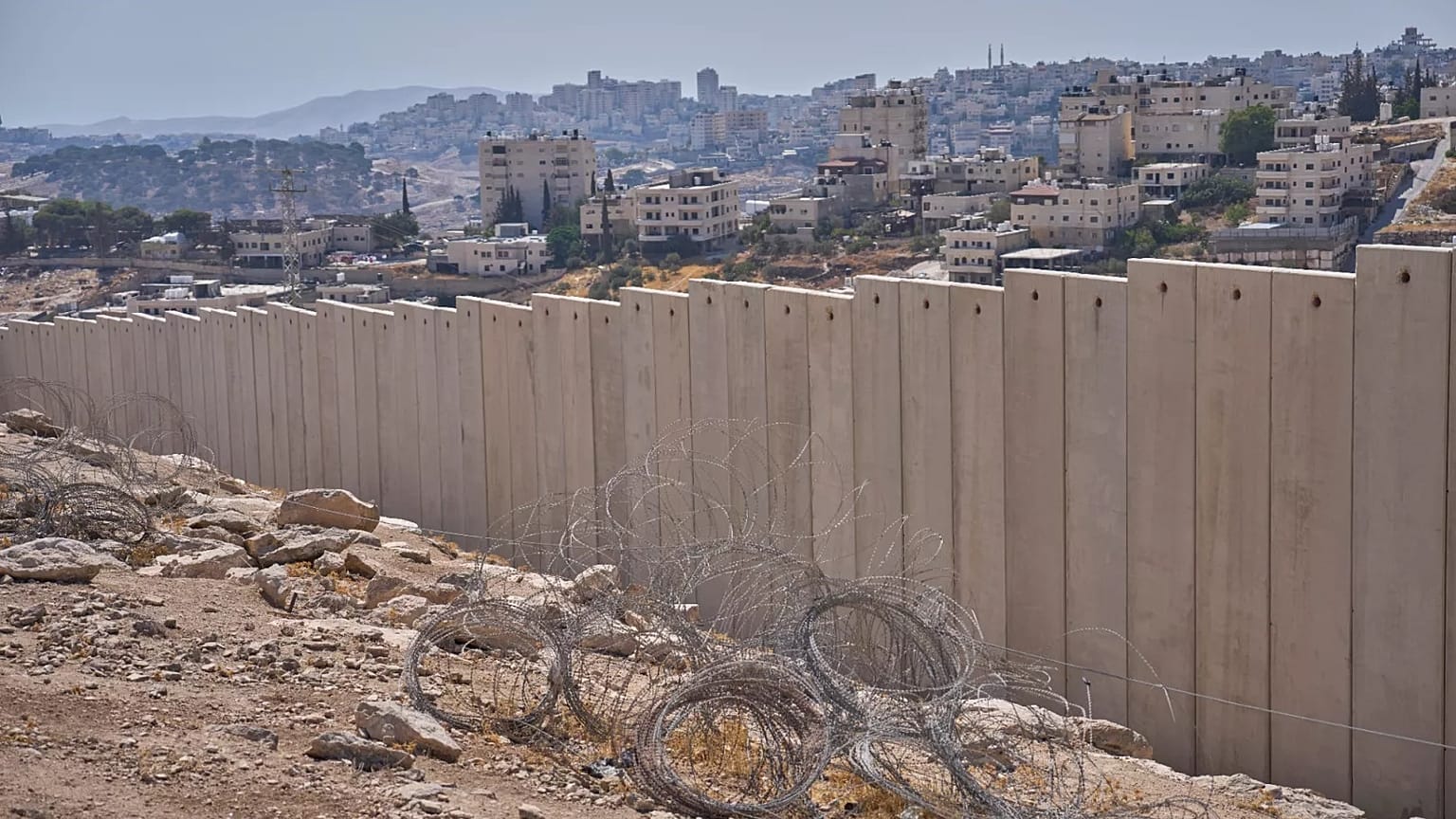
The plan, on an open tract of land east of Jerusalem, has been under consideration for more than two decades but was frozen due to US pressure during previous administrations.
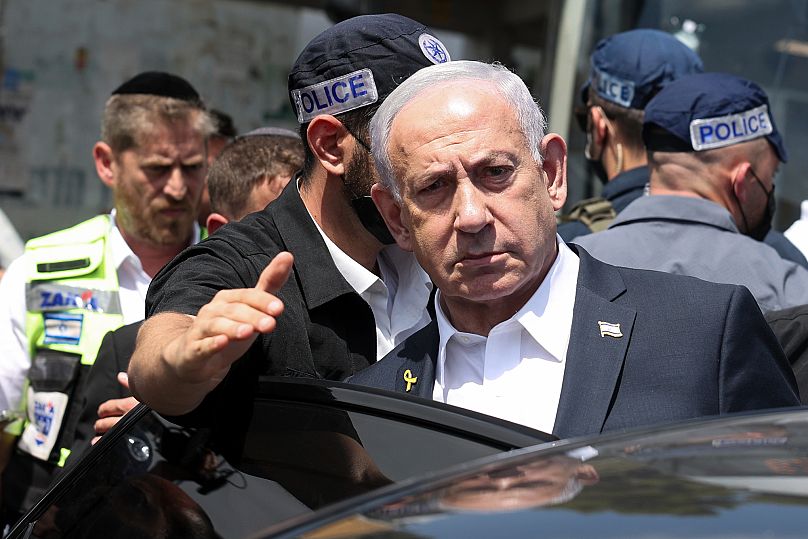
Israel's Prime Minister Benjamin Netanyahu has signed an agreement to push ahead with a controversial settlement expansion plan that will cut across land that the Palestinians hope would form the basis of a future state.
"There will not be a Palestinian state," Netanyahu said during a visit to the Maale Adumim settlement in the West Bank on Thursday.
"This place belongs to us...We will safeguard our heritage, our land and our security. We are going to double the city’s population."
Israel's Higher Planning Committee gave final approval for the E1 settlement project in the occupied West Bank in August.
The plan, on an open tract of land east of Jerusalem, has been under consideration for more than two decades but was frozen due to US pressure during previous administrations.
The Israeli occupation of Palestinian territories is illegal under international law. Last year, the International Court of Justice declared in a landmark ruling that Israel should end settlement activity in the West Bank and East Jerusalem and end its occupation of those areas, as well as Gaza, as soon as possible.
Far-right Finance Minister Bezalel Smotrich, a former settler leader, cast the approval as a rebuke to Western countries that announced their plans to recognise a Palestinian state in recent weeks.
"The Palestinian state is being erased from the table not with slogans but with actions," he said.
"Every settlement, every neighbourhood, every housing unit is another nail in the coffin of this dangerous idea."
Several countries, including the UK and the Netherlands, have in recent weeks moved to sanction Smotrich, as well as National Security Minister Itamar Ben-Gvir for inciting settler violence against Palestinians and calling for the ethnic cleansing of Gaza.
In a post on X, British Foreign Secretary David Lammy condemned the approval of the E1 project, calling it "a flagrant breach of international law".
Germany's Foreign Ministry spokesperson Josef Hinterseher also condemned the move during a news conference.
"The position of the federal government is clear: we strongly reject this approval. The settlement construction violates international law and relevant UN Security Council resolutions," he said.
The location of E1 is significant because it is one of the last geographical links between the major West Bank cities of Ramallah, in the north, and Bethlehem, in the south.
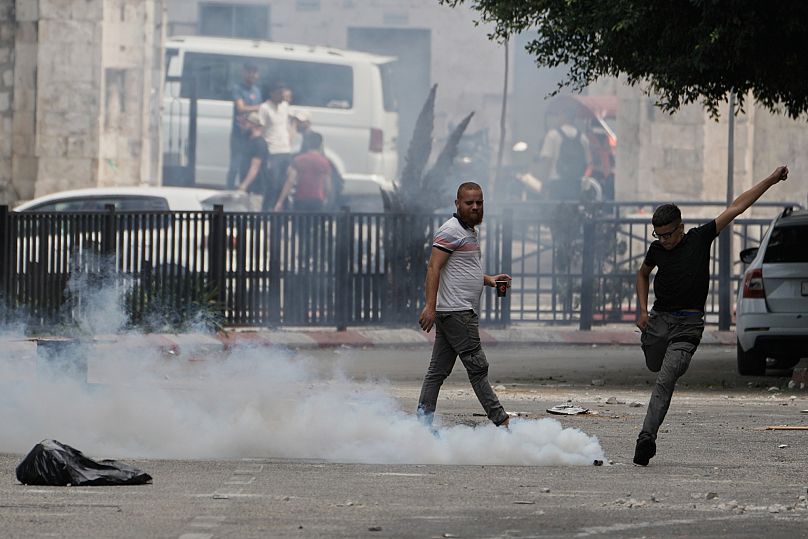
The two cities are 22 kilometres apart, but Palestinians traveling between them must take a wide detour and pass through multiple Israeli checkpoints, spending hours on the journey.
The hope was that, in an eventual Palestinian state, the region would serve as a direct link between the cities.
Israel’s expansion of settlements is part of an increasingly dire reality for Palestinians in the occupied West Bank as the world’s attention focuses on the war in Gaza.
There have been marked increases in attacks by settlers on Palestinians, evictions from Palestinian towns, Israeli military operations, and checkpoints that choke freedom of movement.

European Parliament calls for recognition of State of Palestine
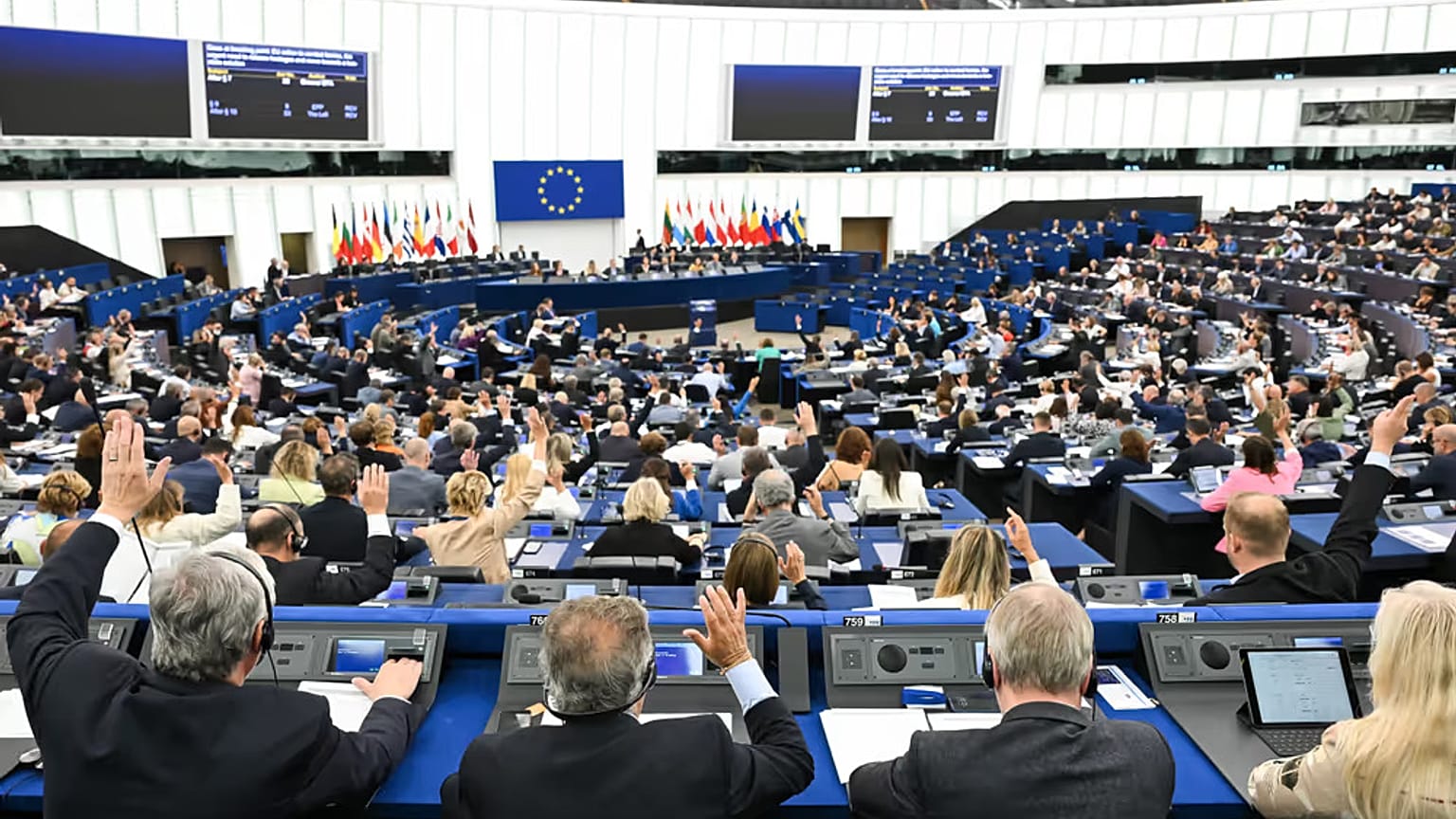
The EU assembly voted in favour of a non-binding resolution, agreed by the centrist majority’s groups.
The European Parliament approved on Thursday a resolution calling on EU member states to “consider recognising the State of Palestine, with a view to achieving the two state solution”.
While the Parliament has supported the “in principle recognition of Palestinian statehood” in the past, this new resolution seems to be a more direct call on national governments to act. The resolution calls on all EU institutions and member states to take diplomatic steps to ensure commitment to a two-state solution.
The resolution was approved with 305 votes in favour, 151 against and 122 abstentions. According to Italian Socialist MEP Nicola Zingaretti, the result was the outcome of thorough negotiations among the political groups on various amendments.
The vote was long and tense, and members of the Parliament even asked for a pause to check the amendment votes on Gaza before proceeding to the final vote on the resolution as a whole.
Another contentious point in the resolution was the use of the term “genocide” to describe Israel’s attacks on Gaza. The wording “genocidal actions” was eventually rejected and excluded from the text.
MEPs have also demanded an immediate and permanent ceasefire, as well as the unconditional release of all Israeli hostages held in Gaza. The resolution recognises Israel’s security and right to self-defence, but stresses that it cannot justify indiscriminate military action in Gaza, and expresses concern over the continuous military operations in the strip.
How many EU countries recognize Palestine?
The 27 member states of the European Union are split over the recognition of a Palestinian state.
Some recognised Palestine in 1988, before they became EU member states: Bulgaria, Cyprus, Hungary, Poland, and Romania.
The former Czechoslovakia also recognised Palestinian statehood in 1988, but when it split in 1992, the Czech Republic did not recognise such a state, while Slovakia did.
In October 2014, Sweden became the first country to recognise Palestine as an EU member state, followed by Spain, Ireland, and Slovenia in 2024.
Other EU countries will follow soon: France, Belgium, Luxembourg, and Malta have already announced their plan to recognise Palestine as a state.
At the 1999 European Council in Berlin, national leaders declared themselves ready to “recognise a Palestinian state in due course”, recognising the "unqualified Palestinian right to self-determination, including the option of a state".

No comments:
Post a Comment