September 25, 2025
By Fernando Carvajal
EURASIA NEWS
As the devastating civil war in Sudan enters its third year, recent events once again raise concerns over the deteriorating conditions and crimes against civilians. The attack on the Pentecostal church in the El-Haj Yousif area of Khartoum on 8 July yet again reinforced the threats made by extremists against Sudanese minority religious groups. Christian Minority groups are increasingly “caught in the crossfire” within a harsher environment.
Sudan’s Christian population is estimated around 5.4 percent of its total population of about 50 million, composed of “Copts and Catholics [in] the majority [and] Protestants…a considerable minority.” The U.S. Commission on International Religious Freedom (CIRF) reported “in April 2024 that more than 150 churches have been damaged since the war began in 2023.” ACT Alliance and Caritas Internationalis have highlighted how “an already fragile situation, spiraling into a severe humanitarian crisis” is exacerbated by indiscriminate targeting of minority groups like Christians. Open Doors’ World Watch List ranks Sudan as the world’s fifth country for persecutions of Christians.
Civilian hopes for reform and emergence of civilian and democratically-based government continue to collapse as the Sudanese Armed Forces (SAF), led by Gen. Abdel Fattah al-Burhan, revert to the Al Bashir era of empowering Islamic extremism. The integration of religious radicals affiliated with Muslim Brotherhood factions within the National Congress Party (NCP) and emerging jihadist factions goes beyond infantry units fighting against rival Rapid Support Forces (RSF). Islamists are present within both police and security forces. According to witness reports following the attack on the Pentecostal Church (built in 1990) in East Nile, Khartoum on 8 July, “vehicles belonging to police and Sudanese Armed Forces… were clearly marked and their presence allowed the perpetrators to act with impunity.” Khartoum-based Christian clerics warn of deteriorating conditions forcing Christians to turn to secret gatherings for worship and suppressive persecution that has prevented rebuilding of churches and related buildings since start of the civil war in 2023.
Military and Islamist alliance
The civil war has undoubtedly attenuated and dissolved Sudan’s constitutional order. Christian leaders in Khartoum have specifically highlighted the lack of constitutional protections afforded prior to the start of the civil war amid restrictions subsequently imposed by SAF soldiers since the re-capture of Khartoum in March, reversing the progress in religious freedom achieved since Al Bashir was deposed. The persecution of Christians has escalated over the past year, from Nuba mountains to Khartoum and Shamaliya also known as the Northern State which borders Egypt and Libya.
Attacks on Christian communities seem particularly increasing across areas held by SAF or where in conflict with rivals like Harakat Al-Sha’abia Li-Tahrir Al-Sudan-Al-Shamal (SPLM-N) is escalating. Soon after the war began, SAF “bombed and partially destroyed the Evangelical Church in Bahri, north of Khartoum” and a Presbyterian Evangelical Church in Gerief in April 2023. In December 2024, an airstrike by SAF on a church in Khartoum killed 11 persons as government forces took over Wad Madani, the capital of Sudan’s Gezira State. Across the Nuba Mountains, an area in southern Sudan contested by SAF and SPLM-N, civilians reported attackers “raping girls and taking boys to go and train them [as fighters],” In Shamaliya, another area now under SAF control, “mobs of extremists have also started harassing Christians,” according to witness reports. The blatant attacks on Christians coincide with a more prominent role played by “self-described ‘jihadi’” groups allied with SAF in pursuit of rival forces.
These ‘shadow brigades’ have “gained attention through its active role in battles” against their rivals. Most notably among these Islamist militia is Al Baraa Ibn Malik Brigade, led by Al-Misbah Abu Zaid Talha, Anas Omar, and Hudhayfah Istanbul among others. These field commanders are integrated within SAF, with personalities like Anas Omar are other “prominent figure(s) within the dissolved National Congress Party (NCP)” affiliated with the Muslim Brotherhood. Other elements include the “Sudan Shield Forces (SSF) in El Butana in eastern Sudan’s El Gedaref,” between Khartoum and Ethiopia, a group of Islamists that rejects UN-led peace efforts like the Juba Peace Agreement and aims to advance the interests of the Army-Islamist Movement alliance.
This nexus between SAF and Islamist militia not only marks “the return of Islamists from the Bashir era and the emboldening of extremist non-state actors amid growing impunity” that threaten minorities, but also a threat against international organizations and an obstacle to the peace process. The Al Bara’ ibn Malik Brigade allegedly attacked an ICRC convoy in 2023. Two people were killed, and seven were injured, including three ICRC staff members.” The Brigade is estimated at “20,000 strong and equipped with sophisticated weaponry” as the US accuses SAF and allies of using chemical weapons.
Both ACT Alliance and Caritas Internationalis have warned that as the crisis is ‘exacerbated by drastic global aid cuts,” prospects for peace seem farther away and harder to achieve. Such aid organizations “echo the Sudan and South Sudan Catholic Bishops’ Conference statement in calling for the primacy of human life, restraint and dialogue for peace,” pleading with rival factions to join peace talks and not repeat boycott of the Geneva, London and Addis Abba attempts to de-escalate conflict and violence against civilians.
Fernando Carvajal served on the UN Security Council Panel of Experts on Yemen from April 2017 to March 2019 as a regions and armed groups expert. He has nearly 20 years of experience conducting fieldwork in Yemen and is a specialist in Yemeni politics and tribal relations.
USCIRF Report Warns Of Deteriorating Religious Freedom In Uzbekistan
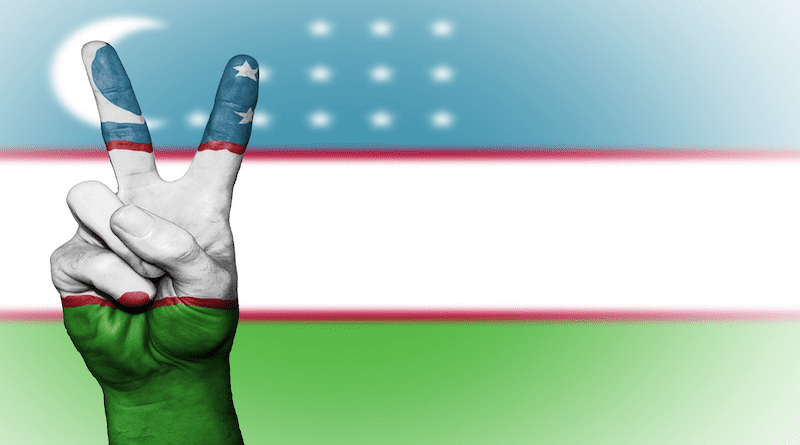
The U.S. Commission on International Religious Freedom (USCIRF) has issued a new report warning that religious freedom conditions in Uzbekistan further deteriorated in 2024, with the government continuing to impose restrictive laws, penalties, and censorship on religious communities.
USCIRF, an independent and bipartisan agency established by the U.S. Congress, monitors religious freedom abroad and makes policy recommendations to the U.S. President, Secretary of State, and Congress. Its latest issue update, “Uzbekistan’s Administrative Penalties for Peaceful Religious Activity,” describes how Uzbek authorities applied administrative penalties throughout 2024 to target religious groups and individuals engaged in peaceful practice. The commission said the Uzbek government relies on its 2021 Law on Freedom of Conscience and Religious Organizations, commonly known as the “religion law,” to enforce a system of controls over religious life.
The law builds on a 1998 statute and places strict bureaucratic barriers on religious communities. It bans missionary activity and proselytism, prohibits unregistered religious education, and requires state approval for religious materials. In 2024, Uzbekistan’s parliament, the Oliy Majlis, adopted additional legislation penalizing parents or guardians for allowing children to receive unauthorized religious education.
According to USCIRF, these measures reflect lingering Soviet-era policies designed to keep religion under state control. Prime Minister Abdulla Aripov in June ordered the demolition of more than 400 unregistered mosques and prayer spaces for conversion to commercial use, though no demolitions were reported. The commission cited the example of an unregistered mosque in Tashkent’s Yangiyul district, closed by the government in 2007. Despite repeated attempts by its congregation to register, officials refused and later threatened to convert the building into a business.
Other religious groups faced similar restrictions. In February 2024, the Tashkent Inter-District Administrative Court rejected a Jehovah’s Witnesses complaint against an official’s refusal to designate a building as its legal address, which is required for registration. The Tashkent Administrative Court Appeal Board upheld that decision in April. Protestant churches also continued to see registration attempts blocked, while their members reported harassment by the State Security Service. The report noted that officials in Karakalpakstan and Khorezm questioned unregistered church members and, in one case, accused a Protestant Christian of attending an “illegal extremist Wahhabi group” before pressuring him to report on his congregation.
The commission also described continued targeting of Muslims who sought to practice their faith independently of state structures. Authorities issued fines, arrests, and prison sentences in what they said were efforts to counter extremism. USCIRF documented more than 50 cases of Uzbeks imprisoned on vague charges linked to peaceful religious activity. Meanwhile, the quasi-independent Muslim Board of Uzbekistan played a central role in controlling clerics. In April 2024, the board ordered imams to hand in their passports, a move seen as a way to restrict their movement following a terrorist attack in Moscow carried out by Tajik nationals linked to the Islamic State. The following month, imams were instructed not to use social media or engage with other people’s content online.
The Committee on Religious Affairs also maintained a list of banned social media channels and warned citizens not to interact with online religious posts that had not received state theological approval. Officials said such interaction could result in severe consequences, including large fines. In June, President Shavkat Mirziyoyev reinforced the government’s stance, warning that “various forces in the world are trying to destroy the essence of religion and lead young people astray from the true path.”
In its 2025 Annual Report, USCIRF recommended that Uzbekistan be placed on the U.S. Department of State’s Special Watch List for systematic and ongoing violations of religious freedom. In September, the commission also held a hearing examining laws impacting religious freedom across Central Asia, including Uzbekistan.
The latest report calls for further action by the U.S. government. It urged the State Department to impose targeted sanctions on State Security Service officials who repeatedly arrest individuals for peaceful religious activity, including freezing assets and restricting visas under human rights authorities. It also recommended that religious freedom be included in all forthcoming C5+1 discussions between the United States and Central Asian governments. For Congress, the commission advised raising religious freedom concerns in bilateral meetings, delegation visits, and hearings, while suspending the Uzbek government’s annual “Uzbekistan Day” event on Capitol Hill until all individuals imprisoned for peaceful religious activity are released.
Uzbekistan is a majority Muslim country of around 36 million people. Between 88 and 96 percent of the population identify as Muslim, mostly Hanafi Sunni, with a small Shi’a minority. Russian Orthodox Christians account for about 2 percent. Other communities include atheists, Jews, Baha’is, Buddhists, Jehovah’s Witnesses, Roman Catholics, and Protestant Christians.
USCIRF concluded that religious freedom in Uzbekistan remains severely restricted and showed little improvement in 2024. “Religious freedom conditions in Uzbekistan further deteriorated in 2024,” the commission stated, pointing to restrictive laws, harassment of believers, censorship, and the imprisonment of dozens of individuals on religion-related charges.

No comments:
Post a Comment