Calling USTR Port Fees Protectionist, China Launches Reciprocal Port Fees
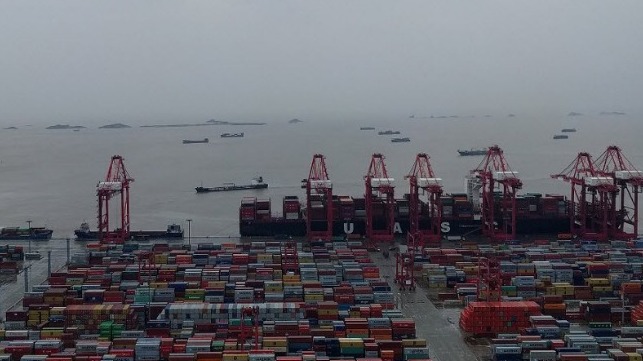
Days before the U.S. is scheduled to start collecting port fees for Chinese-owned, operated, or built ships, China’s Ministry of Transportation announced its own program of “special port fees” for U.S. vessels. An official said China will “resolutely take countermeasures… against these erroneous U.S. practices.”
The fees are largely symbolic based on the small size of the U.S. merchant marine, but they are another tit-for-tat in the battles between China and the United States. The port fees for ships start a month before the latest extension on tariffs is due to expire, and as the two sides continue to negotiate new trade agreements. The Trump administration has announced and then rolled back proposed steep tariffs on all Chinese imports into the U.S. as it seeks to apply pressure for a new trade deal.
The U.S. Trade Representative announced the planned port fees in April 2025 in response to its finding that the Chinese government is attempting to unfairly dominate global shipping. It found that China has taken a series of systematic steps to support its shipbuilding industry in becoming the global leader. China responded, saying that the U.S. was attempting to blame China for long-standing problems and a historic decline in U.S. shipbuilding.
China recently changed its maritime regulations, and today, October 10, a spokesperson for the Ministry of Transport said the U.S. practice “disregards facts,” and that the USTR program “fully exposes its unilateralist and protectionist nature. It is clearly discriminatory.”
Citing the fees that will be imposed by the United States, China said, “This seriously violates the relevant principles of international trade and the China-US Maritime Shipping Agreement, and causes serious damage to maritime trade between China and the United States.”
The response is a fee program starting the same day as the USTR’s port fees, October 14, levied on ships owned or operated by U.S. enterprises. It defines U.S. interest as 25 percent equity in the company. The fees also apply to all ships built in the United States or flying the U.S. flag.
The fees start at 400 RMB per net ton in 2025 and increase annually each April to RMB 1,120 per net ton in 2028. Based on current exchange rates, the fees would start at approximately $56 per ton and rise to $157 over the next three years. The U.S. program, by contrast, is $50 per net ton for Chinese-owned or operated vessels and the higher of $18 per net ton or $120 per container for vessels built in China operated by foreign companies.
China copied the structure of the U.S. program. Both are imposing the fee only at the first port of call and cap the fees at five trips per year. The U.S. has other exemptions, including for vessels arriving in ballast to load U.S. exports.
U.S. Customs and Border Protection announced at the end of last week that ship operators are responsible for determining which ships are subject to the fees. The USTR was expected to provide additional guidance with an FAQ on the program, but barring a last-minute delay, ships arriving in the U.S. ports as of October 14 need to begin paying the fees. Alphaliner has estimated the major container lines alone could include more than $3 billion in U.S. fees in 2026, although it appears far fewer ships will incur China’s “special port fee.”
USTR Proposes Further Changes to Port Fees for Car Carriers and Equipment
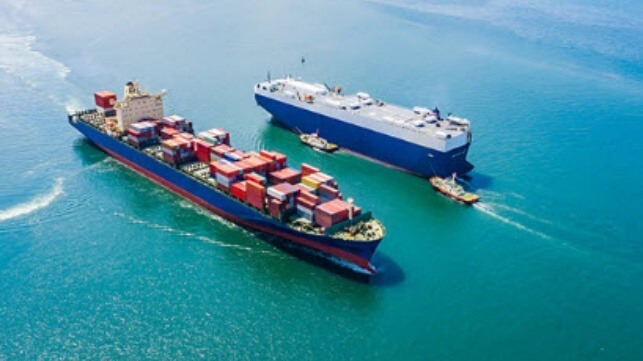
Four days before the USTR Section 301 fee program is due to launch for Chinese-owned, operated, or built ships, they are proposing further changes while also seeking to provide answers to some of the definition questions. The latest proposed modifications are in response to comments on the program, with the largest impact likely on the car carrier segment of the market, as well as port equipment.
The latest proposed modifications launch a new comment period for the program that will run through November 12. While the proposals are being reviewed, liquified gas carriers, LPG carriers, and the Ro-Ro segments would be permitted to defer fees through December 10. Other segments will proceed next Tuesday, October 14.
One of the areas that received comments was on how the fees should be set for car carriers. There has been a debate between a fee per unit carried versus net tonnage, and the USTR has decided to proceed with net tonnage. It, however, is proposing to raise the fee from $14 per net ton to $46 per net ton based on comments that the fee was too low to be effective in “obtaining the elimination of China’s acts, policies, and practices.”
The argument was that the Car Equivalent Unit measurement can be manipulated. Net tonnage is a set figure used by the U.S. Government. The fee applies to all foreign-built vehicle carriers, not just those from China. This has opened it up to further criticism that it is beyond the scope of the mandate, and that could become a future point to challenge the fees.
They are proposing an exemption for vessels in the Maritime Security Program to maintain the incentives for maximum use of the U.S. flag and to ensure the availability of such vessels. However, they are now proposing that the provision would expire on April 18, 2029, unless extended.
The provision that the USTR could suspend the licensing for LNG shipments if certain restrictions were not met would be removed from the program. The USTR acknowledges the need for U.S.-flagged vessels and the current lack, while saying it will continue to monitor progress in this area.
Cargo handling equipment, including cranes, however, would see further increases in their tariffs. An additional tariff of up to 150 percent on equipment such as rubber tire gantry cranes would be added. This continues the push to force the reshoring of the manufacturing of this equipment despite ports’ complaints that there currently are no options, and it would limit the ability to expand operations.
In addition to providing some additional definitions on segments of containerships and bulkers, the proposed changes add exemptions for certain ethane and liquified petroleum gas carriers, but they remove exemptions for Chinese-built “Lakers.” A provision for exemptions of vessels up to 10,000 dwt would also expire on April 18, 2029, unless renewed.
The proposed changes come as China also announced today, October 10, that it would introduce a reciprocal program next week for U.S.-owned or flagged vessels.
Lawyers will be continuing to review the latest proposed changes for additional details within the 32 memoranda. It is certain to spark further comments and complaints while extending some of the deadlines till mid-December.

No comments:
Post a Comment