French Prime Minister Sébastien Lecornu resigns just weeks after appointment
Following his resignation on Monday, Lecornu became the shortest-serving prime minister of France since 1958.
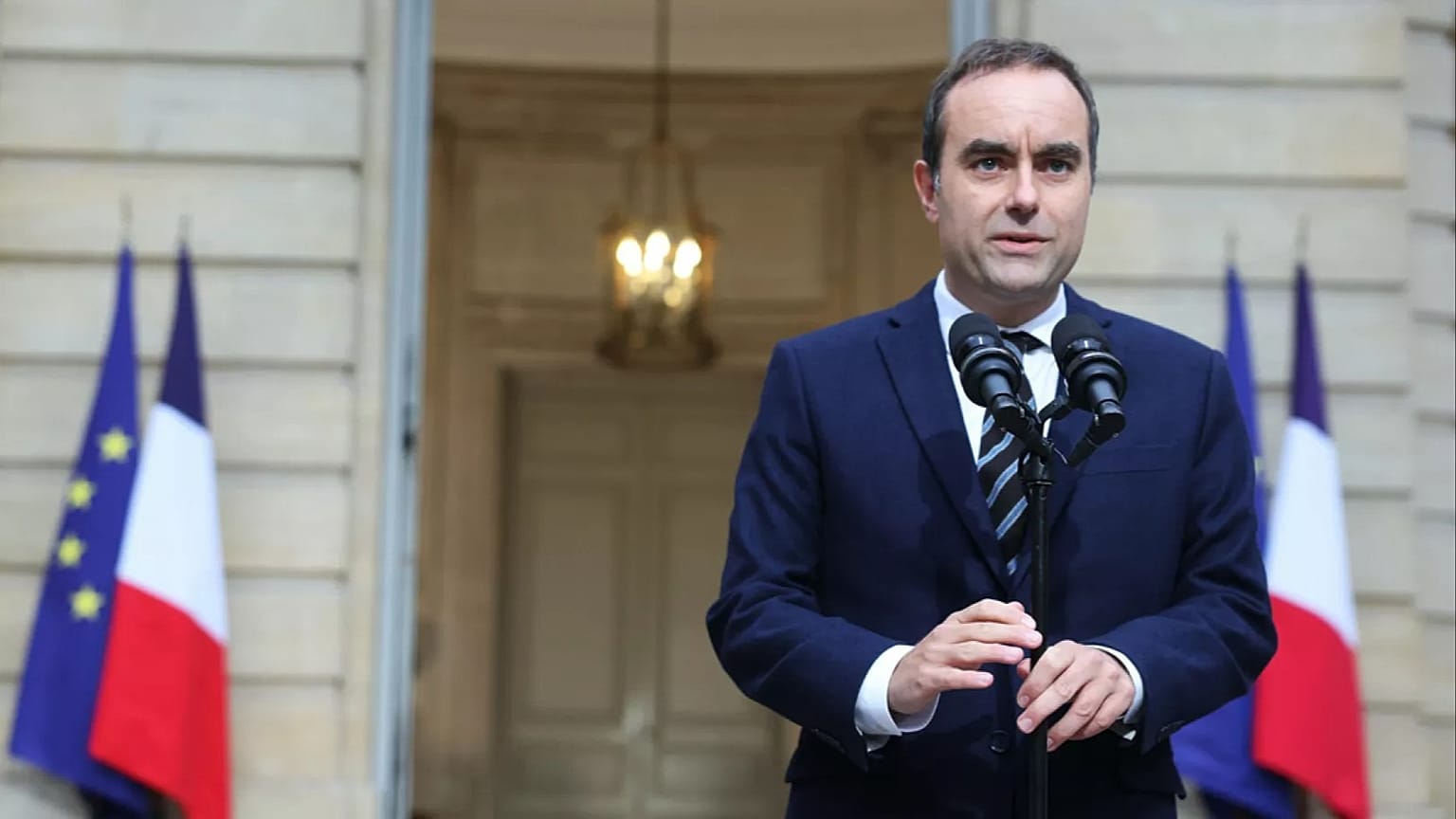
French Prime Minister Sébastien Lecornu resigned on Monday, just weeks after his appointment, signalling a renewed crisis in French politics.
French President Emmanuel Macron accepted his resignation on Monday morning, hours after Lecornu unveiled the first names of his government.
Lecornu, appointed on 9 September as the third prime minister since the snap parliamentary elections in June and July 2024, faced fierce criticism from his own camp and the opposition after unveiling his cabinet.
Following his resignation, he has become the shortest-serving head of government since 1958.
Lecornu was due to address the National Assembly on Tuesday to set out his government’s roadmap.
Instead, he delivered a morning address, explaining the reasons behind his resignation.
"The conditions were no longer in place for me to carry out my duties as Prime Minister," said Lecornu, insisting he had been “ready for compromise,” but lamented that the parties “have made believe not to see the progress.”
"One must always put one's country before one's party," Lecornu said, denouncing the "partisan appetites" that led to his resignation.
His departure has plunged France into a new political crisis, adding further pressure on Macron, who has now presided over three failed minority governments.
Lecornu had been tasked with the politically daunting job of steering a slimmed-down budget through parliament to curb France’s ballooning deficit.
France’s deficit stood at 5.8% of GDP in 2024, with debt at 113% — both far above EU rules that cap deficits at 3%.
After announcing the first prominent names in his cabinet, Lecornu immediately came under fire.
Critics denounced both its political direction and its lack of renewal: 12 of the 18 ministers had already served under predecessor François Bayrou before his ousting on 8 September.
Conservative Interior Minister Bruno Retailleau, himself just reconfirmed in office, said on Sunday that the government’s composition “did not reflect the promised break.”
Far-right National Rally (RN) leader Jordan Bardella, speaking alongside figurehead Marine Le Pen at party headquarters, called for snap parliamentary elections.
"There can be no stability without a return to the polls and without the dissolution of parliament,” Bardella said, adding he “hoped” such a move would come quickly.
Even within the presidential camp, discontentwas growing. Gabriel Attal, former prime minister and leader of the Renaissance party, lamented that his proposed method of agreeing first on a budget compromise before naming a government had not been followed.
In a message to his parliamentary group, he denounced the “appalling spectacle” offered by “the entire political class” in the wake of Lecornu’s short-lived government.
French bond yields spike, stocks fall as another government collapses
Prime Minister Sébastien Lecornu resigned less than a day after his cabinet was appointed, sending markets into disarray.
France’s route out of political turmoil once again reached an impasse on Monday as Prime Minister Sébastien Lecornu resigned less than a day after his cabinet was unveiled.
The news jolted already-wary investors, pushing French stocks down and bond yields up.
As of around 10.30 CEST, the CAC40 Index was down around 2% at 7,916.36. The yield on 10-year French bonds rose seven basis points to 3.58%, widening the gap with the yield on 10-year German bonds to a nine-month high.
The euro, meanwhile, fell against most major currencies excluding the Japanese yen, notably falling 0.55% against the dollar.
Shares in French lenders Société Générale, BNP Paribas, and Crédit Agricole fell 6.21%, 5.28%, and 4.85% respectively
Lecornu’s resignation further darkens France’s economic outlook as it seeks a way out of a budget crisis that has brought down successive governments.
The country has seen five prime ministers in less than two years as centre, left, and far-right parties fail to agree on a solution to tackle France’s debt.
The national debt now sits at more than €3 trillion, around 114% of Gross Domestic Product (GDP).
“Lecornu's surprise resignation significantly increases the pressure on Emmanuel Macron to dissolve the National Assembly and call snap legislative elections. We believe this is now the most likely scenario,” said Leo Barincou, senior economist at Oxford Economics.
He added: “Bond spreads have ticked up, but the broader economic impact is likely to remain limited: political instability has become an entrenched feature of France's landscape, and neither businesses nor markets are likely to substantially change their views after the fall of yet another minority government. Fiscal consolidation will not occur, but it was never likely to in the first place.”
This is a developing story and our journalists are working on further updates.

No comments:
Post a Comment