UKRAINE
Yes Virginia, David Can Slay Goliath – OpEd
By Ronald Stein
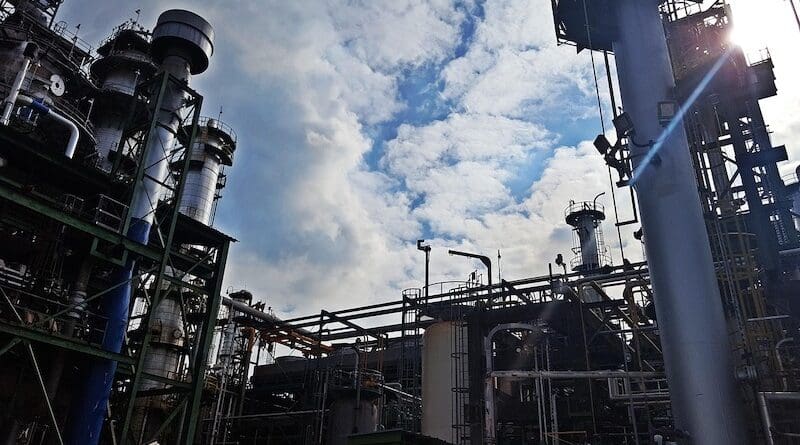
Recent activities by Ukraine against Russian refineries and the incident at the Chevron Refinery in California are exposing the vulnerability of major Goliath infrastructures being stationary targets for slaying by the Davids in the world.
The misunderstanding of “green” delusionists is treating electricity as interchangeable with materials, as it is the central flaw of the green movement. Electricity is a utility, not a substance.
Electricity drives processes, but those wind turbines and solar panels cannot themselves make things. Even basic metals like iron and copper require carbon as a reducing agent during smelting. Without carbon, humanity would lose the very means of transforming minerals into usable materials.
Meanwhile, governments pour trillions of dollars into policies designed to eliminate fossil fuels, without considering the economic or physical realities that wind and solar do totally different things than crude oil processed through refineries.
Yes Virginia, electricity can charge our iPhones, light our cities, and power our computers, but electricity cannot create the raw materials needed to build those very machines.
In fact, steel, cement, plastics, fertilizers, and pharmaceuticals all require hydrocarbons—not simply as fuel but as essential feedstocks. Oil, natural gas, and coal are the molecular foundations for over 6,000 everyday products that define modern life. Without them, hospitals would lack sterile equipment, farmers would lose fertilizers, and the construction of roads, bridges, and homes would grind to a halt.
The same contradiction appears globally. Electric vehicles are celebrated as zero-emission solutions, yet their manufacture depends heavily on fossil fuels—from the mining of lithium and cobalt with diesel-powered equipment to the production of tires, insulation, electronics, steel, glass, and plastic components derived from hydrocarbons. The result is more ways to use fossil fuels, which is a carbon shift, not a carbon elimination.
Government-mandated winners and losers are only applicable to those few in the wealthier countries that can afford huge subsidies, but the reality is that there are no silver bullet answers.
For those outside the few wealthy countries, we see that at least 80 percent of humanity, or more than six billion in this world, are living on less than $10 a day, and billions are living with little to no access to electricity.
The zero-emission movement is a delusion that JUST electricity generated from wind and solar can replace refineries and the crude oil that they process to support the variety of more than 6,000 products and fuels in our materialistic society that did not exist 200 years ago.
As of January 1, 2025, there were 131 operable refineries in the United States according to the U.S. Energy Information Administration (EIA)‘s data. This total includes traditional refineries and some facilities that produce petroleum product blending components but lack atmospheric distillation capacity.
Over the years, the reduction in the number of operating refineries stems from aging infrastructure, high maintenance costs, and environmental regulations that have made smaller or less efficient plants uneconomical. Utilization rates have hovered between 85-93% annually, with 2024 seeing an average of 88%, indicating spare capacity but also highlighting vulnerabilities during peak demand or disruptions.
The number of operable refineries has large capacities and are aging, and thus have generally declined over the past few decades. The majority of refineries are concentrated along the Gulf Coast, particularly in states like Texas (47), Louisiana (19), and California (18).
Building new refineries is challenging due to high costs, large land footprints that easily exceed 1,000 acres, environmental concerns, and political opposition, especially as the nation focuses its mandates and subsidies toward the generation of JUST electricity from wind turbines and solar panels. Yet wind turbines and solar panels CANNOT support the supply chain of products to build anything, even to build more wind and solar!
Government policies are difficult to reverse. Onshore and offshore wind have been tied to three goals at once: decarbonization, electricity security, and industrial revitalization. Billions in subsidies through “green” funds are already committed, while local governments and industries expect contracts and jobs from these subsidized funds.
In effect, offshore wind has become a new type of public works project. Ports, construction companies, heavy industry, and trading houses all benefit from the government mandates to build more electricity generation from wind and solar, and the government’s financial support to build them. For politicians, it delivers regional development; for bureaucrats, it provides visible progress. Under these conditions, the withdrawal of corporate America investments is treated as a temporary setback and prompts no policy review.
Ukraine, the David trying to slay Goliath Russia, has been demonstrating via drone attacks at the heart of Russia’s military and economy, by attacking Russian refineries that provide the fuel for their Goliath empire.
By chance, in October 2025, the Chevron refinery in Southern California had an apparent leak that ignited and temporarily ceased production of 40% of the jet fuel demanded in Southern California. The Ukrainian drone attacks on Russian refineries and the Chevron incident are strong messages to America’s national security team that Goliath infrastructures are easy targets for “David.”

Ronald Stein
Ronald Stein, Founder and Ambassador for Energy & Infrastructure of PTS Advance, headquartered in Irvine, California.
Havana rejects US claims over Cuban fighters in Russia's ranks in Ukraine
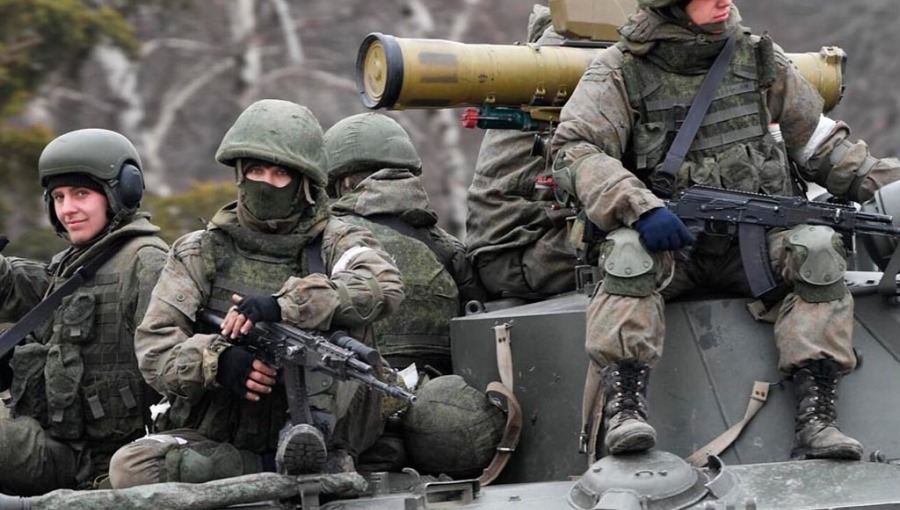
Cuba's Foreign Ministry has denied allegations from Washington regarding Cuban military participation in Ukraine, as diplomatic tensions ratchet up over recruitment schemes that have allegedly sent thousands of nationals to fight alongside Russian forces, AFP reported.
The ministry rejected what it termed "false accusations" from the US government about Cuban involvement in the conflict, stating that no nationals received official encouragement or consent from Havana for such activities. This rebuttal follows Washington's assertion earlier in October that the Cuban regime failed to protect citizens from exploitation in the Russia-Ukraine war, according to a US State Department spokesman quoted by AFP.
Ukrainian intelligence estimates between 6,000 and 7,000 Cubans currently serve on battlefields, representing the second-largest foreign contingent after North Korea's deployment of over 10,000 troops. Kyiv's "I Want to Live" surrender initiative claimed in May to possess verified data on 1,028 Cuban nationals who signed contracts with Russian armed forces during 2023-2024. Ukrainian officials who briefed US congressional leaders in September estimated 20,000 Cubans have been recruited since 2022, with hundreds reported killed.
The recruitment controversy deepens as Russia's Federation Council ratified a military cooperation agreement with Cuba on October 8, following signatures in Havana on March 13 and Moscow on March 19. The timing reinforces concerns about institutional links between the recruitment networks and broader strategic alignment, particularly as Russia committed to supplying Cuba with 1.64mn tonnes of much-needed oil and petroleum products annually alongside hydroelectric infrastructure development.
Cuba acknowledged sentencing 26 nationals to prison terms ranging from five to 14 years for mercenary activities since September 2023, when reports of battlefield recruitment first emerged. Investigative reporting by RFE/RL's Systema unit identified Yelena Smirnova, a 41-year-old alleged travel agent from Ryazan, as a central figure in recruitment networks that allegedly processed over 3,000 foreign fighters according to defence lawyer documents, with relatives of deployed Cubans describing deceptive social media advertisements promising construction employment whilst concealing military service obligations.
The diplomatic dispute threatens to hinder Cuba's economic recovery efforts, as the communist-run island grapples with energy shortages and relies on Moscow for strategic commodities including steel, wheat and political backing at multilateral forums. Cuba abstained in six United Nations votes condemning Russia's full-scale invasion of Ukraine, maintaining what EU High Representative Kaja Kallas described in May as "historic ties" with the Kremlin.
Washington's characterisation of recruitment as state-facilitated human trafficking marks a significant escalation from previous descriptions of isolated criminal networks, potentially triggering fresh sanctions that could further strain Cuba's struggling economy and limit already constrained access to international financial markets.

No comments:
Post a Comment