What to know about OpenAI’s new AI video app Sora that could rival TikTok
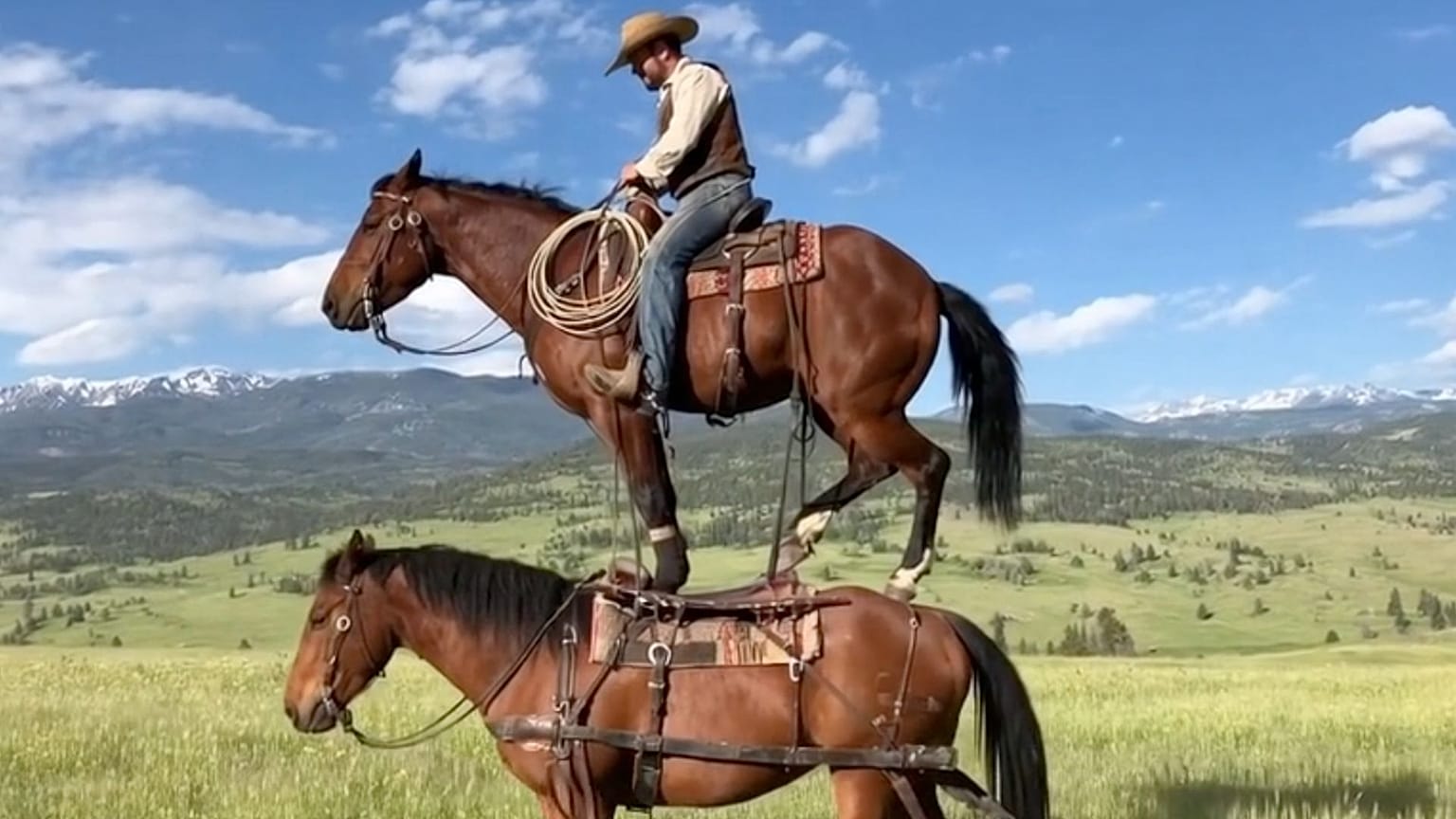
OpenAI announces a new AI video app that lets you drop yourself into the action.
OpenAI has announced its next-generation audio and video generator called Sora 2, but it also teased a new social platform that might rival TikTok.
Here is everything we know about the latest developments.
On Tuesday, the company showed off its video-making tech, which is powered by artificial intelligence (AI).
Users will be able to make almost any scenario come to life with a simple prompt once they film themselves with audio on the Sora app–effectively, creating their own deepfakes.
For example, one demonstration video featured an ice skater gliding across the ice and then performing a triple axel – all while holding a cat on her head.
Another showed a realistic-looking man backflipping on a paddleboard, complete with splashes.
“Prior video models are overoptimistic—they will morph objects and deform reality to successfully execute upon a text prompt,” OpenAI wrote in a blog post.
The original Sora tool launched last year, but the latest version is better at generating more complex movements, the company said.
The new Sora app aims to serve as a social platform for AI-generated videos.
The app will allow users to view and edit AI-generated video clips and feature friends who are also registered on the app.
However, OpenAI said there are robust protections and identity safeguard measures in place to prevent someone's identity from being inserted into AI videos without their consent.
‘Protecting the wellbeing of teens’
The app has a similar feeling to TikTok in that it has a vertical video feed with a swipe-to-scroll navigation.
However, OpenAI said that the app will prioritise the discovery of videos that may inspire creativity, rather than focusing on maximising time scrolling.
“We are giving users the tools and optionality to be in control of what they see on the feed,” the company said.
“Using OpenAI's existing large language models, we have developed a new class of recommender algorithms that can be instructed through natural language,” it added.
The company also said that protecting the “wellbeing of teens” is important to the company, so there are default limits on how many generations teens can see per day in their feeds
It also said there are “stricter permissions on cameos for this group” and that OpenAI is adding human moderators “to quickly review cases of bullying if they arise”.
Sora is, for the moment, invite-only, and will be available first on iOS in the United States and Canada.
The next Natalie Portman? Meet Tilly Norwood, the AI actress sparking controversy
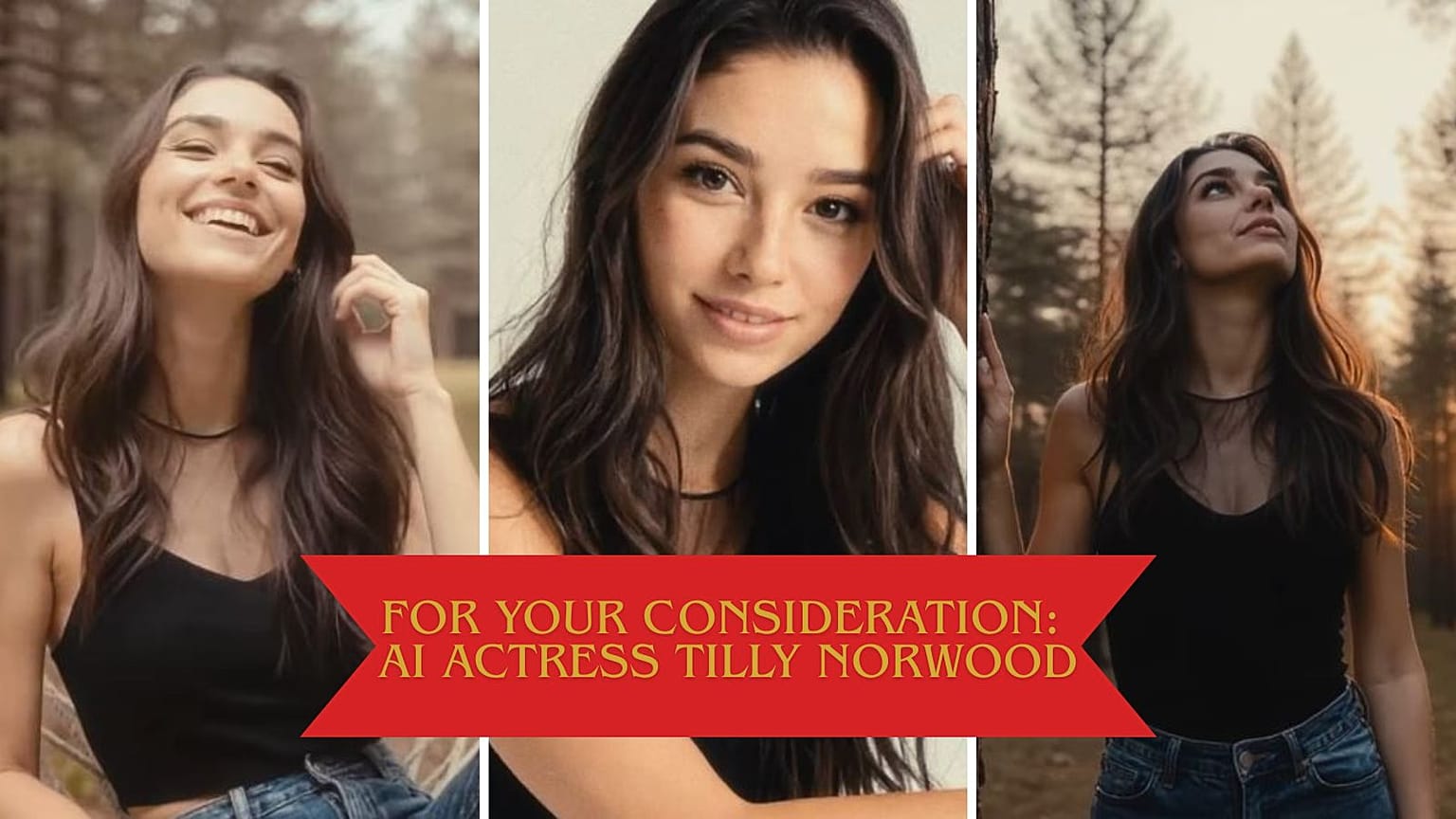
Meet the AI ‘talent’ who is reportedly getting agency representation very soon. Until then, many are speaking out on how Tilly Norwood is deeply misguided and devalues human artistry – despite her creator’s calls to “welcome AI as part of the wider artistic family.”
There’s an emerging talent in Hollywood and she may be about to make her big screen debut.
The buzz is there, the red carpet is waiting, and talent agencies are reportedly eyeing her up.
There’s a twist though. A significant one at that. She’s 100 per cent AI.
Tilly Norwood was brought to life by Dutch actress and tech creator Eline Van der Velden. Her AI studio Xicoia - a spin-off from Van der Velden’s AI production studio Particle6 - is aiming to push digital ‘talent’ into film and television.
“We want Tilly to be the next Scarlett Johansson or Natalie Portman, that’s the aim of what we’re doing,” Van der Velden told Broadcast International in July – when she soft-launched Norwood with various social media accounts. Norwood currently has 39,1k followers on Instagram, where the "actress (aspiring)" asks: "What role do you see me in?"
And apparently, Van der Velden is not the only one. At this year’s Zurich Summit – held as part of the industry programme at the Zurich Film Festival – she revealed that studios have been discreetly advancing AI projects.
“We were in a lot of boardrooms around February time, and everyone was like, ‘No, this is nothing. It’s not going to happen.’ Then, by May, people were like, ‘We need to do something with you guys,’” she shared with Deadline.
Tilly has already bagged a role in a comedic sketch titled AI Commissioner, which she posted on Facebook with the caption: “Can’t believe it... my first ever role is live!” She added: “I may be AI generated, but I’m feeling very real emotions right now. I am so excited for what’s coming next!”
“When we first launched Tilly, people were like, ‘What’s that?’," shared Van der Velden. “Now we’re going to be announcing which agency is going to be representing her in the next few months.”
In a LinkedIn post, Van der Velden commented: “Audiences? They care about the story - not whether the star has a pulse. Tilly is already attracting interest from talent agencies and fans. The age of synthetic actors isn’t ‘coming’ - it’s here.”
An insulting and deeply reductive way of considering audiences... and Euronews Culture aren’t the only ones who think so...
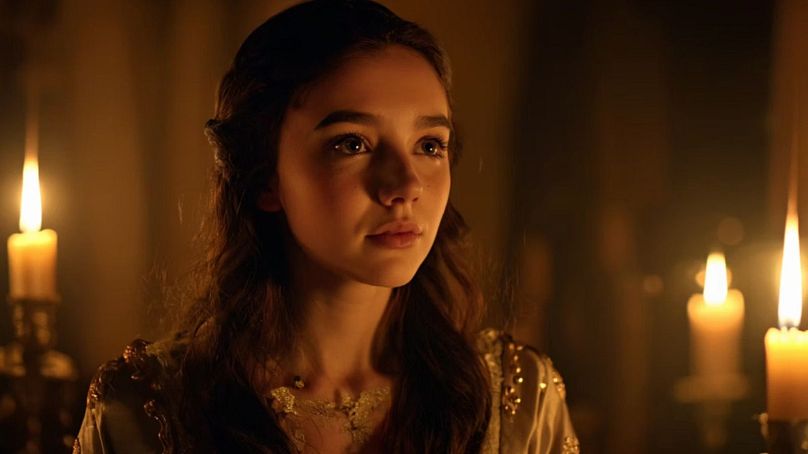
Indeed, the prospect of Tilly Norwood securing professional representation (something traditionally reserved for real-life talent) has sparked debate. And by ‘debate’, read: heated backlash surrounding cinema’s equivalent of The Velvet Sundown.
Social media kicked things off with comments like: "This is literally the mark of the end of the industry as we know it… say goodbye to actors”; “No one should be supporting this”; “This is deeply misguided”; "It'll do the world a huge favour to pull the plugs on AI."
Then, actual performers weighed in.
Real-life actress and Golden Globe winner Toni Colette posted a series of screaming-face emojis.
Fellow real-life actress and filmmaker Natasha Lyonne said that "any talent agency that engages in this should be boycotted by all guilds”, while real-life actress and Screen Actors Guild Award winner Emily Blunt said the creation was terrifying on a podcast with Variety.
Elsewhere, real-life Dope, Justice League and The Flash actress Kiersey Clemons demanded transparency, calling for the names of the agencies involved to be made public. As for real-life Matilda actress Mara Wilson, she said on Instagram: “Shame on these people. They have stolen the faces of hundreds of young women to make this AI ‘actress.’ They’re not creators. They’re identity thieves.”
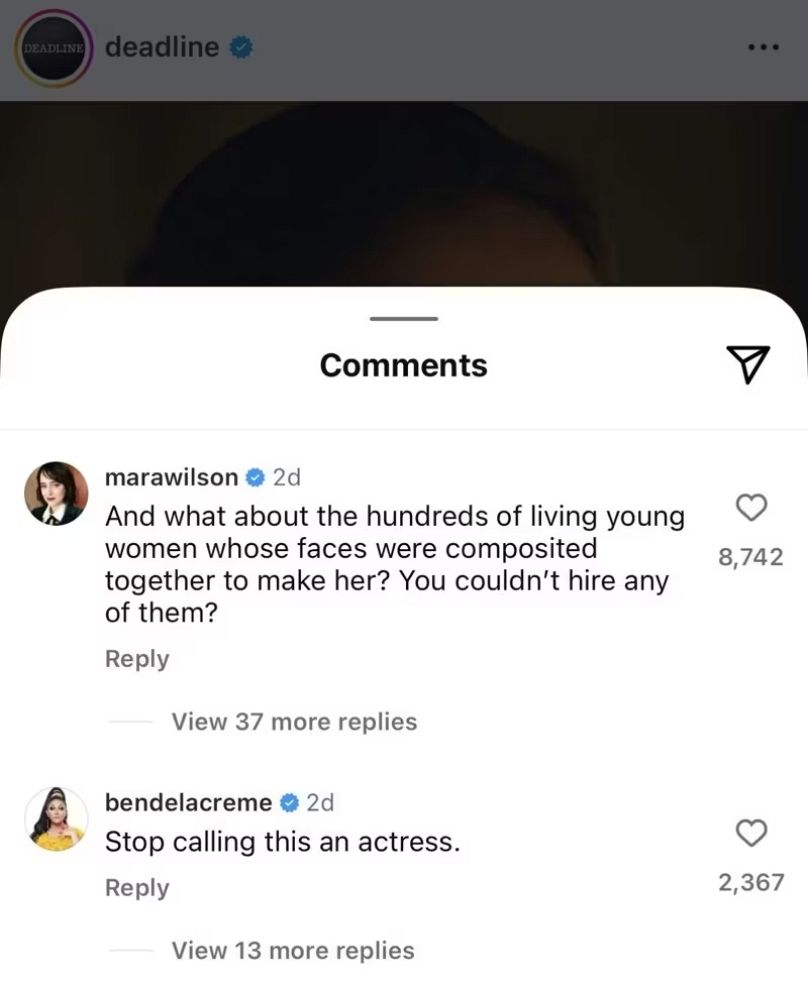
All fair and reasonable reactions, considering the existential threat that AI poses to creative industries. And even Hollywood’s actors union SAG-AFTRA responded to the news that talent agents are looking to sign Tilly Norwood.
“SAG-AFTRA believes creativity is, and should remain, human-centered. The union is opposed to the replacement of human performers by synthetics,” the guild said in a statement. “To be clear, ‘Tilly Norwood’ is not an actor, it’s a character generated by a computer program that was trained on the work of countless professional performers – without permission or compensation. It has no life experience to draw from, no emotion and, from what we’ve seen, audiences aren’t interested in watching computer-generated content untethered from the human experience.”
SAG-AFTRA previously secured protections for actors’ likenesses and performances against AI, in the wake of the 2023 strike.
The statement continued: “It doesn’t solve any ‘problem’ - it creates the problem of using stolen performances to put actors out of work, jeopardizing performer livelihoods and devaluing human artistry. Additionally, signatory producers should be aware that they may not use synthetic performers without complying with our contractual obligations, which require notice and bargaining whenever a synthetic performer is going to be used.”
Faced with growing backlash, Eline Van der Velden responded in a statement posted on Instagram, saying that she saw Tilly Norwood not as “a replacement for a human being, but a creative work - a piece of art.”
“I see AI not as a replacement for people, but as a new tool, a new paintbrush,” she wrote. “Just as animation, puppetry, or CGI opened fresh possibilities without taking away from live acting, AI offers another way to imagine and build stories. I’m an actor myself, and nothing – certainly not an AI character – can take away the craft or joy of human performance.”
“It takes time, skill, and iteration to bring such a character to life,” she added.
Yes, and not to mention the theft involved in training the AI-generated character on the work of real performers, all without permission.
This part was not addressed in the statement.
Granted, all forms of creativity should be celebrated. But when when artists are expressing real, legitimate concerns over the lack of AI regulations, the ubiquity of artificial intelligence in a tech-dominated world and the use of their craft in the training of AI tools, maybe read the room.
After all, the threat of AI in the film world was a key issue during labour strikes that shut down the industry only two years ago, with writers and performers demanding protections from the technology.
So, the red carpet remains rolled up for Tilly Norwood for the time being. Unless audiences decide they actually don’t care about human artistry. Or a pulse.
As of writing, neither Scarlett Johansson nor Natalie Portman have commented on their would-be successor.

No comments:
Post a Comment