Brazil's Lula presents fund to save tropical forests ahead of COP30
07.11.2025 DPA

Brazilian President Luiz Inácio Lula da Silva on Thursday presented a new multibillion-dollar fund to protect tropical forests, as world leaders convened in the Amazonian city of Belém ahead of the UN Climate Change Conference (COP30) next week.
Lula said that for the first time, countries in the Global South will take a leading role in a forest protection programme through the new Tropical Forest Forever Facility (TFFF).
The Brazilian government's model would ensure countries that preserve their tropical forests are rewarded financially.
The fund could distribute up to $4 billion annually, almost three times the current volume of international aid for forest preservation.
Countries that preserve valuable tropical forests are to receive a premium of $4 per hectare per year from the fund.
Conversely, they will have to pay a penalty of $140 for every hectare destroyed, with verification carried out by using satellite images.
According to the plan, some 70 developing countries with tropical forests could benefit. Up to a fifth of the funds would also go to indigenous populations.
Rich countries would initially contribute $25 billion on a voluntary basis.
Potential donors include Germany, the United Arab Emirates, France, Norway and the United Kingdom. This initial fund would then be used to mobilize a further $100 billion from the private sector over the next few years.
In addition to Brazil, the founding members include Colombia, Ghana, the Democratic Republic of Congo, Indonesia and Malaysia.
Lula announced at the UN General Debate in New York that Brazil itself would contribute $1 billion.
Greenpeace: Fund must not invest in harmful industries
Greenpeace has praised the initiative as an important political signal. However, it said there was room for improvement.
For example, it must be ensured that the fund is not allowed to invest in industries that are harmful to nature and the climate in order to achieve high returns.
That would be counterproductive, said Greenpeace expert Jannes Stoppel. In addition, COP30 must also adopt a binding forest action plan to stop deforestation by 2030, the organization said.
Guterres: Missing 1.5 degree goal a 'moral failure'
Lula's speech came hours after UN Secretary General António Guterres called the world's failure to keep warming within the critical 1.5 degrees Celsius limit set under the 2015 Paris Agreement "a moral failure" and "deadly negligence."
Guterres said it is "inevitable" that the 1.5-degree threshold will be breached by the early 2030s due to humanity's continued reliance on fossil fuels.
UN says forests should form key plank of COP30
By AFP
November 5, 2025

Russia has more forest than any other country on Earth - Copyright AFP Yuri KADOBNOV
Robin MILLARD
The United Nations warned Wednesday that climate change poses a threat to the world’s northern forests, saying it was putting the planet’s most powerful natural defence at serious risk.
The UNECE regional agency urged the forthcoming COP30 climate summit to put forest resilience at the centre of efforts to combat global warming.
“The forests of the northern hemisphere are of crucial importance when it comes to climate,” said Paola Deda, UNECE’s forests division director.
“Over the years, the attention to forests in COPs has been lost. The technicalities of the discussion have taken over,” she told a press conference in Geneva.
“You cannot talk about climate solutions, mitigation and adaptation without talking about forests.”
Some 54 percent of the world’s forests are in only five countries: Brazil, China, Canada, Russia and the United States, with the latter three in the UNECE region, and Russia having the biggest forest area of all.
UNECE covers 56 countries across Europe, North America, the Caucasus and central Asia.
Its 2025 Forest Profile is a five-yearly overview that measures and monitors the ecological, economic and socioeconomic condition of the region’s forests, to inform policy.
Forests cover 4.14 billion hectares (10.23 billion acres), or around a third of the world’s land surface, of which 42.5 percent is in the UNECE area.
Half of the forest loss in the past 10,000 years happened since 1900, the report said.
– ‘Tipping point’ –
Although the world’s forest area has shrunk by 203 million hectares since 1990, in the UNECE region it has grown by around 60 million hectares — an area roughly as big as France.
However, these gains “are now being jeopardised by record wildfires, pests, and an escalating climate-driven crisis”, UNECE warned.
It said the region’s forests were growing increasingly vulnerable to such threats.
The report said wildfires had become more severe and more common, fuelled by rising temperatures and drier conditions, while insect outbreaks have severely damaged millions of hectares of forests.
“What we have achieved over the last three decades is now at serious risk from the climate emergency,” UNECE chief Tatiana Molcean said in a statement.
“We cannot afford to lose the planet’s most powerful natural defence. The rising tide of wildfires and drought is pushing our forests past a critical tipping point.”
Leaders at the COP30 UN climate summit in Belem, Brazil, which runs from November 10 to 21, “must recognise that forest protection… is a cornerstone of global carbon security,” said Molcean.
– Forest management –
Boreal forests — roughly in a ring around the Arctic Circle, notably in Russia and Canada — cover 9.3 percent of the planet’s land surface.
They contain about 32 percent of global terrestrial carbon stocks, with boreal soils holding “vast amounts of carbon”, said UNECE.
However, “they are highly sensitive to climate impacts, including rising temperatures, thawing permafrost and wildfires”, it said.
The fear is that the region’s vast forests — currently a carbon sink — could become a net source of emissions.
Kathy Abusow, president of the Sustainable Forestry Initiative, said: “There is a solution: if we can manage our forests in climate-informed ways”, such as changing the tree species to reflect the new environmental conditions.
UNECE stressed the need for fire prevention, pest management and forest restoration. Thinning out forests and clearing out deadwood can also help make them less vulnerable to catastrophic wildfires that become major carbon emitters
Five things to know about ‘forest COP’ host city Belem
By AFP
November 5, 2025

Acai is the emblematic fruit of the city of Belem - Copyright AFP Pablo PORCIUNCULA
Louis GENOT
The eyes of the world are on Belem, a gateway city to the Brazilian Amazon playing host to what has been dubbed the “Forest COP” climate conference starting Monday.
The city of 1.4 million got its name from Bethlehem, the birthplace of Jesus Christ. In Portuguese, it translates as Belem.
Under a law promulgated Tuesday by President Luiz Inacio Lula da Silva, it will be the symbolic capital of the country for the duration of the conference, which is expected to gather some 50,000 delegates from around the world from November 10-21.
Here are five things to know about Belem.
– Love of Acai –
Acai, a so-called super fruit derived from a palm tree, has become trendy globally in recent years, and is reputed to hold energizing and antioxidant properties.
In Belem, it is a staple with just about every meal.
Resembling a large blueberry, the fruit is harvested in the Amazon rainforest that encircles the city, tons of it unloaded every day at a dock near the popular Ver-o-Peso market — a major tourist attraction.
In restaurants, crushed Acai in the form of a thick purple sauce with an earthy, somewhat tart taste, is served as a side with many typical dishes.
It is a favorite with pirarucu, an Amazonian freshwater fish that can grow up to three meters long.
– Catholic fervor –
Belem has faced logistical difficulties — mainly in hotel room shortages — in hosting the 30th Conference of the Parties (COP) to the United Nations Framework Convention on Climate Change (UNFCCC).
Yet every October, it hosts a religious ceremony that gathers hundreds of thousands of Catholic devotees — most of whom are from Belem or nearby.
This year, the Cirio de Nazare, recognized as an “intangible cultural heritage” by UNESCO, set a record with 2.6 million attendees.
The festivities honor Our Lady of Nazareth, the patron saint of Belem, nicknamed the “Queen of the Amazon” by locals.
Her image is ubiquitous in the city, where religious references and imagery abound.
– Where are the trees? –
Arriving in Belem by plane, one is struck by the emerald green forest growth surrounding a vast riverine metropolis.
Paradoxically, less than half of the city’s inhabitants live on tree-lined streets — only 45.5 percent, according to Brazil’s IBGE statistics institute.
The national average is 66 percent.
Scientists have pointed to a growing trend of higher-than-normal urban warming in the city — already hot and humid — due to the shortage of heat-absorbing greenery and high asphalt coverage.
– Poverty –
More than half the population of Belem (57.1 percent) lives in poor and densely populated neighborhoods known as favelas.
This is the highest rate among Brazilian metropolises, according to the IBGE.
– Music –
Belem’s most beloved star is Fafa de Belem — one of several female singers to have put the otherwise little-known city on Brazil’s cultural map.
The state of Para, of which Belem is the capital, is also the birthplace of Carimbo, an Afro-Indigenous music genre also recognized by UNESCO.
Trees, targets and trillions: what’s on the agenda at COP30?
ByAFP
November 3, 2025

Belem in northern Brazil is known as the gateway to the Amazon rainforest - Copyright AFP Carlos Fabal
This year’s United Nations climate summit promises to be symbolic, marking a decade since the Paris Agreement and taking place in the environmentally vulnerable Amazon. But what is actually on the agenda?
The marathon negotiations gather nearly every country to confront a challenge that affects them all but unlike recent editions, this “COP” has no single theme or objective.
That does not mean big polluters will get off easily at COP30 in Brazil, with climate-vulnerable nations frustrated at their level of ambition and financial assistance to those most affected by a warming planet.
Here are the big issues to look for as world leaders gather in the city of Belem on Thursday and Friday before the start of formal negotiations the following week:
– Emissions –
The world is not cutting emissions fast enough to meet the goals of the Paris Agreement and no amount of pomp and pageantry at COP30 will be able to sugarcoat that uncomfortable reality.
Under the climate accord, signatory nations are required every five years to submit stronger targets for cutting greenhouse gas emissions, thereby steadily raising the collective effort to reduce global warming over time.
The latest round of pledges for 2035 were due in February to give the UN time before COP30 to assess the quality of these commitments.
Most nations missed that deadline but by early November, about 65 had turned in their revised plans. Few have impressed and China’s target in particular fell well below expectations.
The European Union, riven by infighting between member states, cannot agree on its target, while India is another major emitter yet to finalise its pledge.
A reckoning could be coming in Belem. Brazil — which described the latest round of pledges as “the vision of our shared future” — is facing pressure to marshal a response.
– Money –
Money — specifically, how much rich countries give poorer ones to adapt to climate change and shift to a low-carbon future — is a likely point of conflict in Belem, as in past COPs.
Last year, after two weeks of acrimonious haggling, COP29 ended unhappily with developed nations agreeing to provide $300 billion a year in climate finance to developing ones by 2035, well below what is needed.
They also set a much less specific target of helping raise $1.3 trillion annually by 2035 from public and private sources. Developing nations will be demanding some actual detail about this at COP30.
Adaptation is a major focus of the summit, particularly a funding shortfall to assist vulnerable nations in protecting their people from climate impacts, such as building coastal defences against rising seas.
– Forests –
Brazil chose to host COP30 in Belem because of its proximity to the Amazon, an ideal stage to draw the world’s attention to the vital role of the rainforest in fighting climate change.
At COP30, the hosts will launch a new, innovative global fund that proposes rewarding countries with high tropical forest cover that keep trees standing instead of chopping them down.
The Tropical Forests Forever Facility (TFFF) aims to raise up to $25 billion from sponsor countries and another $100 billion from the private sector, which is invested on financial markets. Brazil has already kicked in $1 billion.
Clement Helary, from Greenpeace, told AFP the TFFF “could be a step forward in protecting tropical forests” if accompanied by clearer steps at COP30 towards ending deforestation by 2030.
The destruction of tropical primary forest hit a record high in 2024, according to Global Forest Watch, a deforestation monitor. The equivalent of 18 football fields per minute was lost, driven mostly by massive fires.
The United Nations warned Wednesday that climate change poses a threat to the world’s northern forests, saying it was putting the planet’s most powerful natural defence at serious risk.
The UNECE regional agency urged the forthcoming COP30 climate summit to put forest resilience at the centre of efforts to combat global warming.
“The forests of the northern hemisphere are of crucial importance when it comes to climate,” said Paola Deda, UNECE’s forests division director.
“Over the years, the attention to forests in COPs has been lost. The technicalities of the discussion have taken over,” she told a press conference in Geneva.
“You cannot talk about climate solutions, mitigation and adaptation without talking about forests.”
Some 54 percent of the world’s forests are in only five countries: Brazil, China, Canada, Russia and the United States, with the latter three in the UNECE region, and Russia having the biggest forest area of all.
UNECE covers 56 countries across Europe, North America, the Caucasus and central Asia.
Its 2025 Forest Profile is a five-yearly overview that measures and monitors the ecological, economic and socioeconomic condition of the region’s forests, to inform policy.
Forests cover 4.14 billion hectares (10.23 billion acres), or around a third of the world’s land surface, of which 42.5 percent is in the UNECE area.
Half of the forest loss in the past 10,000 years happened since 1900, the report said.
– ‘Tipping point’ –
Although the world’s forest area has shrunk by 203 million hectares since 1990, in the UNECE region it has grown by around 60 million hectares — an area roughly as big as France.
However, these gains “are now being jeopardised by record wildfires, pests, and an escalating climate-driven crisis”, UNECE warned.
It said the region’s forests were growing increasingly vulnerable to such threats.
The report said wildfires had become more severe and more common, fuelled by rising temperatures and drier conditions, while insect outbreaks have severely damaged millions of hectares of forests.
“What we have achieved over the last three decades is now at serious risk from the climate emergency,” UNECE chief Tatiana Molcean said in a statement.
“We cannot afford to lose the planet’s most powerful natural defence. The rising tide of wildfires and drought is pushing our forests past a critical tipping point.”
Leaders at the COP30 UN climate summit in Belem, Brazil, which runs from November 10 to 21, “must recognise that forest protection… is a cornerstone of global carbon security,” said Molcean.
– Forest management –
Boreal forests — roughly in a ring around the Arctic Circle, notably in Russia and Canada — cover 9.3 percent of the planet’s land surface.
They contain about 32 percent of global terrestrial carbon stocks, with boreal soils holding “vast amounts of carbon”, said UNECE.
However, “they are highly sensitive to climate impacts, including rising temperatures, thawing permafrost and wildfires”, it said.
The fear is that the region’s vast forests — currently a carbon sink — could become a net source of emissions.
Kathy Abusow, president of the Sustainable Forestry Initiative, said: “There is a solution: if we can manage our forests in climate-informed ways”, such as changing the tree species to reflect the new environmental conditions.
UNECE stressed the need for fire prevention, pest management and forest restoration. Thinning out forests and clearing out deadwood can also help make them less vulnerable to catastrophic wildfires that become major carbon emitters
By AFP
November 5, 2025
Acai is the emblematic fruit of the city of Belem - Copyright AFP Pablo PORCIUNCULA
Louis GENOT
The eyes of the world are on Belem, a gateway city to the Brazilian Amazon playing host to what has been dubbed the “Forest COP” climate conference starting Monday.
The city of 1.4 million got its name from Bethlehem, the birthplace of Jesus Christ. In Portuguese, it translates as Belem.
Under a law promulgated Tuesday by President Luiz Inacio Lula da Silva, it will be the symbolic capital of the country for the duration of the conference, which is expected to gather some 50,000 delegates from around the world from November 10-21.
Here are five things to know about Belem.
– Love of Acai –
Acai, a so-called super fruit derived from a palm tree, has become trendy globally in recent years, and is reputed to hold energizing and antioxidant properties.
In Belem, it is a staple with just about every meal.
Resembling a large blueberry, the fruit is harvested in the Amazon rainforest that encircles the city, tons of it unloaded every day at a dock near the popular Ver-o-Peso market — a major tourist attraction.
In restaurants, crushed Acai in the form of a thick purple sauce with an earthy, somewhat tart taste, is served as a side with many typical dishes.
It is a favorite with pirarucu, an Amazonian freshwater fish that can grow up to three meters long.
– Catholic fervor –
Belem has faced logistical difficulties — mainly in hotel room shortages — in hosting the 30th Conference of the Parties (COP) to the United Nations Framework Convention on Climate Change (UNFCCC).
Yet every October, it hosts a religious ceremony that gathers hundreds of thousands of Catholic devotees — most of whom are from Belem or nearby.
This year, the Cirio de Nazare, recognized as an “intangible cultural heritage” by UNESCO, set a record with 2.6 million attendees.
The festivities honor Our Lady of Nazareth, the patron saint of Belem, nicknamed the “Queen of the Amazon” by locals.
Her image is ubiquitous in the city, where religious references and imagery abound.
– Where are the trees? –
Arriving in Belem by plane, one is struck by the emerald green forest growth surrounding a vast riverine metropolis.
Paradoxically, less than half of the city’s inhabitants live on tree-lined streets — only 45.5 percent, according to Brazil’s IBGE statistics institute.
The national average is 66 percent.
Scientists have pointed to a growing trend of higher-than-normal urban warming in the city — already hot and humid — due to the shortage of heat-absorbing greenery and high asphalt coverage.
– Poverty –
More than half the population of Belem (57.1 percent) lives in poor and densely populated neighborhoods known as favelas.
This is the highest rate among Brazilian metropolises, according to the IBGE.
– Music –
Belem’s most beloved star is Fafa de Belem — one of several female singers to have put the otherwise little-known city on Brazil’s cultural map.
The state of Para, of which Belem is the capital, is also the birthplace of Carimbo, an Afro-Indigenous music genre also recognized by UNESCO.
ByAFP
November 3, 2025
Belem in northern Brazil is known as the gateway to the Amazon rainforest
This year’s United Nations climate summit promises to be symbolic, marking a decade since the Paris Agreement and taking place in the environmentally vulnerable Amazon. But what is actually on the agenda?
The marathon negotiations gather nearly every country to confront a challenge that affects them all but unlike recent editions, this “COP” has no single theme or objective.
That does not mean big polluters will get off easily at COP30 in Brazil, with climate-vulnerable nations frustrated at their level of ambition and financial assistance to those most affected by a warming planet.
Here are the big issues to look for as world leaders gather in the city of Belem on Thursday and Friday before the start of formal negotiations the following week:
– Emissions –
The world is not cutting emissions fast enough to meet the goals of the Paris Agreement and no amount of pomp and pageantry at COP30 will be able to sugarcoat that uncomfortable reality.
Under the climate accord, signatory nations are required every five years to submit stronger targets for cutting greenhouse gas emissions, thereby steadily raising the collective effort to reduce global warming over time.
The latest round of pledges for 2035 were due in February to give the UN time before COP30 to assess the quality of these commitments.
Most nations missed that deadline but by early November, about 65 had turned in their revised plans. Few have impressed and China’s target in particular fell well below expectations.
The European Union, riven by infighting between member states, cannot agree on its target, while India is another major emitter yet to finalise its pledge.
A reckoning could be coming in Belem. Brazil — which described the latest round of pledges as “the vision of our shared future” — is facing pressure to marshal a response.
– Money –
Money — specifically, how much rich countries give poorer ones to adapt to climate change and shift to a low-carbon future — is a likely point of conflict in Belem, as in past COPs.
Last year, after two weeks of acrimonious haggling, COP29 ended unhappily with developed nations agreeing to provide $300 billion a year in climate finance to developing ones by 2035, well below what is needed.
They also set a much less specific target of helping raise $1.3 trillion annually by 2035 from public and private sources. Developing nations will be demanding some actual detail about this at COP30.
Adaptation is a major focus of the summit, particularly a funding shortfall to assist vulnerable nations in protecting their people from climate impacts, such as building coastal defences against rising seas.
– Forests –
Brazil chose to host COP30 in Belem because of its proximity to the Amazon, an ideal stage to draw the world’s attention to the vital role of the rainforest in fighting climate change.
At COP30, the hosts will launch a new, innovative global fund that proposes rewarding countries with high tropical forest cover that keep trees standing instead of chopping them down.
The Tropical Forests Forever Facility (TFFF) aims to raise up to $25 billion from sponsor countries and another $100 billion from the private sector, which is invested on financial markets. Brazil has already kicked in $1 billion.
Clement Helary, from Greenpeace, told AFP the TFFF “could be a step forward in protecting tropical forests” if accompanied by clearer steps at COP30 towards ending deforestation by 2030.
The destruction of tropical primary forest hit a record high in 2024, according to Global Forest Watch, a deforestation monitor. The equivalent of 18 football fields per minute was lost, driven mostly by massive fires.
From pickaxes to AI, COP30 host state holds past and future of Amazon mining
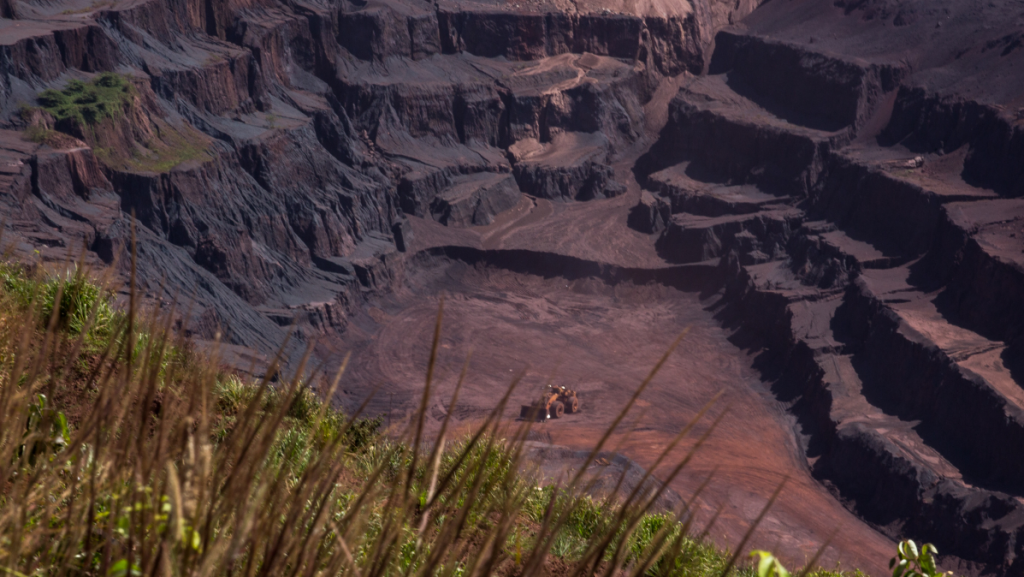
With a voice more youthful than his 72 years would suggest, Lucindo Lima sings about the untold riches he never made in Brazil’s Serra Pelada mine, a site made famous by a 1980s gold rush immortalized by the late photographer Sebastiao Salgado.

“Under those mountains all our riches are hidden,” Lima sings outside his decaying wooden house in Serra Pelada, a hilly district in the town of Curionopolis, in the Amazonian state of Para.
Set to host the COP30 United Nations climate talks in Belem, Para has seen a widening divide between mining by major firms such as Brazilian mining giant Vale and by artisanal miners, called “garimpeiros”, hunting for gold, often illegally, in the Amazon rainforest.
Some garimpeiros are still hopeful of finding fortune in Serra Pelada, where a gold rush erupted in 1979, drawing thousands who dug by hand a cavernous open pit during the 1980s.
Striking black and white photographs taken at the time by Salgado, who passed away in May, captured men swarming around the pit like an open termite mound and jolted the world with what seemed like medieval scenes in the modern era.
As ore grades waned and the pit flooded, authorities shut operations in 1992, leaving a water-filled crater that became an emblem of excess in the frontier towns of the Brazilian Amazon.
Lima’s song calls the mine “the queen of metals,” but a two-hour drive from the flooded crater stands a new queen: Carajas, the world’s largest open-pit iron-ore mine, run by Vale.
Vale’s revenue from Carajas each year is roughly nine times all the wealth extracted from Serra Pelada, even adjusting the value of gold to current market prices near record highs.
The firm has deployed driverless trucks and artificial intelligence at Carajas, where it plans to invest 70 billion reais ($13 billion) between 2025 and 2030.
“Autonomous trucks can generate up to 15% more operational efficiency, that is, 15% more hours worked,” said Gildiney Sales, the director of Vale’s North corridor.
In Para, illegal gold mining has devastated rivers and tributaries, fueling deforestation and mercury poisoning. By contrast, Vale has vowed to preserve 800,000 hectares (3,100 square miles) of forest around Carajas – about five times the area of Brazil’s most populous city, Sao Paulo.
Vale moves high-grade ore to port by rail, while garimpeiros travel via informal roads and river networks, often facing grave danger. At Serra Pelada, many still go underground to look for scraps of the precious metal.
“We are at a depth of approximately 25 or 26 meters,” said miner Cicero Pereira Ribeiro, holding a pickaxe inside one of those dimly lit underground shafts that made fortunes in the 1980s rush.
Ribeiro and others are still holding out hope for Serra Pelada to yield more treasures, fulfilling the ambitions they have been nursing for decades.
“We haven’t woken up from this dream yet,” said Antonio Luis, a miner in Serra Pelada since 1981.
($1 = 5.40 reais)
(By Jorge Silva and Fabio Teixeira; Editing by Nia Williams)
.jpg)
The Brazilian Amazon city of Belém will host the UN's 30th annual climate conference from November 10 to 21, with roughly 50,000 delegates converging on the region to negotiate fresh commitments on emissions reductions and forest protection.
Yet the gathering opens against a backdrop of diminishing political consensus and low expectations, underscored by the conspicuous absence of leaders from the world's largest emitters — the US, China, India and Russia.
The conference aims to accelerate implementation of the 2015 Paris Agreement, particularly the goal of limiting global temperature increases to 1.5°C above pre-industrial levels by century's end. However, UN Secretary-General António Guterres delivered a stark assessment on November 6, declaring that "the hard truth is that we have failed to ensure we remain below 1.5 degrees". He characterised the shortfall as "moral failure and deadly negligence".
Current policies are projected to produce warming of approximately 2.7°C, according to the latest UN estimates. Scientists warn the 1.5°C threshold is now virtually certain to be breached, with carbon dioxide concentrations reaching a record 423.9 parts per million last year — the largest annual increase since measurements began in 1957.
The absence of Donald Trump, who has brushed off climate change as "the greatest con job ever perpetrated on the world", cast a long shadow over the proceedings. Without naming the US president directly, Brazil's Luiz Inácio Lula da Silva cautioned against “political extremists” spreading disinformation whilst jeopardising the climate prospects of coming generations.
Chile and Colombia's leaders went further, directly calling Trump a liar. "The science is very clear. It is very important not to falsify the truth," Chile's environment minister Maisa Rojas told journalists.
In sobering remarks, British Prime Minister Sir Keir Starmer acknowledged the erosion of international unity. "It had been a consensus issue internationally and in the UK but today sadly that consensus is gone," he said, whilst insisting that "the UK is all-in" on climate action.
Yet Britain's commitment faced immediate scrutiny when it opted out of Brazil's flagship $125bn Tropical Forests Forever Facility (TFFF) just hours after Starmer's remarks. The fund, designed to channel resources to rainforest protection, had secured only $5.5bn in pledges by the summit's opening, including $3bn from Norway and $1bn from Brazil itself.
Under the proposal, $25bn would come from "sponsor" governments prepared to absorb early risks, whilst another $100bn would be drawn from private investors such as pension and sovereign wealth funds.
The UK's withdrawal stunned observers, given its prominent role in designing the mechanism and launching a global deforestation pledge at the Glasgow summit in 2021.
In contrast, German Chancellor Friedrich Merz is said to be backing the Brazilian initiative, describing the TFFF financing initiative as “interesting” and wanting to “support Brazil and demonstrate Germany’s continued commitment to multilateral climate efforts,” according to sources cited by AFP.
Ambassador André Lago, Brazil's climate envoy and conference president, stated that the summit would demonstrate "that there are already significant responses and solutions to many of the challenges we face". The conference will be split between a Blue Zone for official negotiations and a Green Zone hosting civil society debates, with 15,000 social movement representatives attending a parallel People's Summit.
However, only 143 delegations from the 198 signatory countries have confirmed participation, and a majority of nations have failed to submit updated emissions reduction plans ahead of the gathering.
Despite the diplomatic setbacks, several leaders framed climate action as essential to economic competitiveness and energy security. Finland's President Alexander Stubb declared that "investment for climate change is the growth and prosperity plan for this century", whilst China's Vice Premier Ding Xuexiang touted his country's "green and low carbon development" path.
The conference comes as extreme weather intensifies globally. Hurricane Melissa, which struck the Caribbean last week as a Category 5 storm, killed more than 75 people, with climate change estimated to have increased associated rainfall by 16 per cent.
Stela Herschmann, a climate policy specialist at Brazil's Climate Observatory, said the UN process has been "too slow" to match the pace of environmental deterioration. "The responses have not come at the speed or scale that science indicates are necessary," she said, as quoted by Agencia Brasil.
Since the first Conference of the Parties met in Germany three decades ago, global emissions have accelerated dramatically — with approximately half of all atmospheric CO2 from the industrial age released during this period of climate diplomacy. Fossil fuel combustion still generates 90% of global CO2 emissions, with coal use hitting record highs despite bold transition pledges renewed at every year's climate summit.
Guterres called for immediate action to reverse warming trends. "If we act now, at speed and scale, we can make the overshoot as small, as short, and as safe as possible," he told assembled leaders. "This COP must ignite a decade of acceleration and delivery."
The two-week conference will focus particularly on mobilising finance for countries already experiencing severe climate impacts and negotiating mechanisms to support forest conservation. But the absence of major emitters and the fraying international consensus suggest any agreements may struggle to match the scale of the challenge.
Belém (Brazil) (AFP) – World leaders will meet for a second day of climate talks in the Brazilian Amazon on Friday after fiery speeches and renewed criticism of Big Oil marked the opening session.
Issued on: 07/11/2025 - FRANCE24

Dozens of ministers and several heads of state and government, including those of Spain, Germany and Namibia, will meet in Belem just before the United Nations' (UN) annual two-week conference, COP30, which starts on Monday.
Evidence of the climate crisis, driven largely by the burning of fossil fuels and deforestation, has never been clearer: the past 11 years have been the hottest on record and marked by intensifying hurricanes, heat waves and wildfires.
UN chief Antonio Guterres and a series of national leaders said on Thursday that the world will fail to keep global warming below 1.5C, the Paris Agreement's primary target set a decade ago, but said they have not yet given up on its fallback goal of 2C.
The absence of leaders from the world's biggest polluters, including the United States, where President Donald Trump has dismissed climate science as a "con job," cast a shadow over talks, but also catalyzed calls for greater mobilization.
Countries made an unprecedented pledge to "transition away" from oil, gas and coal at COP28 in Dubai two years ago.
However, the issue has since slipped down the agenda as nations grapple with economic pressures, trade disputes and wars, and the Trump administration aggressively pushing for more fossil fuels.
'Roadmap' calls praised
Brazilian President Luiz Inacio Lula da Silva's call in his opening address for a "roadmap" to halt deforestation, reduce dependence on fossil fuels, and mobilize the financial resources needed to achieve those goals was met with applause.
The coalition backing Lula's call includes European nations and numerous small island states whose very survival is threatened by stronger cyclones and rising sea levels.
Gaston Browne, the prime minister of Antigua and Barbuda, railed against the "large polluters (who) continue to deliberately destroy our marine and terrestrial environments with their poisonous fossil fuel gases."
The idea of phasing out hydrocarbons is also gaining traction in Europe. Despite their divisions, EU countries noted that they have reduced greenhouse gas emissions for more than three decades and are aiming for a 90 percent cut by 2040.
"COP30 must send a clear message that the green transition is here to stay, and that fossil fuels have no future," said Finnish President Alexander Stubb.
Marta Salomon of the Brazilian think tank Politicas Climaticas do Instituto Talanoa told AFP: "When the president talks about a roadmap to reduce dependence on fossil fuels, we understand it as a favorable sign for this discussion to take place during COP."
Lula had already hinted at his plan in an interview this week with AFP and other outlets, though he cautioned "it's not easy" to reduce fossil fuels.
Indeed, Brazil has just authorized its state oil company to begin offshore exploration in the Amazon.
A formal anti-fossil fuel decision in Belem is seen as highly unlikely, given the requirement for consensus among nearly 200 countries attending the conference.
Still, COP30 will put a spotlight on countries' voluntary pledges and their implementation, which could lead to fresh announcements on methane -- a "super pollutant" and the main component of natural gas, prone to leaking from pipelines and installations.
"The world must pull the methane brake," said Mia Mottley, prime minister of Barbados and a highly respected voice in global climate diplomacy.
© 2025 AFP
Despite Brazilian President Luiz Inacio Lula da Silva’s much-vaunted ambitions to lead the fight against climate change and the deforestation that has ravaged the Amazon, Lula continues to look to the country’s oil industry to build Brazil’s wealth. He argues that the money generated from oil exports will help finance the country’s accelerating transition to cleaner energy.
Issued on: 07/11/2025
FRANCE24
By: Cyrielle CABOT

Brazil’s President Luiz Inacio Lula da Silva has worked hard to cultivate a reputation as a staunch defender of the climate. Speaking at his 2023 inauguration, Lula promised to turn his country into “a leader in the fight against the climate crisis”.
And there have been some notable successes: last month, Amazon deforestation hit an 11-year low.
These lofty ambitions will be on full display as Brazil prepares to host the COP30 climate summit in the port city of Belem on the edge of the sprawling Amazon.
But barely three weeks earlier, Brazil's majority state-owned oil giant Petrobas announced that it had received approval to drill exploratory oil wells at the mouth of the Amazon River. The decision had many environmental activists criticising this apparent paradox at the heart of Lula’s climate policy.
“Brazil's presidency of COP30 is hypocritical, as it claims to want to raise climate ambitions while granting a new oil exploration license to its national company,” said Fanny Petitbon, France director of the 350.org clean energy NGO.
“It's completely mind-boggling.”
Brazilian activists were also quick to condemn the decision.
“The approval is an act of sabotage against the COP and undermines the climate leadership claimed by President Luiz Inácio Lula da Silva,” the country's Climate Observatory said in a statement.
What's on the agenda for COP30?
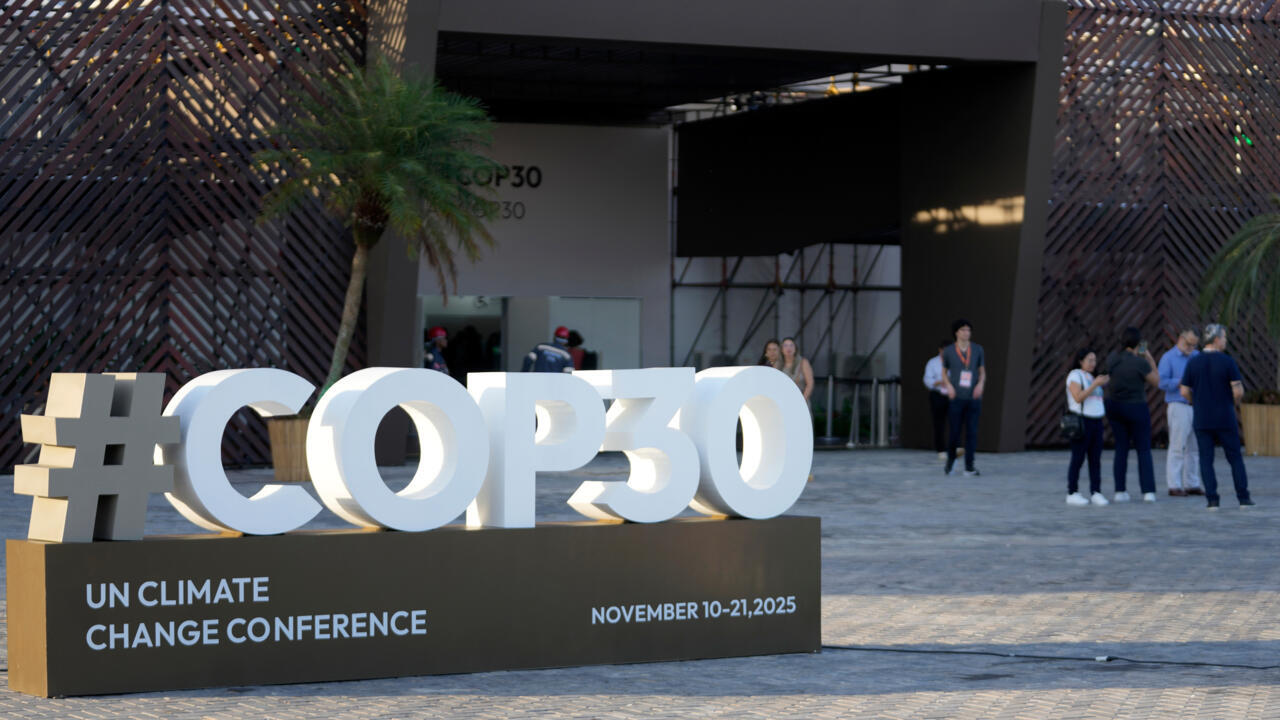
04:55
Black gold
Petrobas has for decades been eyeing this stretch of water in what’s known as the Equatorial Margin, some 500 kilometres from the mouth of the Amazon River. And with good reason – like similar swaths of territory off the coasts of neighbouring Suriname and Guyana, it holds vast reserves of oil. Brazilian authorities estimate that the black gold buried beneath these waters could bring in €46 billion and create more than 350,000 new jobs.
Although the Brazilian Institute of Environment and Renewable Natural Resources (IBAMA) has long baulked at the project, it finally gave its approval after what it described as a “rigorous process” with “more than 65 technical consultations”.
Climate action in a fractured world: Is there a will 'to cooperate in a world full of conflict'?
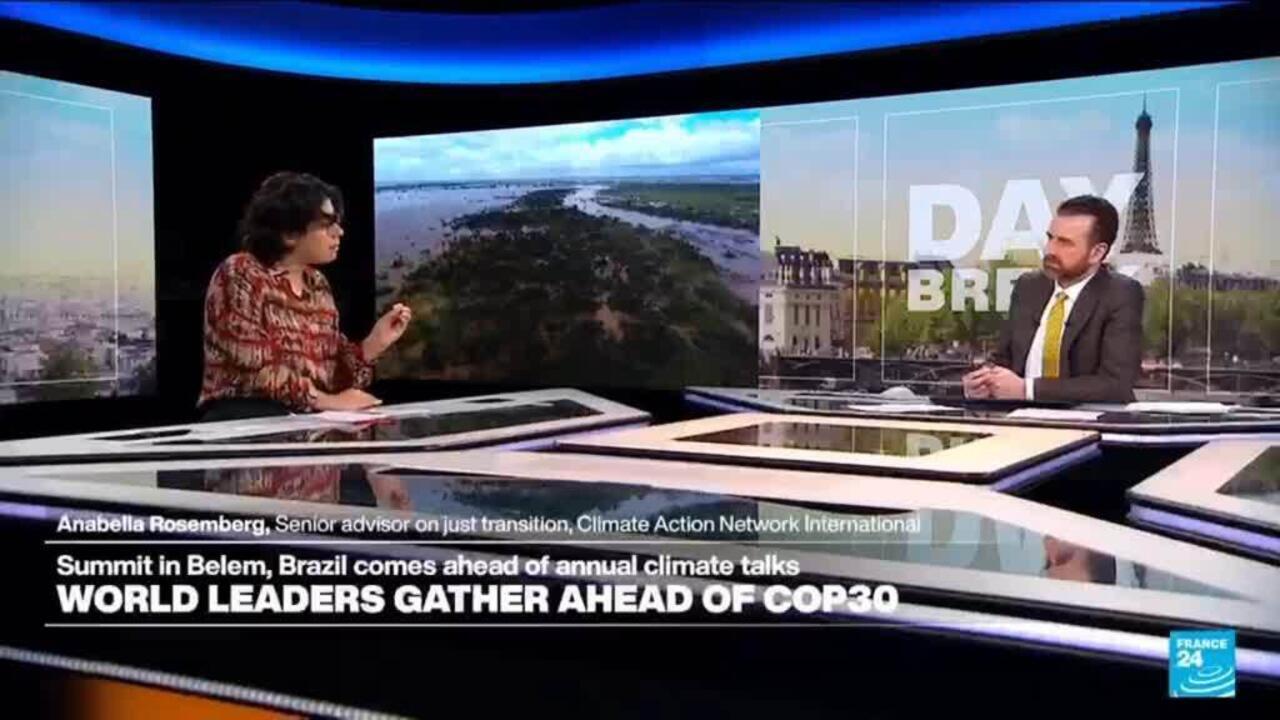
07:24
But the project is far from risk-free, either for the region’s biodiversity or the communities living along the coast. In a technical report published by Brazilian daily Folha de São Paulo, IBAMA found that the drilling could have dire repercussions for the manatees that call the coast home – mammals that are already facing the risk of extinction.
The region is also home to the largest expanse of mangroves in the world – a fragile ecosystem that Brazil Journal said is also threatened by the project. The Equatorial Margin’s coast also harbours three Indigenous lands and six quilombola territories – peopled by the descendants of African slaves – as well as countless fishing villages that would be the first to bear the brunt of any oil spills or other industrial accidents.
Up in smoke
So why was such a project approved under a self-proclaimed climate defender such as Lula?
“This sums up the duality of the Brazilian president, caught between economic and ecological interests,” said Catherine Aubertin, research director at France's Institute for Sustainable Development and International Relations.
With an average of 3.4 million barrels produced every day in 2024, Brazil is the world’s eighth-largest oil exporter. In 2024, crude oil became the country’s chief export, overtaking soybeans and making up 13.3 percent of Brazil’s total exports.
Speaking last year at COP29 in Azerbaijan – another major crude oil producer – Lula said he wanted to continue to increase Brazil’s oil exports to 36 percent by 2035.
Global South charting a greener future with climate solutions sparking economic growth
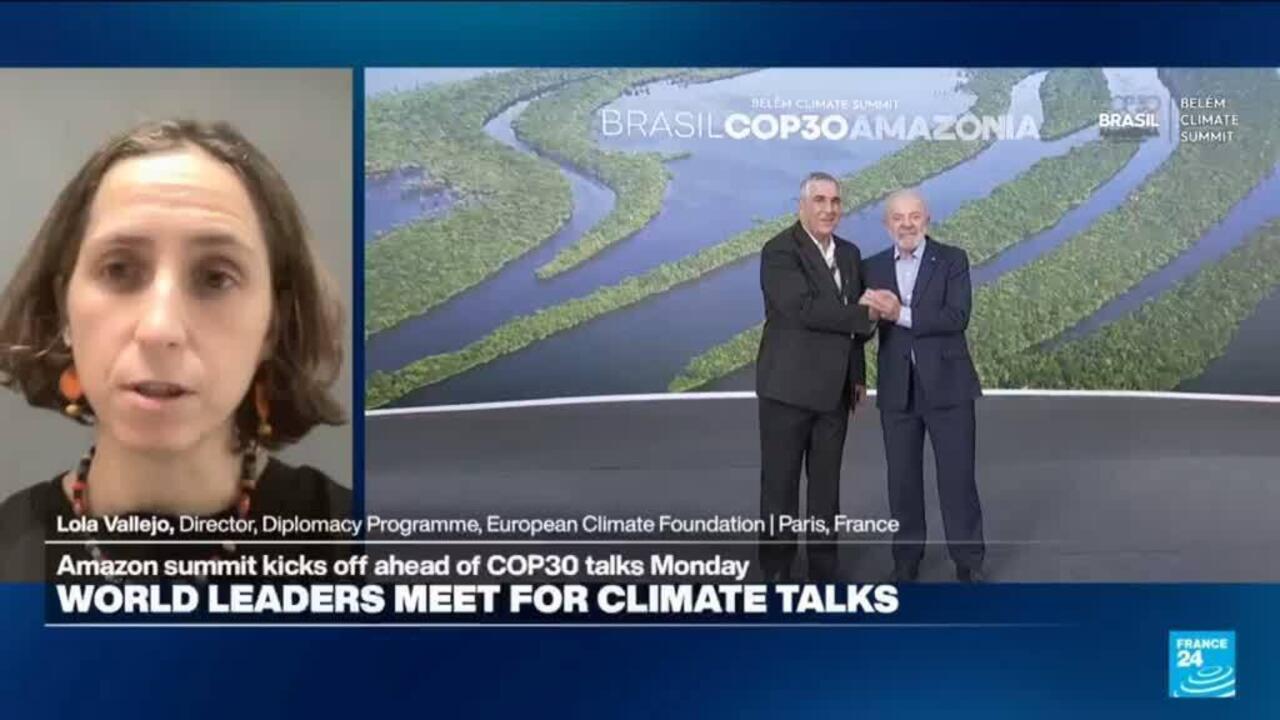
05:41
There’s just one problem. According to projections, Brazil’s oil production will begin to decline from 2030 onwards as its current reserves are depleted. It’s a prognosis that has set off something of a panic in the upper ranks of the Brazilian government as well as the halls of Petrobas.
“The Equatorial Margin is the future of Brazil's energy sovereignty,” Energy Minister Alexandre Silveira wrote in a social media post. “We are ensuring that exploration is carried out with environmental responsibility, in accordance with the highest international standards, generating benefits for the Brazilian people.”
But climate scientists and activists agree that the time for looking for new oil reserves is over. Instead, they say, moving away from fossil fuels – the leading emitters of greenhouse gases – is crucial if humanity is to slow the world’s warming.
READ MOREWorld leaders to rally in support of climate action before COP30 summit
According to a Climate Observatory analysis, emissions released by Brazil’s energy sector are likely to rise from 490.6 million tonnes to 558 million tonnes of CO2 by 2050. It’s a far cry from the country’s ambitious promise to reduce its greenhouse gas emissions from 67 percent to 59 percent by the same year.
“It’s a contradiction that the Brazilian president is more or less owning up to,” Aubertin said. “He responds to it by repeating the same argument as other large oil producers: he supports the idea that oil revenue is used to finance the energy transition.”
“Is it contradictory? It is,” Lula conceded in a June 2024 interview with Brazilian radio CBN. “But as long as the energy transition isn’t solving our problem, Brazil needs to make money from this oil.”
Saving the forests
Aubertin stressed that Lula’s track record on climate change is more nuanced than the president’s oil ambitions make it seem.
“Even though Brazil is exporting its oil, it has still reached a very good level in terms of [the sustainability of] its internal energy consumption,” she said. “Eighty-nine percent of its electricity production comes from renewable energy.”
The Brazilian president has also undertaken a range of actions to make good on his climate commitments, Aubertin said. Since 2023, Lula has put in place a national energy transition policy with investment potential of up to €330 billion as well as ratifying a law creating a mandatory carbon market.
But his main victory in the fight to protect the environment has taken place on a different front: the fight against deforestation. Since coming to office, Lula has championed the struggle against illegal logging as one of the most critical goals of his presidency.
READ MOREBrazil's Lula urges less talk, more action at COP30 climate meet
He brought back Marina Silva as environment minister, who had already managed to drastically lower the rate of deforestation during Lula’s first two terms (2003-2010). At the same time, the Brazilian president reactivated the Amazon Fund, an international financial mechanism designed to raise money in the fight against deforestation, strengthened regulations and stiffened penalties for illegal logging.
In just two years, the results have been spectacular. Although deforestation affected more than 10,000 square kilometres in 2022, the last year of far-right president Jair Bolsonaro’s term in office, Brazil’s deforestation had been halved by 2023 and continued to fall to close to 4,200 square kilometres in 2024. Outside of the nation’s massive rainforests, deforestation levels also fell in other vulnerable ecosystems such as the Cerrado, the biodiverse savanna south of the Amazon.
READ MOREBrazil records biggest annual fall in emissions in 15 years: report
“Deforestation is mainly due to infrastructure construction and agricultural expansion, whether legal or illegal,” said Erin Matson, a consultant at Climate Focus and the author of a comprehensive report published in mid-October on the state of the world's forests.
“Brazil's excellent results show that simply strengthening controls can quickly and drastically reduce deforestation.”
“In the long term, curbing deforestation will only be possible through profound changes to our economic model, as pressure on forests continues to increase in line with global demand for soy, wood and paper,” she added. “But Brazil provides a very good example of how, when a head of state takes action, results can be achieved.”
A president ‘bound hand and foot’
“Lula acts with the leverage that he has,” Aubertin said. With Brazil's Congress dominated by conservatives keen on continued investment in petrol and representatives of agribusiness still carrying significant weight in the halls of power, “he is bound hand and foot and has to deal with a lot of pressures – sometimes contradictory ones”.
Perhaps because of this, Brazil’s agribusiness sector, which is responsible for 30.5 percent of the country's greenhouse gas emissions, seems to have remained untouched by any environmental measures that would cut into its profit margins.
The industry managed to avoid the application of the carbon market law thanks to the support of the Parliamentary Agricultural Front, a powerful legislative bloc that often advocates for the agribusiness industry.
As COP30 begins, it remains to be seen just how Brazil's climate contradictions will be reflected in negotiations. True to form, the Brazilian president seems to have carefully sidestepped the awkward issue of fossil fuels for the moment.
Lula has already made it clear that protecting forests will take pride of place in COP30. He has said he hopes that one of the summit’s major advances will be the adoption of the Tropical Forest Forever Facilities, a new financial mechanism that would compensate countries for preserving their tropical forests – and which advocates say is as a much-needed weapon in the bitter fight against deforestation.
This article has been adapted from the original in French.

No comments:
Post a Comment